語彙集

英単語辞書 | 単語の意味、定義、例文

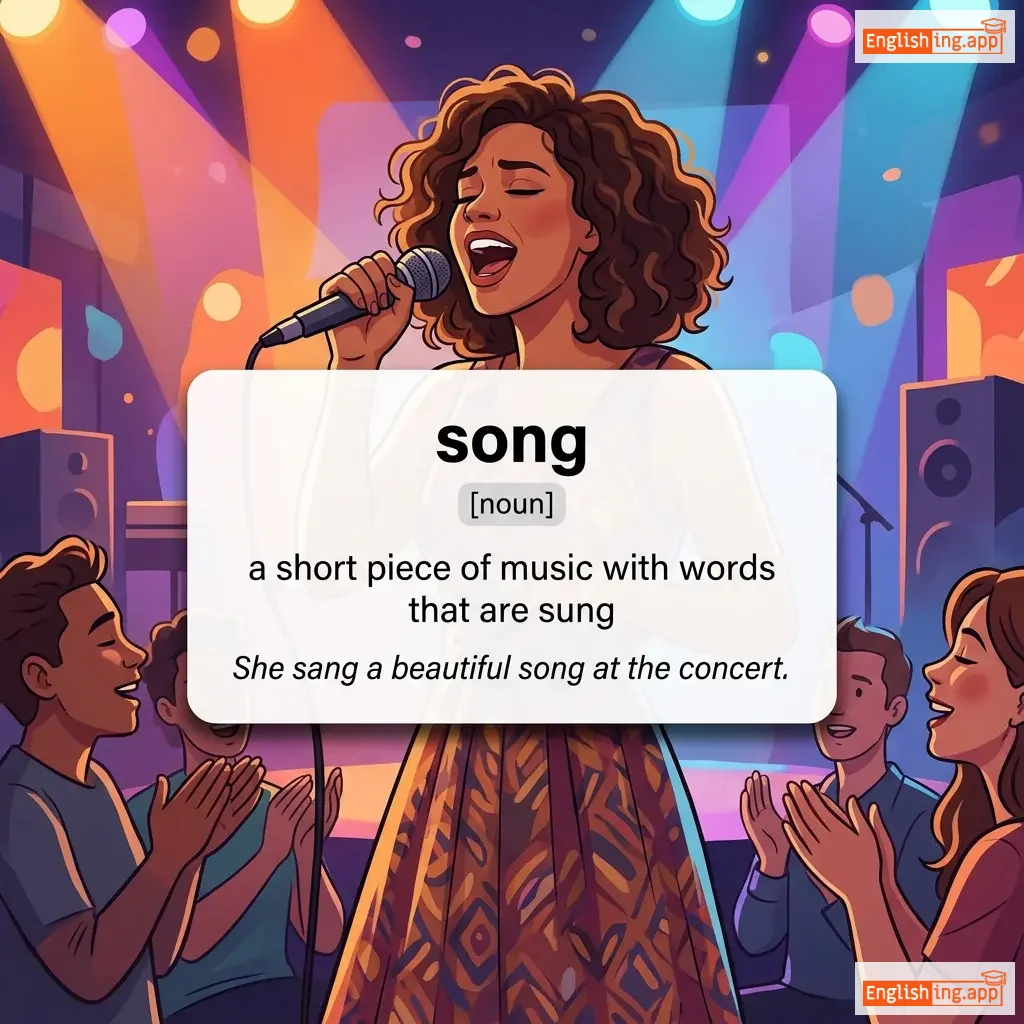
song definition card — visual illustration of the meaning
noun
/sɔːŋ/
(uta)

a short piece of music with words that are sung

"She sang a beautiful song at the concert."
"彼女はコンサートで美しい歌を歌った。" (Kanojo wa konsāto de utsukushī uta o utatta.)
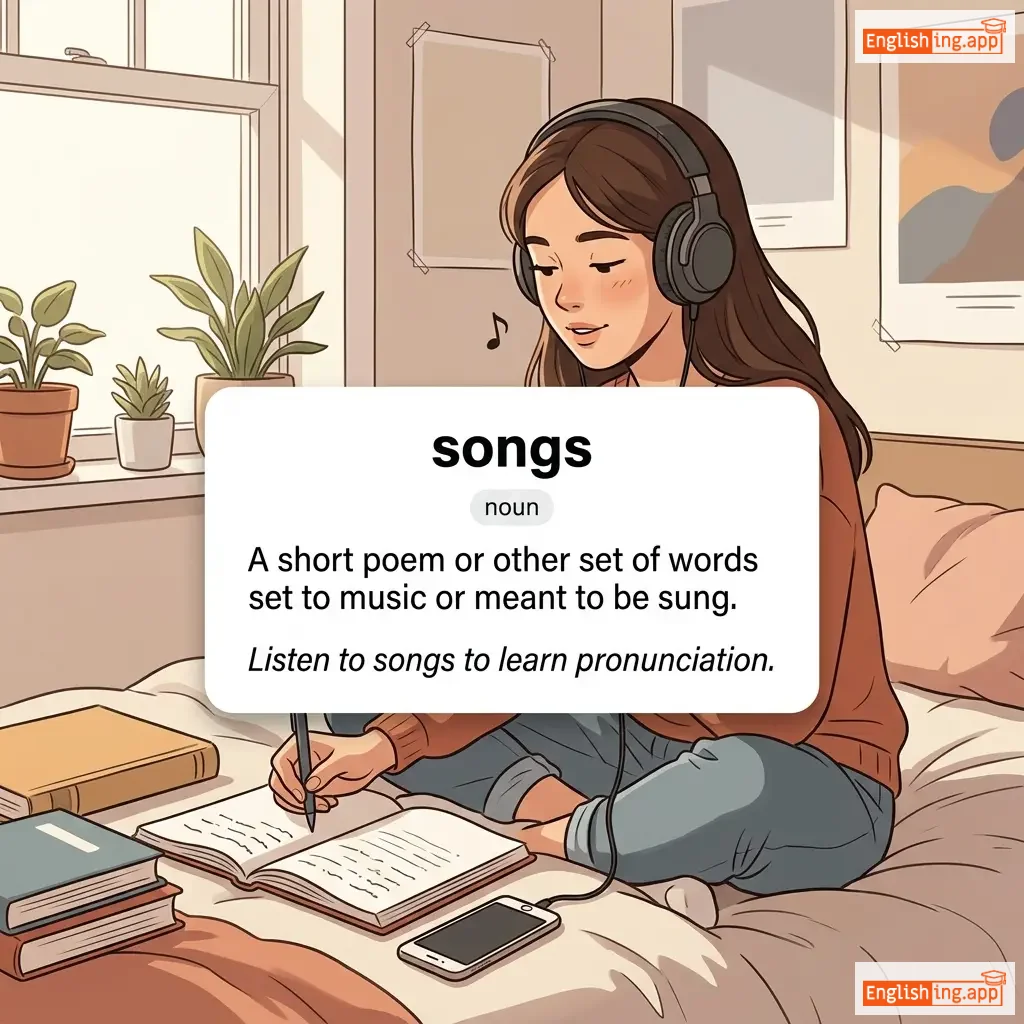
songs definition card — visual illustration of the meaning
noun
sɔːŋz
(uta)

A short poem or other set of words set to music or meant to be sung.

"Listen to songs to learn pronunciation."

"発音を学ぶために歌を聞いてください。" (Hatsuon o manabu tame ni uta o kiite kudasai.)
adjective
/ˈsɒnɪk/
音速の (onsoku no)

Relating to or involving sound waves or speed of sound.

"The jet created a loud boom when it broke the sonic barrier."

"ジェット機は音速の壁を越えたとき、大きな爆発音を作り出しました。" (Jettoki wa onsoku no kabe wo koeta toki, ookina bakuhatsuon wo tsukuridashimashita.)
noun
/ˈsɒnɪt/
ソネット (sonetto)

A poem of 14 lines using formal rhyme schemes, often about love.

"Shakespeare wrote many famous sonnets about love and beauty."

"シェイクスピアは愛と美について多くの有名なソネットを書きました。" (Sheikusupia wa ai to bi ni tsuite ōku no yūmei na sonetto o kakimashita.)
adjective
/səˈnɔːrəs/
深い音 (fukai oto)

Deep, full, and rich in sound.

"The actor's sonorous voice filled the entire theater."
"俳優のソノラスな声が劇場全体に響き渡った。" (Haiyū no sonorasu na koe ga gekijō zentai ni hibikiwatta.)
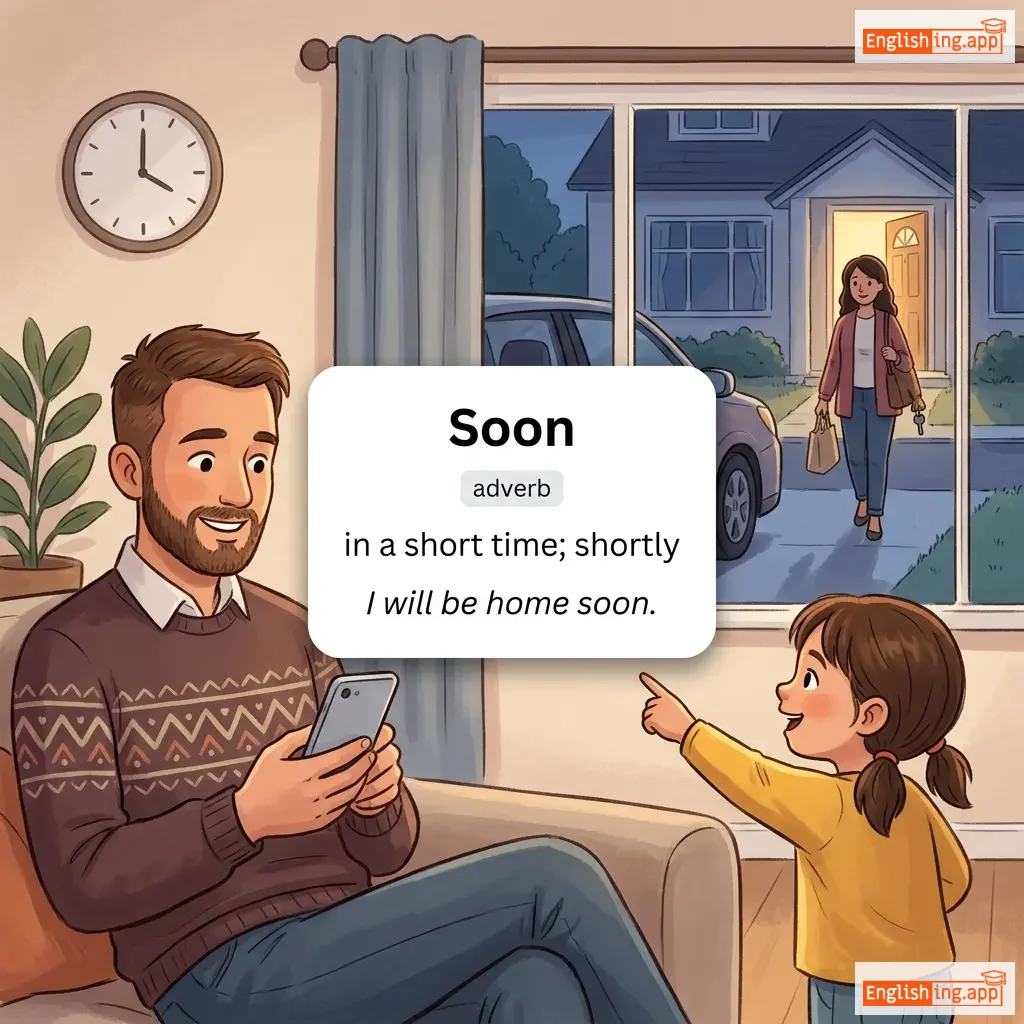
Soon definition card — visual illustration of the meaning
adverb
/suːn/
すぐ (sugu)

in a short time; shortly

"I will be home soon."

"私はすぐ家に帰ります。" (Watashi wa sugu ie ni kaerimasu.)
noun
/suːp/
スープ (suupu)

a liquid dish, typically made with meat, vegetables, or legumes, and often served hot

"She made a delicious tomato soup for dinner."

"彼女は夕食に美味しいトマトスープを作った。" (Kanojo wa yuushoku ni oishii tomato suupu o tsukutta.)
noun
/spæn/
スパン (supan)

the full extent or length of something from one end to another

"The bridge has a span of over 500 meters."

"橋のスパンは500メートル以上です。" (Kyo no supan wa 500 meetoru ijou desu.)
noun
/spæm/
スパム (supamu)

unsolicited or unwanted electronic communication, typically in the form of email

"My inbox is full of spam emails that I need to delete."

"私の受信箱はスパムメールでいっぱいで、削除する必要があります。" (Watashi no jushinbako wa supamu meeru de ippai de, sakujo suru hitsuyou ga arimasu.)
noun
/speɪd/
シャベル (shaberu)

a tool with a flat blade for digging; a playing card suit

"The gardener used a spade to dig holes for planting flowers."

"庭師は花を植えるために穴を掘るためにシャベルを使いました。" (Niwa-shi wa hana o ueru tame ni ana o horu tame ni shaberu o tsukaimashita.)
adjective
/ˈspeɪ.ʃəs/
広々とした; 快適な (hirobirō to shita; kaiteki na)

having a lot of space; roomy and comfortable

"The house has a spacious living room with high ceilings."

"その家には高い天井を持つ広々としたリビングルームがあります。" (Sono ie ni wa takai tenjō o motsu hirobiro to shita ribingu rūmu ga arimasu.)
spaced repetition definition card — visual illustration of the meaning
noun
speɪst ˌrep.ɪˈtɪʃ.ən
間隔反復 (kankaku hanfuku)

A learning technique that involves reviewing information at increasing intervals to improve long-term retention.

"Spaced repetition helps in long-term memory retention."
"スペースド・リピティションは長期記憶を保持するのに役立ちます。" (Supesudo ripitishon wa chouki kioku wo hoji suru no ni yakudachimasu.)
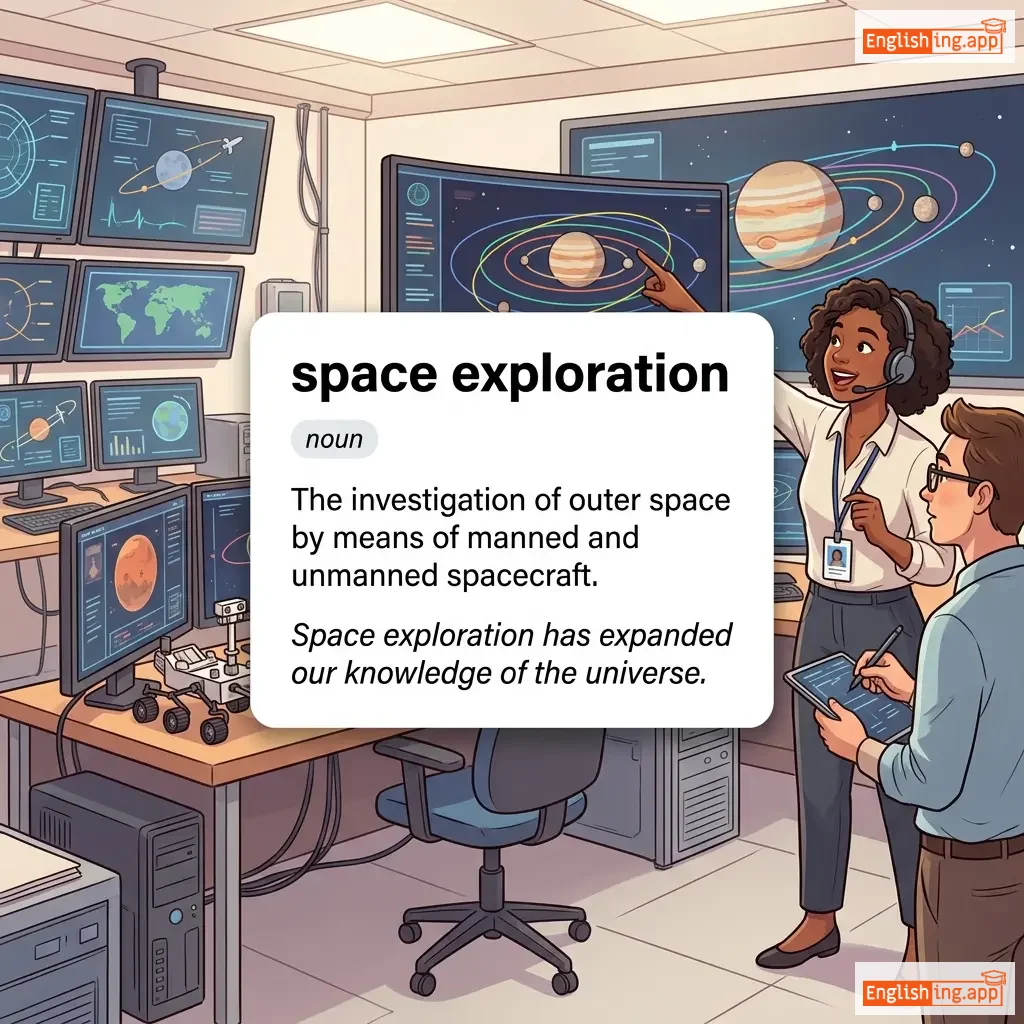
space exploration definition card — visual illustration of the meaning
noun
speɪs ɪksplɔːˈreɪʃən
宇宙探査 (uchū tansa)

The investigation of outer space by means of manned and unmanned spacecraft.

"Space exploration has expanded our knowledge of the universe."
"宇宙探査は私たちの宇宙に対する知識を広げました。" (Uchū tansa wa watashitachi no uchū ni taisuru chishiki o hirogemashita.)
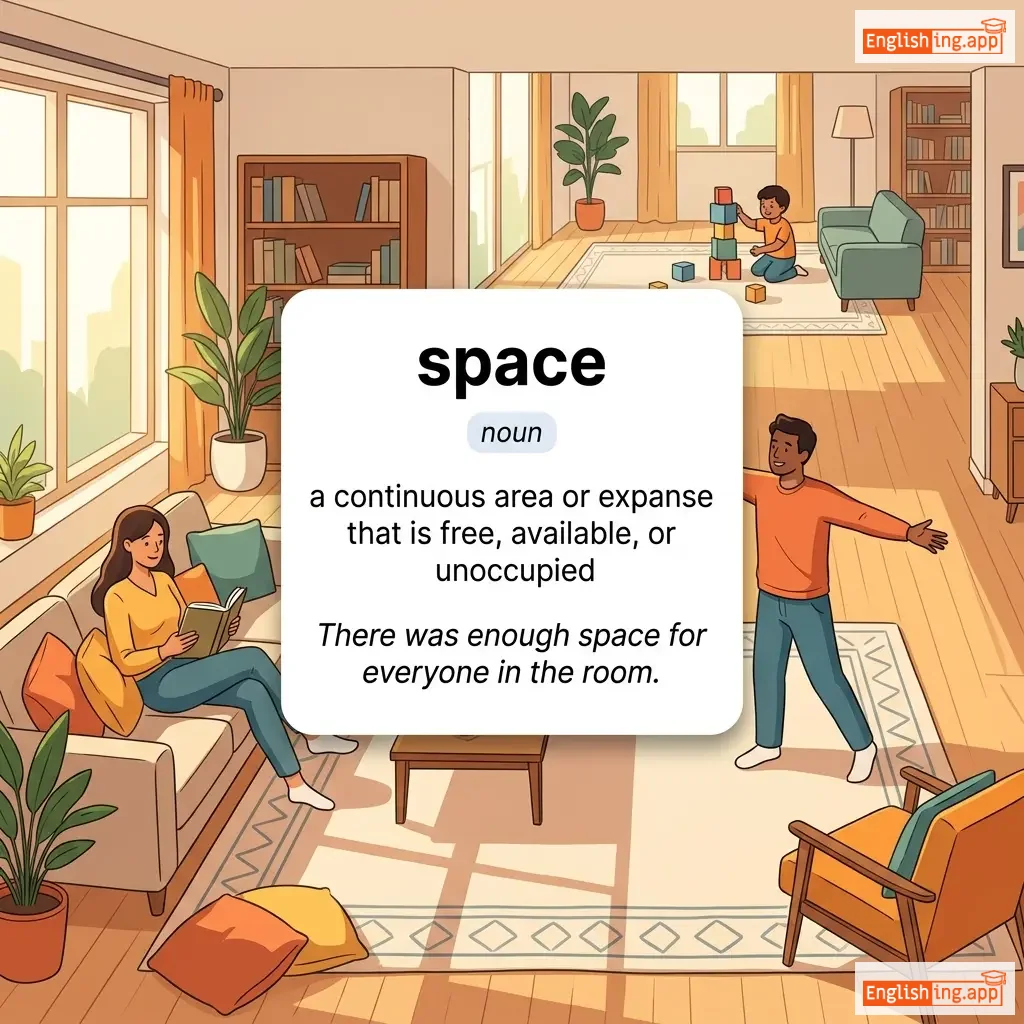
space definition card — visual illustration of the meaning
noun
/speɪs/
スペース (supeesu)

a continuous area or expanse that is free, available, or unoccupied

"There was enough space for everyone in the room."

"部屋には皆が十分なスペースがありました。" (Heya ni wa mina ga juubun na supeesu ga arimashita.)
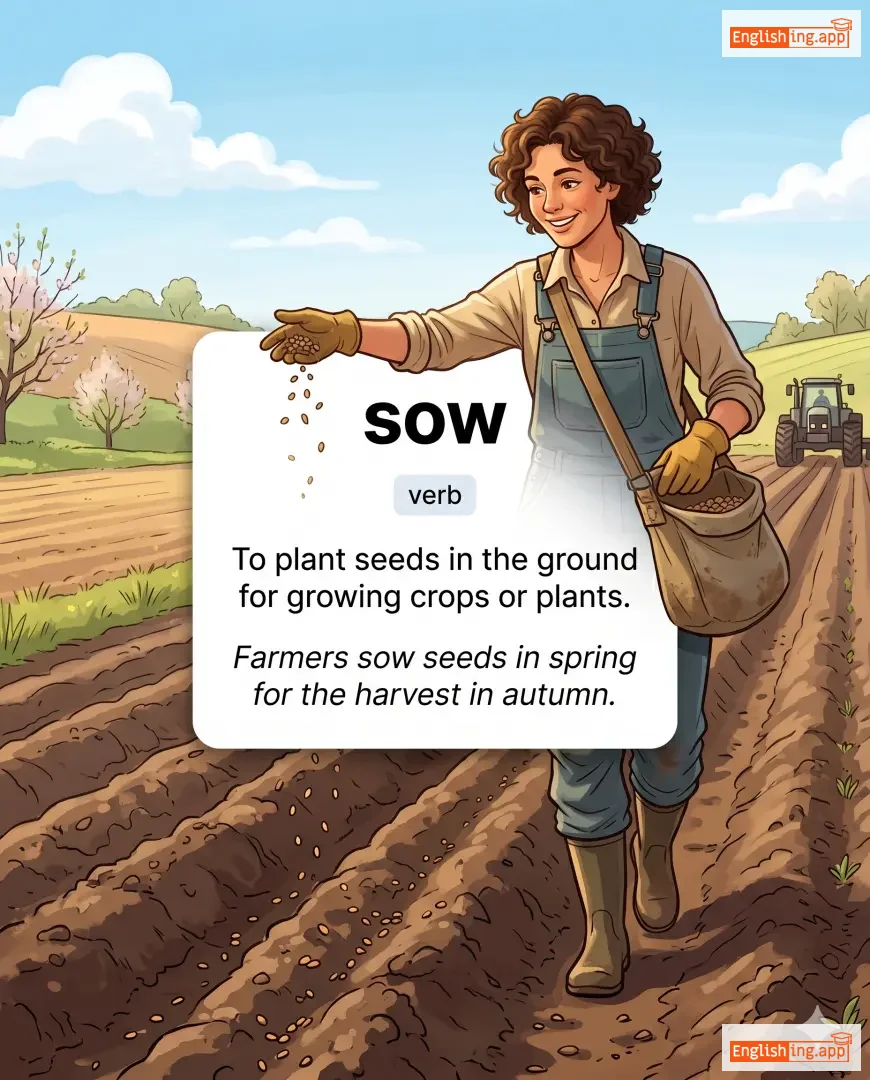
sow definition card — visual illustration of the meaning
verb
/səʊ/
蒔く (maku)

To plant seeds in the ground for growing crops or plants.

"Farmers sow seeds in spring for the harvest in autumn."

"農家は春に種を蒔き、秋に収穫をする。" (Nōka wa haru ni tane o maki, aki ni shūkaku o suru.)
adjective
/ˈsoʊ.vi.ət/
ソビエト (sovieto)

relating to the Soviet Union or its government

"The Soviet era saw significant changes in Eastern Europe."
"ソビエト時代には東ヨーロッパで重要な変化がありました。" (Sobieto jidai niwa higashi yōroppa de jūyō na henka ga arimashita.)
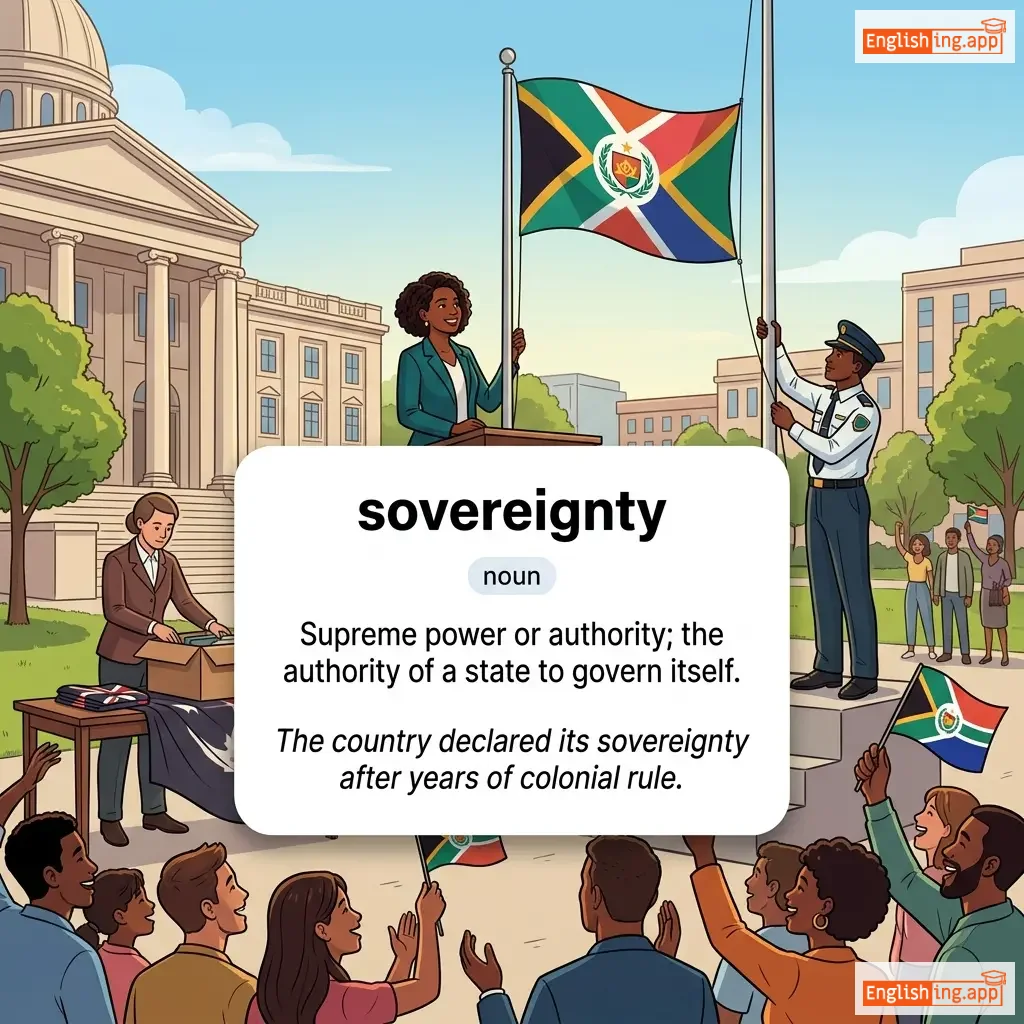
sovereignty definition card — visual illustration of the meaning
noun
/ˈsɒvrənti/
主権 (shuken)

Supreme power or authority; the authority of a state to govern itself.

"The country declared its sovereignty after years of colonial rule."

"その国は植民地支配の後、主権を宣言した。" (Sono kuni wa shokuminchi shihai no ato, shuken o sengen shita.)
sovereign definition card — visual illustration of the meaning
noun/adjective
/ˈsɒvərɪn/
主権 (shuken)

a supreme ruler such as a king; possessing supreme or ultimate power

"The sovereign made a new decree."

"主権者は新しい命令を出しました。" (Shuken-sha wa atarashī meirei o dashimashita.)
noun
/ˌsuːvəˈnɪər/
お土産 (omiyage)

an object kept as a reminder of a place, person, or event

"She bought a small souvenir from Paris."

"彼女はパリから小さなお土産を買いました。" (Kanojo wa Pari kara chiisana omiyage o kaimashita.)
noun
/ˌsaʊθˈwɛst/
南西 (nansei)

the direction that is between south and west; a region in that direction

"They traveled to the southwest of the country for their vacation."

"彼らは休暇のために国の南西部に行きました。" (Karera wa kyūka no tame ni kuni no nansēbu ni ikimashita.)
adjective
/ˈsʌðərn/
南の (minami no)

located in or facing the south; southern regions

"She moved to a southern city for work."

"彼女は仕事のために南の都市に引っ越した。" (Kanojo wa shigoto no tame ni minami no toshi ni hikkoshita.)
noun
/ˌsaʊθˈiːst/
南東 (nantou)

the direction that is between south and east; a region in that direction

"The city is located in the southeast of the country."

"その都市は国の南東に位置しています。" (Sono toshi wa kuni no nantou ni ichi shiteimasu.)
proper noun
/ˌsaʊθ əˈmɛrɪkə/
南アメリカ (minami amerika)

a continent located in the Western Hemisphere, mostly in the Southern Hemisphere

"Brazil is the largest country in South America."

"ブラジルは南アメリカで最も大きな国です。" (Burajiru wa minami amerika de mottomo ookina kuni desu.)
noun/adjective
/saʊθ/
(minami)

the direction towards the bottom of a map, opposite to north

"The sun rises in the east and sets in the south."

"太陽は東で昇り、南で沈みます。" (Taiyō wa higashi de nobori, minami de shizumimasu.)
noun
/sɔːrs/
(minamoto)

a place, person, or thing from which something originates or is obtained

"The internet is a vast source of information."

"インターネットは情報の膨大な源です。" (Intānetto wa jōhō no bōdaina minamoto desu.)
noun
/ˈsaʊər wʊd ˈæp.əl/
ゾウのリンゴ (zou no ringo)

a tropical fruit with hard shell and tangy flesh; elephant apple

"The sour wood apple has a unique taste that many people enjoy."

"ゾウのリンゴはユニークな味があり、多くの人々が楽しんでいます。" (Zou no ringo wa yuniiku na aji ga ari, ooku no hitobito ga tanoshindeimasu)
adjective
/ˈsaʊər/
酸っぱい (suppai)

having an acidic taste; unpleasant or bad-tempered

"The milk has gone sour."

"ミルクが酸っぱくなった。" (Miruku ga suppaku natta.)
noun
/ˈsuːpsɒ̃/
少量 (shoryo)

a very small quantity of something; a trace

"She added just a soupcon of spice to the dish."

"彼女は料理にほんの少しスパイスを加えた。" (Kanojo wa ryori ni honno sukoshi supaisu o kuwaeta.)
soporific definition card — visual illustration of the meaning
adjective
/ˌsɒpəˈrɪfɪk/
幸せ (shiawase)

tending to induce drowsiness or sleep; causing sleepiness

"The professor's lecture was so soporific that half the class fell asleep."

"彼女は賞を受け取ったとき、その幸せを隠すことができませんでした。" (Kanojo wa shō o uketotta toki, sono shiawase o kakusu koto ga dekimasen deshita.)
noun
/ˈsuːθˌseɪər/
占い師 (uranaishi)

a person who claims to predict the future

"The king consulted a soothsayer before going to war."

"王は戦争に行く前に占い師に相談した。" (Ō wa sensō ni iku mae ni uranaishi ni sōdan shita.)
🥖

sop

noun
/sɒp/

a concession or appeasement to pacify someone; also a piece of bread dipped in liquid

"The manager offered a bonus as a sop to the unhappy employees."

noun
/ˈsɒfɪzəm/
詭弁 (kiben)

a clever but misleading argument; fallacious reasoning

"The politician's speech was full of sophism designed to mislead voters."

"その政治家の演説は、有権者を誤導することを目的とした詭弁で満ちていた。" (Sono seijika no enzetsu wa, yūken-sha o godō suru koto o mokuteki to shita kiben de michite ita.)
noun
/ˈsɒfɪst/
詭弁家 (kibenka)

a person who uses clever but misleading arguments

"He was dismissed as a sophist who twisted facts to win debates."

"彼は討論に勝つために事実を歪める詭弁家として解雇されました。" (Kare wa tōron ni katsu tame ni jijitsu o yuzumeru kibenka toshite kaiko saremashita.)
verb
/səˈfɪstɪkeɪt/
洗練する (senren suru)

to make something more complex or refined; to educate or develop in taste and manners

"Traveling abroad helped sophisticate his worldview."
"海外旅行は彼の世界観を洗練させる手助けとなった。" (Kaigai ryokō wa kare no sekaikan o senren saseru tedasuke to natta.)
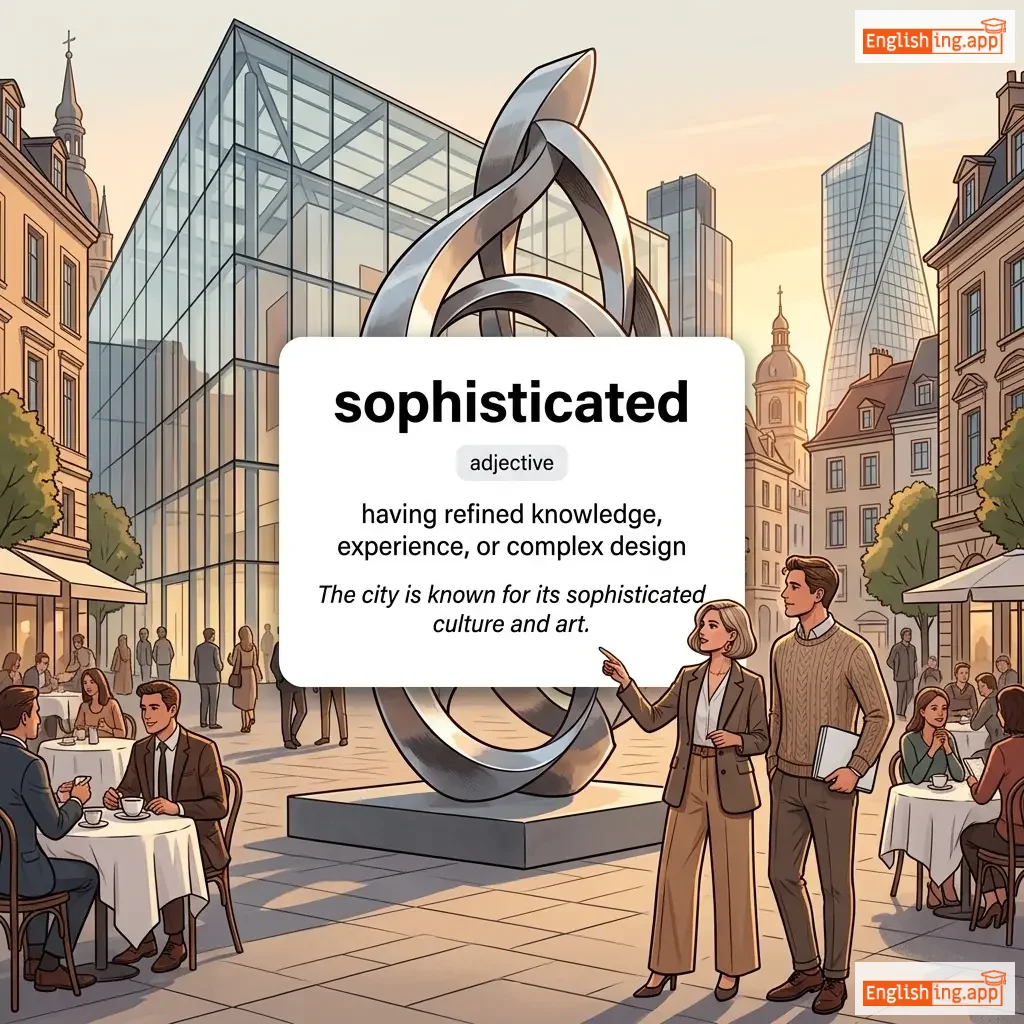
sophisticated definition card — visual illustration of the meaning
adjective
/səˈfɪstɪkeɪtɪd/
洗練された (senrensareta)

having refined knowledge, experience, or complex design

"The city is known for its sophisticated culture and art."
"この都市はその洗練された文化と芸術で知られています。" (Kono toshi wa sono senrensareta bunka to geijutsu de shirareteimasu.)
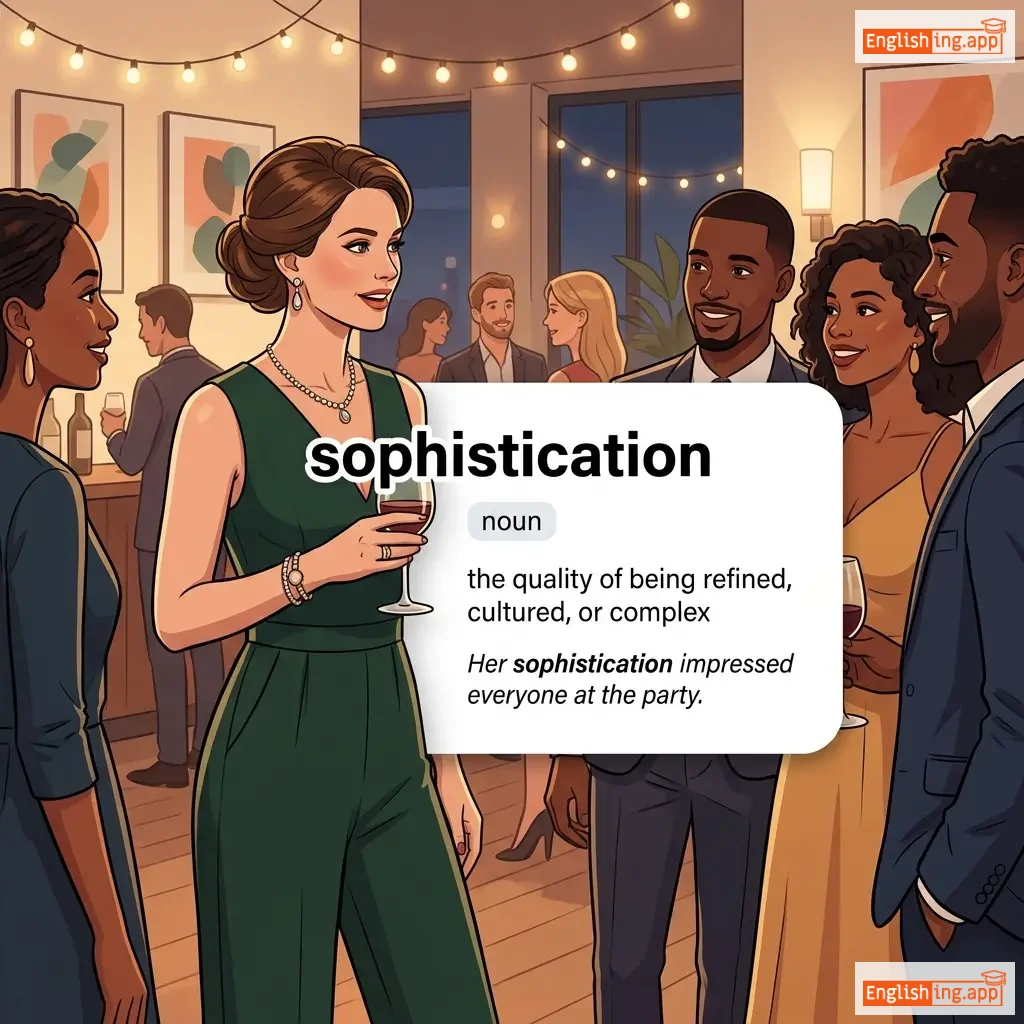
sophistication definition card — visual illustration of the meaning
noun
/səˌfɪstɪˈkeɪʃən/
洗練 (senren)

the quality of being refined, cultured, or complex

"Her sophistication impressed everyone at the party."

"彼女の洗練はパーティーで皆を感動させました。" (Kanojo no senren wa pātī de mina o kandō sasemashita.)
noun
/ˈsɒfɪstri/
詭弁 (kiben)

the use of clever but false arguments, often to deceive

"The politician's speech was full of sophistry."

"その政治家の演説は詭弁に満ちていた。" (Sono seijika no enzetsu wa kiben ni michite ita.)
noun
/ˈsɑːfmɔːr/
二年生 (ninen-sei)

a student in their second year of study at a university or high school

"He’s a sophomore in college, studying computer science."

"彼は大学で2年生で、コンピュータサイエンスを勉強しています。" (Kare wa daigaku de ninen-sei de, konpyūta saiensu o benkyō shiteimasu.)
adjective
/ˌsɒfəˈmɒrɪk/
未熟 (mijuku)

showing immaturity and overconfidence, like a sophomore

"His sophomoric behavior embarrassed his friends."

"彼の未熟な行動は友人たちを恥ずかしい思いにさせた。" (Kare no mijuku na kōdō wa yūjin-tachi o hazukashī omoi ni saseta.)
noun
/ˈsɑːroʊ/
悲しみ (kanashimi)

a feeling of deep sadness or grief

"She was filled with sorrow after the loss of her friend."

"彼女は友達を失った後、悲しみに満たされていました。" (Kanojo wa tomodachi o ushinatta ato, kanashimi ni mitasarete imashita.)
adjective
/ˈsaʊnd.pruːf/
防音; 音の出入りを防ぐ (bōon)

impervious to sound; preventing sound from entering or leaving

"The recording studio has sound-proof walls."

"レコーディングスタジオには防音壁があります。" (rekōdingu sutajio ni wa bōon kabe ga arimasu.)
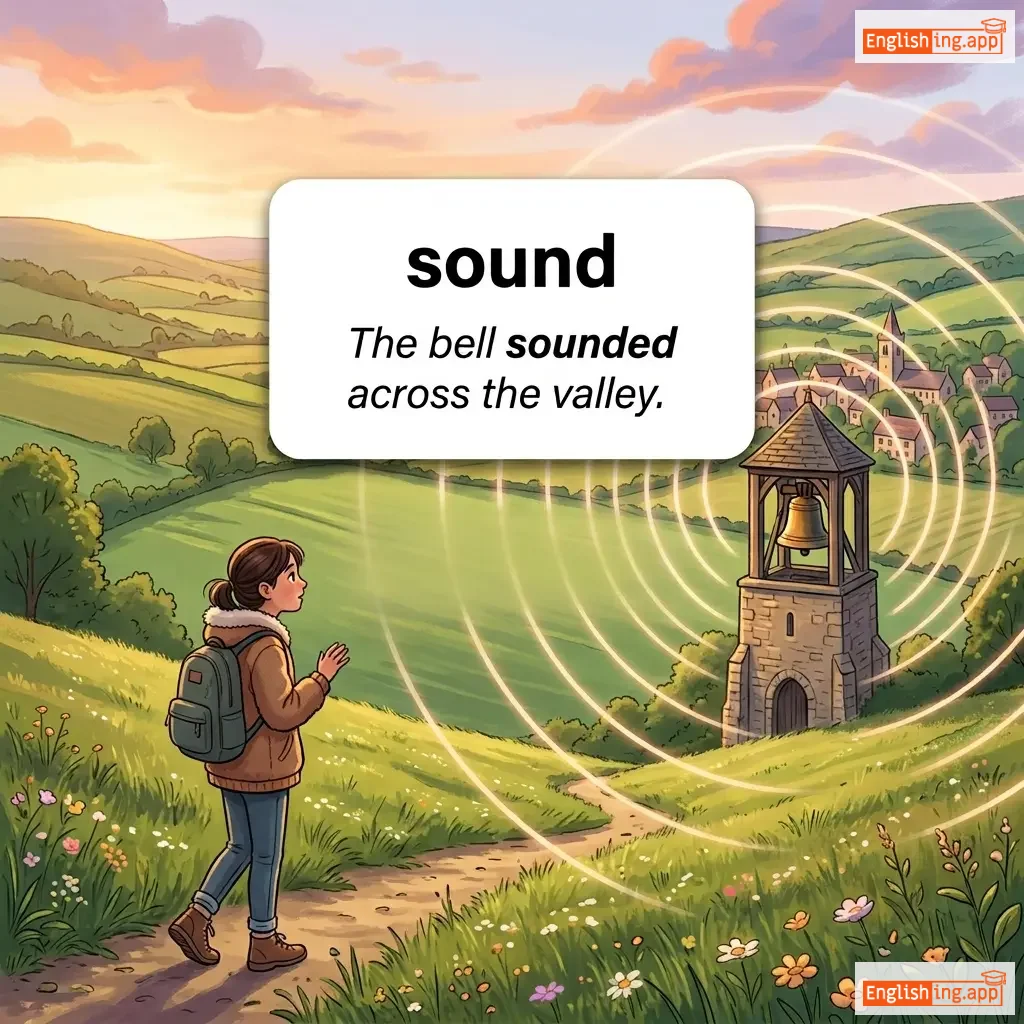
sound definition card — visual illustration of the meaning
🔊

sound

noun, verb, adjective
/saʊnd/

a sensation perceived by the ear; to make or cause to make a noise; in good condition

"The bell sounded across the valley."

Soul definition card — visual illustration of the meaning
noun
/soʊl/
(tamashī)

the spiritual or immaterial part of a person, often thought of as eternal

"She believed her soul would live on after death."

"彼女は死後も自分の魂が生き続けると信じていました。" (Kanojo wa shigo mo jibun no tamashī ga ikitsuzukeru to shinjiteimashita.)
verb
/sɔːrt/
並べ替える (narabekaeru)

to arrange or categorize something

"Please sort the files by date."
"ファイルを日付順にソートしてください。" (Fairu o hizuke-jun ni sōto shite kudasai.)
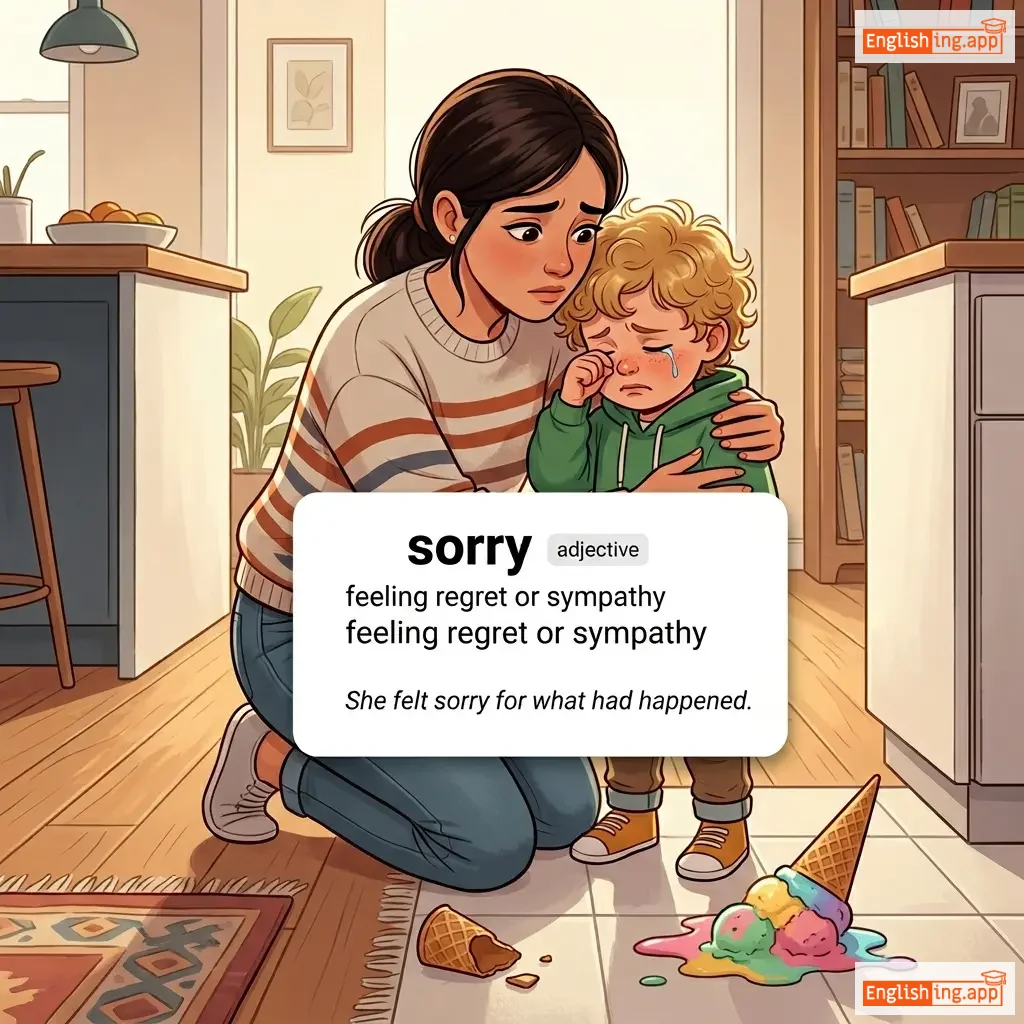
sorry definition card — visual illustration of the meaning
adjective
/ˈsɔːri/
ごめん (gomen)

feeling regret or sympathy

"She felt sorry for what had happened."

"彼女は起こったことを後悔していた。" (Kanojo wa okotta koto o kōkai shite ita.)
sordid definition card — visual illustration of the meaning
adjective
/ˈsɔːrdɪd/
卑劣な (hiretsuna)

involving immoral or dishonorable actions; dirty or unpleasant

"The newspaper exposed the politician's sordid past."

"新聞は政治家の卑劣な過去を暴露した。" (Shimbun wa seijika no hiretsuna kako o bakuro shita.)
noun
/səˈprɑːnoʊ/
女性または子供の最も高い歌声 (josei matawa kodomo no mottomo takai utagoe)

the highest female or boy’s singing voice

"She sang beautifully in the soprano range during the concert."

"彼女はコンサートでソプラノの範囲で美しく歌いました。" (Kanojo wa konsaato de soprano no han'i de utsukushiku utaimashita.)
noun
/ˈsɔːrsəri/
魔法 (mahou)

the use of magical powers, especially through spells and enchantments

"The villagers believed the illness was caused by sorcery."
"村人たちは病気が魔法によって引き起こされたと信じていました。" (Murabito-tachi wa byouki ga mahou ni yotte hikiokosareta to shinjiteimashita.)
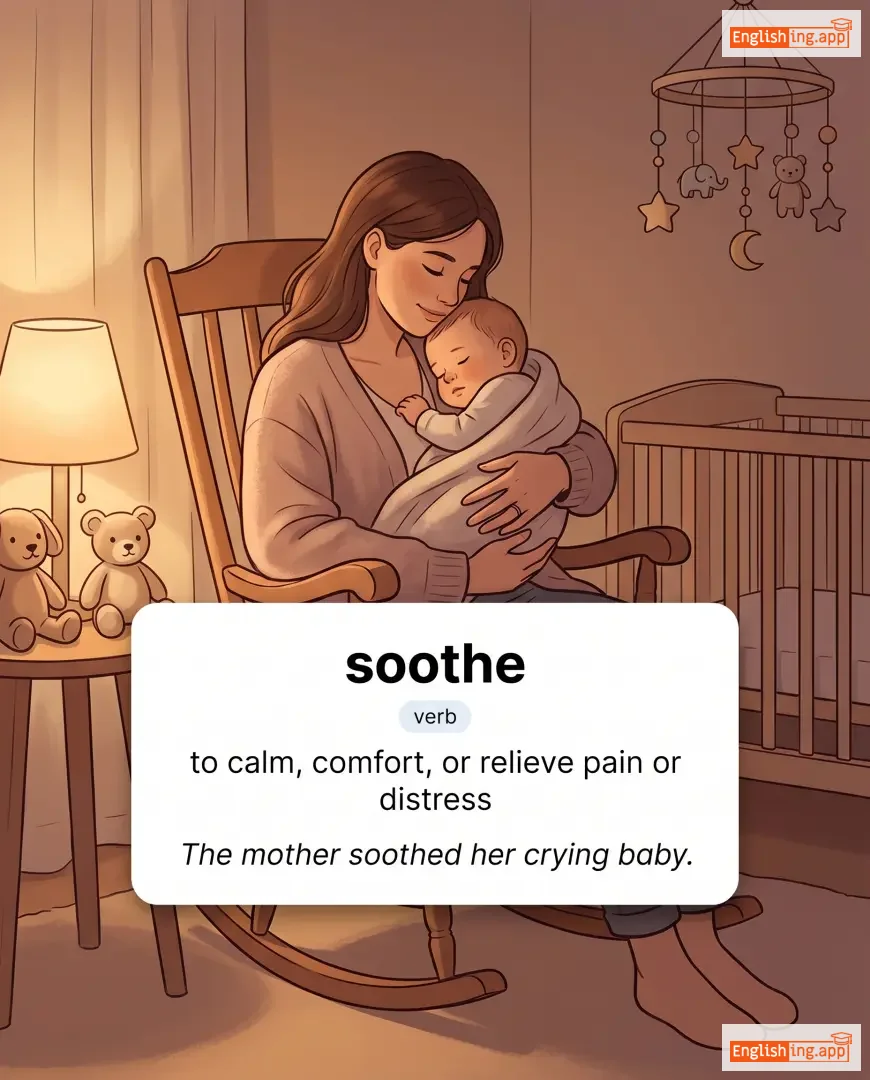
soothe definition card — visual illustration of the meaning
verb
/suːð/
和らげる (yawarageru)

to calm, comfort, or relieve pain or distress

"The mother soothed her crying baby."

"母親は泣いている赤ちゃんを慰めました。" (Hahaoya wa naiteiru akachan o nagusamemashita.)
adjective
/sɔːr/
痛い (itai)

painful or aching, usually in a specific part of the body

"After the long run, my legs were sore."

"長いランニングの後、私の足は痛かった。" (nagai running no ato, watashi no ashi wa itakatta)