語彙集

英単語辞書 | 単語の意味、定義、例文

noun
/spuːn/
スプーン (supūn)

a utensil consisting of a small shallow bowl with a handle, used for eating, stirring, or serving food

"She stirred her coffee with a silver spoon."

"彼女は銀のスプーンでコーヒーをかき混ぜました。" (Kanojo wa gin no supūn de kōhī o kakimazemashita.)
noun
/ˈspuːnərɪzəm/
スプーナリズム (supunarizumu)

A verbal error in which the initial sounds of words are swapped to create a humorous effect.

"He made a spoonerism by saying 'queer old dean' instead of 'dear old queen'."
"彼は『変な老院長』と言って『親愛なる老女王』の代わりにスプーナリズムを作った。" (Kare wa 'hen na rōin chō' to itte 'shin'ai naru rō joō' no kawari ni supunarizumu o tsukutta.)
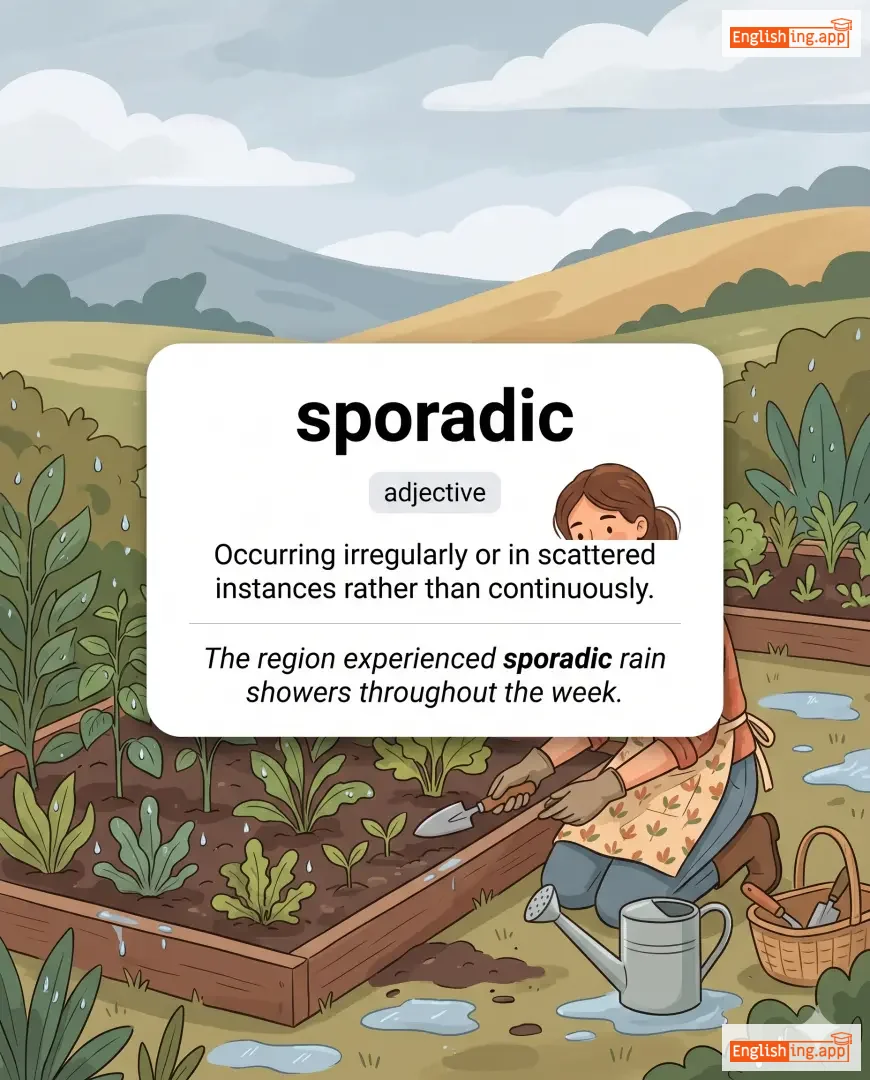
sporadic definition card — visual illustration of the meaning
adjective
/spəˈrædɪk/
散発的 (sanpatsuteki)

Occurring irregularly or in scattered instances rather than continuously.

"The region experienced sporadic rain showers throughout the week."

"その地域は1週間にわたって散発的な雨が降りました。" (Sono chiiki wa 1 shūkan ni watatte sanpatsuteki na ame ga furimashita.)
noun
/spɔːt/
スポーツ (supōtsu)

an activity involving physical exertion and skill in which an individual or team competes against another or others for entertainment

"Football is a popular sport around the world."

"サッカーは世界中で人気のスポーツです。" (Sakkā wa sekaijū de ninki no supōtsu desu.)
adjective
/ˈspɔːrtɪv/
スポーティブ (supōtibu)

Playful, lively, or full of fun.

"The children were in a sportive mood during the picnic."

"子供たちはピクニック中にスポーティブな気分でした。" (Kodomotachi wa pikunikku-chū ni supōtibu na kibun deshita.)
noun
/ˈspɔːrtsmən/
スポーツ選手 (supotsu senshu)

A person who is skilled in sports or enjoys participating in athletic activities.

"He is a true sportsman, always fair and respectful to his opponents."
"彼は本物のスポーツ選手で、常に相手に対して公正で尊敬を示す。" (Kare wa honmono no supotsu senshu de, tsune ni aite ni taishite kousei de sonkei o shimesu.)
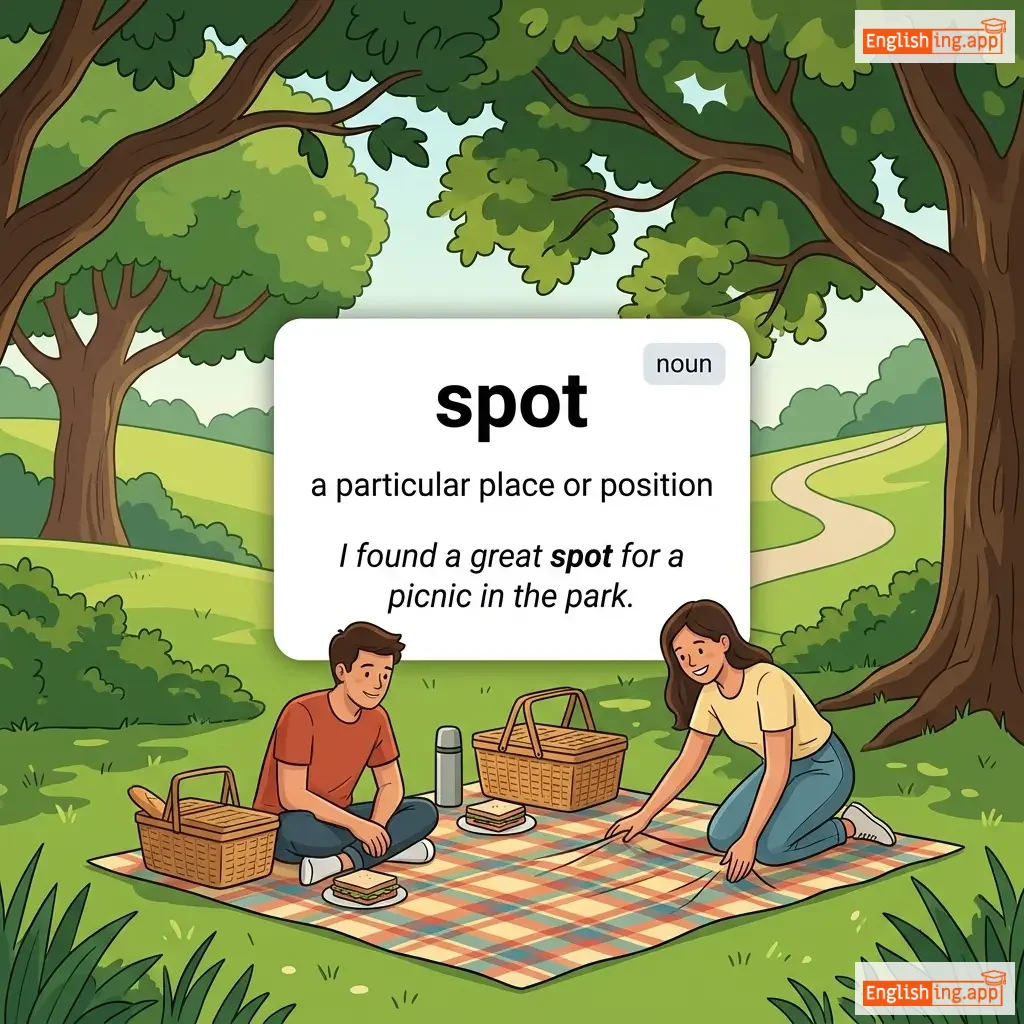
spot definition card — visual illustration of the meaning
noun
/spɒt/
場所 (basho)

a particular place or position

"I found a great spot for a picnic in the park."

"公園でピクニックをするための素晴らしい場所を見つけました。" (Kouen de pikunikku o suru tame no subarashii basho o mitsukemashita.)
noun
/ˈspɒt.laɪt/

a strong beam of light directed onto a particular area; figuratively, public attention

"The singer stood proudly in the spotlight."

adjective
/ˈspɒtɪd/
斑点のある; 見られた; マークされた (hanten no aru; mirareta; māku sareta)

having spots or marks; noticed or seen

"The spotted leopard moved silently through the jungle."

"斑点のあるヒョウはジャングルを静かに歩いた。" (Hanten no aru hyou wa janguru o shizuka ni aruita.)
noun
/ˈspɒt.ɪd sneɪk hed/
カムルチー (kamuruchi)

a type of freshwater fish with spotted markings and an elongated head resembling a snake

"The spotted snake head is a popular fish for aquaculture in South Asia."

"カムルチーは南アジアで人気のある養殖魚です。" (kamuruchi wa minami ajia de ninki no aru yoshokugyo desu)
noun
/spaʊs/
配偶者 (haiguusha)

a person's husband or wife

"Each employee may include their spouse in the health insurance plan."

"各従業員は配偶者を健康保険プランに含めることができます。" (Kaku juugyouin wa haiguusha o kenkou hoken puran ni fukumeru koto ga dekimasu.)
noun, verb
/spreɪn/
捻挫 (nenza)

an injury to a joint in which the ligaments are stretched or torn

"She sprained her ankle while running in the park."

"公園で走っているときに足首をねんざした。" (Kōen de hashitte iru toki ni ashi kubi o nenza shita.)
verb
/spreɪ/
スプレーする (supuree suru)

to apply liquid to something in a fine mist

"She sprayed perfume on her wrist before leaving."

"彼女は出かける前に手首に香水をスプレーしました。" (Kanojo wa dekakeru mae ni tekubi ni kōsui o supurē shimashita.)
verb
/sprɛd/
広げる (hirogeru)

to open or extend something over an area

"She spread the blanket on the grass for a picnic."

"彼女はピクニックのために草の上に毛布を広げました。" (Kanojo wa pikunikku no tame ni kusa no ue ni mōfu o hirogemashita.)
adjective
/ˈspraɪtli/
活発な (kappatsu na)

full of energy and life; lively

"The sprightly old man danced with joy at the wedding."

"活発な老紳士は結婚式で喜びながら踊った。" (Kappatsu na rō shinshi wa kekkonshiki de yorokobi nagara odotta.)
noun
/sprɪŋ/
(haru)

the season between winter and summer when plants begin to grow

"Flowers bloom in the spring."

"春には花が咲きます。" (Haru ni wa hana ga sakimasu.)
verb
/ˈsprɪŋkəl/

to scatter small drops or particles of a substance over a surface

"She sprinkled sugar on top of the cake."

verb, noun
/spraʊt/
発芽する (hatsuga suru)

to begin to grow; to produce new leaves or shoots

"The seeds began to sprout after a few days of rain."

"種は数日間の雨の後に発芽し始めました。" (Tane wa sūjitsukan no ame no ato ni hatsuga shi hajimemashita.)
verb, adjective, noun
/spruːs/
整える / 一種の木 (tonoeru / isshu no ki)

to make neat or tidy in appearance; also refers to an evergreen tree

"He spruced up his room before the guests arrived."

"彼はゲストが到着する前に部屋を整えました。" (Kare wa gesuto ga tōchaku suru mae ni heya o totonoemashita.)
adjective
/spraɪ/
活発 (kappatsu)

active and lively, especially in old age

"The spry grandmother surprised everyone with her quick dance steps."

"活発な祖母は素早いダンスステップで皆を驚かせました。" (Kappatsu na sobo wa subayai dansu suteppu de mina o odorokasemashita.)
noun
/spjuːm/
(awa)

Froth or foam, especially found on waves or liquids.

"The waves crashed against the rocks, leaving spume in the air."

"波が岩にぶつかり、空気中に泡を残した。" (Nami ga iwa ni butsukari, kuuchichuu ni awa wo nokoshita.)
verb
/spɜːr/
促す / 奨励する (unagasu / shōrei suru)

To encourage or motivate someone to take action.

"The teacher's praise spurred him to study harder."

"教師の賞賛は彼にもっと一生懸命勉強するように促した。" (Kyōshi no shōsan wa kare ni motto isshōkenmei benkyō suru yō ni unagashita.)
adjective
/ˈspjʊəriəs/
偽の / 虚偽の (nise no / kyogi no)

Not genuine, authentic, or true; false or fake.

"The report was based on spurious claims."

"その報告書は偽の主張に基づいていた。" (Sono houkokusho wa nise no shuchou ni motozuite ita.)
verb
/spɜːrn/
軽蔑して拒絶する (keibetsu shite kyozetsu suru)

To reject something or someone with disdain or contempt.

"She spurned his offer of help."

"彼女は軽蔑の気持ちで彼の助けの申し出を拒絶した。" (Kanojo wa keibetsu no kimochi de kare no tasuke no mōshide o kyozetsu shita.)
🕵️‍♂️

spy (supai)

verb
/spaɪ/
スパイする (supai suru)

to secretly collect information about a person, group, or country

"He was caught spying on his neighbor through the window."

"彼は窓越しに隣人をスパイしているところを捕まえられた。" (Kare wa madogoshi ni rinjin o supai shite iru tokoro o tsukamaerareta.)
verb
/ˈskwɒbəl/
些細なことで口論する (sasai na koto de kōron suru)

To argue noisily over something small or unimportant.

"The children squabbled over the last piece of cake."
"子供たちはケーキの最後の一切れを巡って争っていました。" (Kodomotachi wa kēki no saigo no hitokire o megutte arasotte imashita.)
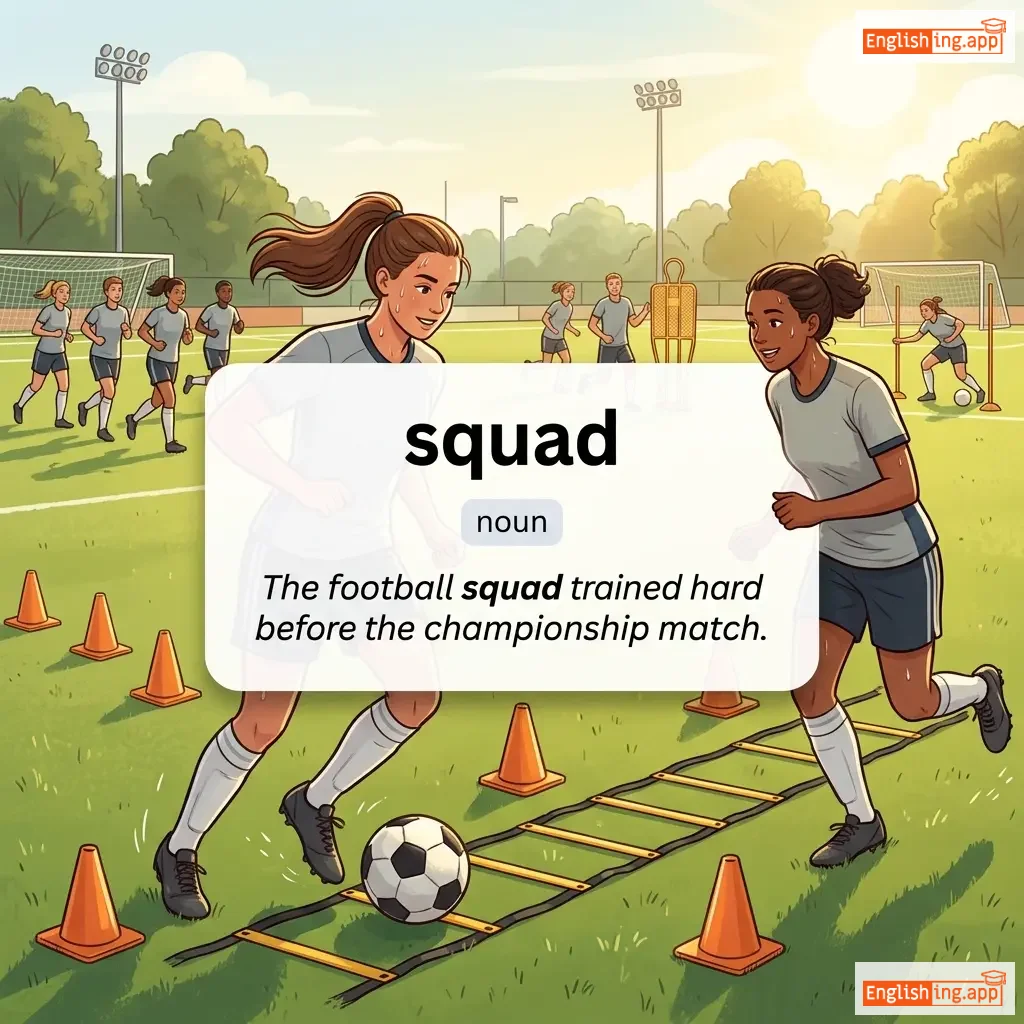
squad definition card — visual illustration of the meaning
noun
/skwɒd/
チーム (chiimu)

a small group of people organized for a specific purpose or task, often in the military or sports

"The football squad trained hard before the championship match."

"サッカーチームはチャンピオンシップの試合の前に一生懸命練習した。" (Sakkaa chiimu wa chanpionship no shiai no mae ni isshoukenmei renshuu shita.)
adjective
/ˈskwɒlɪd/
非常に汚い (hijō ni kitanai)

extremely dirty and unpleasant, often due to poverty or neglect

"He lived in a squalid room with broken furniture."

"彼は壊れた家具のある汚い部屋に住んでいた。" (Kare wa kowareta kagu no aru kitanai heya ni sunde ita.)
noun
/skwɔːl/
突風 (toppu)

a sudden violent gust of wind, often accompanied by rain, snow, or sleet

"A sudden squall caught the sailors off guard."
"突然の突風が船員たちを驚かせた。" (Totsuzen no toppu ga sen'in tachi wo odorokaseta.)
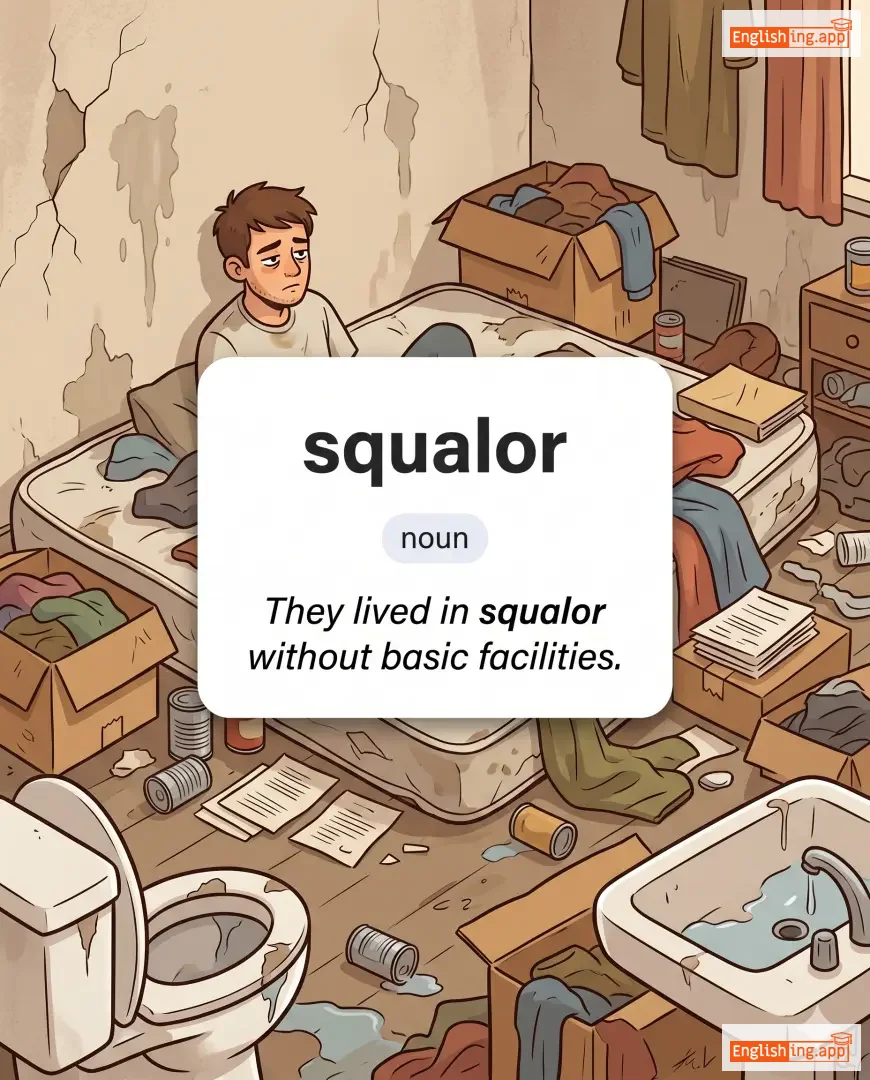
squalor definition card — visual illustration of the meaning
noun
/ˈskwɒlər/
貧困 (hinkon)

the state of being extremely dirty and unpleasant, especially due to poverty or neglect

"They lived in squalor without basic facilities."

"彼らは基本的な施設なしで貧困に住んでいました。" (Karera wa kihonteki na shisetsu nashi de hinkon ni sundeimashita.)
squander definition card — visual illustration of the meaning
verb
/ˈskwɒndər/
浪費する (rouhi suru)

to waste something, especially money or time, in a reckless or foolish manner

"He squandered all his savings on gambling."

"彼はギャンブルに全ての貯金を浪費した。" (Kare wa gyanburu ni subete no chokin o rouhi shita.)
noun
/skwɛə(r)/
四角形 (shikakkei)

a shape with four equal straight sides and four right angles

"The table has a square shape."

"テーブルは四角い形をしています。" (Tēburu wa shikakai katachi o shiteimasu.)
adjective
/ˈstɔːlwərt/
忠実, 頑強 (chuujitsu, gankyō)

Loyal, reliable, and hardworking; strongly built or sturdy.

"She has always been a stalwart supporter of the community."

"彼女は常にコミュニティの忠実な支持者でした。" (Kanojo wa tsuneni komyuniti no chuujitsuna shijisha deshita.)
adjective
/ˈsteɪ.dʒi/
過剰に演劇的 (kajou ni engekiteki)

Overly theatrical, artificial, or exaggerated in manner or style.

"Her performance felt stagy and unnatural."

"彼女のパフォーマンスは過剰に演劇的で不自然に感じられた。" (Kanojo no pafomansu wa kajou ni engekiteki de fushizen ni kanjirareta.)
adjective
/steɪd/
堅実、尊敬される (kenjitsu, sonkei sareru)

Serious, respectable, and unadventurous.

"He came from a staid family background."

"彼は堅実な家庭から来た。" (Kare wa kenjitsu na katei kara kita.)
🩸

Stain

verb
/steɪn/

to mark or discolor something permanently; a spot or mark left behind

"The coffee spilled and stained the tablecloth."

noun
/stɛə/
階段 (kaidan)

a step or set of steps leading from one level to another

"He tripped on the stair and fell down."

"彼は階段でつまずいて転んだ。" (Kare wa kaidan de tsumazuite koronda.)
noun, verb
/steɪk/
株式, リスク (kabushiki, risuku)

A share or interest in a business or venture; to risk or support something of value.

"He has a major stake in the new company."
"彼は新しい会社に大きな利害関係を持っています。" (Kare wa atarashī kaisha ni ōkina rigai kankei o motteimasu.)
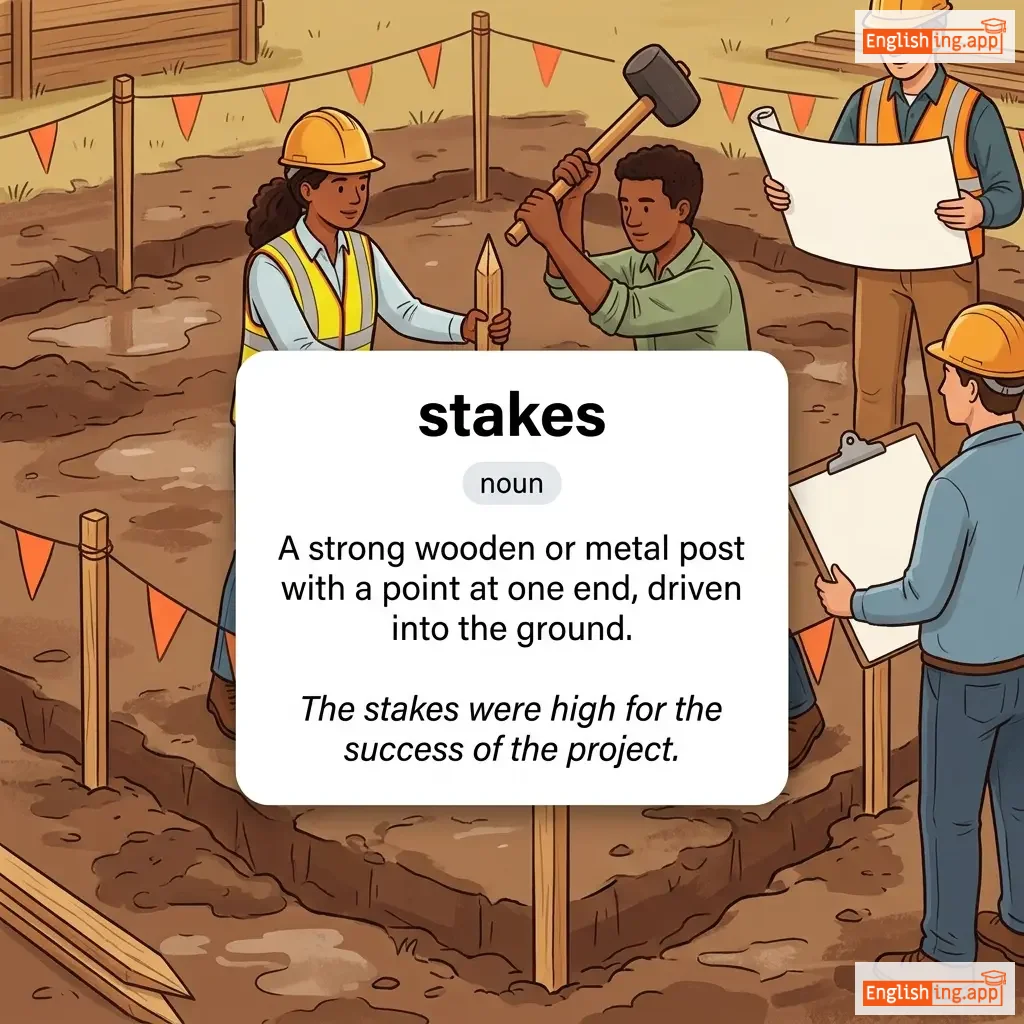
stakes definition card — visual illustration of the meaning
noun
steɪks
賭け (kake)

A strong wooden or metal post with a point at one end, driven into the ground.

"The stakes were high for the success of the project."

"プロジェクトの成功のために賭けが大きかった。" (Purojekuto no seikou no tame ni kake ga ookikatta.)
adjective
/steɪl/
古くなった; しけた; 新鮮でない (furukunatta; shiketa; shinsen de nai)

no longer fresh; lacking originality or novelty

"The bread became stale after sitting out for three days."

"パンは三日後に古くなった。" (Pan wa mikka go ni furukunatta.)
noun
/ˈsteɪl.meɪt/
行き詰まり (ikizumari)

A situation in which no progress can be made or no party can win.

"Negotiations ended in a stalemate."

"交渉は行き詰まりました。" (Kōshō wa ikizumarimashita.)
verb, noun
/stɔːl/
止める, 屋台 (tomeru, yatai)

to stop or cause to stop temporarily; a small shop or stand

"The car stalled on the way to the office."

"車はオフィスに向かう途中で停まった。" (Kuruma wa ofisu ni mukau tochu de tomatta.)
noun
/ˈstæl.i.ən/
繁殖用の牡馬 (han shokuyou no osuma)

An adult male horse that is not castrated, often used for breeding.

"The farm owns a powerful stallion for breeding purposes."

"その農場は繁殖用の強力なスタリオンを所有しています。" (Sono noujou wa hanshoku you no kyouryoku na sutarion wo shoyuu shiteimasu.)
noun
/stæns/
立場 (tachiba)

a person's attitude, opinion, or position on an issue

"The company took a strong stance on environmental protection."
"その会社は環境保護に強い立場を取った。" (Sono kaisha wa kankyō hogo ni tsuyoi tachiba o totta.)
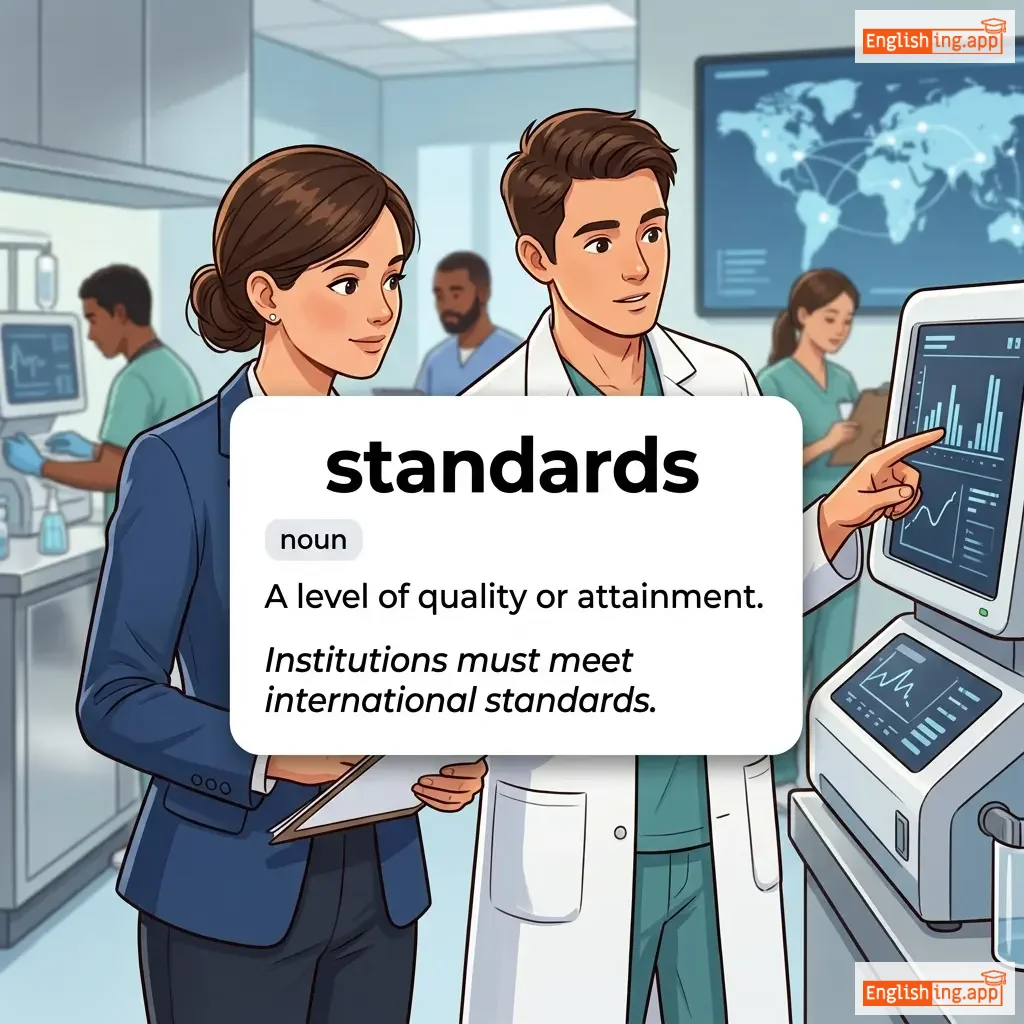
standards definition card — visual illustration of the meaning
noun
ˈstæn.dədz
基準 (kijun)

A level of quality or attainment.

"Institutions must meet international standards."
"機関は国際基準を満たさなければならない。" (Kikan wa kokusai kijun o mitasanakereba naranai.)
noun
/ˈstændərd/

a level of quality or achievement, or a measure of comparison

"This car meets all the safety standards."

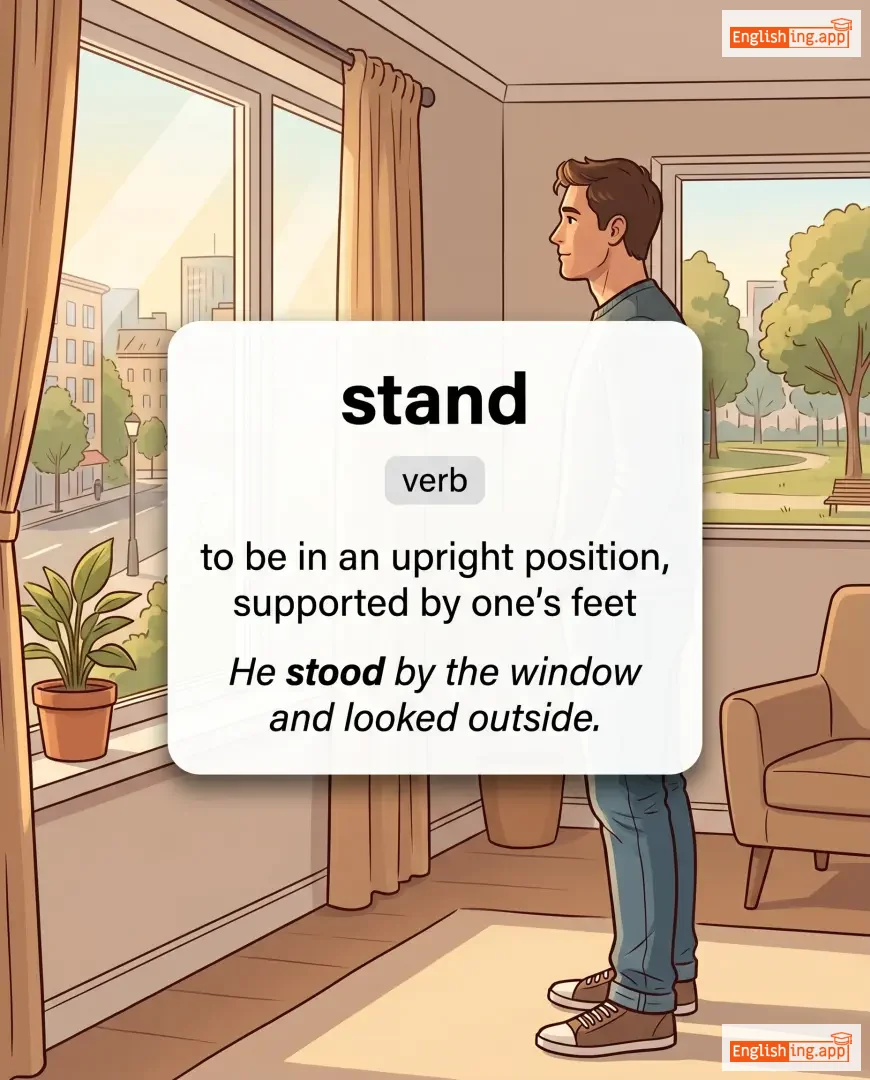
stand definition card — visual illustration of the meaning
verb
/stænd/
立つ (tatsu)

to be in an upright position, supported by one's feet

"He stood by the window and looked outside."

"彼は窓のそばに立って外を見ていました。" (Kare wa mado no soba ni tatte soto wo miteimashita.)
noun
/ˈstænʃən/
支柱 (shichū)

a strong upright bar or post used as support or to control movement

"The red rope was attached to the stanchions to guide the crowd."

"赤いロープは群衆を導くためにスタンションに取り付けられていた。" (Akai rūpu wa gunshū o michibiku tame ni sutanshon ni toritsukerarete ita.)
verb
/stɑːntʃ/
止血する (shiketsu suru)

to stop the flow of blood or liquid from a wound or source

"The nurse quickly stanched the bleeding from the cut."

"看護師はすぐに切り傷からの出血を止めました。" (kangoshi wa sugu ni kirikizu kara no shukketsu wo tome mashita)
📮

stamp

verb
/stæmp/

To bring down (one's foot) heavily on the ground; to imprint a mark or seal.

"She stamped her foot in frustration."