Vocabularios

Descubra, aprenda y domine el vocabulario en inglés

noun
/spuːn/
cucharón (cucharón)

a utensil consisting of a small shallow bowl with a handle, used for eating, stirring, or serving food

"She stirred her coffee with a silver spoon."

"Ella removió su café con una cuchara de plata." (Ella removió su café con una cuchara de plata.)
noun
/ˈspuːnərɪzəm/
espúnarismo (espoonarismo)

A verbal error in which the initial sounds of words are swapped to create a humorous effect.

"He made a spoonerism by saying 'queer old dean' instead of 'dear old queen'."

"Hizo un espúnarismo al decir 'querido viejo dean' en lugar de 'querida vieja reina'." (Hizo un espúnarismo al decir 'querido viejo dean' en lugar de 'querida vieja reina'.)
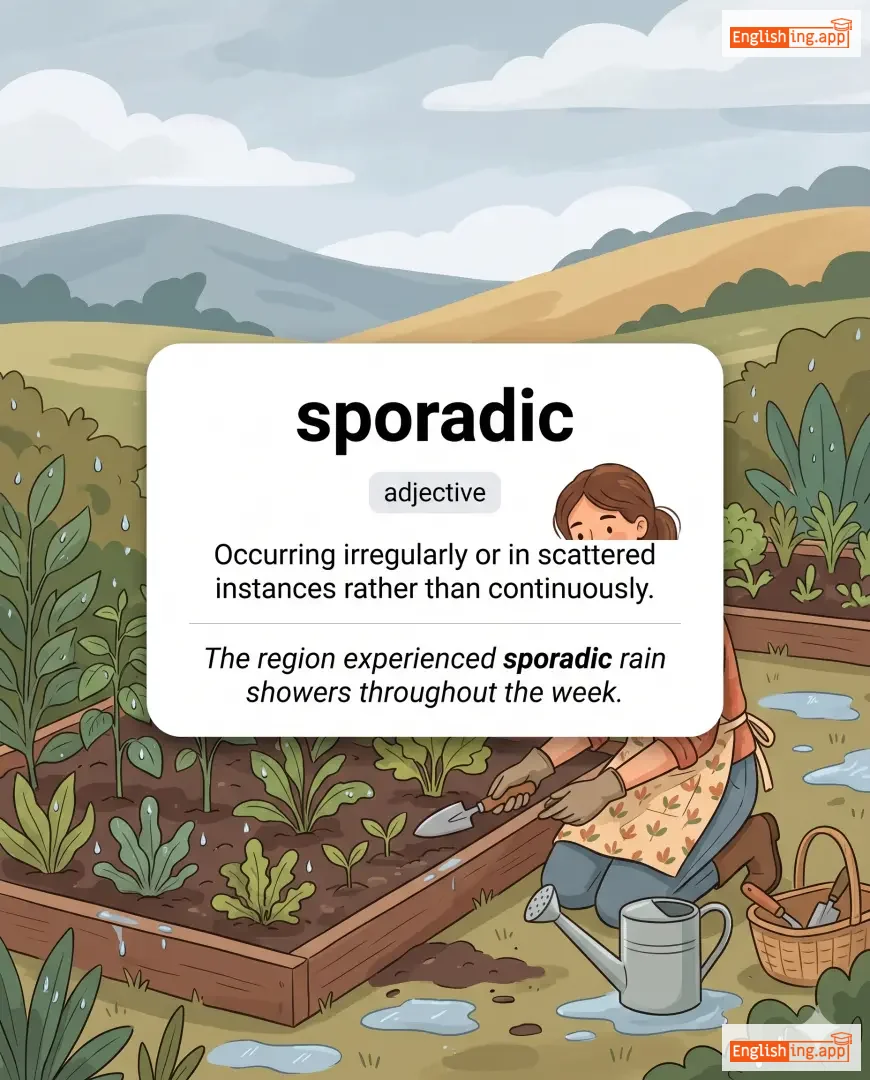
sporadic definition card — visual illustration of the meaning
adjective
/spəˈrædɪk/
esporádico (esporadico)

Occurring irregularly or in scattered instances rather than continuously.

"The region experienced sporadic rain showers throughout the week."

"La región experimentó lluvias esporádicas durante toda la semana." (La región experimentó lluvias esporádicas durante toda la semana.)
noun
/spɔːt/
deporte (deporte)

an activity involving physical exertion and skill in which an individual or team competes against another or others for entertainment

"Football is a popular sport around the world."

"El fútbol es un deporte popular en todo el mundo." (El futbol es un deporte popular en todo el mundo.)
adjective
/ˈspɔːrtɪv/
deportivo (deportivo)

Playful, lively, or full of fun.

"The children were in a sportive mood during the picnic."

"Los niños estaban en un estado de ánimo deportivo durante el picnic." (Los ninos estaban en un estado de animo deportivo durante el picnic.)
noun
/ˈspɔːrtsmən/
deportista (deportista)

A person who is skilled in sports or enjoys participating in athletic activities.

"He is a true sportsman, always fair and respectful to his opponents."

"Él es un verdadero deportista, siempre justo y respetuoso con sus oponentes." (El es un verdadero deportista, siempre justo y respetuoso con sus oponentes.)
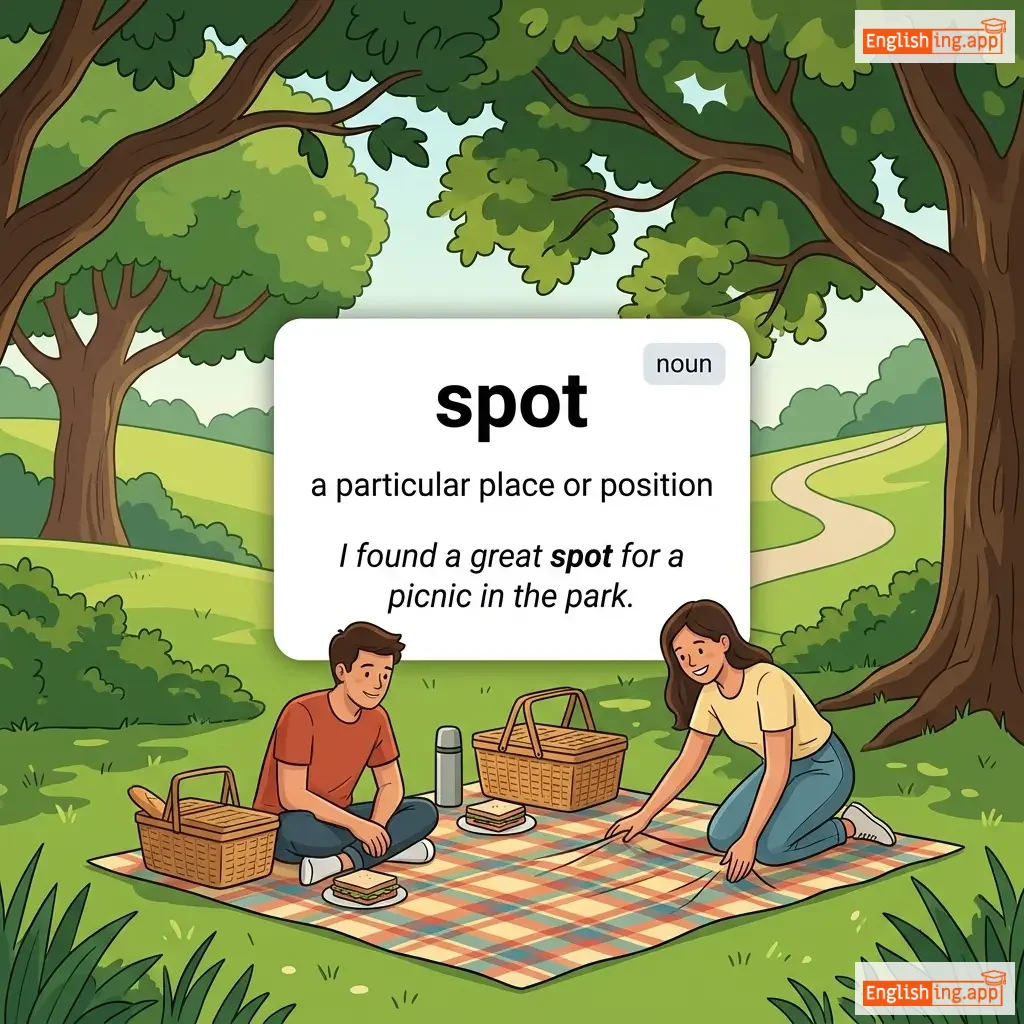
spot definition card — visual illustration of the meaning
noun
/spɒt/
lugar (lugar)

a particular place or position

"I found a great spot for a picnic in the park."

"Encontré un gran lugar para hacer un picnic en el parque." (Encontre un gran lugar para hacer un picnic en el parque.)
noun
/ˈspɒt.laɪt/
foco (spotlight)

a strong beam of light directed onto a particular area; figuratively, public attention

"The singer stood proudly in the spotlight."

"El cantante se mostró orgulloso bajo el foco." (El cantante se mostro orgulloso bajo el foco.)
adjective
/ˈspɒtɪd/
manchado; marcado; visto (manchado; marcado; visto)

having spots or marks; noticed or seen

"The spotted leopard moved silently through the jungle."

"El leopardo manchado se movió silenciosamente a través de la selva." (El leopardo manchado se movió silenciosamente a través de la selva.)
noun
/ˈspɒt.ɪd sneɪk hed/
pez cabeza de serpiente moteada (pez cabeza de serpiente moteada)

a type of freshwater fish with spotted markings and an elongated head resembling a snake

"The spotted snake head is a popular fish for aquaculture in South Asia."

"El pez cabeza de serpiente moteada es popular para la acuicultura en el sur de Asia." (el pez cabeza de serpiente moteada es popular para la acuicultura en el sur de asia)
noun
/spaʊs/
cónyuge (conyuge)

a person's husband or wife

"Each employee may include their spouse in the health insurance plan."

"Cada empleado puede incluir a su cónyuge en el plan de seguro de salud." (Cada empleado puede incluir a su conyuge en el plan de seguro de salud.)
noun, verb
/spreɪn/
esguince (esguince)

an injury to a joint in which the ligaments are stretched or torn

"She sprained her ankle while running in the park."

"Ella se torció el tobillo mientras corría en el parque." (Ella se torcio el tobillo mientras corria en el parque.)
verb
/spreɪ/
rociar (rociar)

to apply liquid to something in a fine mist

"She sprayed perfume on her wrist before leaving."

"Ella roció perfume en su muñeca antes de salir." (Ella roció perfume en su muñeca antes de salir.)
verb
/sprɛd/
extender (extender)

to open or extend something over an area

"She spread the blanket on the grass for a picnic."

"Ella extendió la manta sobre la hierba para un picnic." (Ella extendió la manta sobre la hierba para un picnic.)
adjective
/ˈspraɪtli/
vivaz (vivaz)

full of energy and life; lively

"The sprightly old man danced with joy at the wedding."

"El hombre vivaz bailó con alegría en la boda." (El hombre vivaz bailó con alegría en la boda.)
noun
/sprɪŋ/
primavera (primavera)

the season between winter and summer when plants begin to grow

"Flowers bloom in the spring."

"Las flores florecen en la primavera." (Las flores florecen en la primavera.)
verb
/ˈsprɪŋkəl/
esparcir (esparcir)

to scatter small drops or particles of a substance over a surface

"She sprinkled sugar on top of the cake."

"Ella esparció azúcar encima del pastel." (Ella esparció azúcar encima del pastel.)
verb, noun
/spraʊt/
brotar (brotar)

to begin to grow; to produce new leaves or shoots

"The seeds began to sprout after a few days of rain."

"Las semillas comenzaron a brotar después de unos días de lluvia." (Las semillas comenzaron a brotar después de unos días de lluvia.)
verb, adjective, noun
/spruːs/
arreglar / un tipo de árbol (arreglar / un tipo de arbol)

to make neat or tidy in appearance; also refers to an evergreen tree

"He spruced up his room before the guests arrived."

"Él arregló su habitación antes de que llegaran los invitados." (El arreglo su habitacion antes de que llegaran los invitados.)
adjective
/spraɪ/
ágil (agil)

active and lively, especially in old age

"The spry grandmother surprised everyone with her quick dance steps."

"La abuela ágil sorprendió a todos con sus rápidos pasos de baile." (La abuela agil sorprendio a todos con sus rapidos pasos de baile.)
noun
/spjuːm/
espuma (espuma)

Froth or foam, especially found on waves or liquids.

"The waves crashed against the rocks, leaving spume in the air."

"Las olas chocaron contra las rocas, dejando espuma en el aire." (Las olas chocaron contra las rocas, dejando espuma en el aire.)
verb
/spɜːr/
estimular / incentivar (estimular / incentivar)

To encourage or motivate someone to take action.

"The teacher's praise spurred him to study harder."

"El elogio del maestro lo estimuló a estudiar más duro." (El elogio del maestro lo estimulo a estudiar mas duro.)
adjective
/ˈspjʊəriəs/
falso / fraudulento (falso / fraudulento)

Not genuine, authentic, or true; false or fake.

"The report was based on spurious claims."

"El informe se basó en afirmaciones falsas." (El informe se basó en afirmaciones falsas.)
verb
/spɜːrn/
rechazar con desdén (rechazar con desden)

To reject something or someone with disdain or contempt.

"She spurned his offer of help."

"Ella rechazó su oferta de ayuda con desdén." (Ella rechazo su oferta de ayuda con desden.)
🕵️‍♂️

spy (espái)

verb
/spaɪ/
espía (espia)

to secretly collect information about a person, group, or country

"He was caught spying on his neighbor through the window."

"Lo atraparon espiando a su vecino a través de la ventana." (Lo atraparon espiando a su vecino a través de la ventana.)
verb
/ˈskwɒbəl/
discutir ruidosamente sobre algo sin importancia (discutir ruidosamente sobre algo sin importancia)

To argue noisily over something small or unimportant.

"The children squabbled over the last piece of cake."

"Los niños discutían por el último trozo de pastel." (Los niños discutían por el último trozo de pastel.)
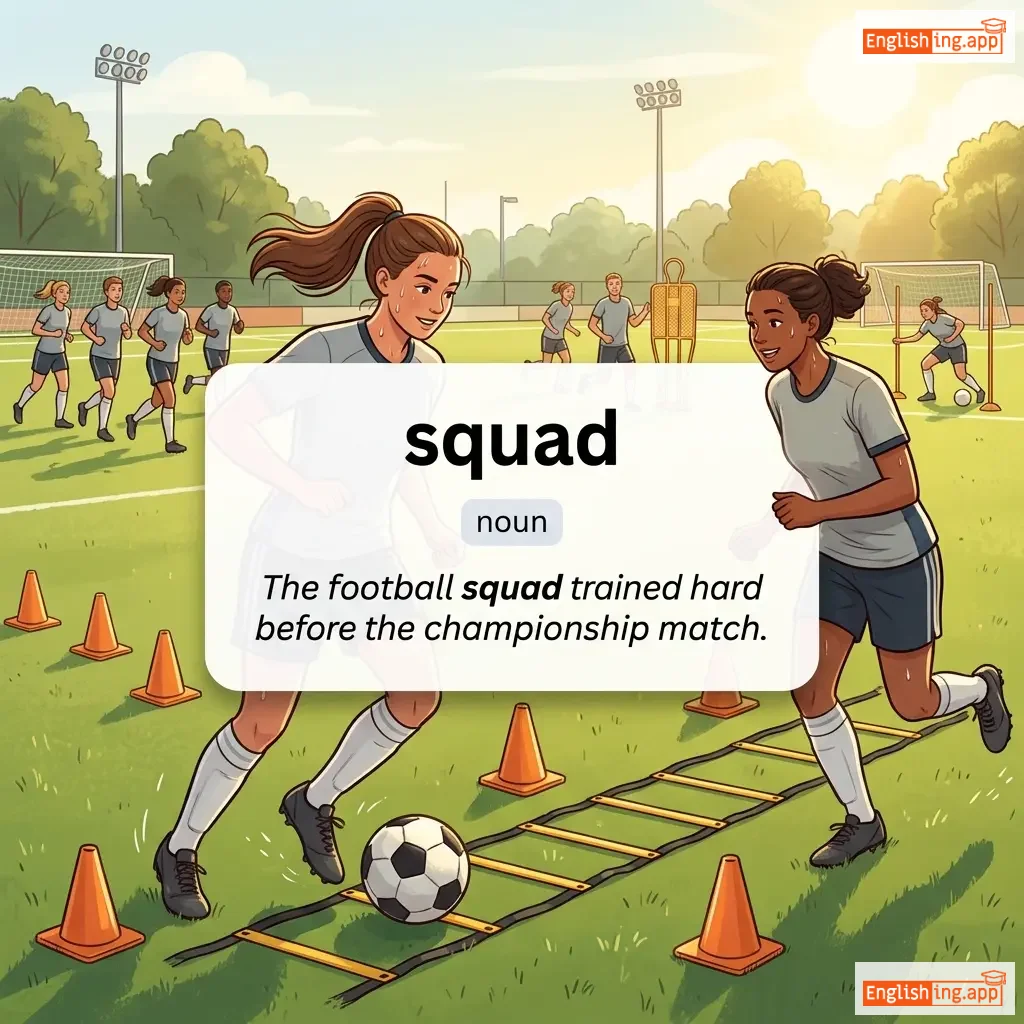
squad definition card — visual illustration of the meaning
noun
/skwɒd/
escuadra (escuadra)

a small group of people organized for a specific purpose or task, often in the military or sports

"The football squad trained hard before the championship match."

"El equipo de fútbol entrenó duro antes del partido de campeonato." (El equipo de futbol entrenó duro antes del partido de campeonato.)
adjective
/ˈskwɒlɪd/
extremadamente sucio (extremadamente sucio)

extremely dirty and unpleasant, often due to poverty or neglect

"He lived in a squalid room with broken furniture."

"Vivía en una habitación sucia con muebles rotos." (Vivía en una habitación sucia con muebles rotos.)
noun
/skwɔːl/
ráfaga (rafaga)

a sudden violent gust of wind, often accompanied by rain, snow, or sleet

"A sudden squall caught the sailors off guard."

"Una ráfaga repentina sorprendió a los marineros." (Una rafaga repentina sorprendio a los marineros.)
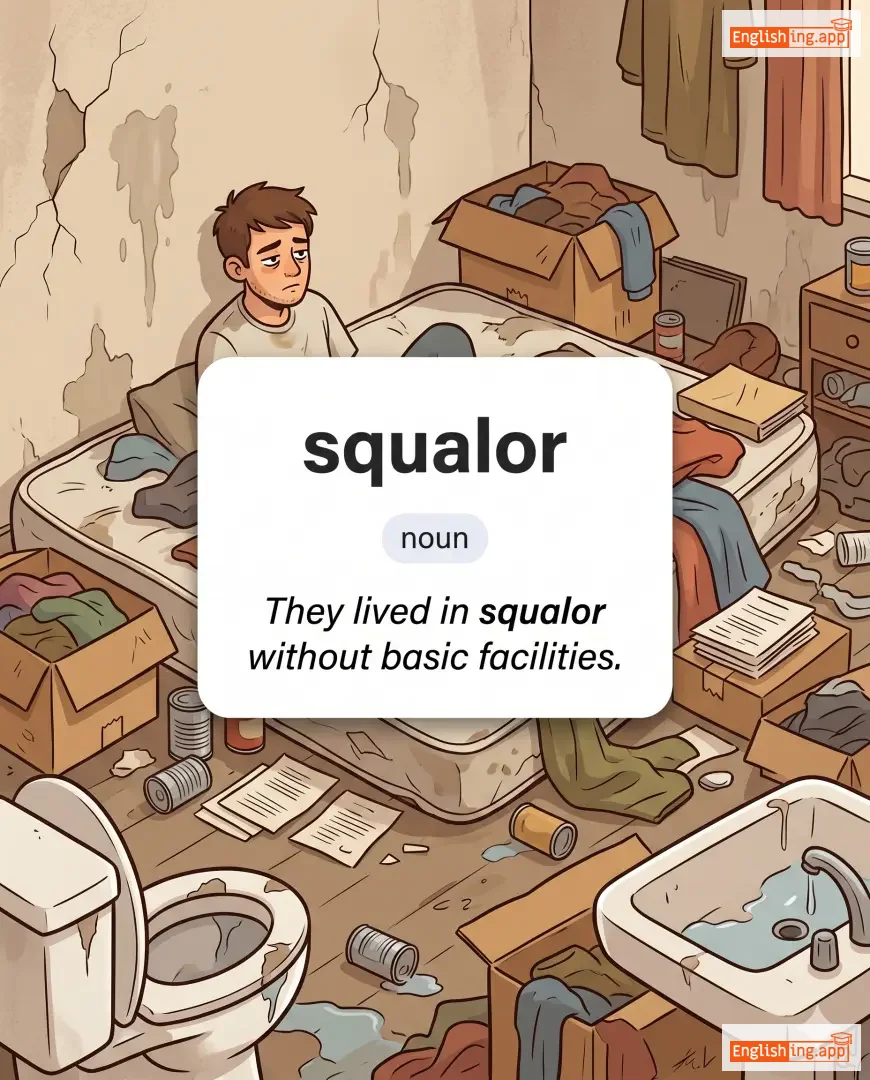
squalor definition card — visual illustration of the meaning
noun
/ˈskwɒlər/
miseria (miseria)

the state of being extremely dirty and unpleasant, especially due to poverty or neglect

"They lived in squalor without basic facilities."

"Vivían en la miseria sin instalaciones básicas." (Vivían en la miseria sin instalaciones básicas.)
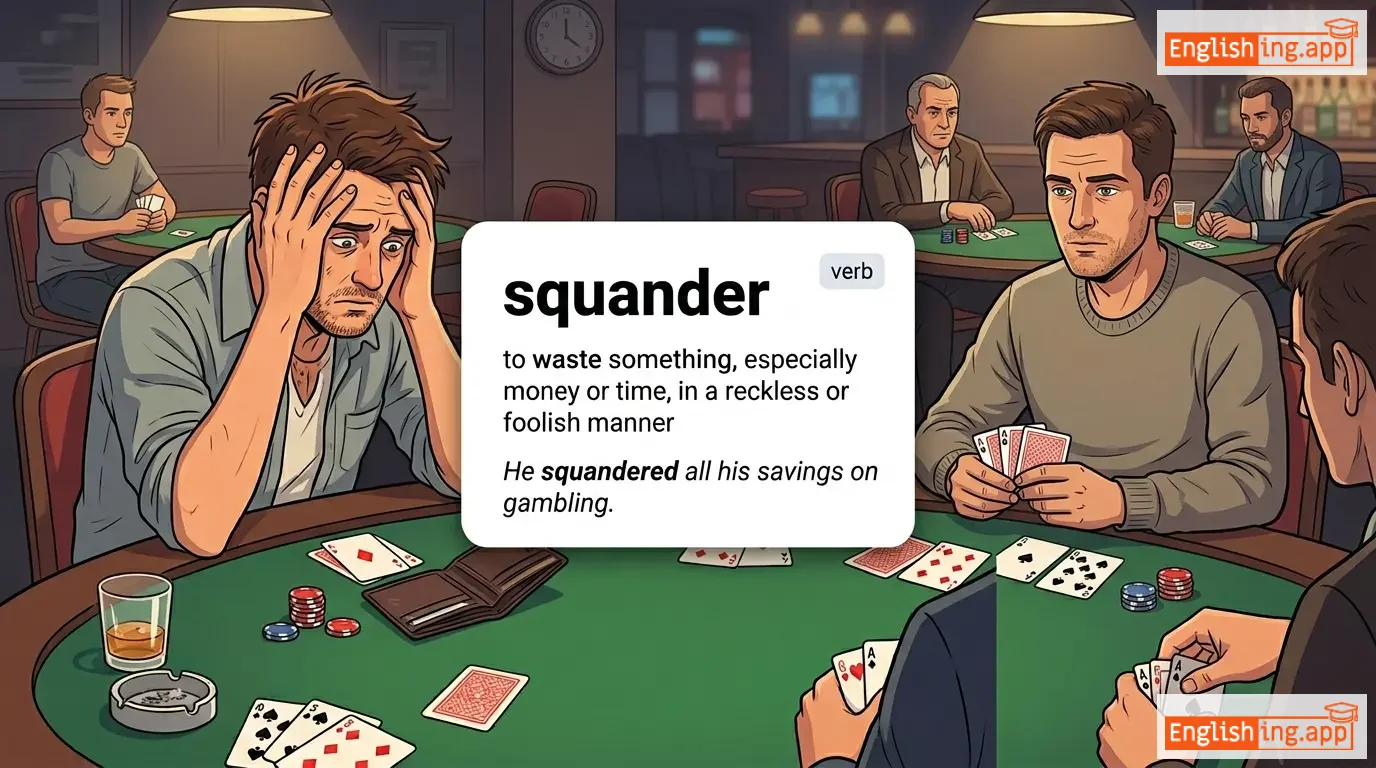
squander definition card — visual illustration of the meaning
verb
/ˈskwɒndər/
desperdiciar (desperdiciar)

to waste something, especially money or time, in a reckless or foolish manner

"He squandered all his savings on gambling."

"Él desperdició todos sus ahorros en el juego." (Él desperdició todos sus ahorros en el juego.)
noun
/skwɛə(r)/
cuadrado (cuadrado)

a shape with four equal straight sides and four right angles

"The table has a square shape."

"La mesa tiene una forma cuadrada." (La mesa tiene una forma cuadrada.)
adjective
/ˈstɔːlwərt/
firme, leal (firme, leal)

Loyal, reliable, and hardworking; strongly built or sturdy.

"She has always been a stalwart supporter of the community."

"Ella siempre ha sido una firme defensora de la comunidad." (Ella siempre ha sido una firme defensora de la comunidad.)
adjective
/ˈsteɪ.dʒi/
excesivamente teatral (excesivamente teatral)

Overly theatrical, artificial, or exaggerated in manner or style.

"Her performance felt stagy and unnatural."

"Su actuación se sintió excesivamente teatral y antinatural." (Su actuacion se sintio excesivamente teatral y antinatural.)
adjective
/steɪd/
serio, respetable (serio, respetable)

Serious, respectable, and unadventurous.

"He came from a staid family background."

"Él vino de una familia seria." (El vino de una familia seria.)
verb
/steɪn/
mancha (mancha)

to mark or discolor something permanently; a spot or mark left behind

"The coffee spilled and stained the tablecloth."

"El café se derramó y manchó el mantel." (El cafe se derramo y mancho el mantel.)
noun
/stɛə/
escalón (escalon)

a step or set of steps leading from one level to another

"He tripped on the stair and fell down."

"Se tropezó con el escalón y cayó." (Se tropezó con el escalón y cayó.)
noun, verb
/steɪk/
participación, riesgo (participacion, riesgo)

A share or interest in a business or venture; to risk or support something of value.

"He has a major stake in the new company."

"Él tiene una participación importante en la nueva empresa." (El tiene una participacion importante en la nueva empresa.)
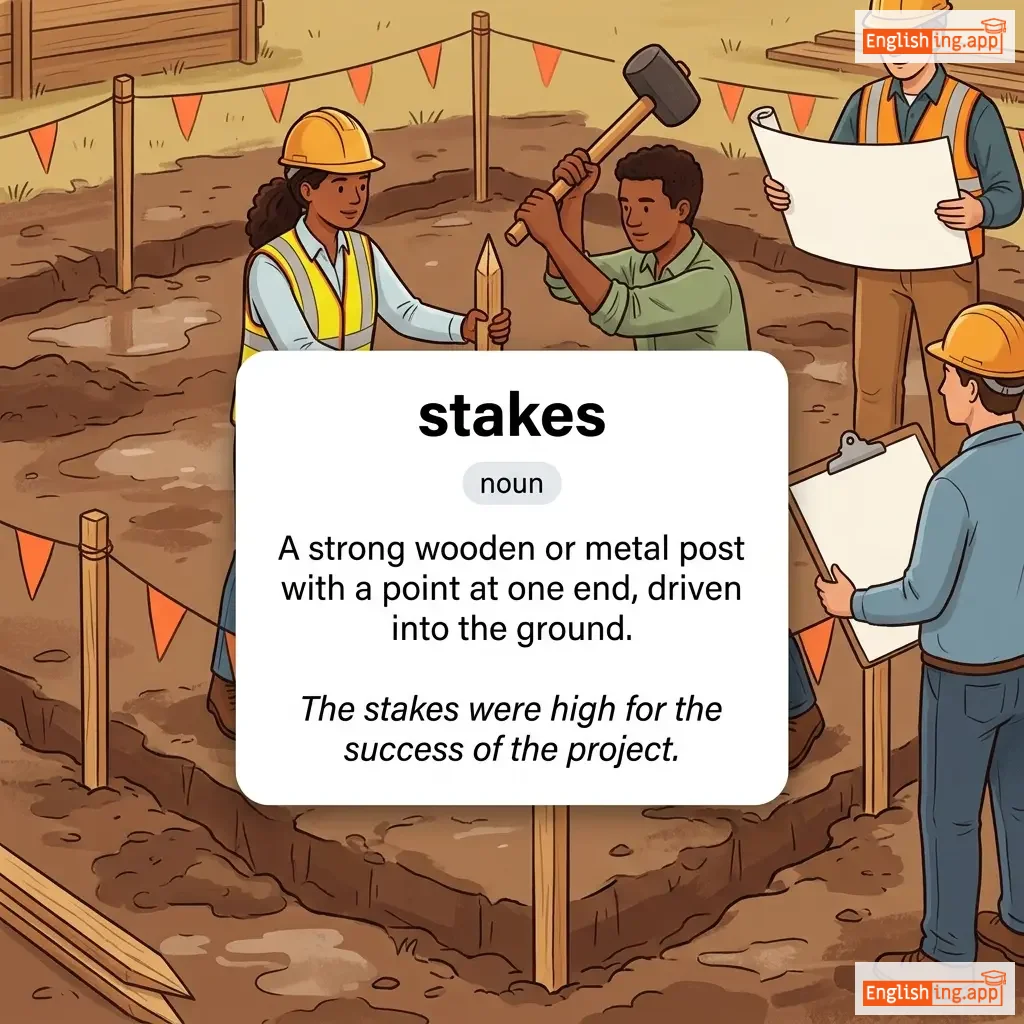
stakes definition card — visual illustration of the meaning
noun
steɪks
apuesta (apuesta)

A strong wooden or metal post with a point at one end, driven into the ground.

"The stakes were high for the success of the project."

"Las apuestas eran altas para el éxito del proyecto." (Las apuestas eran altas para el éxito del proyecto.)
adjective
/steɪl/
rancio; viejo; sin frescura (esteyl)

no longer fresh; lacking originality or novelty

"The bread became stale after sitting out for three days."

"El pan se volvió rancio después de estar fuera durante tres días." (El pan se volvió rancio después de estar fuera durante tres días.)
noun
/ˈsteɪl.meɪt/
empate (empate)

A situation in which no progress can be made or no party can win.

"Negotiations ended in a stalemate."

"Las negociaciones terminaron en un empate." (Las negociaciones terminaron en un empate.)
verb, noun
/stɔːl/
detener, puesto pequeño (detener, puesto pequeno)

to stop or cause to stop temporarily; a small shop or stand

"The car stalled on the way to the office."

"El coche se detuvo en el camino hacia la oficina." (El coche se detuvo en el camino hacia la oficina.)
noun
/ˈstæl.i.ən/
caballo macho para cría (caballo macho para cría)

An adult male horse that is not castrated, often used for breeding.

"The farm owns a powerful stallion for breeding purposes."

"La granja posee un caballo macho poderoso para fines de cría." (La granja posee un caballo macho poderoso para fines de cría.)
noun
/stæns/
postura (postura)

a person's attitude, opinion, or position on an issue

"The company took a strong stance on environmental protection."

"La empresa adoptó una postura firme sobre la protección del medio ambiente." (La empresa adopto una postura firme sobre la proteccion del medio ambiente.)
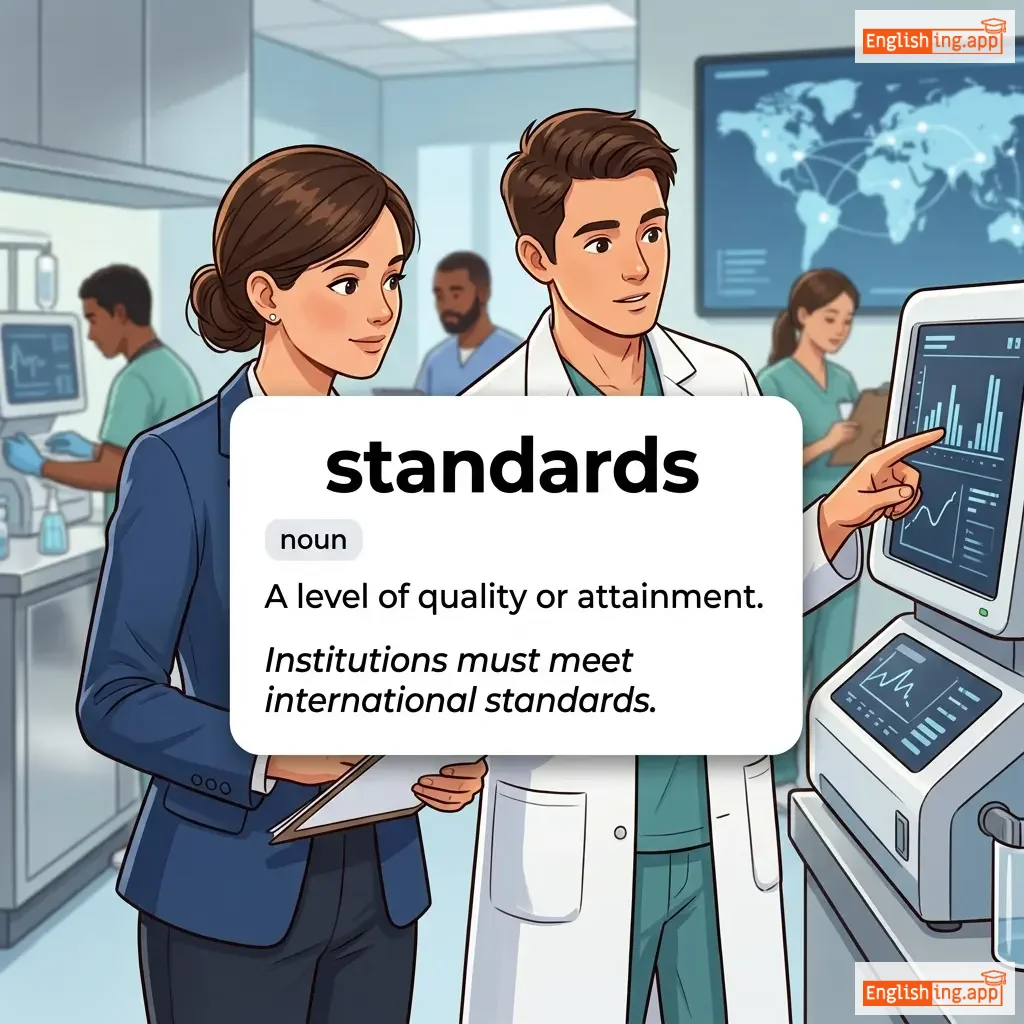
standards definition card — visual illustration of the meaning
noun
ˈstæn.dədz
estándares (estandares)

A level of quality or attainment.

"Institutions must meet international standards."

"Las instituciones deben cumplir con los estándares internacionales." (Las instituciones deben cumplir con los estándares internacionales.)
noun
/ˈstændərd/
estándar (estandar)

a level of quality or achievement, or a measure of comparison

"This car meets all the safety standards."

"Este coche cumple con todos los estándares de seguridad." (Este coche cumple con todos los estandares de seguridad.)
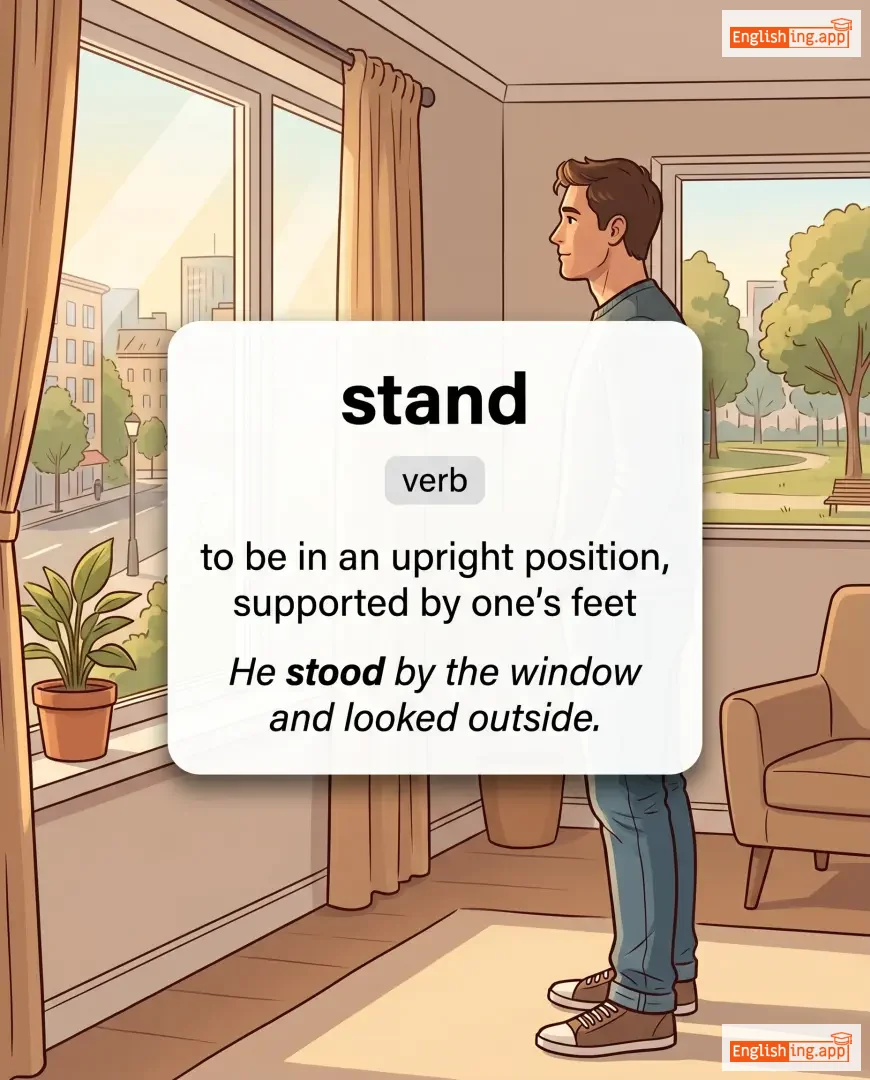
stand definition card — visual illustration of the meaning
verb
/stænd/
estar de pie (estar de pie)

to be in an upright position, supported by one's feet

"He stood by the window and looked outside."

"Él estaba de pie junto a la ventana y miraba afuera." (El estaba de pie junto a la ventana y miraba afuera.)
noun
/ˈstænʃən/
poste de soporte (poste de soporte)

a strong upright bar or post used as support or to control movement

"The red rope was attached to the stanchions to guide the crowd."

"La cuerda roja estaba unida a los estanchiones para guiar a la multitud." (La cuerda roja estaba unida a los estanchiones para guiar a la multitud.)
verb
/stɑːntʃ/
detener el flujo de sangre (detener el flujo de sangre)

to stop the flow of blood or liquid from a wound or source

"The nurse quickly stanched the bleeding from the cut."

"la enfermera rápidamente detuvo el sangrado de la herida." (la enfermera rapidamente detuvo el sangrado de la herida.)
verb
/stæmp/
estampar / pisotear (estampar / pisotear)

To bring down (one's foot) heavily on the ground; to imprint a mark or seal.

"She stamped her foot in frustration."

"Ella estampó su pie por frustración." (Ella estampó su pie por frustración.)