Vocabularios

Descubra, aprenda y domine el vocabulario en inglés

verb
/spɪt/
escupir (escupir)

to force liquid, especially saliva, out of the mouth

"He spat on the ground in anger."

"Él escupió en el suelo con ira." (El escupió en el suelo con ira.)
noun
/spaɪt/
despecho (despecho)

a desire to hurt, annoy, or offend someone

"She refused the gift out of spite."

"Ella rechazó el regalo por despecho." (Ella rechazo el regalo por despecho.)
noun
/spliːn/
bazo; cólera (bazo; colera)

an organ in the body that produces lymphocytes and filters blood; also refers to bad temper or spite

"He vented his spleen on his coworkers after the meeting."

"Ventu su cólera sobre sus compañeros de trabajo después de la reunión." (Ventu su colera sobre sus companeros de trabajo despues de la reunion.)
adjective
/ˈsplendɪd/
espléndido; magnífico; impresionante (splendido; magnifico; impresionante)

magnificent; excellent; very impressive

"The castle looked splendid in the sunset."

"El castillo se veía espléndido en la puesta de sol." (El castillo se veía espléndido en la puesta de sol.)
adjective
/splɪˈnɛtɪk/
irritable, malhumorado (irritable, malhumorado)

bad-tempered, irritable, spiteful

"His splenetic remarks offended everyone in the room."

"Sus comentarios iracundos ofendieron a todos en la sala." (Sus comentarios iracundos ofendieron a todos en la sala.)
verb
/splaɪs/
unir (unir)

to join two pieces of rope, film, or other material by weaving or attaching them together

"The technician spliced the two wires to restore the connection."

"El técnico unió los dos cables para restaurar la conexión." (El técnico unió los dos cables para restaurar la conexión.)
/splɪnt/
férula (ferula)

A rigid device used to support and immobilize a broken or injured body part.

"The doctor applied a splint to stabilize the patient's broken arm."

"El doctor aplicó una férula para estabilizar el brazo roto del paciente." (El doctor aplico una ferula para estabilizar el brazo roto del paciente.)
verb
/splɪt/
dividir (dividir)

to divide or separate into parts or groups

"He split the log in two with an axe."

"Él dividió el tronco en dos con un hacha." (Él dividió el tronco en dos con un hacha.)
verb
/spɔɪl/
estropear (estropear)

to damage or ruin something

"The rain spoiled the outdoor event."

"La lluvia estropeó el evento al aire libre." (La lluvia estropeó el evento al aire libre.)
noun
/ˈspɔɪlˌspɔːrt/
aguafiestas (aguafiestas)

A person who ruins other people's enjoyment or fun.

"Don't be a spoilsport and let us enjoy the party."

"No seas un aguafiestas y déjanos disfrutar de la fiesta." (No seas un aguafiestas y dejarnos disfrutar de la fiesta.)
noun/verb
/spiːd/
velocidad (velocidad)

the rate at which something moves or happens

"The car was moving at high speed."

"El coche se movía a gran velocidad." (El coche se movía a gran velocidad.)
verb
/ˈʃɔːrtn/
acortar (acortar)

To make something shorter in length, duration, or extent

"She decided to shorten her speech to fit the time limit."

"Decidió acortar su discurso para ajustarse al límite de tiempo." (Decidio acortar su discurso para ajustarse al limite de tiempo.)
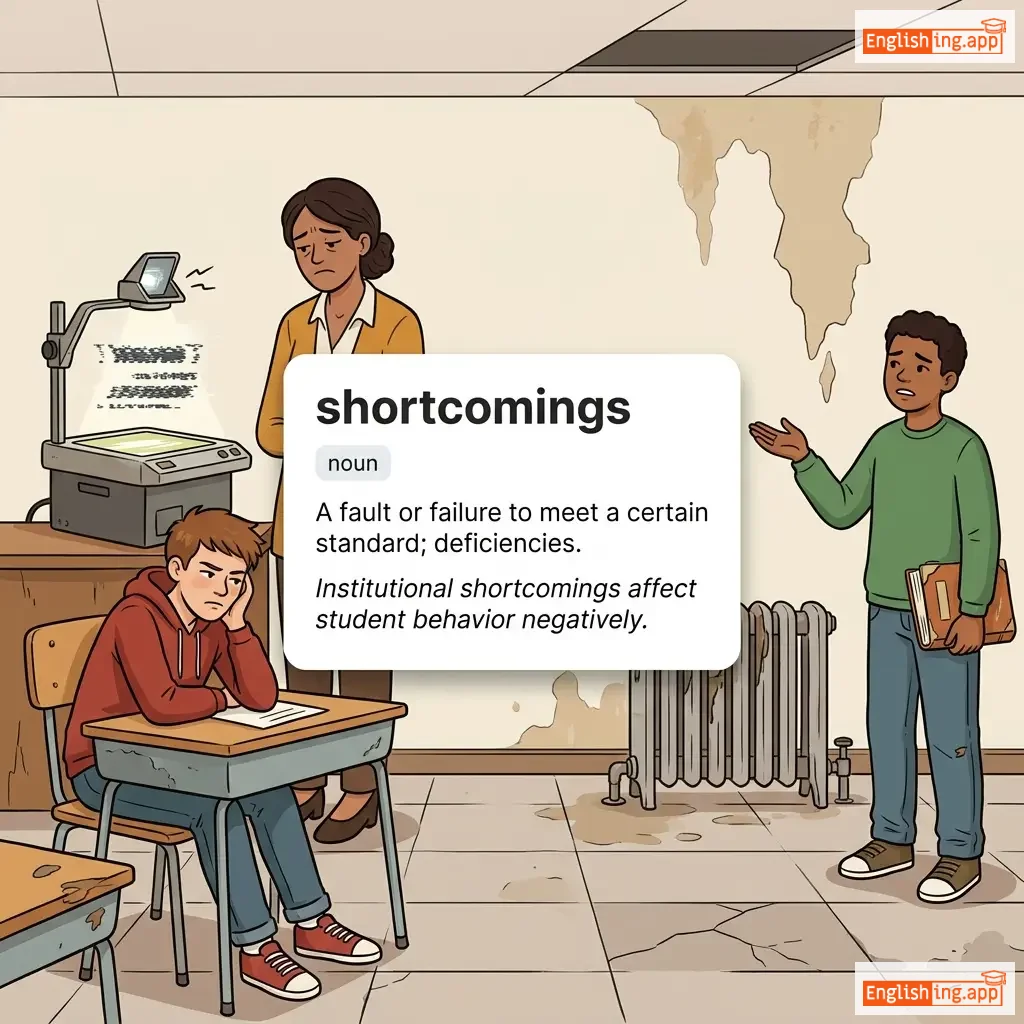
shortcomings definition card — visual illustration of the meaning
noun
ˈʃɔːtkʌmɪŋz
deficiencias (deficiencias)

A fault or failure to meet a certain standard; deficiencies.

"Institutional shortcomings affect student behavior negatively."

"Las deficiencias institucionales afectan negativamente el comportamiento de los estudiantes." (Las deficiencias institucionales afectan negativamente el comportamiento de los estudiantes.)
noun
/ˈʃɔːrt.kʌm.ɪŋ/
deficiencia; falta; defecto (deficiencia; falta; defecto)

a fault or failure to meet a certain standard; a deficiency

"Despite his many talents, he has some shortcomings."

"A pesar de sus muchos talentos, tiene algunas deficiencias." (A pesar de sus muchos talentos, tiene algunas deficiencias.)
noun
/ˈʃɔːrtɪdʒ/
escasez (escasez)

a state or situation in which something needed cannot be obtained in sufficient amounts

"There is a shortage of skilled workers in the industry."

"Hay escasez de trabajadores cualificados en la industria." (Hay escasez de trabajadores cualificados en la industria.)
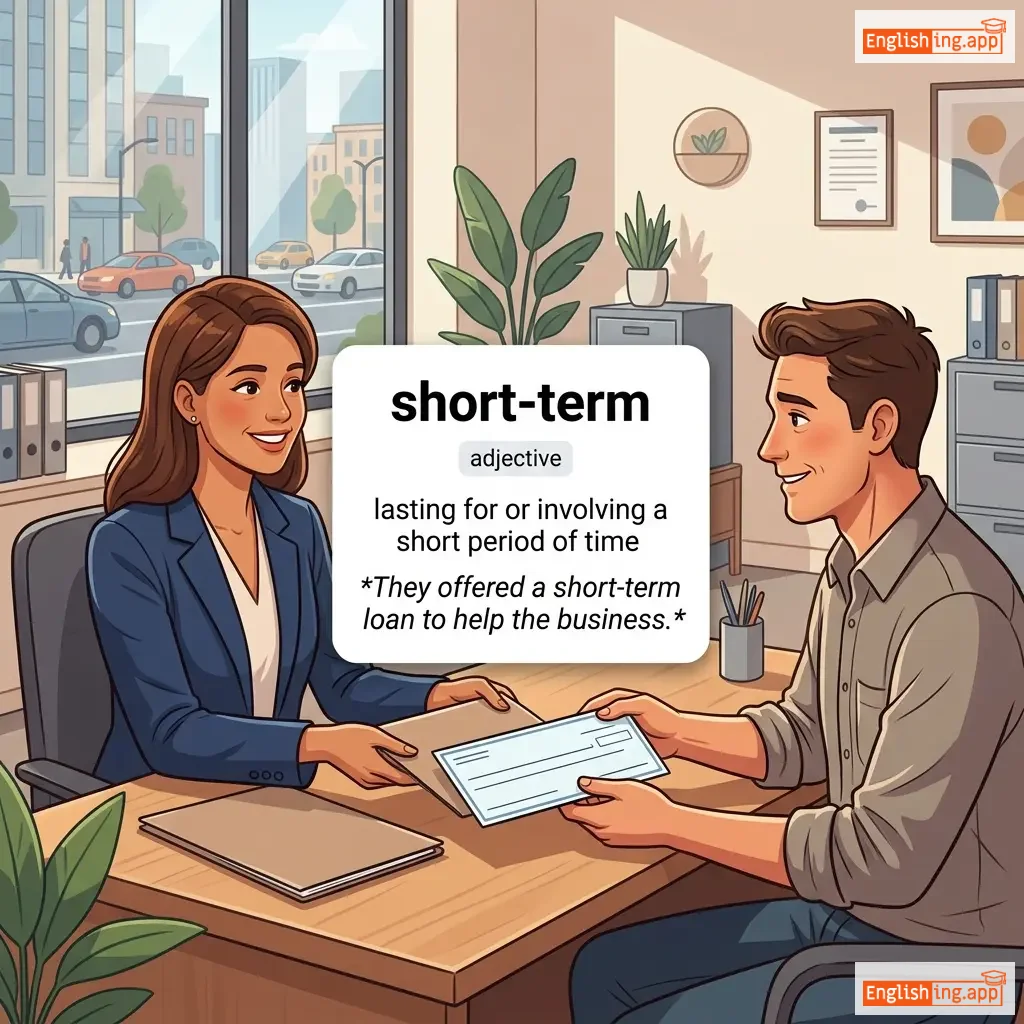
short-term definition card — visual illustration of the meaning
adjective
/ˈʃɔːrt tɜːrm/
a corto plazo (a corto plazo)

lasting for or involving a short period of time

"They offered a short-term loan to help the business."

"Ofrecieron un préstamo a corto plazo para ayudar al negocio." (Ofrecieron un préstamo a corto plazo para ayudar al negocio.)
adjective
/ˈʃɔːrt ˌtempərd/
irritable; fácilmente enfadado (irritable; facilmente enfadado)

quick to lose one's temper; easily angered

"She became short-tempered when the traffic made her late for the meeting."

"Ella se volvió irritable cuando el tráfico la hizo llegar tarde a la reunión." (Ella se volvio irritable cuando el trafico la hizo llegar tarde a la reunion.)
adjective
/ˈʃɔːrt ˌsaɪtɪd/
miopía; visión a corto plazo (miopia; vision a corto plazo)

lacking foresight or consideration for the future; myopic

"His short-sighted decision to quit school early affected his career prospects."

"Su decisión miope de abandonar la escuela temprano afectó sus perspectivas profesionales." (su desicion miope de abandonar la escuela temprano afecto sus perspectivas profesionales.)
adjective
/ʃɔːrt/
corto (corto)

having little length or duration

"She wore a short dress for the party."

"Ella llevaba un vestido corto para la fiesta." (Ella llevaba un vestido corto para la fiesta.)
noun
/ʃɔːr/
orilla (orilla)

the land along the edge of a sea, lake, or other large body of water

"We walked along the shore of the lake."

"Caminamos a lo largo de la orilla del lago." (Caminamos a lo largo de la orilla del lago.)
adjective
/ˈʃɑːpwɔːrn/
gastado / viejo (gastado / viejo)

worn or faded from being displayed in a shop; no longer fresh or original

"The shopworn shoes were sold at a discount."

"Los zapatos shopworn se vendieron con descuento." (Los zapatos shopworn se vendieron con descuento.)
noun
/ˈʃɒpɪŋ/
compras (compras)

the activity of going to shops to buy things

"She spent the afternoon shopping for clothes."

"Pasó la tarde de compras para ropa." (Pasó la tarde de compras para ropa.)
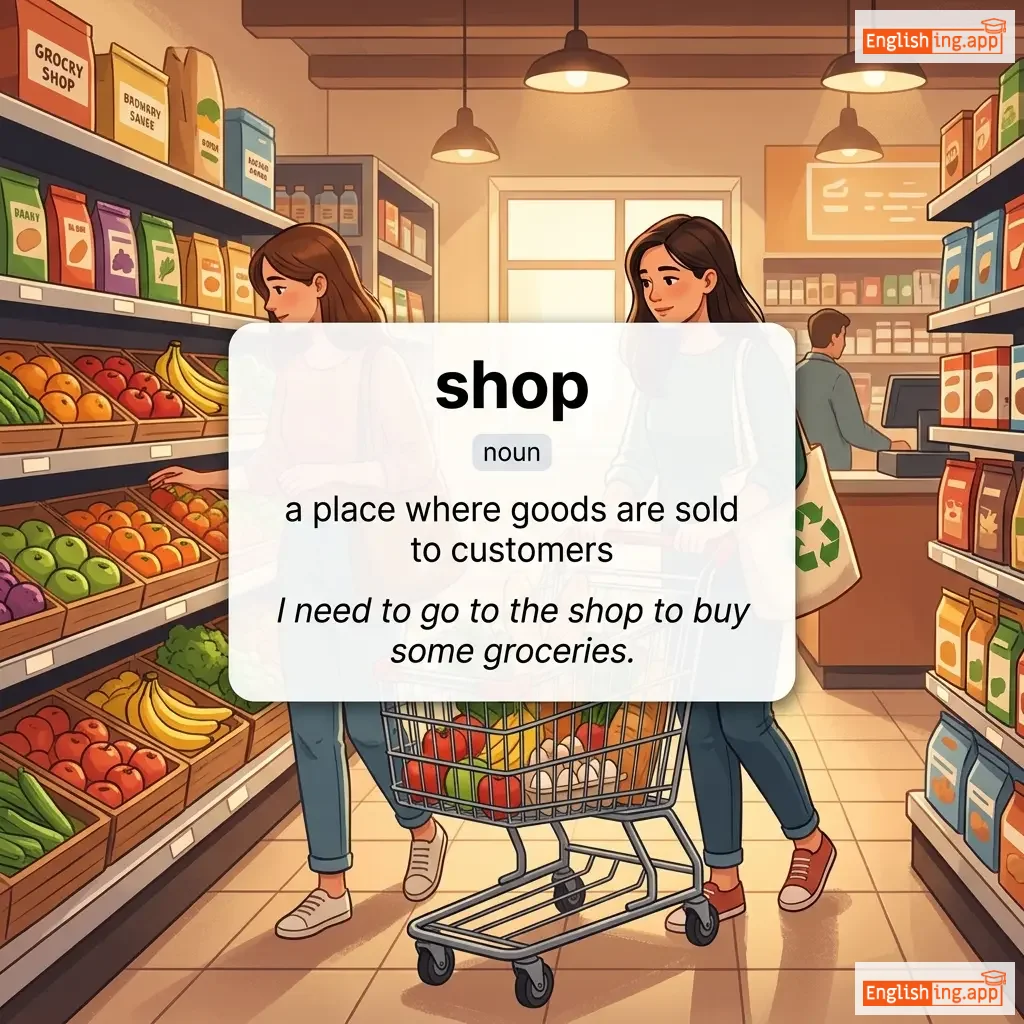
shop definition card — visual illustration of the meaning
noun
/ʃɒp/
tienda (tienda)

a place where goods are sold to customers

"I need to go to the shop to buy some groceries."

"Necesito ir a la tienda para comprar algunos víveres." (Necesito ir a la tienda para comprar algunos víveres.)
noun
/ˈʃuːtɪŋ/
rodaje (rodaje)

the action of shooting a gun, camera, or similar device

"The shooting of the movie took several months."

"El rodaje de la película tomó varios meses." (El rodaje de la película tomó varios meses.)
verb
/ʃuːt/
disparar / tomar una foto (disparar / tomar una foto)

to fire a bullet or arrow from a weapon; to take a photograph or film

"He learned how to shoot a bow and arrow."

"Él aprendió a disparar un arco y flecha." (Él aprendió a disparar un arco y flecha.)
noun
/ʃuː/
zapato (zapato)

a covering for the foot, typically made of leather, with a sturdy sole and heel

"She bought a new pair of shoes for the wedding."

"Ella compró un par de zapatos nuevos para la boda." (Ella compro un par de zapatos nuevos para la boda.)
adjective
/ˈʃɑːdi/
de mala calidad (de mala calidad)

badly made or done; of poor quality

"The contractor did a shoddy job on the repairs."

"El contratista hizo un trabajo de mala calidad en las reparaciones." (El contratista hizo un trabajo de mala calidad en las reparaciones.)
adjective
/ˈʃɒkɪŋ/
sorprendente (sorprendente)

causing surprise or disbelief; startling

"The news of the accident was shocking to everyone."

"La noticia del accidente fue sorprendente para todos." (La noticia del accidente fue sorprendente para todos.)
noun
/ʃɒk/
shock (shock)

a sudden upsetting or surprising event or experience

"The news of his sudden departure was a shock to everyone."

"La noticia de su repentina partida fue un shock para todos." (La noticia de su repentina partida fue un shock para todos.)
noun
/ʃoʊl/
cardumen (cardumen)

a large group of fish swimming together; a shallow place in water

"We saw a shoal of fish near the coast."

"Vimos un cardumen de peces cerca de la costa." (Vimos un cardumen de peces cerca de la costa.)
noun
/ʃɪt/
caca (caca)

a vulgar term for feces or excrement

"The dog made a mess by leaving its shit on the floor."

"El perro hizo un desorden al dejar su caca en el suelo." (El perro hizo un desorden al dejar su caca en el suelo.)
noun
/ʃɜːrt/
camisa (camisa)

a piece of clothing worn on the upper body, usually with sleeves and a collar

"He wore a blue shirt to the party."

"Él llevó una camisa azul a la fiesta." (Él llevó una camisa azul a la fiesta.)
verb
/ʃɜːrk/
evitar (evitar)

to avoid or neglect a duty or responsibility

"He always tries to shirk his responsibilities at work."

"Él siempre trata de evitar sus responsabilidades en el trabajo." (El siempre trata de evitar sus responsabilidades en el trabajo.)
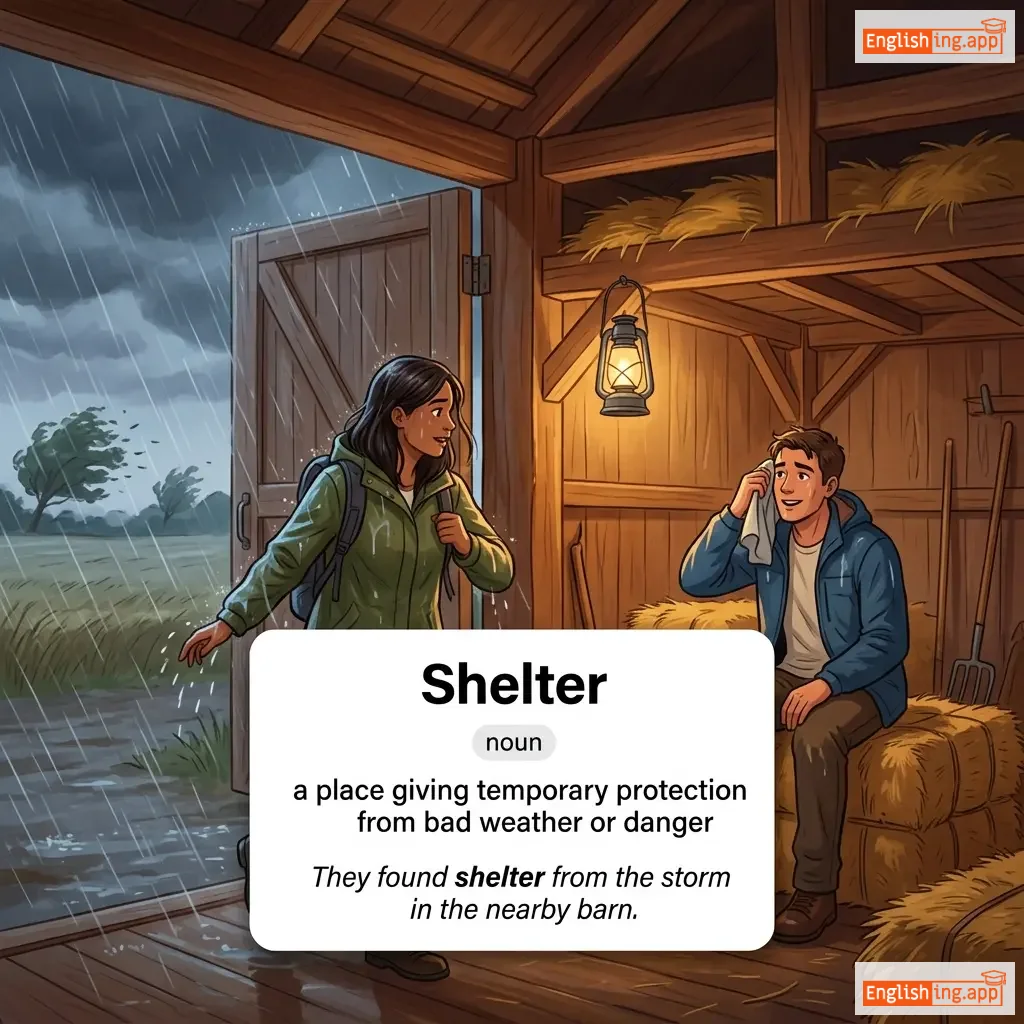
Shelter definition card — visual illustration of the meaning
noun
/ˈʃɛltər/
refugio (refugio)

a place giving temporary protection from bad weather or danger

"They found shelter from the storm in the nearby barn."

"Encontraron refugio de la tormenta en el granero cercano." (Encontraron refugio de la tormenta en el granero cercano.)
pronoun
/ʃi/
ella (ella)

a female person or animal previously mentioned or easily identified

"She is going to the market to buy vegetables."

"Ella va al mercado a comprar verduras." (Ella va al mercado a comprar verduras.)
noun
/ʃiːf/
manojo de trigo (manojo de trigo)

a bundle of grain stalks laid lengthwise and tied together after reaping; a bundle of objects tied together

"The farmer carried a sheaf of wheat on his shoulder."

"El agricultor llevaba un manojo de trigo sobre su hombro." (El agricultor llevaba un manojo de trigo sobre su hombro.)
verb
/ʃɪə/
cortar (cortar)

to cut the wool off a sheep or to cut something with sharp tools like scissors or shears

"The farmer will shear the sheep in the spring."

"El agricultor sheará la oveja en la primavera." (El agricultor sheará la oveja en la primavera.)
noun
/ʃiːt fɪʃ/
siluro (siluro)

A large freshwater catfish with a broad flat head and long barbels

"The sheat-fish is one of the largest freshwater fish in South Asia."

"El siluro es uno de los peces de agua dulce más grandes del sur de Asia." (El siluro es uno de los peces de agua dulce mas grandes del sur de Asia)
verb
/ʃiːð/
volver a meter en la vaina (volver a meter en la vaina)

to put a sword or knife back into its cover

"He quickly sheathed his sword after the duel."

"Él rápidamente volvió a meter su espada en su vaina después del duelo." (Él rápidamente volvió a meter su espada en su vaina después del duelo.)
verb
/ʃɛd/
dejar caer (dejar caer)

to let something fall off naturally, such as leaves, hair, or tears

"Trees shed their leaves in autumn."

"Los árboles dejan caer sus hojas en otoño." (Los árboles dejan caer sus hojas en otoño.)
noun
/ʃiːp/
oveja (oveja)

a farm animal with thick wool that is raised for its wool, meat, and milk

"The farmer keeps a large flock of sheep."

"El granjero mantiene un gran rebaño de ovejas." (El granjero mantiene un gran rebaño de ovejas.)
adjective
/ʃɪə/
total (total)

complete and utter; very steep or transparent

"The cliff was a sheer drop into the sea."

"El acantilado era una caída total al mar." (El acantilado era una caída total al mar.)
noun
/ʃiːt/
sábana (sabana)

a large piece of cloth or paper, typically used to cover or protect something

"I need a clean sheet to cover the bed."

"Necesito una sábana limpia para cubrir la cama." (Necesito una sabana limpia para cubrir la cama.)
noun
/ʃɛlf/
estante (estante)

a flat surface used for storing or displaying things, typically fixed to a wall or inside a cabinet

"I placed the books on the shelf next to the window."

"Puse los libros en el estante junto a la ventana." (Puse los libros en el estante junto a la ventana.)
noun
/ʃɛl/
concha (koncha)

the hard outer covering of a mollusk or a crustacean, or something similar

"She picked up a beautiful seashell on the beach."

"Ella recogió una hermosa concha en la playa." (Ella recogió una hermosa concha en la playa.)
adjective
/ˈʃaɪ.ni/
brillante; reluciente; (brillante; reluciente;)

reflecting light; bright and polished; glossy

"The shiny new car caught everyone's attention."

"El coche nuevo brillante llamó la atención de todos." (El coche nuevo brillante llamó la atención de todos.)
verb
/ˈʃɪmər/
brillar tenuemente (brillar tenuemente)

To shine with a soft, wavering light.

"The lake shimmered under the moonlight."

"El lago brillaba bajo la luz de la luna." (El lago brillaba bajo la luz de la luna.)
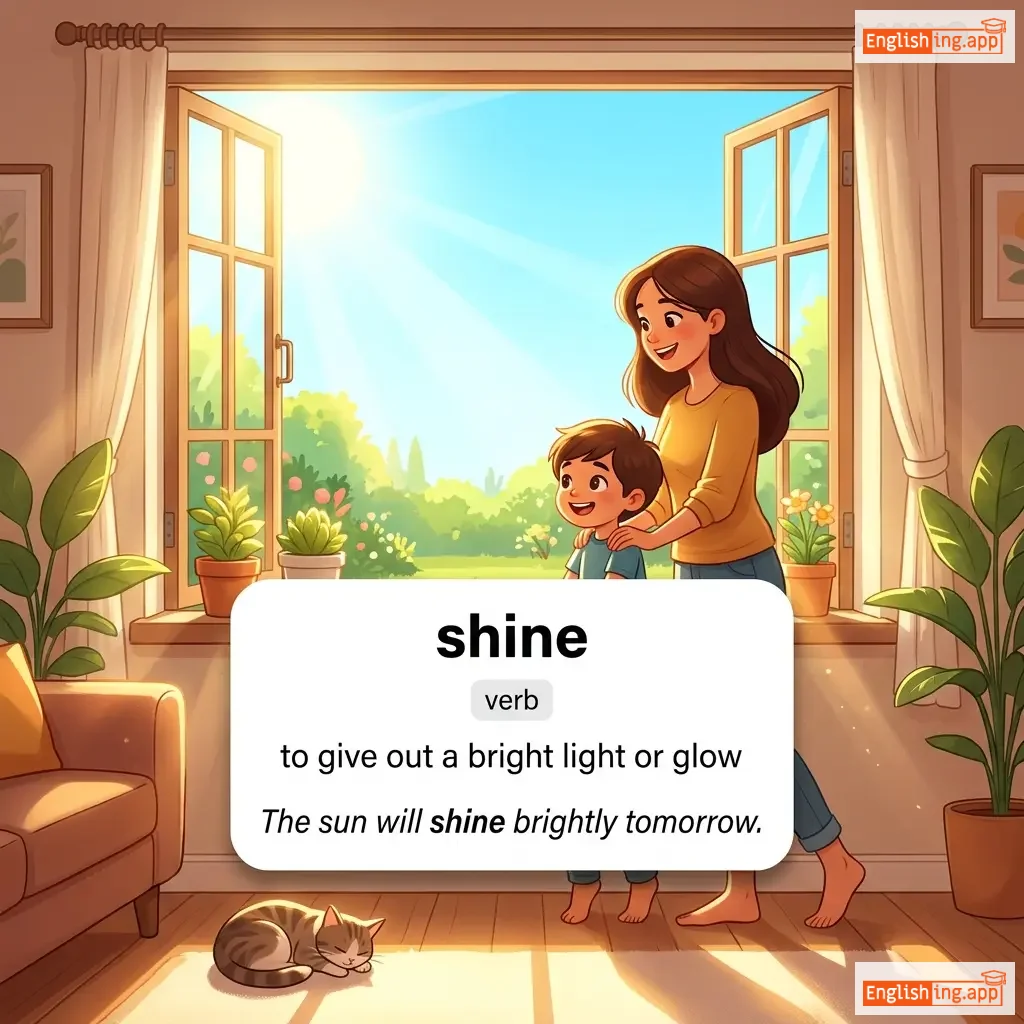
shine definition card — visual illustration of the meaning
verb
/ʃaɪn/
brillar (brillar)

to give out a bright light or glow

"The sun will shine brightly tomorrow."

"El sol brillará intensamente mañana." (El sol brillará intensamente mañana.)
adjective
/ˈʃɪft.ləs/
perezoso (perezoso)

Lacking ambition or the ability to accomplish anything; lazy and unmotivated.

"He was seen as a shiftless young man with no goals."

"Se le vio como un joven perezoso sin metas." (Se le vio como un joven perezoso sin metas.)
noun
/ʃɪp/
barco (barco)

a large boat used for travel or transporting goods across water

"The ship set sail across the ocean."

"El barco zarpó a través del océano." (El barco zarpo a través del oceano.)