词汇表

英语词汇词典 | 单词含义、定义和示例

verb
/spɪt/
吐口水 (tǔ kǒushuǐ)

to force liquid, especially saliva, out of the mouth

"He spat on the ground in anger."

"他因愤怒在地上吐口水。" (Tā yīn fènnù zài dìshàng tǔ kǒushuǐ.)
noun
/spaɪt/
恶意 (èyì)

a desire to hurt, annoy, or offend someone

"She refused the gift out of spite."

"她因为恶意拒绝了礼物。" (Tā yīnwèi èyì jùjué le lǐwù.)
noun
/spliːn/
脾脏; 愤怒 (pízàng; fènnù)

an organ in the body that produces lymphocytes and filters blood; also refers to bad temper or spite

"He vented his spleen on his coworkers after the meeting."

"会议后,他把愤怒发泄在同事身上。" (Huìyì hòu, tā bǎ fènnù fāxiè zài tóngshì shēnshàng.)
adjective
/ˈsplendɪd/
壮丽的; 极好的; 印象深刻的 (zhuangli de; jihao de; yinxiang shenkede)

magnificent; excellent; very impressive

"The castle looked splendid in the sunset."

"城堡在日落时看起来很壮丽。" (Chengbao zai riluo shi kan qilai hen zhuangli.)
adjective
/splɪˈnɛtɪk/
脾气暴躁的,易怒的 (píqì bàozào de, yì nù de)

bad-tempered, irritable, spiteful

"His splenetic remarks offended everyone in the room."

"他的脾气暴躁的评论冒犯了房间里的每个人。" (Tā de píqì bàozào de pínglùn màofànle fángjiān lǐ de měi gè rén.)
verb
/splaɪs/
拼接 (pīnjiē)

to join two pieces of rope, film, or other material by weaving or attaching them together

"The technician spliced the two wires to restore the connection."

"技术员将两根电线拼接起来以恢复连接。" (Jìshùyuán jiāng liǎng gēn diànxiàn pīnjiē qǐlái yǐ huīfù liánjiē.)
/splɪnt/
夹板 (jiaban)

A rigid device used to support and immobilize a broken or injured body part.

"The doctor applied a splint to stabilize the patient's broken arm."

"医生为病人的断臂稳定应用了夹板。" (Yisheng wei bingren de duanbi wending yingyong le jiaban.)
verb
/splɪt/
分割 (fēngē)

to divide or separate into parts or groups

"He split the log in two with an axe."

"他用斧子把木头劈成两半。" (Tā yòng fǔzi bǎ mùtou pī chéng liǎng bàn.)
verb
/spɔɪl/
破坏 (pòhuài)

to damage or ruin something

"The rain spoiled the outdoor event."

"雨水破坏了户外活动。" (Yǔshuǐ pòhuài le hùwài huódòng.)
noun
/ˈspɔɪlˌspɔːrt/
扫兴的人 (sǎo xìng de rén)

A person who ruins other people's enjoyment or fun.

"Don't be a spoilsport and let us enjoy the party."

"不要做扫兴的人,放我们享受派对吧。" (Bù yào zuò sǎo xìng de rén, fàng wǒmen xiǎngshòu pàiduì ba.)
noun/verb
/spiːd/
速度 (sudu)

the rate at which something moves or happens

"The car was moving at high speed."

"这辆车以高速行驶。" (Zhè liàng chē yǐ gāosù xíngshǐ.)
verb
/ˈʃɔːrtn/
缩短 (suoduan)

To make something shorter in length, duration, or extent

"She decided to shorten her speech to fit the time limit."
"她决定缩短她的演讲以符合时间限制。" (Ta jueding suoduan ta de yanjiang yi fuhe shijian xianzhi.)
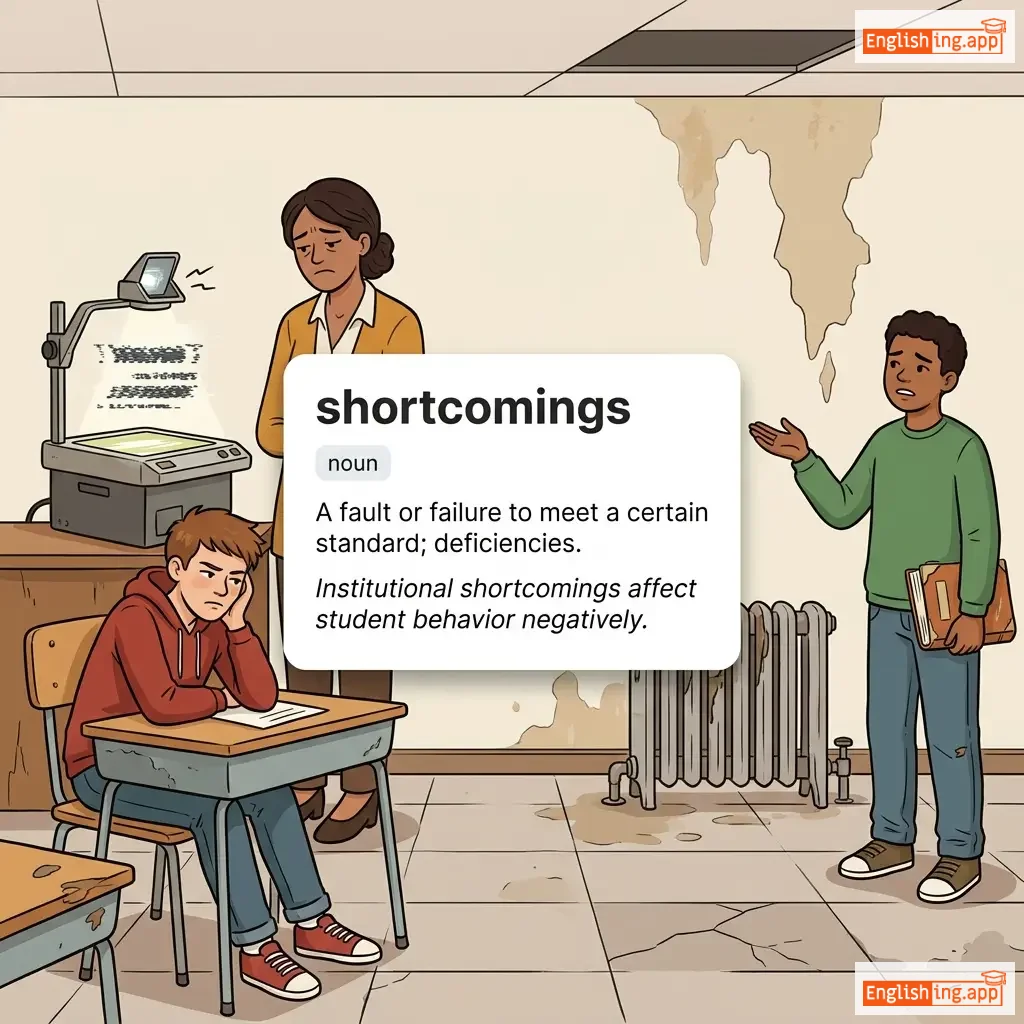
shortcomings definition card — visual illustration of the meaning
noun
ˈʃɔːtkʌmɪŋz
短处 (duǎn chù)

A fault or failure to meet a certain standard; deficiencies.

"Institutional shortcomings affect student behavior negatively."

"制度性短处对学生行为产生了负面影响。" (Zhìdù xìng duǎn chù duì xuéshēng xíngwéi chǎnshēng le fùmiàn yǐngxiǎng.)
noun
/ˈʃɔːrt.kʌm.ɪŋ/
缺陷; 不足; 缺点 (quēxiàn; bùzú; quēdiǎn)

a fault or failure to meet a certain standard; a deficiency

"Despite his many talents, he has some shortcomings."

"尽管他有许多才华,他仍然有一些短处。" (Jǐnguǎn tā yǒu xǔduō cáihuá, tā réngrán yǒu yīxiē duǎnchù.)
noun
/ˈʃɔːrtɪdʒ/
短缺 (duǎnquē)

a state or situation in which something needed cannot be obtained in sufficient amounts

"There is a shortage of skilled workers in the industry."

"工业中缺乏熟练的工人。" (Gōngyè zhōng quēfá shúliàn de gōngrén.)
short-term definition card — visual illustration of the meaning
adjective
/ˈʃɔːrt tɜːrm/
短期 (duǎn qī)

lasting for or involving a short period of time

"They offered a short-term loan to help the business."

"他们提供了一个短期贷款来帮助企业。" (Tāmen tígōngle yīgè duǎnqī dàikuǎn lái bāngzhù qǐyè.)
adjective
/ˈʃɔːrt ˌtempərd/
易怒的; 容易生气的 (yì nù de; róng yì shēng qì de)

quick to lose one's temper; easily angered

"She became short-tempered when the traffic made her late for the meeting."

"当交通让她迟到时,她变得很暴躁。" (dāng jiāo tōng ràng tā chí dào shí, tā biàn dé hěn bào zào.)
adjective
/ˈʃɔːrt ˌsaɪtɪd/
近视; 短期视野 (jìnshì; duǎnqī shìyě)

lacking foresight or consideration for the future; myopic

"His short-sighted decision to quit school early affected his career prospects."

"他短视的决定早早离开学校影响了他的职业前景。" (tā duǎnshì de juédìng zǎozǎo líkāi xuéxiào yǐngxiǎngle tā de zhíyè qiánjǐng.)
adjective
/ʃɔːrt/
(duan)

having little length or duration

"She wore a short dress for the party."

"她穿了一件短裙去参加聚会。" (Ta chuan le yi jian duan qun qu canjia ju hui.)
noun
/ʃɔːr/
岸边 (an bian)

the land along the edge of a sea, lake, or other large body of water

"We walked along the shore of the lake."

"我们在湖边散步。" (Wǒmen zài húbiān sànbù.)
adjective
/ˈʃɑːpwɔːrn/
旧的 / 陈旧的 (jiù de / chén jiù de)

worn or faded from being displayed in a shop; no longer fresh or original

"The shopworn shoes were sold at a discount."

"这些 shopworn 鞋子以折扣价出售。" (Zhèxiē shopworn xiézi yǐ zhékòu jià chūshòu.)
noun
/ˈʃɒpɪŋ/
购物 (gòuwù)

the activity of going to shops to buy things

"She spent the afternoon shopping for clothes."

"她下午花时间去购物买衣服。" (Tā xiàwǔ huā shíjiān qù gòuwù mǎi yīfú.)
shop definition card — visual illustration of the meaning
noun
/ʃɒp/
商店 (shāngdiàn)

a place where goods are sold to customers

"I need to go to the shop to buy some groceries."

"我需要去商店买一些杂货。" (Wǒ xūyào qù shāngdiàn mǎi yīxiē záhuò.)
noun
/ˈʃuːtɪŋ/
拍摄 (paishè)

the action of shooting a gun, camera, or similar device

"The shooting of the movie took several months."

"电影的拍摄花费了几个月的时间。" (Diànyǐng de pāishè huāfèi le jǐ gè yuè de shíjiān.)
verb
/ʃuːt/
射击 / 拍照 (sheji / paizhao)

to fire a bullet or arrow from a weapon; to take a photograph or film

"He learned how to shoot a bow and arrow."

"他学会了如何用弓和箭射击。" (Ta xuehui le ruhe yong gong he jian sheji.)
noun
/ʃuː/
鞋子 (xiezi)

a covering for the foot, typically made of leather, with a sturdy sole and heel

"She bought a new pair of shoes for the wedding."

"她为婚礼买了一双新鞋。" (Ta wei hunli mai le yi shuang xin xie.)
adjective
/ˈʃɑːdi/
劣质 (liezhi)

badly made or done; of poor quality

"The contractor did a shoddy job on the repairs."

"承包商在修理工作中做了劣质的工作。" (Chengbaoshang zai xiuli gongzuo zhong zuo le liezhi de gongzuo.)
adjective
/ˈʃɒkɪŋ/
令人震惊的 (ling ren zhen jing de)

causing surprise or disbelief; startling

"The news of the accident was shocking to everyone."

"事故的消息令所有人震惊。" (Shigu de xiaoxi ling suoyouren zhenjing.)
noun
/ʃɒk/
震惊 (zhènjīng)

a sudden upsetting or surprising event or experience

"The news of his sudden departure was a shock to everyone."

"他的突然离开消息让每个人都震惊。" (Tā de túrán líkāi xiāoxī ràng měi gèrén dōu zhènjīng.)
noun
/ʃoʊl/
鱼群 (yu qun)

a large group of fish swimming together; a shallow place in water

"We saw a shoal of fish near the coast."

"我们在海岸附近看到了鱼群。" (Wo men zai ha'an fu jin kan dao le yu qun.)
noun
/ʃɪt/
(shi)

a vulgar term for feces or excrement

"The dog made a mess by leaving its shit on the floor."

"狗在地板上留下了它的屎,弄得一团糟。" (gǒu zài dìbǎn shàng liúxiàle tā de shǐ, nòng de yī tuán zāo.)
noun
/ʃɜːrt/
衬衫 (chenshan)

a piece of clothing worn on the upper body, usually with sleeves and a collar

"He wore a blue shirt to the party."

"他穿了一件蓝色衬衫去派对。" (Tā chuānle yī jiàn lánsè chènshān qù pàiduì.)
verb
/ʃɜːrk/
逃避 (taobi)

to avoid or neglect a duty or responsibility

"He always tries to shirk his responsibilities at work."
"他总是尽力避免工作中的责任。" (Ta zongshi jinli taobi gongzuo zhong de zeren.)
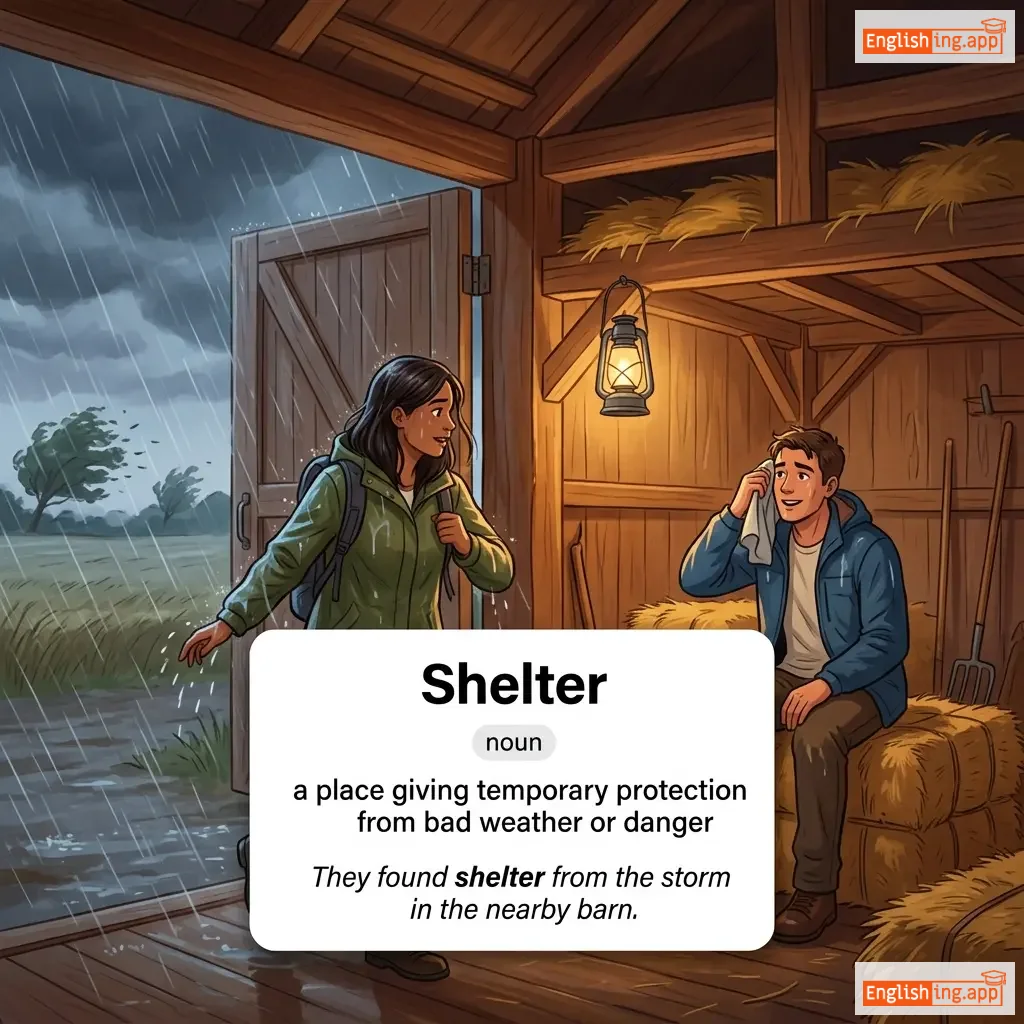
Shelter definition card — visual illustration of the meaning
noun
/ˈʃɛltər/
避难所 (bì nàn suǒ)

a place giving temporary protection from bad weather or danger

"They found shelter from the storm in the nearby barn."

"他们在附近的谷仓找到了避难所。" (Tāmen zài fùjìn de gǔcāng zhǎodào le bì nàn suǒ.)
pronoun
/ʃi/
(ta)

a female person or animal previously mentioned or easily identified

"She is going to the market to buy vegetables."

"她去市场买蔬菜。" (Ta qu shichang mai shucai.)
noun
/ʃiːf/
麦束 (mài shù)

a bundle of grain stalks laid lengthwise and tied together after reaping; a bundle of objects tied together

"The farmer carried a sheaf of wheat on his shoulder."

"农民肩上背着一捆小麦。" (Nóngmín jiān shàng bèizhe yī kǔn xiǎomài.)
verb
/ʃɪə/
修剪 (xiūjiǎn)

to cut the wool off a sheep or to cut something with sharp tools like scissors or shears

"The farmer will shear the sheep in the spring."

"农民将在春天修剪羊毛。" (Nóngmín jiāng zài chūntiān xiūjiǎn yángmáo.)
noun
/ʃiːt fɪʃ/
鲶鱼 (nian yu)

A large freshwater catfish with a broad flat head and long barbels

"The sheat-fish is one of the largest freshwater fish in South Asia."

"鲶鱼是南亚最大的淡水鱼之一。" (Nian yu shi nan ya zui da de dan shui yu zhi yi)
verb
/ʃiːð/
放回剑鞘 (fàng huí jiàn qiào)

to put a sword or knife back into its cover

"He quickly sheathed his sword after the duel."

"他在决斗后迅速把剑重新放回剑鞘。" (Tā zài juéduì hòu xùnsù bǎ jiàn chóngxīn fàng huí jiàn qiào.)
verb
/ʃɛd/
掉落 (diao luo)

to let something fall off naturally, such as leaves, hair, or tears

"Trees shed their leaves in autumn."

"树木在秋天落叶。" (Shumu zai qiutian luoye.)
noun
/ʃiːp/
(yang)

a farm animal with thick wool that is raised for its wool, meat, and milk

"The farmer keeps a large flock of sheep."

"农民养着一大群羊。" (nong min yang zhe yi da qun yang.)
adjective
/ʃɪə/
完全 (wanquan)

complete and utter; very steep or transparent

"The cliff was a sheer drop into the sea."

"悬崖是一个完全的落差进入大海。" (Xuán yá shì yī gè wánquán de luòchā jìnrù dàhǎi.)
noun
/ʃiːt/
床单 (chuángdān)

a large piece of cloth or paper, typically used to cover or protect something

"I need a clean sheet to cover the bed."

"我需要一张干净的床单来覆盖床铺。" (Wǒ xūyào yī zhāng gānjìng de chuángdān lái fùgài chuángpù.)
noun
/ʃɛlf/
架子 (jiazi)

a flat surface used for storing or displaying things, typically fixed to a wall or inside a cabinet

"I placed the books on the shelf next to the window."

"我把书放在靠窗的架子上。" (Wǒ bǎ shū fàng zài kào chuāng de jiàzi shàng.)
noun
/ʃɛl/
贝壳 (bèiké)

the hard outer covering of a mollusk or a crustacean, or something similar

"She picked up a beautiful seashell on the beach."

"她在沙滩上捡起了一个漂亮的贝壳。" (Tā zài shātān shàng jiǎn qǐle yīgè piàoliang de bèiké.)
adjective
/ˈʃaɪ.ni/
闪亮的; 光亮的; (shanliang de; guangliang de;)

reflecting light; bright and polished; glossy

"The shiny new car caught everyone's attention."

"那辆闪亮的新车吸引了所有人的注意。" (Nà liàng shǎn liàng de xīn chē xīyǐn le suǒyǒu rén de zhùyì.)
verb
/ˈʃɪmər/
闪烁 (shan shuo)

To shine with a soft, wavering light.

"The lake shimmered under the moonlight."
"湖泊在月光下闪烁。" (Húpō zài yuèguāng xià shǎnshuò.)
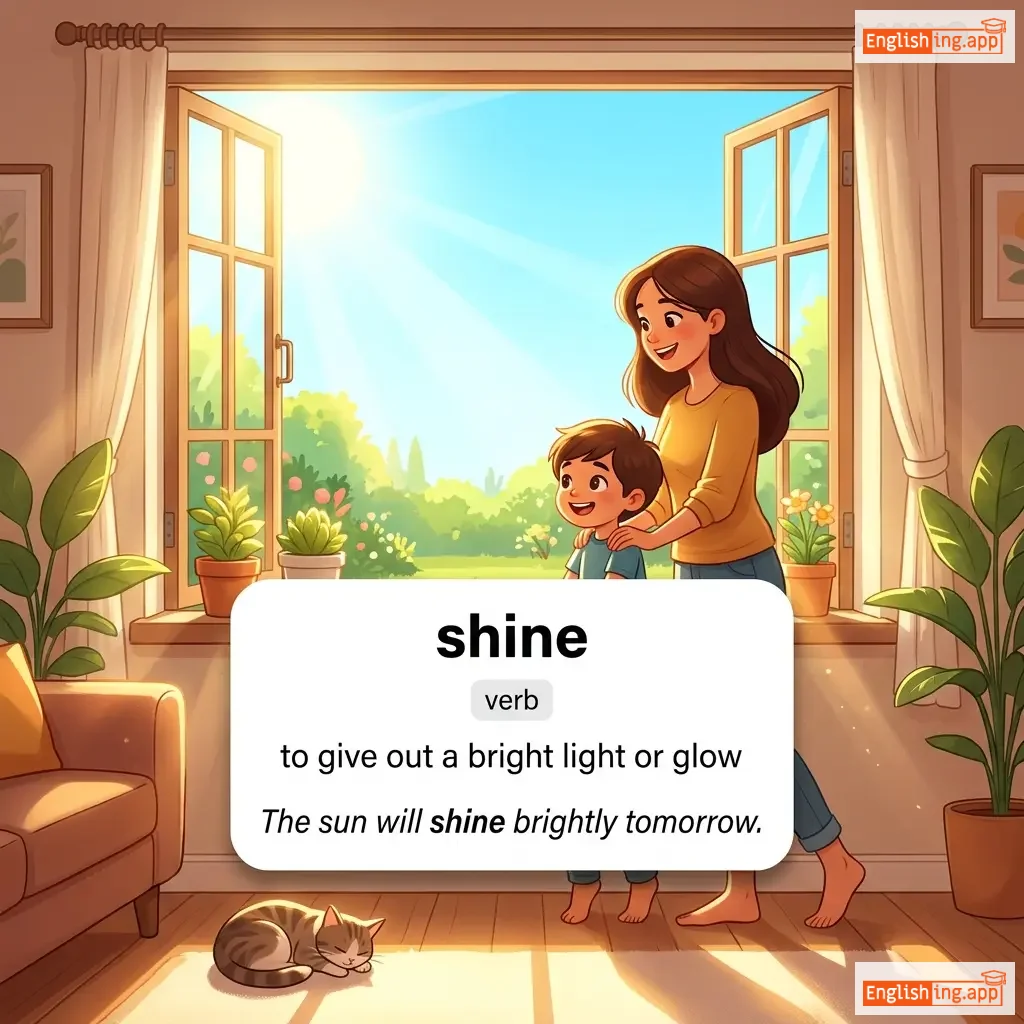
shine definition card — visual illustration of the meaning
verb
/ʃaɪn/
闪耀 (shanyao)

to give out a bright light or glow

"The sun will shine brightly tomorrow."

"太阳明天会明亮地照耀。" (Tàiyáng míngtiān huì míngliàng de zhàoyào.)
adjective
/ˈʃɪft.ləs/
懒惰 (landuo)

Lacking ambition or the ability to accomplish anything; lazy and unmotivated.

"He was seen as a shiftless young man with no goals."

"他被看作是一个没有目标的懒惰年轻人。" (Tā bèi kànzuò shì yīgè méiyǒu mùbiāo de lǎnduò niánqīng rén.)
noun
/ʃɪp/
(chuan)

a large boat used for travel or transporting goods across water

"The ship set sail across the ocean."

"船开始航行,越过了海洋。" (Chuan kaishi hangxing, yueguo le haiyang.)