Словари

Словарь английского языка | Значения слов, определения и примеры

verb
/spɪt/
плевать (plevat')

to force liquid, especially saliva, out of the mouth

"He spat on the ground in anger."

"Он плевал на землю в гневе." (On pleval na zemlyu v gneve.)
noun
/spaɪt/
злоба (zloba)

a desire to hurt, annoy, or offend someone

"She refused the gift out of spite."

"Она отказалась от подарка из злобы." (Ona otkazalas' ot podarka iz zloby.)
noun
/spliːn/
сельца; гнев (sel'tsa; gnev)

an organ in the body that produces lymphocytes and filters blood; also refers to bad temper or spite

"He vented his spleen on his coworkers after the meeting."

"Он выплеснул свой гнев на коллег после встречи." (On vyplesnul svoj gnev na kolleg posle vstrechi.)
adjective
/ˈsplendɪd/
великолепный; замечательный; впечатляющий (velikolepnyj; zamechatelnyj; vpechatlyayushchij)

magnificent; excellent; very impressive

"The castle looked splendid in the sunset."

"Замок выглядел великолепно на закате." (Zamok vyglyadel velikolepno na zakate.)
adjective
/splɪˈnɛtɪk/
раздражительный, злобный (razdrazhitel'nyy, zlobnyy)

bad-tempered, irritable, spiteful

"His splenetic remarks offended everyone in the room."

"Его раздражительные замечания оскорбили всех в комнате." (Ego razdrazhitel'nye zamechaniya oskorbili vsekh v komnate.)
verb
/splaɪs/
соединять (soedinyat)

to join two pieces of rope, film, or other material by weaving or attaching them together

"The technician spliced the two wires to restore the connection."

"Техник соединил два провода, чтобы восстановить соединение." (Tekhnik soedinyal dva provoda, chtoby vosstanovit soedinenie.)
/splɪnt/
шина (shina)

A rigid device used to support and immobilize a broken or injured body part.

"The doctor applied a splint to stabilize the patient's broken arm."

"Врач наложил шину, чтобы стабилизировать сломанную руку пациента." (Vrach nalozhil shinu, chtoby stabilizirovat' slomannuyu ruku patsiyenta.)
verb
/splɪt/
делить (delit)

to divide or separate into parts or groups

"He split the log in two with an axe."

"Он разрубил бревно на два с помощью топора." (On razrubil brevno na dva s pomoshch'yu topora.)
verb
/spɔɪl/
испортить (isportit')

to damage or ruin something

"The rain spoiled the outdoor event."

"Дождь испортил мероприятие на открытом воздухе." (Dozhd' isportil meropriyatie na otkrytom vozdukhe.)
noun
/ˈspɔɪlˌspɔːrt/
зануда (zanuda)

A person who ruins other people's enjoyment or fun.

"Don't be a spoilsport and let us enjoy the party."

"Не будь занудой и позволь нам наслаждаться вечеринкой." (Ne bud' zanudoy i pozvol' nam naslazhdat'sya vecherinkoy.)
noun/verb
/spiːd/
скорость (skorost)

the rate at which something moves or happens

"The car was moving at high speed."

"Машина ехала на большой скорости." (Mashina yekhala na bol'shoy skorosti.)
verb
/ˈʃɔːrtn/
сокращать (sokrashchat)

To make something shorter in length, duration, or extent

"She decided to shorten her speech to fit the time limit."
"Она решила сократить свою речь, чтобы уложиться в отведенное время." (Ona reshilа sokratit' svoiu rech', chtoby ulozhit'sya v otvedennoe vremya.)
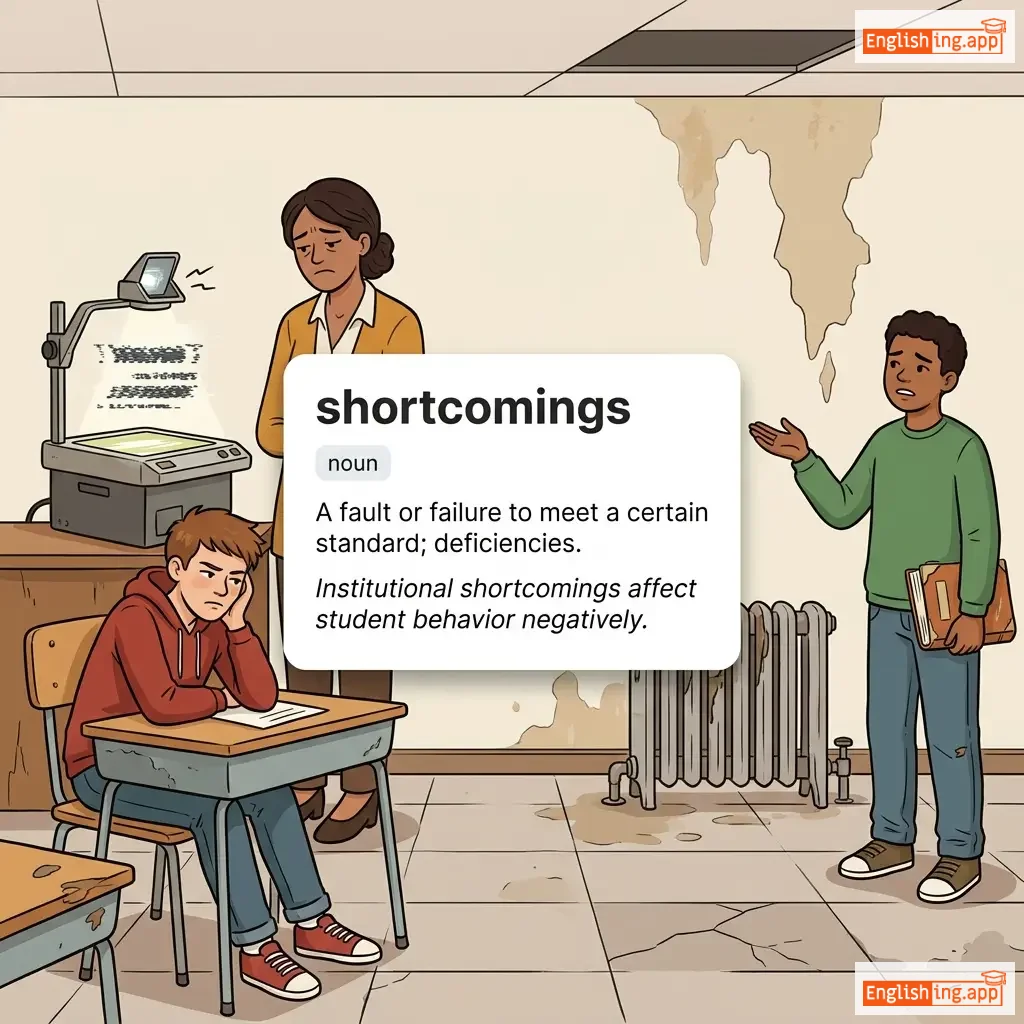
shortcomings definition card — visual illustration of the meaning
noun
ˈʃɔːtkʌmɪŋz
недостатки (nedostatki)

A fault or failure to meet a certain standard; deficiencies.

"Institutional shortcomings affect student behavior negatively."

"Институциональные недостатки негативно сказываются на поведении студентов." (Institutsional'nye nedostatki negativno skazyvayutsya na povedenii studentov.)
noun
/ˈʃɔːrt.kʌm.ɪŋ/
недостаток; ошибка; дефект (nedostatok; oshibka; defekt)

a fault or failure to meet a certain standard; a deficiency

"Despite his many talents, he has some shortcomings."

"Несмотря на его многочисленные таланты, у него есть несколько недостатков." (Nesmotrya na ego mnogochislennye talanty, u nego est' neskol'ko nedostatkov.)
noun
/ˈʃɔːrtɪdʒ/
нехватка (nekhatka)

a state or situation in which something needed cannot be obtained in sufficient amounts

"There is a shortage of skilled workers in the industry."

"В отрасли наблюдается нехватка квалифицированных работников." (V otrasli nablyudaetsya nekhatka kvalifitsirovannykh rabotnikov.)
short-term definition card — visual illustration of the meaning
adjective
/ˈʃɔːrt tɜːrm/
краткосрочный (kratskorochnyy)

lasting for or involving a short period of time

"They offered a short-term loan to help the business."

"Они предложили краткосрочный кредит, чтобы помочь бизнесу." (Oni predlozhili kratskorochnyy kredit, chtoby pomoch' biznesu.)
adjective
/ˈʃɔːrt ˌtempərd/
раздражительный; легко злой (razdrazhitel'nyj; legko zloy)

quick to lose one's temper; easily angered

"She became short-tempered when the traffic made her late for the meeting."

"Она стала раздражительной, когда трафик заставил её опоздать на встречу." (Ona stala razdrazhitel'noj, kogda trafik zastavil yeё opozdat' na vstrechu.)
adjective
/ˈʃɔːrt ˌsaɪtɪd/
близорукость; ограниченное мировоззрение (blizorukost; ogranichennoe mirovozzrenie)

lacking foresight or consideration for the future; myopic

"His short-sighted decision to quit school early affected his career prospects."

"Его короткозоркое решение бросить школу рано повлияло на его карьерные перспективы." (ego korotokozorkoe reshenie brosit shkolu rano povliyalo na ego karernye perspektivy.)
adjective
/ʃɔːrt/
короткий (korotkiy)

having little length or duration

"She wore a short dress for the party."

"Она носила короткое платье на вечеринку." (Ona nosila korotkoe plat'ye na vecherinku.)
noun
/ʃɔːr/
берег (bereg)

the land along the edge of a sea, lake, or other large body of water

"We walked along the shore of the lake."

"Мы шли вдоль берега озера." (My shli vdol' berega ozera.)
adjective
/ˈʃɑːpwɔːrn/
изношенный / старый (iznoshennyy / staryy)

worn or faded from being displayed in a shop; no longer fresh or original

"The shopworn shoes were sold at a discount."

"Шопворн обувь была продана со скидкой." (Shopworn obuv' byla prodana so skidkoy.)
noun
/ˈʃɒpɪŋ/
шоппинг (shopping)

the activity of going to shops to buy things

"She spent the afternoon shopping for clothes."

"Она провела день, покупая одежду." (Ona provela den', pokupaya odezhdu.)
shop definition card — visual illustration of the meaning
noun
/ʃɒp/
магазин (magazin)

a place where goods are sold to customers

"I need to go to the shop to buy some groceries."

"Мне нужно идти в магазин, чтобы купить продукты." (Mne nuzhno idti v magazin, chtoby kupit' produkty.)
noun
/ˈʃuːtɪŋ/
съемка (syomka)

the action of shooting a gun, camera, or similar device

"The shooting of the movie took several months."

"Съемка фильма заняла несколько месяцев." (Syomka fil'ma zanyala neskol'ko mesyatsev.)
verb
/ʃuːt/
стрелять / фотографировать (strelyat' / fotografirovat')

to fire a bullet or arrow from a weapon; to take a photograph or film

"He learned how to shoot a bow and arrow."

"Он научился стрелять из лука и стрел." (On nauchilsya streljat' iz luka i strel.)
noun
/ʃuː/
туфля (tuflya)

a covering for the foot, typically made of leather, with a sturdy sole and heel

"She bought a new pair of shoes for the wedding."

"Она купила новую пару туфель для свадьбы." (Ona kupila novuyu paru tufel' dlya svad'by.)
adjective
/ˈʃɑːdi/
плохого качества (plokhogo kachestva)

badly made or done; of poor quality

"The contractor did a shoddy job on the repairs."

"Подрядчик сделал плохую работу при ремонте." (Podryadchik sdelal plokhuyu rabotu pri remonte.)
adjective
/ˈʃɒkɪŋ/
шокирующий (shokiruyushchiy)

causing surprise or disbelief; startling

"The news of the accident was shocking to everyone."

"Новость о происшествии была шокирующей для всех." (Novost' o proisshestvii byla shokiruyushchey dlya vsekh.)
noun
/ʃɒk/
шок (shok)

a sudden upsetting or surprising event or experience

"The news of his sudden departure was a shock to everyone."

"Новость о его внезапном уходе стала шоком для всех." (Novost' o ego vnezapnom ukhode stala shokom dlya vsekh.)
noun
/ʃoʊl/
стая рыб (staya ryb)

a large group of fish swimming together; a shallow place in water

"We saw a shoal of fish near the coast."

"Мы видели стаю рыб у берега." (My videli stayu ryb u berega.)
noun
/ʃɪt/
дерьмо (der'mo)

a vulgar term for feces or excrement

"The dog made a mess by leaving its shit on the floor."

"Собака устроила беспорядок, оставив свое дерьмо на полу." (Sobaka ustroila besporyadok, ostaviv svoyo der'mo na polu.)
noun
/ʃɜːrt/
рубашка (rubahka)

a piece of clothing worn on the upper body, usually with sleeves and a collar

"He wore a blue shirt to the party."

"Он надел синюю рубашку на вечеринку." (On nadel sinyuyu rubashku na vecherinku.)
verb
/ʃɜːrk/
избегать (izbegat)

to avoid or neglect a duty or responsibility

"He always tries to shirk his responsibilities at work."
"Он всегда пытается избегать своих обязанностей на работе." (On vsegda pytayetsya izbegat' svoikh obyazannostey na rabote.)
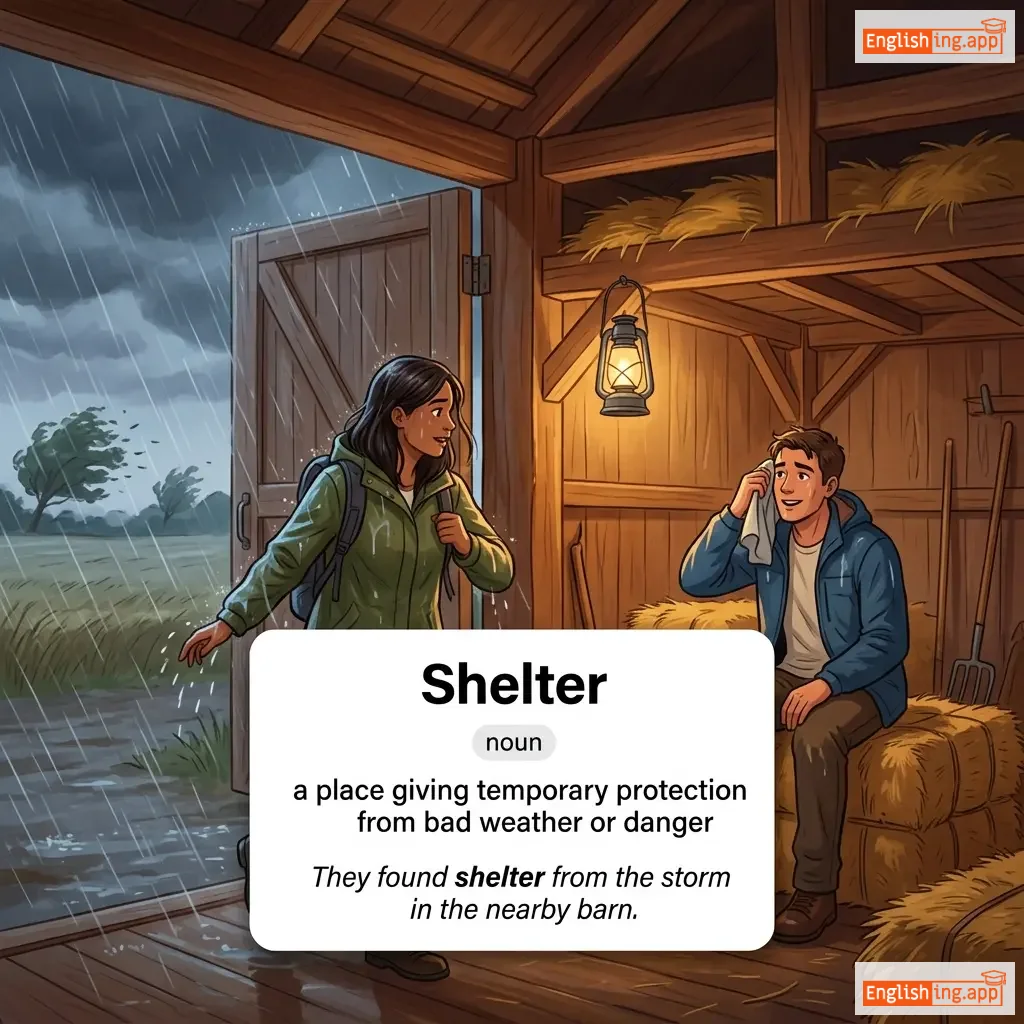
Shelter definition card — visual illustration of the meaning
noun
/ˈʃɛltər/
убежище (ubezhishche)

a place giving temporary protection from bad weather or danger

"They found shelter from the storm in the nearby barn."

"Они нашли убежище от шторма в ближайшем сарае." (Oni nashli ubezhishche ot shtorma v blizhayshem sarae.)
pronoun
/ʃi/
она (ona)

a female person or animal previously mentioned or easily identified

"She is going to the market to buy vegetables."

"Она идет на рынок, чтобы купить овощи." (Ona idet na rynok, chtoby kupit' ovoshchi.)
noun
/ʃiːf/
пучок пшеницы (puchok pshenitsy)

a bundle of grain stalks laid lengthwise and tied together after reaping; a bundle of objects tied together

"The farmer carried a sheaf of wheat on his shoulder."

"Фермер нес пучок пшеницы на своем плече." (Fermyer nes puchok pshenitsy na svoem pleche.)
verb
/ʃɪə/
стричь (strich)

to cut the wool off a sheep or to cut something with sharp tools like scissors or shears

"The farmer will shear the sheep in the spring."

"Фермер стрижёт овцу весной." (Fermyer strizhyot ovtsu vesnoy.)
noun
/ʃiːt fɪʃ/
сом (som)

A large freshwater catfish with a broad flat head and long barbels

"The sheat-fish is one of the largest freshwater fish in South Asia."

"Сом — одна из самых крупных пресноводных рыб Южной Азии." (Som odna iz samykh krupnykh presnovodnykh ryb Yuzhnoy Azii)
verb
/ʃiːð/
вложить в ножны (vlozhit' v nozhny)

to put a sword or knife back into its cover

"He quickly sheathed his sword after the duel."

"Он быстро вложил свой меч обратно в ножны после дуэли." (On bystro vlozhil svoi mech obratno v nozhny posle duel.)
verb
/ʃɛd/
сбрасывать (sbrasyvat)

to let something fall off naturally, such as leaves, hair, or tears

"Trees shed their leaves in autumn."

"Деревья сбрасывают свои листья осенью." (Derev'ya sbrozyvayut svoi list'ya osenyu.)
noun
/ʃiːp/
овца (ovtsa)

a farm animal with thick wool that is raised for its wool, meat, and milk

"The farmer keeps a large flock of sheep."

"Фермер держит большое стадо овец." (Fermer derzhit bol'shoye stado ovets.)
adjective
/ʃɪə/
полный (polny)

complete and utter; very steep or transparent

"The cliff was a sheer drop into the sea."

"Утёс был прямым обрывом в море." (Utyos byl pryamym obryvom v more.)
noun
/ʃiːt/
простыня (prostynya)

a large piece of cloth or paper, typically used to cover or protect something

"I need a clean sheet to cover the bed."

"Мне нужно чистое простыня, чтобы накрыть кровать." (Mne nuzhno chistoye prostynya, chtoby nakryt' krovat'.)
noun
/ʃɛlf/
полка (polka)

a flat surface used for storing or displaying things, typically fixed to a wall or inside a cabinet

"I placed the books on the shelf next to the window."

"Я положил книги на полку рядом с окном." (Ya polozhil knigi na polku ryadom s oknom.)
noun
/ʃɛl/
раковина (rakovina)

the hard outer covering of a mollusk or a crustacean, or something similar

"She picked up a beautiful seashell on the beach."

"Она подобрала красивую раковину на пляже." (Ona podobrala krasivuyu rakovinu na plyazhe.)
adjective
/ˈʃaɪ.ni/
блестящий; сияющий; (blestyashchiy; siyayushchiy;)

reflecting light; bright and polished; glossy

"The shiny new car caught everyone's attention."

"Блестящий новый автомобиль привлек внимание всех." (Blestyashchiy novyy avto mobil privlek vnimaniye vsekh.)
verb
/ˈʃɪmər/
мерцать (mertsat')

To shine with a soft, wavering light.

"The lake shimmered under the moonlight."
"Озеро мерцало под лунным светом." (Ozero mertsalo pod lunym svetom.)
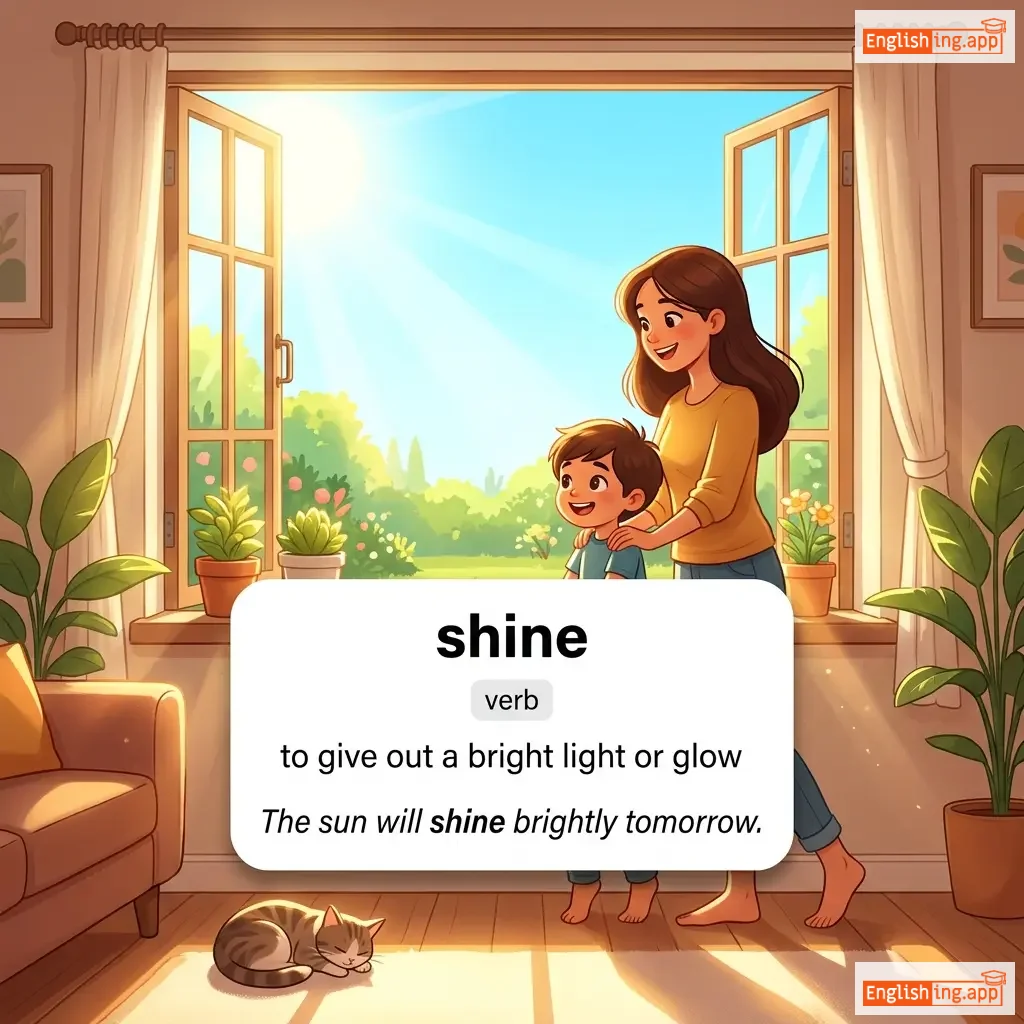
shine definition card — visual illustration of the meaning
verb
/ʃaɪn/
светить (svetit)

to give out a bright light or glow

"The sun will shine brightly tomorrow."

"Солнце будет ярко светить завтра." (Solntse budet yarko svetit' zavtra.)
adjective
/ˈʃɪft.ləs/
ленивый (lenivyy)

Lacking ambition or the ability to accomplish anything; lazy and unmotivated.

"He was seen as a shiftless young man with no goals."

"Его считали ленивым молодым человеком без целей." (Ego schitali lenivym molodym chelovekom bez tseley.)
noun
/ʃɪp/
корабль (korabl)

a large boat used for travel or transporting goods across water

"The ship set sail across the ocean."

"Корабль отплыл через океан." (Korabl' otplyl cherez okean.)