Словари

Словарь английского языка | Значения слов, определения и примеры

noun
/spuːn/
ложка (lozhka)

a utensil consisting of a small shallow bowl with a handle, used for eating, stirring, or serving food

"She stirred her coffee with a silver spoon."

"Она размешала свой кофе серебряной ложкой." (Ona razmeshala svoy kofe serebryanoy lozhkoy.)
noun
/ˈspuːnərɪzəm/
спунеризм (spunerizm)

A verbal error in which the initial sounds of words are swapped to create a humorous effect.

"He made a spoonerism by saying 'queer old dean' instead of 'dear old queen'."
"Он сделал спунеризм, сказав 'странный старый декан' вместо 'дорогая старая королева'." (On sdelal spunerizm, skazav 'strannyy staryy dekan' vmesto 'dorogaya staraya koroleva'.)
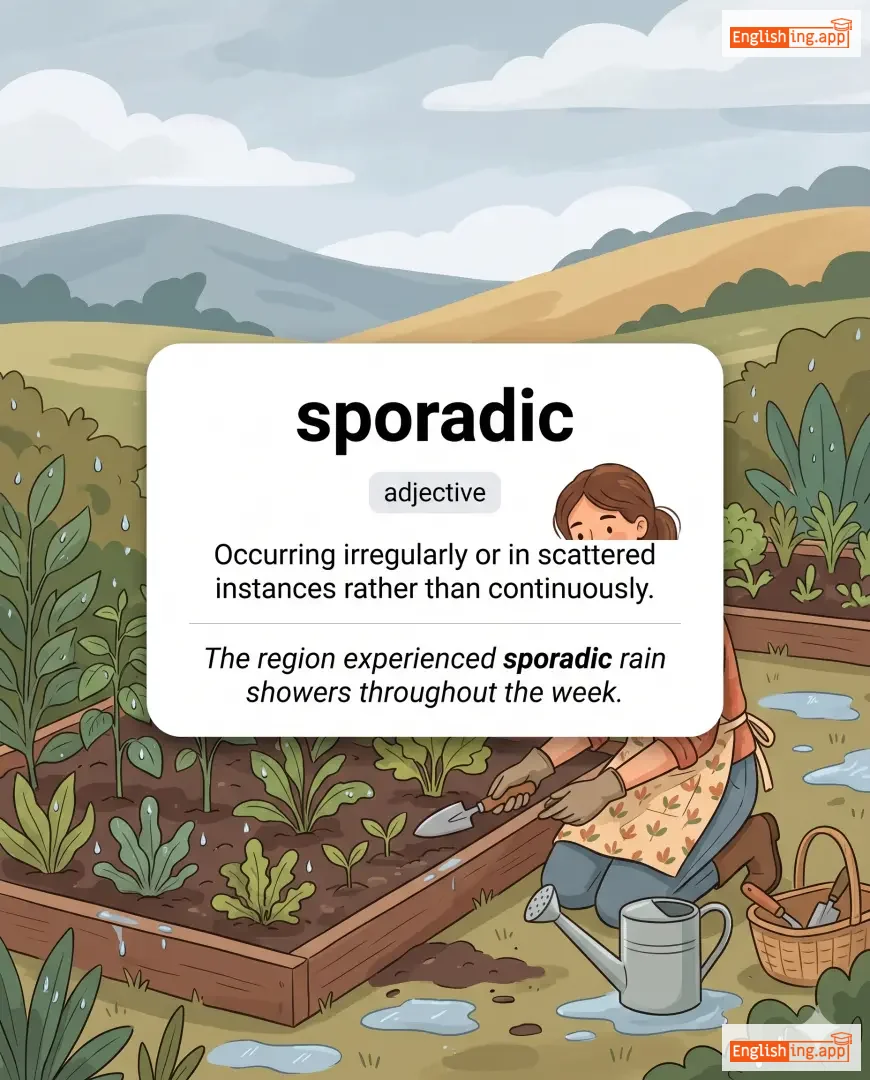
sporadic definition card — visual illustration of the meaning
adjective
/spəˈrædɪk/
спорадический (sporadicheskiy)

Occurring irregularly or in scattered instances rather than continuously.

"The region experienced sporadic rain showers throughout the week."

"Регион испытал спорадические дожди в течение недели." (Region ispyltal sporadicheskie dozhdi v techeniye nedeli.)
noun
/spɔːt/
спорт (sport)

an activity involving physical exertion and skill in which an individual or team competes against another or others for entertainment

"Football is a popular sport around the world."

"Футбол - популярный спорт во всем мире." (Futbol - populyarnyy sport vo vsyom mire.)
adjective
/ˈspɔːrtɪv/
спортивный (sportivnyy)

Playful, lively, or full of fun.

"The children were in a sportive mood during the picnic."

"Дети были в спортивном настроении во время пикника." (Deti byli v sportivnom nastroenii vo vremya piknika.)
noun
/ˈspɔːrtsmən/
спортсмен (sportsmen)

A person who is skilled in sports or enjoys participating in athletic activities.

"He is a true sportsman, always fair and respectful to his opponents."
"Он настоящий спортсмен, всегда честен и уважителен к своим соперникам." (On nastoyashchiy sportsmen, vsegda chesten i uvazhitelen k svoim sopernikam.)
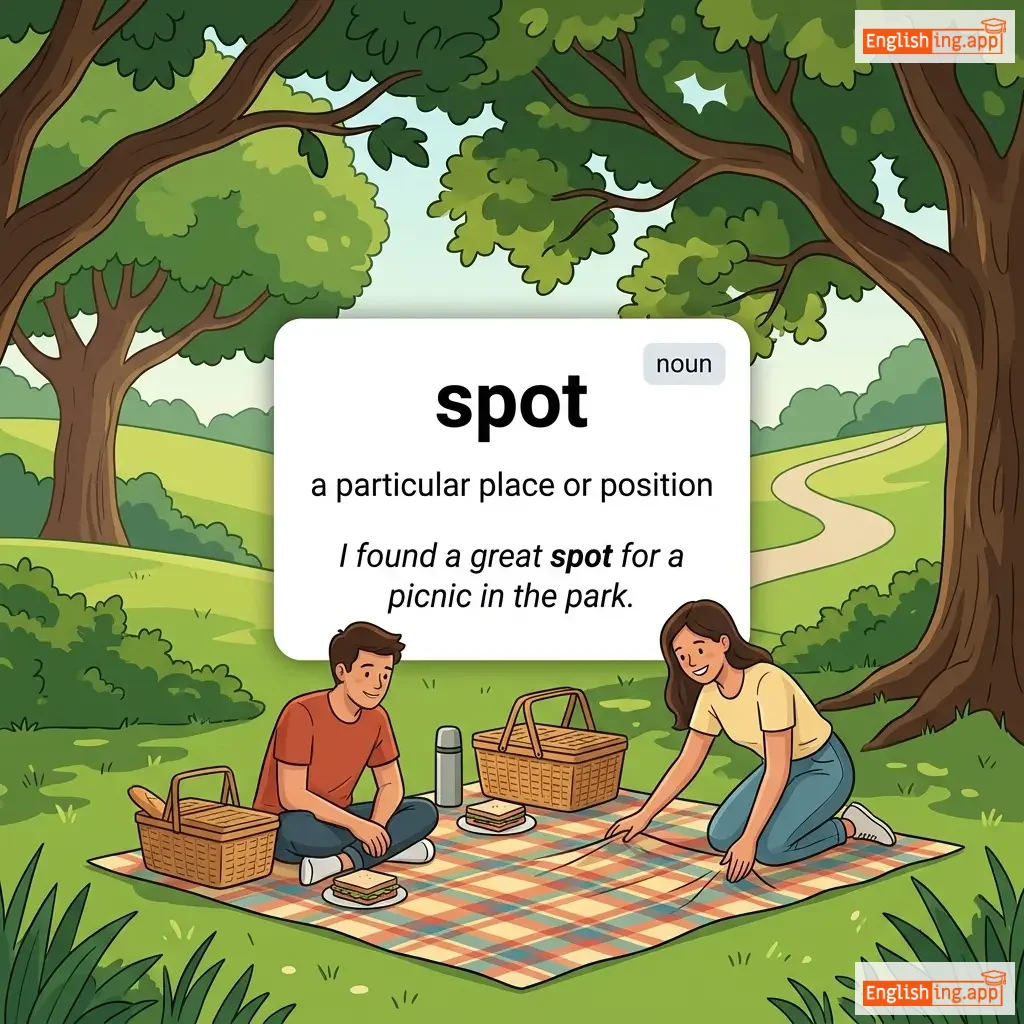
spot definition card — visual illustration of the meaning
noun
/spɒt/
место (mesto)

a particular place or position

"I found a great spot for a picnic in the park."

"Я нашел отличное место для пикника в парке." (Ya nashel otlichnoye mesto dlya piknika v parke.)
noun
/ˈspɒt.laɪt/
прожектор (spotlayt)

a strong beam of light directed onto a particular area; figuratively, public attention

"The singer stood proudly in the spotlight."

"Певец гордо стоял в свете прожектора." (Pevets gordo stoyal v svete prozhektora.)
adjective
/ˈspɒtɪd/
пятнистый; отмеченный; замеченный (pyatnistyy; otmechennyy; zamechennyy)

having spots or marks; noticed or seen

"The spotted leopard moved silently through the jungle."

"Пятнистая пантера двигалась бесшумно через джунгли." (Pyatnistaya pantera dvizhilas' besshumno cherez dzhungli.)
noun
/ˈspɒt.ɪd sneɪk hed/
пятнистая змееголовая рыба (pyatnistaya zmeegolovaya ryba)

a type of freshwater fish with spotted markings and an elongated head resembling a snake

"The spotted snake head is a popular fish for aquaculture in South Asia."

"Пятнистая змееголовая рыба популярна для аквакультуры в Южной Азии." (pyatnistaya zmeegolovaya ryba populyarna dlya akvakultury v yuzhnoy azii)
noun
/spaʊs/
супруг (suprug)

a person's husband or wife

"Each employee may include their spouse in the health insurance plan."

"Каждый сотрудник может включить своего супруга в план медицинского страхования." (Kazhdyi sotrudnik mozhet vklyuchit' svoego supruga v plan meditsinskogo strakhovaniya.)
noun, verb
/spreɪn/
растяжение (rastyazhenie)

an injury to a joint in which the ligaments are stretched or torn

"She sprained her ankle while running in the park."

"Она вывихнула лодыжку, когда бегала в парке." (Ona vyvihnula lodyzhku, kogda begala v parke.)
verb
/spreɪ/
распылять (raspylyat)

to apply liquid to something in a fine mist

"She sprayed perfume on her wrist before leaving."

"Она распылила духи на своё запястье перед тем, как уйти." (Ona raspylyla dukhi na svoe zapyaste pered tem, kak uyti.)
verb
/sprɛd/
раскрывать (raskryvat')

to open or extend something over an area

"She spread the blanket on the grass for a picnic."

"Она раскинула одеяло на траве для пикника." (Ona raskynula odeyalo na trave dlya piknika.)
adjective
/ˈspraɪtli/
живой (zhivoy)

full of energy and life; lively

"The sprightly old man danced with joy at the wedding."

"Живой старик танцевал с радостью на свадьбе." (Zhivoy starik tantseval s radost'yu na svad'be.)
noun
/sprɪŋ/
весна (vesna)

the season between winter and summer when plants begin to grow

"Flowers bloom in the spring."

"Цветы распускаются весной." (Tsvety raspuskajutsya vesnoj.)
verb
/ˈsprɪŋkəl/

to scatter small drops or particles of a substance over a surface

"She sprinkled sugar on top of the cake."

verb, noun
/spraʊt/
прорастать (prorastat')

to begin to grow; to produce new leaves or shoots

"The seeds began to sprout after a few days of rain."

"Семена начали прорастать после нескольких дней дождя." (Semena nachali prorastat' posle neskol'kikh dney dozhdya.)
verb, adjective, noun
/spruːs/
привести в порядок / тип дерева (privedi v poryadok / tip dereva)

to make neat or tidy in appearance; also refers to an evergreen tree

"He spruced up his room before the guests arrived."

"Он привел свою комнату в порядок до того, как пришли гости." (On privedi svoju komnatu v poryadok do togo, kak prishli gosti.)
adjective
/spraɪ/
проворный (provorniy)

active and lively, especially in old age

"The spry grandmother surprised everyone with her quick dance steps."

"Проворная бабушка удивила всех своими быстрыми танцевальными шагами." (Provornaia babushka udivila vsekh svoimi bystrymi tantseval'nymi shagami.)
noun
/spjuːm/
пена (pena)

Froth or foam, especially found on waves or liquids.

"The waves crashed against the rocks, leaving spume in the air."

"Волны разбивались о скалы, оставляя пену в воздухе." (Volny razbivalis' o skaly, ostavlyaya penu v vozdukhe.)
verb
/spɜːr/
побуждать / мотивировать (pobuzhdat / motivirovat)

To encourage or motivate someone to take action.

"The teacher's praise spurred him to study harder."

"Похвала учителя побудила его учиться усерднее." (Pokhvala uchitelya pobudila ego uchit'sya usyerdneye.)
adjective
/ˈspjʊəriəs/
ложный / фальшивый (lozhny / fal'shivy)

Not genuine, authentic, or true; false or fake.

"The report was based on spurious claims."

"Отчет был основан на ложных утверждениях." (Otchet byl osnovan na lozhnykh utverzhdeniyakh.)
verb
/spɜːrn/
отвергать с презрением (otvergat' s prezreniem)

To reject something or someone with disdain or contempt.

"She spurned his offer of help."

"Она отвергла его предложение о помощи с презрением." (Ona otvergla ego predlozhenie o pomoshchi s prezreniem.)
🕵️‍♂️

spy (spay)

verb
/spaɪ/
шпионить (shpionit)

to secretly collect information about a person, group, or country

"He was caught spying on his neighbor through the window."

"Его поймали, когда он шпионит за своим соседом через окно." (Ego poymali, kogda on shpionit za svoim sosedom cherez okno.)
verb
/ˈskwɒbəl/
ссориться по пустякам (ssoritsya po pustyakam)

To argue noisily over something small or unimportant.

"The children squabbled over the last piece of cake."
"Дети спорили из-за последнего кусочка торта." (Deti sporyli iz-za poslednego kusochka torta.)
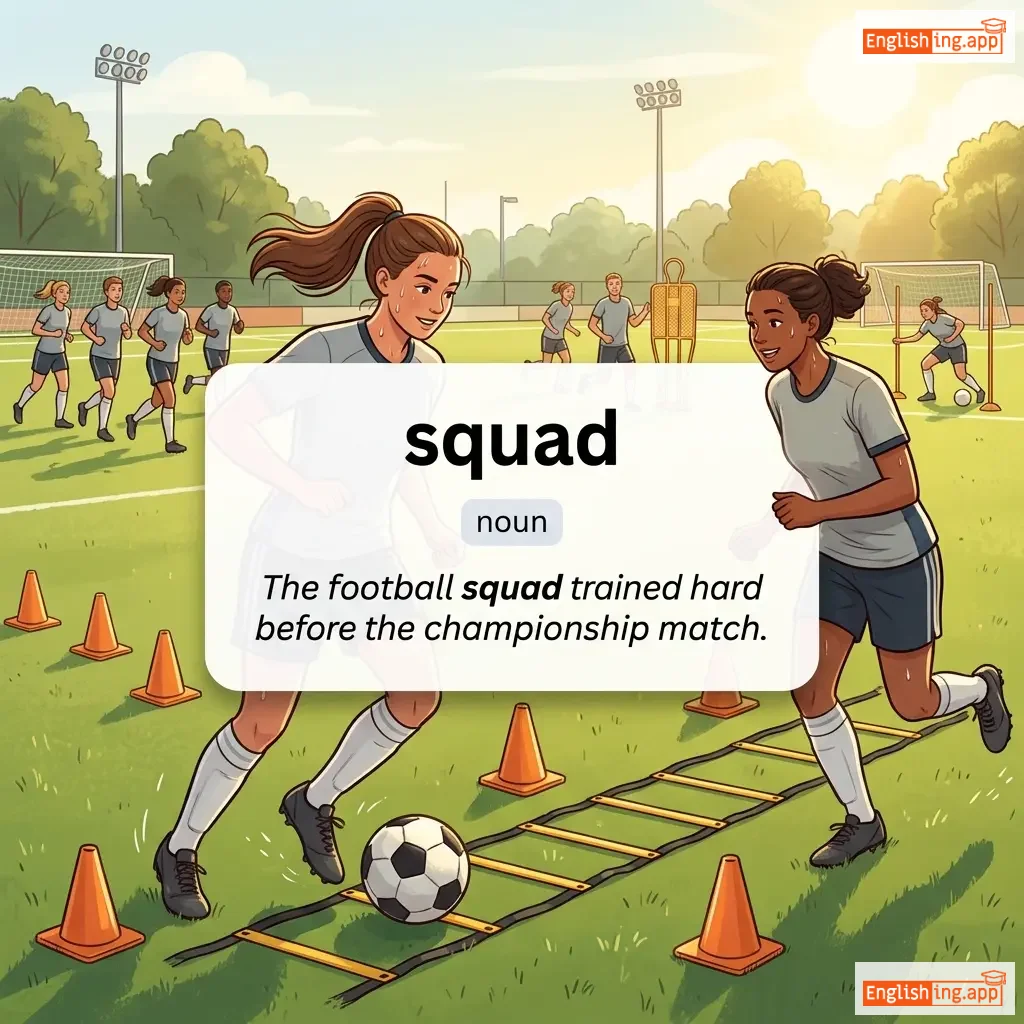
squad definition card — visual illustration of the meaning
noun
/skwɒd/
команда (komanda)

a small group of people organized for a specific purpose or task, often in the military or sports

"The football squad trained hard before the championship match."

"Футбольная команда тренировалась усердно перед матчем чемпионата." (Futbol'naya komanda trenirovalas' usyerdno pered matchem chempionata.)
adjective
/ˈskwɒlɪd/
крайне грязный (kraine gryaznyy)

extremely dirty and unpleasant, often due to poverty or neglect

"He lived in a squalid room with broken furniture."

"Он жил в грязной комнате с поломанной мебелью." (On zhil v gryaznoy komnate s polomannoy mebel'yu.)
noun
/skwɔːl/
штормовой порыв (shtormovoy poryv)

a sudden violent gust of wind, often accompanied by rain, snow, or sleet

"A sudden squall caught the sailors off guard."
"Внезапный штормовой порыв застал моряков врасплох." (Vnezapnyy shtormovoy poryv zastal moryakov vrasploh.)
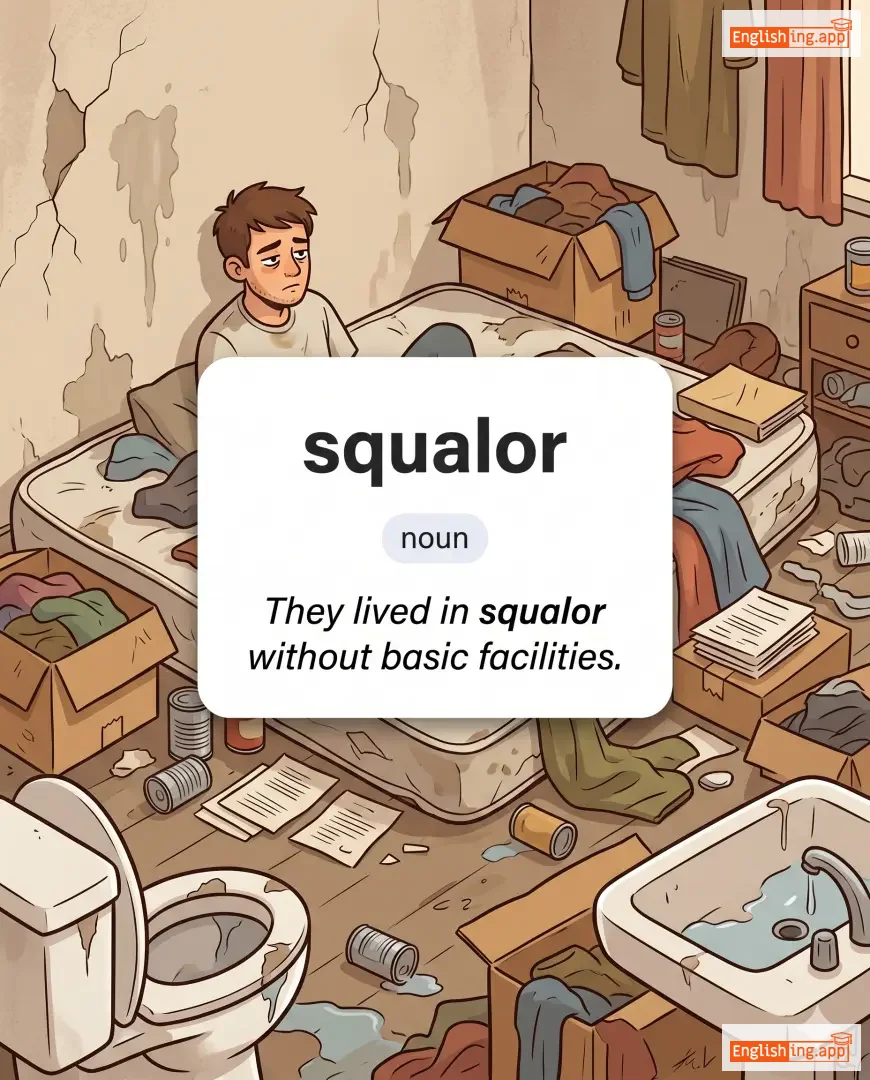
squalor definition card — visual illustration of the meaning
noun
/ˈskwɒlər/
нищета (nishcheta)

the state of being extremely dirty and unpleasant, especially due to poverty or neglect

"They lived in squalor without basic facilities."
"Они жили в нищете без базовых удобств." (Oni zhili v nishchete bez bazovykh udobstv.)
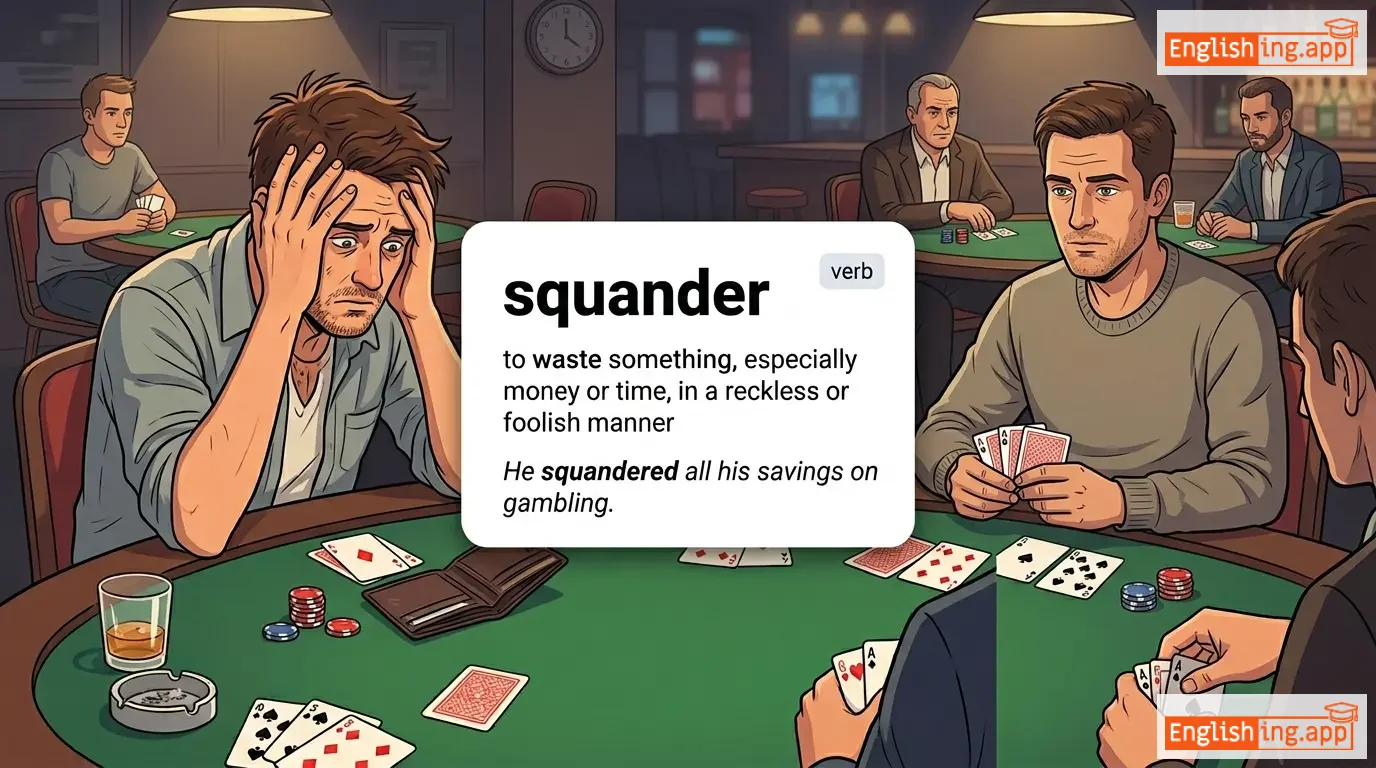
squander definition card — visual illustration of the meaning
verb
/ˈskwɒndər/
расточать (rastochat')

to waste something, especially money or time, in a reckless or foolish manner

"He squandered all his savings on gambling."

"Он растратил все свои сбережения на азартные игры." (On rastatil vse svoi sberegeniya na azartnye igry.)
noun
/skwɛə(r)/
квадрат (kvadrat)

a shape with four equal straight sides and four right angles

"The table has a square shape."

"Стол имеет квадратную форму." (Stol imeyet kvadratnuyu formu.)
adjective
/ˈstɔːlwərt/
непоколебимый, верный (nepokolebimy, verny)

Loyal, reliable, and hardworking; strongly built or sturdy.

"She has always been a stalwart supporter of the community."

"Она всегда была непоколебимым сторонником сообщества." (Ona vsegda byla nepokolebimym storonnikom soobshchestva.)
adjective
/ˈsteɪ.dʒi/
чрезмерно театральный (chrezmerno teatral'nyy)

Overly theatrical, artificial, or exaggerated in manner or style.

"Her performance felt stagy and unnatural."

"Её выступление казалось чрезмерно театральным и неестественным." (Eyo vystupleniye kazalos' chrezmerno teatral'nym i neestestvennym.)
adjective
/steɪd/
серьезный, уважаемый (seryozny, uvazhayemyy)

Serious, respectable, and unadventurous.

"He came from a staid family background."

"Он пришел из серьезной семьи." (On prishel iz seryoznoy sem'i.)
🩸

Stain

verb
/steɪn/

to mark or discolor something permanently; a spot or mark left behind

"The coffee spilled and stained the tablecloth."

noun
/stɛə/
лестница (lestnitsa)

a step or set of steps leading from one level to another

"He tripped on the stair and fell down."

"Он споткнулся на лестнице и упал." (On spotknulsya na lestnitse i upal.)
noun, verb
/steɪk/
доля, риск (dolya, risk)

A share or interest in a business or venture; to risk or support something of value.

"He has a major stake in the new company."
"У него есть большая доля в новой компании." (U nego yest' bol'shaya dolya v novoy kompanii.)
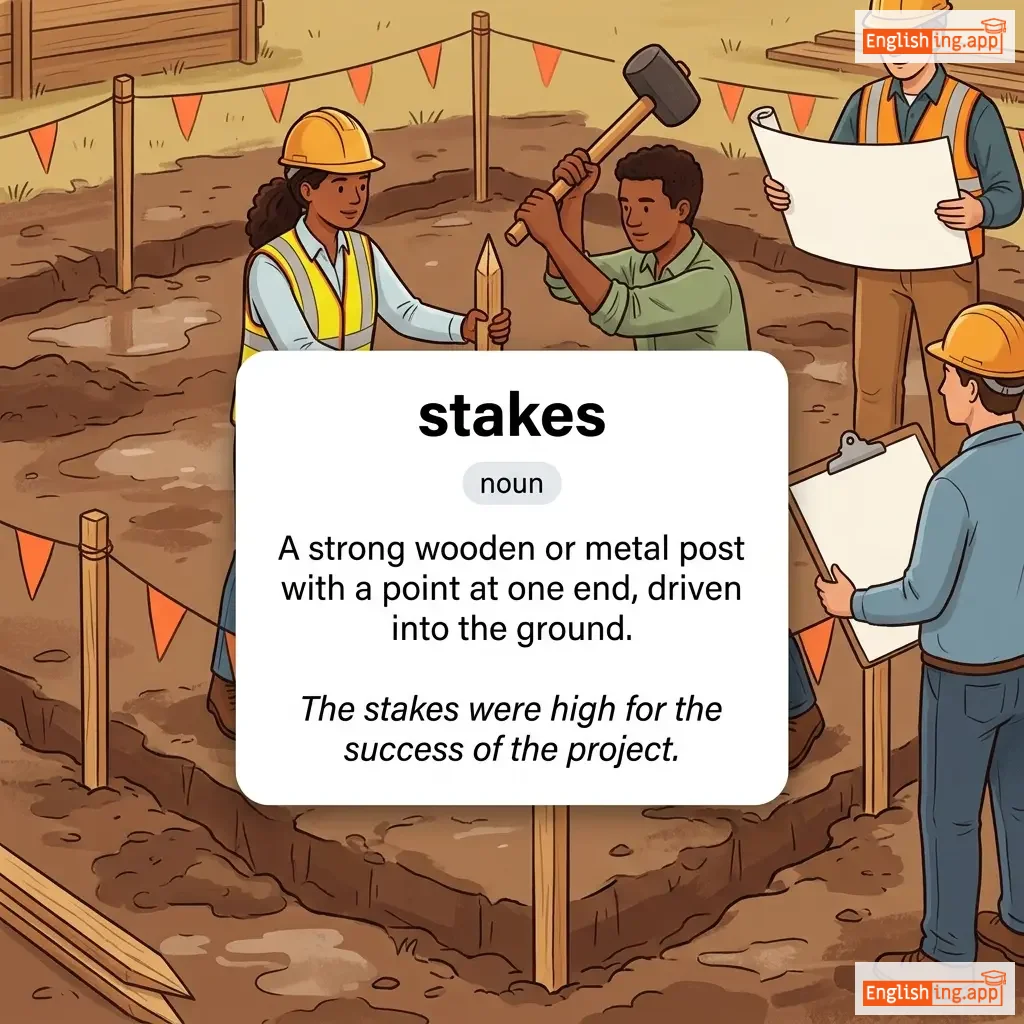
stakes definition card — visual illustration of the meaning
noun
steɪks
ставка (stavka)

A strong wooden or metal post with a point at one end, driven into the ground.

"The stakes were high for the success of the project."

"Ставки были высоки для успеха проекта." (Stavki byli vysokie dlya uspekha proekta.)
adjective
/steɪl/
черствый; старый; не свежий (steyl)

no longer fresh; lacking originality or novelty

"The bread became stale after sitting out for three days."

"Хлеб стал черствым после того, как пролежал три дня." (Khleb stal chertsvym posle togo, kak prolezhalsya tri dnya.)
noun
/ˈsteɪl.meɪt/
тупик (tupik)

A situation in which no progress can be made or no party can win.

"Negotiations ended in a stalemate."

"Переговоры закончились тупиком." (Peregovory zakonchilis' tupikom.)
verb, noun
/stɔːl/
остановить, киоск (ostanovit', kioskh)

to stop or cause to stop temporarily; a small shop or stand

"The car stalled on the way to the office."

"Машина остановилась по пути в офис." (Mashina ostanovilas' po puti v ofis.)
noun
/ˈstæl.i.ən/
жеребец для разведения (zherebets dlya razvedeniya)

An adult male horse that is not castrated, often used for breeding.

"The farm owns a powerful stallion for breeding purposes."

"Ферма владеет мощным жеребцом для разведения." (Ferma vladeet moshchnym zherebtsom dlya razvedeniya.)
noun
/stæns/
позиция (pozitsiya)

a person's attitude, opinion, or position on an issue

"The company took a strong stance on environmental protection."

"Компания заняла твердую позицию по защите окружающей среды." (Kompaniya zanyala tverdoyu pozitsiyu po zashchite okruzhayushchey sredy.)
standards definition card — visual illustration of the meaning
noun
ˈstæn.dədz
стандарты (standarty)

A level of quality or attainment.

"Institutions must meet international standards."

"Учреждения должны соответствовать международным стандартам." (Uchezhdeniya dolzhny sootvetstvovat' mezhdunarodnym standartam.)
noun
/ˈstændərd/
стандарт (standart)

a level of quality or achievement, or a measure of comparison

"This car meets all the safety standards."
"Этот автомобиль соответствует всем стандартам безопасности." (Etot avtomobil sootvetstvuet vsem standartam bezopasnosti.)
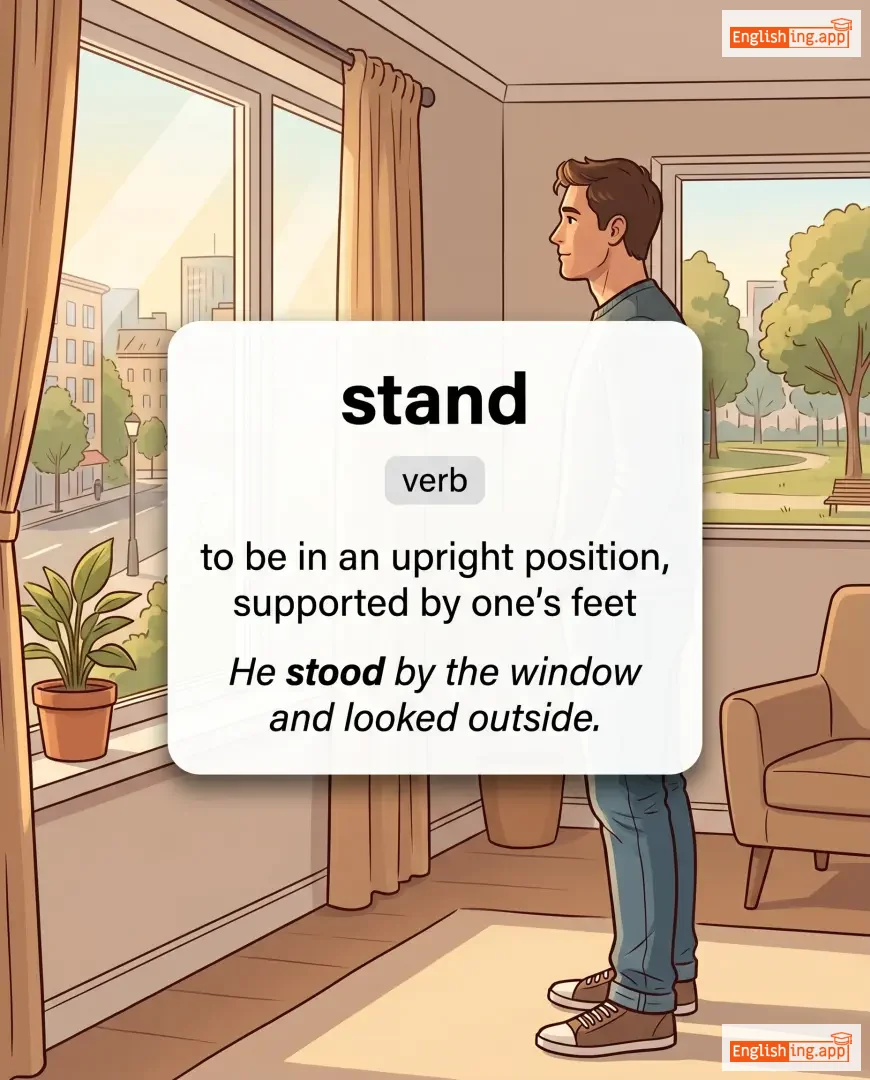
stand definition card — visual illustration of the meaning
verb
/stænd/
стоять (stoyat)

to be in an upright position, supported by one's feet

"He stood by the window and looked outside."

"Он стоял у окна и смотрел наружу." (On stoyal u okna i smotrel naruzhu.)
noun
/ˈstænʃən/
опорный столб (oporny stolb)

a strong upright bar or post used as support or to control movement

"The red rope was attached to the stanchions to guide the crowd."

"Красная веревка была прикреплена к стойкам, чтобы направлять толпу." (Krasnaya ver'evka byla prikreplena k stoykam, chtoby napavlyat' tolpu.)
verb
/stɑːntʃ/
остановить кровотечение (ostanovit' krovootechenie)

to stop the flow of blood or liquid from a wound or source

"The nurse quickly stanched the bleeding from the cut."

"медсестра быстро остановила кровотечение из пореза." (medsestra bystro ostanovila krovootechenie iz poreza.)
📮

stamp

verb
/stæmp/

To bring down (one's foot) heavily on the ground; to imprint a mark or seal.

"She stamped her foot in frustration."