词汇表

英语词汇词典 | 单词含义、定义和示例

noun
/spuːn/
勺子 (shaozi)

a utensil consisting of a small shallow bowl with a handle, used for eating, stirring, or serving food

"She stirred her coffee with a silver spoon."

"她用银勺子搅拌她的咖啡。" (Tā yòng yín sháozi jiǎobàn tā de kāfēi.)
noun
/ˈspuːnərɪzəm/
斯普内里兹姆 (sipunelizimu)

A verbal error in which the initial sounds of words are swapped to create a humorous effect.

"He made a spoonerism by saying 'queer old dean' instead of 'dear old queen'."
"他通过说'古怪的老院长'代替'亲爱的老皇后'来做了一个斯普内里兹姆。" (Ta tongguo shuo 'guai de lao yuanzhang' daiti 'qin'ai de lao huanghou' lai zuo le yi ge sipunelizimu.)
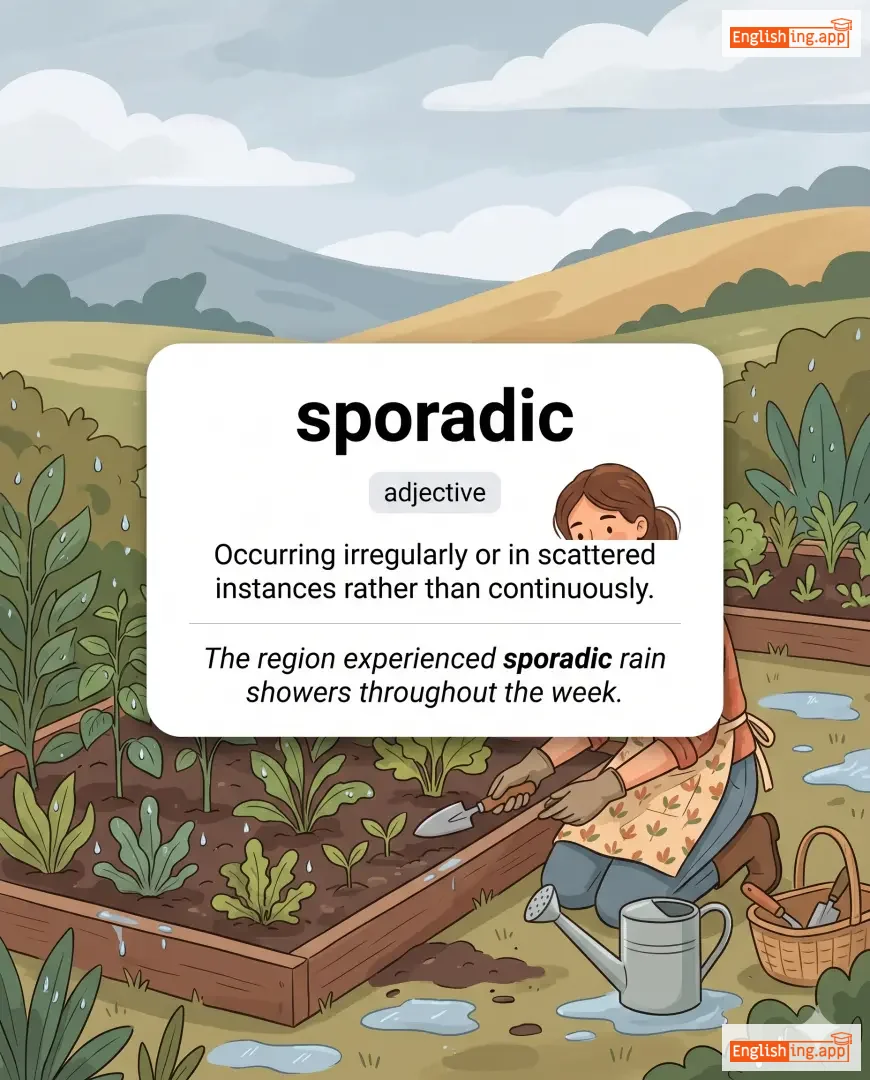
sporadic definition card — visual illustration of the meaning
adjective
/spəˈrædɪk/
零星 (língxīng)

Occurring irregularly or in scattered instances rather than continuously.

"The region experienced sporadic rain showers throughout the week."

"该地区经历了整整一周的零星降雨。" (Gāi dìqū jīnglìle zhěngzhěng yī zhōu de língxīng jiàngyǔ.)
noun
/spɔːt/
体育 (tiyu)

an activity involving physical exertion and skill in which an individual or team competes against another or others for entertainment

"Football is a popular sport around the world."

"足球是全球流行的体育运动。" (Zúqiú shì quánqiú liúxíng de tǐyù yùndòng.)
adjective
/ˈspɔːrtɪv/
运动的 (yùndòng de)

Playful, lively, or full of fun.

"The children were in a sportive mood during the picnic."

"孩子们在野餐时都很运动。" (Háizimen zài yěcān shí dōu hěn yùndòng.)
noun
/ˈspɔːrtsmən/
运动员 (yundongyuan)

A person who is skilled in sports or enjoys participating in athletic activities.

"He is a true sportsman, always fair and respectful to his opponents."

"他是一个真正的运动员,总是对对手公平和尊重。" (Ta shi yige zhenzheng de yundongyuan, zongshi dui duishou gongping he zunzhong.)
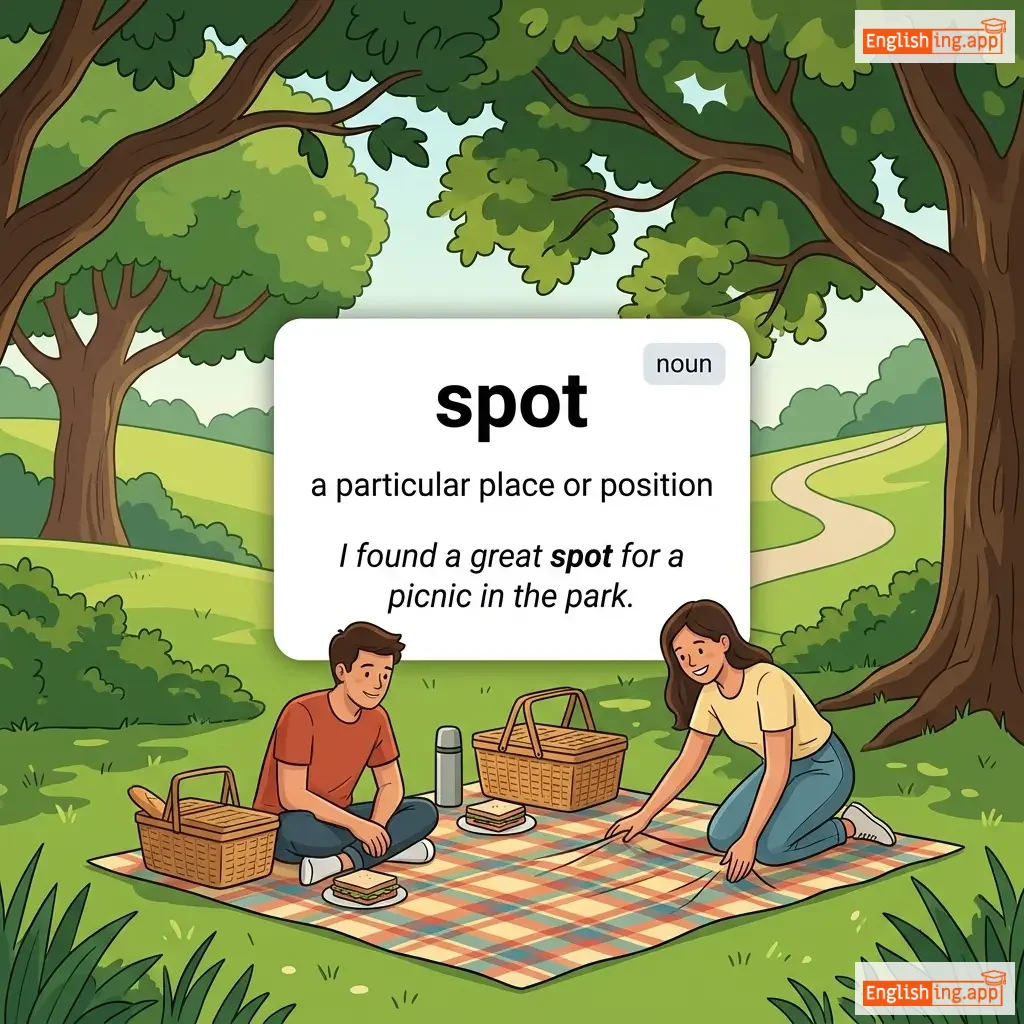
spot definition card — visual illustration of the meaning
noun
/spɒt/
地点 (didian)

a particular place or position

"I found a great spot for a picnic in the park."

"我在公园里找到了一个很好的野餐地点。" (Wo zai gongyuan li zhaodao le yi ge hen hao de yecan didian.)
noun
/ˈspɒt.laɪt/

a strong beam of light directed onto a particular area; figuratively, public attention

"The singer stood proudly in the spotlight."

adjective
/ˈspɒtɪd/
斑点的; 有标记的; 被看到 (bāndiǎn de; yǒu biāojì de; bèi kàn dào)

having spots or marks; noticed or seen

"The spotted leopard moved silently through the jungle."

"斑点猎豹静静地穿过丛林。" (Bāndiǎn lièbào jìngjìng de chuānguò cónglín.)
noun
/ˈspɒt.ɪd sneɪk hed/
斑点蛇头鱼 (bandian shetou yu)

a type of freshwater fish with spotted markings and an elongated head resembling a snake

"The spotted snake head is a popular fish for aquaculture in South Asia."

"斑点蛇头鱼是南亚水产养殖中常见的鱼类。" (bandian shetou yu shi nanya shuichan yangzhi zhong changjian de yulei)
noun
/spaʊs/
配偶 (peikou)

a person's husband or wife

"Each employee may include their spouse in the health insurance plan."

"每个员工可以将配偶纳入健康保险计划。" (Mei ge yuangong keyi jiang peigou naru jiankang baoxian jihua.)
noun, verb
/spreɪn/
扭伤 (niǔ shāng)

an injury to a joint in which the ligaments are stretched or torn

"She sprained her ankle while running in the park."

"她在公园跑步时扭伤了脚踝。" (Tā zài gōngyuán pǎobù shí niǔ shāng le jiǎohuái.)
verb
/spreɪ/
喷洒 (pen sa)

to apply liquid to something in a fine mist

"She sprayed perfume on her wrist before leaving."

"她在离开前把香水喷在了手腕上。" (Ta zai likai qian ba xiangshui pen zai le shouwan shang.)
verb
/sprɛd/
展开 (zhǎn kāi)

to open or extend something over an area

"She spread the blanket on the grass for a picnic."

"她把毯子铺在草地上为野餐。" (Tā bǎ tǎnzi pū zài cǎodì shàng wèi yěcān.)
adjective
/ˈspraɪtli/
活泼 (huó pō)

full of energy and life; lively

"The sprightly old man danced with joy at the wedding."

"那位活泼的老人高兴地在婚礼上跳舞。" (Nà wèi huó pō de lǎo rén gāo xìng de zài hūn lǐ shàng tiào wǔ.)
noun
/sprɪŋ/
春天 (chuntian)

the season between winter and summer when plants begin to grow

"Flowers bloom in the spring."

"春天花开。" (Chuntian hua kai.)
verb
/ˈsprɪŋkəl/

to scatter small drops or particles of a substance over a surface

"She sprinkled sugar on top of the cake."

verb, noun
/spraʊt/
发芽 (fā yá)

to begin to grow; to produce new leaves or shoots

"The seeds began to sprout after a few days of rain."

"种子在几天的雨后开始发芽。" (Zhǒngzǐ zài jǐ tiān de yǔ hòu kāishǐ fā yá.)
verb, adjective, noun
/spruːs/
整理 / 一种树 (zhěnglǐ / yī zhǒng shù)

to make neat or tidy in appearance; also refers to an evergreen tree

"He spruced up his room before the guests arrived."

"他在客人到达之前整理了他的房间。" (Tā zài kèrén dào dá zhīqián zhěnglǐle tā de fángjiān.)
adjective
/spraɪ/
灵活 (linghuo)

active and lively, especially in old age

"The spry grandmother surprised everyone with her quick dance steps."

"灵活的奶奶用快速的舞步让所有人都惊讶不已。" (Linghuo de nainai yong kuai su de wubu rang suoyou ren dou jingya bu yi.)
noun
/spjuːm/
泡沫 (paomo)

Froth or foam, especially found on waves or liquids.

"The waves crashed against the rocks, leaving spume in the air."

"波浪撞击岩石,空气中留下泡沫。" (Bolang zhuangji yanshi, kongqi zhong liuxia paomo.)
verb
/spɜːr/
激励 / 鼓励 (jili / guli)

To encourage or motivate someone to take action.

"The teacher's praise spurred him to study harder."

"教师的表扬激励他更加努力学习。" (Jiàoshī de biǎoyáng jīlì tā gèngjiā nǔlì xuéxí.)
adjective
/ˈspjʊəriəs/
虚假的 / 假冒的 (xūjiǎ de / jiǎmào de)

Not genuine, authentic, or true; false or fake.

"The report was based on spurious claims."

"报告基于虚假的声明。" (Bàogào jīyú xūjiǎ de shēngmíng.)
verb
/spɜːrn/
蔑视地拒绝 (mièshì de jùjué)

To reject something or someone with disdain or contempt.

"She spurned his offer of help."

"她以蔑视的态度拒绝了他的帮助提议。" (Tā yǐ mièshì de tàidu jùjuéle tā de bāngzhù tíyì.)
🕵️‍♂️

spy (sī pāi)

verb
/spaɪ/
间谍 (jiandie)

to secretly collect information about a person, group, or country

"He was caught spying on his neighbor through the window."

"他在窗户旁边偷偷地监视邻居时被抓住了。" (Tā zài chuānghù pángbiān tōutōu de jiānshì línjū shí bèi zhuā zhù le.)
verb
/ˈskwɒbəl/
为琐事争吵 (wèi suǒ shì zhēngchǎo)

To argue noisily over something small or unimportant.

"The children squabbled over the last piece of cake."
"孩子们争论最后一块蛋糕。" (Háizimen zhēnglùn zuìhòu yī kuài dàngāo.)
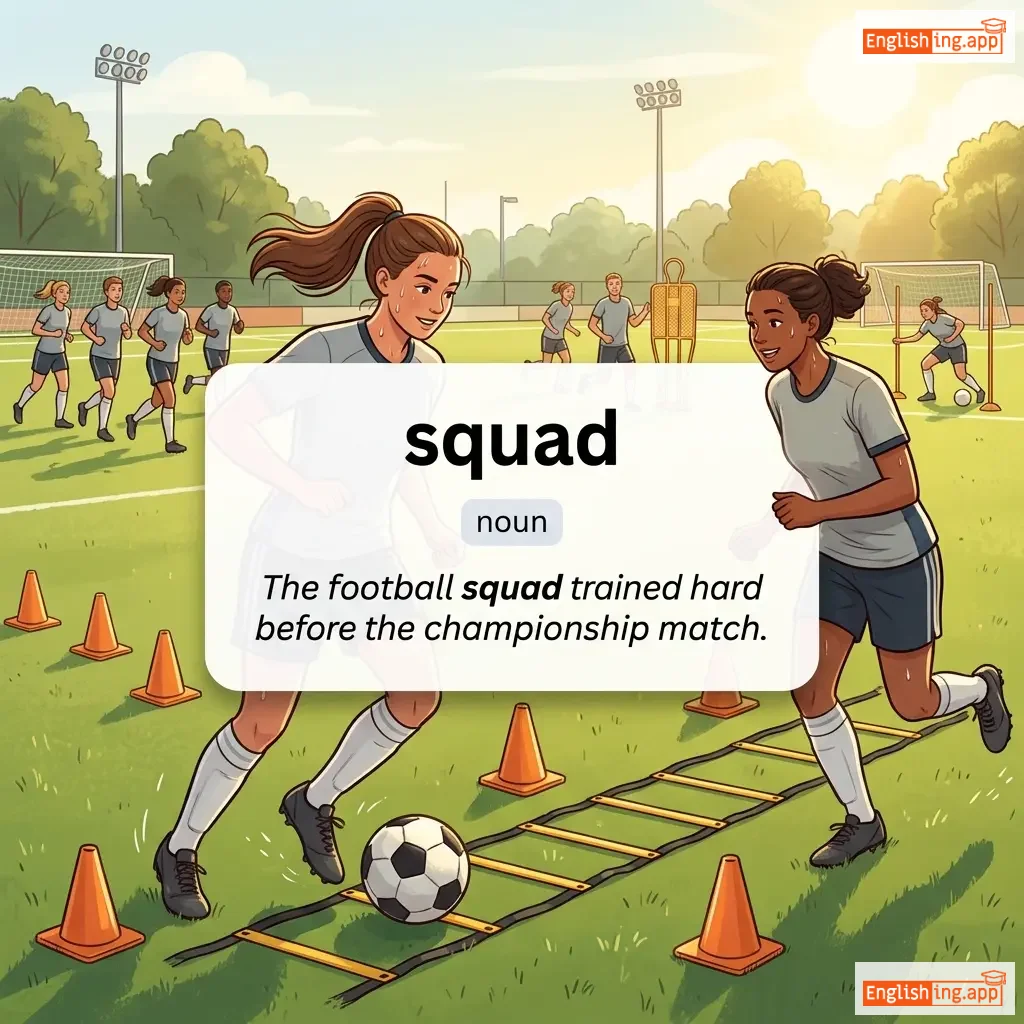
squad definition card — visual illustration of the meaning
noun
/skwɒd/
小队 (xiaodui)

a small group of people organized for a specific purpose or task, often in the military or sports

"The football squad trained hard before the championship match."

"足球队在冠军赛前进行了艰苦训练。" (Zuqiudui zai guanjunsai qian jinxingle jianku xunlian.)
adjective
/ˈskwɒlɪd/
极其脏乱 (jíqí zāngluàn)

extremely dirty and unpleasant, often due to poverty or neglect

"He lived in a squalid room with broken furniture."

"他住在一个脏乱的房间里,里面有坏掉的家具。" (Tā zhù zài yīgè zāngluàn de fángjiān lǐ, lǐmiàn yǒu huài diào de jiājù.)
noun
/skwɔːl/
暴风骤雨 (baofeng zhouyu)

a sudden violent gust of wind, often accompanied by rain, snow, or sleet

"A sudden squall caught the sailors off guard."

"一阵突如其来的暴风骤雨让水手们措手不及。" (Yi zhen tu ru qi lai de baofeng zhouyu rang shuishou men cuoshou buji.)
squalor definition card — visual illustration of the meaning
noun
/ˈskwɒlər/
贫困 (pínkùn)

the state of being extremely dirty and unpleasant, especially due to poverty or neglect

"They lived in squalor without basic facilities."

"他们在没有基本设施的贫困中生活。" (Tāmen zài méiyǒu jīběn shèshī de pínkùn zhōng shēnghuó.)
squander definition card — visual illustration of the meaning
verb
/ˈskwɒndər/
浪费 (làng fèi)

to waste something, especially money or time, in a reckless or foolish manner

"He squandered all his savings on gambling."

"他把所有的积蓄都浪费在了赌博上。" (Tā bǎ suǒyǒu de jīxù dōu làng fèi zài le dǔbó shàng.)
noun
/skwɛə(r)/
正方形 (zhèngfāngxíng)

a shape with four equal straight sides and four right angles

"The table has a square shape."

"桌子是正方形的。" (Zhuōzi shì zhèngfāngxíng de.)
adjective
/ˈstɔːlwərt/
坚定, 忠诚 (jianding, zhongcheng)

Loyal, reliable, and hardworking; strongly built or sturdy.

"She has always been a stalwart supporter of the community."

"她一直是社区的坚定支持者。" (Ta yizhi shi shequ de jianding zhichi zhe.)
adjective
/ˈsteɪ.dʒi/
过于戏剧化 (guo yu xi ju hua)

Overly theatrical, artificial, or exaggerated in manner or style.

"Her performance felt stagy and unnatural."

"她的表演显得过于戏剧化和不自然。" (Ta de biao yan xian de guo yu xi ju hua he bu zi ran.)
adjective
/steɪd/
严肃,受尊敬的 (yánsù, shòu zūnjìng de)

Serious, respectable, and unadventurous.

"He came from a staid family background."

"他来自一个严肃的家庭。" (Tā láizì yīgè yánsù de jiātíng.)
🩸

Stain

verb
/steɪn/

to mark or discolor something permanently; a spot or mark left behind

"The coffee spilled and stained the tablecloth."

noun
/stɛə/
楼梯 (louti)

a step or set of steps leading from one level to another

"He tripped on the stair and fell down."

"他在楼梯上绊倒摔了下来。" (Ta zai louti shang bandao shuai le xiala.)
noun, verb
/steɪk/
股份, 风险 (gǔ fèn, fēng xiǎn)

A share or interest in a business or venture; to risk or support something of value.

"He has a major stake in the new company."
"他在新公司拥有重大股份。" (Tā zài xīn gōng sī yǒng yǒu zhòng dà gǔ fèn.)
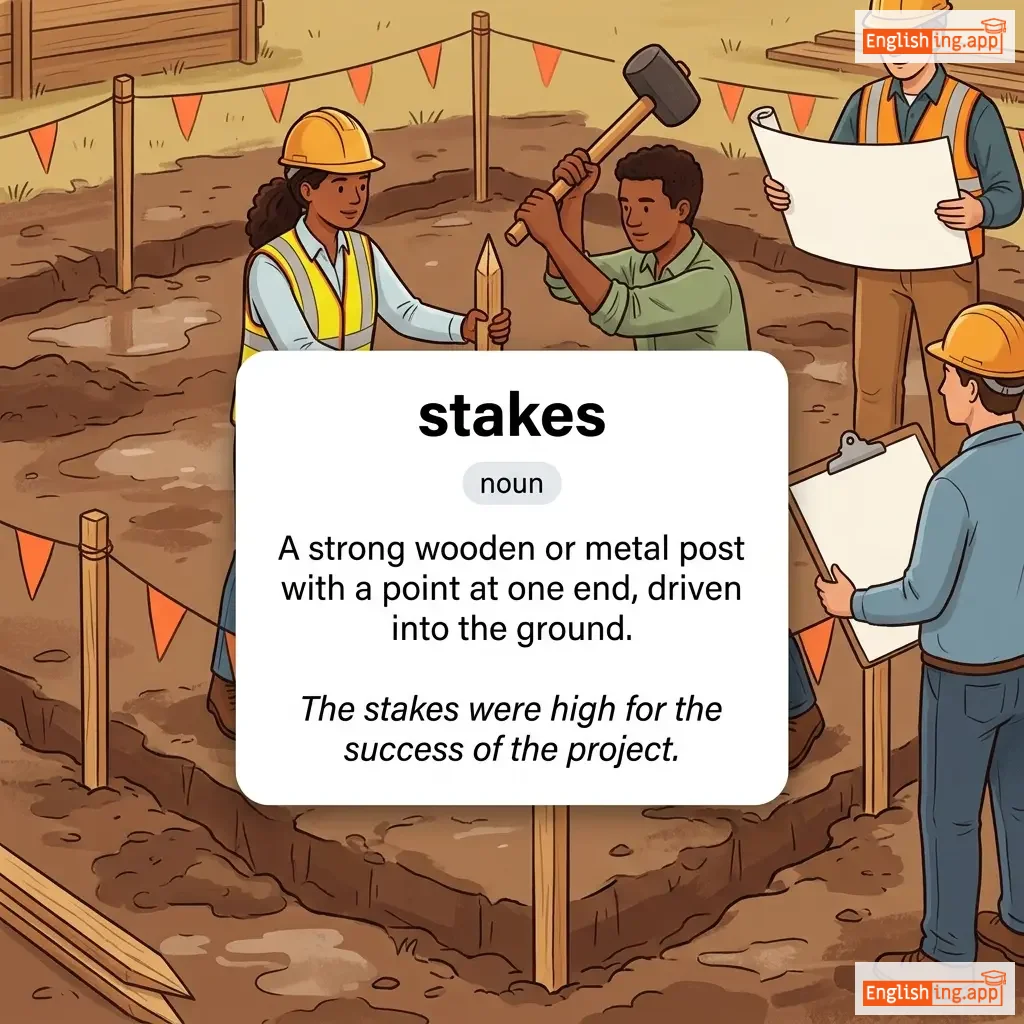
stakes definition card — visual illustration of the meaning
noun
steɪks
赌注 (dǔ zhù)

A strong wooden or metal post with a point at one end, driven into the ground.

"The stakes were high for the success of the project."

"赌注对项目的成功至关重要。" (Dǔzhù duì xiàngmù de chénggōng zhìguān zhòngyào.)
adjective
/steɪl/
陈旧的; 过时的; 不新鲜的 (chénjiù de; guòshí de; bù xīnxiān de)

no longer fresh; lacking originality or novelty

"The bread became stale after sitting out for three days."

"面包放了三天后变得陈旧。" (Miànbāo fàngle sāntiān hòu biàn dé chénjiù.)
noun
/ˈsteɪl.meɪt/
僵局 (jiangju)

A situation in which no progress can be made or no party can win.

"Negotiations ended in a stalemate."

"谈判陷入了僵局。" (Tanpan xianru le jiangju.)
verb, noun
/stɔːl/
停下, 小摊 (ting xia, xiao tan)

to stop or cause to stop temporarily; a small shop or stand

"The car stalled on the way to the office."

"车子在去办公室的路上停了下来。" (Che zi zai qu bangongshi de lujiao ting le xia lai.)
noun
/ˈstæl.i.ən/
用于繁殖的种马 (yòng yú fánzhí de zhǒngmǎ)

An adult male horse that is not castrated, often used for breeding.

"The farm owns a powerful stallion for breeding purposes."

"农场拥有一匹强壮的种马用于繁殖。" (Nóngchǎng yǒng yī pǐ qiángzhuàng de zhǒngmǎ yòng yú fánzhí.)
noun
/stæns/
立场 (lichang)

a person's attitude, opinion, or position on an issue

"The company took a strong stance on environmental protection."

"公司在环境保护问题上采取了强硬立场。" (Gōngsī zài huánjìng bǎohù wèntí shàng cǎiqǔle qiángyìng lìchǎng.)
standards definition card — visual illustration of the meaning
noun
ˈstæn.dədz
标准 (biao zhun)

A level of quality or attainment.

"Institutions must meet international standards."

"机构必须达到国际标准。" (Jigou bixu dadao guoji biao zhun.)
noun
/ˈstændərd/

a level of quality or achievement, or a measure of comparison

"This car meets all the safety standards."

stand definition card — visual illustration of the meaning
verb
/stænd/
站立 (zhanli)

to be in an upright position, supported by one's feet

"He stood by the window and looked outside."

"他站在窗户旁边,看着外面。" (Ta zhan zai chuanghu pangbian, kan zhe waimian.)
noun
/ˈstænʃən/
支柱 (zhīzhù)

a strong upright bar or post used as support or to control movement

"The red rope was attached to the stanchions to guide the crowd."

"红色绳子被固定在支柱上以引导人群。" (Hóngsè shéngzi bèi gùdìng zài zhīzhù shàng yǐ yǐndǎo rénqún.)
verb
/stɑːntʃ/
止血 (zhixue)

to stop the flow of blood or liquid from a wound or source

"The nurse quickly stanched the bleeding from the cut."

"护士迅速止住了切口处的出血。" (hushi xunsu zhizhu le qiekou chu de chuxue)
📮

stamp

verb
/stæmp/

To bring down (one's foot) heavily on the ground; to imprint a mark or seal.

"She stamped her foot in frustration."