词汇表

英语词汇词典 | 单词含义、定义和示例

verb
/sprɛd/
展开 (zhǎn kāi)

to open or extend something over an area

"She spread the blanket on the grass for a picnic."

"她把毯子铺在草地上为野餐。" (Tā bǎ tǎnzi pū zài cǎodì shàng wèi yěcān.)
verb
/spreɪ/
喷洒 (pen sa)

to apply liquid to something in a fine mist

"She sprayed perfume on her wrist before leaving."

"她在离开前把香水喷在了手腕上。" (Ta zai likai qian ba xiangshui pen zai le shouwan shang.)
noun, verb
/spreɪn/
扭伤 (niǔ shāng)

an injury to a joint in which the ligaments are stretched or torn

"She sprained her ankle while running in the park."

"她在公园跑步时扭伤了脚踝。" (Tā zài gōngyuán pǎobù shí niǔ shāng le jiǎohuái.)
noun
/spaʊs/
配偶 (peikou)

a person's husband or wife

"Each employee may include their spouse in the health insurance plan."

"每个员工可以将配偶纳入健康保险计划。" (Mei ge yuangong keyi jiang peigou naru jiankang baoxian jihua.)
noun
/ˈspɒt.ɪd sneɪk hed/
斑点蛇头鱼 (bandian shetou yu)

a type of freshwater fish with spotted markings and an elongated head resembling a snake

"The spotted snake head is a popular fish for aquaculture in South Asia."

"斑点蛇头鱼是南亚水产养殖中常见的鱼类。" (bandian shetou yu shi nanya shuichan yangzhi zhong changjian de yulei)
adjective
/ˈspɒtɪd/
斑点的; 有标记的; 被看到 (bāndiǎn de; yǒu biāojì de; bèi kàn dào)

having spots or marks; noticed or seen

"The spotted leopard moved silently through the jungle."

"斑点猎豹静静地穿过丛林。" (Bāndiǎn lièbào jìngjìng de chuānguò cónglín.)
noun
/ˈspɒt.laɪt/

a strong beam of light directed onto a particular area; figuratively, public attention

"The singer stood proudly in the spotlight."

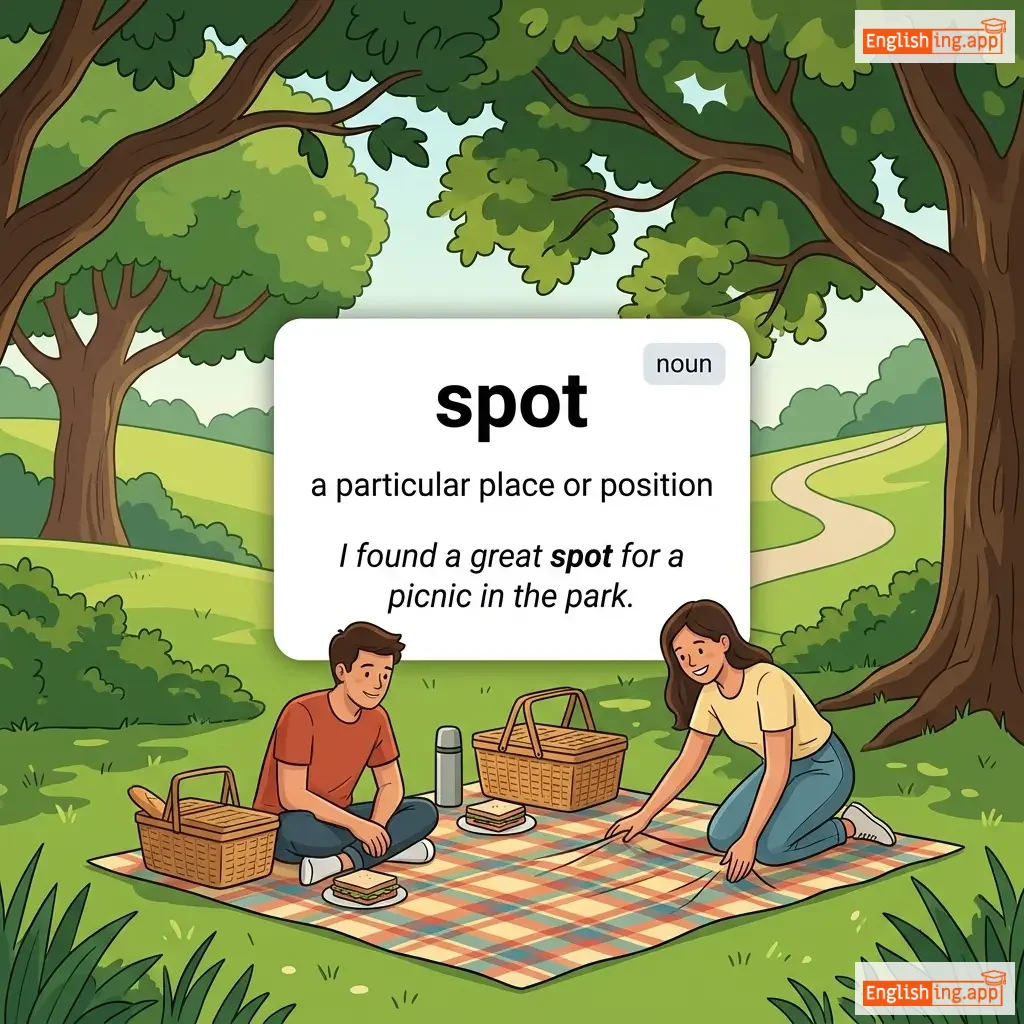
spot definition card — visual illustration of the meaning
noun
/spɒt/
地点 (didian)

a particular place or position

"I found a great spot for a picnic in the park."

"我在公园里找到了一个很好的野餐地点。" (Wo zai gongyuan li zhaodao le yi ge hen hao de yecan didian.)
noun
/ˈspɔːrtsmən/
运动员 (yundongyuan)

A person who is skilled in sports or enjoys participating in athletic activities.

"He is a true sportsman, always fair and respectful to his opponents."

"他是一个真正的运动员,总是对对手公平和尊重。" (Ta shi yige zhenzheng de yundongyuan, zongshi dui duishou gongping he zunzhong.)
adjective
/ˈspɔːrtɪv/
运动的 (yùndòng de)

Playful, lively, or full of fun.

"The children were in a sportive mood during the picnic."

"孩子们在野餐时都很运动。" (Háizimen zài yěcān shí dōu hěn yùndòng.)
noun
/spɔːt/
体育 (tiyu)

an activity involving physical exertion and skill in which an individual or team competes against another or others for entertainment

"Football is a popular sport around the world."
"足球是全球流行的体育运动。" (Zúqiú shì quánqiú liúxíng de tǐyù yùndòng.)
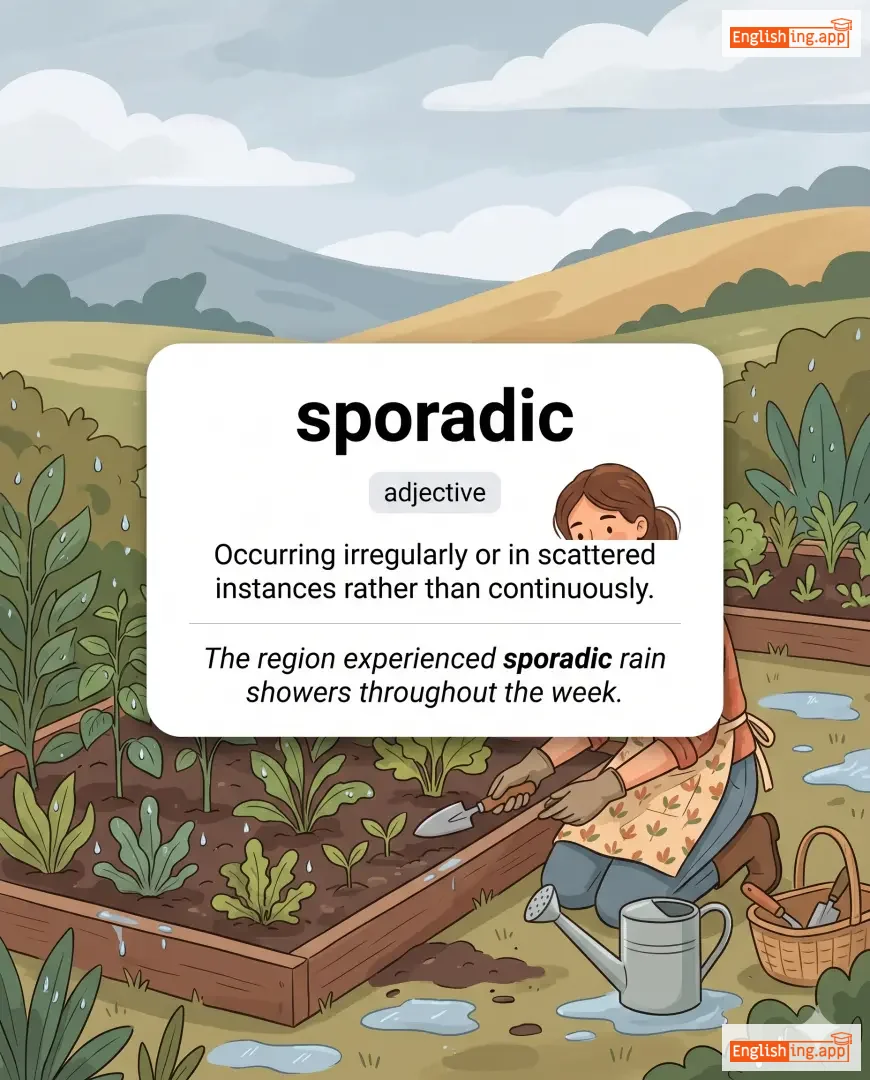
sporadic definition card — visual illustration of the meaning
adjective
/spəˈrædɪk/
零星 (língxīng)

Occurring irregularly or in scattered instances rather than continuously.

"The region experienced sporadic rain showers throughout the week."

"该地区经历了整整一周的零星降雨。" (Gāi dìqū jīnglìle zhěngzhěng yī zhōu de língxīng jiàngyǔ.)
noun
/ˈspuːnərɪzəm/
斯普内里兹姆 (sipunelizimu)

A verbal error in which the initial sounds of words are swapped to create a humorous effect.

"He made a spoonerism by saying 'queer old dean' instead of 'dear old queen'."

"他通过说'古怪的老院长'代替'亲爱的老皇后'来做了一个斯普内里兹姆。" (Ta tongguo shuo 'guai de lao yuanzhang' daiti 'qin'ai de lao huanghou' lai zuo le yi ge sipunelizimu.)
noun
/spuːn/
勺子 (shaozi)

a utensil consisting of a small shallow bowl with a handle, used for eating, stirring, or serving food

"She stirred her coffee with a silver spoon."

"她用银勺子搅拌她的咖啡。" (Tā yòng yín sháozi jiǎobàn tā de kāfēi.)
noun/verb
/spuːf/
幽默模仿 (yōu mò mó fǎng)

A humorous imitation of something, or to trick or parody someone or something.

"The comedian spoofed the politician’s speech to entertain the audience."

"喜剧演员模仿政治家的演讲来娱乐观众。" (xǐ jù yǎn yuán mó fǎng zhèng zhì jiā de yǎn jiǎng lái yú lè guān zhòng.)
spontaneously definition card — visual illustration of the meaning
adverb
/spɒnˈteɪ.ni.əs.li/
自发地 (zì fā de)

happening naturally without being planned or forced

"She spontaneously started singing when she heard the music."

"当她听到音乐时,她自发地开始唱歌。" (dāng tā tīngdào yīnyuè shí, tā zì fā de kāishǐ chàng gē.)
adjective
/spɒnˈteɪniəs/
自发的 (zifa de)

Happening naturally without planning or external cause; impulsive or unplanned.

"Their spontaneous trip to the mountains turned out to be the highlight of the summer."
"他们自发的山地旅行成了夏天的亮点。" (Tamen zifa de shandi lüxing chengle xiatian de liangdian.)
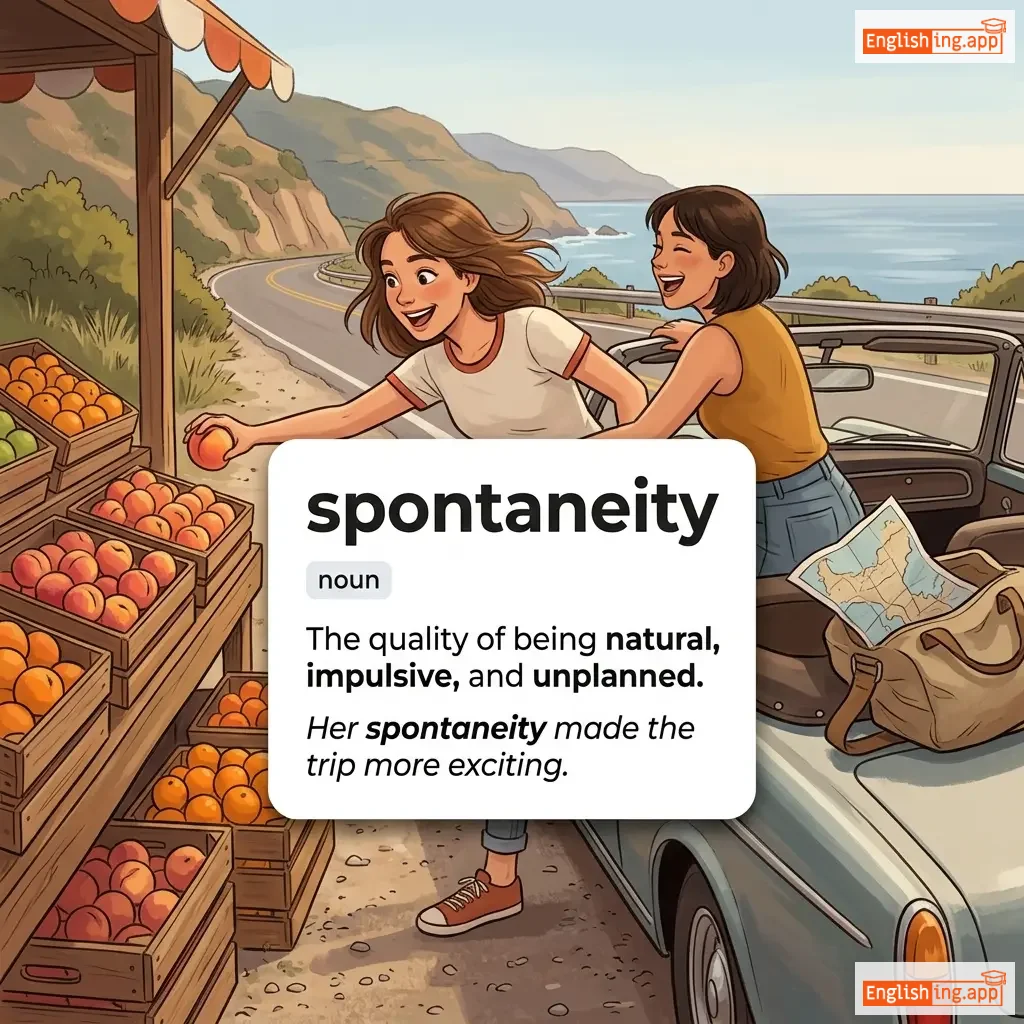
spontaneity definition card — visual illustration of the meaning
noun
/ˌspɑːntəˈneɪəti/
自发性 (zifaxing)

The quality of being natural, impulsive, and unplanned.

"Her spontaneity made the trip more exciting."

"她的自发性让旅行变得更加刺激。" (ta de zifaxing rang lvxing biande gengjia ciji.)
noun
/ˈspɒnsəʃɪp/
赞助 (zanzhu)

the act of supporting an event, activity, person, or organization financially or through other resources

"The event was made possible due to the sponsorship of several big companies."

"由于几家大公司的赞助,活动得以举行。" (Yóuyú jǐ jiā dà gōngsī de zànzhù, huódòng dé yǐ jǔxíng.)
sponsor definition card — visual illustration of the meaning
noun
/ˈspɒnsər/
赞助商 (zànzhù shāng)

a person or organization that provides funds for a project or activity in exchange for publicity or support

"The company became the main sponsor of the event."

"公司成为了活动的主要赞助商。" (Gōngsī chéngwéi le huódòng de zhǔyào zànzhù shāng.)
noun
/spʌndʒ ɡɔːrd/
海绵瓜 (hǎimián guā)

a fibrous gourd that becomes sponge-like when dried, used for cleaning and in cooking when young

"The sponge gourd can be eaten when young or dried to make natural scrubbers."

"海绵瓜可以在年轻时食用,或者干燥后制成天然海绵。" (Hǎimián guā kěyǐ zài niánqīng shí shíyòng, huòzhě gānzào hòu zhìchéng tiānrán hǎimián.)
adjective
/ˈspʌndʒi/
海绵状 (hǎimián zhuàng)

soft and full of holes like a sponge; porous

"The cake had a light and spongy texture."

"蛋糕有轻盈而海绵状的质地。" (Dàn gāo yǒu qīng yíng ér hǎimián zhuàng de zhìdì.)
noun
/ˌspoʊliˈeɪʃən/
破坏 (pohuai)

The act of destroying or ruining something, often evidence or property.

"The court punished the company for the spoliation of evidence."

"法院因公司破坏证据而惩罚了该公司。" (Fǎyuàn yīn gōngsī pòhuài zhèngjù ér chéngfále gāi gōngsī.)
noun
/ˈspəʊkswɪmən/
发言人女性 (fāyánrén nǚxìng)

a woman who speaks on behalf of a group or organization

"The spokeswoman for the company announced the new product."

"公司的发言人宣布了新产品。" (Gōngsī de fāyánrén xuānbùle xīn chǎnpǐn.)
noun
/ˈspəʊkspɜːrsən/
发言人 (fāyánrén)

a person who speaks on behalf of others or an organization

"The spokesperson addressed the press conference on behalf of the company."

"发言人代表公司在新闻发布会上发言。" (Fāyánrén dàibiǎo gōngsī zài xīnwén fābù huì shàng fāyán.)
adverb
/ˈspeʃ.əl.i/
特别 (tebie)

for a particular purpose; especially; specifically

"This gift was specially made for you."

"这个礼物是特别为你做的。" (Zhe ge liwu shi tebie wei ni zuo de.)
adjective
/ˈspiːtʃləs/
无言 (wú yán)

Unable to speak because of shock, surprise, or strong emotion.

"She was speechless when she received the award."

"她获得奖项时无言以对。" (Tā huòdé jiǎngxiàng shí wúyán yǐ duì.)
Speech definition card — visual illustration of the meaning
noun
/spiːʧ/
演讲 (yanjiang)

the expression of thoughts and feelings through spoken words

"The president delivered a speech on national unity."

"总统发表了关于国家统一的演讲。" (Zongtong fabiao le guanyu guojia tongyi de yanjiang.)
noun
/ˈspɛkjʊˌleɪtər/
投机者 (tóujī zhě)

A person who forms theories without evidence, or invests in assets hoping for profit.

"The real estate speculator bought land hoping its value would rise."
"房地产投机者购买了土地,希望其价值会增加。" (Fángdìchǎn tóujī zhě gòumǎi le tǔdì, xīwàng qí jiàzhí huì zēngjiā.)
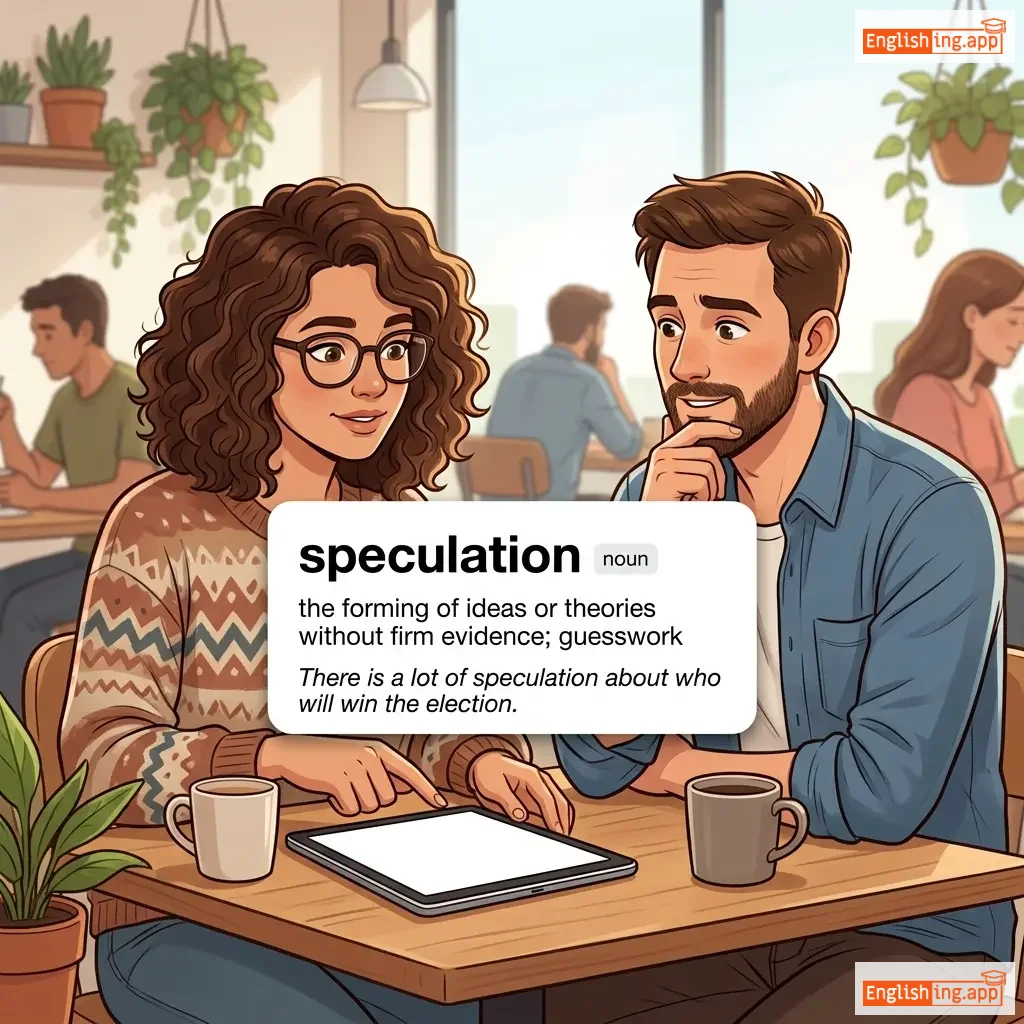
speculation definition card — visual illustration of the meaning
noun
/ˌspɛkjʊˈleɪʃən/
猜测 (caice)

the forming of ideas or theories without firm evidence; guesswork

"There is a lot of speculation about who will win the election."

"关于谁将赢得选举,存在很多猜测。" (Guanyu shei jiang yingde xuanju, cunzai henduo caice.)
verb
/ˈspɛkjʊˌleɪt/
投机 / 投资 (tóujī / tóuzī)

To form a theory or guess without firm evidence; to invest in stocks, property, etc. hoping for profit.

"Experts speculate that the company may expand into new markets."
"专家推测公司可能会扩展到新市场。" (zhuānjiā tuīcè gōngsī kěnéng huì kuòzhǎn dào xīn shìchǎng.)
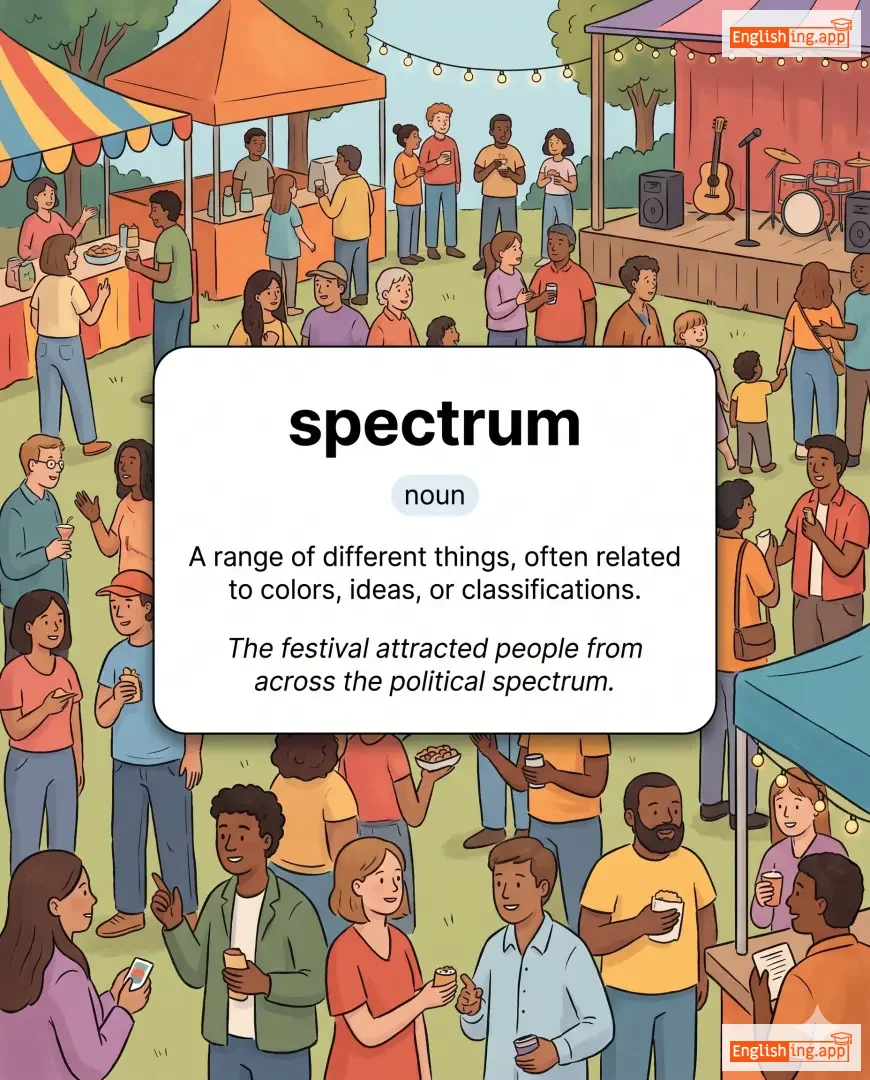
spectrum definition card — visual illustration of the meaning
noun
/ˈspɛktrəm/
光谱 (guāngpǔ)

A range of different things, often related to colors, ideas, or classifications.

"The festival attracted people from across the political spectrum."

"这个节日吸引了来自各个政治光谱的人们。" (Zhège jiérì xīyǐnle láizì gè ge zhèngzhì guāngpǔ de rénmen.)
adjective
/ˈspɛktrəl/
幽灵的 (yōulíng de)

Relating to a ghost or specter; ghostly. Also relating to a spectrum.

"The old mansion had a spectral atmosphere at night."

"那座古老的宅邸晚上有一种幽灵般的氛围。" (Nà zuò gǔlǎo de zhái dǐ wǎnshàng yǒu yī zhǒng yōulíng bān de fēnwéi.)
noun
/ˈspɛktər/
幽灵 (youling)

A ghost or spirit; something that causes fear or dread.

"The specter of war still haunts the region."

"战争的幽灵仍然在该地区徘徊。" (Zhànzhēng de yōulíng réngrán zài gāi dìqū pái huái.)
noun
/ˈspɛkteɪtər/
观众 (guānzhòng)

A person who watches an event, show, or game without taking part.

"Thousands of spectators gathered to watch the football match."
"成千上万的观众聚集在一起观看足球比赛。" (Chéng qiān shàng wàn de guānzhòng jùjí zài yīqǐ guānkàn zúqiú bǐsài.)
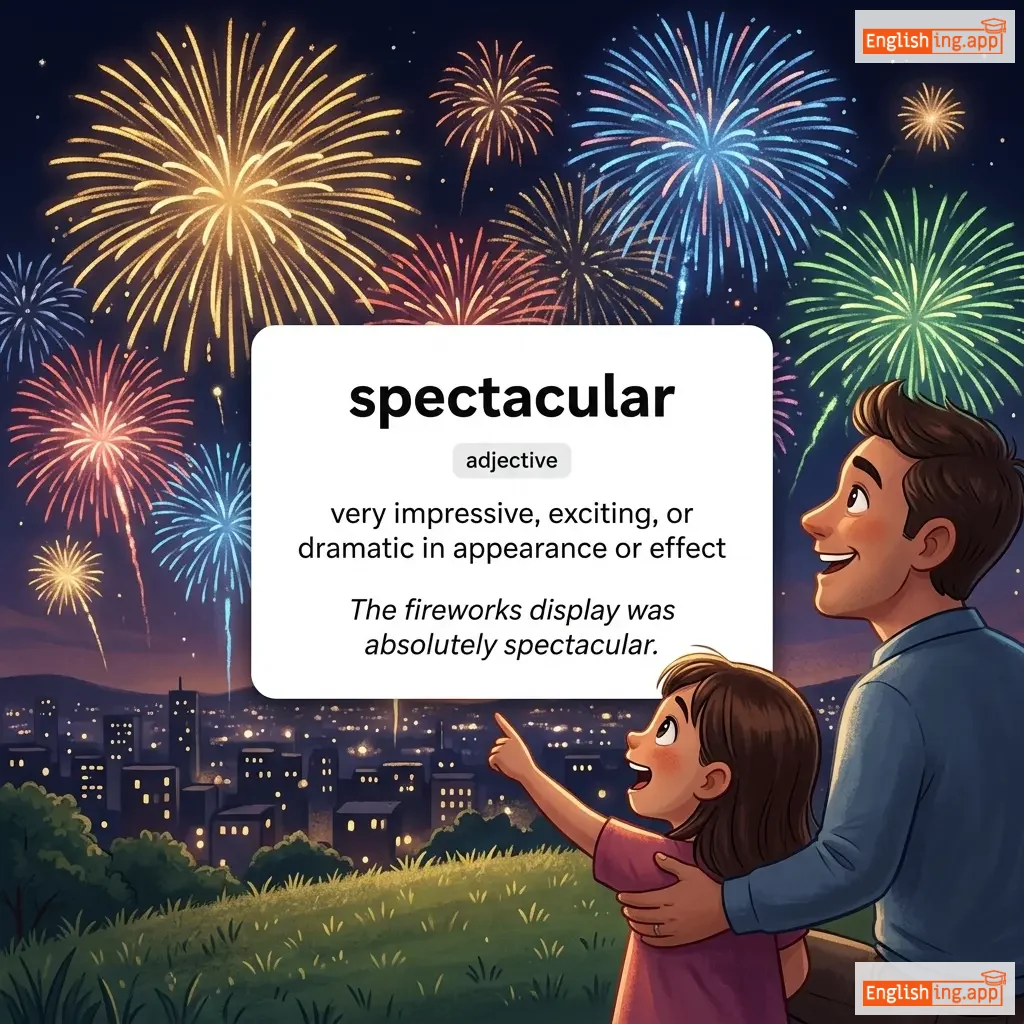
spectacular definition card — visual illustration of the meaning
adjective
/spɛkˈtækjələr/
壮观 (zhuangguan)

very impressive, exciting, or dramatic in appearance or effect

"The fireworks display was absolutely spectacular."
"烟火表演绝对壮观。" (Yanhuo biaoyan juedui zhuangguan.)
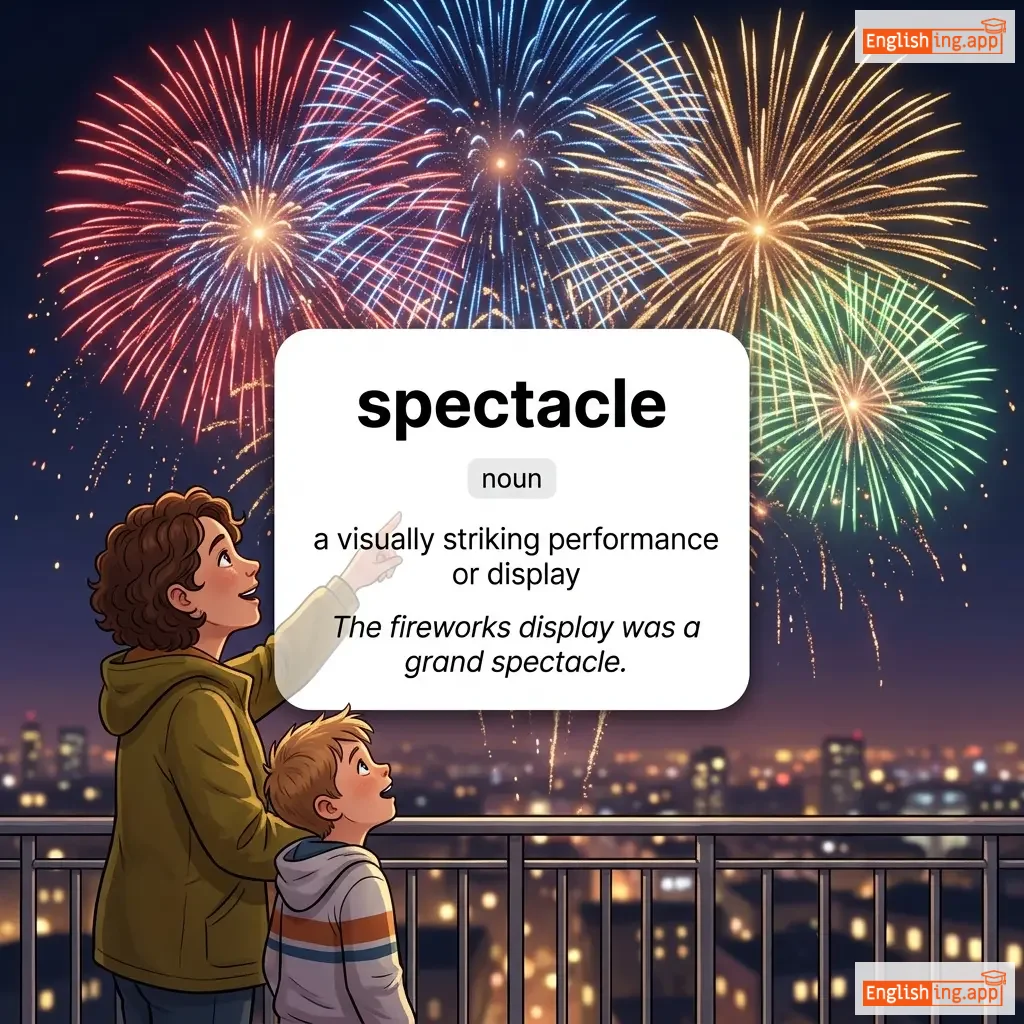
spectacle definition card — visual illustration of the meaning
noun
/ˈspɛktəkəl/
视觉盛宴 (shìjué shèngyàn)

a visually striking performance or display

"The fireworks display was a grand spectacle."

"烟花表演是一场壮观的视觉盛宴。" (Yānhuā biǎoyǎn shì yī chǎng zhuàngguān de shìjué shèngyàn.)
noun
/spɛk/
斑点 (bandian)

A very small spot, mark, or particle.

"There was a tiny speck of dust on the glass table."
"玻璃桌上有一小片灰尘。" (Bōlí zhuō shàng yǒu yī xiǎo piàn huīchén.)
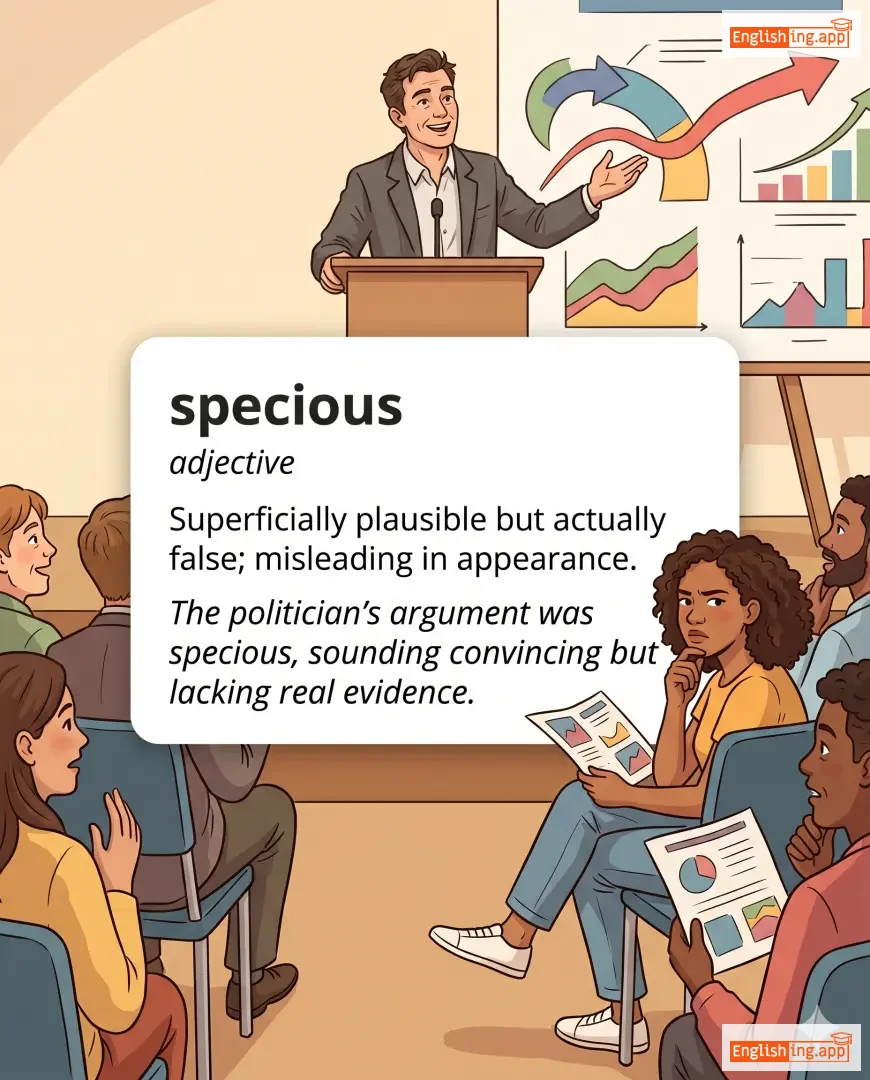
specious definition card — visual illustration of the meaning
adjective
/ˈspiːʃəs/
虚假 (xu jia)

Superficially plausible but actually false; misleading in appearance.

"The politician’s argument was specious, sounding convincing but lacking real evidence."

"那位政治家的论点是虚假的,听起来很有说服力,但缺乏真实的证据。" (Na wei zhengzhi jia de lundian shi xu jia de, ting qilai hen you shuofu li, dan quefa zhenshi de zhengju.)
noun
/ˈspɛsəmən/
标本 (biaoben)

an individual animal, plant, piece of a mineral, etc., used as an example of its species or type for scientific study

"The museum has a rare butterfly specimen."

"博物馆里有一只稀有的蝴蝶标本。" (Bówùguǎn lǐ yǒu yī zhī xīyǒu de húdié biāoběn.)
verb
/ˈspɛsɪfaɪ/
指定 (zhiding)

to state or describe something clearly and exactly

"Please specify the time and place of the meeting."

"请明确指定会议的时间和地点。" (Qing mingque zhiding huiyi de shijian he didian.)
noun
/ˌspɛsɪfɪˈkeɪʃən/
规格 (guīgé)

a detailed description or assessment of something

"The product specification includes all the necessary details."

"产品规格包括所有必要的细节。" (Chǎnpǐn guīgé bāokuò suǒyǒu bìyào de xìjié.)
adverb
/spəˈsɪfɪkli/
特别地 (te bie de)

in a clear and exact way

"He was specifically asked to handle the finances."

"他被特别要求处理财务。" (Ta bei tebie yaoqiu chuli caiwu.)
specific definition card — visual illustration of the meaning
adjective
/spəˈsɪfɪk/
特定的 (tèdìng de)

clearly defined or identified

"She gave specific instructions for the project."

"她给出了项目的特定指示。" (Tā gěi chūle xiàngmù de tèdìng zhǐshì.)
noun
/ˈspiːʃiːz/
物种 (wùzhǒng)

a group of living organisms consisting of similar individuals capable of exchanging genes or interbreeding

"The panda is an endangered species."

"熊猫是濒临灭绝的物种。" (Xióngmāo shì bīnlín mièjué de wùzhǒng.)
noun
/ˈspiːʃiː/
硬币 (yingbi)

money in the form of coins rather than notes or credit

"The transaction was made in specie."

"交易是以硬币完成的。" (Jiaoyi shi yi yingbi wancheng de.)
noun
/ˈspɛʃəlti/
专长 (zhuan chang)

a particular area of study, work, or interest; something in which a person or place excels

"Her specialty is pediatric medicine."

"她的专业是儿科医学。" (ta de zhuan chang shi er ke yi xue)
adjective
/spæzˈmɒdɪk/
痉挛性 (jìngluán xìng)

occurring irregularly or in sudden bursts

"The patient experienced spasmodic coughing during the night."

"病人在夜间经历了痉挛性咳嗽。" (Bìngrén zài yèjiān jīnglìle jìngluán xìng késòu.)
adjective
/spɑːrs/
稀少 (xishao)

thinly scattered or distributed; not dense or abundant

"Vegetation was sparse in the desert."

"沙漠中的植被稀少。" (Shamo zhong de zhiwu xishao.)
adjective
/ˈspɑːrtn/
斯巴达式 (sībā dá shì)

showing simplicity and lack of luxury; austere

"He lived in a spartan room with just a bed and a chair."

"他住在一个斯巴达式的房间里,只有一张床和一把椅子。" (Tā zhù zài yīgè sībā dá shì de fángjiān lǐ, zhǐ yǒu yī zhāng chuáng hé yī bǎ yǐzi.)