词汇表

英语词汇词典 | 单词含义、定义和示例

adjective
/ˈʃɔːrt ˌtempərd/
易怒的; 容易生气的 (yì nù de; róng yì shēng qì de)

quick to lose one's temper; easily angered

"She became short-tempered when the traffic made her late for the meeting."

"当交通让她迟到时,她变得很暴躁。" (dāng jiāo tōng ràng tā chí dào shí, tā biàn dé hěn bào zào.)
short-term definition card — visual illustration of the meaning
adjective
/ˈʃɔːrt tɜːrm/
短期 (duǎn qī)

lasting for or involving a short period of time

"They offered a short-term loan to help the business."

"他们提供了一个短期贷款来帮助企业。" (Tāmen tígōngle yīgè duǎnqī dàikuǎn lái bāngzhù qǐyè.)
noun
/ˈʃɔːrtɪdʒ/
短缺 (duǎnquē)

a state or situation in which something needed cannot be obtained in sufficient amounts

"There is a shortage of skilled workers in the industry."

"工业中缺乏熟练的工人。" (Gōngyè zhōng quēfá shúliàn de gōngrén.)
noun
/ˈʃɔːrt.kʌm.ɪŋ/
缺陷; 不足; 缺点 (quēxiàn; bùzú; quēdiǎn)

a fault or failure to meet a certain standard; a deficiency

"Despite his many talents, he has some shortcomings."
"尽管他有许多才华,他仍然有一些短处。" (Jǐnguǎn tā yǒu xǔduō cáihuá, tā réngrán yǒu yīxiē duǎnchù.)
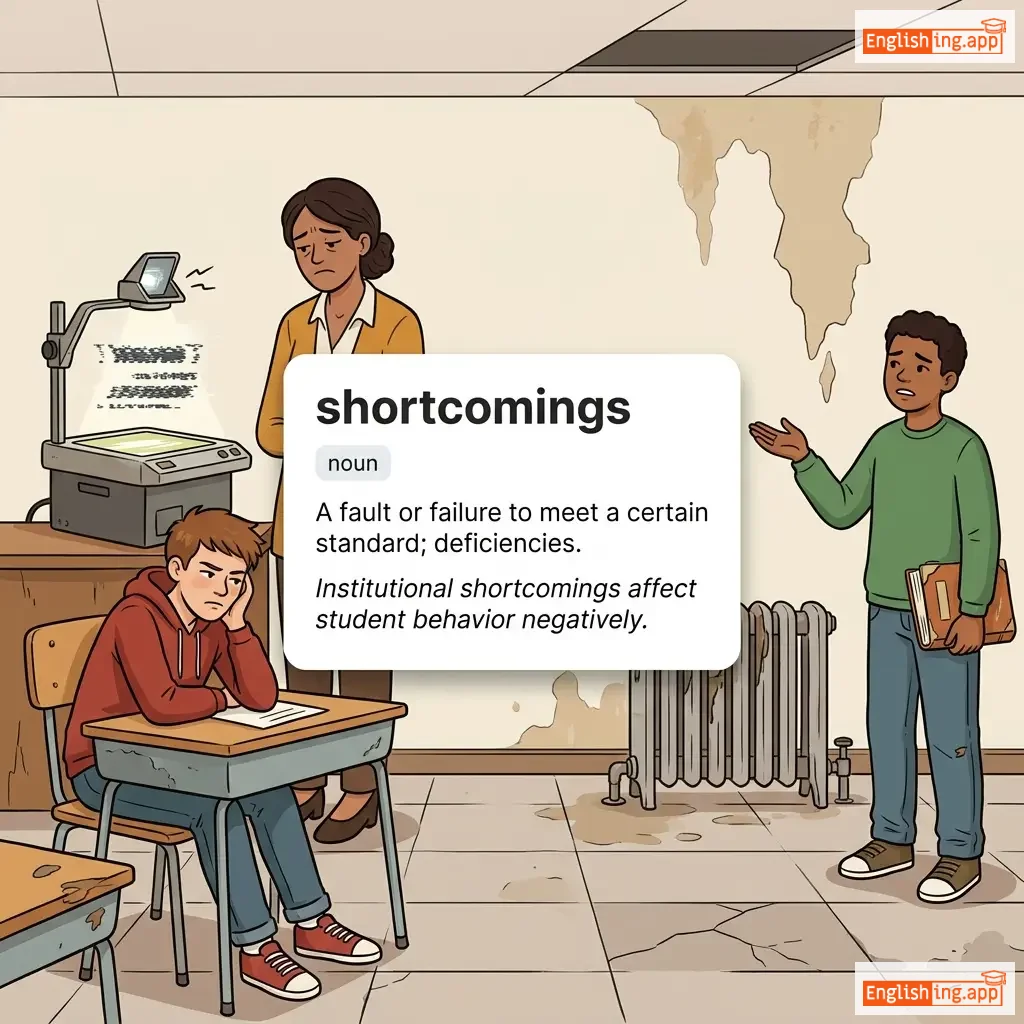
shortcomings definition card — visual illustration of the meaning
noun
ˈʃɔːtkʌmɪŋz
短处 (duǎn chù)

A fault or failure to meet a certain standard; deficiencies.

"Institutional shortcomings affect student behavior negatively."

"制度性短处对学生行为产生了负面影响。" (Zhìdù xìng duǎn chù duì xuéshēng xíngwéi chǎnshēng le fùmiàn yǐngxiǎng.)
verb
/ˈʃɔːrtn/
缩短 (suoduan)

To make something shorter in length, duration, or extent

"She decided to shorten her speech to fit the time limit."

"她决定缩短她的演讲以符合时间限制。" (Ta jueding suoduan ta de yanjiang yi fuhe shijian xianzhi.)
verb
/ʃʌk/
剥壳 (bāo ké)

To remove the outer covering, such as the husk of corn or shell of shellfish.

"She learned how to shuck oysters quickly."

"她学会了如何快速打开牡蛎。" (Tā xuéhuìle rúhé kuàisù dǎkāi mǔlì.)
adjective, adverb
/ˈsaɪdlɔːŋ/
斜视 (xie shi)

Directed to the side; indirect, furtive, or not straightforward.

"She gave him a sidelong glance across the room."

"她穿过房间投给他一个斜视。" (Tā chuānguò fángjiān tóu gěi tā yīgè xié shì.)
sideline discussions definition card — visual illustration of the meaning
noun
/ˈsaɪd.laɪn dɪˈskʌʃənz/
边缘讨论 (bian yuan tao lun)

Informal or secondary conversations that occur outside the main agenda of a formal meeting.

"Sideline discussions often lead to agreements."
"边缘讨论常常导致协议。" (Bian yuan tao lun chang chang daozhi xieyi.)
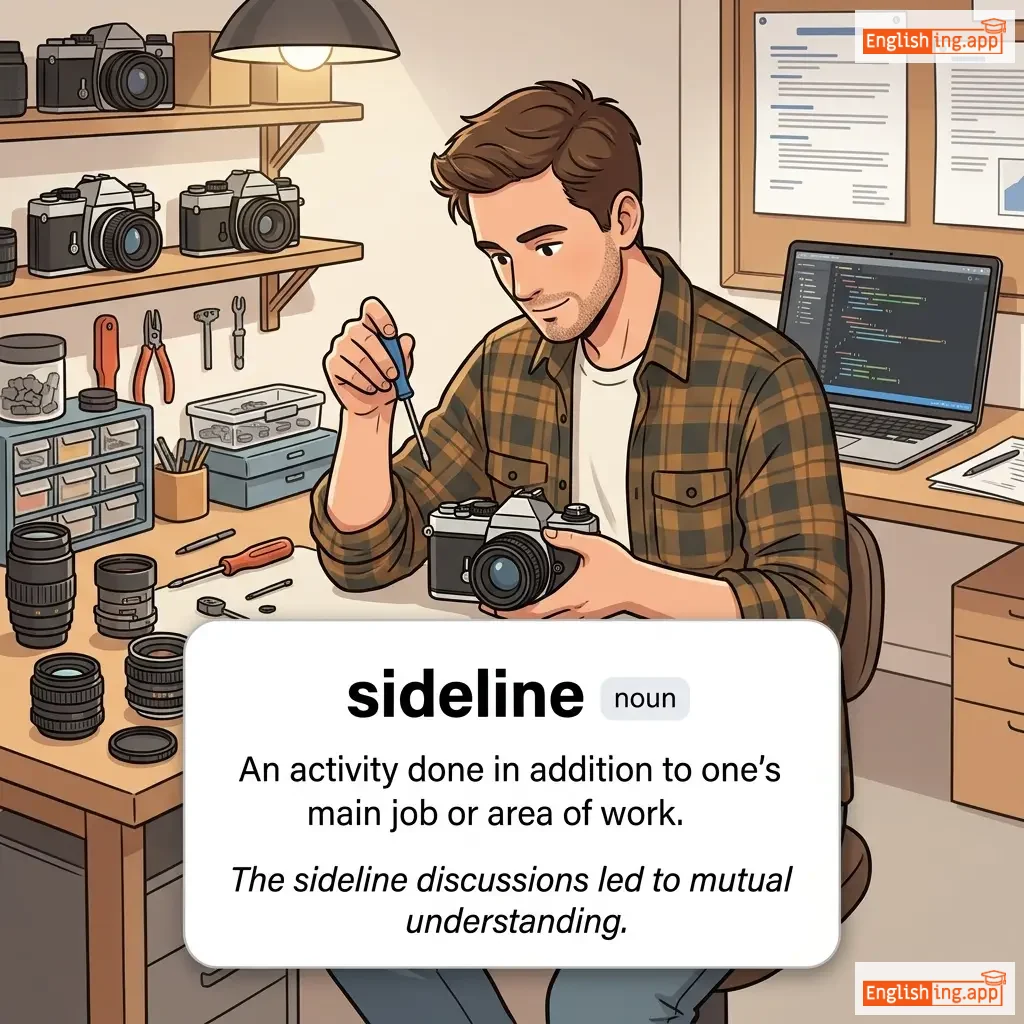
sideline definition card — visual illustration of the meaning
noun
/ˈsaɪd.laɪn/
副业 (fù yè)

An activity done in addition to one's main job or area of work.

"The sideline discussions led to mutual understanding."

"副线讨论促进了相互理解。" (Fùxiàn tǎolùn cùjìnle xiānghù lǐjiě.)
noun
/saɪd/
旁边 (pangbian)

a position to the left or right of something

"The store is on the side of the road."

"商店位于路的旁边。" (Shangdian weiyu lu de pangbian.)
noun
/ˈsɪk.nəs/
疾病; 病痛 (jíbìng; bìngtòng)

the state of being ill; a disease or illness

"She took time off work due to sickness."

"她因病休假。" (Tā yīn bìng xiūjià.)
adjective
/ˈsɪk.li/
虚弱; 生病; 苍白 (xuruo)

weak and unhealthy; prone to illness; appearing weak or pale

"The sickly child needed extra care and attention."

"这个虚弱的孩子需要额外的照顾和关注。" (Zhege xuruo de haizi xuyao ewai de zhaogu he guanzhu)
noun
/ˈsɪk.əl/
镰刀 (liándāo)

a tool with a curved metal blade and short handle used for cutting grain crops

"The farmer harvested wheat using a traditional sickle."

"农民用传统的镰刀收割小麦。" (Nóngmín yòng chuántǒng de liándāo shōugē xiǎomài.)
Sick definition card — visual illustration of the meaning
adjective
/sɪk/
生病 (sheng bing)

feeling unwell or suffering from illness

"She stayed home because she was feeling sick."

"她留在家里,因为她感觉生病了。" (ta liu zai jia li yin wei ta gan jue sheng bing le)
adjective
/ˈsɪbɪlaɪn/
希比林 (xī bǐ lín)

Prophetic, mysterious, or cryptic in meaning.

"The old woman gave a sibylline warning about the future."
"那位老妇人对未来做出了一个希比林的警告。" (Nà wèi lǎo fùrén duì wèilái zuòchūle yīgè xī bǐ lín de jǐnggào.)
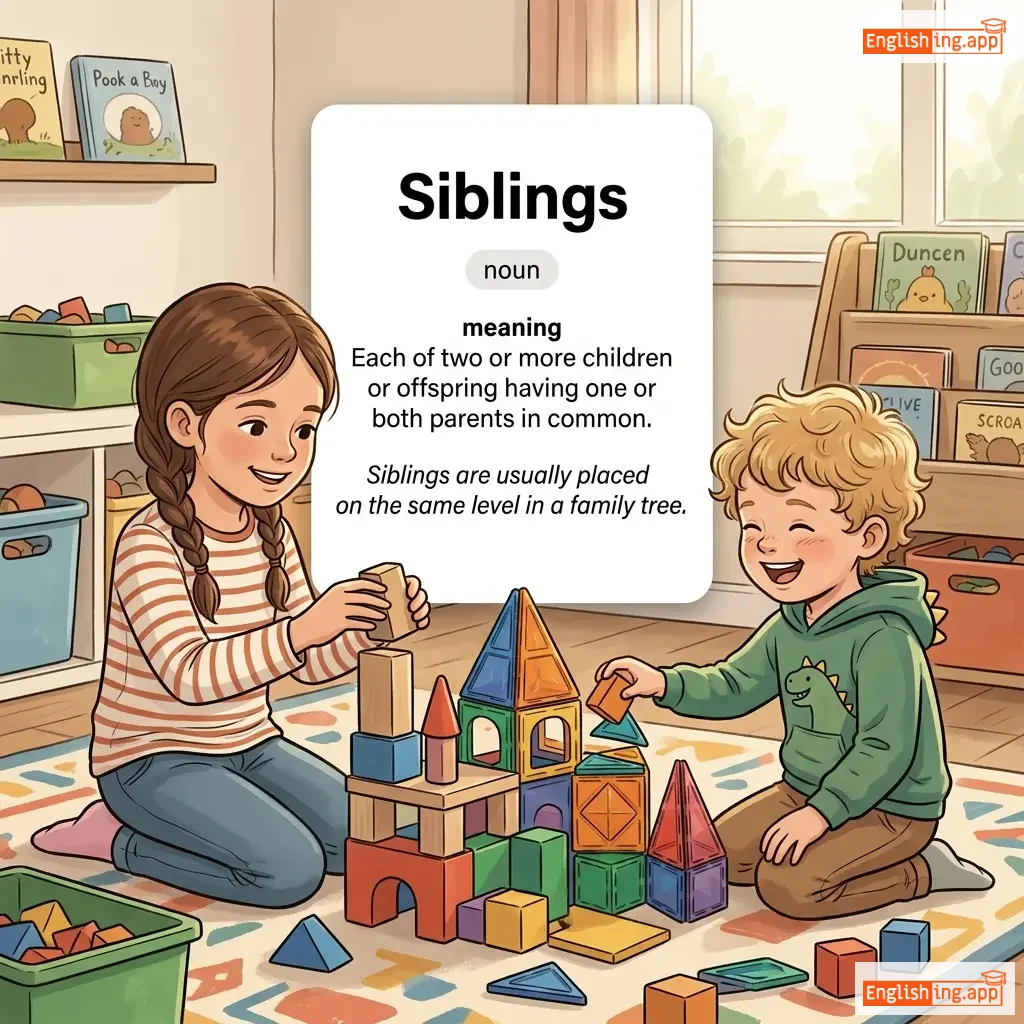
Siblings definition card — visual illustration of the meaning
noun
ˈsɪblɪŋz
兄弟姐妹 (xiōngdì jiěmèi)

Each of two or more children or offspring having one or both parents in common.

"Siblings are usually placed on the same level in a family tree."

"兄弟姐妹通常在家谱中处于同一水平。" (Xiōngdì jiěmèi tōngcháng zài jiāpǔ zhōng chù yú tóng yī shuǐpíng.)
noun
/ˈsɪblɪŋ/
兄弟姐妹 (xiōngdì jiěmèi)

A brother or sister.

"She has three siblings, two brothers and one sister."

"她有三个兄弟姐妹,两个兄弟和一个妹妹。" (Tā yǒu sān gè xiōngdì jiěmèi, liǎng gè xiōngdì hé yī gè mèimei.)
verb
/ˈsɪbəleɪt/
发出嘶嘶声 (fāchū sī sī shēng)

To pronounce with a hissing sound.

"The actor sibilated his lines for dramatic effect."

"演员为了戏剧效果,用嘶嘶声说出了他的台词。" (Yǎnyuán wèile xìjù xiàoguǒ, yòng sī sī shēng shuō chūle tā de táicí.)
adjective
/ˈsɪbɪlənt/
带有嘶嘶声的 (dài yǒu sī sī shēng de)

Making or characterized by a hissing sound.

"The word 'snake' starts with a sibilant sound."

"单词 'snake' 以西比兰特的声音开始。" (Dāncí 'snake' yǐ xī bǐ lán tè de shēngyīn kāishǐ.)
noun
/ˈsɪbɪləns/
嘶嘶声 (sī sī shēng)

A hissing or hushing sound, especially in speech with 's' or 'sh'.

"The poet used sibilance to create a soft, hissing effect in the verse."

"诗人用西比兰斯在诗句中创造了一个柔和的嘶嘶效果。" (Shīrén yòng xī bǐ lán sī zài shī jù zhōng chuàngzàole yīgè róuhé de sī sī xiàoguǒ.)
noun
/ˈʃaɪstər/
骗子 (pianzi)

a person, especially a lawyer, who uses unscrupulous or dishonest methods

"The businessman was exposed as a shyster who cheated clients."
"这位商人被曝光为一个骗子,他欺骗了客户。" (Zhè wèi shāngrén bèi pùguāng wéi yīgè piànzi, tā qīpiànle kèhù.)
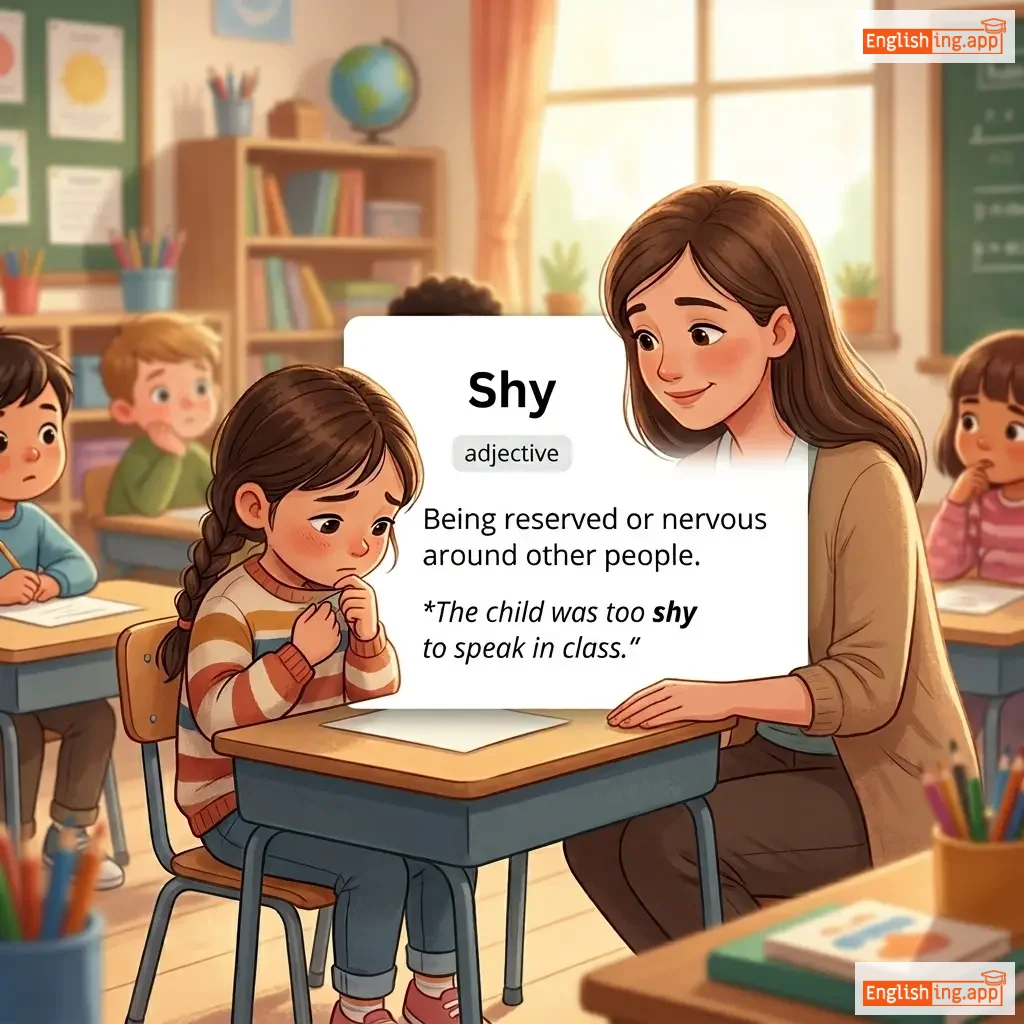
Shy definition card — visual illustration of the meaning
adjective
/ʃaɪ/
害羞 (haixiu)

Being reserved or nervous around other people.

"The child was too shy to speak in class."

"这个孩子在课堂上太害羞,不敢发言。" (Zhege haizi zai kètáng shàng tài haixiu, bù gǎn fāyán.)
noun
/ˈʃʌtəl/
在两个地点之间定期往返的交通工具 (zai liang ge didian zhijian dingqi wangfan de jiaotong gongju)

a vehicle or craft that travels regularly between two places.

"The airport shuttle runs every 30 minutes."

"机场接驳车每30分钟运行一次。" (Jichang jiebo che mei 30 fenzhong yunxing yi ci.)
verb
/ʃʌt/
关上 (guan shang)

to close something, especially a door or window

"Please shut the door before you leave."

"请在离开前关上门。" (Qǐng zài líkāi qián guān shàng mén.)
verb
/ʃʌnt/
转轨 (zhuǎn guǐ)

to move or turn aside; to push or divert from one track to another

"The train was shunted onto a different track."
"火车被调到另一条轨道。" (Huǒchē bèi tiáo dào lìng yītiáo guǐdào.)
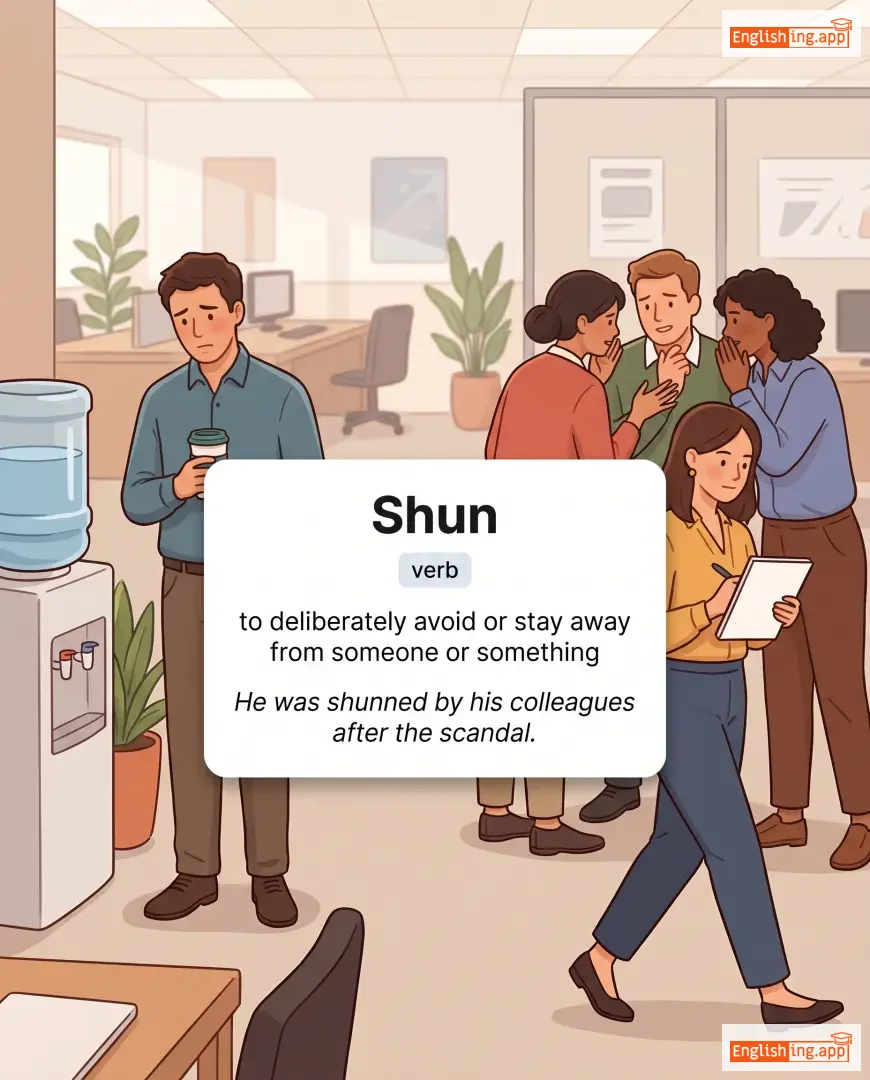
Shun definition card — visual illustration of the meaning
verb
/ʃʌn/
回避 (huibi)

to deliberately avoid or stay away from someone or something

"He was shunned by his colleagues after the scandal."

"他在丑闻之后被同事们回避了。" (Ta zai chouwen zhihou bei tongshimeng huibi le.)
verb
/ˈʃʌfəl/

to walk by dragging one's feet along or without lifting them fully; to mix or rearrange

"He shuffled the cards before dealing them."

verb
/ˈʃʌdər/
颤抖 (chàndǒu)

to tremble or shake suddenly, often due to fear, cold, or strong emotion

"She shuddered at the thought of walking alone in the dark forest."

"她在想到独自走在黑暗森林中的时候不禁颤抖。" (Tā zài xiǎngdào dúzì zǒu zài hēi'àn sēnlín zhōng de shíhòu bùjīn chàndǒu.)
noun
/ʃruː/
暴躁的女人 / 小鼠类动物 (bao zao de nu ren / xiao shu lei dong wu)

a small mouse-like animal; also a woman with a bad temper

"The play describes a strong-willed woman as a shrew."

"这部戏描述了一位坚强的女性,像一个暴躁的女人一样。" (Zhe bu xi miaoshu le yi wei jianqiang de nvxing, xiang yi ge baozao de nvren yiyang.)
noun
/ʃɔːrts/
短裤 (duǎn kù)

a short garment worn on the lower half of the body that covers each leg separately, usually above the knees.

"He wore a pair of blue shorts to the beach."

"他穿了一条蓝色的短裤去海滩。" (Tā chuānle yītiáo lánsè de duǎn kù qù hǎitān.)
noun, verb
/ʃɒt/
射击 (sheji)

a single attempt to hit something, usually with a weapon or a ball

"He took a shot at the goal."

"他朝着球门射击。" (Tā cháo zhe qiúmén shèjí.)
modal verb
/ʃʊd/
应该 (yinggai)

used to indicate obligation or duty

"You should study for your exams."

"你应该为考试学习。" (Ni yinggai wei kaoshi xuexi.)
noun
/ˈʃoʊldər/
肩膀 (jianbang)

the upper joint of the human arm and the part of the body to which it is attached

"He hurt his shoulder while lifting weights."
"他在举重时伤到了肩膀。" (Ta zai ju zhong shi shang dao le jianbang.)
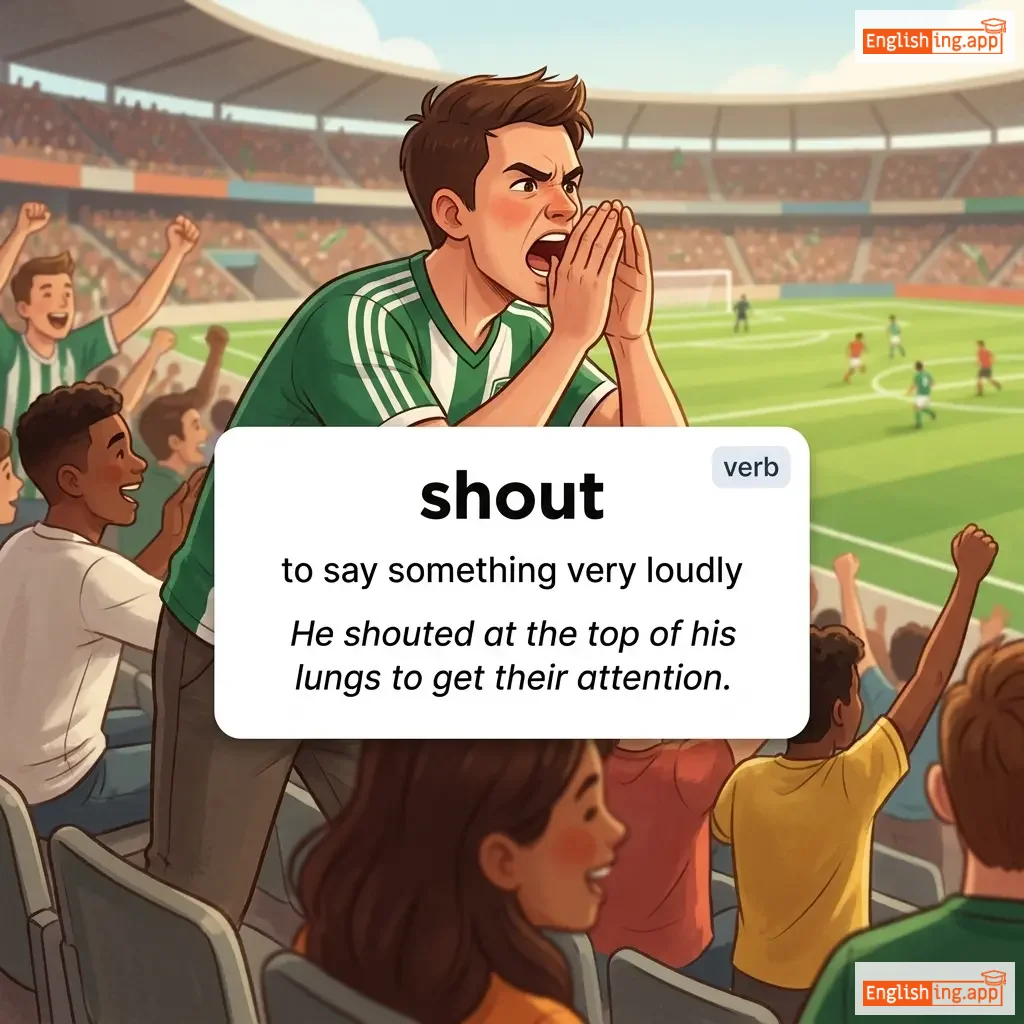
shout definition card — visual illustration of the meaning
verb
/ʃaʊt/
喊叫 (hanjiao)

to say something very loudly

"He shouted at the top of his lungs to get their attention."

"他尽可能大声地喊叫,以引起他们的注意。" (Ta jin keneng dasheng de hanjiao, yi yinqi tamen de zhuyi.)
verb
/ʃʌv/
(tui)

to push someone or something roughly

"He shoved the box into the corner."

"他把箱子推到角落里。" (Tā bǎ xiāngzi tuī dào jiǎoluò lǐ.)
noun
/ˈʃʌv.əl/
铲子 (chanzi)

a tool with a broad flat blade and long handle used for digging and moving earth, snow, or other materials

"He grabbed a shovel to clear the snow from the driveway."

"他拿起铲子清理车道上的雪。" (Tā ná qǐ chǎnzi qīnglǐ chēdào shàng de xuě.)
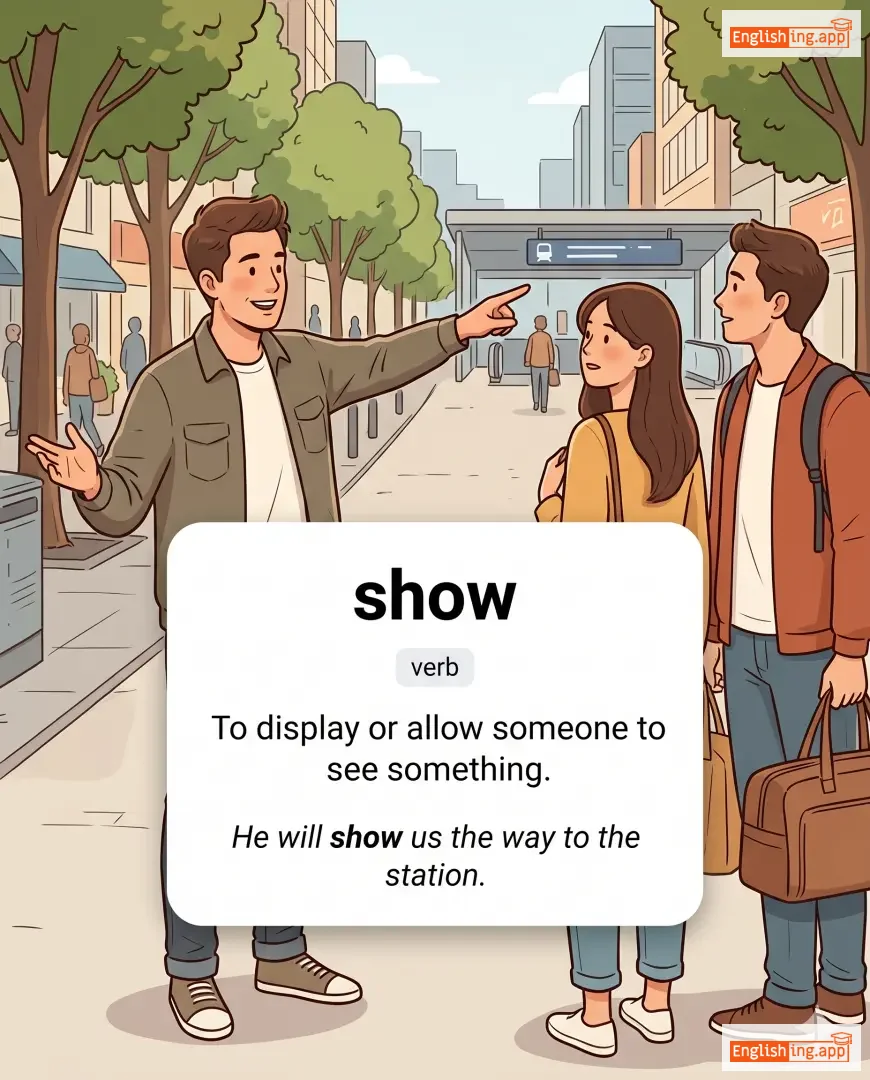
show definition card — visual illustration of the meaning
verb
/ʃoʊ/
展示 (zhǎnshì)

To display or allow someone to see something.

"He will show us the way to the station."

"他会带我们去车站。" (Tā huì dài wǒmen qù chēzhàn.)
noun
/ˈsɛrəf/
六翼天使 (liuyitian shi)

An angelic being associated with light and purity, often depicted as a high-ranking angel in Christian theology.

"The stained-glass window depicted a seraph with outstretched wings."

"彩色玻璃窗描绘了一个展开翅膀的六翼天使。" (Caise boli chuang miaohui le yige zhan kai chibang de liuyitian shi.)
noun
/ˈʃaʊər/

a brief fall of rain or snow or a device for taking a bath or washing oneself

"After the workout, I took a quick shower to refresh myself."

/ʃrɛd/
撕裂 (silie)

to tear or cut something into small pieces

"She shredded the old documents before throwing them away."

"她在扔掉之前把旧文件撕成了碎片。" (Ta zai reng diao zhiqian ba jiu wenjian sile cheng le suipian.)
noun
/ʃraɪn/
圣地 (shengdi)

A place regarded as holy, often associated with a saint or deity.

"Thousands of pilgrims visit the shrine each year."

"每年都有成千上万的朝圣者参观这个圣地。" (Mei nian dou you chengqian shangwan de chaoshengzhe canguan zhege shengdi.)
verb
/ʃrʌɡ/
耸肩 (sǒng jiān)

To raise and lower the shoulders to express uncertainty or indifference.

"He shrugged when asked about the missing file."

"他在被问到关于丢失文件的事时耸了耸肩。" (Tā zài bèi wèn dào guānyú diūshī wénjiàn de shì shí sǒngle sǒng jiān.)
shroud definition card — visual illustration of the meaning
verb
/ʃraʊd/
覆盖 (fùgài)

to cover or hide; to wrap in cloth

"The mountain peak was shrouded in mist."

"山顶被雾气笼罩。" (Shāndǐng bèi wùqì lóngzhào.)
verb
/ˈʃrɪvəl/
枯萎 (ku wei)

To become dry, wrinkled, and smaller due to lack of moisture.

"The flowers shriveled under the hot sun."

"花朵在烈日下枯萎。" (Hua duo zai lie ri xia ku wei.)
noun
/ˈʃrɪŋkɪdʒ/
收缩 (shousuo)

The process of becoming smaller in size, amount, or value.

"The company reported a shrinkage in profits this quarter."
"公司报告了本季度利润的收缩。" (Gongsi baogao le ben jidu lilun de shousuo.)
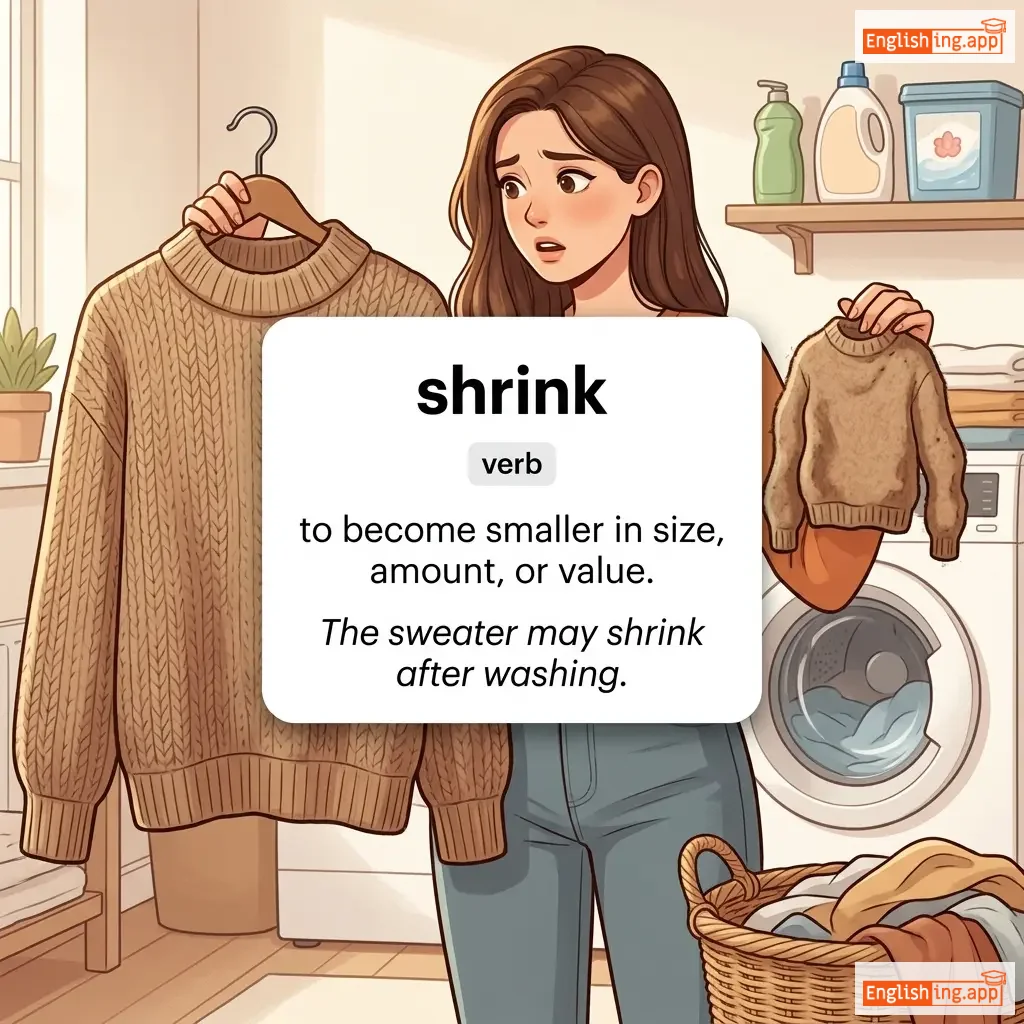
shrink definition card — visual illustration of the meaning
verb
/ʃrɪŋk/
幸福 (xingfu)

to become smaller in size, amount, or value.

"The sweater may shrink after washing."

"当她收到奖项时,她无法掩饰自己的幸福。" (Dāng tā shōu dào jiǎngxiàng shí, tā wúfǎ yǎnshì zìjǐ de xìngfú.)
adjective
/ʃrɪl/
尖锐的声音 (jianrui de shengyin)

High-pitched and piercing in sound.

"The shrill whistle startled everyone in the room."

"尖锐的哨声让房间里的每个人都吓了一跳。" (Jianrui de shaosheng rang fangjian li de mei ge ren dou xià le yī tiào.)
adjective
/ʃruːd/
精明 (jingming)

having sharp judgment and practical intelligence

"She made a shrewd investment in real estate."

"她在房地产方面做出了精明的投资。" (Ta zai fangdichan fangmian zuo chule jingming de touzi.)
verb
/ʃriːk/
尖叫 (jianjiao)

to make a loud, high-pitched cry

"She shrieked when she saw the spider."

"她看到蜘蛛时尖叫了。" (Ta kandao zhizhu shi jianjiao le.)