वोकैबुलरीज

इंग्लिश वोकैबुलरी डिस्कवर, लर्न और मास्टर करें

adjective
/ˈʃɔːrt ˌtempərd/
जल्दी गुस्सा हो जाने वाला; आसानी से नाराज होने वाला (jaldi gussa ho jane wala; aasani se naaraaz hone wala)

quick to lose one's temper; easily angered

"She became short-tempered when the traffic made her late for the meeting."

"वह मीटिंग के लिए देर हो जाने पर जल्दी गुस्से में आ गई।" (vah meeting ke liye der ho jaane par jaldi gusse mein aa gayi.)
short-term definition card — visual illustration of the meaning
adjective
/ˈʃɔːrt tɜːrm/
संक्षिप्तकालिक (sankshiptakalik)

lasting for or involving a short period of time

"They offered a short-term loan to help the business."

"उन्होंने व्यापार को सहायता प्रदान करने के लिए एक संक्षिप्तकालिक ऋण दिया।" (Unhone vyapar ko sahayata pradan karne ke liye ek sankshiptakalik rin diya.)
noun
/ˈʃɔːrtɪdʒ/
कमी (kami)

a state or situation in which something needed cannot be obtained in sufficient amounts

"There is a shortage of skilled workers in the industry."

"उद्योग में कुशल श्रमिकों की कमी है।" (Udyog mein kushal shramikon ki kami hai.)
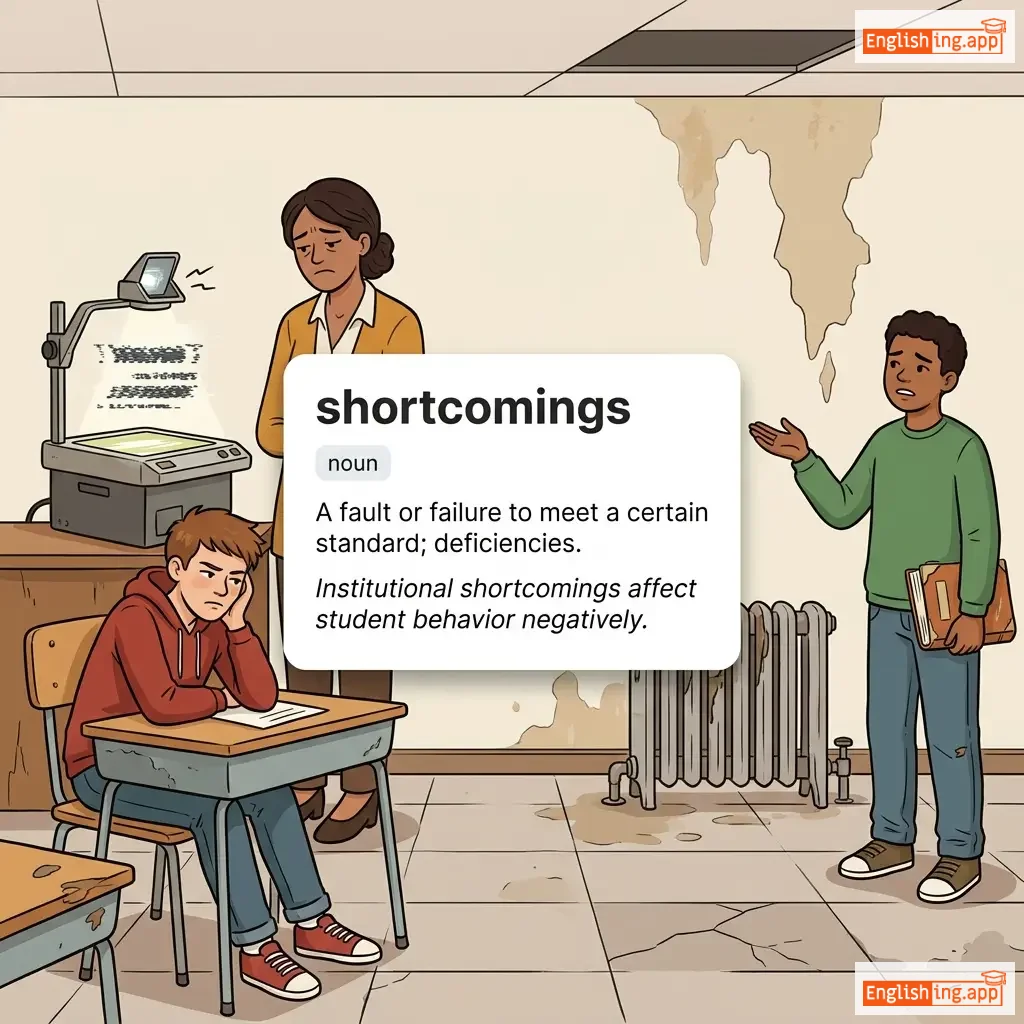
noun
/ˈʃɔːrt.kʌm.ɪŋ/
अवगति; कमी; दोष (avgati; kami; dosh)

a fault or failure to meet a certain standard; a deficiency

"Despite his many talents, he has some shortcomings."

"इसके कई गुणों के बावजूद, उसके कुछ अवगति हैं।" (iske kai gunon ke bawajood, uske kuch avgati hain)
shortcomings definition card — visual illustration of the meaning
noun
ˈʃɔːtkʌmɪŋz
कमियाँ (kamiyaan)

A fault or failure to meet a certain standard; deficiencies.

"Institutional shortcomings affect student behavior negatively."

"संस्थान की कमियाँ छात्र व्यवहार को नकारात्मक रूप से प्रभावित करती हैं।" (Sansthan ki kamiyaan chhatra vyavhaar ko nakaratmak roop se prabhavit karti hain.)
verb
/ˈʃɔːrtn/
छोटा करना (chhota karna)

To make something shorter in length, duration, or extent

"She decided to shorten her speech to fit the time limit."

"उसने समय सीमा में फिट होने के लिए अपना भाषण छोटा करने का निर्णय लिया।" (Usne samay seema mein fit hone ke liye apna bhaashan chhota karne ka nirnay liya.)
verb
/ʃʌk/
छिलका निकालना (chhilka nikaalna)

To remove the outer covering, such as the husk of corn or shell of shellfish.

"She learned how to shuck oysters quickly."

"उसने जल्दी से सीप खोलने का तरीका सीखा।" (Usne jaldi se seep kholne ka tareeka seekha.)
adjective, adverb
/ˈsaɪdlɔːŋ/
पार्श्वदृष्टि (parshvadrishti)

Directed to the side; indirect, furtive, or not straightforward.

"She gave him a sidelong glance across the room."

"उसने कमरे के पार उसे एक पार्श्वदृष्टि दी।" (Usne kamre ke paar use ek parshvadrishti dee.)
sideline discussions definition card — visual illustration of the meaning
noun
/ˈsaɪd.laɪn dɪˈskʌʃənz/
साइडलाइन चर्चाएँ (sidelain charchayein)

Informal or secondary conversations that occur outside the main agenda of a formal meeting.

"Sideline discussions often lead to agreements."

"साइडलाइन चर्चाएँ अक्सर समझौतों की ओर ले जाती हैं।" (Sidelain charchayein aksar samjhauton ki or le jati hain.)
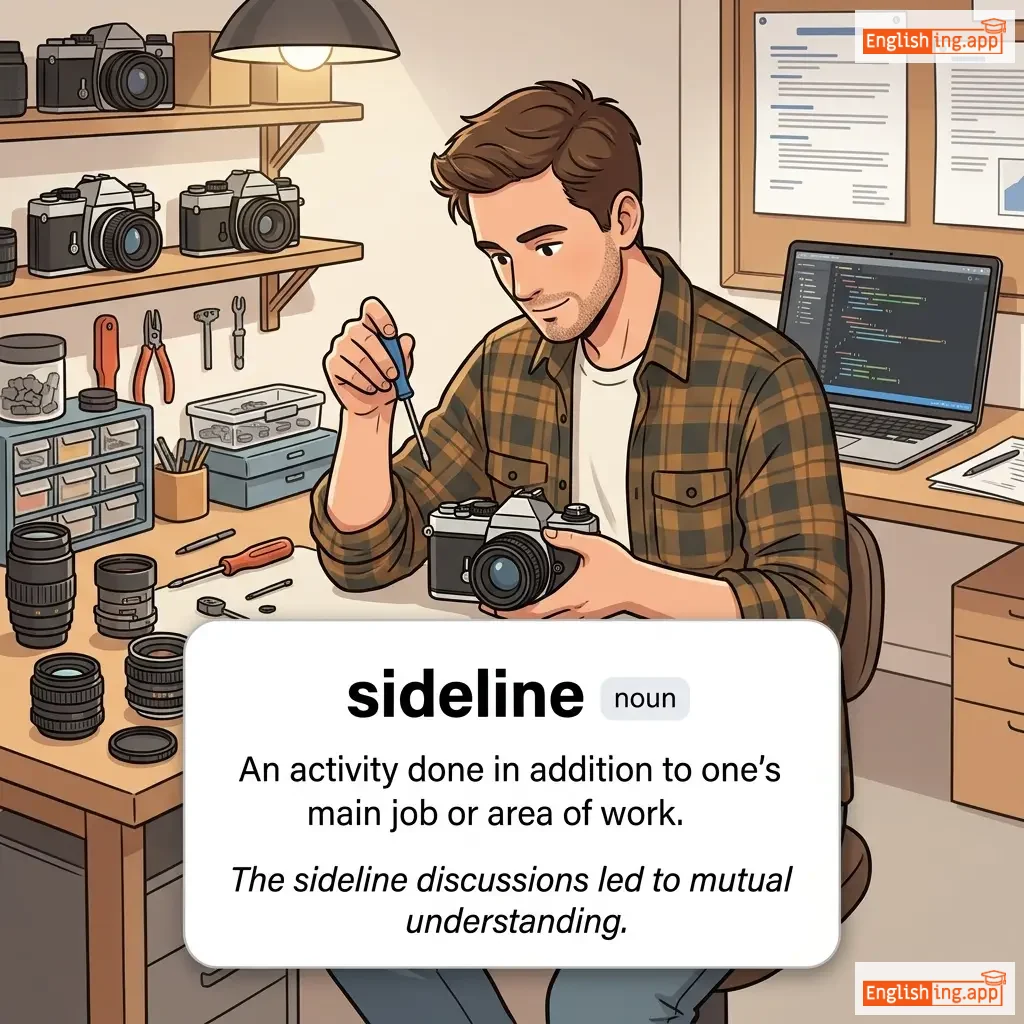
sideline definition card — visual illustration of the meaning
noun
/ˈsaɪd.laɪn/
साइडलाइन (sidelain)

An activity done in addition to one's main job or area of work.

"The sideline discussions led to mutual understanding."

"साइडलाइन चर्चाओं ने आपसी समझ को बढ़ाया।" (Sidelain charchao ne aapsi samajh ko badhaya.)
noun
/saɪd/
पक्ष (paksh)

a position to the left or right of something

"The store is on the side of the road."

"दुकान सड़क के किनारे पर है।" (Dukaan sadak ke kinaare par hai.)
noun
/ˈsɪk.nəs/
बीमारी; रोग; (bimari; rog;)

the state of being ill; a disease or illness

"She took time off work due to sickness."

"वह बीमारी के कारण काम से समय लिया।" (vah bimari ke karan kaam se samay liya.)
adjective
/ˈsɪk.li/
कमज़ोर; अस्वस्थ; रोगी (kamzor)

weak and unhealthy; prone to illness; appearing weak or pale

"The sickly child needed extra care and attention."

"वह कमज़ोर बच्चा अतिरिक्त देखभाल और ध्यान का मोहताज था।" (vah kamzor bachcha atirikt dekhbhal aur dhyan ka mohtaj tha)
noun
/ˈsɪk.əl/
दरांती (daranti)

a tool with a curved metal blade and short handle used for cutting grain crops

"The farmer harvested wheat using a traditional sickle."

"किसान ने पारंपरिक दरांती से गेहूं की फसल काटी।" (kisaan ne paaramparik daranti se gehun ki fasal kaatee.)
Sick definition card — visual illustration of the meaning
adjective
/sɪk/
बीमार (beemar)

feeling unwell or suffering from illness

"She stayed home because she was feeling sick."

"वह घर पर रही क्योंकि वह बीमार महसूस कर रही थी।" (vah ghar par rahi kyonki vah beemar mahsoos kar rahi thi)
adjective
/ˈsɪbɪlaɪn/
भविष्यवाणी-संबंधी (bhavishyavani-sambandhi)

Prophetic, mysterious, or cryptic in meaning.

"The old woman gave a sibylline warning about the future."

"पुरानी महिला ने भविष्य के बारे में एक सिबिलाइन चेतावनी दी।" (Puraani mahila ne bhavishya ke baare mein ek sibilaain chetavani di.)
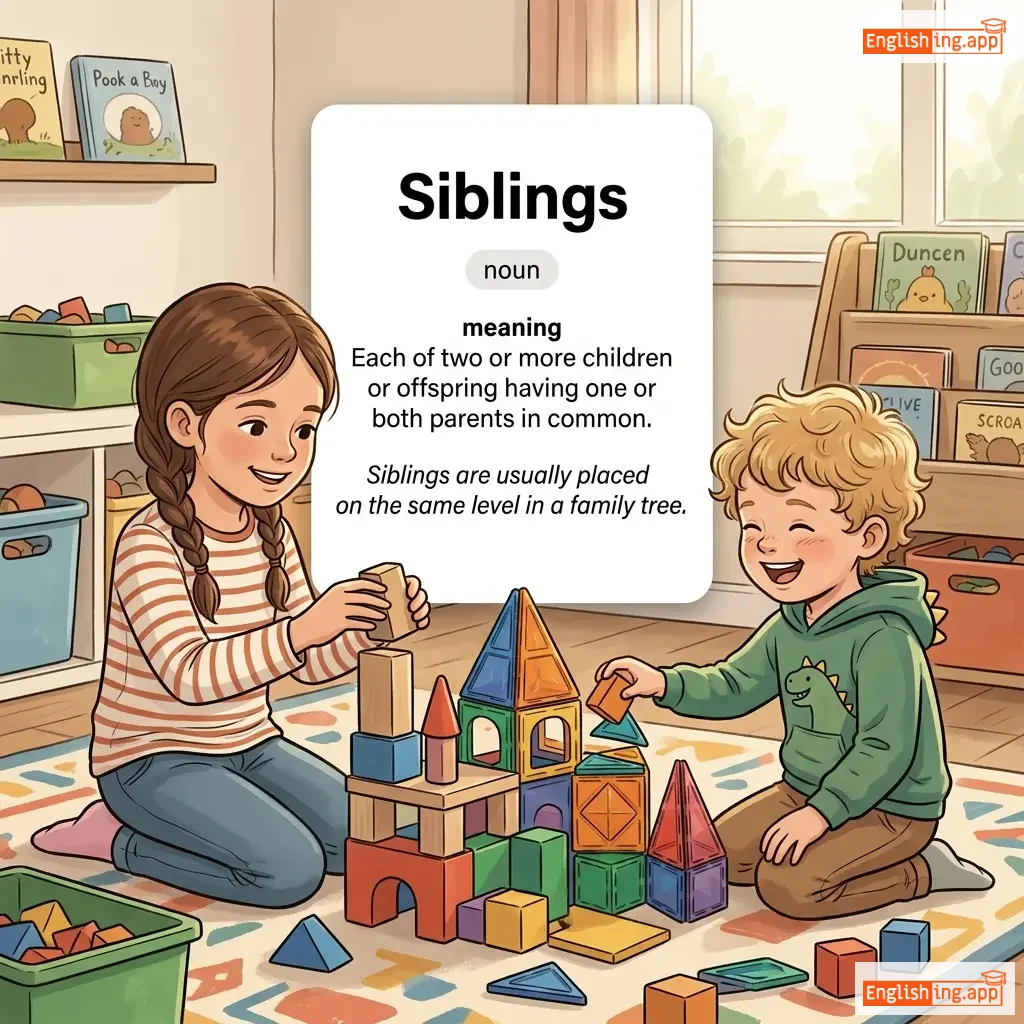
Siblings definition card — visual illustration of the meaning
noun
ˈsɪblɪŋz
सगे-संबंधी (sage-sambandhi)

Each of two or more children or offspring having one or both parents in common.

"Siblings are usually placed on the same level in a family tree."

"सगे-संबंधी आमतौर पर पारिवारिक वृक्ष में समान स्तर पर होते हैं।" (sage-sambandhi aamtaur par parivarik vriksh mein samaan star par hote hain.)
noun
/ˈsɪblɪŋ/
भाई-बहन (bhai-behan)

A brother or sister.

"She has three siblings, two brothers and one sister."

"वह तीन भाई-बहन है, दो भाई और एक बहन।" (Wah teen bhai-behan hai, do bhai aur ek behan.)
verb
/ˈsɪbəleɪt/
सिस्कर ध्वनि करना (siskar dhvani karna)

To pronounce with a hissing sound.

"The actor sibilated his lines for dramatic effect."

"अभिनेता ने नाटकीय प्रभाव के लिए अपनी पंक्तियों को सिस्कर ध्वनि में उच्चारित किया।" (Abhineta ne natakiya prabhav ke liye apni panktiyon ko siskar dhvani mein uchcharit kiya.)
adjective
/ˈsɪbɪlənt/
हिसिंग ध्वनि से युक्त (hissing dhvani se yukt)

Making or characterized by a hissing sound.

"The word 'snake' starts with a sibilant sound."

"'स्नेक' शब्द एक सिबिलेंट ध्वनि से शुरू होता है।" ('Snake' shabd ek sibilant dhvani se shuru hota hai.)
noun
/ˈsɪbɪləns/
सिसिलनस ध्वनि (sibilans dhvani)

A hissing or hushing sound, especially in speech with 's' or 'sh'.

"The poet used sibilance to create a soft, hissing effect in the verse."

"कवि ने कविता में नरम, खिसकती ध्वनि बनाने के लिए सिबिलन्स का उपयोग किया।" (Kavi ne kavita mein naram, khiskti dhvani banane ke liye sibilans ka upyog kiya.)
noun
/ˈʃaɪstər/
धोखेबाज़ (dhokhebaz)

a person, especially a lawyer, who uses unscrupulous or dishonest methods

"The businessman was exposed as a shyster who cheated clients."

"व्यवसायी को एक धोखेबाज़ के रूप में उजागर किया गया था, जिसने ग्राहकों को धोखा दिया।" (Vyavsayee ko ek dhokhebaz ke roop mein ujagar kiya gaya tha, jisne graahakon ko dhokha diya.)
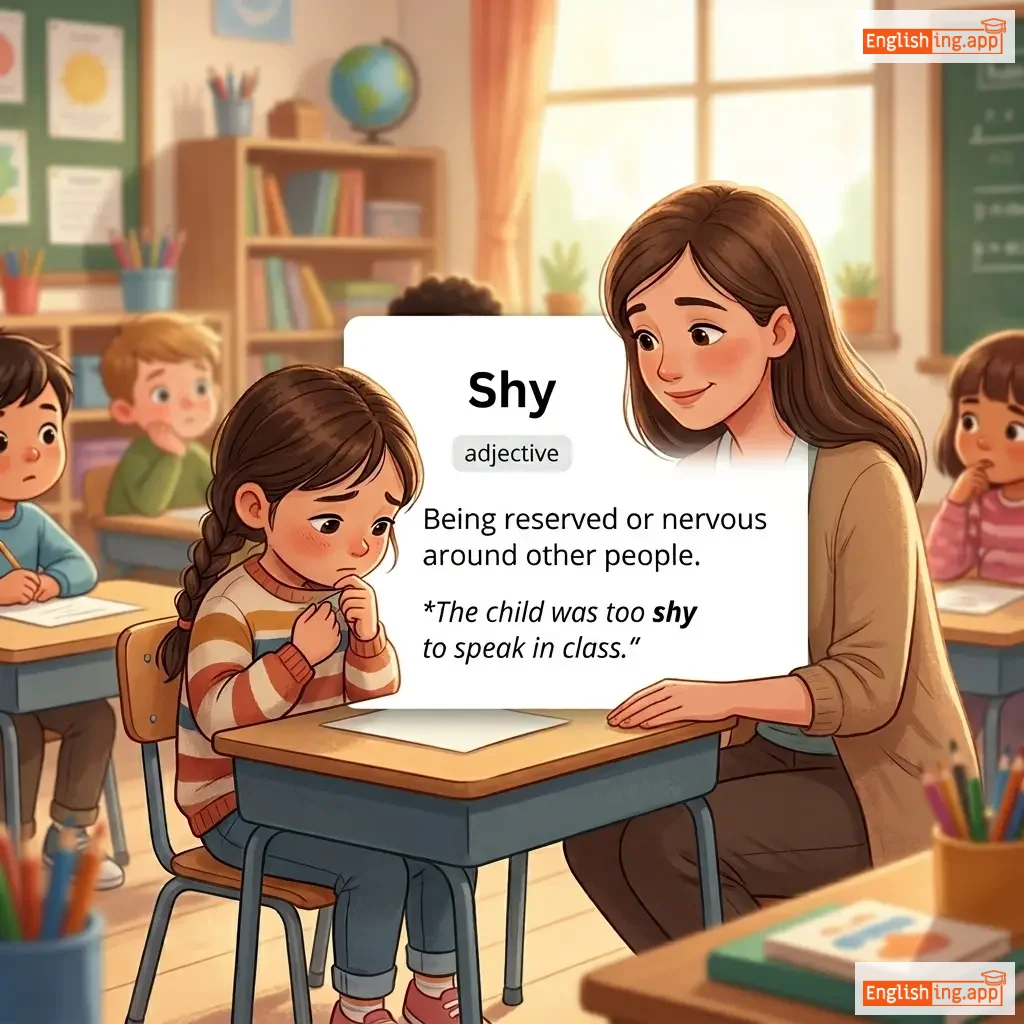
Shy definition card — visual illustration of the meaning
adjective
/ʃaɪ/
लजाना (lajana)

Being reserved or nervous around other people.

"The child was too shy to speak in class."

"बच्चा कक्षा में बोलने के लिए बहुत लाजवाब था।" (Baccha kaksha mein bolne ke liye bahut lajawaab tha.)
noun
/ˈʃʌtəl/
दो स्थानों के बीच नियमित रूप से यात्रा करने वाला वाहन (do sthanon ke beech niyamit roop se yatra karne wala vahan)

a vehicle or craft that travels regularly between two places.

"The airport shuttle runs every 30 minutes."

"एयरपोर्ट शटल हर 30 मिनट में चलती है।" (airport shuttle har 30 minute mein chalti hai.)
verb
/ʃʌt/
बंद करना (band karna)

to close something, especially a door or window

"Please shut the door before you leave."

"कृपया दरवाजा बंद कर दें जब आप जाएं।" (Kripya darwaza band kar den jab aap jayein.)
verb
/ʃʌnt/
साइड में हटाना / दिशा बदलना (said mein hatana / disha badalna)

to move or turn aside; to push or divert from one track to another

"The train was shunted onto a different track."

"ट्रेन को एक अलग ट्रैक पर मोड़ा गया।" (Train ko ek alag track par modha gaya.)
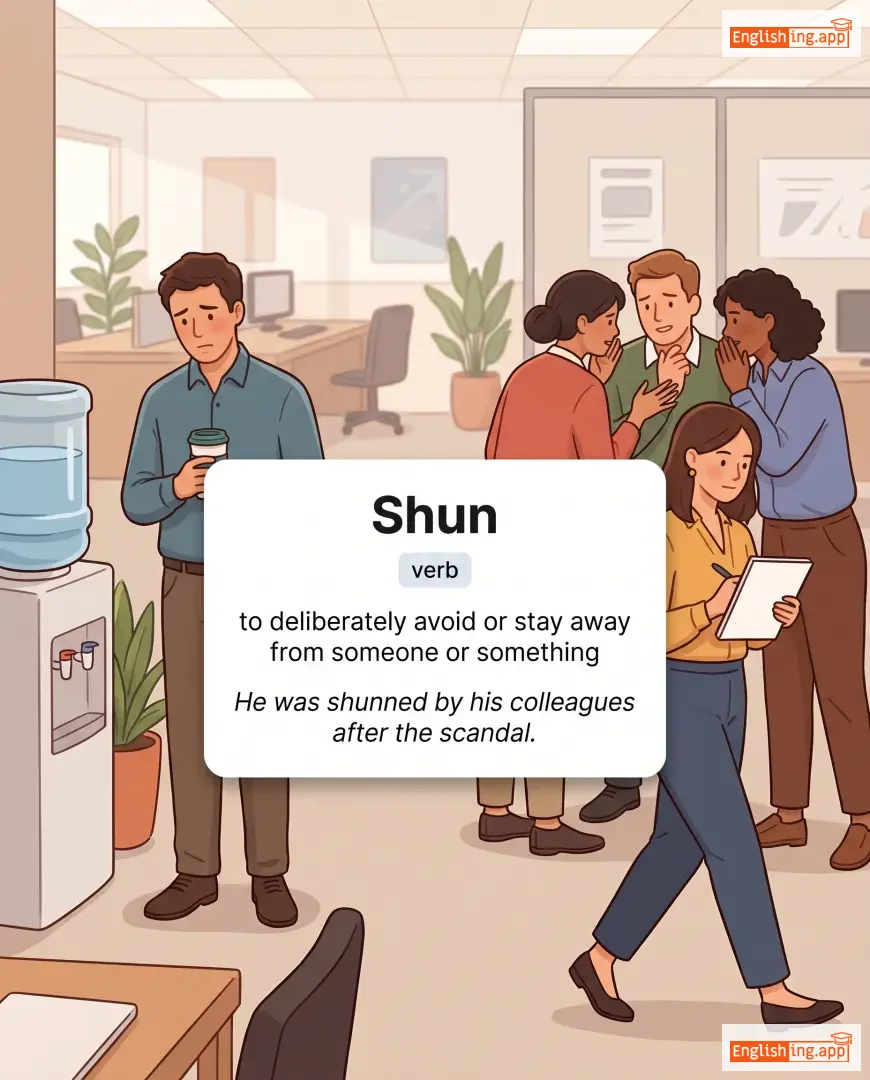
Shun definition card — visual illustration of the meaning
verb
/ʃʌn/
बचना (bachna)

to deliberately avoid or stay away from someone or something

"He was shunned by his colleagues after the scandal."

"वह स्कैंडल के बाद अपने सहकर्मियों द्वारा शुन्न कर दिया गया था।" (vah scandal ke baad apne sahakarmiyon dwara shunn kar diya gaya tha.)
verb
/ˈʃʌfəl/
पाँव घसीटकर चलना / मिलाना (paav ghasitkar chalna / milaana)

to walk by dragging one's feet along or without lifting them fully; to mix or rearrange

"He shuffled the cards before dealing them."

"उसने कार्ड्स को डील करने से पहले मिक्स किया।" (Usne cards ko deal karne se pehle mix kiya.)
verb
/ˈʃʌdər/
काँपना (kaampna)

to tremble or shake suddenly, often due to fear, cold, or strong emotion

"She shuddered at the thought of walking alone in the dark forest."

"वह अंधेरे जंगल में अकेले चलने के विचार से काँप गई।" (vah andhere jangal mein akele chalne ke vichar se kaamp gayi.)
noun
/ʃruː/
चिड़ीचिड़ी महिला / छोटी चूहा जैसी जानवर (chidhichidhi mahila / chhoti chuha jaisi janwar)

a small mouse-like animal; also a woman with a bad temper

"The play describes a strong-willed woman as a shrew."

"नाटक में एक मजबूत इच्छा वाली महिला को चिड़ीचिड़ी महिला के रूप में वर्णित किया गया है।" (Natak mein ek majboot ichha wali mahila ko chidhichidhi mahila ke roop mein varnita kiya gaya hai.)
noun
/ʃɔːrts/
हाफ पैंट (haaf pant)

a short garment worn on the lower half of the body that covers each leg separately, usually above the knees.

"He wore a pair of blue shorts to the beach."

"उसने समुद्र तट पर नीले शॉर्ट्स पहने थे।" (Usne samudra tat par neeley shorts pehene the.)
noun, verb
/ʃɒt/
शॉट (shot)

a single attempt to hit something, usually with a weapon or a ball

"He took a shot at the goal."

"उसने गोलपोस्ट पर एक शॉट मारा।" (Usne golpost par ek shot maara.)
modal verb
/ʃʊd/
चाहिए (chahiye)

used to indicate obligation or duty

"You should study for your exams."

"तुम्हें अपनी परीक्षा के लिए अध्ययन करना चाहिए।" (Tumhe apni pariksha ke liye adhyayan karna chahiye.)
noun
/ˈʃoʊldər/
कंधा (kandha)

the upper joint of the human arm and the part of the body to which it is attached

"He hurt his shoulder while lifting weights."

"वह वजन उठाते समय अपना कंधा चोटिल कर बैठा।" (Vah vazan uthate samay apna kandha chotil kar baitha.)
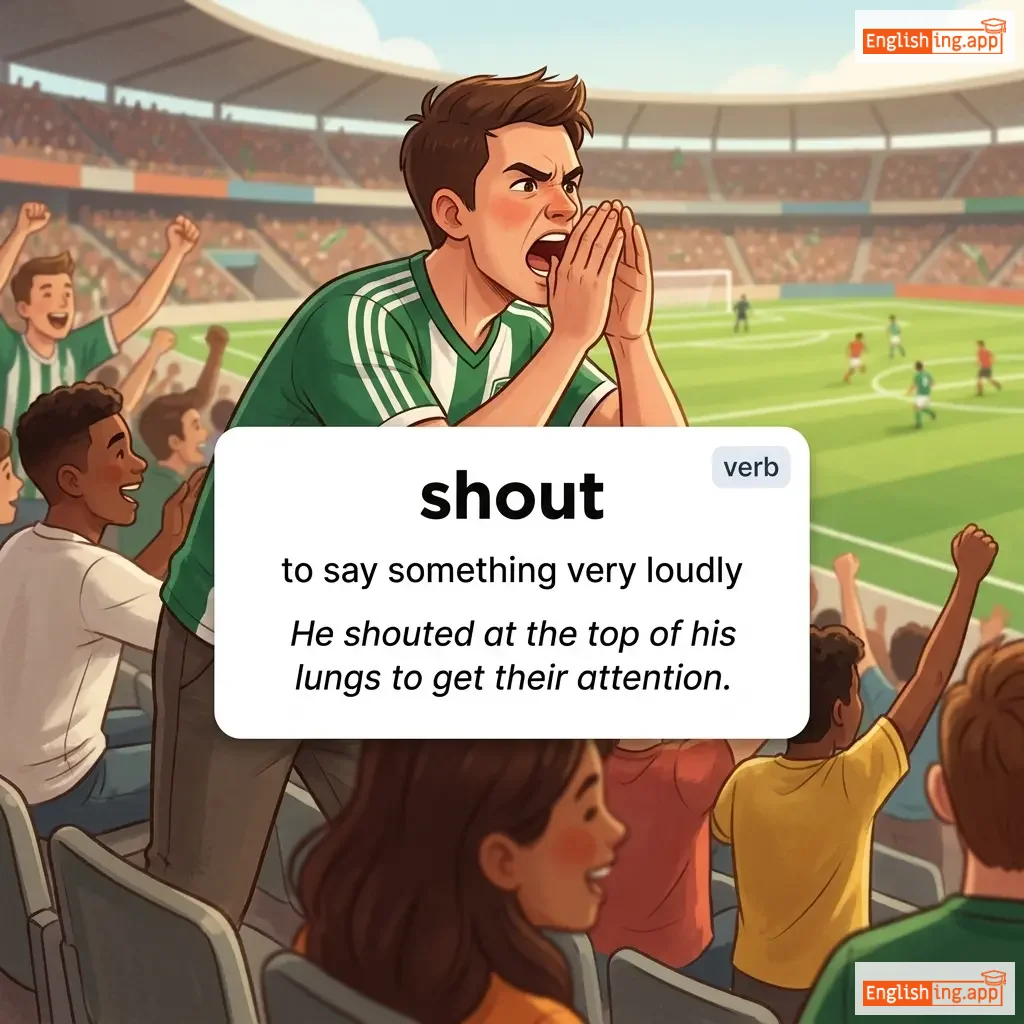
shout definition card — visual illustration of the meaning
verb
/ʃaʊt/
चिल्लाना (chillana)

to say something very loudly

"He shouted at the top of his lungs to get their attention."

"उसने उनका ध्यान आकर्षित करने के लिए अपनी पूरी ताकत से चिल्लाया।" (Usne unka dhyaan aakarshit karne ke liye apni poori taqat se chillaya.)
verb
/ʃʌv/
धक्का देना (dhakka dena)

to push someone or something roughly

"He shoved the box into the corner."

"उसने बॉक्स को कोने में धक्का दिया।" (Usne box ko kone mein dhakka diya.)
noun
/ˈʃʌv.əl/
कुदाल (kudal)

a tool with a broad flat blade and long handle used for digging and moving earth, snow, or other materials

"He grabbed a shovel to clear the snow from the driveway."

"उसने ड्राइववे से बर्फ हटाने के लिए एक कुदाल पकड़ा।" (Usne driveway se baraf hatane ke liye ek kudal pakda.)
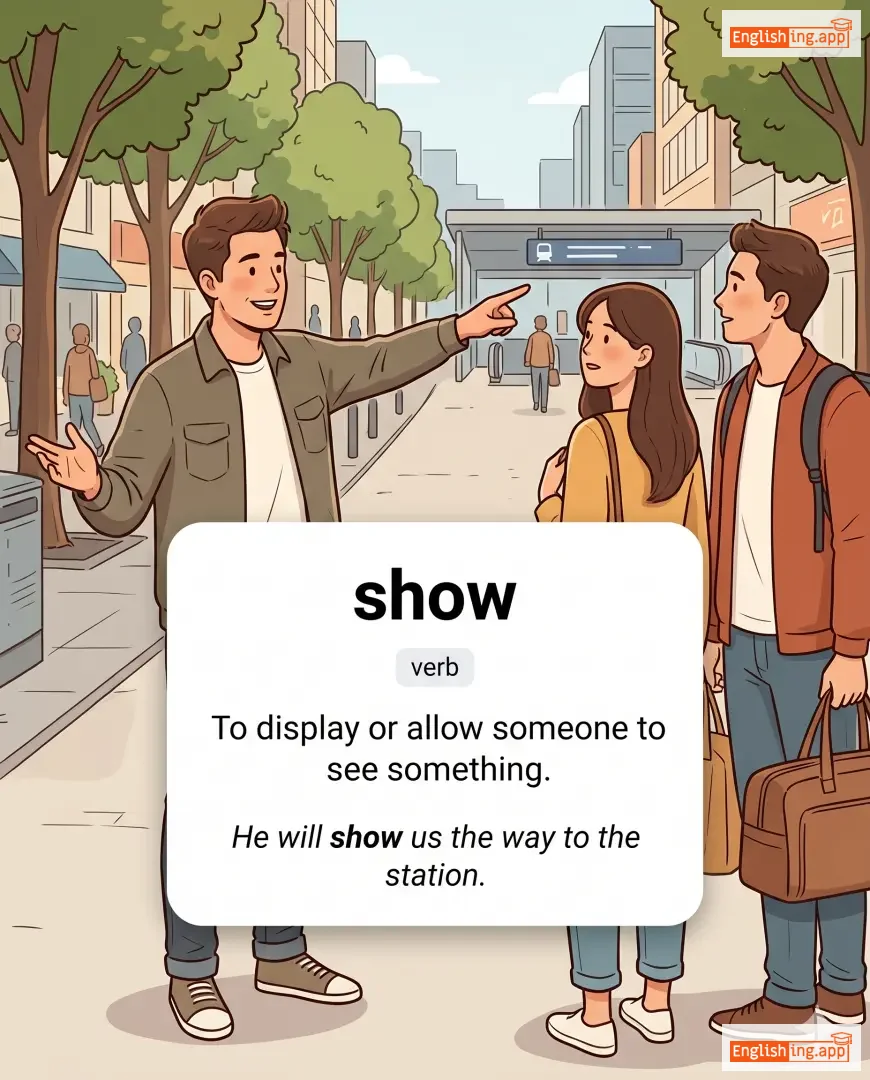
show definition card — visual illustration of the meaning
verb
/ʃoʊ/
दिखाना (dikhana)

To display or allow someone to see something.

"He will show us the way to the station."

"वह हमें स्टेशन का रास्ता दिखाएगा।" (vah humein station ka raasta dikhayega.)
noun
/ˈsɛrəf/
देवदूत (devdoot)

An angelic being associated with light and purity, often depicted as a high-ranking angel in Christian theology.

"The stained-glass window depicted a seraph with outstretched wings."

"उधारी वाली खिड़की में एक सेराफ़ को विस्तारित पंखों के साथ चित्रित किया गया था।" (udhari wali khidki mein ek seraph ko vistarit pankhon ke saath chitrit kiya gaya tha.)
noun
/ˈʃaʊər/

a brief fall of rain or snow or a device for taking a bath or washing oneself

"After the workout, I took a quick shower to refresh myself."

/ʃrɛd/
टुकड़े-टुकड़े करना (tukde-tukde karna)

to tear or cut something into small pieces

"She shredded the old documents before throwing them away."

"उसने पुराने दस्तावेजों को फेंकने से पहले श्रेड कर दिया।" (Usne purane dastavejon ko phenkne se pehle shred kar diya.)
noun
/ʃraɪn/
पवित्र स्थल (pavitra sthal)

A place regarded as holy, often associated with a saint or deity.

"Thousands of pilgrims visit the shrine each year."

"हजारों तीर्थयात्री हर साल उस पवित्र स्थल पर जाते हैं।" (hazaron tirthyatri har saal us pavitra sthal par jaate hain.)
verb
/ʃrʌɡ/
कंधा झटकना (kandha jhatakna)

To raise and lower the shoulders to express uncertainty or indifference.

"He shrugged when asked about the missing file."

"जब खोई हुई फाइल के बारे में पूछा गया, तो उसने कंधा झटक दिया।" (Jab khoi hui file ke baare mein poocha gaya, to usne kandha jhatak diya.)
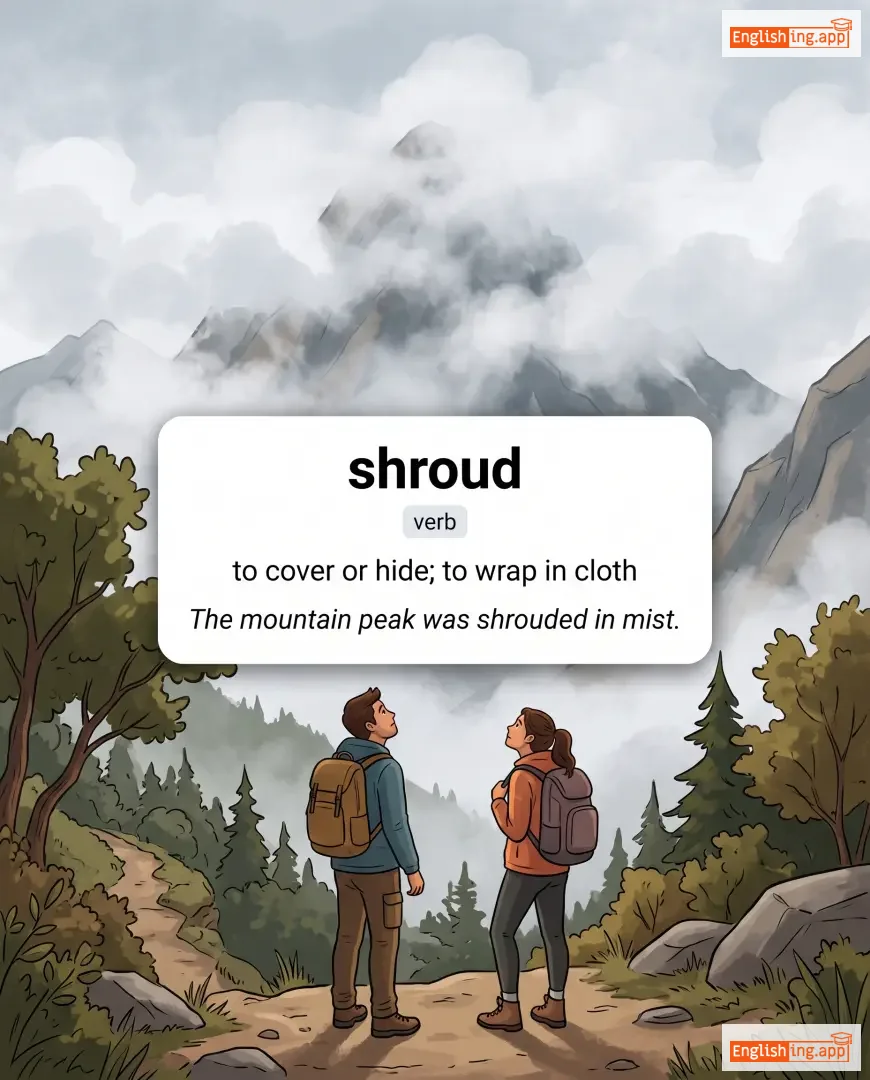
shroud definition card — visual illustration of the meaning
verb
/ʃraʊd/
लपेटना (lapetna)

to cover or hide; to wrap in cloth

"The mountain peak was shrouded in mist."

"पहाड़ की चोटी धुंध में लिपटी हुई थी।" (Pahaad ki chhoti dhund mein lipti hui thi)
verb
/ˈʃrɪvəl/
झुर्रिया (jhurriya)

To become dry, wrinkled, and smaller due to lack of moisture.

"The flowers shriveled under the hot sun."

"फूल गर्मी में सिकुड़ गए।" (Phool garmi mein sikud gaye.)
noun
/ˈʃrɪŋkɪdʒ/
संकोचन (sankochan)

The process of becoming smaller in size, amount, or value.

"The company reported a shrinkage in profits this quarter."

"कंपनी ने इस तिमाही में मुनाफे में संकोचन की रिपोर्ट दी।" (Company ne is timaahi mein munafe mein sankochan ki report di.)
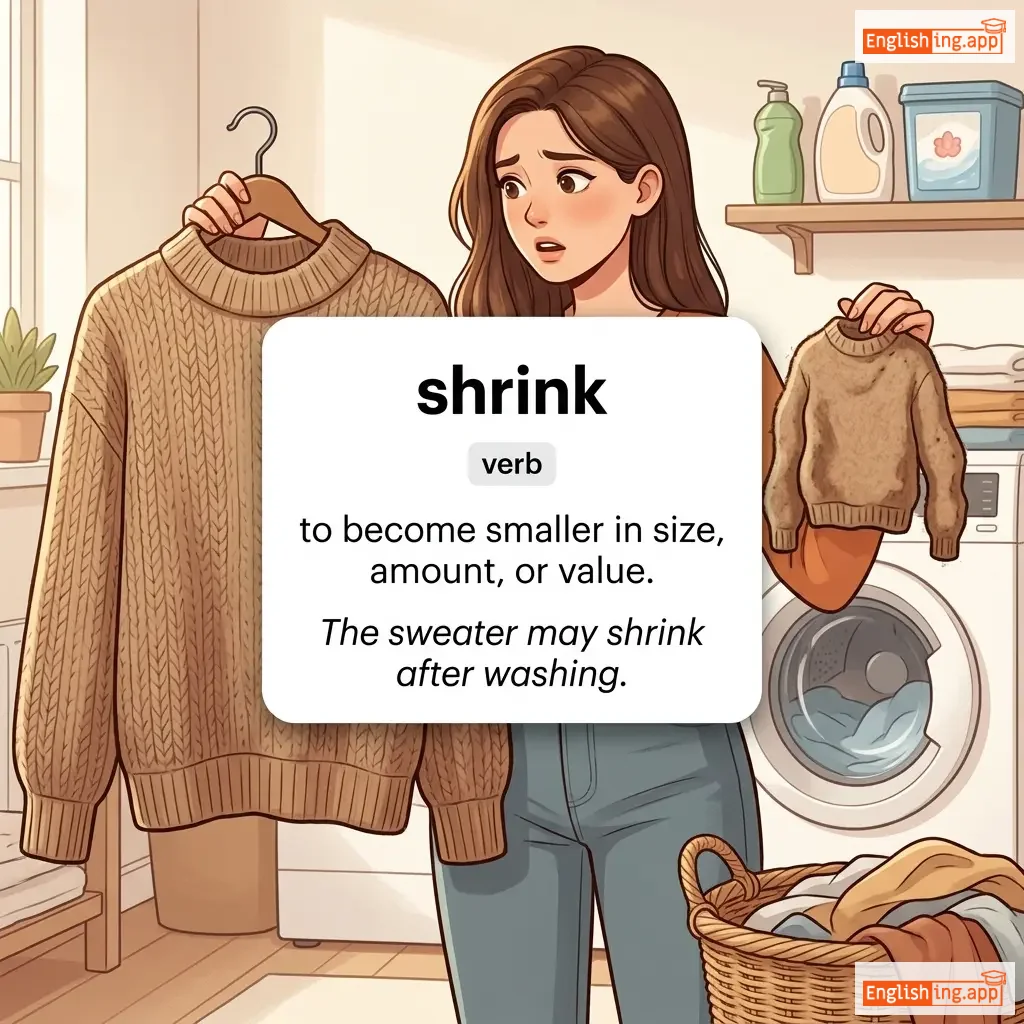
shrink definition card — visual illustration of the meaning
verb
/ʃrɪŋk/
सुख (sukh)

to become smaller in size, amount, or value.

"The sweater may shrink after washing."

"जब उसे पुरस्कार मिला तो वह अपनी खुशी छुपा नहीं पाई।" (Jab use puraskaar mila to wah apni khushi chhupa nahin pai.)
adjective
/ʃrɪl/
तीव्र ध्वनि (teevr dhvani)

High-pitched and piercing in sound.

"The shrill whistle startled everyone in the room."

"तीव्र सीटी ने कमरे में सभी को चौंका दिया।" (Teevr seeti ne kamre mein sabhi ko chonka diya.)
adjective
/ʃruːd/
चतुर (chatur)

having sharp judgment and practical intelligence

"She made a shrewd investment in real estate."

"उसने रियल एस्टेट में चतुर निवेश किया।" (Usne real estate mein chatur nivesh kiya.)
verb
/ʃriːk/
चिल्लाना (chillana)

to make a loud, high-pitched cry

"She shrieked when she saw the spider."

"वह मकड़ी देखकर चिल्लाई।" (Wah makdi dekhkar chillayi.)