Словари

Словарь английского языка | Значения слов, определения и примеры

adjective
/ˈʃɔːrt ˌtempərd/
раздражительный; легко злой (razdrazhitel'nyj; legko zloy)

quick to lose one's temper; easily angered

"She became short-tempered when the traffic made her late for the meeting."

"Она стала раздражительной, когда трафик заставил её опоздать на встречу." (Ona stala razdrazhitel'noj, kogda trafik zastavil yeё opozdat' na vstrechu.)
short-term definition card — visual illustration of the meaning
adjective
/ˈʃɔːrt tɜːrm/
краткосрочный (kratskorochnyy)

lasting for or involving a short period of time

"They offered a short-term loan to help the business."

"Они предложили краткосрочный кредит, чтобы помочь бизнесу." (Oni predlozhili kratskorochnyy kredit, chtoby pomoch' biznesu.)
noun
/ˈʃɔːrtɪdʒ/
нехватка (nekhatka)

a state or situation in which something needed cannot be obtained in sufficient amounts

"There is a shortage of skilled workers in the industry."

"В отрасли наблюдается нехватка квалифицированных работников." (V otrasli nablyudaetsya nekhatka kvalifitsirovannykh rabotnikov.)
noun
/ˈʃɔːrt.kʌm.ɪŋ/
недостаток; ошибка; дефект (nedostatok; oshibka; defekt)

a fault or failure to meet a certain standard; a deficiency

"Despite his many talents, he has some shortcomings."
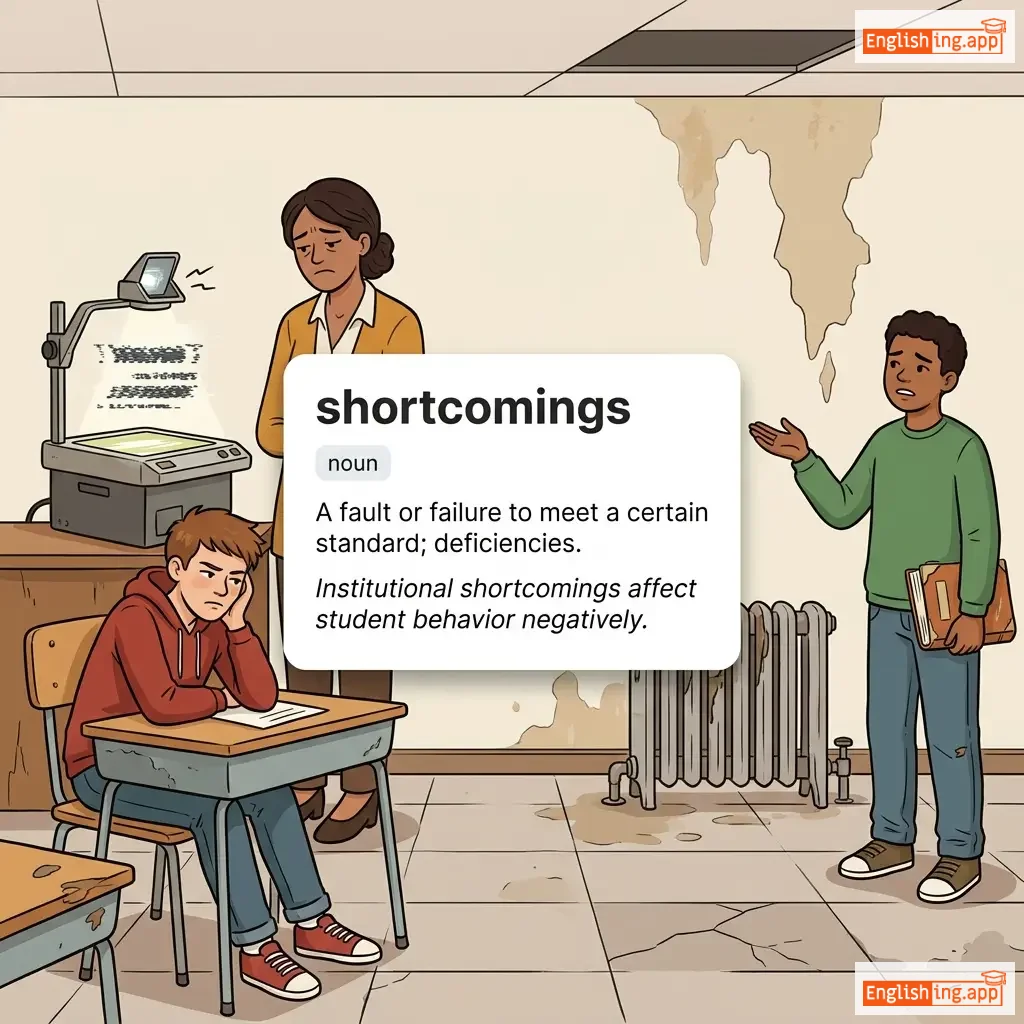
"Несмотря на его многочисленные таланты, у него есть несколько недостатков." (Nesmotrya na ego mnogochislennye talanty, u nego est' neskol'ko nedostatkov.)
shortcomings definition card — visual illustration of the meaning
noun
ˈʃɔːtkʌmɪŋz
недостатки (nedostatki)

A fault or failure to meet a certain standard; deficiencies.

"Institutional shortcomings affect student behavior negatively."

"Институциональные недостатки негативно сказываются на поведении студентов." (Institutsional'nye nedostatki negativno skazyvayutsya na povedenii studentov.)
verb
/ˈʃɔːrtn/
сокращать (sokrashchat)

To make something shorter in length, duration, or extent

"She decided to shorten her speech to fit the time limit."

"Она решила сократить свою речь, чтобы уложиться в отведенное время." (Ona reshilа sokratit' svoiu rech', chtoby ulozhit'sya v otvedennoe vremya.)
verb
/ʃʌk/
снимать оболочку (snimat' obolochku)

To remove the outer covering, such as the husk of corn or shell of shellfish.

"She learned how to shuck oysters quickly."

"Она научилась быстро открывать устриц." (Ona nauchilas' bystro otkryvat' ustrits.)
adjective, adverb
/ˈsaɪdlɔːŋ/
косой взгляд (kosoy vzglyad)

Directed to the side; indirect, furtive, or not straightforward.

"She gave him a sidelong glance across the room."

"Она бросила на него косой взгляд через комнату." (Ona brosila na nego kosoy vzglyad cherez komnatu.)
sideline discussions definition card — visual illustration of the meaning
noun
/ˈsaɪd.laɪn dɪˈskʌʃənz/
второстепенные обсуждения (vtorostepennye obsuzhdeniya)

Informal or secondary conversations that occur outside the main agenda of a formal meeting.

"Sideline discussions often lead to agreements."
"Второстепенные обсуждения часто приводят к соглашениям." (Vtorostepennye obsuzhdeniya chasto privodyat k soglasheniyam.)
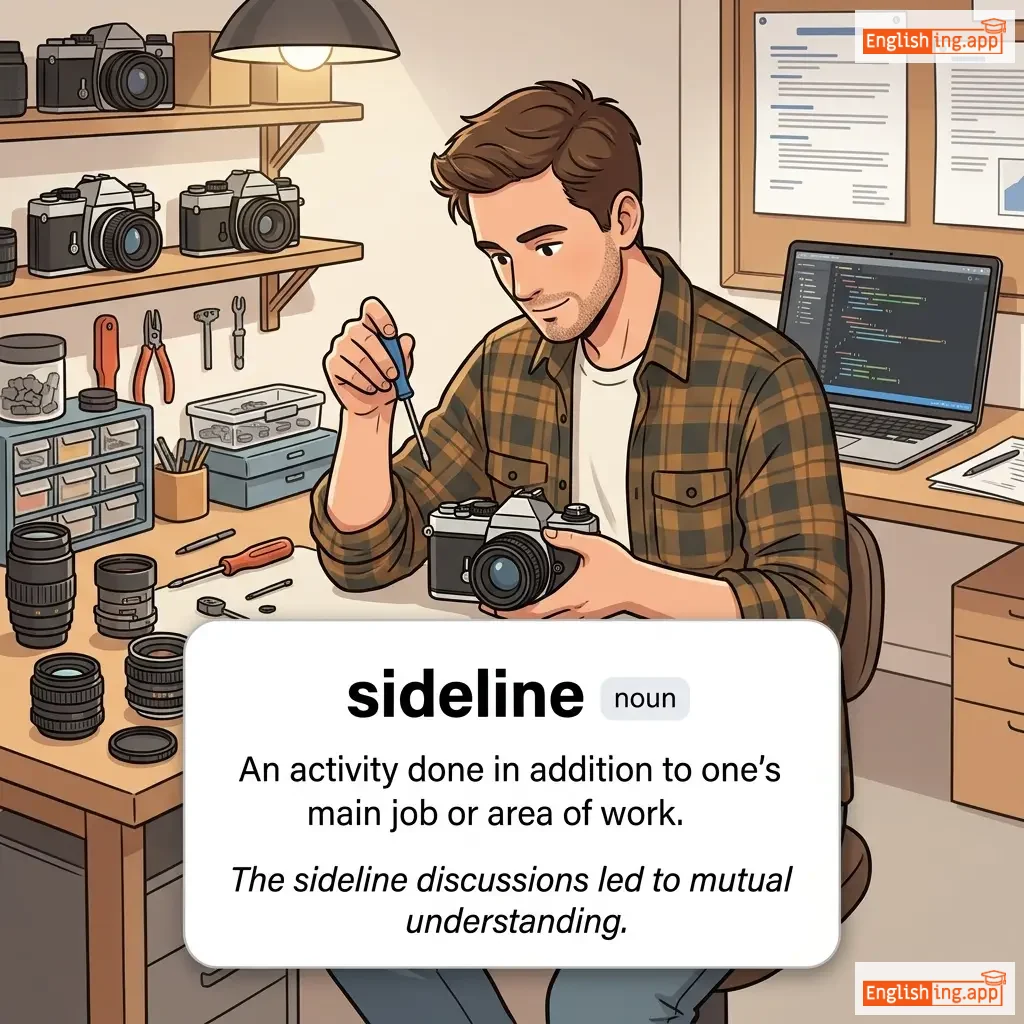
sideline definition card — visual illustration of the meaning
noun
/ˈsaɪd.laɪn/
второстепенная работа (vtorostepennaya rabota)

An activity done in addition to one's main job or area of work.

"The sideline discussions led to mutual understanding."

"Второстепенные обсуждения привели к взаимопониманию." (Vtorostepennyye obsuzhdeniya priveli k vzaimoponimaniyu.)
noun
/saɪd/
сторона (storona)

a position to the left or right of something

"The store is on the side of the road."

"Магазин находится сбоку от дороги." (Magazin nakhoditsya sboku ot dorogi.)
noun
/ˈsɪk.nəs/
болезнь; заболевание (bolezn'; zabolevanie)

the state of being ill; a disease or illness

"She took time off work due to sickness."

"Она взяла время от работы из-за болезни." (Ona vzyala vremya ot raboty iz-za bolezni.)
adjective
/ˈsɪk.li/
слабый; больной; бледный (slabyy)

weak and unhealthy; prone to illness; appearing weak or pale

"The sickly child needed extra care and attention."

"Больной ребенок нуждался в дополнительном уходе и внимании." (Bol'noy rebenok nuzhdalsya v dopolnitel'nom ukhode i vnimanii)
noun
/ˈsɪk.əl/
серп (serp)

a tool with a curved metal blade and short handle used for cutting grain crops

"The farmer harvested wheat using a traditional sickle."
"Фермер собрал пшеницу с помощью традиционного серпа." (Fermyer sobral pshenitsu s pomoshch'yu traditsionnogo serpa.)
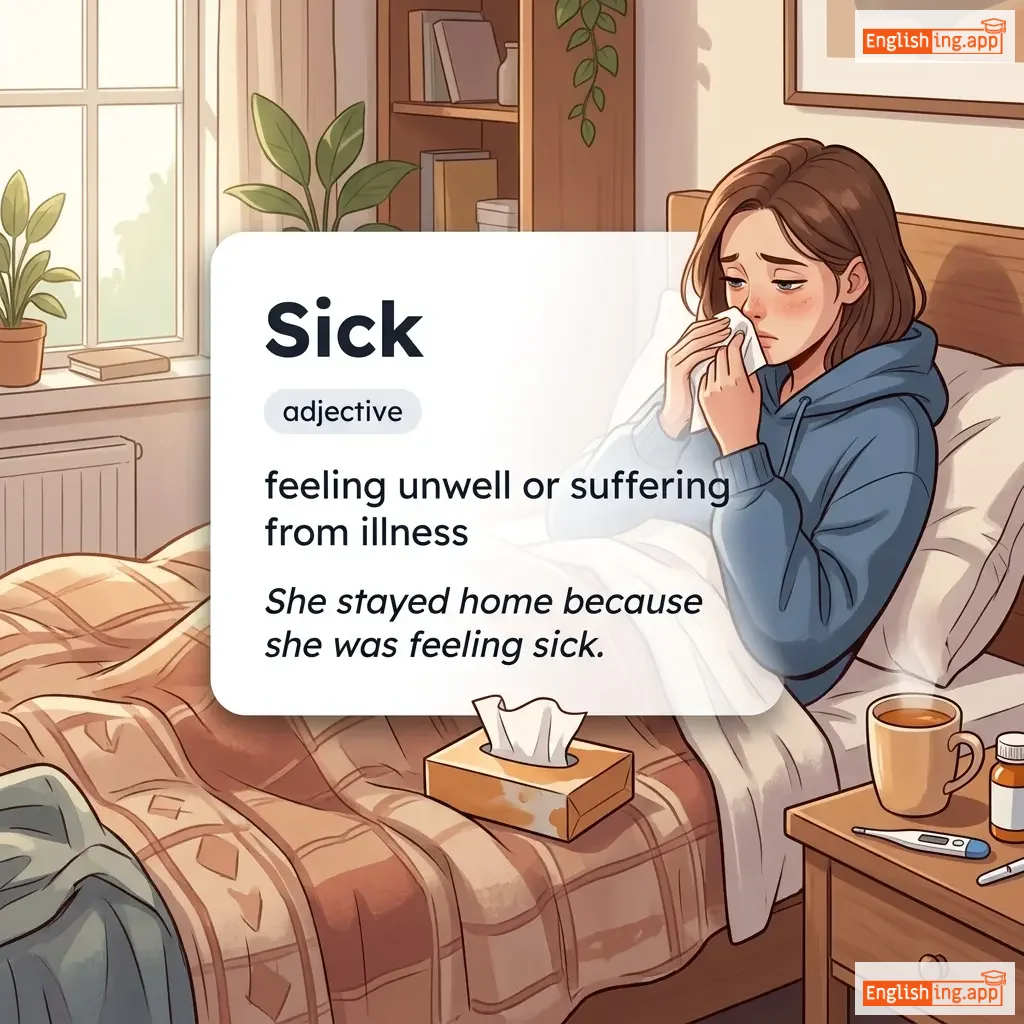
Sick definition card — visual illustration of the meaning
adjective
/sɪk/
больной (bolnoy)

feeling unwell or suffering from illness

"She stayed home because she was feeling sick."

"Она осталась дома, потому что чувствовала себя больной." (Ona ostalas doma potomu chto chuvstvovala sebya bolnoy)
adjective
/ˈsɪbɪlaɪn/
сибиллинский (sibillinskiy)

Prophetic, mysterious, or cryptic in meaning.

"The old woman gave a sibylline warning about the future."
"Старая женщина дала сибиллинское предупреждение о будущем." (Staraya zhenshchina dala sibillinskoe preduprezhdenie o budushchem.)
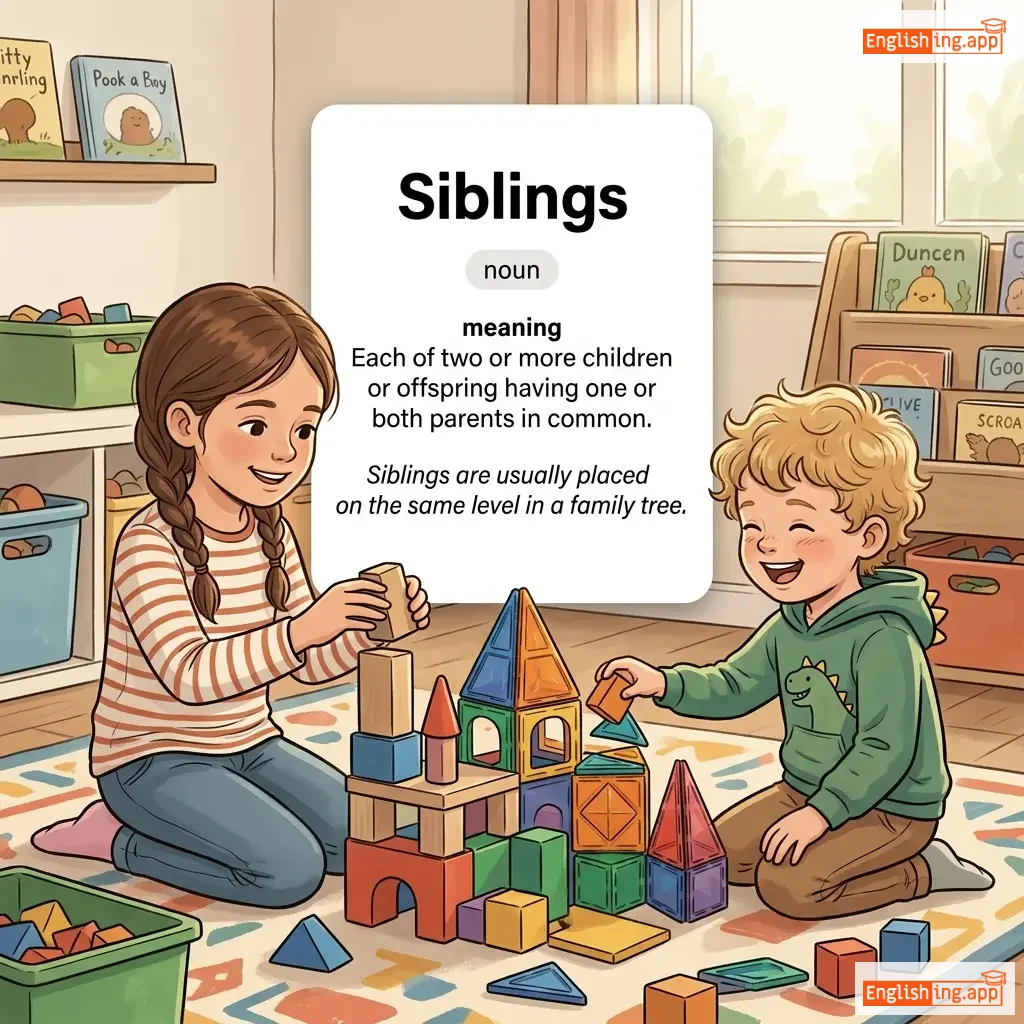
Siblings definition card — visual illustration of the meaning
noun
ˈsɪblɪŋz
братья и сестры (brat'ya i sestry)

Each of two or more children or offspring having one or both parents in common.

"Siblings are usually placed on the same level in a family tree."

"Братья и сестры обычно находятся на одном уровне в семейном дереве." (Brat'ya i sestry obychno nakhodyatsya na odnom urovne v semeynom dereve.)
noun
/ˈsɪblɪŋ/
брат/сестра (brat/sestra)

A brother or sister.

"She has three siblings, two brothers and one sister."

"У неё три брата и сестры, два брата и одна сестра." (U nee tree brata i sestry, dva brata i odna sestra.)
verb
/ˈsɪbəleɪt/
произносить с шипящим звуком (proiznosit' s shipyashchim zvukom)

To pronounce with a hissing sound.

"The actor sibilated his lines for dramatic effect."

"Актер произнес свои реплики с шипящим звуком для драматического эффекта." (Akter proiznes svoi repliky s shipyashchim zvukom dlya dramaticheskogo effekta.)
adjective
/ˈsɪbɪlənt/
с шипящим звуком (s shipyashchim zvukom)

Making or characterized by a hissing sound.

"The word 'snake' starts with a sibilant sound."

"Слово 'snake' начинается с сибилантного звука." (Slovo 'snake' nachinayetsya s sibilantnogo zvuka.)
noun
/ˈsɪbɪləns/
шипящий звук (shipyashchij zvuk)

A hissing or hushing sound, especially in speech with 's' or 'sh'.

"The poet used sibilance to create a soft, hissing effect in the verse."

"Поэт использовал сибилянт для создания мягкого, шипящего эффекта в стихах." (Poet ispol'zoval sibiljant dlya sozdaniya myagkogo, shipyashchego effekta v stikhakh.)
noun
/ˈʃaɪstər/
мошенник (moshennik)

a person, especially a lawyer, who uses unscrupulous or dishonest methods

"The businessman was exposed as a shyster who cheated clients."
"Бизнесмен был разоблачен как мошенник, который обманывал клиентов." (Biznesmen byl razoblachen kak moshennik, kotoryy obmanyval klientov.)
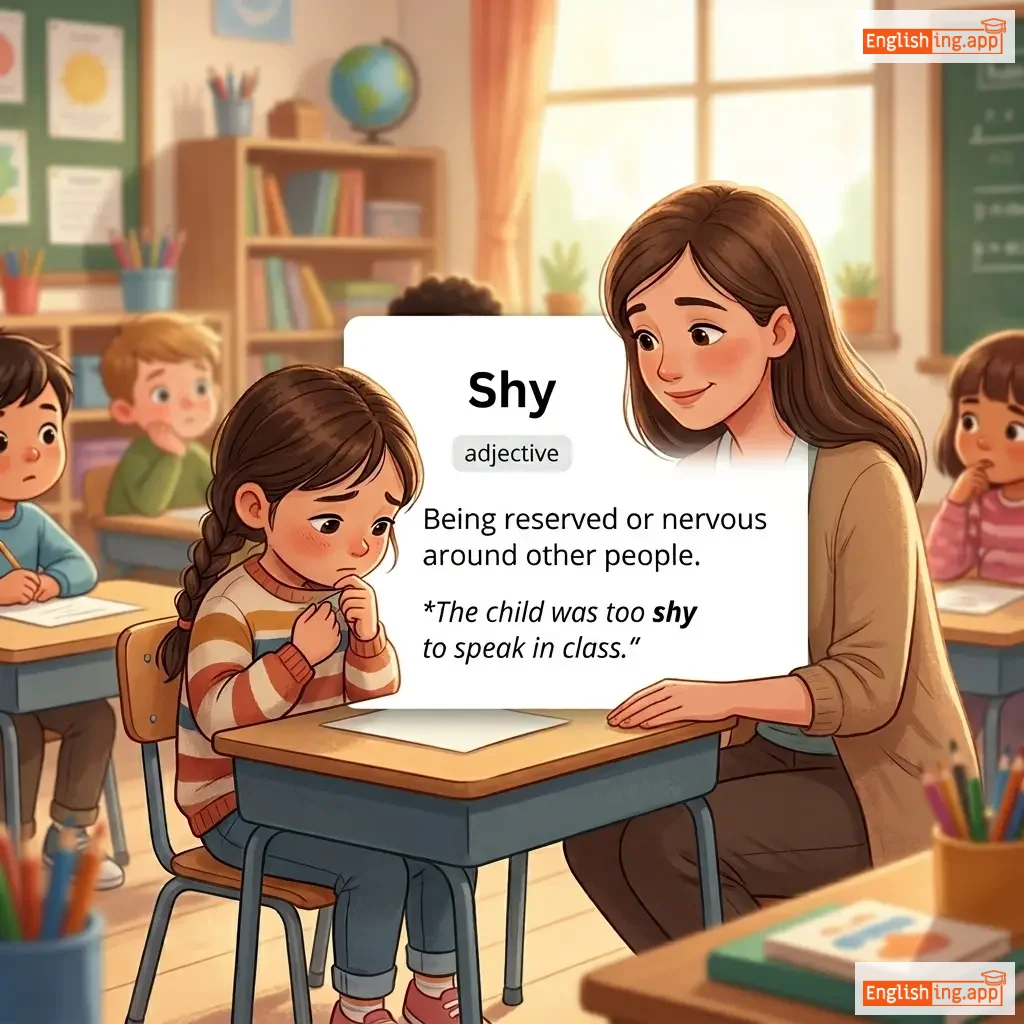
Shy definition card — visual illustration of the meaning
adjective
/ʃaɪ/
застенчивый (zastenchivyy)

Being reserved or nervous around other people.

"The child was too shy to speak in class."

"Ребёнок был слишком застенчив, чтобы говорить в классе." (Rebyonok byl slishkom zastenchiv, chtoby govorit' v klasse.)
noun
/ˈʃʌtəl/
транспортное средство, которое регулярно курсирует между двумя местами (transportnoe sredstva, kotoroe reguljarnno kursiruet mezhdu dvumya mestami)

a vehicle or craft that travels regularly between two places.

"The airport shuttle runs every 30 minutes."

"Аэропортовый шаттл ходит каждые 30 минут." (Aeroportovy shatll khodit kazhdye 30 minut.)
verb
/ʃʌt/
закрыть (zakryt)

to close something, especially a door or window

"Please shut the door before you leave."

"Пожалуйста, закройте дверь, прежде чем уйти." (Pozhaluysta, zakroyte dver', prezhde chem uyti.)
verb
/ʃʌnt/
переводить (perevodit)

to move or turn aside; to push or divert from one track to another

"The train was shunted onto a different track."
"Поезд был переведен на другой путь." (Poyezd byl pereveden na drugoy put'.)
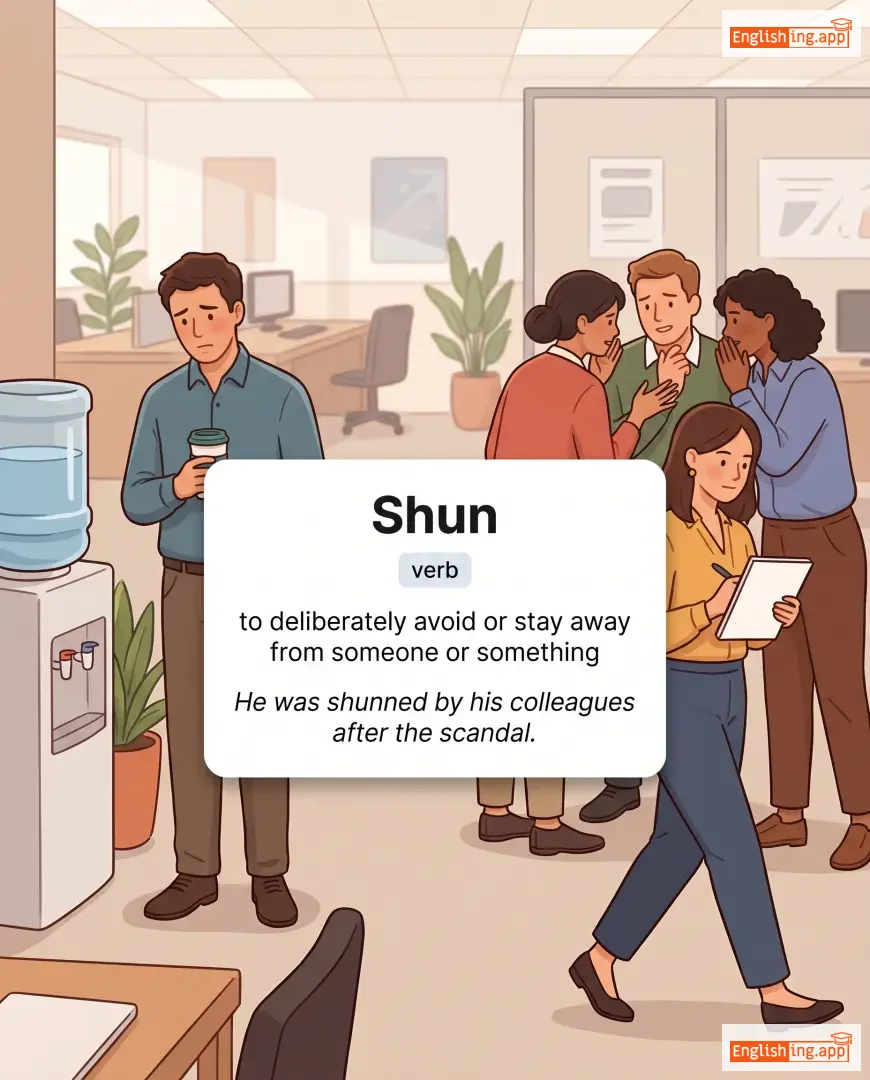
Shun definition card — visual illustration of the meaning
verb
/ʃʌn/
избегать (izbegat)

to deliberately avoid or stay away from someone or something

"He was shunned by his colleagues after the scandal."

"Он был отвергнут своими коллегами после скандала." (On byl otvergnut svoimi kollegami posle skandala.)
verb
/ˈʃʌfəl/

to walk by dragging one's feet along or without lifting them fully; to mix or rearrange

"He shuffled the cards before dealing them."

verb
/ˈʃʌdər/
дрожать (drozhat)

to tremble or shake suddenly, often due to fear, cold, or strong emotion

"She shuddered at the thought of walking alone in the dark forest."

"Она вздрогнула при мысли о том, чтобы идти одной в темном лесу." (Ona vzdrognula pri mysli o tom, chtoby idti odnoi v temnom lesu.)
noun
/ʃruː/
вредная женщина / маленькое животное, похожее на мышь (vrednaya zhenshchina / malen'koe zhivotnoe, pokhozhee na mysh')

a small mouse-like animal; also a woman with a bad temper

"The play describes a strong-willed woman as a shrew."

"Пьеса описывает решительную женщину как вредную женщину." (P'yesa opisyvayet reshitelnuyu zhenshchinu kak vrednuyu zhenshchinu.)
noun
/ʃɔːrts/
шорты (shorty)

a short garment worn on the lower half of the body that covers each leg separately, usually above the knees.

"He wore a pair of blue shorts to the beach."

"Он носил пару синих шорт на пляже." (On nosil paru sinikh short na plyazhe.)
noun, verb
/ʃɒt/
выстрел (vystriel)

a single attempt to hit something, usually with a weapon or a ball

"He took a shot at the goal."

"Он сделал выстрел по воротам." (On sdelal vystriel po vorotam.)
modal verb
/ʃʊd/
должен (dolzhen)

used to indicate obligation or duty

"You should study for your exams."

"Тебе следует учить для экзаменов." (Tebe sleduyet uchit' dlya ekzamenov.)
noun
/ˈʃoʊldər/
плечо (plecho)

the upper joint of the human arm and the part of the body to which it is attached

"He hurt his shoulder while lifting weights."
"Он повредил плечо, поднимая тяжести." (On povredil plecho, podnimaya tyazhesti.)
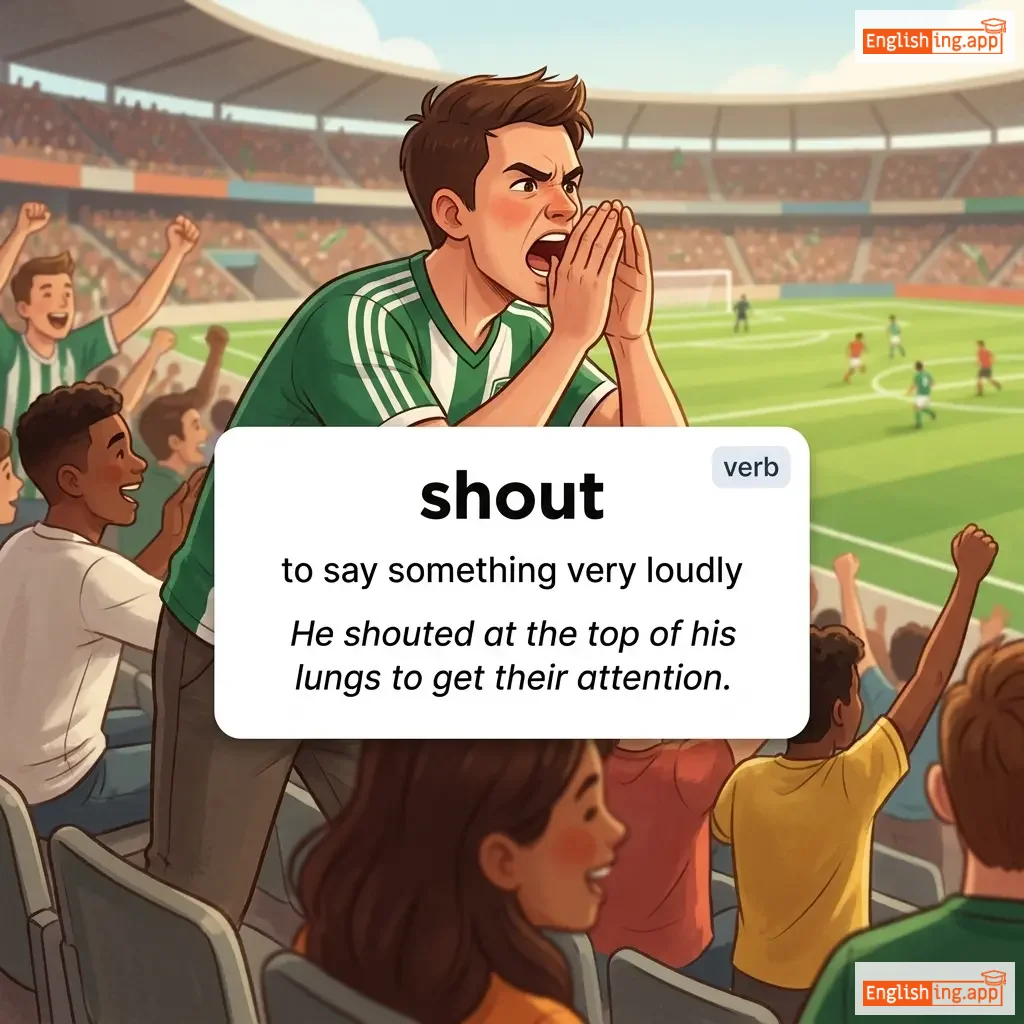
shout definition card — visual illustration of the meaning
verb
/ʃaʊt/
кричать (krichat')

to say something very loudly

"He shouted at the top of his lungs to get their attention."

"Он кричал изо всех сил, чтобы привлечь их внимание." (On krichal izo vsekh sil, chtoby privlech' ikh vnimanie.)
verb
/ʃʌv/
толкать (tolkat')

to push someone or something roughly

"He shoved the box into the corner."

"Он толкнул коробку в угол." (On tolkhnul korobku v ugol.)
noun
/ˈʃʌv.əl/
лопата (lopata)

a tool with a broad flat blade and long handle used for digging and moving earth, snow, or other materials

"He grabbed a shovel to clear the snow from the driveway."
"Он взял лопату, чтобы очистить снег с подъезда." (On vzyal lopatu, chtoby ochistit' sneg s pod'yezda.)
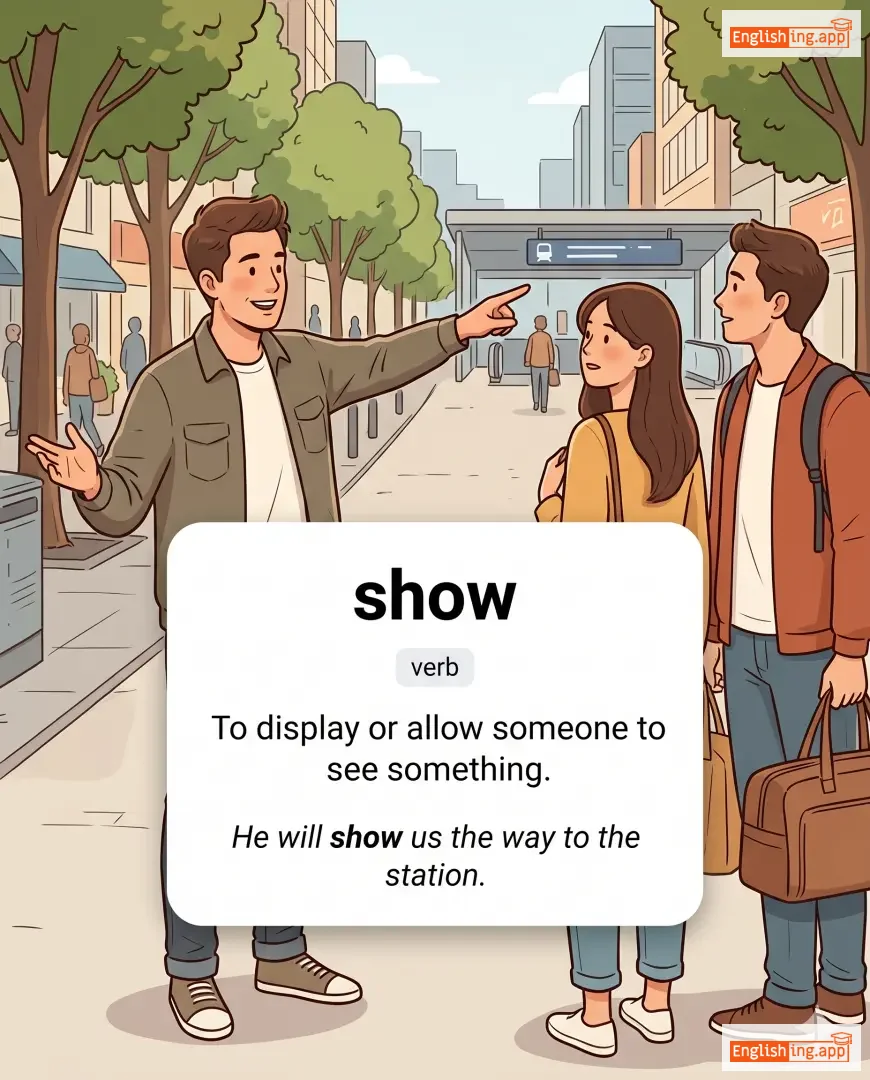
show definition card — visual illustration of the meaning
verb
/ʃoʊ/
показывать (pokazyvat)

To display or allow someone to see something.

"He will show us the way to the station."

"Он покажет нам дорогу к станции." (On pokazhet nam dorogu k stantsii.)
noun
/ˈsɛrəf/
серафим (serafim)

An angelic being associated with light and purity, often depicted as a high-ranking angel in Christian theology.

"The stained-glass window depicted a seraph with outstretched wings."

"Витраж изображал серафима с расправленными крыльями." (Vitrazh izobrazhal serafima s raspravlennymi kryl'yami.)
noun
/ˈʃaʊər/
душ; ливень (shauer)

a brief fall of rain or snow or a device for taking a bath or washing oneself

"After the workout, I took a quick shower to refresh myself."

"После тренировки я быстро принял душ, чтобы освежиться." (Posle trenirovki ya bystro prinyal dush, chtoby osvezhitsya.)
/ʃrɛd/
порвать (porvat)

to tear or cut something into small pieces

"She shredded the old documents before throwing them away."

"Она порвала старые документы, прежде чем выбросить их." (Ona porvala starye dokumenty, prezhde chem vybrosit' ikh.)
noun
/ʃraɪn/
святилище (svyatilishe)

A place regarded as holy, often associated with a saint or deity.

"Thousands of pilgrims visit the shrine each year."

"Тысячи паломников посещают святилище каждый год." (Tysyachi palomnikov poseshchayut svyatilishche kazhdyy god.)
verb
/ʃrʌɡ/
пожать плечами (pozhat plechami)

To raise and lower the shoulders to express uncertainty or indifference.

"He shrugged when asked about the missing file."

"Он пожал плечами, когда его спросили о потерянном файле." (On pozhat plechami, kogda ego sprosili o poteryannom fayle.)
shroud definition card — visual illustration of the meaning
verb
/ʃraʊd/
покрывать (pokryvat')

to cover or hide; to wrap in cloth

"The mountain peak was shrouded in mist."

"Вершина горы была скрыта в тумане." (Vershina gory byla skryta v tumane.)
verb
/ˈʃrɪvəl/
высыхать (vysykhat)

To become dry, wrinkled, and smaller due to lack of moisture.

"The flowers shriveled under the hot sun."

"Цветы высохли под палящим солнцем." (Tsvety vysokhli pod paliyashchim solntsem.)
noun
/ˈʃrɪŋkɪdʒ/
сжатие (szhatie)

The process of becoming smaller in size, amount, or value.

"The company reported a shrinkage in profits this quarter."
"Компания сообщила о сокращении прибыли в этом квартале." (Kompaniya soobshchila o sokrashchenii pribyli v etom kvartale.)
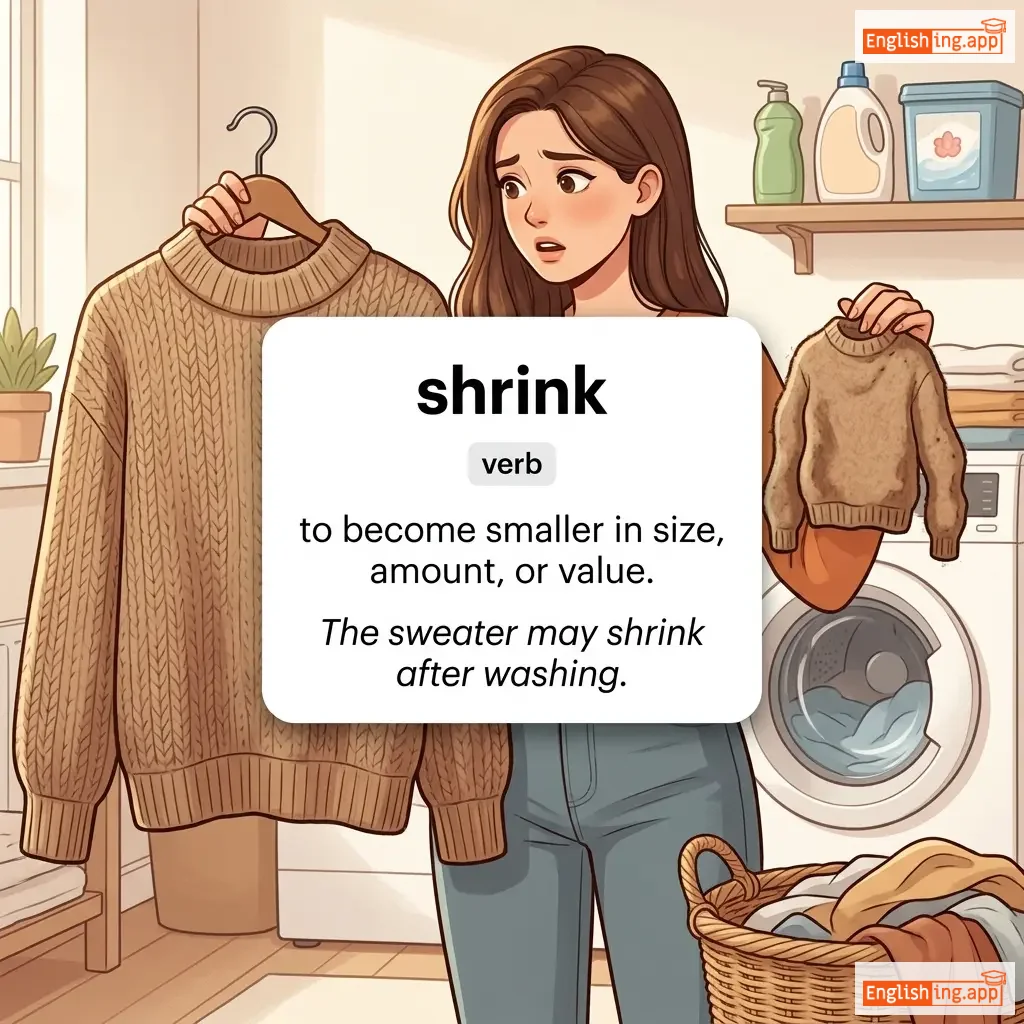
shrink definition card — visual illustration of the meaning
verb
/ʃrɪŋk/
счастье (schast'ye)

to become smaller in size, amount, or value.

"The sweater may shrink after washing."

"Она не могла скрыть своего счастья, когда получила награду." (Ona ne mogla skryt' svoego schast'ya, kogda poluchila nagradu.)
adjective
/ʃrɪl/
резкий звук (rezkiy zvuk)

High-pitched and piercing in sound.

"The shrill whistle startled everyone in the room."

"Резкий свист напугал всех в комнате." (Rezkiy svist napugal vsekh v komnate.)
adjective
/ʃruːd/
проницательный (pronicatel'nyy)

having sharp judgment and practical intelligence

"She made a shrewd investment in real estate."

"Она сделала проницательную инвестицию в недвижимость." (Ona sdelala pronitsatel'nuyu investitsiyu v nedvizhimost'.)
verb
/ʃriːk/
крик (krik)

to make a loud, high-pitched cry

"She shrieked when she saw the spider."

"Она закричала, когда увидела паука." (Ona zakrichala, kogda uvidela pauka.)