Vocabularios

Descubra, aprenda y domine el vocabulario en inglés

adjective
/ˈʃɔːrt ˌtempərd/
irritable; fácilmente enfadado (irritable; facilmente enfadado)

quick to lose one's temper; easily angered

"She became short-tempered when the traffic made her late for the meeting."

"Ella se volvió irritable cuando el tráfico la hizo llegar tarde a la reunión." (Ella se volvio irritable cuando el trafico la hizo llegar tarde a la reunion.)
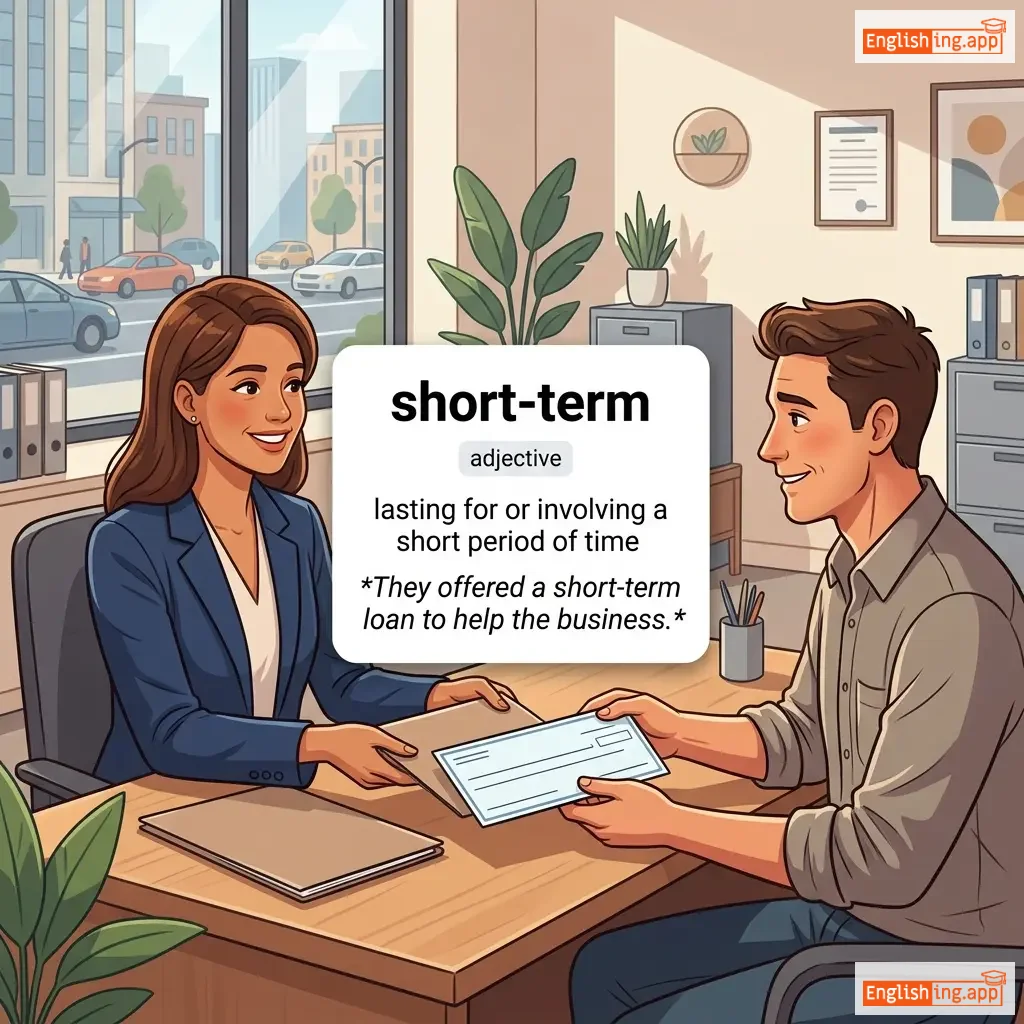
short-term definition card — visual illustration of the meaning
adjective
/ˈʃɔːrt tɜːrm/
a corto plazo (a corto plazo)

lasting for or involving a short period of time

"They offered a short-term loan to help the business."

"Ofrecieron un préstamo a corto plazo para ayudar al negocio." (Ofrecieron un préstamo a corto plazo para ayudar al negocio.)
noun
/ˈʃɔːrtɪdʒ/
escasez (escasez)

a state or situation in which something needed cannot be obtained in sufficient amounts

"There is a shortage of skilled workers in the industry."

"Hay escasez de trabajadores cualificados en la industria." (Hay escasez de trabajadores cualificados en la industria.)
noun
/ˈʃɔːrt.kʌm.ɪŋ/
deficiencia; falta; defecto (deficiencia; falta; defecto)

a fault or failure to meet a certain standard; a deficiency

"Despite his many talents, he has some shortcomings."

"A pesar de sus muchos talentos, tiene algunas deficiencias." (A pesar de sus muchos talentos, tiene algunas deficiencias.)
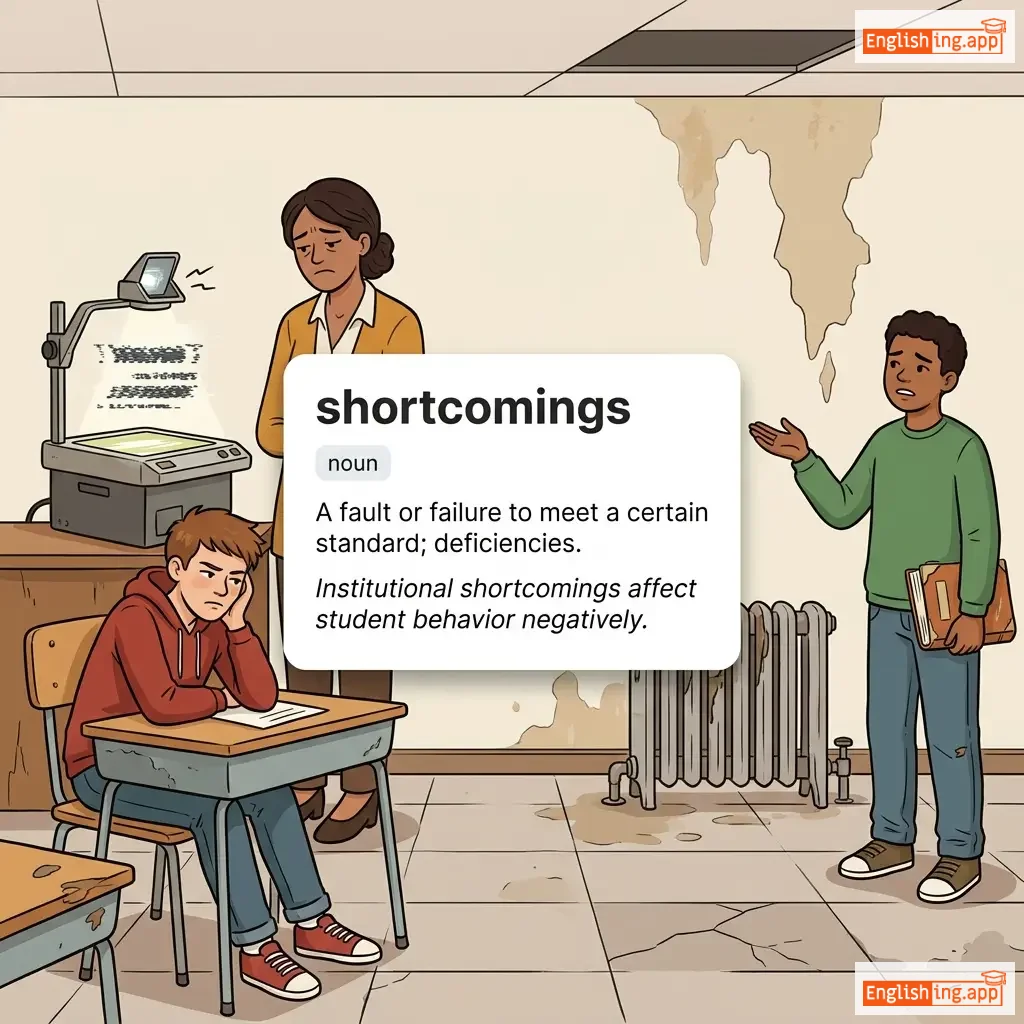
shortcomings definition card — visual illustration of the meaning
noun
ˈʃɔːtkʌmɪŋz
deficiencias (deficiencias)

A fault or failure to meet a certain standard; deficiencies.

"Institutional shortcomings affect student behavior negatively."

"Las deficiencias institucionales afectan negativamente el comportamiento de los estudiantes." (Las deficiencias institucionales afectan negativamente el comportamiento de los estudiantes.)
verb
/ˈʃɔːrtn/
acortar (acortar)

To make something shorter in length, duration, or extent

"She decided to shorten her speech to fit the time limit."

"Decidió acortar su discurso para ajustarse al límite de tiempo." (Decidio acortar su discurso para ajustarse al limite de tiempo.)
verb
/ʃʌk/
pelar (pelar)

To remove the outer covering, such as the husk of corn or shell of shellfish.

"She learned how to shuck oysters quickly."

"Ella aprendió a pelar ostras rápidamente." (Ella aprendió a pelar ostras rápidamente.)
adjective, adverb
/ˈsaɪdlɔːŋ/
mirada oblicua (mirada obliqua)

Directed to the side; indirect, furtive, or not straightforward.

"She gave him a sidelong glance across the room."

"Ella le lanzó una mirada oblicua a través de la habitación." (Ella le lanzo una mirada oblicua a traves de la habitacion.)
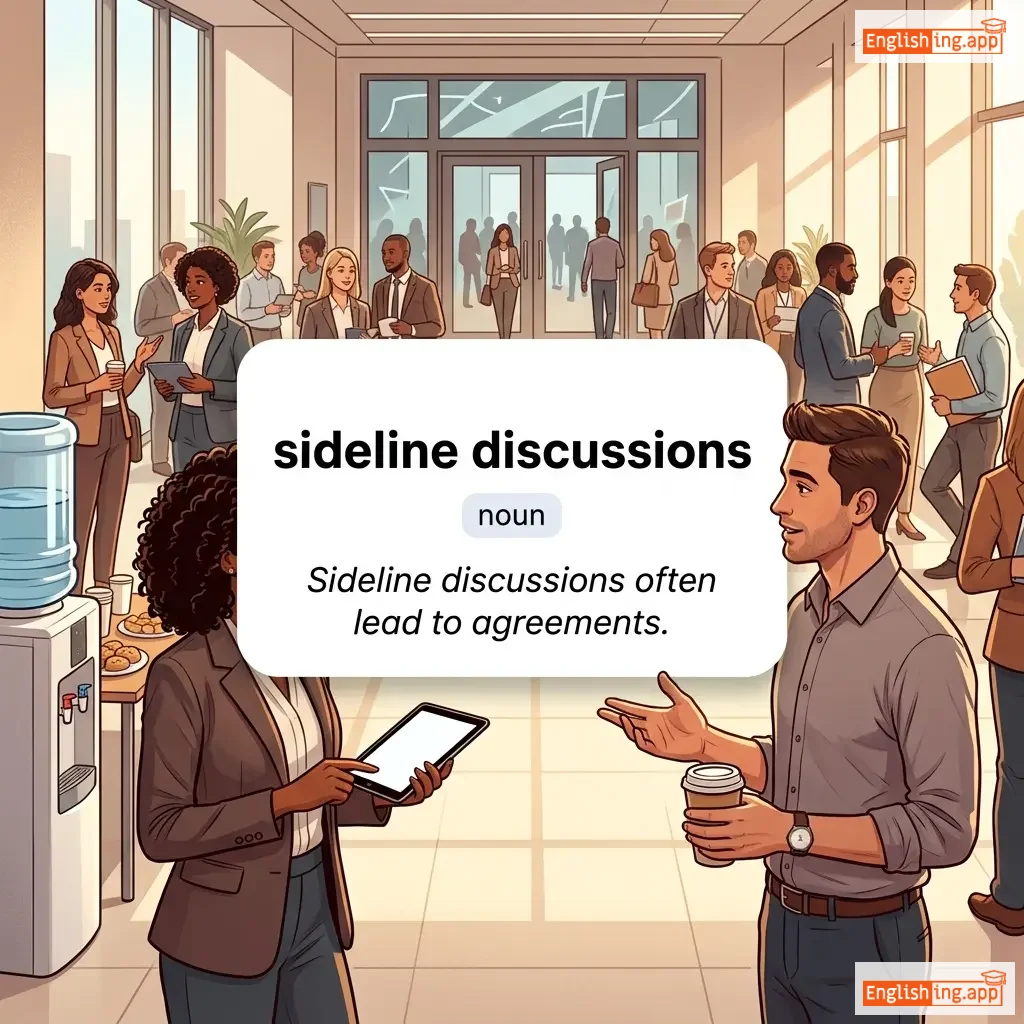
sideline discussions definition card — visual illustration of the meaning
noun
/ˈsaɪd.laɪn dɪˈskʌʃənz/
discusiones secundarias (discusiones secundarias)

Informal or secondary conversations that occur outside the main agenda of a formal meeting.

"Sideline discussions often lead to agreements."

"Las discusiones secundarias a menudo conducen a acuerdos." (Las discusiones secundarias a menudo conducen a acuerdos.)
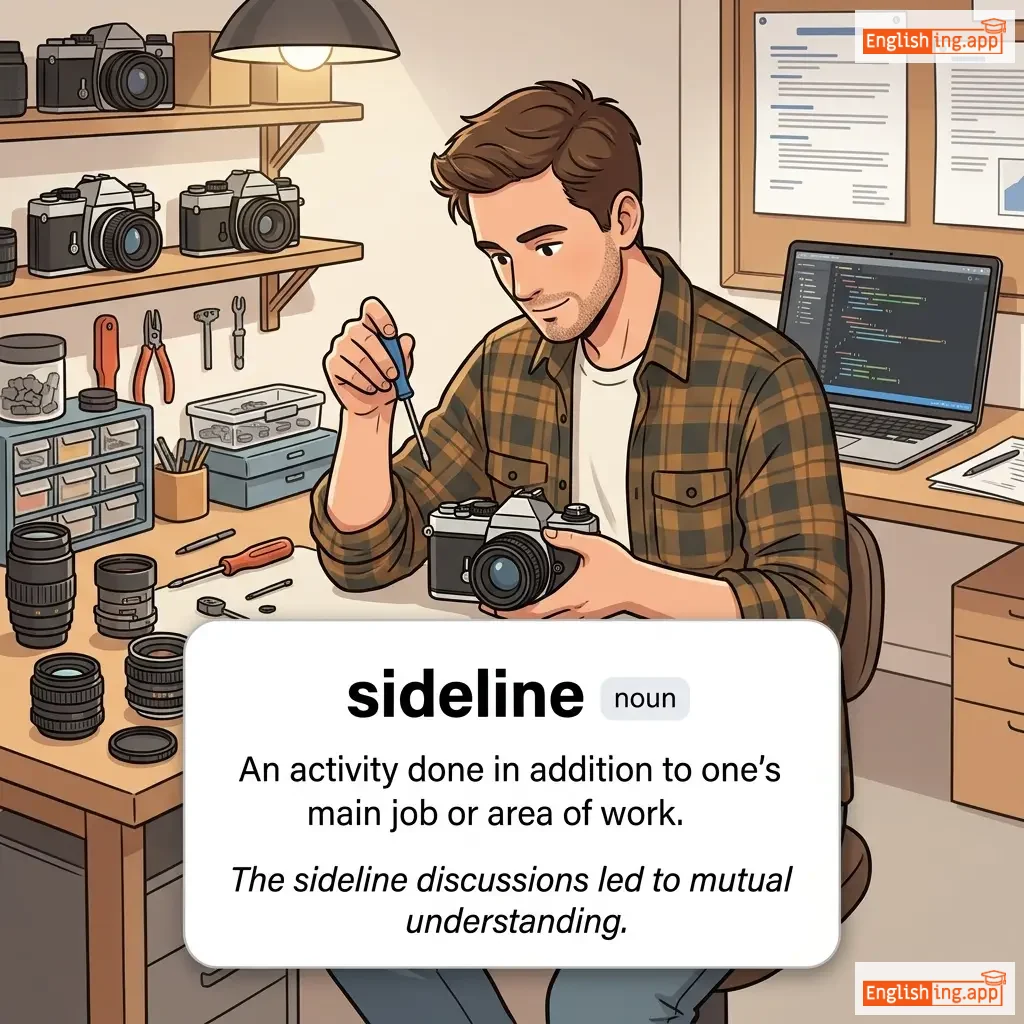
sideline definition card — visual illustration of the meaning
noun
/ˈsaɪd.laɪn/
actividad secundaria (actividad secundaria)

An activity done in addition to one's main job or area of work.

"The sideline discussions led to mutual understanding."

"Las discusiones secundarias llevaron a una comprensión mutua." (Las discusiones secundarias llevaron a una comprensión mutua.)
noun
/saɪd/
lado (lado)

a position to the left or right of something

"The store is on the side of the road."

"La tienda está en el lado de la carretera." (La tienda esta en el lado de la carretera.)
noun
/ˈsɪk.nəs/
enfermedad; dolencia (enfermedad; dolencia)

the state of being ill; a disease or illness

"She took time off work due to sickness."

"Ella tomó tiempo libre del trabajo debido a la enfermedad." (Ella tomó tiempo libre del trabajo debido a la enfermedad.)
adjective
/ˈsɪk.li/
débil; enfermizo; pálido (debil)

weak and unhealthy; prone to illness; appearing weak or pale

"The sickly child needed extra care and attention."

"El niño enfermizo necesitaba atención y cuidados especiales." (El nino enfermizo necesitaba atencion y cuidados especiales)
noun
/ˈsɪk.əl/
hoz (hoz)

a tool with a curved metal blade and short handle used for cutting grain crops

"The farmer harvested wheat using a traditional sickle."

"El agricultor cosechó trigo usando una hoz tradicional." (El agricultor cosechó trigo usando una hoz tradicional.)
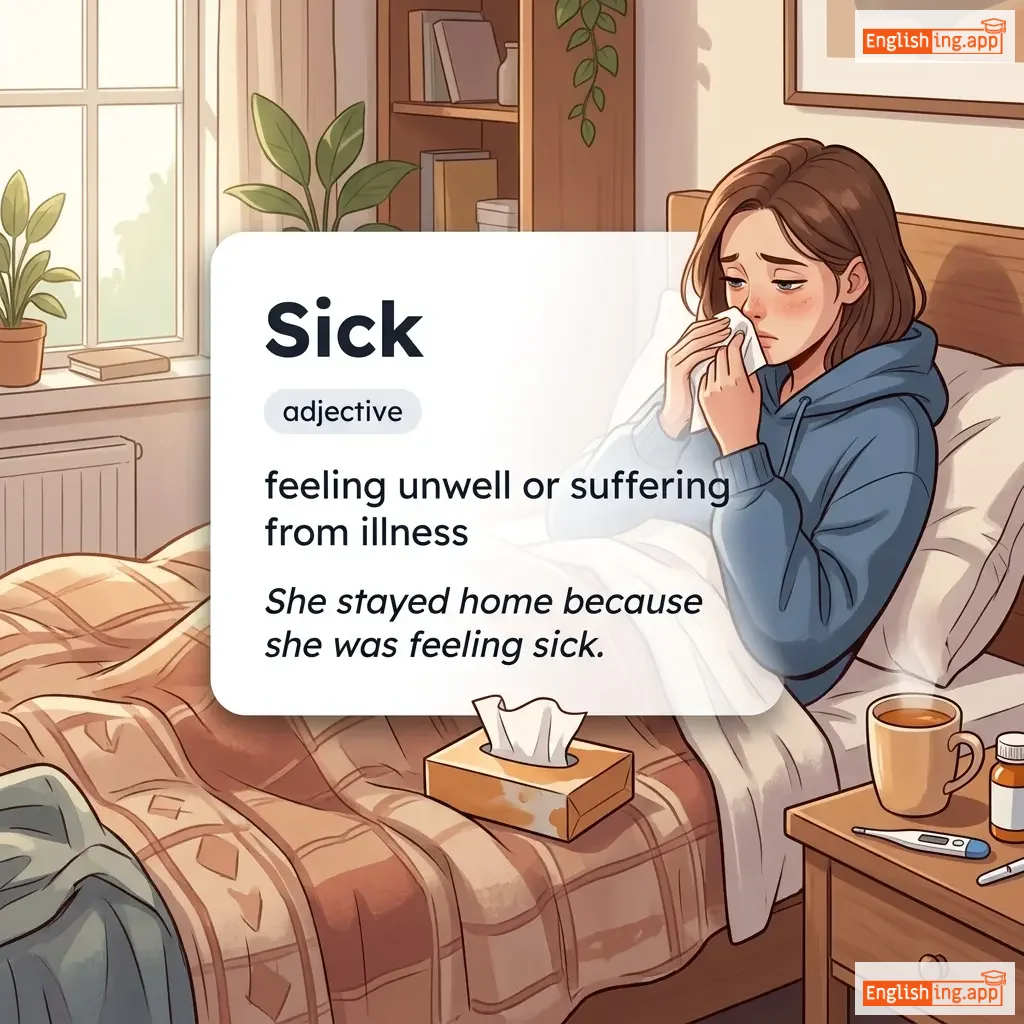
Sick definition card — visual illustration of the meaning
adjective
/sɪk/
enfermo (enfermo)

feeling unwell or suffering from illness

"She stayed home because she was feeling sick."

"Ella se quedó en casa porque se sentía enferma." (Eya se kedo en kasa porque se sentia enferma)
adjective
/ˈsɪbɪlaɪn/
sibila (sibila)

Prophetic, mysterious, or cryptic in meaning.

"The old woman gave a sibylline warning about the future."

"La anciana dio una advertencia sibila sobre el futuro." (La anciana dio una advertencia sibila sobre el futuro.)
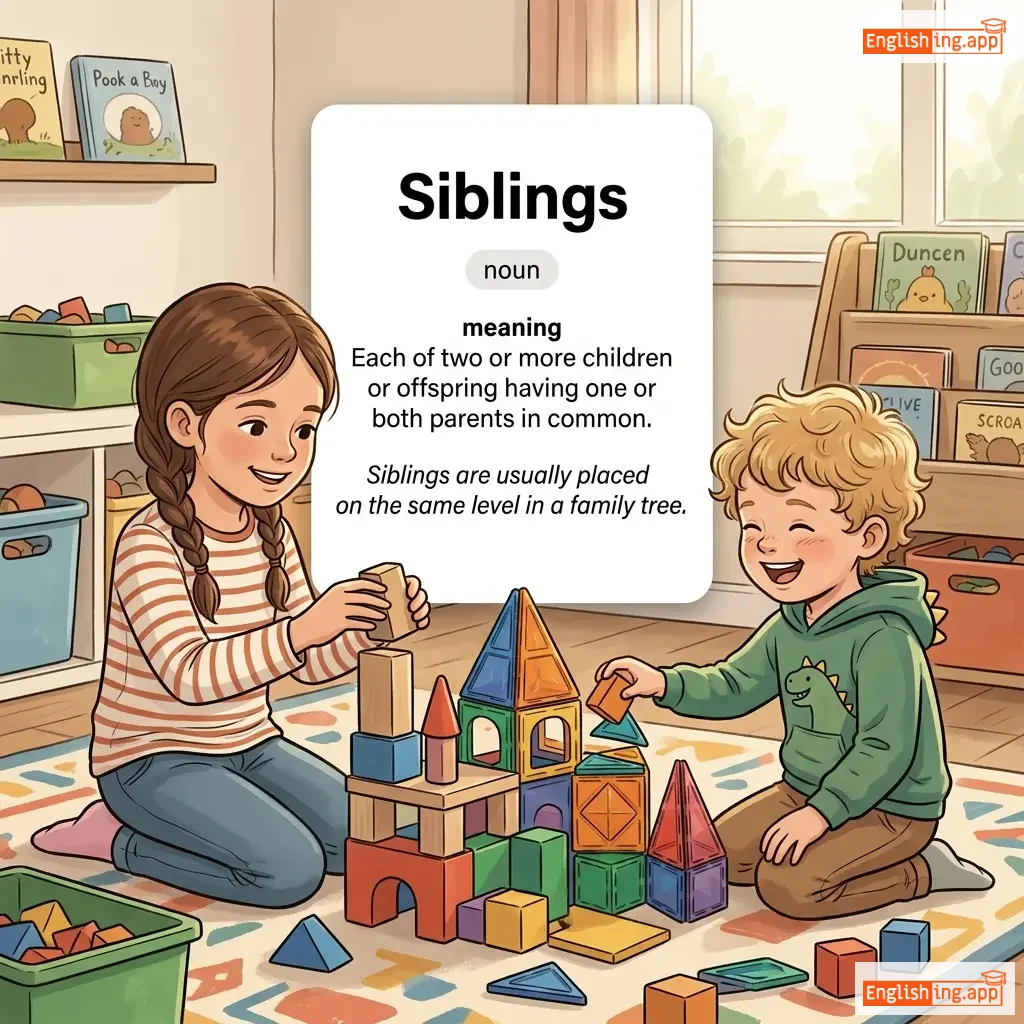
Siblings definition card — visual illustration of the meaning
noun
ˈsɪblɪŋz
hermanos (hermanos)

Each of two or more children or offspring having one or both parents in common.

"Siblings are usually placed on the same level in a family tree."

"Los hermanos generalmente están en el mismo nivel en el árbol genealógico de la familia." (Los hermanos generalmente estan en el mismo nivel en el arbol genealogico de la familia.)
noun
/ˈsɪblɪŋ/
hermano/a (hermano/a)

A brother or sister.

"She has three siblings, two brothers and one sister."

"Ella tiene tres hermanos, dos hermanos y una hermana." (Ella tiene tres hermanos, dos hermanos y una hermana.)
verb
/ˈsɪbəleɪt/
pronunciar con silbido (pronunciar con silbido)

To pronounce with a hissing sound.

"The actor sibilated his lines for dramatic effect."

"El actor pronunció sus líneas con un silbido para un efecto dramático." (El actor pronuncio sus lineas con un silbido para un efecto dramatico.)
adjective
/ˈsɪbɪlənt/
con sonido sibilante (con sonido sibilante)

Making or characterized by a hissing sound.

"The word 'snake' starts with a sibilant sound."

"La palabra 'snake' comienza con un sonido sibilante." (La palabra 'snake' comienza con un sonido sibilante.)
noun
/ˈsɪbɪləns/
sonido susurrante (sonido susurrante)

A hissing or hushing sound, especially in speech with 's' or 'sh'.

"The poet used sibilance to create a soft, hissing effect in the verse."

"El poeta usó la sibilancia para crear un efecto suave de siseo en el verso." (El poeta uso la sibilancia para crear un efecto suave de siseo en el verso.)
noun
/ˈʃaɪstər/
estafador (estafador)

a person, especially a lawyer, who uses unscrupulous or dishonest methods

"The businessman was exposed as a shyster who cheated clients."

"El hombre de negocios fue expuesto como un estafador que engañaba a los clientes." (El hombre de negocios fue expuesto como un estafador que engañaba a los clientes.)
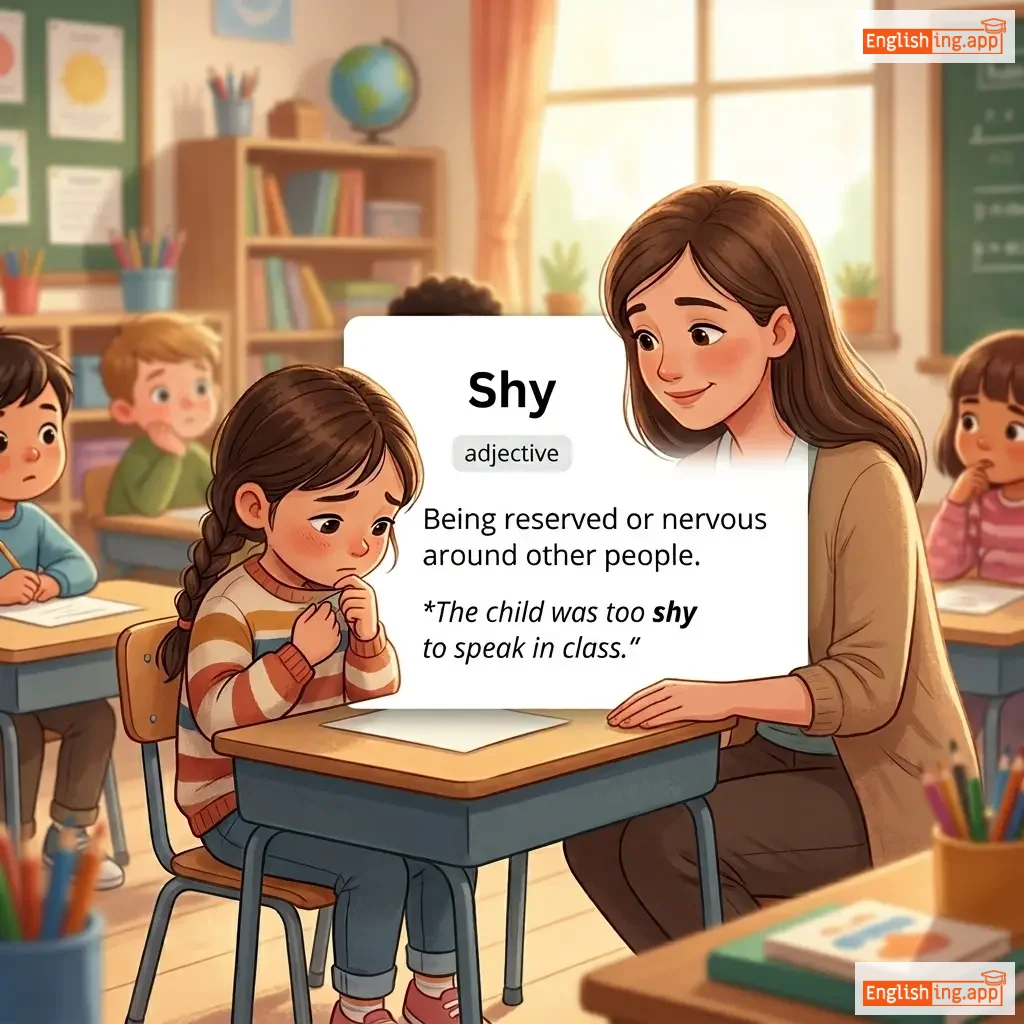
Shy definition card — visual illustration of the meaning
adjective
/ʃaɪ/
tímido (timido)

Being reserved or nervous around other people.

"The child was too shy to speak in class."

"El niño era demasiado tímido para hablar en clase." (El niño era demasiado tímido para hablar en clase.)
noun
/ˈʃʌtəl/
vehículo que viaja regularmente entre dos lugares (vehiculo que viaja regularmente entre dos lugares)

a vehicle or craft that travels regularly between two places.

"The airport shuttle runs every 30 minutes."

"El servicio de transporte del aeropuerto circula cada 30 minutos." (El servicio de transporte del aeropuerto circula cada 30 minutos.)
verb
/ʃʌt/
cerrar (cerrar)

to close something, especially a door or window

"Please shut the door before you leave."

"Por favor, cierra la puerta antes de irte." (Por favor, cierra la puerta antes de irte.)
verb
/ʃʌnt/
desviar (desviar)

to move or turn aside; to push or divert from one track to another

"The train was shunted onto a different track."

"El tren fue desviado a otra vía." (El tren fue desviado a otra via.)
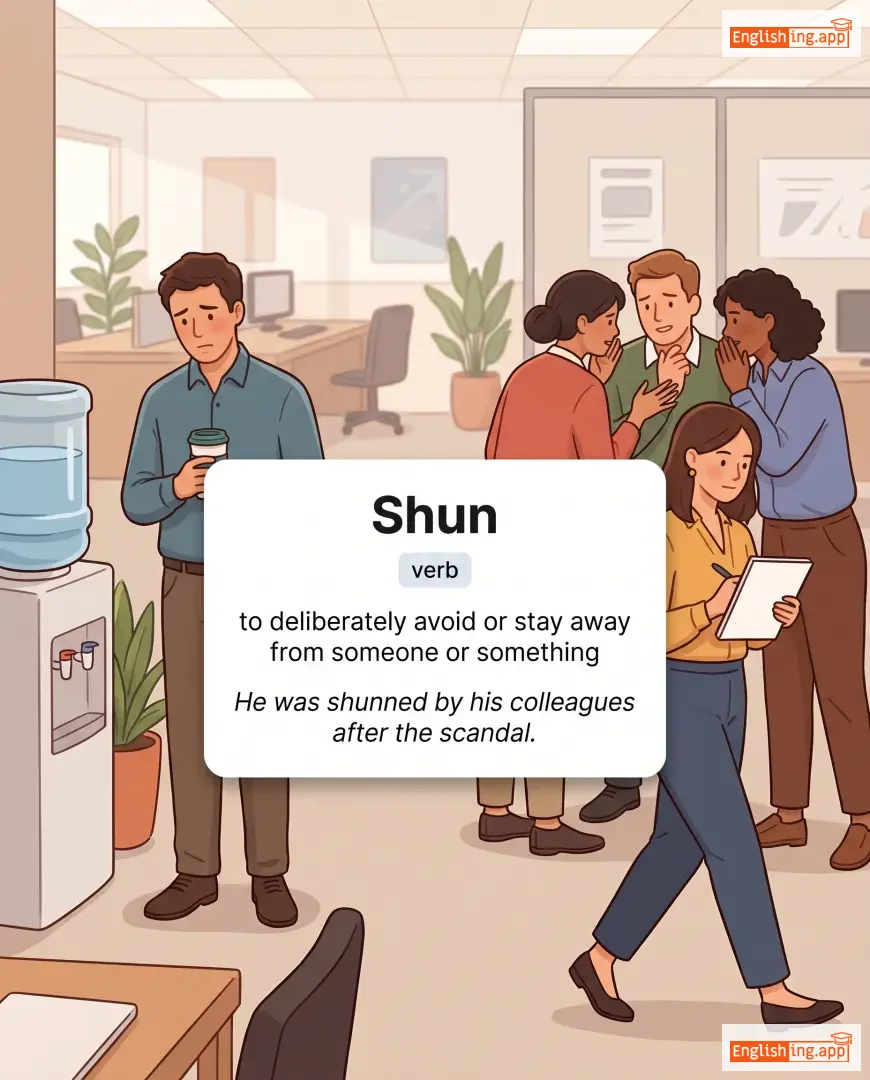
Shun definition card — visual illustration of the meaning
verb
/ʃʌn/
rechazar (rechazar)

to deliberately avoid or stay away from someone or something

"He was shunned by his colleagues after the scandal."

"Fue rechazado por sus colegas después del escándalo." (Fue rechazado por sus colegas después del escándalo.)
verb
/ˈʃʌfəl/
caminar arrastrando los pies / mezclar (caminar arrastrando los pies / mezclar)

to walk by dragging one's feet along or without lifting them fully; to mix or rearrange

"He shuffled the cards before dealing them."

"Él barajó las cartas antes de repartirlas." (El barajó las cartas antes de repartirlas.)
verb
/ˈʃʌdər/
temblar (temblar)

to tremble or shake suddenly, often due to fear, cold, or strong emotion

"She shuddered at the thought of walking alone in the dark forest."

"Ella se estremeció al pensar en caminar sola en el oscuro bosque." (Ella se estremeció al pensar en caminar sola en el oscuro bosque.)
noun
/ʃruː/
mujer irritable / animal parecido a un ratón (mujer irritable / animal parecido a un raton)

a small mouse-like animal; also a woman with a bad temper

"The play describes a strong-willed woman as a shrew."

"La obra describe a una mujer de voluntad fuerte como una mujer irritable." (La obra describe a una mujer de voluntad fuerte como una mujer irritable.)
noun
/ʃɔːrts/
pantalones cortos (pantalones cortos)

a short garment worn on the lower half of the body that covers each leg separately, usually above the knees.

"He wore a pair of blue shorts to the beach."

"Él usó un par de pantalones cortos azules en la playa." (Él usó un par de pantalones cortos azules en la playa.)
noun, verb
/ʃɒt/
tiro (tiro)

a single attempt to hit something, usually with a weapon or a ball

"He took a shot at the goal."

"Él tomó un tiro hacia la portería." (Él tomó un tiro hacia la portería.)
modal verb
/ʃʊd/
debería (deberia)

used to indicate obligation or duty

"You should study for your exams."

"Deberías estudiar para tus exámenes." (Deberias estudiar para tus examenes.)
noun
/ˈʃoʊldər/
hombro (hombro)

the upper joint of the human arm and the part of the body to which it is attached

"He hurt his shoulder while lifting weights."

"Se lastimó el hombro mientras levantaba pesas." (Se lastimo el hombro mientras levantaba pesas.)
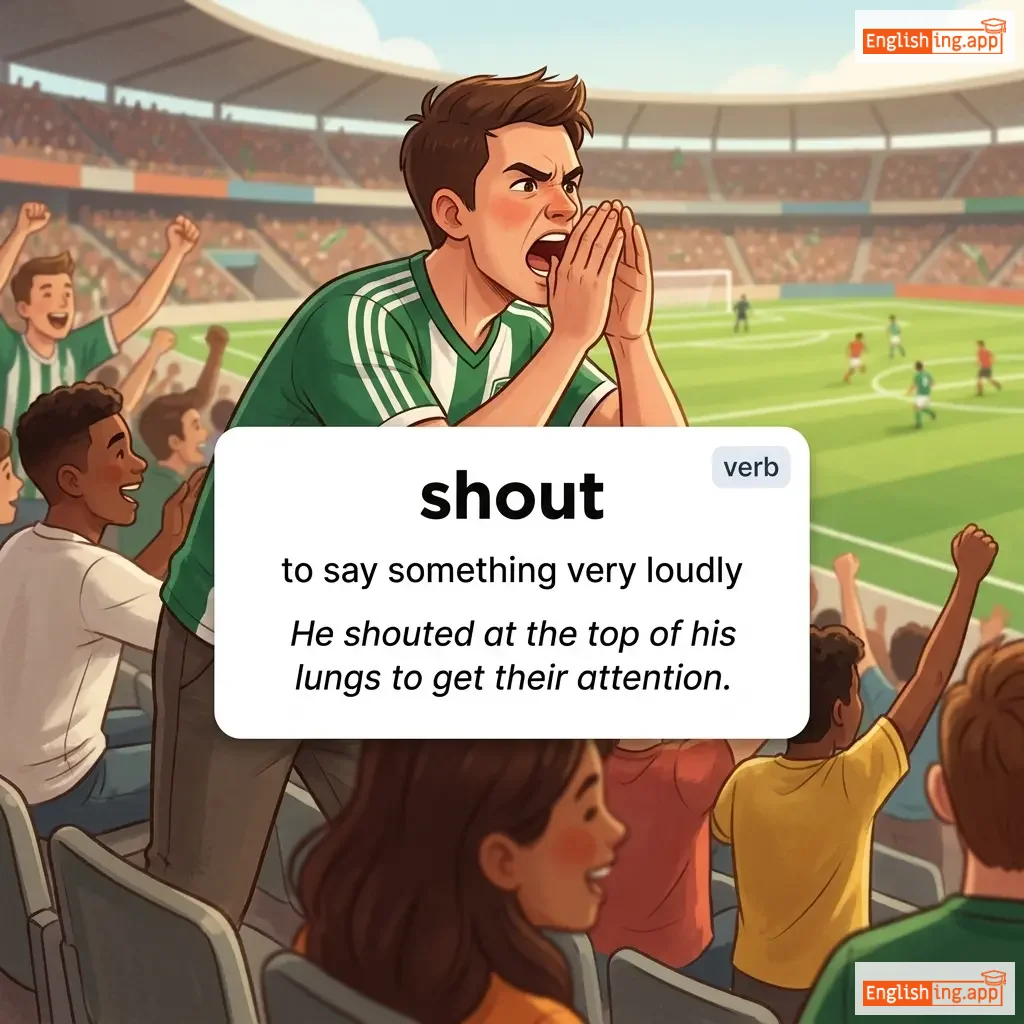
shout definition card — visual illustration of the meaning
verb
/ʃaʊt/
gritar (gritar)

to say something very loudly

"He shouted at the top of his lungs to get their attention."

"Él gritó tan fuerte como pudo para captar su atención." (El grito tan fuerte como pudo para captar su atencion.)
verb
/ʃʌv/
empujar (empujar)

to push someone or something roughly

"He shoved the box into the corner."

"Él empujó la caja hacia la esquina." (Él empujó la caja hacia la esquina.)
noun
/ˈʃʌv.əl/
pala (pala)

a tool with a broad flat blade and long handle used for digging and moving earth, snow, or other materials

"He grabbed a shovel to clear the snow from the driveway."

"Él agarró una pala para limpiar la nieve del camino de entrada." (El agarro una pala para limpiar la nieve del camino de entrada.)
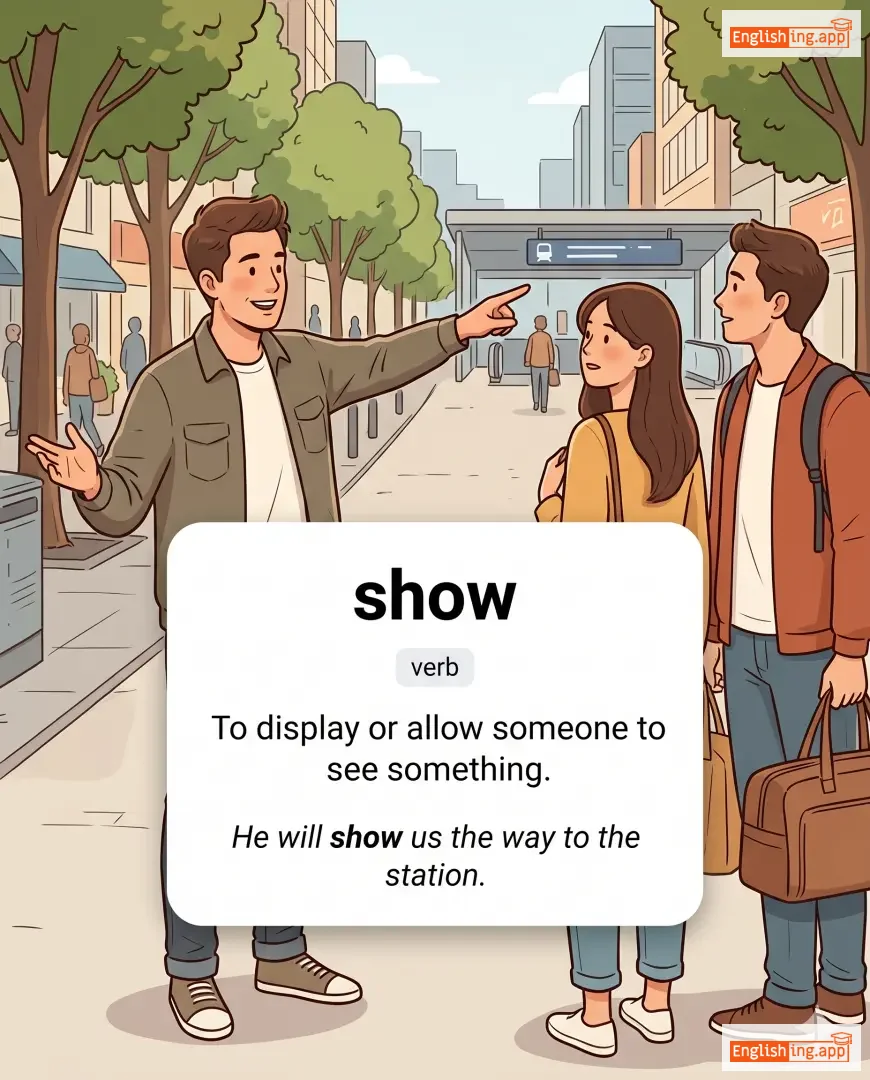
show definition card — visual illustration of the meaning
verb
/ʃoʊ/
mostrar (mostrar)

To display or allow someone to see something.

"He will show us the way to the station."

"Él nos mostrará el camino a la estación." (El nos mostrara el camino a la estacion.)
noun
/ˈsɛrəf/
serafín (serafin)

An angelic being associated with light and purity, often depicted as a high-ranking angel in Christian theology.

"The stained-glass window depicted a seraph with outstretched wings."

"La ventana de vitrales representaba un serafín con alas extendidas." (La ventana de vitrales representaba un serafin con alas extendidas.)
noun
/ˈʃaʊər/
ducha (shower)

a brief fall of rain or snow or a device for taking a bath or washing oneself

"After the workout, I took a quick shower to refresh myself."

"Despues del entrenamiento, me di una ducha rapida para refrescarme." (Despues del entrenamiento, me di una ducha rapida para refrescarme.)
/ʃrɛd/
triturar (triturar)

to tear or cut something into small pieces

"She shredded the old documents before throwing them away."

"Ella trituró los viejos documentos antes de tirarlos." (Ella trituró los viejos documentos antes de tirarlos.)
noun
/ʃraɪn/
santuario (santuario)

A place regarded as holy, often associated with a saint or deity.

"Thousands of pilgrims visit the shrine each year."

"Miles de peregrinos visitan el santuario cada año." (Miles de peregrinos visitan el santuario cada año.)
verb
/ʃrʌɡ/
encogerse de hombros (encogerse de hombros)

To raise and lower the shoulders to express uncertainty or indifference.

"He shrugged when asked about the missing file."

"Él se encogió de hombros cuando le preguntaron sobre el archivo perdido." (Él se encogió de hombros cuando le preguntaron sobre el archivo perdido.)
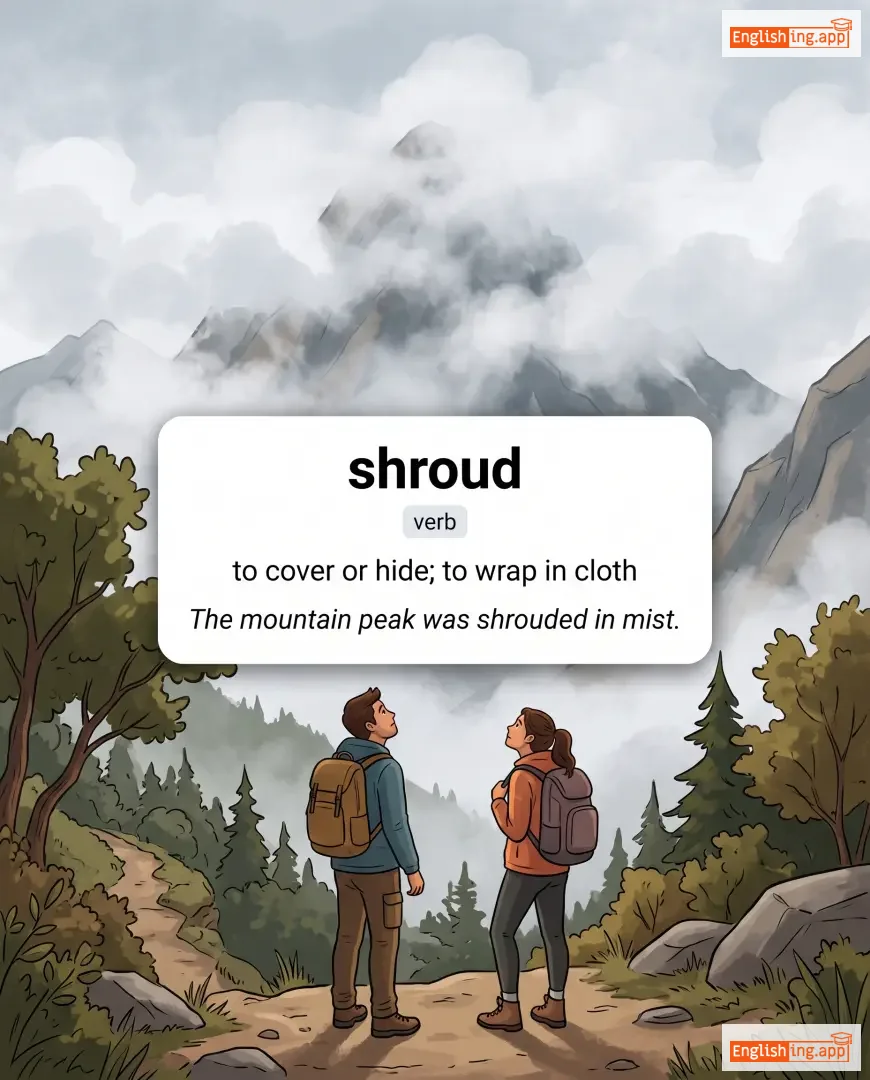
shroud definition card — visual illustration of the meaning
verb
/ʃraʊd/
envolver (envolver)

to cover or hide; to wrap in cloth

"The mountain peak was shrouded in mist."

"La cima de la montaña estaba envuelta en niebla." (La cima de la montaña estaba envuelta en niebla.)
verb
/ˈʃrɪvəl/
arrugar (arrugar)

To become dry, wrinkled, and smaller due to lack of moisture.

"The flowers shriveled under the hot sun."

"Las flores se arrugaron bajo el sol caliente." (Las flores se arrugaron bajo el sol caliente.)
noun
/ˈʃrɪŋkɪdʒ/
encogimiento (encogimiento)

The process of becoming smaller in size, amount, or value.

"The company reported a shrinkage in profits this quarter."

"La empresa reportó un encogimiento en las ganancias de este trimestre." (La empresa reporto un encogimiento en las ganancias de este trimestre.)
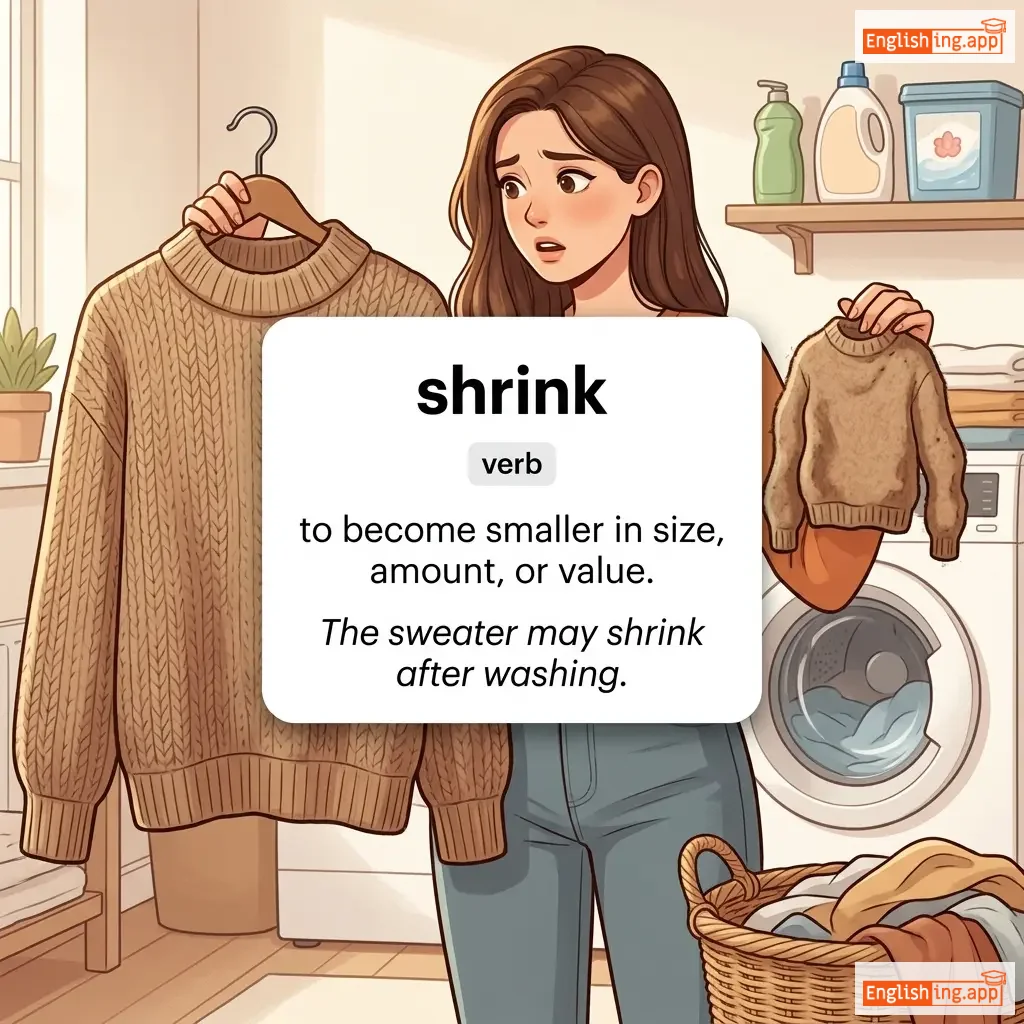
shrink definition card — visual illustration of the meaning
verb
/ʃrɪŋk/
felicidad (felicidad)

to become smaller in size, amount, or value.

"The sweater may shrink after washing."

"No pudo ocultar su felicidad cuando recibió el premio." (No pudo ocultar su felicidad cuando recibió el premio.)
adjective
/ʃrɪl/
sonido agudo (sonido agudo)

High-pitched and piercing in sound.

"The shrill whistle startled everyone in the room."

"El silbido agudo sorprendió a todos en la sala." (El silbido agudo sorprendió a todos en la sala.)
adjective
/ʃruːd/
astuto (astuto)

having sharp judgment and practical intelligence

"She made a shrewd investment in real estate."

"Ella hizo una astuta inversión en bienes raíces." (Ella hizo una astuta inversion en bienes raices.)
verb
/ʃriːk/
gritar (gritar)

to make a loud, high-pitched cry

"She shrieked when she saw the spider."

"Ella gritó cuando vio la araña." (Ella gritó cuando vio la araña.)