Словари

Словарь английского языка | Значения слов, определения и примеры

noun
/ˈspiːʃiːz/
вид (vid)

a group of living organisms consisting of similar individuals capable of exchanging genes or interbreeding

"The panda is an endangered species."

"Панда — это вымирающий вид." (Panda — eto vymirayushchiy vid.)
specific definition card — visual illustration of the meaning
adjective
/spəˈsɪfɪk/
специфический (spetsificheskiy)

clearly defined or identified

"She gave specific instructions for the project."

"Она дала специфические инструкции для проекта." (Ona dala spetsificheskiye instruktsii dlya proyekta.)
adverb
/spəˈsɪfɪkli/
специально (spetsial'no)

in a clear and exact way

"He was specifically asked to handle the finances."

"Его специально попросили заняться финансами." (Ego spetsial'no poprosili zanyatsya finansami.)
noun
/ˌspɛsɪfɪˈkeɪʃən/
спецификация (specifikatsiya)

a detailed description or assessment of something

"The product specification includes all the necessary details."

"Спецификация продукта включает все необходимые детали." (Spektsifikatsiya produkta vklyuchayet vse neobkhodimye detali.)
verb
/ˈspɛsɪfaɪ/
указать (ukazat)

to state or describe something clearly and exactly

"Please specify the time and place of the meeting."

"Пожалуйста, укажите время и место встречи." (Pozhaluysta, ukazhite vremya i mesto vstrechi.)
noun
/ˈspɛsəmən/
образец (obrazets)

an individual animal, plant, piece of a mineral, etc., used as an example of its species or type for scientific study

"The museum has a rare butterfly specimen."
"В музее есть редкий образец бабочки." (V muzeie yest' redkiy obrazets babochki.)
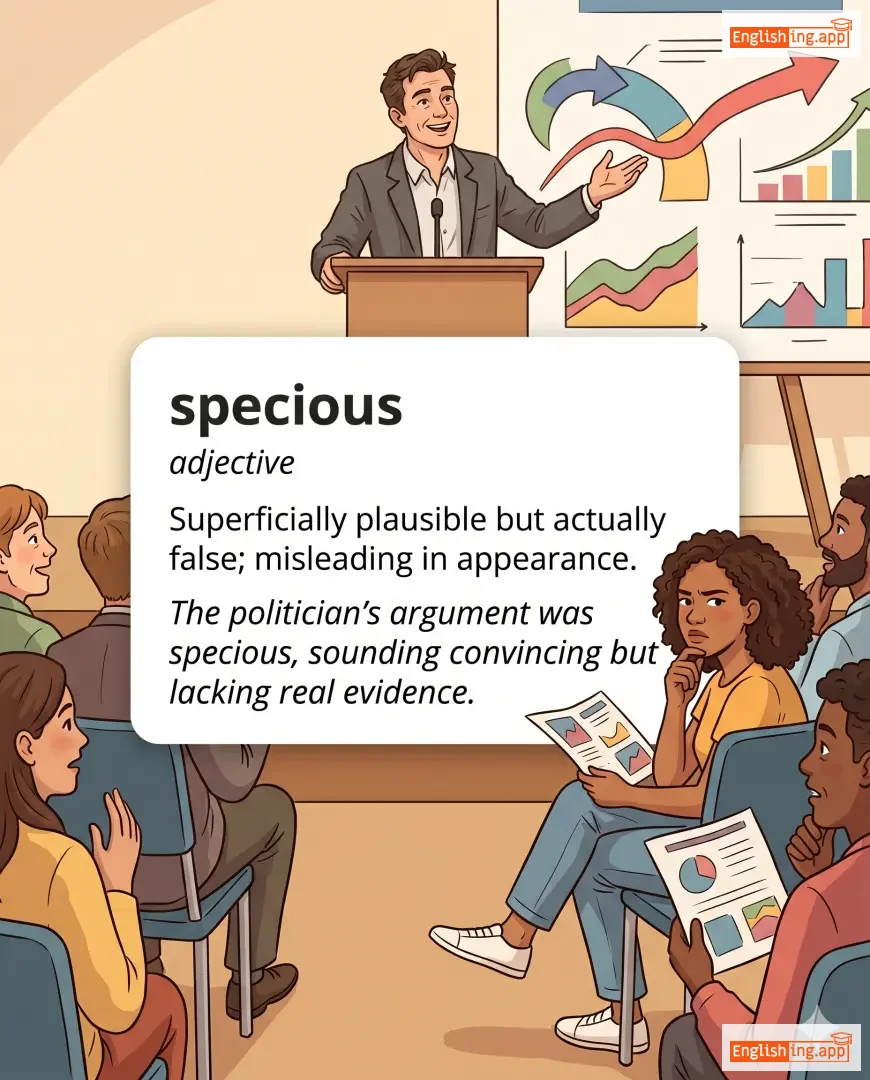
specious definition card — visual illustration of the meaning
adjective
/ˈspiːʃəs/
обманчивый (obmanchivyy)

Superficially plausible but actually false; misleading in appearance.

"The politician’s argument was specious, sounding convincing but lacking real evidence."

"Аргумент политика был обманчивым, он звучал убедительно, но не имел реальных доказательств." (Argument politika byl obmanchivym, on zvuchal ubeditel'no, no ne imel real'nykh dokazatel'stv.)
noun
/spɛk/
пятно (pyatno)

A very small spot, mark, or particle.

"There was a tiny speck of dust on the glass table."
"На стеклянном столе была маленькая пылинка." (Na steklyannom stole byla malen'kaya pylinka.)
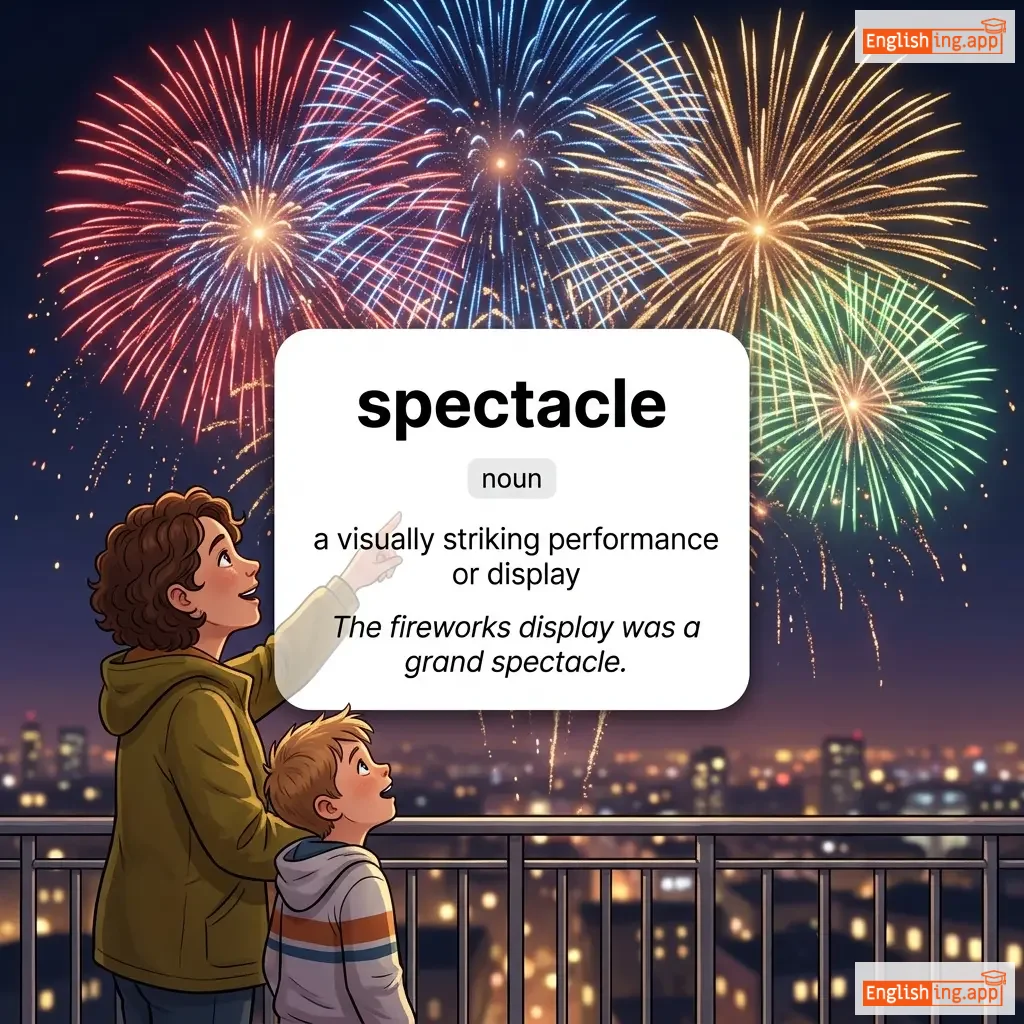
spectacle definition card — visual illustration of the meaning
noun
/ˈspɛktəkəl/
визуальное шоу (vizual'noye shou)

a visually striking performance or display

"The fireworks display was a grand spectacle."
"Фейерверк был грандиозным зрелищем." (Feyerverk byl grandioznym zrelishchem.)
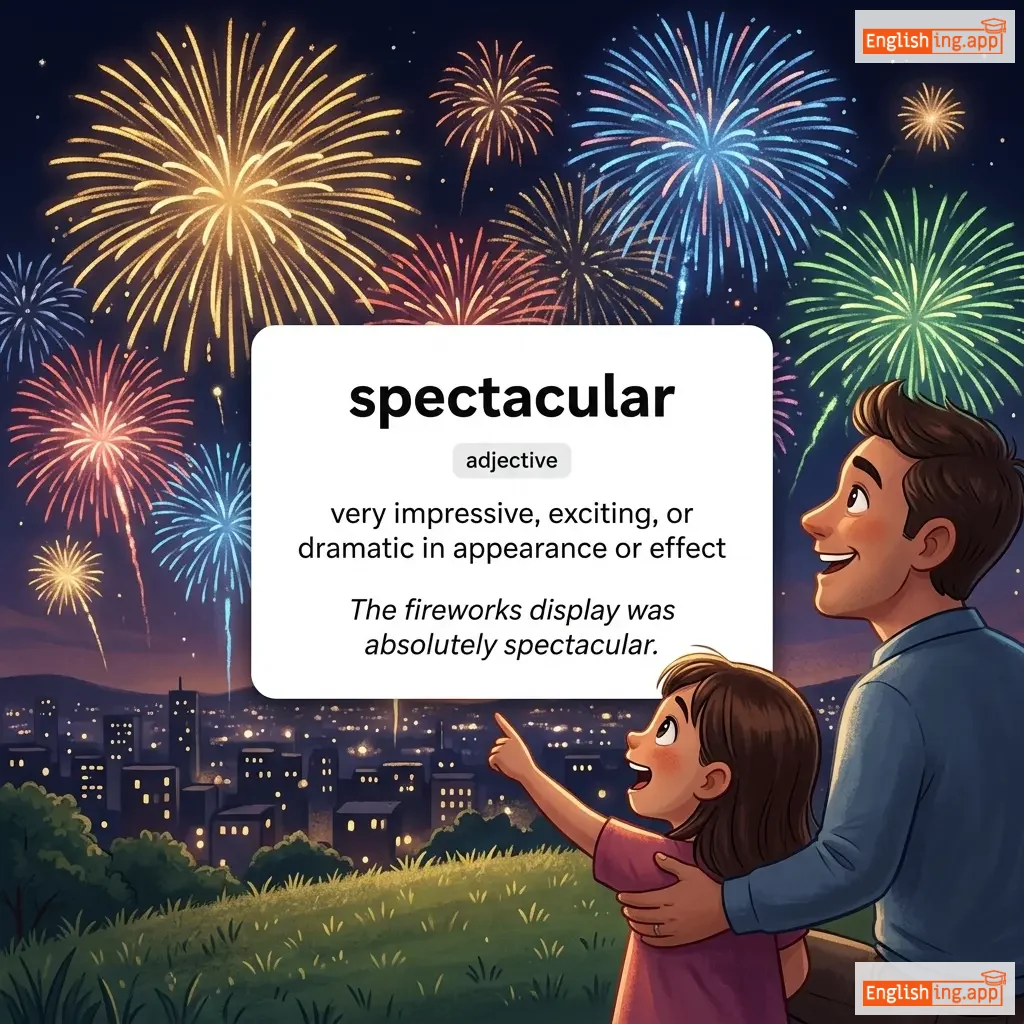
spectacular definition card — visual illustration of the meaning
adjective
/spɛkˈtækjələr/
зрелищный (zrelishnyy)

very impressive, exciting, or dramatic in appearance or effect

"The fireworks display was absolutely spectacular."

"Шоу фейерверков было абсолютно зрелищным." (Sho fireverkov bylo absolutno zrelishnym.)
noun
/ˈspɛkteɪtər/
зритель (zritel)

A person who watches an event, show, or game without taking part.

"Thousands of spectators gathered to watch the football match."

"Тысячи зрителей собрались, чтобы посмотреть футбольный матч." (Tysyachi zriteley sobralis', chtoby posmotret' futbol'nyy match.)
noun
/ˈspɛktər/
призрак (prizrak)

A ghost or spirit; something that causes fear or dread.

"The specter of war still haunts the region."

"Призрак войны все еще преследует регион." (Prizrak voyny vse yeshcho presleduyet region.)
adjective
/ˈspɛktrəl/
призрачный (prizratchny)

Relating to a ghost or specter; ghostly. Also relating to a spectrum.

"The old mansion had a spectral atmosphere at night."
"Старый особняк имел призрачную атмосферу ночью." (Staryy osobjnak imel prizrachnuyu atmosferu noch'yu.)
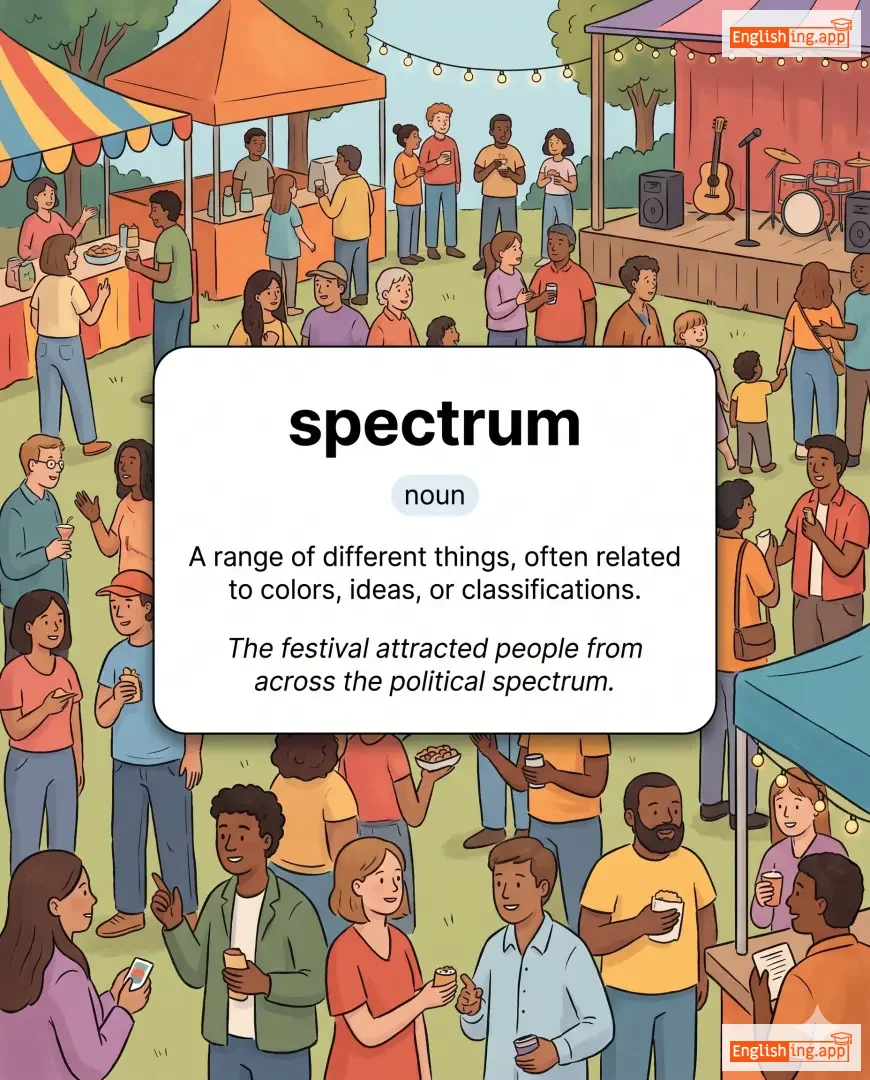
spectrum definition card — visual illustration of the meaning
noun
/ˈspɛktrəm/
спектр (spektar)

A range of different things, often related to colors, ideas, or classifications.

"The festival attracted people from across the political spectrum."

"Фестиваль привлек людей со всего политического спектра." (Festival prilyek lyudey so vsego politicheskogo spektra.)
verb
/ˈspɛkjʊˌleɪt/
спекулировать / инвестировать (spekulirovat' / investirovat')

To form a theory or guess without firm evidence; to invest in stocks, property, etc. hoping for profit.

"Experts speculate that the company may expand into new markets."
"Эксперты спекулируют, что компания может расшириться на новые рынки." (Eksperty spekulyruyut, chto kompaniya mozhet rasshirit'sya na novye rynki.)
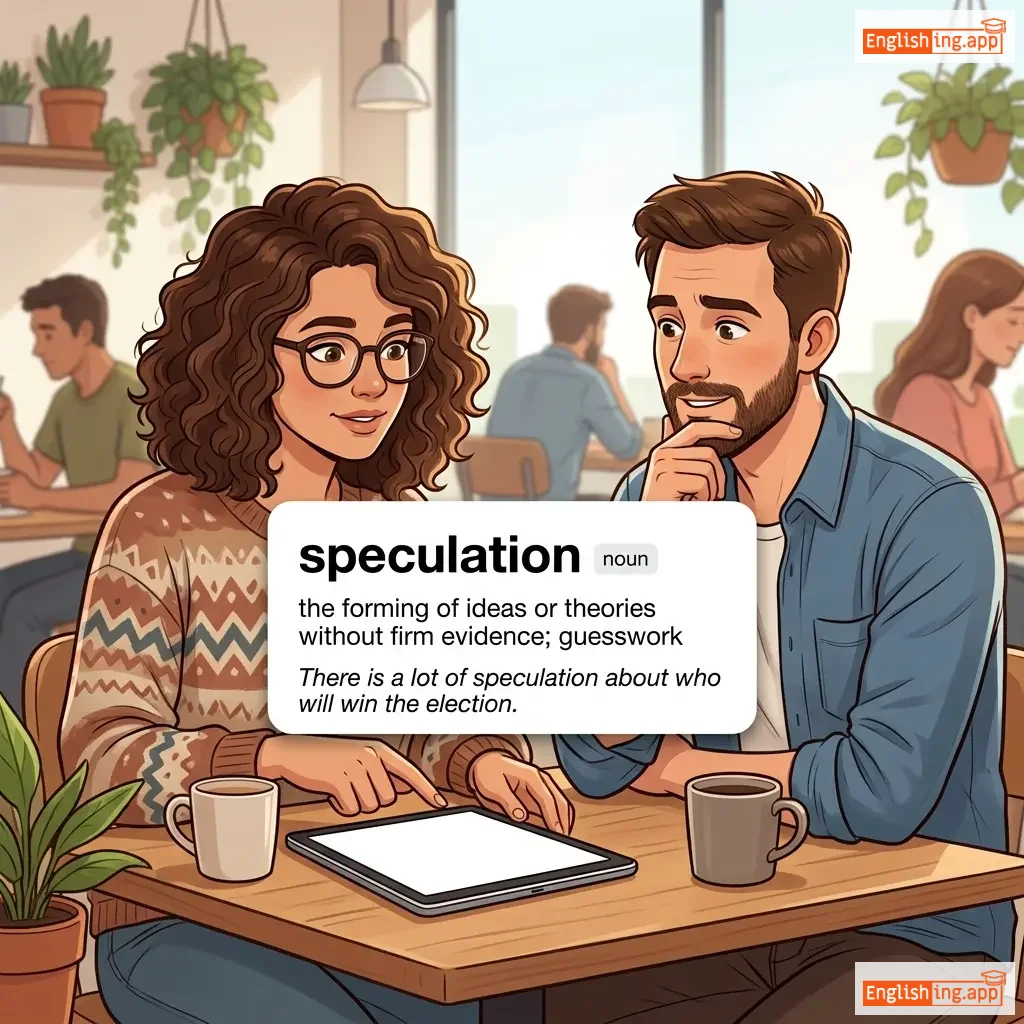
speculation definition card — visual illustration of the meaning
noun
/ˌspɛkjʊˈleɪʃən/
спекуляция (spekulyatsiya)

the forming of ideas or theories without firm evidence; guesswork

"There is a lot of speculation about who will win the election."

"Существует много спекуляций относительно того, кто выиграет выборы." (Sushchestvuyet mnogo spekulyatsiy otnositel'no togo, kto vyigraet vyibory.)
noun
/ˈspɛkjʊˌleɪtər/
спекулянт (spetsulyant)

A person who forms theories without evidence, or invests in assets hoping for profit.

"The real estate speculator bought land hoping its value would rise."

"Спекулянт на недвижимости купил землю в надежде, что её стоимость возрастёт." (Spekulyant na nedvizhimosti kupil zemlyu v nadezhde, chto yey stoimost' vozrastet.)
Speech definition card — visual illustration of the meaning
noun
/spiːʧ/
речь (rech)

the expression of thoughts and feelings through spoken words

"The president delivered a speech on national unity."

"Президент произнес речь о национальном единстве." (Prezident proyiznes rech o natsional'nom yedinstve.)
adjective
/ˈspiːtʃləs/
без слов (bez slov)

Unable to speak because of shock, surprise, or strong emotion.

"She was speechless when she received the award."

"Она была без слов, когда получила награду." (Ona byla bez slov, kogda poluchila nagradu.)
adjective
/ˈspiː.di/
быстрый; скоростной; ловкий; (bystryy, skorostnoy, lovkiy)

moving or happening quickly; fast

"The speedy delivery service arrived within an hour."

"Служба быстрой доставки прибыла в течение часа." (Sluzhba bystroi dostavki pribyila v techenie chasa.)
noun/verb
/spiːd/
скорость (skorost)

the rate at which something moves or happens

"The car was moving at high speed."

"Машина ехала на большой скорости." (Mashina yekhala na bol'shoy skorosti.)
noun
/ˈspɔɪlˌspɔːrt/
зануда (zanuda)

A person who ruins other people's enjoyment or fun.

"Don't be a spoilsport and let us enjoy the party."

"Не будь занудой и позволь нам наслаждаться вечеринкой." (Ne bud' zanudoy i pozvol' nam naslazhdat'sya vecherinkoy.)
verb
/spɔɪl/
испортить (isportit')

to damage or ruin something

"The rain spoiled the outdoor event."

"Дождь испортил мероприятие на открытом воздухе." (Dozhd' isportil meropriyatie na otkrytom vozdukhe.)
verb
/splɪt/
делить (delit)

to divide or separate into parts or groups

"He split the log in two with an axe."

"Он разрубил бревно на два с помощью топора." (On razrubil brevno na dva s pomoshch'yu topora.)
/splɪnt/
шина (shina)

A rigid device used to support and immobilize a broken or injured body part.

"The doctor applied a splint to stabilize the patient's broken arm."

"Врач наложил шину, чтобы стабилизировать сломанную руку пациента." (Vrach nalozhil shinu, chtoby stabilizirovat' slomannuyu ruku patsiyenta.)
verb
/splaɪs/
соединять (soedinyat)

to join two pieces of rope, film, or other material by weaving or attaching them together

"The technician spliced the two wires to restore the connection."

"Техник соединил два провода, чтобы восстановить соединение." (Tekhnik soedinyal dva provoda, chtoby vosstanovit soedinenie.)
adjective
/splɪˈnɛtɪk/
раздражительный, злобный (razdrazhitel'nyy, zlobnyy)

bad-tempered, irritable, spiteful

"His splenetic remarks offended everyone in the room."

"Его раздражительные замечания оскорбили всех в комнате." (Ego razdrazhitel'nye zamechaniya oskorbili vsekh v komnate.)
adjective
/ˈsplendɪd/
великолепный; замечательный; впечатляющий (velikolepnyj; zamechatelnyj; vpechatlyayushchij)

magnificent; excellent; very impressive

"The castle looked splendid in the sunset."

"Замок выглядел великолепно на закате." (Zamok vyglyadel velikolepno na zakate.)
noun
/spliːn/
сельца; гнев (sel'tsa; gnev)

an organ in the body that produces lymphocytes and filters blood; also refers to bad temper or spite

"He vented his spleen on his coworkers after the meeting."

"Он выплеснул свой гнев на коллег после встречи." (On vyplesnul svoj gnev na kolleg posle vstrechi.)
noun
/spaɪt/
злоба (zloba)

a desire to hurt, annoy, or offend someone

"She refused the gift out of spite."

"Она отказалась от подарка из злобы." (Ona otkazalas' ot podarka iz zloby.)
verb
/spɪt/
плевать (plevat')

to force liquid, especially saliva, out of the mouth

"He spat on the ground in anger."

"Он плевал на землю в гневе." (On pleval na zemlyu v gneve.)
Spiritual definition card — visual illustration of the meaning
adjective
/ˈspɪrɪtʃuəl/
духовный (duhovny)

relating to or affecting the human spirit or soul

"She practices spiritual meditation every morning."

"Она практикует духовную медитацию каждое утро." (Ona praktikuet dukhovnuyu meditaciyu kazhdoe utro.)
noun
/ˈspɪrɪt/
дух (dukh)

the non-physical part of a person, regarded as their true self

"Her spirit remained unbroken despite the hardships."

"Её дух остался непобежденным несмотря на трудности." (Eyo dukh ostalsya nepobezhdennym nesmotrya na trudnosti.)
noun
/ˈspaɪər/
шпиль (shpil)

a tall, pointed structure on top of a building, especially a church

"The church spire could be seen from miles away."

"Церковный шпиль был виден издалека." (Tserkovnyy shpil byl viden izdaleka.)
adjective
/ˈspaɪ.rəl/
спираль (spiral)

winding in a continuous curve; helical

"The spiral staircase led to the top floor."

"Спиральная лестница вела на верхний этаж." (Spiral'naya lestnitsa vела na verkhniy etazh.)
adjective
/ˈspaɪni/
колючий (kolyuchiy)

covered with or full of spines; having sharp points

"The spiny cactus stood tall in the desert."

"Колючий кактус стоял высоко в пустыне." (Kolyuchiy kaktus stoyal vysoko v pustyne.)
noun
/ˈspɪnstər/
незамужняя женщина (nezamuzhnyaya zhenshchina)

An unmarried woman, often one who is older and considered unlikely to marry

"The novel featured a kind-hearted spinster who cared for the village children."

"Роман изображал добросердечную незамужнюю женщину, которая заботилась о детях в деревне." (Roman izobrazhal dobrosserdechnuyu nezamuzhnyuyu zhenshchinu, kotoraya zabotilas o detyakh v derevne.)
adjective
/ˈspaɪnəs/
колючий (kolyuchiy)

Having spines or thorn-like projections

"The spinous cactus was difficult to handle without gloves."

"Этот колючий кактус было трудно держать без перчаток." (Eto kolyuchiy kaktus bylo trudno derzhat' bez perchatok.)
adjective
/ˈspaɪn.ləs/
бесхарактерный; слабовольный; трусливый (spainles)

lacking courage or determination; weak-willed

"He was too spineless to stand up for his beliefs."

"Он был слишком безхарактерен, чтобы отстоять свои убеждения." (On byl slishkom bezkharakterny, chtoby otstoyat' svoi ubezhdeniya.)
noun
/spaɪn/
позвоночник (pozvonochnik)

the backbone; a series of bones extending from the skull to the lower back

"The doctor examined her spine after the accident."

"Врач осмотрел ее позвоночник после аварии." (Vrach osmotrel yeye pozvonochnik posle avarii.)
adjective
/ˈspɪndli/
тонкий и слабый (tonkiy i slaby)

Long, thin, and weak-looking

"The spindly tree bent under the weight of the snow."

"Тонкое дерево согнулось под тяжестью снега." (Tonkoe derevo sognylos pod tyazhest'yu snega.)
spend definition card — visual illustration of the meaning
verb
/spɛnd/
тратить (tratit)

to use money to buy or pay for something

"He spent all his money on books."

"Он потратил все свои деньги на книги." (On potratil vse svoi den'gi na knigi.)
noun
/sfɛˈrɪsɪti/
сферичность (sferichnost)

The quality or state of being spherical; roundness.

"The sphericity of the ball made it roll smoothly on the ground."

"Сферичность мяча позволила ему гладко катиться по земле." (Sferichnost myacha pozvolila emu gladko katitsya po zemle.)
noun
/sfɪər/
сфера (sfera)

a round, three-dimensional shape that is perfectly symmetrical around its center; an area of activity or knowledge

"The Earth is almost a perfect sphere."

"Земля почти идеальная сфера." (Zemlya pochti ideal'naya sfera.)
verb, adjective
/spɛnt/
потраченный, исчерпанный (potrachennyi, ishcherpannyi)

Past tense and past participle of 'spend'; also used as an adjective meaning exhausted or used up.

"She spent all her energy preparing for the exam."
"Она потратила всю свою энергию на подготовку к экзамену." (Ona potratila vsyu svoyu energiyu na podgotovku k ekzameny.)
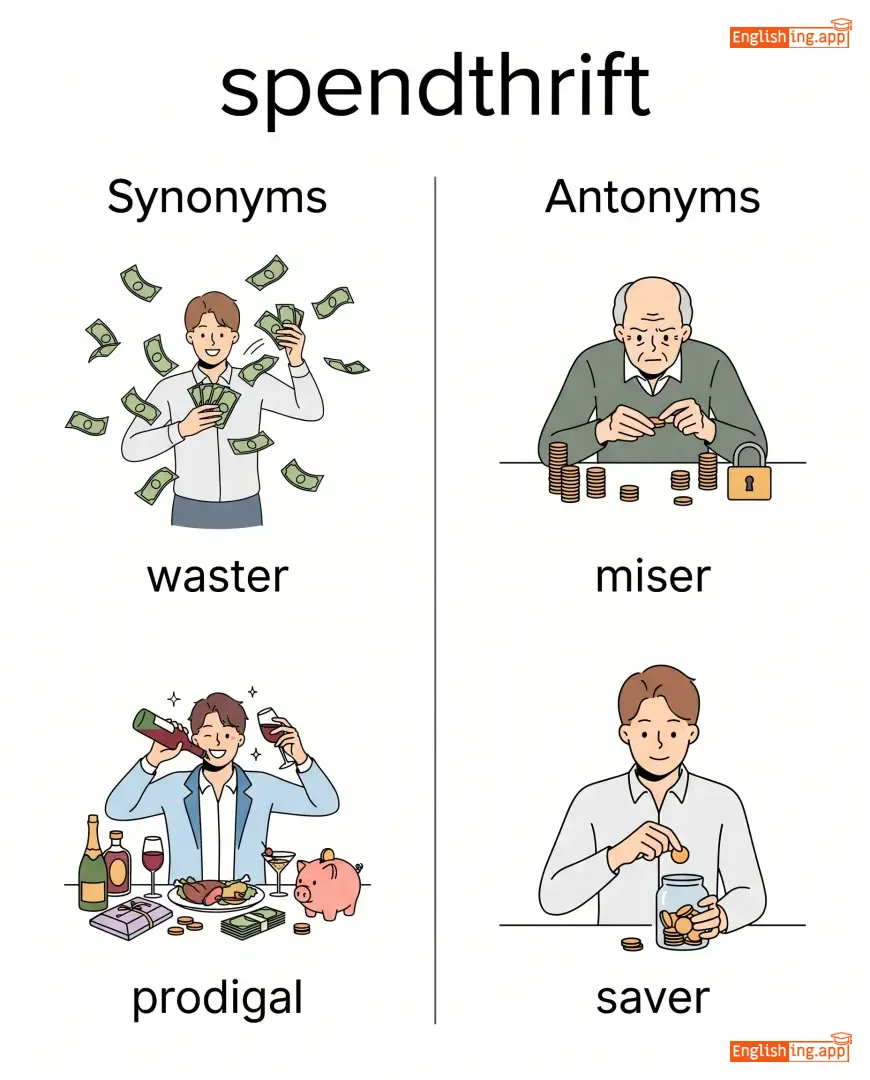
spendthrift definition card — visual illustration of the meaning
noun
/ˈspɛndˌθrɪft/
расточитель (rastochitel)

A person who spends money extravagantly or wastefully.

"The young prince was known as a spendthrift, wasting his fortune on lavish parties."

"Молодой принц был известен как расточитель, тратящий свое состояние на роскошные вечеринки." (Molodoj prints byl izvesten kak rastočitel', tratjashchij svoe sostojanie na roskoshnye vecherinki.)
noun
/ˈspɛndɪŋ/
расходы (spending)

the act of paying money for goods or services

"Her spending on clothes was higher than expected."

"Её траты на одежду были выше, чем ожидалось." (Eyo traty na odezhdu byli vyshe chem ozhidalos)
adjective
/ˈspel.baʊnd/
очарованный; завороженный (ocharovannyy, zavorozhennyy)

completely fascinated and unable to move or think about anything else; enchanted

"The children sat spellbound as the magician performed his tricks."

"Дети сидели зачарованные, когда маг показывал свои фокусы." (Deti sideliy zacharovannye, kogda mag pokazyval svoi fokusy.)
noun
/ˈspɪn.ɪtʃ/
шпинат (shpinat)

a vegetable with large dark green leaves that are eaten cooked or uncooked

"Fresh spinach is very nutritious."

"Свежий шпинат очень питателен." (Svezhiy shpinat ochen' pitatelen.)
verb
/spɛl/
произносить / заклинание (proiznosit' / zaklinanie)

to write or name the letters of a word in the correct order; also a short period of time or a state of enchantment

"She asked me to spell her name correctly on the form."

"Она попросила меня правильно написать её имя на форме." (Ona poprosila menya pravil'no napisat' yeë imya na forme.)