Словари

Словарь английского языка | Значения слов, определения и примеры
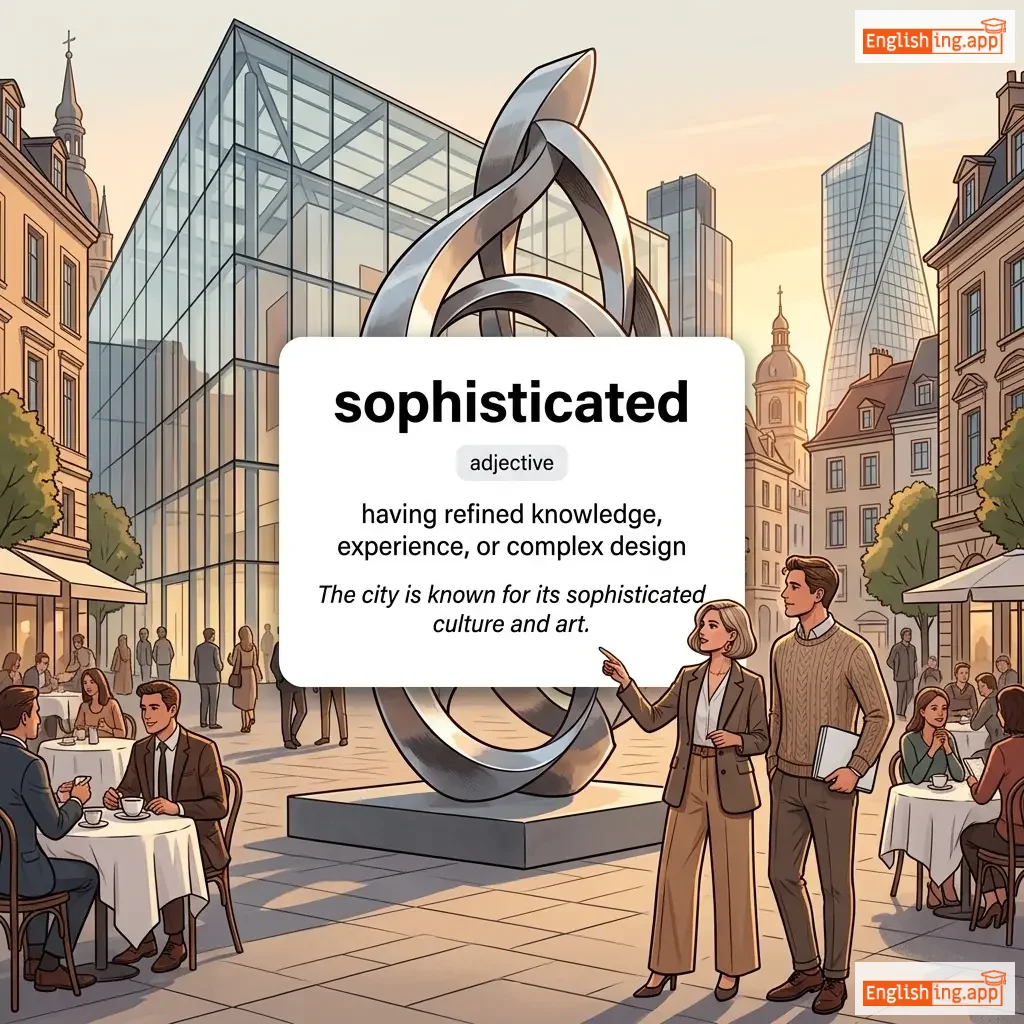
sophisticated definition card — visual illustration of the meaning
adjective
/səˈfɪstɪkeɪtɪd/
утонченный (utochhenny)

having refined knowledge, experience, or complex design

"The city is known for its sophisticated culture and art."

"Город известен своей утонченной культурой и искусством." (Gorod izvesten svoey utochhennoy kul'turoy i iskusstvom.)
sophistication definition card — visual illustration of the meaning
noun
/səˌfɪstɪˈkeɪʃən/
софистикация (sofistikatsiya)

the quality of being refined, cultured, or complex

"Her sophistication impressed everyone at the party."

"Ее софистикация впечатлила всех на вечеринке." (Eyo sofistikatsiya vpechatlila vsekh na vecherinke.)
noun
/ˈsɒfɪstri/
софистика (sofisthika)

the use of clever but false arguments, often to deceive

"The politician's speech was full of sophistry."

"Речь политика была полна софистики." (Rech' politika byla polna sofistiki.)
noun
/ˈsɑːfmɔːr/
студент второго курса (student vtorogo kursa)

a student in their second year of study at a university or high school

"He’s a sophomore in college, studying computer science."

"Он студент второго курса в университете, изучающий информатику." (On student vtorogo kursa v universitete, izuchayushchiy informatiky.)
adjective
/ˌsɒfəˈmɒrɪk/
незрелый (nezrely)

showing immaturity and overconfidence, like a sophomore

"His sophomoric behavior embarrassed his friends."

"Его незрелое поведение поставило в неловкое положение его друзей." (Ego nezreloe povedenie postavilo v nelovkoe polozhenie ego druzey.)
soporific definition card — visual illustration of the meaning
adjective
/ˌsɒpəˈrɪfɪk/
счастье (schastye)

tending to induce drowsiness or sleep; causing sleepiness

"The professor's lecture was so soporific that half the class fell asleep."

"Она не могла скрыть свое счастье, когда получила премию." (Ona ne mogla skryt' svoyo schast'ye, kogda poluchila premiyu.)
noun
/səˈprɑːnoʊ/
самый высокий женский или детский голос (samyy vysokiy zhenskiy ili detskiy golos)

the highest female or boy’s singing voice

"She sang beautifully in the soprano range during the concert."

"Она пела прекрасно в сопрановом регистре во время концерта." (Ona pela prekrasno v soprano registre vo vremya kontserta.)
noun
/ˈsɔːrsəri/
колдовство (koldovstvo)

the use of magical powers, especially through spells and enchantments

"The villagers believed the illness was caused by sorcery."

"Жители деревни верили, что болезнь вызвана колдовством." (Zhiteli derevni verili, chto bolezn' vyzvana koldovstvom.)
sordid definition card — visual illustration of the meaning
adjective
/ˈsɔːrdɪd/
гнусный (gnusnyy)

involving immoral or dishonorable actions; dirty or unpleasant

"The newspaper exposed the politician's sordid past."

"Газета раскрыла позорное прошлое политика." (Gazeta raskryla pozornoye proshloye politika.)
adjective
/sɔːr/
болезненный (boleznennyy)

painful or aching, usually in a specific part of the body

"After the long run, my legs were sore."

"После длинного бега мои ноги были болючими." (Posle dlinogo bega moi nogi byli bolyuchimi)
noun
/ˈsɑːroʊ/
горе (gore)

a feeling of deep sadness or grief

"She was filled with sorrow after the loss of her friend."

"Она была полна горя после потери своей подруги." (Ona byla polna gory posle poteri svoey podrugi.)
sorry definition card — visual illustration of the meaning
adjective
/ˈsɔːri/
извини (izvini)

feeling regret or sympathy

"She felt sorry for what had happened."

"Ей было жаль, что случилось." (Ey bylo zhal', chto sluchilos'.)
verb
/sɔːrt/
сортировать (sortirovat)

to arrange or categorize something

"Please sort the files by date."

"Пожалуйста, отсортируйте файлы по дате." (Pozhaluysta, otsortiruyte fayly po date.)
Soul definition card — visual illustration of the meaning
noun
/soʊl/
душа (dusha)

the spiritual or immaterial part of a person, often thought of as eternal

"She believed her soul would live on after death."
"Она верила, что её душа будет жить после смерти." (Ona verila, chto yeye dusha budet zhit' posle smerti.)
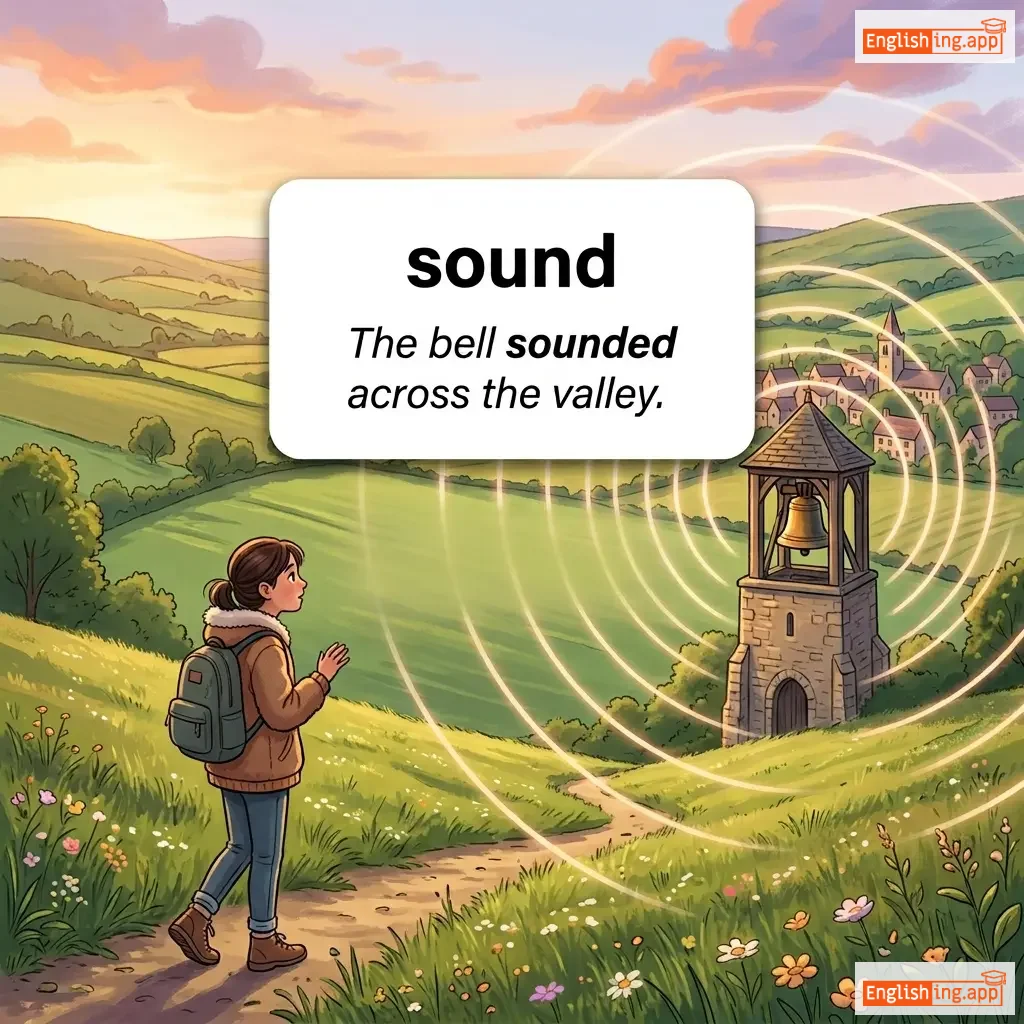
sound definition card — visual illustration of the meaning
noun, verb, adjective
/saʊnd/
звук (zvuk)

a sensation perceived by the ear; to make or cause to make a noise; in good condition

"The bell sounded across the valley."

"Колокол прозвучал через долину." (Kolokol prozvuchal cherez dolinu.)
adjective
/ˈsaʊnd.pruːf/
звуконепроницаемый; предотвращает проникновение или выход звука (zvukonepronikayemyy)

impervious to sound; preventing sound from entering or leaving

"The recording studio has sound-proof walls."

"В студии звукозаписи есть звуконепроницаемые стены." (V studii zvukozapisi yest' zvukonepronikayemyye steny.)
noun
/suːp/
суп (sup)

a liquid dish, typically made with meat, vegetables, or legumes, and often served hot

"She made a delicious tomato soup for dinner."

"Она приготовила вкусный томатный суп на ужин." (Ona prigotovila vkusnyy tomatnyy sup na uzhin.)
noun
/ˈsuːpsɒ̃/
маленькое количество (malen'koye kolichestvo)

a very small quantity of something; a trace

"She added just a soupcon of spice to the dish."

"Она добавила всего лишь немного специй в блюдо." (Ona dobavila vsego lish' nemnogo spetsiy v blyudo.)
adjective
/ˈsaʊər/
кислый (kisly)

having an acidic taste; unpleasant or bad-tempered

"The milk has gone sour."

"Молоко стало кислым." (Moloko stalo kislym.)
noun
/ˈsaʊər wʊd ˈæp.əl/
слоновое яблоко (slonovoe yabloko)

a tropical fruit with hard shell and tangy flesh; elephant apple

"The sour wood apple has a unique taste that many people enjoy."

"Слоновое яблоко имеет уникальный вкус, который многим нравится." (Slonovoe yabloko imeet unikal'nyy vkus, kotoryy mnogim nravitsya)
noun
/sɔːrs/
источник (istochnik)

a place, person, or thing from which something originates or is obtained

"The internet is a vast source of information."

"Интернет — это огромный источник информации." (Internet — eto ogromnyy istochnik informatsii.)
noun/adjective
/saʊθ/
юг (yug)

the direction towards the bottom of a map, opposite to north

"The sun rises in the east and sets in the south."

"Солнце восходит на востоке и садится на юге." (Solntse voskhodit na vostoke i saditsya na yuge.)
proper noun
/ˌsaʊθ əˈmɛrɪkə/
Южная Америка (Yuzhnaya Amerika)

a continent located in the Western Hemisphere, mostly in the Southern Hemisphere

"Brazil is the largest country in South America."

"Бразилия — крупнейшая страна в Южной Америке." (Braziliya — krupneyshaya strana v Yuzhnoy Amerike.)
noun
/ˌsaʊθˈiːst/
юго-восток (yugo-vostok)

the direction that is between south and east; a region in that direction

"The city is located in the southeast of the country."

"Город находится на юго-востоке страны." (Gorod nakhoditsya na yugo-vostoke strany.)
adjective
/ˈsʌðərn/
южный (yuzhny)

located in or facing the south; southern regions

"She moved to a southern city for work."

"Она переехала в южный город для работы." (Ona pereyekhala v yuzhnyy gorod dlya raboty.)
noun
/ˌsaʊθˈwɛst/
юго-запад (yugo-zapad)

the direction that is between south and west; a region in that direction

"They traveled to the southwest of the country for their vacation."

"Они поехали на юго-запад страны на отдых." (Oni poyekhali na yugo-zapad strany na otdykh.)
noun
/ˌsuːvəˈnɪər/
сувенир (suvenir)

an object kept as a reminder of a place, person, or event

"She bought a small souvenir from Paris."
"Она купила маленький сувенир из Парижа." (Ona kupila malen'kij suvenir iz Parizha.)
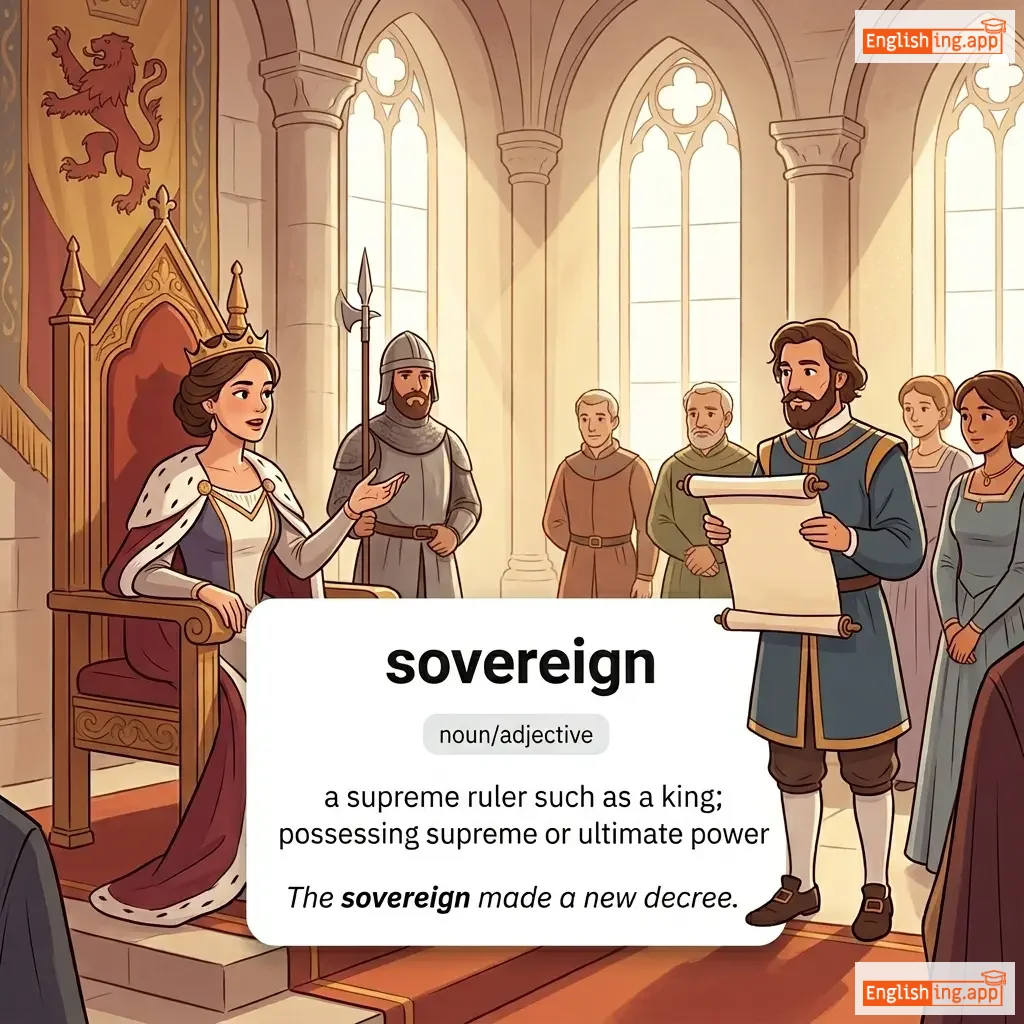
sovereign definition card — visual illustration of the meaning
noun/adjective
/ˈsɒvərɪn/
суверенный (suverennyy)

a supreme ruler such as a king; possessing supreme or ultimate power

"The sovereign made a new decree."
"Суверен издал новый указ." (Suveren izdal novyy ukaz.)
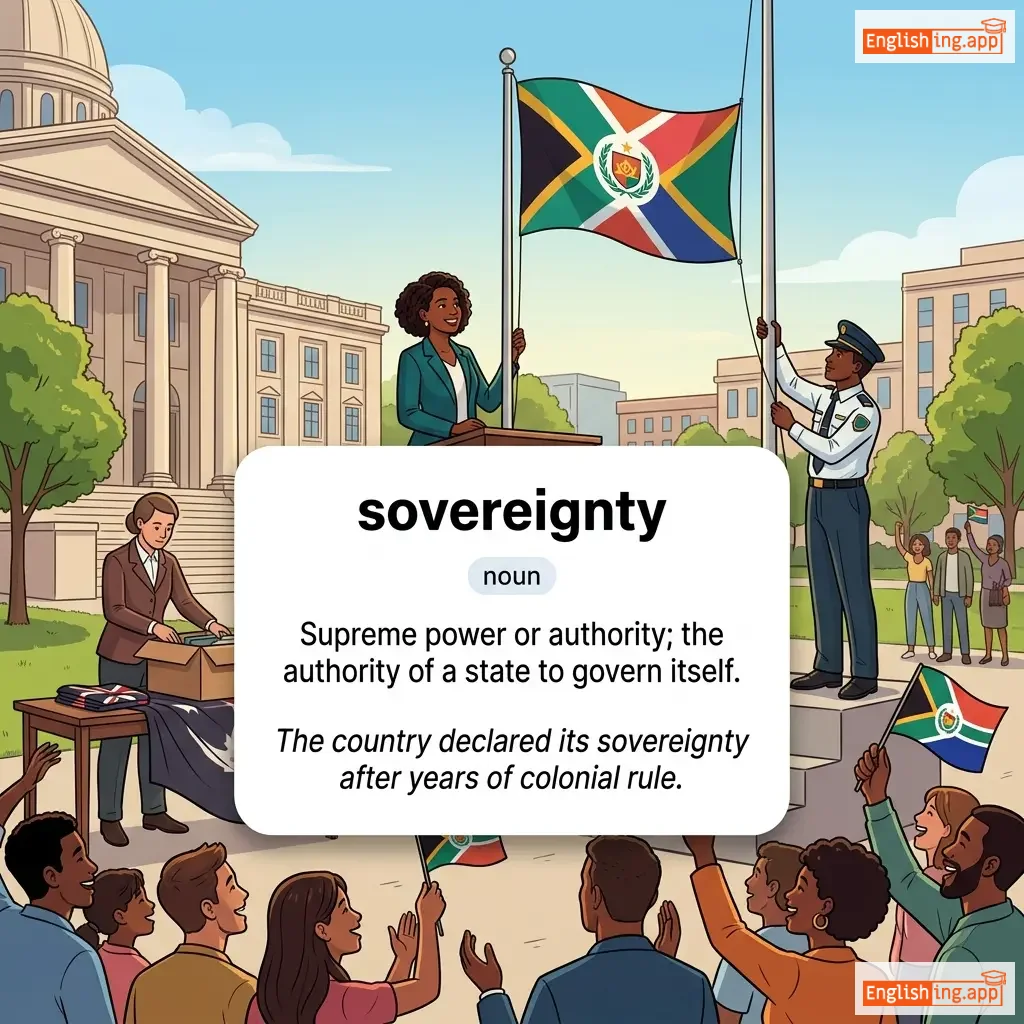
sovereignty definition card — visual illustration of the meaning
noun
/ˈsɒvrənti/
суверенитет (suverenitet)

Supreme power or authority; the authority of a state to govern itself.

"The country declared its sovereignty after years of colonial rule."

"Страна объявила о своем суверенитете после многих лет колониального правления." (Strana ob'yavila o svoem suverenitete posle mnogikh let kolonial'nogo pravleniya.)
adjective
/ˈsoʊ.vi.ət/
советский (sovetskiy)

relating to the Soviet Union or its government

"The Soviet era saw significant changes in Eastern Europe."
"Советская эра принесла значительные изменения в Восточной Европе." (Sovetskaya era prinesla znachitel'nye izmeneniya v Vostochnoy Evrope.)
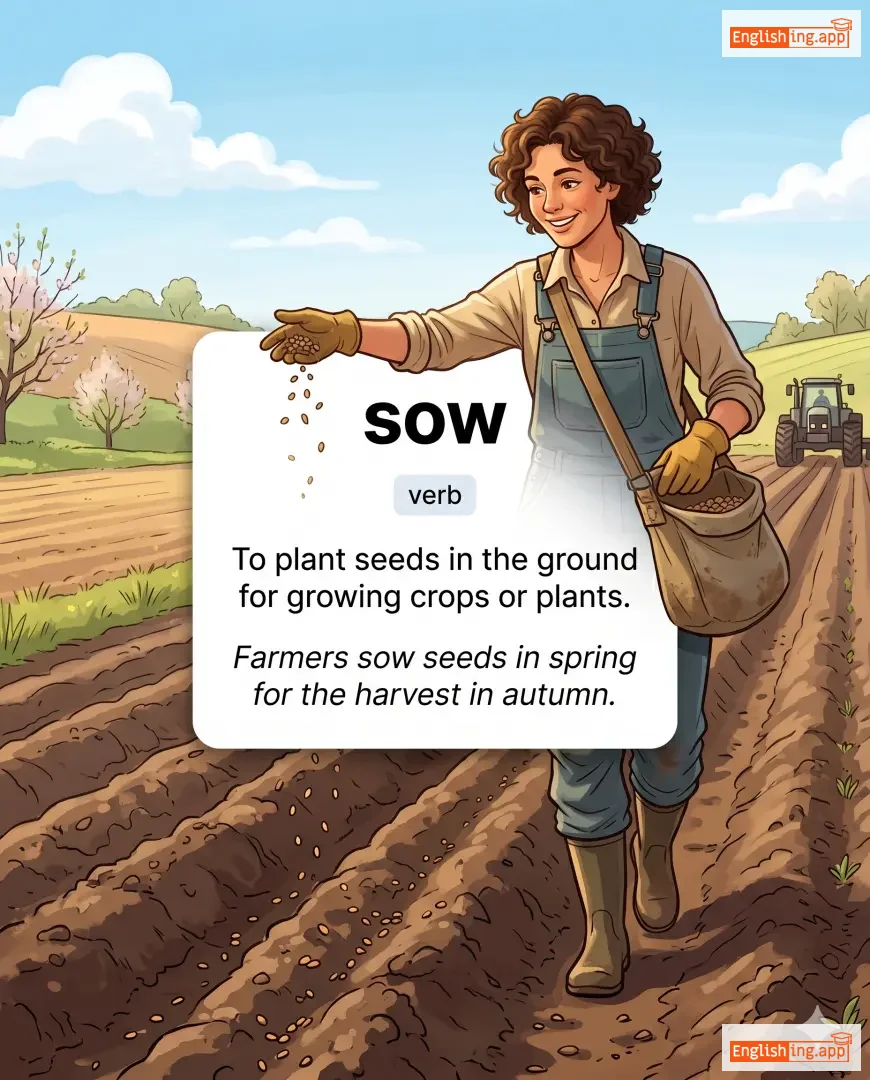
sow definition card — visual illustration of the meaning
verb
/səʊ/
сеять (sejat)

To plant seeds in the ground for growing crops or plants.

"Farmers sow seeds in spring for the harvest in autumn."
"Фермеры сеют семена весной для урожая осенью." (Fermery seyut semena vesnoy dlya urozhaya osenyu.)
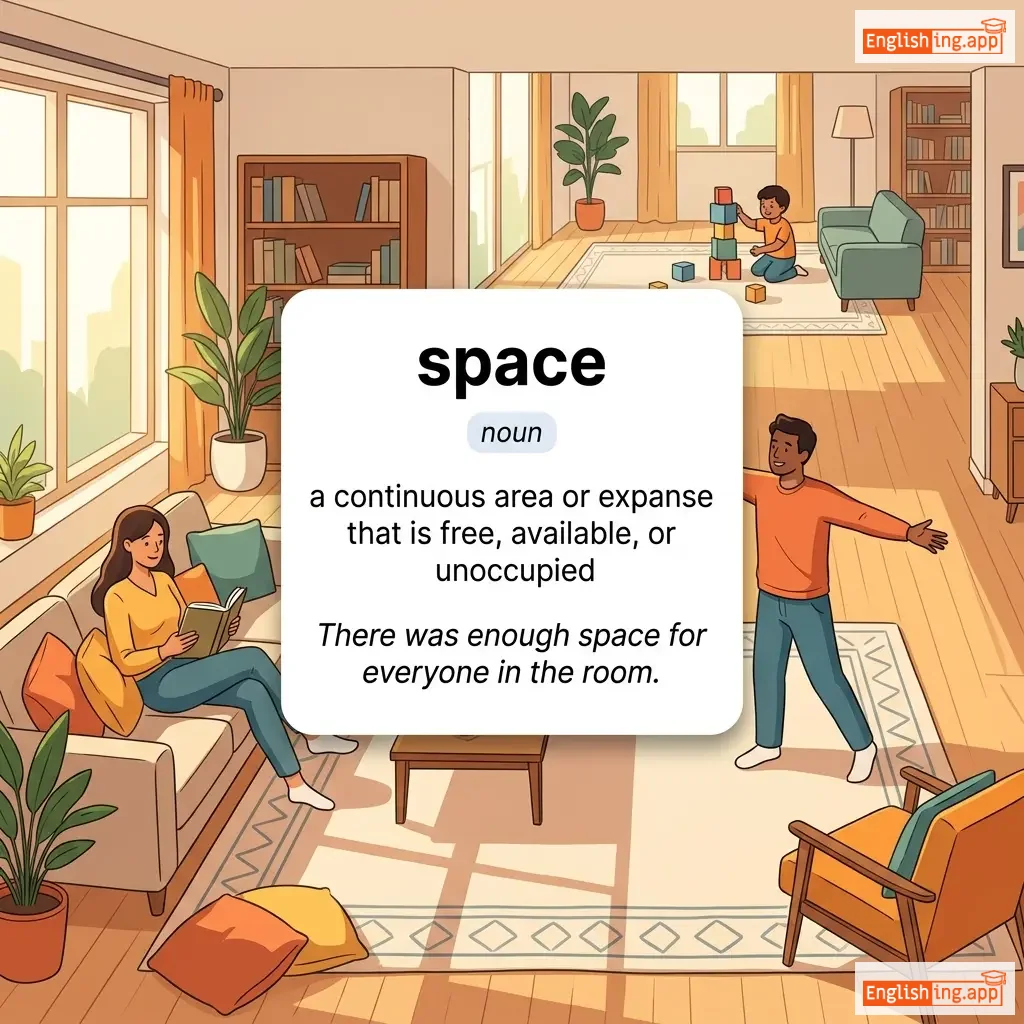
space definition card — visual illustration of the meaning
noun
/speɪs/
пространство (prostranstvo)

a continuous area or expanse that is free, available, or unoccupied

"There was enough space for everyone in the room."

"В комнате было достаточно места для всех." (V komnate bylo dostatochno mesta dlya vsekh.)
space exploration definition card — visual illustration of the meaning
noun
speɪs ɪksplɔːˈreɪʃən
исследование космоса (issledovaniye kosmosa)

The investigation of outer space by means of manned and unmanned spacecraft.

"Space exploration has expanded our knowledge of the universe."
"Исследование космоса расширило наши знания о вселенной." (Issledovaniye kosmosa rasshirilo nashi znaniya o vselennoy.)
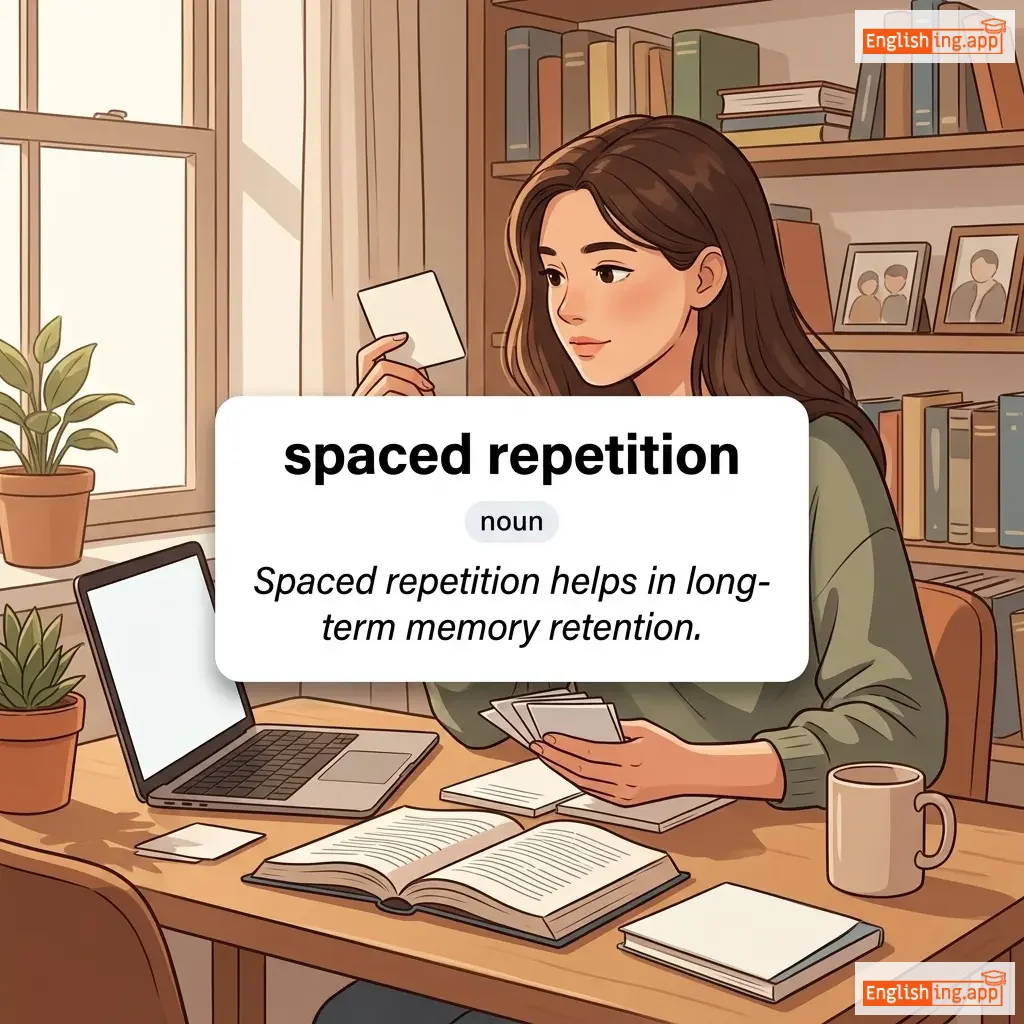
spaced repetition definition card — visual illustration of the meaning
noun
speɪst ˌrep.ɪˈtɪʃ.ən
распространённая репетиция (rasprostranyonnaya repeticiya)

A learning technique that involves reviewing information at increasing intervals to improve long-term retention.

"Spaced repetition helps in long-term memory retention."

"Спейст репетишн помогает сохранить долгосрочную память." (Speyst repetishn pomogaet sokhranit' dolgorochnuyu pamyat'.)
adjective
/ˈspeɪ.ʃəs/
просторный; вместительный (prostorny; vmestitelny)

having a lot of space; roomy and comfortable

"The house has a spacious living room with high ceilings."

"В доме есть просторная гостиная с высокими потолками." (V dome yest' prostornaya gostinaya s vysokimi potolkami.)
noun
/speɪd/
лопата (lopata)

a tool with a flat blade for digging; a playing card suit

"The gardener used a spade to dig holes for planting flowers."

"Садовник использовал лопату, чтобы выкопать ямы для посадки цветов." (Sadovnik ispol'zoval lopatu, chtoby vykopat' yamy dlya posadki tsvetov.)
noun
/spæm/
спам (spam)

unsolicited or unwanted electronic communication, typically in the form of email

"My inbox is full of spam emails that I need to delete."

"Мой почтовый ящик полон спам-писем, которые мне нужно удалить." (Moi pochtovyi yashchik polon spam-pisem, kotorye mne nuzhno udalit'.)
noun
/spæn/
размах (razmakh)

the full extent or length of something from one end to another

"The bridge has a span of over 500 meters."

"Мост имеет размах более 500 метров." (Most imeyet razmakh bolee 500 metrov.)
verb
/spɜːr/
побуждать / мотивировать (pobuzhdat / motivirovat)

To encourage or motivate someone to take action.

"The teacher's praise spurred him to study harder."

"Похвала учителя побудила его учиться усерднее." (Pokhvala uchitelya pobudila ego uchit'sya usyerdneye.)
noun, verb
/spreɪn/
растяжение (rastyazhenie)

an injury to a joint in which the ligaments are stretched or torn

"She sprained her ankle while running in the park."

"Она вывихнула лодыжку, когда бегала в парке." (Ona vyvihnula lodyzhku, kogda begala v parke.)
verb
/spreɪ/
распылять (raspylyat)

to apply liquid to something in a fine mist

"She sprayed perfume on her wrist before leaving."

"Она распылила духи на своё запястье перед тем, как уйти." (Ona raspylyla dukhi na svoe zapyaste pered tem, kak uyti.)
verb
/sprɛd/
раскрывать (raskryvat')

to open or extend something over an area

"She spread the blanket on the grass for a picnic."

"Она раскинула одеяло на траве для пикника." (Ona raskynula odeyalo na trave dlya piknika.)
adjective
/ˈspraɪtli/
живой (zhivoy)

full of energy and life; lively

"The sprightly old man danced with joy at the wedding."

"Живой старик танцевал с радостью на свадьбе." (Zhivoy starik tantseval s radost'yu na svad'be.)
noun
/sprɪŋ/
весна (vesna)

the season between winter and summer when plants begin to grow

"Flowers bloom in the spring."

"Цветы распускаются весной." (Tsvety raspuskajutsya vesnoj.)
verb
/ˈsprɪŋkəl/

to scatter small drops or particles of a substance over a surface

"She sprinkled sugar on top of the cake."

verb, noun
/spraʊt/
прорастать (prorastat')

to begin to grow; to produce new leaves or shoots

"The seeds began to sprout after a few days of rain."

"Семена начали прорастать после нескольких дней дождя." (Semena nachali prorastat' posle neskol'kikh dney dozhdya.)
verb, adjective, noun
/spruːs/
привести в порядок / тип дерева (privedi v poryadok / tip dereva)

to make neat or tidy in appearance; also refers to an evergreen tree

"He spruced up his room before the guests arrived."

"Он привел свою комнату в порядок до того, как пришли гости." (On privedi svoju komnatu v poryadok do togo, kak prishli gosti.)
adjective
/spraɪ/
проворный (provorniy)

active and lively, especially in old age

"The spry grandmother surprised everyone with her quick dance steps."

"Проворная бабушка удивила всех своими быстрыми танцевальными шагами." (Provornaia babushka udivila vsekh svoimi bystrymi tantseval'nymi shagami.)
noun
/spjuːm/
пена (pena)

Froth or foam, especially found on waves or liquids.

"The waves crashed against the rocks, leaving spume in the air."
"Волны разбивались о скалы, оставляя пену в воздухе." (Volny razbivalis' o skaly, ostavlyaya penu v vozdukhe.)
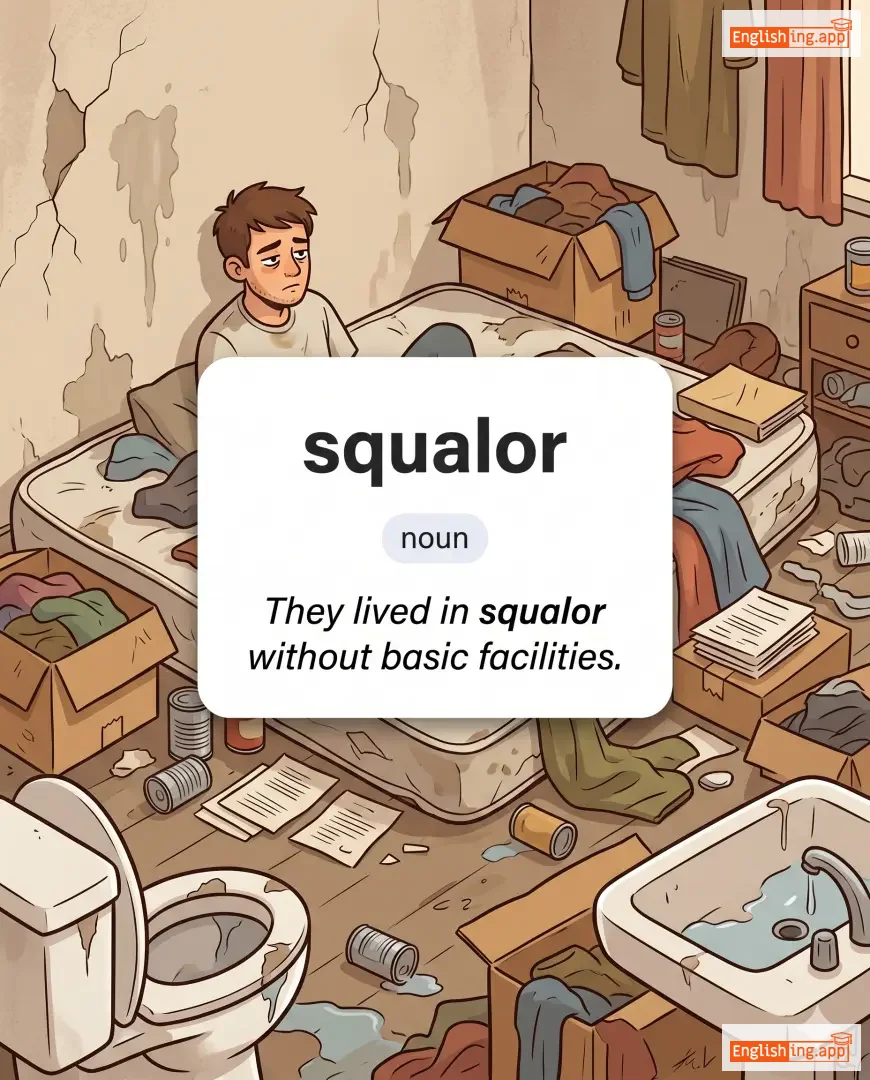
squalor definition card — visual illustration of the meaning
noun
/ˈskwɒlər/
нищета (nishcheta)

the state of being extremely dirty and unpleasant, especially due to poverty or neglect

"They lived in squalor without basic facilities."

"Они жили в нищете без базовых удобств." (Oni zhili v nishchete bez bazovykh udobstv.)