Словари

Словарь английского языка | Значения слов, определения и примеры

verb
/sprɛd/
раскрывать (raskryvat')

to open or extend something over an area

"She spread the blanket on the grass for a picnic."

"Она раскинула одеяло на траве для пикника." (Ona raskynula odeyalo na trave dlya piknika.)
verb
/spreɪ/
распылять (raspylyat)

to apply liquid to something in a fine mist

"She sprayed perfume on her wrist before leaving."

"Она распылила духи на своё запястье перед тем, как уйти." (Ona raspylyla dukhi na svoe zapyaste pered tem, kak uyti.)
noun, verb
/spreɪn/
растяжение (rastyazhenie)

an injury to a joint in which the ligaments are stretched or torn

"She sprained her ankle while running in the park."

"Она вывихнула лодыжку, когда бегала в парке." (Ona vyvihnula lodyzhku, kogda begala v parke.)
noun
/spaʊs/
супруг (suprug)

a person's husband or wife

"Each employee may include their spouse in the health insurance plan."

"Каждый сотрудник может включить своего супруга в план медицинского страхования." (Kazhdyi sotrudnik mozhet vklyuchit' svoego supruga v plan meditsinskogo strakhovaniya.)
noun
/ˈspɒt.ɪd sneɪk hed/
пятнистая змееголовая рыба (pyatnistaya zmeegolovaya ryba)

a type of freshwater fish with spotted markings and an elongated head resembling a snake

"The spotted snake head is a popular fish for aquaculture in South Asia."

"Пятнистая змееголовая рыба популярна для аквакультуры в Южной Азии." (pyatnistaya zmeegolovaya ryba populyarna dlya akvakultury v yuzhnoy azii)
adjective
/ˈspɒtɪd/
пятнистый; отмеченный; замеченный (pyatnistyy; otmechennyy; zamechennyy)

having spots or marks; noticed or seen

"The spotted leopard moved silently through the jungle."

"Пятнистая пантера двигалась бесшумно через джунгли." (Pyatnistaya pantera dvizhilas' besshumno cherez dzhungli.)
noun
/ˈspɒt.laɪt/
прожектор (spotlayt)

a strong beam of light directed onto a particular area; figuratively, public attention

"The singer stood proudly in the spotlight."
"Певец гордо стоял в свете прожектора." (Pevets gordo stoyal v svete prozhektora.)
spot definition card — visual illustration of the meaning
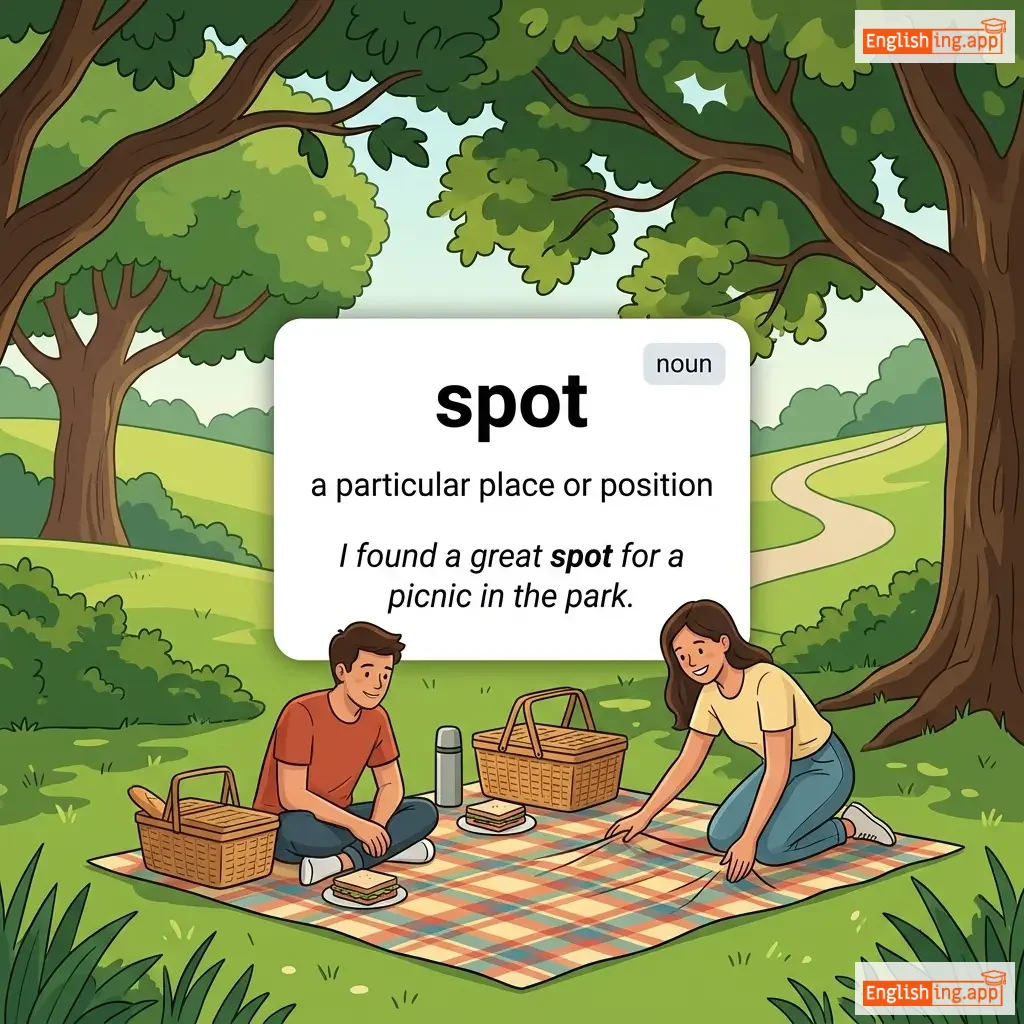
noun
/spɒt/
место (mesto)

a particular place or position

"I found a great spot for a picnic in the park."

"Я нашел отличное место для пикника в парке." (Ya nashel otlichnoye mesto dlya piknika v parke.)
noun
/ˈspɔːrtsmən/
спортсмен (sportsmen)

A person who is skilled in sports or enjoys participating in athletic activities.

"He is a true sportsman, always fair and respectful to his opponents."

"Он настоящий спортсмен, всегда честен и уважителен к своим соперникам." (On nastoyashchiy sportsmen, vsegda chesten i uvazhitelen k svoim sopernikam.)
adjective
/ˈspɔːrtɪv/
спортивный (sportivnyy)

Playful, lively, or full of fun.

"The children were in a sportive mood during the picnic."

"Дети были в спортивном настроении во время пикника." (Deti byli v sportivnom nastroenii vo vremya piknika.)
noun
/spɔːt/
спорт (sport)

an activity involving physical exertion and skill in which an individual or team competes against another or others for entertainment

"Football is a popular sport around the world."
"Футбол - популярный спорт во всем мире." (Futbol - populyarnyy sport vo vsyom mire.)
sporadic definition card — visual illustration of the meaning
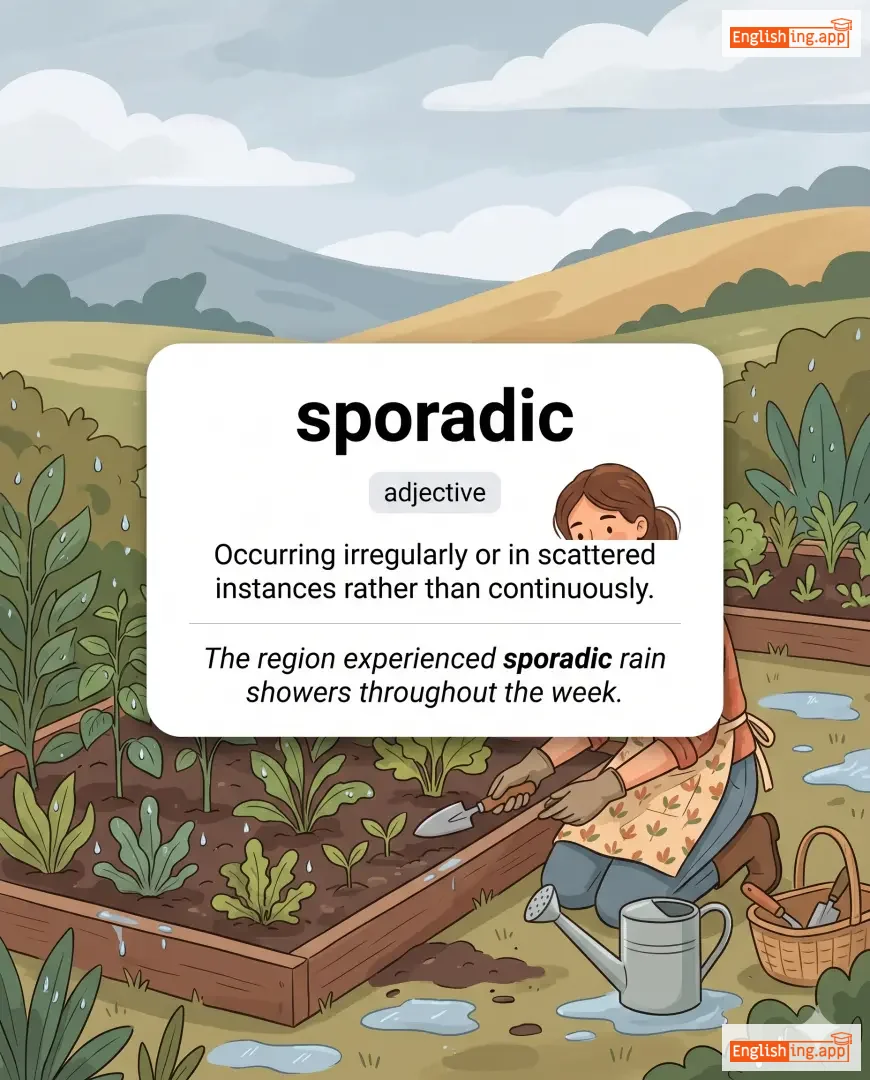
adjective
/spəˈrædɪk/
спорадический (sporadicheskiy)

Occurring irregularly or in scattered instances rather than continuously.

"The region experienced sporadic rain showers throughout the week."

"Регион испытал спорадические дожди в течение недели." (Region ispyltal sporadicheskie dozhdi v techeniye nedeli.)
noun
/ˈspuːnərɪzəm/
спунеризм (spunerizm)

A verbal error in which the initial sounds of words are swapped to create a humorous effect.

"He made a spoonerism by saying 'queer old dean' instead of 'dear old queen'."

"Он сделал спунеризм, сказав 'странный старый декан' вместо 'дорогая старая королева'." (On sdelal spunerizm, skazav 'strannyy staryy dekan' vmesto 'dorogaya staraya koroleva'.)
noun
/spuːn/
ложка (lozhka)

a utensil consisting of a small shallow bowl with a handle, used for eating, stirring, or serving food

"She stirred her coffee with a silver spoon."

"Она размешала свой кофе серебряной ложкой." (Ona razmeshala svoy kofe serebryanoy lozhkoy.)
noun/verb
/spuːf/
юмористическое подражание (yumoristicheskoe podradanie)

A humorous imitation of something, or to trick or parody someone or something.

"The comedian spoofed the politician’s speech to entertain the audience."
"Комик пародировал речь политика, чтобы развеселить публику." (Komik parodiroval rech' politika, chtoby razveselet' publiku.)
spontaneously definition card — visual illustration of the meaning
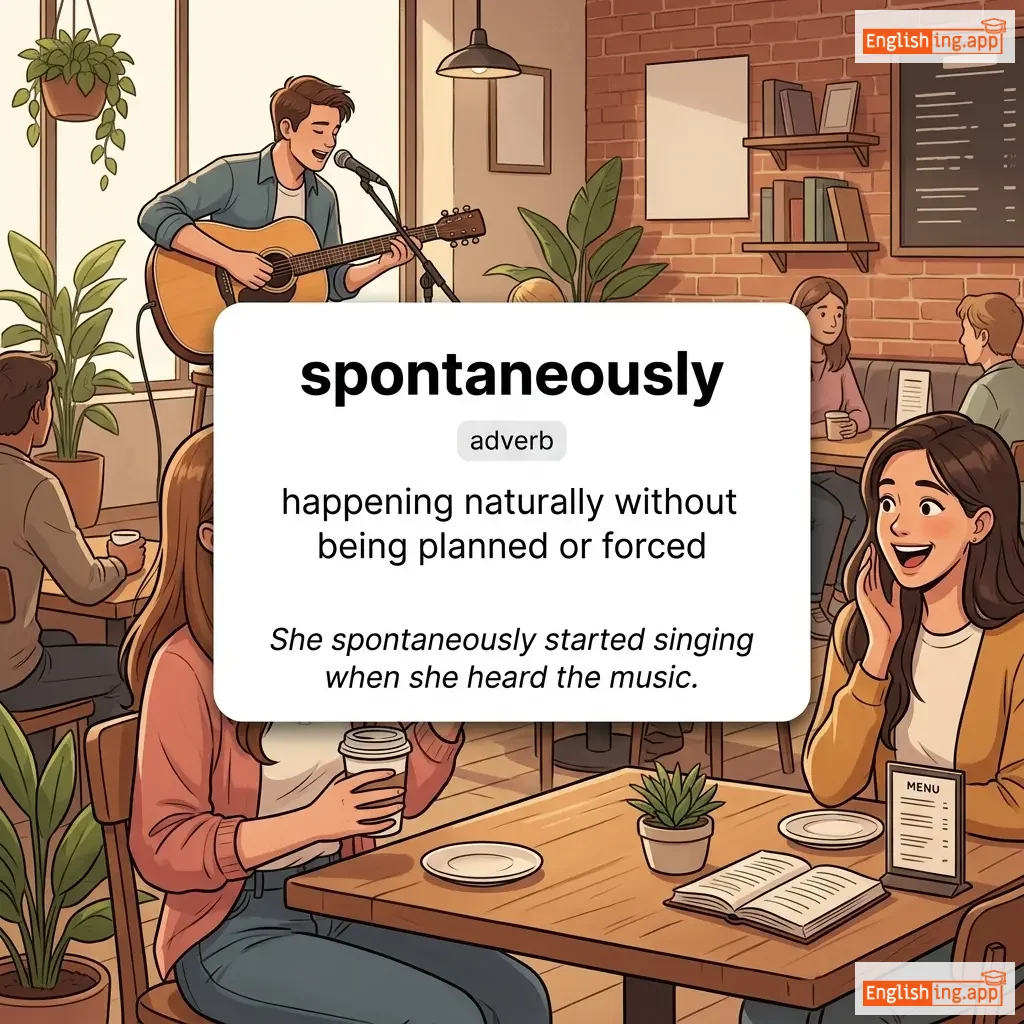
adverb
/spɒnˈteɪ.ni.əs.li/
спонтанно (spontanno)

happening naturally without being planned or forced

"She spontaneously started singing when she heard the music."

"Она начала петь спонтанно, когда услышала музыку." (Ona nachala pet' spontanno, kogda uslyshala muzyku.)
adjective
/spɒnˈteɪniəs/
спонтанный (spontanny)

Happening naturally without planning or external cause; impulsive or unplanned.

"Their spontaneous trip to the mountains turned out to be the highlight of the summer."
"Их спонтанное путешествие в горы стало кульминацией лета." (Ih spontannoe puteshestvie v gory stalo kul'minatsiey leta.)
spontaneity definition card — visual illustration of the meaning
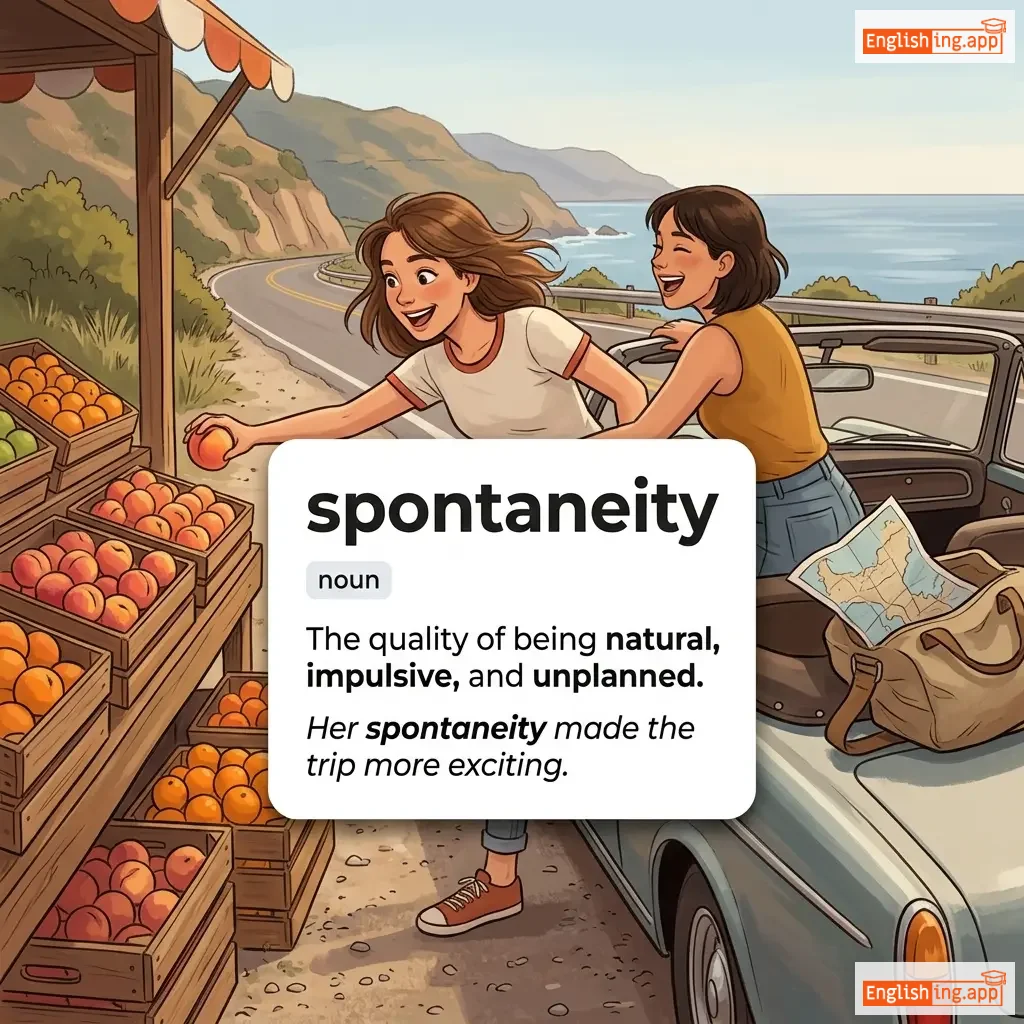
noun
/ˌspɑːntəˈneɪəti/
спонтанность (spontannost)

The quality of being natural, impulsive, and unplanned.

"Her spontaneity made the trip more exciting."

"Ее спонтанность сделала поездку более захватывающей." (ee spontannost sdelala poezdku bolee zakhvatyvayuschey.)
noun
/ˈspɒnsəʃɪp/
спонсорство (sponsorstvo)

the act of supporting an event, activity, person, or organization financially or through other resources

"The event was made possible due to the sponsorship of several big companies."

"Мероприятие стало возможным благодаря спонсорству нескольких крупных компаний." (Meropriyatie stalo vozmozhnym blagodarya sponsorstvu neskol'kikh krupnykh kompaniy.)
sponsor definition card — visual illustration of the meaning
noun
/ˈspɒnsər/
спонсор (sponsor)

a person or organization that provides funds for a project or activity in exchange for publicity or support

"The company became the main sponsor of the event."

"Компания стала основным спонсором мероприятия." (Kompaniya stala osnovnym sponsorom meropriyatiya.)
noun
/spʌndʒ ɡɔːrd/
тыквенный спонж (tykvennyy sponzh)

a fibrous gourd that becomes sponge-like when dried, used for cleaning and in cooking when young

"The sponge gourd can be eaten when young or dried to make natural scrubbers."

"Тыковный спонж может быть съеден, когда он молод, или высушен для изготовления натуральных губок." (Tykvennyy sponzh mozhet byt' syeden, kogda on molod, ili vysushen dlya izgotovleniya natural'nykh gubok.)
adjective
/ˈspʌndʒi/
пористый (poristyy)

soft and full of holes like a sponge; porous

"The cake had a light and spongy texture."

"Пирог имел легкую и пористую текстуру." (Pirog imel legkuyu i poristuyu teksturu.)
noun
/ˌspoʊliˈeɪʃən/
уничтожение (unichtozhenie)

The act of destroying or ruining something, often evidence or property.

"The court punished the company for the spoliation of evidence."

"Суд наказал компанию за уничтожение доказательств." (Sud nakazal kompaniyu za unichtozhenie dokazatel'stv.)
noun
/ˈspəʊkswɪmən/
женщина-пресс-секретарь (zhenshchina-press-sekretar)

a woman who speaks on behalf of a group or organization

"The spokeswoman for the company announced the new product."

"Пресс-секретарь компании объявила о новом продукте." (Press-sekretar kompanii ob'yavila o novom produkte.)
noun
/ˈspəʊkspɜːrsən/
спикер (spiker)

a person who speaks on behalf of others or an organization

"The spokesperson addressed the press conference on behalf of the company."

"Спикер выступил на пресс-конференции от имени компании." (Spiker vystupil na press-konferentsii ot imeni kompanii.)
adverb
/ˈspeʃ.əl.i/
специально (spetsial'no)

for a particular purpose; especially; specifically

"This gift was specially made for you."

"Этот подарок был сделан специально для тебя." (Etot podarok byl sdelan spetsial'no dlya tebya.)
adjective
/ˈspiːtʃləs/
без слов (bez slov)

Unable to speak because of shock, surprise, or strong emotion.

"She was speechless when she received the award."

"Она была без слов, когда получила награду." (Ona byla bez slov, kogda poluchila nagradu.)
Speech definition card — visual illustration of the meaning
noun
/spiːʧ/
речь (rech)

the expression of thoughts and feelings through spoken words

"The president delivered a speech on national unity."

"Президент произнес речь о национальном единстве." (Prezident proyiznes rech o natsional'nom yedinstve.)
noun
/ˈspɛkjʊˌleɪtər/
спекулянт (spetsulyant)

A person who forms theories without evidence, or invests in assets hoping for profit.

"The real estate speculator bought land hoping its value would rise."
"Спекулянт на недвижимости купил землю в надежде, что её стоимость возрастёт." (Spekulyant na nedvizhimosti kupil zemlyu v nadezhde, chto yey stoimost' vozrastet.)
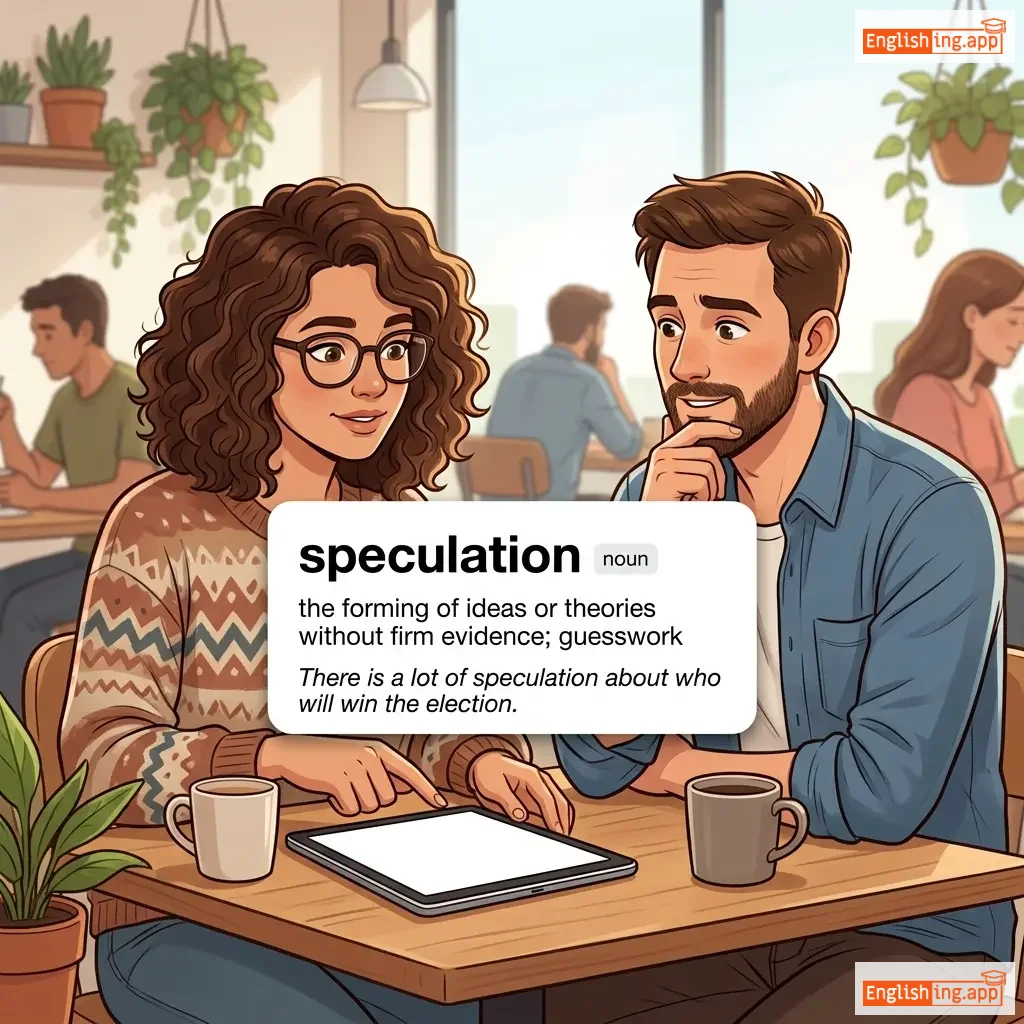
speculation definition card — visual illustration of the meaning
noun
/ˌspɛkjʊˈleɪʃən/
спекуляция (spekulyatsiya)

the forming of ideas or theories without firm evidence; guesswork

"There is a lot of speculation about who will win the election."

"Существует много спекуляций относительно того, кто выиграет выборы." (Sushchestvuyet mnogo spekulyatsiy otnositel'no togo, kto vyigraet vyibory.)
verb
/ˈspɛkjʊˌleɪt/
спекулировать / инвестировать (spekulirovat' / investirovat')

To form a theory or guess without firm evidence; to invest in stocks, property, etc. hoping for profit.

"Experts speculate that the company may expand into new markets."
"Эксперты спекулируют, что компания может расшириться на новые рынки." (Eksperty spekulyruyut, chto kompaniya mozhet rasshirit'sya na novye rynki.)
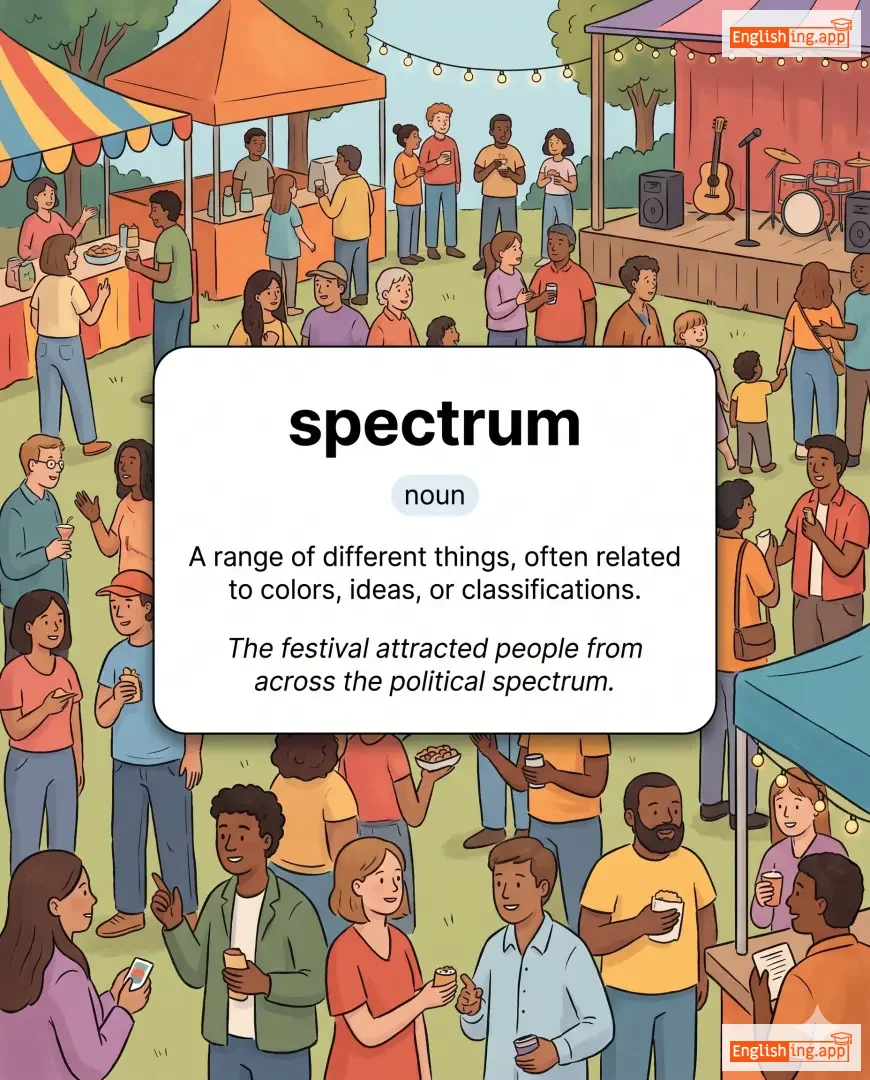
spectrum definition card — visual illustration of the meaning
noun
/ˈspɛktrəm/
спектр (spektar)

A range of different things, often related to colors, ideas, or classifications.

"The festival attracted people from across the political spectrum."

"Фестиваль привлек людей со всего политического спектра." (Festival prilyek lyudey so vsego politicheskogo spektra.)
adjective
/ˈspɛktrəl/
призрачный (prizratchny)

Relating to a ghost or specter; ghostly. Also relating to a spectrum.

"The old mansion had a spectral atmosphere at night."

"Старый особняк имел призрачную атмосферу ночью." (Staryy osobjnak imel prizrachnuyu atmosferu noch'yu.)
noun
/ˈspɛktər/
призрак (prizrak)

A ghost or spirit; something that causes fear or dread.

"The specter of war still haunts the region."

"Призрак войны все еще преследует регион." (Prizrak voyny vse yeshcho presleduyet region.)
noun
/ˈspɛkteɪtər/
зритель (zritel)

A person who watches an event, show, or game without taking part.

"Thousands of spectators gathered to watch the football match."
"Тысячи зрителей собрались, чтобы посмотреть футбольный матч." (Tysyachi zriteley sobralis', chtoby posmotret' futbol'nyy match.)
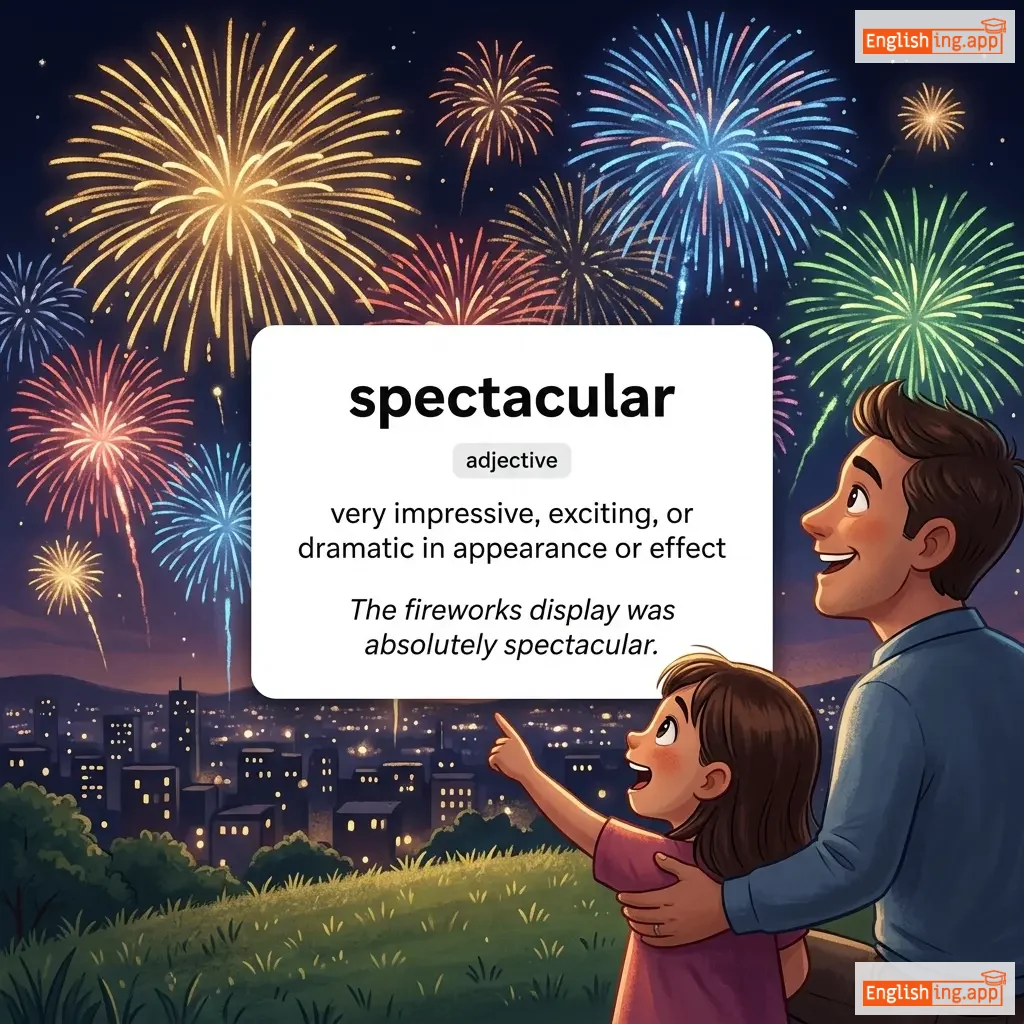
spectacular definition card — visual illustration of the meaning
adjective
/spɛkˈtækjələr/
зрелищный (zrelishnyy)

very impressive, exciting, or dramatic in appearance or effect

"The fireworks display was absolutely spectacular."
"Шоу фейерверков было абсолютно зрелищным." (Sho fireverkov bylo absolutno zrelishnym.)
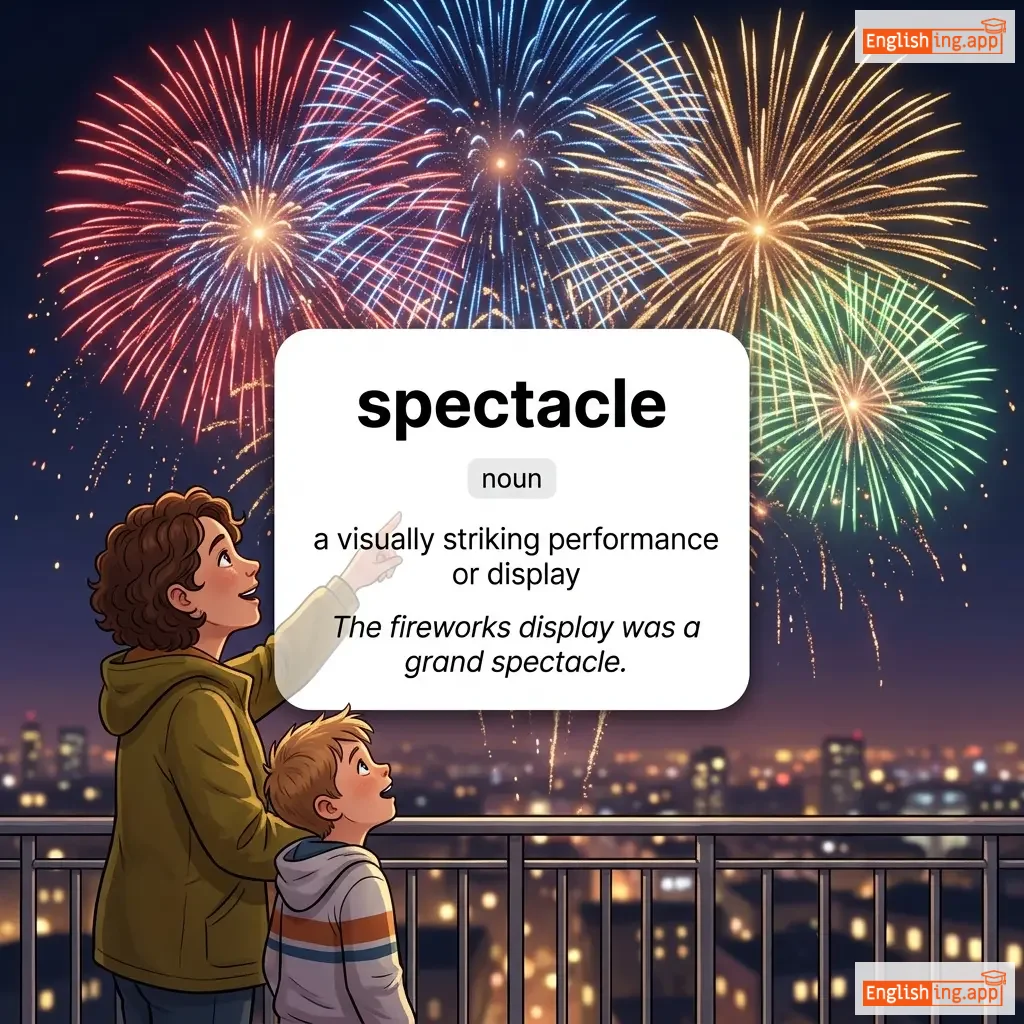
spectacle definition card — visual illustration of the meaning
noun
/ˈspɛktəkəl/
визуальное шоу (vizual'noye shou)

a visually striking performance or display

"The fireworks display was a grand spectacle."

"Фейерверк был грандиозным зрелищем." (Feyerverk byl grandioznym zrelishchem.)
noun
/spɛk/
пятно (pyatno)

A very small spot, mark, or particle.

"There was a tiny speck of dust on the glass table."
"На стеклянном столе была маленькая пылинка." (Na steklyannom stole byla malen'kaya pylinka.)
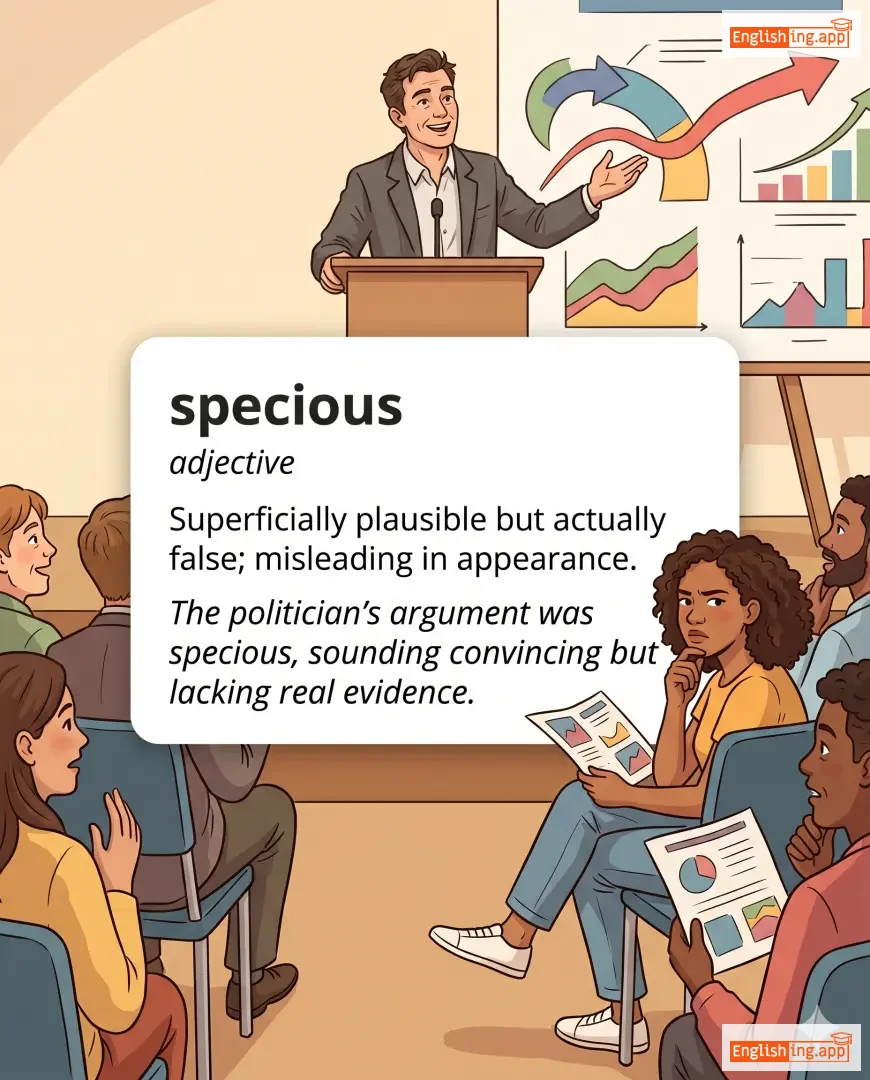
specious definition card — visual illustration of the meaning
adjective
/ˈspiːʃəs/
обманчивый (obmanchivyy)

Superficially plausible but actually false; misleading in appearance.

"The politician’s argument was specious, sounding convincing but lacking real evidence."

"Аргумент политика был обманчивым, он звучал убедительно, но не имел реальных доказательств." (Argument politika byl obmanchivym, on zvuchal ubeditel'no, no ne imel real'nykh dokazatel'stv.)
noun
/ˈspɛsəmən/
образец (obrazets)

an individual animal, plant, piece of a mineral, etc., used as an example of its species or type for scientific study

"The museum has a rare butterfly specimen."

"В музее есть редкий образец бабочки." (V muzeie yest' redkiy obrazets babochki.)
verb
/ˈspɛsɪfaɪ/
указать (ukazat)

to state or describe something clearly and exactly

"Please specify the time and place of the meeting."

"Пожалуйста, укажите время и место встречи." (Pozhaluysta, ukazhite vremya i mesto vstrechi.)
noun
/ˌspɛsɪfɪˈkeɪʃən/
спецификация (specifikatsiya)

a detailed description or assessment of something

"The product specification includes all the necessary details."

"Спецификация продукта включает все необходимые детали." (Spektsifikatsiya produkta vklyuchayet vse neobkhodimye detali.)
adverb
/spəˈsɪfɪkli/
специально (spetsial'no)

in a clear and exact way

"He was specifically asked to handle the finances."
"Его специально попросили заняться финансами." (Ego spetsial'no poprosili zanyatsya finansami.)
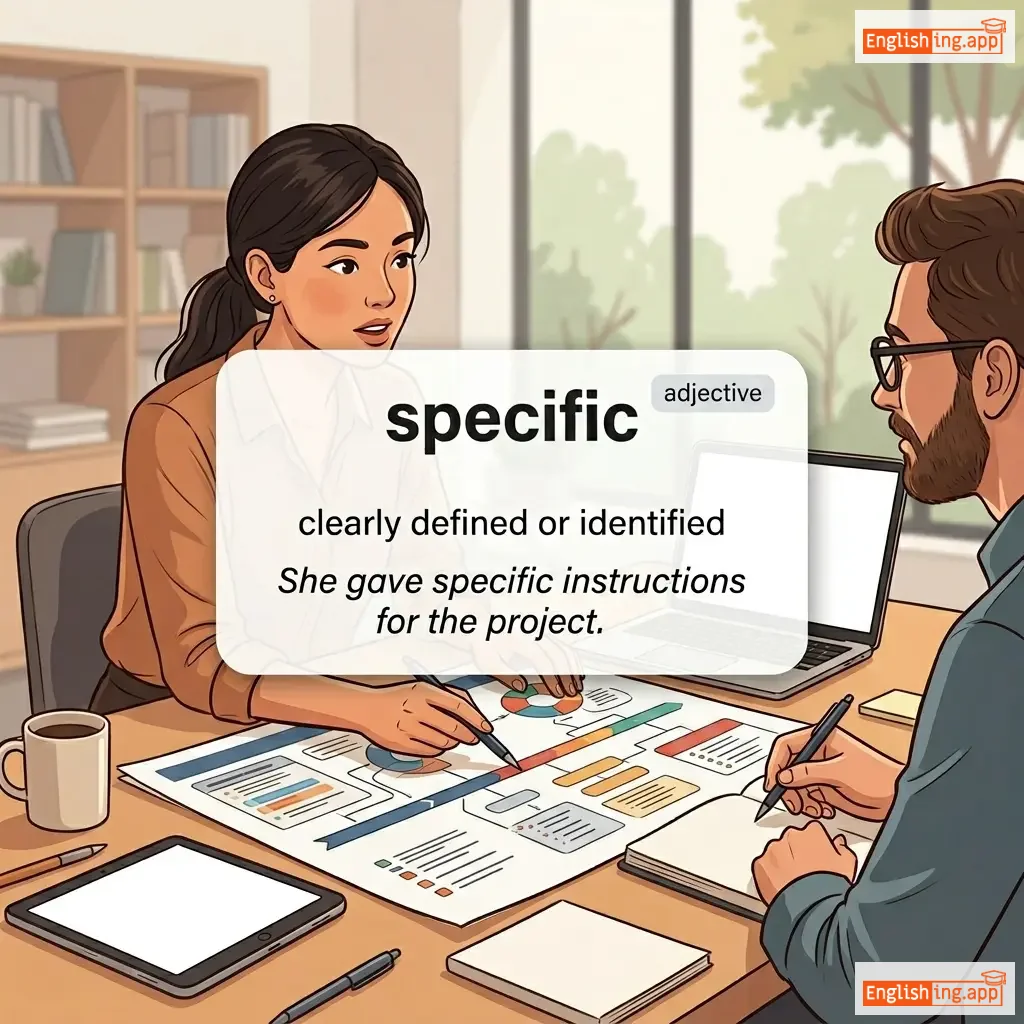
specific definition card — visual illustration of the meaning
adjective
/spəˈsɪfɪk/
специфический (spetsificheskiy)

clearly defined or identified

"She gave specific instructions for the project."

"Она дала специфические инструкции для проекта." (Ona dala spetsificheskiye instruktsii dlya proyekta.)
noun
/ˈspiːʃiːz/
вид (vid)

a group of living organisms consisting of similar individuals capable of exchanging genes or interbreeding

"The panda is an endangered species."

"Панда — это вымирающий вид." (Panda — eto vymirayushchiy vid.)
noun
/ˈspiːʃiː/
монета (moneta)

money in the form of coins rather than notes or credit

"The transaction was made in specie."

"Транзакция была проведена монетами." (Transakciya byla provedena monetami.)
noun
/ˈspɛʃəlti/
специализация (specializatsiya)

a particular area of study, work, or interest; something in which a person or place excels

"Her specialty is pediatric medicine."

"Её специализация — педиатрия." (eyo spetsializatsiya — pediatriya)
adjective
/spæzˈmɒdɪk/
спазматический (spazmaticheskiy)

occurring irregularly or in sudden bursts

"The patient experienced spasmodic coughing during the night."

"Пациент испытал спазматический кашель ночью." (Patsiyent ispyltal spazmaticheskiy kashel noch'yu.)
adjective
/spɑːrs/
редкий (redkiy)

thinly scattered or distributed; not dense or abundant

"Vegetation was sparse in the desert."

"Растительность была редкой в пустыне." (Rastitel'nost' byla redkoy v pustyne.)
adjective
/ˈspɑːrtn/
спартанский (spartanskii)

showing simplicity and lack of luxury; austere

"He lived in a spartan room with just a bed and a chair."

"Он жил в спартанской комнате с одной кроватью и стулом." (On zhil v spartanskoi komnate s odnoi krovat'iu i stulom.)