語彙集

英単語辞書 | 単語の意味、定義、例文

verb
/sprɛd/
広げる (hirogeru)

to open or extend something over an area

"She spread the blanket on the grass for a picnic."

"彼女はピクニックのために草の上に毛布を広げました。" (Kanojo wa pikunikku no tame ni kusa no ue ni mōfu o hirogemashita.)
verb
/spreɪ/
スプレーする (supuree suru)

to apply liquid to something in a fine mist

"She sprayed perfume on her wrist before leaving."

"彼女は出かける前に手首に香水をスプレーしました。" (Kanojo wa dekakeru mae ni tekubi ni kōsui o supurē shimashita.)
noun, verb
/spreɪn/
捻挫 (nenza)

an injury to a joint in which the ligaments are stretched or torn

"She sprained her ankle while running in the park."

"公園で走っているときに足首をねんざした。" (Kōen de hashitte iru toki ni ashi kubi o nenza shita.)
noun
/spaʊs/
配偶者 (haiguusha)

a person's husband or wife

"Each employee may include their spouse in the health insurance plan."

"各従業員は配偶者を健康保険プランに含めることができます。" (Kaku juugyouin wa haiguusha o kenkou hoken puran ni fukumeru koto ga dekimasu.)
noun
/ˈspɒt.ɪd sneɪk hed/
カムルチー (kamuruchi)

a type of freshwater fish with spotted markings and an elongated head resembling a snake

"The spotted snake head is a popular fish for aquaculture in South Asia."

"カムルチーは南アジアで人気のある養殖魚です。" (kamuruchi wa minami ajia de ninki no aru yoshokugyo desu)
adjective
/ˈspɒtɪd/
斑点のある; 見られた; マークされた (hanten no aru; mirareta; māku sareta)

having spots or marks; noticed or seen

"The spotted leopard moved silently through the jungle."
"斑点のあるヒョウはジャングルを静かに歩いた。" (Hanten no aru hyou wa janguru o shizuka ni aruita.)
noun
/ˈspɒt.laɪt/

a strong beam of light directed onto a particular area; figuratively, public attention

"The singer stood proudly in the spotlight."

spot definition card — visual illustration of the meaning
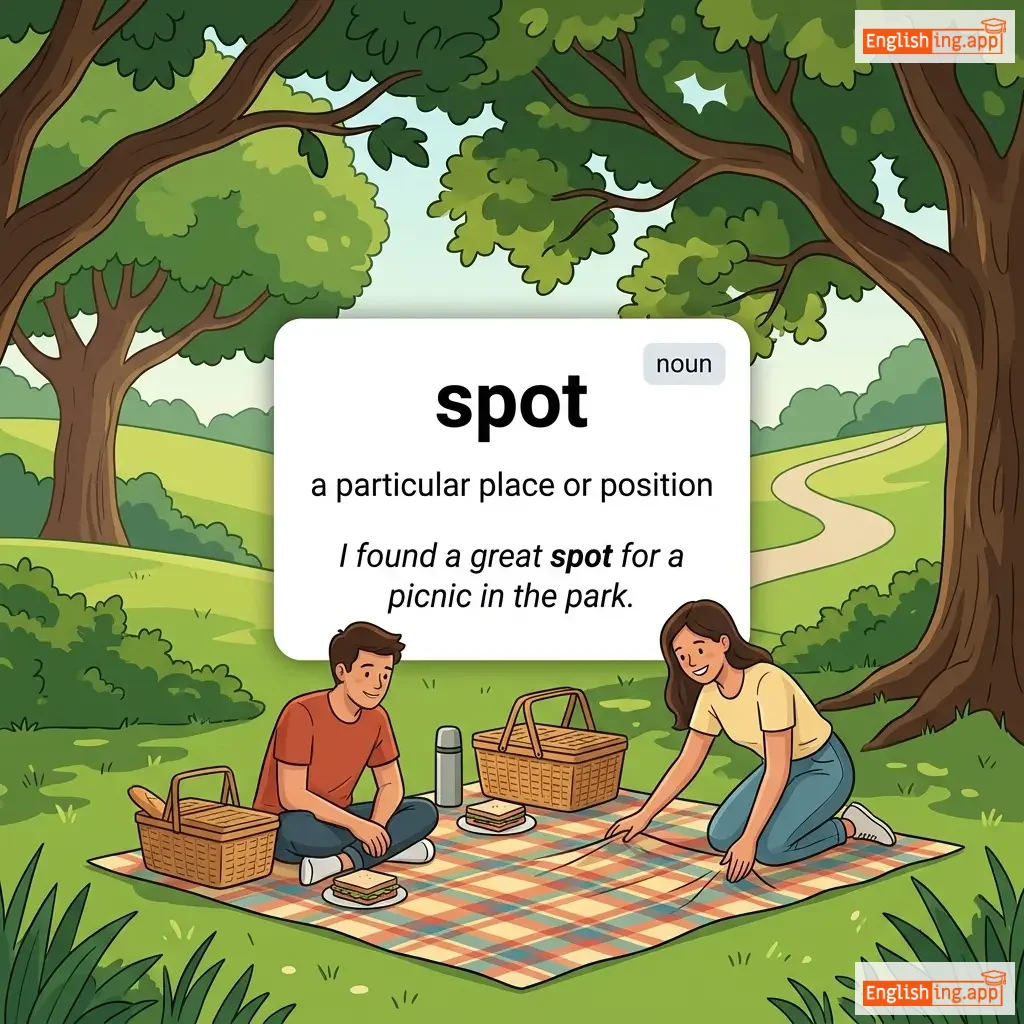
noun
/spɒt/
場所 (basho)

a particular place or position

"I found a great spot for a picnic in the park."

"公園でピクニックをするための素晴らしい場所を見つけました。" (Kouen de pikunikku o suru tame no subarashii basho o mitsukemashita.)
noun
/ˈspɔːrtsmən/
スポーツ選手 (supotsu senshu)

A person who is skilled in sports or enjoys participating in athletic activities.

"He is a true sportsman, always fair and respectful to his opponents."

"彼は本物のスポーツ選手で、常に相手に対して公正で尊敬を示す。" (Kare wa honmono no supotsu senshu de, tsune ni aite ni taishite kousei de sonkei o shimesu.)
adjective
/ˈspɔːrtɪv/
スポーティブ (supōtibu)

Playful, lively, or full of fun.

"The children were in a sportive mood during the picnic."

"子供たちはピクニック中にスポーティブな気分でした。" (Kodomotachi wa pikunikku-chū ni supōtibu na kibun deshita.)
noun
/spɔːt/
スポーツ (supōtsu)

an activity involving physical exertion and skill in which an individual or team competes against another or others for entertainment

"Football is a popular sport around the world."
"サッカーは世界中で人気のスポーツです。" (Sakkā wa sekaijū de ninki no supōtsu desu.)
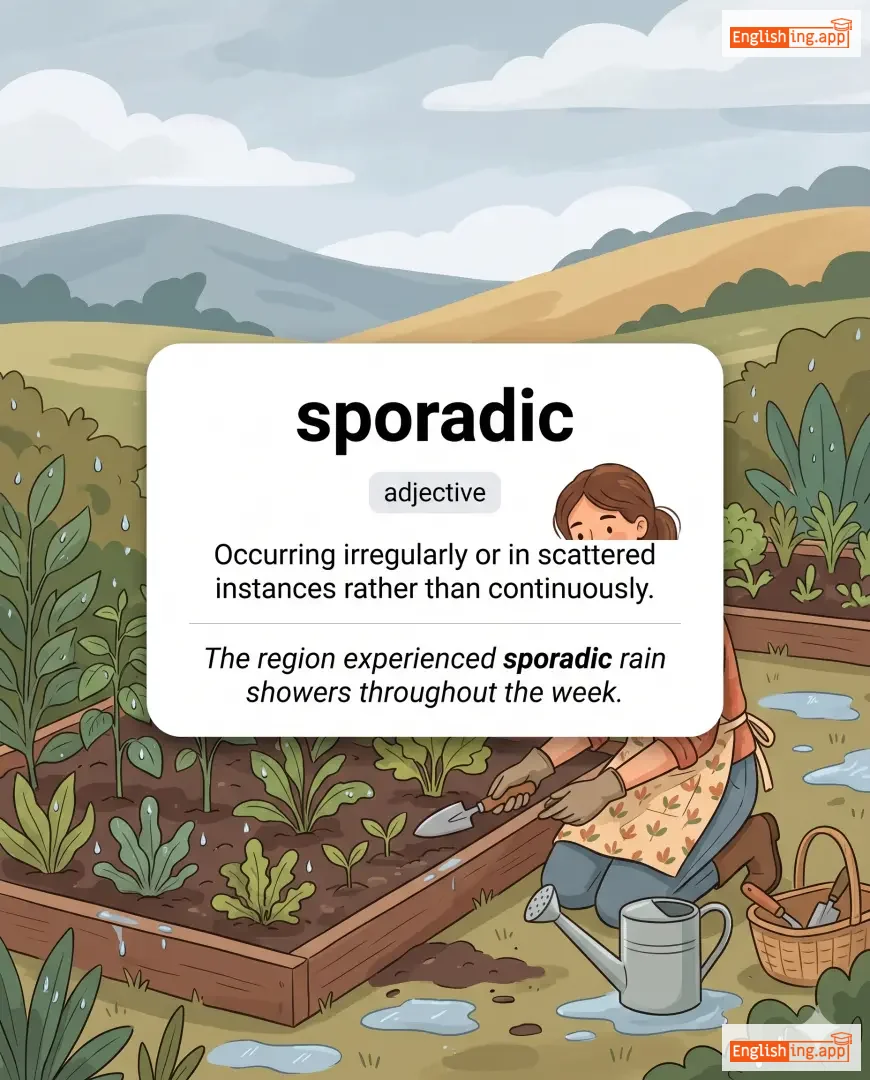
sporadic definition card — visual illustration of the meaning
adjective
/spəˈrædɪk/
散発的 (sanpatsuteki)

Occurring irregularly or in scattered instances rather than continuously.

"The region experienced sporadic rain showers throughout the week."

"その地域は1週間にわたって散発的な雨が降りました。" (Sono chiiki wa 1 shūkan ni watatte sanpatsuteki na ame ga furimashita.)
noun
/ˈspuːnərɪzəm/
スプーナリズム (supunarizumu)

A verbal error in which the initial sounds of words are swapped to create a humorous effect.

"He made a spoonerism by saying 'queer old dean' instead of 'dear old queen'."

"彼は『変な老院長』と言って『親愛なる老女王』の代わりにスプーナリズムを作った。" (Kare wa 'hen na rōin chō' to itte 'shin'ai naru rō joō' no kawari ni supunarizumu o tsukutta.)
noun
/spuːn/
スプーン (supūn)

a utensil consisting of a small shallow bowl with a handle, used for eating, stirring, or serving food

"She stirred her coffee with a silver spoon."

"彼女は銀のスプーンでコーヒーをかき混ぜました。" (Kanojo wa gin no supūn de kōhī o kakimazemashita.)
noun/verb
/spuːf/
ユーモアのある模倣 (yūmoa no aru mohō)

A humorous imitation of something, or to trick or parody someone or something.

"The comedian spoofed the politician’s speech to entertain the audience."
"コメディアンは政治家の演説を模倣して観客を楽しませました。" (Komedian wa seijika no enzetsu o mohō shite kankyaku o tanoshimemashita.)
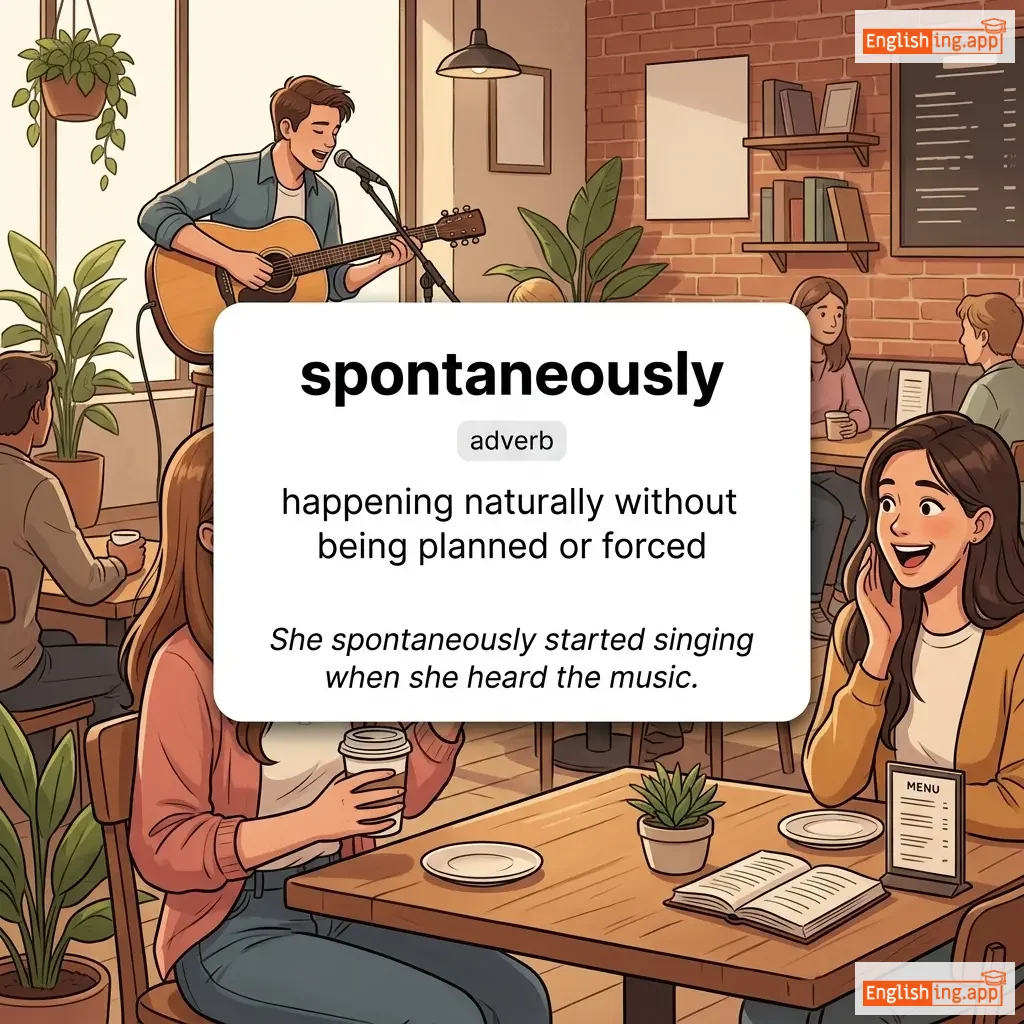
spontaneously definition card — visual illustration of the meaning
adverb
/spɒnˈteɪ.ni.əs.li/
自発的に (jihatsuteki ni)

happening naturally without being planned or forced

"She spontaneously started singing when she heard the music."

"彼女は音楽を聞いて自発的に歌い始めました。" (Kanojo wa ongaku o kiite jihatsuteki ni utai hajimemashita.)
adjective
/spɒnˈteɪniəs/
自発的 (jihatsuteki)

Happening naturally without planning or external cause; impulsive or unplanned.

"Their spontaneous trip to the mountains turned out to be the highlight of the summer."
"彼らの自発的な山への旅行は夏のハイライトとなった。" (Karera no jihatsuteki na yama e no ryokou wa natsu no hairaito to natta.)
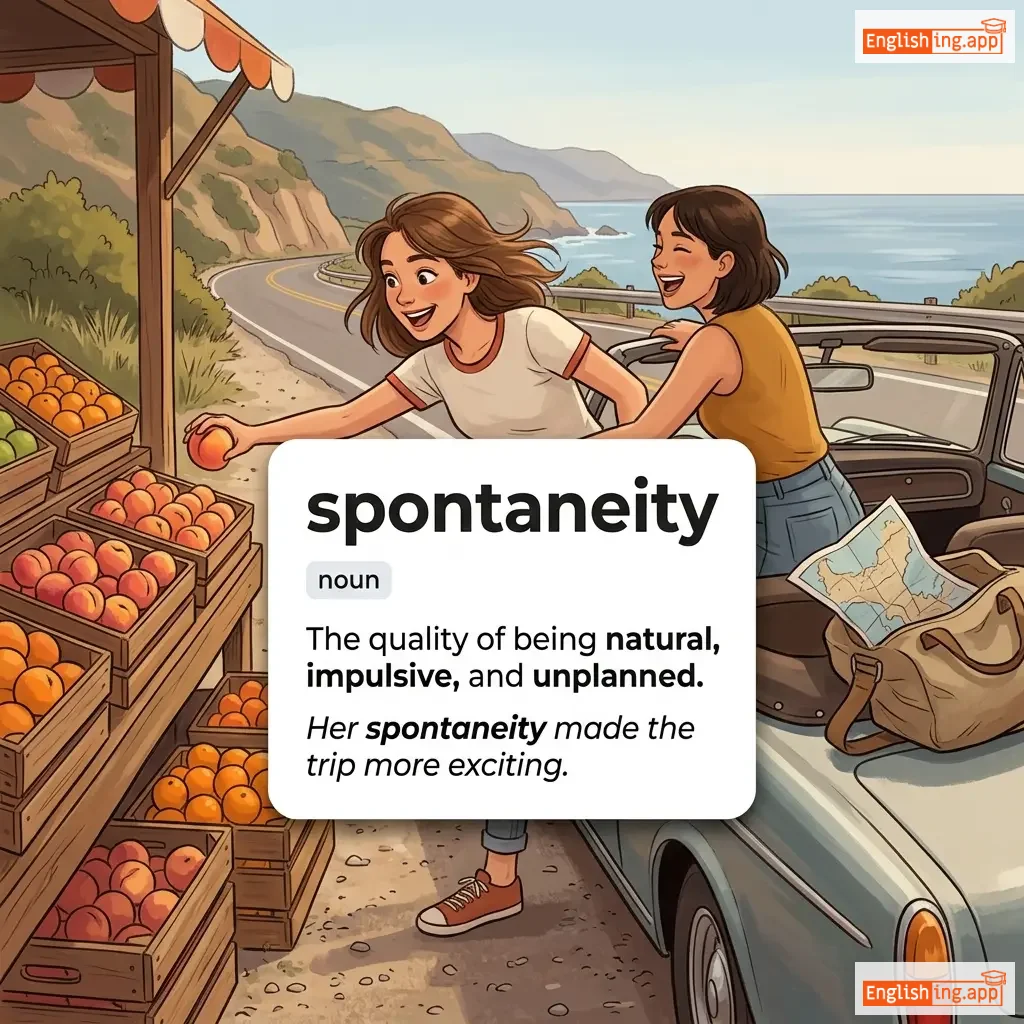
spontaneity definition card — visual illustration of the meaning
noun
/ˌspɑːntəˈneɪəti/
自発性 (jihatsusei)

The quality of being natural, impulsive, and unplanned.

"Her spontaneity made the trip more exciting."

"彼女の自発性は旅行をもっと刺激的にした。" (kanojo no jihatsusei wa ryokou o motto shigekiteki ni shita.)
noun
/ˈspɒnsəʃɪp/
後援 (kouen)

the act of supporting an event, activity, person, or organization financially or through other resources

"The event was made possible due to the sponsorship of several big companies."

"イベントは、いくつかの大企業の後援のおかげで実現しました。" (Ibento wa, ikutsuka no daikigyou no kouen no okage de jitsugen shimashita.)
sponsor definition card — visual illustration of the meaning
noun
/ˈspɒnsər/
スポンサー (sponsor)

a person or organization that provides funds for a project or activity in exchange for publicity or support

"The company became the main sponsor of the event."

"その会社はイベントの主要スポンサーとなった。" (Sono kaisha wa ibento no shuyō sponsor to natta.)
noun
/spʌndʒ ɡɔːrd/
スポンジカボチャ (sponji kabocha)

a fibrous gourd that becomes sponge-like when dried, used for cleaning and in cooking when young

"The sponge gourd can be eaten when young or dried to make natural scrubbers."

"スポンジカボチャは若い時に食べることができるか、乾燥させて自然のスポンジを作ることができます。" (Sponji kabocha wa wakai toki ni taberu koto ga dekiru ka, kansou sasete shizen no suponji o tsukuru koto ga dekimasu.)
adjective
/ˈspʌndʒi/
スポンジ状 (suponji-jou)

soft and full of holes like a sponge; porous

"The cake had a light and spongy texture."

"ケーキは軽くてスポンジ状の質感がありました。" (Kēki wa karukute suponji-jou no shitsukan ga arimashita.)
noun
/ˌspoʊliˈeɪʃən/
破壊 (hakai)

The act of destroying or ruining something, often evidence or property.

"The court punished the company for the spoliation of evidence."

"裁判所は証拠の破壊のために会社を罰しました。" (Saibansho wa shōko no hakai no tame ni kaisha o bashimashita.)
noun
/ˈspəʊkswɪmən/
広報女性 (kōhō josei)

a woman who speaks on behalf of a group or organization

"The spokeswoman for the company announced the new product."

"その会社の広報女性は新製品を発表した。" (Sono kaisha no kōhō josei wa shin seihin wo happyō shita.)
noun
/ˈspəʊkspɜːrsən/
スポークスマン (supōkusu man)

a person who speaks on behalf of others or an organization

"The spokesperson addressed the press conference on behalf of the company."

"スポークスマンは会社を代表して記者会見で話しました。" (Supōkusuman wa kaisha o daihyō shite kishakaiken de hanashimashita.)
adverb
/ˈspeʃ.əl.i/
特別に (tokubetsu ni)

for a particular purpose; especially; specifically

"This gift was specially made for you."

"このギフトは特別にあなたのために作られました。" (Kono gifuto wa tokubetsu ni anata no tame ni tsukuraremashita.)
adjective
/ˈspiːtʃləs/
言葉を失う (kotoba o ushinau)

Unable to speak because of shock, surprise, or strong emotion.

"She was speechless when she received the award."
"彼女は賞を受け取ったとき、言葉を失いました。" (Kanojo wa shō o uketotta toki, kotoba o ushinai mashita.)
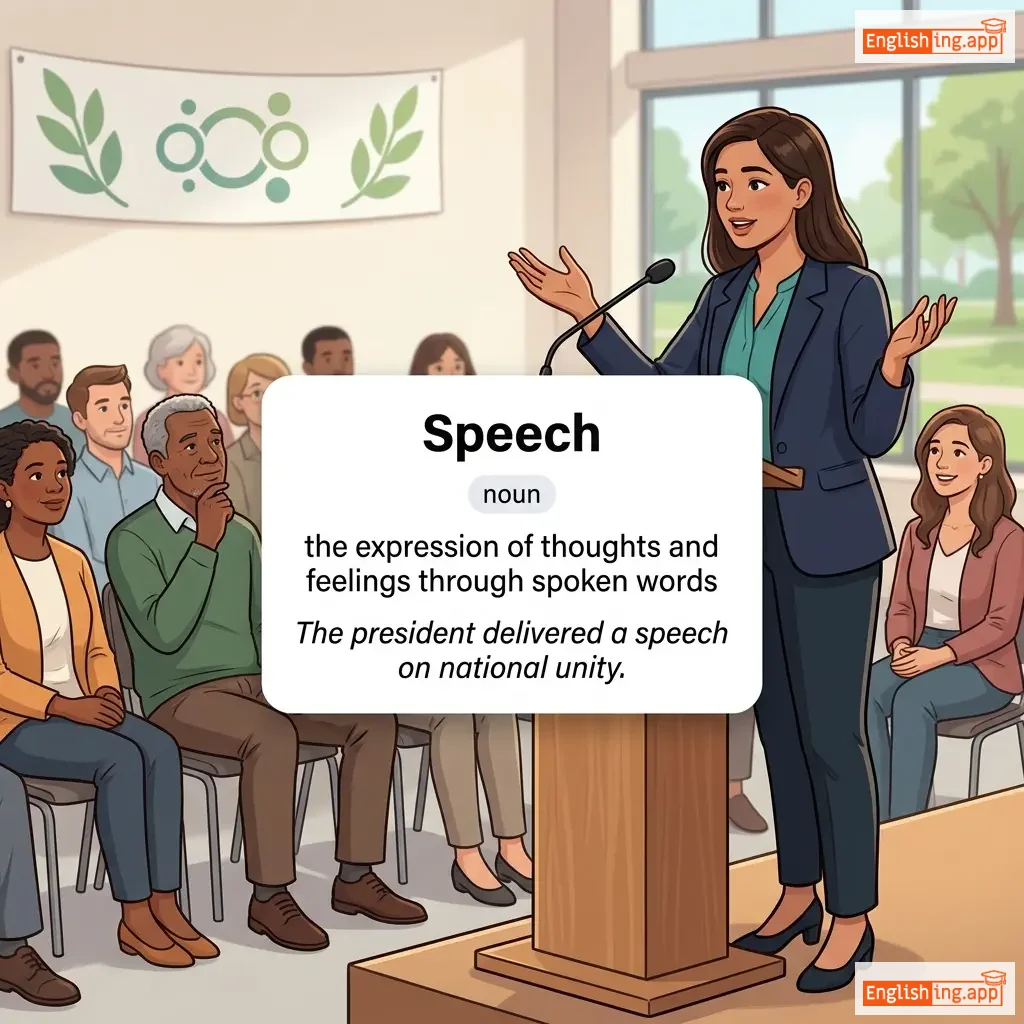
Speech definition card — visual illustration of the meaning
noun
/spiːʧ/
演説 (enzetsu)

the expression of thoughts and feelings through spoken words

"The president delivered a speech on national unity."

"大統領は国家統一に関する演説を行いました。" (Daitouryou wa kokka touitsu ni kansuru enzetsu wo okonaimashita.)
noun
/ˈspɛkjʊˌleɪtər/
投機家 (tōkika)

A person who forms theories without evidence, or invests in assets hoping for profit.

"The real estate speculator bought land hoping its value would rise."
"不動産投機家は、土地の価値が上がることを期待して土地を購入しました。" (Fudōsan tōkika wa, tochi no kachi ga agaru koto o kitai shite tochi o kōnyū shimashita.)
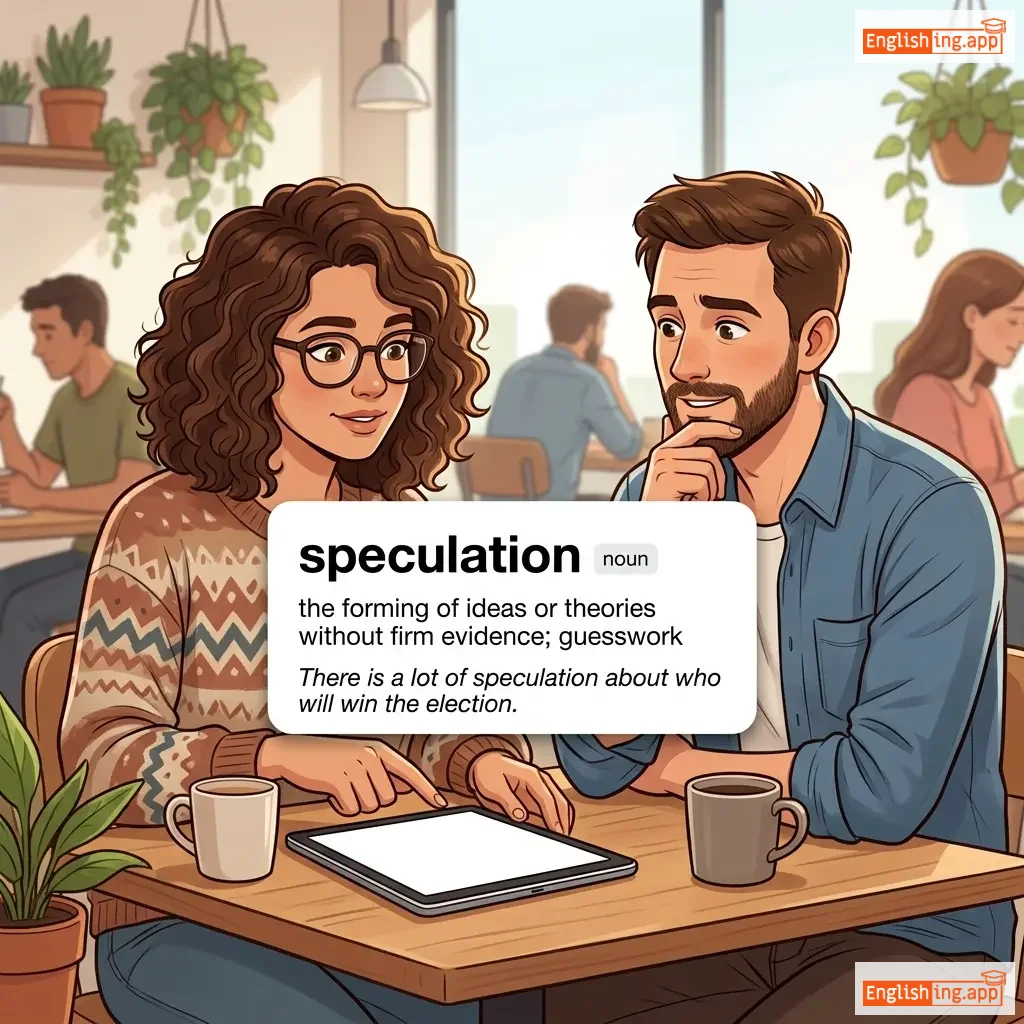
speculation definition card — visual illustration of the meaning
noun
/ˌspɛkjʊˈleɪʃən/
推測 (suisoku)

the forming of ideas or theories without firm evidence; guesswork

"There is a lot of speculation about who will win the election."

"誰が選挙に勝つかについて多くの推測があります。" (Dare ga senkyo ni katsu ka ni tsuite ooku no suisoku ga arimasu.)
verb
/ˈspɛkjʊˌleɪt/
推測する / 投資する (すいそくする / とうしする)

To form a theory or guess without firm evidence; to invest in stocks, property, etc. hoping for profit.

"Experts speculate that the company may expand into new markets."
"専門家は会社が新しい市場に進出する可能性があると予測しています。" (せんもんかはかいしゃがあたらしいしじょうにしんしゅつするかのうせいがあるとよそくしています。)
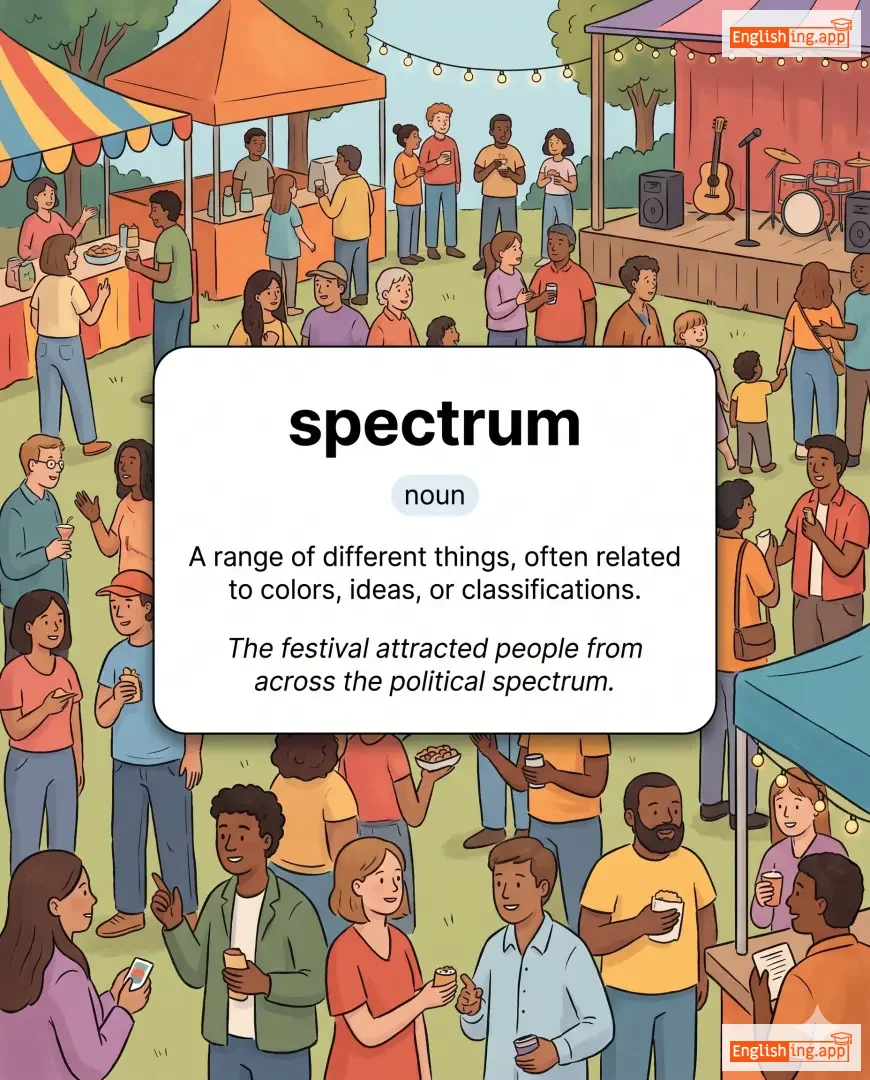
spectrum definition card — visual illustration of the meaning
noun
/ˈspɛktrəm/
スペクトル (supekutoru)

A range of different things, often related to colors, ideas, or classifications.

"The festival attracted people from across the political spectrum."

"その祭りは政治的スペクトル全体から人々を引き付けました。" (Sono matsuri wa seijiteki supekutoru zentai kara hitobito o hiki tsukemashita.)
adjective
/ˈspɛktrəl/
幽霊のような (yūrei no yō na)

Relating to a ghost or specter; ghostly. Also relating to a spectrum.

"The old mansion had a spectral atmosphere at night."

"古い館には夜、幽霊のような雰囲気が漂っていた。" (Furui yakata ni wa yoru, yūrei no yō na fun'iki ga tadayotte ita.)
noun
/ˈspɛktər/
幽霊 (yūrei)

A ghost or spirit; something that causes fear or dread.

"The specter of war still haunts the region."

"戦争の幽霊は今でもその地域をおびやかしています。" (Sensō no yūrei wa imademo sono chiiki o obiyakashiteimasu.)
noun
/ˈspɛkteɪtər/
観客 (kankyaku)

A person who watches an event, show, or game without taking part.

"Thousands of spectators gathered to watch the football match."
"何千人もの観客がサッカーの試合を観るために集まりました。" (Nansen-nin mono kankyaku ga sakkā no shiai o miru tame ni atsumarimashita.)
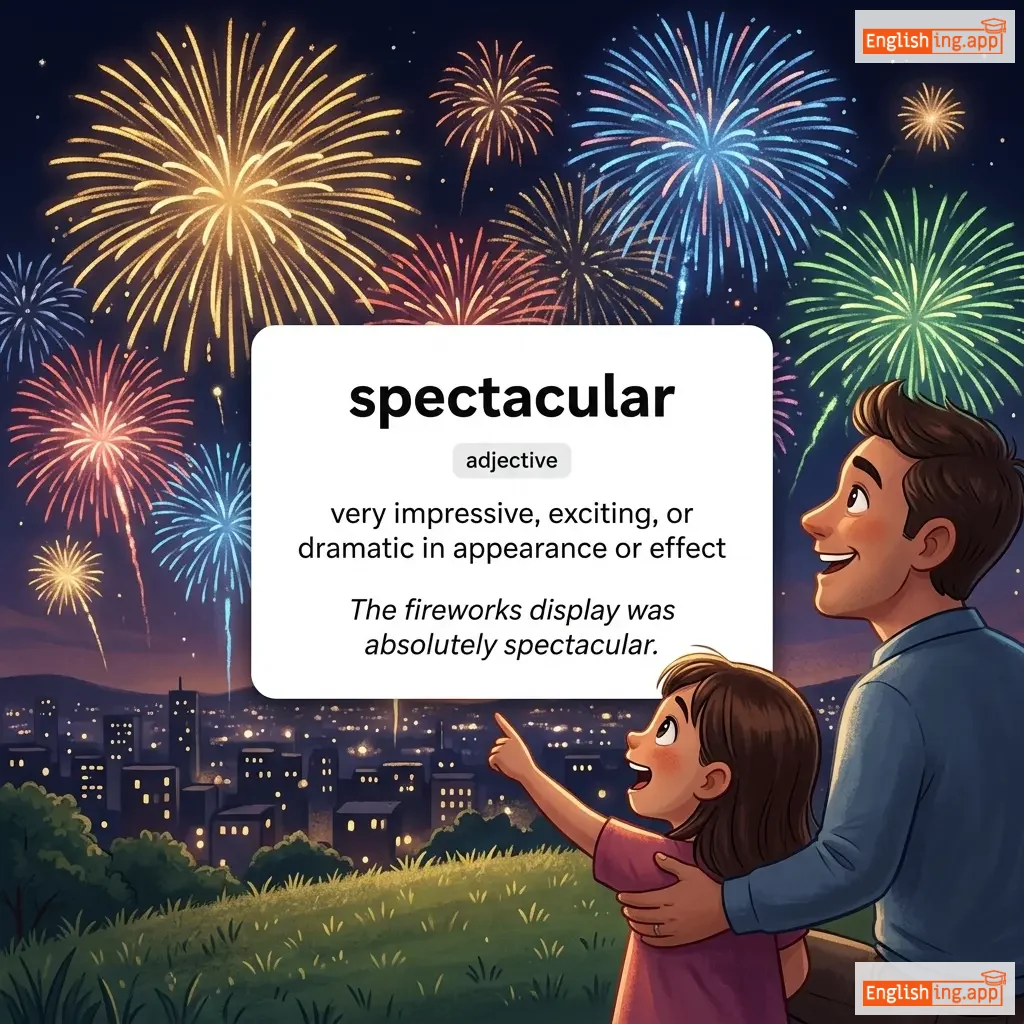
spectacular definition card — visual illustration of the meaning
adjective
/spɛkˈtækjələr/
壮大 (sōdai)

very impressive, exciting, or dramatic in appearance or effect

"The fireworks display was absolutely spectacular."
"花火大会は絶対に壮観でした。" (Hanabi taikai wa zettai ni sōkan deshita.)
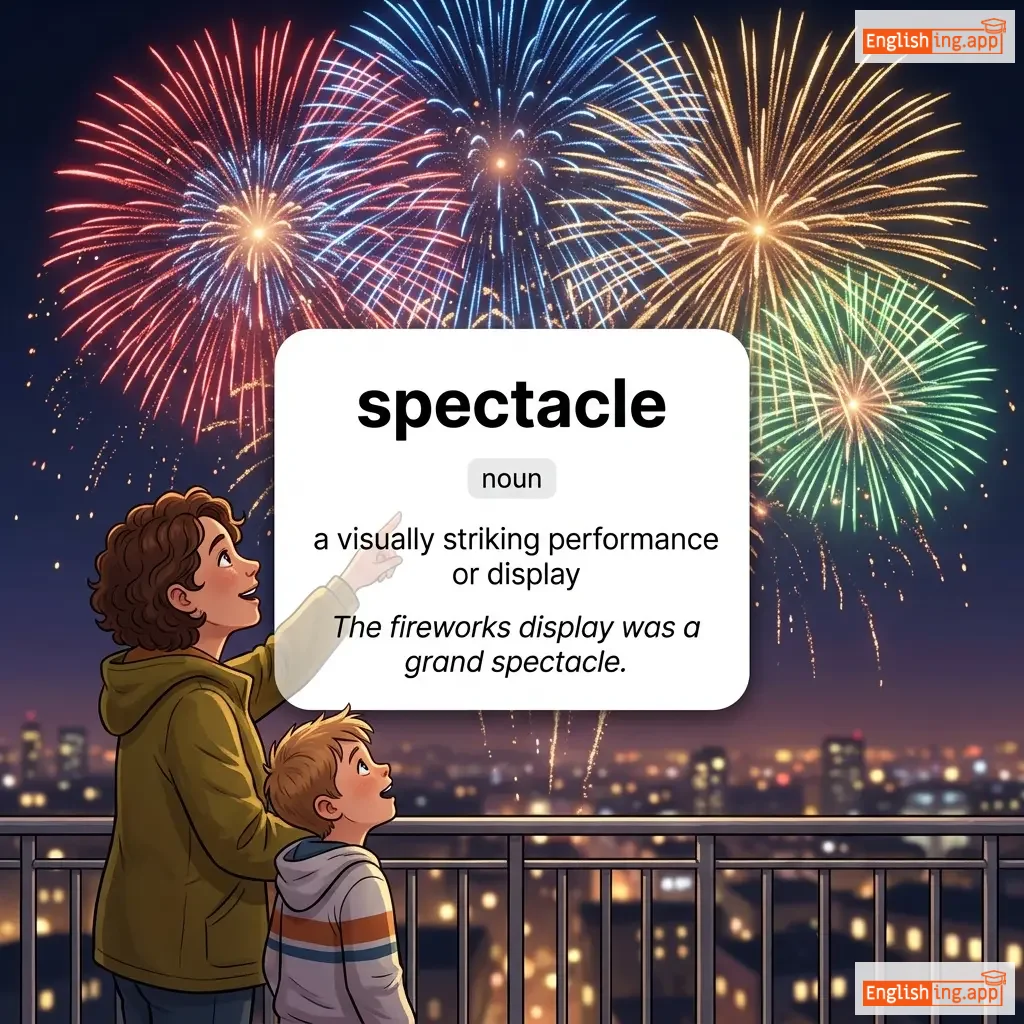
spectacle definition card — visual illustration of the meaning
noun
/ˈspɛktəkəl/
視覚的なショー (shikakuteki na shō)

a visually striking performance or display

"The fireworks display was a grand spectacle."

"花火のショーは壮大な視覚的なショーでした。" (Hanabi no shō wa sōdaina shikakuteki na shō deshita.)
noun
/spɛk/
しみ (shimi)

A very small spot, mark, or particle.

"There was a tiny speck of dust on the glass table."
"ガラスのテーブルに小さなほこりのしみがあった。" (Garasu no tēburu ni chīsana hokori no shimi ga atta.)
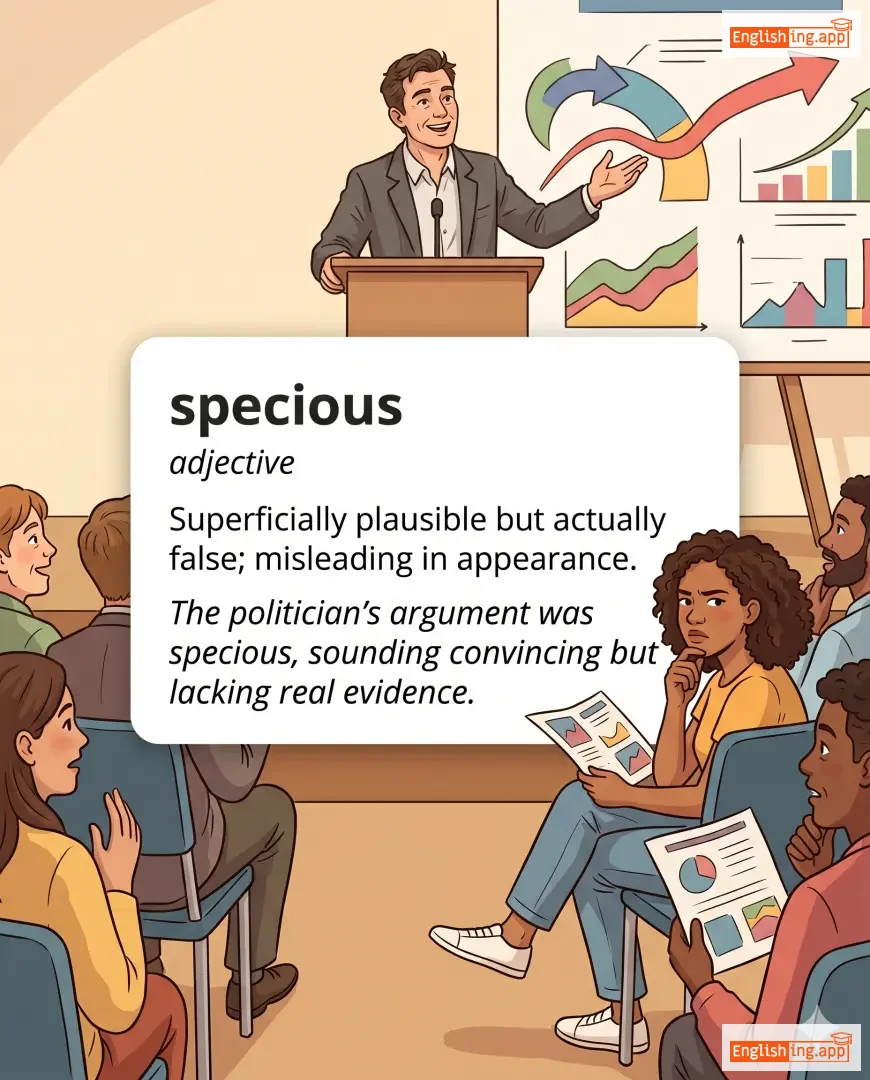
specious definition card — visual illustration of the meaning
adjective
/ˈspiːʃəs/
見せかけの (misekake no)

Superficially plausible but actually false; misleading in appearance.

"The politician’s argument was specious, sounding convincing but lacking real evidence."

"その政治家の議論は見せかけのもので、説得力があるように見えたが、実際の証拠は欠けていた。" (Sono seijika no giron wa misekake no mono de, settokuryoku ga aru you ni mieta ga, jissai no shouko wa kakete ita.)
noun
/ˈspɛsəmən/
標本 (hyouhon)

an individual animal, plant, piece of a mineral, etc., used as an example of its species or type for scientific study

"The museum has a rare butterfly specimen."

"博物館には珍しい蝶の標本があります。" (Hakubutsukan ni wa mezurashī chō no hyōhon ga arimasu.)
verb
/ˈspɛsɪfaɪ/
指定する (shiteisuru)

to state or describe something clearly and exactly

"Please specify the time and place of the meeting."

"会議の時間と場所を指定してください。" (Kaigi no jikan to basho o shitei shite kudasai.)
noun
/ˌspɛsɪfɪˈkeɪʃən/
仕様書 (shiyōsho)

a detailed description or assessment of something

"The product specification includes all the necessary details."

"製品の仕様書にはすべての必要な詳細が含まれています。" (Seihin no shiyōsho ni wa subete no hitsuyō na shōsai ga fukumareteimasu.)
adverb
/spəˈsɪfɪkli/
特に (toku ni)

in a clear and exact way

"He was specifically asked to handle the finances."
"彼は特に財務を扱うように頼まれました。" (Kare wa toku ni zaimu o atsukau you ni tanomaremashita.)
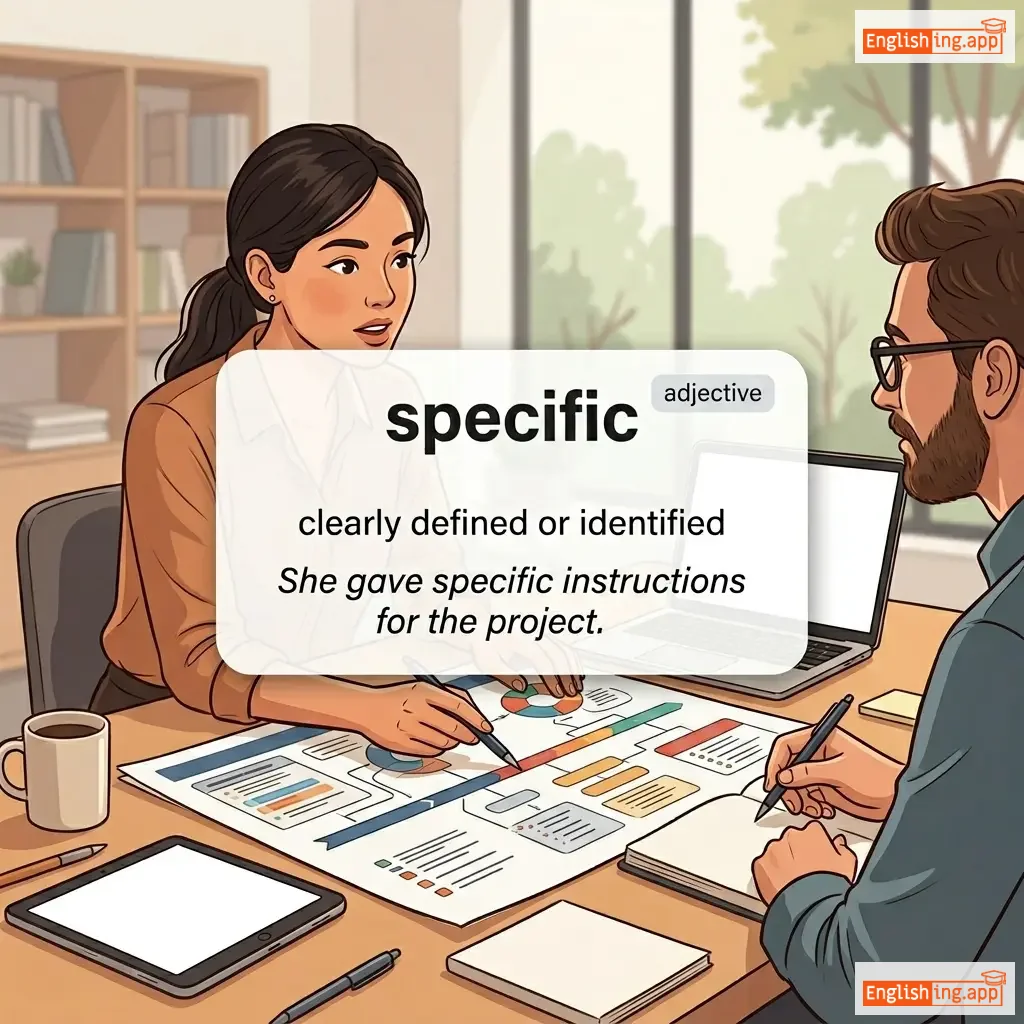
specific definition card — visual illustration of the meaning
adjective
/spəˈsɪfɪk/
具体的 (gutaiteki)

clearly defined or identified

"She gave specific instructions for the project."

"彼女はプロジェクトのために具体的な指示を出しました。" (Kanojo wa purojekuto no tame ni gutaiteki na shiji o dashimashita.)
noun
/ˈspiːʃiːz/
(shu)

a group of living organisms consisting of similar individuals capable of exchanging genes or interbreeding

"The panda is an endangered species."

"パンダは絶滅危惧種です。" (Panda wa zetsumetsu kigushu desu.)
noun
/ˈspiːʃiː/
硬貨 (kouka)

money in the form of coins rather than notes or credit

"The transaction was made in specie."

"取引は硬貨で行われました。" (Torihiki wa kouka de okonawaremashita.)
noun
/ˈspɛʃəlti/
専門 (senmon)

a particular area of study, work, or interest; something in which a person or place excels

"Her specialty is pediatric medicine."

"彼女の専門は小児科医学です。" (kanojo no senmon wa shonika igaku desu)
adjective
/spæzˈmɒdɪk/
痙攣性 (keirensei)

occurring irregularly or in sudden bursts

"The patient experienced spasmodic coughing during the night."

"患者は夜間に痙攣性の咳を経験しました。" (Kanja wa yakan ni keirensei no seki o keiken shimashita.)
adjective
/spɑːrs/
まばら (mabara)

thinly scattered or distributed; not dense or abundant

"Vegetation was sparse in the desert."

"砂漠では植生がまばらだった。" (Sabaku de wa shokusei ga mabara datta.)
adjective
/ˈspɑːrtn/
スパルタン (suparutan)

showing simplicity and lack of luxury; austere

"He lived in a spartan room with just a bed and a chair."

"彼はスパルタンな部屋に住んでいて、ベッドと椅子だけがありました。" (Kare wa suparutan na heya ni sunde ite, beddo to isu dake ga arimashita.)