語彙集

英単語辞書 | 単語の意味、定義、例文

verb
/spɪt/
唾を吐く (taba o haku)

to force liquid, especially saliva, out of the mouth

"He spat on the ground in anger."

"彼は怒りで地面に唾を吐いた。" (Kare wa ikari de jimen ni tuba o haita.)
noun
/spaɪt/
意地悪 (ijiwaru)

a desire to hurt, annoy, or offend someone

"She refused the gift out of spite."

"彼女は意地悪で贈り物を拒否した。" (Kanojo wa ijiwaru de okurimono o kyohi shita.)
noun
/spliːn/
脾臓; 怒り (hizō; ikari)

an organ in the body that produces lymphocytes and filters blood; also refers to bad temper or spite

"He vented his spleen on his coworkers after the meeting."

"会議後、彼は同僚に対して怒りをぶつけました。" (Kaigi go, kare wa dōryō ni taishite ikari o butsukemashita.)
adjective
/ˈsplendɪd/
素晴らしい; 壮大な; 印象的な (subarashii; soudaina; inshou-teki na)

magnificent; excellent; very impressive

"The castle looked splendid in the sunset."

"お城は夕日で素晴らしく見えました。" (O-shiro wa yuhi de subarashiku miemashita.)
adjective
/splɪˈnɛtɪk/
怒りっぽい、意地悪な (ikarippoi, ijiwaru na)

bad-tempered, irritable, spiteful

"His splenetic remarks offended everyone in the room."

"彼の怒りっぽいコメントは部屋の皆を怒らせた。" (Kare no ikarippoi komento wa heya no mina o okorase ta.)
verb
/splaɪs/
接続する (setsuzoku suru)

to join two pieces of rope, film, or other material by weaving or attaching them together

"The technician spliced the two wires to restore the connection."

"技術者は2本のワイヤーを接続して接続を回復しました。" (Gijutsusha wa 2-hon no waiyā o setsuzoku shite setsuzoku o kaifuku shimashita.)
/splɪnt/
添木 (temoku)

A rigid device used to support and immobilize a broken or injured body part.

"The doctor applied a splint to stabilize the patient's broken arm."

"医者は患者の折れた腕を安定させるために添木を使いました。" (Isha wa kanja no oreta ude o antei saseru tame ni temoku o tsukaimashita.)
verb
/splɪt/
分ける (wakeru)

to divide or separate into parts or groups

"He split the log in two with an axe."

"彼は斧で丸太を二つに割った。" (Kare wa ono de maruta o futatsu ni watta.)
verb
/spɔɪl/
台無しにする (dainashi ni suru)

to damage or ruin something

"The rain spoiled the outdoor event."

"雨が屋外イベントを台無しにした。" (Ame ga okugai ibento o dainashi ni shita.)
noun
/ˈspɔɪlˌspɔːrt/
スポイルスポート (supoirusupoto)

A person who ruins other people's enjoyment or fun.

"Don't be a spoilsport and let us enjoy the party."

"スポイルスポートにならないで、パーティーを楽しませてください。" (Supoirusupoto ni naranai de, pātii o tanoshimase te kudasai.)
noun/verb
/spiːd/
速度 (sokudo)

the rate at which something moves or happens

"The car was moving at high speed."

"車は高速で走っていた。" (Kuruma wa kōsoku de hashitte ita.)
verb
/ˈʃɔːrtn/
短くする (mijikaku suru)

To make something shorter in length, duration, or extent

"She decided to shorten her speech to fit the time limit."
"彼女は時間内に収めるためにスピーチを短くすることに決めた。" (Kanojo wa jikan nai ni osameru tame ni supichi o mijikaku suru koto ni kimeta.)
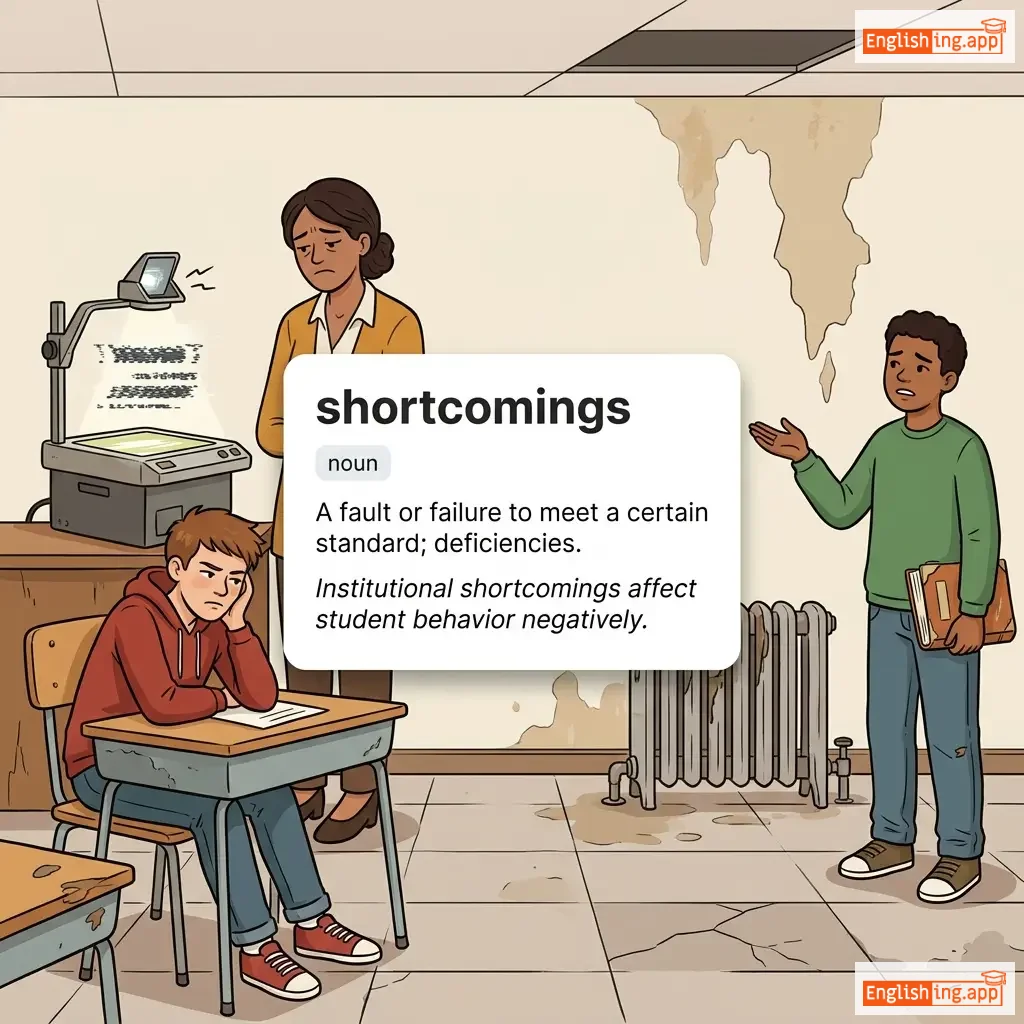
shortcomings definition card — visual illustration of the meaning
noun
ˈʃɔːtkʌmɪŋz
欠点 (kenten)

A fault or failure to meet a certain standard; deficiencies.

"Institutional shortcomings affect student behavior negatively."

"制度的な欠点は学生の行動に悪影響を与える。" (Seidō-teki na kenten wa gakusei no kōdō ni aku eikyō o ataeru.)
noun
/ˈʃɔːrt.kʌm.ɪŋ/
欠点; 不足; 短所 (kettō; fusoku; tansho)

a fault or failure to meet a certain standard; a deficiency

"Despite his many talents, he has some shortcomings."

"彼の多くの才能にもかかわらず、いくつかの欠点があります。" (Kare no ōku no sainō ni mo kakawarazu, ikutsuka no kettō ga arimasu.)
noun
/ˈʃɔːrtɪdʒ/
不足 (fusoku)

a state or situation in which something needed cannot be obtained in sufficient amounts

"There is a shortage of skilled workers in the industry."

"業界では熟練した労働者が不足しています。" (Gyōkai de wa jukunin shita rōdōsha ga fusoku shiteimasu.)
short-term definition card — visual illustration of the meaning
adjective
/ˈʃɔːrt tɜːrm/
短期 (tanki)

lasting for or involving a short period of time

"They offered a short-term loan to help the business."

"ビジネスを支援するために短期融資を提供しました。" (Bijinesu o shien suru tame ni tanki yūshi o teikyō shimashita.)
adjective
/ˈʃɔːrt ˌtempərd/
短気な; すぐに怒る (tanki na; sugu ni okoru)

quick to lose one's temper; easily angered

"She became short-tempered when the traffic made her late for the meeting."

"交通のせいで遅れてしまったとき、彼女は短気になった。" (koutsuu no sei de okurete shimatta toki, kanojo wa tanki ni natta.)
adjective
/ˈʃɔːrt ˌsaɪtɪd/
近視; 短期的な視野 (kinshi; tanki-tekina shiya)

lacking foresight or consideration for the future; myopic

"His short-sighted decision to quit school early affected his career prospects."

"彼の近視的な決断で学校を早く辞めたことは、彼のキャリアの展望に影響を与えました。" (kare no kinshiteki na ketsudan de gakkou wo hayaku yameta koto wa, kare no kyaria no tenbō ni eikyō wo ataemashita.)
adjective
/ʃɔːrt/
短い (mijikai)

having little length or duration

"She wore a short dress for the party."

"彼女はパーティーのためにショートドレスを着ていました。" (Kanojo wa paatii no tame ni shooto doresu o kite imashita.)
noun
/ʃɔːr/
(kishi)

the land along the edge of a sea, lake, or other large body of water

"We walked along the shore of the lake."

"私たちは湖の岸を歩いていました。" (Watashitachi wa mizūmi no kishi o aruite imashita.)
adjective
/ˈʃɑːpwɔːrn/
古くなった / 色あせた (furukunatta / iroaseta)

worn or faded from being displayed in a shop; no longer fresh or original

"The shopworn shoes were sold at a discount."

"ショッピングワーンの靴は割引価格で販売されました。" (Shoppingworn no kutsu wa waribiki kakaku de hanbai saremashita.)
noun
/ˈʃɒpɪŋ/
ショッピング (shoppingu)

the activity of going to shops to buy things

"She spent the afternoon shopping for clothes."
"彼女は午後に服を買うためにショッピングをして過ごしました。" (Kanojo wa gogo ni fuku o kau tame ni shoppingu o shite sugoshimashita.)
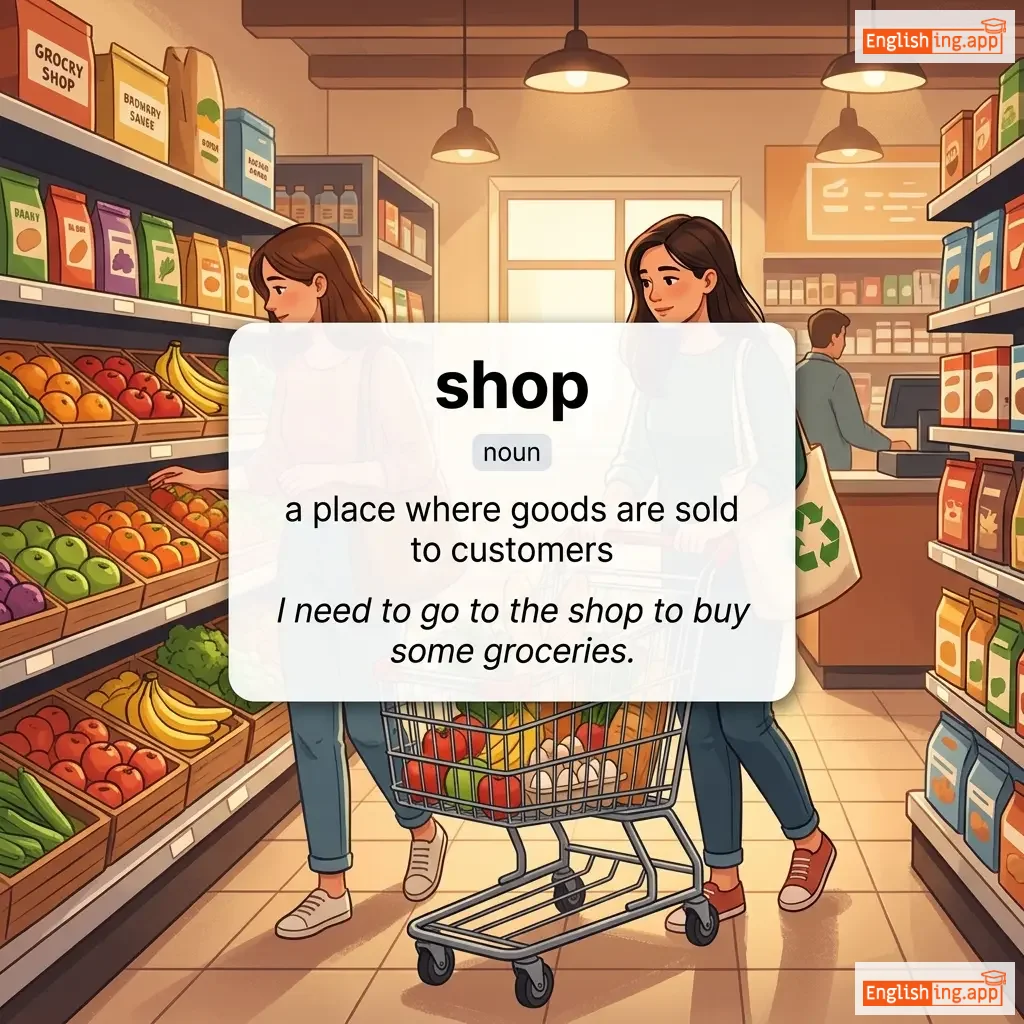
shop definition card — visual illustration of the meaning
noun
/ʃɒp/
(mise)

a place where goods are sold to customers

"I need to go to the shop to buy some groceries."

"私は食料品を買うためにショップに行かなければならない。" (Watashi wa shokuryōhin o kau tame ni shoppu ni ikanakereba naranai.)
noun
/ˈʃuːtɪŋ/
撮影 (satsuei)

the action of shooting a gun, camera, or similar device

"The shooting of the movie took several months."

"映画の撮影は数ヶ月かかりました。" (Eiga no satsuei wa suūkagetsu kakarimashita.)
verb
/ʃuːt/
撃つ / 写真を撮る (utsu / shashin o toru)

to fire a bullet or arrow from a weapon; to take a photograph or film

"He learned how to shoot a bow and arrow."

"彼は弓と矢で射撃する方法を学んだ。" (Kare wa yumi to ya de shageki suru hōhō o mananda.)
noun
/ʃuː/
(kutsu)

a covering for the foot, typically made of leather, with a sturdy sole and heel

"She bought a new pair of shoes for the wedding."

"彼女は結婚式のために新しい靴を買った。" (Kanojo wa kekkonshiki no tame ni atarashii kutsu wo katta.)
adjective
/ˈʃɑːdi/
粗末な (somotsu na)

badly made or done; of poor quality

"The contractor did a shoddy job on the repairs."

"契約者は修理作業で粗末な仕事をしました。" (Keiyakusha wa shūri sagyō de somotsu na shigoto o shimashita.)
adjective
/ˈʃɒkɪŋ/
衝撃的な (shougeki teki na)

causing surprise or disbelief; startling

"The news of the accident was shocking to everyone."

"事故のニュースは皆を衝撃的にしました。" (Jiko no nyuusu wa minna o shougeki teki ni shimashita.)
noun
/ʃɒk/
衝撃 (shōgeki)

a sudden upsetting or surprising event or experience

"The news of his sudden departure was a shock to everyone."

"彼の突然の出発のニュースは皆にショックを与えた。" (Kare no totsuzen no shuppatsu no nyūsu wa mina ni shokku o ataeta.)
noun
/ʃoʊl/
魚の群れ (uo no mure)

a large group of fish swimming together; a shallow place in water

"We saw a shoal of fish near the coast."

"私たちは海岸近くで魚の群れを見ました。" (Watashitachi wa kaigan chikaku de sakana no mure o mimashita.)
noun
/ʃɪt/
うんこ (unko)

a vulgar term for feces or excrement

"The dog made a mess by leaving its shit on the floor."

"犬は床にうんこを残して散らかしました。" (Inu wa yuka ni unko o nokoshite chirakashimashita.)
noun
/ʃɜːrt/
シャツ (shatsu)

a piece of clothing worn on the upper body, usually with sleeves and a collar

"He wore a blue shirt to the party."

"彼はパーティーに青いシャツを着て行きました。" (Kare wa pātī ni aoi shatsu o kite ikimashita.)
verb
/ʃɜːrk/
避ける (sakeru)

to avoid or neglect a duty or responsibility

"He always tries to shirk his responsibilities at work."
"彼は仕事で責任を避けようといつも試みます。" (Kare wa shigoto de sekinin o sakeyou to itsumo kokoromimasu.)
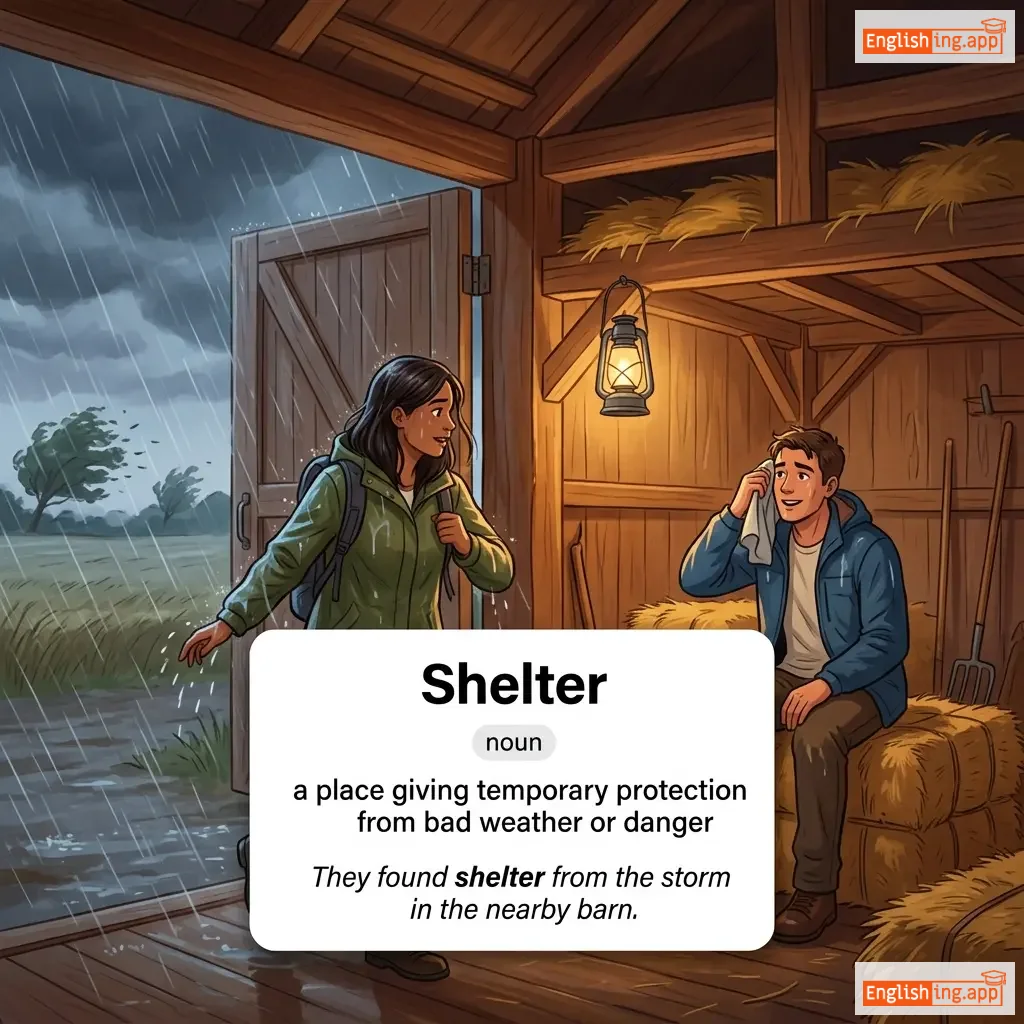
Shelter definition card — visual illustration of the meaning
noun
/ˈʃɛltər/
避難所 (hinanjo)

a place giving temporary protection from bad weather or danger

"They found shelter from the storm in the nearby barn."

"彼らは嵐から避難するために近くの納屋で避難所を見つけました。" (Karera wa arashi kara hinan suru tame ni chikaku no naya de hinanjo o mitsukemashita.)
pronoun
/ʃi/
彼女 (kanojo)

a female person or animal previously mentioned or easily identified

"She is going to the market to buy vegetables."

"彼女は市場に行って野菜を買います。" (Kanojo wa ichiba ni itte yasai o kaimasu.)
noun
/ʃiːf/
麦の束 (mugi no taba)

a bundle of grain stalks laid lengthwise and tied together after reaping; a bundle of objects tied together

"The farmer carried a sheaf of wheat on his shoulder."

"農夫は肩に小麦の束を運んでいました。" (Nōfu wa kata ni komugi no taba o hakonde imashita.)
verb
/ʃɪə/
刈る (karu)

to cut the wool off a sheep or to cut something with sharp tools like scissors or shears

"The farmer will shear the sheep in the spring."

"農夫は春に羊の毛を刈ります。" (Nōfu wa haru ni hitsuji no ke o karimasu.)
noun
/ʃiːt fɪʃ/
ナマズ (namazu)

A large freshwater catfish with a broad flat head and long barbels

"The sheat-fish is one of the largest freshwater fish in South Asia."

"ナマズは南アジアで最大の淡水魚の一つです。" (Namazu wa minami ajia de saidai no tansui gyo no hitotsu desu)
verb
/ʃiːð/
鞘に戻す (saya ni modosu)

to put a sword or knife back into its cover

"He quickly sheathed his sword after the duel."

"彼は決闘の後、素早く剣を鞘に戻した。" (Kare wa kettou no ato, subayaku ken o saya ni modoshita.)
verb
/ʃɛd/
落ちる (ochiru)

to let something fall off naturally, such as leaves, hair, or tears

"Trees shed their leaves in autumn."

"木々は秋に葉を落とします。" (Kigi wa aki ni ha wo otoshimasu.)
noun
/ʃiːp/
(hitsuji)

a farm animal with thick wool that is raised for its wool, meat, and milk

"The farmer keeps a large flock of sheep."

"農夫は大きな羊の群れを飼っています。" (Noufu wa ookina hitsuji no mure o katte imasu.)
adjective
/ʃɪə/
完全 (kanzen)

complete and utter; very steep or transparent

"The cliff was a sheer drop into the sea."

"崖は海に向かって完全に落ちていました。" (Gake wa umi ni mukatte kanzen ni ochite imashita.)
noun
/ʃiːt/
シーツ (shītsu)

a large piece of cloth or paper, typically used to cover or protect something

"I need a clean sheet to cover the bed."

"ベッドを覆うために清潔なシーツが必要です。" (Beddo o ōu tame ni seiketsu na shītsu ga hitsuyō desu.)
noun
/ʃɛlf/
(tana)

a flat surface used for storing or displaying things, typically fixed to a wall or inside a cabinet

"I placed the books on the shelf next to the window."

"窓の近くの棚に本を置きました。" (Mado no chikaku no tana ni hon o okimashita.)
noun
/ʃɛl/
貝殻 (kaigara)

the hard outer covering of a mollusk or a crustacean, or something similar

"She picked up a beautiful seashell on the beach."

"彼女はビーチで美しい貝殻を拾った。" (Kanojo wa bīchi de utsukushī kaigara o hirotta.)
adjective
/ˈʃaɪ.ni/
光沢のある; 輝く; (kōtaku no aru; kagayaku;)

reflecting light; bright and polished; glossy

"The shiny new car caught everyone's attention."

"その新しい光沢のある車は皆の注意を引きました。" (Sono atarashī kōtaku no aru kuruma wa mina no chūi o hikimashita.)
verb
/ˈʃɪmər/
きらめく (kirameku)

To shine with a soft, wavering light.

"The lake shimmered under the moonlight."
"湖は月光の下で輝いていました。" (Mizuumi wa gekkō no shita de kagayaite imashita.)
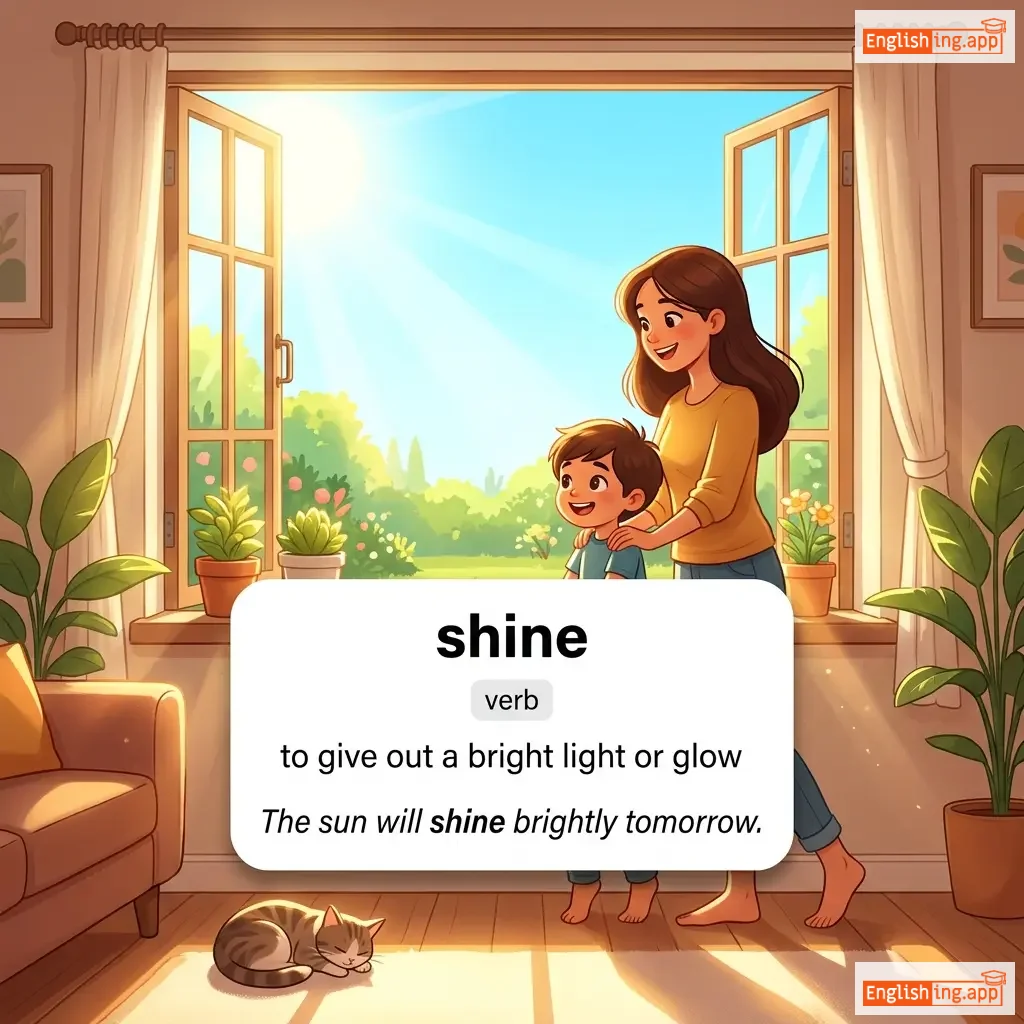
shine definition card — visual illustration of the meaning
verb
/ʃaɪn/
輝く (kagayaku)

to give out a bright light or glow

"The sun will shine brightly tomorrow."

"太陽は明日明るく輝きます。" (Taiyō wa ashita akaruku kagayakimasu.)
adjective
/ˈʃɪft.ləs/
怠け者 (namakemono)

Lacking ambition or the ability to accomplish anything; lazy and unmotivated.

"He was seen as a shiftless young man with no goals."

"彼は目標のない怠け者の若者として見られていた。" (Kare wa mokuhyō no nai namakemono no wakamono toshite mirarれていた。)
noun
/ʃɪp/
(fune)

a large boat used for travel or transporting goods across water

"The ship set sail across the ocean."

"船は海を越えて出航しました。" (Fune wa umi o koete shukkou shimashita.)