語彙集

英単語辞書 | 単語の意味、定義、例文

noun
/ʃɔːrts/
ショートパンツ (shōto pantsu)

a short garment worn on the lower half of the body that covers each leg separately, usually above the knees.

"He wore a pair of blue shorts to the beach."

"彼はビーチに青いショートパンツを履いていました。" (Kare wa bīchi ni aoi shōto pantsu wo haiteimashita.)
noun, verb
/ʃɒt/
ショット (shotto)

a single attempt to hit something, usually with a weapon or a ball

"He took a shot at the goal."

"彼はゴールに向かってショットを打った。" (Kare wa gōru ni mukatte shotto o utta.)
modal verb
/ʃʊd/
べき (beki)

used to indicate obligation or duty

"You should study for your exams."

"試験のために勉強すべきです。" (Shiken no tame ni benkyou subeki desu.)
noun
/ˈʃoʊldər/
(kata)

the upper joint of the human arm and the part of the body to which it is attached

"He hurt his shoulder while lifting weights."
"彼はウェイトを持ち上げているときに肩を痛めました。" (Kare wa weito wo mochi agete iru toki ni kata wo itamemashita.)
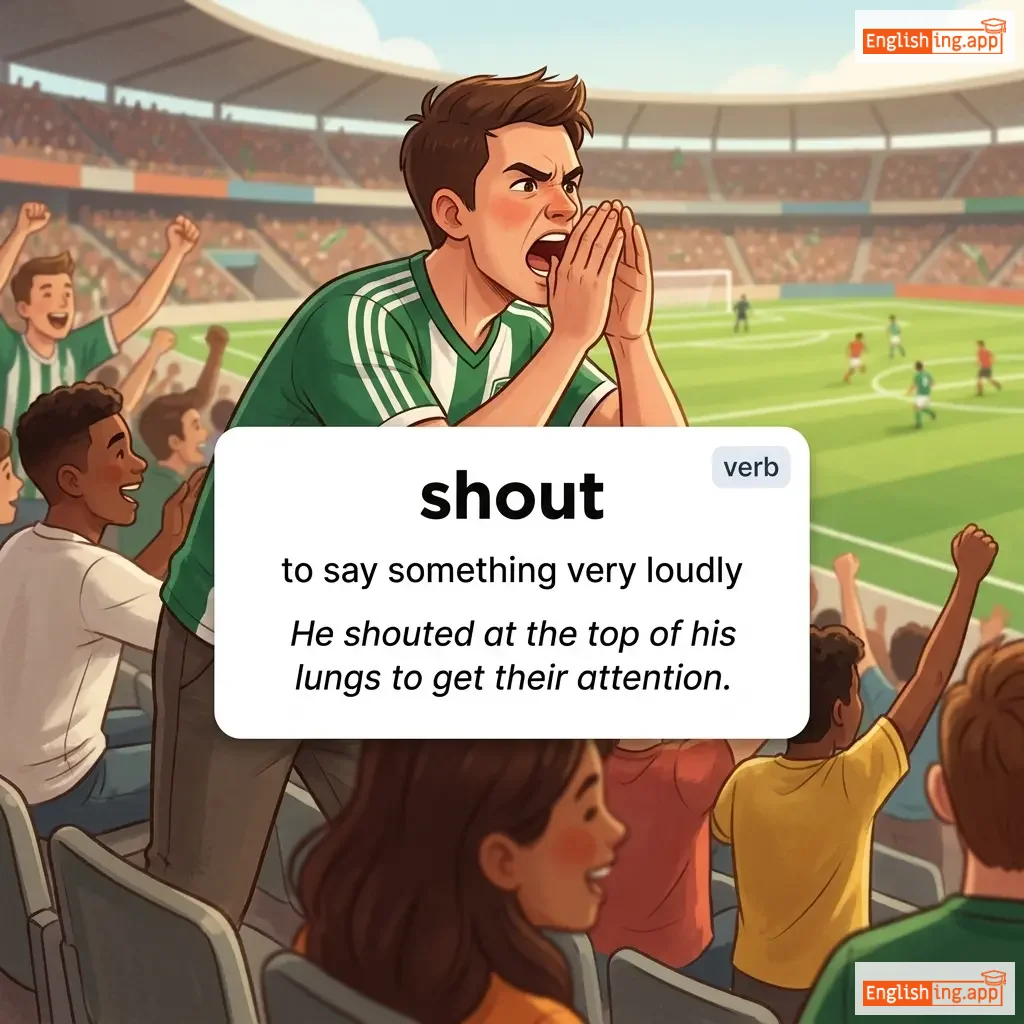
shout definition card — visual illustration of the meaning
verb
/ʃaʊt/
叫ぶ (sakebu)

to say something very loudly

"He shouted at the top of his lungs to get their attention."

"彼は彼らの注意を引くために全力で叫んだ。" (Kare wa karera no chūi o hiku tame ni zenryoku de sakenda.)
verb
/ʃʌv/
押す (osu)

to push someone or something roughly

"He shoved the box into the corner."

"彼は箱を隅に押し込んだ。" (Kare wa hako o sumi ni oshikonda.)
noun
/ˈʃʌv.əl/
シャベル (shaberu)

a tool with a broad flat blade and long handle used for digging and moving earth, snow, or other materials

"He grabbed a shovel to clear the snow from the driveway."
"彼は車道から雪を取り除くためにシャベルを取った。" (Kare wa shadō kara yuki o tori nozoku tame ni shaberu o totta.)
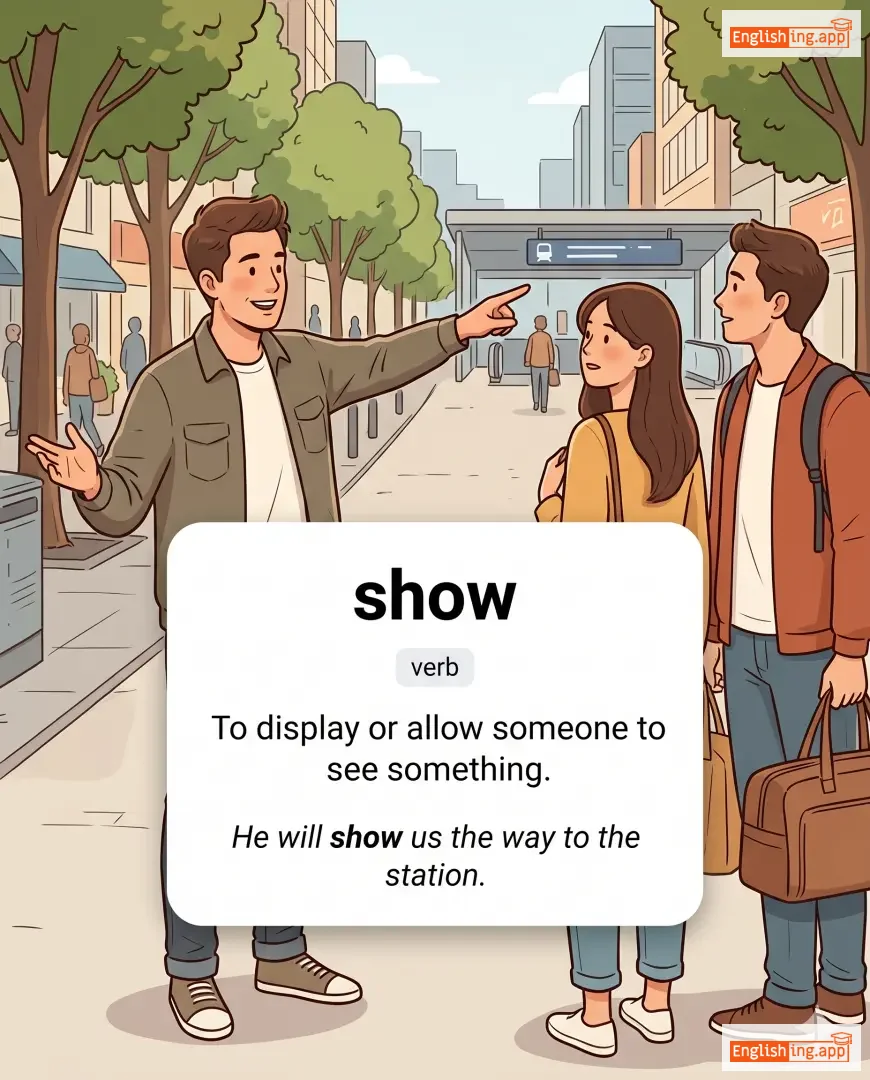
show definition card — visual illustration of the meaning
verb
/ʃoʊ/
見せる (miseru)

To display or allow someone to see something.

"He will show us the way to the station."

"彼は私たちに駅への道を見せてくれるでしょう。" (Kare wa watashitachi ni eki e no michi wo misete kureru deshou.)
noun
/ˈʃaʊər/

a brief fall of rain or snow or a device for taking a bath or washing oneself

"After the workout, I took a quick shower to refresh myself."

/ʃrɛd/
引き裂く (hikisaku)

to tear or cut something into small pieces

"She shredded the old documents before throwing them away."

"彼女は古い書類を捨てる前にシュレッドした。" (Kanojo wa furui shorui o suteru mae ni shred shita.)
noun
/ʃruː/
怒りっぽい女性 / 小さなネズミのような動物 (ikari ppoi josei / chiisana nezumi no you na doubutsu)

a small mouse-like animal; also a woman with a bad temper

"The play describes a strong-willed woman as a shrew."

"この劇は強い意志を持った女性を怒りっぽい女性として描いています。" (Kono geki wa tsuyoi ishi o motta josei o ikarippoi josei to shite kakuiteimasu.)
adjective
/ʃruːd/
抜け目のない (nukeme no nai)

having sharp judgment and practical intelligence

"She made a shrewd investment in real estate."

"彼女は不動産に抜け目のない投資をした。" (Kanojo wa fudōsan ni nukeme no nai tōshi o shita.)
verb
/ʃriːk/
叫ぶ (sakebu)

to make a loud, high-pitched cry

"She shrieked when she saw the spider."

"彼女はクモを見て叫んだ。" (Kanojo wa kumo wo mite sakenda.)
adjective
/ʃrɪl/
鋭い音 (surudoi oto)

High-pitched and piercing in sound.

"The shrill whistle startled everyone in the room."

"鋭い口笛の音が部屋の中の全員を驚かせた。" (Surudoi kuchibue no oto ga heya no naka no zen'in o odorokaseta.)
noun
/ʃrɪmp/
エビ (ebi)

a small marine crustacean that is often used as food.

"We ordered grilled shrimp for dinner."

"私たちは夕食にグリルしたエビを注文しました。" (Watashitachi wa yuushoku ni guriru shita ebi o chuumon shimashita.)
noun
/ʃraɪn/
聖地 (seichi)

A place regarded as holy, often associated with a saint or deity.

"Thousands of pilgrims visit the shrine each year."
"毎年、何千人もの巡礼者がその聖地を訪れます。" (Mainen, nan-sen nin mo no junrei-sha ga sono seichi o otozuremasu.)
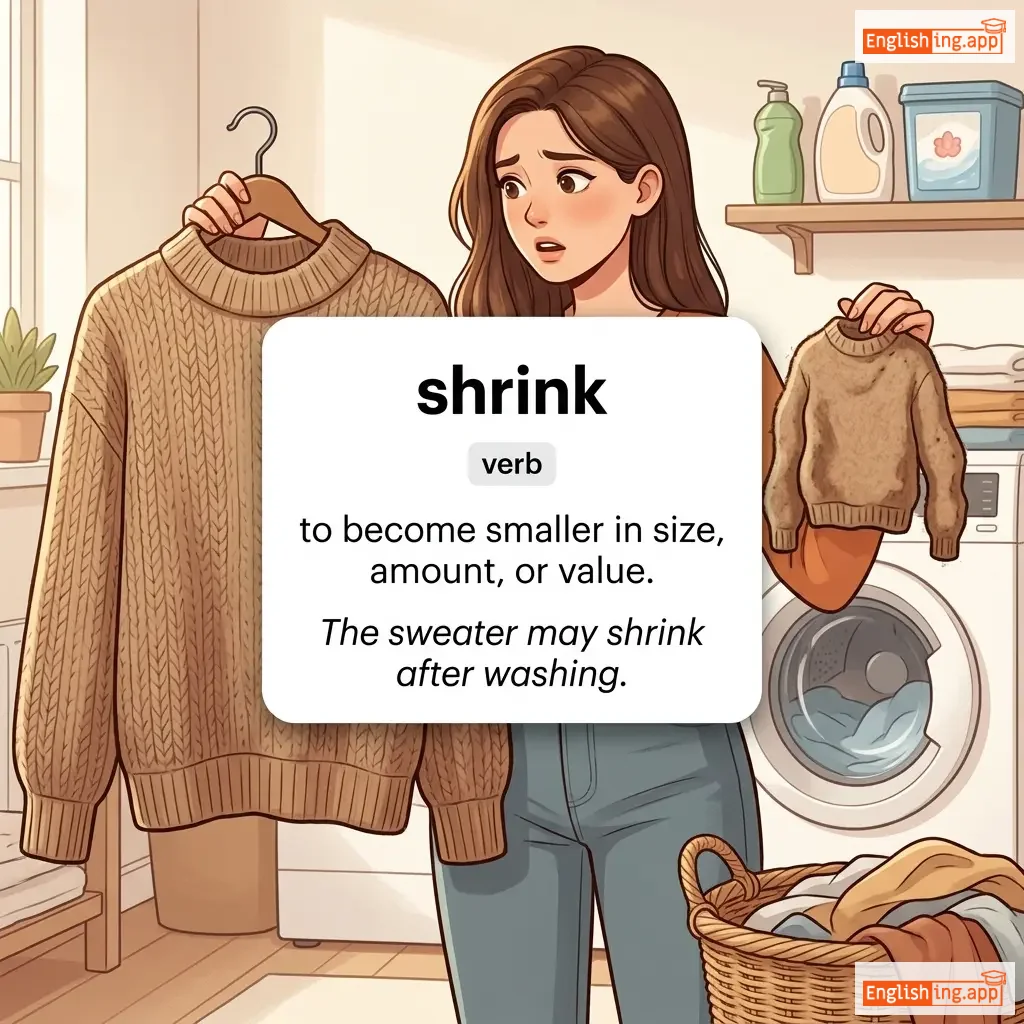
shrink definition card — visual illustration of the meaning
verb
/ʃrɪŋk/
幸せ (shiawase)

to become smaller in size, amount, or value.

"The sweater may shrink after washing."

"彼女は賞を受け取ったとき、幸せを隠すことができませんでした。" (Kanojo wa shō o uketotta toki, shiawase o kakusu koto ga dekimasen deshita.)
noun
/ˈʃrɪŋkɪdʒ/
収縮 (shūshuku)

The process of becoming smaller in size, amount, or value.

"The company reported a shrinkage in profits this quarter."

"その会社は今四半期の利益の収縮を報告しました。" (Sono kaisha wa ima shihanki no rieki no shūshuku o hōkoku shimashita.)
verb
/ˈʃrɪvəl/
しわになる (shiwa ni naru)

To become dry, wrinkled, and smaller due to lack of moisture.

"The flowers shriveled under the hot sun."
"花は暑い太陽の下でしわになった。" (Hana wa atsui taiyou no moto de shiwa ni natta.)
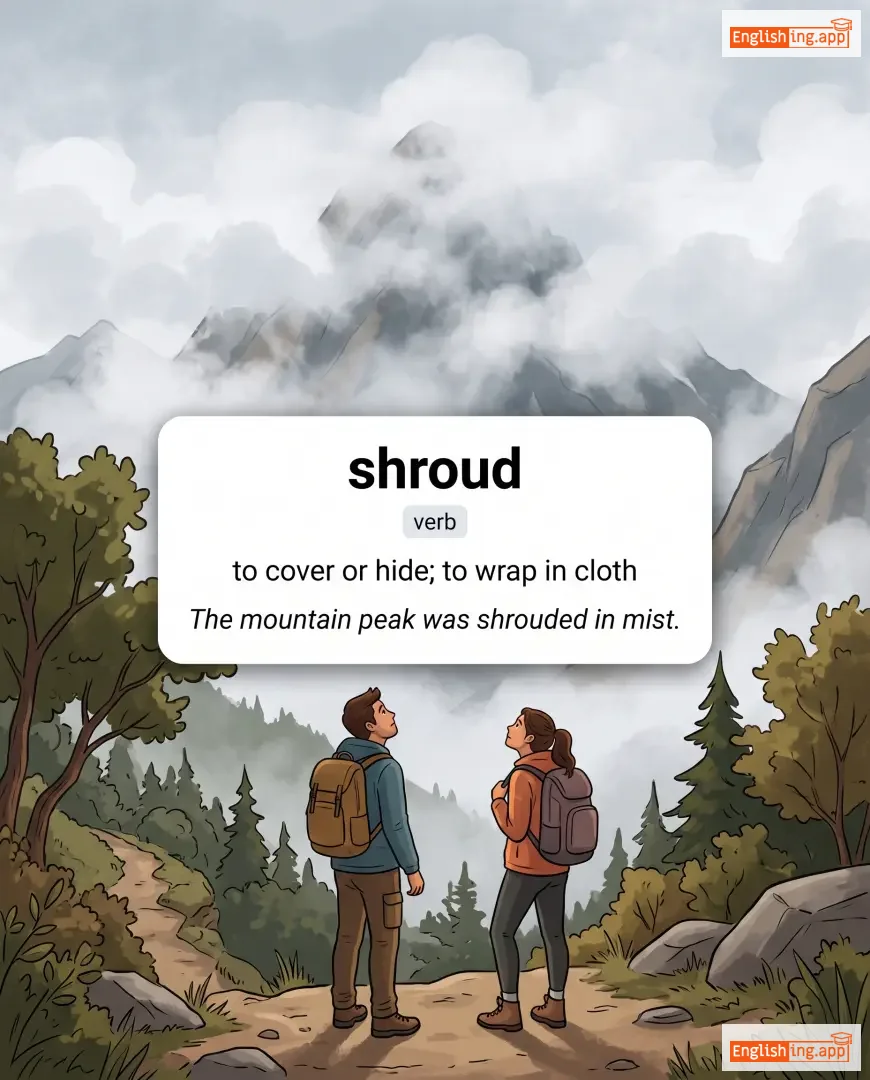
shroud definition card — visual illustration of the meaning
verb
/ʃraʊd/
覆う (ōu)

to cover or hide; to wrap in cloth

"The mountain peak was shrouded in mist."

"山頂は霧に包まれていました。" (Sanchō wa kiri ni tsutsumarete imashita.)
verb
/ʃrʌɡ/
肩をすくめる (kata o sukumeru)

To raise and lower the shoulders to express uncertainty or indifference.

"He shrugged when asked about the missing file."

"彼は失われたファイルについて聞かれると肩をすくめました。" (Kare wa ushinawareta fairu ni tsuite kikareru to kata o sukumemashita.)
verb
/ʃʌk/
殻を剥く (kara o muku)

To remove the outer covering, such as the husk of corn or shell of shellfish.

"She learned how to shuck oysters quickly."

"彼女は牡蠣の殻を素早く剥く方法を学びました。" (Kanojo wa kaki no kara o subayaku muku hōhō o manabimashita.)
verb
/ˈʃʌdər/
震える (furueru)

to tremble or shake suddenly, often due to fear, cold, or strong emotion

"She shuddered at the thought of walking alone in the dark forest."
"彼女は暗い森を一人で歩くことを考えただけで震えた。" (Kanojo wa kurai mori o hitori de aruku koto o kangaeta dake de furueta.)
verb
/ˈʃʌfəl/

to walk by dragging one's feet along or without lifting them fully; to mix or rearrange

"He shuffled the cards before dealing them."

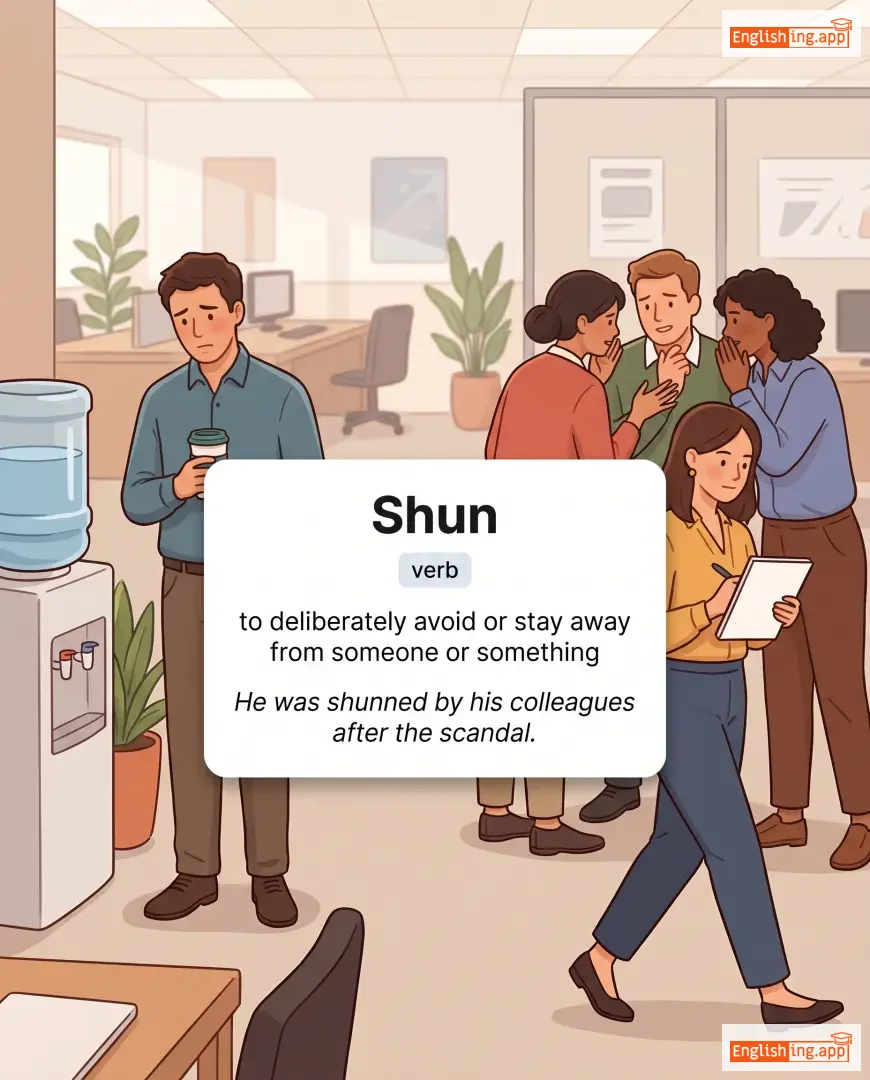
Shun definition card — visual illustration of the meaning
verb
/ʃʌn/
避ける (sakeru)

to deliberately avoid or stay away from someone or something

"He was shunned by his colleagues after the scandal."

"彼はスキャンダルの後、同僚から避けられました。" (Kare wa sukyandaru no ato, dōryō kara sakeraremashita.)
verb
/ʃʌnt/
切り替える (kirikaeru)

to move or turn aside; to push or divert from one track to another

"The train was shunted onto a different track."

"列車は別の線路に切り替えられました。" (Ressha wa betsu no senro ni kirikaeraremashita.)
verb
/ʃʌt/
閉じる (tojiru)

to close something, especially a door or window

"Please shut the door before you leave."

"出かける前にドアを閉めてください。" (Dekakeru mae ni doa o shimete kudasai.)
noun
/ˈʃʌtəl/
定期的に二地点間を往復する車両または乗り物 (teikiteki ni nichitenkan o ōfuku suru sharyō mata wa norimono)

a vehicle or craft that travels regularly between two places.

"The airport shuttle runs every 30 minutes."
"空港シャトルは30分ごとに運行しています。" (Kūkō shatoru wa 30-pun goto ni un kō shiteimasu.)
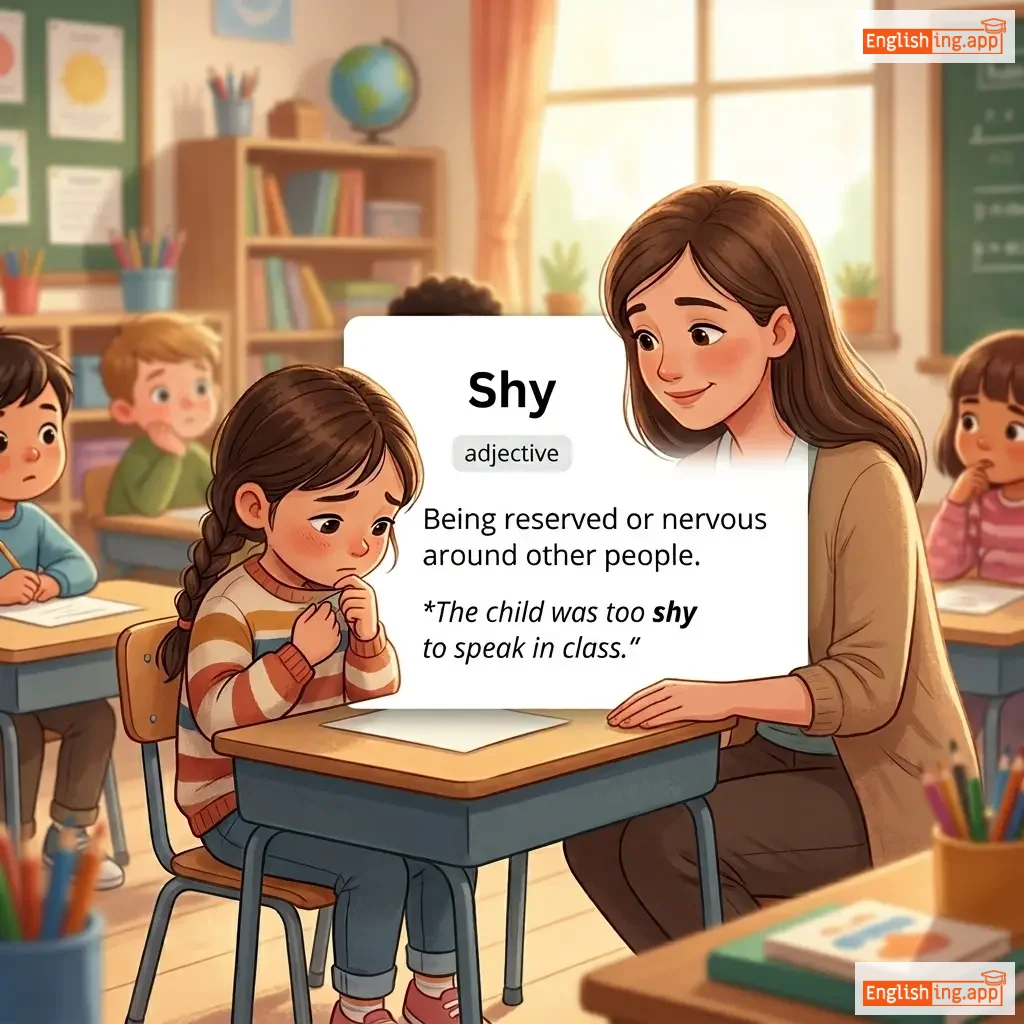
Shy definition card — visual illustration of the meaning
adjective
/ʃaɪ/
恥ずかしがり屋 (hazukashigariya)

Being reserved or nervous around other people.

"The child was too shy to speak in class."

"その子はクラスで話すのが恥ずかしすぎた。" (Sono ko wa kurasu de hanasu no ga hazukashisugita.)
noun
/ˈʃaɪstər/
詐欺師 (sagishi)

a person, especially a lawyer, who uses unscrupulous or dishonest methods

"The businessman was exposed as a shyster who cheated clients."

"そのビジネスマンは、顧客を騙す詐欺師として暴露されました。" (Sono bijinesuman wa, kokyaku o damasu sagishi to shite bakuro saremashita.)
noun
/ˈsɪbɪləns/
シューシュー音 (shūshū on)

A hissing or hushing sound, especially in speech with 's' or 'sh'.

"The poet used sibilance to create a soft, hissing effect in the verse."

"詩人は詩の中で柔らかいシューシュー音を作り出すためにシビランスを使いました。" (Shijin wa shi no naka de yawarakai shūshū on o tsukuridashu tame ni shibiransu o tsukaimashita.)
adjective
/ˈsɪbɪlənt/
シーシー音がする (shīshī on ga suru)

Making or characterized by a hissing sound.

"The word 'snake' starts with a sibilant sound."

"'snake' という単語はシビラント音で始まります。" ('Snake' to iu tango wa shibiranto oto de hajimarimasu.)
verb
/ˈsɪbəleɪt/
シューという音で発音する (shū to iu oto de hatsuon suru)

To pronounce with a hissing sound.

"The actor sibilated his lines for dramatic effect."

"俳優はドラマチックな効果のためにセリフをシューという音で発音しました。" (Haiyū wa doramachikku na kōka no tame ni serifu o shū to iu oto de hatsuon shimashita.)
noun
/ˈsɪblɪŋ/
兄弟姉妹 (kyoudai shimai)

A brother or sister.

"She has three siblings, two brothers and one sister."
"彼女は三人の兄弟姉妹がいます。二人の兄と一人の妹。" (Kanojo wa sannin no kyoudai shimai ga imasu. Futari no ani to hitori no imouto.)
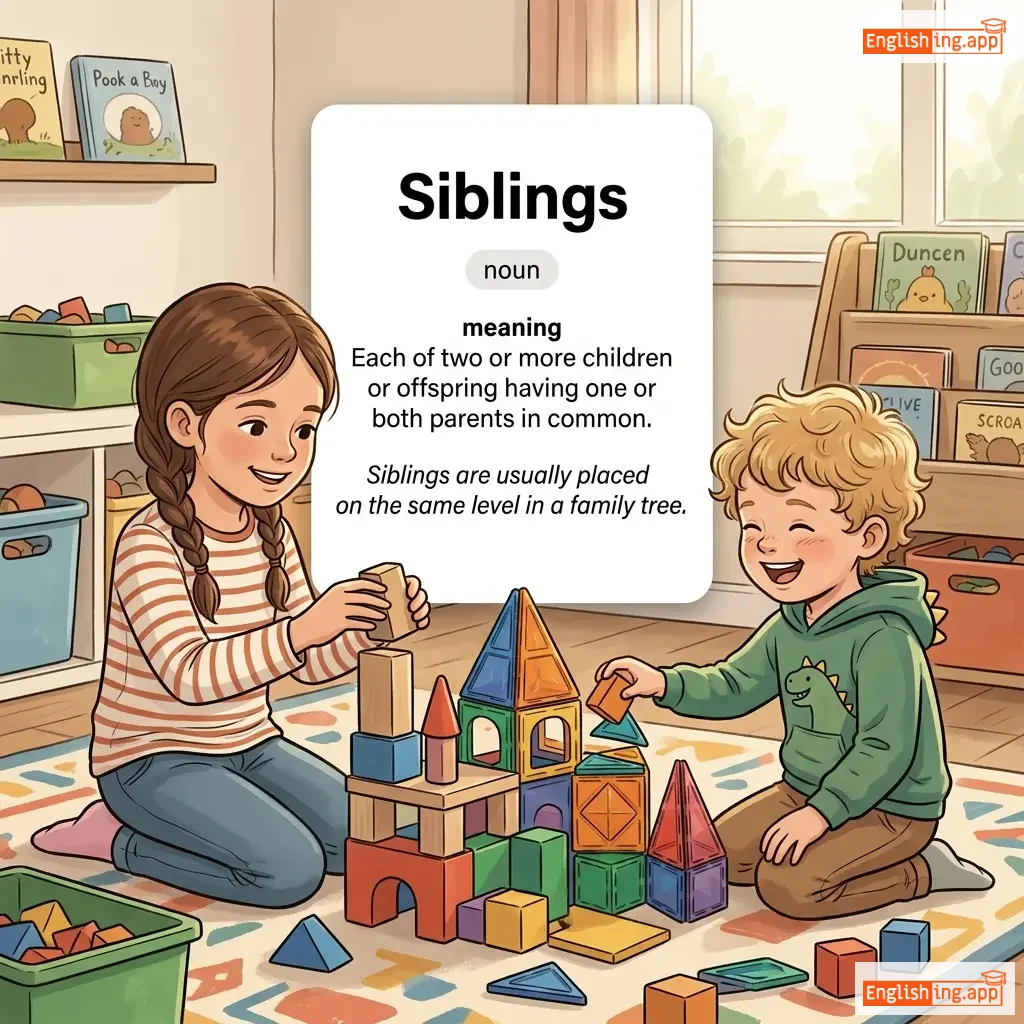
Siblings definition card — visual illustration of the meaning
noun
ˈsɪblɪŋz
兄弟姉妹 (kyōdai shimai)

Each of two or more children or offspring having one or both parents in common.

"Siblings are usually placed on the same level in a family tree."

"兄弟姉妹は通常、家系図で同じレベルに配置されます。" (Kyōdai shimai wa tsūjō, kakeizu de onaji reberu ni haichi saremasu.)
adjective
/ˈsɪbɪlaɪn/
神託的 (shintokuteki)

Prophetic, mysterious, or cryptic in meaning.

"The old woman gave a sibylline warning about the future."
"その老婦人は未来について神託的な警告をした。" (Sono rō fujin wa mirai ni tsuite shintokuteki na keikoku o shita.)
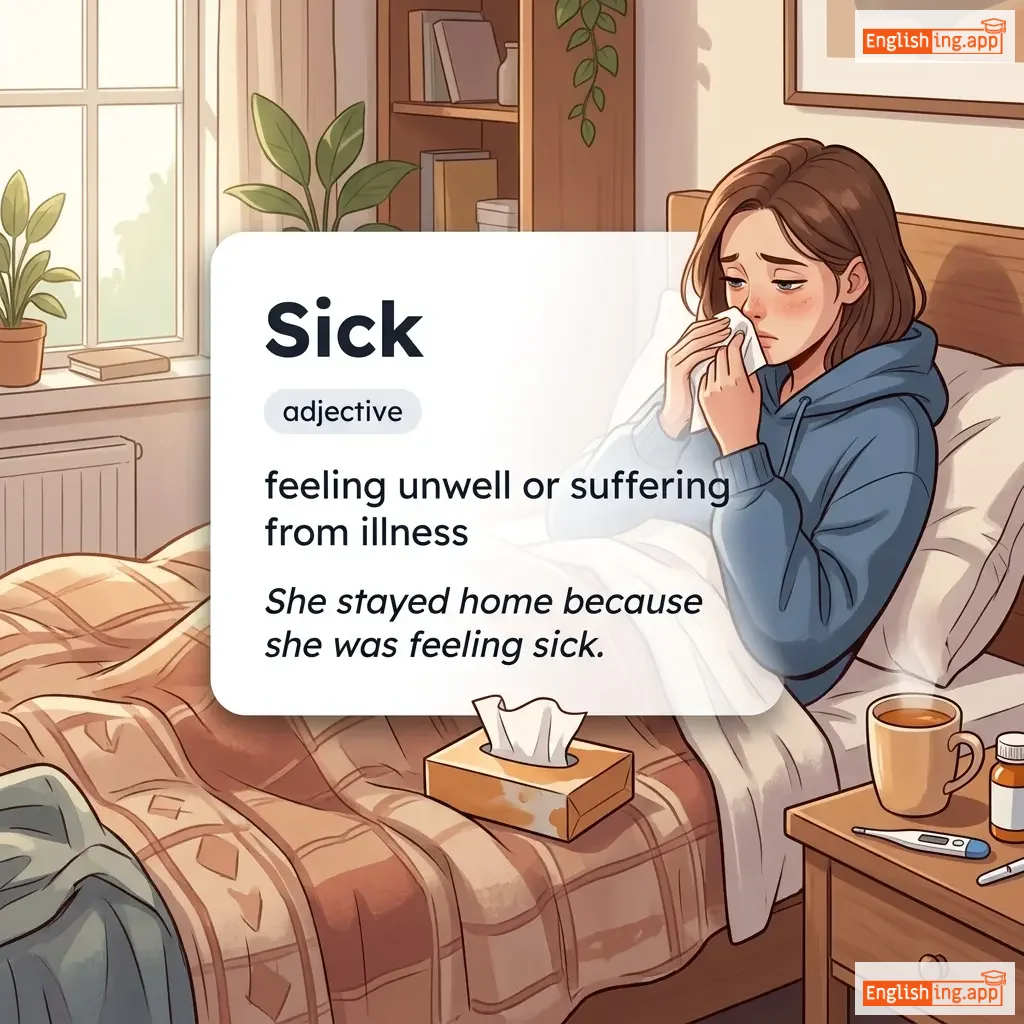
Sick definition card — visual illustration of the meaning
adjective
/sɪk/
病気 (byouki)

feeling unwell or suffering from illness

"She stayed home because she was feeling sick."

"彼女は気分が悪かったので家にいました。" (kanojo wa kibun ga warukatta node ie ni imashita)
noun
/ˈsɪk.əl/
(kama)

a tool with a curved metal blade and short handle used for cutting grain crops

"The farmer harvested wheat using a traditional sickle."

"農夫は伝統的な鎌を使って小麦を収穫しました。" (Nōfu wa dentō-teki na kama o tsukatte komugi o shūkaku shimashita.)
adjective
/ˈsɪk.li/
弱い; 病気; 青白い (yowai)

weak and unhealthy; prone to illness; appearing weak or pale

"The sickly child needed extra care and attention."

"その弱い子供は、特別なケアと注意が必要だった。" (Sono yowai kodomo wa, tokubetsuna kea to chuui ga hitsuyou datta)
noun
/ˈsɪk.nəs/
病気; 疾患 (byōki; shikkan)

the state of being ill; a disease or illness

"She took time off work due to sickness."

"彼女は病気のため仕事を休みました。" (Kanojo wa byōki no tame shigoto o yasumimashita.)
noun
/saɪd/
(sokozu)

a position to the left or right of something

"The store is on the side of the road."
"店は道路の側にあります。" (Mise wa douro no soko ni arimasu.)
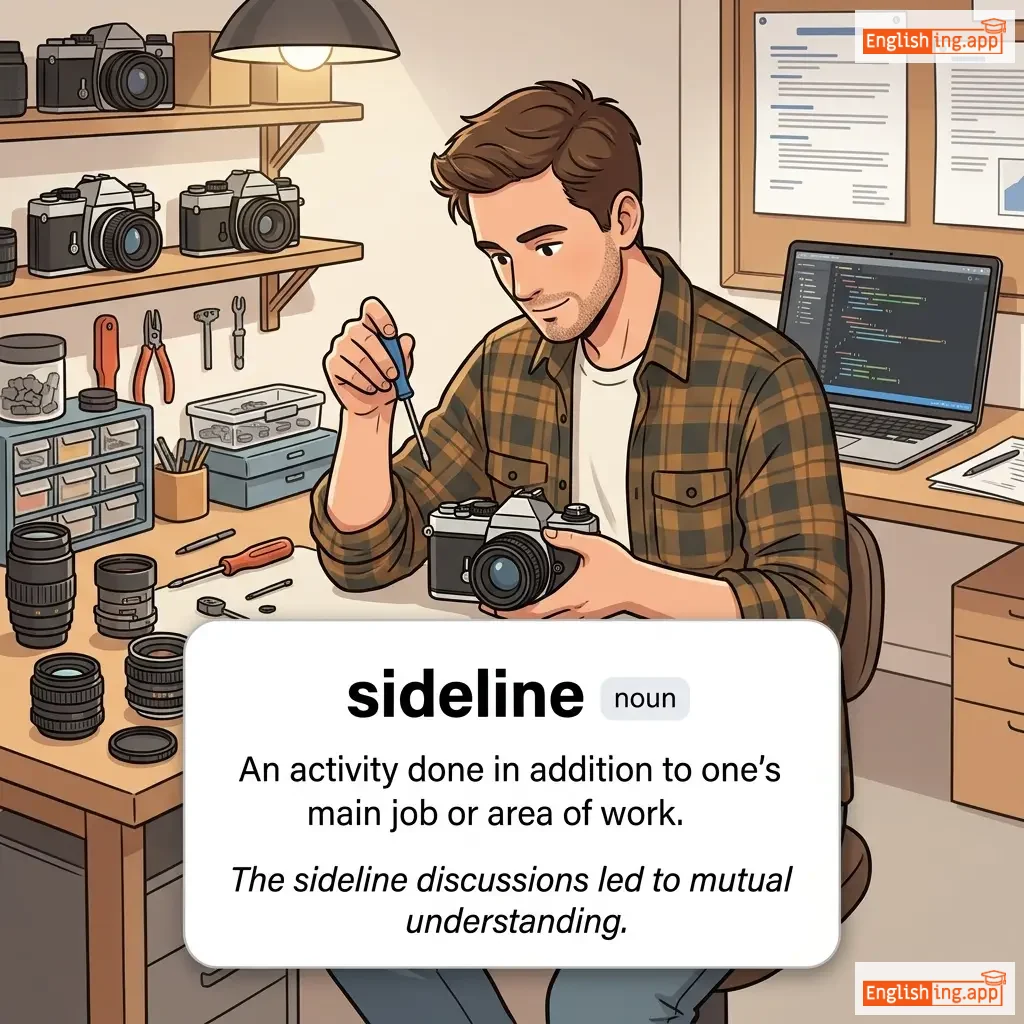
sideline definition card — visual illustration of the meaning
noun
/ˈsaɪd.laɪn/
副業 (fukugyo)

An activity done in addition to one's main job or area of work.

"The sideline discussions led to mutual understanding."

"副業の議論が相互理解を促進した。" (Fukugyo no giron ga sōgo rikai o sokushin shita.)
sideline discussions definition card — visual illustration of the meaning
noun
/ˈsaɪd.laɪn dɪˈskʌʃənz/
サイドラインの議論 (saidrain no giron)

Informal or secondary conversations that occur outside the main agenda of a formal meeting.

"Sideline discussions often lead to agreements."

"サイドラインの議論はしばしば合意に至ります。" (Saidrain no giron wa shibashiba gōi ni itarimasu.)
adjective, adverb
/ˈsaɪdlɔːŋ/
斜め目線 (naname mesen)

Directed to the side; indirect, furtive, or not straightforward.

"She gave him a sidelong glance across the room."
"彼女は部屋を横切って彼に斜め目線を送った。" (Kanojo wa heya o yokogitte kare ni naname mesen o okutta.)
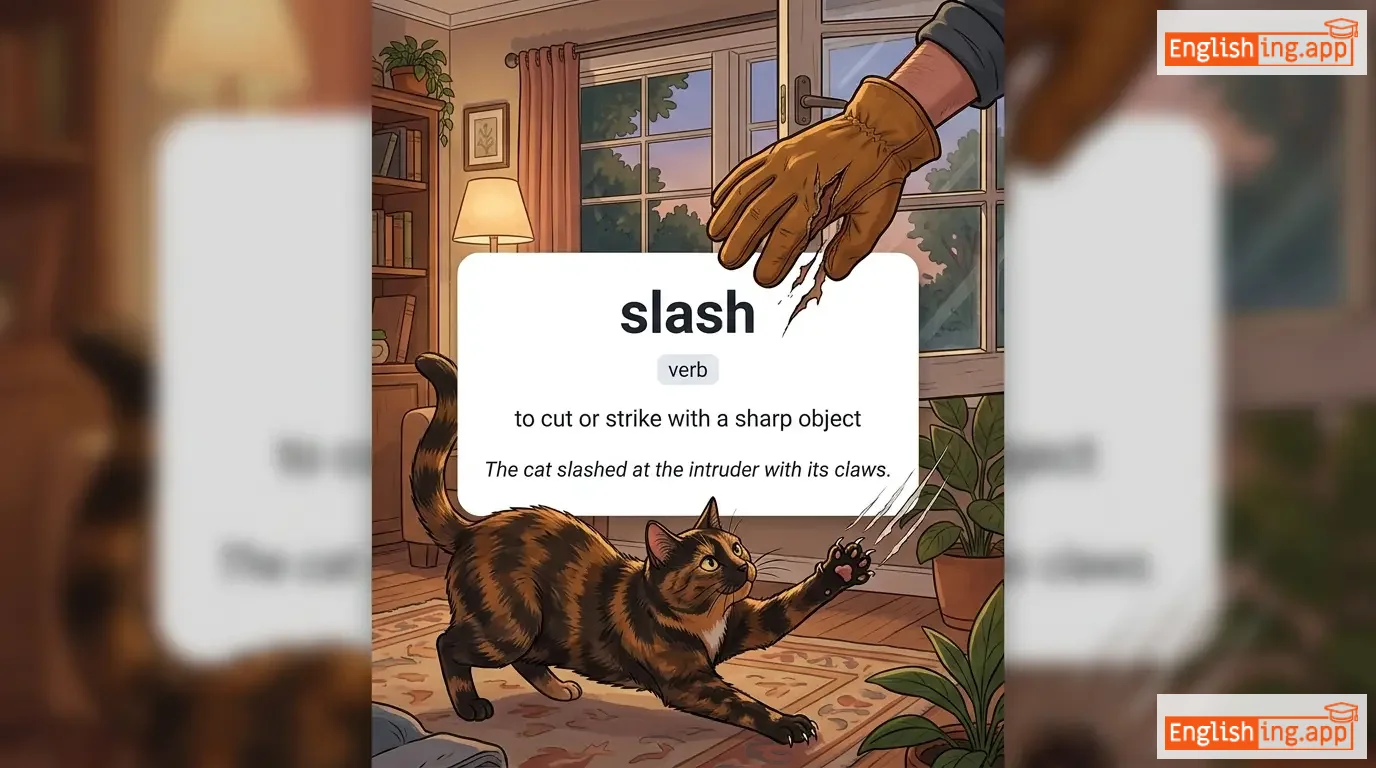
slash definition card — visual illustration of the meaning
verb
/slæʃ/
切る (kiru)

to cut or strike with a sharp object

"The cat slashed at the intruder with its claws."
"猫は爪で侵入者を切りました。" (Neko wa tsume de shinnyū-sha o kirimashita.)
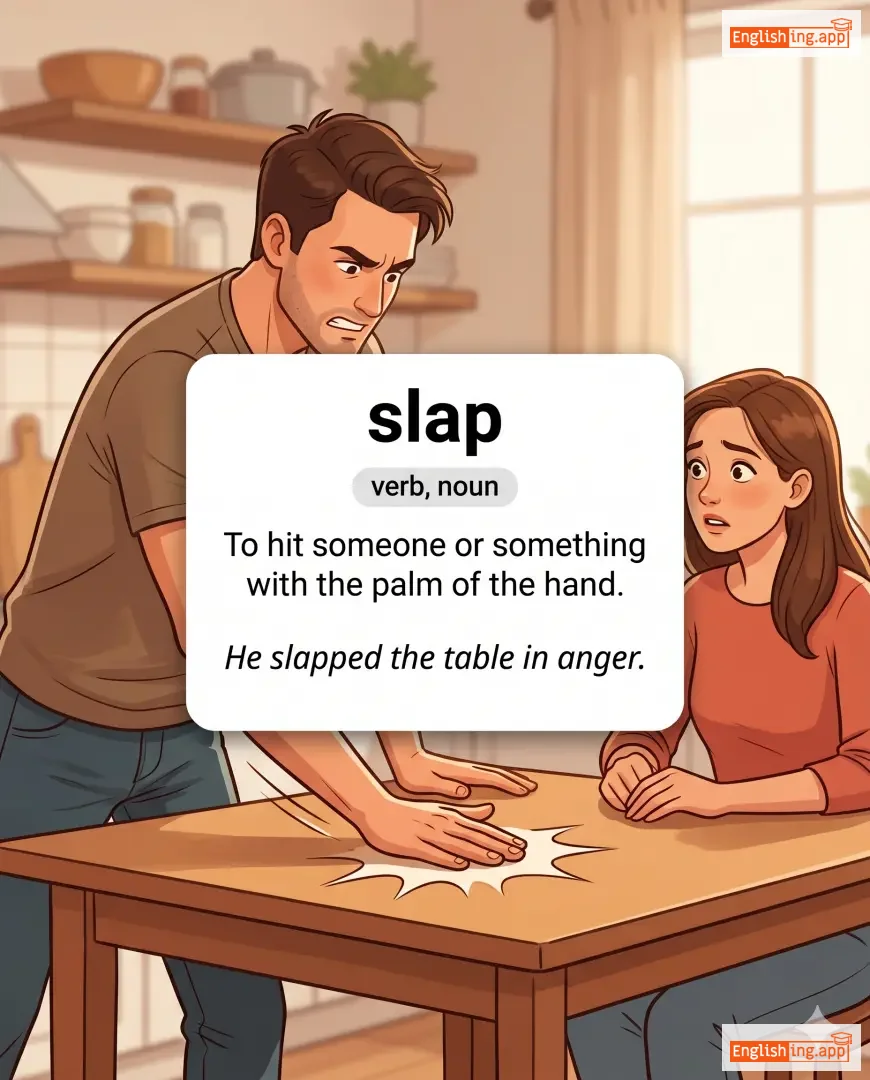
slap definition card — visual illustration of the meaning
verb, noun
/slæp/
平手打ち (hirate uchi)

To hit someone or something with the palm of the hand.

"He slapped the table in anger."

"彼は怒ってテーブルを叩いた。" (Kare wa okotte tēburu o tataita.)
adjective
/ˈslæp.dæʃ/
ぞんざい (zonzai)

done too quickly and carelessly; hasty and careless

"The report was written in a slapdash manner, full of errors."

"レポートはぞんざいに書かれており、間違いだらけだった。" (Repoto wa zonzai ni kakarete ori, machigai darake datta.)
noun, verb
/slænt/
偏った見解 (katayotta kenkai)

A particular point of view; to slope or lean in a particular direction.

"The article had a political slant."

"その記事には政治的な傾向がありました。" (sono kiji ni wa seijiteki na keikō ga arimashita.)
noun/verb
/sleɪt/
スレート / 予定する (surēto / yotei suru)

a fine-grained rock used for roofing or writing; to schedule or designate for a task

"The meeting is slated for next Monday."

"ミーティングは次の月曜日に予定されています。" (Mītingu wa tsugi no getsuyōbi ni yotei sareteimasu.)
noun
/ˈslæt.ən/
だらしない女性 (darashinai josei)

a woman who is untidy or slovenly in appearance or habits

"The house looked as if a slattern lived there."

"その家は、だらしない女性が住んでいるように見えた。" (Sono ie wa, darashinai josei ga sunde iru yō ni mietā.)