語彙集

英単語辞書 | 単語の意味、定義、例文

noun
/sleɪv/
奴隷 (dorei)

a person who is the legal property of another and is forced to work for them

"The abolitionist movement fought for the rights of slaves."

"廃奴隷運動は奴隷の権利のために戦いました。" (Hainoroi undō wa dorei no kenri no tame ni tatakatta.)
noun/verb
/ˈslɔː.tər/
虐殺 / 大量殺人 (gyakusatsu / tairyou satsujin)

the killing of animals for food; killing in large numbers violently

"The army slaughtered hundreds of enemy soldiers."

"軍隊は数百人の敵兵を虐殺した。" (Guntai wa suuhyaku-nin no tekihei wo gyakusatsu shita.)
noun
/ˈslæt.ən/
だらしない女性 (darashinai josei)

a woman who is untidy or slovenly in appearance or habits

"The house looked as if a slattern lived there."

"その家は、だらしない女性が住んでいるように見えた。" (Sono ie wa, darashinai josei ga sunde iru yō ni mietā.)
noun/verb
/sleɪt/
スレート / 予定する (surēto / yotei suru)

a fine-grained rock used for roofing or writing; to schedule or designate for a task

"The meeting is slated for next Monday."
"ミーティングは次の月曜日に予定されています。" (Mītingu wa tsugi no getsuyōbi ni yotei sareteimasu.)
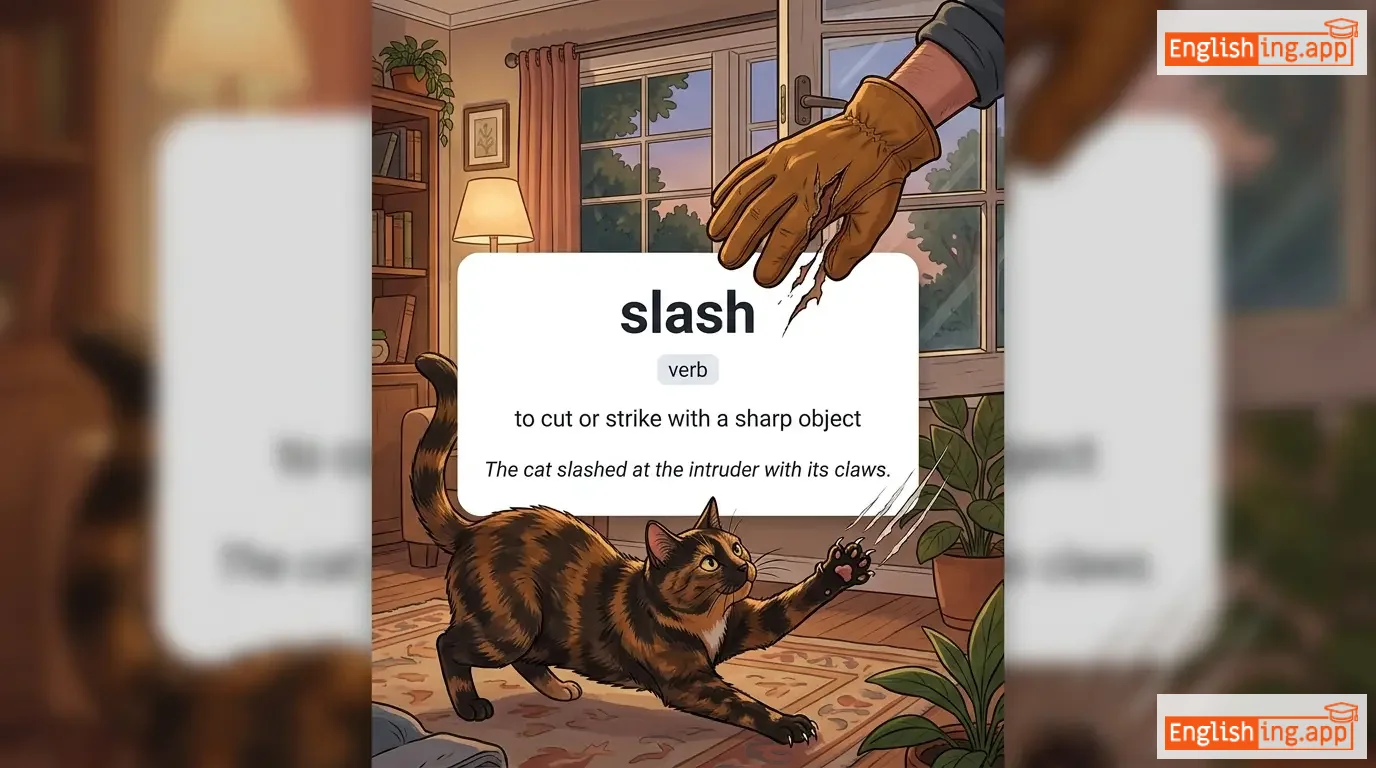
slash definition card — visual illustration of the meaning
verb
/slæʃ/
切る (kiru)

to cut or strike with a sharp object

"The cat slashed at the intruder with its claws."

"猫は爪で侵入者を切りました。" (Neko wa tsume de shinnyū-sha o kirimashita.)
adjective
/ˈslæp.dæʃ/
ぞんざい (zonzai)

done too quickly and carelessly; hasty and careless

"The report was written in a slapdash manner, full of errors."
"レポートはぞんざいに書かれており、間違いだらけだった。" (Repoto wa zonzai ni kakarete ori, machigai darake datta.)
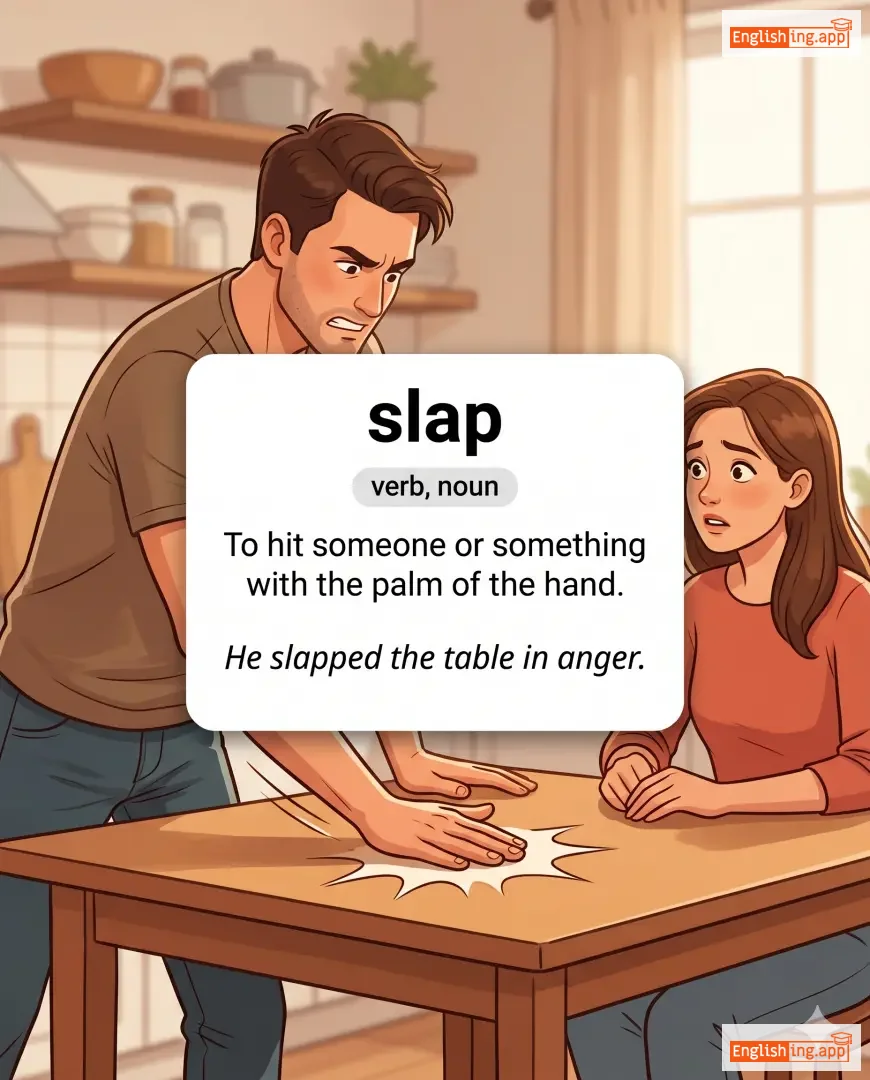
slap definition card — visual illustration of the meaning
verb, noun
/slæp/
平手打ち (hirate uchi)

To hit someone or something with the palm of the hand.

"He slapped the table in anger."

"彼は怒ってテーブルを叩いた。" (Kare wa okotte tēburu o tataita.)
noun, verb
/slænt/
偏った見解 (katayotta kenkai)

A particular point of view; to slope or lean in a particular direction.

"The article had a political slant."

"その記事には政治的な傾向がありました。" (sono kiji ni wa seijiteki na keikō ga arimashita.)
noun
/slæŋ/
スラング; 不正な言葉 (surangu; fusei na kotoba)

very informal language that is usually spoken rather than written

"The teenagers used slang that their parents couldn't understand."

"ティーンエイジャーは親が理解できないスラングを使いました。" (Tīn'eijā wa oya ga rikai dekinai surangu o tsukaimashita.)
noun
/ˈslændər/
中傷 (chuushou)

The action of making false spoken statements damaging to a person's reputation.

"He sued the newspaper for slander."

"彼は中傷で新聞を訴えた。" (Kare wa chuushou de shinbun wo sasaeta.)
verb
/slæm/
強く閉める (tsuyoku shimeru)

to close or hit something with great force

"He slammed the door angrily after the argument."

"彼は議論の後に怒ってドアを叩きつけた。" (Kare wa giron no ato ni okotte doa o tatakitsuketa.)
verb
/sleɪk/
渇きを癒す (kawaki wo iyasu)

To satisfy thirst or desire.

"She drank cold water to slake her thirst."

"彼女は渇きを癒すために冷たい水を飲んだ。" (Kanojo wa kawaki wo iyasu tame ni tsumetai mizu wo nonda.)
noun
/slæɡ/
鉱滓 (kōsai)

Stony waste matter separated from metals during the smelting process.

"The factory dumped the slag near the river."

"工場は川の近くに鉱滓を捨てました。" (Kōjō wa kawa no chikaku ni kōsai o sutemashita.)
verb
/ˈslækən/
緩める (yurumeru)

to make or become less tight, less active, or slower

"The driver slackened his speed as he approached the village."

"運転手は村に近づくにつれて速度を緩めた。" (Unten-shu wa mura ni chikaduku ni tsurete sokudo o yurumeta.)
adjective
/slæk/
緩い (yurui)

not tight, firm, or busy; lacking tension or activity

"Business is slack during the rainy season."

"雨季の間、ビジネスは鈍くなる。" (Uki no aida, bijinesu wa donkunaru.)
noun
/slæb/
スラブ (surabu)

a large, thick, flat piece of stone, concrete, or other hard material

"The workers laid a concrete slab for the foundation."

"作業員たちは基礎のためにコンクリートのスラブを敷きました。" (Sagyouintachi wa kiso no tame ni konkurīto no surabu o shikimashita.)
noun
/ˈskaɪˌskreɪpər/
超高層ビル (chou kousou biru)

a very tall building of many stories

"The new skyscraper dominates the city's skyline."

"新しい超高層ビルが街のスカイラインを支配しています。" (Atarashī chou kousou biru ga machi no sukairain o shihaishiteimasu.)
noun
/ˈskaɪ.lɑːrk/
ヒバリ (hibari)

a small brown bird known for singing while flying high in the sky

"The skylark sang beautifully as it soared above the meadow."

"ヒバリは草地の上を飛びながら美しく歌った。" (Hibari wa kusachi no ue wo tobinagara utsukushiku utatta)
adjective
/skaɪ bluː/
空色 (sora iro)

a bright blue color like that of a clear sky

"Her sky-blue eyes sparkled in the sunlight."

"彼女の空色の目が太陽の光で輝いていた。" (Kanojo no sora iro no me ga taiyo no hikari de kagayaite ita.)
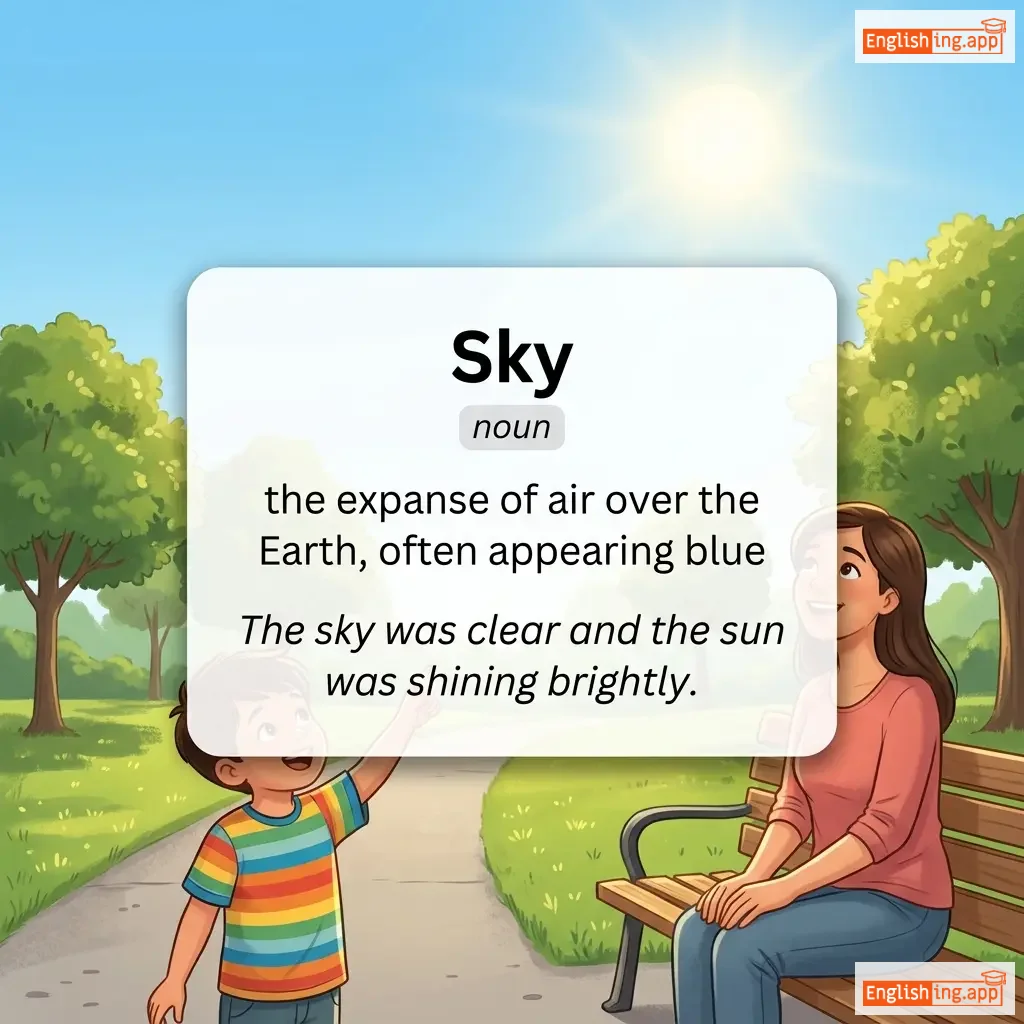
Sky definition card — visual illustration of the meaning
🌌

Sky

noun
/skaɪ/

the expanse of air over the Earth, often appearing blue

"The sky was clear and the sun was shining brightly."

noun
/ˌskʌlˈdʌɡəri/
不正行為 (Fusei Kōi)

dishonest behavior or activities, often done secretly

"The election was full of political skullduggery."

"選挙は政治的不正行為に満ちていた。" (Senkyō wa seijiteki na fusei kōi ni michite ita.)
noun
/skʌl/
頭蓋骨 (zugaikotsu)

the bony structure that forms the head and protects the brain

"The archaeologists found an ancient human skull."

"考古学者たちは古代の人間の頭蓋骨を発見しました。" (Kougakusha-tachi wa kodai no ningen no zugaikotsu wo hakken shimashita.)
🕵️

skulk

verb
/skʌlk/

to move or hide secretly, often because you are planning something bad or are feeling guilty

"He tried to skulk in the shadows to avoid being seen."

noun
/skʌlˈdʌɡəri/
不正行為 (fusei kōi)

underhanded or dishonest behavior

"The politician was accused of financial skulduggery."

"その政治家は金融詐欺で告発された。" (Sono seiji-ka wa kin'yū sagi de kokuhatsu sareta.)
adjective
/ˈskɪtɪʃ/
神経質な (shinkeishitsu na)

easily frightened or nervous; unpredictable

"The horse was too skittish to ride."

"その馬は乗るには神経質すぎた。" (Sono uma wa noru ni wa shinkeishitsu sugita.)
noun
/skɪt/
寸劇 (sungeki)

a short, humorous performance or piece of writing

"The students performed a funny skit at the event."

"学生たちはイベントで面白い寸劇を演じました。" (Gakusei tachi wa ibento de omoshiroi sungeki o enjimashita.)
👗

Skirt

noun/verb
/skɜːrt/

a piece of clothing that hangs from the waist; to go around the edge of something

"She wore a red skirt to the party."

⚔️

skirmish

noun/verb
/ˈskɜːrmɪʃ/

a small or brief fight between groups of soldiers; to engage in such a fight

"The soldiers got into a skirmish near the border."

verb
/skɪp/
スキップする (sukippu suru)

to omit or pass over something; to move lightly or quickly

"He decided to skip breakfast and go straight to work."

"彼は朝食をスキップして、仕事に直接行くことに決めました。" (Kare wa choushoku wo sukippu shite, shigoto ni chokusetsu iku koto ni kimemashita.)
adjective
/ˈskɪni/
痩せた; 細い; 骨ばかりの (yaseta; hosoi; hone bakari no)

very thin; having little flesh or fat on the body

"The skinny cat looked like it hadn't eaten for days."

"その痩せた猫は、数日間食べていないように見えました。" (Sono yaseta neko wa, suujitsukan tabete inai you ni miemashita.)
noun
/ˈskɪnˌflɪnt/
けちん坊 (kechinbō)

a person who spends as little money as possible; a miser

"The landlord was such a skinflint that he never repaired anything."

"家主はそんなけちん坊で、何も修理しなかった。" (Yamushi wa sonna kechinbō de, nanimo shūri shinakatta.)
noun
/skɪn/
(hada)

the outer layer of the body

"She has fair skin and bright blue eyes."

"彼女は白い肌と明るい青い目をしています。" (Kanojo wa shiroi hada to akarui aoi me o shiteimasu.)
verb
/skɪmp/
ケチる (kechiru)

to use less of something than is necessary in order to save money or effort

"Don’t skimp on quality when buying a new laptop."

"新しいノートパソコンを買うときは、品質をケチらないでください。" (Atarashī nōtopasokon o kau toki wa, hinshitsu o kechiranaide kudasai.)
verb
/skɪm/
素早く読む (subayaku yomu)

to move quickly over a surface or to read something quickly

"She skimmed through the report before the meeting."
"彼女は会議の前にレポートをサッと読みました。" (Kanojo wa kaigi no mae ni repoto o satto yomimashita.)
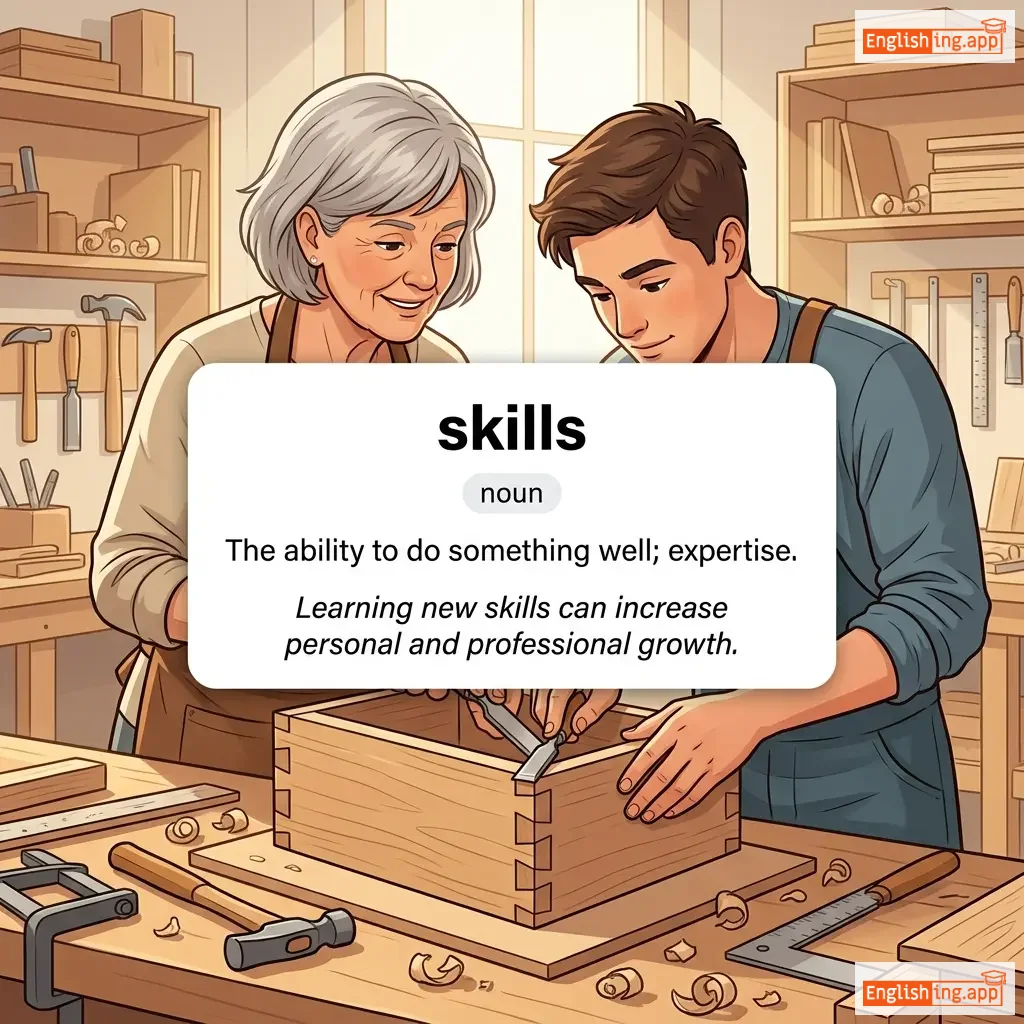
skills definition card — visual illustration of the meaning
noun
/skɪlz/
技術 (gijutsu)

The ability to do something well; expertise.

"Learning new skills can increase personal and professional growth."
"新しいスキルを学ぶことで、個人的および職業的成長が促進されることがあります。" (Atarashī sukiru o manabu koto de, kojinteki oyobi shokugyōteki seichō ga sokushin sareru koto ga arimasu.)
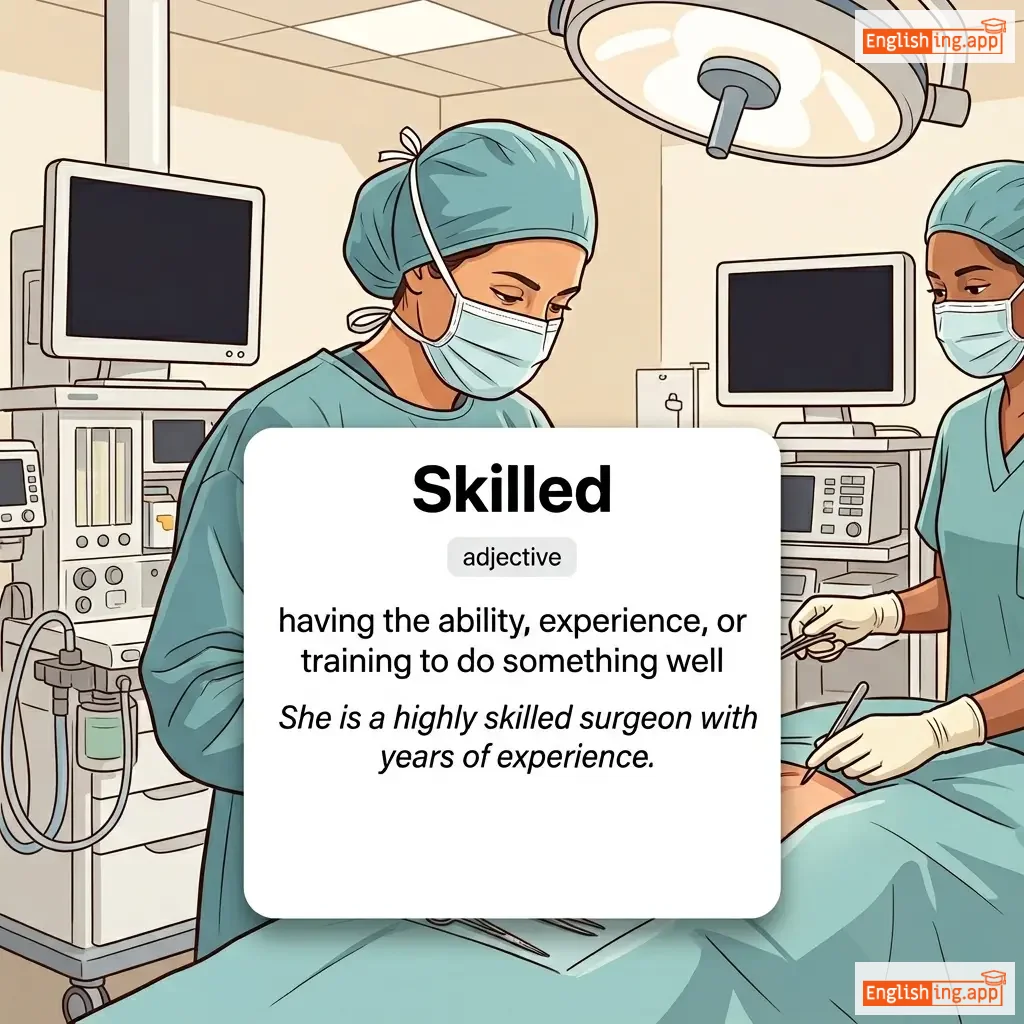
Skilled definition card — visual illustration of the meaning
adjective
/skɪld/
熟練 (jukuren)

having the ability, experience, or training to do something well

"She is a highly skilled surgeon with years of experience."

"彼女は長年の経験を持つ高い技術を持つ外科医です。" (Kanojo wa naganen no keiken o motsu takai gijutsu o motsu gekai desu.)
noun
/sɪˈmɪlɪˌtjuːd/
類似性 (ruizisei)

The quality or state of being similar; resemblance or likeness.

"There is a striking similitude between the two paintings."

"この二つの絵の間には顕著な類似性があります。" (Kono futatsu no e no aida ni wa kencho na ruizisei ga arimasu.)
noun
/ˈsɪlk.wɜːrm/
かいこ (kaiko)

the caterpillar of a moth that produces silk fibers used to make silk fabric

"Silkworms feed on mulberry leaves to produce silk."

"カイコは桑の葉を食べて、絹を生産します。" (Kaiko wa kuwa no ha o tabete, kinu o seisan shimasu.)
adjective
/ˈsɪlkən/
絹の; 柔らかい; 滑らか; (kinu no)

made of silk; smooth and soft like silk

"She wore a beautiful silken dress to the party."

"彼女はパーティーに美しい絹のドレスを着ていきました。" (Kanojo wa pātī ni utsukushī kinu no doresu o kite ikimashita.)
adjective
/ˈsɪli/
馬鹿 (baka)

showing a lack of good sense; foolish or playful

"He made a silly mistake on the test."

"彼はテストで馬鹿なミスをした。" (Kare wa tesuto de baka na misu o shita.)
noun
/sɪlt/
シルト (shiruto)

Fine sand, clay, or other material carried by running water and deposited as a sediment.

"The river deposited layers of silt along its banks."

"川はその岸にシルトの層を堆積させた。" (Kawa wa sono kishi ni shiruto no sō o taiseki saseta.)
noun, adjective
/ˈsɪlvər/
(gin)

a shiny gray-white metal, often used for coins, jewelry, and decoration

"She wore a beautiful silver necklace for the party."

"彼女はパーティーのために美しい銀のネックレスを身に着けていました。" (Kanojo wa pātī no tame ni utsukushī gin no nekkuresu o mi ni tsukete imashita.)
noun
/ˈsɪlvər kɑrp/
銀鯉 (gin goi)

a large freshwater fish with silvery scales, commonly farmed for food

"Silver carp is widely cultivated in fish farms across Asia."
"銀鯉はアジアの養魚場で広く養殖されています。" (gin goi wa ajia no yougyojo de hiroku youshoku sareteimasu.)
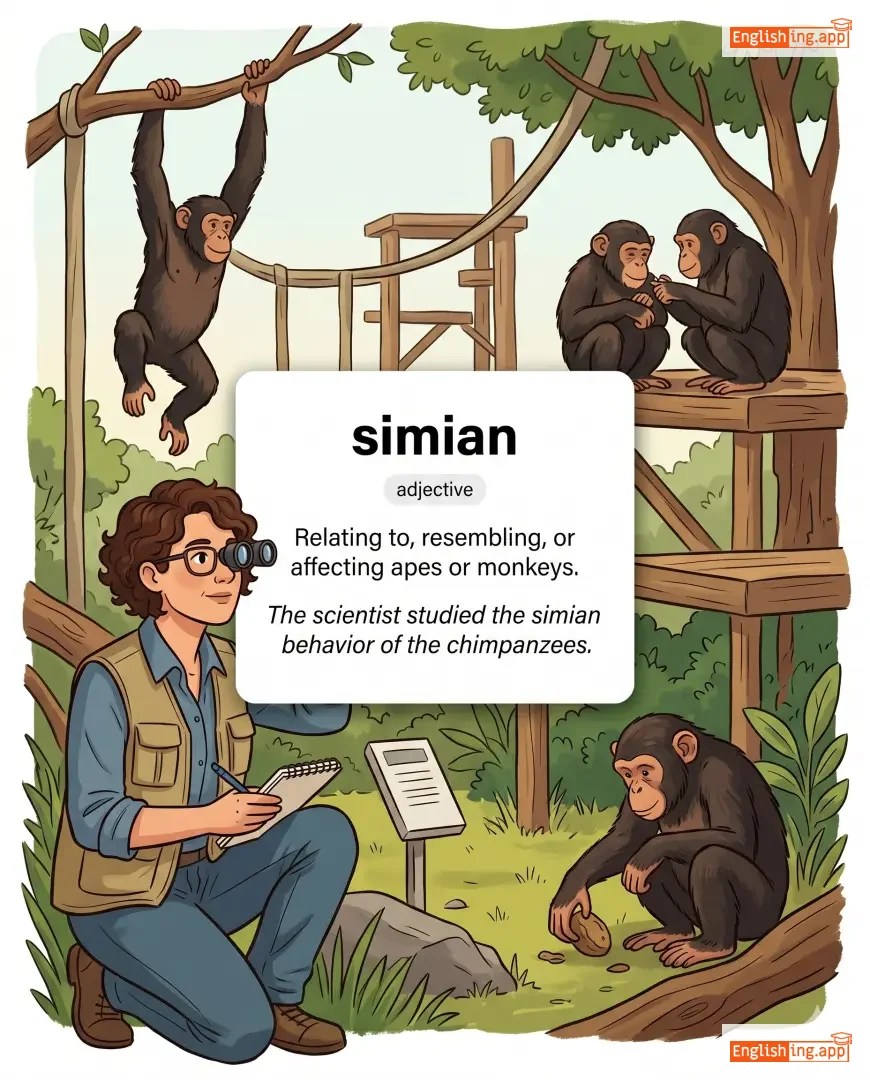
simian definition card — visual illustration of the meaning
adjective
/ˈsɪmiən/
類人猿の (ruijin'en no)

Relating to, resembling, or affecting apes or monkeys.

"The scientist studied the simian behavior of the chimpanzees."

"科学者はチンパンジーの類人猿の行動を研究した。" (Kagakusha wa chinpanjī no ruijin'en no kōdō o kenkyū shita.)
adjective
/ˈsɪmɪlər/
似ている (niteru)

Having a resemblance in appearance, character, or quantity, without being identical.

"The twins wore similar clothes to the party."

"双子はパーティーで似たような服を着ていました。" (Futago wa pātī de nita yō na fuku o kiteimashita.)
noun
/ˌsɪmɪˈlærəti/
類似 (ruiji)

the state of being alike or having characteristics in common

"There is a strong similarity between the two paintings."

"2枚の絵の間には強い類似性があります。" (2-mai no e no aida ni wa tsuyoi ruijisei ga arimasu.)
adverb
/ˈsɪmɪlərli/
同様に (douyou ni)

in a similar way

"Similarly, we can achieve success with dedication and hard work."
"同様に、私たちは献身と努力によって成功を収めることができます。" (Douyou ni, watashitachi wa kenshin to doryoku ni yotte seikou o osameru koto ga dekimasu.)
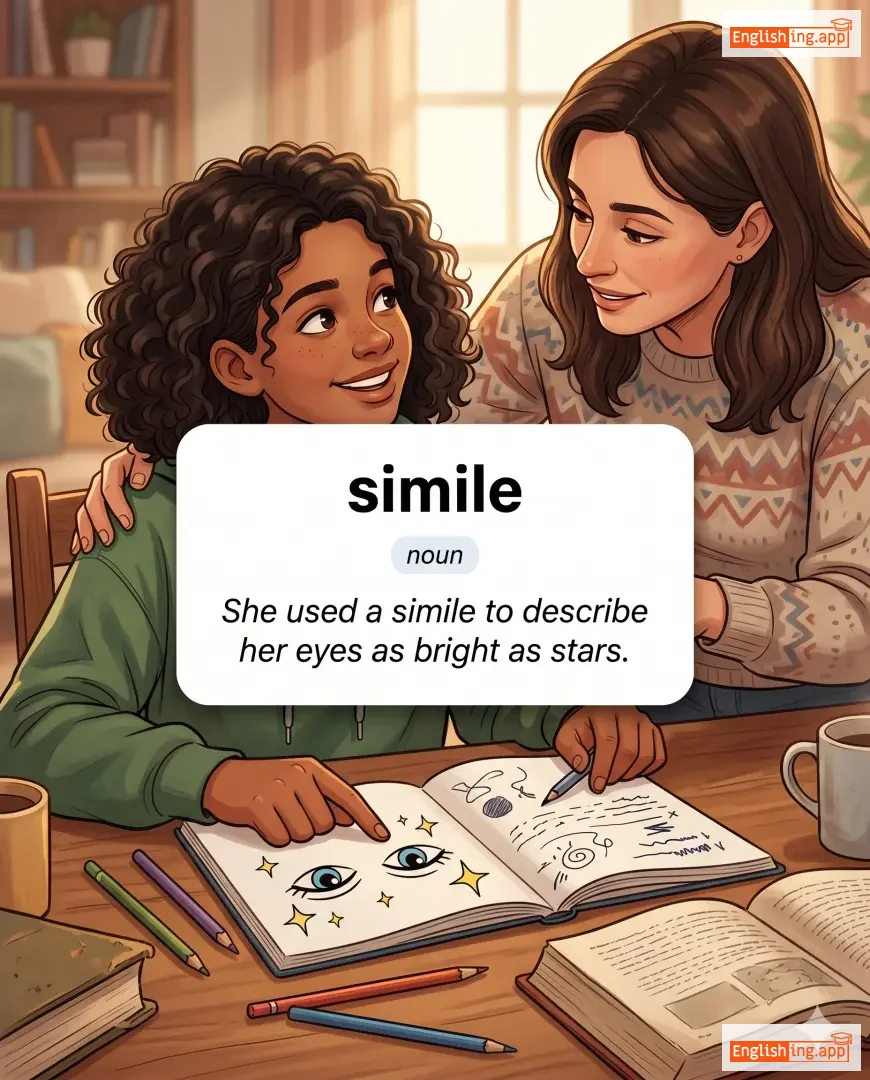
simile definition card — visual illustration of the meaning
noun
/ˈsɪməli/
直喩 (chokuyu)

A figure of speech involving the comparison of one thing with another using 'like' or 'as'.

"She used a simile to describe her eyes as bright as stars."

"彼女は自分の目を星のように明るいと表現するために直喩を使いました。" (Kanojo wa jibun no me o hoshi no yō ni akarui to hyōgen suru tame ni chokuyu o tsukaimashita.)
noun
/ˌsɪmjʊˈleɪkrəm/
シミュラクル (shimyurakuru)

an image or representation of someone or something; a superficial likeness

"The statue was only a simulacrum of the ancient god."

"その像は古代の神のシミュラクルに過ぎなかった。" (Sono zou wa kodai no kami no shimyurakuru ni suginakatta.)
adjective
/sɪmˈplɪstɪk/
過度に単純化された (kado ni tanjunkan sareta)

treating complex issues as if they were much simpler than they really are

"His explanation was too simplistic and ignored key details."

"彼の説明は過度に単純化されており、重要な詳細を無視していました。" (Kare no setsumei wa kado ni tanjunkan sarete ori, jūyōna shōsai o mushi shite imashita.)