語彙集

英単語辞書 | 単語の意味、定義、例文

verb
/sɪt/
座る (suwaru)

to rest with the body supported by the buttocks, often in a chair or on the ground

"Please sit down and relax for a while."

"少し座ってリラックスしてください。" (Sukoshi suwatte rirakkusu shite kudasai.)
noun
/ˈsɪstərhʊd/
姉妹関係 (shimai kankei)

The relationship between sisters, or a community of women united by shared experiences or goals.

"The feminist movement created a strong sense of sisterhood among women."

"フェミニスト運動は女性たちの間に強い姉妹関係の感覚を生み出しました。" (Feminisuto undō wa joseitachi no aida ni tsuyoi shimai kankei no kankaku o umidashimashita.)
noun
/ˈsɪstər/
姉 / 妹 (ane / imouto)

a female sibling; a girl or woman in relation to other children of her parents

"My sister is coming to visit us next week."

"私の姉は来週私たちに会いに来ます。" (watashi no ane wa raishu watashitachi ni ai ni kimasu)
noun
/sɪˈrɒkoʊ/
熱く乾燥した風 (atsuku kansou shita kaze)

A hot, dry wind blowing from North Africa across the Mediterranean to southern Europe.

"The sirocco made the city unbearably hot and dusty."

"シロッコは街を耐えられないほど暑く、ほこりっぽくした。" (Shirokko wa machi o taerarenai hodo atsuku, hokorippoku shita.)
noun
/ˈsaɪrən/
サイレン (sairen)

A device that makes a loud prolonged sound as a signal or warning; in mythology, a creature that lures sailors with enchanting songs.

"The police car passed with its siren blaring."

"警察車両はサイレンを鳴らしながら通り過ぎました。" (Keisatsu sharyō wa sairen o narashinagara tōrisugimashita.)
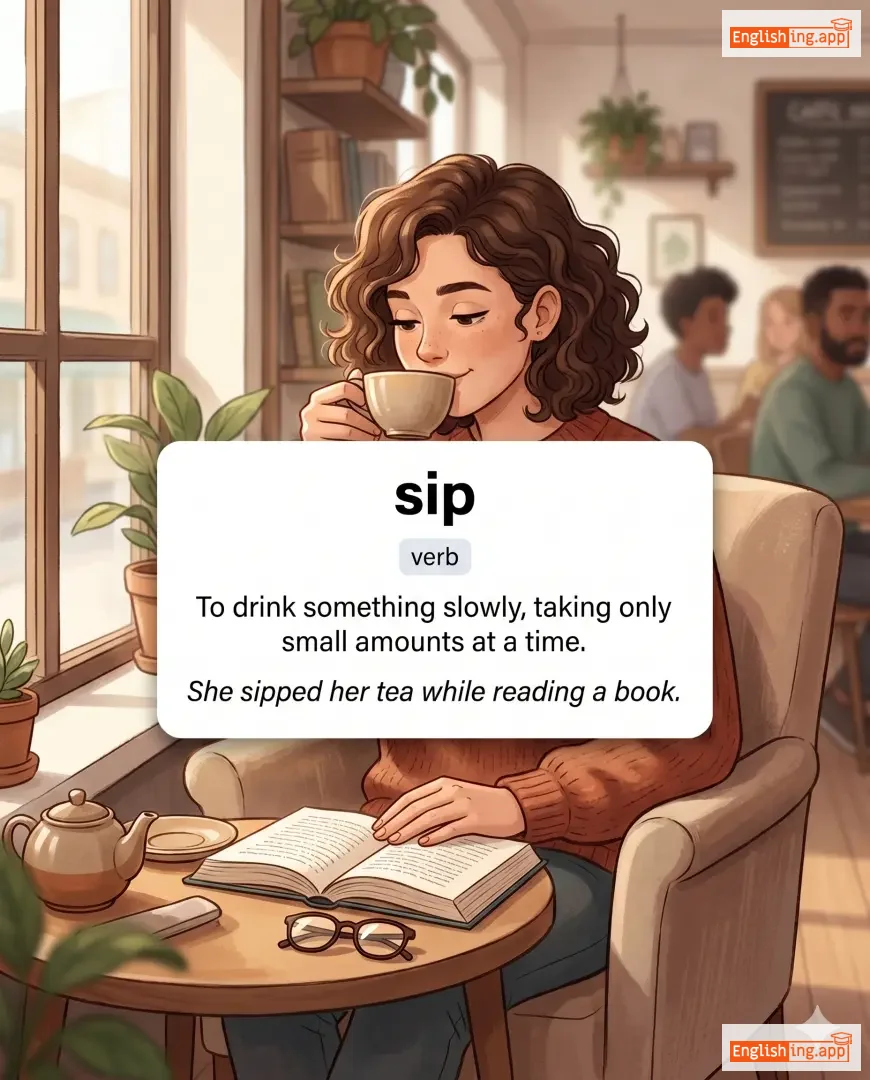
sip definition card — visual illustration of the meaning
verb
/sɪp/
ひと口 (hitokuchi)

To drink something slowly, taking only small amounts at a time.

"She sipped her tea while reading a book."

"彼女は本を読みながらお茶をひと口ずつ飲んでいた。" (Kanojo wa hon wo yomi nagara ocha wo hitokochi zutsu nonde ita.)
noun
/ˈsaɪnəs/
副鼻腔 (fukubikō)

A cavity within a bone or tissue, especially those in the bones of the face connected with the nasal cavities.

"He suffered from a sinus infection that caused headaches."
"彼は副鼻腔感染症に苦しんでおり、頭痛を引き起こしました。" (Kare wa fukubikō kansen-shō ni kurushinde ori, zutsū o hikiokoshimashita.)
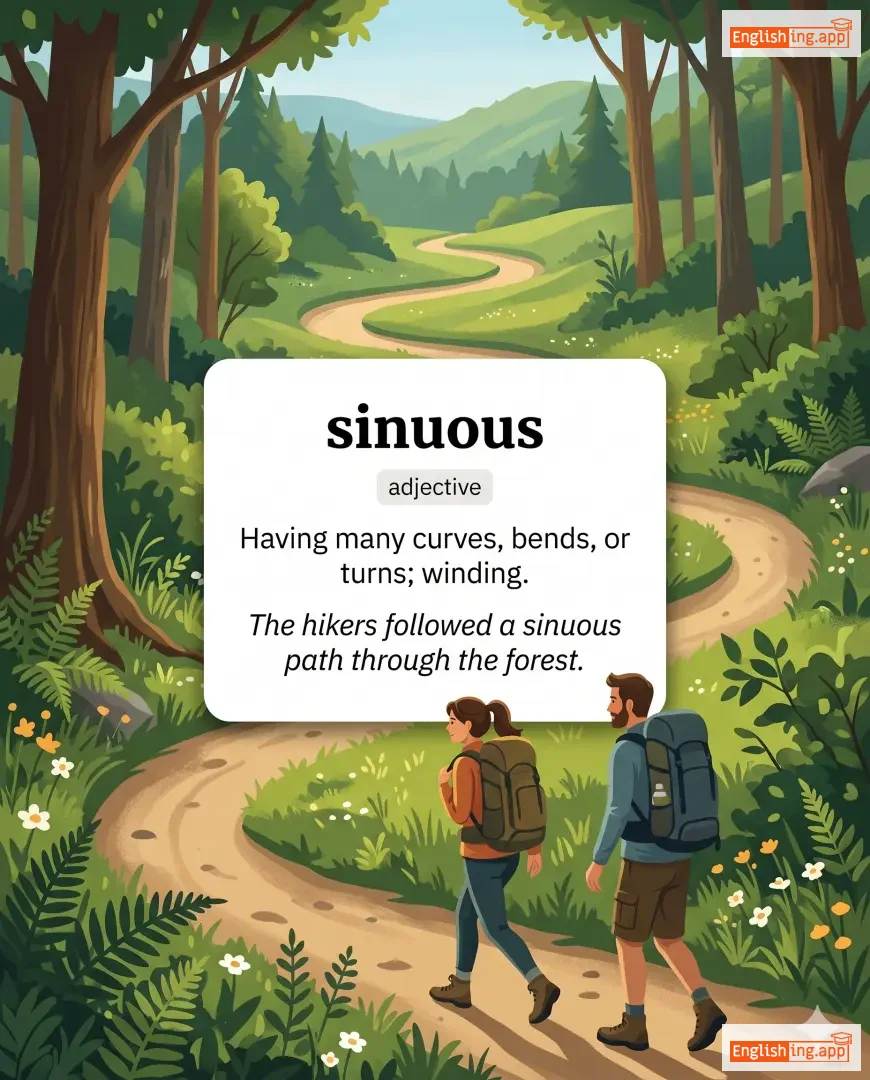
sinuous definition card — visual illustration of the meaning
adjective
/ˈsɪnjuəs/
曲がりくねった (magarikunetta)

Having many curves, bends, or turns; winding.

"The hikers followed a sinuous path through the forest."

"ハイカーたちは森を通る曲がりくねった道を進んだ。" (Haikaa-tachi wa mori wo tooru magarikunetta michi wo sunda.)
noun
/ˌsɪnjuˈɒsɪti/
曲がり具合 (magari guai)

The quality or state of being winding, curving, or having many turns.

"The sinuosity of the river made navigation challenging."

"川の曲がり具合はナビゲーションを難しくした。" (Kawa no magari guai wa nabigēshon o muzukashiku shita.)
adjective
/ˈsɪnləs/
無罪; 無邪気; 純粋 (muzai; mujakki; junsui)

free from sin; pure and innocent; without moral fault

"The innocent child appeared sinless in her pure white dress."
"無邪気な子供は純白のドレスで罪のないように見えた。" (Mujakki na kodomo wa junpaku no doresu de tsumi no nai yō ni mieta.)
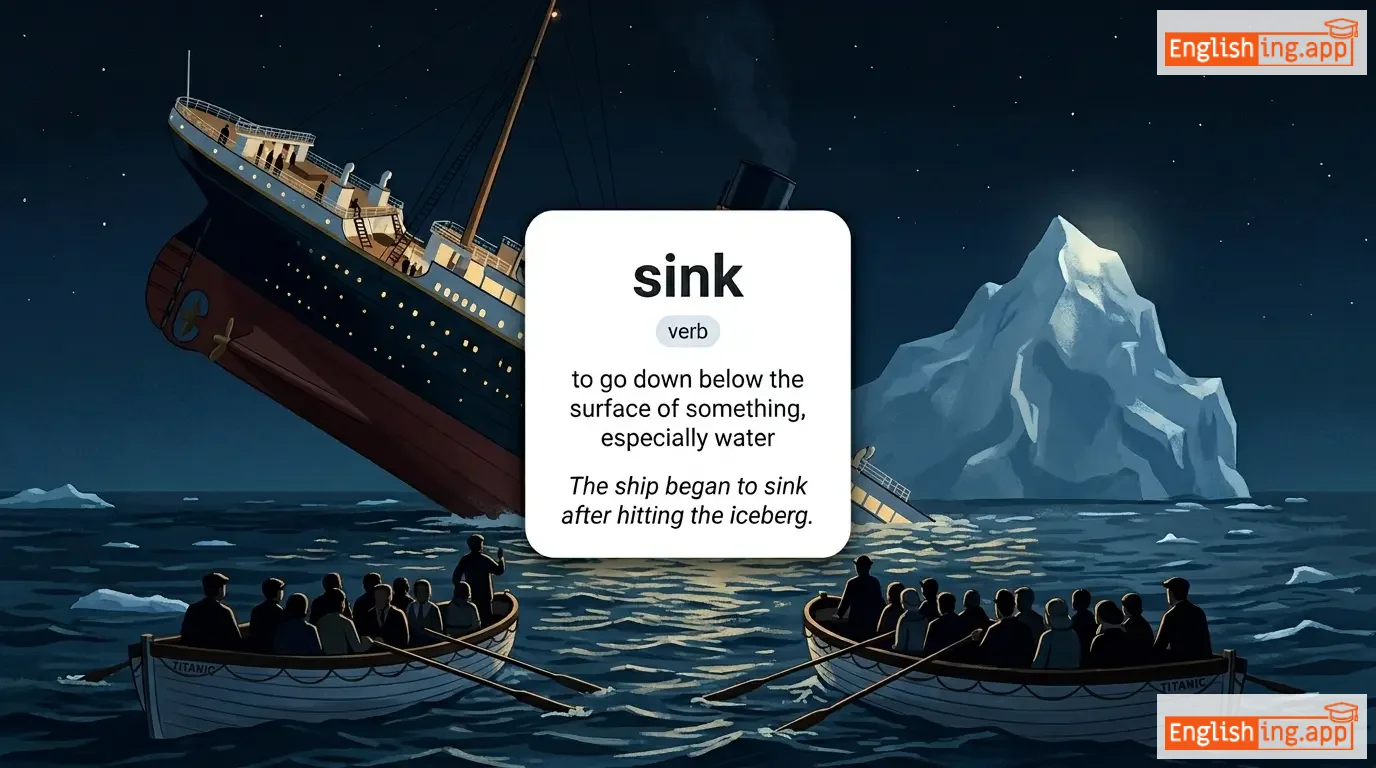
sink definition card — visual illustration of the meaning
verb
/sɪŋk/
沈む (shizumu)

to go down below the surface of something, especially water

"The ship began to sink after hitting the iceberg."

"船は氷山に衝突した後、沈み始めました。" (Fune wa hyōzan ni shōtotsu shita ato, shizumi hajimemashita.)
adjective
/ˈsɪnɪstər/
不吉な (fukitsuna)

Giving the impression that something harmful or evil is happening or will happen.

"The abandoned house had a sinister atmosphere."
"その廃屋には不吉な雰囲気が漂っていた。" (Sono haiyoku niwa fukitsuna fun'iki ga tadayotte ita.)
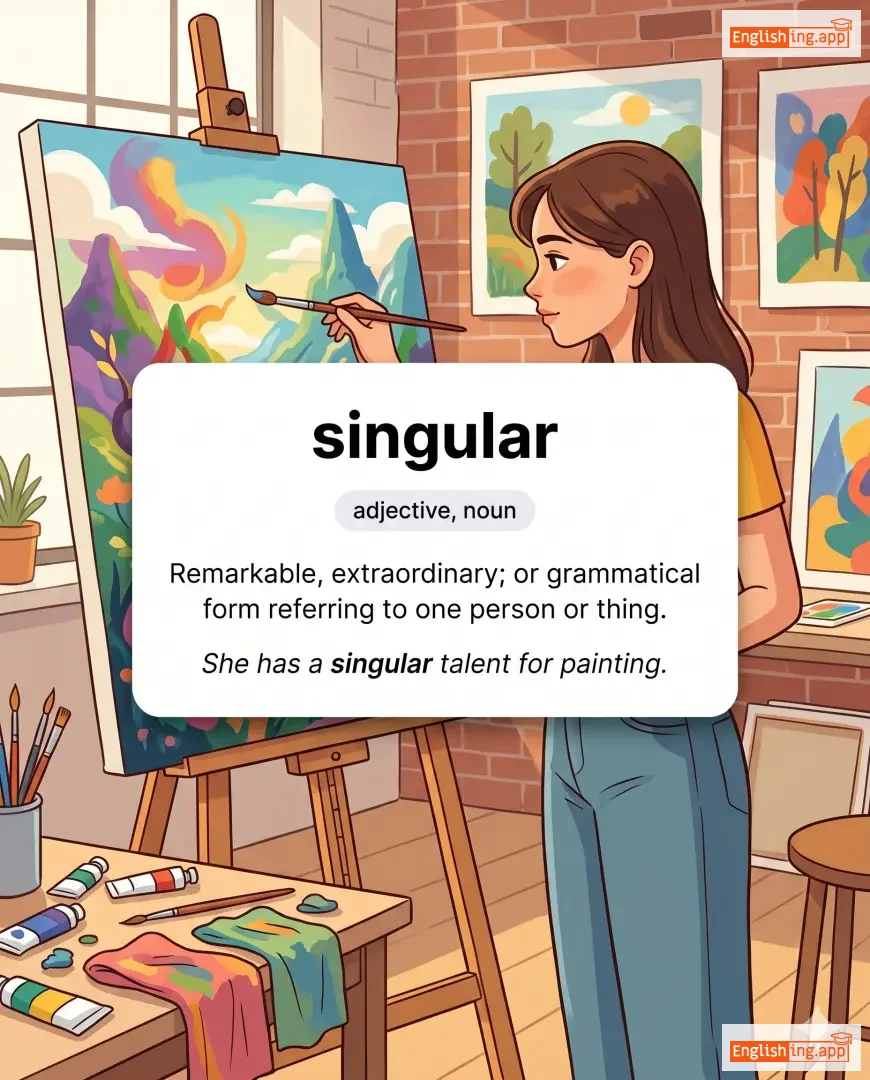
singular definition card — visual illustration of the meaning
adjective, noun
/ˈsɪŋɡjələr/
非凡 / 単数 (hiban / tansuu)

Remarkable, extraordinary; or grammatical form referring to one person or thing.

"She has a singular talent for painting."
"彼女は絵画において非凡な才能を持っています。" (Kanojo wa kaiga ni oite hiban na sainou o motteimasu.)
1️⃣

single

adjective
/ˈsɪŋɡəl/

only one; not one of several

"She bought a single ticket for the concert."

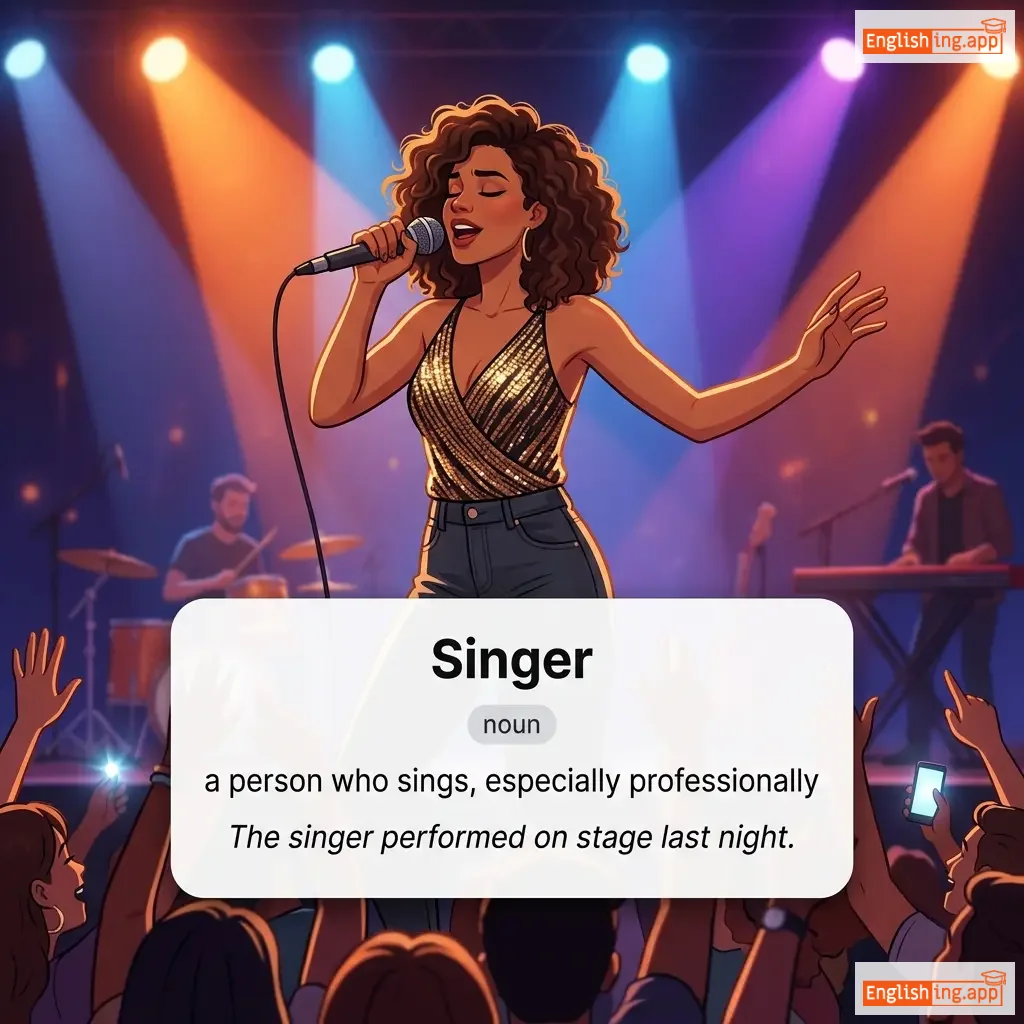
Singer definition card — visual illustration of the meaning
noun
/ˈsɪŋər/
歌手 (kashu)

a person who sings, especially professionally

"The singer performed on stage last night."

"歌手は昨晩ステージでパフォーマンスをしました。" (Kashu wa sakuban suteeji de pafōmansu o shimashita.)
verb
/sɪndʒ/
軽く焼く (karuku yaku)

To burn something superficially or lightly, especially at the edges.

"The fire singed his eyebrows."
"火が彼の眉毛を焼きました。" (Hi ga kare no mayuge o yakimashita.)
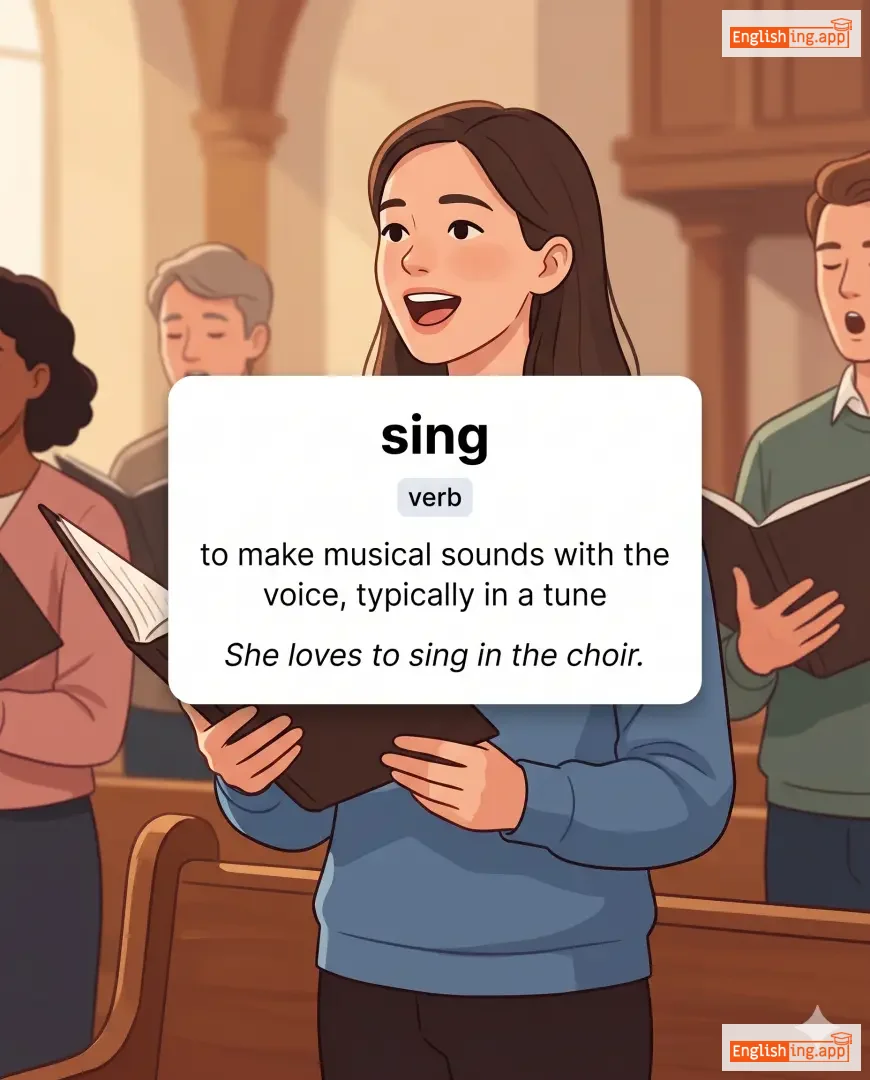
sing definition card — visual illustration of the meaning
verb
/sɪŋ/
歌う (utau)

to make musical sounds with the voice, typically in a tune

"She loves to sing in the choir."

"彼女は合唱団で歌うのが好きです。" (Kanojo wa gasshoudan de utau no ga suki desu.)
adjective
/ˈsɪnjuːi/
筋肉質で強い (kinnrokushitsu de tsuyoi)

Lean and muscular; strong and tough.

"The athlete had a sinewy build that showed his strength."

"そのアスリートは筋肉質な体型をしており、力強さを示していた。" (Sono asurīto wa kinnrokushitsu na taikei o shite ori, chikara zuyosa o shimeshite ita.)
noun
/ˈsɪnjuː/
(ken)

A tendon; figuratively, the source of strength, power, or resilience.

"The sinews in his arms stood out as he lifted the heavy box."
"重い箱を持ち上げると、彼の腕の腱が目立ちました。" (Omoi hako o mochiageru to, kare no ude no ken ga medachimashita.)
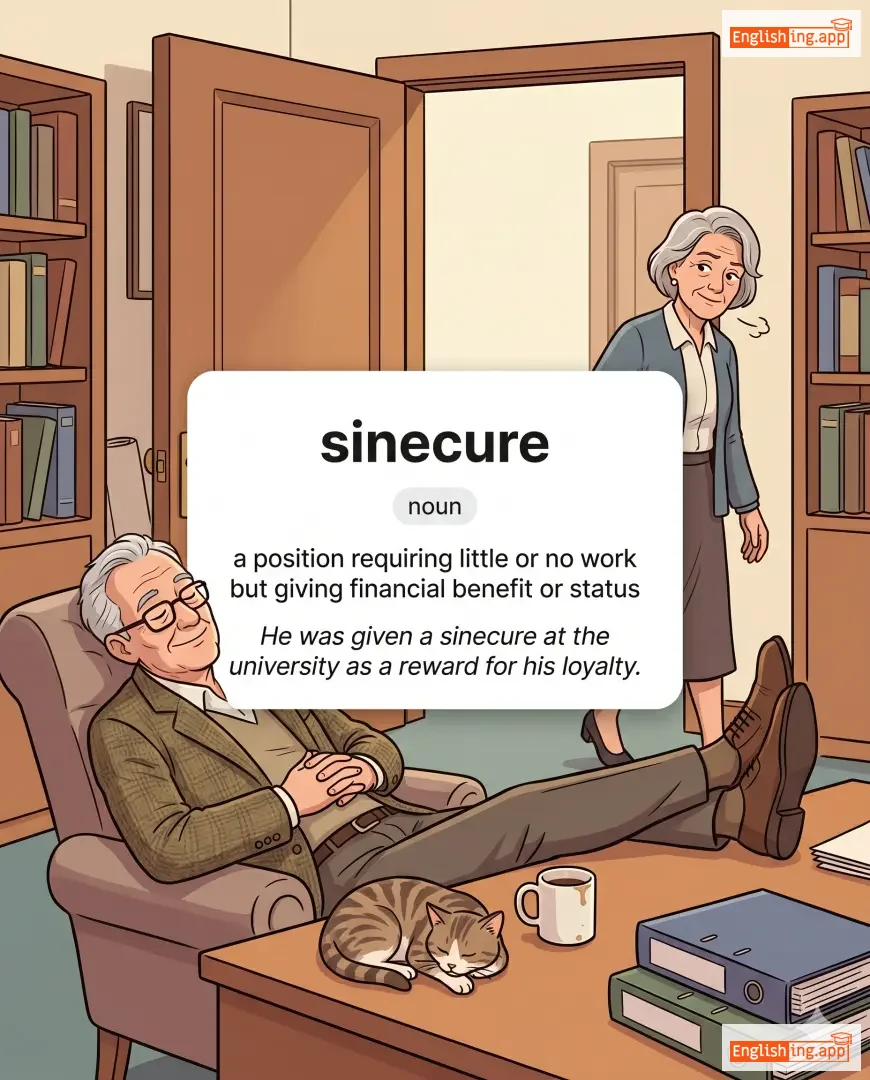
sinecure definition card — visual illustration of the meaning
noun
/ˈsaɪnɪkjʊər/
楽な仕事 (rakuna shigoto)

a position requiring little or no work but giving financial benefit or status

"He was given a sinecure at the university as a reward for his loyalty."

"彼は大学で忠誠心の報酬として楽な仕事を与えられました。" (Kare wa daigaku de chūseishin no hōshū to shite rakuna shigoto o ataeraremashita.)
noun
/sɪnˈserɪti/
誠実さ (seijitsusa)

the quality of being free from pretense or deceit; honesty

"His sincerity in apologizing was evident to everyone."

"彼の謝罪の真摯さは、すべての人に明らかだった。" (Kare no shazai no shinshi-sa wa, subete no hito ni akiraka datta.)
adverb
/sɪnˈsɪrli/
心から (kokoro kara)

with genuine feelings; honestly and truly

"I sincerely hope you recover soon."

"私は心からあなたが早く回復することを願っています。" (Watashi wa kokoro kara anata ga hayaku kaifuku suru koto o negatte imasu.)
adjective
/sɪnˈsɪr/
誠実 (seijitsu)

genuine and honest; free from pretense or deceit

"She gave a sincere apology for her mistake."

"彼女は自分の間違いに対して誠実に謝罪した。" (Kanojo wa jibun no machigai ni taishite seijitsu ni shazai shita.)
preposition
/sɪns/
以来 (irai)

from a particular time in the past until now

"I have known her since childhood."
"私は子供の頃から彼女を知っています。" (Watashi wa kodomo no koro kara kanojo o shitteimasu.)
noun, verb
/sɪn/
(tsumi)

an immoral act considered to be a transgression against divine law; to commit an offense against religious or moral law

"He confessed his sin to the priest."

"彼は神父に自分の罪を告白しました。" (Kare wa shinpu ni jibun no tsumi wo kokuhaku shimashita.)
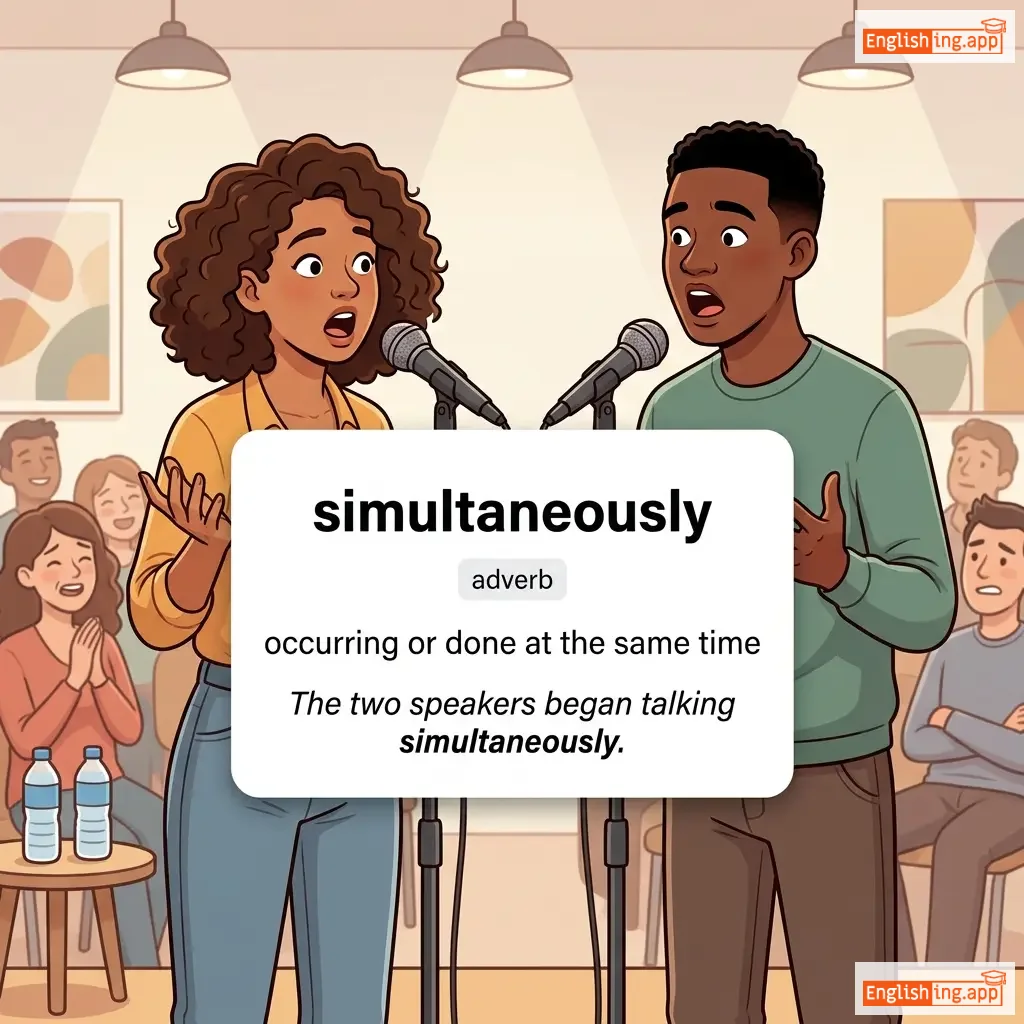
simultaneously definition card — visual illustration of the meaning
adverb
/ˌsaɪ.məlˈteɪ.ni.əs.li/
同時に (douji ni)

occurring or done at the same time

"The two speakers began talking simultaneously."

"二人のスピーカーは同時に話し始めました。" (Futari no supiikaa wa douji ni hanashihajimemashita.)
noun
/sɜːr/
サー (sā)

a respectful or formal form of address used for a man, typically one of higher social status or authority

"Sir, may I assist you with your order?"

"サー、注文をお手伝いできますか?" (Sā, chūmon o o-tetsudai dekimasu ka?)
noun
/ˈsætræp/
総督 (sōtoku)

a governor of a province in ancient Persia; also used figuratively for a subordinate ruler

"The king appointed a satrap to oversee the distant province."
"王は遠くの州を監督するために総督を任命しました。" (Ō wa tōku no shū o kantoku suru tame ni sōtoku o ninmei shimashita.)
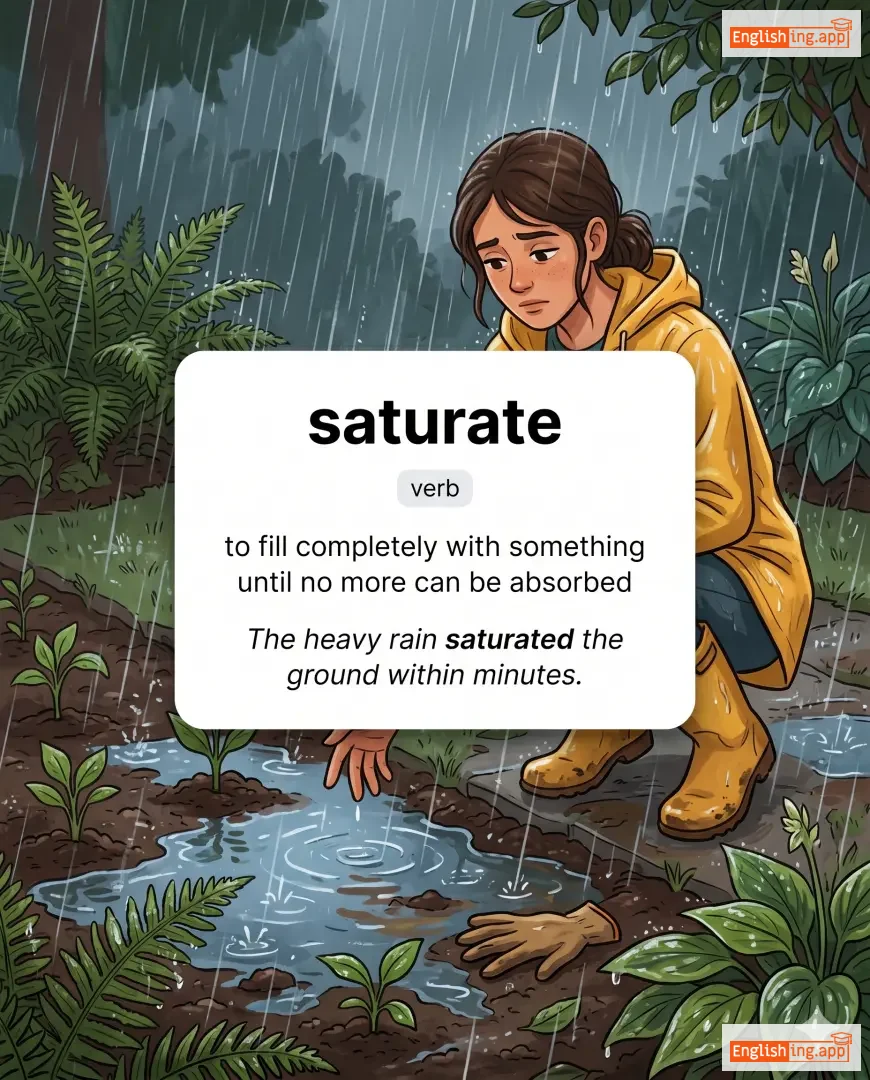
saturate definition card — visual illustration of the meaning
verb
/ˈsætʃəˌreɪt/

to fill completely with something until no more can be absorbed

"The heavy rain saturated the ground within minutes."

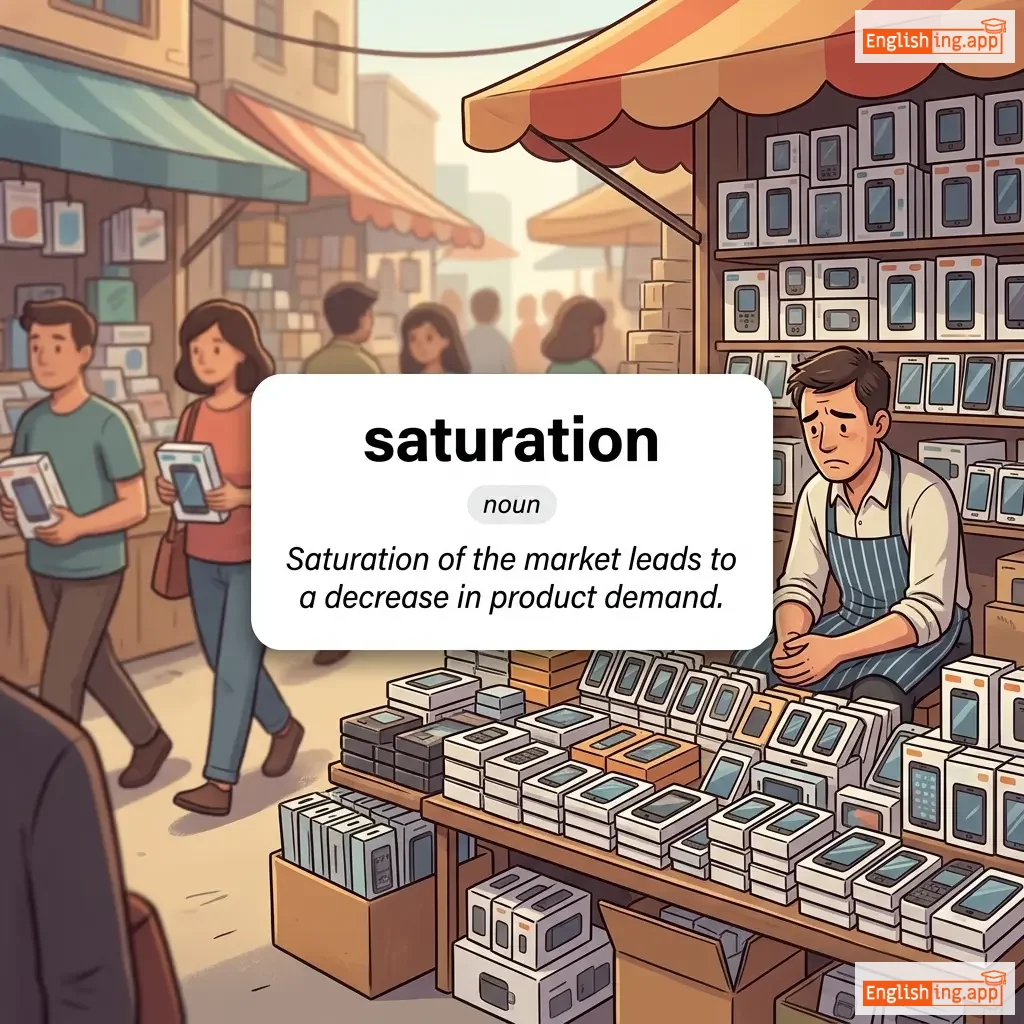
saturation definition card — visual illustration of the meaning
noun
/ˌsætʃəˈreɪʃən/
飽和 (hōwa)

The state or process that occurs when no more of something can be absorbed, combined with, or added.

"Saturation of the market leads to a decrease in product demand."

"市場の飽和は製品の需要の減少を引き起こします。" (Shijō no hōwa wa seihin no juyō no genshō o hikiokoshimasu.)
noun
/ˈsætərdeɪ/
土曜日 (doyoubi)

The day of the week between Friday and Sunday; traditionally the sixth day of the week

"We are going to the beach on Saturday."
"私たちは土曜日にビーチに行きます。" (Watashitachi wa doyoubi ni biichi ni ikimasu.)
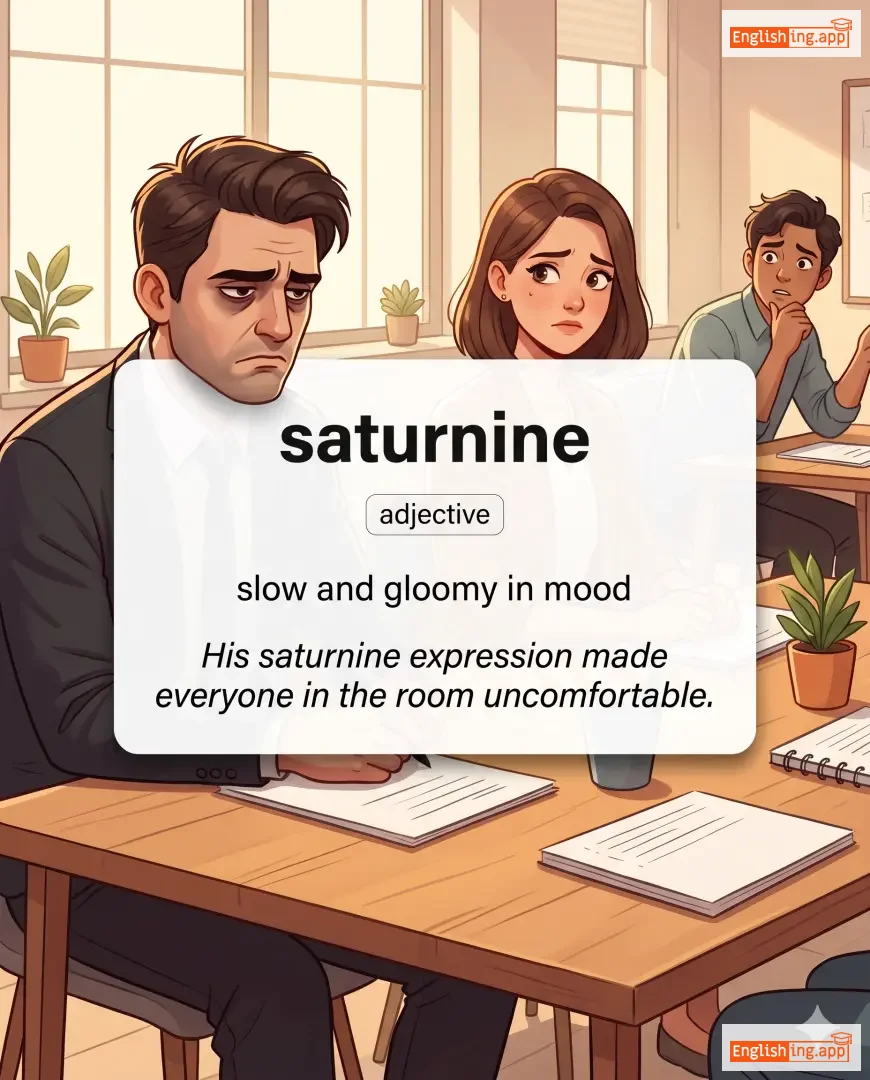
saturnine definition card — visual illustration of the meaning
adjective
/ˈsætərˌnaɪn/
陰気な (inki na)

slow and gloomy in mood

"His saturnine expression made everyone in the room uncomfortable."
"彼の陰気な表情は部屋の中の誰もが不快に感じさせた。" (Kare no in'kina hyōjō wa heya no naka no dare mo ga fukai ni kanjisaseta.)
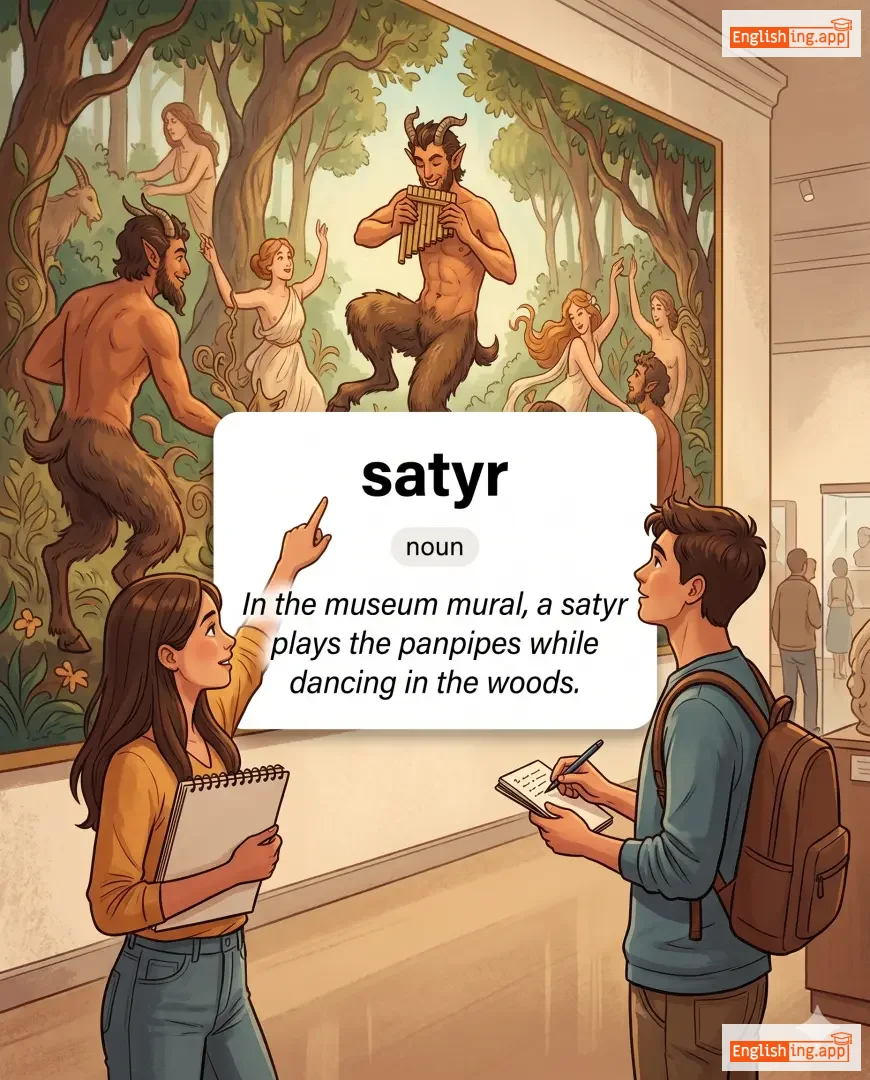
satyr definition card — visual illustration of the meaning
noun
/ˈsætər/
幸せ (shiawase)

a creature from Greek mythology depicted as a lustful being, often half-man and half-goat; by extension, a lecherous man

"In the museum mural, a satyr plays the panpipes while dancing in the woods."
"彼女は賞を受け取ったとき、自分の幸せを隠すことができませんでした。" (Kanojo wa shou wo uketotta toki, jibun no shiawase wo kakusu koto ga dekimasen deshita.)
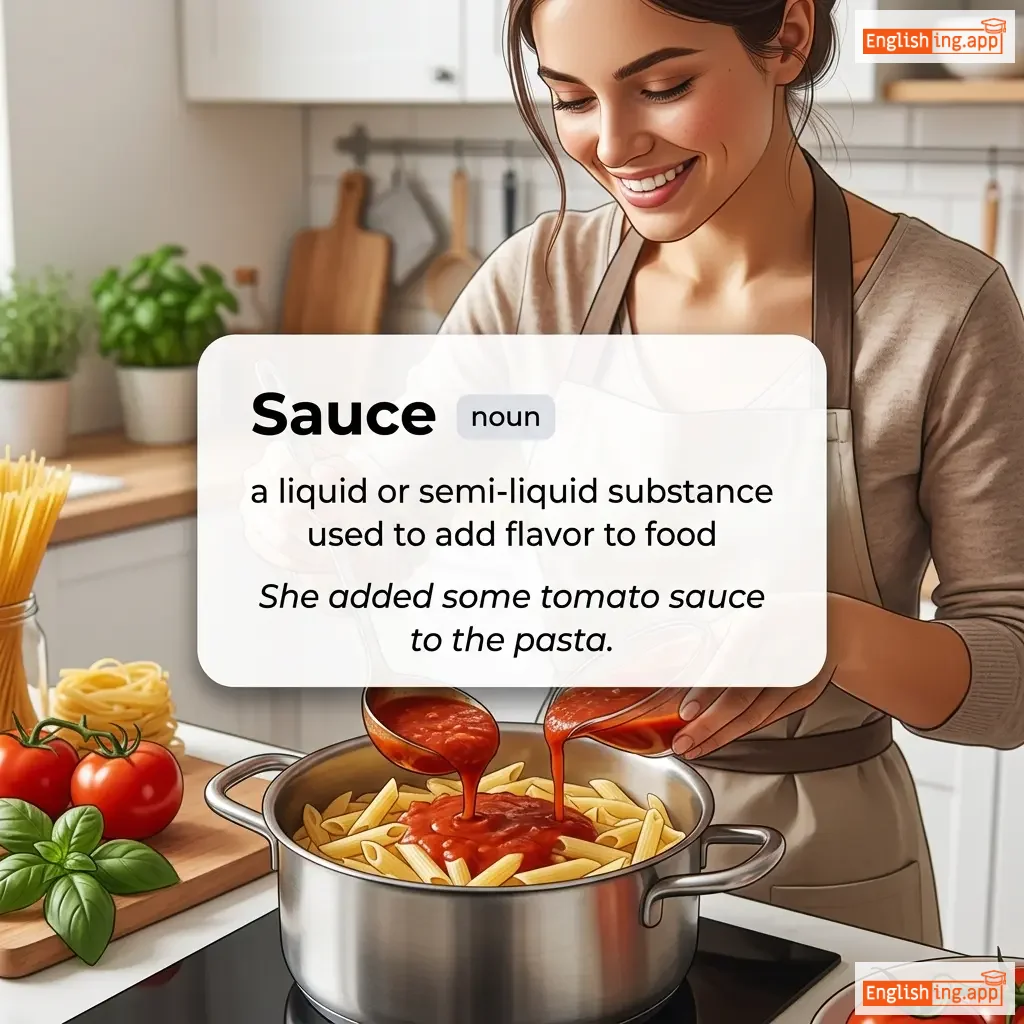
Sauce definition card — visual illustration of the meaning
noun
/sɔːs/
ソース (soosu)

a liquid or semi-liquid substance used to add flavor to food

"She added some tomato sauce to the pasta."

"彼女はパスタにトマトソースを加えた。" (Kanojo wa pasuta ni tomato soosu o kuwaeta.)
adjective
/ˈsɔːsi/
生意気な (namaiki na)

Boldly rude, cheeky, or playfully disrespectful.

"The child gave a saucy reply to his teacher."

"その子は先生に生意気な返事をした。" (Sono ko wa sensei ni namaiki na henji o shita.)
verb
/ˈsɔːntər/

to walk in a slow, relaxed manner without hurry or effort

"We sauntered along the riverside, stopping now and then to watch the boats."

noun
/ˈsaɪ.ə.lɪz.əm/
表面的な知識の誇示 (hyōmen-tekina chishiki no koji)

pretentious show of superficial knowledge

"His speech was full of sciolism, impressing no one."

"彼のスピーチはサイオリズムで満ちており、誰も感動しなかった。" (Kare no supīchi wa saiorizumu de michite ori, dare mo kandō shinakatta.)
adjective
/ˈsævɪdʒ/
野蛮; 残酷 (yaban; zankoku)

fierce, violent, or uncontrolled; cruel or brutal

"The storm brought savage winds that tore branches from the trees."

"嵐は、木の枝を引き裂くような荒々しい風をもたらしました。" (Arashi wa, ki no eda o hikisaku yō na araarashī kaze o motarashimashita.)
noun
/səˈvænə/
サバンナ(散在する木々がある草原) (saban'na (sanzai suru kigi ga aru sōgen))

a grassy plain with scattered trees, typical of tropical and subtropical regions

"Giraffes browsed on acacia trees across the wide savanna."

"キリンは広いサバンナでアカシアの木の葉を食べていました。" (Kirin wa hiroi sabanna de akashia no ki no ha o tabete imashita.)
noun
/səˈvɑːnt/

a learned person, especially a distinguished scientist or scholar; sometimes used in the phrase ‘savant syndrome’ for someone with exceptional abilities alongside developmental differences

"The conference keynote was delivered by a linguistic savant who studies endangered languages."

adjective
/ˈsæv.i/
賢い, 熟練した (kashikoi, jukuren shita)

Having practical knowledge and the ability to make good judgments.

"She is a tech-savvy entrepreneur."

"彼女はテクノロジーに詳しい起業家です。" (Kanojo wa tekunorojī ni kuwashī kigyōka desu.)
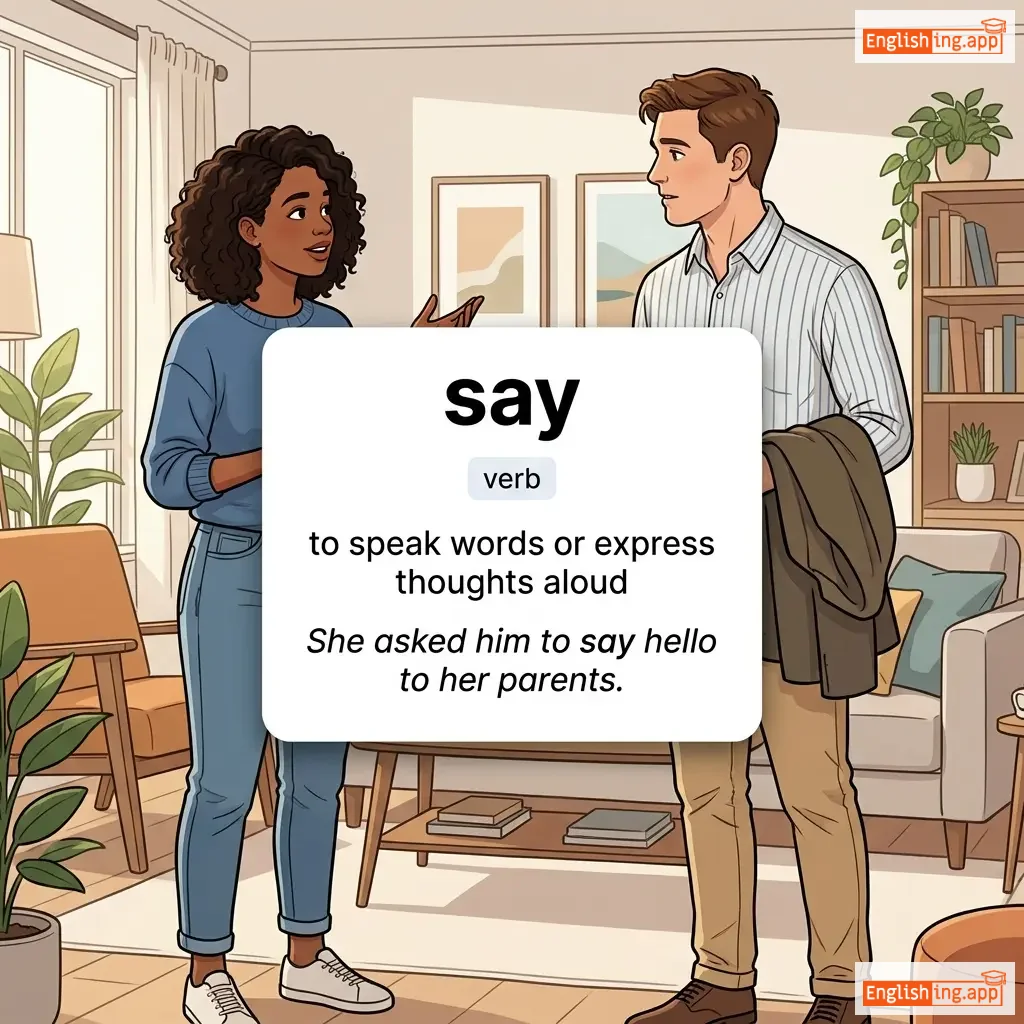
say definition card — visual illustration of the meaning
verb
/seɪ/
言う (iu)

to speak words or express thoughts aloud

"She asked him to say hello to her parents."

"彼女は彼に親にこんにちはと言うように頼んだ。" (Kanojo wa kare ni oya ni konnichiwa to iu yō ni tanonda.)
noun
/ˈsæksəfoʊn/
サクソフォン (sakusofon)

a wind musical instrument with a curved metal body and a single reed mouthpiece

"The jazz musician played a beautiful solo on his saxophone."

"ジャズのミュージシャンは自分のサクソフォンで美しいソロを演奏しました。" (Jazu no myūjishan wa jibun no sakusofon de utsukushī soro o ensō shimashita.)
noun
/ˈsɔːjər/
材木職人 (zaimoku shokunin)

a person who saws wood, especially as an occupation

"The skilled sawyer cut the logs into planks."

"熟練した材木職人は丸太を板に切りました。" (Jukuren shita zaimoku shokunin wa maruta wo ita ni kirimashita)
noun
/ˈsɔː.dʌst/
木屑 (mokusesu)

The tiny particles of wood produced by sawing or sanding.

"The floor was covered with sawdust from the carpentry work."

"床は大工仕事からの木屑で覆われていました。" (Yuka wa daiku shigoto kara no mokusesu de ōwarete imashita.)
noun
/ˈsɔː.dər/
お世辞; おべっか (oseji; obekka)

flattering or wheedling talk; soft soap

"His sawder couldn't convince anyone of his sincerity."

"彼のオベッカは誰にも彼の誠実さを納得させることができなかった。" (Kare no obekka wa dare ni mo kare no seijitsusa o nattoku saseru koto ga dekinakatta.)
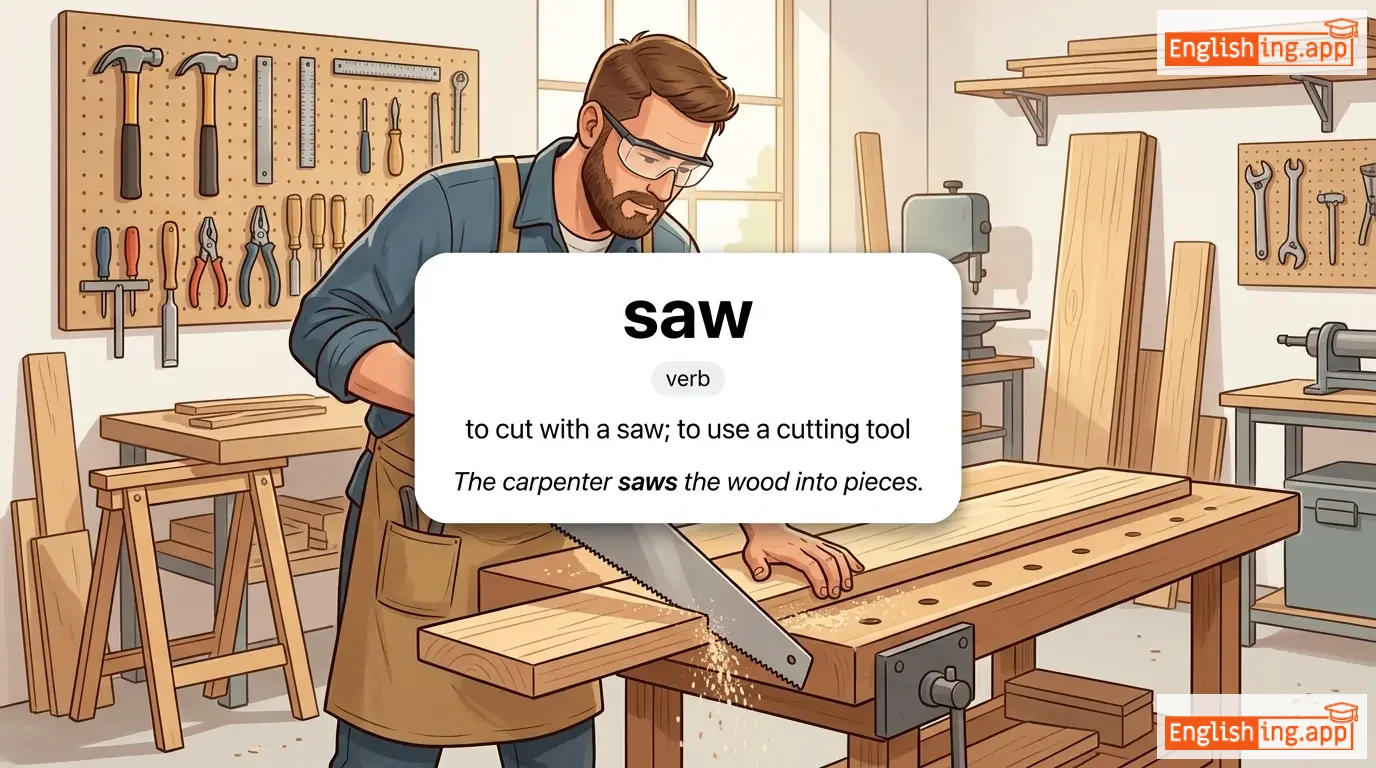
saw definition card — visual illustration of the meaning
noun
/sɔː/
のこぎり (nokogiri)

a tool with a sharp blade used for cutting wood or other materials

"He used a saw to cut the wooden plank."

"彼は木の板を切るためにのこぎりを使いました。" (Kare wa ki no ita o kiru tame ni nokogiri o tsukaimashita.)
noun
/ˌsæv.wɑːr ˈfeər/
社交術 (shakou-jutsu)

The ability to act or speak appropriately in social situations; polished social skills.

"She handled the delicate situation with remarkable savoir-faire."
"彼女は見事な社交術で微妙な状況をうまく処理しました。" (Kanojo wa migoto na shakou-jutsu de bimyou na joukyou wo umaku shori shimashita.)
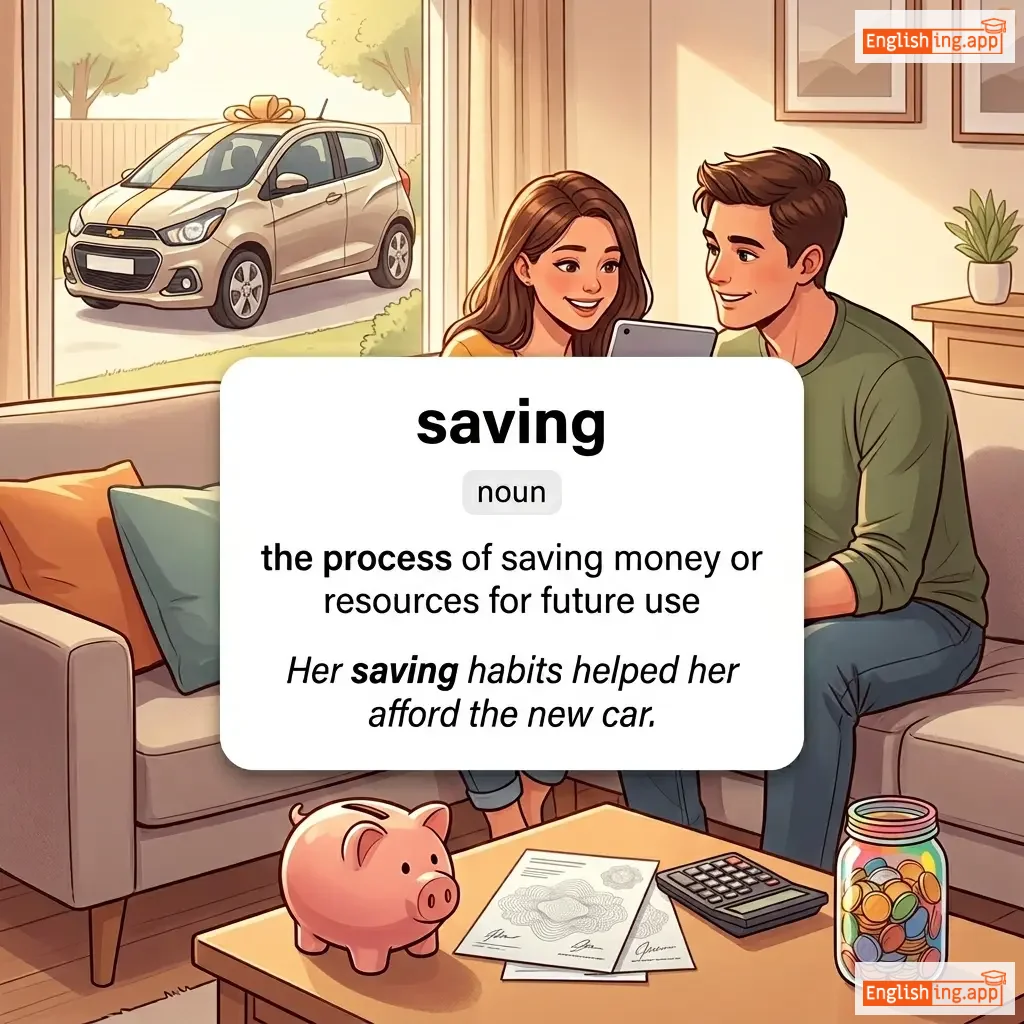
saving definition card — visual illustration of the meaning
noun
/ˈseɪvɪŋ/
貯金 (chokin)

the process of saving money or resources for future use

"Her saving habits helped her afford the new car."

"彼女の貯金習慣は新しい車を買うのに役立ちました。" (Kanojo no chokin shūkan wa atarashī kuruma o kau no ni yakudachimashita.)
savings definition card — visual illustration of the meaning
noun
ˈseɪ.vɪŋz
貯金 (chokin)

Money that is kept for future use or investment.

"Many people invest their savings in real estate."

"多くの人々は自分の貯金を不動産に投資します。" (Ōku no hitobito wa jibun no chokin o fudōsan ni tōshi shimasu.)