語彙集

英単語辞書 | 単語の意味、定義、例文

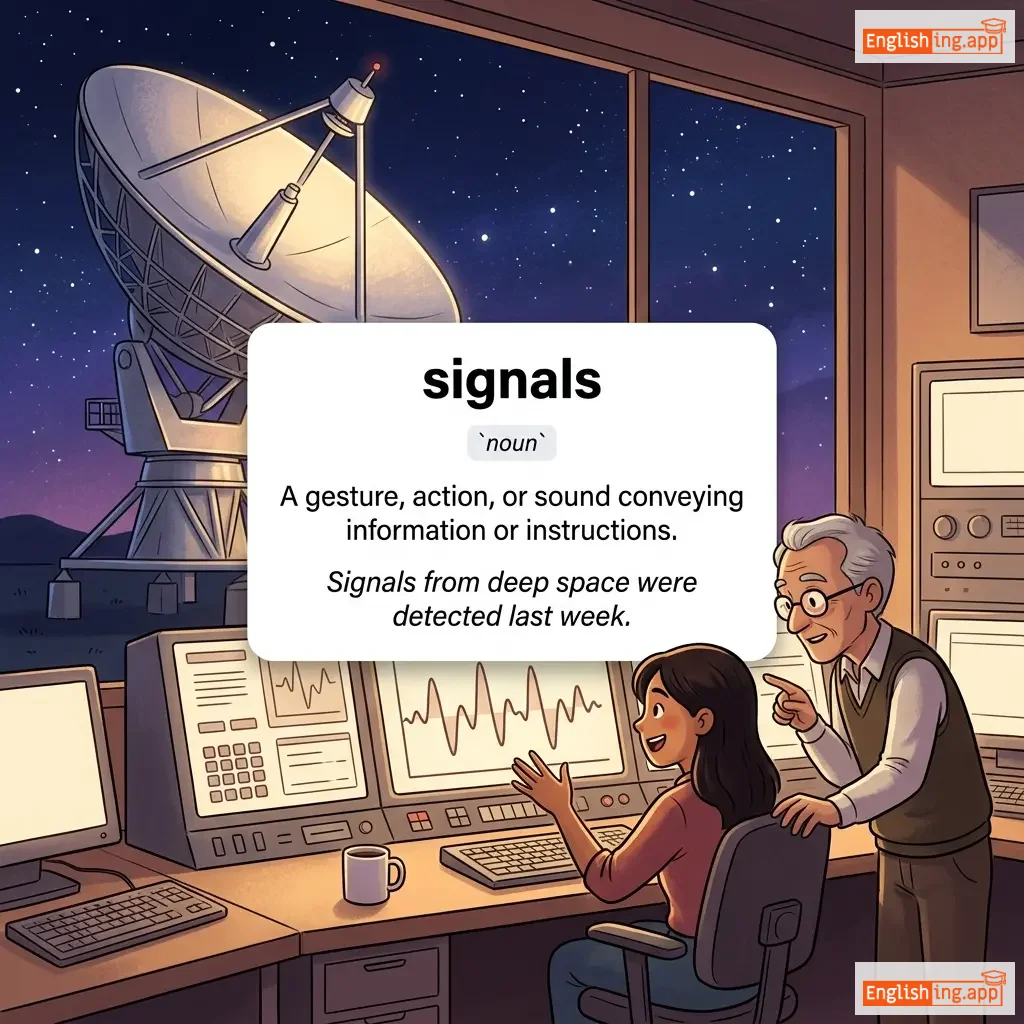
signals definition card — visual illustration of the meaning
noun
/ˈsɪɡ.nəlz/
信号 (shingou)

A gesture, action, or sound conveying information or instructions.

"Signals from deep space were detected last week."

"深宇宙からの信号は先週検出されました。" (Shin uchū kara no shingou wa senshū kenshutsu saremashita.)
noun
/ˈsɪɡ.nə.tʃər/
署名 (shomei)

a person's name written by themselves, often as a form of identification or authorization

"She signed the contract with her elegant signature."

"彼女は優雅な署名で契約書にサインしました。" (Kanojo wa yūga na shomei de keiyakusho ni sain shimashita.)
noun
/sɪɡˈnɪfɪkəns/
重要性 (jūyō-sei)

the quality of being important, meaningful, or worthy of attention

"The significance of the discovery was recognized worldwide."

"その発見の重要性は世界中で認識されました。" (Sono hakken no jūyō-sei wa sekaijū de ninshiki saremashita.)
significant definition card — visual illustration of the meaning
adjective
/sɪɡˈnɪfɪkənt/
重要な (jūyōna)

important, meaningful, or having a noticeable effect

"The company made a significant investment in new technology."

"会社は新しい技術に重要な投資をしました。" (Kaisha wa atarashī gijutsu ni jūyōna tōshi o shimashita.)
adverb
/sɪɡˈnɪfɪkəntli/
顕著に (kenchoni)

in a way that is large or important enough to have an effect

"The economy has significantly improved over the last decade."

"経済は過去10年間で顕著に改善しました。" (Keizai wa kako 10 nenkan de kencho ni kaizen shimashita.)
noun
/ˌsɪɡnɪfɪˈkeɪʃən/
意味 (imi)

the meaning or sense conveyed by a word, action, or symbol

"The signification of the gesture was misunderstood."
"そのジェスチャーの意味は誤解されていました。" (Sono jesuchā no imi wa gokai sarete imashita.)
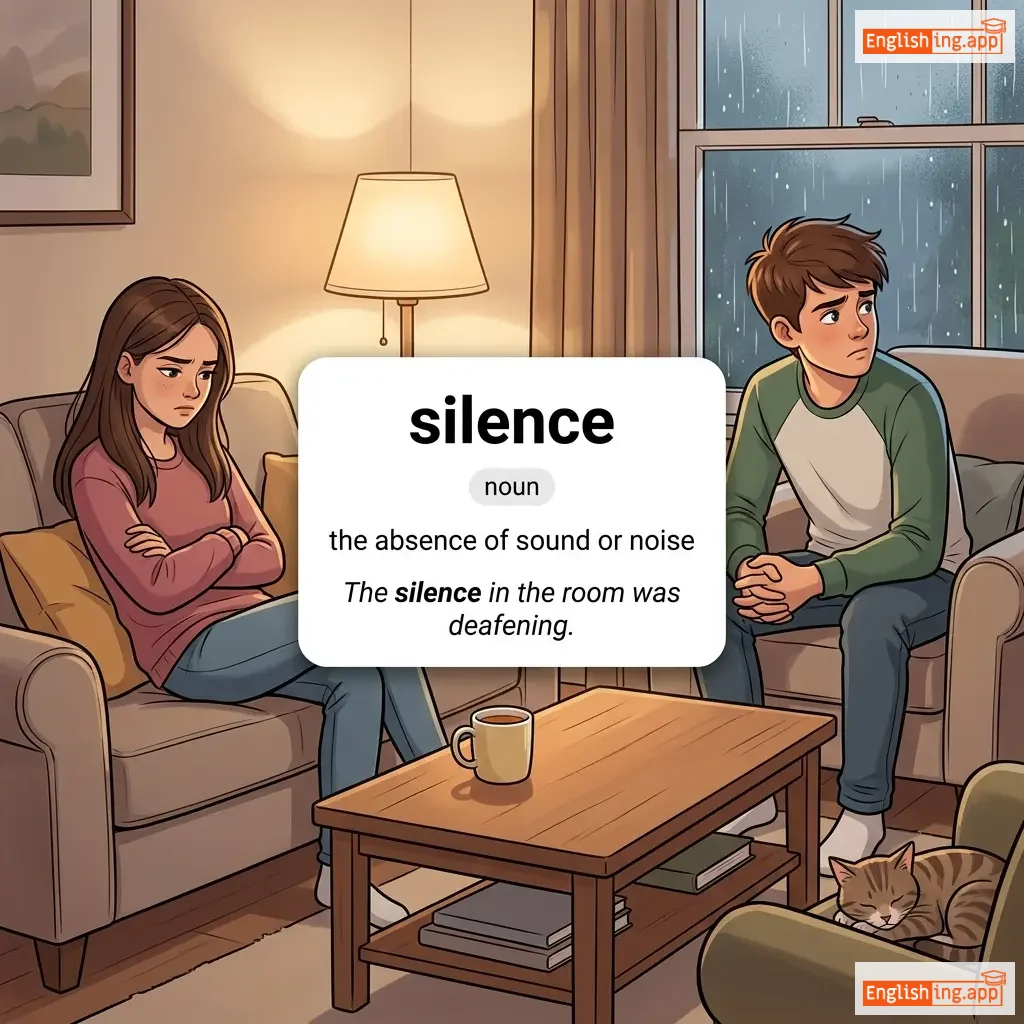
silence definition card — visual illustration of the meaning
noun
/ˈsaɪləns/
静けさ (shizukesa)

the absence of sound or noise

"The silence in the room was deafening."

"部屋の中の静けさは耳をつんざくようだった。" (Heya no naka no shizukesa wa mimi wo tsunzaku you datta.)
adjective
/ˈsaɪlənt/
静かな (shizukana)

not speaking or making noise

"The room was silent as everyone waited for the announcement."

"部屋は静かで、皆が発表を待っていた。" (Heya wa shizuka de, minna ga happyou o matte ita.)
noun
/sɪlk/
(kinu)

a fine, smooth fabric made from the threads produced by silkworms

"The dress was made of pure silk."

"そのドレスは純粋な絹で作られていた。" (Sono doresu wa junsuina kinu de tsukurarete ita.)
noun
/sɪlk klɔːθ/
シルクの布 (shiruku no nuno)

fabric made from natural fibers produced by silkworms

"The bride wore a beautiful dress made of silk cloth."

"花嫁はシルクの布で作られた美しいドレスを着ていました。" (hanayome wa shiruku no nuno de tsukurareta utsukushī doresu o kiteimashita.)
noun
/ˈsɪlk.wɜːrm/
かいこ (kaiko)

the caterpillar of a moth that produces silk fibers used to make silk fabric

"Silkworms feed on mulberry leaves to produce silk."

"カイコは桑の葉を食べて、絹を生産します。" (Kaiko wa kuwa no ha o tabete, kinu o seisan shimasu.)
adjective
/ˈsɪlkən/
絹の; 柔らかい; 滑らか; (kinu no)

made of silk; smooth and soft like silk

"She wore a beautiful silken dress to the party."

"彼女はパーティーに美しい絹のドレスを着ていきました。" (Kanojo wa pātī ni utsukushī kinu no doresu o kite ikimashita.)
adjective
/ˈsɪli/
馬鹿 (baka)

showing a lack of good sense; foolish or playful

"He made a silly mistake on the test."

"彼はテストで馬鹿なミスをした。" (Kare wa tesuto de baka na misu o shita.)
noun
/sɪlt/
シルト (shiruto)

Fine sand, clay, or other material carried by running water and deposited as a sediment.

"The river deposited layers of silt along its banks."

"川はその岸にシルトの層を堆積させた。" (Kawa wa sono kishi ni shiruto no sō o taiseki saseta.)
noun, adjective
/ˈsɪlvər/
(gin)

a shiny gray-white metal, often used for coins, jewelry, and decoration

"She wore a beautiful silver necklace for the party."

"彼女はパーティーのために美しい銀のネックレスを身に着けていました。" (Kanojo wa pātī no tame ni utsukushī gin no nekkuresu o mi ni tsukete imashita.)
noun
/ˈsɪlvər kɑrp/
銀鯉 (gin goi)

a large freshwater fish with silvery scales, commonly farmed for food

"Silver carp is widely cultivated in fish farms across Asia."
"銀鯉はアジアの養魚場で広く養殖されています。" (gin goi wa ajia no yougyojo de hiroku youshoku sareteimasu.)
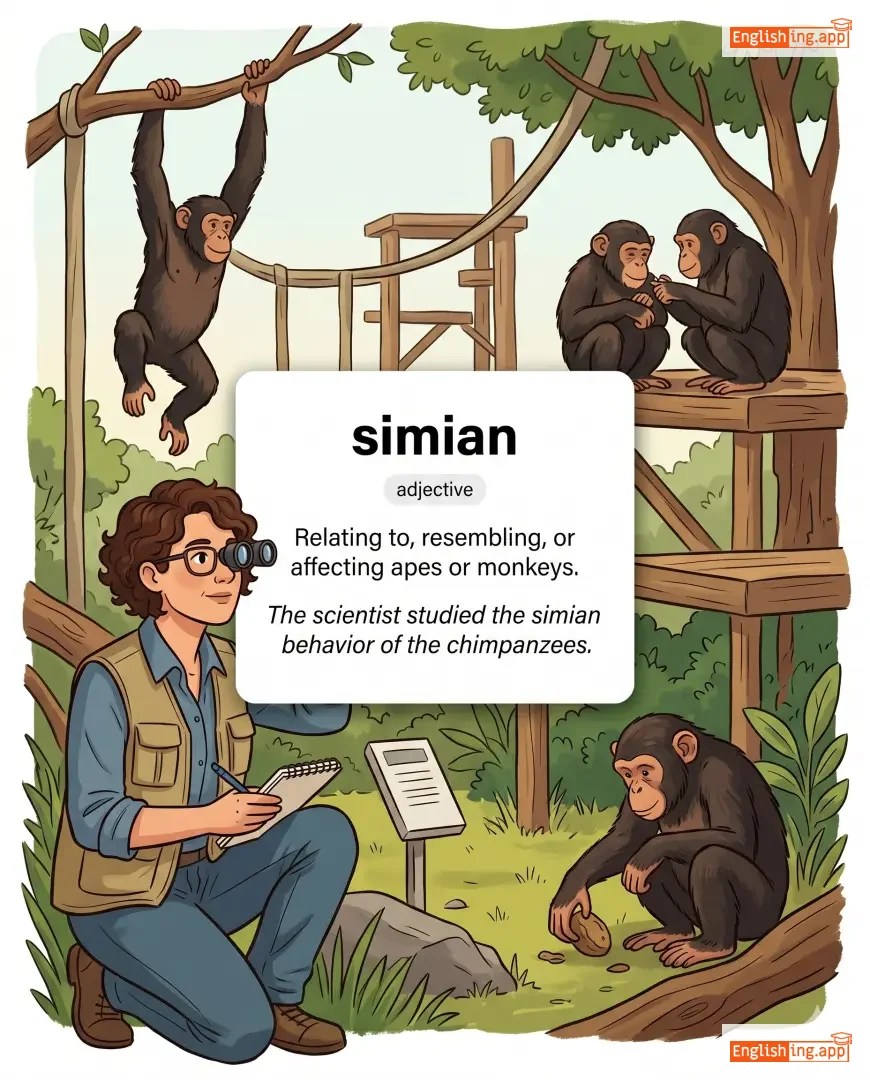
simian definition card — visual illustration of the meaning
adjective
/ˈsɪmiən/
類人猿の (ruijin'en no)

Relating to, resembling, or affecting apes or monkeys.

"The scientist studied the simian behavior of the chimpanzees."

"科学者はチンパンジーの類人猿の行動を研究した。" (Kagakusha wa chinpanjī no ruijin'en no kōdō o kenkyū shita.)
adjective
/ˈsɪmɪlər/
似ている (niteru)

Having a resemblance in appearance, character, or quantity, without being identical.

"The twins wore similar clothes to the party."

"双子はパーティーで似たような服を着ていました。" (Futago wa pātī de nita yō na fuku o kiteimashita.)
noun
/ˌsɪmɪˈlærəti/
類似 (ruiji)

the state of being alike or having characteristics in common

"There is a strong similarity between the two paintings."

"2枚の絵の間には強い類似性があります。" (2-mai no e no aida ni wa tsuyoi ruijisei ga arimasu.)
adverb
/ˈsɪmɪlərli/
同様に (douyou ni)

in a similar way

"Similarly, we can achieve success with dedication and hard work."
"同様に、私たちは献身と努力によって成功を収めることができます。" (Douyou ni, watashitachi wa kenshin to doryoku ni yotte seikou o osameru koto ga dekimasu.)
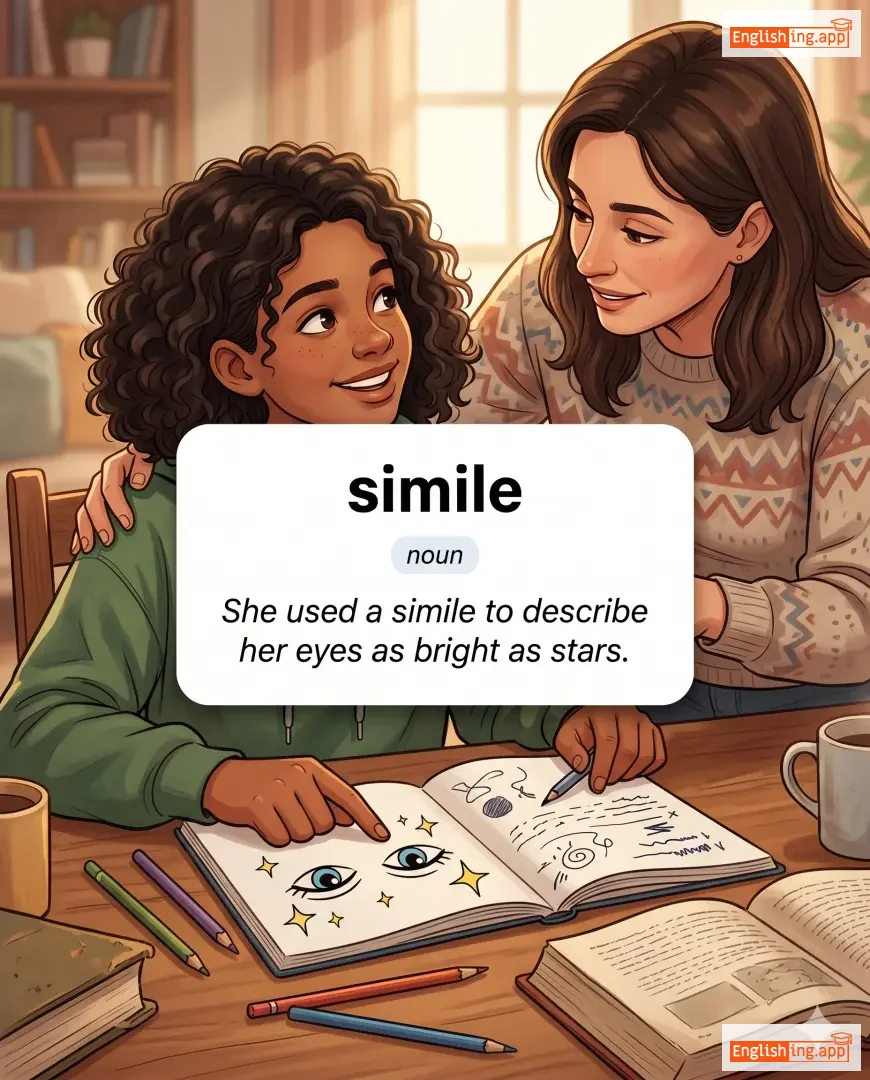
simile definition card — visual illustration of the meaning
noun
/ˈsɪməli/
直喩 (chokuyu)

A figure of speech involving the comparison of one thing with another using 'like' or 'as'.

"She used a simile to describe her eyes as bright as stars."

"彼女は自分の目を星のように明るいと表現するために直喩を使いました。" (Kanojo wa jibun no me o hoshi no yō ni akarui to hyōgen suru tame ni chokuyu o tsukaimashita.)
noun
/sɪˈmɪlɪˌtjuːd/
類似性 (ruizisei)

The quality or state of being similar; resemblance or likeness.

"There is a striking similitude between the two paintings."

"この二つの絵の間には顕著な類似性があります。" (Kono futatsu no e no aida ni wa kencho na ruizisei ga arimasu.)
verb
/ˈsɪmpər/
不自然に笑う (fushizen ni warau)

to smile in a silly, self-conscious, or affected way

"She simpered at his compliment, clearly embarrassed."
"彼女は彼の褒め言葉に不自然に笑い、明らかに恥ずかしそうだった。" (Kanojo wa kare no homekotoba ni fushizen ni warai, akiraka ni hazukashisou datta.)
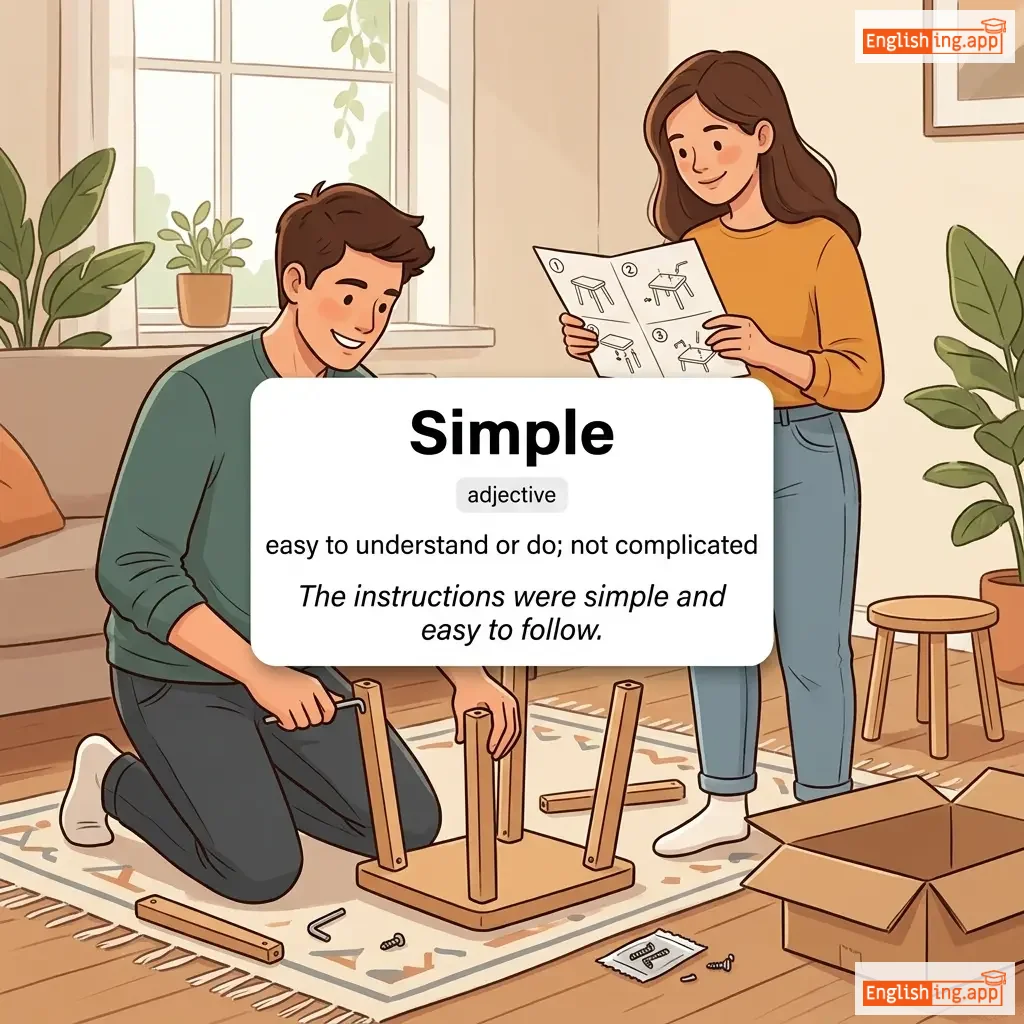
Simple definition card — visual illustration of the meaning
adjective
/ˈsɪmpəl/
簡単 (kantan)

easy to understand or do; not complicated

"The instructions were simple and easy to follow."

"指示は簡単で従うのも簡単でした。" (Shiji wa kantan de shitagau no mo kantan deshita.)
noun
/ˈsɪmpəltən/
おバカさん (obakasan)

a foolish or gullible person

"They treated him like a simpleton who could not understand anything complex."

"彼らは彼を、何も複雑なことが理解できないおバカさんのように扱いました。" (Karera wa kare o, nanimo fukuzatsu na koto ga rikai dekinai obakasan no yō ni atsukaimashita.)
noun
/sɪmˈplɪsɪti/
単純さ; 明確さ (tanjunsa; meikakusa)

the quality of being simple; lack of complexity or intricacy

"The beauty of the design lies in its simplicity."
"デザインの美しさはその単純さにあります。" (Dezain no utsukushisa wa sono tanjunsa ni arimasu.)
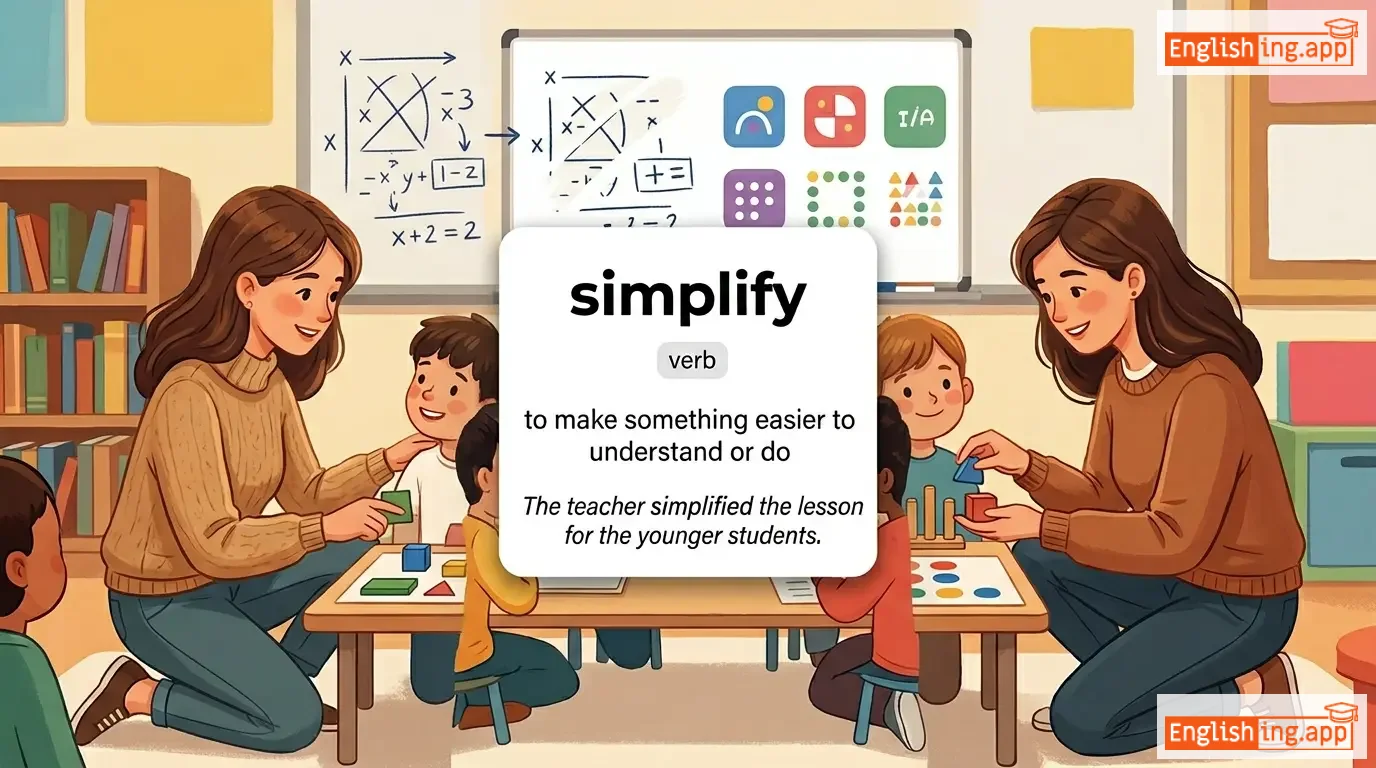
simplify definition card — visual illustration of the meaning
verb
/ˈsɪmplɪˌfaɪ/
簡素化する (kansoka suru)

to make something easier to understand or do

"The teacher simplified the lesson for the younger students."

"先生は若い生徒のために授業を簡素化しました。" (Sensei wa wakai seito no tame ni jugyou o kansoka shimashita.)
adjective
/sɪmˈplɪstɪk/
過度に単純化された (kado ni tanjunkan sareta)

treating complex issues as if they were much simpler than they really are

"His explanation was too simplistic and ignored key details."

"彼の説明は過度に単純化されており、重要な詳細を無視していました。" (Kare no setsumei wa kado ni tanjunkan sarete ori, jūyōna shōsai o mushi shite imashita.)
adverb
/ˈsɪmpli/
簡単に (kantan ni)

in a clear and easy to understand manner

"She explained the concept simply and clearly."

"彼女はその概念を簡単で明確に説明しました。" (Kanojo wa sono gainen o kantan de meikaku ni setsumei shimashita.)
noun
/ˌsɪmjʊˈleɪkrəm/
シミュラクル (shimyurakuru)

an image or representation of someone or something; a superficial likeness

"The statue was only a simulacrum of the ancient god."

"その像は古代の神のシミュラクルに過ぎなかった。" (Sono zou wa kodai no kami no shimyurakuru ni suginakatta.)
verb
/ˈsɪmjʊˌleɪt/
シミュレート (shimyurēto)

to imitate the appearance, character, or behavior of something; to pretend or reproduce conditions artificially

"The pilot had to simulate an emergency landing during training."
"パイロットは訓練中に緊急着陸をシミュレートしなければならなかった。" (Pairotto wa kunrenchū ni kinkyū chakuriku o shimyurēto shinakereba naranakatta.)
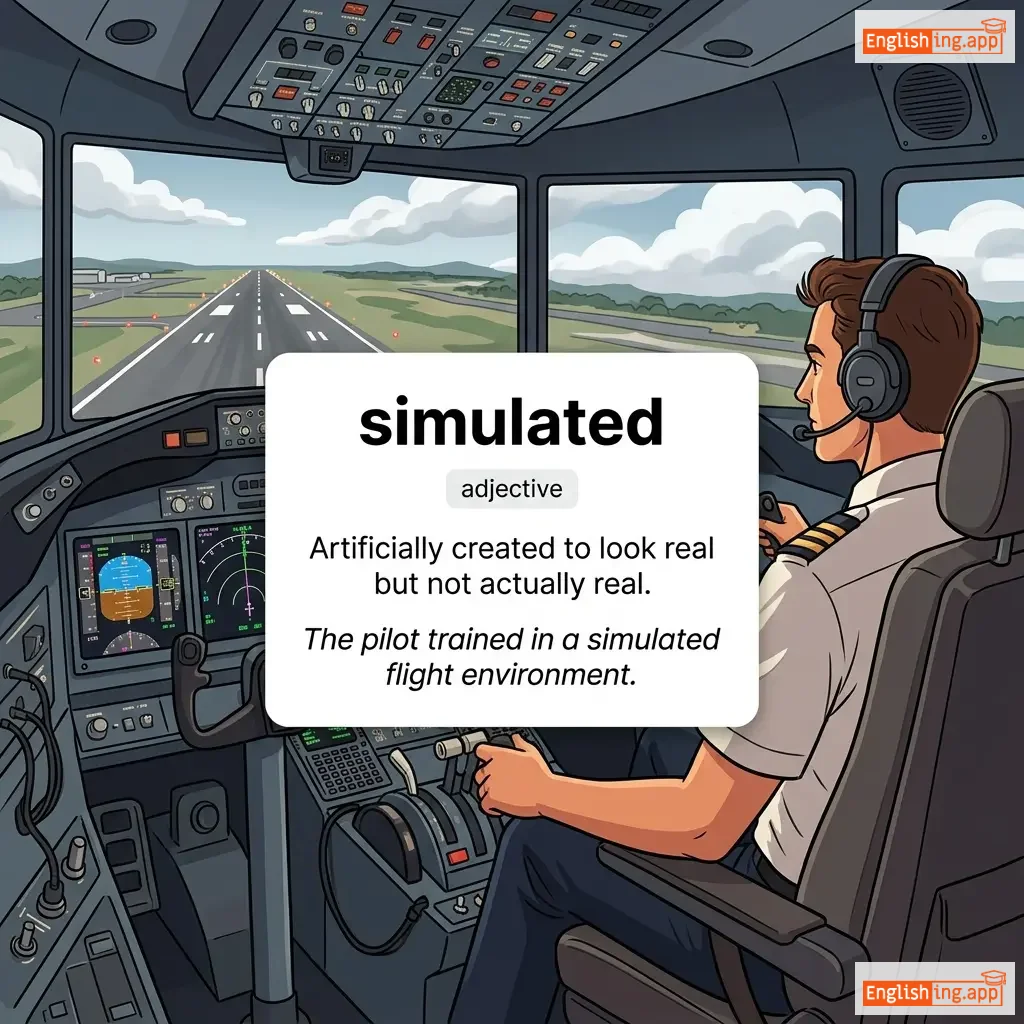
simulated definition card — visual illustration of the meaning
adjective
/ˈsɪm.jʊ.leɪ.tɪd/
シミュレートされた (shimyureetoresareta)

Artificially created to look real but not actually real.

"The pilot trained in a simulated flight environment."

"パイロットはシミュレートされた飛行環境で訓練しました。" (Pairotto wa shimyureetoresareta hikō kankyō de kunren shimashita.)
noun
/saɪz/
サイズ (saizu)

the physical dimensions, proportions, or magnitude of something

"This shirt is too small in size for me."

"このシャツは私にはサイズが小さすぎます。" (Kono shatsu wa watashi ni wa saizu ga chiisasugimasu.)
noun
/ˈsaɪrən/
サイレン (sairen)

A device that makes a loud prolonged sound as a signal or warning; in mythology, a creature that lures sailors with enchanting songs.

"The police car passed with its siren blaring."

"警察車両はサイレンを鳴らしながら通り過ぎました。" (Keisatsu sharyō wa sairen o narashinagara tōrisugimashita.)
noun
/sɪˈrɒkoʊ/
熱く乾燥した風 (atsuku kansou shita kaze)

A hot, dry wind blowing from North Africa across the Mediterranean to southern Europe.

"The sirocco made the city unbearably hot and dusty."

"シロッコは街を耐えられないほど暑く、ほこりっぽくした。" (Shirokko wa machi o taerarenai hodo atsuku, hokorippoku shita.)
noun
/ˈsɪstər/
姉 / 妹 (ane / imouto)

a female sibling; a girl or woman in relation to other children of her parents

"My sister is coming to visit us next week."

"私の姉は来週私たちに会いに来ます。" (watashi no ane wa raishu watashitachi ni ai ni kimasu)
noun
/ˈsɪstərhʊd/
姉妹関係 (shimai kankei)

The relationship between sisters, or a community of women united by shared experiences or goals.

"The feminist movement created a strong sense of sisterhood among women."

"フェミニスト運動は女性たちの間に強い姉妹関係の感覚を生み出しました。" (Feminisuto undō wa joseitachi no aida ni tsuyoi shimai kankei no kankaku o umidashimashita.)
verb
/sɪt/
座る (suwaru)

to rest with the body supported by the buttocks, often in a chair or on the ground

"Please sit down and relax for a while."

"少し座ってリラックスしてください。" (Sukoshi suwatte rirakkusu shite kudasai.)
noun
/sɪˈtɑːr/
シタール (shitāru)

a traditional Indian stringed musical instrument with a long neck and resonating body

"The sitar creates beautiful ragas in Indian classical music."

"シタールはインディアン・クラシック音楽の中で美しいラガを作り出します。" (Shitāru wa Indian kurashikku ongaku no naka de utsukushī ragā o tsukuridashimasu.)
noun
/saɪt/
場所 (basho)

a location or place, often used for a specific purpose, such as a construction site or a website

"The construction site is ready for the next phase of the project."

"建設現場は次のプロジェクトの段階に進む準備ができています。" (Kensetsu genba wa tsugi no purojekuto no dankai ni susumu junbi ga dekiteimasu.)
adjective
/ˈsɪtʃueɪtɪd/
位置する (ichi suru)

located in a particular place or position

"The hotel is situated near the beach."

"ホテルはビーチの近くにあります。" (Hoteru wa bīchi no chikaku ni arimasu.)
noun
/ˌsɪtʃʊˈeɪʃən/
状況 (joukyou)

a set of circumstances or state of affairs at a particular time

"The situation at work became difficult after the new policies were introduced."

"新しいポリシーが導入された後、職場の状況は難しくなりました。" (Atarashii porishī ga dōnyū sareta ato, shokuba no joukyou wa muzukashiku narimashita.)
noun
/sɪks/
(roku)

the number 6

"There are six apples on the table."

"テーブルにリンゴが六個あります。" (Tēburu ni ringo ga roku ko arimasu.)
adjective
/sɪksθ/
六番目 (rokubamme)

coming after the fifth in order, position, or rank

"He finished the race in sixth place."

"彼はレースで六番目に終わった。" (Kare wa reesu de rokkammme ni owatta.)
noun
/skɪf/
小舟 (shoubune)

a small, light boat usually for one person

"The fisherman paddled his skiff across the lake."

"漁師は彼の小舟で湖を渡った。" (Gyoshi wa kare no shoubune de mizuumi o watatta.)
adjective
/ˈskɛtʃi/
不完全 (fukanzen)

not thorough or detailed; suspicious or unsafe

"The details of the project were still sketchy."

"プロジェクトの詳細はまだ不完全でした。" (Purojekuto no shousai wa mada fukanzen deshita.)
verb
/skiː/
スキーをする (sukī o suru)

to glide over snow on skis

"We went skiing in the Alps last winter."

"私たちは昨冬アルプスでスキーをしました。" (Watashitachi wa saku fuyu Arupusu de sukī o shimashita.)
sketch definition card — visual illustration of the meaning
noun
/skɛtʃ/
スケッチ (suketchi)

a simple, rough drawing or outline

"He made a quick sketch of the landscape."

"彼は風景の素早いスケッチを作成しました。" (Kare wa fūkei no subayai suketchi o sakusei shimashita.)
adjective
/ˈskɪlfʊl/
熟練した; 才能のある; 熟達した (jukurenshita; saino no aru; jukutatsu shita)

having or showing skill; expert and accomplished

"The skilful surgeon performed the operation with great precision."

"熟練した外科医は、非常に高い精度で手術を行いました。" (Jukuren shita gekai wa, hijou ni takai seido de shoushu wo okonaimashita.)
noun
/ˌsɪmjuˈleɪʃən/
シミュレーション (shimyurēshon)

the imitation of a situation or process

"The simulation helped the students understand the complex theory."

"シミュレーションは学生が複雑な理論を理解するのを助けました。" (Shimyurēshon wa gakusei ga fukuzatsu na rironn o rikai suru no o tasukemashita.)