語彙集

英単語辞書 | 単語の意味、定義、例文

noun
/ˈskɪnˌflɪnt/
けちん坊 (kechinbō)

a person who spends as little money as possible; a miser

"The landlord was such a skinflint that he never repaired anything."

"家主はそんなけちん坊で、何も修理しなかった。" (Yamushi wa sonna kechinbō de, nanimo shūri shinakatta.)
adjective
/ˈskɪni/
痩せた; 細い; 骨ばかりの (yaseta; hosoi; hone bakari no)

very thin; having little flesh or fat on the body

"The skinny cat looked like it hadn't eaten for days."

"その痩せた猫は、数日間食べていないように見えました。" (Sono yaseta neko wa, suujitsukan tabete inai you ni miemashita.)
verb
/skɪp/
スキップする (sukippu suru)

to omit or pass over something; to move lightly or quickly

"He decided to skip breakfast and go straight to work."

"彼は朝食をスキップして、仕事に直接行くことに決めました。" (Kare wa choushoku wo sukippu shite, shigoto ni chokusetsu iku koto ni kimemashita.)
⚔️

skirmish

noun/verb
/ˈskɜːrmɪʃ/

a small or brief fight between groups of soldiers; to engage in such a fight

"The soldiers got into a skirmish near the border."

👗

Skirt

noun/verb
/skɜːrt/

a piece of clothing that hangs from the waist; to go around the edge of something

"She wore a red skirt to the party."

noun
/skɪt/
寸劇 (sungeki)

a short, humorous performance or piece of writing

"The students performed a funny skit at the event."

"学生たちはイベントで面白い寸劇を演じました。" (Gakusei tachi wa ibento de omoshiroi sungeki o enjimashita.)
adjective
/ˈskɪtɪʃ/
神経質な (shinkeishitsu na)

easily frightened or nervous; unpredictable

"The horse was too skittish to ride."

"その馬は乗るには神経質すぎた。" (Sono uma wa noru ni wa shinkeishitsu sugita.)
noun
/skʌlˈdʌɡəri/
不正行為 (fusei kōi)

underhanded or dishonest behavior

"The politician was accused of financial skulduggery."

"その政治家は金融詐欺で告発された。" (Sono seiji-ka wa kin'yū sagi de kokuhatsu sareta.)
🕵️

skulk

verb
/skʌlk/

to move or hide secretly, often because you are planning something bad or are feeling guilty

"He tried to skulk in the shadows to avoid being seen."

noun
/skʌl/
頭蓋骨 (zugaikotsu)

the bony structure that forms the head and protects the brain

"The archaeologists found an ancient human skull."

"考古学者たちは古代の人間の頭蓋骨を発見しました。" (Kougakusha-tachi wa kodai no ningen no zugaikotsu wo hakken shimashita.)
noun
/ˌskʌlˈdʌɡəri/
不正行為 (Fusei Kōi)

dishonest behavior or activities, often done secretly

"The election was full of political skullduggery."

"選挙は政治的不正行為に満ちていた。" (Senkyō wa seijiteki na fusei kōi ni michite ita.)
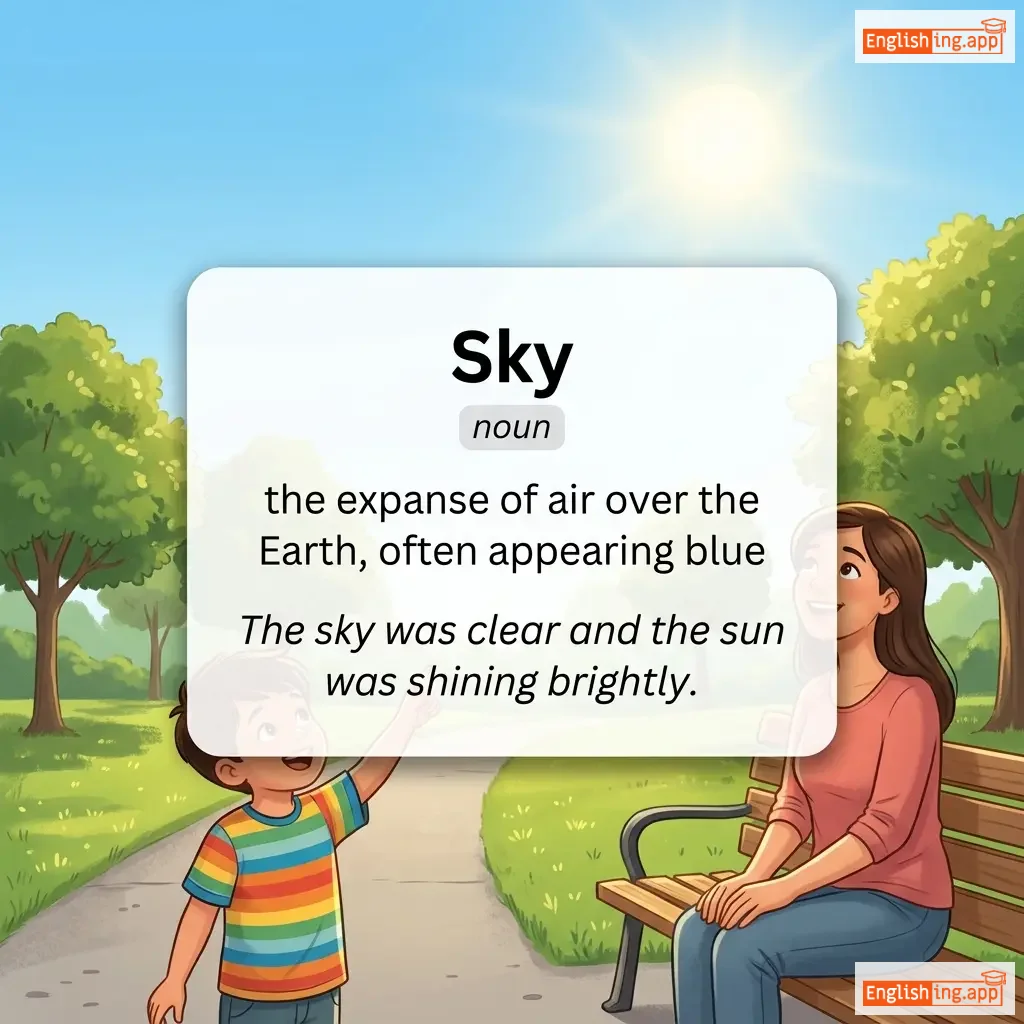
Sky definition card — visual illustration of the meaning
🌌

Sky

noun
/skaɪ/

the expanse of air over the Earth, often appearing blue

"The sky was clear and the sun was shining brightly."

adjective
/skaɪ bluː/
空色 (sora iro)

a bright blue color like that of a clear sky

"Her sky-blue eyes sparkled in the sunlight."

"彼女の空色の目が太陽の光で輝いていた。" (Kanojo no sora iro no me ga taiyo no hikari de kagayaite ita.)
noun
/ˈskaɪ.lɑːrk/
ヒバリ (hibari)

a small brown bird known for singing while flying high in the sky

"The skylark sang beautifully as it soared above the meadow."

"ヒバリは草地の上を飛びながら美しく歌った。" (Hibari wa kusachi no ue wo tobinagara utsukushiku utatta)
noun
/ˈskaɪˌskreɪpər/
超高層ビル (chou kousou biru)

a very tall building of many stories

"The new skyscraper dominates the city's skyline."

"新しい超高層ビルが街のスカイラインを支配しています。" (Atarashī chou kousou biru ga machi no sukairain o shihaishiteimasu.)
noun
/slæb/
スラブ (surabu)

a large, thick, flat piece of stone, concrete, or other hard material

"The workers laid a concrete slab for the foundation."

"作業員たちは基礎のためにコンクリートのスラブを敷きました。" (Sagyouintachi wa kiso no tame ni konkurīto no surabu o shikimashita.)
adjective
/slæk/
緩い (yurui)

not tight, firm, or busy; lacking tension or activity

"Business is slack during the rainy season."

"雨季の間、ビジネスは鈍くなる。" (Uki no aida, bijinesu wa donkunaru.)
verb
/ˈslækən/
緩める (yurumeru)

to make or become less tight, less active, or slower

"The driver slackened his speed as he approached the village."

"運転手は村に近づくにつれて速度を緩めた。" (Unten-shu wa mura ni chikaduku ni tsurete sokudo o yurumeta.)
noun
/slæɡ/
鉱滓 (kōsai)

Stony waste matter separated from metals during the smelting process.

"The factory dumped the slag near the river."

"工場は川の近くに鉱滓を捨てました。" (Kōjō wa kawa no chikaku ni kōsai o sutemashita.)
verb
/sleɪk/
渇きを癒す (kawaki wo iyasu)

To satisfy thirst or desire.

"She drank cold water to slake her thirst."

"彼女は渇きを癒すために冷たい水を飲んだ。" (Kanojo wa kawaki wo iyasu tame ni tsumetai mizu wo nonda.)
verb
/slæm/
強く閉める (tsuyoku shimeru)

to close or hit something with great force

"He slammed the door angrily after the argument."

"彼は議論の後に怒ってドアを叩きつけた。" (Kare wa giron no ato ni okotte doa o tatakitsuketa.)
noun
/ˈslændər/
中傷 (chuushou)

The action of making false spoken statements damaging to a person's reputation.

"He sued the newspaper for slander."

"彼は中傷で新聞を訴えた。" (Kare wa chuushou de shinbun wo sasaeta.)
noun
/slæŋ/
スラング; 不正な言葉 (surangu; fusei na kotoba)

very informal language that is usually spoken rather than written

"The teenagers used slang that their parents couldn't understand."

"ティーンエイジャーは親が理解できないスラングを使いました。" (Tīn'eijā wa oya ga rikai dekinai surangu o tsukaimashita.)
noun, verb
/slænt/
偏った見解 (katayotta kenkai)

A particular point of view; to slope or lean in a particular direction.

"The article had a political slant."
"その記事には政治的な傾向がありました。" (sono kiji ni wa seijiteki na keikō ga arimashita.)
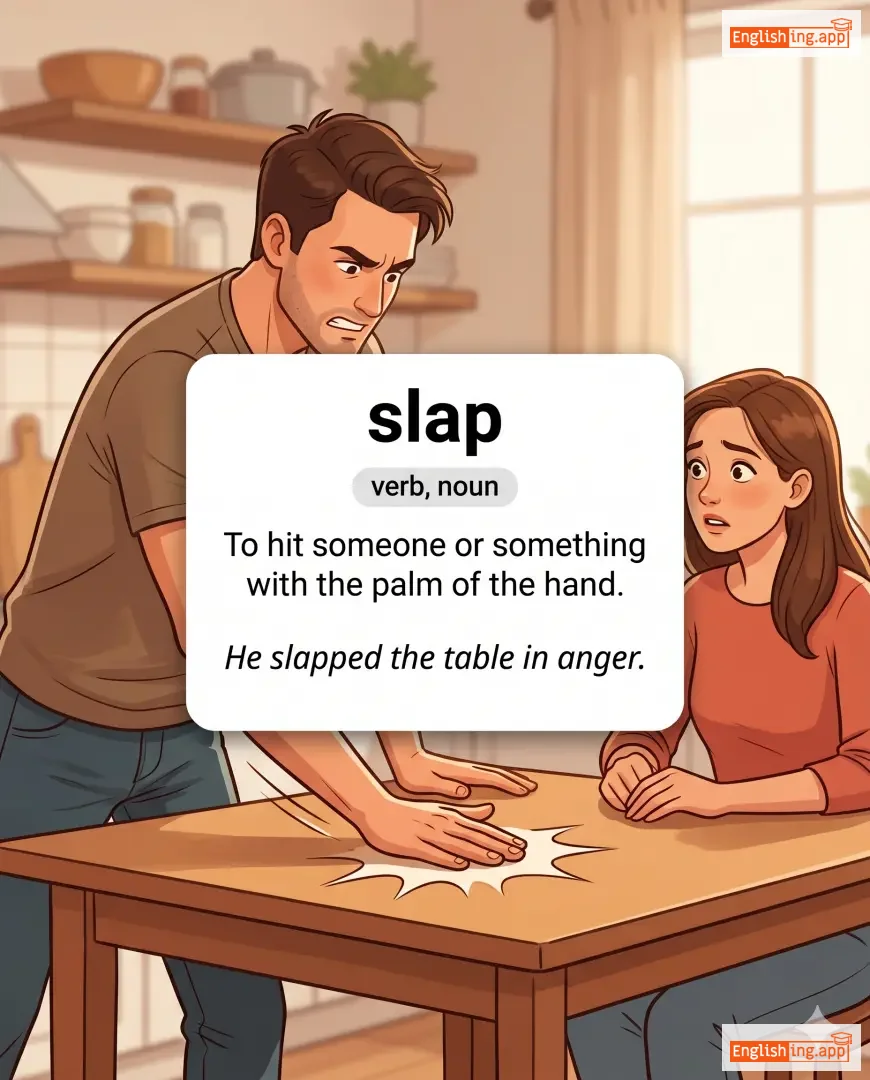
slap definition card — visual illustration of the meaning
verb, noun
/slæp/
平手打ち (hirate uchi)

To hit someone or something with the palm of the hand.

"He slapped the table in anger."

"彼は怒ってテーブルを叩いた。" (Kare wa okotte tēburu o tataita.)
adjective
/ˈslæp.dæʃ/
ぞんざい (zonzai)

done too quickly and carelessly; hasty and careless

"The report was written in a slapdash manner, full of errors."
"レポートはぞんざいに書かれており、間違いだらけだった。" (Repoto wa zonzai ni kakarete ori, machigai darake datta.)
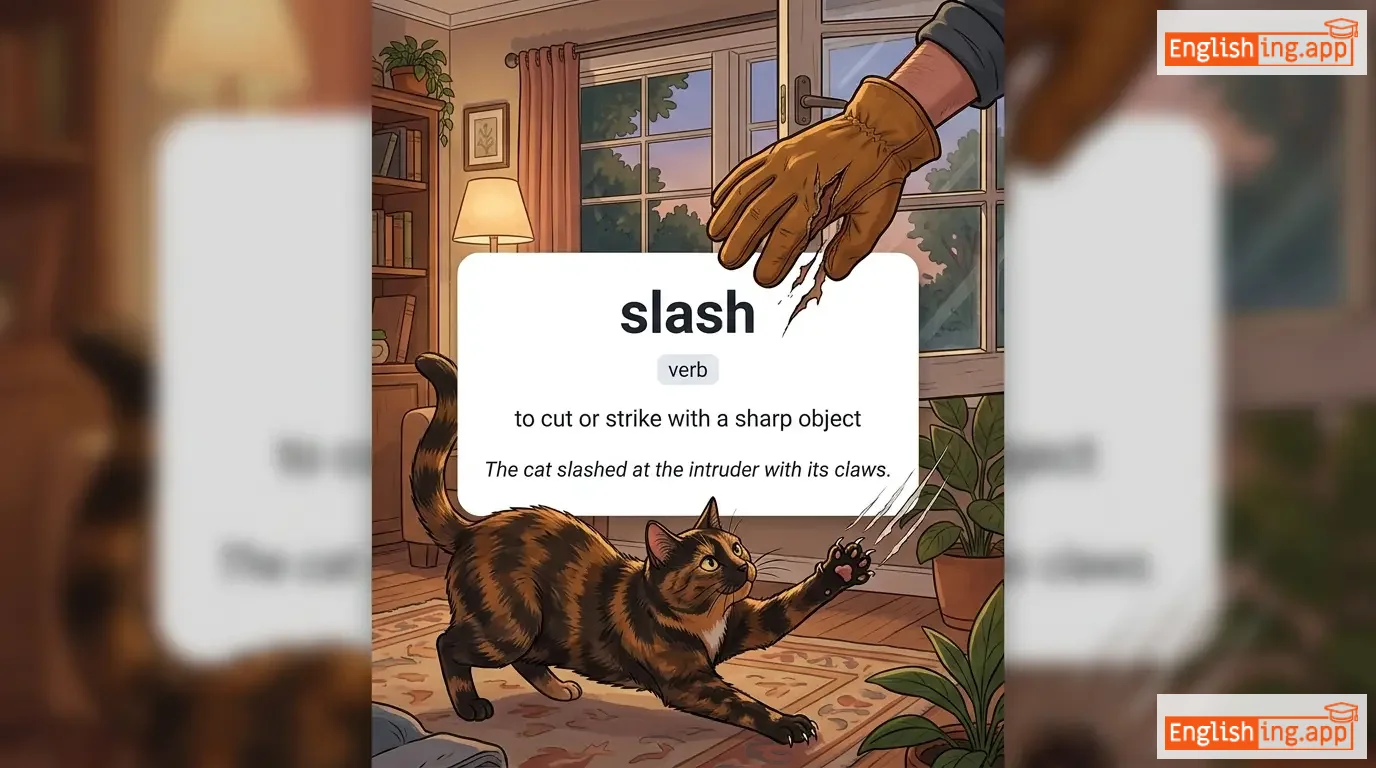
slash definition card — visual illustration of the meaning
verb
/slæʃ/
切る (kiru)

to cut or strike with a sharp object

"The cat slashed at the intruder with its claws."

"猫は爪で侵入者を切りました。" (Neko wa tsume de shinnyū-sha o kirimashita.)
noun/verb
/sleɪt/
スレート / 予定する (surēto / yotei suru)

a fine-grained rock used for roofing or writing; to schedule or designate for a task

"The meeting is slated for next Monday."

"ミーティングは次の月曜日に予定されています。" (Mītingu wa tsugi no getsuyōbi ni yotei sareteimasu.)
noun
/ˈslæt.ən/
だらしない女性 (darashinai josei)

a woman who is untidy or slovenly in appearance or habits

"The house looked as if a slattern lived there."

"その家は、だらしない女性が住んでいるように見えた。" (Sono ie wa, darashinai josei ga sunde iru yō ni mietā.)
noun/verb
/ˈslɔː.tər/
虐殺 / 大量殺人 (gyakusatsu / tairyou satsujin)

the killing of animals for food; killing in large numbers violently

"The army slaughtered hundreds of enemy soldiers."

"軍隊は数百人の敵兵を虐殺した。" (Guntai wa suuhyaku-nin no tekihei wo gyakusatsu shita.)
noun
/sleɪv/
奴隷 (dorei)

a person who is the legal property of another and is forced to work for them

"The abolitionist movement fought for the rights of slaves."

"廃奴隷運動は奴隷の権利のために戦いました。" (Hainoroi undō wa dorei no kenri no tame ni tatakatta.)
⛓️

slavery

noun
/ˈsleɪvəri/

the system or state of being owned and forced to work for someone else

"Slavery was abolished in most countries in the 19th century."

adjective
/ˈsleɪ.vɪʃ/
奴隷のような (dorei no yō na)

showing no originality; completely imitative or overly submissive

"His slavish devotion to tradition prevented any innovation."

"彼の伝統への奴隷のような献身が革新を阻んだ。" (Kare no dentō e no dorei no yō na kenshin ga kakushin o habanda.)
⚔️

slay

verb
/sleɪ/

to kill violently; informally, to impress greatly

"The hero vowed to slay the dragon."

adjective
/ˈsliːzi/
不道徳な、汚い、または低品質な (fudōtoku na, kitanai, mata wa tei hinshitsu na)

morally low, dirty, or cheap in quality

"He avoided the sleazy nightclub downtown."

"彼はダウンタウンのスリージーなナイトクラブを避けた。" (Kare wa downtown no surīji na naitokurabu o saketa.)
noun
/slɛdʒ/
そり (sori)

a vehicle for traveling over snow, often pulled by animals

"The children rode a sledge down the snowy hill."

"子供たちは雪山をスレッジで滑り降りた。" (Kodomotachi wa yukiyama o surejide suberi orita.)
adjective
/sliːk/
滑らかで光沢のある (nameraka de kōtaku no aru)

smooth, shiny, and stylish

"She drove a sleek black sports car."
"彼女は光沢のある黒いスポーツカーを運転していました。" (Kanojo wa kōtaku no aru kuroi supōtsukā o unten shite imashita.)
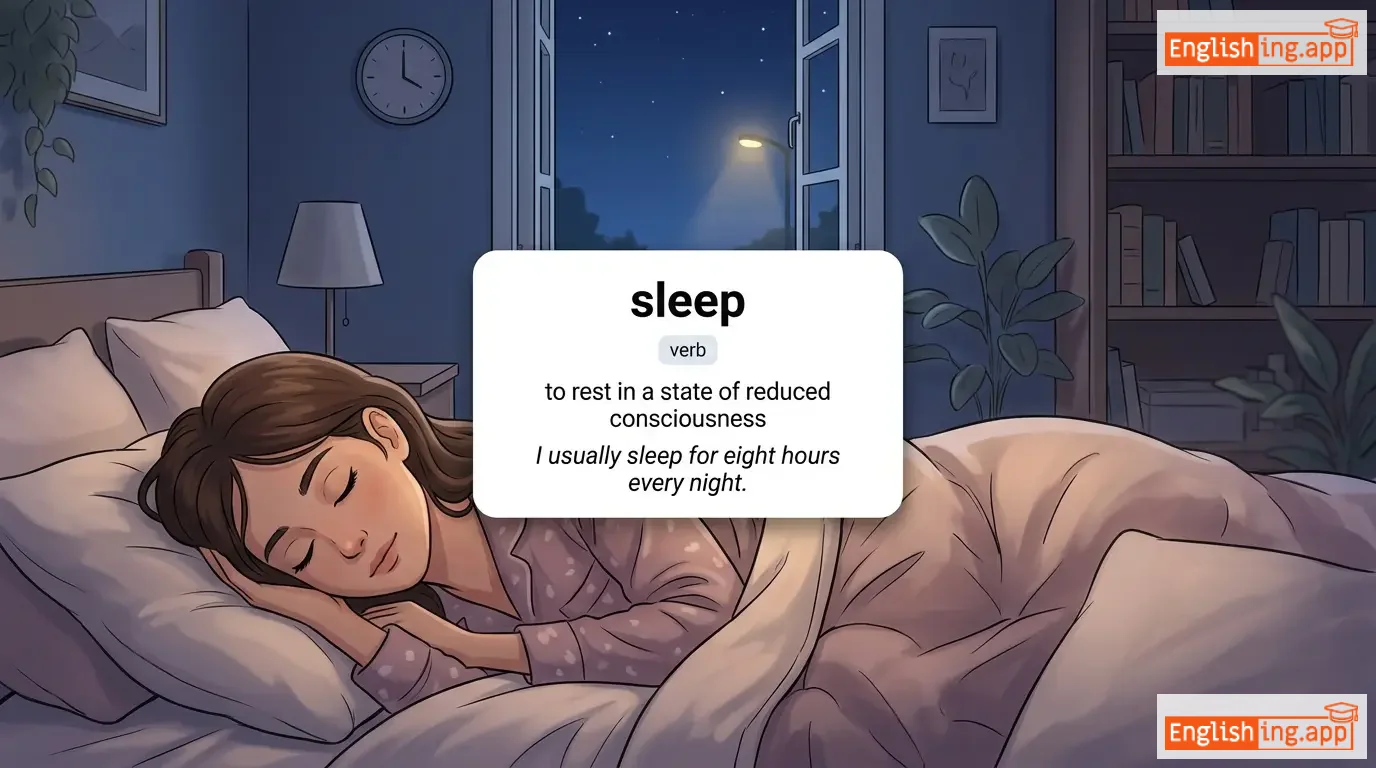
sleep definition card — visual illustration of the meaning
verb
/sliːp/
寝る (neru)

to rest in a state of reduced consciousness

"I usually sleep for eight hours every night."
"私は通常、毎晩8時間寝ます。" (Watashi wa tsuujou, maiban hachi jikan nemasu.)
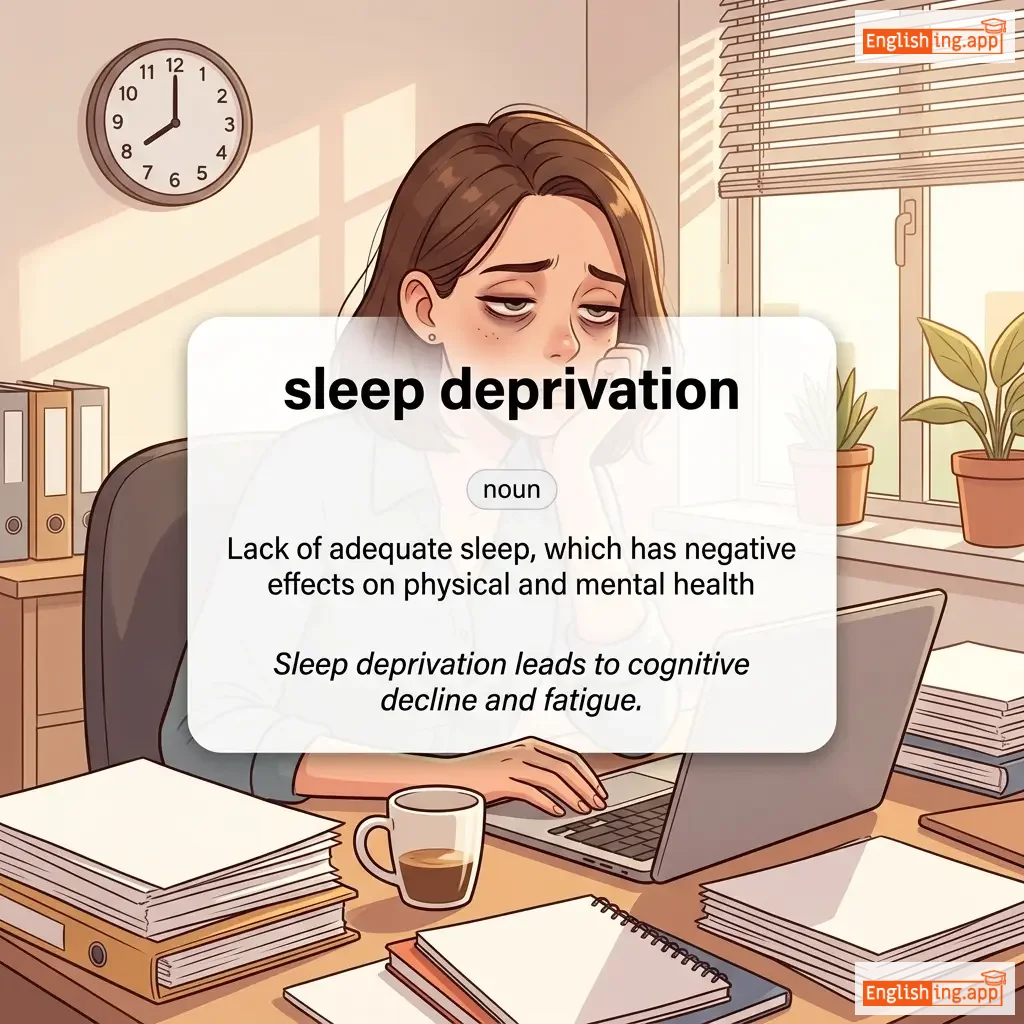
sleep deprivation definition card — visual illustration of the meaning
noun
sliːp dɛprɪˈveɪʃən
睡眠不足 (suimin fusoku)

Lack of adequate sleep, which has negative effects on physical and mental health

"Sleep deprivation leads to cognitive decline and fatigue."

"睡眠不足は認知機能の低下と疲労を引き起こす。" (Suimin fusoku wa ninchi kinō no teika to hirō o hikiokosu.)
noun
/ˈsliːpər/
眠っている人;予想外に成功するもの (nemutte iru hito; yosōgai ni seikō suru mono)

a person or thing that sleeps; something that unexpectedly succeeds

"The movie turned out to be a real sleeper hit."

"映画は予想外のヒットになった。" (Eiga wa yosōgai no hitto ni natta.)
noun
/ˈslʌɡərd/
怠け者 (namakemono)

A lazy, sluggish person.

"The sluggard refused to get out of bed even at noon."

"怠け者は正午でもベッドから起きることを拒否しました。" (Namakemono wa shōgo demo beddo kara okiru koto o kyohi shimashita.)
noun, verb
/slɜːr/
侮辱 / 侮辱的な言葉 (bujoku / bujokuteki na kotoba)

An insulting remark or suggestion; or to speak indistinctly.

"He made a slur against her character."

"彼は彼女のキャラクターについて侮辱的な発言をした。" (Kare wa kanojo no kyarakutā ni tsuite bujokuteki na hatsugen o shita.)
noun/verb
/ˈslʌmbər/
眠り (nemuri)

A state of sleep; to sleep lightly or rest.

"The child slumbered peacefully through the night."

"子供は一晩中静かに寝ていた。" (Kodomo wa hitobanjuu shizukani neteita.)
noun
/slʌm/
スラム街 (suram gai)

a poor urban area with substandard housing and squalid conditions

"The government is working to improve conditions in the slum."

"政府はスラムの条件を改善するために取り組んでいます。" (Seifu wa suramu no jouken wo kaizen suru tame ni torikundeimasu.)
noun/verb
/sluːs/
水門 / 洗う (suimon / arau)

A sliding gate for controlling the flow of water; to wash or rinse with water in large quantities.

"The workers sluiced the mud off the street after the heavy rain."

"作業員は大雨の後に通りから泥を洗い流しました。" (Sagyouin wa ooi ame no ato ni toori kara doro o arainagashimashita.)
adjective
/ˈslʌɡɪʃ/
鈍い (nibui)

Lacking energy or alertness; slow-moving or inactive.

"He felt sluggish after eating a heavy meal."

"重い食事を食べた後、彼は鈍く感じた。" (omoi shokuji o tabeta ato, kare wa nibui to kanjita.)
adjective
/ˈslʌvənli/
だらしない (darashinai)

Untidy or careless in appearance, habits, or work.

"His slovenly appearance made a bad impression at the interview."

"彼のだらしない外見は面接で悪い印象を与えました。" (Kare no darashinai gaiken wa mensetsu de warui inshō o ataemashita.)
verb
/slaʊtʃ/
だらしなく座る (darashinaku suwaru)

To stand, sit, or move in a lazy or awkward way.

"He slouched in the chair, looking tired."

"彼は椅子にだらりと座り、疲れた様子だった。" (kare wa isu ni darari to suwari, tsukareta yousu datta.)
verb
/slʌf/ or /sluː/
皮を捨てる / 湿地 (kawa wo suteru / shicchi)

To shed or cast off (like dead skin); also a swampy or muddy area.

"The snake sloughed off its old skin."

"ヘビは古い皮を捨てた。" (Hebi wa furui kawa wo suteta.)
adjective
/slaɪ/
ずるい / 狡猾 (zurui / kōkatsu)

Clever in a deceitful or cunning way.

"She gave him a sly smile."

"彼女は彼にずるい笑顔を向けた。" (Kanojo wa kare ni zurui egao o muketa.)