词汇表

英语词汇词典 | 单词含义、定义和示例

noun
/ˈskɪnˌflɪnt/
吝啬鬼 (lìnsè guǐ)

a person who spends as little money as possible; a miser

"The landlord was such a skinflint that he never repaired anything."

"房东是个吝啬鬼,从不修理任何东西。" (Fángdōng shì gè lìnsè guǐ, cóng bù xiūlǐ rènhé dōngxī.)
adjective
/ˈskɪni/
瘦的; 皮包骨的; 骨瘦如柴 (shou de; pi bao gu de; gu shou ru chai)

very thin; having little flesh or fat on the body

"The skinny cat looked like it hadn't eaten for days."

"那只瘦猫看起来像是几天没吃东西了。" (Na zhi shou mao kan qilai xiang shi ji tian mei chi dongxi le.)
verb
/skɪp/
跳过 (tiao guo)

to omit or pass over something; to move lightly or quickly

"He decided to skip breakfast and go straight to work."

"他决定跳过早餐,直接去上班。" (Ta jueding tiao guo zaocan, zhijie qu shangban.)
⚔️

skirmish

noun/verb
/ˈskɜːrmɪʃ/

a small or brief fight between groups of soldiers; to engage in such a fight

"The soldiers got into a skirmish near the border."

👗

Skirt

noun/verb
/skɜːrt/

a piece of clothing that hangs from the waist; to go around the edge of something

"She wore a red skirt to the party."

noun
/skɪt/
小品 (xiao pin)

a short, humorous performance or piece of writing

"The students performed a funny skit at the event."

"学生们在活动中表演了一个有趣的小品。" (Xuesheng men zai huodong zhong biaoyan le yige youqu de xiao pin.)
adjective
/ˈskɪtɪʃ/
紧张的 (jinzhang de)

easily frightened or nervous; unpredictable

"The horse was too skittish to ride."

"那匹马太紧张,无法骑乘。" (Na pi ma tai jinzhang, wufa qicheng.)
noun
/skʌlˈdʌɡəri/
欺诈 (qī zhà)

underhanded or dishonest behavior

"The politician was accused of financial skulduggery."

"这位政治家因金融欺诈而受到指控。" (Zhè wèi zhèng zhì jiā yīn jīn róng qī zhà ér shòu dào zhǐ kòng.)
🕵️

skulk

verb
/skʌlk/

to move or hide secretly, often because you are planning something bad or are feeling guilty

"He tried to skulk in the shadows to avoid being seen."

noun
/skʌl/
头骨 (tougu)

the bony structure that forms the head and protects the brain

"The archaeologists found an ancient human skull."

"考古学家发现了一个古老的人类头骨。" (Kaogu xuejia faxianle yige gulao de renlei tougu.)
noun
/ˌskʌlˈdʌɡəri/
欺诈 (qī zhà)

dishonest behavior or activities, often done secretly

"The election was full of political skullduggery."

"选举充满了政治欺诈。" (Xuǎnjǔ chōngmǎnle zhèngzhì qīzhà.)
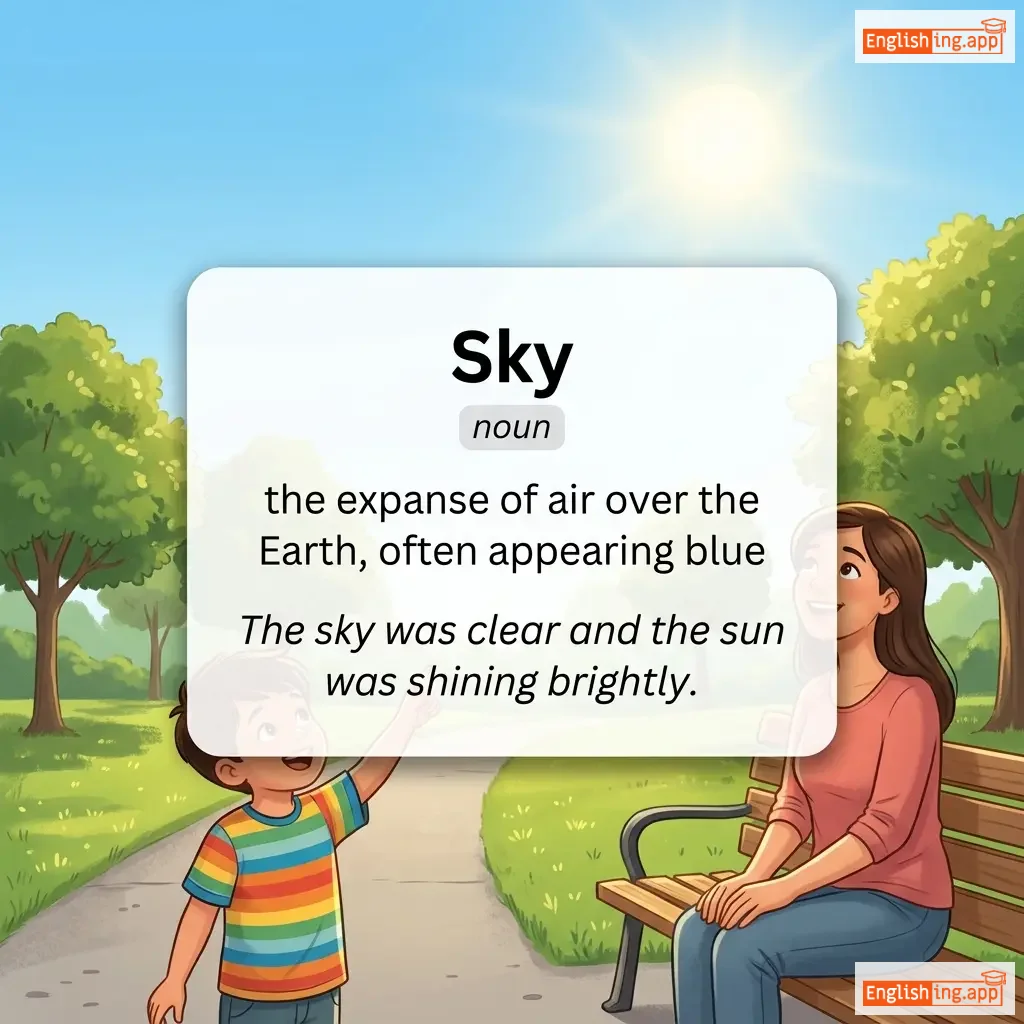
Sky definition card — visual illustration of the meaning
🌌

Sky

noun
/skaɪ/

the expanse of air over the Earth, often appearing blue

"The sky was clear and the sun was shining brightly."

adjective
/skaɪ bluː/
天蓝色 (tian lan se)

a bright blue color like that of a clear sky

"Her sky-blue eyes sparkled in the sunlight."

"她的天蓝色眼睛在阳光下闪闪发光。" (Ta de tian lan se yanjing zai yangguang xia shanshan faguan.)
noun
/ˈskaɪ.lɑːrk/
云雀 (yúnquè)

a small brown bird known for singing while flying high in the sky

"The skylark sang beautifully as it soared above the meadow."

"当云雀飞翔在草地上方时,它美丽地歌唱。" (dāng yúnquè fēixiáng zài cǎodì shàngfāng shí, tā měilì de gēchàng)
noun
/ˈskaɪˌskreɪpər/
摩天大楼 (mó tiān dà lóu)

a very tall building of many stories

"The new skyscraper dominates the city's skyline."

"这座新的摩天大楼主导着城市的天际线。" (Zhè zuò xīn de mó tiān dà lóu zhǔ dǎo zhe chéng shì de tiān jì xiàn.)
noun
/slæb/
(ban)

a large, thick, flat piece of stone, concrete, or other hard material

"The workers laid a concrete slab for the foundation."

"工人们为地基铺设了一块混凝土板。" (Gōngrén men wèi dìjī pūshèle yī kuài hùnníngtǔ bǎn.)
adjective
/slæk/
松弛 (songchi)

not tight, firm, or busy; lacking tension or activity

"Business is slack during the rainy season."

"在雨季生意很清淡。" (Zài yǔjì shēngyì hěn qīngdàn.)
verb
/ˈslækən/
放松 (fàngsōng)

to make or become less tight, less active, or slower

"The driver slackened his speed as he approached the village."

"司机在接近村庄时放慢了速度。" (Sījī zài jiējìn cūnzhuāng shí fàngmànle sùdù.)
noun
/slæɡ/
炉渣 (lú zhā)

Stony waste matter separated from metals during the smelting process.

"The factory dumped the slag near the river."

"工厂把炉渣倾倒在河边。" (Gōngchǎng bǎ lú zhā qīngdǎo zài hé biān.)
verb
/sleɪk/
解渴 (jie ke)

To satisfy thirst or desire.

"She drank cold water to slake her thirst."

"她喝了冷水来解渴。" (Ta he le leng shui lai jie ke.)
verb
/slæm/
用力关门 (yònglì guānmén)

to close or hit something with great force

"He slammed the door angrily after the argument."

"他在争论后愤怒地摔门。" (Tā zài zhēnglùn hòu fènnù de shuāi mén.)
noun
/ˈslændər/
诽谤 (feibang)

The action of making false spoken statements damaging to a person's reputation.

"He sued the newspaper for slander."

"他因诽谤起诉了报纸。" (Ta yin feibang qisu le baozhi.)
noun
/slæŋ/
俚语; 非正式语言 (lǐyǔ; fēi zhèngshì yǔyán)

very informal language that is usually spoken rather than written

"The teenagers used slang that their parents couldn't understand."

"青少年使用了父母无法理解的俚语。" (Qīngshàonián shǐyòngle fùmǔ wúfǎ lǐjiě de lǐyǔ.)
noun, verb
/slænt/
偏见观点 (pianjian guandian)

A particular point of view; to slope or lean in a particular direction.

"The article had a political slant."
"文章有政治倾向。" (wénzhāng yǒu zhèngzhì qīngxiàng.)
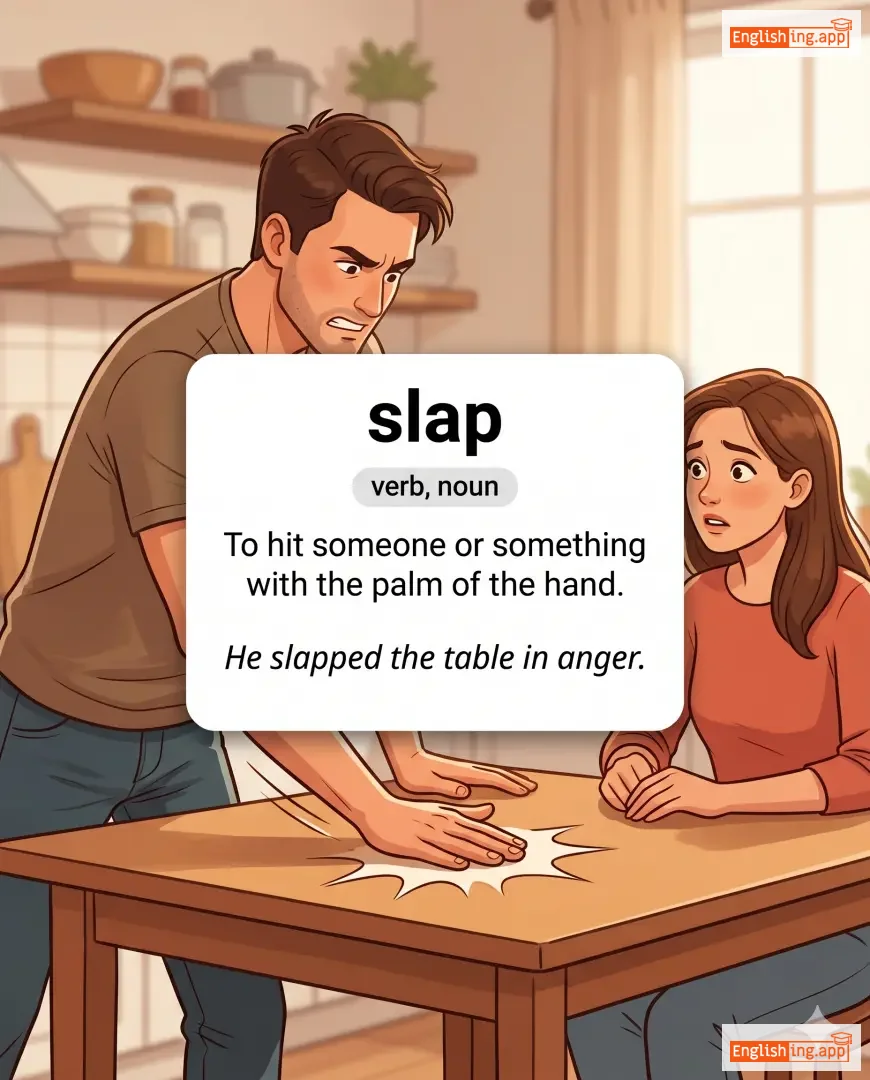
slap definition card — visual illustration of the meaning
verb, noun
/slæp/
打耳光 (da ěrguāng)

To hit someone or something with the palm of the hand.

"He slapped the table in anger."

"他生气地拍了桌子。" (Tā shēngqì de pāi le zhuōzi.)
adjective
/ˈslæp.dæʃ/
草率 (caoshuai)

done too quickly and carelessly; hasty and careless

"The report was written in a slapdash manner, full of errors."
"报告写得草率,充满了错误。" (Baogao xiede caoshuai, chongman le cuowu.)
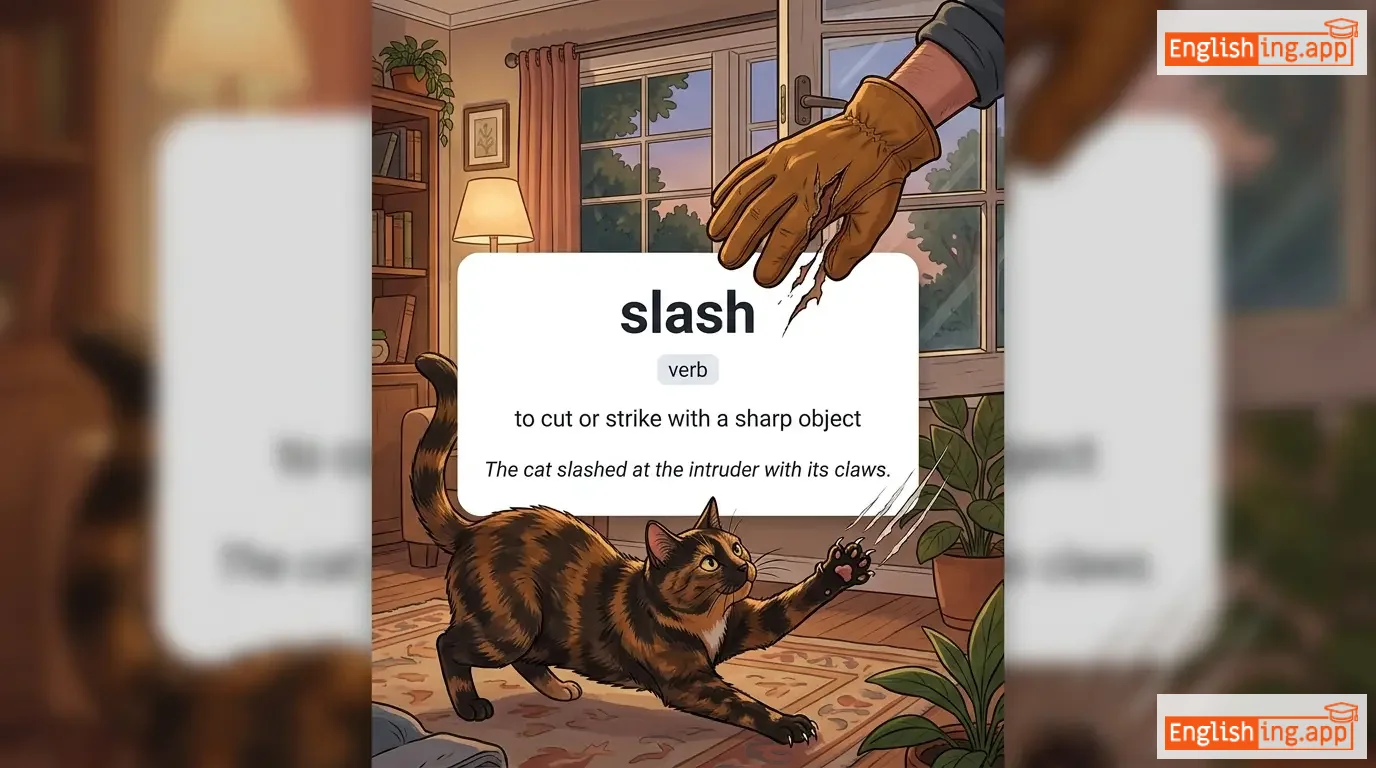
slash definition card — visual illustration of the meaning
verb
/slæʃ/
(ge)

to cut or strike with a sharp object

"The cat slashed at the intruder with its claws."

"猫用爪子向入侵者劈砍。" (Māo yòng zhǎozi xiàng rùqīn zhě pī kǎn.)
noun/verb
/sleɪt/
板岩 / 安排 (bǎn yán / ān pái)

a fine-grained rock used for roofing or writing; to schedule or designate for a task

"The meeting is slated for next Monday."

"会议定于下周一举行。" (Huìyì dìngyú xià zhōu yī jǔxíng.)
noun
/ˈslæt.ən/
邋遢的女人 (lātā de nǚrén)

a woman who is untidy or slovenly in appearance or habits

"The house looked as if a slattern lived there."

"这所房子看起来像是一个邋遢的女人住在那里。" (Zhè suǒ fángzi kàn qǐlái xiàng shì yīgè lātā de nǚrén zhù zài nàlǐ.)
noun/verb
/ˈslɔː.tər/
屠杀 / 大规模谋杀 (túshā / dàguīmó móushā)

the killing of animals for food; killing in large numbers violently

"The army slaughtered hundreds of enemy soldiers."

"军队屠杀了数百名敌军士兵。" (Jūnduì túshāle shù bǎi míng díjūn shìbīng.)
noun
/sleɪv/
奴隶 (nùlì)

a person who is the legal property of another and is forced to work for them

"The abolitionist movement fought for the rights of slaves."

"废奴主义者运动为奴隶的权利而奋斗。" (Fèi nú zhǔyì zhě yùndòng wèi nùlì de quánlì ér fèndòu.)
⛓️

slavery

noun
/ˈsleɪvəri/

the system or state of being owned and forced to work for someone else

"Slavery was abolished in most countries in the 19th century."

adjective
/ˈsleɪ.vɪʃ/
奴隶般的 (núlì bān de)

showing no originality; completely imitative or overly submissive

"His slavish devotion to tradition prevented any innovation."

"他对传统的奴隶般忠诚阻碍了任何创新。" (Tā duì chuántǒng de núlì bān zhōngchéng zǔ'ài le rènhé chuàngxīn.)
⚔️

slay

verb
/sleɪ/

to kill violently; informally, to impress greatly

"The hero vowed to slay the dragon."

adjective
/ˈsliːzi/
低级的, 肮脏的, 或质量差的 (dī jí de, āng zāng de, huò zhì liàng chà de)

morally low, dirty, or cheap in quality

"He avoided the sleazy nightclub downtown."

"他避免了市中心的低级夜店。" (Tā bìmiǎnle shì zhōngxīn de dījí yèdiàn.)
noun
/slɛdʒ/
雪橇 (xuěqiāo)

a vehicle for traveling over snow, often pulled by animals

"The children rode a sledge down the snowy hill."

"孩子们从雪山上滑下了雪橇。" (Háizimen cóng xuěshān shàng huá xiàle xuěqiāo.)
adjective
/sliːk/
光滑且闪亮 (guāng huá qiě shǎn liàng)

smooth, shiny, and stylish

"She drove a sleek black sports car."

"她开着一辆闪亮的黑色跑车。" (Tā kāi zhe yī liàng shǎn liàng de hēi sè pǎo chē.)
sleep definition card — visual illustration of the meaning
verb
/sliːp/
睡觉 (shuìjiào)

to rest in a state of reduced consciousness

"I usually sleep for eight hours every night."

"我通常每晚睡八个小时。" (Wǒ tōngcháng měi wǎn shuì bā ge xiǎoshí.)
sleep deprivation definition card — visual illustration of the meaning
noun
sliːp dɛprɪˈveɪʃən
睡眠不足 (shuìmián bùzú)

Lack of adequate sleep, which has negative effects on physical and mental health

"Sleep deprivation leads to cognitive decline and fatigue."

"睡眠不足会导致认知衰退和疲劳。" (Shuìmián bùzú huì dǎozhì rènzhī shuāituì hé píláo.)
noun
/ˈsliːpər/
睡觉的人;意外成功的事物 (shuìjiào de rén; yìwài chénggōng de shìwù)

a person or thing that sleeps; something that unexpectedly succeeds

"The movie turned out to be a real sleeper hit."

"这部电影竟然成为了意外的成功。" (Zhè bù diànyǐng jìngrán chéngwéile yìwài de chénggōng.)
noun
/ˈslʌɡərd/
懒汉 (lǎn hàn)

A lazy, sluggish person.

"The sluggard refused to get out of bed even at noon."

"懒汉拒绝在中午起床。" (Lǎn hàn jùjué zài zhōngwǔ qǐchuáng.)
noun, verb
/slɜːr/
侮辱 / 轻蔑的评论 (wǔrǔ / qīngmiè de pínglùn)

An insulting remark or suggestion; or to speak indistinctly.

"He made a slur against her character."

"他对她的品格做出了侮辱性的评论。" (Tā duì tā de pǐngé zuò chūle wǔrǔxìng de pínglùn.)
noun/verb
/ˈslʌmbər/
睡眠 (shuìmián)

A state of sleep; to sleep lightly or rest.

"The child slumbered peacefully through the night."

"孩子整夜安静地睡觉。" (háizi zhěng yè ānjìng de shuìjiào.)
noun
/slʌm/
贫民窟 (pínmínkū)

a poor urban area with substandard housing and squalid conditions

"The government is working to improve conditions in the slum."

"政府正在努力改善贫民区的条件。" (Zhèngfǔ zhèngzài nǔlì gǎishàn pínmínqū de tiáojiàn.)
noun/verb
/sluːs/
水闸 / 清洗 (shuǐzhá / qīngxǐ)

A sliding gate for controlling the flow of water; to wash or rinse with water in large quantities.

"The workers sluiced the mud off the street after the heavy rain."

"工人们在暴雨后清洗了街道上的泥巴。" (Gōngrénmen zài bàoyǔ hòu qīngxǐle jiēdào shàng de níbā.)
adjective
/ˈslʌɡɪʃ/
迟缓 (chi huan)

Lacking energy or alertness; slow-moving or inactive.

"He felt sluggish after eating a heavy meal."

"吃了一顿重餐后,他感到迟缓。" (chi le yi dun zhong can hou, ta gan dao chi huan.)
adjective
/ˈslʌvənli/
邋遢 (lātā)

Untidy or careless in appearance, habits, or work.

"His slovenly appearance made a bad impression at the interview."

"他的邋遢外表在面试中留下了不好的印象。" (Tā de lātā wàibiǎo zài miànshì zhōng liúxiàle bù hǎo de yìnxiàng.)
verb
/slaʊtʃ/
懒散地坐 (lǎn sàn dì zuò)

To stand, sit, or move in a lazy or awkward way.

"He slouched in the chair, looking tired."

"他在椅子上懒散地坐着,看起来很累。" (tā zài yǐzi shàng lǎn sàn dì zuò zhe, kàn qǐlái hěn lèi.)
verb
/slʌf/ or /sluː/
脱皮 / 沼泽区 (tuōpí / zhǎo zé qū)

To shed or cast off (like dead skin); also a swampy or muddy area.

"The snake sloughed off its old skin."

"蛇脱掉了它的旧皮肤。" (Shé tuō diào le tā de jiù pífū.)
adjective
/slaɪ/
狡猾 / 机智 (jiǎohuá / jīzhì)

Clever in a deceitful or cunning way.

"She gave him a sly smile."

"她给了他一个狡猾的微笑。" (Tā gěi le tā yīgè jiǎohuá de wéixiào.)