词汇表

英语词汇词典 | 单词含义、定义和示例

noun
/sleɪv/
奴隶 (nùlì)

a person who is the legal property of another and is forced to work for them

"The abolitionist movement fought for the rights of slaves."

"废奴主义者运动为奴隶的权利而奋斗。" (Fèi nú zhǔyì zhě yùndòng wèi nùlì de quánlì ér fèndòu.)
noun/verb
/ˈslɔː.tər/
屠杀 / 大规模谋杀 (túshā / dàguīmó móushā)

the killing of animals for food; killing in large numbers violently

"The army slaughtered hundreds of enemy soldiers."

"军队屠杀了数百名敌军士兵。" (Jūnduì túshāle shù bǎi míng díjūn shìbīng.)
noun
/ˈslæt.ən/
邋遢的女人 (lātā de nǚrén)

a woman who is untidy or slovenly in appearance or habits

"The house looked as if a slattern lived there."

"这所房子看起来像是一个邋遢的女人住在那里。" (Zhè suǒ fángzi kàn qǐlái xiàng shì yīgè lātā de nǚrén zhù zài nàlǐ.)
noun/verb
/sleɪt/
板岩 / 安排 (bǎn yán / ān pái)

a fine-grained rock used for roofing or writing; to schedule or designate for a task

"The meeting is slated for next Monday."
"会议定于下周一举行。" (Huìyì dìngyú xià zhōu yī jǔxíng.)
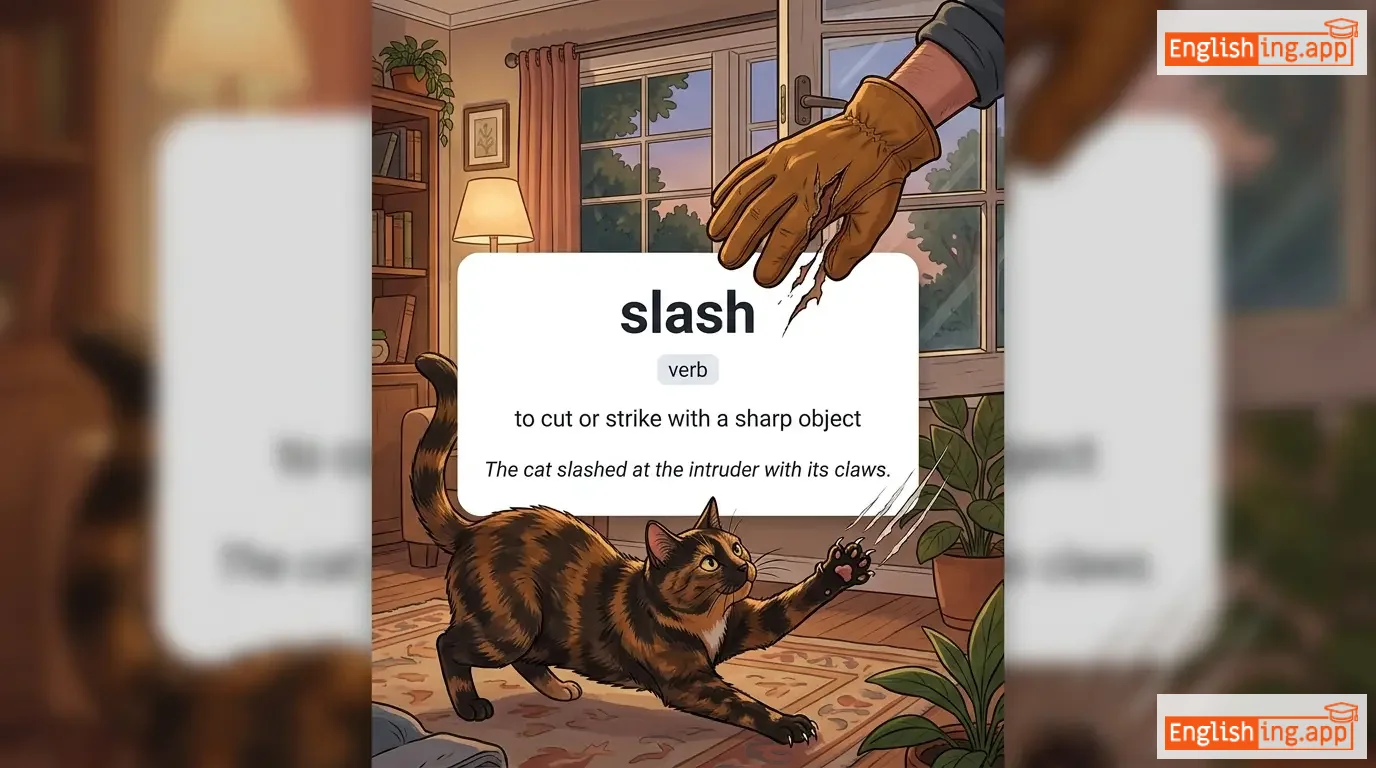
slash definition card — visual illustration of the meaning
verb
/slæʃ/
(ge)

to cut or strike with a sharp object

"The cat slashed at the intruder with its claws."

"猫用爪子向入侵者劈砍。" (Māo yòng zhǎozi xiàng rùqīn zhě pī kǎn.)
adjective
/ˈslæp.dæʃ/
草率 (caoshuai)

done too quickly and carelessly; hasty and careless

"The report was written in a slapdash manner, full of errors."
"报告写得草率,充满了错误。" (Baogao xiede caoshuai, chongman le cuowu.)
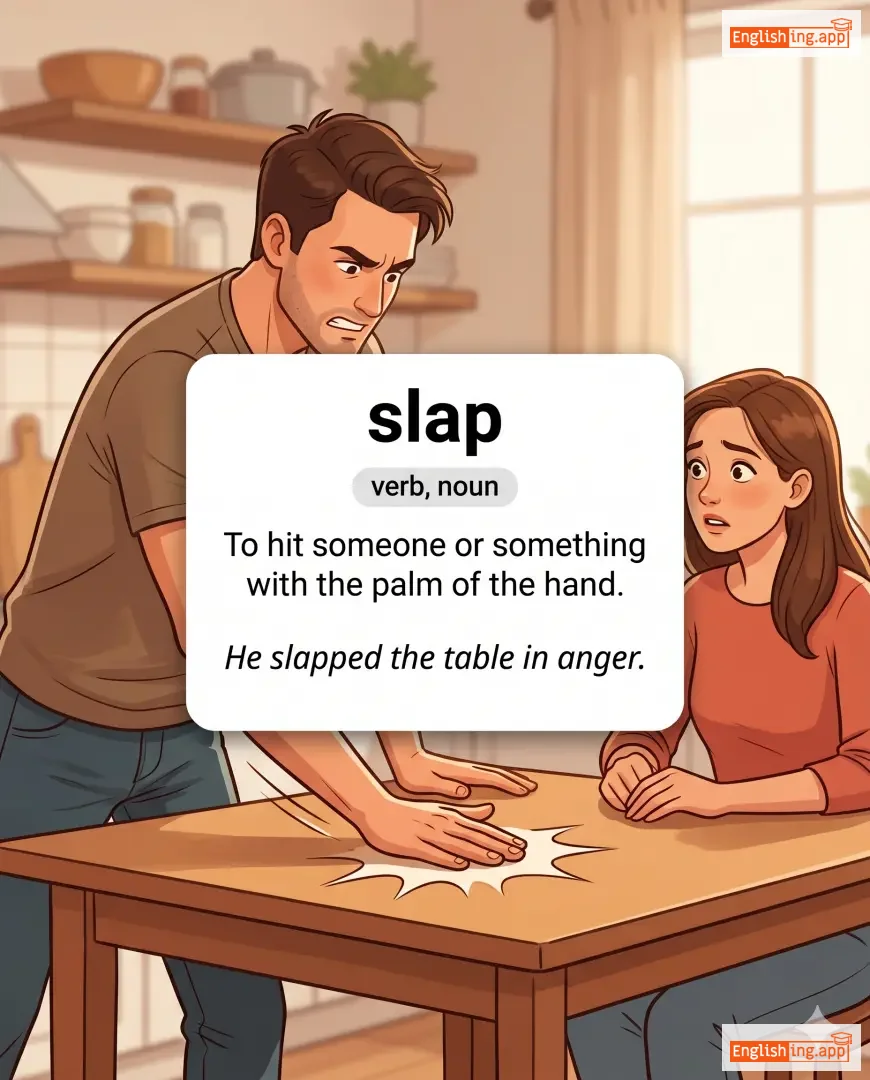
slap definition card — visual illustration of the meaning
verb, noun
/slæp/
打耳光 (da ěrguāng)

To hit someone or something with the palm of the hand.

"He slapped the table in anger."

"他生气地拍了桌子。" (Tā shēngqì de pāi le zhuōzi.)
noun, verb
/slænt/
偏见观点 (pianjian guandian)

A particular point of view; to slope or lean in a particular direction.

"The article had a political slant."

"文章有政治倾向。" (wénzhāng yǒu zhèngzhì qīngxiàng.)
noun
/slæŋ/
俚语; 非正式语言 (lǐyǔ; fēi zhèngshì yǔyán)

very informal language that is usually spoken rather than written

"The teenagers used slang that their parents couldn't understand."

"青少年使用了父母无法理解的俚语。" (Qīngshàonián shǐyòngle fùmǔ wúfǎ lǐjiě de lǐyǔ.)
noun
/ˈslændər/
诽谤 (feibang)

The action of making false spoken statements damaging to a person's reputation.

"He sued the newspaper for slander."

"他因诽谤起诉了报纸。" (Ta yin feibang qisu le baozhi.)
verb
/slæm/
用力关门 (yònglì guānmén)

to close or hit something with great force

"He slammed the door angrily after the argument."

"他在争论后愤怒地摔门。" (Tā zài zhēnglùn hòu fènnù de shuāi mén.)
verb
/sleɪk/
解渴 (jie ke)

To satisfy thirst or desire.

"She drank cold water to slake her thirst."

"她喝了冷水来解渴。" (Ta he le leng shui lai jie ke.)
noun
/slæɡ/
炉渣 (lú zhā)

Stony waste matter separated from metals during the smelting process.

"The factory dumped the slag near the river."

"工厂把炉渣倾倒在河边。" (Gōngchǎng bǎ lú zhā qīngdǎo zài hé biān.)
verb
/ˈslækən/
放松 (fàngsōng)

to make or become less tight, less active, or slower

"The driver slackened his speed as he approached the village."

"司机在接近村庄时放慢了速度。" (Sījī zài jiējìn cūnzhuāng shí fàngmànle sùdù.)
adjective
/slæk/
松弛 (songchi)

not tight, firm, or busy; lacking tension or activity

"Business is slack during the rainy season."

"在雨季生意很清淡。" (Zài yǔjì shēngyì hěn qīngdàn.)
noun
/slæb/
(ban)

a large, thick, flat piece of stone, concrete, or other hard material

"The workers laid a concrete slab for the foundation."

"工人们为地基铺设了一块混凝土板。" (Gōngrén men wèi dìjī pūshèle yī kuài hùnníngtǔ bǎn.)
noun
/ˈskaɪˌskreɪpər/
摩天大楼 (mó tiān dà lóu)

a very tall building of many stories

"The new skyscraper dominates the city's skyline."

"这座新的摩天大楼主导着城市的天际线。" (Zhè zuò xīn de mó tiān dà lóu zhǔ dǎo zhe chéng shì de tiān jì xiàn.)
noun
/ˈskaɪ.lɑːrk/
云雀 (yúnquè)

a small brown bird known for singing while flying high in the sky

"The skylark sang beautifully as it soared above the meadow."

"当云雀飞翔在草地上方时,它美丽地歌唱。" (dāng yúnquè fēixiáng zài cǎodì shàngfāng shí, tā měilì de gēchàng)
adjective
/skaɪ bluː/
天蓝色 (tian lan se)

a bright blue color like that of a clear sky

"Her sky-blue eyes sparkled in the sunlight."

"她的天蓝色眼睛在阳光下闪闪发光。" (Ta de tian lan se yanjing zai yangguang xia shanshan faguan.)
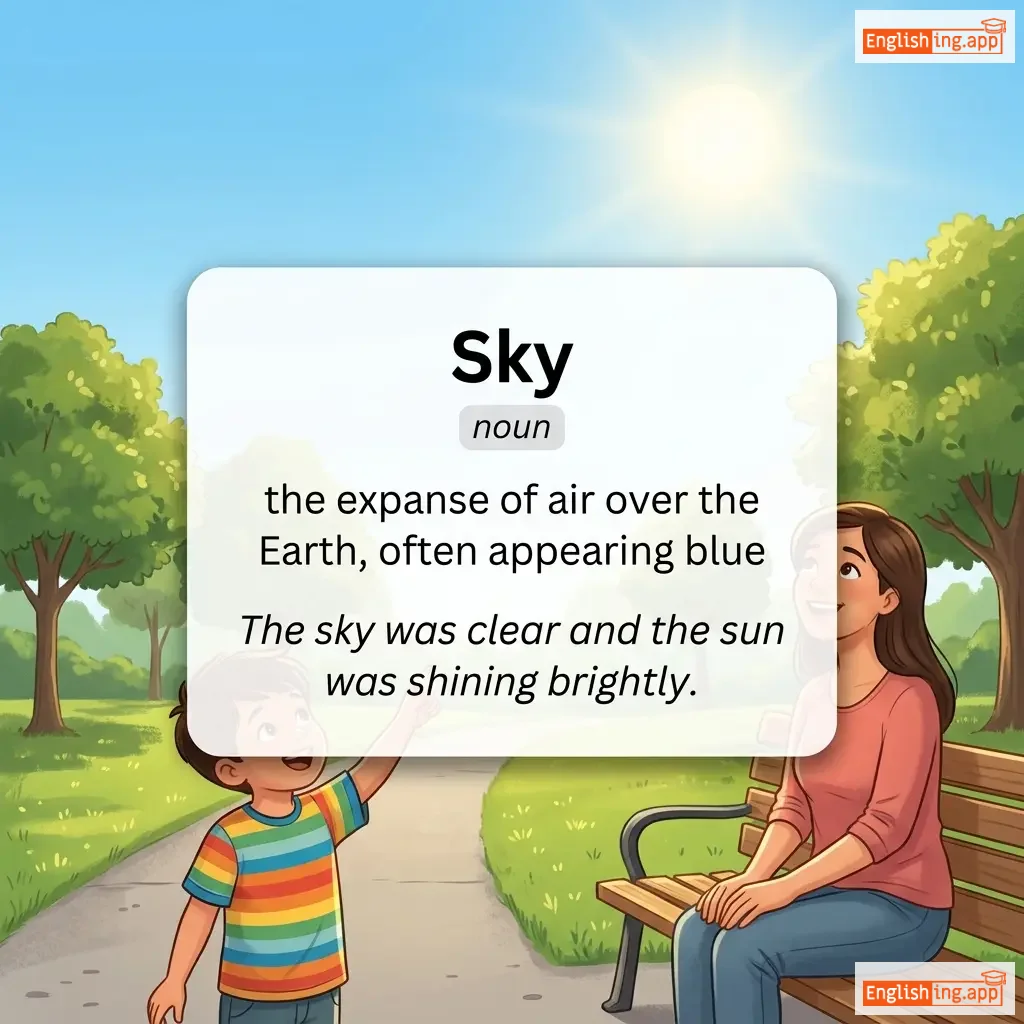
Sky definition card — visual illustration of the meaning
🌌

Sky

noun
/skaɪ/

the expanse of air over the Earth, often appearing blue

"The sky was clear and the sun was shining brightly."

noun
/ˌskʌlˈdʌɡəri/
欺诈 (qī zhà)

dishonest behavior or activities, often done secretly

"The election was full of political skullduggery."

"选举充满了政治欺诈。" (Xuǎnjǔ chōngmǎnle zhèngzhì qīzhà.)
noun
/skʌl/
头骨 (tougu)

the bony structure that forms the head and protects the brain

"The archaeologists found an ancient human skull."

"考古学家发现了一个古老的人类头骨。" (Kaogu xuejia faxianle yige gulao de renlei tougu.)
🕵️

skulk

verb
/skʌlk/

to move or hide secretly, often because you are planning something bad or are feeling guilty

"He tried to skulk in the shadows to avoid being seen."

noun
/skʌlˈdʌɡəri/
欺诈 (qī zhà)

underhanded or dishonest behavior

"The politician was accused of financial skulduggery."

"这位政治家因金融欺诈而受到指控。" (Zhè wèi zhèng zhì jiā yīn jīn róng qī zhà ér shòu dào zhǐ kòng.)
adjective
/ˈskɪtɪʃ/
紧张的 (jinzhang de)

easily frightened or nervous; unpredictable

"The horse was too skittish to ride."

"那匹马太紧张,无法骑乘。" (Na pi ma tai jinzhang, wufa qicheng.)
noun
/skɪt/
小品 (xiao pin)

a short, humorous performance or piece of writing

"The students performed a funny skit at the event."

"学生们在活动中表演了一个有趣的小品。" (Xuesheng men zai huodong zhong biaoyan le yige youqu de xiao pin.)
👗

Skirt

noun/verb
/skɜːrt/

a piece of clothing that hangs from the waist; to go around the edge of something

"She wore a red skirt to the party."

⚔️

skirmish

noun/verb
/ˈskɜːrmɪʃ/

a small or brief fight between groups of soldiers; to engage in such a fight

"The soldiers got into a skirmish near the border."

verb
/skɪp/
跳过 (tiao guo)

to omit or pass over something; to move lightly or quickly

"He decided to skip breakfast and go straight to work."

"他决定跳过早餐,直接去上班。" (Ta jueding tiao guo zaocan, zhijie qu shangban.)
adjective
/ˈskɪni/
瘦的; 皮包骨的; 骨瘦如柴 (shou de; pi bao gu de; gu shou ru chai)

very thin; having little flesh or fat on the body

"The skinny cat looked like it hadn't eaten for days."

"那只瘦猫看起来像是几天没吃东西了。" (Na zhi shou mao kan qilai xiang shi ji tian mei chi dongxi le.)
noun
/ˈskɪnˌflɪnt/
吝啬鬼 (lìnsè guǐ)

a person who spends as little money as possible; a miser

"The landlord was such a skinflint that he never repaired anything."

"房东是个吝啬鬼,从不修理任何东西。" (Fángdōng shì gè lìnsè guǐ, cóng bù xiūlǐ rènhé dōngxī.)
noun
/skɪn/
皮肤 (pifu)

the outer layer of the body

"She has fair skin and bright blue eyes."

"她有白皙的皮肤和明亮的蓝色眼睛。" (Ta you baixi de pifu he mingliang de lanse yanjing.)
verb
/skɪmp/
节省 (jiesheng)

to use less of something than is necessary in order to save money or effort

"Don’t skimp on quality when buying a new laptop."

"购买新笔记本时不要节省质量。" (Goumai xin bijiben shi bu yao jiesheng zhiliang.)
verb
/skɪm/
快速阅读 (kuai su yue du)

to move quickly over a surface or to read something quickly

"She skimmed through the report before the meeting."

"她在会议前快速浏览了报告。" (Ta zai huiyi qian kuai su liu lan le baogao.)
skills definition card — visual illustration of the meaning
noun
/skɪlz/
技能 (jineng)

The ability to do something well; expertise.

"Learning new skills can increase personal and professional growth."
"学习新技能可以增加个人和职业发展。" (Xuéxí xīn jìnéng kěyǐ zēngjiā gèrén hé zhíyè fāzhǎn.)
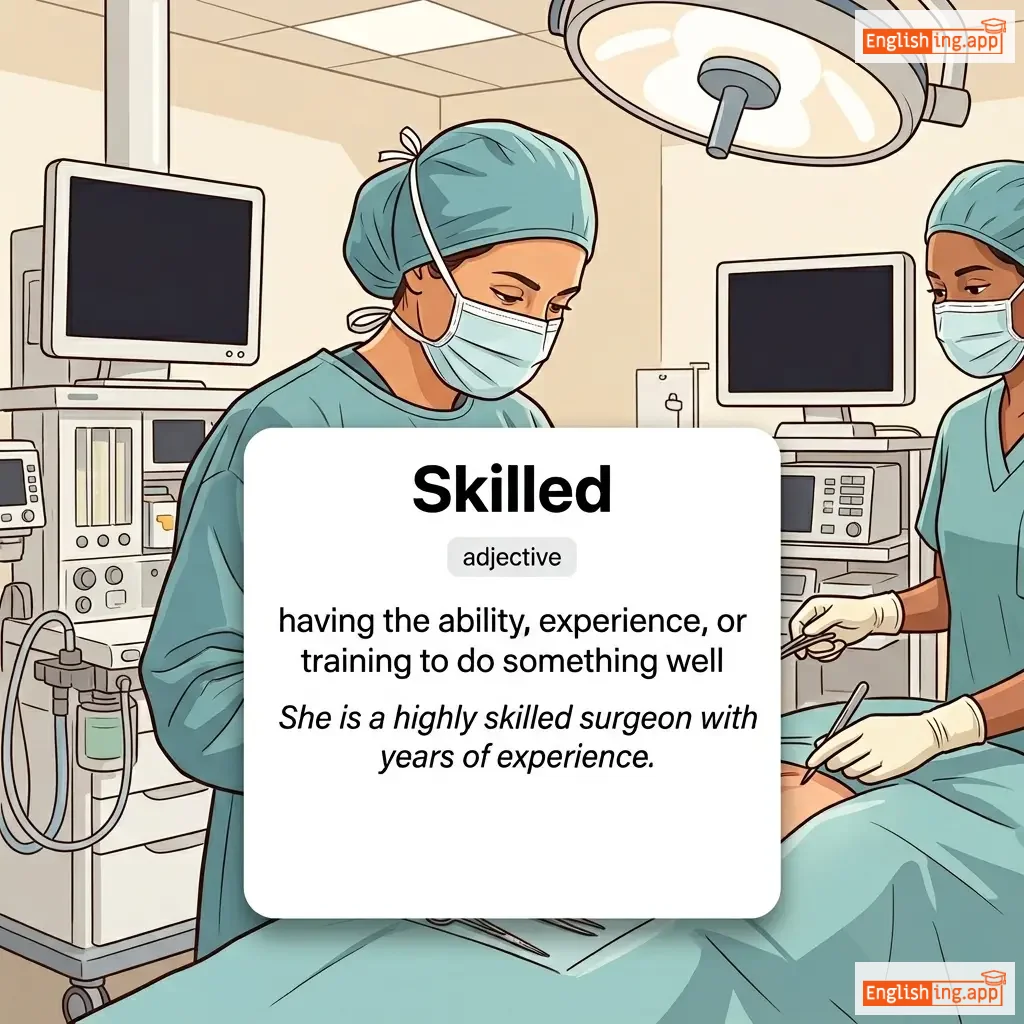
Skilled definition card — visual illustration of the meaning
adjective
/skɪld/
熟练 (shulian)

having the ability, experience, or training to do something well

"She is a highly skilled surgeon with years of experience."

"她是一位经验丰富的高技能外科医生。" (Ta shi yi wei jingyan fengfu de gao jishun waike yisheng.)
noun
/sɪˈmɪlɪˌtjuːd/
相似性 (xiangsi xing)

The quality or state of being similar; resemblance or likeness.

"There is a striking similitude between the two paintings."

"这两幅画之间有着显著的相似性。" (Zhe liang fu hua zhijian youzhe xian zhu de xiangsi xing.)
noun
/ˈsɪlk.wɜːrm/
(cán)

the caterpillar of a moth that produces silk fibers used to make silk fabric

"Silkworms feed on mulberry leaves to produce silk."

"蚕虫以桑叶为食,产生丝绸。" (Cánchóng yǐ sāng yè wéi shí, chǎnshēng sīchóu.)
adjective
/ˈsɪlkən/
丝绸的; 柔软的; 光滑的; (sīchóu de)

made of silk; smooth and soft like silk

"She wore a beautiful silken dress to the party."

"她穿了一件漂亮的丝绸裙子去参加聚会。" (Tā chuānle yī jiàn piàoliang de sīchóu qúnzi qù cānjiā jùhuì.)
adjective
/ˈsɪli/
(sha)

showing a lack of good sense; foolish or playful

"He made a silly mistake on the test."

"他在考试中犯了一个傻错误。" (Ta zai kaoshi zhong fanle yige sha cuowu.)
noun
/sɪlt/
泥沙 (ní shā)

Fine sand, clay, or other material carried by running water and deposited as a sediment.

"The river deposited layers of silt along its banks."

"河流在其河岸上沉积了层层的泥沙。" (Héliú zài qí hé'àn shàng chéndì le céngcéng de ní shā.)
noun, adjective
/ˈsɪlvər/
(yin)

a shiny gray-white metal, often used for coins, jewelry, and decoration

"She wore a beautiful silver necklace for the party."

"她为派对佩戴了一条美丽的银项链。" (Ta wei paidui peidai le yitiao meili de yin xianglian.)
noun
/ˈsɪlvər kɑrp/
银鲤 (yin li)

a large freshwater fish with silvery scales, commonly farmed for food

"Silver carp is widely cultivated in fish farms across Asia."
"银鲤在亚洲的鱼场中被广泛养殖。" (yin li zai ya zhou de yu chang zhong bei guang fan yang zhi.)
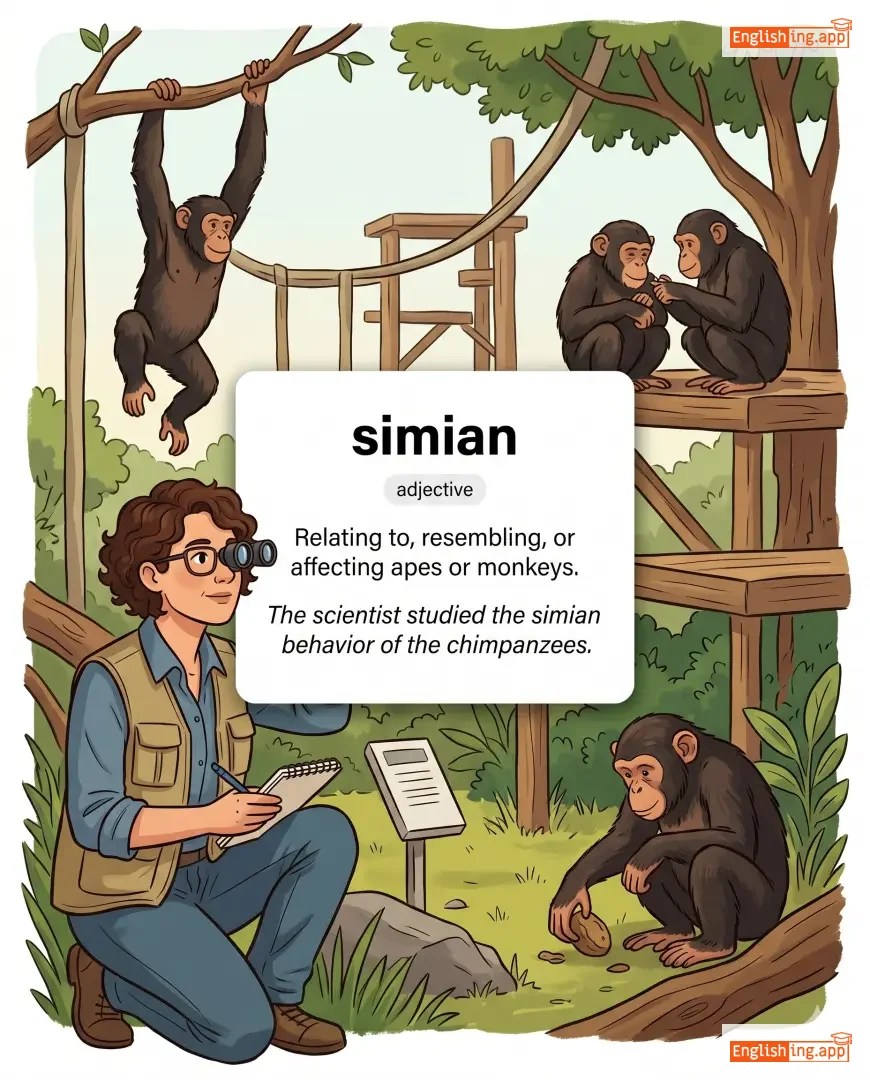
simian definition card — visual illustration of the meaning
adjective
/ˈsɪmiən/
类人猿的 (lèirén yuán de)

Relating to, resembling, or affecting apes or monkeys.

"The scientist studied the simian behavior of the chimpanzees."

"科学家研究了黑猩猩的类人猿行为。" (Kēxuéjiā yánjiūle hēi xīngxīng de lèirén yuán xíngwéi.)
adjective
/ˈsɪmɪlər/
相似 (xiangsi)

Having a resemblance in appearance, character, or quantity, without being identical.

"The twins wore similar clothes to the party."

"双胞胎穿着相似的衣服参加派对。" (Shuangbaotai chuanzhuo xiangsi de yifu canjia paidui.)
noun
/ˌsɪmɪˈlærəti/
相似 (xiangsi)

the state of being alike or having characteristics in common

"There is a strong similarity between the two paintings."

"这两幅画之间有很强的相似性。" (Zhe liang fu hua zhi jian you hen qiang de xiangsi.)
adverb
/ˈsɪmɪlərli/
类似地 (lèisì de)

in a similar way

"Similarly, we can achieve success with dedication and hard work."
"以相似的方式,我们可以通过奉献和努力工作取得成功。" (Yǐ xiāngsì de fāngshì, wǒmen kěyǐ tōngguò fèngxiàn hé nǔlì gōngzuò qǔdé chénggōng.)
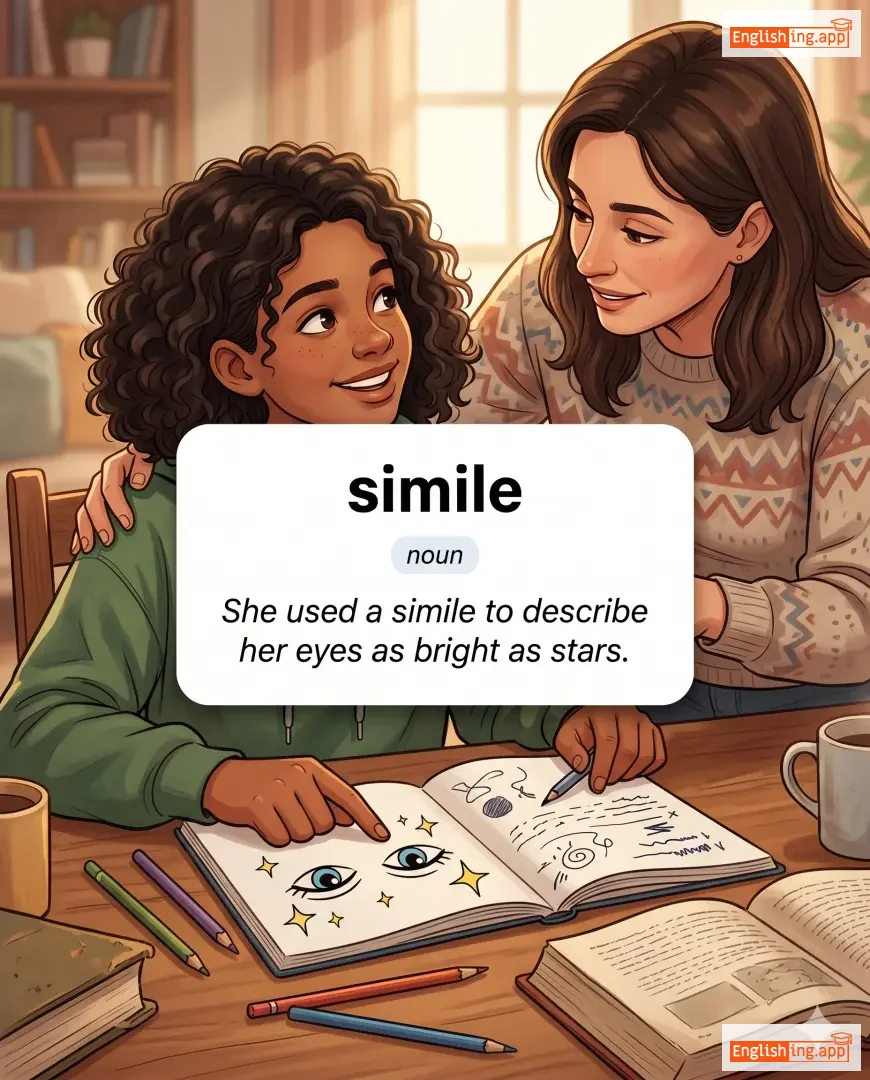
simile definition card — visual illustration of the meaning
noun
/ˈsɪməli/
明喻 (mingyu)

A figure of speech involving the comparison of one thing with another using 'like' or 'as'.

"She used a simile to describe her eyes as bright as stars."

"她用明喻来描述她的眼睛像星星一样明亮。" (Ta yong mingyu lai miaoshu ta de yanjing xiang xingxing yiyang mingliang.)
noun
/ˌsɪmjʊˈleɪkrəm/
拟像 (nǐ xiàng)

an image or representation of someone or something; a superficial likeness

"The statue was only a simulacrum of the ancient god."

"这座雕像仅仅是古代神灵的拟像。" (Zhè zuò diāoxiàng jǐn jǐn shì gǔdài shénlíng de nǐxiàng.)
adjective
/sɪmˈplɪstɪk/
过于简化的 (guò yú jiǎn huà de)

treating complex issues as if they were much simpler than they really are

"His explanation was too simplistic and ignored key details."

"他的解释过于简化,忽略了关键的细节。" (Tā de jiě shì guò yú jiǎn huà, hū lüè le guān jiàn de xì jié.)