词汇表

英语词汇词典 | 单词含义、定义和示例

adjective
/ˈsæt.ɪs.fæk.tər.i/
令人满意的 (lìng rén mǎn yì de)

acceptable; meeting requirements; adequate

"The test results were satisfactory."

"测试结果令人满意。" (cèshì jiéguǒ shì mǎnzú de.)
adjective
/ˈsætɪsfaɪd/
满意 (mǎnyì)

Pleased or content with what has been achieved or received.

"He felt satisfied after finishing his project."
"完成项目后,他感到满意。" (Wánchéng xiàngmù hòu, tā gǎndào mǎnyì.)
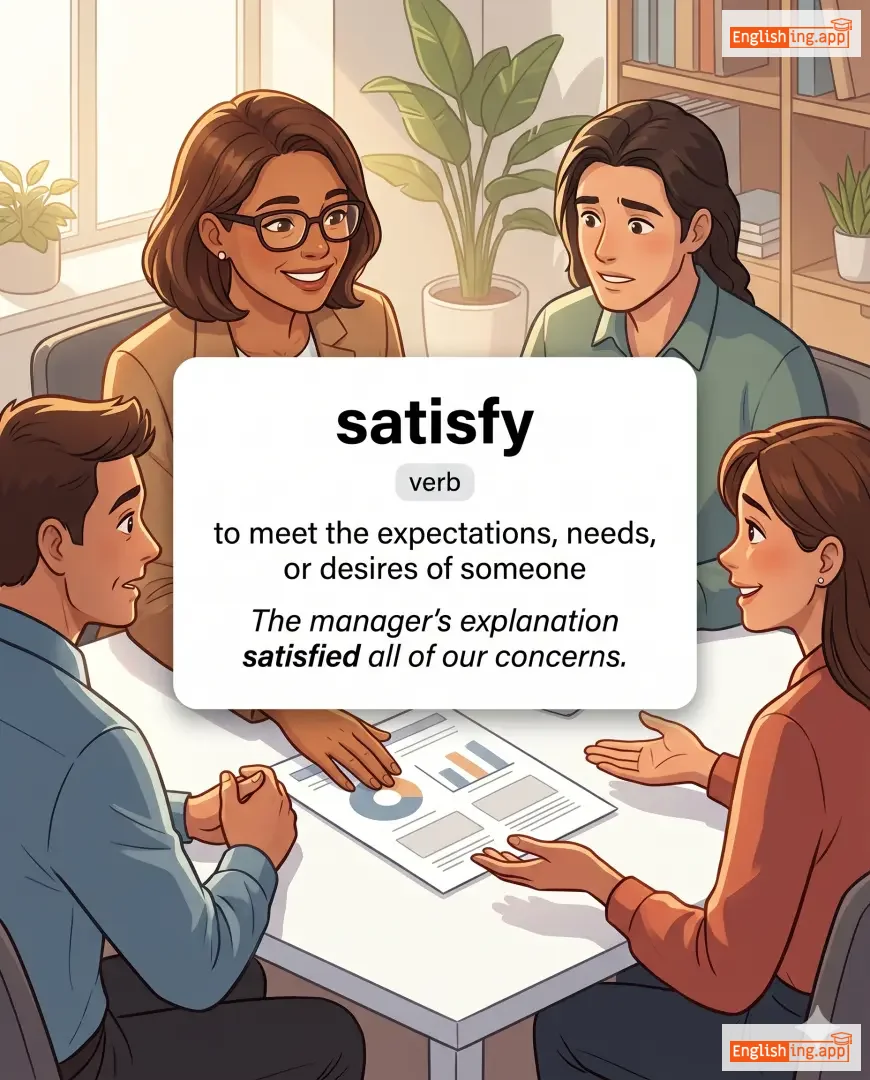
satisfy definition card — visual illustration of the meaning
verb
/ˈsætɪsfaɪ/
满足 (manzu)

to meet the expectations, needs, or desires of someone

"The manager's explanation satisfied all of our concerns."

"经理的解释满足了我们所有的顾虑。" (Jingli de jieshi manzu le women suoyou de gulü.)
noun
/ˈsætræp/
总督 (zǒngdū)

a governor of a province in ancient Persia; also used figuratively for a subordinate ruler

"The king appointed a satrap to oversee the distant province."
"国王任命了一个总督来管理遥远的省份。" (Guówáng rènmìngle yīgè zǒngdū lái guǎnlǐ yáoyuǎn de shěngfèn.)
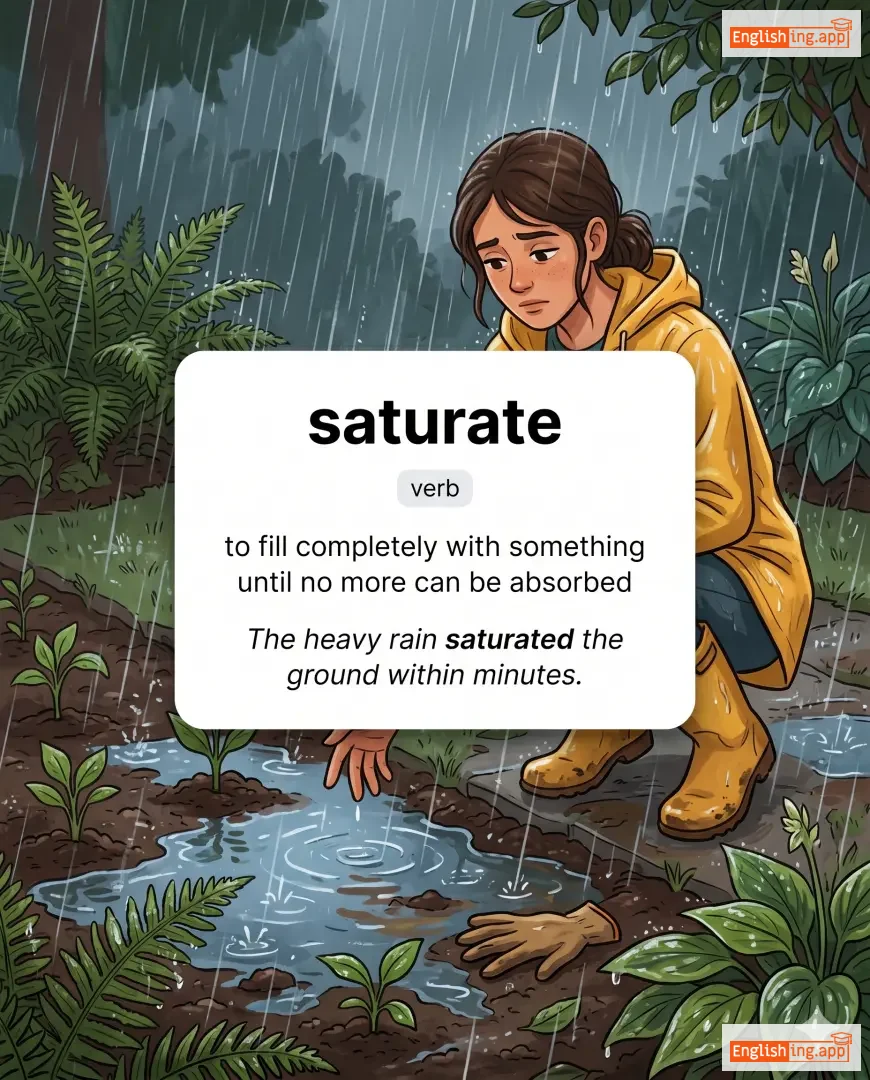
saturate definition card — visual illustration of the meaning
verb
/ˈsætʃəˌreɪt/

to fill completely with something until no more can be absorbed

"The heavy rain saturated the ground within minutes."

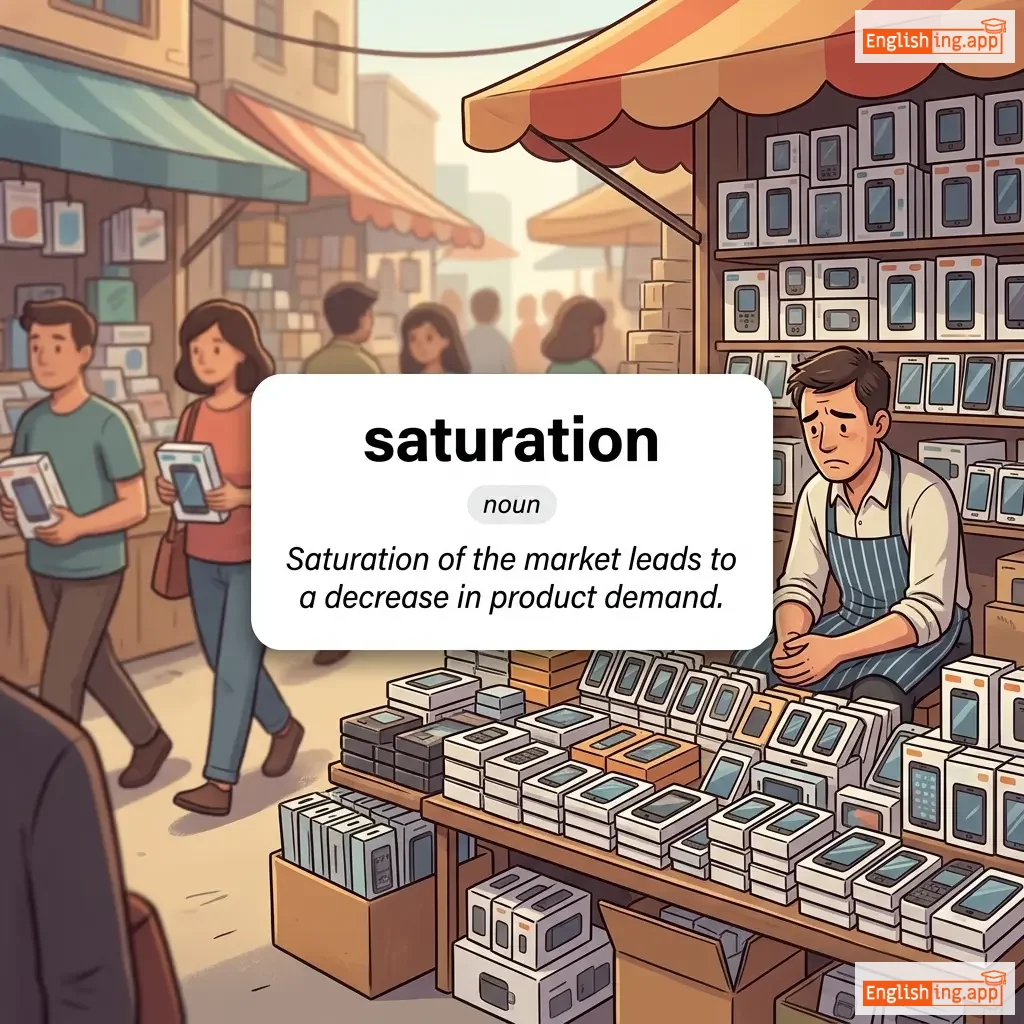
saturation definition card — visual illustration of the meaning
noun
/ˌsætʃəˈreɪʃən/
饱和 (baohua)

The state or process that occurs when no more of something can be absorbed, combined with, or added.

"Saturation of the market leads to a decrease in product demand."

"市场的饱和导致了产品需求的下降。" (Shichang de baohua daozhi le chanpin xuqiu de xiajiang.)
noun
/ˈsætərdeɪ/
星期六 (xingqi liu)

The day of the week between Friday and Sunday; traditionally the sixth day of the week

"We are going to the beach on Saturday."
"我们星期六去海滩。" (Wo men xingqi liu qu haitan.)
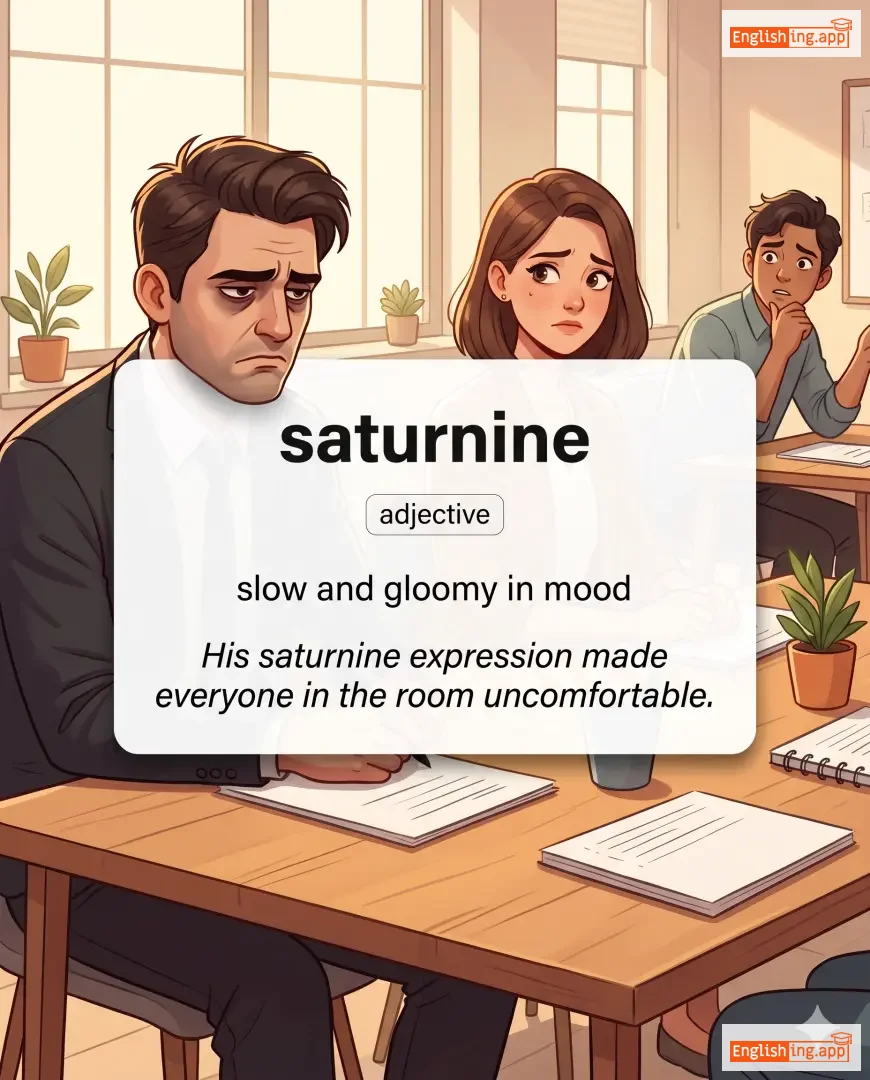
saturnine definition card — visual illustration of the meaning
adjective
/ˈsætərˌnaɪn/
忧郁的 (yōuyù de)

slow and gloomy in mood

"His saturnine expression made everyone in the room uncomfortable."
"他的忧郁表情让房间里的人都感到不舒服。" (Tā de yōuyù biǎoqíng ràng fángjiān lǐ de rén dōu gǎndào bù shūfú.)
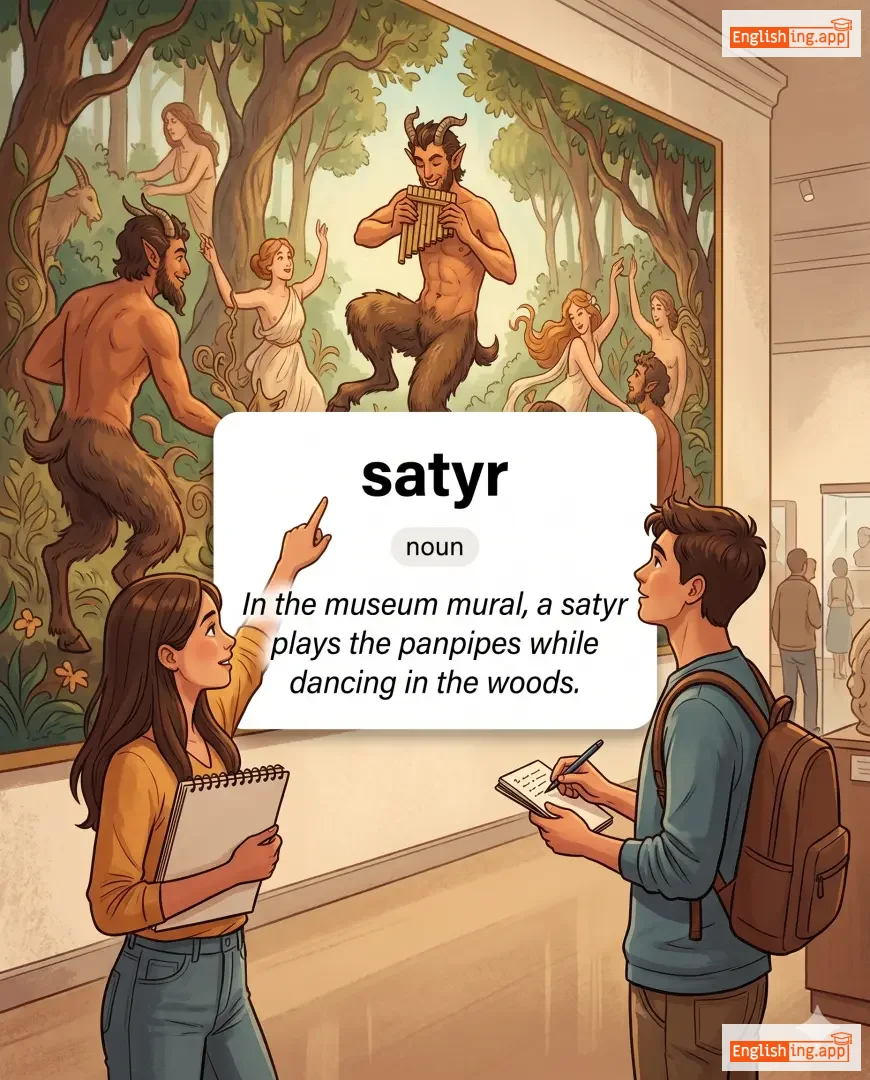
satyr definition card — visual illustration of the meaning
noun
/ˈsætər/
幸福 (xingfu)

a creature from Greek mythology depicted as a lustful being, often half-man and half-goat; by extension, a lecherous man

"In the museum mural, a satyr plays the panpipes while dancing in the woods."
"当她获得奖项时,她无法掩饰自己的幸福。" (Dang ta huode jiangxiang shi, ta wufa yanshi ziji de xingfu.)
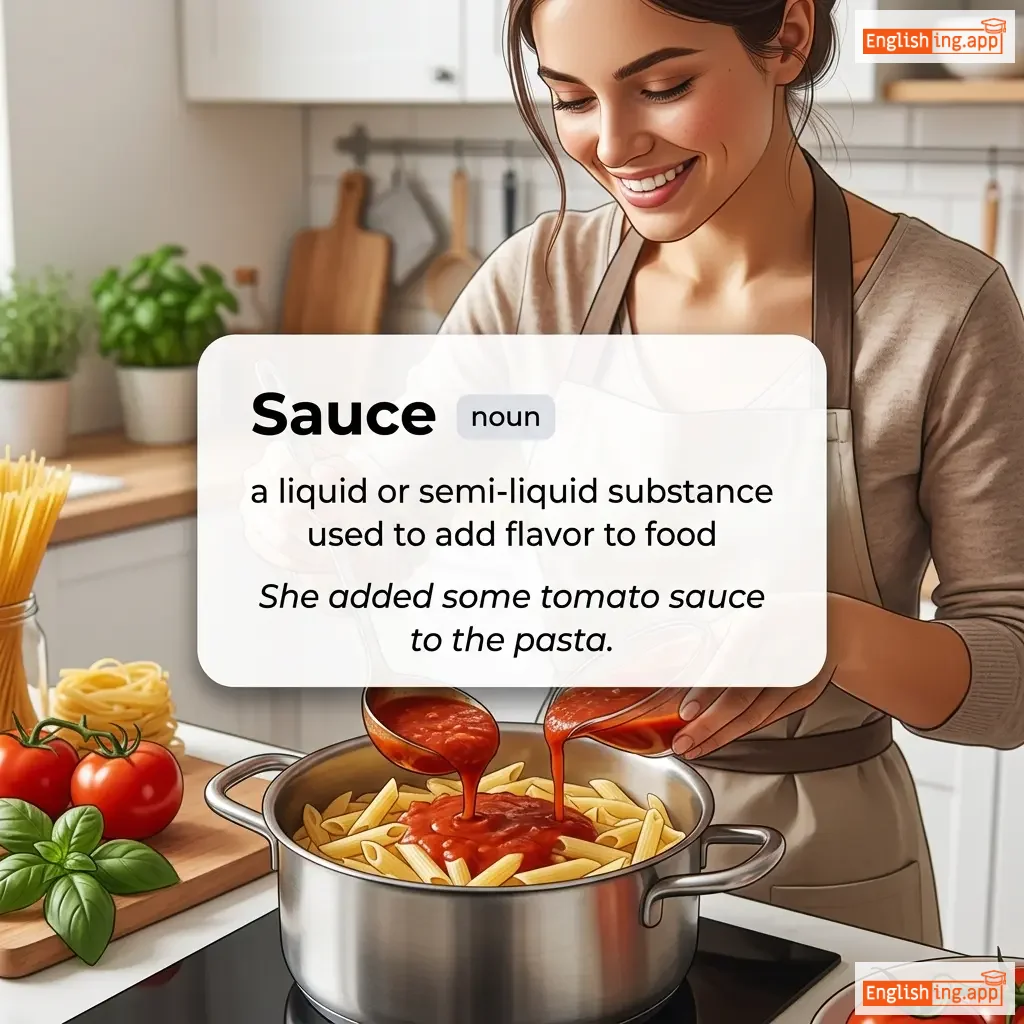
Sauce definition card — visual illustration of the meaning
noun
/sɔːs/
酱汁 (jiangzhi)

a liquid or semi-liquid substance used to add flavor to food

"She added some tomato sauce to the pasta."

"她在意大利面中加了一些番茄酱。" (Ta zai yidali mian zhong jia le yixie fanqie jiang.)
adjective
/ˈsɔːsi/
大胆的 (dàdǎn de)

Boldly rude, cheeky, or playfully disrespectful.

"The child gave a saucy reply to his teacher."

"那个孩子给老师一个大胆的回答。" (Nàgè háizi gěi lǎoshī yīgè dàdǎn de huídá.)
verb
/ˈsɔːntər/

to walk in a slow, relaxed manner without hurry or effort

"We sauntered along the riverside, stopping now and then to watch the boats."

noun
/ˈsaɪ.ə.lɪz.əm/
表面知识的假装 (biaomian zhishi de jiazhuang)

pretentious show of superficial knowledge

"His speech was full of sciolism, impressing no one."

"他的演讲充满了赛奥利主义,没有打动任何人。" (Tā de yǎnjiǎng chōngmǎnle sài'àolì zhǔyì, méiyǒu dǎdòng rènhé rén.)
adjective
/ˈsævɪdʒ/
野蛮; 残忍 (yěmán; cánrěn)

fierce, violent, or uncontrolled; cruel or brutal

"The storm brought savage winds that tore branches from the trees."

"暴风雨带来了野性的风,将树枝从树上刮下来。" (Bàofēngyǔ dàilái le yěmáng de fēng, jiāng shùzhī cóng shù shàng guā xiàlái.)
noun
/səˈvænə/
草原(散布着树木) (cǎoyuán (sàn bù zhe shùmù))

a grassy plain with scattered trees, typical of tropical and subtropical regions

"Giraffes browsed on acacia trees across the wide savanna."

"长颈鹿在广阔的萨凡纳上吃着金合欢树的叶子。" (Chángjǐnglù zài guǎngkuò de sàfánnà shàng chī zhe jīn héhuān shù de yèzi.)
noun
/səˈvɑːnt/

a learned person, especially a distinguished scientist or scholar; sometimes used in the phrase ‘savant syndrome’ for someone with exceptional abilities alongside developmental differences

"The conference keynote was delivered by a linguistic savant who studies endangered languages."

save definition card — visual illustration of the meaning
verb
/seɪv/
拯救 / 存储 (zhěngjiù / cúnchú)

To keep safe, to rescue, or to store for future use.

"She managed to save enough money for a new bike."
"她成功地为一辆新自行车存够了钱。" (Tā chénggōng de wèi yī liàng xīn zìxíngchē cún gòu le qián.)
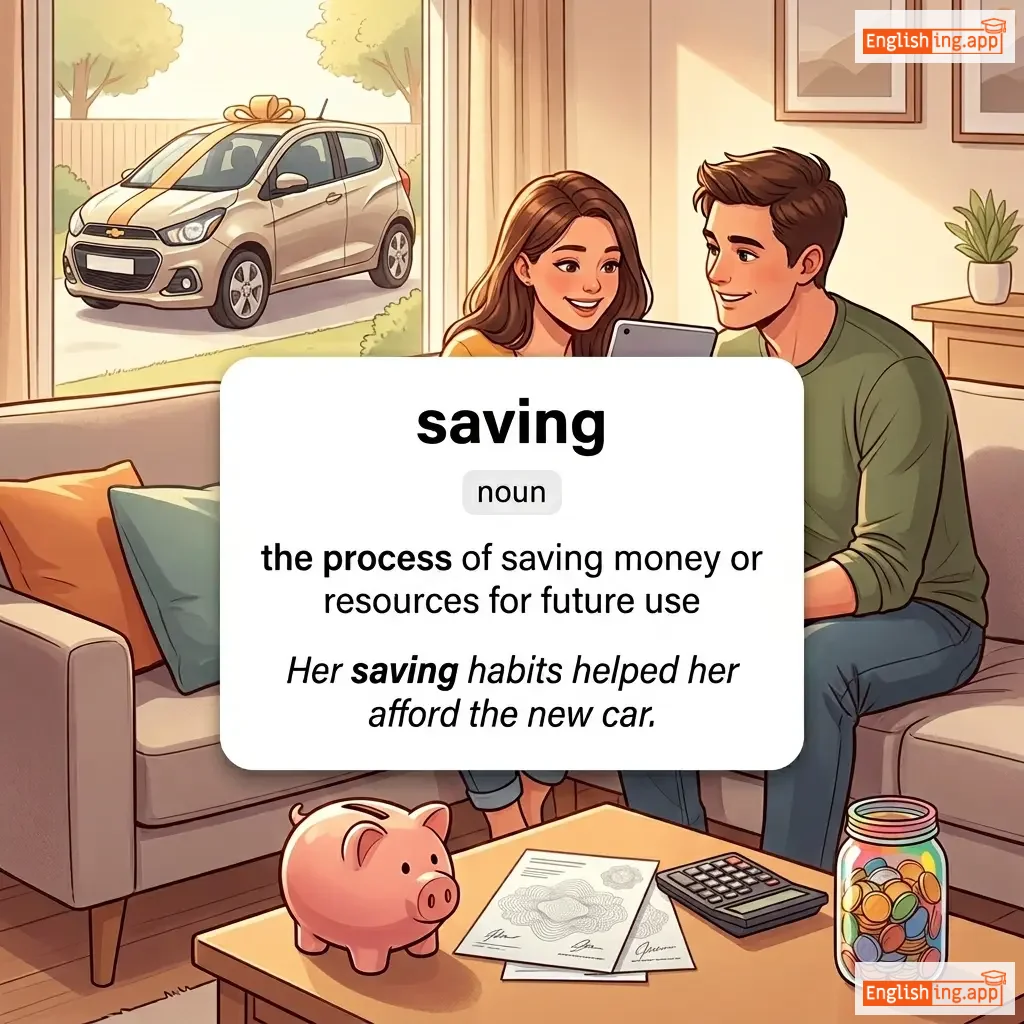
saving definition card — visual illustration of the meaning
noun
/ˈseɪvɪŋ/
储蓄 (chǔxù)

the process of saving money or resources for future use

"Her saving habits helped her afford the new car."

"她的储蓄习惯帮助她买到了新车。" (Ta de chuxu xiguan bangzhu ta maidaole xinn che.)
savings definition card — visual illustration of the meaning
noun
ˈseɪ.vɪŋz
储蓄 (chǔxù)

Money that is kept for future use or investment.

"Many people invest their savings in real estate."

"很多人将他们的储蓄投资于房地产。" (Hěn duō rén jiāng tāmen de chǔxù tóuzī yú fángdìchǎn.)
noun
/ˌsæv.wɑːr ˈfeər/
社交技巧 (shèjiāo jìqiǎo)

The ability to act or speak appropriately in social situations; polished social skills.

"She handled the delicate situation with remarkable savoir-faire."

"她以卓越的社交技巧处理了这一棘手的情况。" (Tā yǐ zhuóyuè de shèjiāo jìqiǎo chǔlǐle zhè yī jíshǒu de qíngkuàng.)
savor definition card — visual illustration of the meaning
verb
/ˈseɪ.vər/
尽情享受 (jìnqíng xiǎngshòu)

To enjoy something completely, especially by dwelling on it.

"He savored every bite of the delicious cake."

"他细细品味着美味的蛋糕。" (Tā xìxì pǐnwèi zhe měiwèi de dàngāo.)
adjective
/ˈseɪ.vər.i/
美味的(咸的或辣的) (měiwèi de (xián de huò là de))

Having a pleasant salty or spicy taste; morally acceptable.

"The restaurant serves a variety of savory dishes."

"这家餐厅提供各种美味的菜肴。" (Zhè jiā cāntīng tígōng gèzhǒng měiwèi de cài yáo.)
adjective
/ˈsæv.i/
聪明, 精明 (cōngmíng, jīngmíng)

Having practical knowledge and the ability to make good judgments.

"She is a tech-savvy entrepreneur."

"她是一位技术精通的企业家。" (Tā shì yī wèi jìshù jīngtōng de qǐyèjiā.)
saw definition card — visual illustration of the meaning
noun
/sɔː/
锯子 (jùzi)

a tool with a sharp blade used for cutting wood or other materials

"He used a saw to cut the wooden plank."

"他用锯子切割木板。" (Tā yòng jùzi qiēgē mùbǎn.)
noun
/ˈsɔː.dər/
奉承; 奉承的话 (fèngchéng; fèngchéng de huà)

flattering or wheedling talk; soft soap

"His sawder couldn't convince anyone of his sincerity."

"他的奉承无法说服任何人相信他的真诚。" (Tā de fèngchéng wúfǎ shuōfú rènhé rén xiāngxìn tā de zhēnchéng.)
noun
/ˈsɔː.dʌst/
锯末 (jùmò)

The tiny particles of wood produced by sawing or sanding.

"The floor was covered with sawdust from the carpentry work."

"地板上覆盖着来自木工工作的锯末。" (Dìbǎn shàng fùgàizhe láizì mùgōng gōngzuò de jùmò.)
noun
/ˈsɔːjər/
锯木工 (jù mù gōng)

a person who saws wood, especially as an occupation

"The skilled sawyer cut the logs into planks."

"熟练的锯木工将原木锯成木板。" (Shúliàn de jù mù gōng jiāng yuán mù jù chéng mù bǎn)
noun
/ˈsæksəfoʊn/
萨克斯风 (sàkèsī fēng)

a wind musical instrument with a curved metal body and a single reed mouthpiece

"The jazz musician played a beautiful solo on his saxophone."

"爵士乐手在他的萨克斯风上演奏了一首美妙的独奏。" (juéshì yuèshǒu zài tā de sàkèsī fēng shàng yǎnzòu le yī shǒu měimiào de dúzòu.)
say definition card — visual illustration of the meaning
🗣️

say (sāi)

verb
/seɪ/
(shuo)

to speak words or express thoughts aloud

"She asked him to say hello to her parents."

"她让他对她的父母说你好。" (Tā ràng tā duì tā de fùmǔ shuō nǐ hǎo.)
noun
/ˈskɒlər/
学者 (xuezhe)

a person who studies a particular subject or academic field

"The scholar presented a research paper on ancient civilizations."

"学者展示了关于古代文明的研究论文。" (Xuezhe zhanshi le guanyu gudai wenming de yanjiu lunwen.)
adjective
/ˈskætərd/
散布的 (sanbu de)

Spread irregularly or widely in different directions.

"The toys were scattered all over the floor."

"玩具散落在地板上。" (Wánjù sànluò zài dìbǎn shàng.)
verb
/ˈskævɪndʒ/
在垃圾中寻找 (zai laji zhong xunzhao)

to search through waste or discarded material to find useful items

"The children scavenged for food in the garbage dump."

"孩子们在垃圾堆里找食物。" (Haizimen zai laji dui li zhao shiwu.)
noun
/ˈskævɪndʒər/
食尸者 / 垃圾收集者 (shíshī zhě / lājī shōují zhě)

an animal or person that feeds on dead or discarded material

"Vultures are natural scavengers that clean up the environment."

"秃鹫是自然的清道夫,清理环境。" (Tū jiù shì zìrán de qīng dào fū, qīnglǐ huánjìng.)
noun
/səˈnɛərioʊ/
可能的情境 (keneng de qingjing)

a possible situation or sequence of events

"The company prepared for the worst-case scenario."

"公司为最坏的情况做了准备。" (Gongsi wei zuihuai de qingkuang zuole zhunbei.)
noun
/siːn/
场景 (changjing)

a place or setting of an event or activity, or the part of a play or film

"The final scene of the movie was very emotional."

"电影的最后一场景非常感人。" (Diànyǐng de zuìhòu yī chǎngjǐng fēicháng gǎnrén.)
noun
/ˈsiː.nər.i/
风景 (fēngjǐng)

the natural features of a landscape; the painted background used on a theater stage

"The mountain scenery was breathtakingly beautiful."

"山脉的风景令人叹为观止。" (Shānmài de fēngjǐng lìng rén tàn wéi guān zhǐ.)
noun
/sɛnt/
香气 (xiangqi)

a distinctive smell, especially a pleasant one

"The scent of roses filled the garden."

"玫瑰的香气充满了花园。" (Méiguī de xiāngqì chōngmǎnle huāyuán.)
adjective
/ˈskeptɪkəl/
怀疑的; 不信任的; 对某事的真相持怀疑态度 (huáiyí de; bù xìnrèn de; duì mǒu shì de zhēnxiàng chí huáiyí tàidù)

having doubts; not easily convinced; questioning the truth of something

"Many scientists remain sceptical about the new theory."

"许多科学家对新理论持怀疑态度。" (Xǔduō kēxuéjiā duì xīn lǐlùn chí huáiyí tàidù)
noun
/ˈʃɑːdənfrɔɪdə/
从他人的不幸中获得的快乐 (cóng tārén de bùxìng zhōng huòdé de kuàilè)

pleasure derived from another person's misfortune

"He felt a sense of schadenfreude when his rival failed."

"当他的对手失败时,他感到一阵沙登弗洛伊德。" (Dāng tā de duìshǒu shībài shí, tā gǎndào yī zhèn shādēng fúluòyīdé.)
noun
/ˈskɛdʒʊl/
时间表 (shijianbiao)

a plan for carrying out a process or task, showing the time and sequence of actions

"I have a busy schedule for today."

"我今天的时间表很满。" (Wǒ jīntiān de shíjiān biǎo hěn mǎn.)
Schematic definition card — visual illustration of the meaning
noun, adjective
/skiːˈmætɪk/
示意图 (shì yì tú)

a simplified or symbolic representation of a system or plan

"The engineer showed a schematic of the electrical circuit."

"工程师展示了电气电路的示意图。" (Gōngchéngshī zhǎnshì le diànqì diànlù de shì yì tú.)
scheme definition card — visual illustration of the meaning
noun, verb
/skiːm/
计划 / 阴谋 (jì huà / yīn móu)

a plan or arrangement, especially one that is secret or dishonest

"They devised a scheme to cheat investors."

"他们制定了一个计划,欺骗投资者。" (Tāmen zhì dìng le yí gè jì huà, qī piàn tóu zī zhě.)
noun
/ˈskɪz.əm/ or /ˈsɪz.əm/
幸福 (xìngfú)

A division or split between strongly opposed parties, often in religion or organizations.

"The schism in the church led to the formation of two separate groups."

"她在收到奖项时无法掩饰她的幸福。" (Tā zài shōudào jiǎngxiàng shí wúfǎ yǎnshì tā de xìngfú.)
verb
/ˈsɪn.tɪ.leɪt/
闪烁 (shǎn shuò)

to sparkle or shine brightly; to emit flashes of light

"The diamond ring scintillated under the bright lights."

"钻石戒指在明亮的灯光下闪耀。" (Zuànshí jièzhǐ zài míngliàng de dēngguāng xià shǎnyào.)
scientific definition card — visual illustration of the meaning
adjective
/ˌsaɪənˈtɪfɪk/
科学的 (kexue de)

relating to or based on science

"The scientific community is working to find a cure for cancer."

"科学界正在努力寻找癌症的治疗方法。" (Kexuejie zhengzai nuli xunzhao aizheng de zhiliaofa.)
scientist definition card — visual illustration of the meaning
noun
/ˈsaɪəntɪst/
科学家 (kexuejia)

a person who conducts scientific research or experiments

"The scientist made a groundbreaking discovery in physics."

"科学家在物理学方面做出了开创性的发现。" (Kexuejia zai wulixue fangmian zuo chule kaichuangxing de faxian.)
noun
/sɪnˈtɪl.ə/
小小的火花 (xiao xiao de huo hua)

A tiny trace or spark of a specified quality or feeling.

"There wasn’t a scintilla of doubt in her mind."
"她的脑海中没有一丝疑虑。" (Ta de nao hai zhong mei you yi si yi lv.)
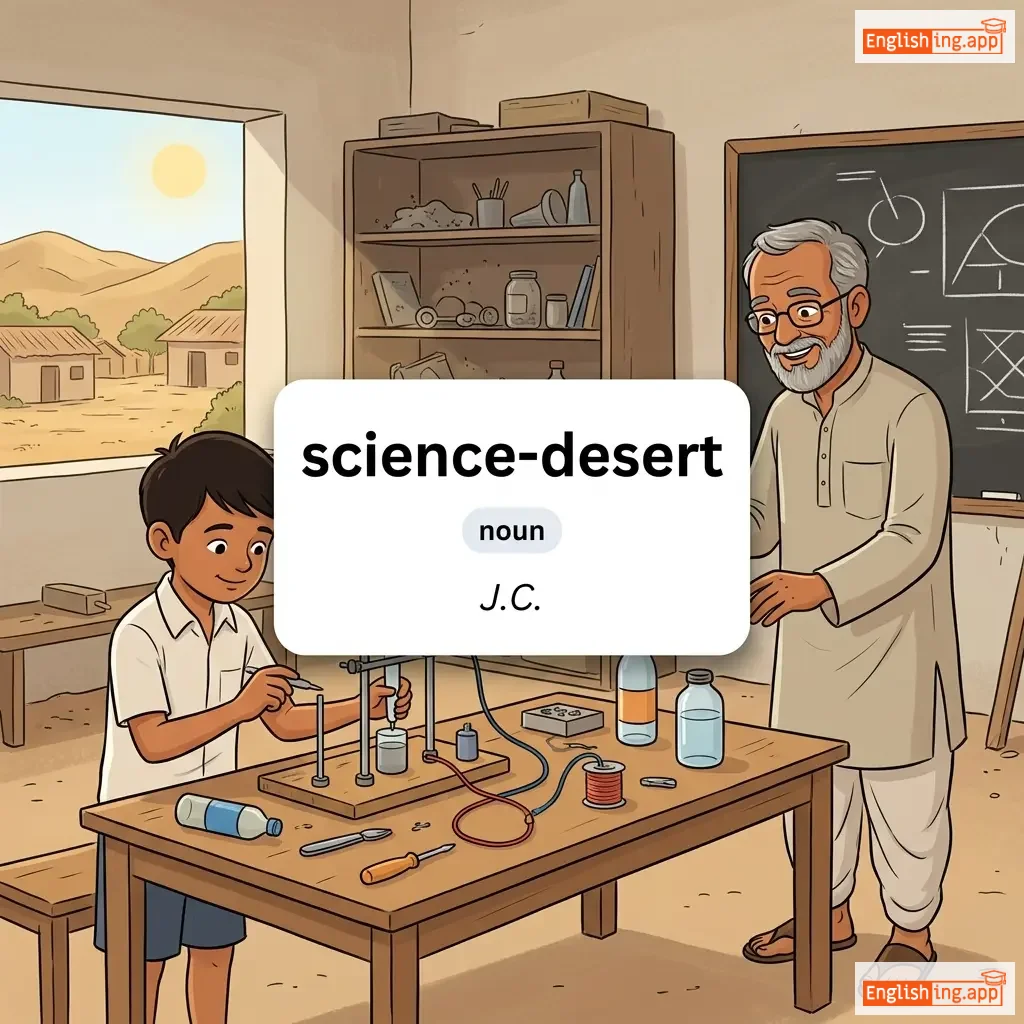
science-desert definition card — visual illustration of the meaning
noun
ˈsaɪəns ˈdezət
科学荒漠 (kexue huangmo)

A region or area lacking in scientific development, research facilities, or educational institutions.

"J.C. Bose thrived in a science-desert."

"J.C. Bose 在科学荒漠中茁壮成长。" (J.C. Bose zai kexue huangmo zhong zhuo zhuang chengzhang.)
adjective
/ˈsɪn.tɪ.leɪ.tɪŋ/
闪耀的 (shanyao de)

brilliantly clever, exciting, or sparkling

"Her scintillating conversation kept everyone entertained."
"她那闪耀的谈话让每个人都感到娱乐。" (Ta na shanyao de tanhua rang meiren dou gandao yule.)
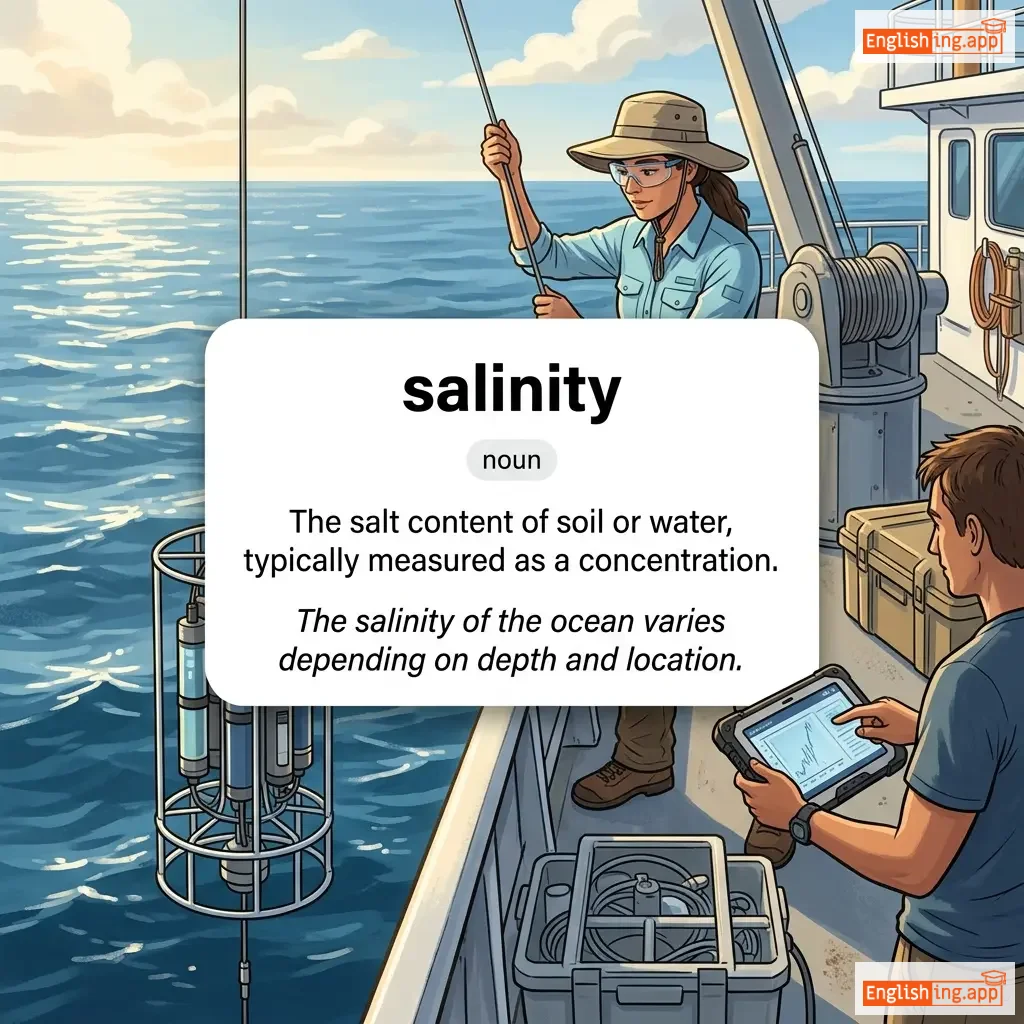
salinity definition card — visual illustration of the meaning
noun
/səˈlɪn.ə.t̬i/
盐度, 盐浓度 (yándù, yán nèngdù)

The salt content of soil or water, typically measured as a concentration.

"The salinity of the ocean varies depending on depth and location."

"海洋的盐度会根据深度和位置变化。" (hǎiyáng de yándù huì gēnjù shēndù hé wèizhì biànhuà.)