語彙集

英単語辞書 | 単語の意味、定義、例文

adjective
/ˈsæt.ɪs.fæk.tər.i/
満足のいく (manzoku no iku)

acceptable; meeting requirements; adequate

"The test results were satisfactory."

"テストの結果は満足のいくものでした。" (tesuto no kekka wa manzoku no iku mono deshita.)
adjective
/ˈsætɪsfaɪd/
満足 (manzoku)

Pleased or content with what has been achieved or received.

"He felt satisfied after finishing his project."
"彼はプロジェクトを終えた後、満足していると感じた。" (Kare wa purojekuto o oeta ato, manzoku shiteiru to kanjita.)
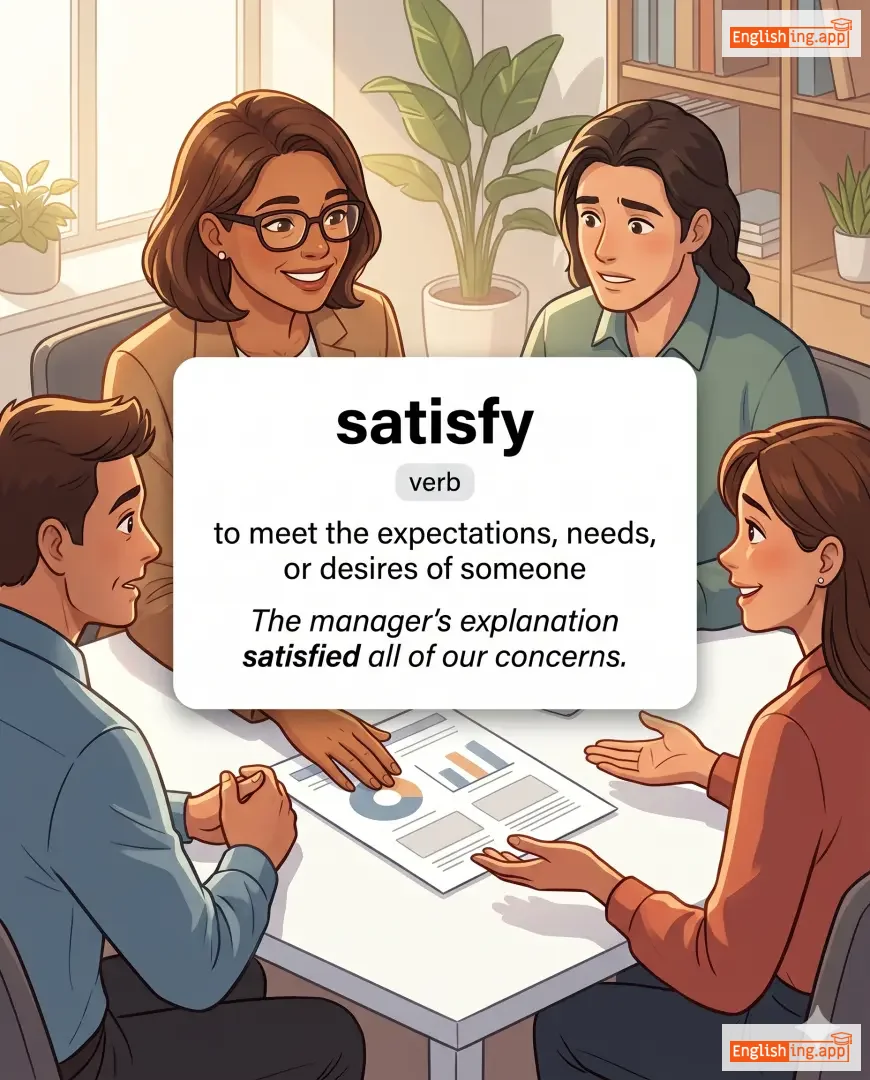
satisfy definition card — visual illustration of the meaning
verb
/ˈsætɪsfaɪ/
満たす (mitasu)

to meet the expectations, needs, or desires of someone

"The manager's explanation satisfied all of our concerns."

"マネージャーの説明は私たちのすべての懸念を満たしました。" (Manejā no setsumei wa watashitachi no subete no shinpai o mitashimashita.)
noun
/ˈsætræp/
総督 (sōtoku)

a governor of a province in ancient Persia; also used figuratively for a subordinate ruler

"The king appointed a satrap to oversee the distant province."
"王は遠くの州を監督するために総督を任命しました。" (Ō wa tōku no shū o kantoku suru tame ni sōtoku o ninmei shimashita.)
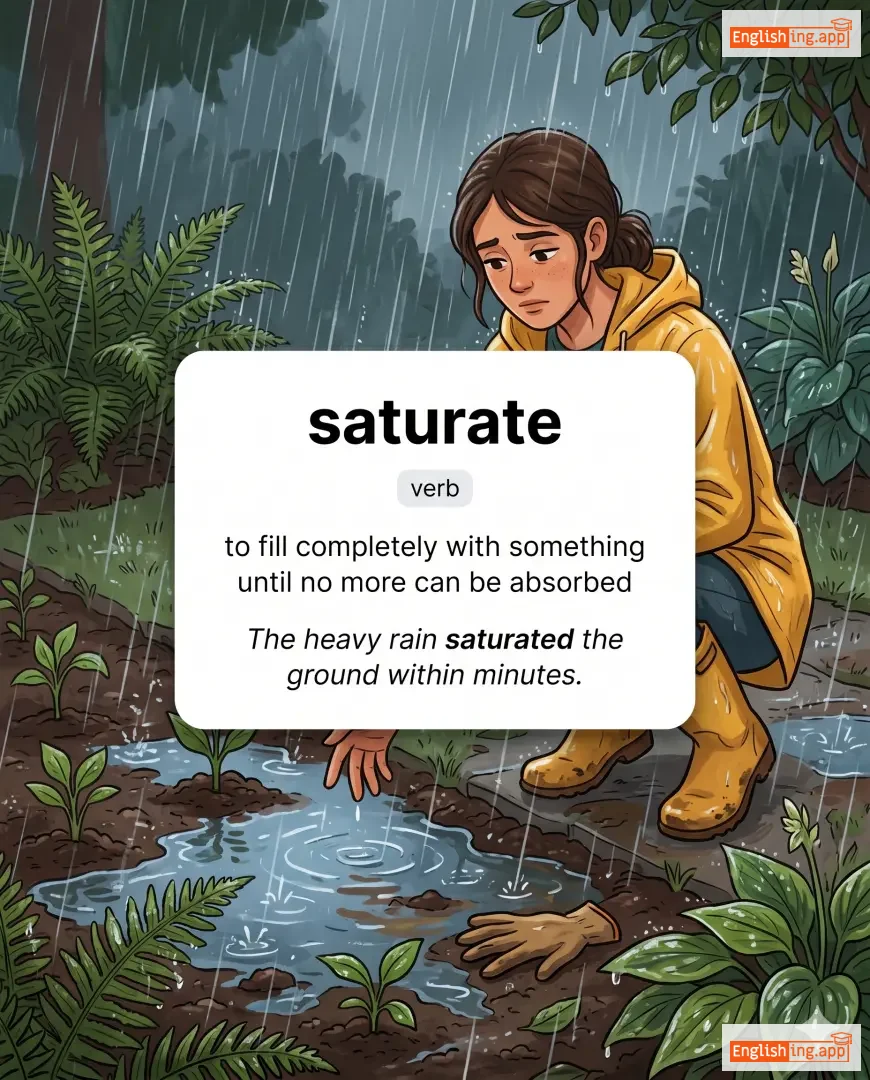
saturate definition card — visual illustration of the meaning
verb
/ˈsætʃəˌreɪt/

to fill completely with something until no more can be absorbed

"The heavy rain saturated the ground within minutes."

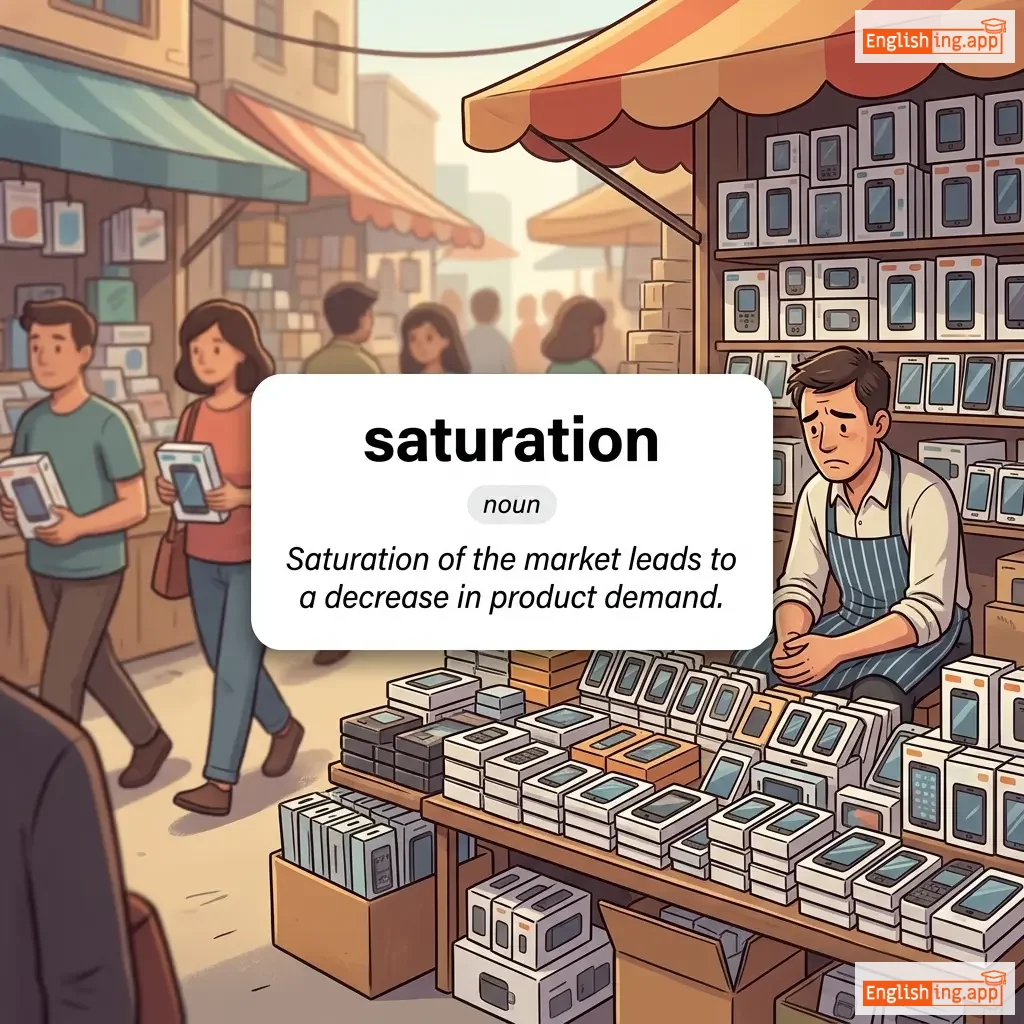
saturation definition card — visual illustration of the meaning
noun
/ˌsætʃəˈreɪʃən/
飽和 (hōwa)

The state or process that occurs when no more of something can be absorbed, combined with, or added.

"Saturation of the market leads to a decrease in product demand."

"市場の飽和は製品の需要の減少を引き起こします。" (Shijō no hōwa wa seihin no juyō no genshō o hikiokoshimasu.)
noun
/ˈsætərdeɪ/
土曜日 (doyoubi)

The day of the week between Friday and Sunday; traditionally the sixth day of the week

"We are going to the beach on Saturday."
"私たちは土曜日にビーチに行きます。" (Watashitachi wa doyoubi ni biichi ni ikimasu.)
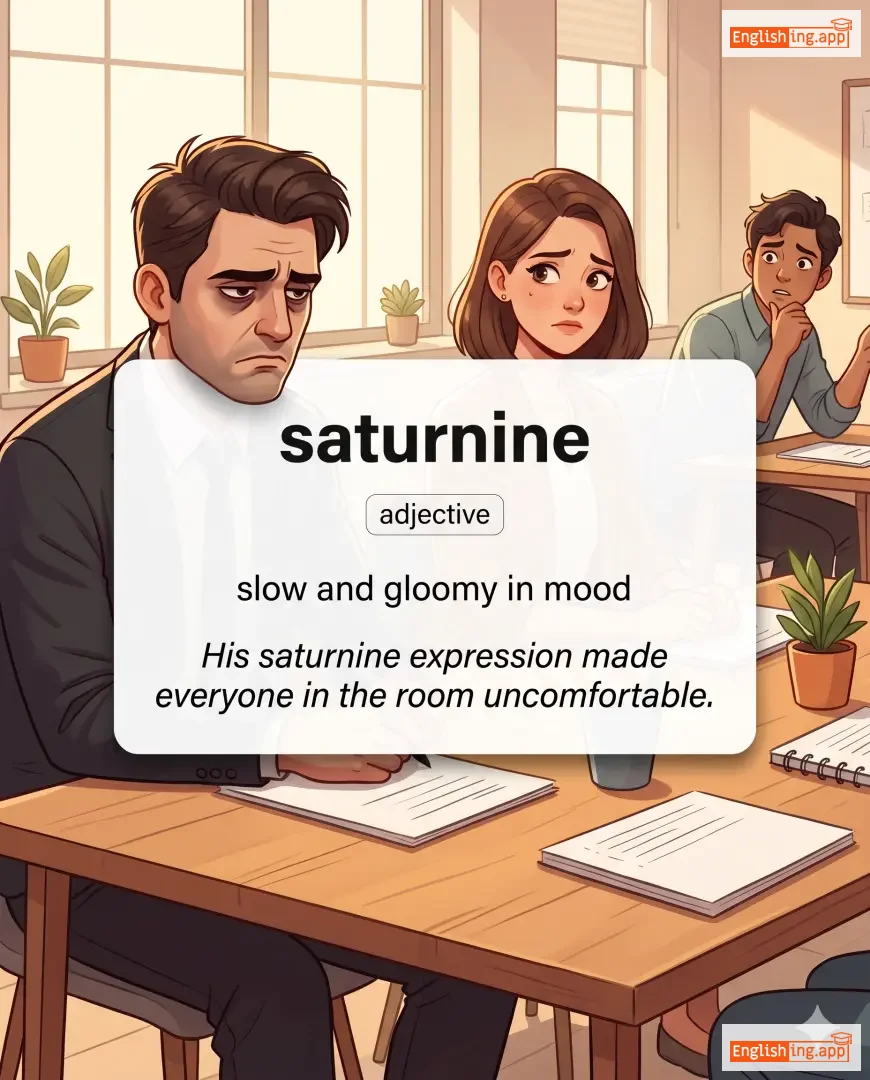
saturnine definition card — visual illustration of the meaning
adjective
/ˈsætərˌnaɪn/
陰気な (inki na)

slow and gloomy in mood

"His saturnine expression made everyone in the room uncomfortable."
"彼の陰気な表情は部屋の中の誰もが不快に感じさせた。" (Kare no in'kina hyōjō wa heya no naka no dare mo ga fukai ni kanjisaseta.)
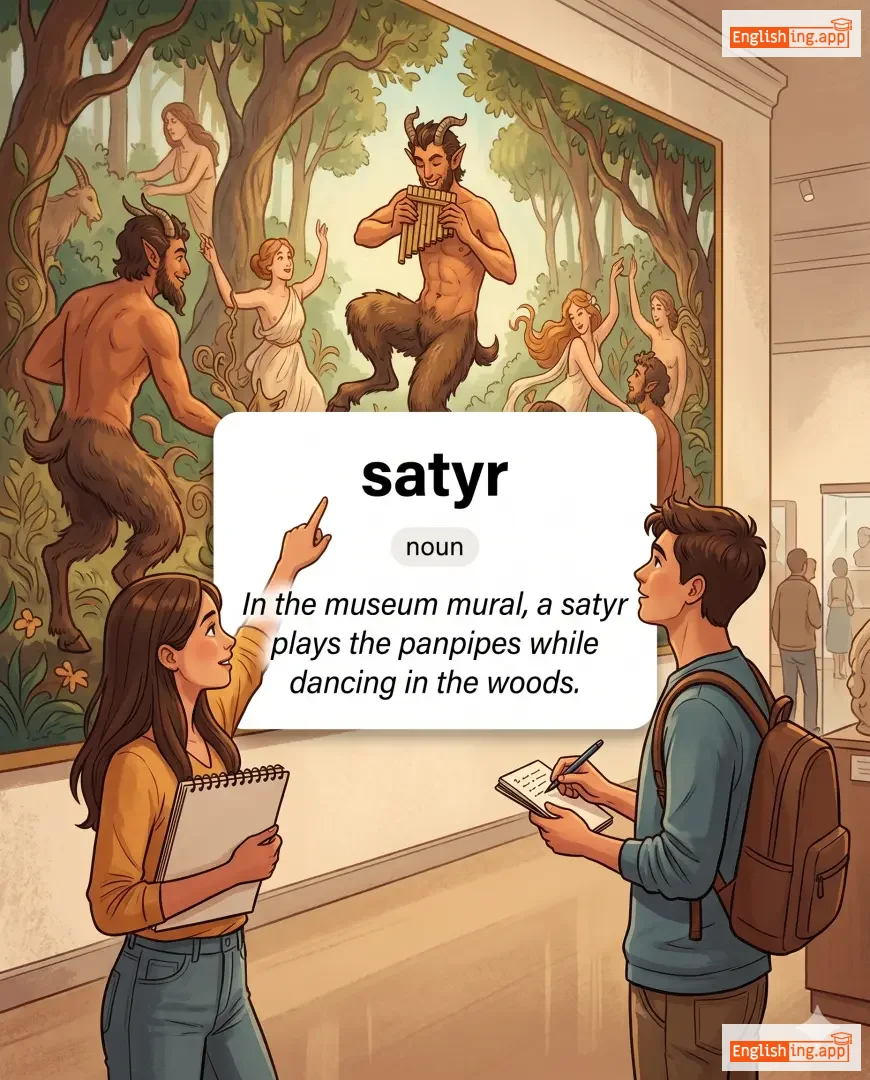
satyr definition card — visual illustration of the meaning
noun
/ˈsætər/
幸せ (shiawase)

a creature from Greek mythology depicted as a lustful being, often half-man and half-goat; by extension, a lecherous man

"In the museum mural, a satyr plays the panpipes while dancing in the woods."
"彼女は賞を受け取ったとき、自分の幸せを隠すことができませんでした。" (Kanojo wa shou wo uketotta toki, jibun no shiawase wo kakusu koto ga dekimasen deshita.)
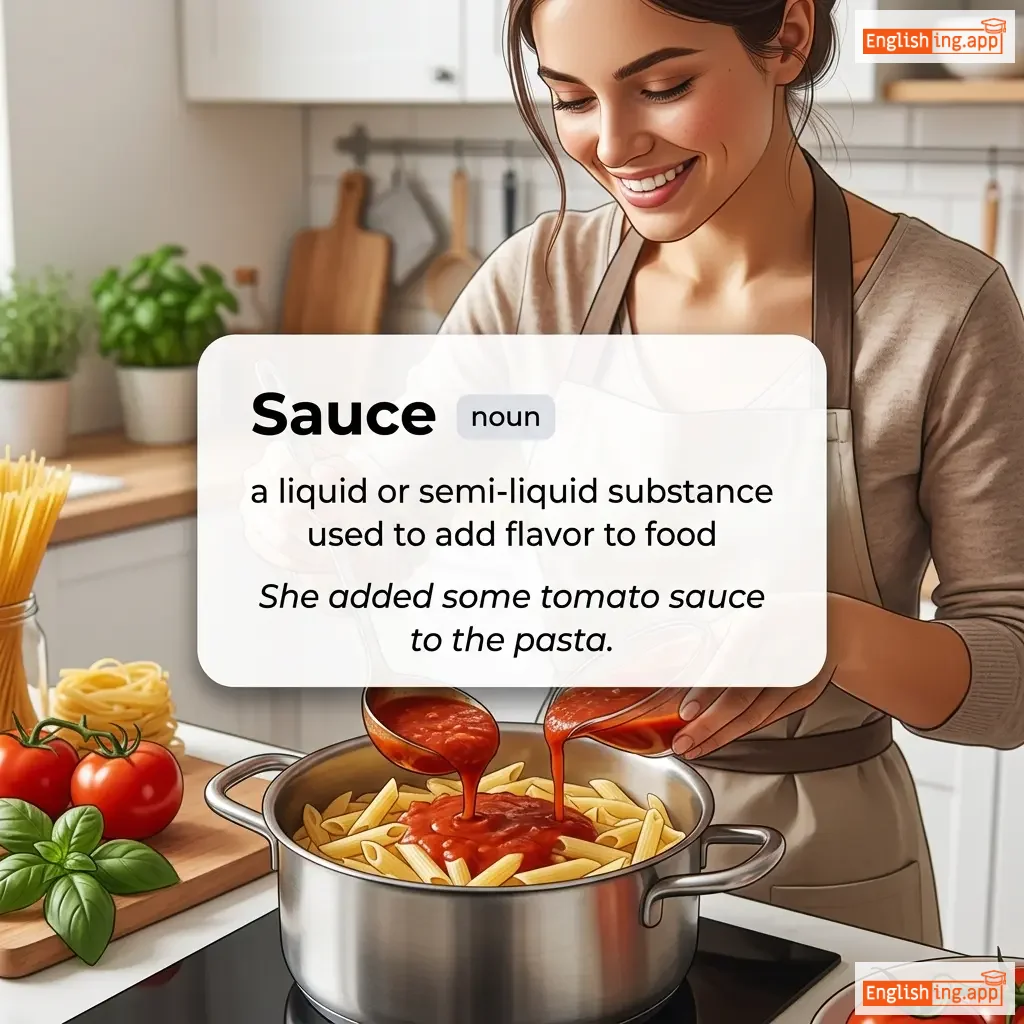
Sauce definition card — visual illustration of the meaning
noun
/sɔːs/
ソース (soosu)

a liquid or semi-liquid substance used to add flavor to food

"She added some tomato sauce to the pasta."

"彼女はパスタにトマトソースを加えた。" (Kanojo wa pasuta ni tomato soosu o kuwaeta.)
adjective
/ˈsɔːsi/
生意気な (namaiki na)

Boldly rude, cheeky, or playfully disrespectful.

"The child gave a saucy reply to his teacher."

"その子は先生に生意気な返事をした。" (Sono ko wa sensei ni namaiki na henji o shita.)
verb
/ˈsɔːntər/

to walk in a slow, relaxed manner without hurry or effort

"We sauntered along the riverside, stopping now and then to watch the boats."

noun
/ˈsaɪ.ə.lɪz.əm/
表面的な知識の誇示 (hyōmen-tekina chishiki no koji)

pretentious show of superficial knowledge

"His speech was full of sciolism, impressing no one."

"彼のスピーチはサイオリズムで満ちており、誰も感動しなかった。" (Kare no supīchi wa saiorizumu de michite ori, dare mo kandō shinakatta.)
adjective
/ˈsævɪdʒ/
野蛮; 残酷 (yaban; zankoku)

fierce, violent, or uncontrolled; cruel or brutal

"The storm brought savage winds that tore branches from the trees."

"嵐は、木の枝を引き裂くような荒々しい風をもたらしました。" (Arashi wa, ki no eda o hikisaku yō na araarashī kaze o motarashimashita.)
noun
/səˈvænə/
サバンナ(散在する木々がある草原) (saban'na (sanzai suru kigi ga aru sōgen))

a grassy plain with scattered trees, typical of tropical and subtropical regions

"Giraffes browsed on acacia trees across the wide savanna."

"キリンは広いサバンナでアカシアの木の葉を食べていました。" (Kirin wa hiroi sabanna de akashia no ki no ha o tabete imashita.)
noun
/səˈvɑːnt/

a learned person, especially a distinguished scientist or scholar; sometimes used in the phrase ‘savant syndrome’ for someone with exceptional abilities alongside developmental differences

"The conference keynote was delivered by a linguistic savant who studies endangered languages."
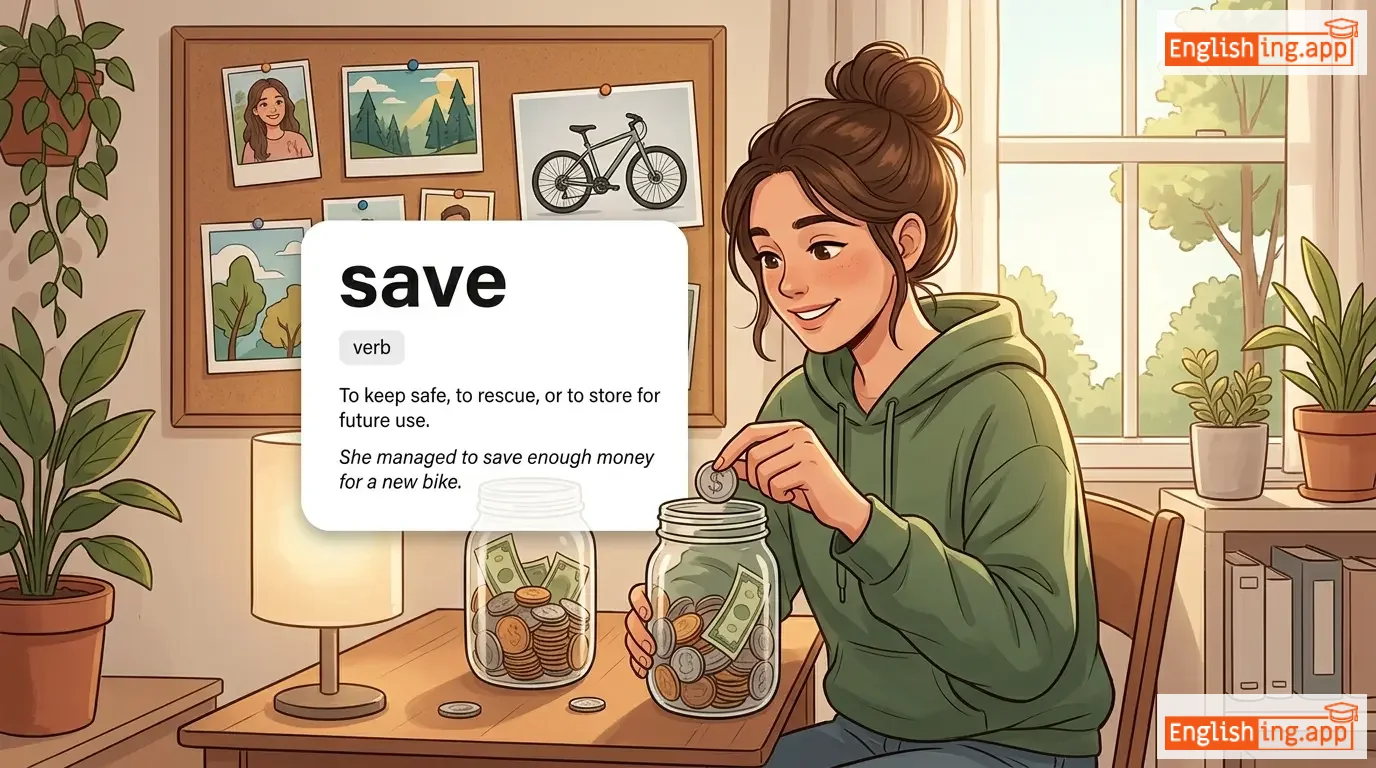
save definition card — visual illustration of the meaning
verb
/seɪv/
救う / 保存する (sukuu / hozon suru)

To keep safe, to rescue, or to store for future use.

"She managed to save enough money for a new bike."
"彼女は新しい自転車のために十分なお金を貯めることができた。" (Kanojo wa atarashī jitensha no tame ni jūbun na okane o tameru koto ga dekita.)
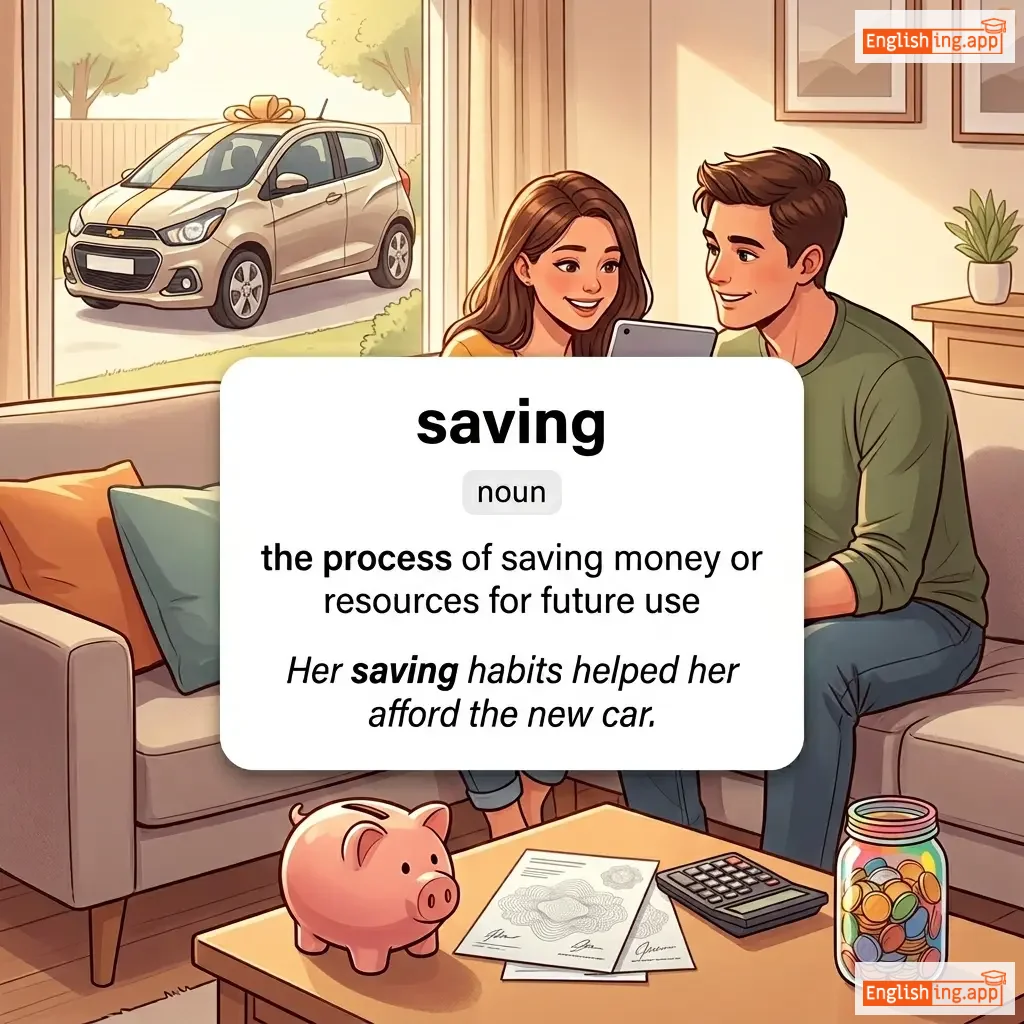
saving definition card — visual illustration of the meaning
noun
/ˈseɪvɪŋ/
貯金 (chokin)

the process of saving money or resources for future use

"Her saving habits helped her afford the new car."

"彼女の貯金習慣は新しい車を買うのに役立ちました。" (Kanojo no chokin shūkan wa atarashī kuruma o kau no ni yakudachimashita.)
savings definition card — visual illustration of the meaning
noun
ˈseɪ.vɪŋz
貯金 (chokin)

Money that is kept for future use or investment.

"Many people invest their savings in real estate."

"多くの人々は自分の貯金を不動産に投資します。" (Ōku no hitobito wa jibun no chokin o fudōsan ni tōshi shimasu.)
noun
/ˌsæv.wɑːr ˈfeər/
社交術 (shakou-jutsu)

The ability to act or speak appropriately in social situations; polished social skills.

"She handled the delicate situation with remarkable savoir-faire."
"彼女は見事な社交術で微妙な状況をうまく処理しました。" (Kanojo wa migoto na shakou-jutsu de bimyou na joukyou wo umaku shori shimashita.)
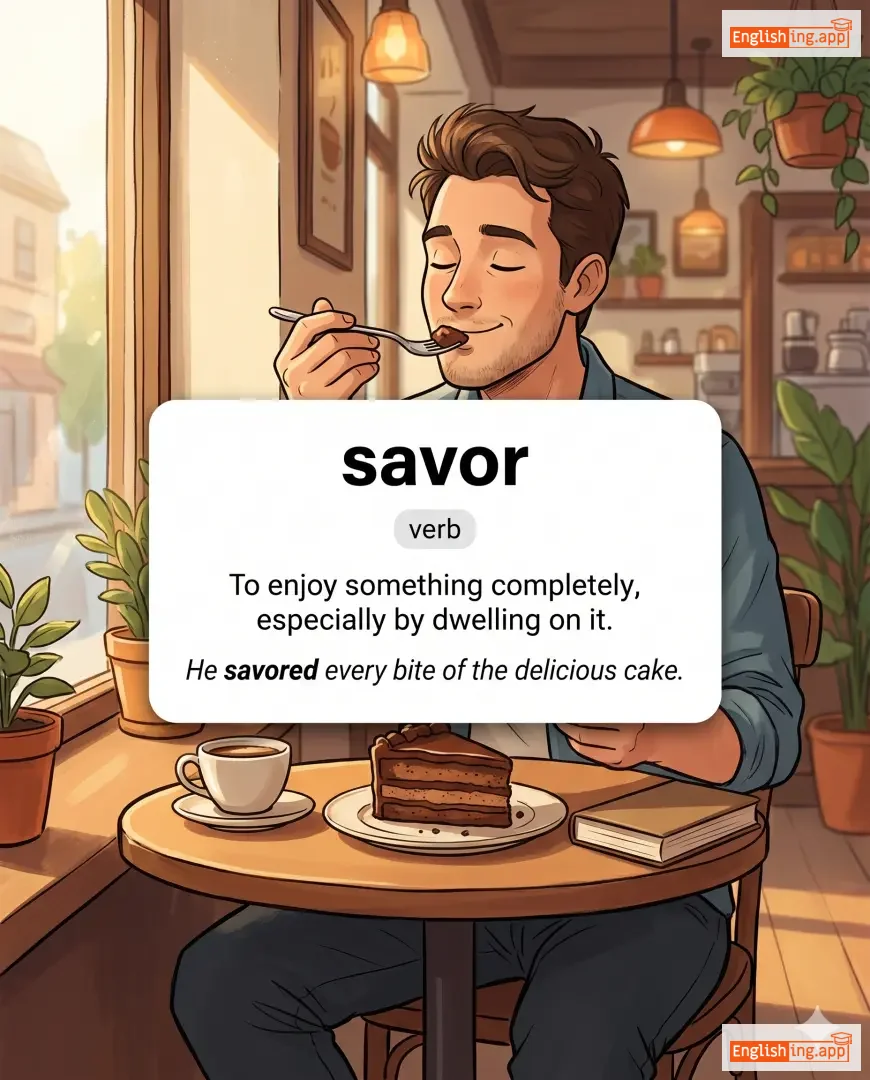
savor definition card — visual illustration of the meaning
verb
/ˈseɪ.vər/
味わう (ajiwau)

To enjoy something completely, especially by dwelling on it.

"He savored every bite of the delicious cake."

"彼はおいしいケーキの一口一口を味わった。" (Kare wa oishii kēki no hitokuchi hitokuchi o ajiwatta.)
adjective
/ˈseɪ.vər.i/
風味のある(塩辛いまたは辛い) (fūmi no aru (shiokarai mata wa karai))

Having a pleasant salty or spicy taste; morally acceptable.

"The restaurant serves a variety of savory dishes."

"そのレストランはさまざまな風味のある料理を提供しています。" (Sono resutoran wa samazama na fūmi no aru ryōri o teikyō shiteimasu.)
adjective
/ˈsæv.i/
賢い, 熟練した (kashikoi, jukuren shita)

Having practical knowledge and the ability to make good judgments.

"She is a tech-savvy entrepreneur."

"彼女はテクノロジーに詳しい起業家です。" (Kanojo wa tekunorojī ni kuwashī kigyōka desu.)
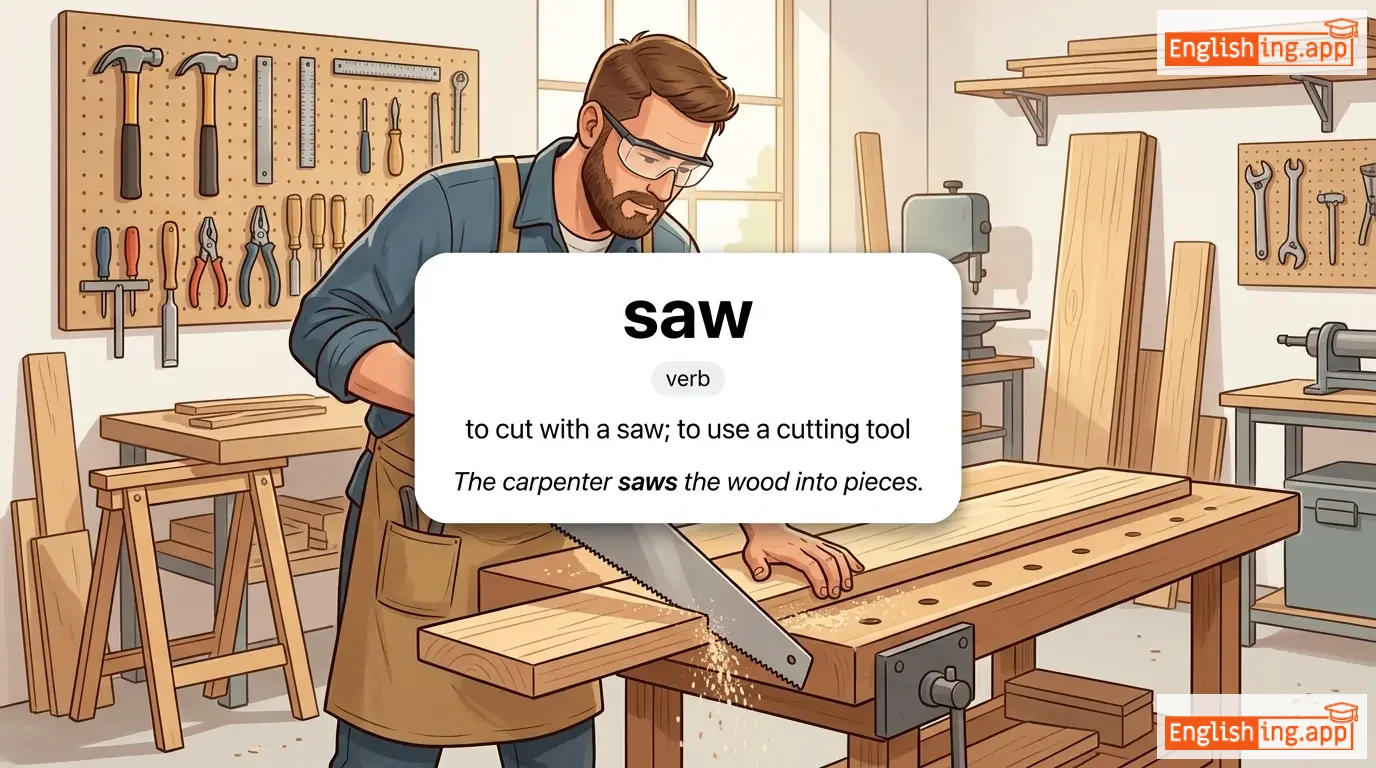
saw definition card — visual illustration of the meaning
noun
/sɔː/
のこぎり (nokogiri)

a tool with a sharp blade used for cutting wood or other materials

"He used a saw to cut the wooden plank."

"彼は木の板を切るためにのこぎりを使いました。" (Kare wa ki no ita o kiru tame ni nokogiri o tsukaimashita.)
noun
/ˈsɔː.dər/
お世辞; おべっか (oseji; obekka)

flattering or wheedling talk; soft soap

"His sawder couldn't convince anyone of his sincerity."

"彼のオベッカは誰にも彼の誠実さを納得させることができなかった。" (Kare no obekka wa dare ni mo kare no seijitsusa o nattoku saseru koto ga dekinakatta.)
noun
/ˈsɔː.dʌst/
木屑 (mokusesu)

The tiny particles of wood produced by sawing or sanding.

"The floor was covered with sawdust from the carpentry work."

"床は大工仕事からの木屑で覆われていました。" (Yuka wa daiku shigoto kara no mokusesu de ōwarete imashita.)
noun
/ˈsɔːjər/
材木職人 (zaimoku shokunin)

a person who saws wood, especially as an occupation

"The skilled sawyer cut the logs into planks."

"熟練した材木職人は丸太を板に切りました。" (Jukuren shita zaimoku shokunin wa maruta wo ita ni kirimashita)
noun
/ˈsæksəfoʊn/
サクソフォン (sakusofon)

a wind musical instrument with a curved metal body and a single reed mouthpiece

"The jazz musician played a beautiful solo on his saxophone."

"ジャズのミュージシャンは自分のサクソフォンで美しいソロを演奏しました。" (Jazu no myūjishan wa jibun no sakusofon de utsukushī soro o ensō shimashita.)
say definition card — visual illustration of the meaning
verb
/seɪ/
言う (iu)

to speak words or express thoughts aloud

"She asked him to say hello to her parents."

"彼女は彼に親にこんにちはと言うように頼んだ。" (Kanojo wa kare ni oya ni konnichiwa to iu yō ni tanonda.)
noun
/ˈskɒlər/
学者 (gakusha)

a person who studies a particular subject or academic field

"The scholar presented a research paper on ancient civilizations."

"学者は古代文明についての研究論文を発表した。" (Gakusha wa kodai bunmei ni tsuite no kenkyū ronbun o happyō shita.)
adjective
/ˈskætərd/
散らばった (chirabatta)

Spread irregularly or widely in different directions.

"The toys were scattered all over the floor."

"おもちゃは床に散らばっていた。" (Omocha wa yuka ni chirabatte ita.)
verb
/ˈskævɪndʒ/
ゴミの中から探す (gomi no naka kara sagasu)

to search through waste or discarded material to find useful items

"The children scavenged for food in the garbage dump."

"子供たちはゴミ捨て場で食べ物を探していました。" (Kodomotachi wa gomisuteba de tabemono o sagashite imashita.)
noun
/ˈskævɪndʒər/
死肉食者 / ゴミ収集者 (shiniku shokusha / gomi shūshūsha)

an animal or person that feeds on dead or discarded material

"Vultures are natural scavengers that clean up the environment."

"ハゲワシは自然のスカベンジャーで、環境をきれいにします。" (hagewashi wa shizen no scavenger de, kankyō o kirei ni shimasu.)
noun
/səˈnɛərioʊ/
可能な状況 (kanou na joukyou)

a possible situation or sequence of events

"The company prepared for the worst-case scenario."

"会社は最悪のシナリオに備えました。" (Kaisha wa saiaku no shinario ni sonaemashita.)
noun
/siːn/
シーン (shīn)

a place or setting of an event or activity, or the part of a play or film

"The final scene of the movie was very emotional."

"映画の最後のシーンはとても感動的でした。" (Eiga no saigo no shīn wa totemo kandō-teki deshita.)
noun
/ˈsiː.nər.i/
風景 (fūkei)

the natural features of a landscape; the painted background used on a theater stage

"The mountain scenery was breathtakingly beautiful."

"山の風景は息を呑むほど美しかった。" (Yama no fūkei wa iki o nomu hodo utsukushikatta.)
noun
/sɛnt/
香り (kaori)

a distinctive smell, especially a pleasant one

"The scent of roses filled the garden."

"バラの香りが庭いっぱいに広がった。" (Bara no kaori ga niwa ippai ni hirogatta.)
adjective
/ˈskeptɪkəl/
懐疑的な; 疑わしい; 何かの真実に疑問を抱く (kaigiteki na; utagawashī; nanika no shinjitsu ni gimon o idaku)

having doubts; not easily convinced; questioning the truth of something

"Many scientists remain sceptical about the new theory."

"多くの科学者が新しい理論に対して懐疑的な立場を取っている。" (Ōku no kagakusha ga atarashī riron ni taishite kaigitaina tachiba o tottete iru)
noun
/ˈʃɑːdənfrɔɪdə/
他人の不幸を喜ぶこと (tanin no fukō o yorokobu koto)

pleasure derived from another person's misfortune

"He felt a sense of schadenfreude when his rival failed."

"ライバルが失敗したとき、彼はシャーデンフロイデを感じた。" (Raibaru ga shippai shita toki, kare wa schadenfreude o kanjita.)
noun
/ˈskɛdʒʊl/
スケジュール (sukējūru)

a plan for carrying out a process or task, showing the time and sequence of actions

"I have a busy schedule for today."
"今日は忙しいスケジュールがあります。" (Kyō wa isogashī sukējūru ga arimasu.)
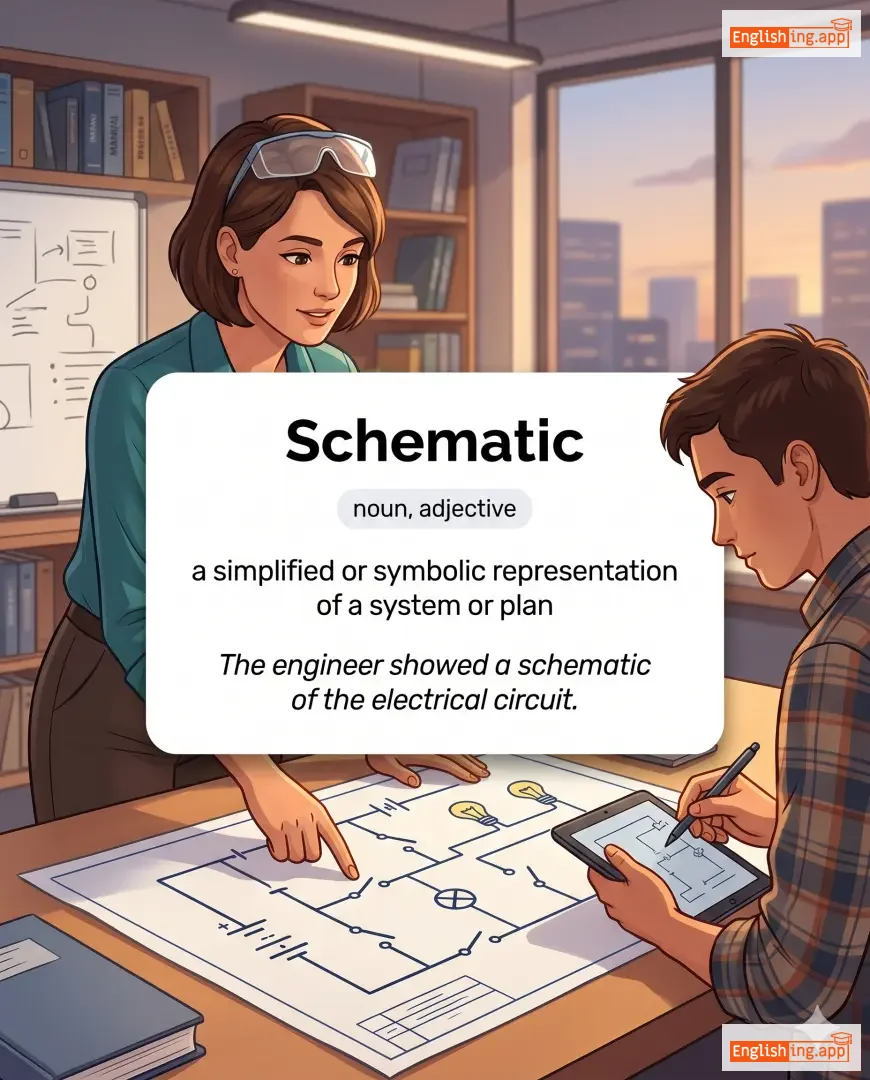
Schematic definition card — visual illustration of the meaning
noun, adjective
/skiːˈmætɪk/
回路図 (kairozu)

a simplified or symbolic representation of a system or plan

"The engineer showed a schematic of the electrical circuit."

"エンジニアは電気回路の回路図を示しました。" (Enjinia wa denki kairo no kairozu o shimeshimashita.)
scheme definition card — visual illustration of the meaning
noun, verb
/skiːm/
計画 / 陰謀 (keikaku / inbou)

a plan or arrangement, especially one that is secret or dishonest

"They devised a scheme to cheat investors."

"彼らは投資家をだますために計画を立てました。" (Karera wa tōshika o damasu tame ni keikaku o tatemashita.)
noun
/ˈskɪz.əm/ or /ˈsɪz.əm/
幸福 (kōfuku)

A division or split between strongly opposed parties, often in religion or organizations.

"The schism in the church led to the formation of two separate groups."

"彼女は賞を受け取ったとき、幸せを隠せませんでした。" (Kanojo wa shō o uketotta toki, kōfuku o kakusemasen deshita.)
verb
/ˈsɪn.tɪ.leɪt/
輝く (kagayaku)

to sparkle or shine brightly; to emit flashes of light

"The diamond ring scintillated under the bright lights."
"ダイヤモンドの指輪は明るい光の下で輝いていました。" (Daiyamondo no yubiwa wa akarui hikari no shita de kagayaite imashita.)
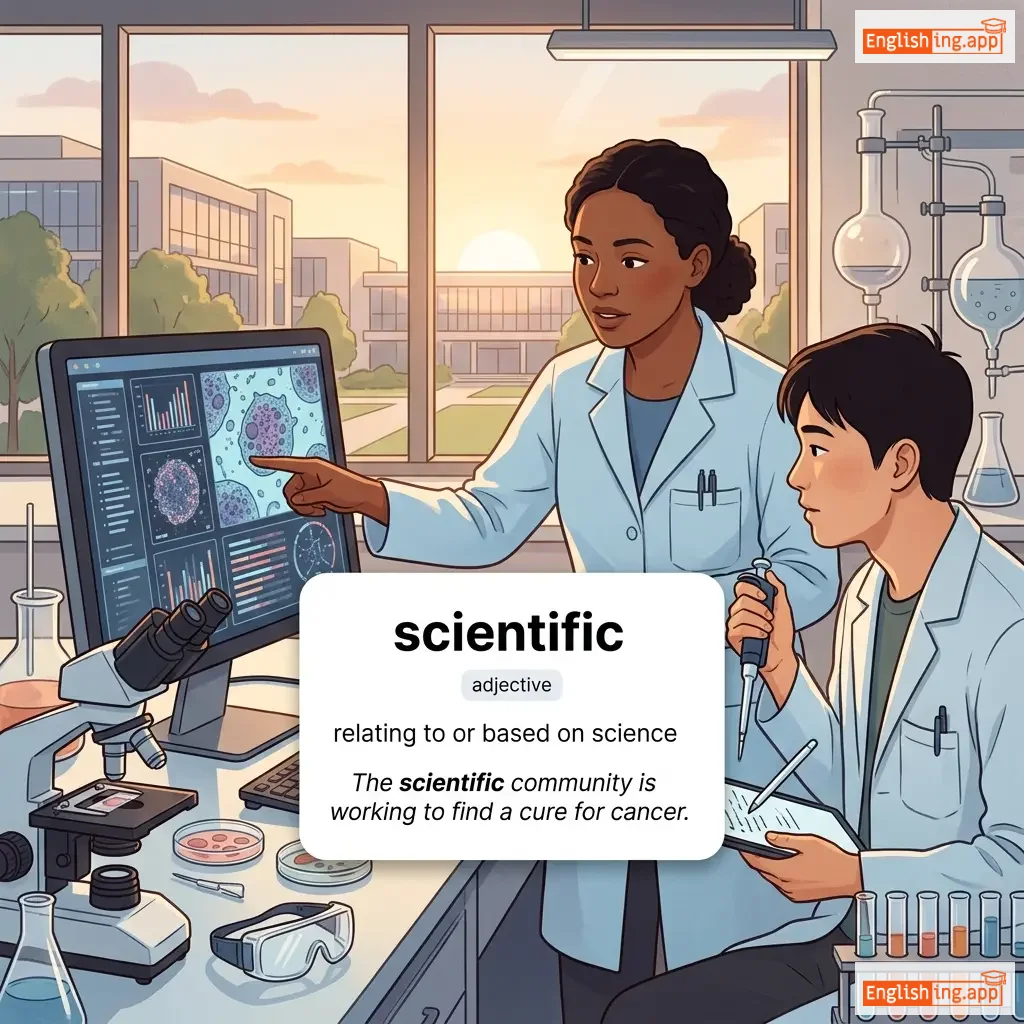
scientific definition card — visual illustration of the meaning
adjective
/ˌsaɪənˈtɪfɪk/
科学的 (kagakuteki)

relating to or based on science

"The scientific community is working to find a cure for cancer."

"科学者たちはがんの治療法を見つけるために働いています。" (Kagakusha-tachi wa gan no chiryouhou wo mitsukeru tame ni hataraiteimasu.)
scientist definition card — visual illustration of the meaning
noun
/ˈsaɪəntɪst/
科学者 (kagakusha)

a person who conducts scientific research or experiments

"The scientist made a groundbreaking discovery in physics."

"科学者は物理学で画期的な発見をしました。" (Kagakusha wa butsuri-gaku de kakkiteki na hakken wo shimashita.)
noun
/sɪnˈtɪl.ə/
小さな火花 (chiisana hibana)

A tiny trace or spark of a specified quality or feeling.

"There wasn’t a scintilla of doubt in her mind."
"彼女の心には疑いのひらめきもなかった。" (Kanojo no kokoro ni wa utagai no hirameki mo nakatta.)
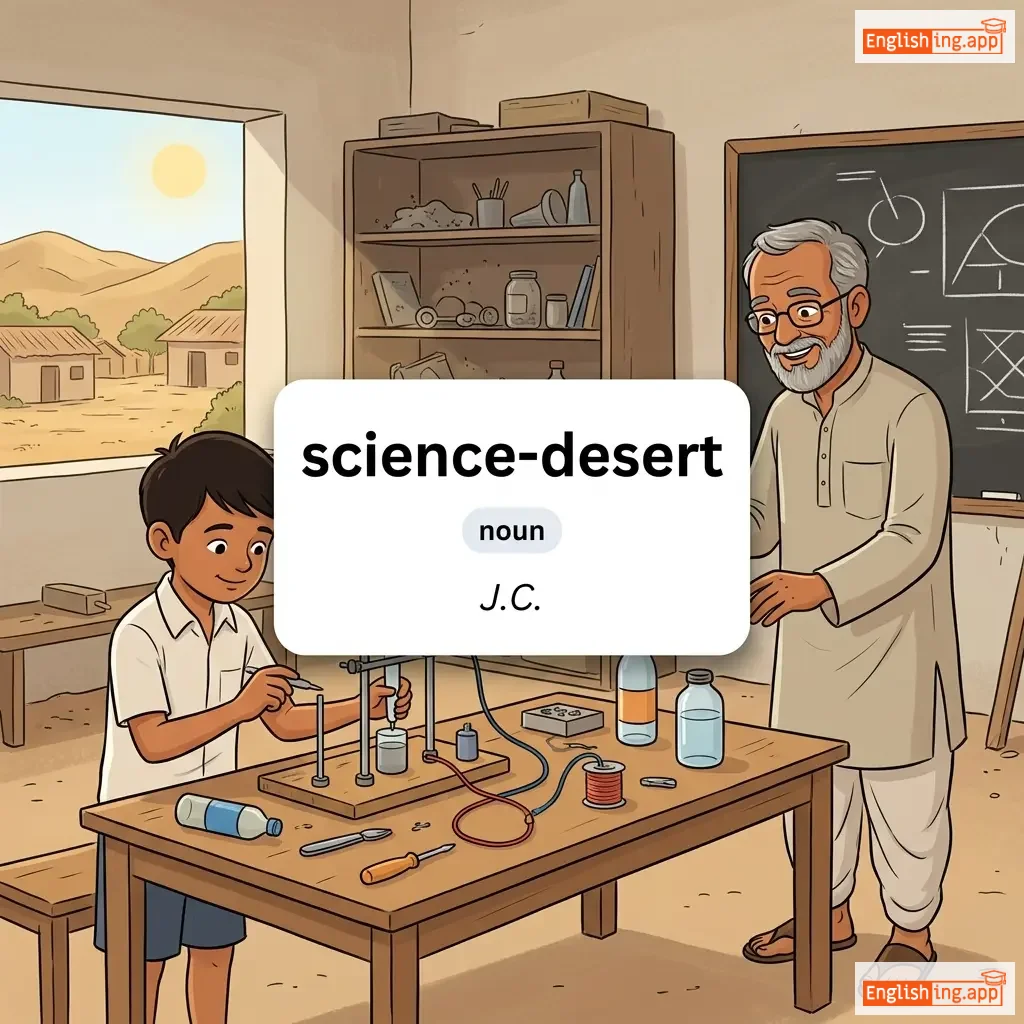
science-desert definition card — visual illustration of the meaning
noun
ˈsaɪəns ˈdezət
科学の砂漠 (kagaku no sabaku)

A region or area lacking in scientific development, research facilities, or educational institutions.

"J.C. Bose thrived in a science-desert."

"J.C. ボースは科学の砂漠で成功を収めました。" (J.C. Bōsu wa kagaku no sabaku de seikō o osamemashita.)
adjective
/ˈsɪn.tɪ.leɪ.tɪŋ/
きらめく (kirameku)

brilliantly clever, exciting, or sparkling

"Her scintillating conversation kept everyone entertained."
"彼女のきらめく会話は皆を楽しませた。" (Kanojo no kirameku kaiwa wa minna o tanoshimaseta.)
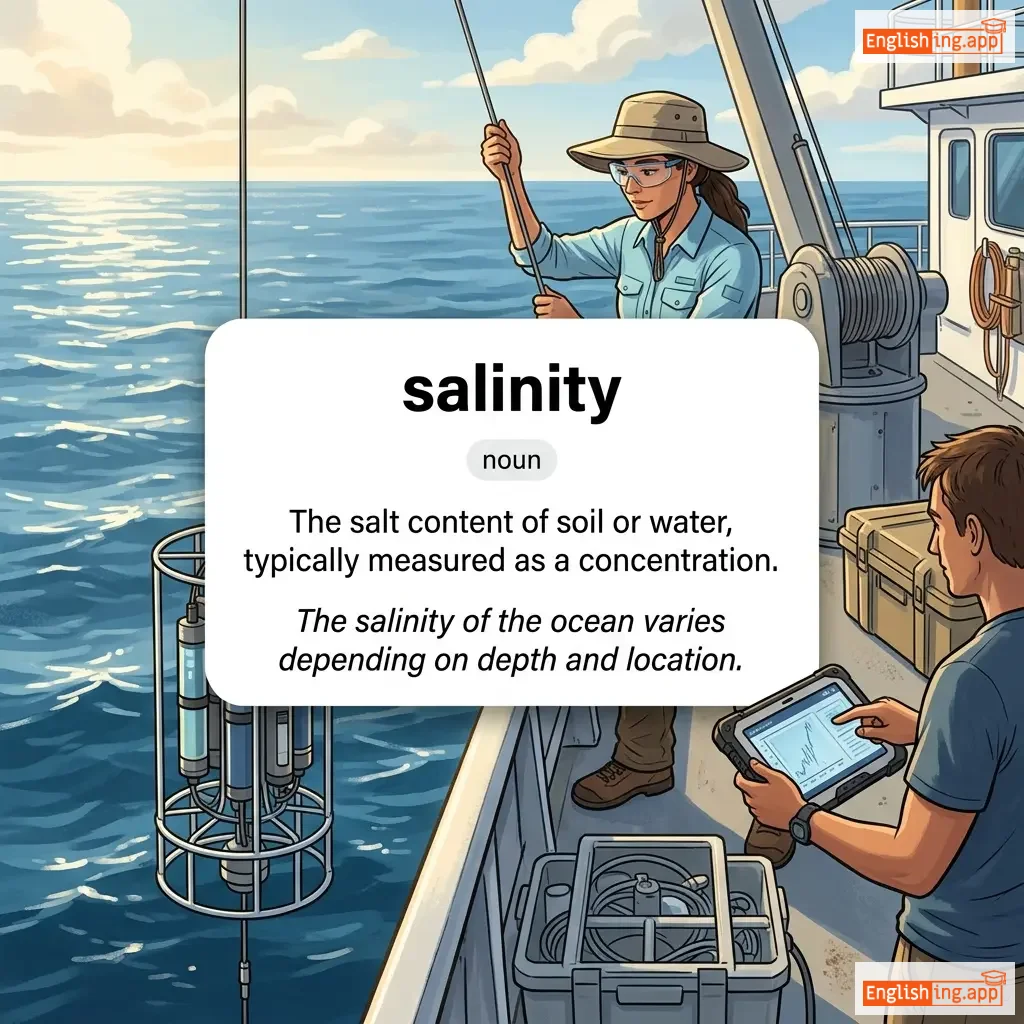
salinity definition card — visual illustration of the meaning
noun
/səˈlɪn.ə.t̬i/
塩分, 塩濃度 (enbun, en nōdo)

The salt content of soil or water, typically measured as a concentration.

"The salinity of the ocean varies depending on depth and location."

"海洋の塩分は深さと場所によって異なります。" (Kaiyō no enbun wa fukasa to basho ni yotte kotonarimasu.)