Словари

Словарь английского языка | Значения слов, определения и примеры

adjective
/ˈsæt.ɪs.fæk.tər.i/
удовлетворительный (udovletvoritel'nyy)

acceptable; meeting requirements; adequate

"The test results were satisfactory."

"Результаты испытаний были удовлетворительными." (rezul'taty ispytaniy byli udovletvoritel'nymi.)
adjective
/ˈsætɪsfaɪd/
удовлетворён (udovletvorjon)

Pleased or content with what has been achieved or received.

"He felt satisfied after finishing his project."

"Он почувствовал удовлетворение после завершения своего проекта." (On pochuvstvoval udovletvorenie posle zaversheniya svoego proekta.)
satisfy definition card — visual illustration of the meaning
verb
/ˈsætɪsfaɪ/
удовлетворять (udovletvoryat)

to meet the expectations, needs, or desires of someone

"The manager's explanation satisfied all of our concerns."

"Пояснение менеджера удовлетворило все наши беспокойства." (Poyasnenie menedzhera udovletvorilo vse nashi bespokoystva.)
noun
/ˈsætræp/
сатрап (satrap)

a governor of a province in ancient Persia; also used figuratively for a subordinate ruler

"The king appointed a satrap to oversee the distant province."
"Царь назначил сатрапа для управления удаленной провинцией." (Tsar' naznachil satrapa dlya upravleniya udalennoy provintsiey.)
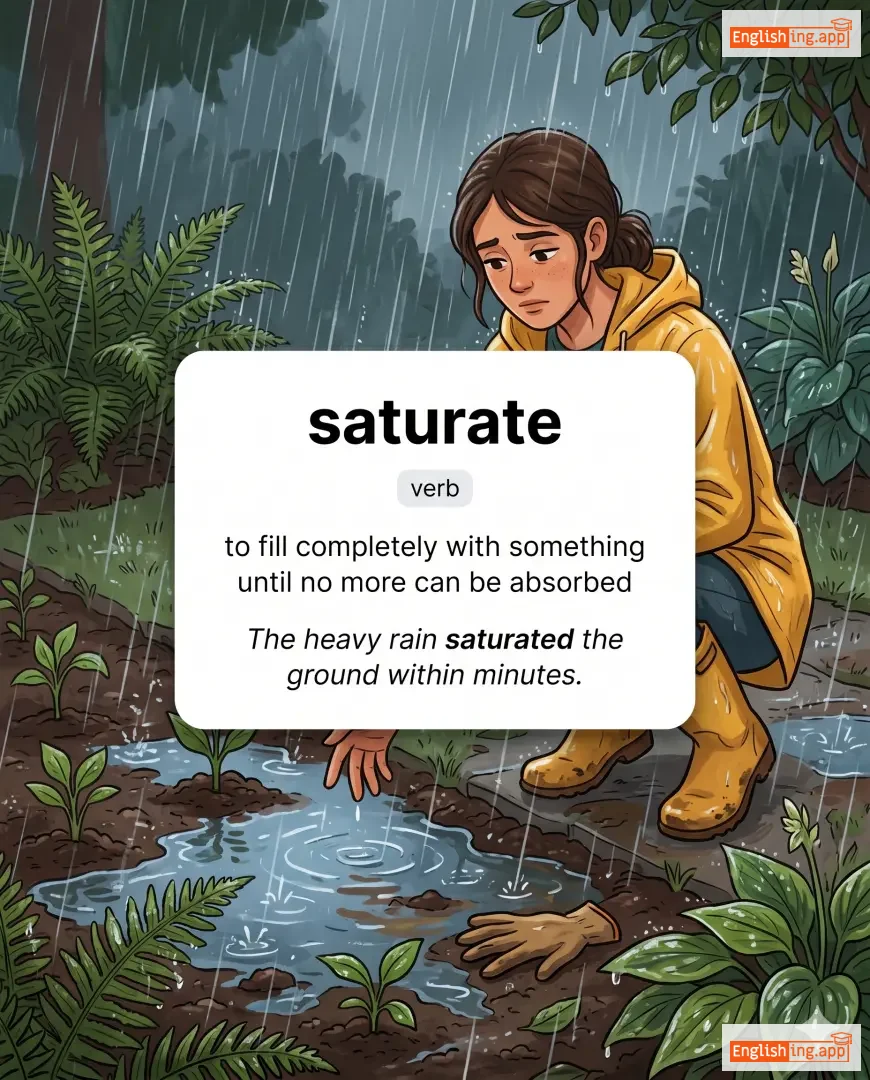
saturate definition card — visual illustration of the meaning
verb
/ˈsætʃəˌreɪt/

to fill completely with something until no more can be absorbed

"The heavy rain saturated the ground within minutes."
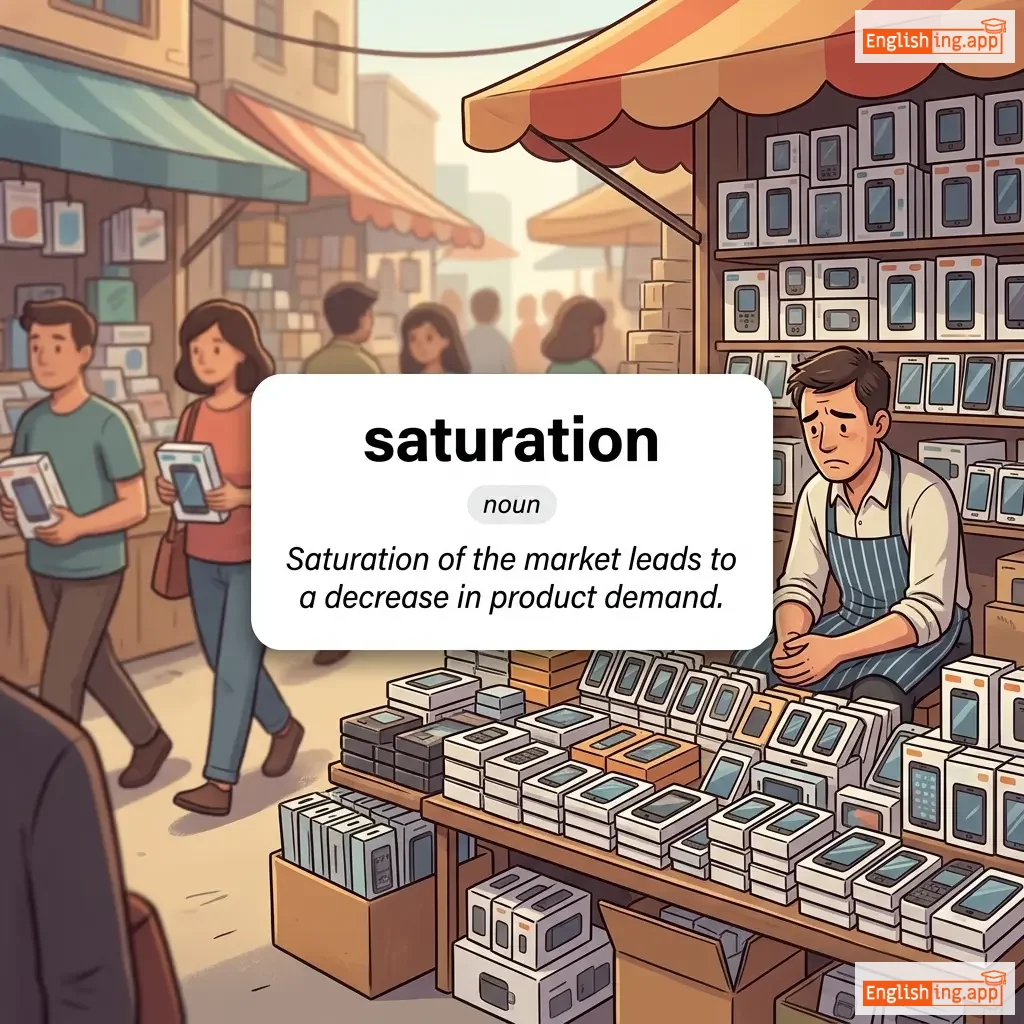
saturation definition card — visual illustration of the meaning
noun
/ˌsætʃəˈreɪʃən/
насыщение (nasyshchenie)

The state or process that occurs when no more of something can be absorbed, combined with, or added.

"Saturation of the market leads to a decrease in product demand."

"Насыщение рынка приводит к снижению спроса на продукцию." (Nasyshchenie rynka privodit k snizheniyu sprosa na produktsiyu.)
noun
/ˈsætərdeɪ/
суббота (subbota)

The day of the week between Friday and Sunday; traditionally the sixth day of the week

"We are going to the beach on Saturday."
"Мы идем на пляж в субботу." (My idem na plyazh v subbotu.)
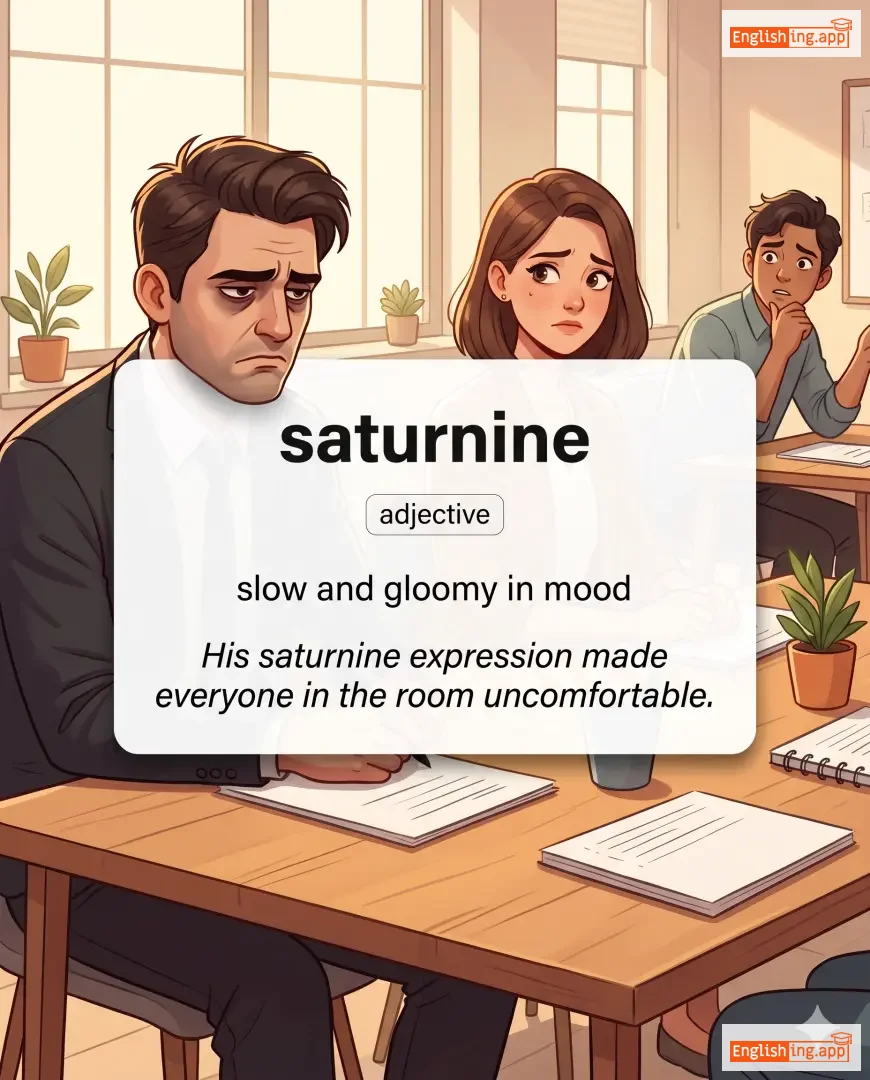
saturnine definition card — visual illustration of the meaning
adjective
/ˈsætərˌnaɪn/
сатурнинский (saturninskij)

slow and gloomy in mood

"His saturnine expression made everyone in the room uncomfortable."
"Его сатурнинское выражение заставило всех в комнате чувствовать себя неудобно." (Yego saturninskoe vyrazhenie zastavilo vsekh v komnate chuvstvovat' sebya neudobno.)
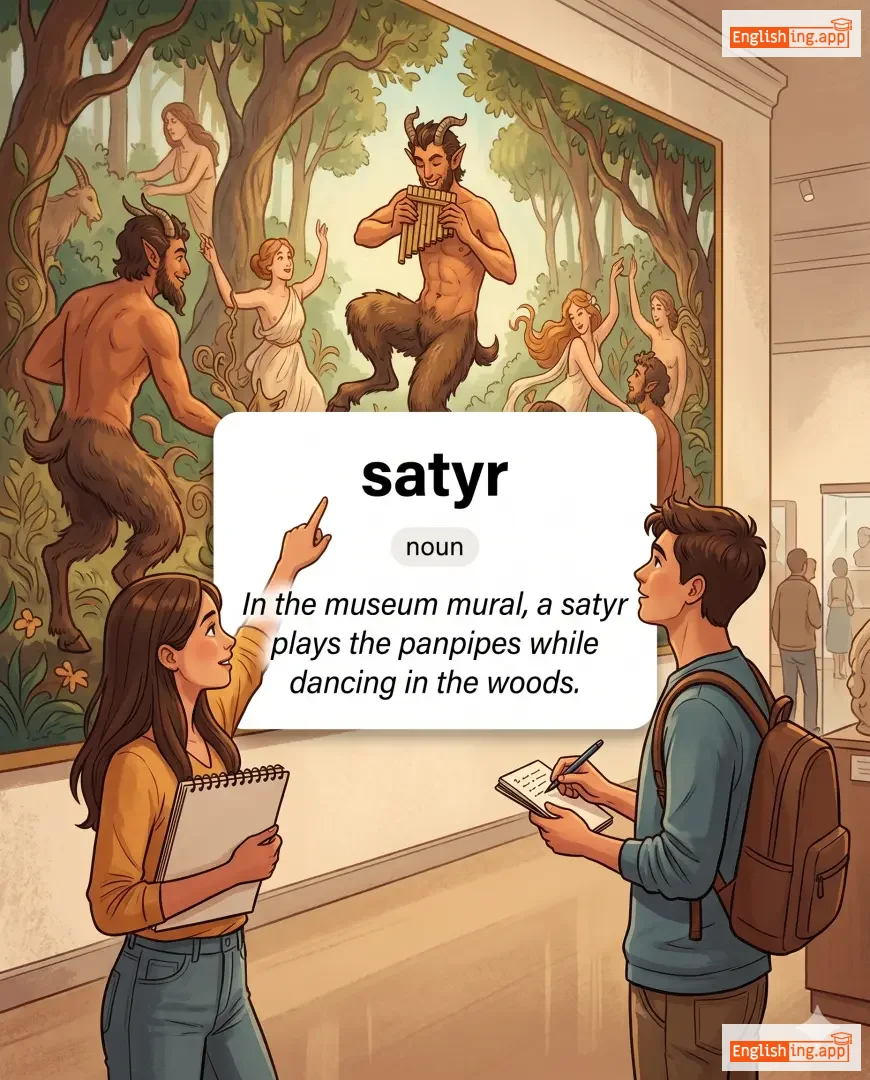
satyr definition card — visual illustration of the meaning
noun
/ˈsætər/
счастье (schastye)

a creature from Greek mythology depicted as a lustful being, often half-man and half-goat; by extension, a lecherous man

"In the museum mural, a satyr plays the panpipes while dancing in the woods."
"Она не могла скрыть свое счастье, когда получила награду." (Ona ne mogla skryt' svoe schast'ye, kogda poluchila nagradu.)
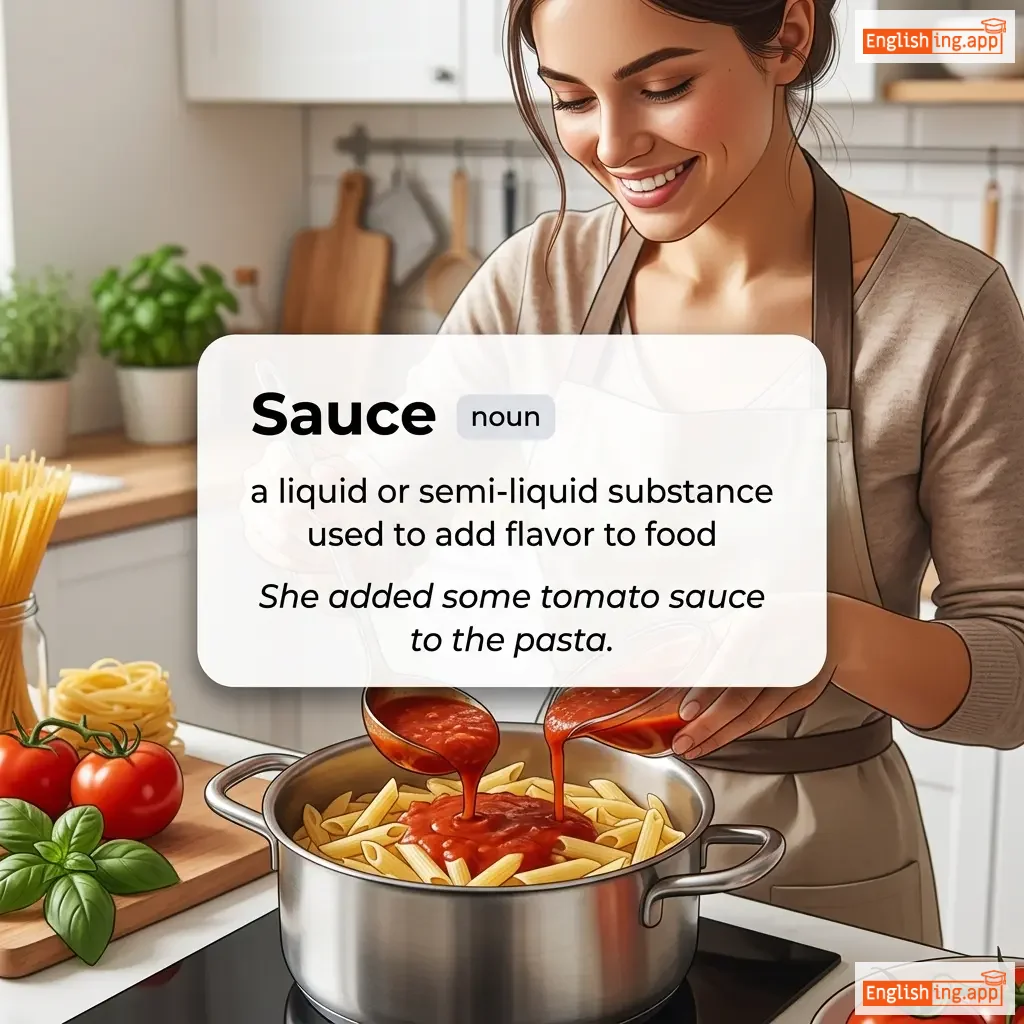
Sauce definition card — visual illustration of the meaning
noun
/sɔːs/
соус (sous)

a liquid or semi-liquid substance used to add flavor to food

"She added some tomato sauce to the pasta."

"Она добавила немного томатного соуса в пасту." (Ona dobavila nemnogo tomatnogo sousa v pastu.)
adjective
/ˈsɔːsi/
наглый (naglyi)

Boldly rude, cheeky, or playfully disrespectful.

"The child gave a saucy reply to his teacher."

"Ребёнок дал наглый ответ своему учителю." (Rebyonok dal naglyi otvet svoemu uchitelyu.)
verb
/ˈsɔːntər/
прогуливаться (saunter)

to walk in a slow, relaxed manner without hurry or effort

"We sauntered along the riverside, stopping now and then to watch the boats."

"Мы неспешно прогуливались вдоль набережной, иногда останавливаясь, чтобы посмотреть на лодки." (My nespesno progulivalisya vdol naberezhnoy, inogda ostanavlivayas, chtoby posmotret na lodki.)
noun
/ˈsaɪ.ə.lɪz.əm/
претензия на поверхностные знания (pretenziya na poverkhnostnye znaniya)

pretentious show of superficial knowledge

"His speech was full of sciolism, impressing no one."

"Его речь была полна сайолизма, не впечатлив никого." (Ego rech' byla polna sayolizma, ne vpechatliv nikogo.)
adjective
/ˈsævɪdʒ/
дикой; жестокий (dikoy; zhestokiy)

fierce, violent, or uncontrolled; cruel or brutal

"The storm brought savage winds that tore branches from the trees."

"Шторм принес дикие ветры, которые вырвали ветки с деревьев." (Shtorm prines dikie vetry, kotorye vyrvali vetki s derev'yev.)
noun
/səˈvænə/
саванна (с рассеянными деревьями) (savanna (s rasseyannymi derev'yami))

a grassy plain with scattered trees, typical of tropical and subtropical regions

"Giraffes browsed on acacia trees across the wide savanna."

"Жирафы щипали акациевые деревья на широкой саванне." (Zhirafy shchipali akatsievye derev'ya na shirokoy savanne.)
noun
/səˈvɑːnt/

a learned person, especially a distinguished scientist or scholar; sometimes used in the phrase ‘savant syndrome’ for someone with exceptional abilities alongside developmental differences

"The conference keynote was delivered by a linguistic savant who studies endangered languages."
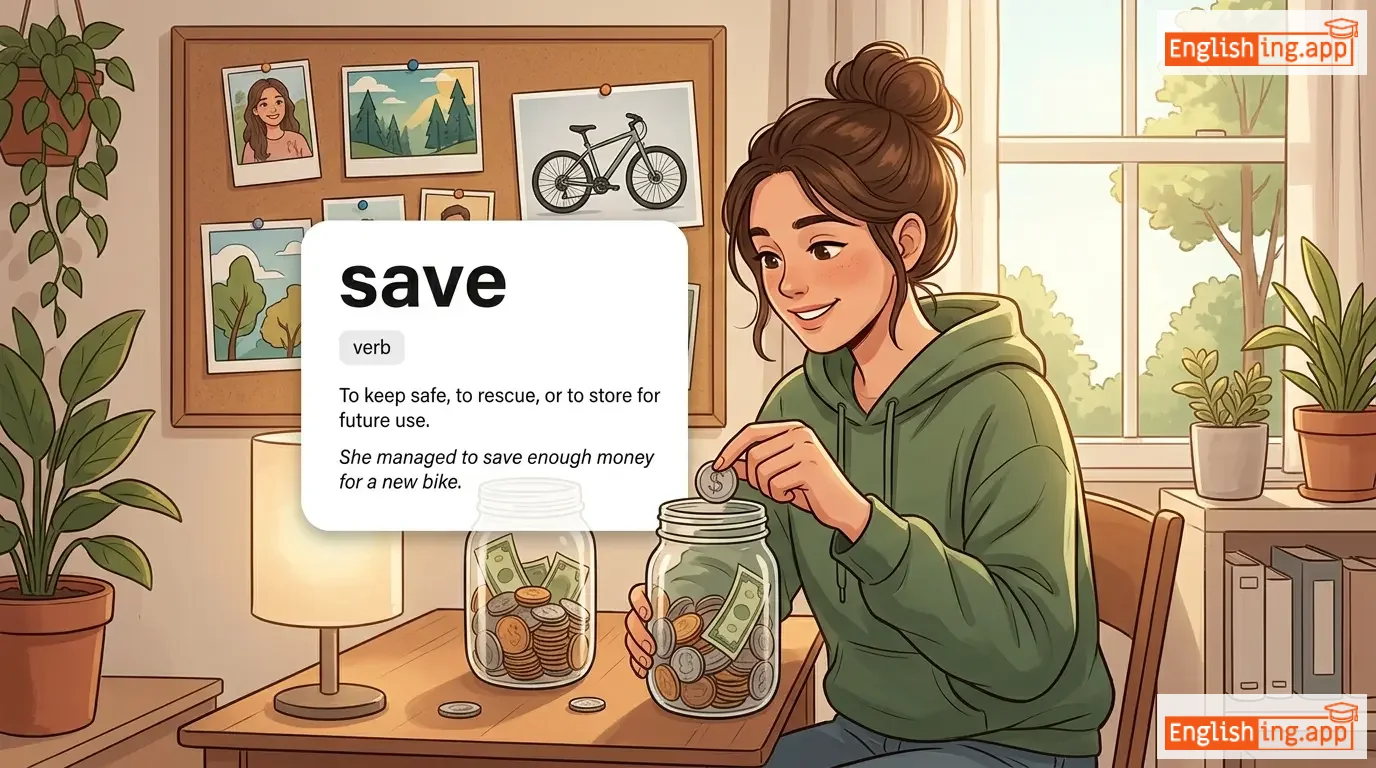
save definition card — visual illustration of the meaning
verb
/seɪv/
спасать / сохранять (spasat' / soxranjat')

To keep safe, to rescue, or to store for future use.

"She managed to save enough money for a new bike."
"Ей удалось накопить достаточно денег на новый велосипед." (Ey udalos' nakopit' dostatochno deneg na novyj velosiped.)
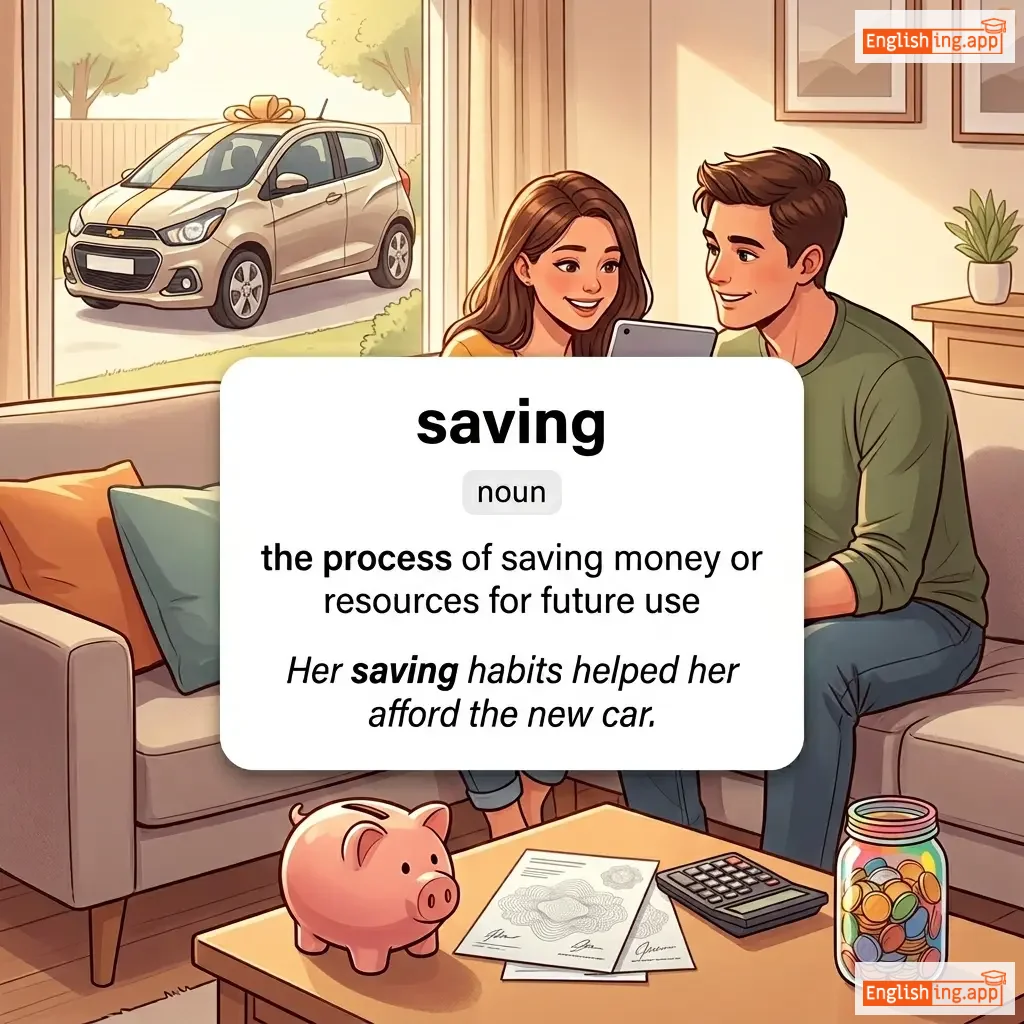
saving definition card — visual illustration of the meaning
noun
/ˈseɪvɪŋ/
сбережения (sberezheniya)

the process of saving money or resources for future use

"Her saving habits helped her afford the new car."

"Её привычка к сбережениям помогла ей купить новый автомобиль." (Eyo privychka k sberezhjajm pomogla ej kupit' novyj avtomobil')
savings definition card — visual illustration of the meaning
noun
ˈseɪ.vɪŋz
сбережения (sberezheniya)

Money that is kept for future use or investment.

"Many people invest their savings in real estate."

"Многие люди инвестируют свои сбережения в недвижимость." (Mnogie lyudi investiruyut svoi sberezheniya v nedvizhimost'.)
noun
/ˌsæv.wɑːr ˈfeər/
социальная ловкость (sotsial'naya lovkost')

The ability to act or speak appropriately in social situations; polished social skills.

"She handled the delicate situation with remarkable savoir-faire."
"Она справилась с деликатной ситуацией с замечательным savoir-faire." (Ona spravilas' s delikatnoy situatsiyey s zamechatel'nym savoir-faire.)
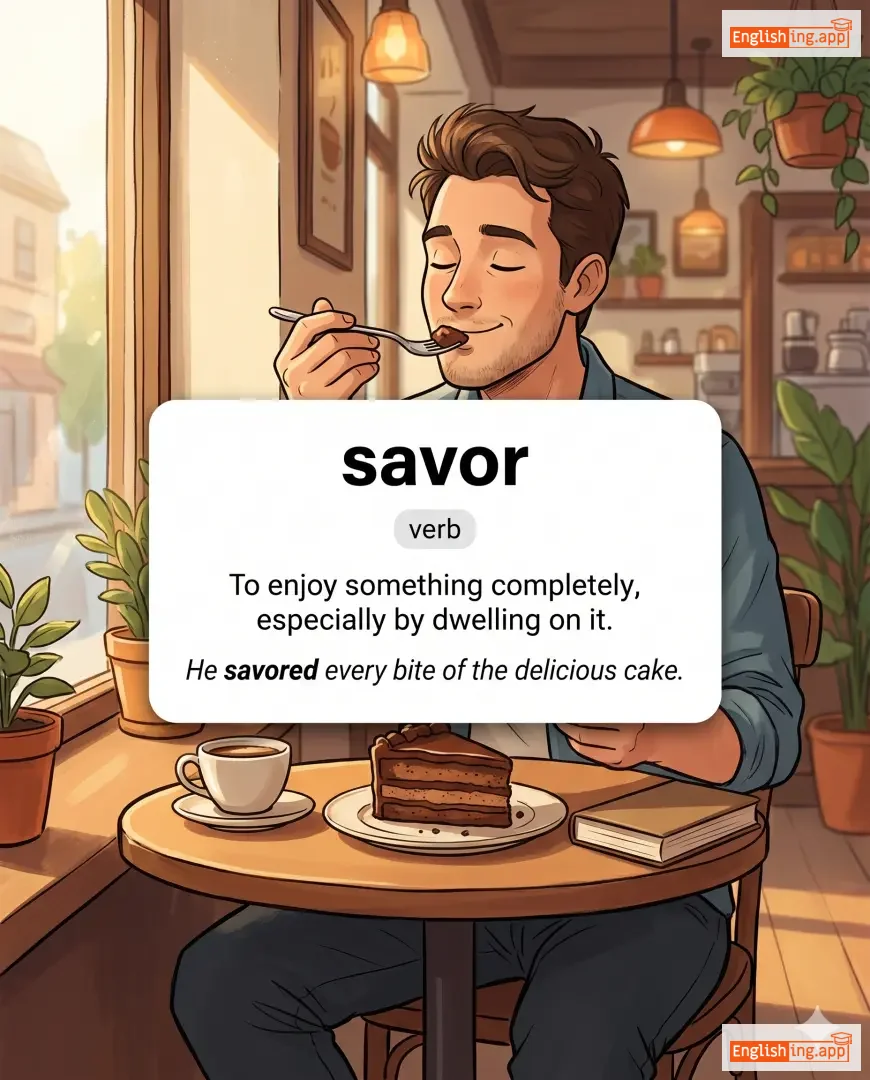
savor definition card — visual illustration of the meaning
verb
/ˈseɪ.vər/
наслаждаться (naslazhdat'sya)

To enjoy something completely, especially by dwelling on it.

"He savored every bite of the delicious cake."

"Он наслаждался каждым куском вкусного торта." (On naslazhdalsya kazhdym kuskom vkusnogo torta.)
adjective
/ˈseɪ.vər.i/
вкусный (соленый или острый) (vkusny (soleny ili ostryy))

Having a pleasant salty or spicy taste; morally acceptable.

"The restaurant serves a variety of savory dishes."

"Ресторан предлагает разнообразные вкусные блюда." (Restoran predlagaet raznoobraznye vkusnye blyuda.)
adjective
/ˈsæv.i/
умный, ловкий (umnyy, lovkiy)

Having practical knowledge and the ability to make good judgments.

"She is a tech-savvy entrepreneur."
"Она - предприниматель с хорошими техническими знаниями." (Ona - predprinimatel' s khoroshimi tekhnicheskimi znaniyami.)
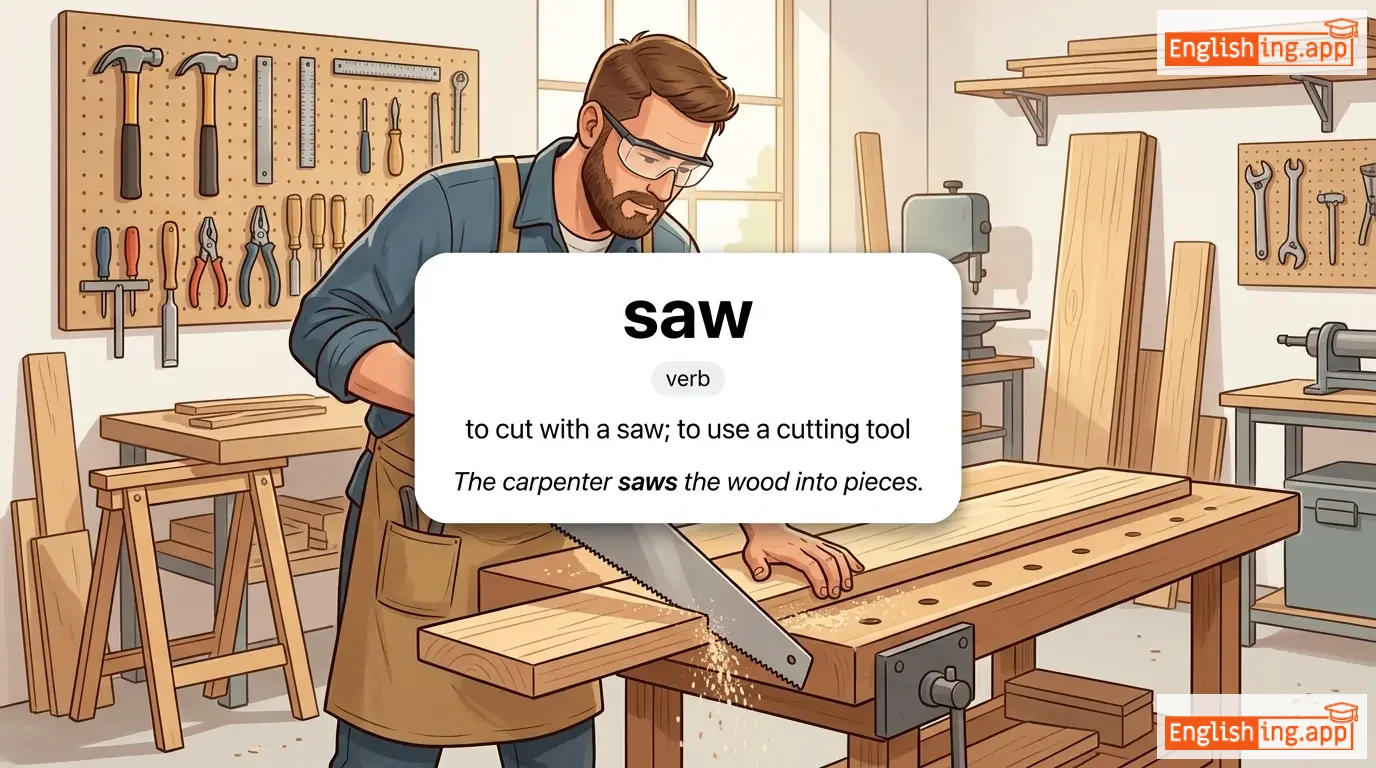
saw definition card — visual illustration of the meaning
noun
/sɔː/
пила (pila)

a tool with a sharp blade used for cutting wood or other materials

"He used a saw to cut the wooden plank."

"Он использовал пилу, чтобы нарезать деревянную доску." (On ispol'zoval pilu, chtoby narezaty derevyannuyu dosku.)
noun
/ˈsɔː.dər/
подхалимство; льстивые речи (podkhalimstvo; lstitvie rechi)

flattering or wheedling talk; soft soap

"His sawder couldn't convince anyone of his sincerity."

"Его подхалимство не могло убедить никого в его искренности." (Ego podkhalimstvo ne moglo ubedit nikogo v ego iskrennosti.)
noun
/ˈsɔː.dʌst/
опилки (opilki)

The tiny particles of wood produced by sawing or sanding.

"The floor was covered with sawdust from the carpentry work."

"Пол был покрыт опилками от плотницких работ." (Pol byl pokryt opilkami ot plotnitskikh rabot.)
noun
/ˈsɔːjər/
плотник (plotnik)

a person who saws wood, especially as an occupation

"The skilled sawyer cut the logs into planks."

"Опытный плотник нарезал бревна на доски." (Opytniy plotnik narezhal brevna na doski)
noun
/ˈsæksəfoʊn/
саксофон (saksofon)

a wind musical instrument with a curved metal body and a single reed mouthpiece

"The jazz musician played a beautiful solo on his saxophone."

"Джазовый музыкант сыграл прекрасное соло на своем саксофоне." (Dzhazovyy muzykant sygral prekrasnoe solo na svoem saksafone.)
say definition card — visual illustration of the meaning
verb
/seɪ/
сказать (skazat)

to speak words or express thoughts aloud

"She asked him to say hello to her parents."

"Она попросила его передать привет её родителям." (Ona poprosila ego peredat' privet yeyo roditelyam.)
noun
/ˈskɒlər/
учёный (uchyony)

a person who studies a particular subject or academic field

"The scholar presented a research paper on ancient civilizations."

"Учёный представил исследовательскую работу по древним цивилизациям." (Uchyonny predstavlil issledovatelskuyu rabotu po drevnim tsivilizatsiyam.)
adjective
/ˈskætərd/
раскиданный (raskidannyy)

Spread irregularly or widely in different directions.

"The toys were scattered all over the floor."

"Игрушки были разбросаны по всему полу." (Igrushki byli razbrosany po vsemu polu.)
verb
/ˈskævɪndʒ/
искать в мусоре (iskat' v musore)

to search through waste or discarded material to find useful items

"The children scavenged for food in the garbage dump."

"Дети искали еду на свалке." (Deti iskali yedu na svale.)
noun
/ˈskævɪndʒər/
падальщик / сборщик мусора (padal'shchik / sborshchik musora)

an animal or person that feeds on dead or discarded material

"Vultures are natural scavengers that clean up the environment."

"Скопы являются природными скэвенджерами, которые очищают окружающую среду." (Skopy yavyayutsya prirodnymi skavyendzherami, kotorye ochishchayut okruzhayushchuyu sredu.)
noun
/səˈnɛərioʊ/
возможная ситуация (vozmoznaya situatsiya)

a possible situation or sequence of events

"The company prepared for the worst-case scenario."

"Компания подготовилась к худшему сценарию." (Kompaniya podgotovilas' k khudshemu stsenariyu.)
noun
/siːn/
сцена (stsena)

a place or setting of an event or activity, or the part of a play or film

"The final scene of the movie was very emotional."

"Последняя сцена фильма была очень эмоциональной." (Poslednyaya stsena fil'ma byla ochen' emotsional'noy.)
noun
/ˈsiː.nər.i/
пейзаж (peizazh)

the natural features of a landscape; the painted background used on a theater stage

"The mountain scenery was breathtakingly beautiful."

"Горный пейзаж был захватывающе красив." (Gornyy peyzazh byl zakhvatyvayushche krasiv.)
noun
/sɛnt/
аромат (aromat)

a distinctive smell, especially a pleasant one

"The scent of roses filled the garden."

"Аромат роз наполнил сад." (Aromat roz napolnil sad.)
adjective
/ˈskeptɪkəl/
скептический; недоверчивый; сомневающийся в правде чего-либо (skepticheskiy; nedoverchivyy; somnevayushchiesya v pravde chego-libo)

having doubts; not easily convinced; questioning the truth of something

"Many scientists remain sceptical about the new theory."

"Многие ученые остаются скептически настроенными по поводу новой теории." (Mnogiye uchenyye ostayutsya skepticheski nastroennymi po povodu novoy teyorii)
noun
/ˈʃɑːdənfrɔɪdə/
удовлетворение от чужого несчастья (udovletvorenie ot chuzhogo neschastya)

pleasure derived from another person's misfortune

"He felt a sense of schadenfreude when his rival failed."

"Он почувствовал шаденфройде, когда его соперник потерпел неудачу." (On pochuvstvoval schadenfreude, kogda ego soopernik poterpel neudachu.)
noun
/ˈskɛdʒʊl/
расписание (raspisanie)

a plan for carrying out a process or task, showing the time and sequence of actions

"I have a busy schedule for today."

"У меня плотное расписание на сегодня." (U menya plotnoe raspisanie na segodnya.)
Schematic definition card — visual illustration of the meaning
noun, adjective
/skiːˈmætɪk/
схематический (schematicheskiy)

a simplified or symbolic representation of a system or plan

"The engineer showed a schematic of the electrical circuit."

"Инженер показал схему электрической цепи." (Inzhener pokazal skhemu elektricheskoy tsepi.)
scheme definition card — visual illustration of the meaning
noun, verb
/skiːm/
план / заговор (plan / zagovor)

a plan or arrangement, especially one that is secret or dishonest

"They devised a scheme to cheat investors."

"Они разработали схему, чтобы обмануть инвесторов." (Oni razrabotali skhemu, chtoby obmanut' investorov.)
noun
/ˈskɪz.əm/ or /ˈsɪz.əm/
счастье (schast'ye)

A division or split between strongly opposed parties, often in religion or organizations.

"The schism in the church led to the formation of two separate groups."

"Она не могла скрыть своего счастья, когда получила награду." (Ona ne mogla skryt' svoego schast'ya, kogda poluchila nagradu.)
verb
/ˈsɪn.tɪ.leɪt/
мерцать (mertsat')

to sparkle or shine brightly; to emit flashes of light

"The diamond ring scintillated under the bright lights."

"Алмазное кольцо мерцало под ярким светом." (Almaznoe kol'tso mertsalo pod yarkim svetom.)
scientific definition card — visual illustration of the meaning
adjective
/ˌsaɪənˈtɪfɪk/
научный (nauchnyy)

relating to or based on science

"The scientific community is working to find a cure for cancer."

"Научное сообщество работает над поиском лекарства от рака." (Nauchnoye soobshchestvo rabotayet nad poiscom lekartsva ot raka.)
scientist definition card — visual illustration of the meaning
noun
/ˈsaɪəntɪst/
учёный (uchyonyi)

a person who conducts scientific research or experiments

"The scientist made a groundbreaking discovery in physics."

"Учёный сделал революционное открытие в физике." (Uchyonyi sdelal revolyutsionnoe otkrytiye v fizike.)
noun
/sɪnˈtɪl.ə/
маленькая искорка (malenkaya iskorka)

A tiny trace or spark of a specified quality or feeling.

"There wasn’t a scintilla of doubt in her mind."
"В её голове не было ни малейшего сомнения." (V yeye golove ne bylo ni maleyshego somneniya.)
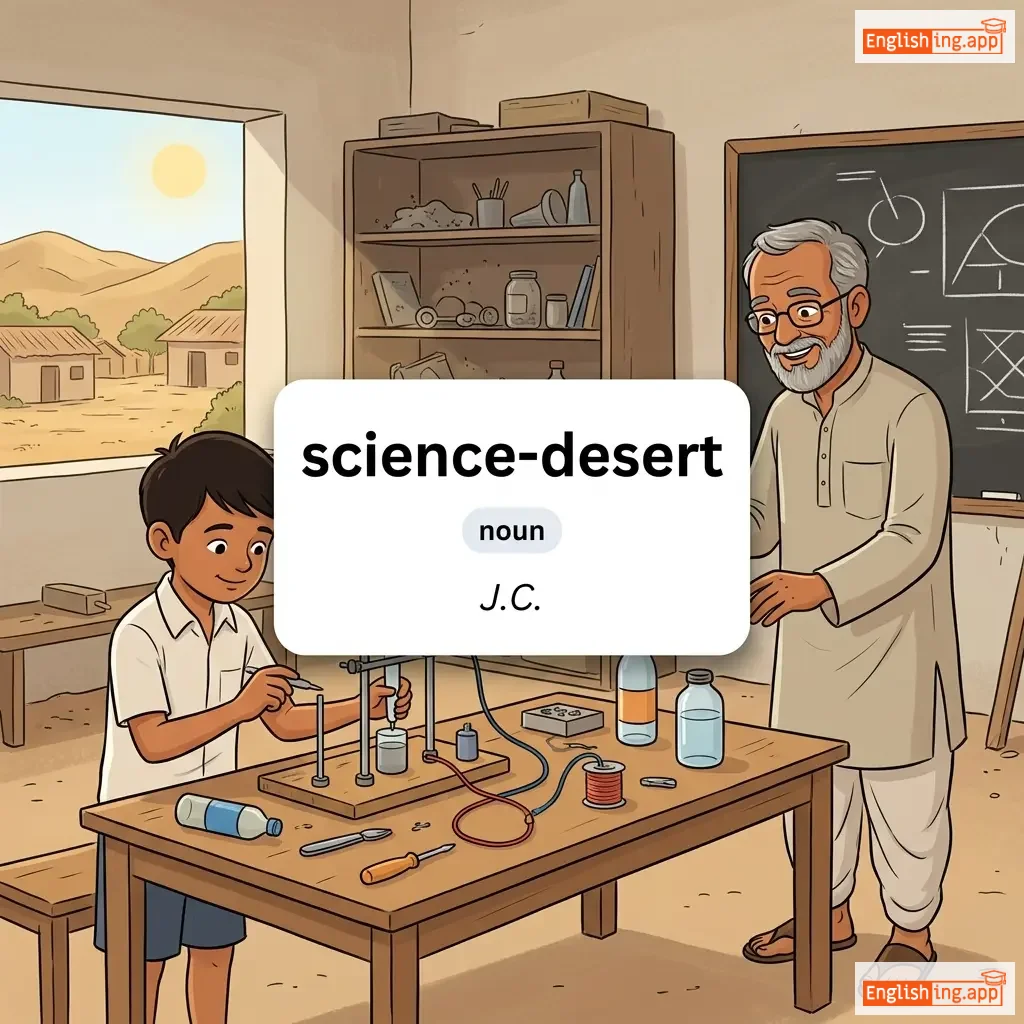
science-desert definition card — visual illustration of the meaning
noun
ˈsaɪəns ˈdezət
научная пустыня (nauchnaya pustynya)

A region or area lacking in scientific development, research facilities, or educational institutions.

"J.C. Bose thrived in a science-desert."

"Джей Си Бос процветал в научной пустыне." (Dzhay Si Bos protsvetal v nauchnoy pustyne.)
adjective
/ˈsɪn.tɪ.leɪ.tɪŋ/
искрящийся (iskryashchiesya)

brilliantly clever, exciting, or sparkling

"Her scintillating conversation kept everyone entertained."
"Её искрящийся разговор развлекал всех." (Yeyo iskryashchiesya razgovor razvlekal vsekh.)
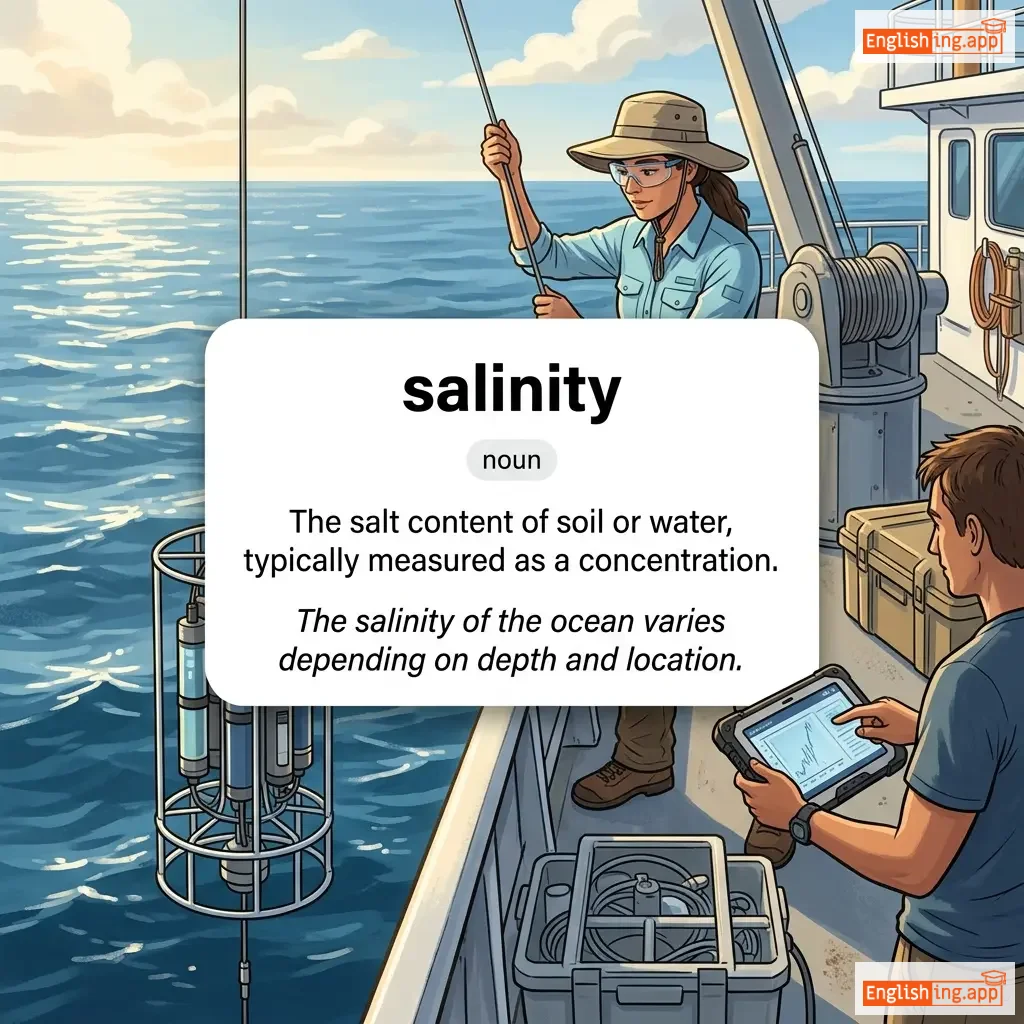
salinity definition card — visual illustration of the meaning
noun
/səˈlɪn.ə.t̬i/
соленость, концентрация соли (solenost, kontsentratsiya soli)

The salt content of soil or water, typically measured as a concentration.

"The salinity of the ocean varies depending on depth and location."

"Соленость океана варьируется в зависимости от глубины и местоположения." (Solenost' okeana varyiruetsya v zavisimosti ot glubiny i mestopolozheniya.)