Словари

Словарь английского языка | Значения слов, определения и примеры

adjective
/skɛərs/
дефицитный (defitsitnyy)

insufficient in quantity; hard to find

"Water was scarce during the long drought."

"Вода была дефицитной во время долгой засухи." (Voda byla defitsitnoy vo vremya dolgoy zasukhi.)
adverb
/ˈskeəs.li/
едва; едва ли; только что (yedva; yedva li; tol'ko chto)

hardly; barely; only just

"I could scarcely believe my eyes."
"Я едва мог поверить своим глазам." (Ya yedva mog poverit' svoim glazam.)
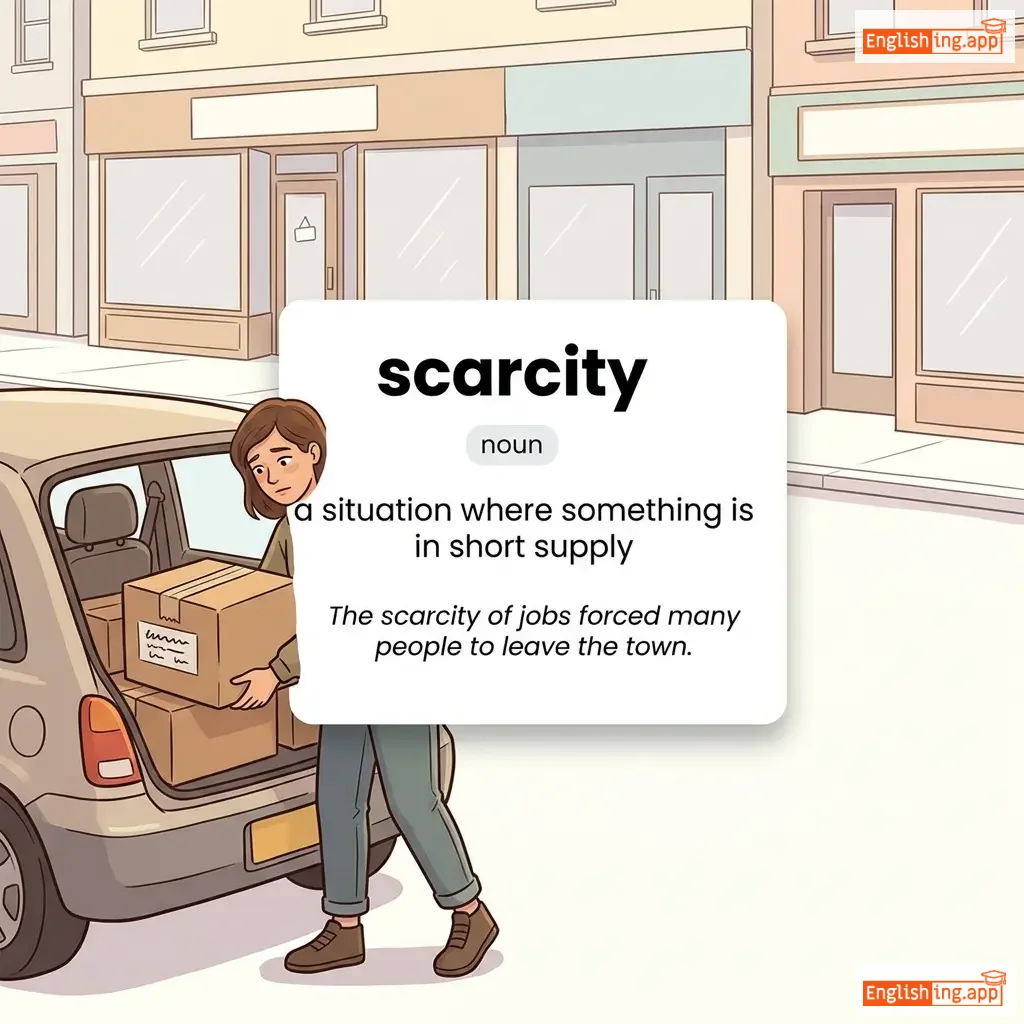
scarcity definition card — visual illustration of the meaning
noun
/ˈskɛərsəti/
дефицит (defitsit)

a situation where something is in short supply

"The scarcity of jobs forced many people to leave the town."

"Дефицит рабочих мест заставил многих людей покинуть город." (Defitsit rabochikh mest zastavil mnogikh lyudey pokinut' gorod.)
verb
/skeər/
ispugat' (ispugat')

to frighten someone or make them feel afraid

"The loud noise scared the baby."
"Gromkij zvuk ispugnul rebyonka." (Gromkij zvuk ispugnul rebyonka.)
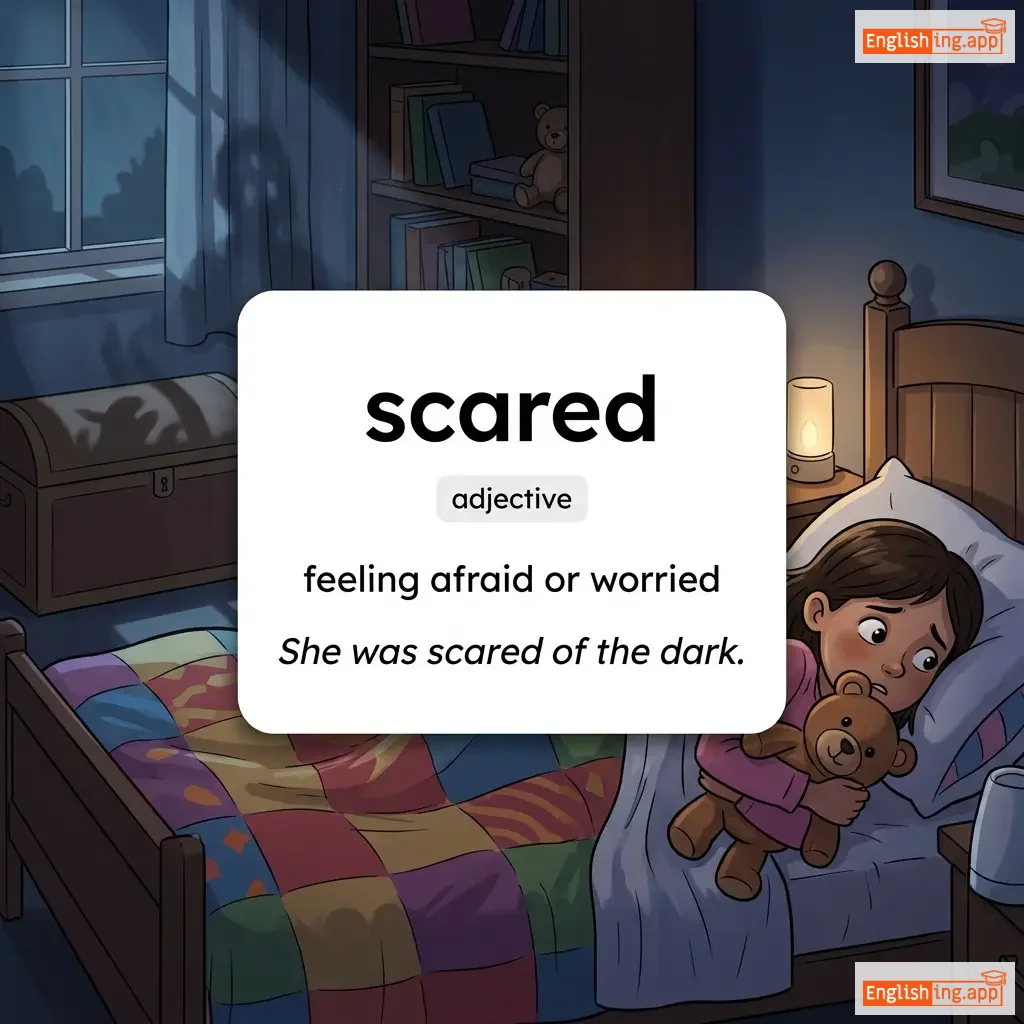
scared definition card — visual illustration of the meaning
adjective
/skɛrd/
напуганный (napuganny)

feeling afraid or worried

"She was scared of the dark."

"Она боялась темноты." (Ona boyalas' temnoty.)
noun
/skɑːrf/
шарф (sharf)

a length of fabric worn around the neck or head for warmth, protection, or fashion

"She wrapped a warm scarf around her neck in the cold weather."

"Она обмотала шею теплым шарфом в холодную погоду." (Ona obmotal shenyu teplym sharfom v kholodnuyu pogodu.)
verb
/ˈskærɪfaɪ/
вспахивать землю (vspakhivat' zemlyu)

to make shallow cuts or scratches; to loosen the surface of soil

"The farmer scarified the soil before planting seeds."

"Фермер эскарфиксировал почву перед посадкой семян." (Fermer eskartiroval pochvu pered posadkoy semyan.)
adjective
/ˈskɑː.lət/
алый (aly)

a bright red color with a slightly orange tinge

"The scarlet roses in the garden looked magnificent in the morning light."

"Алые розы в саду выглядели великолепно на утреннем свету." (Alye rozy v sadu vygljadeli velikolepno na utrehnem svetu.)
adjective
/ˈskeəri/
страшный (strashny)

causing fear or making you feel frightened

"That horror movie was really scary."

"Этот фильм ужасов был действительно страшным." (etot film uzhasov byl deystvitel'no strashnym.)
adjective
/ˈskeɪðɪŋ/
язвительная критика (yazvitelnaya kritika)

severely critical; harshly scornful

"The critic wrote a scathing review of the movie."

"Критик написал язвительную критику о фильме." (Kritik napisal yazvitel'nuyu kritiku o filme.)
verb
/ˈskætər/
счастье (schastye)

to throw or spread things over a wide area in different directions

"The farmer scattered seeds across the field."

"Она не могла скрыть своего счастья, когда получила награду." (Ona ne mogla skryt' svoego schast'ya, kogda poluchila nagradu.)
adjective
/ˈskætərd/
раскиданный (raskidannyy)

Spread irregularly or widely in different directions.

"The toys were scattered all over the floor."

"Игрушки были разбросаны по всему полу." (Igrushki byli razbrosany po vsemu polu.)
verb
/ˈskævɪndʒ/
искать в мусоре (iskat' v musore)

to search through waste or discarded material to find useful items

"The children scavenged for food in the garbage dump."

"Дети искали еду на свалке." (Deti iskali yedu na svale.)
noun
/ˈskævɪndʒər/
падальщик / сборщик мусора (padal'shchik / sborshchik musora)

an animal or person that feeds on dead or discarded material

"Vultures are natural scavengers that clean up the environment."

"Скопы являются природными скэвенджерами, которые очищают окружающую среду." (Skopy yavyayutsya prirodnymi skavyendzherami, kotorye ochishchayut okruzhayushchuyu sredu.)
noun
/səˈnɛərioʊ/
возможная ситуация (vozmoznaya situatsiya)

a possible situation or sequence of events

"The company prepared for the worst-case scenario."

"Компания подготовилась к худшему сценарию." (Kompaniya podgotovilas' k khudshemu stsenariyu.)
noun
/siːn/
сцена (stsena)

a place or setting of an event or activity, or the part of a play or film

"The final scene of the movie was very emotional."

"Последняя сцена фильма была очень эмоциональной." (Poslednyaya stsena fil'ma byla ochen' emotsional'noy.)
noun
/ˈsiː.nər.i/
пейзаж (peizazh)

the natural features of a landscape; the painted background used on a theater stage

"The mountain scenery was breathtakingly beautiful."

"Горный пейзаж был захватывающе красив." (Gornyy peyzazh byl zakhvatyvayushche krasiv.)
noun
/sɛnt/
аромат (aromat)

a distinctive smell, especially a pleasant one

"The scent of roses filled the garden."

"Аромат роз наполнил сад." (Aromat roz napolnil sad.)
adjective
/ˈskeptɪkəl/
скептический; недоверчивый; сомневающийся в правде чего-либо (skepticheskiy; nedoverchivyy; somnevayushchiesya v pravde chego-libo)

having doubts; not easily convinced; questioning the truth of something

"Many scientists remain sceptical about the new theory."

"Многие ученые остаются скептически настроенными по поводу новой теории." (Mnogiye uchenyye ostayutsya skepticheski nastroennymi po povodu novoy teyorii)
noun
/ˈʃɑːdənfrɔɪdə/
удовлетворение от чужого несчастья (udovletvorenie ot chuzhogo neschastya)

pleasure derived from another person's misfortune

"He felt a sense of schadenfreude when his rival failed."

"Он почувствовал шаденфройде, когда его соперник потерпел неудачу." (On pochuvstvoval schadenfreude, kogda ego soopernik poterpel neudachu.)
noun
/ˈskɛdʒʊl/
расписание (raspisanie)

a plan for carrying out a process or task, showing the time and sequence of actions

"I have a busy schedule for today."
"У меня плотное расписание на сегодня." (U menya plotnoe raspisanie na segodnya.)
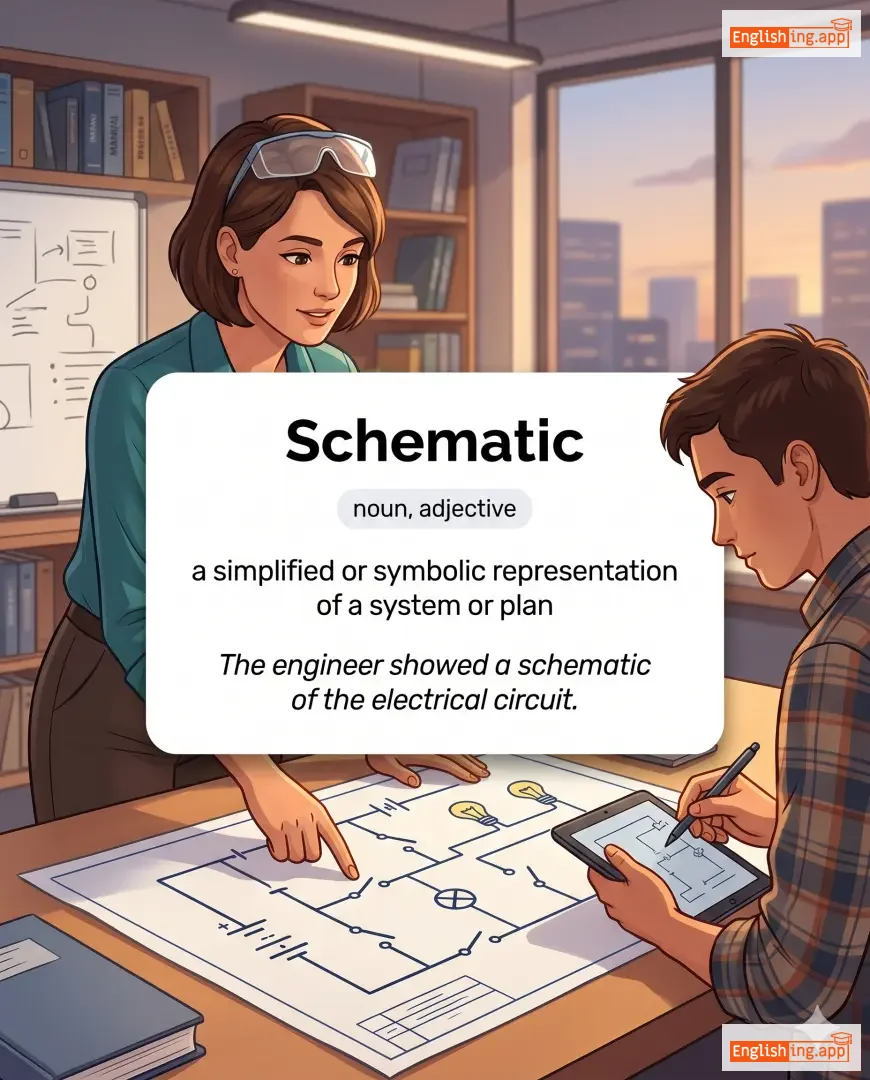
Schematic definition card — visual illustration of the meaning
noun, adjective
/skiːˈmætɪk/
схематический (schematicheskiy)

a simplified or symbolic representation of a system or plan

"The engineer showed a schematic of the electrical circuit."

"Инженер показал схему электрической цепи." (Inzhener pokazal skhemu elektricheskoy tsepi.)
scheme definition card — visual illustration of the meaning
noun, verb
/skiːm/
план / заговор (plan / zagovor)

a plan or arrangement, especially one that is secret or dishonest

"They devised a scheme to cheat investors."

"Они разработали схему, чтобы обмануть инвесторов." (Oni razrabotali skhemu, chtoby obmanut' investorov.)
noun
/ˈskɪz.əm/ or /ˈsɪz.əm/
счастье (schast'ye)

A division or split between strongly opposed parties, often in religion or organizations.

"The schism in the church led to the formation of two separate groups."

"Она не могла скрыть своего счастья, когда получила награду." (Ona ne mogla skryt' svoego schast'ya, kogda poluchila nagradu.)
noun
/ˈskɒlər/
учёный (uchyony)

a person who studies a particular subject or academic field

"The scholar presented a research paper on ancient civilizations."

"Учёный представил исследовательскую работу по древним цивилизациям." (Uchyonny predstavlil issledovatelskuyu rabotu po drevnim tsivilizatsiyam.)
scholarly definition card — visual illustration of the meaning
adjective
/ˈskɒl.ə.li/
научный (nauchnyy)

Having or showing knowledge, learning, or devotion to academic study.

"She wrote a scholarly article on medieval literature."

"Она написала научную статью о средневековой литературе." (Ona napisal nauchnuyu stat'yu o srednevekovoy literature.)
scholarship definition card — visual illustration of the meaning
noun
/ˈskɒlərʃɪp/
стипендия (stipendiya)

an award or grant to support a student's education

"She received a scholarship to study abroad."

"Она получила стипендию для учебы за границей." (Ona poluchila stipendiyu dlya ucheby za granitsej.)
adjective
/skəˈlæstɪk/
учебный (uchebnyy)

Relating to schools, education, or academic learning.

"The school organizes scholastic competitions every year."
"Школа организует школьные конкурсы каждый год." (Shkola organizuyet shkol'nyye konkursy kazhdyy god.)
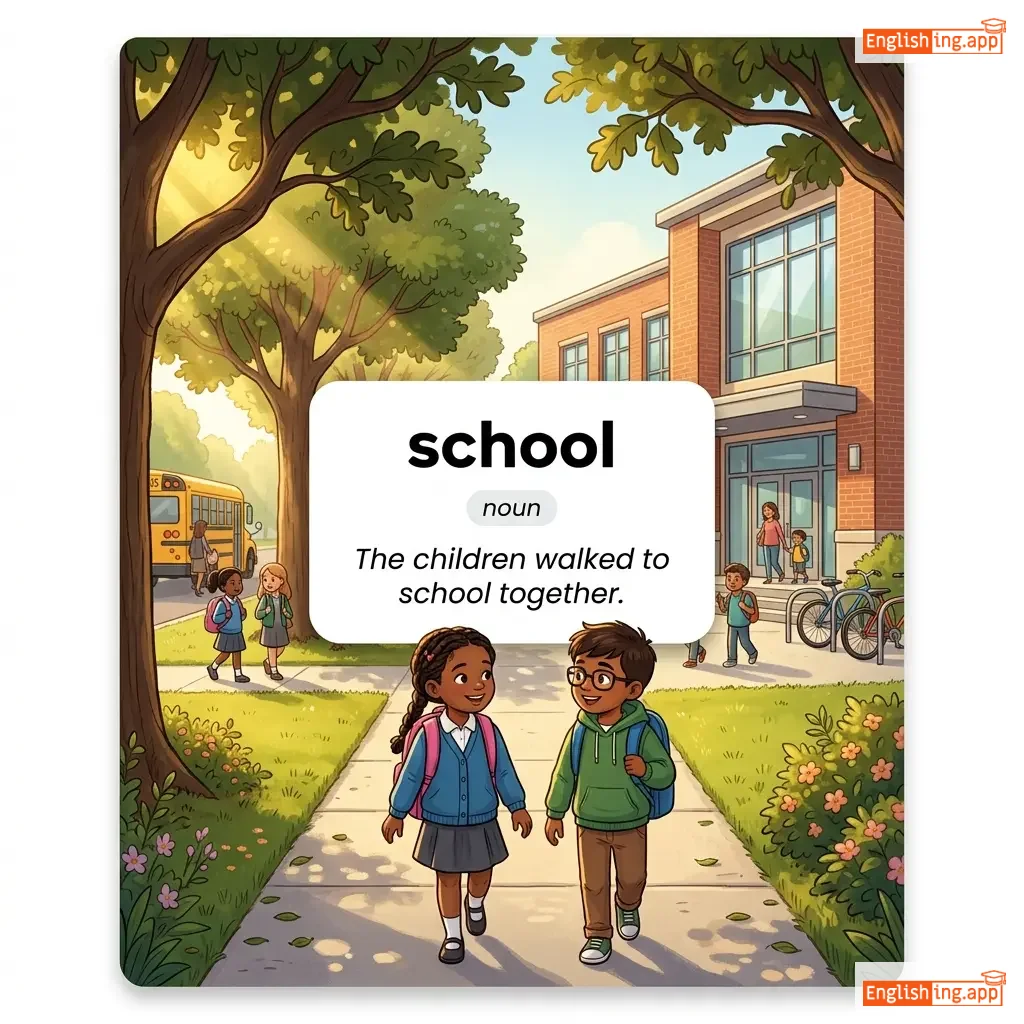
school definition card — visual illustration of the meaning
noun
/skuːl/
школа (shkola)

An institution for educating children; also a group of people sharing the same ideas or discipline.

"The children walked to school together."

"Дети пошли в школу вместе." (Deti poshli v shkolu vmeste.)
science definition card — visual illustration of the meaning
noun
/ˈsaɪəns/
наука (nauka)

the systematic study of the structure and behavior of the physical and natural world

"Science has made incredible advancements in medicine."
"Наука добилась невероятных успехов в медицине." (Nauka dobylas neveroyatnykh uspekhov v meditsine.)
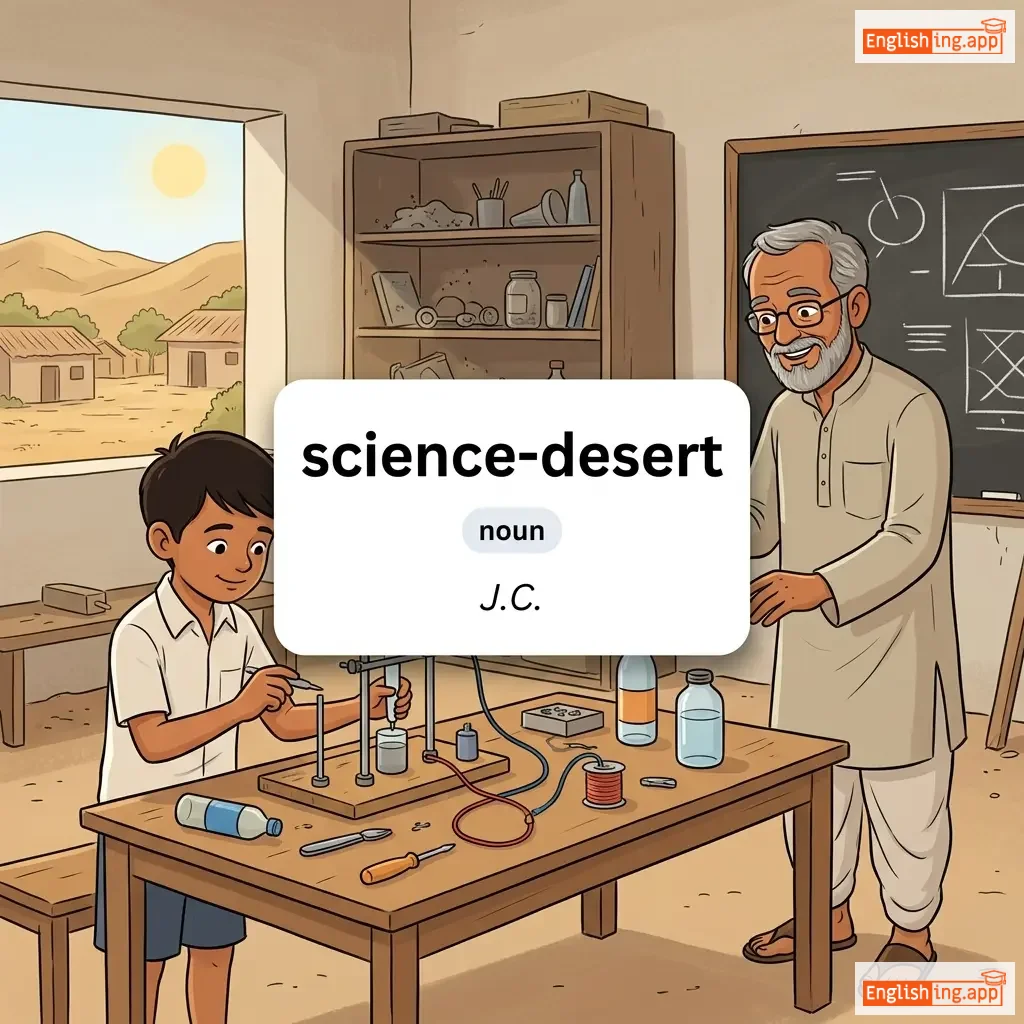
science-desert definition card — visual illustration of the meaning
noun
ˈsaɪəns ˈdezət
научная пустыня (nauchnaya pustynya)

A region or area lacking in scientific development, research facilities, or educational institutions.

"J.C. Bose thrived in a science-desert."

"Джей Си Бос процветал в научной пустыне." (Dzhay Si Bos protsvetal v nauchnoy pustyne.)
scientific definition card — visual illustration of the meaning
adjective
/ˌsaɪənˈtɪfɪk/
научный (nauchnyy)

relating to or based on science

"The scientific community is working to find a cure for cancer."
"Научное сообщество работает над поиском лекарства от рака." (Nauchnoye soobshchestvo rabotayet nad poiscom lekartsva ot raka.)
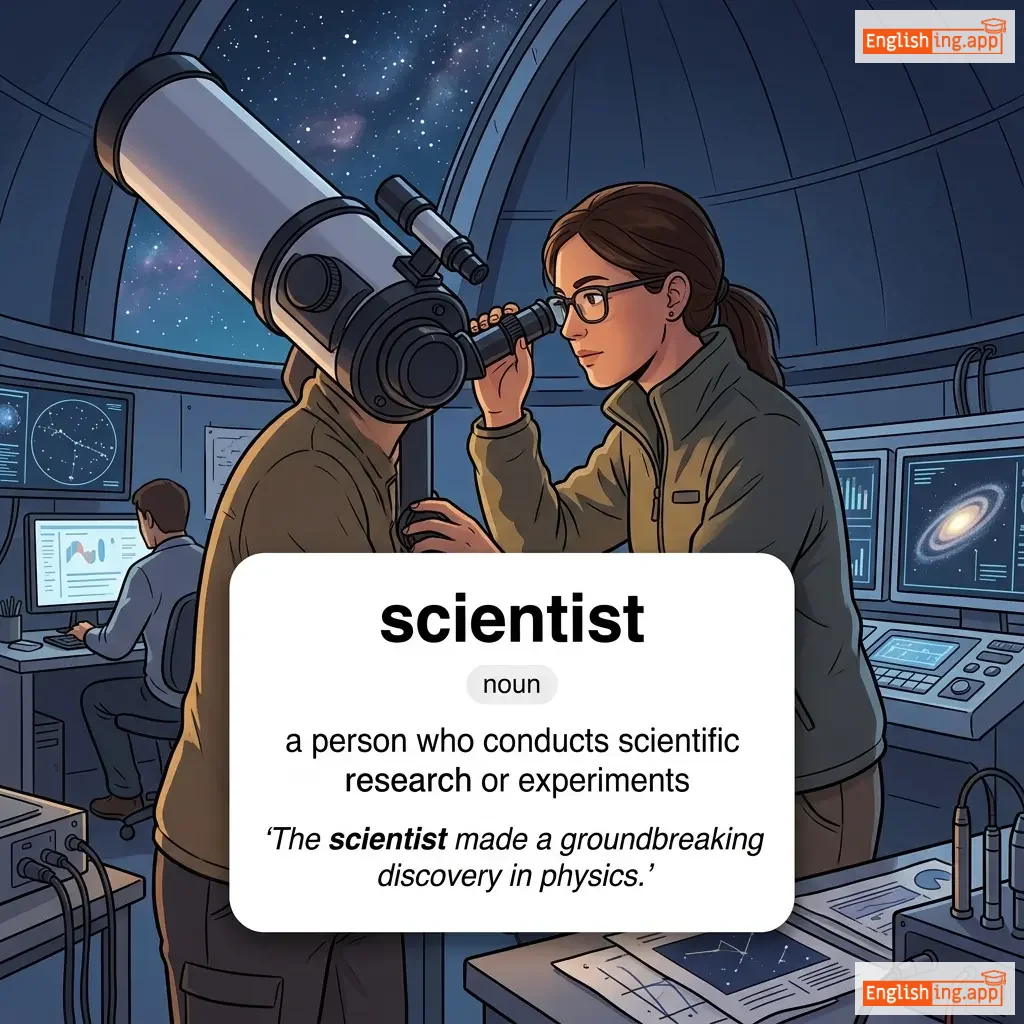
scientist definition card — visual illustration of the meaning
noun
/ˈsaɪəntɪst/
учёный (uchyonyi)

a person who conducts scientific research or experiments

"The scientist made a groundbreaking discovery in physics."

"Учёный сделал революционное открытие в физике." (Uchyonyi sdelal revolyutsionnoe otkrytiye v fizike.)
noun
/sɪnˈtɪl.ə/
маленькая искорка (malenkaya iskorka)

A tiny trace or spark of a specified quality or feeling.

"There wasn’t a scintilla of doubt in her mind."

"В её голове не было ни малейшего сомнения." (V yeye golove ne bylo ni maleyshego somneniya.)
verb
/ˈsɪn.tɪ.leɪt/
мерцать (mertsat')

to sparkle or shine brightly; to emit flashes of light

"The diamond ring scintillated under the bright lights."

"Алмазное кольцо мерцало под ярким светом." (Almaznoe kol'tso mertsalo pod yarkim svetom.)
adjective
/ˈsɪn.tɪ.leɪ.tɪŋ/
искрящийся (iskryashchiesya)

brilliantly clever, exciting, or sparkling

"Her scintillating conversation kept everyone entertained."

"Её искрящийся разговор развлекал всех." (Yeyo iskryashchiesya razgovor razvlekal vsekh.)
noun
/ˈsaɪ.ə.lɪz.əm/
претензия на поверхностные знания (pretenziya na poverkhnostnye znaniya)

pretentious show of superficial knowledge

"His speech was full of sciolism, impressing no one."

"Его речь была полна сайолизма, не впечатлив никого." (Ego rech' byla polna sayolizma, ne vpechatliv nikogo.)
self-control definition card — visual illustration of the meaning
noun
ˌsɛlf.kənˈtrəʊl
самоконтроль (samokontrol)

The ability to control one's emotions, behavior, and desires in order to obtain some reward, or avoid some punishment, typically in the longer term.

"Self-control is important for maintaining a balanced life."

"Самоконтроль важен для поддержания сбалансированной жизни." (Samokontrol vazhen dlya podderzhaniya sbalansirovannoy zhizni.)
self-reliance definition card — visual illustration of the meaning
noun
sɛlf rɪˈlaɪ.əns
самодостаточность (samodostatochnost)

Reliance on one's own powers and resources rather than those of others; independence.

"Self-reliance helps build confidence."

"Самодостаточность помогает строить уверенность." (Samodostatochnost' pomogaet stroit' uverennost'.)
self-possession definition card — visual illustration of the meaning
noun
ˈsɛlf pəˈzɪʃən
самообладание (samoobladanie)

The quality of being calm and confident and in control of one's emotions; composure.

"His self-possession during the crisis was remarkable."

"Его самообладание во время кризиса было замечательным." (Ego samoobladanie vo vremya krizisa bylo zamechatelnym.)
noun
/ˌsɛlf ɪnˈdʌldʒəns/
самоудовлетворение (samoudovletvorenie)

The act of allowing oneself to enjoy pleasures or desires excessively.

"His weekend of self-indulgence included eating sweets and watching movies nonstop."

"Его уикенд самоудовлетворения включал поедание сладкого и просмотр фильмов без остановки." (Ego uikend samoudovletvoreniya vklyuchal poedanie sladkogo i prosmotr' filmov bez ostanovki.)
noun
/ˌsɛlf ɪˈstiːm/
самооценка (samootsenka)

confidence in one's own worth or abilities; self-respect

"Building self-esteem takes time and consistent effort."

"Развитие самооценки требует времени и постоянных усилий." (Razvitiye samoootsenki trebuyet vremeni i postoyannykh usiliy.)
adjective
/ˌsɛlf ɪˈfeɪsɪŋ/
скромный (skromnyy)

not drawing attention to oneself; modest

"Despite his success, he remained self-effacing and humble."

"Несмотря на его успех, он остался скромным и смиренным." (Nesmotrya na ego uspek, on ostalsya skromnym i smirennym.)
self-discipline definition card — visual illustration of the meaning
noun
/ˈsɛlf ˈdɪsɪplɪn/
самодисциплина (samodistsiplina)

The ability to control one's feelings and overcome one's weaknesses; the ability to pursue what one thinks is right despite temptations to abandon it.

"Self-discipline is essential for achieving long-term goals."

"Самодисциплина необходима для достижения долгосрочных целей." (Samodistsiplina neobkhodima dlya dostizheniya dolgostrochnykh tseley.)
adjective
/ˌsɛlf əbˈzɔːrbd/
эгоцентричный (egotsentrichnyy)

Excessively preoccupied with oneself and one’s own thoughts, feelings, or interests.

"He was too self-absorbed to notice his friend's distress."

"Он был слишком эгоцентричным, чтобы заметить тревогу своего друга." (On byl slishkom egotsentrichnym, chtoby zamechit' trevogu svoego druga.)
adjective
/sɪˈlek.tɪv/
селективный (selekstivnyy)

Characterized by careful choice; choosing only the best or most suitable.

"She is very selective about the clothes she buys."

"Она очень избирательна в выборе одежды, которую она покупает." (Ona ochen' izbiratel'na v vibore odezhdy, kotoruyu ona pokupayet.)
🧑‍💼

self (селф)

noun
/sɛlf/
я (ya)

a person's essential being that distinguishes them from others, especially considered as the object of introspection or reflexive action

"She has a strong sense of self."

"У неё сильное чувство себя." (U neyo sil'noye chuvstvo sebya.)
noun
/ˌself əˈbeɪs.mənt/
самоуничижение (samounichizhenie)

The act of belittling or humiliating oneself.

"His constant self-abasement made others uncomfortable."

"Его постоянное самоуничижение заставляло других чувствовать себя неудобно." (Ego postoyannoe samo-unichizhenie zastavlyalo drugikh chuvstvovat' sebya neudobno.)
noun
/ˌsɛlf rɪˈspɛkt/
самоуважение (samouvajenie)

A feeling of pride and confidence in oneself; self-worth.

"She refused to compromise her self-respect by accepting unfair treatment."

"Она отказалась компрометировать свое самоуважение, принимая несправедливое отношение." (Ona otkazalas' kompromentirovat' svoe samouvajenie, prinimaya nespravedlivoe otnoshenie.)
self-affirmation definition card — visual illustration of the meaning
noun
/ˌsɛlf əˌfɜːˈmeɪʃən/
самоутверждение (samoutverzhdenie)

The practice of affirming one's own worthiness and value as an individual.

"Daily self-affirmation can boost your confidence."

"Ежедневное самоутверждение может повысить вашу уверенность в себе." (Ezhednevnoe samoutverzhdenie mozhet povysit' vashu uverennost' v sebe.)