Словари

Словарь английского языка | Значения слов, определения и примеры

noun
/ˌsɛlfsəˈfɪʃənsi/
самодостаточность (samodostatochnost)

the ability to supply one's own needs without external assistance; independence

"The farm achieved complete self-sufficiency in food production."

"Ферма достигла полной самодостаточности в производстве пищи." (Ferma doshchigla polnoy samodostatochnosti v proizvodstve pishchi.)
adjective
/ˌsɛlf ˈraɪtʃəs/
самодовольный (samodovol'nyy)

Having or showing an attitude of moral superiority; believing one’s own beliefs are the only right ones.

"His self-righteous comments made everyone uncomfortable."
"Его самодовольные комментарии заставили всех почувствовать себя неуютно." (E-go sa-mo-do-vol'nye ko-men-ta-rii zas-ta-vi-li vsekh po-chuv-stvo-vat' se-bya ne-uyut-no.)
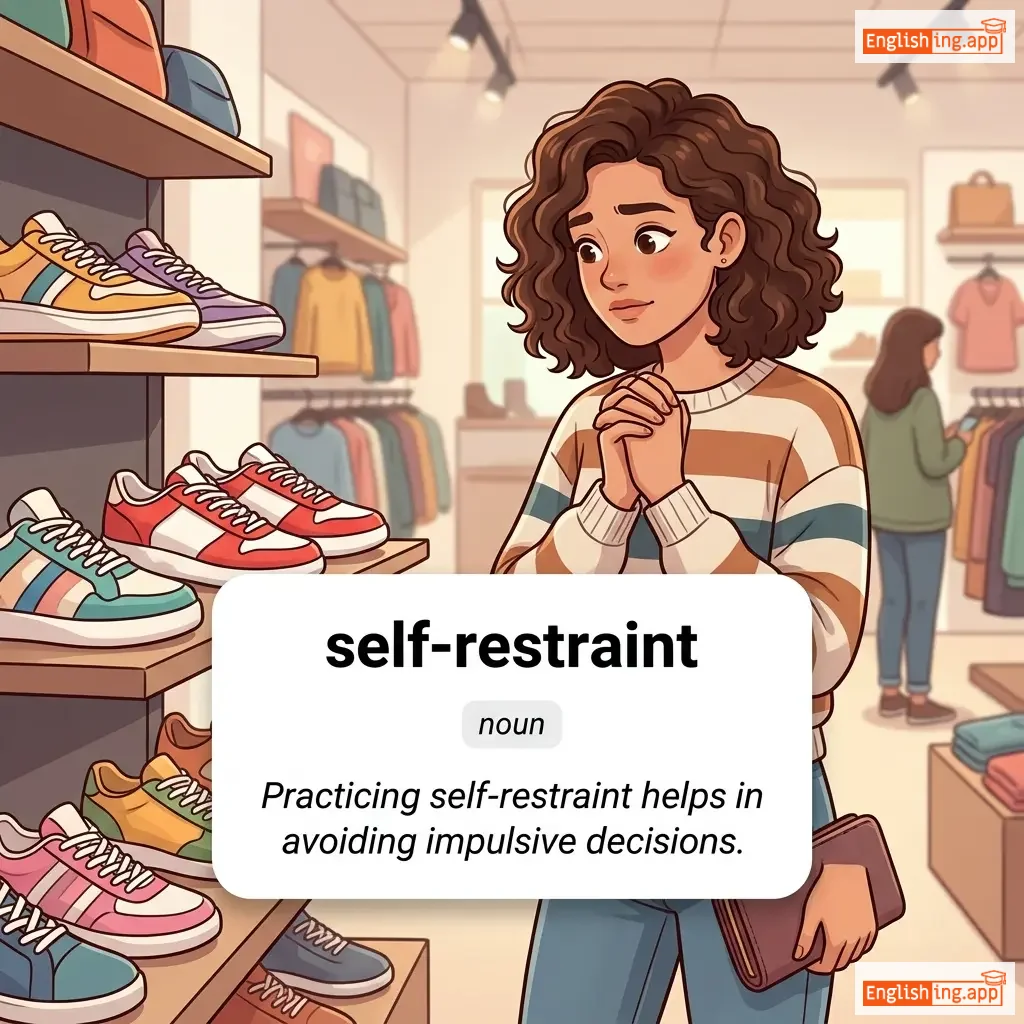
self-restraint definition card — visual illustration of the meaning
noun
ˌsɛlf.rɪˈstreɪnt
самоконтроль (samokontrol)

The practice of restraining oneself from indulging in something, typically an impulse or desire.

"Practicing self-restraint helps in avoiding impulsive decisions."

"Практика самоконтроля помогает избегать импульсивных решений." (Praktika samokontrolya pomogaet izbegat' impulsivnykh resheniy.)
noun
/ˌsɛlf rɪˈspɛkt/
самоуважение (samouvajenie)

A feeling of pride and confidence in oneself; self-worth.

"She refused to compromise her self-respect by accepting unfair treatment."

"Она отказалась компрометировать свое самоуважение, принимая несправедливое отношение." (Ona otkazalas' kompromentirovat' svoe samouvajenie, prinimaya nespravedlivoe otnoshenie.)
self-reliance definition card — visual illustration of the meaning
noun
sɛlf rɪˈlaɪ.əns
самодостаточность (samodostatochnost)

Reliance on one's own powers and resources rather than those of others; independence.

"Self-reliance helps build confidence."

"Самодостаточность помогает строить уверенность." (Samodostatochnost' pomogaet stroit' uverennost'.)
self-possession definition card — visual illustration of the meaning
noun
ˈsɛlf pəˈzɪʃən
самообладание (samoobladanie)

The quality of being calm and confident and in control of one's emotions; composure.

"His self-possession during the crisis was remarkable."

"Его самообладание во время кризиса было замечательным." (Ego samoobladanie vo vremya krizisa bylo zamechatelnym.)
noun
/ˌsɛlf ɪnˈdʌldʒəns/
самоудовлетворение (samoudovletvorenie)

The act of allowing oneself to enjoy pleasures or desires excessively.

"His weekend of self-indulgence included eating sweets and watching movies nonstop."

"Его уикенд самоудовлетворения включал поедание сладкого и просмотр фильмов без остановки." (Ego uikend samoudovletvoreniya vklyuchal poedanie sladkogo i prosmotr' filmov bez ostanovki.)
noun
/ˌsɛlf ɪˈstiːm/
самооценка (samootsenka)

confidence in one's own worth or abilities; self-respect

"Building self-esteem takes time and consistent effort."

"Развитие самооценки требует времени и постоянных усилий." (Razvitiye samoootsenki trebuyet vremeni i postoyannykh usiliy.)
adjective
/ˌsɛlf ɪˈfeɪsɪŋ/
скромный (skromnyy)

not drawing attention to oneself; modest

"Despite his success, he remained self-effacing and humble."

"Несмотря на его успех, он остался скромным и смиренным." (Nesmotrya na ego uspek, on ostalsya skromnym i smirennym.)
self-discipline definition card — visual illustration of the meaning
noun
/ˈsɛlf ˈdɪsɪplɪn/
самодисциплина (samodistsiplina)

The ability to control one's feelings and overcome one's weaknesses; the ability to pursue what one thinks is right despite temptations to abandon it.

"Self-discipline is essential for achieving long-term goals."

"Самодисциплина необходима для достижения долгосрочных целей." (Samodistsiplina neobkhodima dlya dostizheniya dolgostrochnykh tseley.)
self-control definition card — visual illustration of the meaning
noun
ˌsɛlf.kənˈtrəʊl
самоконтроль (samokontrol)

The ability to control one's emotions, behavior, and desires in order to obtain some reward, or avoid some punishment, typically in the longer term.

"Self-control is important for maintaining a balanced life."

"Самоконтроль важен для поддержания сбалансированной жизни." (Samokontrol vazhen dlya podderzhaniya sbalansirovannoy zhizni.)
self-awareness definition card — visual illustration of the meaning
noun
/ˌsɛlf əˈwɛə.nəs/
самосознание (samosoznanie)

Conscious knowledge of one's own character, feelings, motives, and desires.

"Self-awareness helps in understanding one's emotions and actions."

"Самосознание помогает понять эмоции и действия человека." (Samosoznanie pomogaet ponyat' emotsii i deystviya cheloveka.)
self-affirmation definition card — visual illustration of the meaning
noun
/ˌsɛlf əˌfɜːˈmeɪʃən/
самоутверждение (samoutverzhdenie)

The practice of affirming one's own worthiness and value as an individual.

"Daily self-affirmation can boost your confidence."

"Ежедневное самоутверждение может повысить вашу уверенность в себе." (Ezhednevnoe samoutverzhdenie mozhet povysit' vashu uverennost' v sebe.)
adjective
/ˌsɛlf əbˈzɔːrbd/
эгоцентричный (egotsentrichnyy)

Excessively preoccupied with oneself and one’s own thoughts, feelings, or interests.

"He was too self-absorbed to notice his friend's distress."

"Он был слишком эгоцентричным, чтобы заметить тревогу своего друга." (On byl slishkom egotsentrichnym, chtoby zamechit' trevogu svoego druga.)
noun
/ˌself əˈbeɪs.mənt/
самоуничижение (samounichizhenie)

The act of belittling or humiliating oneself.

"His constant self-abasement made others uncomfortable."

"Его постоянное самоуничижение заставляло других чувствовать себя неудобно." (Ego postoyannoe samo-unichizhenie zastavlyalo drugikh chuvstvovat' sebya neudobno.)
🧑‍💼

self (селф)

noun
/sɛlf/
я (ya)

a person's essential being that distinguishes them from others, especially considered as the object of introspection or reflexive action

"She has a strong sense of self."

"У неё сильное чувство себя." (U neyo sil'noye chuvstvo sebya.)
adjective
/sɪˈlek.tɪv/
селективный (selekstivnyy)

Characterized by careful choice; choosing only the best or most suitable.

"She is very selective about the clothes she buys."

"Она очень избирательна в выборе одежды, которую она покупает." (Ona ochen' izbiratel'na v vibore odezhdy, kotoruyu ona pokupayet.)
selection definition card — visual illustration of the meaning
noun
/sɪˈlɛkʃən/
отбор (otbor)

the act of choosing or the thing that is chosen

"The final selection will be announced tomorrow."

"Окончательный отбор будет объявлен завтра." (Okonchatel'nyy otbor budet ob'yavlen zavtra.)
adjective
/sɪˈlek.tɪd/
выбранный (vybrannyy)

carefully chosen from a group for a particular purpose

"He was one of the selected candidates for the scholarship."
"Он был одним из выбранных кандидатов на стипендию." (On byl odnim iz vybrannykh kandidatov na stipendiyu.)
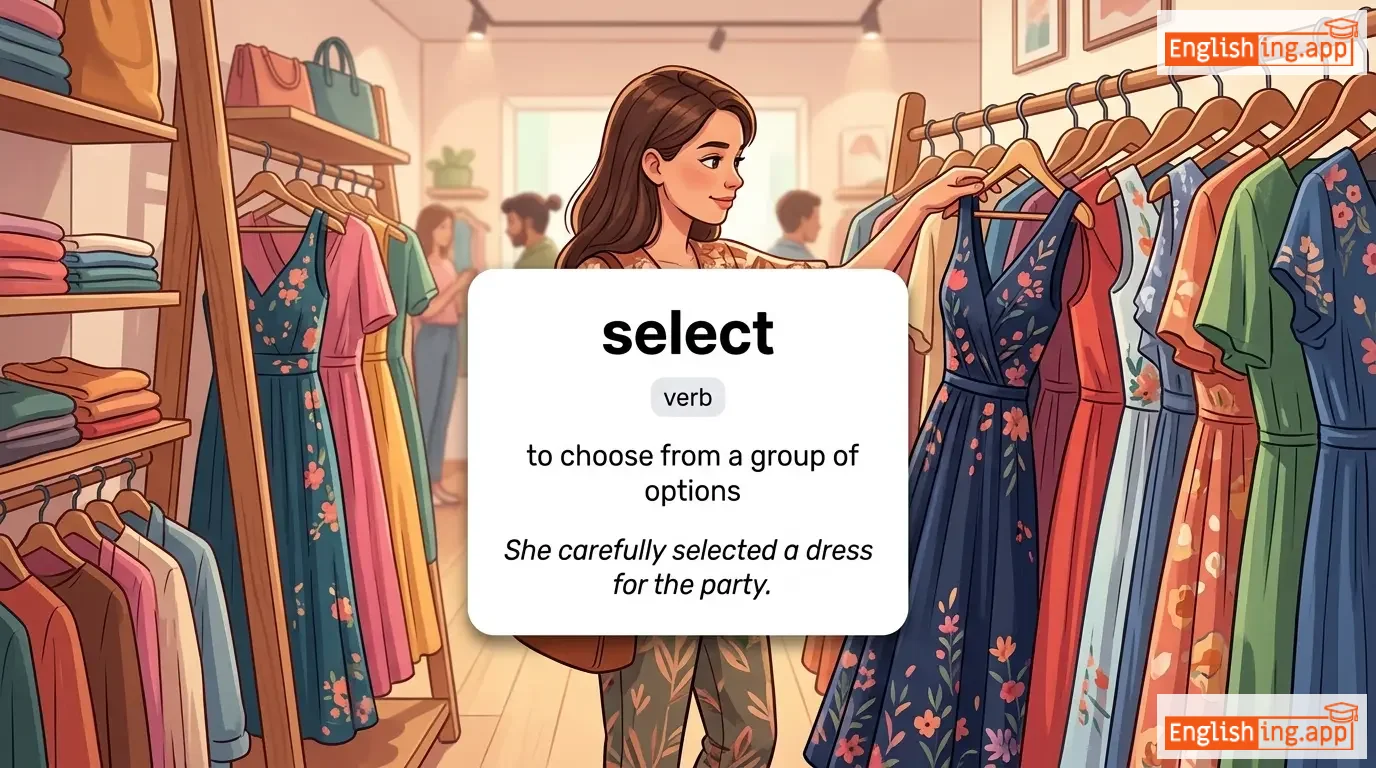
select definition card — visual illustration of the meaning
verb
/sɪˈlɛkt/
выбирать (vybirat')

to choose from a group of options

"She carefully selected a dress for the party."

"Она тщательно выбрала платье для вечеринки." (Ona tchatel'no vybrala platie dlya vecherinki.)
adverb
/ˈsel.dəm/
редко (redko)

not often; rarely

"She seldom visits her hometown nowadays."

"Она редко посещает свой родной город сейчас." (Ona redko poseshchaet svoy rodnoy gorod seychas.)
verb
/siːz/
захватить (zakhvatit')

To take hold of suddenly and forcibly.

"The police managed to seize the stolen goods."

"Полиция сумела изъять украденные товары." (Politsiya sumela iz'yat' ukradennyye tovarý.)
noun
/sɪv/
сито (sito)

a utensil consisting of a wire or plastic mesh held in a frame, used for straining solids from liquids

"She used a sieve to separate the flour from lumps."

"Она использовала сито, чтобы отделить муку от комков." (Ona ispol'zovala sito, chtoby otdelit' mukhu ot komkov.)
noun
/ˈsaɪz.mə.ɡræf/
сейсмограф (seysmograf)

An instrument that measures and records details of earthquakes, such as force and duration.

"The seismograph detected a strong tremor in the area."
"Сейсмограф зафиксировал сильное толчок в этом районе." (Seysmograf zafiksiroval sil'noye tolchok v etom rayone.)
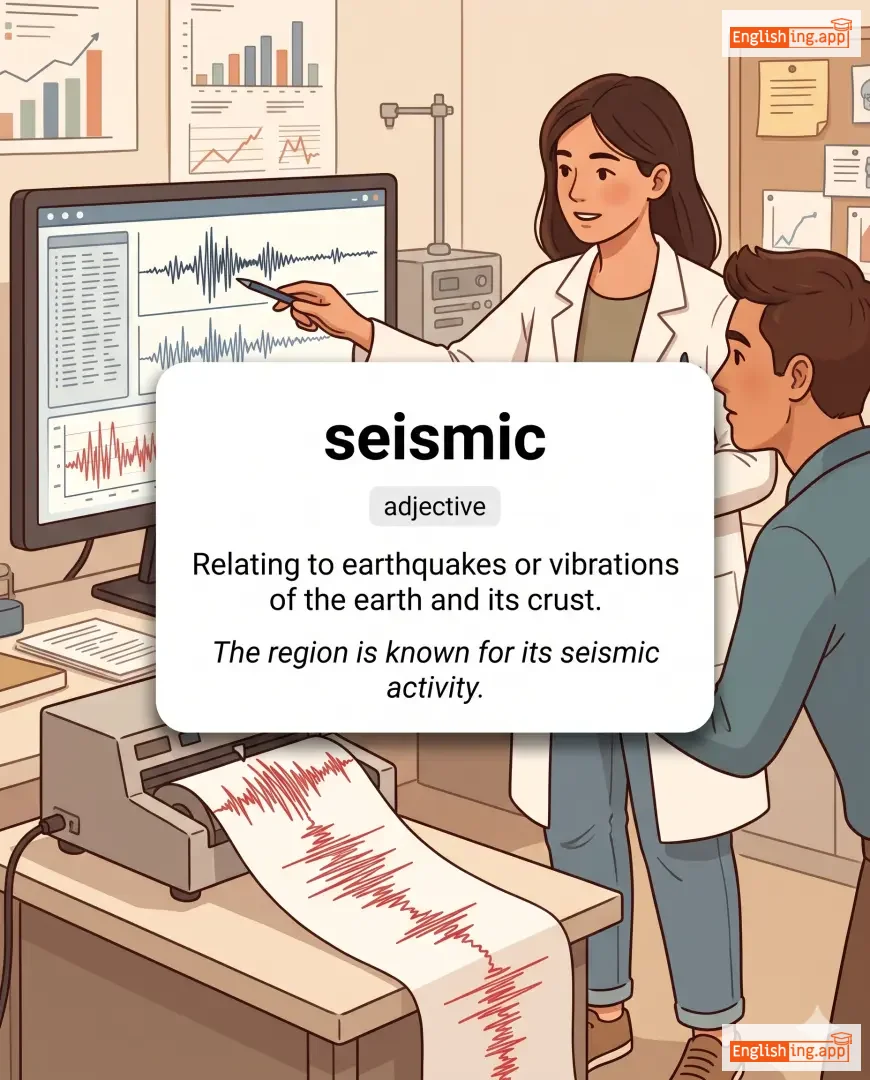
seismic definition card — visual illustration of the meaning
adjective
/ˈsaɪz.mɪk/
сейсмический (seysmicheskiy)

Relating to earthquakes or vibrations of the earth and its crust.

"The region is known for its seismic activity."

"Регион известен своей сейсмической активностью." (Region izvesten svoey seysmicheskoy aktivnost'yu.)
noun
/seɪn/
большая сеть (bol'shaya set')

A large fishing net that hangs vertically in the water.

"The fishermen cast their seine into the river."

"Рыбаки бросили свою большую сеть в реку." (Rybaki brosili svoyu bol'shuyu set' v reku.)
noun
/ˈseɪnjər/
феодал (feodal)

A feudal lord; a man of authority in medieval Europe.

"The seignior demanded taxes from the peasants."

"Сеньор потребовал налоги с крестьян." (Sen'yor potreboval nalogi s krest'yan.)
noun
/ˈsɛɡmənt/
сегмент (segment)

A part or section of something that is divided.

"Each segment of the market has different needs."

"Каждый сегмент рынка имеет разные потребности." (Kazhdyy segment rynka imeyet raznye potrebnosti.)
verb
/siːð/
кипеть от ярости (kipet' ot yarosti)

To be filled with intense but unexpressed anger or agitation.

"She was seething with anger after the unfair decision."

"Она кипела от ярости после несправедливого решения." (Ona kipela ot yarosti posle nespravedlivogo resheniya.)
noun
/sɪr/
ясновидящий (yasnovidyashchiy)

A person who is supposed to be able to see what will happen in the future; a prophet.

"The seer predicted a great change in the kingdom."

"Ясновидящий предсказал большое изменение в королевстве." (Yasnovidyashchiy predskazal bol'shoye izmeneniye v korolevstve.)
verb
/siːp/
просачиваться медленно (prosachivat'sya medlenno)

to flow or leak slowly through small openings or pores

"Water began to seep through the cracks in the wall."

"Вода начала просачиваться через трещины в стене." (Voda nachala prosachivatsya cherez treshchiny v stene.)
adjective
/ˈsiːmli/
подобающий (podobayushchiy)

proper or appropriate in behavior or appearance

"It was not seemly to argue loudly during the ceremony."

"Не было подобающим спорить громко во время церемонии." (Ne bylo podobayushchim sporit' gromko vo vremya tseremonii.)
adverb
/ˈsiː.mɪŋ.li/
по-видимому, кажется спокойным (po-vidimomu, kazhetsya spokoynym)

appearing to be true, but not necessarily so

"He was seemingly calm despite the chaos around him."

"Он был по-видимому спокойным, несмотря на хаос вокруг него." (On byl po-vidimomu spokoynym, nesmotrya na khaos vokrug nego.)
verb
/siːm/
казаться (kazat'sya)

to give the impression of being something or having a particular quality

"He seems tired after the long journey."

"Он кажется усталым после долгого путешествия." (On kazhetsya ustalym posle dolgogo puteshestviya.)
noun
/ˈsiːkər/
ищущий (ishchushchiy)

a person who is looking for something, especially knowledge or truth

"The seeker traveled far to find the answers to his questions."

"Ищущий путешествовал далеко, чтобы найти ответы на свои вопросы." (Ishchushchiy puteshestvoval daleko, chtoby nayti otvety na svoi voprosy.)
verb
/siːk/
искать (iskat')

to try to find or obtain something; to attempt or desire to achieve

"He decided to seek advice from his mentor."

"Он решил искать совет у своего наставника." (On reshil iskat' sovet u svoego nastavnika.)
adjective
/ˈsiːdi/
грязный / обветшалый (gryaznyy / obvetshalyy)

dirty, shabby, or in bad condition; also feeling slightly unwell

"He stayed in a seedy motel near the bus station."

"Он остановился в захудалом мотеле возле автовокзала." (On ostanovilsya v zakhudalom motele vozle avtovokzala.)
seed definition card — visual illustration of the meaning
noun
/siːd/
семя (semya)

the small, hard part of a plant from which a new plant can grow

"I planted a seed in the garden."
"Я посадил семя в саду." (Ya posadil semya v sadu.)
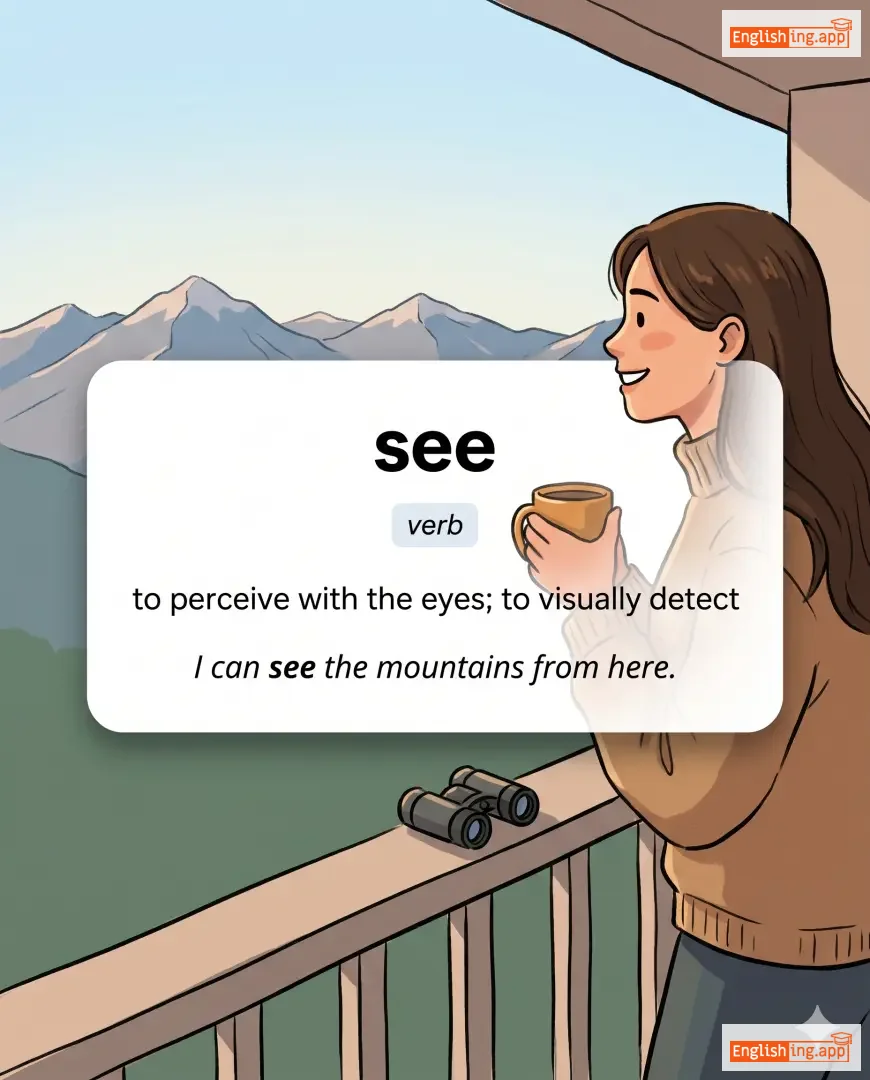
see definition card — visual illustration of the meaning
verb
/siː/
видеть (videt')

to perceive with the eyes; to visually detect

"I can see the mountains from here."

"Я могу видеть горы отсюда." (Ya mogu videt' gory otsyuda.)
Sedulous definition card — visual illustration of the meaning
adjective
/ˈsɛdʒʊləs/
прилежный (prilezhny)

showing great care, attention, and diligence in work or tasks

"She was admired for her sedulous efforts in completing the project on time."

"Её восхищали за прилежные усилия по завершению проекта вовремя." (Eyo voskhishchali za prilezhnyye usiliya po zaversheniyu proyektov vovremya.)
noun
/sɪˈdʌk.ʃən/
соблазн; искушение (soblazn; iskushenie)

the action of seducing someone; temptation to do something wrong

"He fell victim to the seduction of easy money."

"Он стал жертвой соблазна легких денег." (On stal zhertvoy soblazna legkikh deneg.)
verb
/sɪˈdjuːs/
соблазнять (soblaznyat)

to attract someone into doing something, especially something they might not normally do

"The advertisement was designed to seduce customers into buying luxury products."

"Реклама была разработана, чтобы соблазнить покупателей купить роскошные товары." (Reklama byla razrabotana, chtoby soblaznit' pokupateley kupit' roskoshnyye tovaru.)
adjective
/sɪˈdɪʃəs/
мятежный (myatezhny)

Encouraging rebellion against authority.

"The activist spread seditious pamphlets among the crowd."

"Активист распространял мятежные листовки среди толпы." (Aktivist rasprostranyal myatezhnye listovki sredi tolpy.)
adjective
/ˈskrɪptʃərəl/
писанный (pisannyy)

Relating to or contained in the scriptures or holy writings.

"The priest gave a scriptural reference during the sermon."

"Священник привел писанный пример во время проповеди." (Svyashchennik priyel pisannyy primer vo vremya propovedi.)
noun
/skraɪb/
писец (pistets)

a person who writes documents, especially in ancient times; a professional copyist

"In ancient Egypt, scribes recorded important events."

"В Древнем Египте писцы записывали важные события." (V Drevnem Egipte pis'tsy zapisyvali vazhnyye sobytiya.)
noun
/ˈskrɪmɪdʒ/
тренировочная игра (trenirovochnaya igra)

A practice game or informal match, often in sports, especially football.

"The team had a scrimmage before the official season started."

"Команда провела тренировочную игру перед началом официального сезона." (Komanda provela trenirovochnuyu igru pered nachalom ofitsial'nogo sezona.)
noun
/skrɪpt/
сценарий (stseniariy)

The written text of a play, film, or broadcast; handwriting style.

"The actor memorized his lines from the script."

"Актер выучил свои реплики из сценария." (Akter vyuchil svoi repliki iz stseniariya.)
verb
/ˈskrɪbəl/
царапать (tsarapать)

to write or draw carelessly or quickly

"The child scribbled all over the wall."
"Ребенок начертил все на стене." (Rebenok nachertil vse na stene.)
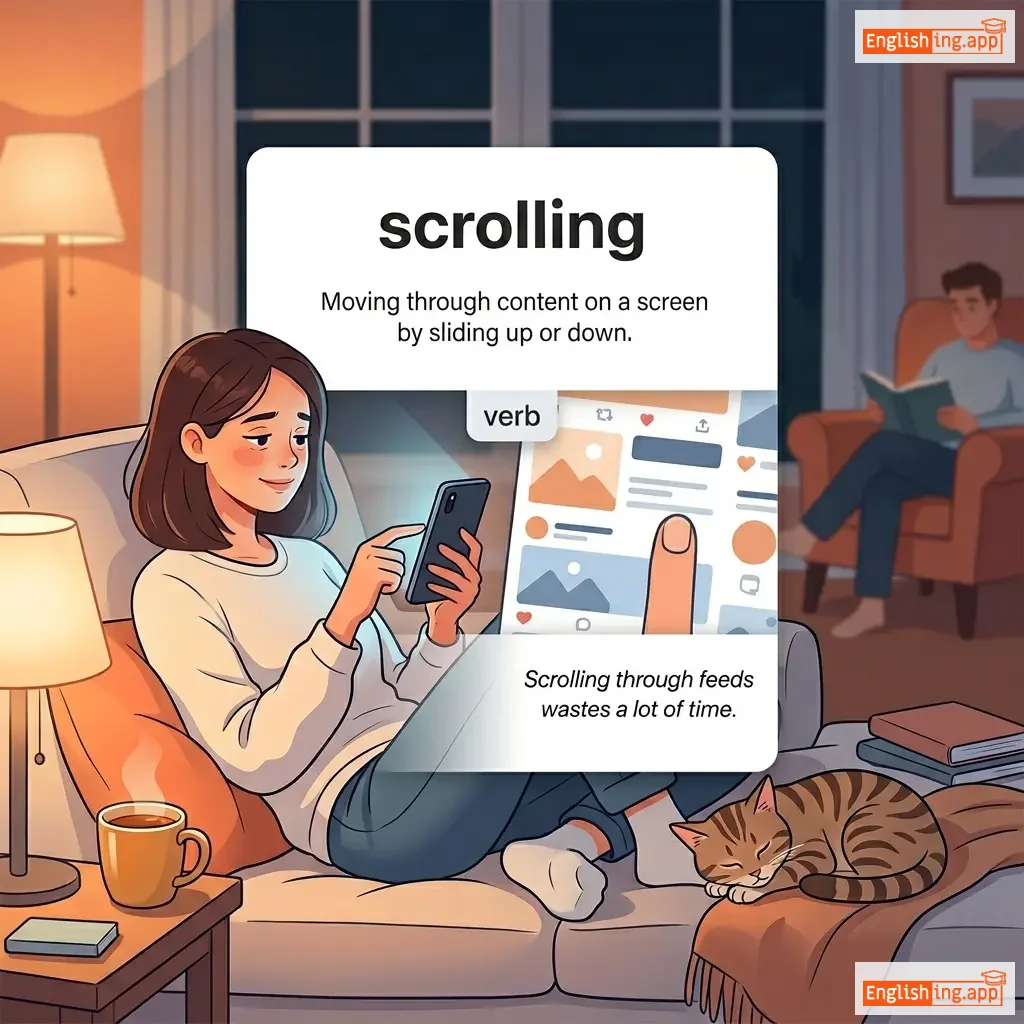
scrolling definition card — visual illustration of the meaning
verb
/ˈskroʊlɪŋ/
прокрутка (prokrutka)

Moving through content on a screen by sliding up or down.

"Scrolling through feeds wastes a lot of time."

"Прокрутка ленты тратит много времени." (Prokrutka lentyi tratit mnogo vremeni.)
scrolling addiction definition card — visual illustration of the meaning
noun
স্ক্রোলিং অ্যাডিকশন
зависимость от прокрутки (zavisimost ot prokrutki)

A compulsive need to continuously scroll through content on digital devices, particularly smartphones and social media platforms.

"Scrolling addiction is a growing concern among smartphone users."

"Зависимость от прокрутки является растущей проблемой среди пользователей смартфонов." (Zavisimost ot prokrutki yavlyaetsya rastushchey problemoy sredi pol'zovateley smartfonov.)