Словари

Словарь английского языка | Значения слов, определения и примеры

verb
/siːp/
просачиваться медленно (prosachivat'sya medlenno)

to flow or leak slowly through small openings or pores

"Water began to seep through the cracks in the wall."

"Вода начала просачиваться через трещины в стене." (Voda nachala prosachivatsya cherez treshchiny v stene.)
noun
/sɪr/
ясновидящий (yasnovidyashchiy)

A person who is supposed to be able to see what will happen in the future; a prophet.

"The seer predicted a great change in the kingdom."

"Ясновидящий предсказал большое изменение в королевстве." (Yasnovidyashchiy predskazal bol'shoye izmeneniye v korolevstve.)
verb
/siːð/
кипеть от ярости (kipet' ot yarosti)

To be filled with intense but unexpressed anger or agitation.

"She was seething with anger after the unfair decision."

"Она кипела от ярости после несправедливого решения." (Ona kipela ot yarosti posle nespravedlivogo resheniya.)
noun
/ˈsɛɡmənt/
сегмент (segment)

A part or section of something that is divided.

"Each segment of the market has different needs."

"Каждый сегмент рынка имеет разные потребности." (Kazhdyy segment rynka imeyet raznye potrebnosti.)
noun
/ˈseɪnjər/
феодал (feodal)

A feudal lord; a man of authority in medieval Europe.

"The seignior demanded taxes from the peasants."

"Сеньор потребовал налоги с крестьян." (Sen'yor potreboval nalogi s krest'yan.)
noun
/seɪn/
большая сеть (bol'shaya set')

A large fishing net that hangs vertically in the water.

"The fishermen cast their seine into the river."
"Рыбаки бросили свою большую сеть в реку." (Rybaki brosili svoyu bol'shuyu set' v reku.)
seismic definition card — visual illustration of the meaning
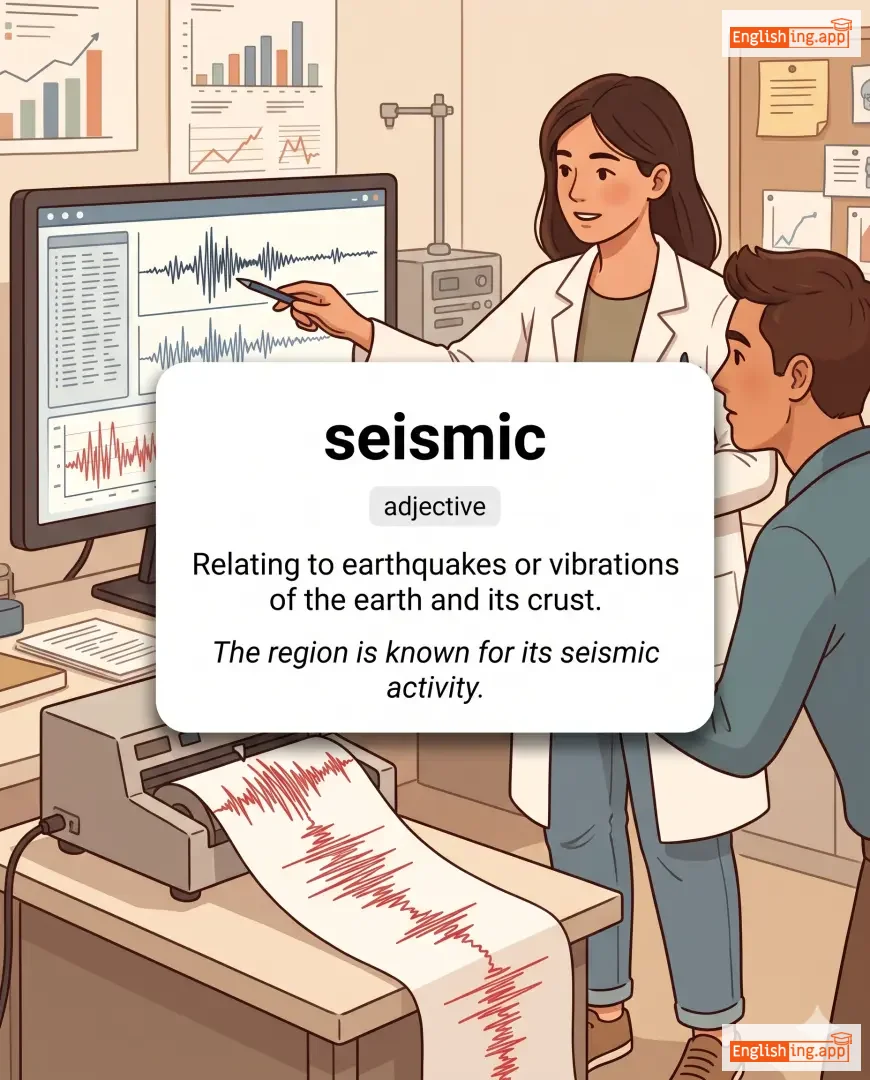
adjective
/ˈsaɪz.mɪk/
сейсмический (seysmicheskiy)

Relating to earthquakes or vibrations of the earth and its crust.

"The region is known for its seismic activity."

"Регион известен своей сейсмической активностью." (Region izvesten svoey seysmicheskoy aktivnost'yu.)
noun
/ˈsaɪz.mə.ɡræf/
сейсмограф (seysmograf)

An instrument that measures and records details of earthquakes, such as force and duration.

"The seismograph detected a strong tremor in the area."

"Сейсмограф зафиксировал сильное толчок в этом районе." (Seysmograf zafiksiroval sil'noye tolchok v etom rayone.)
noun
/sɪv/
сито (sito)

a utensil consisting of a wire or plastic mesh held in a frame, used for straining solids from liquids

"She used a sieve to separate the flour from lumps."

"Она использовала сито, чтобы отделить муку от комков." (Ona ispol'zovala sito, chtoby otdelit' mukhu ot komkov.)
verb
/siːz/
захватить (zakhvatit')

To take hold of suddenly and forcibly.

"The police managed to seize the stolen goods."

"Полиция сумела изъять украденные товары." (Politsiya sumela iz'yat' ukradennyye tovarý.)
adverb
/ˈsel.dəm/
редко (redko)

not often; rarely

"She seldom visits her hometown nowadays."
"Она редко посещает свой родной город сейчас." (Ona redko poseshchaet svoy rodnoy gorod seychas.)
select definition card — visual illustration of the meaning
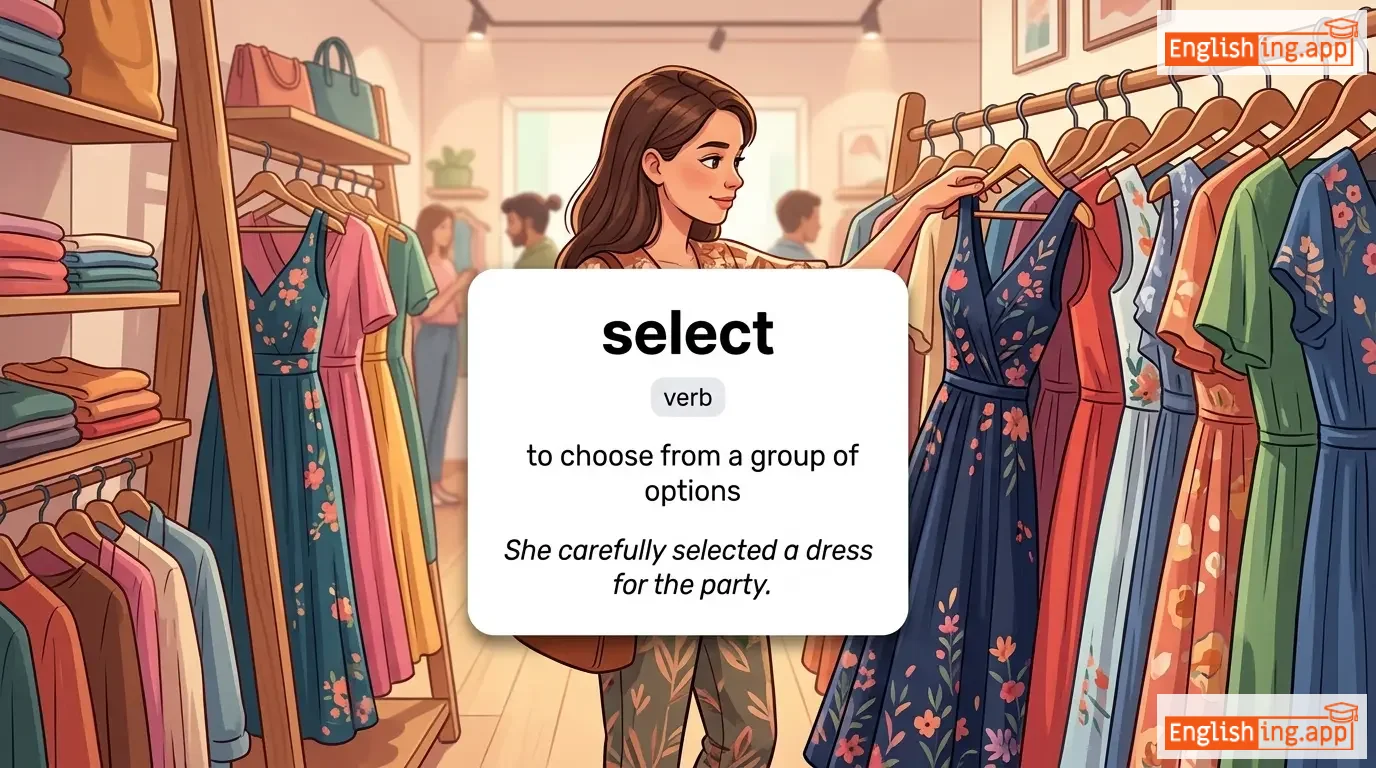
verb
/sɪˈlɛkt/
выбирать (vybirat')

to choose from a group of options

"She carefully selected a dress for the party."

"Она тщательно выбрала платье для вечеринки." (Ona tchatel'no vybrala platie dlya vecherinki.)
adjective
/sɪˈlek.tɪd/
выбранный (vybrannyy)

carefully chosen from a group for a particular purpose

"He was one of the selected candidates for the scholarship."

"Он был одним из выбранных кандидатов на стипендию." (On byl odnim iz vybrannykh kandidatov na stipendiyu.)
selection definition card — visual illustration of the meaning
noun
/sɪˈlɛkʃən/
отбор (otbor)

the act of choosing or the thing that is chosen

"The final selection will be announced tomorrow."

"Окончательный отбор будет объявлен завтра." (Okonchatel'nyy otbor budet ob'yavlen zavtra.)
adjective
/sɪˈlek.tɪv/
селективный (selekstivnyy)

Characterized by careful choice; choosing only the best or most suitable.

"She is very selective about the clothes she buys."

"Она очень избирательна в выборе одежды, которую она покупает." (Ona ochen' izbiratel'na v vibore odezhdy, kotoruyu ona pokupayet.)
🧑‍💼

self (селф)

noun
/sɛlf/
я (ya)

a person's essential being that distinguishes them from others, especially considered as the object of introspection or reflexive action

"She has a strong sense of self."

"У неё сильное чувство себя." (U neyo sil'noye chuvstvo sebya.)
noun
/ˌself əˈbeɪs.mənt/
самоуничижение (samounichizhenie)

The act of belittling or humiliating oneself.

"His constant self-abasement made others uncomfortable."

"Его постоянное самоуничижение заставляло других чувствовать себя неудобно." (Ego postoyannoe samo-unichizhenie zastavlyalo drugikh chuvstvovat' sebya neudobno.)
adjective
/ˌsɛlf əbˈzɔːrbd/
эгоцентричный (egotsentrichnyy)

Excessively preoccupied with oneself and one’s own thoughts, feelings, or interests.

"He was too self-absorbed to notice his friend's distress."

"Он был слишком эгоцентричным, чтобы заметить тревогу своего друга." (On byl slishkom egotsentrichnym, chtoby zamechit' trevogu svoego druga.)
self-affirmation definition card — visual illustration of the meaning
noun
/ˌsɛlf əˌfɜːˈmeɪʃən/
самоутверждение (samoutverzhdenie)

The practice of affirming one's own worthiness and value as an individual.

"Daily self-affirmation can boost your confidence."

"Ежедневное самоутверждение может повысить вашу уверенность в себе." (Ezhednevnoe samoutverzhdenie mozhet povysit' vashu uverennost' v sebe.)
self-awareness definition card — visual illustration of the meaning
noun
/ˌsɛlf əˈwɛə.nəs/
самосознание (samosoznanie)

Conscious knowledge of one's own character, feelings, motives, and desires.

"Self-awareness helps in understanding one's emotions and actions."

"Самосознание помогает понять эмоции и действия человека." (Samosoznanie pomogaet ponyat' emotsii i deystviya cheloveka.)
self-control definition card — visual illustration of the meaning
noun
ˌsɛlf.kənˈtrəʊl
самоконтроль (samokontrol)

The ability to control one's emotions, behavior, and desires in order to obtain some reward, or avoid some punishment, typically in the longer term.

"Self-control is important for maintaining a balanced life."

"Самоконтроль важен для поддержания сбалансированной жизни." (Samokontrol vazhen dlya podderzhaniya sbalansirovannoy zhizni.)
self-discipline definition card — visual illustration of the meaning
noun
/ˈsɛlf ˈdɪsɪplɪn/
самодисциплина (samodistsiplina)

The ability to control one's feelings and overcome one's weaknesses; the ability to pursue what one thinks is right despite temptations to abandon it.

"Self-discipline is essential for achieving long-term goals."

"Самодисциплина необходима для достижения долгосрочных целей." (Samodistsiplina neobkhodima dlya dostizheniya dolgostrochnykh tseley.)
adjective
/ˌsɛlf ɪˈfeɪsɪŋ/
скромный (skromnyy)

not drawing attention to oneself; modest

"Despite his success, he remained self-effacing and humble."

"Несмотря на его успех, он остался скромным и смиренным." (Nesmotrya na ego uspek, on ostalsya skromnym i smirennym.)
noun
/ˌsɛlf ɪˈstiːm/
самооценка (samootsenka)

confidence in one's own worth or abilities; self-respect

"Building self-esteem takes time and consistent effort."

"Развитие самооценки требует времени и постоянных усилий." (Razvitiye samoootsenki trebuyet vremeni i postoyannykh usiliy.)
noun
/ˌsɛlf ɪnˈdʌldʒəns/
самоудовлетворение (samoudovletvorenie)

The act of allowing oneself to enjoy pleasures or desires excessively.

"His weekend of self-indulgence included eating sweets and watching movies nonstop."

"Его уикенд самоудовлетворения включал поедание сладкого и просмотр фильмов без остановки." (Ego uikend samoudovletvoreniya vklyuchal poedanie sladkogo i prosmotr' filmov bez ostanovki.)
self-possession definition card — visual illustration of the meaning
noun
ˈsɛlf pəˈzɪʃən
самообладание (samoobladanie)

The quality of being calm and confident and in control of one's emotions; composure.

"His self-possession during the crisis was remarkable."

"Его самообладание во время кризиса было замечательным." (Ego samoobladanie vo vremya krizisa bylo zamechatelnym.)
self-reliance definition card — visual illustration of the meaning
noun
sɛlf rɪˈlaɪ.əns
самодостаточность (samodostatochnost)

Reliance on one's own powers and resources rather than those of others; independence.

"Self-reliance helps build confidence."

"Самодостаточность помогает строить уверенность." (Samodostatochnost' pomogaet stroit' uverennost'.)
noun
/ˌsɛlf rɪˈspɛkt/
самоуважение (samouvajenie)

A feeling of pride and confidence in oneself; self-worth.

"She refused to compromise her self-respect by accepting unfair treatment."
"Она отказалась компрометировать свое самоуважение, принимая несправедливое отношение." (Ona otkazalas' kompromentirovat' svoe samouvajenie, prinimaya nespravedlivoe otnoshenie.)
self-restraint definition card — visual illustration of the meaning
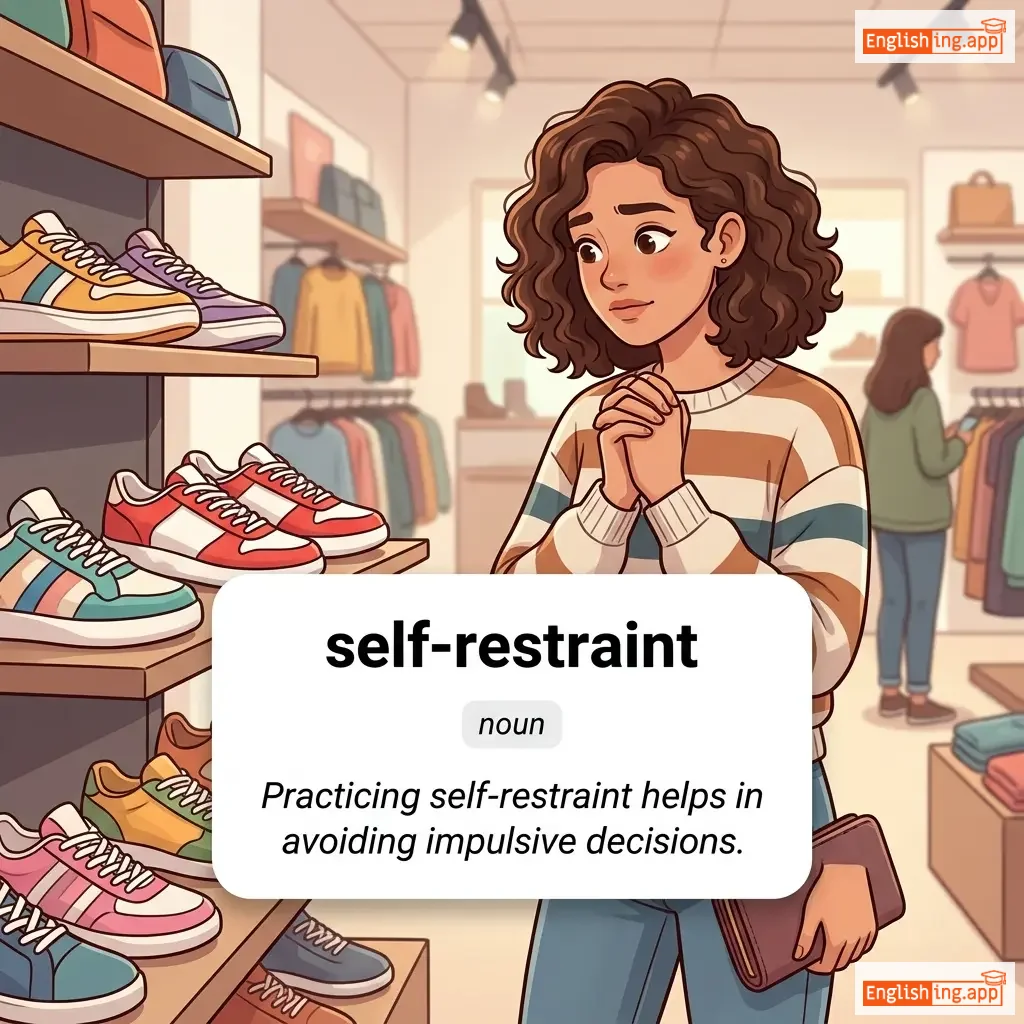
noun
ˌsɛlf.rɪˈstreɪnt
самоконтроль (samokontrol)

The practice of restraining oneself from indulging in something, typically an impulse or desire.

"Practicing self-restraint helps in avoiding impulsive decisions."

"Практика самоконтроля помогает избегать импульсивных решений." (Praktika samokontrolya pomogaet izbegat' impulsivnykh resheniy.)
adjective
/ˌsɛlf ˈraɪtʃəs/
самодовольный (samodovol'nyy)

Having or showing an attitude of moral superiority; believing one’s own beliefs are the only right ones.

"His self-righteous comments made everyone uncomfortable."

"Его самодовольные комментарии заставили всех почувствовать себя неуютно." (E-go sa-mo-do-vol'nye ko-men-ta-rii zas-ta-vi-li vsekh po-chuv-stvo-vat' se-bya ne-uyut-no.)
noun
/ˌsɛlfsəˈfɪʃənsi/
самодостаточность (samodostatochnost)

the ability to supply one's own needs without external assistance; independence

"The farm achieved complete self-sufficiency in food production."

"Ферма достигла полной самодостаточности в производстве пищи." (Ferma doshchigla polnoy samodostatochnosti v proizvodstve pishchi.)
adjective
/self səˈfɪʃənt/
самодостаточный (samodostatochny)

able to provide for oneself without depending on others

"The farm is completely self-sufficient in producing vegetables."

"Ферма полностью самодостаточна в производстве овощей." (Fyerma polnost'yu samodostatochna v proizvodstve ovochey.)
adjective
/ˈselfɪʃ/
эгоистичный (egoistichnyy)

caring only about oneself rather than others

"He was too selfish to share his food with others."

"Он был слишком эгоистичен, чтобы поделиться своей едой с другими." (On byl slishkom egoistichen, chtoby podelit'sya svoey yedoy s drugimi.)
adverb
/ˈsel.fɪʃ.li/
эгоистично (egoistichno)

in a selfish manner; caring only about oneself

"He selfishly took all the cookies."

"Он эгоистично забрал все печенья." (On egoistichno zabral vse pechen'ya)
selflessness definition card — visual illustration of the meaning
noun
ˈsɛlfləsnɪs
бескорыстие (beskorystie)

The quality of being concerned more with the needs of others than with one's own.

"Selflessness is a key value for community building."

"Бескорыстие - важная ценность для построения сообщества." (Beskorystie - vazhnaya tsennost dlya postroeniya soobshchestva.)
sell definition card — visual illustration of the meaning
verb
/sɛl/
продавать (prodavat')

to give or hand over something in exchange for money

"I want to sell my old phone."

"Я хочу продать свой старый телефон." (Ya khochu prodat' svoy staryy telefon.)
noun
/ˈsɛlər/
счастье (schast'ye)

a person who sells something

"The seller offered a discount on bulk purchases."

"Она не могла скрыть своего счастья, когда получила награду." (Ona ne mogla skryt' svoego schast'ya, kogda poluchila nagradu.)
semantic definition card — visual illustration of the meaning
adjective
/sɪˈmæntɪk/
семантический (semanticheskiy)

Relating to meaning in language or logic.

"The argument was more about semantic differences than real issues."

"Аргумент больше касался семантических различий, чем реальных проблем." (Argument bol'she kasalsya semanticheskikh razlichiy, chem real'nykh problem.)
noun
/ˈsɛm.bləns/
видимость, внешнее проявление (vidimost, vneshnee proyavlenie)

The outward appearance or form of something, especially when the reality is different.

"Despite his calm tone, there was only a semblance of control in the room."

"Несмотря на его спокойный тон, в комнате была только видимость контроля." (Nesmotrya na ego spokoynyy ton, v komnate byla tol'ko vidimost' kontrolya.)
adjective
/ˌsɛm.iˈæn.ju.əl/
полугодовой (polugodovoy)

Occurring twice a year; every six months.

"The company holds a semiannual meeting with all employees."

"Компания проводит полугодовую встречу со всеми сотрудниками." (Kompaniya proyhodit polugodovuyu vstrechu so vsemi sotrudnikami.)
adjective
/ˈsɛpərəbəl/
разделяемый (razdelyayemy)

Capable of being separated or divided.

"The two issues are separable and should be discussed independently."

"Эти два вопроса разделяемы и должны быть обсуждены независимо." (Eti dva voprosa razdelyayemy i dolzhny byt' obsuzhdeny nezavisimo.)
noun
/sɛpˈtɛmbər/
сентябрь (sentyabr)

The ninth month of the year in the Gregorian calendar

"My birthday is in September, and I always celebrate it with friends."

"Мой день рождения в сентябре, и я всегда праздную его с друзьями." (Moy den rozhdeniya v sentyabre, i ya vsegda prazdnuyu ego s druz'yami.)
noun
/ˈsɛpərətɪst/
сепаратист (separatist)

A person who supports the separation of a group from a larger body, often for political or cultural independence.

"The separatist group demanded independence from the central government."

"Сепаратистская группа потребовала независимости от центрального правительства." (Separatistskaya gruppa potrebovala nezavisimosti ot tsentral'nogo pravitel'stva.)
noun
/ˌsɛpəˈreɪʃən/
разделение (razdeleniye)

the act of moving or being moved apart; a division or disconnection

"The separation of the two friends was difficult for both of them."

"Разделение двух друзей было трудно для обоих." (Razdeleniye dvukh druzey bylo trudno dlya oboikh.)
adverb
/ˈsɛp.ər.ət.li/
отдельно (otdelno)

in a way that is apart or individually; not together

"They decided to travel separately to the conference."

"Они решили поехать на конференцию отдельно." (Oni reshil poekhat na konferenciyu otdelno.)
adjective
/ˈsɛpəreɪtɪd/
разделенный (razdelennyy)

divided or disconnected from something else; not together

"They have been living in separated houses since the divorce."

"С момента развода они живут в отдельных домах." (S momenta razvoda oni zhivut v otdelnykh domakh.)
verb
/ˈsɛpəˌreɪt/
отделить (otdelit)

To cause to move or be apart; to divide into distinct elements.

"The teacher separated the students into groups."

"Учитель разделил студентов на группы." (Uchitel' razdelil studentov na gruppy.)
noun
/ˈsɛnʃəns/
чувствительность (chuvstvitel'nost')

The capacity to feel, perceive, or experience subjectively.

"Many argue that animals possess sentience."
"Многие утверждают, что животные обладают чувствительностью." (Mnogie utverzhdayut, chto zhivotnye obladayut chuvstvitel'nost'yu.)
sentient definition card — visual illustration of the meaning
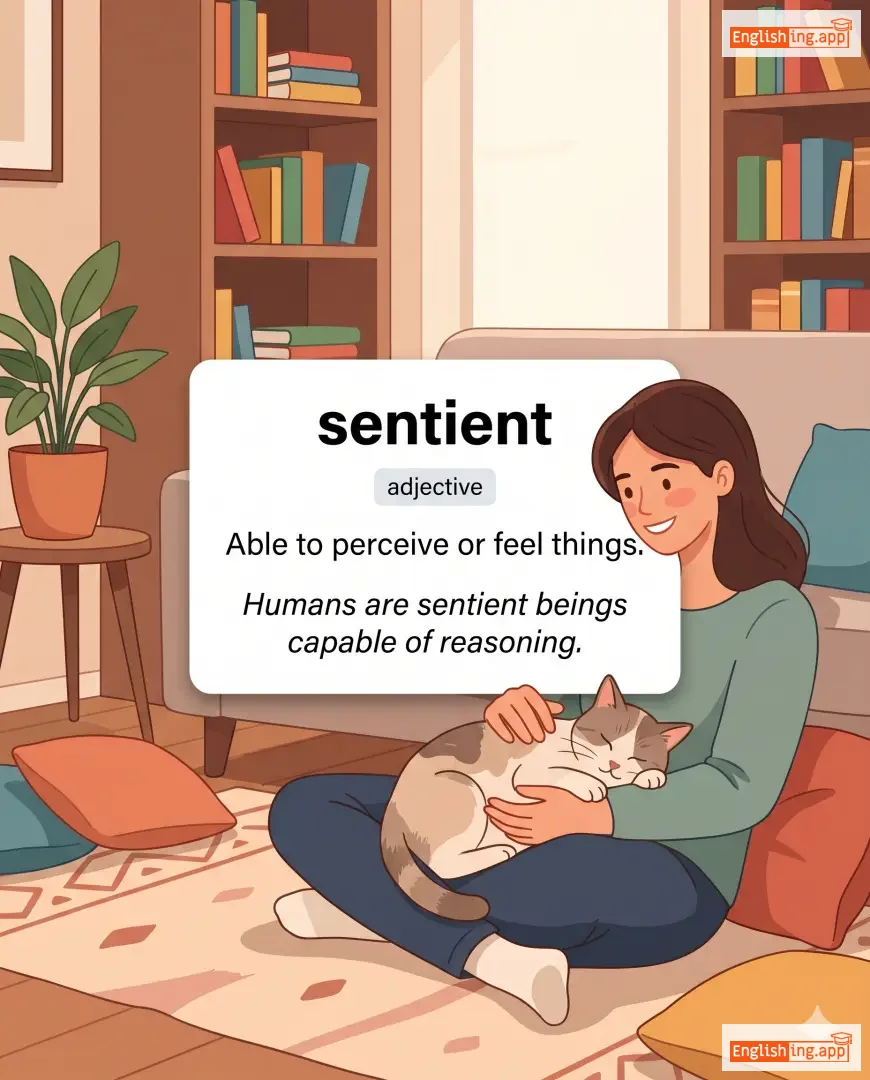
adjective
/ˈsɛnʃənt/
чувствующий (chuvstvuyushchiy)

Able to perceive or feel things.

"Humans are sentient beings capable of reasoning."

"Люди — чувствующие существа, способные рассуждать." (Lyudi — chuvstvuyushchie sushchestva, sposobnye rassuzhdat'.)
noun
/ˈsɛntɪmənt/
чувство (chuvstvo)

a view or opinion that is based on emotion rather than reason

"Public sentiment was against the new law."

"Общественное мнение было против нового закона." (Obshchestvennoe mnenie bylo protiv novogo zakona.)