Словари

Словарь английского языка | Значения слов, определения и примеры
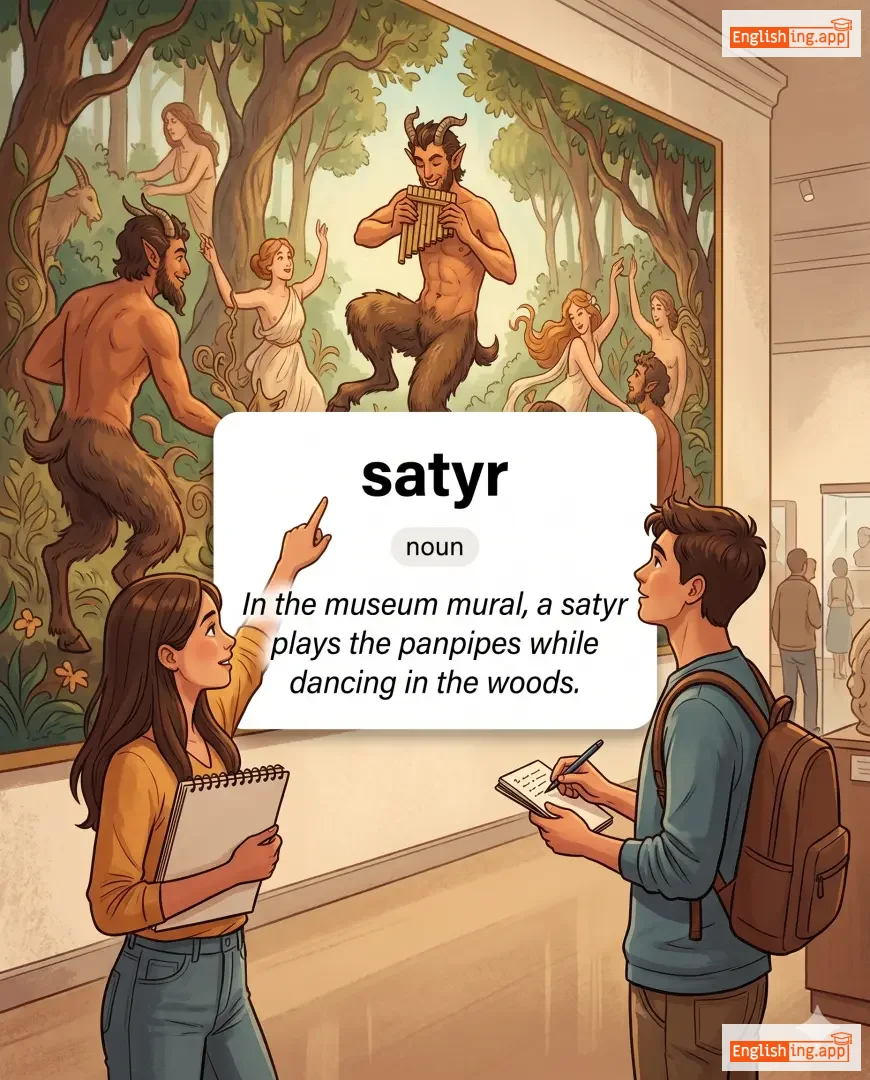
satyr definition card — visual illustration of the meaning
noun
/ˈsætər/
счастье (schastye)

a creature from Greek mythology depicted as a lustful being, often half-man and half-goat; by extension, a lecherous man

"In the museum mural, a satyr plays the panpipes while dancing in the woods."
"Она не могла скрыть свое счастье, когда получила награду." (Ona ne mogla skryt' svoe schast'ye, kogda poluchila nagradu.)
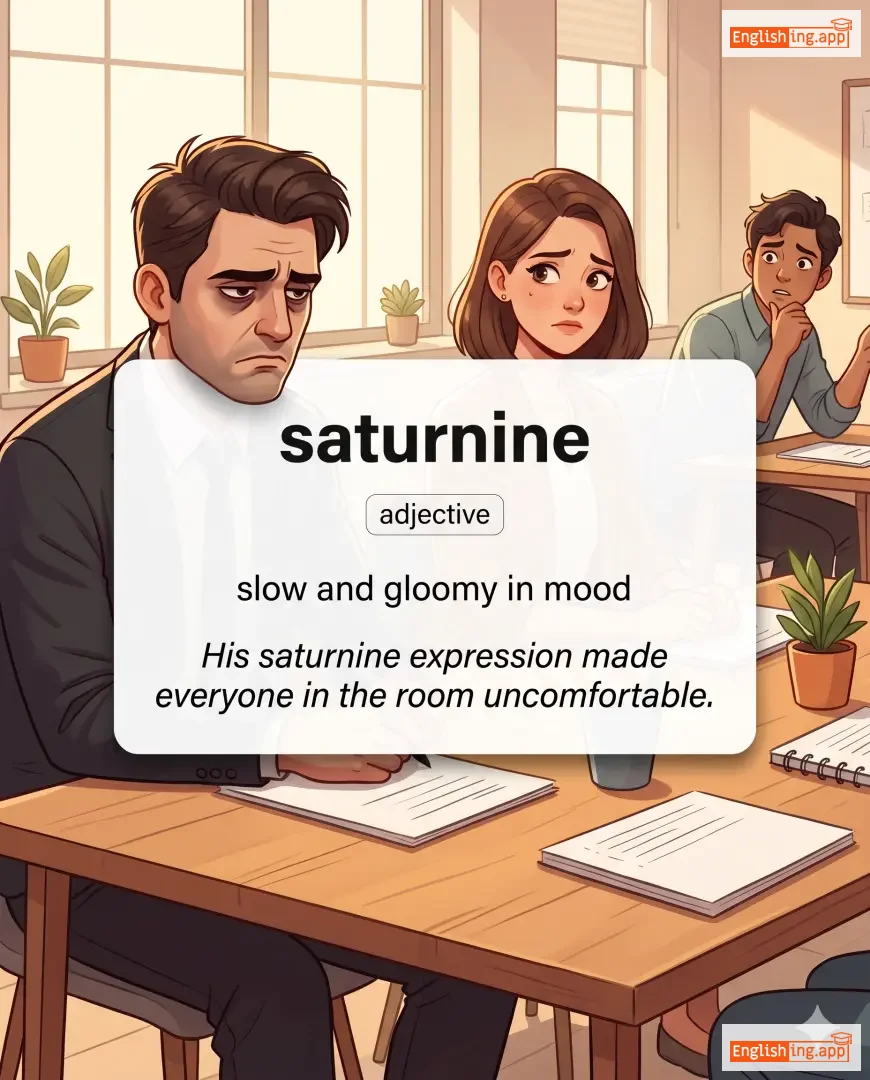
saturnine definition card — visual illustration of the meaning
adjective
/ˈsætərˌnaɪn/
сатурнинский (saturninskij)

slow and gloomy in mood

"His saturnine expression made everyone in the room uncomfortable."

"Его сатурнинское выражение заставило всех в комнате чувствовать себя неудобно." (Yego saturninskoe vyrazhenie zastavilo vsekh v komnate chuvstvovat' sebya neudobno.)
noun
/ˈsætərdeɪ/
суббота (subbota)

The day of the week between Friday and Sunday; traditionally the sixth day of the week

"We are going to the beach on Saturday."
"Мы идем на пляж в субботу." (My idem na plyazh v subbotu.)
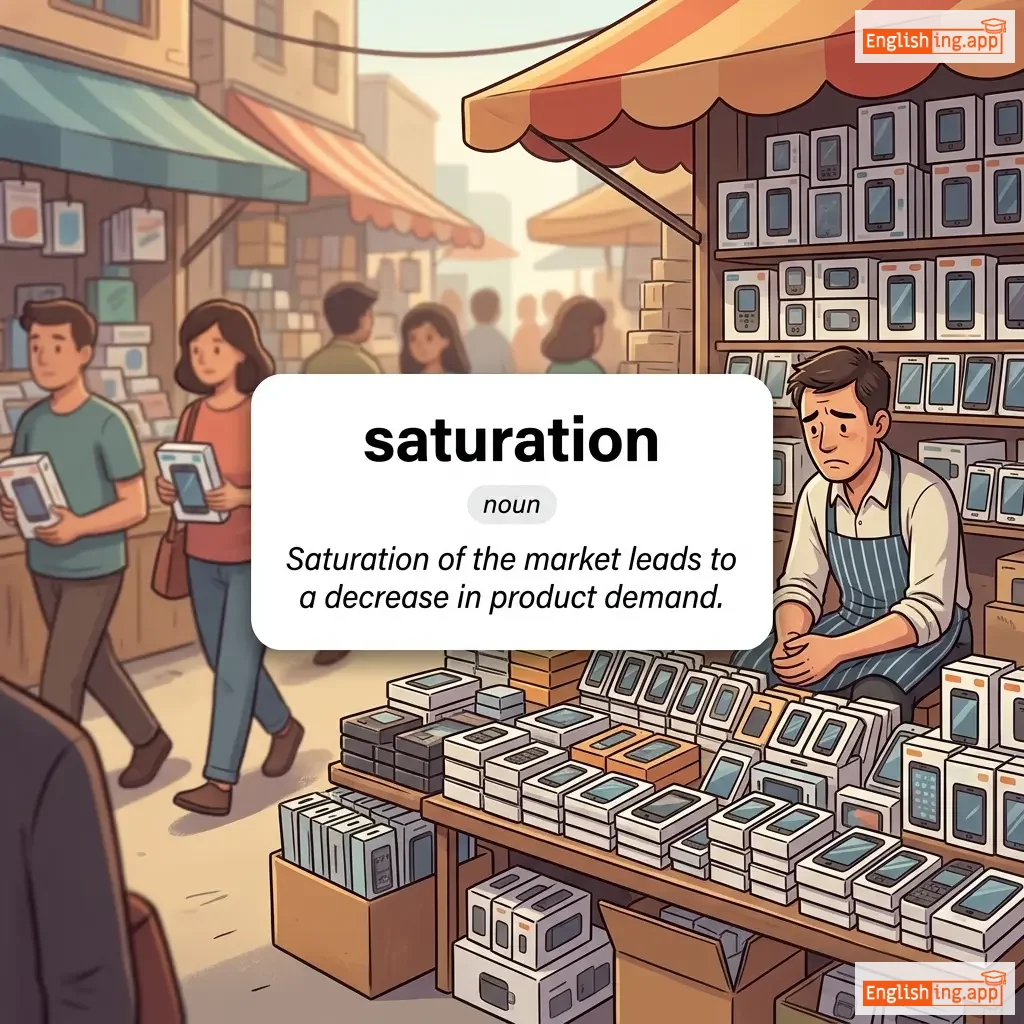
saturation definition card — visual illustration of the meaning
noun
/ˌsætʃəˈreɪʃən/
насыщение (nasyshchenie)

The state or process that occurs when no more of something can be absorbed, combined with, or added.

"Saturation of the market leads to a decrease in product demand."
"Насыщение рынка приводит к снижению спроса на продукцию." (Nasyshchenie rynka privodit k snizheniyu sprosa na produktsiyu.)
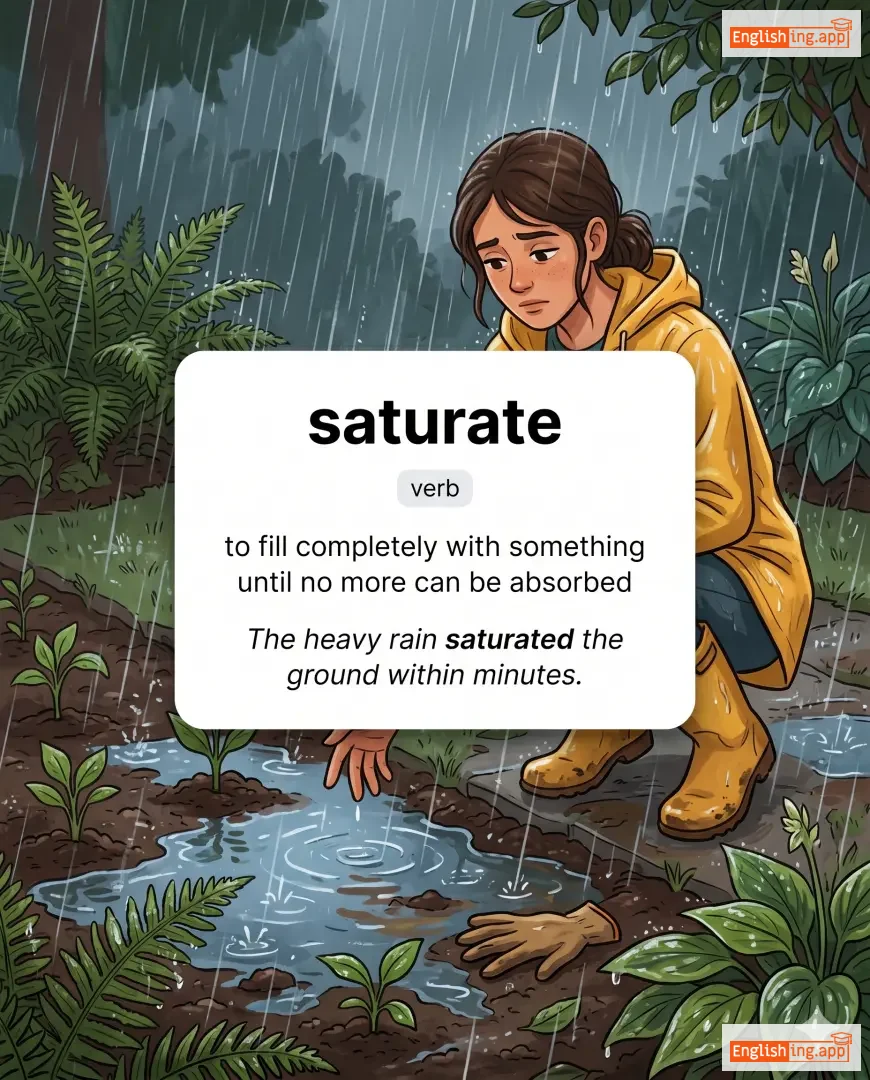
saturate definition card — visual illustration of the meaning
verb
/ˈsætʃəˌreɪt/

to fill completely with something until no more can be absorbed

"The heavy rain saturated the ground within minutes."

noun
/ˈsætræp/
сатрап (satrap)

a governor of a province in ancient Persia; also used figuratively for a subordinate ruler

"The king appointed a satrap to oversee the distant province."

"Царь назначил сатрапа для управления удаленной провинцией." (Tsar' naznachil satrapa dlya upravleniya udalennoy provintsiey.)
satisfy definition card — visual illustration of the meaning
verb
/ˈsætɪsfaɪ/
удовлетворять (udovletvoryat)

to meet the expectations, needs, or desires of someone

"The manager's explanation satisfied all of our concerns."

"Пояснение менеджера удовлетворило все наши беспокойства." (Poyasnenie menedzhera udovletvorilo vse nashi bespokoystva.)
adjective
/ˈsætɪsfaɪd/
удовлетворён (udovletvorjon)

Pleased or content with what has been achieved or received.

"He felt satisfied after finishing his project."

"Он почувствовал удовлетворение после завершения своего проекта." (On pochuvstvoval udovletvorenie posle zaversheniya svoego proekta.)
adjective
/ˈsæt.ɪs.fæk.tər.i/
удовлетворительный (udovletvoritel'nyy)

acceptable; meeting requirements; adequate

"The test results were satisfactory."

"Результаты испытаний были удовлетворительными." (rezul'taty ispytaniy byli udovletvoritel'nymi.)
noun
/ˌsætɪsˈfækʃən/
удовлетворение (udovletvorenie)

the feeling of being pleased or content with something

"Her satisfaction with the results was evident."

"Ее удовлетворение результатами было очевидным." (Eye udovletvorenie rezul'tatami bylo ochevidnym.)
verb
/ˈsætəˌraɪz/
сатиризировать (satirizirovat)

to mock or criticize something using satire

"The play satirizes the greed of modern corporations."

"Пьеса сатирает жадность современных корпораций." (P'esа satirayet zhадnost' sovremennykh korporatsiy.)
adjective
/səˈtɪrɪkəl/
сатирический (satiricheskiy)

containing or using satire to criticize or mock

"The satirical cartoon mocked the government's new policy."

"Сатирический рисунок высмеивал новую политику правительства." (Satiricheskiy risunok vysmeival novuyu politiku pravitel'stva.)
adjective
/səˈtɪrɪk/
сатирический (satiricheskiy)

Relating to or using satire.

"The novel takes a satiric view of urban life."

"Роман представляет собой сатирическое видение городской жизни." (Roman predstavlyaet soboy satiricheskoe videnie gorodskoy zhizni.)
noun
/ˈsætaɪər/
сатира (satira)

The use of humor, irony, or exaggeration to criticize people's stupidity or vices.

"The play was a brilliant satire on modern politics."
"Пьеса была блестящей сатирой на современную политику." (P'yesa byla blestyashchey satiroy na sovremennuyu politiku.)
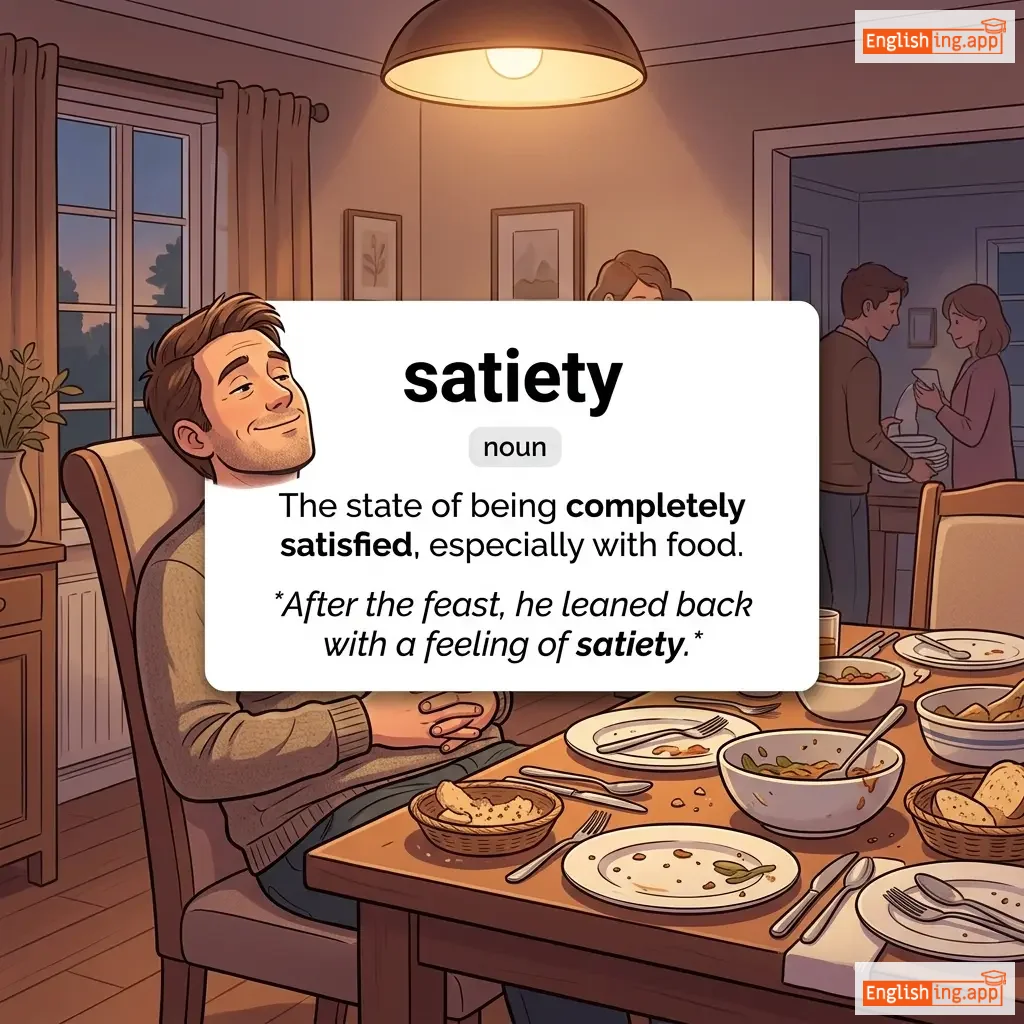
satiety definition card — visual illustration of the meaning
noun
/səˈtaɪ.ə.ti/
сытость (sytost)

The state of being completely satisfied, especially with food.

"After the feast, he leaned back with a feeling of satiety."
"После пира он откинулся с чувством сытости." (Posle pira on otkinulsya s chuvstvom sytości.)
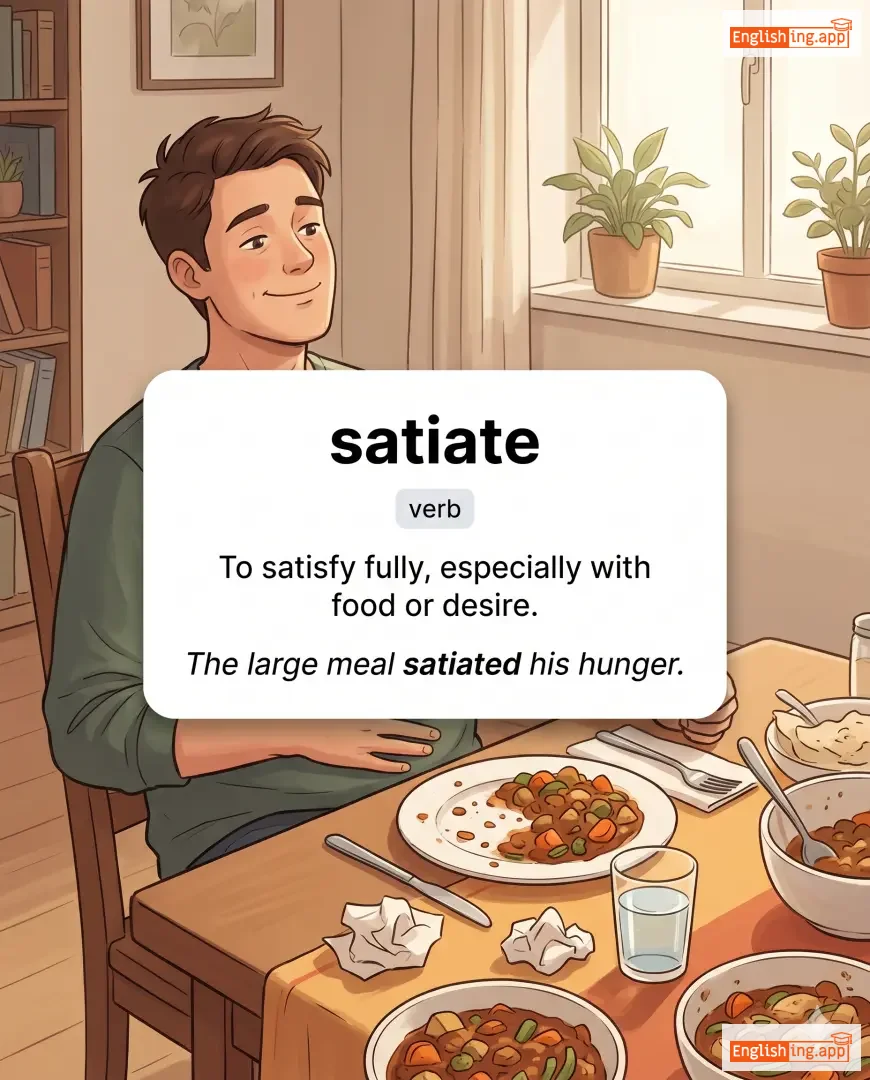
satiate definition card — visual illustration of the meaning
verb
/ˈseɪʃiˌeɪt/
удовлетворить (udovletvorit)

To satisfy fully, especially with food or desire.

"The large meal satiated his hunger."

"Большой обед утолил его голод." (Bol'shoy obed utolil ego golod.)
satellite definition card — visual illustration of the meaning
noun
/ˈsætəlaɪt/
спутник (sputnik)

An artificial body placed in orbit around the earth or another planet to collect information or for communication.

"The weather satellite provided real-time images of the storm."

"Метеорологический спутник предоставил изображения шторма в реальном времени." (Meteorologicheskiy sputnik predostavil izobrazheniya shtorma v real'nom vremeni.)
verb
/seɪt/
удовлетворить (udovletvorit)

To satisfy fully or to excess.

"The huge meal sated their hunger after the long journey."

"Огромная еда удовлетворила их голод после долгого путешествия." (Ogromnaya yeda udovletvorila ikh golod posle dolgogo puteshestviya.)
noun
/ˈseɪ.tən/
Сатана (Satana)

the chief evil spirit; the Devil in Christian and Islamic belief

"According to religious texts, Satan tempts people to sin."

"Согласно религиозным текстам, Сатана искушает людей к греху." (Soglasno religioznym tekstam, Satana iskushayet lyudey k grekhu.)
sartorial definition card — visual illustration of the meaning
adjective
/sɑːrˈtɔːriəl/
относящийся к портняжному делу (otnosyashchijsya k portnyazhnomu delu)

Relating to tailoring, clothes, or style of dress.

"The actor is known for his sartorial elegance on the red carpet."

"Этот актер известен своей сарториальной элегантностью на красной дорожке." (Etot akter izvesten svoej sartorial'noj eleganc'ej na krasnoj dorozhke.)
noun
/ˈsɑːri/
сари (sari)

a garment consisting of a length of cotton or silk elaborately draped around the body, traditionally worn by women from South Asia

"She looked elegant in her red silk saree at the festival."

"Она выглядела элегантно в своём красном шелковом сари на фестивале." (Ona vyglyadela eleganto v svoem krasnom shelkovom sari na festivale.)
sardonic definition card — visual illustration of the meaning
adjective
/sɑːrˈdɒnɪk/
счастье (schast'ye)

Grimly mocking or cynical.

"She gave him a sardonic smile after hearing his excuse."

"Она не могла скрыть своего счастья, когда получила награду." (Ona ne mogla skryt' svoego schast'ya, kogda poluchila nagradu.)
noun
/sɑːrˈkɒfəɡəs/
каменный гроб (kamenniy grob)

A stone coffin, often decorated, used in ancient times.

"The museum displayed a beautifully carved sarcophagus from ancient Egypt."

"Музей выставил красиво вырезанный каменный гроб из Древнего Египта." (Muzey vystavil krasivo vyrezannyy kamenniy grob iz Drevnego Egipta.)
adjective
/sɑːrˈkæstɪk/
саркастичный (sarkastichny)

Using irony or mockery to convey contempt or humor.

"She made a sarcastic remark about his cooking."

"Она сделала саркастическое замечание о его кулинарии." (Ona sdelała sarkasticheskoe zamechanie o yevo kulinarii.)
noun
/ˈsɑːrˌkæzəm/
сарказм (sarkazm)

The use of irony to mock or convey contempt.

"His sarcasm often made people laugh but sometimes offended them."

"Его сарказм часто заставлял людей смеяться, но иногда обижал их." (Ego sarkazm chasto zastavlyal lyudey smeyat'sya, no inogda obizhal ikh.)
adjective
/ˌsæpəˈneɪʃəs/
мыльный (mylnyy)

Soapy or having the qualities of soap.

"The plant has saponaceous leaves that produce foam when rubbed in water."

"У растения мыльные листья, которые образуют пену, когда их трут в воде." (U rasteniya mylnye list'ya, kotoryye obrazyuyut penu, kogda ikh trut v vode.)
adjective
/ˌseɪpiˈɛnʃəl/
связанный с мудростью (svyazannyy s mudrost'yu)

Relating to wisdom or knowledge, often in a religious or philosophical sense.

"The monk shared sapiential teachings with his students."

"Монах поделился учениями, связанными с мудростью, со своими учениками." (Monakh podelilsya ucheniyami, svyazannymi s mudrost'yu, so svoimi uchenikami.)
adjective
/ˈseɪpiənt/
мудрый (mudryj)

Wise, or appearing to be wise.

"The professor gave a sapient response to the complex question."

"Профессор дал мудрый ответ на сложный вопрос." (Professor dal mudryj otvet na slozhnyj vopros.)
noun
/ˈseɪpiəns/
мудрость (mudrost)

Wisdom or intelligence.

"Her sapience in solving problems earned her the respect of her colleagues."

"Её мудрость в решении проблем принесла ей уважение коллег." (Yeyo mudrost' v reshenii problem prinesla yey uzhazhenie kolleg.)
adjective
/ˈsæpɪd/
вкусный (vkusnyy)

Having a pleasant taste; flavorful.

"The chef prepared a sapid dish that delighted everyone at the table."

"Шеф-повар приготовил вкусное блюдо, которое понравилось всем за столом." (Shef-povar prigotovil vkusnoe blyudo, kotoroe ponravilos' vseim za stolom.)
noun
/ˈsæf.aɪər/
сапфир (safpir)

a precious stone that is typically blue in color

"The royal crown was adorned with a large sapphire."

"Корона была украшена большим сапфиром." (Korona byla ukrashena bol'shim safpirom.)
verb, noun
/sæp/
сок / ослаблять (sok / oslablyat)

As a noun: the vital fluid in plants; As a verb: to gradually weaken or drain strength.

"The long journey began to sap his energy."

"Долгий путь начал ослаблять его энергию." (Dolgiy put' nachal oslablyat' ego energiyu.)
noun
/ˈsækrɪsti/
сакристия (sakristiya)

a room in a church where sacred vessels and vestments are kept

"The priest entered the sacristy before the mass began."

"Священник вошел в сакристию перед началом мессы." (Svyashchennik voshel v sakristiyu pered nachalom messy.)
adjective
/ˈruːθləs/
безжалостный (bezzhalostnyy)

Having or showing no pity or compassion for others.

"The ruthless leader crushed all opposition."

"Безжалостный лидер уничтожил все сопротивление." (Bezzhalostnyy lider unichtozhil vse soprotivlenie.)
ruthless competition definition card — visual illustration of the meaning
noun
ˈruθləs ˌkɑmpəˈtɪʃən
безжалостная конкуренция (bezzhalostnaya konkurentsiya)

Fierce and merciless rivalry or contest, without pity or compassion.

"Ruthless competition for power leads to societal issues."

"Безжалостная конкуренция за власть приводит к социальным проблемам." (Bezzhalostnaya konkurentsiya za vlast' privodit k sotsial'nym problemam.)
noun
/səˈbætɪkəl/
период отпуска для учебы или путешествий (period otpuska dlya ucheby ili puteshestviy)

A period of paid leave granted to a teacher or worker for study or travel, traditionally every seventh year.

"She took a sabbatical to research her new book."

"Она взяла саббатикал, чтобы исследовать свою новую книгу." (Ona vzyala sabbatical, chtoby issledovat' svoyu novuyu knigu.)
verb
/ˈsæbətɑːʒ/
разрушительная деятельность (razrushitel'naya deyatel'nost')

To deliberately destroy, damage, or obstruct something, especially for political or military advantage.

"The rebels tried to sabotage the railway lines."

"Повстанцы пытались саботировать железнодорожные пути." (Povstantsy pytalis' sabotirovat' zheleznodorozhnyye puti.)
noun
/ˌsæbəˈtɜːr/
саботёр (sabotyor)

A person who engages in sabotage.

"The saboteur was arrested before he could plant the bomb."

"Саботёр был арестован до того, как он успел установить бомбу." (Sabotyor byl arestovan do togo, kak on uspel ustanovit' bombu.)
adjective
/ˈsækərɪn/
счастье (schastye)

Excessively sweet or sentimental.

"His saccharine smile seemed insincere."

"Она не могла скрыть своего счастья, когда получила награду." (Ona ne mogla skryt' svoego schast'ya, kogda poluchila nagradu.)
adjective
/ˌsæsərˈdoʊtl/
священнический (svyashchennicheskiy)

Relating to priests or the priesthood.

"The ritual had a distinctly sacerdotal character."

"Ритуал имел явно священнический характер." (Ritual imel yavno svyashchennicheskiy kharakter.)
noun
/sæk/
мешок (meshok)

a large bag made of strong material for holding things

"He carried a sack of rice on his shoulder."

"Он нес мешок риса на своем плече." (On nes meshok risa na svoem pleche.)
adjective
/ˈseɪkrɪd/
священный (svyashchennyy)

connected with God or a religion and considered holy or deserving respect

"The temple is a sacred place for the community."

"Храм - это святое место для общины." (Khram - eto svyatoe mesto dlya obshchiny.)
sacrifice definition card — visual illustration of the meaning
🕯️

sacrifice

noun, verb
/ˈsækrɪfaɪs/

To give up something valuable for the sake of others or a higher purpose.

"Parents often sacrifice their own comfort for their children."

adjective
/ˌsækrɪˈfɪʃəl/
жертвенный (zhertvennyy)

Relating to or involving sacrifice.

"The lamb was used as a sacrificial offering in the ritual."

"Ягненок был использован как жертвенная жертва в ритуале." (Yahnenok byl ispol'zovan kak zhertvennaya zhertva v rituale.)
noun
/ˈsækrɪlɪdʒ/
осквернение (oskvernenie)

Violation or misuse of what is regarded as sacred.

"Stealing from the temple was considered an act of sacrilege."

"Кража из храма считалась актом осквернения." (Krazha iz khrama schitalas aktom oskverneniya.)
adjective
/ˌsækrəˈlɪdʒəs/
сакралигийный (sacriligijnyj)

Showing disrespect or irreverence toward something sacred.

"The painting was criticized as being sacrilegious."

"Картина была раскритикована как сакралигийная." (Kartina byla raskritikovana kak sakralignaya.)
noun/verb
/ˈseɪf.ɡɑːrd/
защищать (zashchishchat')

To protect from harm or damage; a measure taken to ensure safety.

"Laws exist to safeguard the rights of children."

"Законы существуют для защиты прав детей." (Zakony sushchestvuyut dlya zashchity pravy detey.)
adverb
/ˈseɪfli/
безопасно (bezopasno)

in a way that is not dangerous or likely to cause harm

"The children crossed the road safely."

"Дети пересекли дорогу безопасно." (Deti peresehli dorogu bezopasno.)
noun
/ˈseɪfti/
безопасность (seyfti)

the condition of being protected from harm or danger

"The safety of passengers is our top priority."

"Безопасность пассажиров является нашим главным приоритетом." (Bezopasnost passazhirov yavlyaetsya nashim glavnym prioritetom)
adjective
/seɪf/
безопасный (bezopasnyy)

free from harm or danger

"Make sure your belongings are safe during the trip."

"Убедитесь, что ваши вещи в безопасности во время поездки." (Ubedites', chto vashi veshchi v bezopasnosti vo vremya poyezdki.)