ভোকাবুলারিসমূহ

ইংরেজি শব্দের বাংলা অর্থ | English to Bangla Word Meaning Dictionary

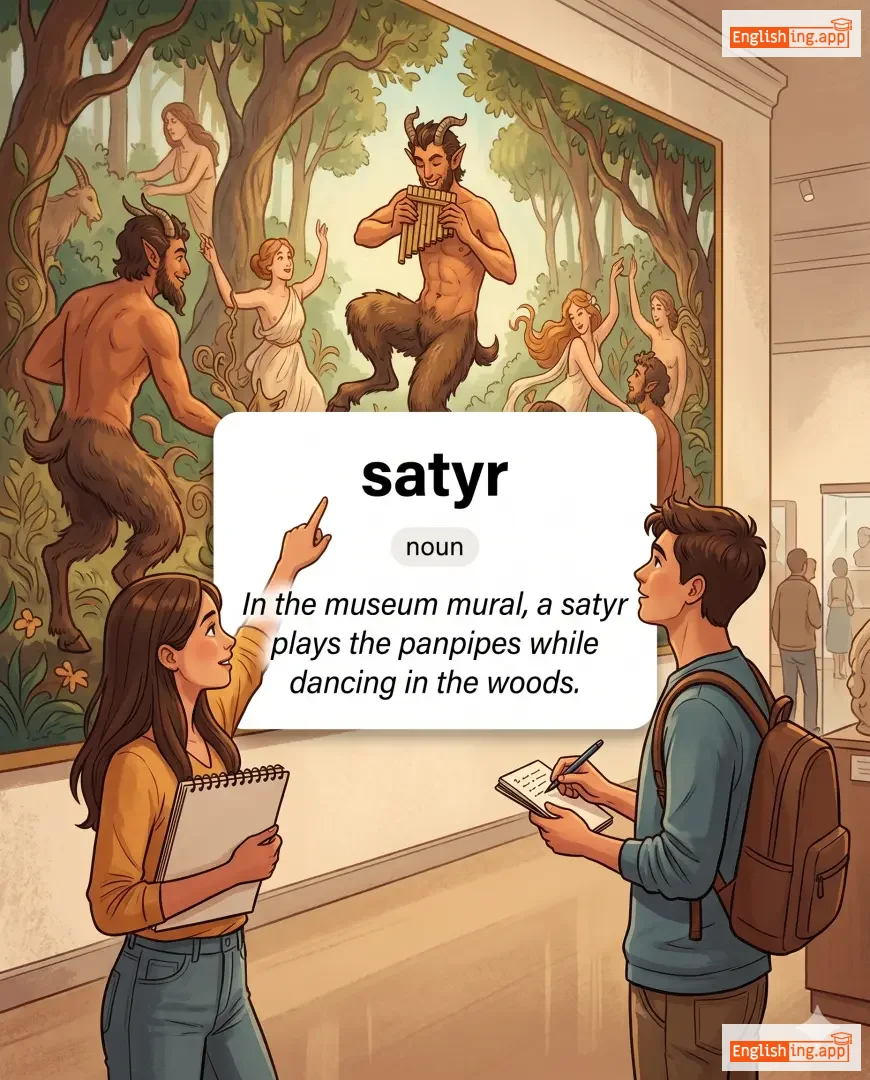
satyr definition card — visual illustration of the meaning
noun
/ˈsætər/
গ্রিক পুরাণের অর্ধমানব-অর্ধছাগল বনদেব; কামুক ব্যক্তি (grik puraner ardhomanob-ardhochagol bonodebo; kamuk bekti)

a creature from Greek mythology depicted as a lustful being, often half-man and half-goat; by extension, a lecherous man

"In the museum mural, a satyr plays the panpipes while dancing in the woods."

"মিউজিয়ামের দেয়ালচিত্রে এক স্যাটার জঙ্গলে নেচে নেচে প্যানপাইপস বাজাচ্ছে।" (miujiyamer deyalchitre ek satyr jangle neche neche panpipes bajachchhe.)
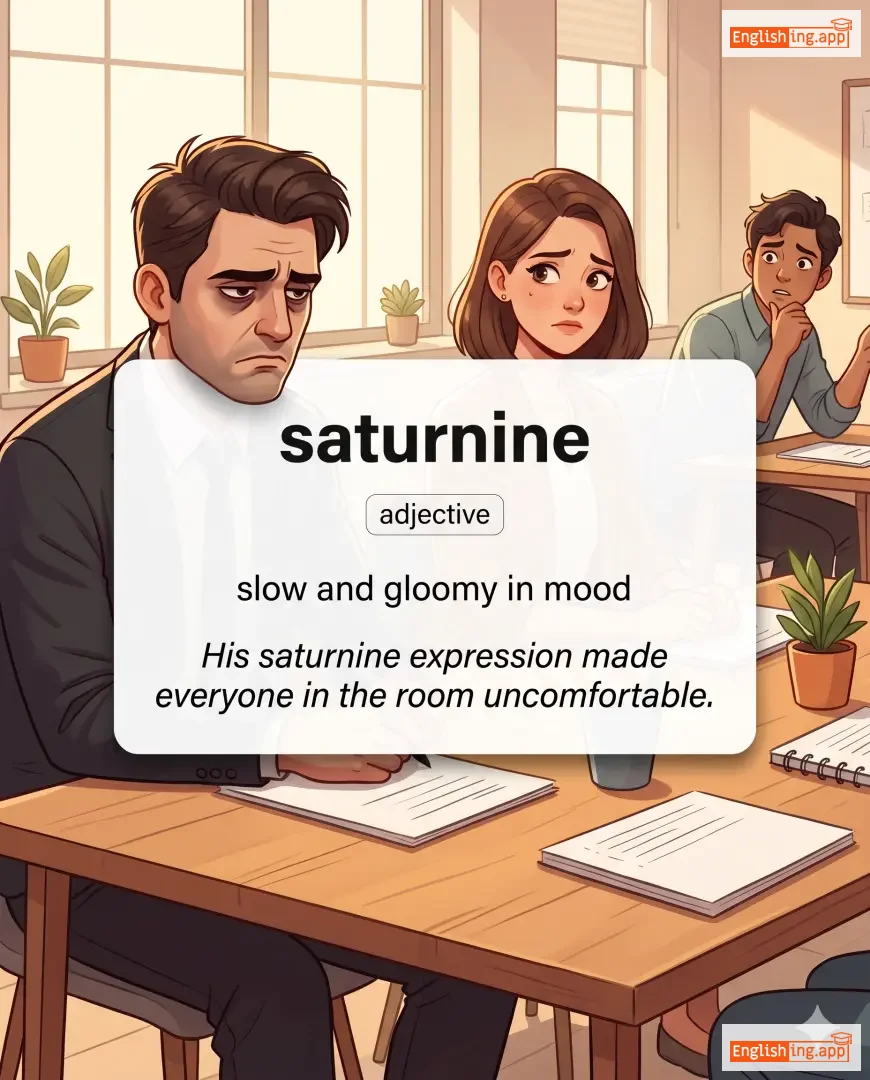
saturnine definition card — visual illustration of the meaning
adjective
/ˈsætərˌnaɪn/
বিষণ্ণ (bishonno)

slow and gloomy in mood

"His saturnine expression made everyone in the room uncomfortable."

"তার বিষণ্ণ মুখভঙ্গি ঘরে সবাইকে অস্বস্তিতে ফেলেছিল।" (Tar bishonno mukhbhongi ghore sobaike oshostite felchhilo.)
noun
/ˈsætərdeɪ/
শনিবার (shonibar)

The day of the week between Friday and Sunday; traditionally the sixth day of the week

"We are going to the beach on Saturday."

"আমরা শনিবার সমুদ্রে যাচ্ছি।" (amra shonibar somudre jacchi.)
saturation definition card — visual illustration of the meaning
noun
/ˌsætʃəˈreɪʃən/
পূর্ণতা (purnota)

The state or process that occurs when no more of something can be absorbed, combined with, or added.

"Saturation of the market leads to a decrease in product demand."

"বাজারের পূর্ণতা পণ্যের চাহিদা কমিয়ে দেয়।" (Bajarer purnota ponyer chahida komiye dey.)
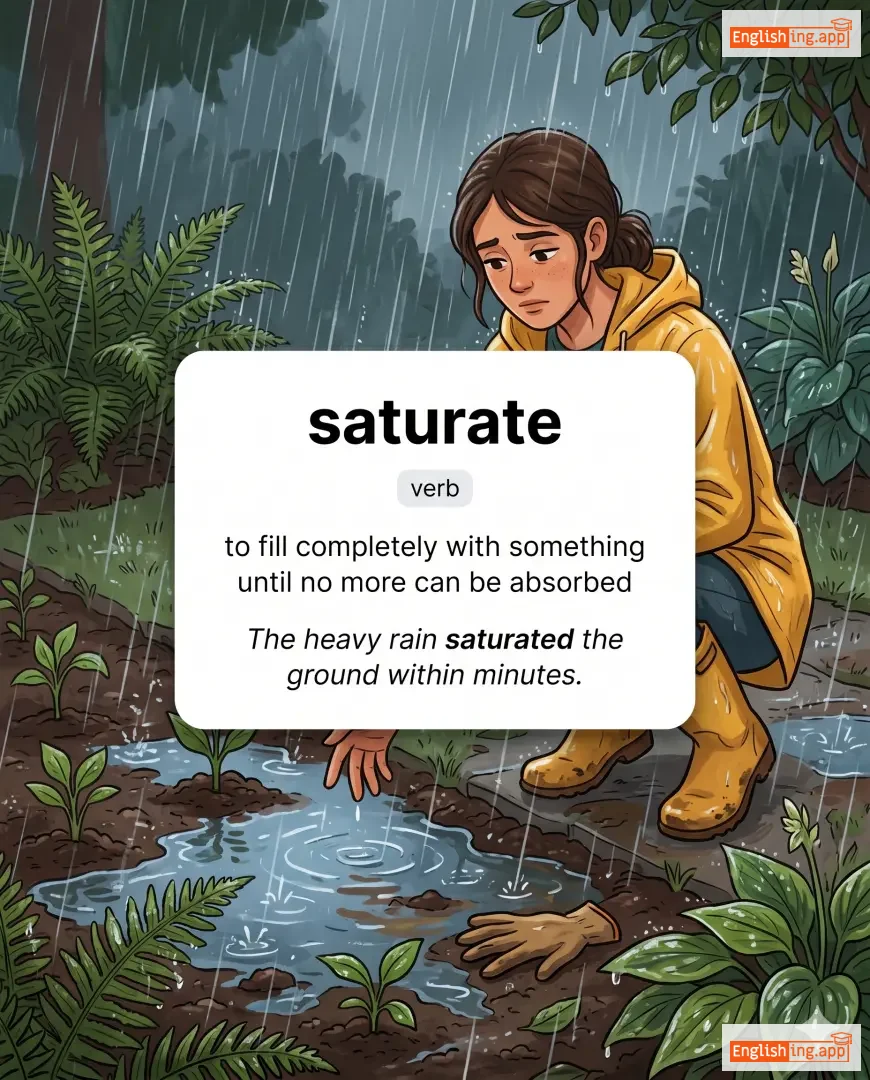
saturate definition card — visual illustration of the meaning
verb
/ˈsætʃəˌreɪt/
পরিপূর্ণ করা (poripurno kora)

to fill completely with something until no more can be absorbed

"The heavy rain saturated the ground within minutes."

"মুষলধারে বৃষ্টি কয়েক মিনিটের মধ্যে জমি ভিজিয়ে দিল।" (Musoldhare brishti koyek miniter moddhe jomi bijiye dilo.)
noun
/ˈsætræp/
রাজ্যপাল (rajyopal)

a governor of a province in ancient Persia; also used figuratively for a subordinate ruler

"The king appointed a satrap to oversee the distant province."

"রাজা দূরবর্তী প্রদেশের তত্ত্বাবধানের জন্য একজন রাজ্যপাল নিয়োগ করেছিলেন।" (Raja durborti prodesher tottabadhaner jonno ekjon rajyopal niyog korechhilen.)
satisfy definition card — visual illustration of the meaning
verb
/ˈsætɪsfaɪ/
সন্তুষ্ট করা (sontushto kora)

to meet the expectations, needs, or desires of someone

"The manager's explanation satisfied all of our concerns."

"ম্যানেজারের ব্যাখ্যা আমাদের সব উদ্বেগকে সন্তুষ্ট করেছিল।" (Manager-er byakhya amader shob udvegke sontushto korechhilo.)
adjective
/ˈsætɪsfaɪd/
সন্তুষ্ট (sontushto)

Pleased or content with what has been achieved or received.

"He felt satisfied after finishing his project."

"সে তার প্রজেক্ট শেষ করার পর সন্তুষ্ট অনুভব করল।" (Se tar project shesh korar por sontushto onubhob korlo.)
adjective
/ˈsæt.ɪs.fæk.tər.i/
সন্তোষজনক; সন্তুষ্টিকর; (shontoshshojônok)

acceptable; meeting requirements; adequate

"The test results were satisfactory."

"পরীক্ষার ফলাফল সন্তোষজনক ছিল।" (porikkhaar pholaaphol shontoshshojônok chhilo.)
noun
/ˌsætɪsˈfækʃən/
সন্তুষ্টি (sontushti)

the feeling of being pleased or content with something

"Her satisfaction with the results was evident."

"তার ফলাফলের সাথে সন্তুষ্টি স্পষ্ট ছিল।" (Tar folafoler sathe sontushti sposto chhilo.)
verb
/ˈsætəˌraɪz/
বিদ্রূপ করা (bidrup kora)

to mock or criticize something using satire

"The play satirizes the greed of modern corporations."

"নাটকটি আধুনিক কর্পোরেশনগুলির লোভকে বিদ্রূপ করেছে।" (Natokti adhunik corporationguler lobhke bidrup korechhe.)
adjective
/səˈtɪrɪkəl/
বিদ্রূপাত্মক (bidrupatmok)

containing or using satire to criticize or mock

"The satirical cartoon mocked the government's new policy."

"বিদ্রূপাত্মক কার্টুনটি সরকারের নতুন নীতিকে উপহাস করেছিল।" (Bidrupatmok cartoonti sarkarer notun nitike upohash korechhilo.)
adjective
/səˈtɪrɪk/
ব্যঙ্গাত্মক (byongatmak)

Relating to or using satire.

"The novel takes a satiric view of urban life."

"উপন্যাসটি শহুরে জীবনের উপর একটি ব্যঙ্গাত্মক দৃষ্টিভঙ্গি নিয়েছে।" (Uponyasti shahure jibon-er upar ekti byongatmak drishtivongi niyeche.)
noun
/ˈsætaɪər/
বিদ্রূপ (bidrup)

The use of humor, irony, or exaggeration to criticize people's stupidity or vices.

"The play was a brilliant satire on modern politics."

"নাটকটি আধুনিক রাজনীতির উপর এক উজ্জ্বল ব্যঙ্গ ছিল।" (Natokti adunik rajnitir upar ek ujjol byongo chhilo.)
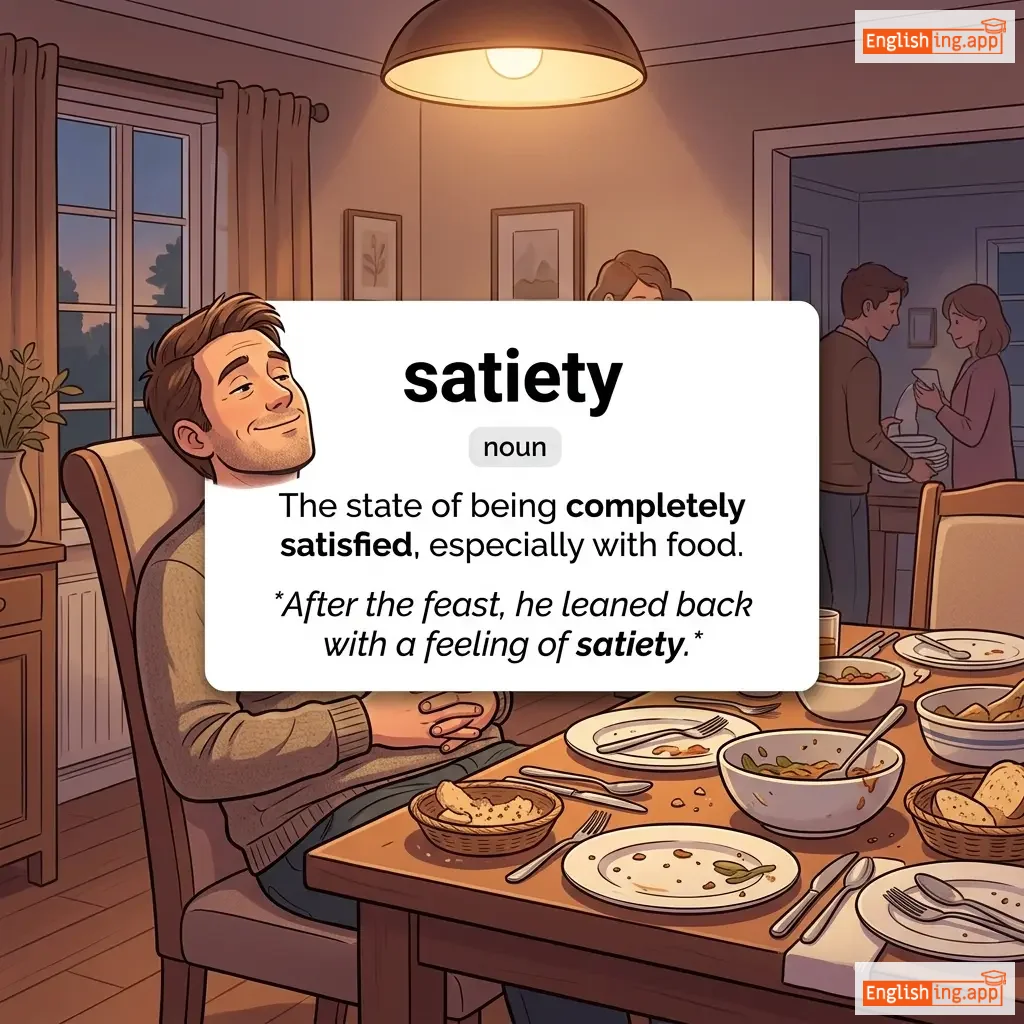
satiety definition card — visual illustration of the meaning
noun
/səˈtaɪ.ə.ti/
তৃপ্তি (tripti)

The state of being completely satisfied, especially with food.

"After the feast, he leaned back with a feeling of satiety."

"ভোজের পর সে তৃপ্তির অনুভূতি নিয়ে হেলান দিল।" (Bojer por se triptir onubhuti niye helan dilo.)
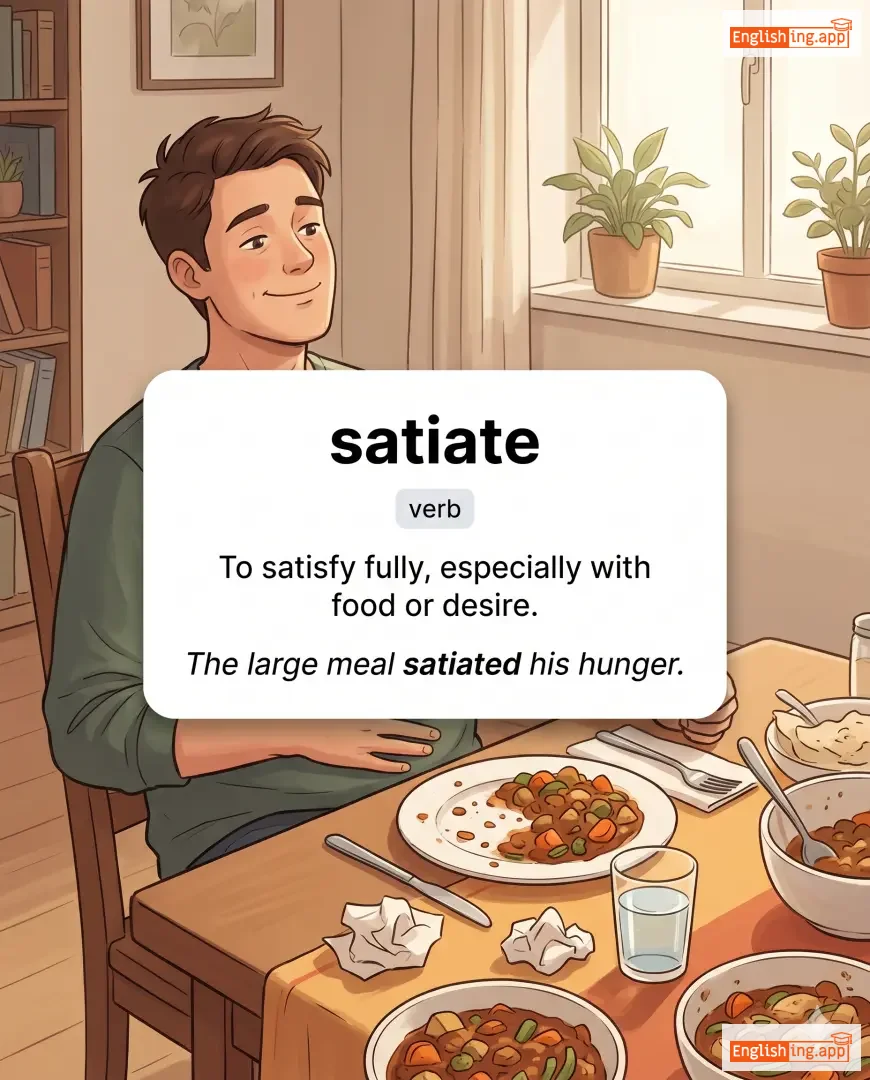
satiate definition card — visual illustration of the meaning
verb
/ˈseɪʃiˌeɪt/
পূর্ণ তৃপ্ত করা (purno tripto kora)

To satisfy fully, especially with food or desire.

"The large meal satiated his hunger."

"বড় খাবারটি তার ক্ষুধা মিটিয়ে দিয়েছিল।" (Boro khabarti tar khudha miti'e diyechilo.)
satellite definition card — visual illustration of the meaning
noun
/ˈsætəlaɪt/
উপগ্রহ (upogroho)

An artificial body placed in orbit around the earth or another planet to collect information or for communication.

"The weather satellite provided real-time images of the storm."

"আবহাওয়া স্যাটেলাইট ঝড়ের রিয়েল-টাইম ছবি প্রদান করেছে।" (Abahawa satellite jhorer real-time chhobi prodan koreche.)
verb
/seɪt/
তৃপ্ত করা (tripto kora)

To satisfy fully or to excess.

"The huge meal sated their hunger after the long journey."

"দীর্ঘ যাত্রার পর বড় ভোজ তাদের ক্ষুধা মিটিয়েছিল।" (dirgho jatrar por boro bhoj tader khudha mitiyechhilo.)
noun
/ˈseɪ.tən/
শয়তান; (shoyton)

the chief evil spirit; the Devil in Christian and Islamic belief

"According to religious texts, Satan tempts people to sin."

"ধর্মীয় গ্রন্থ অনুসারে, শয়তান মানুষকে পাপের প্রলোভন দেয়।" (dhormio gronto onusare, shoyton manushke paper prolobhon dey.)
sartorial definition card — visual illustration of the meaning
adjective
/sɑːrˈtɔːriəl/
পোশাকসংক্রান্ত (poshaksongkranto)

Relating to tailoring, clothes, or style of dress.

"The actor is known for his sartorial elegance on the red carpet."

"অভিনেতা লাল গালিচায় তার পোশাকের সৌন্দর্যের জন্য পরিচিত।" (abhineta lal galichay tar poshaker soundorjer jonne porichito.)
noun
/ˈsɑːri/
শাড়ি (sharee)

a garment consisting of a length of cotton or silk elaborately draped around the body, traditionally worn by women from South Asia

"She looked elegant in her red silk saree at the festival."

"উৎসবে তার লাল সিল্কের শাড়িতে তাকে খুব সুন্দর লাগছিল।" (utsobe tar lal silker sharite take khub shundor lagchilo)
sardonic definition card — visual illustration of the meaning
adjective
/sɑːrˈdɒnɪk/
তাচ্ছিল্যপূর্ণ (tachchillopurno)

Grimly mocking or cynical.

"She gave him a sardonic smile after hearing his excuse."

"তার অজুহাত শুনে সে তাকে একটি তাচ্ছিল্যপূর্ণ হাসি দিল।" (tar ojuhaat shune se take ekti tachchillopurno hasi dilo.)
noun
/sɑːrˈkɒfəɡəs/
পাথরের কফিন (pathorer kofin)

A stone coffin, often decorated, used in ancient times.

"The museum displayed a beautifully carved sarcophagus from ancient Egypt."

"জাদুঘরে প্রাচীন মিশরের একটি সুন্দর খোদাই করা পাথরের কফিন প্রদর্শন করা হয়েছিল।" (jadughore prachin mishorer ekti sundor khodai kora pathorer kofin prodorshon kora hoyechilo.)
adjective
/sɑːrˈkæstɪk/
ব্যঙ্গাত্মক (byangatmok)

Using irony or mockery to convey contempt or humor.

"She made a sarcastic remark about his cooking."

"সে তার রান্না নিয়ে একটি ব্যঙ্গাত্মক মন্তব্য করল।" (Se tar ranna niye ekti byangatmok montobbo korlo.)
noun
/ˈsɑːrˌkæzəm/
বিদ্রূপ (bidrup)

The use of irony to mock or convey contempt.

"His sarcasm often made people laugh but sometimes offended them."

"তার ব্যঙ্গ মানুষকে প্রায়ই হাসাতো কিন্তু কখনও কখনও তাদের কষ্ট দিত।" (tar byongo manushke prayoi hasato kintu kokhono kokhono tader koshto dito.)
adjective
/ˌsæpəˈneɪʃəs/
সাবানের মতো (sabaner moto)

Soapy or having the qualities of soap.

"The plant has saponaceous leaves that produce foam when rubbed in water."

"গাছটির পাতায় সাবানের মতো গুণ রয়েছে যা পানিতে ঘষলে ফেনা তৈরি করে।" (Gachhtir patay sabaner moto gun royechhe ja panite ghosle fena toiri kore.)
adjective
/ˌseɪpiˈɛnʃəl/
প্রজ্ঞাসংক্রান্ত (proggasongkranto)

Relating to wisdom or knowledge, often in a religious or philosophical sense.

"The monk shared sapiential teachings with his students."

"ভিক্ষু তার ছাত্রদের সাথে প্রজ্ঞাসংক্রান্ত শিক্ষা ভাগ করে নিয়েছিলেন।" (Bhikkhu tar chatrader sathe proggasongkranto shikkha vag kore niyechhilen.)
adjective
/ˈseɪpiənt/
জ্ঞানী (gyani)

Wise, or appearing to be wise.

"The professor gave a sapient response to the complex question."

"প্রফেসর জটিল প্রশ্নের একটি জ্ঞানী উত্তর দিয়েছিলেন।" (Professor jotil proshner ekti gyani uttor diyechhilen.)
noun
/ˈseɪpiəns/
জ্ঞান (gyaan)

Wisdom or intelligence.

"Her sapience in solving problems earned her the respect of her colleagues."

"সমস্যা সমাধানে তার জ্ঞানের কারণে সহকর্মীদের শ্রদ্ধা অর্জন করেছিলেন।" (Somossa somadhane tar gyaner karone shokormider sroddha orjon korechhilen.)
adjective
/ˈsæpɪd/
সুস্বাদু (suswadu)

Having a pleasant taste; flavorful.

"The chef prepared a sapid dish that delighted everyone at the table."

"রাঁধুনি এমন একটি সুস্বাদু খাবার প্রস্তুত করেছিলেন যা সবার পছন্দ হয়েছিল।" (Radhuni emon ekti suswadu khabar prostut korechilen ja sobar pochhondo hoyechhilo.)
noun
/ˈsæf.aɪər/
নীলমণি (nilmoni)

a precious stone that is typically blue in color

"The royal crown was adorned with a large sapphire."

"রাজকীয় মুকুটটি একটি বড় নীলমণি দিয়ে সাজানো ছিল।" (rajkiyo mukutti ekti boro nilmoni diye sajano chilo.)
verb, noun
/sæp/
রস / শক্তি হ্রাস করা (ros / shokti hras kora)

As a noun: the vital fluid in plants; As a verb: to gradually weaken or drain strength.

"The long journey began to sap his energy."

"দীর্ঘ যাত্রা তার শক্তি হ্রাস করতে শুরু করেছিল।" (Dirgho jatra tar shokti hras korte shuru korechhilo.)
noun
/ˈsækrɪsti/
গির্জার কক্ষ (girjar kokkh)

a room in a church where sacred vessels and vestments are kept

"The priest entered the sacristy before the mass began."

"পুরোহিত মিস শুরু হওয়ার আগে স্যাক্রিস্টিতে প্রবেশ করলেন।" (Purohit mis shuru howar age sakristite probesh korlen.)
adjective
/ˈruːθləs/
নির্দয় (nirdoy)

Having or showing no pity or compassion for others.

"The ruthless leader crushed all opposition."

"নির্দয় নেতা সমস্ত বিরোধ দমন করেছিল।" (Nirdoy neta somosto birodh domon korechilo.)
ruthless competition definition card — visual illustration of the meaning
noun
ˈruθləs ˌkɑmpəˈtɪʃən
নির্মম প্রতিযোগিতা (nirmom protijogita)

Fierce and merciless rivalry or contest, without pity or compassion.

"Ruthless competition for power leads to societal issues."

"ক্ষমতার জন্য নির্মম প্রতিযোগিতা সামাজিক সমস্যার সৃষ্টি করে।" (Khomatar jonno nirmom protijogita shamajik shomshar srishti kore.)
noun
/səˈbætɪkəl/
অধ্যয়ন বা ভ্রমণের জন্য ছুটি (oddhoyon ba bhromoner jonno chhuti)

A period of paid leave granted to a teacher or worker for study or travel, traditionally every seventh year.

"She took a sabbatical to research her new book."

"সে তার নতুন বই গবেষণার জন্য একটি সাব্বাটিক্যাল নিয়েছিল।" (Se tar notun boi gojobeshonar jonno ekti sabbatical niyechilo.)
verb
/ˈsæbətɑːʒ/
ধ্বংসাত্মক কার্যকলাপ (dhongshatmak karyokolap)

To deliberately destroy, damage, or obstruct something, especially for political or military advantage.

"The rebels tried to sabotage the railway lines."

"বিদ্রোহীরা রেলপথ ধ্বংস করার চেষ্টা করেছিল।" (Bidrohi ra relpoth dhongsho korar cheshta korechilo.)
noun
/ˌsæbəˈtɜːr/
ধ্বংসকারী (dhongshokari)

A person who engages in sabotage.

"The saboteur was arrested before he could plant the bomb."

"বোমা বসানোর আগে ধ্বংসকারীকে গ্রেপ্তার করা হয়েছিল।" (Boma bosanor age dhongshokarike greptar kora hoyechilo.)
adjective
/ˈsækərɪn/
অতিরিক্ত মিষ্টি (otirikto mishti)

Excessively sweet or sentimental.

"His saccharine smile seemed insincere."

"তার অতিরিক্ত মিষ্টি হাসি অপ্রামাণিক মনে হচ্ছিল।" (Tar otirikto mishti hasi opramanik mone hochhilo.)
adjective
/ˌsæsərˈdoʊtl/
যাজকসংক্রান্ত (jajoksongkranto)

Relating to priests or the priesthood.

"The ritual had a distinctly sacerdotal character."

"আচারটির একটি স্পষ্ট যাজকসংক্রান্ত চরিত্র ছিল।" (achartir ekti sposto jajoksongkranto choritro chilo.)
noun
/sæk/
বস্তা (bosta)

a large bag made of strong material for holding things

"He carried a sack of rice on his shoulder."

"সে কাঁধে এক বস্তা চাল বহন করছিল।" (Se kandhe ek bosta chal bohon korchhilo.)
adjective
/ˈseɪkrɪd/
পবিত্র (pobitro)

connected with God or a religion and considered holy or deserving respect

"The temple is a sacred place for the community."

"মন্দিরটি সম্প্রদায়ের জন্য একটি পবিত্র স্থান।" (Mondirti somprodayer jonno ekti pobitro sthan.)
sacrifice definition card — visual illustration of the meaning
noun, verb
/ˈsækrɪfaɪs/
ত্যাগ (tyag)

To give up something valuable for the sake of others or a higher purpose.

"Parents often sacrifice their own comfort for their children."

"অভিভাবকরা প্রায়ই তাদের সন্তানের জন্য নিজের আরাম ত্যাগ করেন।" (obhivabokra prayoi tader shontaner jonno nijer aram tyag koren.)
adjective
/ˌsækrɪˈfɪʃəl/
আহুতি-সংক্রান্ত (ahuti-songkranto)

Relating to or involving sacrifice.

"The lamb was used as a sacrificial offering in the ritual."

"ভেড়াটি আচার অনুষ্ঠানে একটি আহুতিসংক্রান্ত উপহার হিসেবে ব্যবহৃত হয়েছিল।" (bherati achar onusthane ekti ahutisongkranto upohar hisebe byabohrito hoyechilo.)
noun
/ˈsækrɪlɪdʒ/
অপবিত্রকরণ (opobitrokoron)

Violation or misuse of what is regarded as sacred.

"Stealing from the temple was considered an act of sacrilege."

"মন্দির থেকে চুরি করা অপবিত্রকরণের কাজ হিসেবে বিবেচিত হয়েছিল।" (mondir theke churi kora opobitrokoroner kaj hisebe bibechito hoyechilo.)
adjective
/ˌsækrəˈlɪdʒəs/
অপবিত্রতাপূর্ণ (opobitrotapurno)

Showing disrespect or irreverence toward something sacred.

"The painting was criticized as being sacrilegious."

"চিত্রকর্মটিকে অপবিত্রতাপূর্ণ হিসেবে সমালোচনা করা হয়েছিল।" (chitrokormotike opobitrotapurno hisebe somalochona kora hoyechilo.)
noun/verb
/ˈseɪf.ɡɑːrd/
রক্ষা করা (rokha kora)

To protect from harm or damage; a measure taken to ensure safety.

"Laws exist to safeguard the rights of children."

"শিশুদের অধিকার রক্ষার জন্য আইন বিদ্যমান।" (Shishuder odhikar rokhar jonno ain bidyoman.)
adverb
/ˈseɪfli/
নিরাপদে (nirapode)

in a way that is not dangerous or likely to cause harm

"The children crossed the road safely."

"শিশুরা নিরাপদে রাস্তা পার হয়েছে।" (Shishura nirapode rastay par hoyeche.)
noun
/ˈseɪfti/
নিরাপত্তা (nirāpotṭā)

the condition of being protected from harm or danger

"The safety of passengers is our top priority."

"যাত্রীদের নিরাপত্তা আমাদের শীর্ষ অগ্রাধিকার।" (Jātrīder nirāpotṭā āmāder śīrṣhô agrādhikār.)
adjective
/seɪf/
নিরাপদ (nirāpod)

free from harm or danger

"Make sure your belongings are safe during the trip."

"যাত্রা চলাকালে আপনার জিনিসপত্র সুরক্ষিত কিনা তা নিশ্চিত করুন।" (Jātrā cholākālē āpnār jīnispôtr surôkṣit kinā tā niśchit korun.)