वोकैबुलरीज

इंग्लिश वोकैबुलरी डिस्कवर, लर्न और मास्टर करें

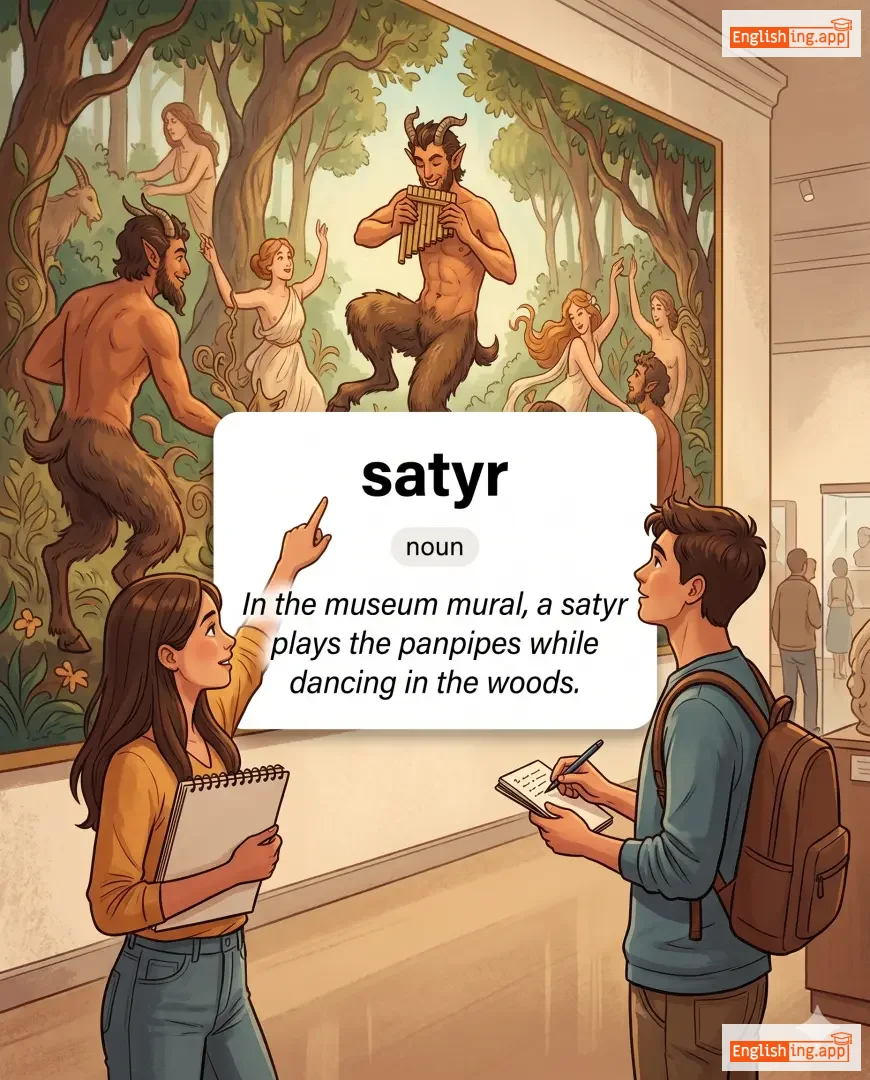
satyr definition card — visual illustration of the meaning
noun
/ˈsætər/
खुशी (khushi)

a creature from Greek mythology depicted as a lustful being, often half-man and half-goat; by extension, a lecherous man

"In the museum mural, a satyr plays the panpipes while dancing in the woods."

"जब उसने पुरस्कार प्राप्त किया तो वह अपनी खुशी को छिपा नहीं पाई।" (Jab usne puraskaar prapt kiya to vah apni khushi ko chhupa nahi paayi.)
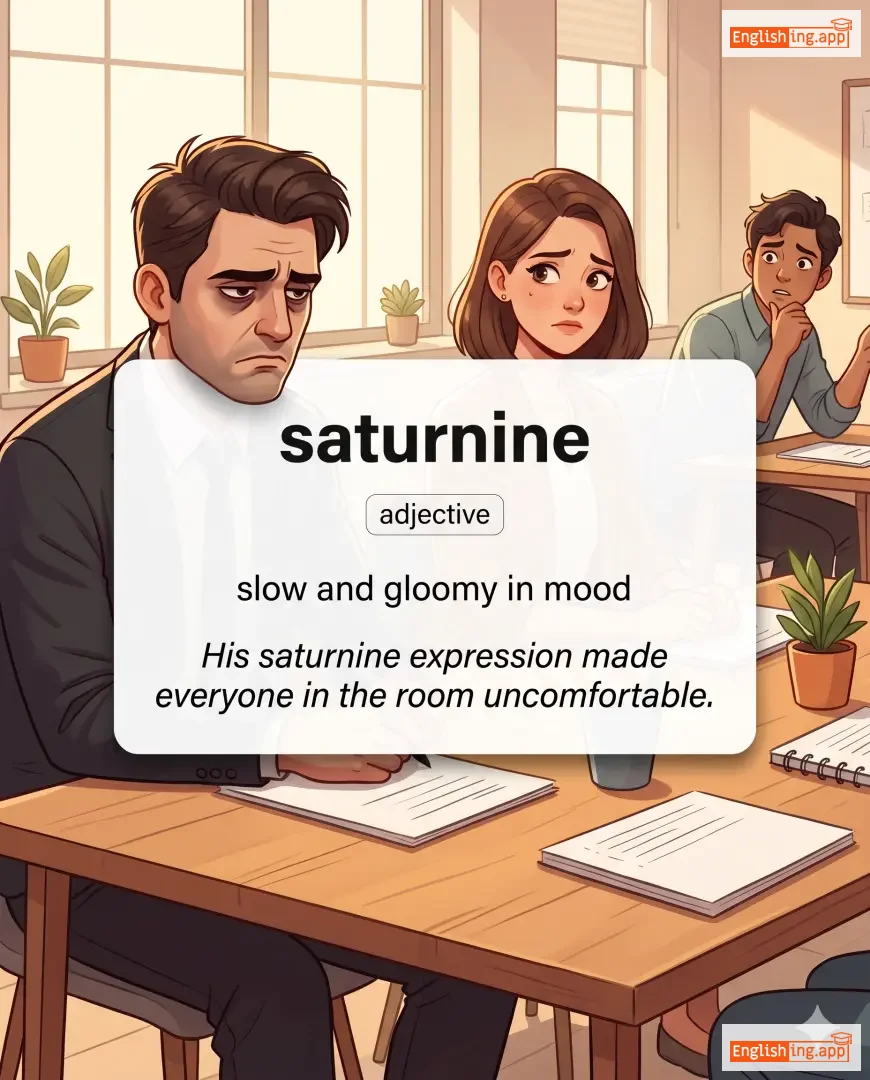
saturnine definition card — visual illustration of the meaning
adjective
/ˈsætərˌnaɪn/
उदास (udas)

slow and gloomy in mood

"His saturnine expression made everyone in the room uncomfortable."

"उसकी उदास अभिव्यक्ति ने कमरे में सभी को असहज कर दिया।" (Uski udas abhivyakti ne kamre mein sabhi ko asahaj kar diya.)
noun
/ˈsætərdeɪ/
शनिवार (shanivaar)

The day of the week between Friday and Sunday; traditionally the sixth day of the week

"We are going to the beach on Saturday."

"हम शनिवार को समुद्र तट पर जा रहे हैं।" (hum shanivaar ko samudra tat par ja rahe hain.)
saturation definition card — visual illustration of the meaning
noun
/ˌsætʃəˈreɪʃən/
संतृप्ति (santrpti)

The state or process that occurs when no more of something can be absorbed, combined with, or added.

"Saturation of the market leads to a decrease in product demand."

"बाजार की संतृप्ति उत्पाद की मांग में गिरावट का कारण बनती है।" (Bazar ki santrpti utpad ki maang mein girawat ka kaaran banti hai.)
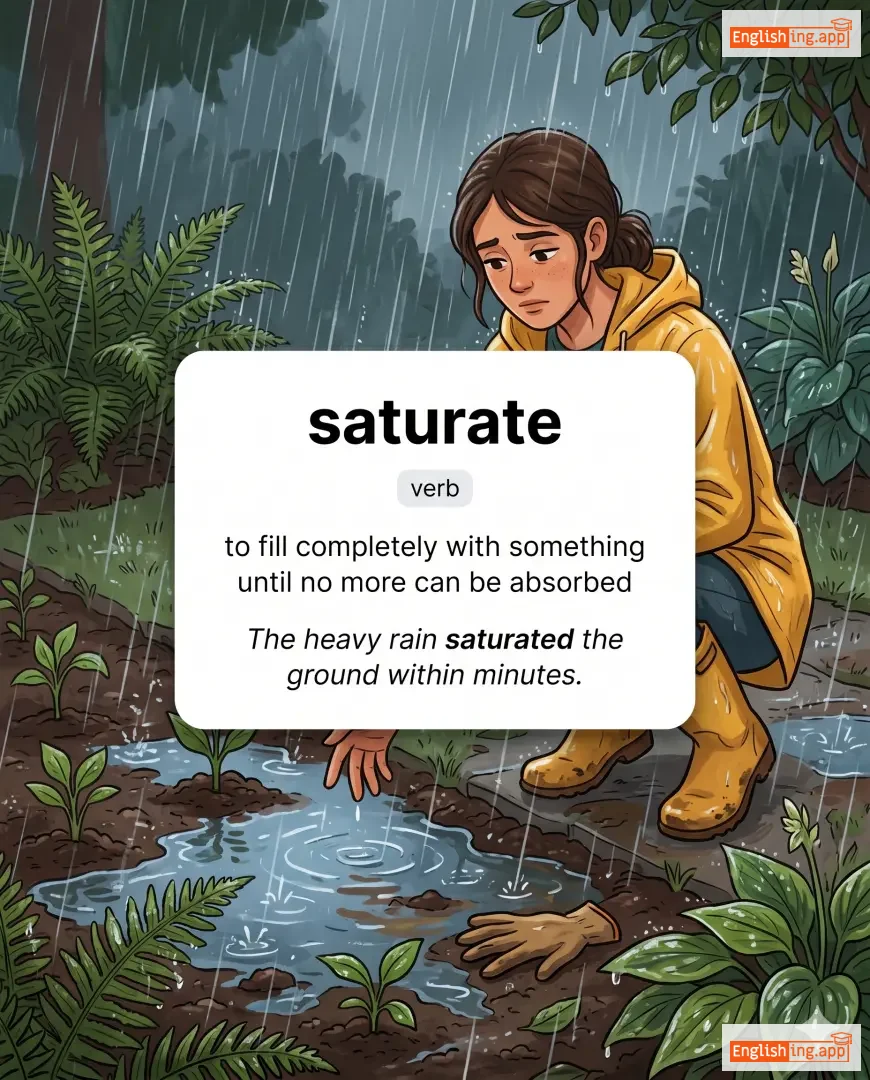
saturate definition card — visual illustration of the meaning
verb
/ˈsætʃəˌreɪt/
परिपूर्ण करना (paripurn karna)

to fill completely with something until no more can be absorbed

"The heavy rain saturated the ground within minutes."

"भारी बारिश ने कुछ मिनटों में ज़मीन को पूरी तरह से भिगो दिया।" (Bhaari baarish ne kuch minuton mein zameen ko puri tarah se bhigo diya.)
noun
/ˈsætræp/
राज्यपाल (rajyapal)

a governor of a province in ancient Persia; also used figuratively for a subordinate ruler

"The king appointed a satrap to oversee the distant province."

"राजा ने दूरदराज के प्रांत का संचालन करने के लिए एक राज्यपाल नियुक्त किया।" (Rājā ne dūrdarāj ke prānt kā san̄cālan karne ke liye ek rajyapal niyukt kiyā.)
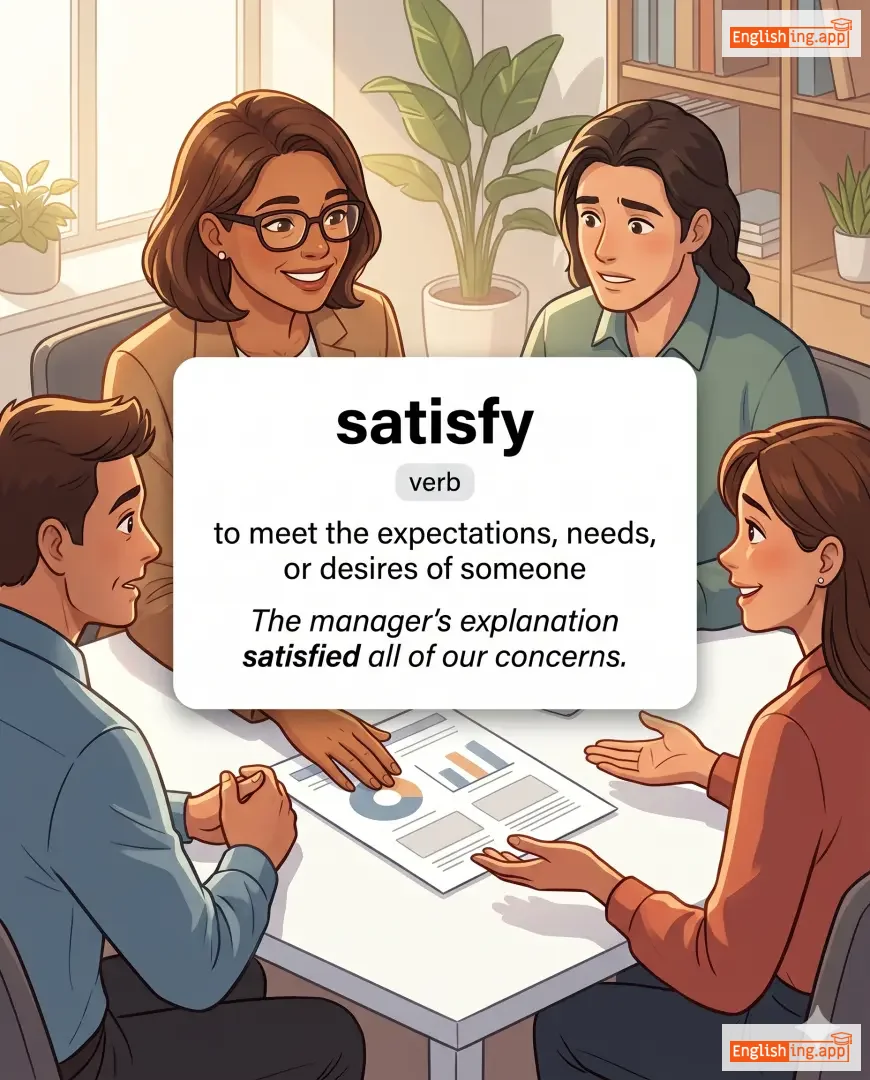
satisfy definition card — visual illustration of the meaning
verb
/ˈsætɪsfaɪ/
संतुष्ट करना (santusht karna)

to meet the expectations, needs, or desires of someone

"The manager's explanation satisfied all of our concerns."

"प्रबंधक का स्पष्टीकरण हमारे सभी चिंताओं को संतुष्ट कर दिया।" (Prabandhak ka spashteekaran humare sabhi chintao ko santusht kar diya.)
adjective
/ˈsætɪsfaɪd/
संतुष्ट (santusht)

Pleased or content with what has been achieved or received.

"He felt satisfied after finishing his project."

"वह अपने प्रोजेक्ट को खत्म करने के बाद संतुष्ट महसूस कर रहा था।" (Vah apne project ko khatm karne ke baad santusht mahsus kar raha tha.)
adjective
/ˈsæt.ɪs.fæk.tər.i/
संतोषजनक (santoshjanak)

acceptable; meeting requirements; adequate

"The test results were satisfactory."

"परीक्षा के परिणाम संतोषजनक थे।" (parīkṣā ke pariṇām santoshjanak the.)
noun
/ˌsætɪsˈfækʃən/
संतोष (santosh)

the feeling of being pleased or content with something

"Her satisfaction with the results was evident."

"उसके परिणामों से संतोष स्पष्ट था।" (Uske parinaamon se santosh spashṭ tha.)
verb
/ˈsætəˌraɪz/
व्यंग्य करना (vyangya karna)

to mock or criticize something using satire

"The play satirizes the greed of modern corporations."

"नाटक आधुनिक कंपनियों की लालच का व्यंग्य करता है।" (Natak aadhunik kampaniyon ki lalach ka vyangya karta hai.)
adjective
/səˈtɪrɪkəl/
व्यंग्यात्मक (vyangyatmak)

containing or using satire to criticize or mock

"The satirical cartoon mocked the government's new policy."

"व्यंग्यात्मक कार्टून ने सरकार की नई नीति का मजाक उड़ाया।" (Vyangyatmak cartoon ne sarkar ki nai niti ka mazak udaaya.)
adjective
/səˈtɪrɪk/
व्यंग्यात्मक (vyangyatmaka)

Relating to or using satire.

"The novel takes a satiric view of urban life."

"उपन्यास शहरी जीवन पर एक व्यंग्यात्मक दृष्टिकोण प्रस्तुत करता है।" (Upanyas shahari jeevan par ek vyangyatmaka drishtikon prastut karta hai.)
noun
/ˈsætaɪər/
व्यंग्य (vyangya)

The use of humor, irony, or exaggeration to criticize people's stupidity or vices.

"The play was a brilliant satire on modern politics."

"नाटक आधुनिक राजनीति पर एक शानदार व्यंग्य था।" (Natak aadhunik rajneeti par ek shandar vyangya tha.)
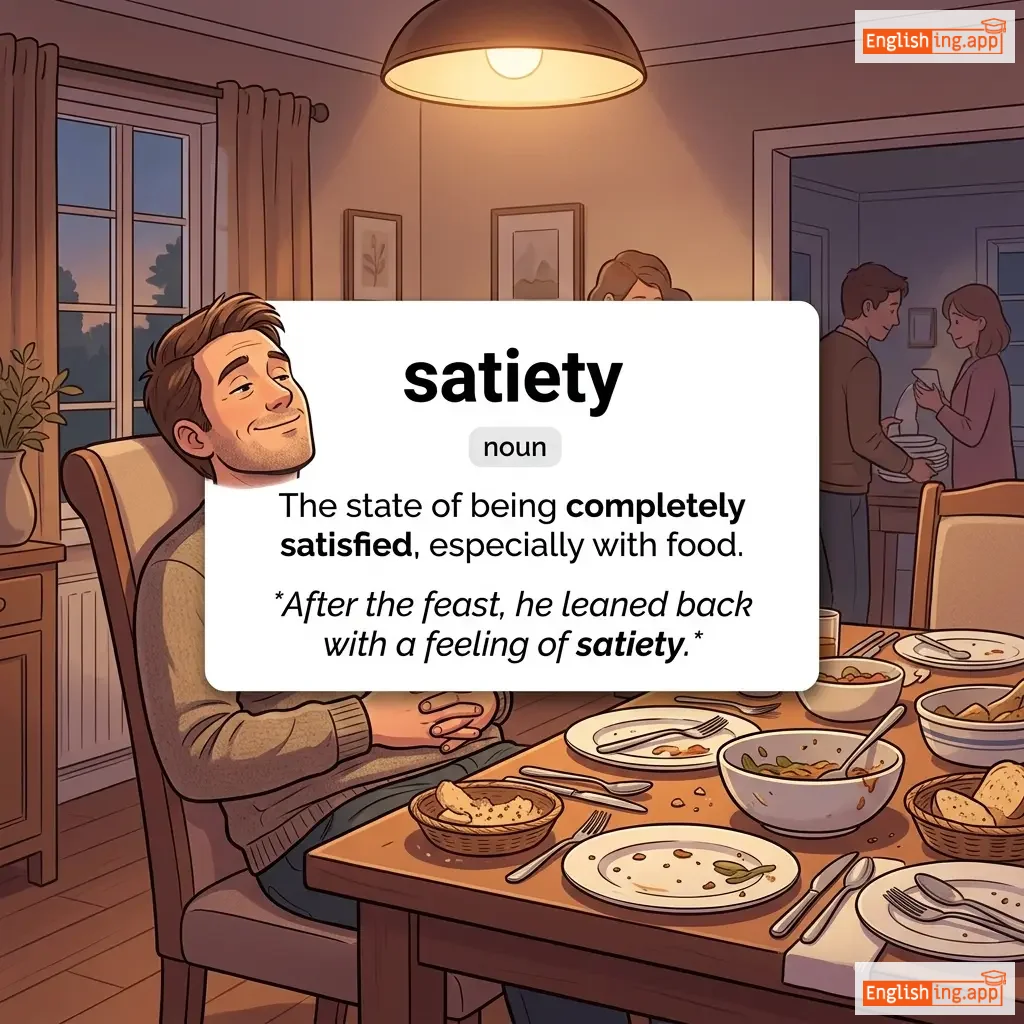
satiety definition card — visual illustration of the meaning
noun
/səˈtaɪ.ə.ti/
तृप्ति (tripti)

The state of being completely satisfied, especially with food.

"After the feast, he leaned back with a feeling of satiety."

"भोजन के बाद, वह तृप्ति के साथ पीछे झुका।" (Bhojan ke baad, wah tripti ke saath peeche jhuka.)
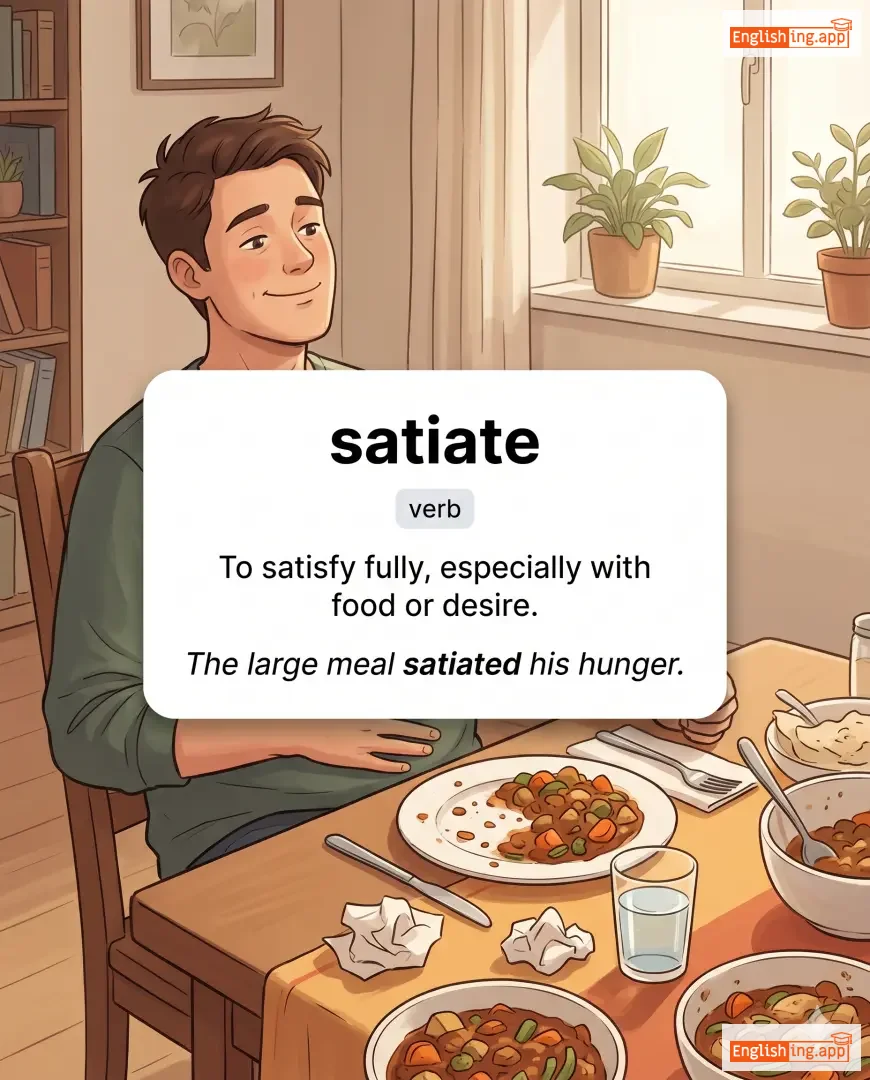
satiate definition card — visual illustration of the meaning
verb
/ˈseɪʃiˌeɪt/
पूर्ण तृप्त करना (purn tript karna)

To satisfy fully, especially with food or desire.

"The large meal satiated his hunger."

"बड़ा खाना उसकी भूख को संतुष्ट कर दिया।" (Bada khana uski bhukh ko santusht kar diya.)
satellite definition card — visual illustration of the meaning
noun
/ˈsætəlaɪt/
उपग्रह (upagrah)

An artificial body placed in orbit around the earth or another planet to collect information or for communication.

"The weather satellite provided real-time images of the storm."

"मौसम उपग्रह ने तूफान की वास्तविक समय की छवियाँ प्रदान की।" (Mausam upagrah ne toofan ki vastavik samay ki chhaviyaan pradan ki.)
verb
/seɪt/
तृप्त करना (tripta karna)

To satisfy fully or to excess.

"The huge meal sated their hunger after the long journey."

"लंबी यात्रा के बाद उस विशाल भोजन ने उनकी भूख को शांत कर दिया।" (lambi yatra ke baad us vishal bhojan ne unki bhukh ko shaant kar diya.)
noun
/ˈseɪ.tən/
शैतान (shaitan)

the chief evil spirit; the Devil in Christian and Islamic belief

"According to religious texts, Satan tempts people to sin."

"धार्मिक ग्रंथों के अनुसार, शैतान लोगों को पाप करने के लिए प्रेरित करता है।" (dharmik granthon ke anusar, shaitan logon ko paap karne ke liye prerit karta hai.)
sartorial definition card — visual illustration of the meaning
adjective
/sɑːrˈtɔːriəl/
पोशाक संबंधित (poshaak sambandhit)

Relating to tailoring, clothes, or style of dress.

"The actor is known for his sartorial elegance on the red carpet."

"अभिनेता को रेड कार्पेट पर अपनी पोशाक संबंधी शौक के लिए जाना जाता है।" (abhineta ko red carpet par apni poshaak sambandhit shauk ke liye jana jata hai.)
noun
/ˈsɑːri/
साड़ी (saadi)

a garment consisting of a length of cotton or silk elaborately draped around the body, traditionally worn by women from South Asia

"She looked elegant in her red silk saree at the festival."

"वह त्योहार में अपनी लाल रेशमी साड़ी में बेहद खूबसूरत लग रही थी।" (vah tyohar mein apni lal reshmi saadi mein behad khoobsurat lag rahi thi.)
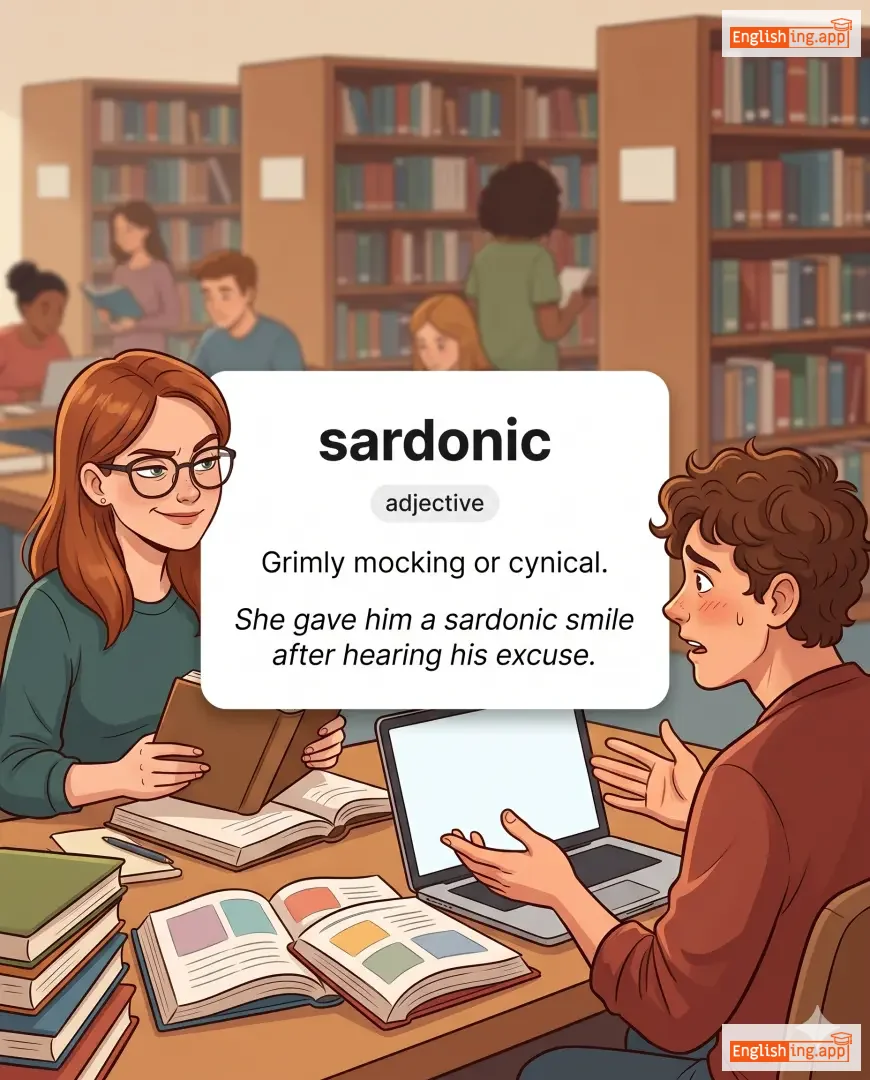
sardonic definition card — visual illustration of the meaning
adjective
/sɑːrˈdɒnɪk/
सुख (sukh)

Grimly mocking or cynical.

"She gave him a sardonic smile after hearing his excuse."

"जब उसे पुरस्कार मिला, तो वह अपनी खुशी छुपा नहीं सकी।" (Jab use puraskaar mila, to vah apni khushi chhupa nahin sakee.)
noun
/sɑːrˈkɒfəɡəs/
पत्थर का ताबूत (patthar ka taboot)

A stone coffin, often decorated, used in ancient times.

"The museum displayed a beautifully carved sarcophagus from ancient Egypt."

"संग्रहालय में प्राचीन मिस्र का एक खूबसूरती से खुदा हुआ पत्थर का ताबूत प्रदर्शित किया गया।" (Sangrahalay mein prachin misr ka ek khoobsurati se khuda hua patthar ka taboot pradarshit kiya gaya.)
adjective
/sɑːrˈkæstɪk/
व्यंग्यात्मक (vyangyatak)

Using irony or mockery to convey contempt or humor.

"She made a sarcastic remark about his cooking."

"उसने उसके पकवान के बारे में एक व्यंग्यात्मक टिप्पणी की।" (Usne uske pakwaan ke baare mein ek vyangyatak tippani ki.)
noun
/ˈsɑːrˌkæzəm/
व्यंग्य (vyangya)

The use of irony to mock or convey contempt.

"His sarcasm often made people laugh but sometimes offended them."

"उसका व्यंग्य अक्सर लोगों को हंसाता था लेकिन कभी-कभी उन्हें नाराज कर देता था।" (uska vyangya aksar logon ko hansata tha lekin kabhi-kabhi unhe naaraaz kar deta tha.)
adjective
/ˌsæpəˈneɪʃəs/
साबुन जैसा (saabun jaisa)

Soapy or having the qualities of soap.

"The plant has saponaceous leaves that produce foam when rubbed in water."

"पौधे के पास साबुन जैसे पत्ते हैं जो पानी में रगड़ने पर झाग बनाते हैं।" (Paudhe ke paas saabun jaise patte hain jo paani mein ragadne par jhaag banaate hain.)
adjective
/ˌseɪpiˈɛnʃəl/
ज्ञानी से संबंधित (jnani se sambandhit)

Relating to wisdom or knowledge, often in a religious or philosophical sense.

"The monk shared sapiential teachings with his students."

"भिक्षु ने अपने छात्रों के साथ ज्ञानी से संबंधित शिक्षाएं साझा कीं।" (Bhikkhu ne apne chatron ke saath jnani se sambandhit shikshaayein saanjha ki.)
adjective
/ˈseɪpiənt/
ज्ञानी (gyani)

Wise, or appearing to be wise.

"The professor gave a sapient response to the complex question."

"प्रोफेसर ने जटिल प्रश्न का ज्ञानी उत्तर दिया।" (Professor ne jatil prashn ka gyani uttar diya.)
noun
/ˈseɪpiəns/
ज्ञान (gyan)

Wisdom or intelligence.

"Her sapience in solving problems earned her the respect of her colleagues."

"समस्याओं को हल करने में उसकी ज्ञानशीलता ने उसे अपने सहकर्मियों का सम्मान दिलाया।" (Samasyayon ko hal karne mein uski gyaan sheelta ne use apne sahkarmiyon ka sammaan dilaya.)
adjective
/ˈsæpɪd/
स्वादिष्ट (swadisht)

Having a pleasant taste; flavorful.

"The chef prepared a sapid dish that delighted everyone at the table."

"शेफ ने एक स्वादिष्ट डिश तैयार की थी जो टेबल पर सभी को पसंद आई।" (Shef ne ek swadisht dish tayar ki thi jo table par sabhi ko pasand aayi.)
noun
/ˈsæf.aɪər/
नीलमणि (neelmani)

a precious stone that is typically blue in color

"The royal crown was adorned with a large sapphire."

"राजसी मुकुट एक बड़े नीलमणि से सजा था।" (raajsi mukut ek bade neelmani se saja tha.)
verb, noun
/sæp/
रस / शक्ति घटाना (ras / shakti ghataana)

As a noun: the vital fluid in plants; As a verb: to gradually weaken or drain strength.

"The long journey began to sap his energy."

"लंबी यात्रा ने उसकी ऊर्जा को घटाना शुरू कर दिया।" (Lambi yatra ne uski urja ko ghataana shuru kar diya.)
noun
/ˈsækrɪsti/
चर्च का कक्ष (church ka kaksh)

a room in a church where sacred vessels and vestments are kept

"The priest entered the sacristy before the mass began."

"पुजारी मास शुरू होने से पहले साक्रिस्टि में प्रवेश किया।" (Pujari mass shuru hone se pehle sakristi mein pravesh kiya.)
adjective
/ˈruːθləs/
निर्दयी (nirdayi)

Having or showing no pity or compassion for others.

"The ruthless leader crushed all opposition."

"निर्दयी नेता ने सभी विरोधों को कुचल दिया।" (Nirdayi neta ne sabhi virodhon ko kuchal diya.)
ruthless competition definition card — visual illustration of the meaning
noun
ˈruθləs ˌkɑmpəˈtɪʃən
निर्मम प्रतिस्पर्धा (nirmam pratispardha)

Fierce and merciless rivalry or contest, without pity or compassion.

"Ruthless competition for power leads to societal issues."

"शक्ति के लिए निर्मम प्रतिस्पर्धा सामाजिक समस्याओं को जन्म देती है।" (Shakti ke liye nirmam pratispardha samajik samasyaon ko janm deti hai.)
noun
/səˈbætɪkəl/
अध्ययन या यात्रा के लिए अवकाश (adhyayan ya yatra ke liye avkash)

A period of paid leave granted to a teacher or worker for study or travel, traditionally every seventh year.

"She took a sabbatical to research her new book."

"उसने अपनी नई किताब पर शोध करने के लिए एक सैबेटिकल लिया।" (Usne apni nai kitaab par shodh karne ke liye ek sabbatical liya.)
verb
/ˈsæbətɑːʒ/
विनाशकारी कार्य (vinashkari kary)

To deliberately destroy, damage, or obstruct something, especially for political or military advantage.

"The rebels tried to sabotage the railway lines."

"विद्रोहियों ने रेलवे लाइनों को नष्ट करने की कोशिश की।" (Vidrohiyon ne relvey laino ko nasht karne ki koshish ki.)
noun
/ˌsæbəˈtɜːr/
विध्वंसक (vidhwanśak)

A person who engages in sabotage.

"The saboteur was arrested before he could plant the bomb."

"विध्वंसक को बम लगाने से पहले गिरफ्तार कर लिया गया था।" (Vidhwansak ko bam lagane se pehle giraftar kar liya gaya tha.)
adjective
/ˈsækərɪn/
खुशी (khushi)

Excessively sweet or sentimental.

"His saccharine smile seemed insincere."

"जब उसने पुरस्कार प्राप्त किया, तो वह अपनी खुशी को छुपा नहीं पाई।" (Jab usne puraskaar prapt kiya, to woh apni khushi ko chhupa nahi pai.)
adjective
/ˌsæsərˈdoʊtl/
पुरोहितसंबंधी (purohitsambandhi)

Relating to priests or the priesthood.

"The ritual had a distinctly sacerdotal character."

"अनुष्ठान में एक स्पष्ट पुरोहितसंबंधी चरित्र था।" (anushthan mein ek spasht purohitsambandhi charitra tha.)
noun
/sæk/
बोरी (boree)

a large bag made of strong material for holding things

"He carried a sack of rice on his shoulder."

"उसने अपने कंधे पर चावल से भरी एक बोरी उठाई।" (Usne apne kandhe par chawal se bhari ek bori uthai.)
adjective
/ˈseɪkrɪd/
पवित्र (pavitra)

connected with God or a religion and considered holy or deserving respect

"The temple is a sacred place for the community."

"द मंदिर समुदाय के लिए एक पवित्र स्थान है।" (Da mandir samudaay ke liye ek pavitra sthaan hai.)
sacrifice definition card — visual illustration of the meaning
noun, verb
/ˈsækrɪfaɪs/
बलिदान (balidan)

To give up something valuable for the sake of others or a higher purpose.

"Parents often sacrifice their own comfort for their children."

"माता-पिता अक्सर अपने बच्चों के लिए अपनी आरामदायक स्थिति की बलि देते हैं।" (maata-pitaa aksar apne bachcho ke liye apni aaraamdayak sthiti ki bali dete hain.)
adjective
/ˌsækrɪˈfɪʃəl/
बलिदानी (balidani)

Relating to or involving sacrifice.

"The lamb was used as a sacrificial offering in the ritual."

"मेमने को अनुष्ठान में एक बलिदानी चढ़ावा के रूप में उपयोग किया गया था।" (memane ko anushthan mein ek balidani chadhawa ke roop mein upyog kiya gaya tha.)
noun
/ˈsækrɪlɪdʒ/
पवित्र का उल्लंघन (pavitra ka ullanghan)

Violation or misuse of what is regarded as sacred.

"Stealing from the temple was considered an act of sacrilege."

"मंदिर से चोरी करना पवित्र का उल्लंघन माना जाता था।" (mandir se chori karna pavitra ka ullanghan maana jaata tha.)
adjective
/ˌsækrəˈlɪdʒəs/
अपवित्रतापूर्ण (apavitratapurn)

Showing disrespect or irreverence toward something sacred.

"The painting was criticized as being sacrilegious."

"चित्रकला को अपवित्रतापूर्ण के रूप में आलोचना की गई थी।" (chitrakala ko apavitratapurn ke roop mein alochna ki gayi thi.)
noun/verb
/ˈseɪf.ɡɑːrd/
सुरक्षा करना (suraksha karna)

To protect from harm or damage; a measure taken to ensure safety.

"Laws exist to safeguard the rights of children."

"कानून बच्चों के अधिकारों की सुरक्षा करने के लिए अस्तित्व में हैं।" (Kanoon bachon ke adhikar ki suraksha karne ke liye astitv mein hain.)
adverb
/ˈseɪfli/
सुरक्षित (surakshit)

in a way that is not dangerous or likely to cause harm

"The children crossed the road safely."

"बच्चों ने सड़क को सुरक्षित रूप से पार किया।" (bachchon ne sadak ko surakshit roop se paar kiya.)
noun
/ˈseɪfti/
सुरक्षा (sefti)

the condition of being protected from harm or danger

"The safety of passengers is our top priority."

"यात्रियों की सुरक्षा हमारी सबसे बड़ी प्राथमिकता है।" (yaatriyon ki suraksha hamari sabse badi prathamikta hai)
adjective
/seɪf/
सुरक्षित (surakṣit)

free from harm or danger

"Make sure your belongings are safe during the trip."

"यात्रा के दौरान अपनी चीजें सुरक्षित रखें।" (Yātrā kē daurān apnī chīzēṁ surakṣit rakhēṁ.)