वोकैबुलरीज

इंग्लिश वोकैबुलरी डिस्कवर, लर्न और मास्टर करें

adjective
/ˈsæt.ɪs.fæk.tər.i/
संतोषजनक (santoshjanak)

acceptable; meeting requirements; adequate

"The test results were satisfactory."

"परीक्षा के परिणाम संतोषजनक थे।" (parīkṣā ke pariṇām santoshjanak the.)
adjective
/ˈsætɪsfaɪd/
संतुष्ट (santusht)

Pleased or content with what has been achieved or received.

"He felt satisfied after finishing his project."

"वह अपने प्रोजेक्ट को खत्म करने के बाद संतुष्ट महसूस कर रहा था।" (Vah apne project ko khatm karne ke baad santusht mahsus kar raha tha.)
satisfy definition card — visual illustration of the meaning
verb
/ˈsætɪsfaɪ/
संतुष्ट करना (santusht karna)

to meet the expectations, needs, or desires of someone

"The manager's explanation satisfied all of our concerns."

"प्रबंधक का स्पष्टीकरण हमारे सभी चिंताओं को संतुष्ट कर दिया।" (Prabandhak ka spashteekaran humare sabhi chintao ko santusht kar diya.)
noun
/ˈsætræp/
राज्यपाल (rajyapal)

a governor of a province in ancient Persia; also used figuratively for a subordinate ruler

"The king appointed a satrap to oversee the distant province."

"राजा ने दूरदराज के प्रांत का संचालन करने के लिए एक राज्यपाल नियुक्त किया।" (Rājā ne dūrdarāj ke prānt kā san̄cālan karne ke liye ek rajyapal niyukt kiyā.)
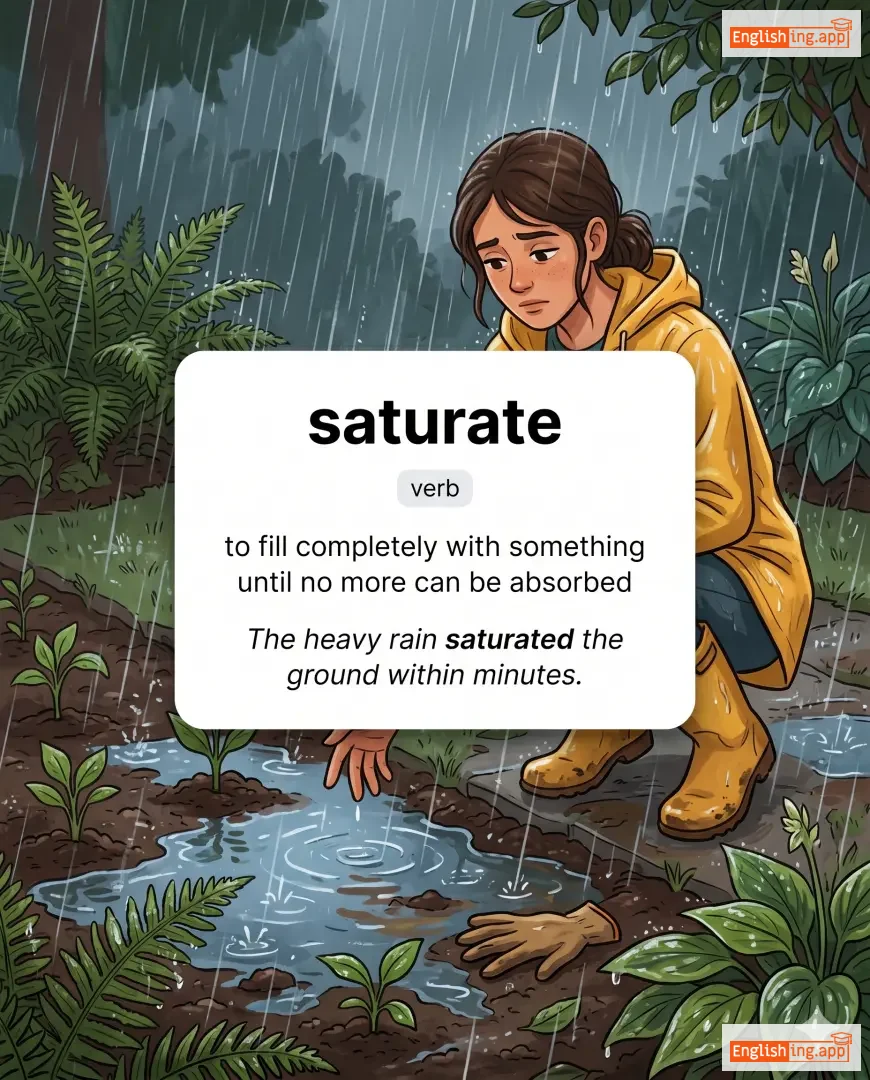
saturate definition card — visual illustration of the meaning
verb
/ˈsætʃəˌreɪt/
परिपूर्ण करना (paripurn karna)

to fill completely with something until no more can be absorbed

"The heavy rain saturated the ground within minutes."

"भारी बारिश ने कुछ मिनटों में ज़मीन को पूरी तरह से भिगो दिया।" (Bhaari baarish ne kuch minuton mein zameen ko puri tarah se bhigo diya.)
saturation definition card — visual illustration of the meaning
noun
/ˌsætʃəˈreɪʃən/
संतृप्ति (santrpti)

The state or process that occurs when no more of something can be absorbed, combined with, or added.

"Saturation of the market leads to a decrease in product demand."

"बाजार की संतृप्ति उत्पाद की मांग में गिरावट का कारण बनती है।" (Bazar ki santrpti utpad ki maang mein girawat ka kaaran banti hai.)
noun
/ˈsætərdeɪ/
शनिवार (shanivaar)

The day of the week between Friday and Sunday; traditionally the sixth day of the week

"We are going to the beach on Saturday."

"हम शनिवार को समुद्र तट पर जा रहे हैं।" (hum shanivaar ko samudra tat par ja rahe hain.)
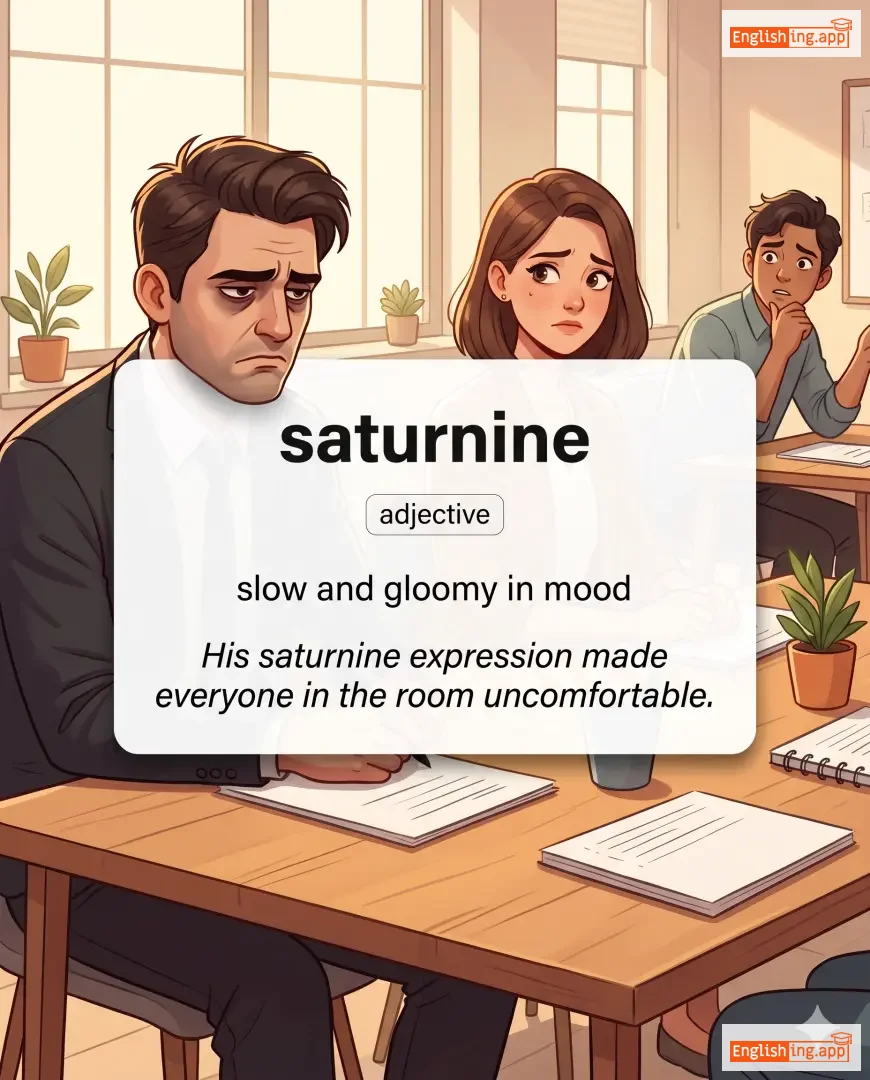
saturnine definition card — visual illustration of the meaning
adjective
/ˈsætərˌnaɪn/
उदास (udas)

slow and gloomy in mood

"His saturnine expression made everyone in the room uncomfortable."

"उसकी उदास अभिव्यक्ति ने कमरे में सभी को असहज कर दिया।" (Uski udas abhivyakti ne kamre mein sabhi ko asahaj kar diya.)
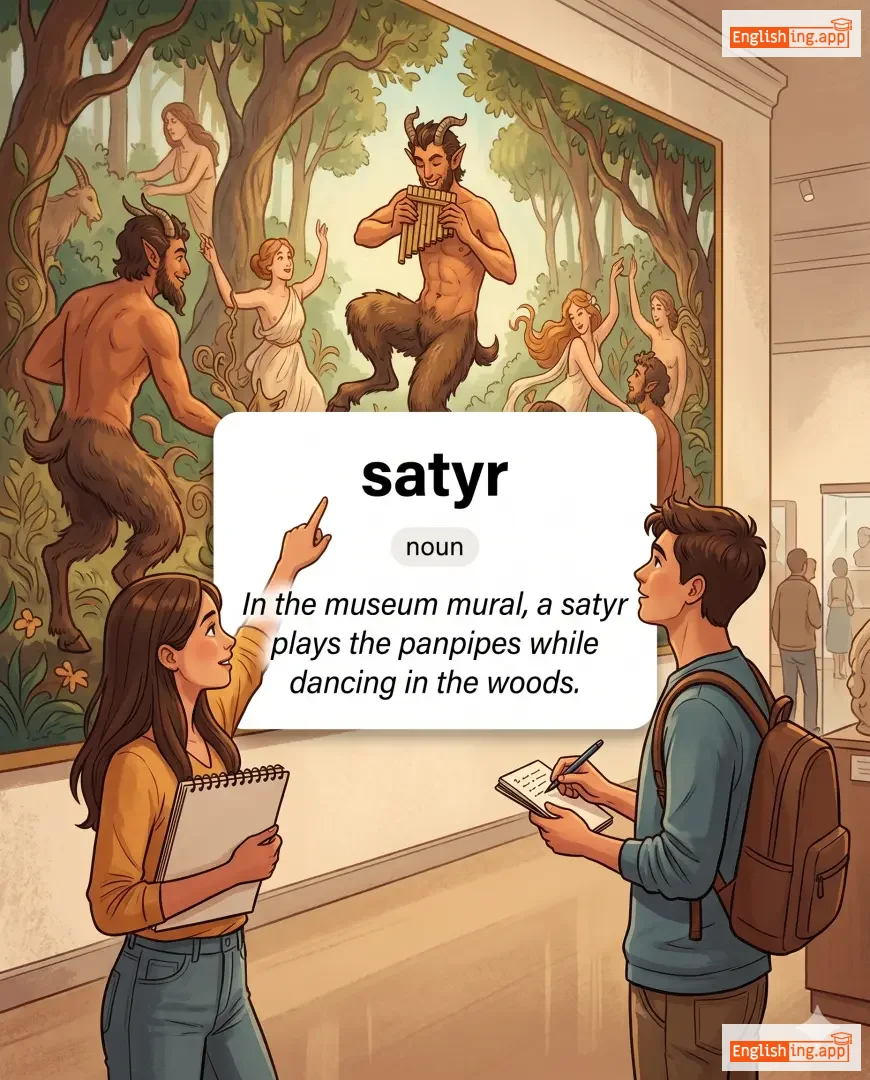
satyr definition card — visual illustration of the meaning
noun
/ˈsætər/
खुशी (khushi)

a creature from Greek mythology depicted as a lustful being, often half-man and half-goat; by extension, a lecherous man

"In the museum mural, a satyr plays the panpipes while dancing in the woods."

"जब उसने पुरस्कार प्राप्त किया तो वह अपनी खुशी को छिपा नहीं पाई।" (Jab usne puraskaar prapt kiya to vah apni khushi ko chhupa nahi paayi.)
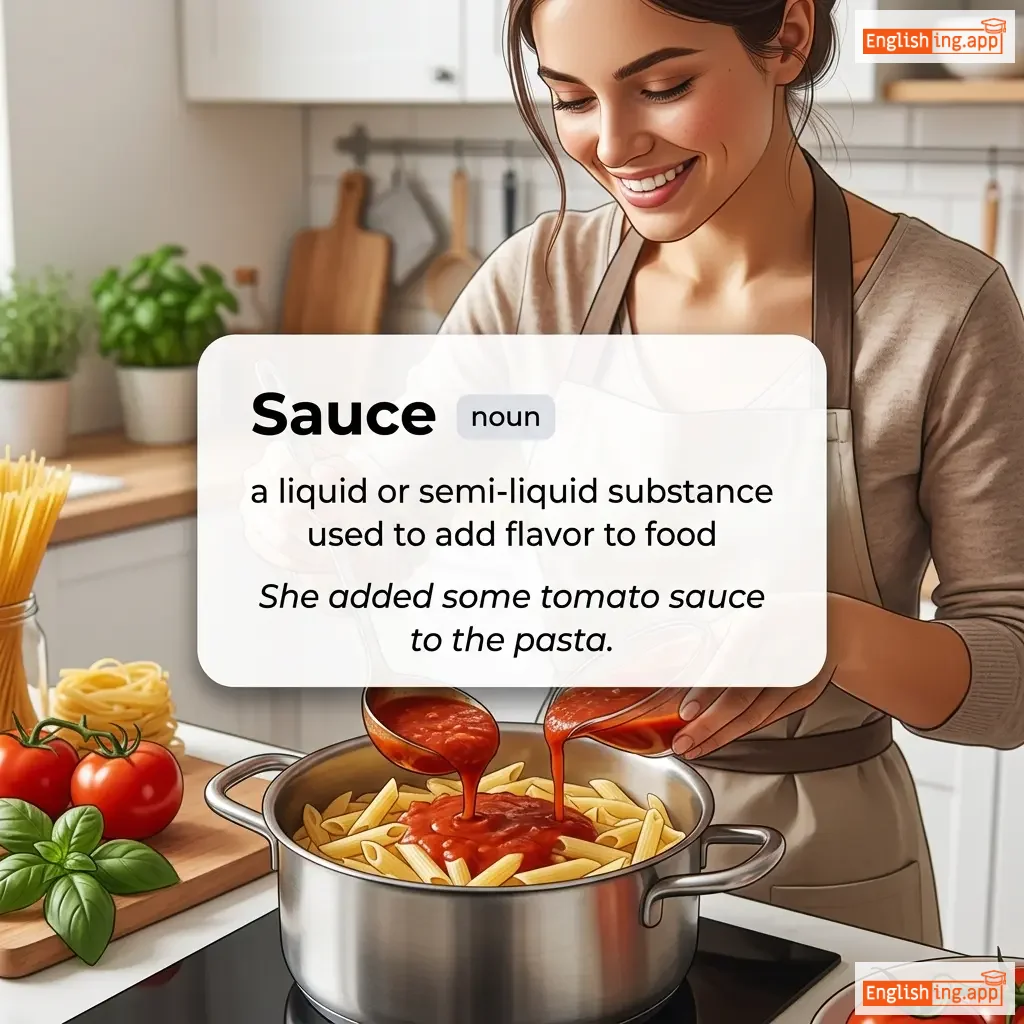
Sauce definition card — visual illustration of the meaning
noun
/sɔːs/
सॉस (sos)

a liquid or semi-liquid substance used to add flavor to food

"She added some tomato sauce to the pasta."

"उसने पास्ता में कुछ टमाटर सॉस डाली।" (Usne pasta mein kuch tamatar sos daali.)
adjective
/ˈsɔːsi/
उत्साही (utsahi)

Boldly rude, cheeky, or playfully disrespectful.

"The child gave a saucy reply to his teacher."

"बच्चे ने अपने शिक्षक को एक उत्साही जवाब दिया।" (Bacche ne apne shikshak ko ek utsahi jawab diya.)
verb
/ˈsɔːntər/
धीरे-धीरे चलना (dheere-dheere chalna)

to walk in a slow, relaxed manner without hurry or effort

"We sauntered along the riverside, stopping now and then to watch the boats."

"हम नदी के किनारे धीरे-धीरे चल रहे थे, कभी-कभी नावें देखने के लिए रुकते थे।" (ham nadi ke kinare dheere-dheere chal rahe the, kabhi-kabhi naaven dekhne ke liye rukte the.)
noun
/ˈsaɪ.ə.lɪz.əm/
आधिकारिक ज्ञान का दिखावा (aadhikarik gyaan ka dikhawa)

pretentious show of superficial knowledge

"His speech was full of sciolism, impressing no one."

"उसकी स्पीच पूरी तरह से आधिकारिक ज्ञान के दिखावे से भरी हुई थी, जिसने किसी को प्रभावित नहीं किया।" (Uski speech poori tarah se aadhikarik gyaan ke dikhave se bhari hui thi, jisne kisi ko prabhavit nahi kiya.)
adjective
/ˈsævɪdʒ/
जंगली; बर्बर (jangli; barbar)

fierce, violent, or uncontrolled; cruel or brutal

"The storm brought savage winds that tore branches from the trees."

"आंधी ने ऐसे हिंसक तूफान लाए, जिन्होंने पेड़ों की शाखाएँ उखाड़ दीं।" (aandhi ne aise hinsak toofan laaye, jinhonne pedon ki shaakhayein ukhaad di.)
noun
/səˈvænə/
घास का मैदान (बिखरे हुए पेड़ों के साथ) (ghas ka maidan (bikhre hue pedon ke saath))

a grassy plain with scattered trees, typical of tropical and subtropical regions

"Giraffes browsed on acacia trees across the wide savanna."

"जिराफ़ों ने सवाना में आकेशिया के पेड़ों पर पत्तियाँ खाई।" (jirafon ne savana mein akeshia ke pedon par patiyan khai.)
noun
/səˈvɑːnt/
खुशी (khushi)

a learned person, especially a distinguished scientist or scholar; sometimes used in the phrase ‘savant syndrome’ for someone with exceptional abilities alongside developmental differences

"The conference keynote was delivered by a linguistic savant who studies endangered languages."

"उसने जब पुरस्कार प्राप्त किया तो अपनी खुशी छुपा नहीं पाई।" (Usne jab puraskaar praapt kiya to apni khushi chhupa nahi paayi.)
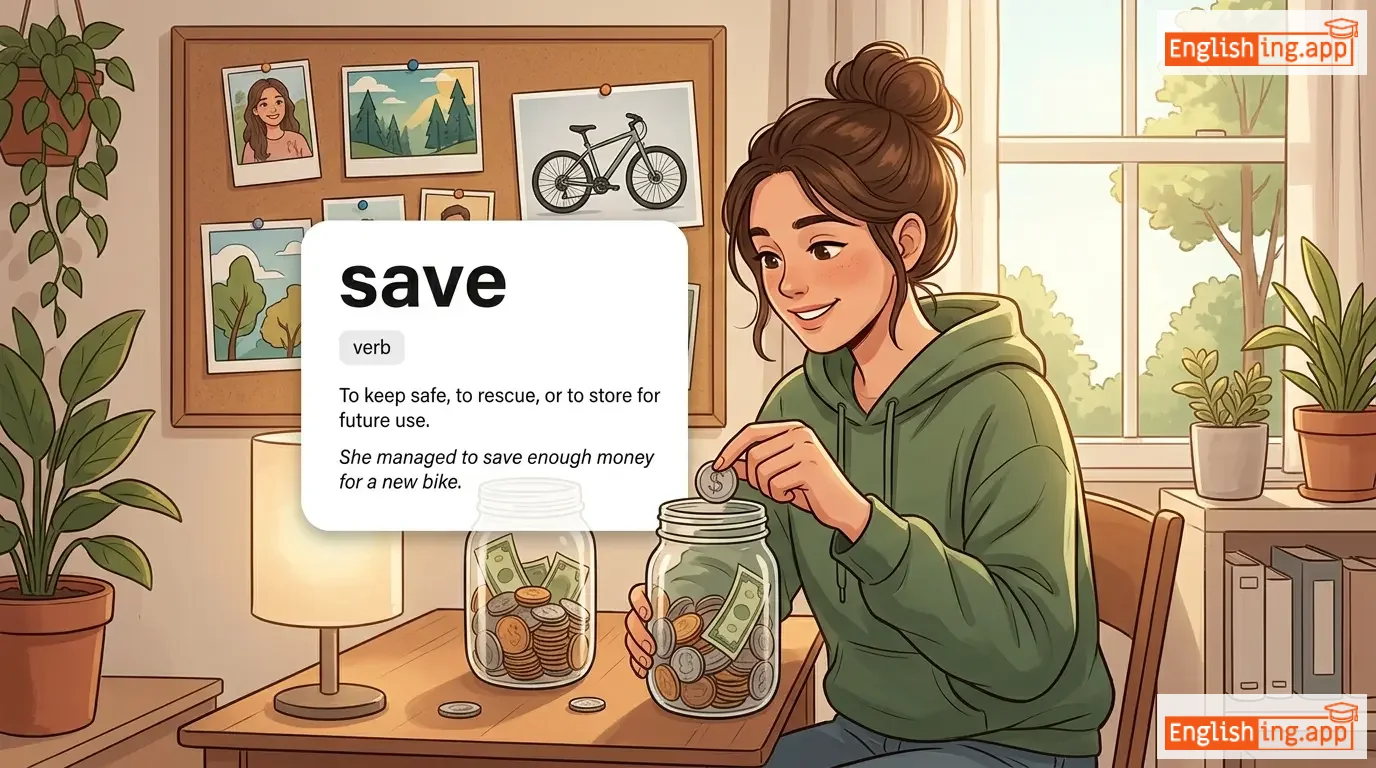
save definition card — visual illustration of the meaning
verb
/seɪv/
बचाना / संग्रह करना (bachana / sangrah karna)

To keep safe, to rescue, or to store for future use.

"She managed to save enough money for a new bike."

"उसने एक नई बाइक के लिए पर्याप्त पैसे बचा लिए।" (Usne ek nai bike ke liye paryapt paise bacha liye.)
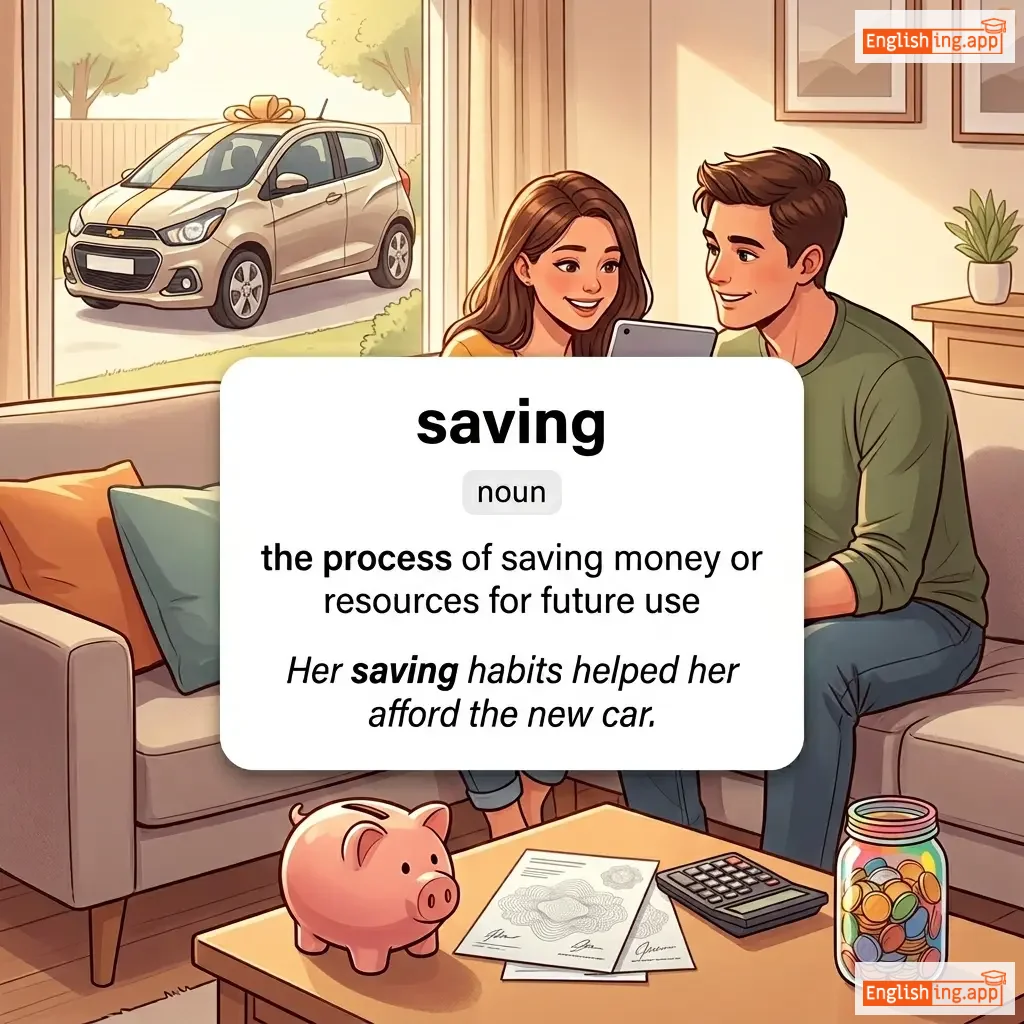
saving definition card — visual illustration of the meaning
noun
/ˈseɪvɪŋ/
बचत (bachat)

the process of saving money or resources for future use

"Her saving habits helped her afford the new car."

"उसकी बचत की आदतों ने उसे नई कार खरीदने में मदद की।" (Uski bachat ki aadaton ne use nayi car kharidne mein madad ki.)
savings definition card — visual illustration of the meaning
noun
ˈseɪ.vɪŋz
बचत (bachat)

Money that is kept for future use or investment.

"Many people invest their savings in real estate."

"कई लोग अपनी बचत रियल एस्टेट में निवेश करते हैं।" (Kai log apni bachat real estate mein nivesh karte hain.)
noun
/ˌsæv.wɑːr ˈfeər/
सामाजिक दक्षता (samajik dakshata)

The ability to act or speak appropriately in social situations; polished social skills.

"She handled the delicate situation with remarkable savoir-faire."

"उसने नाजुक स्थिति को अद्भुत सामाजिक दक्षता के साथ संभाला।" (Usne naazuk sthiti ko adbhut samajik dakshata ke saath sambhaala.)
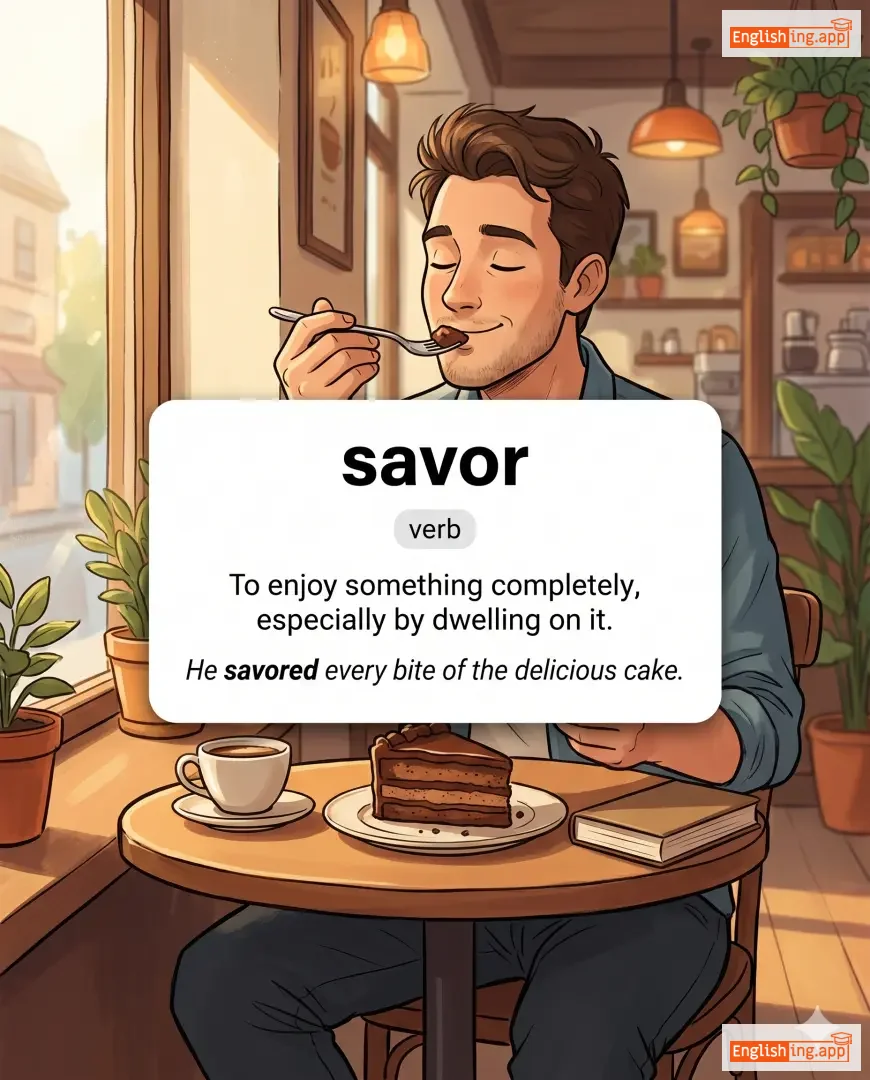
savor definition card — visual illustration of the meaning
verb
/ˈseɪ.vər/
पूर्ण आनंद के साथ अनुभव करना (poorn anand ke saath anubhav karna)

To enjoy something completely, especially by dwelling on it.

"He savored every bite of the delicious cake."

"उसने स्वादिष्ट केक के हर बाइट का आनंद लिया।" (Usne swadisht kek ke har bite ka anand liya.)
adjective
/ˈseɪ.vər.i/
स्वादिष्ट (नमकीन या मसालेदार) (swadisht (namkeen ya masaledar))

Having a pleasant salty or spicy taste; morally acceptable.

"The restaurant serves a variety of savory dishes."

"रेस्टोरेंट में विभिन्न प्रकार के स्वादिष्ट व्यंजन परोसे जाते हैं।" (Restaurant mein vibhinn prakar ke swadisht vyanjan porose jaate hain.)
adjective
/ˈsæv.i/
होशियार, समझदार (hoshiyaar, samajhdaar)

Having practical knowledge and the ability to make good judgments.

"She is a tech-savvy entrepreneur."

"वह एक तकनीकी-होशियार उद्यमी है।" (Vah ek takneeki-hoshiyar udyami hai.)
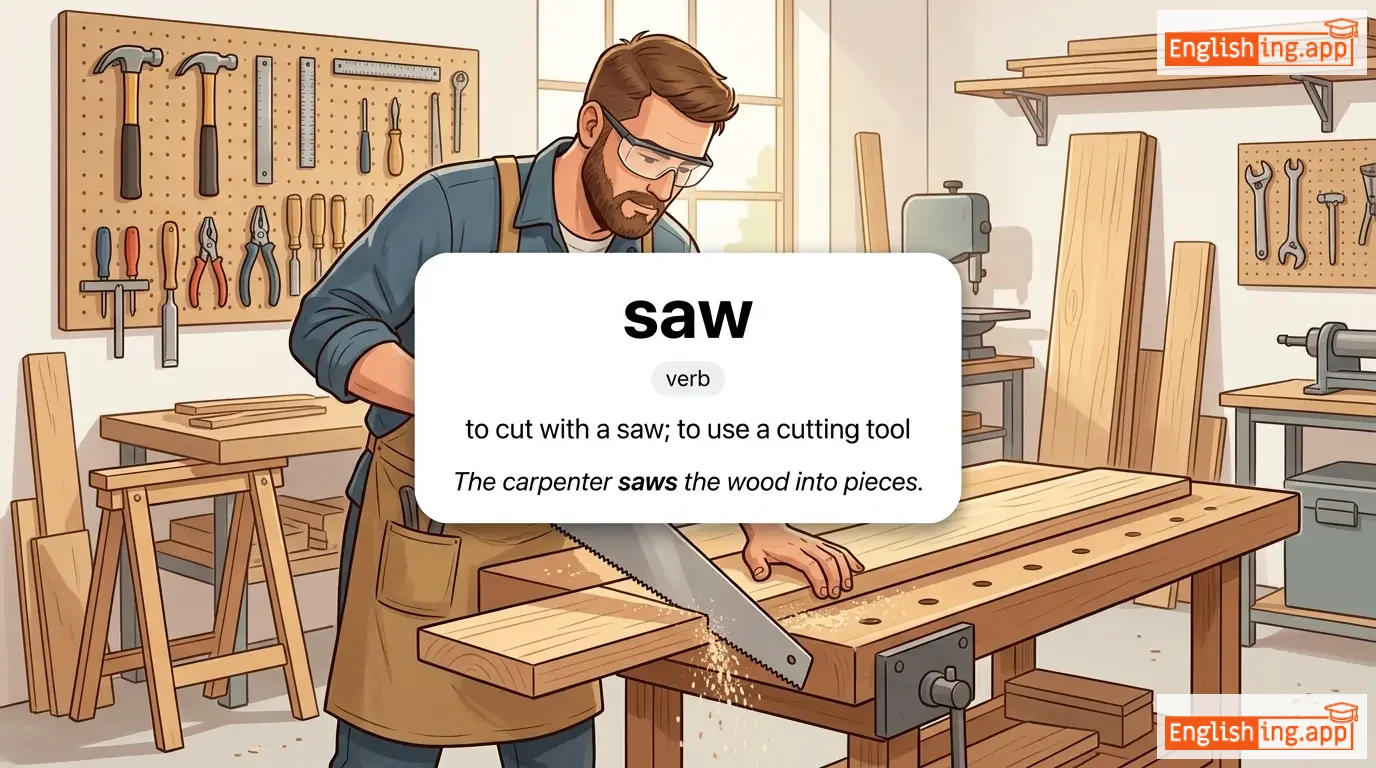
saw definition card — visual illustration of the meaning
noun
/sɔː/
आरी (aari)

a tool with a sharp blade used for cutting wood or other materials

"He used a saw to cut the wooden plank."

"उसने लकड़ी के तख्ते को काटने के लिए आरी का इस्तेमाल किया।" (usne lakdi ke takhte ko kaatne ke liye aari ka istemal kiya.)
noun
/ˈsɔː.dər/
चापलूसी; घुमा-फिरा के बातें (chaaploosee; ghuma-phira ke baatein)

flattering or wheedling talk; soft soap

"His sawder couldn't convince anyone of his sincerity."

"उसकी चापलूसी किसी को भी उसकी ईमानदारी पर विश्वास नहीं दिला सकी।" (Uski chaaploosee kisi ko bhi uski imaandari par vishwas nahi dila saki.)
noun
/ˈsɔː.dʌst/
आरा चूरा (aara choora)

The tiny particles of wood produced by sawing or sanding.

"The floor was covered with sawdust from the carpentry work."

"फर्श पर बढ़ईगीरी के काम से आरा चूरा फैला हुआ था।" (Farsh par badhaigiri ke kaam se aara choora phaila hua tha.)
noun
/ˈsɔːjər/
लकड़ी काटने वाला (lakdi katne wala)

a person who saws wood, especially as an occupation

"The skilled sawyer cut the logs into planks."

"कुशल लकड़ी काटने वाले ने लकड़ी को तख्तों में काटा।" (kushal lakdi katne wale ne lakdi ko takhton mein kata)
noun
/ˈsæksəfoʊn/
सैक्सोफोन (saiksofon)

a wind musical instrument with a curved metal body and a single reed mouthpiece

"The jazz musician played a beautiful solo on his saxophone."

"जैज संगीतकार ने अपने सैक्सोफोन पर एक सुंदर सोलो बजाया।" (jazz sangeetkaar ne apne saiksofon par ek sundar solo bajaya.)
say definition card — visual illustration of the meaning
verb
/seɪ/
कहना (kahna)

to speak words or express thoughts aloud

"She asked him to say hello to her parents."

"उसने उससे कहा कि वह उसके माता-पिता को हैलो कहे।" (Usne usse kaha ki woh uske mata-pita ko hello kahe.)
noun
/ˈskɒlər/
विद्वान (vidwan)

a person who studies a particular subject or academic field

"The scholar presented a research paper on ancient civilizations."

"विद्वान ने प्राचीन सभ्यताओं पर एक शोध पत्र प्रस्तुत किया।" (Vidwan ne prachin sabhyataon par ek shodh patra prastut kiya.)
adjective
/ˈskætərd/
बिखरा हुआ (bikhra hua)

Spread irregularly or widely in different directions.

"The toys were scattered all over the floor."

"खिलौने फर्श पर बिखरे हुए थे।" (khilaune farsh par bikhre hue the.)
verb
/ˈskævɪndʒ/
कचरे से सामान खोजना (kachre se samaan khojna)

to search through waste or discarded material to find useful items

"The children scavenged for food in the garbage dump."

"बच्चों ने कचरे के ढेर में खाने के लिए सामान खोजा।" (Bachchon ne kachre ke dher mein khane ke liye samaan khoja.)
noun
/ˈskævɪndʒər/
मृत प्राणी भक्षक / कचरा संग्राहक (mrit prani bhakshak / kachra sangrahak)

an animal or person that feeds on dead or discarded material

"Vultures are natural scavengers that clean up the environment."

"गिद्ध प्राकृतिक स्कैवेंजर हैं जो पर्यावरण को साफ करते हैं।" (giddh prakritik scavenger hain jo paryavaran ko saaf karte hain.)
noun
/səˈnɛərioʊ/
संभावित स्थिति (sambhavit sthiti)

a possible situation or sequence of events

"The company prepared for the worst-case scenario."

"कंपनी ने सबसे खराब स्थिति के लिए तैयारी की थी।" (Company ne sabse kharab sthiti ke liye tayari ki thi.)
noun
/siːn/
दृश्य (drishya)

a place or setting of an event or activity, or the part of a play or film

"The final scene of the movie was very emotional."

"फिल्म का अंतिम दृश्य बहुत भावुक था।" (Film ka antim drishya bahut bhavuk tha.)
noun
/ˈsiː.nər.i/
दृश्य (drishya)

the natural features of a landscape; the painted background used on a theater stage

"The mountain scenery was breathtakingly beautiful."

"पहाड़ों का दृश्य अत्यधिक सुंदर था।" (pahāṛoṅ kā drishya atyadhik sundar thā.)
noun
/sɛnt/
सुगंध (sugandh)

a distinctive smell, especially a pleasant one

"The scent of roses filled the garden."

"गुलाब की खुशबू ने बगीचे को भर दिया।" (Gulab ki khushboo ne bagiche ko bhar diya.)
adjective
/ˈskeptɪkəl/
संशयात्मक; अविश्वासी; सत्य पर प्रश्न उठाने वाला (sanshayatmak; avishwasi; satya par prashn uthane wala)

having doubts; not easily convinced; questioning the truth of something

"Many scientists remain sceptical about the new theory."

"कई वैज्ञानिक नए सिद्धांत के बारे में संदेहास्पद बने रहते हैं।" (kai vaigyanik naye siddhant ke baare mein sandeyhaspad bane rehte hain)
noun
/ˈʃɑːdənfrɔɪdə/
परस्तिथि से खुशी (paristhiti se khushi)

pleasure derived from another person's misfortune

"He felt a sense of schadenfreude when his rival failed."

"उसने अपने प्रतिद्वंदी की असफलता में शैडेनफ्रॉयडे महसूस किया।" (Usne apne pratidwandi ki asafalta mein schadenfreude mehsoos kiya.)
noun
/ˈskɛdʒʊl/
अनुसूची (anusuchi)

a plan for carrying out a process or task, showing the time and sequence of actions

"I have a busy schedule for today."

"आज मेरे पास आज के लिए एक व्यस्त अनुसूची है।" (Aaj mere paas aaj ke liye ek vyast anusuchi hai.)
Schematic definition card — visual illustration of the meaning
noun, adjective
/skiːˈmætɪk/
रूपरेखा (rooprekha)

a simplified or symbolic representation of a system or plan

"The engineer showed a schematic of the electrical circuit."

"इंजीनियर ने विद्युत सर्किट की रूपरेखा दिखाई।" (Engineer ne vidyut circuit ki rooprekha dikhai.)
scheme definition card — visual illustration of the meaning
noun, verb
/skiːm/
योजना / साजिश (yojana / saajish)

a plan or arrangement, especially one that is secret or dishonest

"They devised a scheme to cheat investors."

"वे निवेशकों को धोखा देने के लिए एक योजना तैयार कर रहे थे।" (ve niveshako ko dhokha dene ke liye ek yojana tayar kar rahe the.)
noun
/ˈskɪz.əm/ or /ˈsɪz.əm/
सुख (sukh)

A division or split between strongly opposed parties, often in religion or organizations.

"The schism in the church led to the formation of two separate groups."

"वह पुरस्कार प्राप्त करने पर अपनी खुशी को छिपा नहीं सकी।" (Wah puraskaar praapt karne par apni khushi ko chhupa nahin saki.)
verb
/ˈsɪn.tɪ.leɪt/
चमकना (chamakna)

to sparkle or shine brightly; to emit flashes of light

"The diamond ring scintillated under the bright lights."

"हीरा अंगूठी तेज़ रोशनी में चमक रही थी।" (Hīrā aṅgūṭhī tez rośnī meṁ chamak rahī thī.)
scientific definition card — visual illustration of the meaning
adjective
/ˌsaɪənˈtɪfɪk/
वैज्ञानिक (vaigyanik)

relating to or based on science

"The scientific community is working to find a cure for cancer."

"वैज्ञानिक समुदाय कैंसर के इलाज के लिए काम कर रहा है।" (Vaigyanik samudaay cancer ke ilaaj ke liye kaam kar raha hai.)
scientist definition card — visual illustration of the meaning
noun
/ˈsaɪəntɪst/
वैज्ञानिक (vaigyanik)

a person who conducts scientific research or experiments

"The scientist made a groundbreaking discovery in physics."

"वैज्ञानिक ने भौतिकी में एक क्रांतिकारी खोज की।" (Vaigyanik ne bhoutiki mein ek krantikari khoj ki.)
noun
/sɪnˈtɪl.ə/
थोड़ी सी झलक (thodi si jhalak)

A tiny trace or spark of a specified quality or feeling.

"There wasn’t a scintilla of doubt in her mind."

"उसके मन में कोई संदेह की एक छोटी सी झलक भी नहीं थी।" (Uske man mein koi sandeh ki ek chhoti si jhalak bhi nahi thi.)
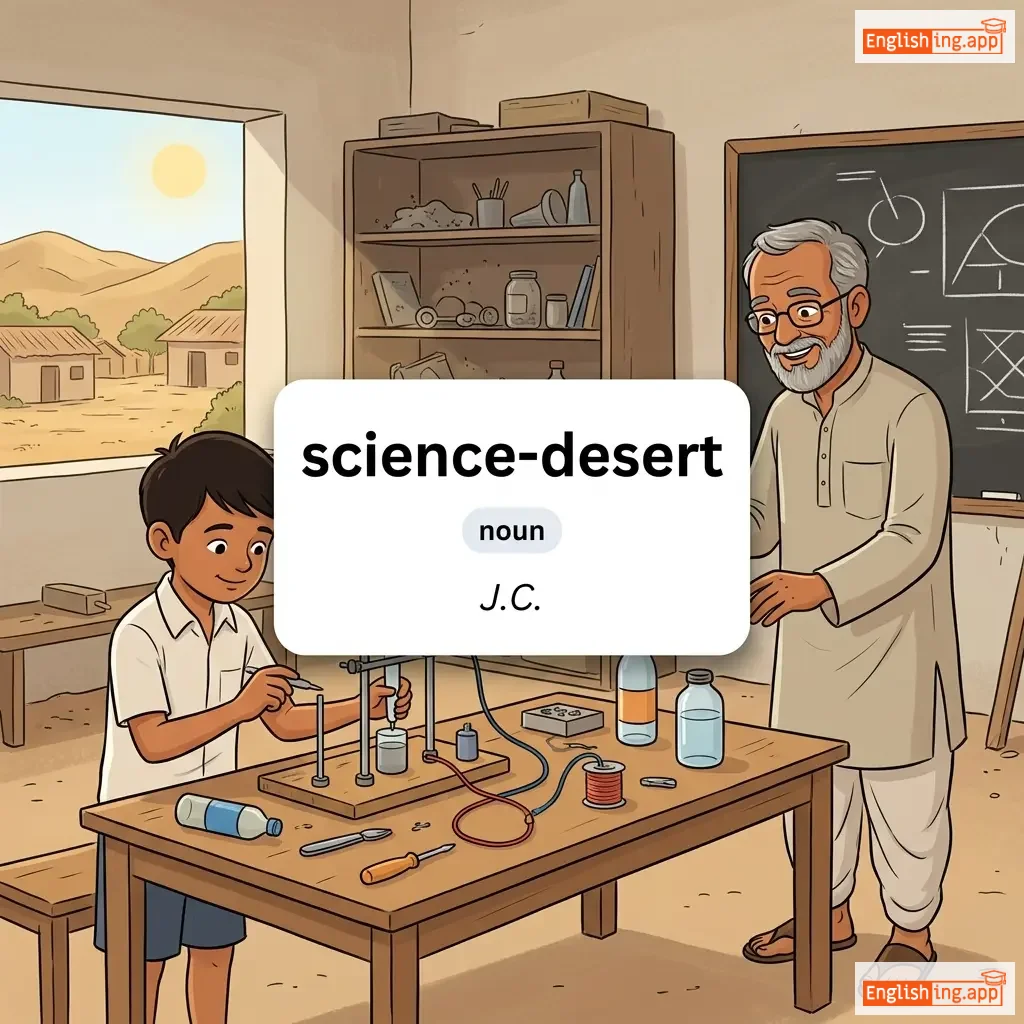
science-desert definition card — visual illustration of the meaning
noun
ˈsaɪəns ˈdezət
विज्ञान-रेगिस्तान (vigyan-registan)

A region or area lacking in scientific development, research facilities, or educational institutions.

"J.C. Bose thrived in a science-desert."

"जे. सी. बोस एक विज्ञान-रेगिस्तान में पनपे थे।" (J. C. Bos ek vigyan-registan mein panpe the.)
adjective
/ˈsɪn.tɪ.leɪ.tɪŋ/
चमकदार (chamakdaar)

brilliantly clever, exciting, or sparkling

"Her scintillating conversation kept everyone entertained."

"उसकी चमकदार बातचीत ने सभी को मनोरंजन किया।" (Uski chamakdaar baatcheet ne sabhi ko manoranjan kiya.)
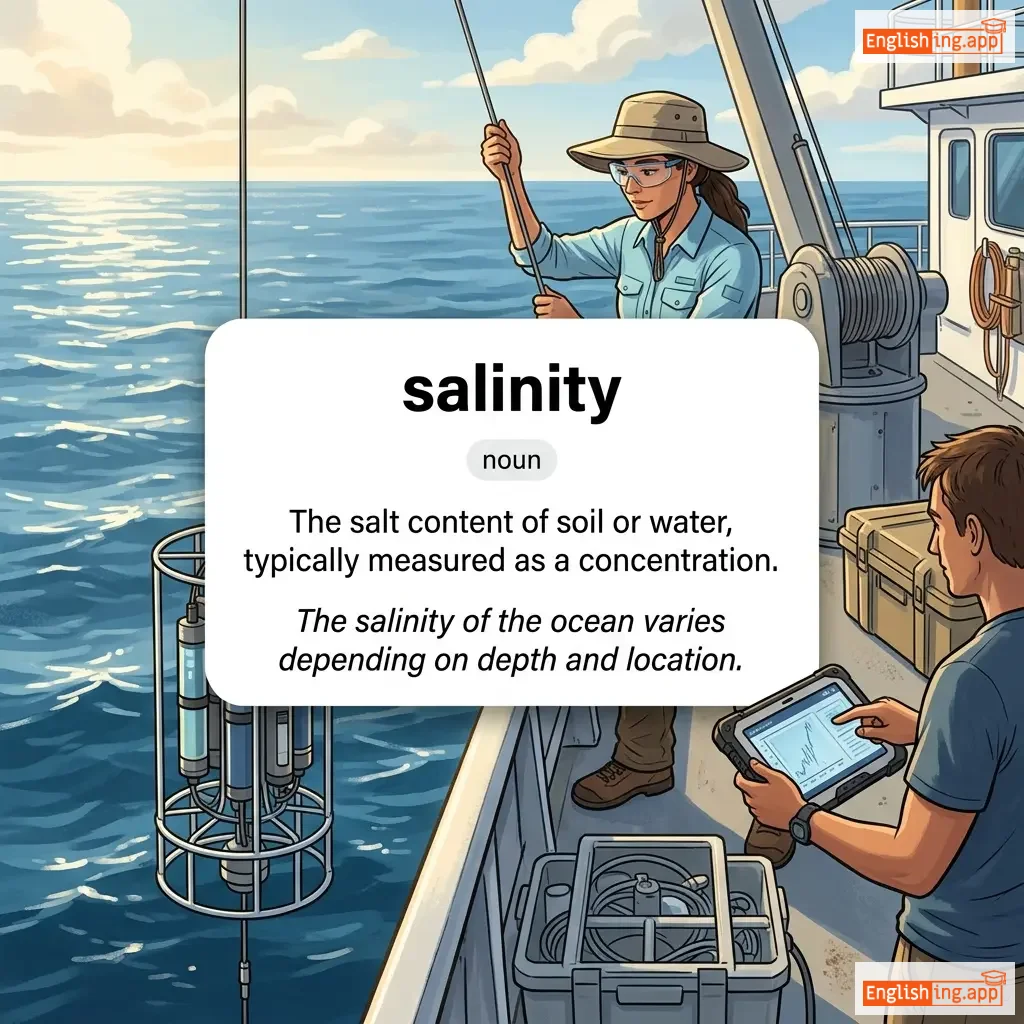
salinity definition card — visual illustration of the meaning
noun
/səˈlɪn.ə.t̬i/
नमकीनता, नमक की सांद्रता (namkeenta, namak ki sandrata)

The salt content of soil or water, typically measured as a concentration.

"The salinity of the ocean varies depending on depth and location."

"महासागर की नमकीनता गहराई और स्थान के आधार पर बदलती है।" (mahasagar ki namkeenta gahraai aur sthaan ke aadhar par badalti hai.)