वोकैबुलरीज

इंग्लिश वोकैबुलरी डिस्कवर, लर्न और मास्टर करें

noun
/sleɪv/
गुलाम (gulaam)

a person who is the legal property of another and is forced to work for them

"The abolitionist movement fought for the rights of slaves."

"उन्मूलनवादी आंदोलन ने दासों के अधिकारों के लिए संघर्ष किया।" (Unmoolanvadi aandolan ne daason ke adhikaron ke liye sangharsh kiya.)
noun/verb
/ˈslɔː.tər/
वध / नरसंहार (vadh / naranshar)

the killing of animals for food; killing in large numbers violently

"The army slaughtered hundreds of enemy soldiers."

"सेना ने सैकड़ों शत्रु सैनिकों का वध किया।" (Sena ne saikdon shatru sainikon ka vadh kiya.)
noun
/ˈslæt.ən/
अपरिचित महिला (aparichit mahila)

a woman who is untidy or slovenly in appearance or habits

"The house looked as if a slattern lived there."

"घर ऐसा लग रहा था जैसे वहां एक अपरिचित महिला रहती हो।" (Ghar aisa lag raha tha jaise wahan ek aparichit mahila rahti ho.)
noun/verb
/sleɪt/
स्लेट / निर्धारित करना (slet / nirdharit karna)

a fine-grained rock used for roofing or writing; to schedule or designate for a task

"The meeting is slated for next Monday."

"बैठक अगले सोमवार के लिए निर्धारित की गई है।" (Baithak agle somvaar ke liye nirdharit ki gayi hai.)
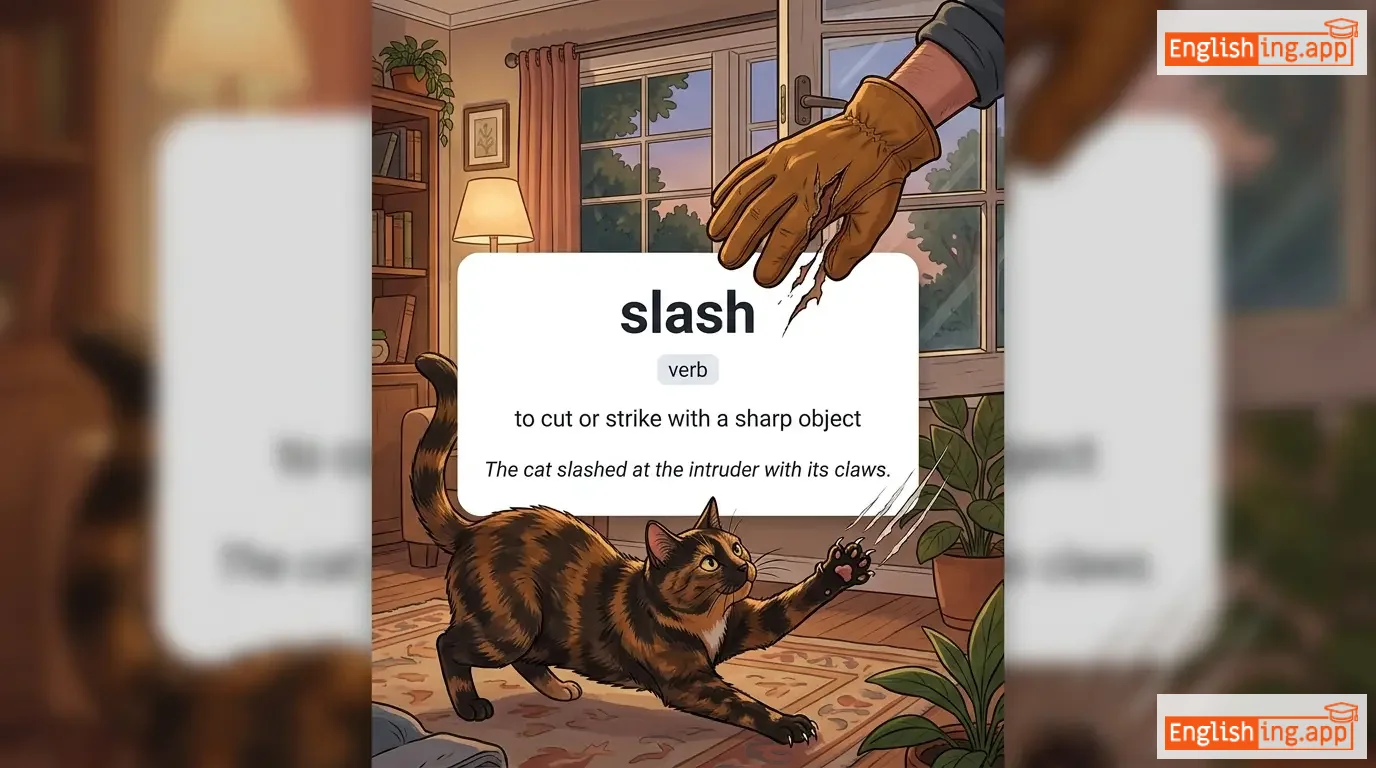
slash definition card — visual illustration of the meaning
verb
/slæʃ/
काटना (katna)

to cut or strike with a sharp object

"The cat slashed at the intruder with its claws."

"बिल्ली ने अपने पंजों से आक्रमणकारी पर हमला किया।" (Billi ne apne panjon se aakramankari par hamla kiya.)
adjective
/ˈslæp.dæʃ/
लापरवाह (laparwah)

done too quickly and carelessly; hasty and careless

"The report was written in a slapdash manner, full of errors."

"रिपोर्ट लापरवाही से लिखी गई थी, जिसमें बहुत सारी गलतियाँ थीं।" (Report laparwahi se likhi gayi thi, jismein bahut saari galtiyan thin.)
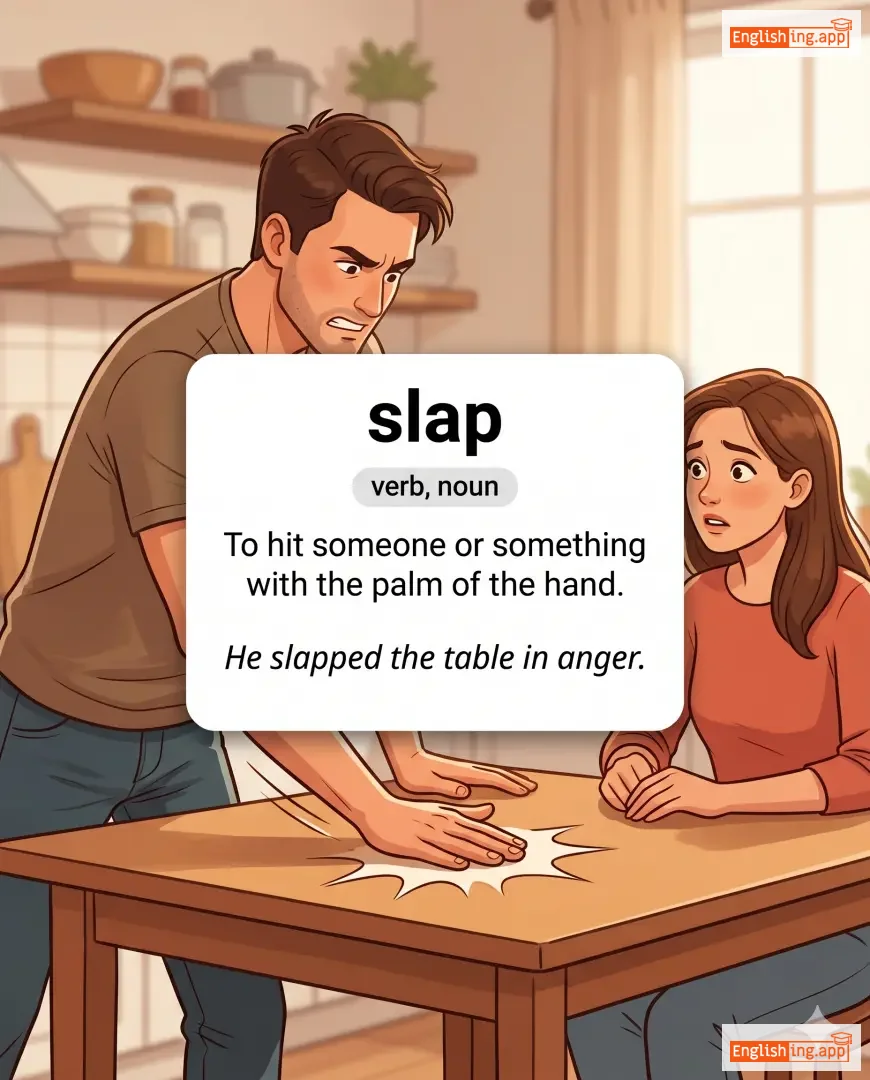
slap definition card — visual illustration of the meaning
verb, noun
/slæp/
थप्पड़ मारना (thappad marna)

To hit someone or something with the palm of the hand.

"He slapped the table in anger."

"उसने गुस्से में टेबल पर थप्पड़ मारा।" (Usne gusse mein table par thappad maara.)
noun, verb
/slænt/
झुका हुआ या पक्षपाती दृष्टिकोण (jhuka hua ya pakshapati drishtikon)

A particular point of view; to slope or lean in a particular direction.

"The article had a political slant."

"लेख में एक राजनीतिक झुकाव था।" (lekh mein ek rajneetik jhukav tha.)
noun
/slæŋ/
गाली-गलौज की भाषा; स्लैंग (gaali-galauz ki bhasha; slang)

very informal language that is usually spoken rather than written

"The teenagers used slang that their parents couldn't understand."

"किशोरों ने उस स्लैंग का इस्तेमाल किया जिसे उनके माता-पिता समझ नहीं पाए।" (Kishoron ne us slang ka istemal kiya jise unke mata-pita samajh nahi paaye.)
noun
/ˈslændər/
झूठी बात (jhoothi baat)

The action of making false spoken statements damaging to a person's reputation.

"He sued the newspaper for slander."

"उसने अखबार पर मानहानि का मुकदमा दायर किया।" (Usne akhbaar par maanhaani ka mukadma daayr kiya.)
verb
/slæm/
धक्का देना (dhakka dena)

to close or hit something with great force

"He slammed the door angrily after the argument."

"तर्क के बाद उसने गुस्से में दरवाजा जोर से बंद कर दिया।" (Tark ke baad usne gusse mein darwaza zor se band kar diya.)
verb
/sleɪk/
प्यास बुझाना (pyaas bujhna)

To satisfy thirst or desire.

"She drank cold water to slake her thirst."

"वह अपनी प्यास बुझाने के लिए ठंडा पानी पी रही थी।" (Vah apni pyaas bujhane ke liye thanda paani pee rahi thi.)
noun
/slæɡ/
धातु का अवशेष (dhatu ka avshesh)

Stony waste matter separated from metals during the smelting process.

"The factory dumped the slag near the river."

"कारख़ाने ने नदी के पास स्लैग फेंका।" (Karkhane ne nadi ke paas slag phenka.)
verb
/ˈslækən/
ढीला करना (dheela karna)

to make or become less tight, less active, or slower

"The driver slackened his speed as he approached the village."

"ड्राइवर ने गाँव के पास आते समय अपनी गति स्लैकन कर दी।" (Driver ne gaon ke paas aate samay apni gati slacken kar di.)
adjective
/slæk/
ढीला (dhila)

not tight, firm, or busy; lacking tension or activity

"Business is slack during the rainy season."

"वर्षा के मौसम में व्यापार मंदा होता है।" (Varsha ke mausam mein vyapar manda hota hai.)
noun
/slæb/
स्लैब (slab)

a large, thick, flat piece of stone, concrete, or other hard material

"The workers laid a concrete slab for the foundation."

"श्रमिकों ने नींव के लिए एक कंक्रीट स्लैब रखा।" (da shramikon ne neev ke liye ek kongkrit slab rakha.)
noun
/ˈskaɪˌskreɪpər/
आसमान छूने वाली इमारत (aasmaan chhoone waali imaarat)

a very tall building of many stories

"The new skyscraper dominates the city's skyline."

"नई आकाश छूने वाली इमारत शहर के स्काईलाइन पर हावी है।" (nayi aasmaan chhoone waali imaarat shahar ke skyline par haavi hai.)
noun
/ˈskaɪ.lɑːrk/
आसमान में ऊँचा उड़ने वाला चिड़ीया (aasmaan mein uncha udne waala chidiya)

a small brown bird known for singing while flying high in the sky

"The skylark sang beautifully as it soared above the meadow."

"आसमान में उड़ते हुए स्काईलार्क ने खूबसूरती से गाया, जैसे वह घास के मैदान के ऊपर उड़ रहा हो।" (aasmaan mein udte hue sky-lark ne khoobsurti se gaya, jaise vah ghaas ke maidan ke upar ud raha ho)
adjective
/skaɪ bluː/
आसमानी-नीला (aasmaani-neela)

a bright blue color like that of a clear sky

"Her sky-blue eyes sparkled in the sunlight."

"उसकी आसमानी-नीली आँखें सूरज की रोशनी में चमक रही थीं।" (Uski aasmaani-neeli aankhen sooraj ki roshni mein chamak rahi thi.)
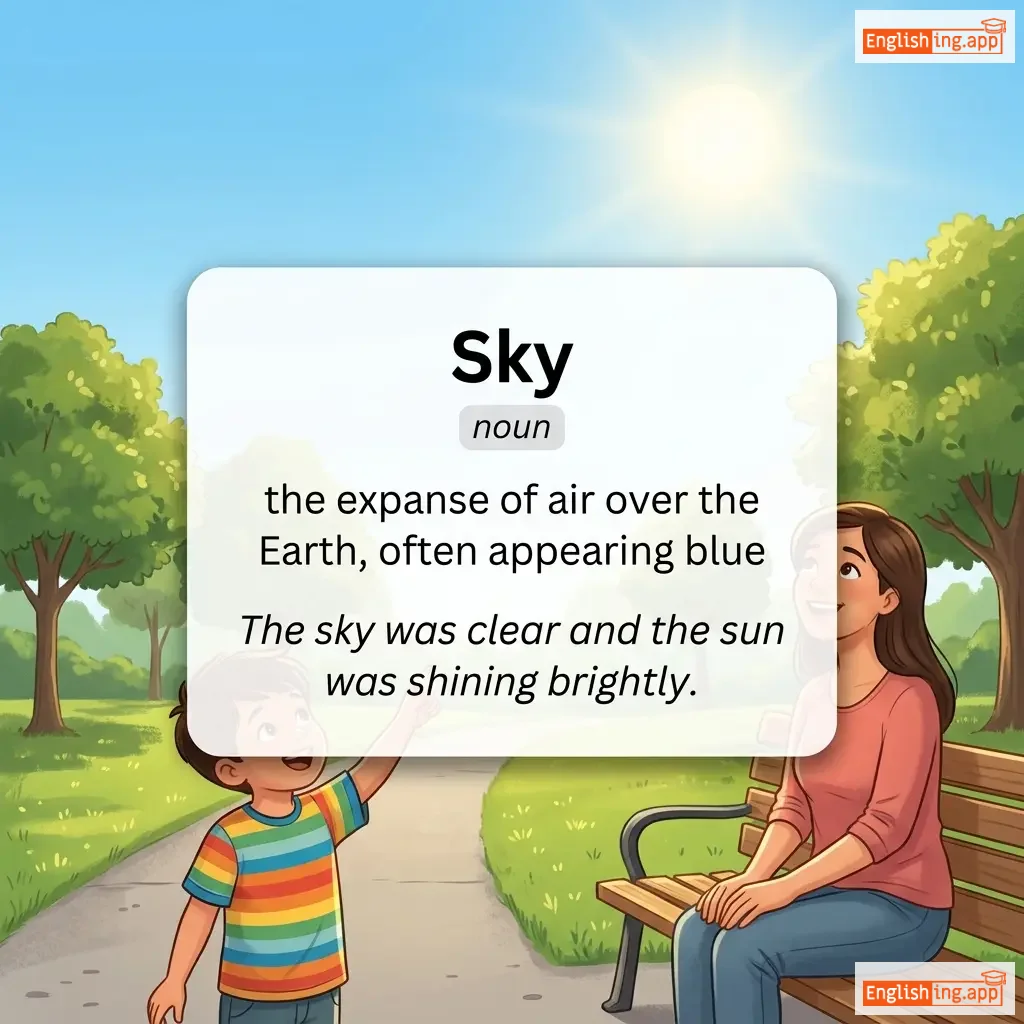
Sky definition card — visual illustration of the meaning
noun
/skaɪ/
आसमान (aasmaan)

the expanse of air over the Earth, often appearing blue

"The sky was clear and the sun was shining brightly."

"आसमान साफ़ था और सूरज तेज़ चमक रहा था।" (aasmaan saaf tha aur sooraj tez chamak raha tha)
noun
/ˌskʌlˈdʌɡəri/
धोखाधड़ी (dhokhadhadi)

dishonest behavior or activities, often done secretly

"The election was full of political skullduggery."

"चुनाव राजनीतिक धोखाधड़ी से भरा हुआ था।" (Chunav raajnaitik dhokhadhadi se bhara hua tha.)
noun
/skʌl/
खोपड़ी (khopdi)

the bony structure that forms the head and protects the brain

"The archaeologists found an ancient human skull."

"पुरातत्वविदों ने एक प्राचीन मानव खोपड़ी पाई।" (Puratatvavidhon ne ek prachin manav khopdi pai.)
verb
/skʌlk/
गुपचुप चलना (gupchup chalna)

to move or hide secretly, often because you are planning something bad or are feeling guilty

"He tried to skulk in the shadows to avoid being seen."

"वह छाया में छिपने की कोशिश कर रहा था ताकि उसे देखा न जा सके।" (Wah chhaya mein chhipne ki koshish kar raha tha taaki use dekha na ja sake.)
noun
/skʌlˈdʌɡəri/
धोखाधड़ी (dhokhadhadi)

underhanded or dishonest behavior

"The politician was accused of financial skulduggery."

"राजनेता पर वित्तीय धोखाधड़ी का आरोप था।" (Rajnetā par vittīya dhokhādhaṛī kā ārop thā.)
adjective
/ˈskɪtɪʃ/
घबराया हुआ (ghabraya hua)

easily frightened or nervous; unpredictable

"The horse was too skittish to ride."

"घोड़ा सवारी करने के लिए बहुत घबराया हुआ था।" (Ghoda sawari karne ke liye bahut ghabraya hua tha.)
noun
/skɪt/
छोटा नाटक (chota natak)

a short, humorous performance or piece of writing

"The students performed a funny skit at the event."

"छात्रों ने कार्यक्रम में एक मजेदार स्किट प्रस्तुत किया।" (Chhatron ne karyakram mein ek mazedar skit prastut kiya.)
noun/verb
/skɜːrt/
स्कर्ट (skart)

a piece of clothing that hangs from the waist; to go around the edge of something

"She wore a red skirt to the party."

"उसने पार्टी में लाल स्कर्ट पहनी।" (Usne party mein lal skirt pehni.)
noun/verb
/ˈskɜːrmɪʃ/
झगड़ा (jhagda)

a small or brief fight between groups of soldiers; to engage in such a fight

"The soldiers got into a skirmish near the border."

"सैनिक सीमा के पास एक झगड़े में फंस गए।" (Sainik seema ke paas ek jhagde mein fans gaye.)
verb
/skɪp/
छोड़ना (chhodna)

to omit or pass over something; to move lightly or quickly

"He decided to skip breakfast and go straight to work."

"उसने नाश्ता छोड़ने और सीधे काम पर जाने का फैसला किया।" (Usne nashta chhodne aur seedhe kaam par jaane ka faisla kiya.)
adjective
/ˈskɪni/
पतला; दुबला; हड्डी दिखाई देने वाला (patla; dubla; haddi dikhai dene wala)

very thin; having little flesh or fat on the body

"The skinny cat looked like it hadn't eaten for days."

"पतला बिल्ली ऐसा लग रहा था जैसे उसने कई दिनों से खाना नहीं खाया हो।" (patla billi aisa lag raha tha jaise usne kai dinon se khana nahi khaya ho.)
noun
/ˈskɪnˌflɪnt/
कंजूस (kanjoos)

a person who spends as little money as possible; a miser

"The landlord was such a skinflint that he never repaired anything."

"मालिक इतना कंजूस था कि उसने कभी कुछ मरम्मत नहीं की।" (maalik itna kanjoos tha ki usne kabhi kuch marammat nahin ki.)
noun
/skɪn/
त्वचा (tvacha)

the outer layer of the body

"She has fair skin and bright blue eyes."

"उसकी त्वचा हल्की रंग की और आंखें नीली हैं।" (Uski tvacha halki rang ki aur aankhein neeli hain.)
verb
/skɪmp/
कंजूसी करना (kanjoosi karna)

to use less of something than is necessary in order to save money or effort

"Don’t skimp on quality when buying a new laptop."

"नए लैपटॉप को खरीदते समय गुणवत्ता पर कंजूसी मत करो।" (Naye laptop ko kharidte samay gunwatta par kanjoosi mat karo.)
verb
/skɪm/
जल्दी से देखना (jaldi se dekhna)

to move quickly over a surface or to read something quickly

"She skimmed through the report before the meeting."

"उसने बैठक से पहले रिपोर्ट को जल्दी से स्किम किया।" (Usne baithak se pehle report ko jaldi se skim kiya.)
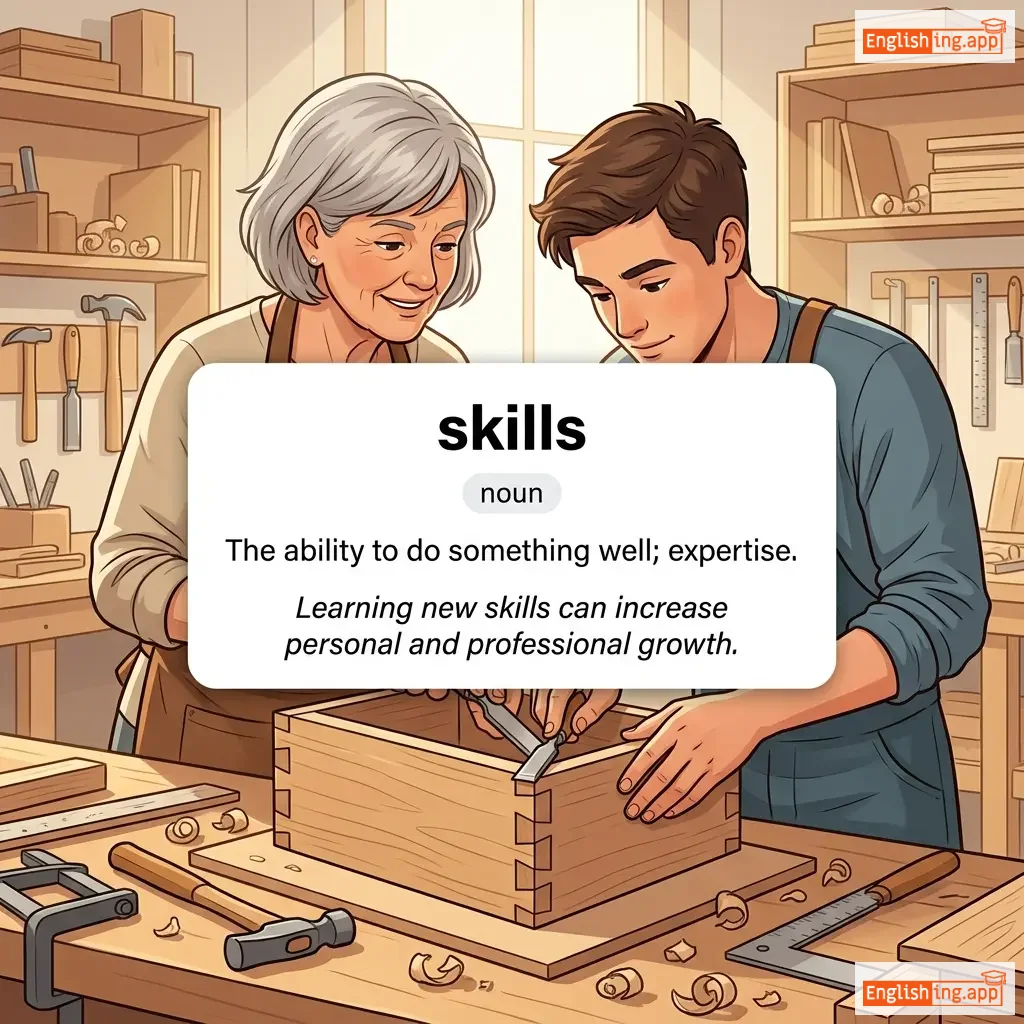
skills definition card — visual illustration of the meaning
noun
/skɪlz/
कौशल (kaushal)

The ability to do something well; expertise.

"Learning new skills can increase personal and professional growth."

"नए स्किल्स सीखने से व्यक्तिगत और पेशेवर विकास बढ़ सकता है।" (Naye skills seekhne se vyaktigat aur peshewar vikas badh sakta hai.)
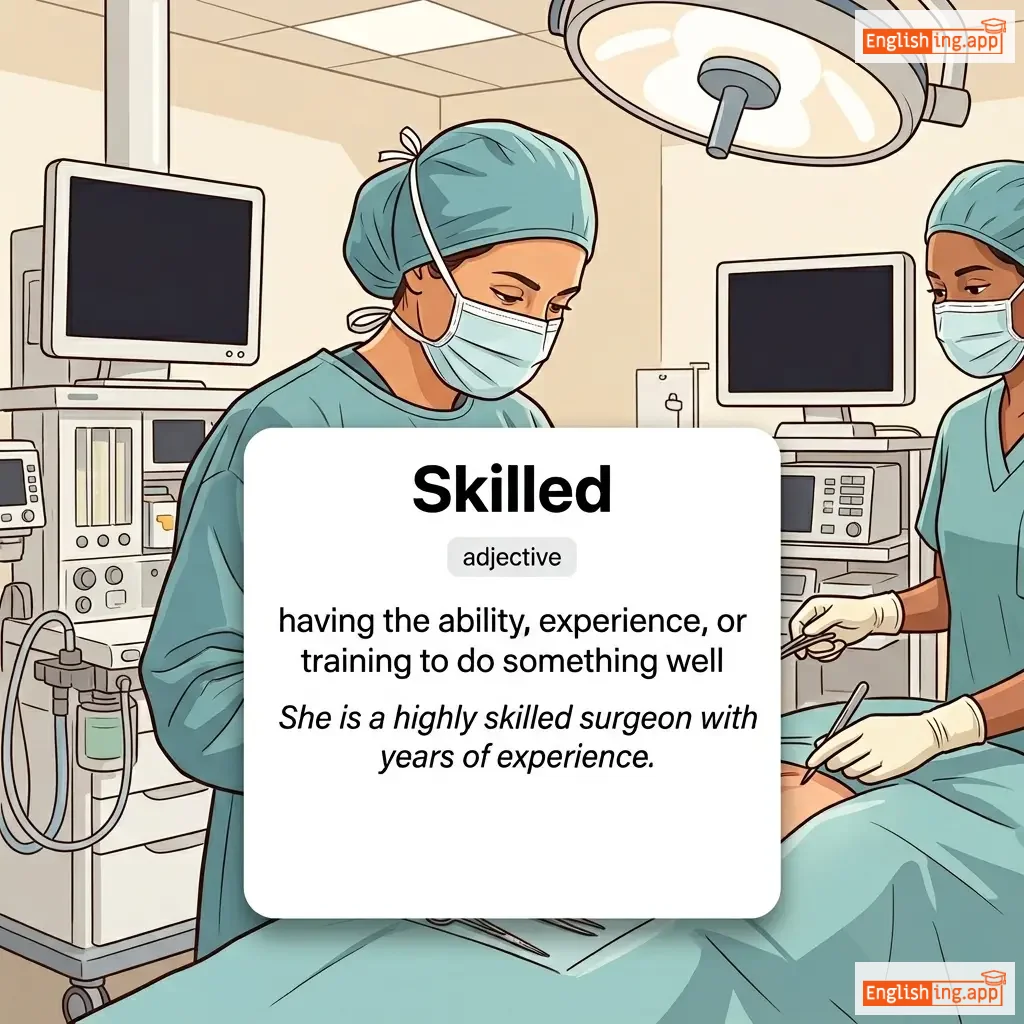
Skilled definition card — visual illustration of the meaning
adjective
/skɪld/
कुशल (kushal)

having the ability, experience, or training to do something well

"She is a highly skilled surgeon with years of experience."

"वह कई वर्षों के अनुभव के साथ एक उच्च कुशल सर्जन है।" (Vah kai varshon ke anubhav ke saath ek uchch kushal surgeon hai.)
noun
/sɪˈmɪlɪˌtjuːd/
सादृश्यता (sadrishyata)

The quality or state of being similar; resemblance or likeness.

"There is a striking similitude between the two paintings."

"दो पेंटिंग्स के बीच एक उत्तेजक सादृश्यता है।" (Do paintings ke beech ek uttejak sadrishyata hai.)
noun
/ˈsɪlk.wɜːrm/
रेशम कीट (resham keet)

the caterpillar of a moth that produces silk fibers used to make silk fabric

"Silkworms feed on mulberry leaves to produce silk."

"रेशम कीट तूत के पत्तों पर खिलाते हैं और रेशम उत्पन्न करते हैं।" (resham keet toot ke patton par khilate hain aur resham utpann karte hain)
adjective
/ˈsɪlkən/
रेशमी; मुलायम; चिकना; (silken)

made of silk; smooth and soft like silk

"She wore a beautiful silken dress to the party."

"वह पार्टी में एक सुंदर रेशमी ड्रेस पहनकर आई।" (vah party mein ek sundar reshmi dress pehankar aayi.)
adjective
/ˈsɪli/
मूर्ख (murkh)

showing a lack of good sense; foolish or playful

"He made a silly mistake on the test."

"उसने परीक्षा में एक मूर्खता भरी गलती की।" (Usne pariksha mein ek murkhta bhari galti ki.)
noun
/sɪlt/
कीचड़ (keechad)

Fine sand, clay, or other material carried by running water and deposited as a sediment.

"The river deposited layers of silt along its banks."

"नदी ने अपनी तटरेखाओं के साथ कीचड़ की परतें जमा की।" (Nadi ne apni tatrekhaon ke saath keechad ki paratein jama ki.)
noun, adjective
/ˈsɪlvər/
चांदी (chaandi)

a shiny gray-white metal, often used for coins, jewelry, and decoration

"She wore a beautiful silver necklace for the party."

"उसने पार्टी के लिए एक सुंदर चांदी की हार पहना।" (Usne party ke liye ek sundar chaandi ki haar pehna.)
noun
/ˈsɪlvər kɑrp/
रजत मछली (rajat machhli)

a large freshwater fish with silvery scales, commonly farmed for food

"Silver carp is widely cultivated in fish farms across Asia."

"रजत मछली एशिया भर में मछली के खेतों में व्यापक रूप से पाली जाती है।" (rajat machhli eshiya bhar me machhli ke kheton me vyapak roop se pali jati hai.)
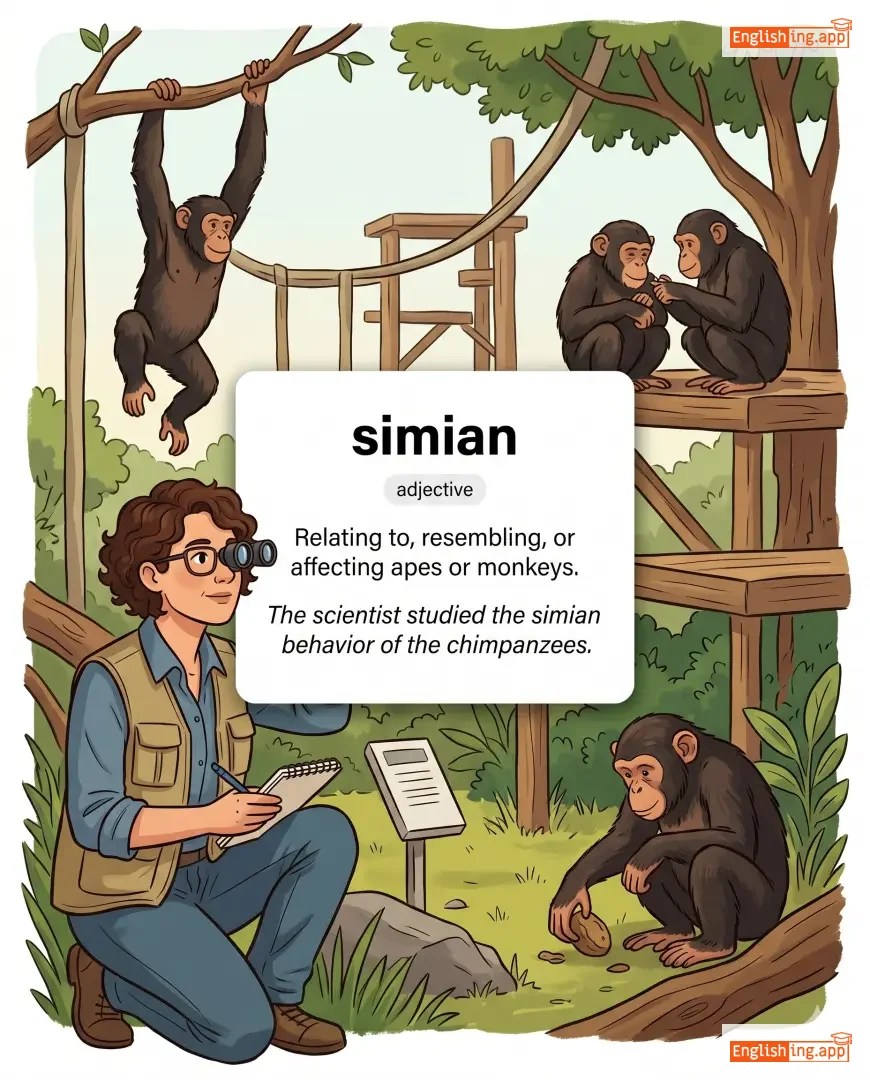
simian definition card — visual illustration of the meaning
adjective
/ˈsɪmiən/
मनुष्य से मिलता-जुलता (manushya se milta-julta)

Relating to, resembling, or affecting apes or monkeys.

"The scientist studied the simian behavior of the chimpanzees."

"वैज्ञानिक ने चिम्पांजी के मानव जैसे व्यवहार का अध्ययन किया।" (Vaigyanik ne chimpanzee ke manushya jaise vyavhaar ka adhyayan kiya.)
adjective
/ˈsɪmɪlər/
समान (samaan)

Having a resemblance in appearance, character, or quantity, without being identical.

"The twins wore similar clothes to the party."

"जुड़वां बच्चों ने पार्टी में समान कपड़े पहने थे।" (Judwa bachon ne party mein samaan kapde pehene the.)
noun
/ˌsɪmɪˈlærəti/
सादृश्य (sadrishya)

the state of being alike or having characteristics in common

"There is a strong similarity between the two paintings."

"दो पेंटिंग्स के बीच एक मजबूत समानता है।" (Do paintings ke beech ek majboot samanata hai.)
adverb
/ˈsɪmɪlərli/
समान रूप से (samaan roop se)

in a similar way

"Similarly, we can achieve success with dedication and hard work."

"समान रूप से, हम समर्पण और कड़ी मेहनत के साथ सफलता प्राप्त कर सकते हैं।" (Samaan roop se, hum samarpan aur kathin mehnat ke saath safalta prapt kar sakte hain.)
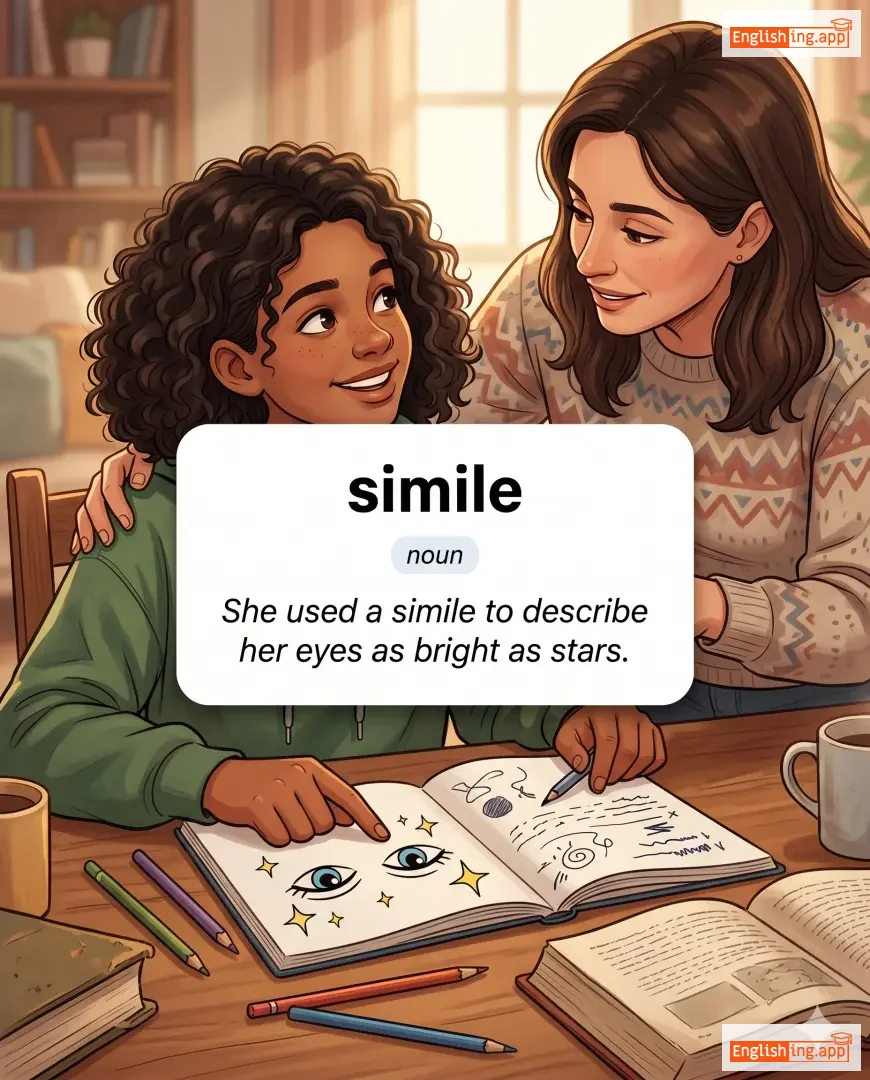
simile definition card — visual illustration of the meaning
noun
/ˈsɪməli/
उपमा (upma)

A figure of speech involving the comparison of one thing with another using 'like' or 'as'.

"She used a simile to describe her eyes as bright as stars."

"उसने अपनी आँखों को सितारों के समान चमकदार बताने के लिए एक उपमा का प्रयोग किया।" (Usne apni aankhon ko sitaron ke saman chamakdaar batane ke liye ek upma ka prayog kiya.)
noun
/ˌsɪmjʊˈleɪkrəm/
अनुकरण (anukaran)

an image or representation of someone or something; a superficial likeness

"The statue was only a simulacrum of the ancient god."

"प्रतिमा केवल प्राचीन देवता का अनुकरण थी।" (Pratima keval prachin devta ka anukaran thi.)
adjective
/sɪmˈplɪstɪk/
अत्यधिक सरलित (atyadhik saralit)

treating complex issues as if they were much simpler than they really are

"His explanation was too simplistic and ignored key details."

"उसकी व्याख्या अत्यधिक सरलित थी और महत्वपूर्ण विवरणों की अनदेखी की थी।" (Uski vyakhya atyadhik saralit thi aur mahatvapurn vivaron ki andekhi ki thi.)