वोकैबुलरीज

इंग्लिश वोकैबुलरी डिस्कवर, लर्न और मास्टर करें

verb
/sɪt/
बैठना (baithna)

to rest with the body supported by the buttocks, often in a chair or on the ground

"Please sit down and relax for a while."

"कृपया बैठ जाइए और थोड़ी देर आराम कीजिए।" (Kripya baith jaiye aur thodi der aaram kijiye.)
noun
/ˈsɪstərhʊd/
बहनें का संबंध (bahnen ka sambandh)

The relationship between sisters, or a community of women united by shared experiences or goals.

"The feminist movement created a strong sense of sisterhood among women."

"नारीवादी आंदोलन ने महिलाओं के बीच बहनें के संबंध का एक मजबूत एहसास पैदा किया।" (Naareevaadee aandolan ne mahilaon ke beech behne ke sambandh ka ek majboot ehsaas paida kiya.)
noun
/ˈsɪstər/
बहन (bahan)

a female sibling; a girl or woman in relation to other children of her parents

"My sister is coming to visit us next week."

"मेरी बहन अगले सप्ताह हमसे मिलने आ रही है।" (meri bahan agle saptah humse milne aa rahi hai)
noun
/sɪˈrɒkoʊ/
गर्म, शुष्क हवा (garm, shushk hawa)

A hot, dry wind blowing from North Africa across the Mediterranean to southern Europe.

"The sirocco made the city unbearably hot and dusty."

"सिरोक्को ने शहर को असहनीय गर्म और धूल भरा बना दिया।" (Sirocco ne shahar ko asahniya garm aur dhool bhara bana diya.)
noun
/ˈsaɪrən/
सायरन (sairen)

A device that makes a loud prolonged sound as a signal or warning; in mythology, a creature that lures sailors with enchanting songs.

"The police car passed with its siren blaring."

"पुलिस की कार अपनी सायरन की आवाज़ के साथ पास हुई।" (Police ki car apni sairen ki aawaz ke saath paas hui.)
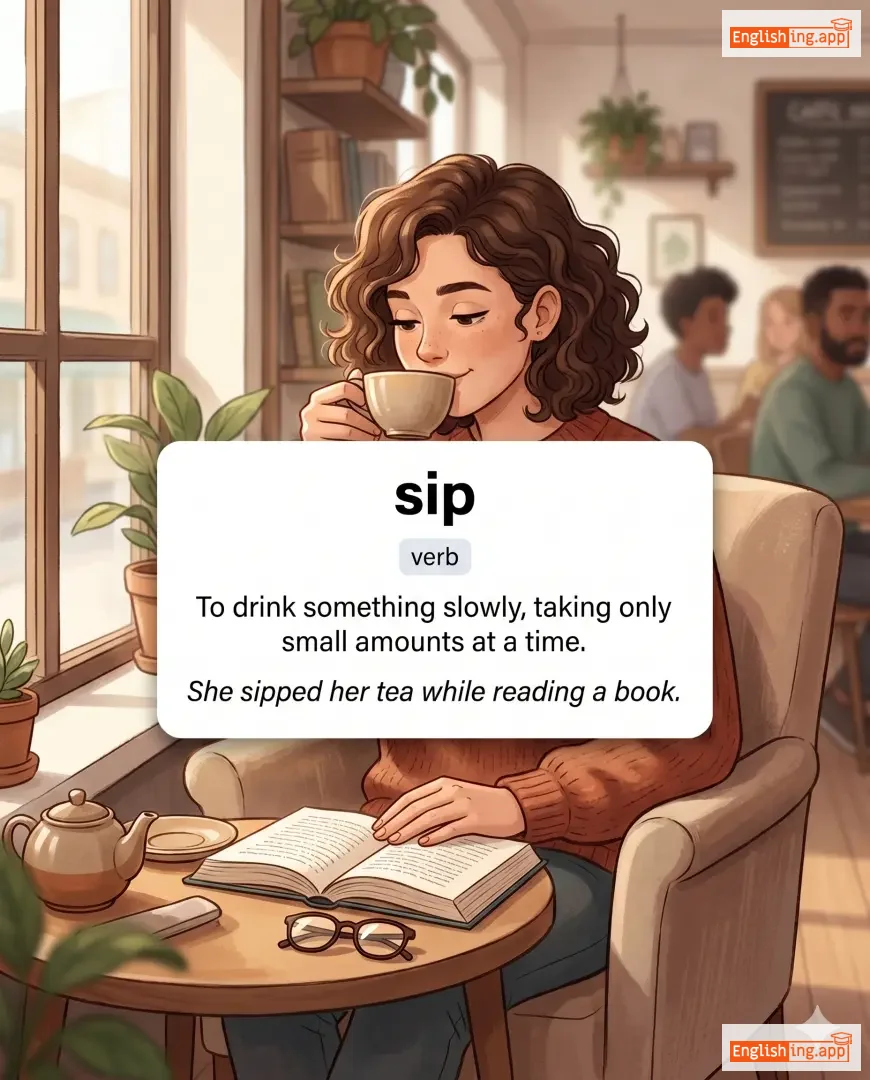
sip definition card — visual illustration of the meaning
verb
/sɪp/
चुस्की (chuski)

To drink something slowly, taking only small amounts at a time.

"She sipped her tea while reading a book."

"वह किताब पढ़ते हुए चाय की चुस्की ले रही थी।" (Wah kitaab padhte hue chai ki chuski le rahi thi.)
noun
/ˈsaɪnəs/
साइनस (sainas)

A cavity within a bone or tissue, especially those in the bones of the face connected with the nasal cavities.

"He suffered from a sinus infection that caused headaches."

"वह साइनस संक्रमण से पीड़ित था, जिससे सिर दर्द हो रहा था।" (Vah sainas sankraman se peedit tha, jisse sir dard ho raha tha.)
sinuous definition card — visual illustration of the meaning
adjective
/ˈsɪnjuəs/
घुमावदार (ghumavdar)

Having many curves, bends, or turns; winding.

"The hikers followed a sinuous path through the forest."

"हाइकर्स ने जंगल के बीच घुमावदार रास्ते का अनुसरण किया।" (Hikers ne jangal ke beech ghumavdar raste ka anusaran kiya.)
noun
/ˌsɪnjuˈɒsɪti/
वक्रता (vakrata)

The quality or state of being winding, curving, or having many turns.

"The sinuosity of the river made navigation challenging."

"नदी की वक्रता ने नौवहन को चुनौतीपूर्ण बना दिया।" (Nadi ki vakrata ne nauvahan ko chunautipurn bana diya.)
adjective
/ˈsɪnləs/
पापमुक्त; निर्दोष; (papmukto; nirdosho)

free from sin; pure and innocent; without moral fault

"The innocent child appeared sinless in her pure white dress."

"निष्पाप बच्ची अपनी सफेद ड्रेस में पापमुक्त दिख रही थी।" (nishpap bachhi apni safed dress mein papmukto dikh rahi thi)
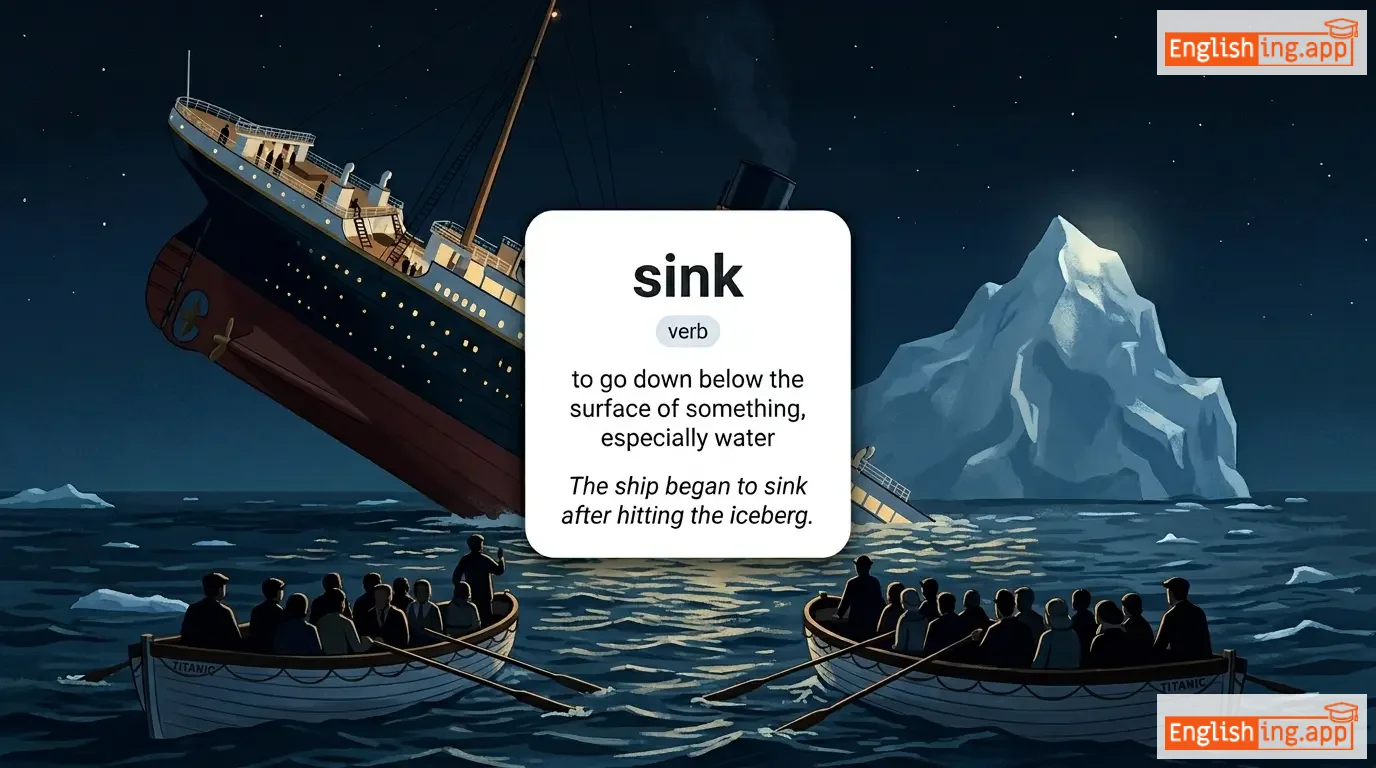
sink definition card — visual illustration of the meaning
verb
/sɪŋk/
डूबना (doobna)

to go down below the surface of something, especially water

"The ship began to sink after hitting the iceberg."

"जहाज बर्फ़ से टकराने के बाद डूबने लगा।" (Jahaz baraf se takrane ke baad doobne laga.)
adjective
/ˈsɪnɪstər/
दुष्ट (dusht)

Giving the impression that something harmful or evil is happening or will happen.

"The abandoned house had a sinister atmosphere."

"वह परित्यक्त घर एक दुष्ट वातावरण से भरा था।" (vah parityakt ghar ek dusht vatavaran se bhara tha.)
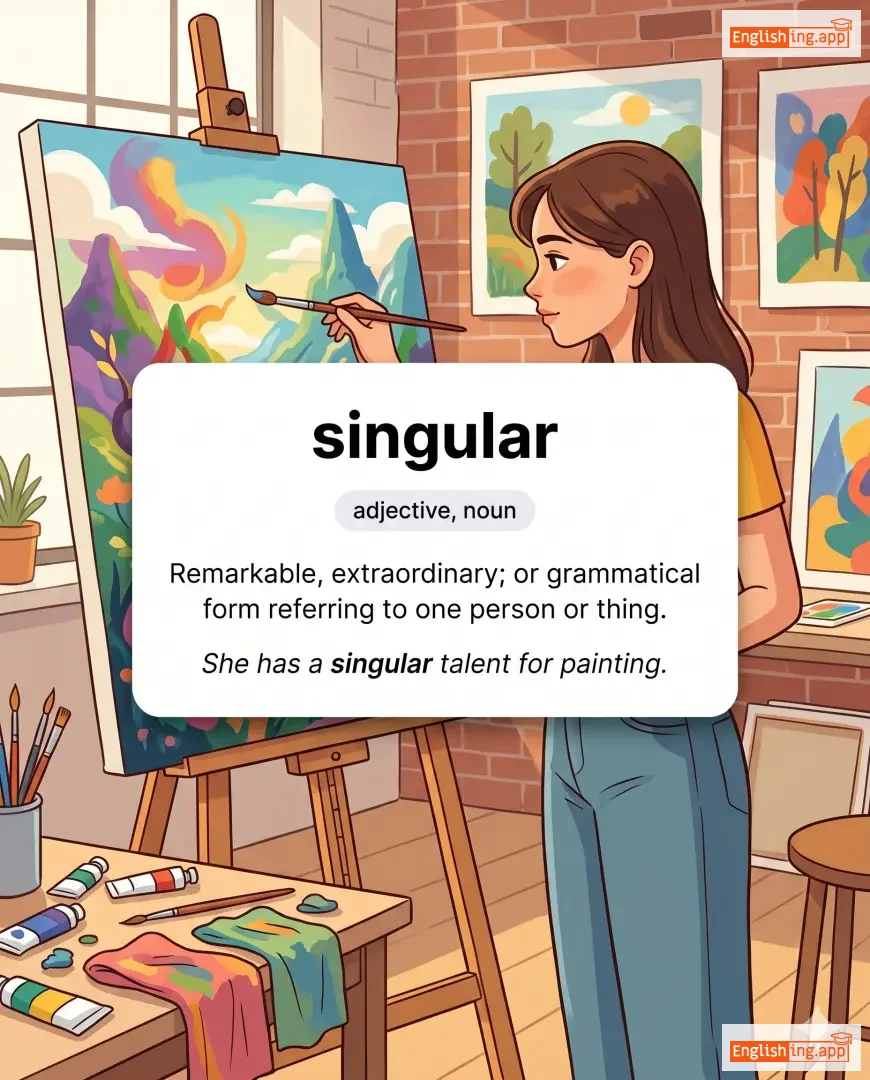
singular definition card — visual illustration of the meaning
adjective, noun
/ˈsɪŋɡjələr/
असाधारण / एकवचन (asadharan / ekavachan)

Remarkable, extraordinary; or grammatical form referring to one person or thing.

"She has a singular talent for painting."

"उसकी पेंटिंग के लिए असाधारण प्रतिभा है।" (Uski painting ke liye asadharan pratibha hai.)
adjective
/ˈsɪŋɡəl/
एकल (ekal)

only one; not one of several

"She bought a single ticket for the concert."

"उसने संगीत कार्यक्रम के लिए एक टिकट खरीदी." (Usne sangeet karyakram ke liye ek tiket kharidi.)
Singer definition card — visual illustration of the meaning
noun
/ˈsɪŋər/
गायक (gayak)

a person who sings, especially professionally

"The singer performed on stage last night."

"गायक ने पिछले रात मंच पर प्रदर्शन किया।" (Gayak ne pichhle raat manch par pradarshan kiya.)
verb
/sɪndʒ/
हल्का जलाना (halka jalana)

To burn something superficially or lightly, especially at the edges.

"The fire singed his eyebrows."

"आग ने उसकी भृकुटियों को हल्का जला दिया।" (Aag ne uski bhruḫitiyon ko halka jala diya.)
sing definition card — visual illustration of the meaning
verb
/sɪŋ/
गाना (gana)

to make musical sounds with the voice, typically in a tune

"She loves to sing in the choir."

"वह गाना गाने में बहुत पसंद करती है।" (Wah gana gane mein bahut pasand karti hai.)
adjective
/ˈsɪnjuːi/
मांसल और मजबूत (maansal aur majboot)

Lean and muscular; strong and tough.

"The athlete had a sinewy build that showed his strength."

"एथलीट का मांसल शरीर उसकी ताकत को दर्शाता था।" (Athleet ka maansal sharir uski taqat ko darshata tha.)
noun
/ˈsɪnjuː/
तनिका (tanika)

A tendon; figuratively, the source of strength, power, or resilience.

"The sinews in his arms stood out as he lifted the heavy box."

"जब उसने भारी बॉक्स उठाया तो उसके हाथों में टेनिका साफ दिखाई दे रहे थे।" (Jab usne bhaari box uthaya to uske haathon mein tanika saaf dikhayi de rahe the.)
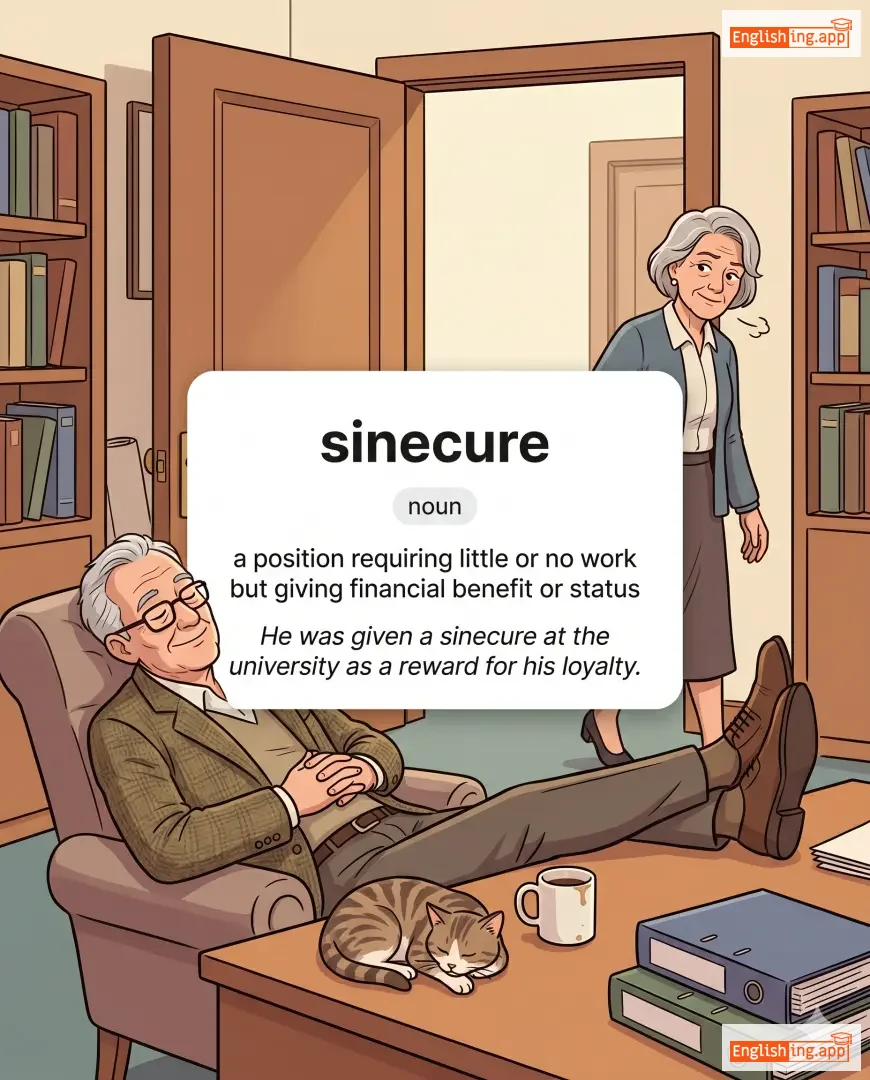
sinecure definition card — visual illustration of the meaning
noun
/ˈsaɪnɪkjʊər/
आसान नौकरी (aasan naukri)

a position requiring little or no work but giving financial benefit or status

"He was given a sinecure at the university as a reward for his loyalty."

"उसे विश्वविद्यालय में उसकी वफादारी के पुरस्कार के रूप में एक आसान नौकरी दी गई।" (Use vishwavidyalay mein uski wafadari ke puraskar ke roop mein ek aasan naukri di gayi.)
noun
/sɪnˈserɪti/
ईमानदारी (imaandari)

the quality of being free from pretense or deceit; honesty

"His sincerity in apologizing was evident to everyone."

"उसकी माफी माँगने में ईमानदारी सबको साफ़ दिखाई दी।" (uski maafi maangne mein imaandari sabko saaf dikhai di.)
adverb
/sɪnˈsɪrli/
ईमानदारी से (eemandaari se)

with genuine feelings; honestly and truly

"I sincerely hope you recover soon."

"मैं ईमानदारी से आशा करता हूँ कि आप जल्द ही ठीक हो जाएँ।" (Main eemandaari se asha karta hoon ki aap jald hi theek ho jaayein.)
adjective
/sɪnˈsɪr/
ईमानदार (imaandar)

genuine and honest; free from pretense or deceit

"She gave a sincere apology for her mistake."

"उसने अपनी गलती के लिए ईमानदारी से माफी मांगी।" (Usne apni galti ke liye imaandari se maafi maangi.)
preposition
/sɪns/
से (se)

from a particular time in the past until now

"I have known her since childhood."

"मैं उसे बचपन से जानता हूँ।" (Main use bachpan se jaanta hoon.)
noun, verb
/sɪn/
पाप (paap)

an immoral act considered to be a transgression against divine law; to commit an offense against religious or moral law

"He confessed his sin to the priest."

"उसने अपने पाप का स्वीकार पुरोहित से किया।" (Usne apne paap ka sweekar purohit se kiya.)
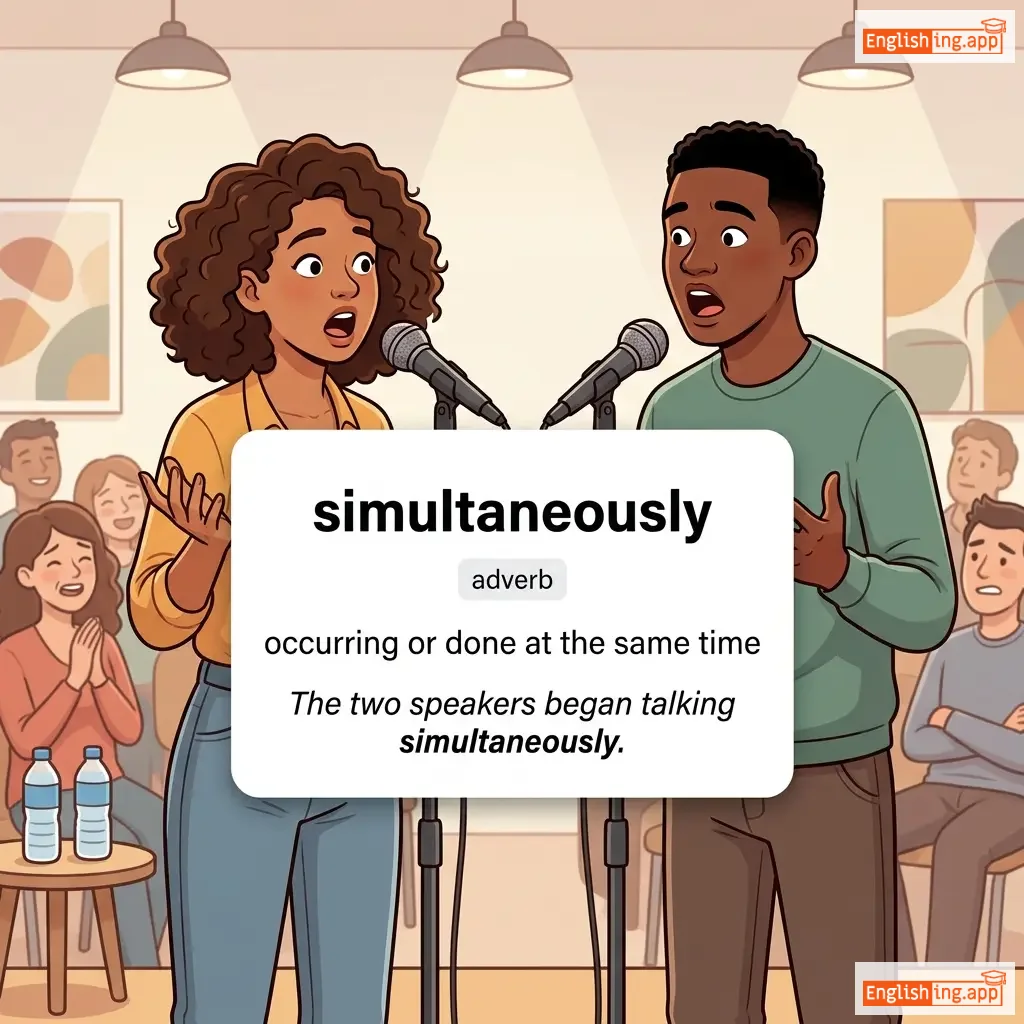
simultaneously definition card — visual illustration of the meaning
adverb
/ˌsaɪ.məlˈteɪ.ni.əs.li/
एक ही समय में (ek hi samay mein)

occurring or done at the same time

"The two speakers began talking simultaneously."

"दो वक्ताओं ने एक साथ बोलना शुरू किया।" (Do vaktaon ne ek saath bolna shuru kiya.)
noun
/sɜːr/
सिर (sir)

a respectful or formal form of address used for a man, typically one of higher social status or authority

"Sir, may I assist you with your order?"

"सिर, क्या मैं आपकी ऑर्डर में मदद कर सकता हूँ?" (Sir, kya main aapki order mein madad kar sakta hoon?)
noun
/ˈsætræp/
राज्यपाल (rajyapal)

a governor of a province in ancient Persia; also used figuratively for a subordinate ruler

"The king appointed a satrap to oversee the distant province."

"राजा ने दूरदराज के प्रांत का संचालन करने के लिए एक राज्यपाल नियुक्त किया।" (Rājā ne dūrdarāj ke prānt kā san̄cālan karne ke liye ek rajyapal niyukt kiyā.)
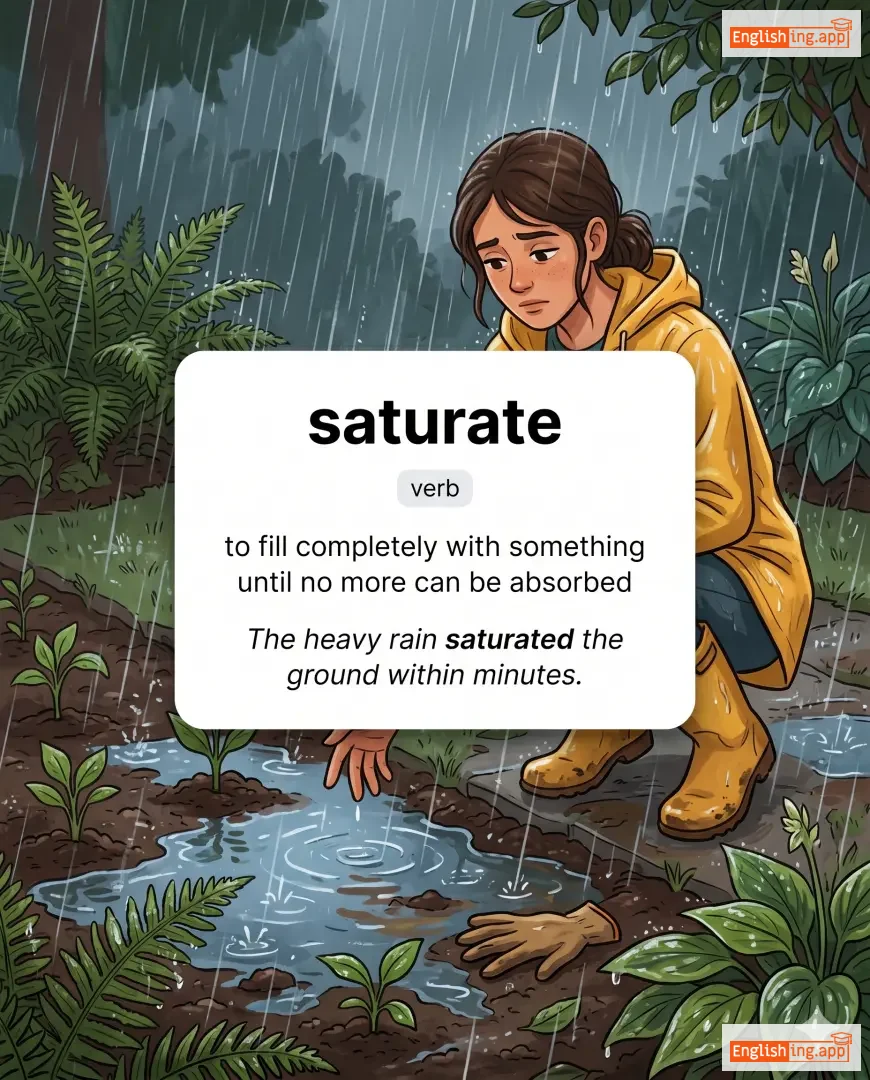
saturate definition card — visual illustration of the meaning
verb
/ˈsætʃəˌreɪt/
परिपूर्ण करना (paripurn karna)

to fill completely with something until no more can be absorbed

"The heavy rain saturated the ground within minutes."

"भारी बारिश ने कुछ मिनटों में ज़मीन को पूरी तरह से भिगो दिया।" (Bhaari baarish ne kuch minuton mein zameen ko puri tarah se bhigo diya.)
saturation definition card — visual illustration of the meaning
noun
/ˌsætʃəˈreɪʃən/
संतृप्ति (santrpti)

The state or process that occurs when no more of something can be absorbed, combined with, or added.

"Saturation of the market leads to a decrease in product demand."

"बाजार की संतृप्ति उत्पाद की मांग में गिरावट का कारण बनती है।" (Bazar ki santrpti utpad ki maang mein girawat ka kaaran banti hai.)
noun
/ˈsætərdeɪ/
शनिवार (shanivaar)

The day of the week between Friday and Sunday; traditionally the sixth day of the week

"We are going to the beach on Saturday."

"हम शनिवार को समुद्र तट पर जा रहे हैं।" (hum shanivaar ko samudra tat par ja rahe hain.)
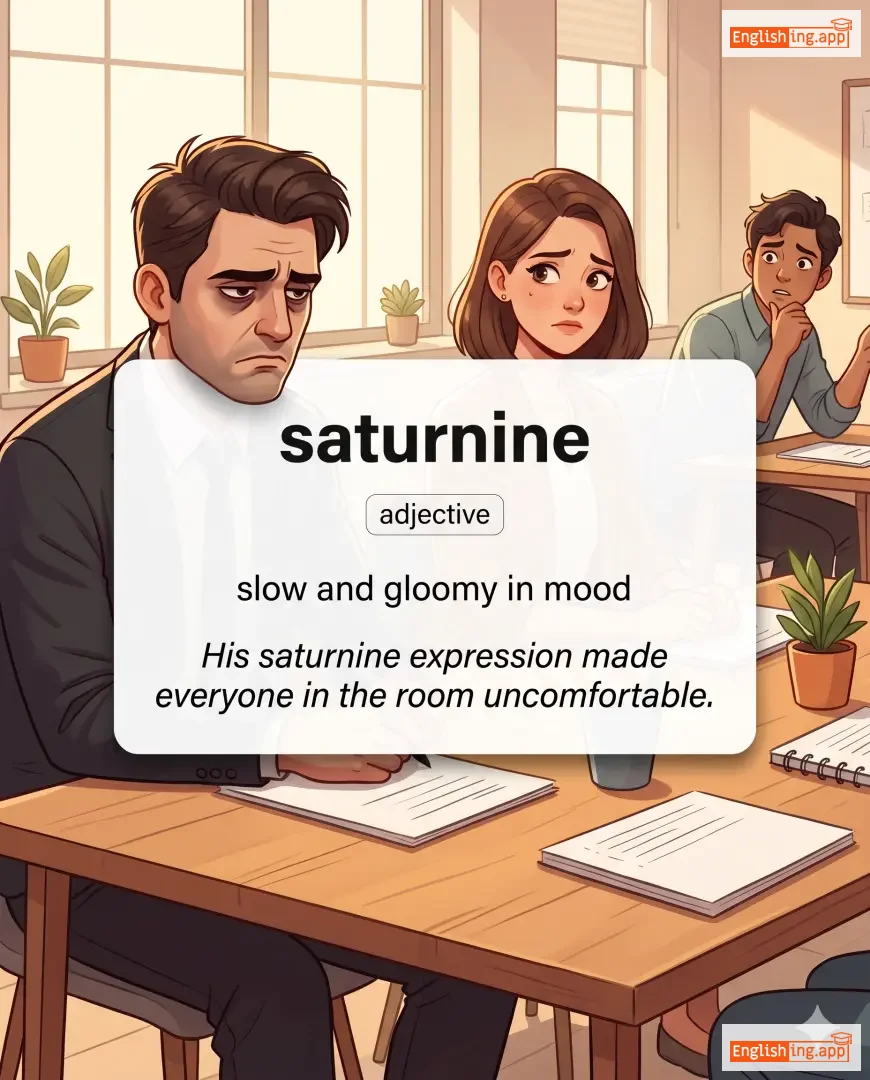
saturnine definition card — visual illustration of the meaning
adjective
/ˈsætərˌnaɪn/
उदास (udas)

slow and gloomy in mood

"His saturnine expression made everyone in the room uncomfortable."

"उसकी उदास अभिव्यक्ति ने कमरे में सभी को असहज कर दिया।" (Uski udas abhivyakti ne kamre mein sabhi ko asahaj kar diya.)
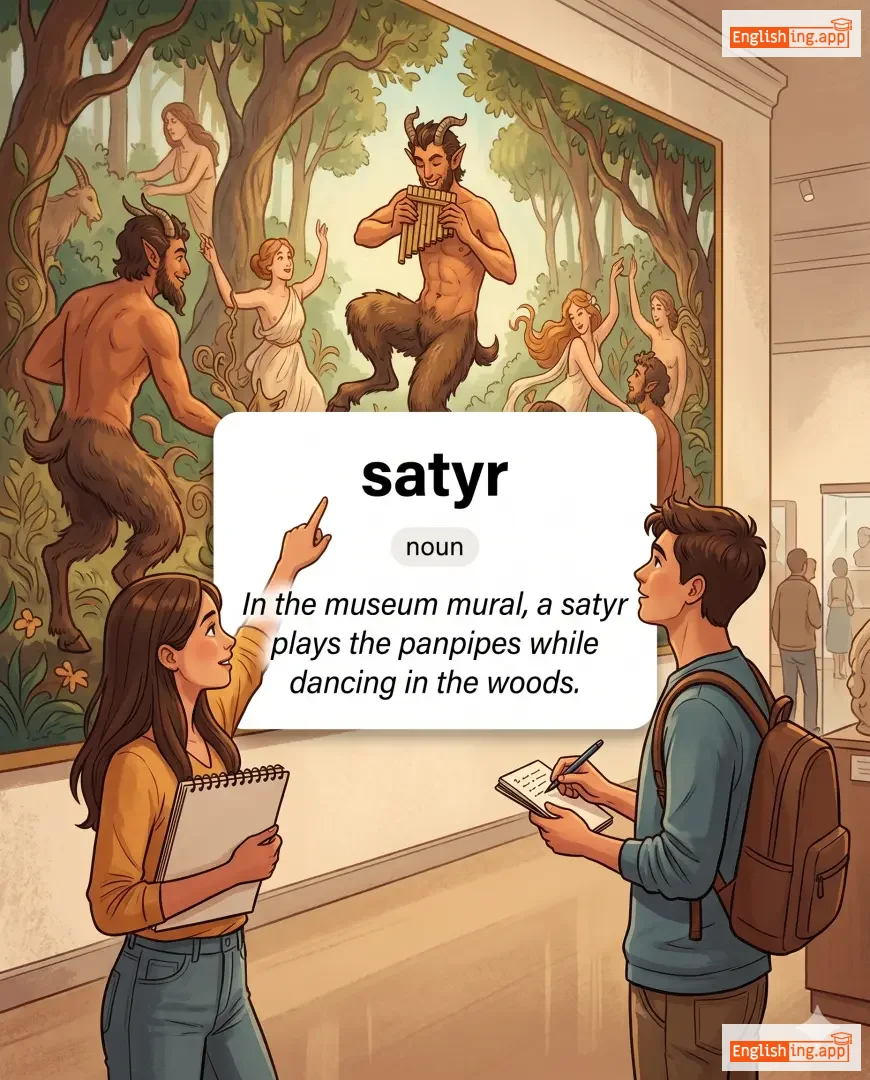
satyr definition card — visual illustration of the meaning
noun
/ˈsætər/
खुशी (khushi)

a creature from Greek mythology depicted as a lustful being, often half-man and half-goat; by extension, a lecherous man

"In the museum mural, a satyr plays the panpipes while dancing in the woods."

"जब उसने पुरस्कार प्राप्त किया तो वह अपनी खुशी को छिपा नहीं पाई।" (Jab usne puraskaar prapt kiya to vah apni khushi ko chhupa nahi paayi.)
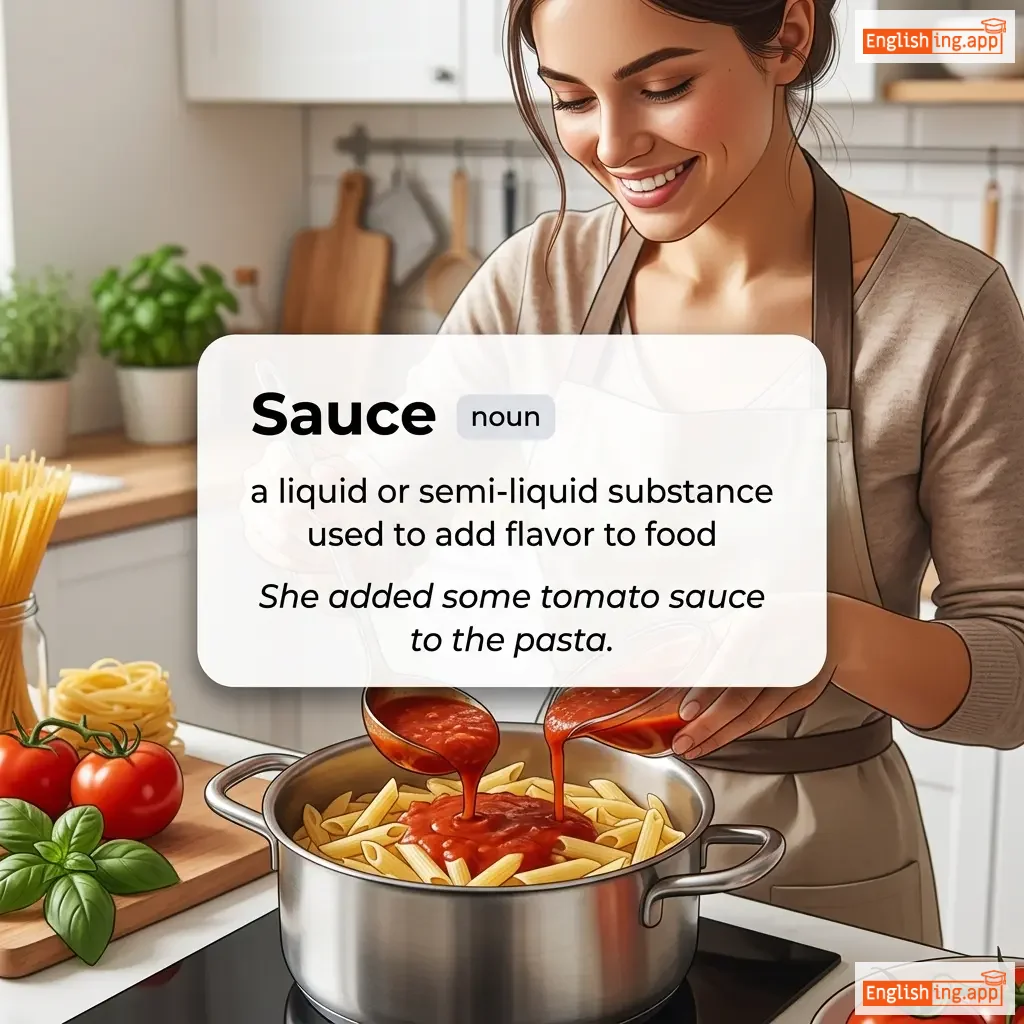
Sauce definition card — visual illustration of the meaning
noun
/sɔːs/
सॉस (sos)

a liquid or semi-liquid substance used to add flavor to food

"She added some tomato sauce to the pasta."

"उसने पास्ता में कुछ टमाटर सॉस डाली।" (Usne pasta mein kuch tamatar sos daali.)
adjective
/ˈsɔːsi/
उत्साही (utsahi)

Boldly rude, cheeky, or playfully disrespectful.

"The child gave a saucy reply to his teacher."

"बच्चे ने अपने शिक्षक को एक उत्साही जवाब दिया।" (Bacche ne apne shikshak ko ek utsahi jawab diya.)
verb
/ˈsɔːntər/
धीरे-धीरे चलना (dheere-dheere chalna)

to walk in a slow, relaxed manner without hurry or effort

"We sauntered along the riverside, stopping now and then to watch the boats."

"हम नदी के किनारे धीरे-धीरे चल रहे थे, कभी-कभी नावें देखने के लिए रुकते थे।" (ham nadi ke kinare dheere-dheere chal rahe the, kabhi-kabhi naaven dekhne ke liye rukte the.)
noun
/ˈsaɪ.ə.lɪz.əm/
आधिकारिक ज्ञान का दिखावा (aadhikarik gyaan ka dikhawa)

pretentious show of superficial knowledge

"His speech was full of sciolism, impressing no one."

"उसकी स्पीच पूरी तरह से आधिकारिक ज्ञान के दिखावे से भरी हुई थी, जिसने किसी को प्रभावित नहीं किया।" (Uski speech poori tarah se aadhikarik gyaan ke dikhave se bhari hui thi, jisne kisi ko prabhavit nahi kiya.)
adjective
/ˈsævɪdʒ/
जंगली; बर्बर (jangli; barbar)

fierce, violent, or uncontrolled; cruel or brutal

"The storm brought savage winds that tore branches from the trees."

"आंधी ने ऐसे हिंसक तूफान लाए, जिन्होंने पेड़ों की शाखाएँ उखाड़ दीं।" (aandhi ne aise hinsak toofan laaye, jinhonne pedon ki shaakhayein ukhaad di.)
noun
/səˈvænə/
घास का मैदान (बिखरे हुए पेड़ों के साथ) (ghas ka maidan (bikhre hue pedon ke saath))

a grassy plain with scattered trees, typical of tropical and subtropical regions

"Giraffes browsed on acacia trees across the wide savanna."

"जिराफ़ों ने सवाना में आकेशिया के पेड़ों पर पत्तियाँ खाई।" (jirafon ne savana mein akeshia ke pedon par patiyan khai.)
noun
/səˈvɑːnt/
खुशी (khushi)

a learned person, especially a distinguished scientist or scholar; sometimes used in the phrase ‘savant syndrome’ for someone with exceptional abilities alongside developmental differences

"The conference keynote was delivered by a linguistic savant who studies endangered languages."

"उसने जब पुरस्कार प्राप्त किया तो अपनी खुशी छुपा नहीं पाई।" (Usne jab puraskaar praapt kiya to apni khushi chhupa nahi paayi.)
adjective
/ˈsæv.i/
होशियार, समझदार (hoshiyaar, samajhdaar)

Having practical knowledge and the ability to make good judgments.

"She is a tech-savvy entrepreneur."

"वह एक तकनीकी-होशियार उद्यमी है।" (Vah ek takneeki-hoshiyar udyami hai.)
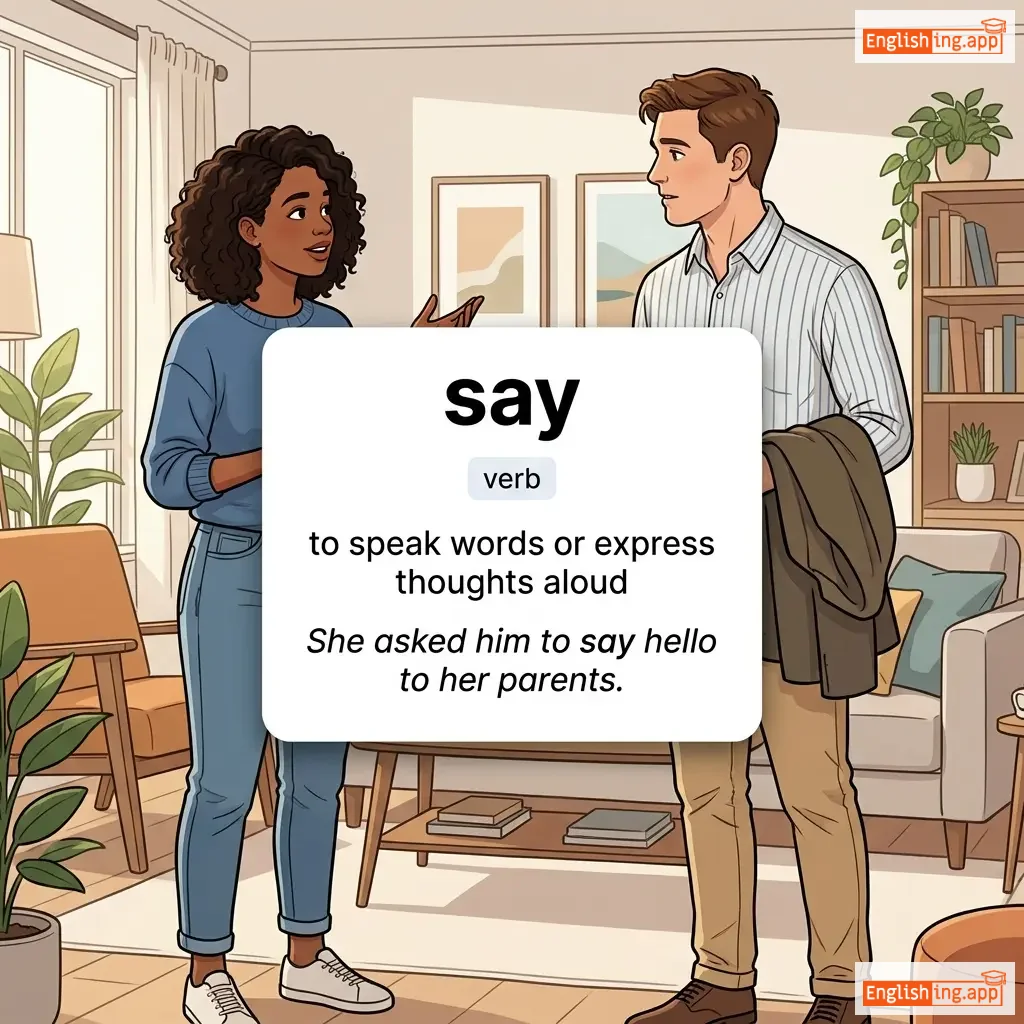
say definition card — visual illustration of the meaning
verb
/seɪ/
कहना (kahna)

to speak words or express thoughts aloud

"She asked him to say hello to her parents."

"उसने उससे कहा कि वह उसके माता-पिता को हैलो कहे।" (Usne usse kaha ki woh uske mata-pita ko hello kahe.)
noun
/ˈsæksəfoʊn/
सैक्सोफोन (saiksofon)

a wind musical instrument with a curved metal body and a single reed mouthpiece

"The jazz musician played a beautiful solo on his saxophone."

"जैज संगीतकार ने अपने सैक्सोफोन पर एक सुंदर सोलो बजाया।" (jazz sangeetkaar ne apne saiksofon par ek sundar solo bajaya.)
noun
/ˈsɔːjər/
लकड़ी काटने वाला (lakdi katne wala)

a person who saws wood, especially as an occupation

"The skilled sawyer cut the logs into planks."

"कुशल लकड़ी काटने वाले ने लकड़ी को तख्तों में काटा।" (kushal lakdi katne wale ne lakdi ko takhton mein kata)
noun
/ˈsɔː.dʌst/
आरा चूरा (aara choora)

The tiny particles of wood produced by sawing or sanding.

"The floor was covered with sawdust from the carpentry work."

"फर्श पर बढ़ईगीरी के काम से आरा चूरा फैला हुआ था।" (Farsh par badhaigiri ke kaam se aara choora phaila hua tha.)
noun
/ˈsɔː.dər/
चापलूसी; घुमा-फिरा के बातें (chaaploosee; ghuma-phira ke baatein)

flattering or wheedling talk; soft soap

"His sawder couldn't convince anyone of his sincerity."

"उसकी चापलूसी किसी को भी उसकी ईमानदारी पर विश्वास नहीं दिला सकी।" (Uski chaaploosee kisi ko bhi uski imaandari par vishwas nahi dila saki.)
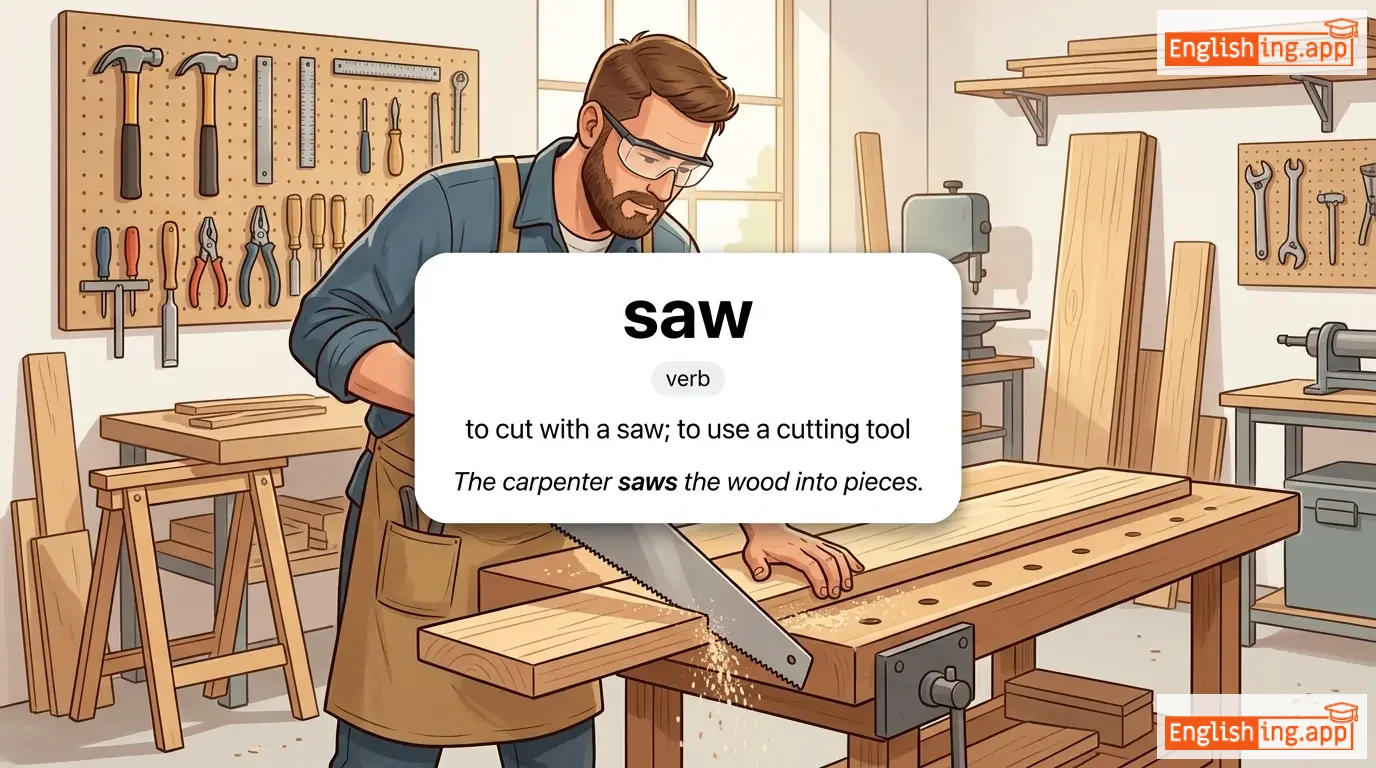
saw definition card — visual illustration of the meaning
noun
/sɔː/
आरी (aari)

a tool with a sharp blade used for cutting wood or other materials

"He used a saw to cut the wooden plank."

"उसने लकड़ी के तख्ते को काटने के लिए आरी का इस्तेमाल किया।" (usne lakdi ke takhte ko kaatne ke liye aari ka istemal kiya.)
noun
/ˌsæv.wɑːr ˈfeər/
सामाजिक दक्षता (samajik dakshata)

The ability to act or speak appropriately in social situations; polished social skills.

"She handled the delicate situation with remarkable savoir-faire."

"उसने नाजुक स्थिति को अद्भुत सामाजिक दक्षता के साथ संभाला।" (Usne naazuk sthiti ko adbhut samajik dakshata ke saath sambhaala.)
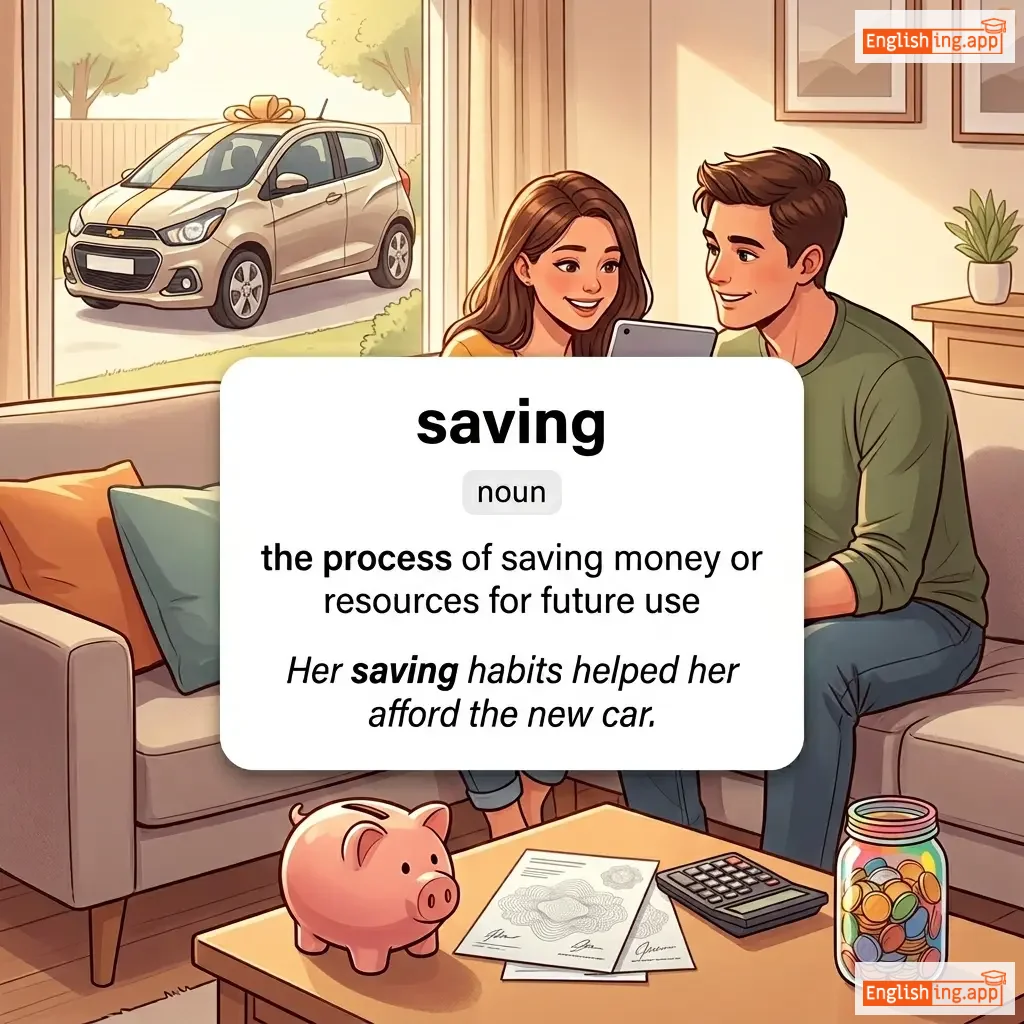
saving definition card — visual illustration of the meaning
noun
/ˈseɪvɪŋ/
बचत (bachat)

the process of saving money or resources for future use

"Her saving habits helped her afford the new car."

"उसकी बचत की आदतों ने उसे नई कार खरीदने में मदद की।" (Uski bachat ki aadaton ne use nayi car kharidne mein madad ki.)
savings definition card — visual illustration of the meaning
noun
ˈseɪ.vɪŋz
बचत (bachat)

Money that is kept for future use or investment.

"Many people invest their savings in real estate."

"कई लोग अपनी बचत रियल एस्टेट में निवेश करते हैं।" (Kai log apni bachat real estate mein nivesh karte hain.)