Словари

Словарь английского языка | Значения слов, определения и примеры

verb
/sɪt/
сидеть (sidet)

to rest with the body supported by the buttocks, often in a chair or on the ground

"Please sit down and relax for a while."

"Пожалуйста, сядьте и расслабьтесь на некоторое время." (Pozhaluysta, syad'te i rasslabb'tes' na nekotorye vremya.)
noun
/ˈsɪstərhʊd/
сестринство (sestrinstvo)

The relationship between sisters, or a community of women united by shared experiences or goals.

"The feminist movement created a strong sense of sisterhood among women."

"Феминистское движение создало сильное чувство сестринства среди женщин." (Feministskoe dvizhdenie sozdalo sil'noe chuvstvo sestrinstva sredi zhenshchin.)
noun
/ˈsɪstər/
сестра (sestra)

a female sibling; a girl or woman in relation to other children of her parents

"My sister is coming to visit us next week."

"Моя сестра приедет к нам на следующей неделе." (moya sestra priedet k nam na sleduyushchey nedele)
noun
/sɪˈrɒkoʊ/
горячий и сухой ветер (goryachiy i sukhoy veter)

A hot, dry wind blowing from North Africa across the Mediterranean to southern Europe.

"The sirocco made the city unbearably hot and dusty."

"Сирокко сделала город невыносимо горячим и пыльным." (Sirokko sdelala gorod nevynosimo goryachim i pyl'nym.)
noun
/ˈsaɪrən/
сирена (sirena)

A device that makes a loud prolonged sound as a signal or warning; in mythology, a creature that lures sailors with enchanting songs.

"The police car passed with its siren blaring."

"Полиция проехала с включенной сиреной." (Politsiya proiekhala s vkliuchennoy sirenoy.)
sip definition card — visual illustration of the meaning
verb
/sɪp/
глоток (glotok)

To drink something slowly, taking only small amounts at a time.

"She sipped her tea while reading a book."

"Она сделала глоток чая, читая книгу." (Ona sdelala glotok chaya, chitaya knigu.)
noun
/ˈsaɪnəs/
синус (sinus)

A cavity within a bone or tissue, especially those in the bones of the face connected with the nasal cavities.

"He suffered from a sinus infection that caused headaches."
"Он страдал от инфекции синусов, которая вызвала головную боль." (On stradal ot infektsii sinusoov, kotoraya vyzvala golovnuyu bol'.)
sinuous definition card — visual illustration of the meaning
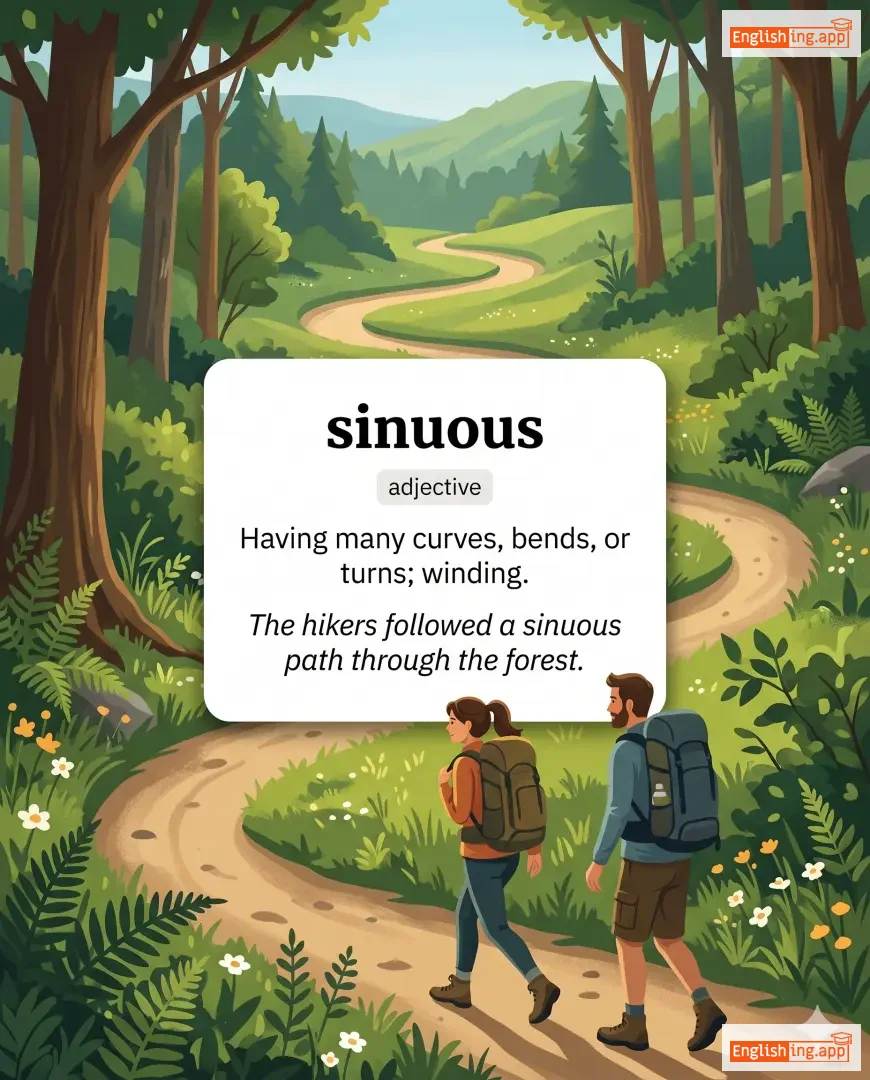
adjective
/ˈsɪnjuəs/
изогнутый (izognutyy)

Having many curves, bends, or turns; winding.

"The hikers followed a sinuous path through the forest."

"Путешественники шли по извилистому пути через лес." (Puteshestvenniki shli po izvilistomu puti cherez les.)
noun
/ˌsɪnjuˈɒsɪti/
извилистость (izvilistost)

The quality or state of being winding, curving, or having many turns.

"The sinuosity of the river made navigation challenging."

"Извилистость реки сделала навигацию сложной." (Izvilistost reki sdelala navigatsiyu slozhnoy.)
adjective
/ˈsɪnləs/
без греха; невинный; чистый (bez grekha; nevinny; chistyy)

free from sin; pure and innocent; without moral fault

"The innocent child appeared sinless in her pure white dress."
"Невинный ребенок выглядел без греха в своем чистом белом платье." (Nevinnyy rebenok viglyadel bez grekha v svoem chistom belom plat'e.)
sink definition card — visual illustration of the meaning
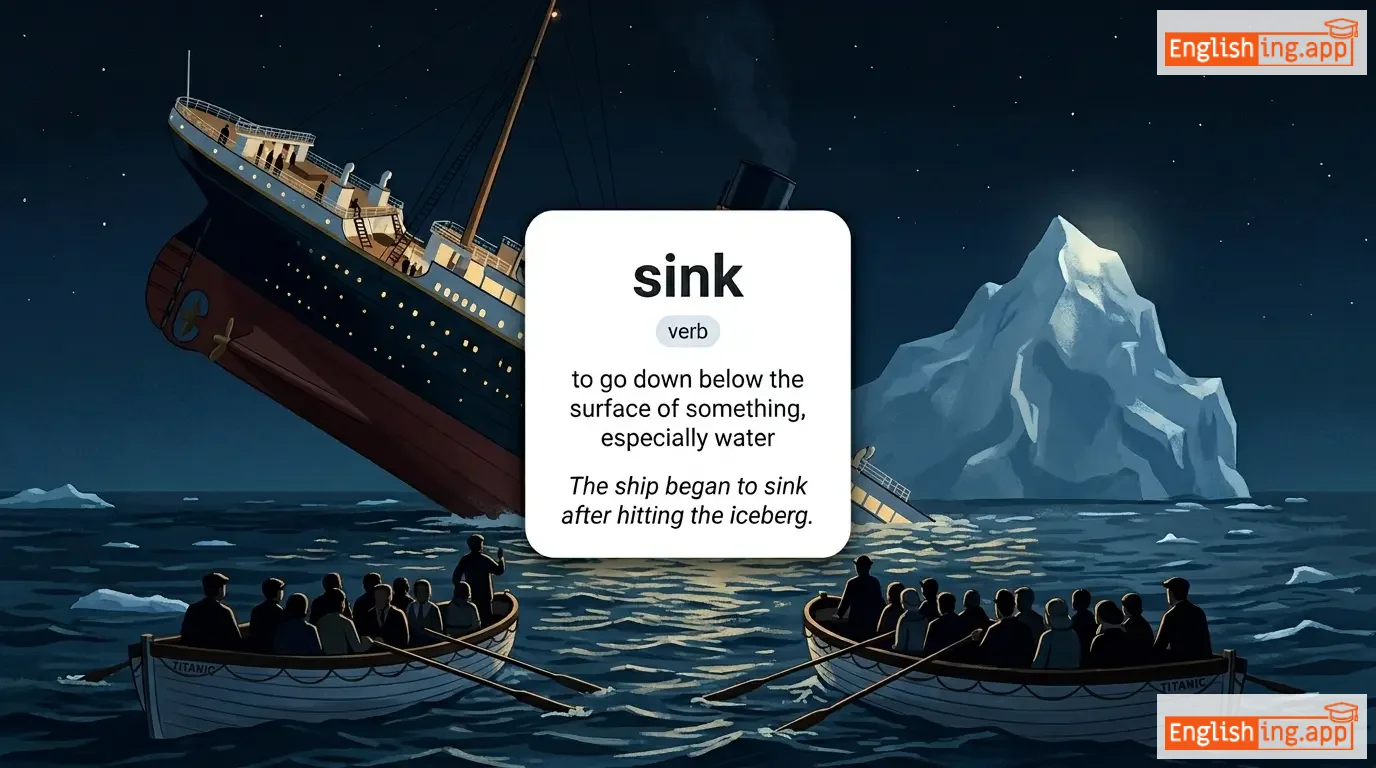
verb
/sɪŋk/
тонуть (tonut')

to go down below the surface of something, especially water

"The ship began to sink after hitting the iceberg."

"Корабль начал тонуть после столкновения с айсбергом." (Korabl' nachal tonut' posle stolknoveniya s ayzbergom.)
adjective
/ˈsɪnɪstər/
зловещий (zloveschij)

Giving the impression that something harmful or evil is happening or will happen.

"The abandoned house had a sinister atmosphere."
"Покинутое здание имело зловещую атмосферу." (Pokinutoe zdanie imelo zloveschuyu atmosferu.)
singular definition card — visual illustration of the meaning
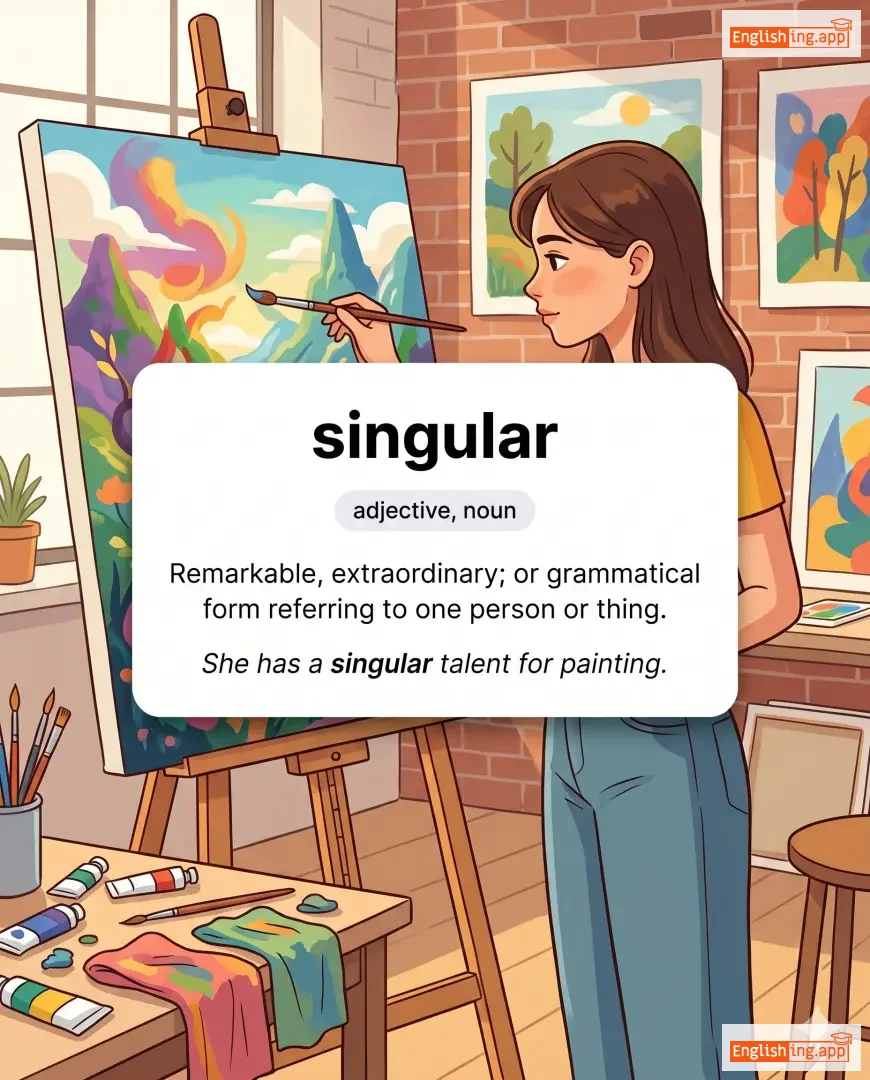
adjective, noun
/ˈsɪŋɡjələr/
необыкновенный / сингулярный (neobyknovennyy / singulyarnyy)

Remarkable, extraordinary; or grammatical form referring to one person or thing.

"She has a singular talent for painting."

"У нее необыкновенный талант к живописи." (U nee neobyknovennyy talant k zhivopisi.)
adjective
/ˈsɪŋɡəl/
один (singl)

only one; not one of several

"She bought a single ticket for the concert."

"Она купила один билет на концерт." (Ona kupila odin bilet na kontsert.)
Singer definition card — visual illustration of the meaning
noun
/ˈsɪŋər/
певец (pevets)

a person who sings, especially professionally

"The singer performed on stage last night."

"Певец выступил на сцене прошлой ночью." (Pevets vystupil na stsene proshloy noch'yu.)
verb
/sɪndʒ/
легко обжигать (legko obzhigat)

To burn something superficially or lightly, especially at the edges.

"The fire singed his eyebrows."
"Огонь обжег его брови." (Ogon' obzheg ego brovi.)
sing definition card — visual illustration of the meaning
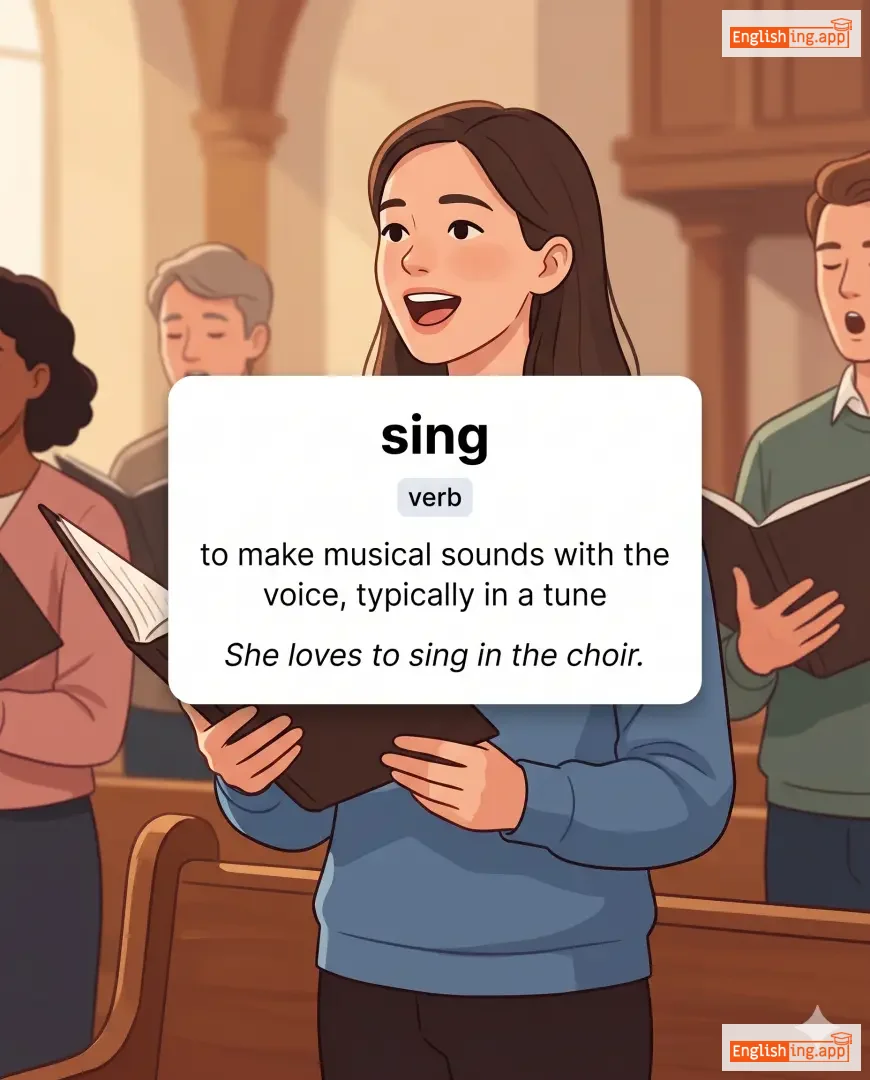
verb
/sɪŋ/
петь (pet)

to make musical sounds with the voice, typically in a tune

"She loves to sing in the choir."

"Она любит петь в хоре." (Ona lyubit pet' v khore.)
adjective
/ˈsɪnjuːi/
мускулистый и сильный (muskulistyy i sil'nyy)

Lean and muscular; strong and tough.

"The athlete had a sinewy build that showed his strength."

"У атлета было мускулистое телосложение, которое показывало его силу." (U atleta bylo muskulistoye teleslozheniye, kotoroye pokazyvalo yego silu.)
noun
/ˈsɪnjuː/
сухожилие (sukhozhilie)

A tendon; figuratively, the source of strength, power, or resilience.

"The sinews in his arms stood out as he lifted the heavy box."
"Сухожилия в его руках выделялись, когда он поднял тяжелую коробку." (Sukhozhiliya v yego rukakh vydelyalis, kogda on podnyal tyazhelyu korobku.)
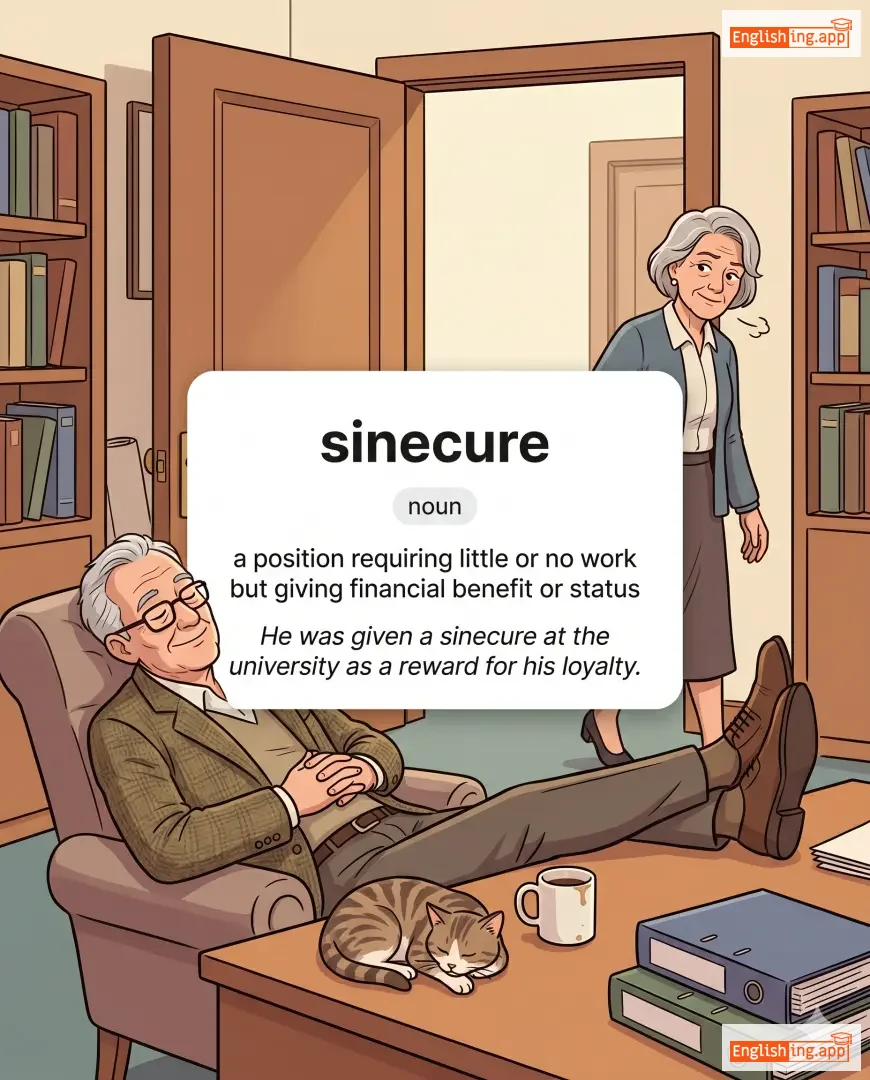
sinecure definition card — visual illustration of the meaning
noun
/ˈsaɪnɪkjʊər/
лёгкая работа (lyogkaya rabota)

a position requiring little or no work but giving financial benefit or status

"He was given a sinecure at the university as a reward for his loyalty."

"Ему дали лёгкую работу в университете как награду за его лояльность." (Emu dali lyogkuyu rabotu v universitete kak nagradu za ego loyal'nost'.)
noun
/sɪnˈserɪti/
искренность (iskrennost)

the quality of being free from pretense or deceit; honesty

"His sincerity in apologizing was evident to everyone."

"Его искренность при извинении была очевидна для всех." (Ego iskrennost pri izvinении byla ochevidna dlya vsekh.)
adverb
/sɪnˈsɪrli/
искренне (iskrenne)

with genuine feelings; honestly and truly

"I sincerely hope you recover soon."

"Я искренне надеюсь, что вы скоро поправитесь." (Ya iskrenne nadeyus, chto vy skoro popravites.)
adjective
/sɪnˈsɪr/
искренний (iskrenniy)

genuine and honest; free from pretense or deceit

"She gave a sincere apology for her mistake."

"Она извинилась искренне за свою ошибку." (Ona izvinilas' iskrenne za svoyu oshibku.)
preposition
/sɪns/
с (s)

from a particular time in the past until now

"I have known her since childhood."

"Я знаю её с детства." (Ya znayu yeyo s detstva.)
noun, verb
/sɪn/
грех (greh)

an immoral act considered to be a transgression against divine law; to commit an offense against religious or moral law

"He confessed his sin to the priest."
"Он исповедал свой грех священнику." (On ispovedal svoi greh svyashchenniku.)
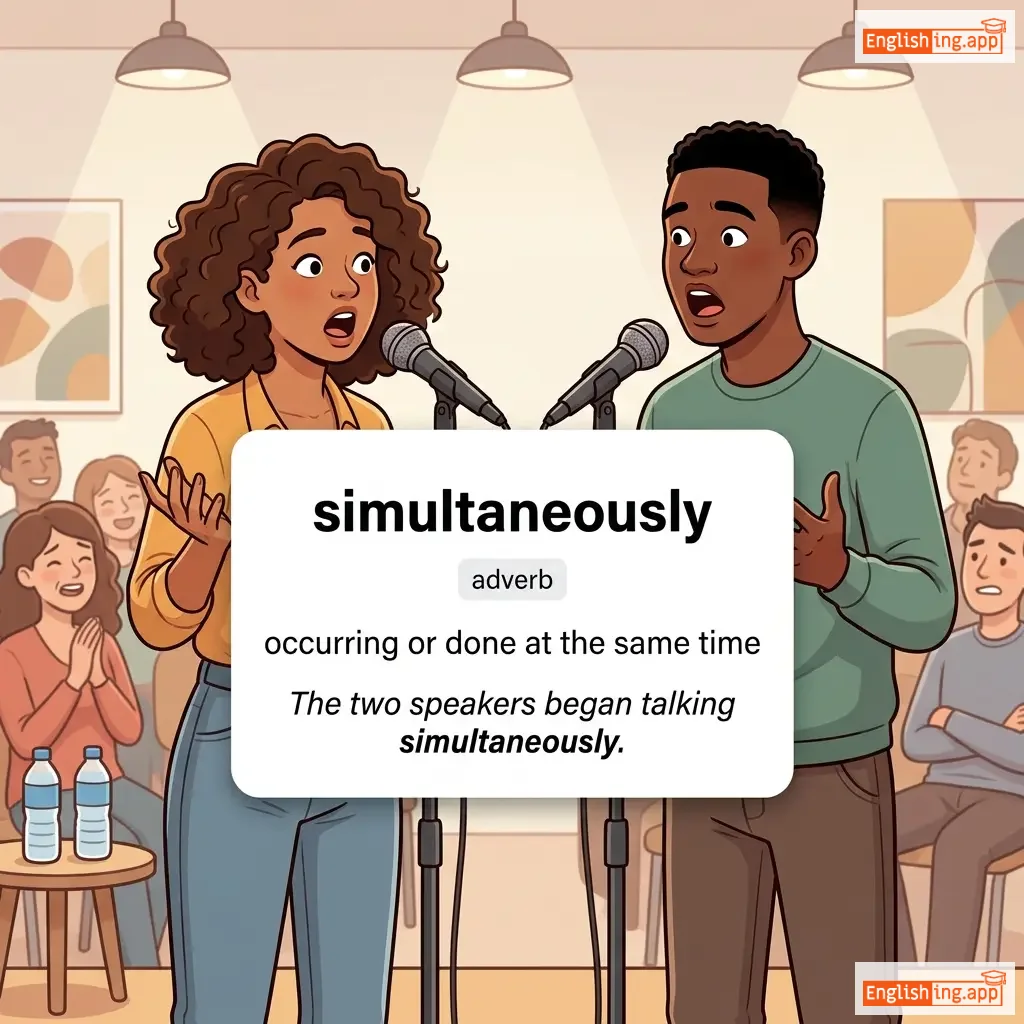
simultaneously definition card — visual illustration of the meaning
adverb
/ˌsaɪ.məlˈteɪ.ni.əs.li/
одновременно (odnovremenno)

occurring or done at the same time

"The two speakers began talking simultaneously."

"Два оратора начали говорить одновременно." (Dva oratora nachali govorit' odnovremenno.)
noun
/sɜːr/
сэр (ser)

a respectful or formal form of address used for a man, typically one of higher social status or authority

"Sir, may I assist you with your order?"

"Сэр, могу ли я помочь вам с вашим заказом?" (Ser, mogu li ya pomoch' vam s vashim zakazom?)
noun
/ˈsætræp/
сатрап (satrap)

a governor of a province in ancient Persia; also used figuratively for a subordinate ruler

"The king appointed a satrap to oversee the distant province."
"Царь назначил сатрапа для управления удаленной провинцией." (Tsar' naznachil satrapa dlya upravleniya udalennoy provintsiey.)
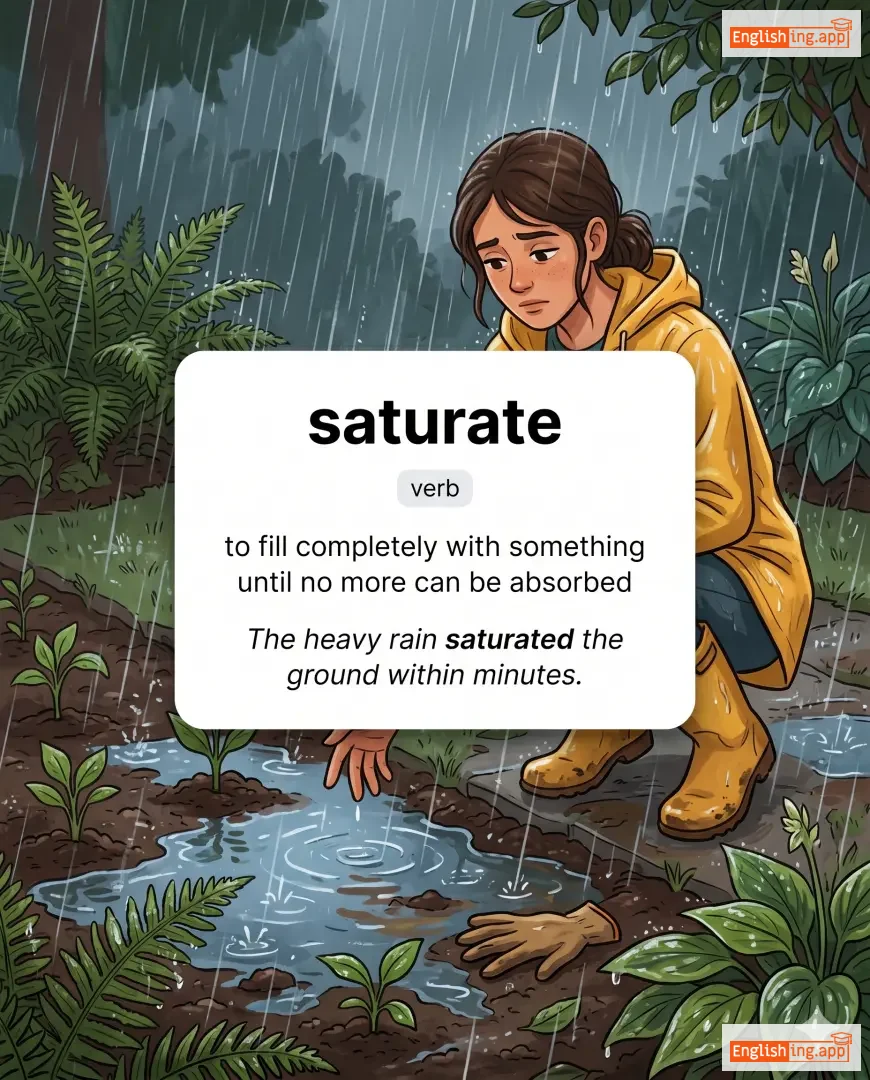
saturate definition card — visual illustration of the meaning
verb
/ˈsætʃəˌreɪt/

to fill completely with something until no more can be absorbed

"The heavy rain saturated the ground within minutes."
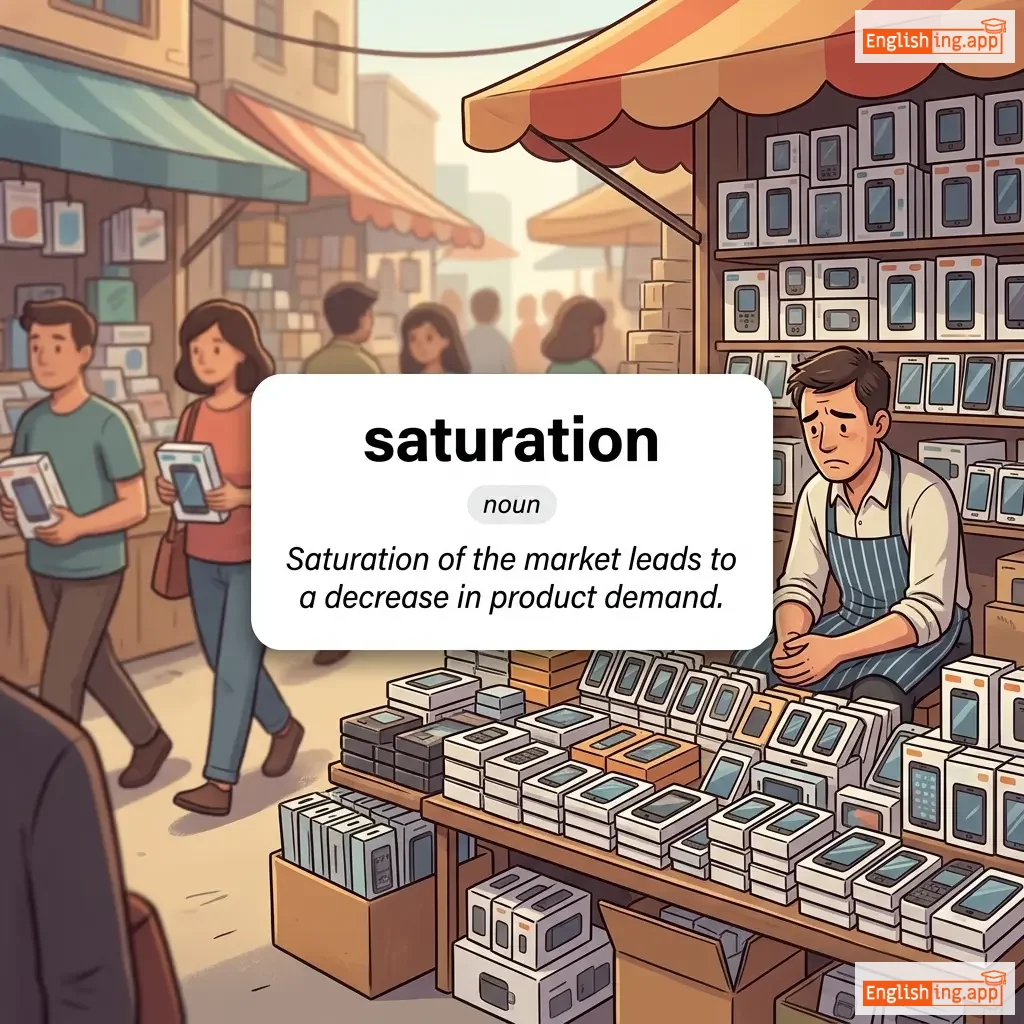
saturation definition card — visual illustration of the meaning
noun
/ˌsætʃəˈreɪʃən/
насыщение (nasyshchenie)

The state or process that occurs when no more of something can be absorbed, combined with, or added.

"Saturation of the market leads to a decrease in product demand."

"Насыщение рынка приводит к снижению спроса на продукцию." (Nasyshchenie rynka privodit k snizheniyu sprosa na produktsiyu.)
noun
/ˈsætərdeɪ/
суббота (subbota)

The day of the week between Friday and Sunday; traditionally the sixth day of the week

"We are going to the beach on Saturday."
"Мы идем на пляж в субботу." (My idem na plyazh v subbotu.)
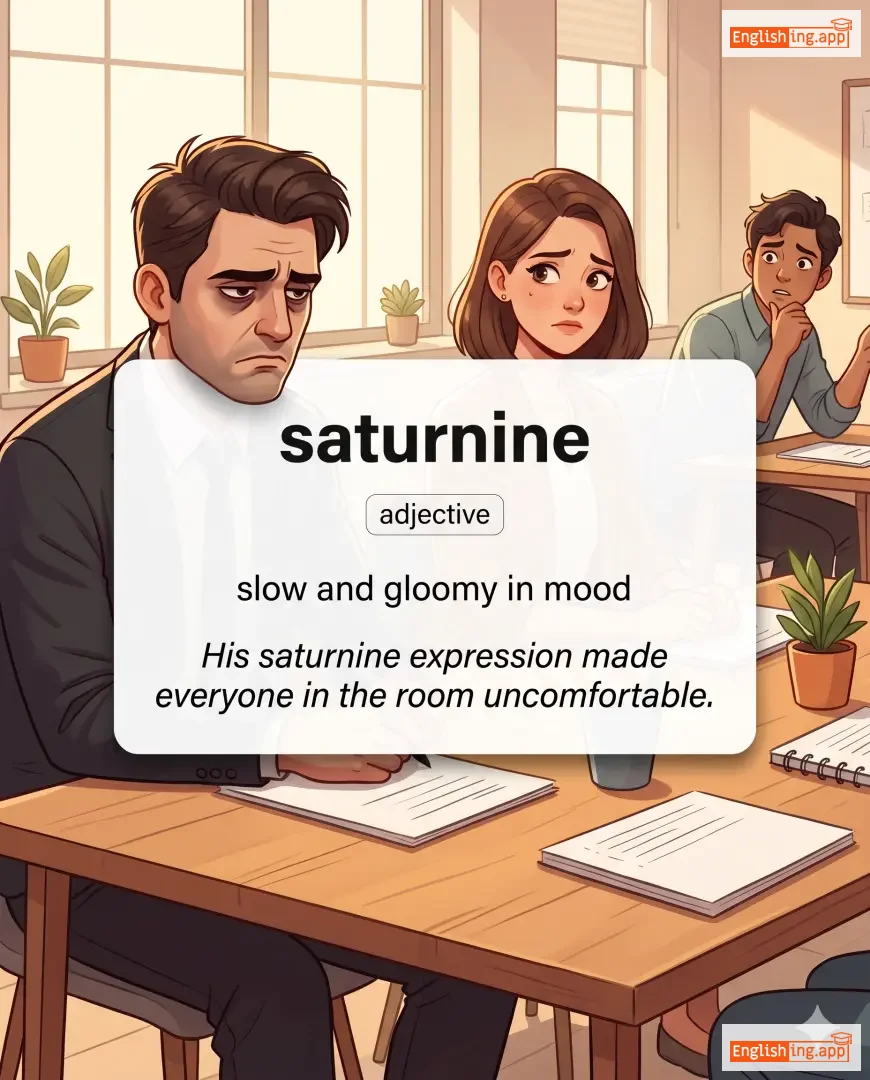
saturnine definition card — visual illustration of the meaning
adjective
/ˈsætərˌnaɪn/
сатурнинский (saturninskij)

slow and gloomy in mood

"His saturnine expression made everyone in the room uncomfortable."
"Его сатурнинское выражение заставило всех в комнате чувствовать себя неудобно." (Yego saturninskoe vyrazhenie zastavilo vsekh v komnate chuvstvovat' sebya neudobno.)
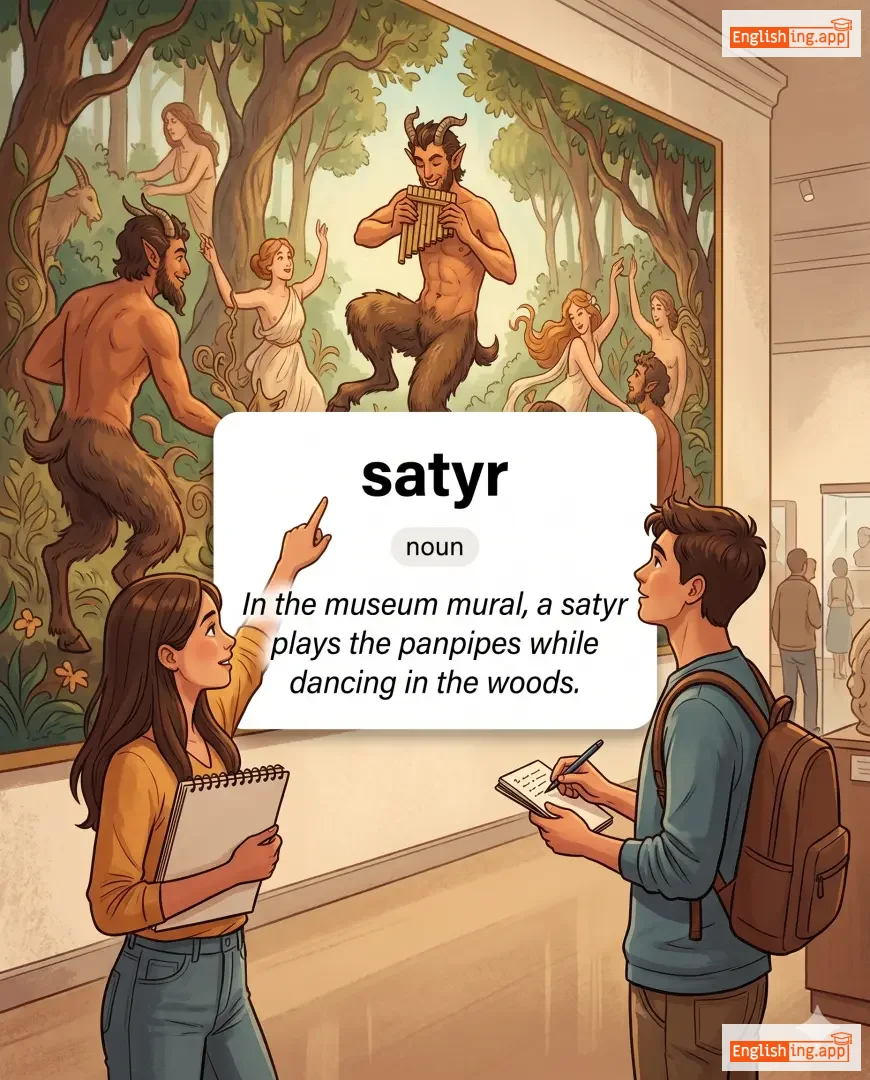
satyr definition card — visual illustration of the meaning
noun
/ˈsætər/
счастье (schastye)

a creature from Greek mythology depicted as a lustful being, often half-man and half-goat; by extension, a lecherous man

"In the museum mural, a satyr plays the panpipes while dancing in the woods."
"Она не могла скрыть свое счастье, когда получила награду." (Ona ne mogla skryt' svoe schast'ye, kogda poluchila nagradu.)
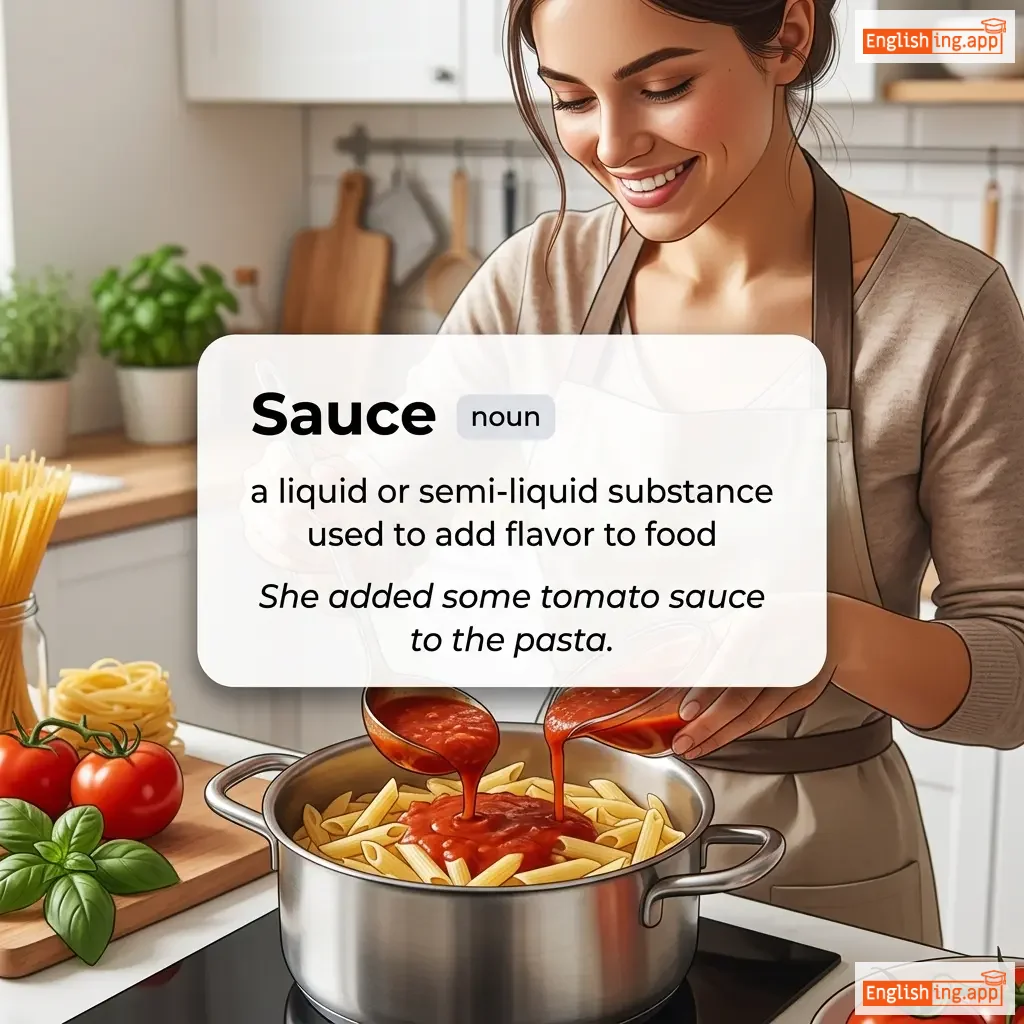
Sauce definition card — visual illustration of the meaning
noun
/sɔːs/
соус (sous)

a liquid or semi-liquid substance used to add flavor to food

"She added some tomato sauce to the pasta."

"Она добавила немного томатного соуса в пасту." (Ona dobavila nemnogo tomatnogo sousa v pastu.)
adjective
/ˈsɔːsi/
наглый (naglyi)

Boldly rude, cheeky, or playfully disrespectful.

"The child gave a saucy reply to his teacher."

"Ребёнок дал наглый ответ своему учителю." (Rebyonok dal naglyi otvet svoemu uchitelyu.)
verb
/ˈsɔːntər/
прогуливаться (saunter)

to walk in a slow, relaxed manner without hurry or effort

"We sauntered along the riverside, stopping now and then to watch the boats."

"Мы неспешно прогуливались вдоль набережной, иногда останавливаясь, чтобы посмотреть на лодки." (My nespesno progulivalisya vdol naberezhnoy, inogda ostanavlivayas, chtoby posmotret na lodki.)
noun
/ˈsaɪ.ə.lɪz.əm/
претензия на поверхностные знания (pretenziya na poverkhnostnye znaniya)

pretentious show of superficial knowledge

"His speech was full of sciolism, impressing no one."

"Его речь была полна сайолизма, не впечатлив никого." (Ego rech' byla polna sayolizma, ne vpechatliv nikogo.)
adjective
/ˈsævɪdʒ/
дикой; жестокий (dikoy; zhestokiy)

fierce, violent, or uncontrolled; cruel or brutal

"The storm brought savage winds that tore branches from the trees."

"Шторм принес дикие ветры, которые вырвали ветки с деревьев." (Shtorm prines dikie vetry, kotorye vyrvali vetki s derev'yev.)
noun
/səˈvænə/
саванна (с рассеянными деревьями) (savanna (s rasseyannymi derev'yami))

a grassy plain with scattered trees, typical of tropical and subtropical regions

"Giraffes browsed on acacia trees across the wide savanna."

"Жирафы щипали акациевые деревья на широкой саванне." (Zhirafy shchipali akatsievye derev'ya na shirokoy savanne.)
noun
/səˈvɑːnt/

a learned person, especially a distinguished scientist or scholar; sometimes used in the phrase ‘savant syndrome’ for someone with exceptional abilities alongside developmental differences

"The conference keynote was delivered by a linguistic savant who studies endangered languages."

adjective
/ˈsæv.i/
умный, ловкий (umnyy, lovkiy)

Having practical knowledge and the ability to make good judgments.

"She is a tech-savvy entrepreneur."

"Она - предприниматель с хорошими техническими знаниями." (Ona - predprinimatel' s khoroshimi tekhnicheskimi znaniyami.)
say definition card — visual illustration of the meaning
verb
/seɪ/
сказать (skazat)

to speak words or express thoughts aloud

"She asked him to say hello to her parents."

"Она попросила его передать привет её родителям." (Ona poprosila ego peredat' privet yeyo roditelyam.)
noun
/ˈsæksəfoʊn/
саксофон (saksofon)

a wind musical instrument with a curved metal body and a single reed mouthpiece

"The jazz musician played a beautiful solo on his saxophone."

"Джазовый музыкант сыграл прекрасное соло на своем саксофоне." (Dzhazovyy muzykant sygral prekrasnoe solo na svoem saksafone.)
noun
/ˈsɔːjər/
плотник (plotnik)

a person who saws wood, especially as an occupation

"The skilled sawyer cut the logs into planks."

"Опытный плотник нарезал бревна на доски." (Opytniy plotnik narezhal brevna na doski)
noun
/ˈsɔː.dʌst/
опилки (opilki)

The tiny particles of wood produced by sawing or sanding.

"The floor was covered with sawdust from the carpentry work."

"Пол был покрыт опилками от плотницких работ." (Pol byl pokryt opilkami ot plotnitskikh rabot.)
noun
/ˈsɔː.dər/
подхалимство; льстивые речи (podkhalimstvo; lstitvie rechi)

flattering or wheedling talk; soft soap

"His sawder couldn't convince anyone of his sincerity."
"Его подхалимство не могло убедить никого в его искренности." (Ego podkhalimstvo ne moglo ubedit nikogo v ego iskrennosti.)
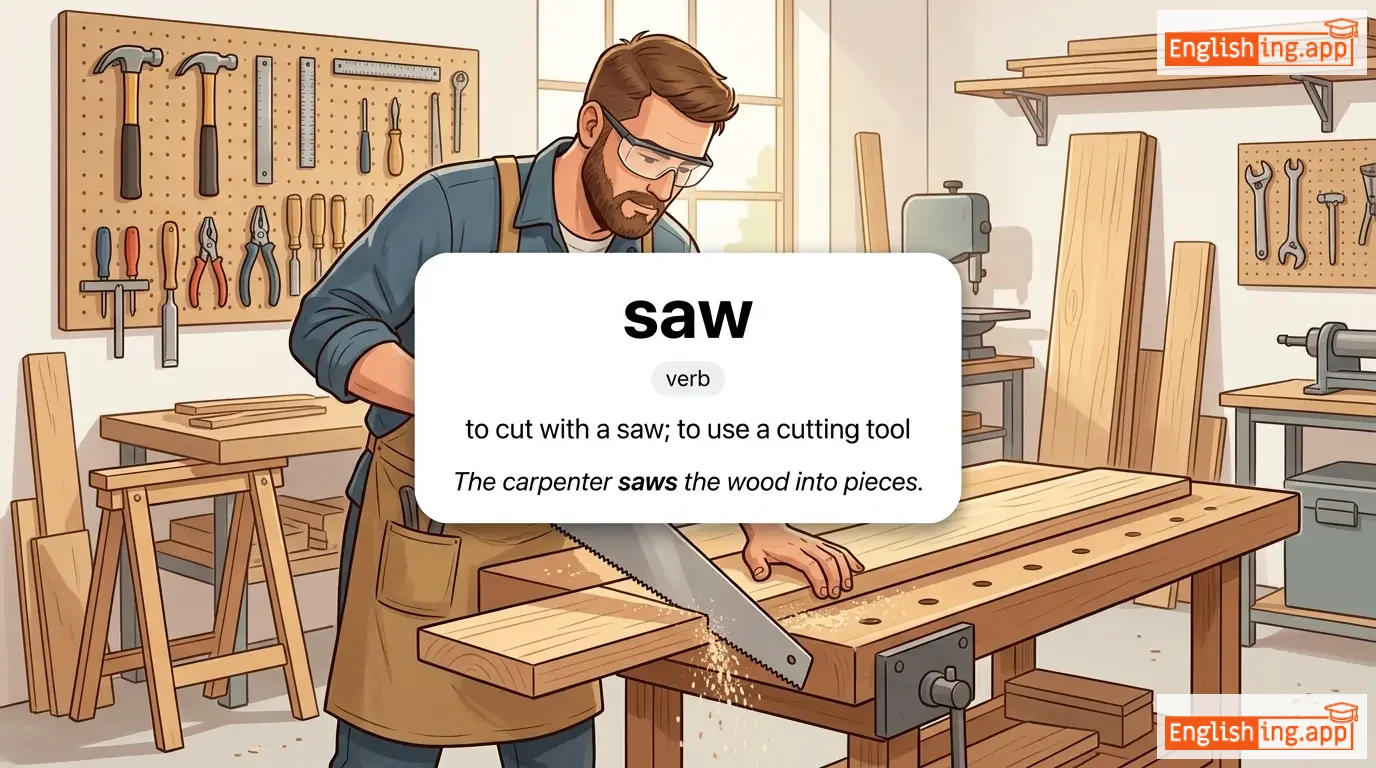
saw definition card — visual illustration of the meaning
noun
/sɔː/
пила (pila)

a tool with a sharp blade used for cutting wood or other materials

"He used a saw to cut the wooden plank."

"Он использовал пилу, чтобы нарезать деревянную доску." (On ispol'zoval pilu, chtoby narezaty derevyannuyu dosku.)
noun
/ˌsæv.wɑːr ˈfeər/
социальная ловкость (sotsial'naya lovkost')

The ability to act or speak appropriately in social situations; polished social skills.

"She handled the delicate situation with remarkable savoir-faire."
"Она справилась с деликатной ситуацией с замечательным savoir-faire." (Ona spravilas' s delikatnoy situatsiyey s zamechatel'nym savoir-faire.)
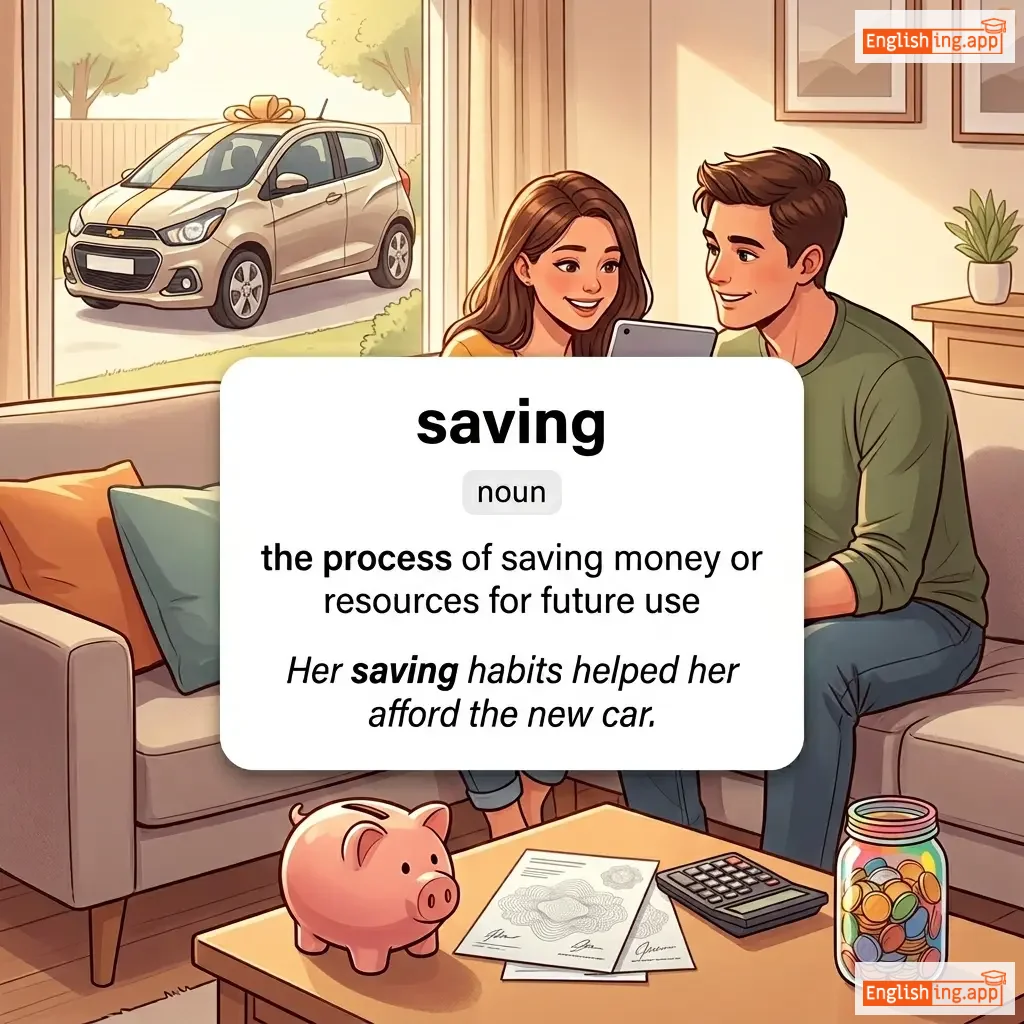
saving definition card — visual illustration of the meaning
noun
/ˈseɪvɪŋ/
сбережения (sberezheniya)

the process of saving money or resources for future use

"Her saving habits helped her afford the new car."

"Её привычка к сбережениям помогла ей купить новый автомобиль." (Eyo privychka k sberezhjajm pomogla ej kupit' novyj avtomobil')
savings definition card — visual illustration of the meaning
noun
ˈseɪ.vɪŋz
сбережения (sberezheniya)

Money that is kept for future use or investment.

"Many people invest their savings in real estate."

"Многие люди инвестируют свои сбережения в недвижимость." (Mnogie lyudi investiruyut svoi sberezheniya v nedvizhimost'.)