Словари

Словарь английского языка | Значения слов, определения и примеры
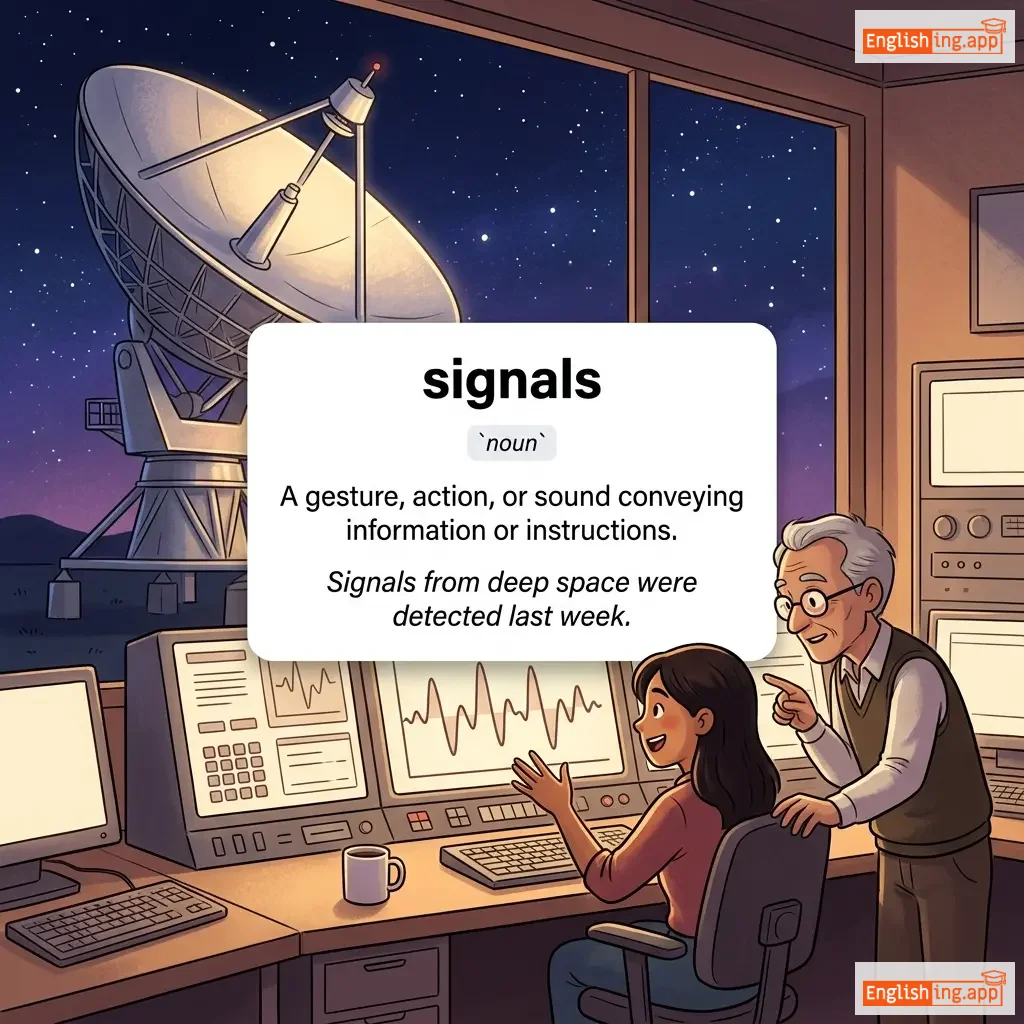
signals definition card — visual illustration of the meaning
noun
/ˈsɪɡ.nəlz/
сигналы (signaly)

A gesture, action, or sound conveying information or instructions.

"Signals from deep space were detected last week."

"Сигналы из глубокого космоса были зафиксированы на прошлой неделе." (Signaly iz glubokogo kosmosa byli zafiksirovany na proshloy nedele.)
noun
/ˈsɪɡ.nə.tʃər/
подпись (podpis)

a person's name written by themselves, often as a form of identification or authorization

"She signed the contract with her elegant signature."

"Она подписала контракт своим элегантным автографом." (Ona podpisala kontrakt svoim elegantnym avtografom.)
noun
/sɪɡˈnɪfɪkəns/
значимость (znachimost)

the quality of being important, meaningful, or worthy of attention

"The significance of the discovery was recognized worldwide."

"Значимость открытия была признана по всему миру." (Znachimost' otkrytiya byla priznata po vsemu miru.)
significant definition card — visual illustration of the meaning
adjective
/sɪɡˈnɪfɪkənt/
значительный (znachitelnyy)

important, meaningful, or having a noticeable effect

"The company made a significant investment in new technology."

"Компания сделала значительные инвестиции в новые технологии." (Kompaniya sdelala znachitel'nyye investitsii v novyye tekhnologii.)
adverb
/sɪɡˈnɪfɪkəntli/
значительно (znachitel'no)

in a way that is large or important enough to have an effect

"The economy has significantly improved over the last decade."

"Экономика значительно улучшилась за последние десять лет." (Ekonomika znachitel'no uluchshilas' za poslednie desyat' let.)
noun
/ˌsɪɡnɪfɪˈkeɪʃən/
значение (znacheniye)

the meaning or sense conveyed by a word, action, or symbol

"The signification of the gesture was misunderstood."
"Значение жеста было понято неверно." (Znachenie zhesta bylo ponyato neverno.)
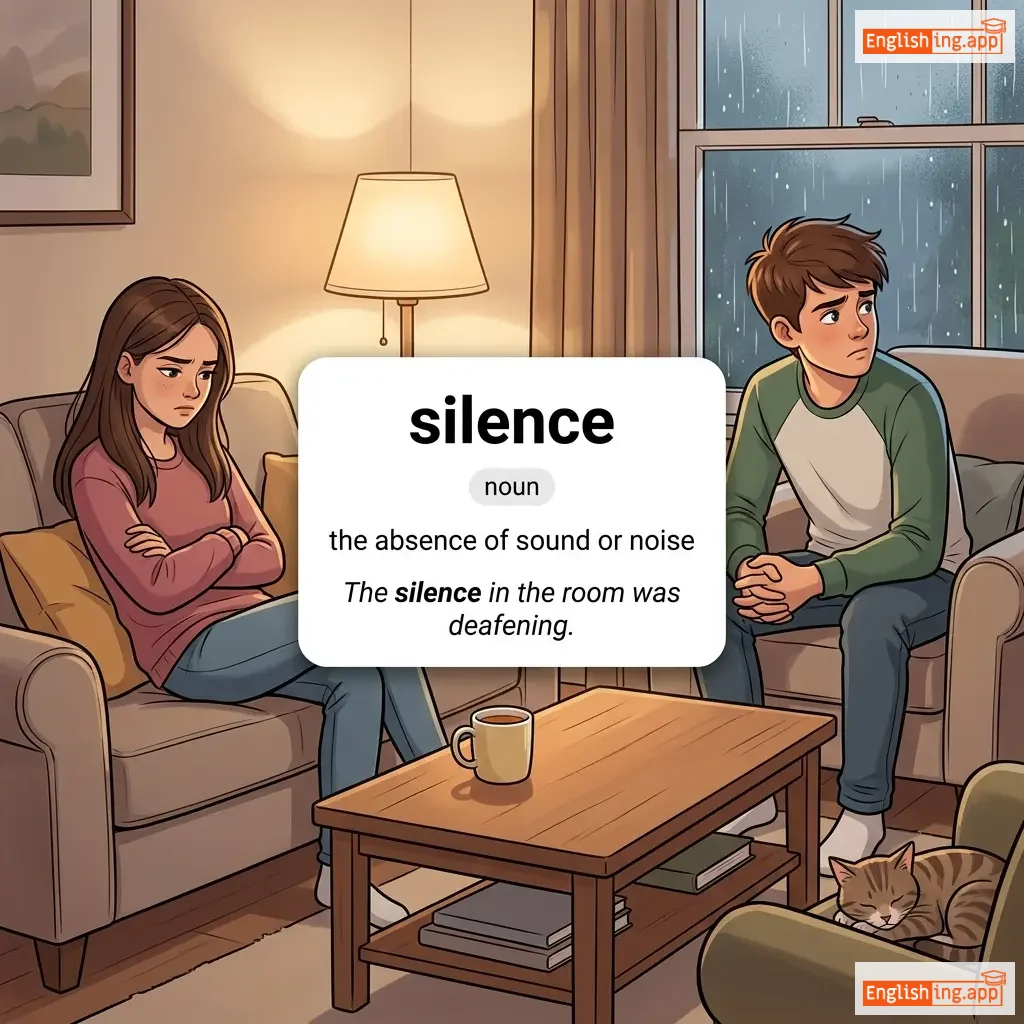
silence definition card — visual illustration of the meaning
noun
/ˈsaɪləns/
тишина (tishina)

the absence of sound or noise

"The silence in the room was deafening."

"Тишина в комнате была оглушающей." (Tishina v komnate byla oglushayushchey.)
adjective
/ˈsaɪlənt/
тихий (tikhiy)

not speaking or making noise

"The room was silent as everyone waited for the announcement."

"Комната была тихой, пока все ждали объявления." (Komnata byla tikhoy, poka vse zhdyali ob'yavleniya.)
noun
/sɪlk/
шелк (shelk)

a fine, smooth fabric made from the threads produced by silkworms

"The dress was made of pure silk."

"Платье было сделано из чистого шелка." (Plat'ye bylo sdelano iz chistogo shelka.)
noun
/sɪlk klɔːθ/
шелковая ткань (shelkovaya tkán)

fabric made from natural fibers produced by silkworms

"The bride wore a beautiful dress made of silk cloth."

"Невеста была в красивом платье из шелкового материала." (Nevesta byla v krasivom plat'ye iz shelkovoy tkan'yi.)
noun
/ˈsɪlk.wɜːrm/
шелкопряд (shelkopryad)

the caterpillar of a moth that produces silk fibers used to make silk fabric

"Silkworms feed on mulberry leaves to produce silk."

"Шелкопряды питаются листьями тутового дерева, чтобы производить шелк." (Shelkopryady pitayutsya list'yami tutovogo dereva, chtoby proizvodit shelk.)
adjective
/ˈsɪlkən/
шелковый; мягкий; гладкий; (shelkovyy)

made of silk; smooth and soft like silk

"She wore a beautiful silken dress to the party."

"Она надела красивое шелковое платье на вечеринку." (Ona nadela krasivoye shelkovoye plat'ye na vecherinku.)
adjective
/ˈsɪli/
глупый (glupyy)

showing a lack of good sense; foolish or playful

"He made a silly mistake on the test."

"Он сделал глупую ошибку на экзамене." (On sdelal glupuyu oshibku na ekzamene.)
noun
/sɪlt/
ил (il)

Fine sand, clay, or other material carried by running water and deposited as a sediment.

"The river deposited layers of silt along its banks."

"Река отложила слои ила вдоль своих берегов." (Reka otlozhila sloi ila vdol' svoikh beregov.)
noun, adjective
/ˈsɪlvər/
серебро (serebro)

a shiny gray-white metal, often used for coins, jewelry, and decoration

"She wore a beautiful silver necklace for the party."

"Она носила красивое серебряное ожерелье на вечеринке." (Ona nosila krasivoe serebryanoe ozherelye na vecherinke.)
noun
/ˈsɪlvər kɑrp/
серебряный карп (serebryany karp)

a large freshwater fish with silvery scales, commonly farmed for food

"Silver carp is widely cultivated in fish farms across Asia."
"Серебряный карп широко разводится на рыбных фермах по всей Азии." (serebryany karp shiroko razvoditsya na rybnykh fermakh po vsei azii.)
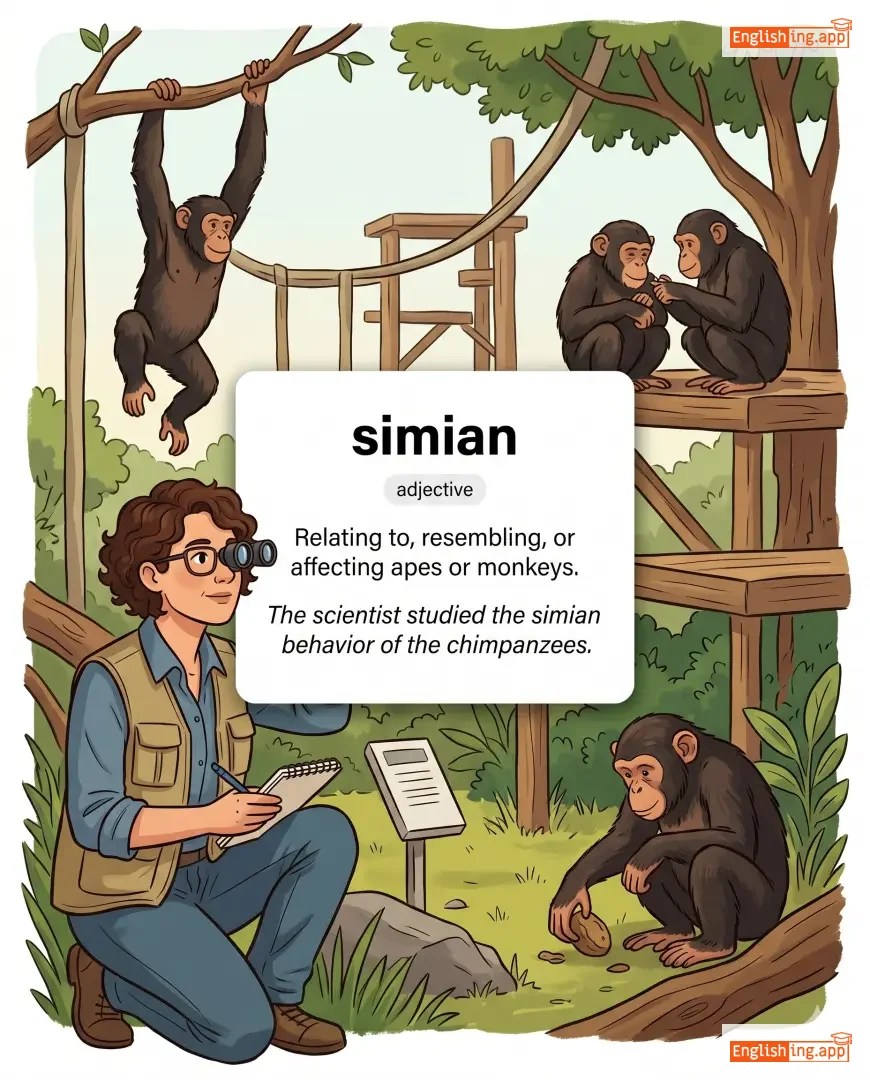
simian definition card — visual illustration of the meaning
adjective
/ˈsɪmiən/
обезьяноподобный (obez'yanopodobnyy)

Relating to, resembling, or affecting apes or monkeys.

"The scientist studied the simian behavior of the chimpanzees."

"Учёный изучал обезьяноподобное поведение шимпанзе." (Uchyonnyy izuchal obez'yanopodobnoe povedenie shimpanze.)
adjective
/ˈsɪmɪlər/
похожий (pokhozhiy)

Having a resemblance in appearance, character, or quantity, without being identical.

"The twins wore similar clothes to the party."

"Близнецы носили похожую одежду на вечеринке." (Bliznetsy nosili pokhozhuyu odezhdu na vecherinke.)
noun
/ˌsɪmɪˈlærəti/
сходство (skhodstvo)

the state of being alike or having characteristics in common

"There is a strong similarity between the two paintings."

"Между двумя картинами существует сильное сходство." (Mezhdu dvumya kartinami sushchestvuyet sil'noye skhodstvo.)
adverb
/ˈsɪmɪlərli/
аналогично (analogichno)

in a similar way

"Similarly, we can achieve success with dedication and hard work."
"Аналогично, мы можем достичь успеха с помощью преданности и усердной работы." (Analogichno, my mozhem dostich' uspekha s pomoshch'yu predannosti i userdnoy raboty.)
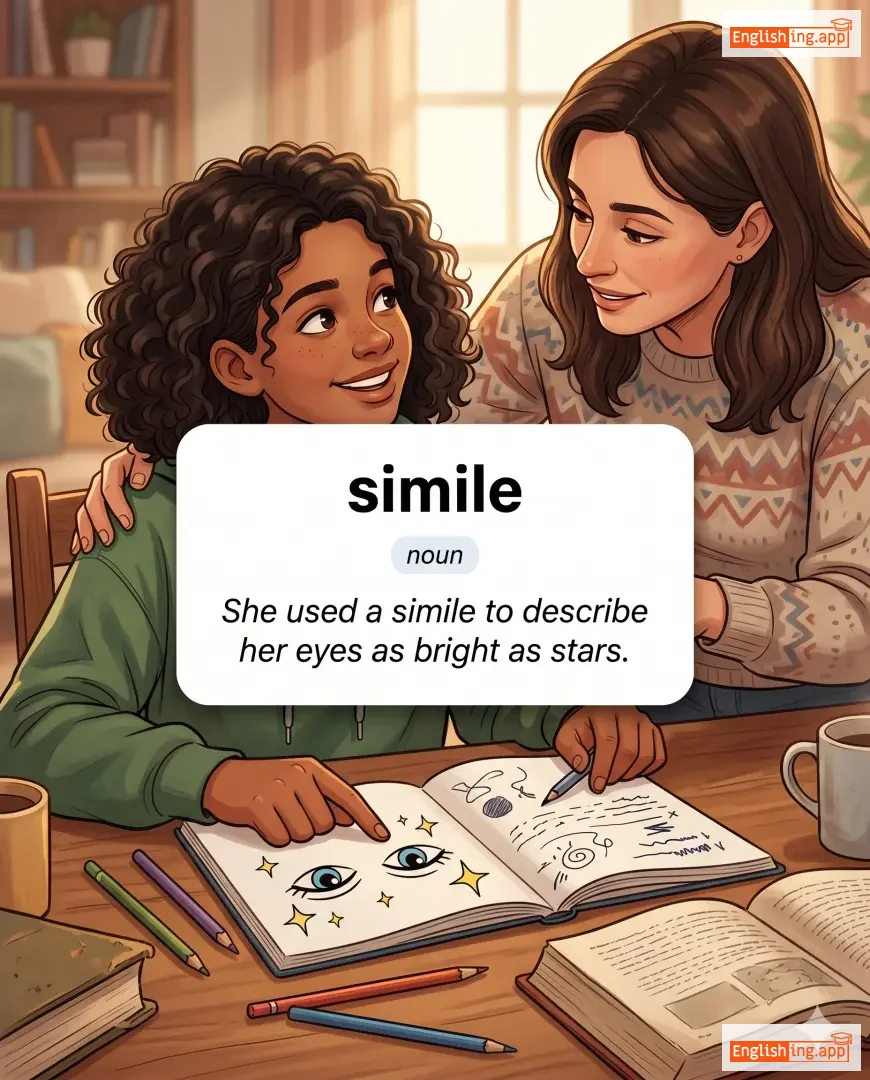
simile definition card — visual illustration of the meaning
noun
/ˈsɪməli/
сравнение (sravnenie)

A figure of speech involving the comparison of one thing with another using 'like' or 'as'.

"She used a simile to describe her eyes as bright as stars."

"Она использовала сравнение, чтобы описать свои глаза, как яркие звезды." (Ona ispol'zovala sravnenie, chtoby opisat' svoi glaza, kak yarkie zvezdy.)
noun
/sɪˈmɪlɪˌtjuːd/
подобие (podobie)

The quality or state of being similar; resemblance or likeness.

"There is a striking similitude between the two paintings."

"Между этими двумя картинами есть поразительное сходство." (Mezhdu etimi dvumya kartinami yest' porazitel'noe skhodstvo.)
verb
/ˈsɪmpər/
улыбаться глупо или натянуто (ulybat'sya glupo ili natyanuto)

to smile in a silly, self-conscious, or affected way

"She simpered at his compliment, clearly embarrassed."
"Она улыбнулась глупо на его комплимент, явно смущенная." (Ona ulybnulas' glupo na ego kompliment, yavno smushchennaya.)
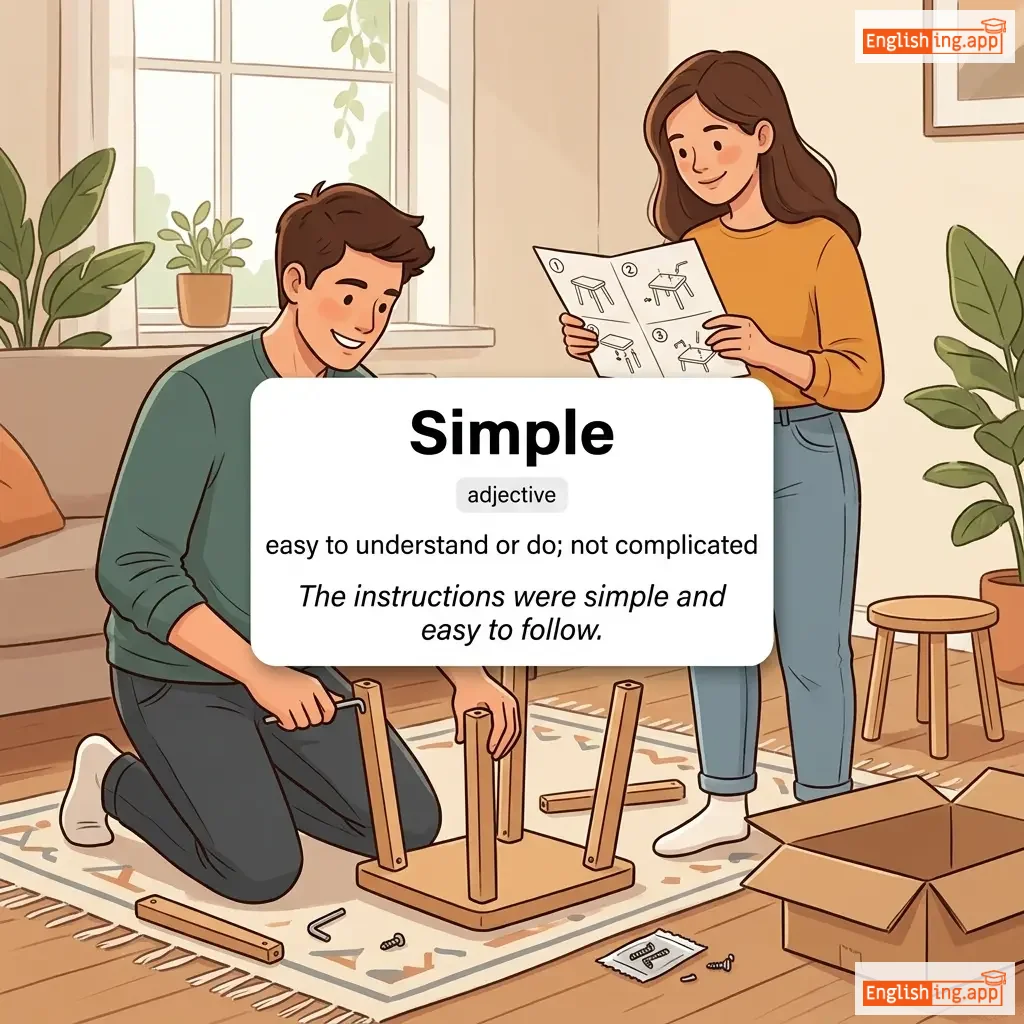
Simple definition card — visual illustration of the meaning
adjective
/ˈsɪmpəl/
простой (prostoy)

easy to understand or do; not complicated

"The instructions were simple and easy to follow."

"Инструкции были простыми и легкими для выполнения." (Instruktsii byli prostymi i legkimi dlya vypolneniya.)
noun
/ˈsɪmpəltən/
простофиля (prostofilya)

a foolish or gullible person

"They treated him like a simpleton who could not understand anything complex."

"Они обращались с ним как с простофилей, который не мог понять ничего сложного." (Oni obreshchalis s nim kak s prostofiley, kotoryy ne mog ponyat' nichego slozhnogo.)
noun
/sɪmˈplɪsɪti/
простота; ясность (prostota; yasnost)

the quality of being simple; lack of complexity or intricacy

"The beauty of the design lies in its simplicity."
"Красота дизайна заключается в его простоте." (Krasota dizajna zaklyuchayetsya v yego prostote.)
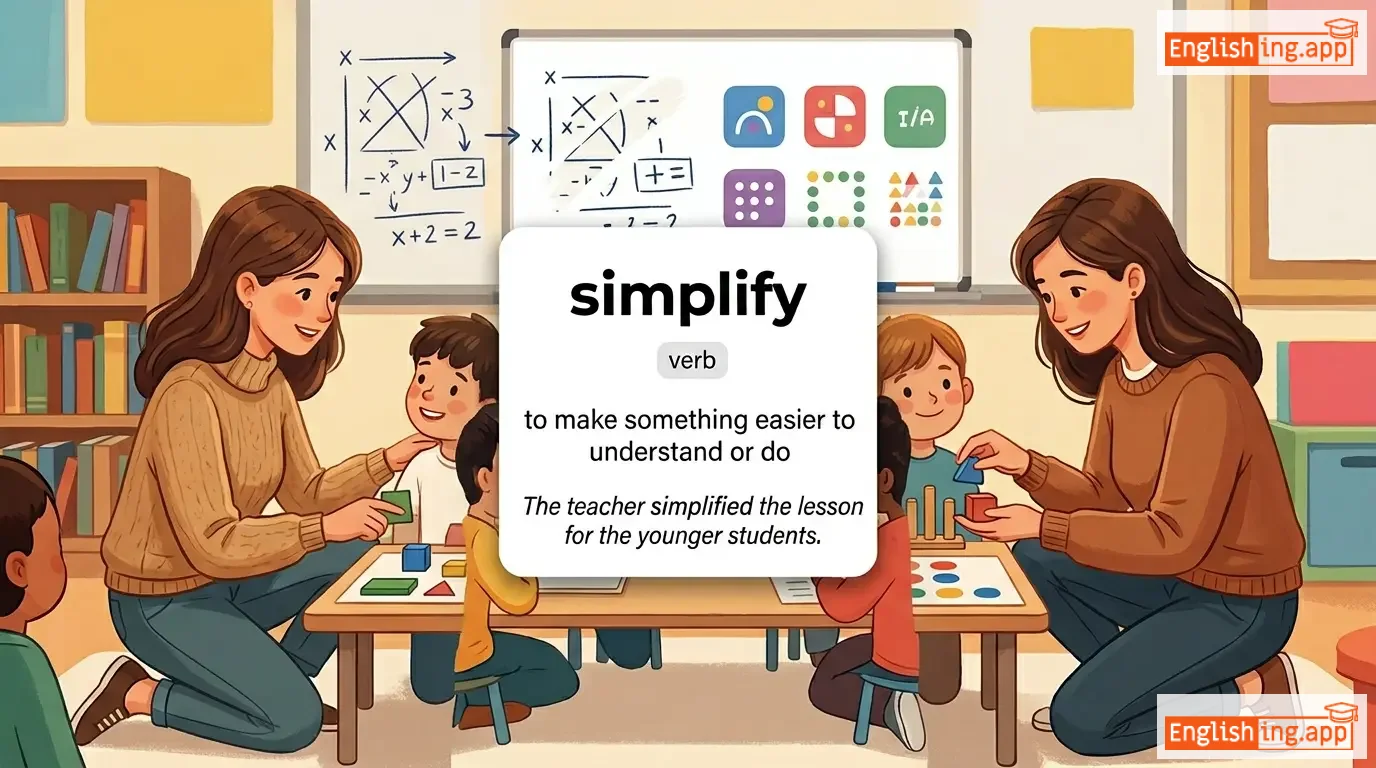
simplify definition card — visual illustration of the meaning
verb
/ˈsɪmplɪˌfaɪ/
упростить (uprostit')

to make something easier to understand or do

"The teacher simplified the lesson for the younger students."

"Учитель упростил урок для младших студентов." (Uchitel' uprostil urok dlya mladsikh studentov.)
adjective
/sɪmˈplɪstɪk/
слишком упрощенный (slishkom uproshchyonniy)

treating complex issues as if they were much simpler than they really are

"His explanation was too simplistic and ignored key details."

"Его объяснение было слишком упрощенным и игнорировало ключевые детали." (Ego ob'yasneniye bylo slishkom uproshchyonnym i ignorirovalo klyuchevyye detali.)
adverb
/ˈsɪmpli/
просто (prosto)

in a clear and easy to understand manner

"She explained the concept simply and clearly."

"Она объяснила концепцию просто и ясно." (Ona ob'yasnila kontseptsiyu prosto i yasno.)
noun
/ˌsɪmjʊˈleɪkrəm/
симулякр (simulyakr)

an image or representation of someone or something; a superficial likeness

"The statue was only a simulacrum of the ancient god."

"Статуя была всего лишь симулякром древнего бога." (Statuya byla vsego lish' simulyakrom drevnego boga.)
verb
/ˈsɪmjʊˌleɪt/
симулировать (simulirovat)

to imitate the appearance, character, or behavior of something; to pretend or reproduce conditions artificially

"The pilot had to simulate an emergency landing during training."
"Пилот должен был смоделировать экстренную посадку во время тренировки." (Pilot dolzhen byl smodelirovat' ekstrennuyu posadku vo vremya trenirovki.)
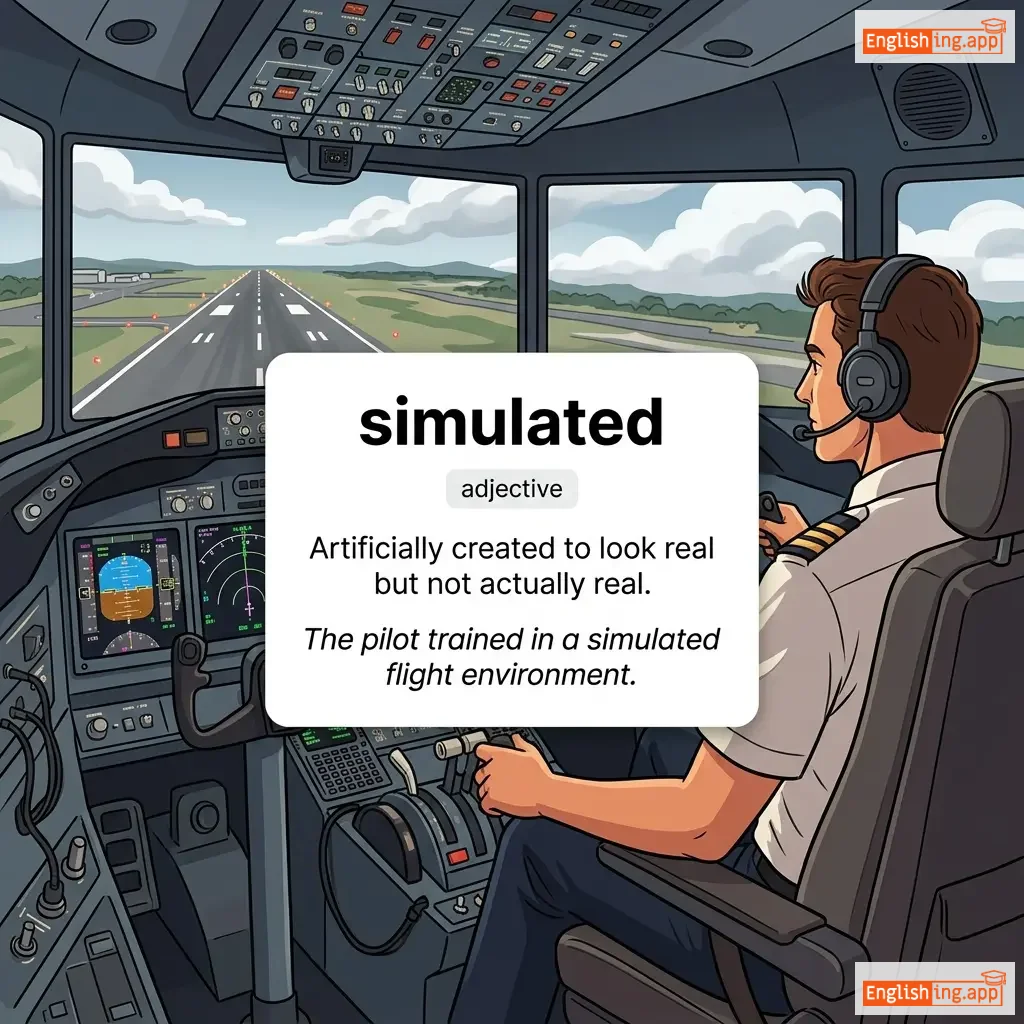
simulated definition card — visual illustration of the meaning
adjective
/ˈsɪm.jʊ.leɪ.tɪd/
моделированный (modelirovannyy)

Artificially created to look real but not actually real.

"The pilot trained in a simulated flight environment."

"Пилот тренировался в смоделированной среде полета." (Pilot trenirovalsya v smodelirovannoy srede poleta.)
noun
/saɪz/
размер (razmer)

the physical dimensions, proportions, or magnitude of something

"This shirt is too small in size for me."

"Эта рубашка слишком мала по размеру для меня." (Eta rubashka slishkom mala po razmeru dlya menya.)
noun
/ˈsaɪrən/
сирена (sirena)

A device that makes a loud prolonged sound as a signal or warning; in mythology, a creature that lures sailors with enchanting songs.

"The police car passed with its siren blaring."

"Полиция проехала с включенной сиреной." (Politsiya proiekhala s vkliuchennoy sirenoy.)
noun
/sɪˈrɒkoʊ/
горячий и сухой ветер (goryachiy i sukhoy veter)

A hot, dry wind blowing from North Africa across the Mediterranean to southern Europe.

"The sirocco made the city unbearably hot and dusty."

"Сирокко сделала город невыносимо горячим и пыльным." (Sirokko sdelala gorod nevynosimo goryachim i pyl'nym.)
noun
/ˈsɪstər/
сестра (sestra)

a female sibling; a girl or woman in relation to other children of her parents

"My sister is coming to visit us next week."

"Моя сестра приедет к нам на следующей неделе." (moya sestra priedet k nam na sleduyushchey nedele)
noun
/ˈsɪstərhʊd/
сестринство (sestrinstvo)

The relationship between sisters, or a community of women united by shared experiences or goals.

"The feminist movement created a strong sense of sisterhood among women."

"Феминистское движение создало сильное чувство сестринства среди женщин." (Feministskoe dvizhdenie sozdalo sil'noe chuvstvo sestrinstva sredi zhenshchin.)
verb
/sɪt/
сидеть (sidet)

to rest with the body supported by the buttocks, often in a chair or on the ground

"Please sit down and relax for a while."

"Пожалуйста, сядьте и расслабьтесь на некоторое время." (Pozhaluysta, syad'te i rasslabb'tes' na nekotorye vremya.)
noun
/sɪˈtɑːr/
ситар (sitar)

a traditional Indian stringed musical instrument with a long neck and resonating body

"The sitar creates beautiful ragas in Indian classical music."

"Ситар создает красивые раги в индийской классической музыке." (Sitar sozdayet krasivye ragi v indiyskoy klassicheskoy muzike.)
noun
/saɪt/
место (mesto)

a location or place, often used for a specific purpose, such as a construction site or a website

"The construction site is ready for the next phase of the project."

"Строительный участок готов к следующей фазе проекта." (Stroitel'nyy uchastok gotov k sleduyushchey faze proyekt)
adjective
/ˈsɪtʃueɪtɪd/
расположенный (raspolozhennyy)

located in a particular place or position

"The hotel is situated near the beach."

"Отель находится рядом с пляжем." (Otel nakhoditsya ryadom s plyazhem.)
noun
/ˌsɪtʃʊˈeɪʃən/
ситуация (situaciya)

a set of circumstances or state of affairs at a particular time

"The situation at work became difficult after the new policies were introduced."

"Ситуация на работе стала сложной после введения новых политик." (Situaciya na rabote stala slozhnoy posle vvedeniya novykh politik.)
6️⃣

six (siks)

noun
/sɪks/
шесть (shest')

the number 6

"There are six apples on the table."

"На столе шесть яблок." (Na stole shest' yablok.)
adjective
/sɪksθ/
шестой (shestoy)

coming after the fifth in order, position, or rank

"He finished the race in sixth place."

"Он финишировал на шестом месте." (On finishiroval na shestom meste.)
noun
/skɪf/
маленькая лодка (malyenkaya lodka)

a small, light boat usually for one person

"The fisherman paddled his skiff across the lake."

"Рыбак греб своей маленькой лодкой через озеро." (Rybak greb svoey malen'koy lodkoy cherez ozero.)
adjective
/ˈskɛtʃi/
незавершенный (nezavershenny)

not thorough or detailed; suspicious or unsafe

"The details of the project were still sketchy."

"Детали проекта все еще были незавершенными." (Detali proekta vse eshche byli nezavershennymi.)
verb
/skiː/
кататься на лыжах (katatsya na lyzhakh)

to glide over snow on skis

"We went skiing in the Alps last winter."
"Мы катались на лыжах в Альпах прошлой зимой." (My katat'sya na lyzhakh v Alpakh proshloy zimoy.)
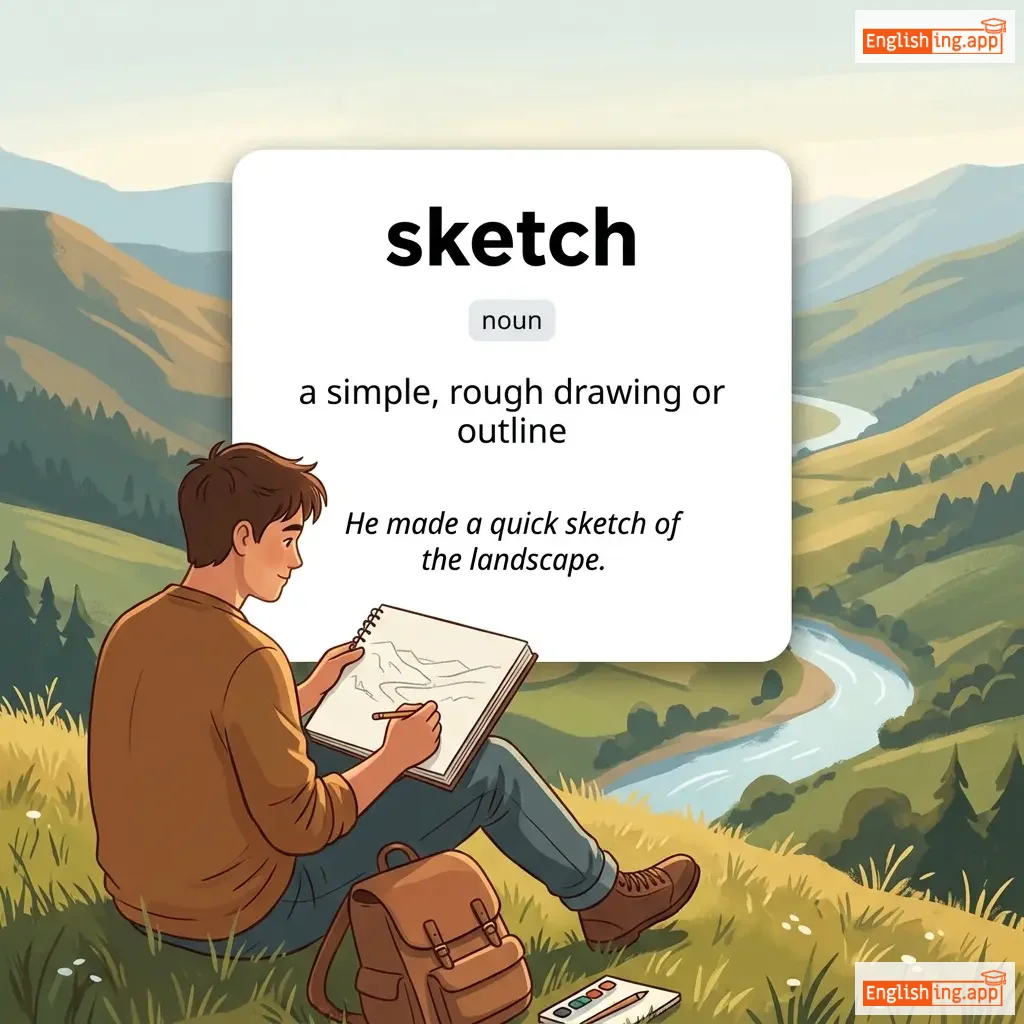
sketch definition card — visual illustration of the meaning
noun
/skɛtʃ/
эскиз (eskiz)

a simple, rough drawing or outline

"He made a quick sketch of the landscape."

"Он сделал быстрый эскиз пейзажа." (On sdelal bystryy eskiz peyzazha.)
adjective
/ˈskɪlfʊl/
умелый; опытный; мастер (umely; opytny; master)

having or showing skill; expert and accomplished

"The skilful surgeon performed the operation with great precision."

"Умелый хирург выполнил операцию с большой точностью." (Umelyi khirurg vypolnil operatsiyu s bol'shoy tochnost'yu.)
noun
/ˌsɪmjuˈleɪʃən/
симуляция (simulyatsiya)

the imitation of a situation or process

"The simulation helped the students understand the complex theory."

"Симуляция помогла студентам понять сложную теорию." (Simulyatsiya pomogla studentam ponyat' slozhnuyu teoriya.)