Словари

Словарь английского языка | Значения слов, определения и примеры

noun
/ˈskɪnˌflɪnt/
скряга (skryaga)

a person who spends as little money as possible; a miser

"The landlord was such a skinflint that he never repaired anything."

"Хозяин был таким скрягой, что никогда ничего не ремонтировал." (Khozyain byl takim skryagoj, chto nikogda nichego ne remon'tiroval.)
adjective
/ˈskɪni/
худой; тощий; иссохший (khudoy; toshchiy; issokhshiy)

very thin; having little flesh or fat on the body

"The skinny cat looked like it hadn't eaten for days."

"Тонкая кошка выглядела так, будто она не ела несколько дней." (Tonkaia koshka vygljadela tak, budto ona ne yela neskol'ko dnej.)
verb
/skɪp/
пропустить (propustit)

to omit or pass over something; to move lightly or quickly

"He decided to skip breakfast and go straight to work."

"Он решил пропустить завтрак и прямо поехать на работу." (On reshil propustit zavtrak i pryamo poehat na rabotu.)
⚔️

skirmish

noun/verb
/ˈskɜːrmɪʃ/

a small or brief fight between groups of soldiers; to engage in such a fight

"The soldiers got into a skirmish near the border."

noun/verb
/skɜːrt/
юбка (skirt)

a piece of clothing that hangs from the waist; to go around the edge of something

"She wore a red skirt to the party."

"Она надела красную юбку на вечеринку." (Ona nadela krasnuyu yubku na vecherinku.)
noun
/skɪt/
скетч (sketch)

a short, humorous performance or piece of writing

"The students performed a funny skit at the event."

"Студенты исполнили забавный скетч на мероприятии." (Studenty ispolnili zabavnyy sketch na meropriyatii.)
adjective
/ˈskɪtɪʃ/
нервный (nervny)

easily frightened or nervous; unpredictable

"The horse was too skittish to ride."

"Лошадь была слишком нервной для верховой езды." (Loshad' byla slishkom nervnoj dlya verkhovoj ezdy.)
noun
/skʌlˈdʌɡəri/
мошенничество (moshennichestvo)

underhanded or dishonest behavior

"The politician was accused of financial skulduggery."

"Политика обвинили в финансовых махинациях." (Politiku obvinili v finansovykh makhinatsiyakh.)
🕵️

skulk

verb
/skʌlk/

to move or hide secretly, often because you are planning something bad or are feeling guilty

"He tried to skulk in the shadows to avoid being seen."

noun
/skʌl/
череп (cherep)

the bony structure that forms the head and protects the brain

"The archaeologists found an ancient human skull."

"Археологи нашли древний человеческий череп." (Arkhieologi nashli drevniy chelovecheskiy cherep.)
noun
/ˌskʌlˈdʌɡəri/
обман (obman)

dishonest behavior or activities, often done secretly

"The election was full of political skullduggery."
"Выборы были полны политических обманов." (Vyibory byli polny politicheskikh obmanov.)
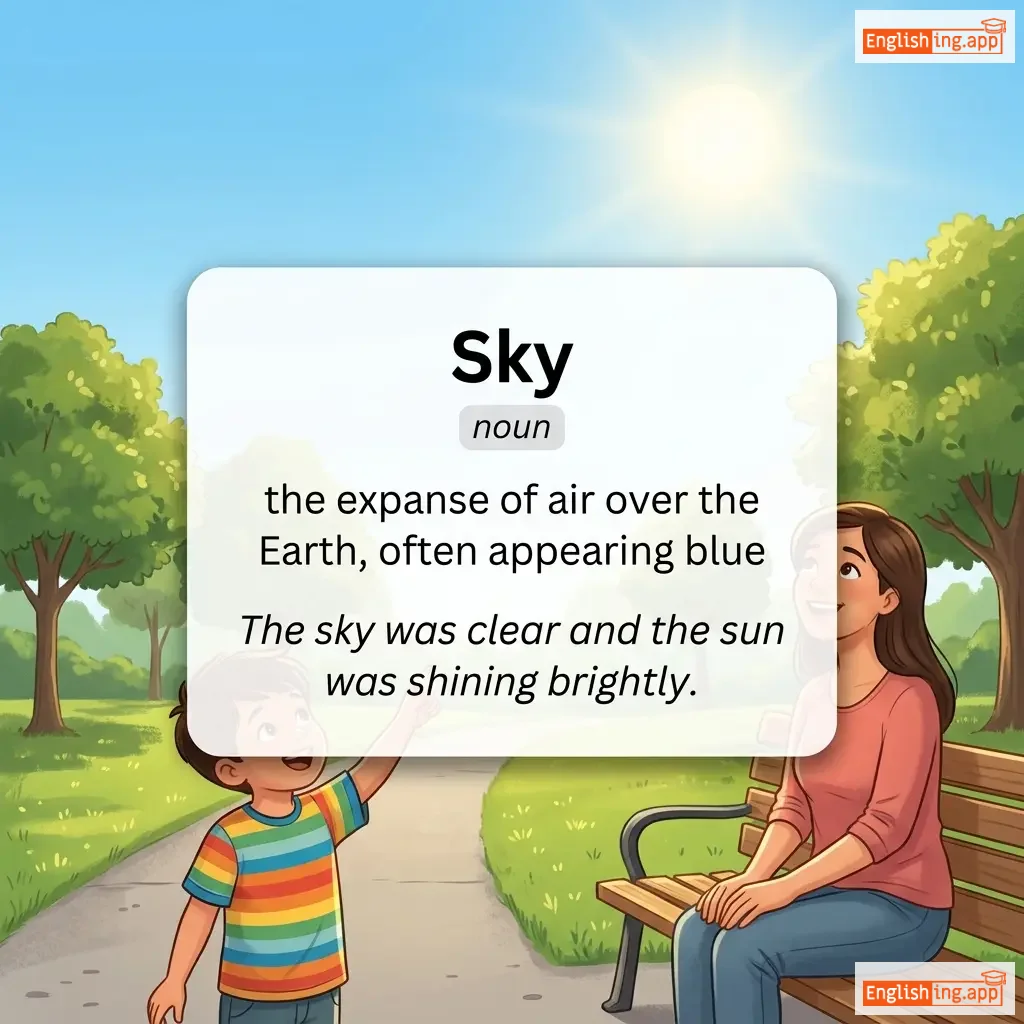
Sky definition card — visual illustration of the meaning
noun
/skaɪ/
небо (skai)

the expanse of air over the Earth, often appearing blue

"The sky was clear and the sun was shining brightly."

"Небо было ясным, и солнце ярко светило." (Nebo bylo yasnym, i solntse yarko svetilo.)
adjective
/skaɪ bluː/
небесно-голубой (nebesno-goluboy)

a bright blue color like that of a clear sky

"Her sky-blue eyes sparkled in the sunlight."

"Ее небесно-голубые глаза сияли на солнце." (Eyo nebesno-golubye glaza siyali na solntse.)
noun
/ˈskaɪ.lɑːrk/
жаворонок (zha-vor-o-nok)

a small brown bird known for singing while flying high in the sky

"The skylark sang beautifully as it soared above the meadow."

"Жаворонок пел красиво, пока он летел над лугом." (Zhavoronok pel krasivo, poka on letel nad lugom)
noun
/ˈskaɪˌskreɪpər/
небоскрёб (neboskryob)

a very tall building of many stories

"The new skyscraper dominates the city's skyline."

"Новый небоскрёб доминирует в городском горизонте." (Novyj neboskryob dominiruet v gorodskom gorizonte.)
noun
/slæb/
плита (plita)

a large, thick, flat piece of stone, concrete, or other hard material

"The workers laid a concrete slab for the foundation."

"Рабочие положили бетонную плиту для фундамента." (Rabochie polozhili betonnuyu plitu dlya fundamenta.)
adjective
/slæk/
слабый (slaby)

not tight, firm, or busy; lacking tension or activity

"Business is slack during the rainy season."

"Бизнес замедляется во время сезона дождей." (Biznes zamedlyaetsya vo vremya sezona dozhdey.)
verb
/ˈslækən/
ослабить (oslabit)

to make or become less tight, less active, or slower

"The driver slackened his speed as he approached the village."

"Водитель сбавил скорость, когда подъезжал к деревне." (Voditel' sbavil skorost', kogda pod'yezhal k derevne.)
noun
/slæɡ/
шлак (shlak)

Stony waste matter separated from metals during the smelting process.

"The factory dumped the slag near the river."

"Фабрика сбросила шлак рядом с рекой." (Fabrika sbrosila shlak ryadom s rekoj.)
verb
/sleɪk/
утолить жажду (utolit' zhazhdu)

To satisfy thirst or desire.

"She drank cold water to slake her thirst."

"Она пила холодную воду, чтобы утолить жажду." (Ona pila kholodnuyu vodu, chtoby utolit' zhazhdu.)
verb
/slæm/
ударить с силой (udarit' s silo)

to close or hit something with great force

"He slammed the door angrily after the argument."

"Он с силой закрыл дверь после ссоры." (On s silo zakryl dver' posle ssory.)
noun
/ˈslændər/
клевета (kleventa)

The action of making false spoken statements damaging to a person's reputation.

"He sued the newspaper for slander."

"Он подал в суд на газету за клевету." (On podal v sud na gazetu za kleventu.)
noun
/slæŋ/
сленг; неформальный язык (slenh; neformaliy yazyk)

very informal language that is usually spoken rather than written

"The teenagers used slang that their parents couldn't understand."

"Подростки использовали сленг, который их родители не могли понять." (Podrostki ispol'zovali sleng, kotoryy ikh roditeli ne mogli ponyat'.)
noun, verb
/slænt/
предвзятое мнение (predvzyatoe mnenie)

A particular point of view; to slope or lean in a particular direction.

"The article had a political slant."
"Статья имела политический уклон." (Stat'ya imela politicheskiy uklon.)
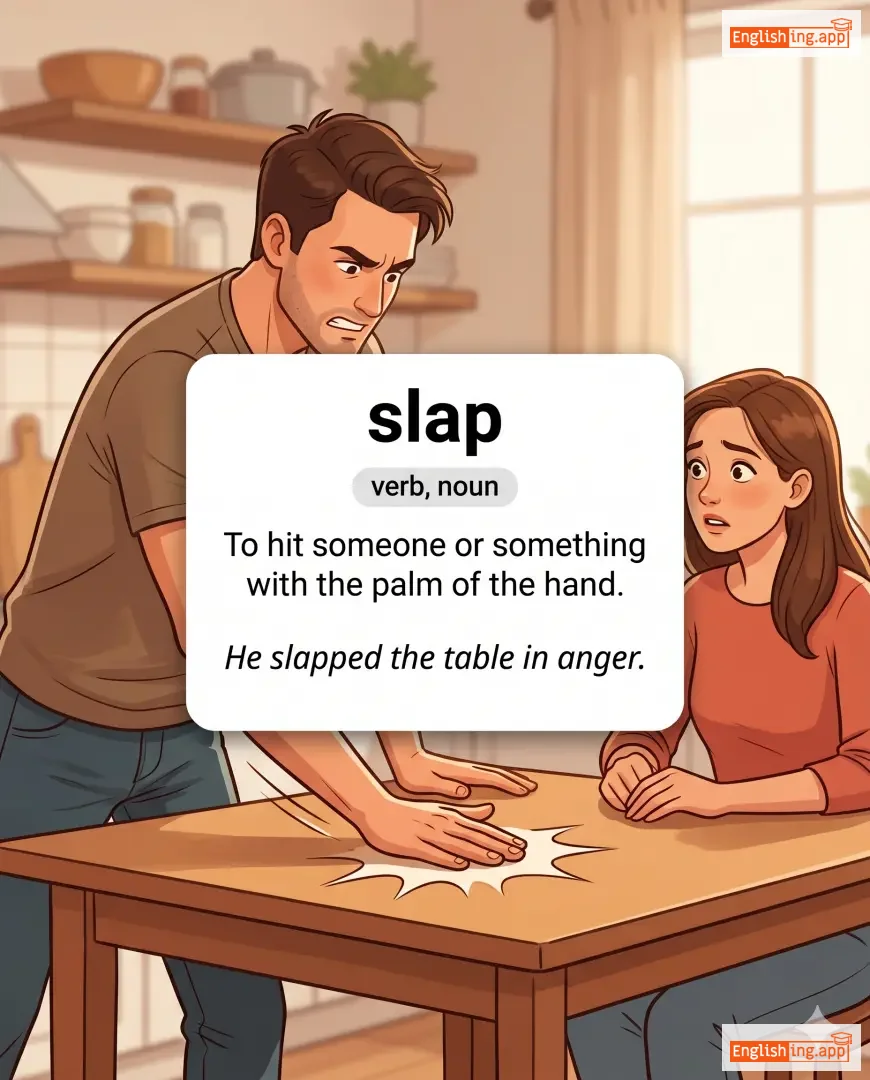
slap definition card — visual illustration of the meaning
verb, noun
/slæp/
дать пощёчину (dat' poshchenu)

To hit someone or something with the palm of the hand.

"He slapped the table in anger."

"Он ударил по столу от гнева." (On udaril po stolu ot gneva.)
adjective
/ˈslæp.dæʃ/
небрежно сделано (nebrezhno sdelano)

done too quickly and carelessly; hasty and careless

"The report was written in a slapdash manner, full of errors."
"Доклад был написан небрежно, полон ошибок." (Doklad byl napisany nebrezhno, polon oshibok.)
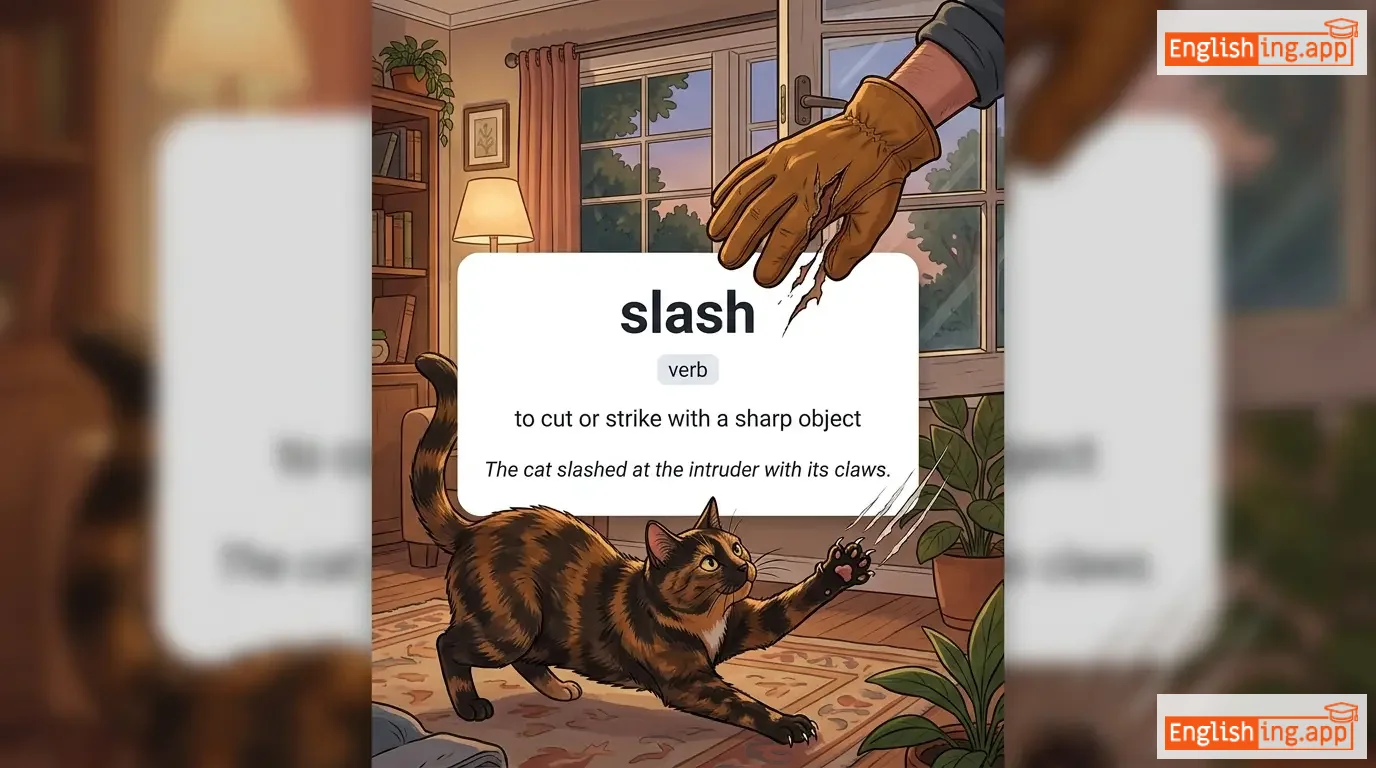
slash definition card — visual illustration of the meaning
verb
/slæʃ/
резать (rezat')

to cut or strike with a sharp object

"The cat slashed at the intruder with its claws."

"Кошка порезала нарушителя своими когтями." (Koshka porezala narushitelya svoimi kogtyami.)
noun/verb
/sleɪt/
сланец / планировать (slanets / planirovat)

a fine-grained rock used for roofing or writing; to schedule or designate for a task

"The meeting is slated for next Monday."

"Встреча назначена на следующий понедельник." (Vstrecha naznachena na sleduyushchiy ponedel'nik.)
noun
/ˈslæt.ən/
неопрятная женщина (neopryatnaya zhenshchina)

a woman who is untidy or slovenly in appearance or habits

"The house looked as if a slattern lived there."

"Дом выглядел так, как будто там жила неопрятная женщина." (Dom vyglyadel tak, kak budto tam zhila neopryatnaya zhenshchina.)
noun/verb
/ˈslɔː.tər/
убой / массовое убийство (uboy / massovoye ubiystvo)

the killing of animals for food; killing in large numbers violently

"The army slaughtered hundreds of enemy soldiers."

"Армия убила сотни вражеских солдат." (Armiya ubila sotni vrageskikh soldat.)
noun
/sleɪv/
раб (rab)

a person who is the legal property of another and is forced to work for them

"The abolitionist movement fought for the rights of slaves."

"Аборигенистское движение боролось за права рабов." (Aborigenistskoye dvizhene borolos' za prava rabov.)
⛓️

slavery

noun
/ˈsleɪvəri/

the system or state of being owned and forced to work for someone else

"Slavery was abolished in most countries in the 19th century."

adjective
/ˈsleɪ.vɪʃ/
рабский (rabskij)

showing no originality; completely imitative or overly submissive

"His slavish devotion to tradition prevented any innovation."

"Его рабская преданность традиции предотвратила любые инновации." (Ego rabskaya predannost' traditsii predotvratila lyubye innovatsii.)
verb
/sleɪ/
убивать (slay)

to kill violently; informally, to impress greatly

"The hero vowed to slay the dragon."

"Герой поклялся убить дракона." (Geroi poklyalsya ubit drakona.)
adjective
/ˈsliːzi/
низкий, грязный или низкого качества (nizkiy, gryaznyy ili nizkogo kachestva)

morally low, dirty, or cheap in quality

"He avoided the sleazy nightclub downtown."

"Он избегал этот убогий ночной клуб в центре города." (On izbegal etot ubogiy nochnoy klub v tsentre goroda.)
noun
/slɛdʒ/
сани (sani)

a vehicle for traveling over snow, often pulled by animals

"The children rode a sledge down the snowy hill."

"Дети катались на санях с заснеженной горы." (Deti katalis na sani s zasnezhennoy gory.)
adjective
/sliːk/
гладкий и блестящий (gladkiy i blestyashchiy)

smooth, shiny, and stylish

"She drove a sleek black sports car."
"Она вела блестящий черный спортивный автомобиль." (Ona vела blestyashchiy chernyy sportivnyy avtomobil'.)
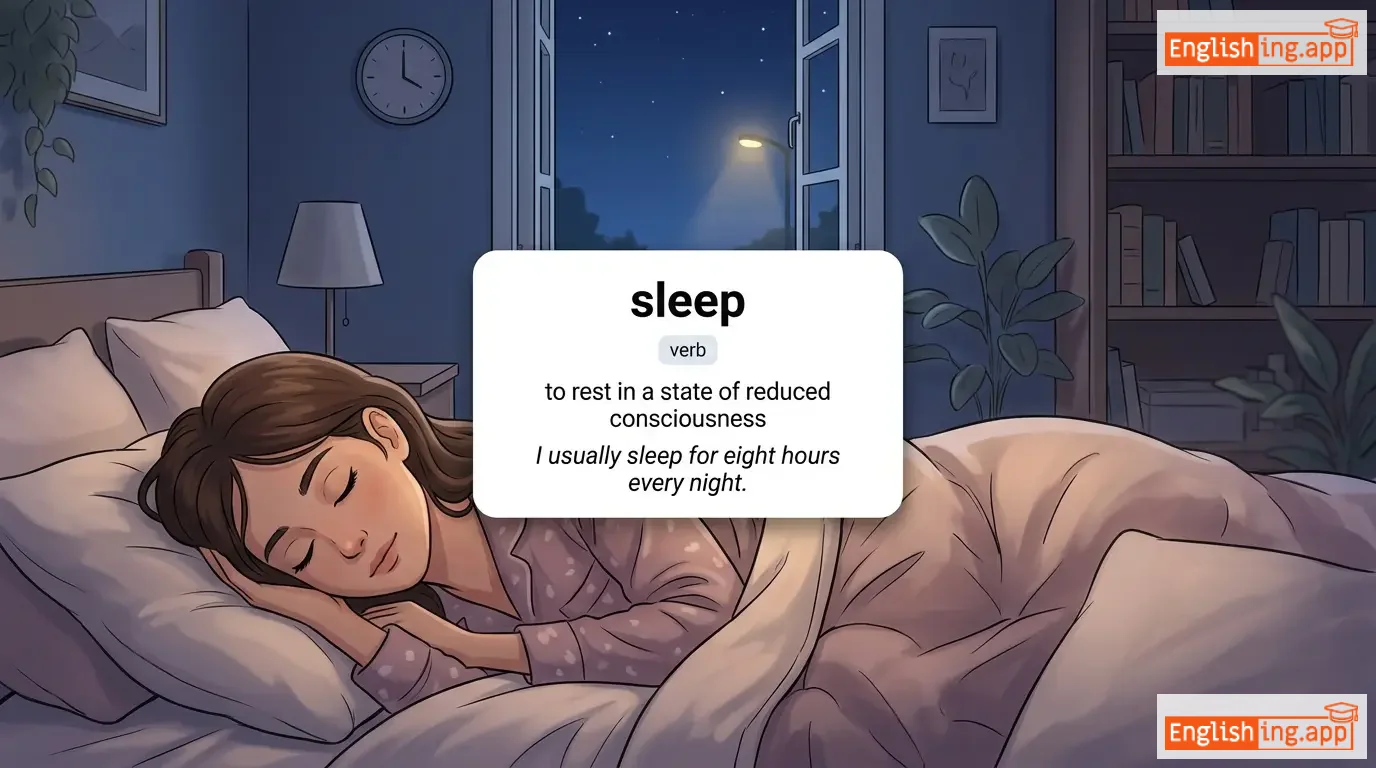
sleep definition card — visual illustration of the meaning
verb
/sliːp/
спать (spat)

to rest in a state of reduced consciousness

"I usually sleep for eight hours every night."
"Обычно я сплю восемь часов каждую ночь." (Obychno ya spyu vosem' chasov kazhduyu noch'.)
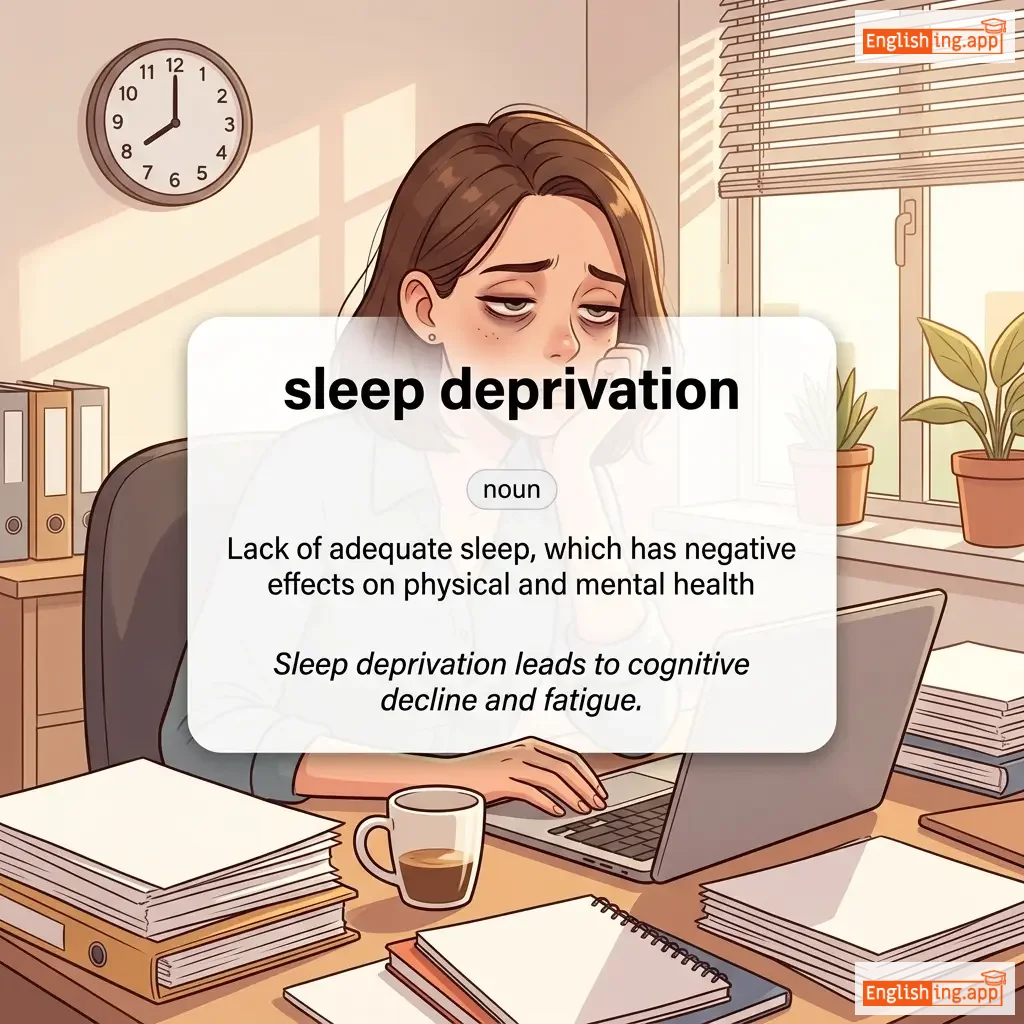
sleep deprivation definition card — visual illustration of the meaning
noun
sliːp dɛprɪˈveɪʃən
недостаток сна (nedostatok sna)

Lack of adequate sleep, which has negative effects on physical and mental health

"Sleep deprivation leads to cognitive decline and fatigue."

"Недостаток сна ведет к когнитивному ухудшению и усталости." (Nedostatok sna vedet k kognitivnomu ukhudsheniya i ustalosti.)
noun
/ˈsliːpər/
человек, который спит; что-то, что неожиданно достигает успеха (chelovek, kotoryy spit; chto-to, chto neozhidanno dostigaet uspekha)

a person or thing that sleeps; something that unexpectedly succeeds

"The movie turned out to be a real sleeper hit."

"Фильм оказался неожиданным хитом." (Film okazalsya neozhidannym hitom.)
noun
/ˈslʌɡərd/
ленивец (lenivets)

A lazy, sluggish person.

"The sluggard refused to get out of bed even at noon."

"Ленивец отказался вставать с кровати даже в полдень." (Lenivets otkazalsya vstavayt' s krovaty dazhe v poldne.)
noun, verb
/slɜːr/
оскорбление / обидное замечание (oskorblenie / obidnoe zamechanie)

An insulting remark or suggestion; or to speak indistinctly.

"He made a slur against her character."

"Он сделал оскорбительное замечание о её характере." (On sdelal oskorbitelnoe zamechanie o yeyo kharaktere.)
noun/verb
/ˈslʌmbər/
сон (son)

A state of sleep; to sleep lightly or rest.

"The child slumbered peacefully through the night."

"Ребёнок мирно спал всю ночь." (Rebyonok mirno spal vsyu noch'.)
noun
/slʌm/
трущобы (trushchoby)

a poor urban area with substandard housing and squalid conditions

"The government is working to improve conditions in the slum."

"Правительство работает над улучшением условий в трущобах." (Pravitel'stvo rabotayet nad uluchsheniem usloviy v trushchobakh.)
noun/verb
/sluːs/
ворота для воды / промыть (vorota dlya vody / promyt')

A sliding gate for controlling the flow of water; to wash or rinse with water in large quantities.

"The workers sluiced the mud off the street after the heavy rain."

"Рабочие отмыли грязь с улицы после сильного дождя." (Rabochie otmyli gryaz' s ulitsy posle sil'nogo dozhdya.)
adjective
/ˈslʌɡɪʃ/
вялый (vyaly)

Lacking energy or alertness; slow-moving or inactive.

"He felt sluggish after eating a heavy meal."

"Он чувствовал себя вялым после того, как поел тяжелую еду." (on chuvstvoval sebya vyalym poslie togo, kak poiel tiazheluiu iedu)
adjective
/ˈslʌvənli/
неряшливый (neryashlivyy)

Untidy or careless in appearance, habits, or work.

"His slovenly appearance made a bad impression at the interview."

"Его неопрятный внешний вид произвел плохое впечатление на собеседовании." (Ego neopryatnyy vneshniy vid proizvel plokhoye vpechatleniye na sobesedovanii.)
verb
/slaʊtʃ/
сутулиться (sutulitsya)

To stand, sit, or move in a lazy or awkward way.

"He slouched in the chair, looking tired."

"Он обрушился в кресло, выглядел уставшим." (On obrushilsya v kreslo, vyglyadel ustavshim.)
verb
/slʌf/ or /sluː/
сбрасывать кожу / болотистая местность (sbrasyvat' kozhu / bolotistaya mestnost')

To shed or cast off (like dead skin); also a swampy or muddy area.

"The snake sloughed off its old skin."

"Змея сбросила свою старую кожу." (Zmeyu sbrosila svoyu staruyu kozhu.)
adjective
/slaɪ/
хитрый / лукавый (khitryy / lukavy)

Clever in a deceitful or cunning way.

"She gave him a sly smile."

"Она дала ему хитрую улыбку." (Ona dala yemu khitruyu ulybku.)