Словари

Словарь английского языка | Значения слов, определения и примеры

verb
/rʌʃ/
торопиться (toropit'sya)

to move or act with great speed or urgency

"She had to rush to the meeting to make it on time."

"Ей пришлось торопиться, чтобы успеть на встречу вовремя." (Yey prishlos' toropit'sya, chtoby uspet' na vstrechu vovremya.)
noun
/rʌsk/
сухое печенье; дважды выпеченный хлеб (rask)

a hard, dry biscuit or twice-baked bread; a type of crisp, sweet biscuit

"The baby enjoyed eating the soft rusk with milk."

"Малыш наслаждался мягким руском с молоком." (Malysh naslazhdalsya myagkim ruskom s molokom.)
adjective
/ˈrʌʃən/
русский (russkiy)

relating to Russia, its people, or its language

"She is studying the Russian language at university."

"Она изучает русский язык в университете." (Ona izuchayet russkiy yazyk v universitete)
noun
/rʌst/
ржавчина (rzhavchina)

reddish-brown coating formed on iron or steel by oxidation; corrosion

"The old car was covered in rust after years of neglect."

"Старый автомобиль был покрыт ржавчиной после многих лет пренебрежения." (Staryy avtomobil' byl pokryt rzhavchinoy posle mnogikh let prene breezheniya.)
adjective
/ˈrʌstɪk/
деревенский (derevenskiy)

Relating to the countryside; simple and unsophisticated.

"The cottage had a rustic charm with its wooden beams and stone fireplace."

"Коттедж имел деревенский шарм с его деревянными балками и каменным камином." (Kottedzh imel derevenskiy sharm s yego derevyannymi balkami i kamennym kaminom.)
verb
/ˈrʌstɪkeɪt/
Поехать в деревню / временное отчисление из университета (Poekhali v derevnyu / vremennoye otchisleniye iz universiteta)

To go to the countryside or to suspend someone from university.

"He decided to rusticate in the village to escape the busy city life."

"Он решил поехать в деревню, чтобы сбежать от напряженной городской жизни." (On reshil poekhat' v derevnyu, chtoby sbezhat' ot napryazhennoy gorodskoy zhizni.)
verb
/ˈrʌsl/
шуршать (shurshat)

To make a soft, light sound like leaves or paper moving.

"The leaves rustled gently in the evening breeze."

"Листья шуршали в легком вечернем ветре." (List'ya shurshali v legkom vechernem vetre.)
adjective
/ˈrʌs.ti/
ржавый; забытый; страдающий от недостатка практики (rzhavyj; zabytyj; stradayushchij ot nedostatka praktiki)

affected by rust; out of practice; impaired by lack of recent practice

"My piano skills are rusty after not playing for years."

"Мои навыки игры на пианино ржавые после нескольких лет без игры." (Mojy navyki igry na pianino rzhavye posle neskol'kikh let bez igry.)
noun
/ruːθ/
сострадание (sostradanie)

A feeling of pity, compassion, or sorrow.

"He felt no ruth for the people he had betrayed."

"Он не почувствовал сострадания к людям, которых он предал." (On ne pochuvstvoval sostradaniya k lyudyam, kotorykh on predal.)
adjective
/ˈruːθləs/
безжалостный (bezzhalostnyy)

Having or showing no pity or compassion for others.

"The ruthless leader crushed all opposition."

"Безжалостный лидер уничтожил все сопротивление." (Bezzhalostnyy lider unichtozhil vse soprotivlenie.)
ruthless competition definition card — visual illustration of the meaning
noun
ˈruθləs ˌkɑmpəˈtɪʃən
безжалостная конкуренция (bezzhalostnaya konkurentsiya)

Fierce and merciless rivalry or contest, without pity or compassion.

"Ruthless competition for power leads to societal issues."

"Безжалостная конкуренция за власть приводит к социальным проблемам." (Bezzhalostnaya konkurentsiya za vlast' privodit k sotsial'nym problemam.)
noun
/səˈbætɪkəl/
период отпуска для учебы или путешествий (period otpuska dlya ucheby ili puteshestviy)

A period of paid leave granted to a teacher or worker for study or travel, traditionally every seventh year.

"She took a sabbatical to research her new book."

"Она взяла саббатикал, чтобы исследовать свою новую книгу." (Ona vzyala sabbatical, chtoby issledovat' svoyu novuyu knigu.)
verb
/ˈsæbətɑːʒ/
разрушительная деятельность (razrushitel'naya deyatel'nost')

To deliberately destroy, damage, or obstruct something, especially for political or military advantage.

"The rebels tried to sabotage the railway lines."

"Повстанцы пытались саботировать железнодорожные пути." (Povstantsy pytalis' sabotirovat' zheleznodorozhnyye puti.)
noun
/ˌsæbəˈtɜːr/
саботёр (sabotyor)

A person who engages in sabotage.

"The saboteur was arrested before he could plant the bomb."

"Саботёр был арестован до того, как он успел установить бомбу." (Sabotyor byl arestovan do togo, kak on uspel ustanovit' bombu.)
adjective
/ˈsækərɪn/
счастье (schastye)

Excessively sweet or sentimental.

"His saccharine smile seemed insincere."

"Она не могла скрыть своего счастья, когда получила награду." (Ona ne mogla skryt' svoego schast'ya, kogda poluchila nagradu.)
adjective
/ˌsæsərˈdoʊtl/
священнический (svyashchennicheskiy)

Relating to priests or the priesthood.

"The ritual had a distinctly sacerdotal character."

"Ритуал имел явно священнический характер." (Ritual imel yavno svyashchennicheskiy kharakter.)
noun
/sæk/
мешок (meshok)

a large bag made of strong material for holding things

"He carried a sack of rice on his shoulder."

"Он нес мешок риса на своем плече." (On nes meshok risa na svoem pleche.)
adjective
/ˈseɪkrɪd/
священный (svyashchennyy)

connected with God or a religion and considered holy or deserving respect

"The temple is a sacred place for the community."

"Храм - это святое место для общины." (Khram - eto svyatoe mesto dlya obshchiny.)
sacrifice definition card — visual illustration of the meaning
🕯️

sacrifice

noun, verb
/ˈsækrɪfaɪs/

To give up something valuable for the sake of others or a higher purpose.

"Parents often sacrifice their own comfort for their children."

adjective
/ˌsækrɪˈfɪʃəl/
жертвенный (zhertvennyy)

Relating to or involving sacrifice.

"The lamb was used as a sacrificial offering in the ritual."

"Ягненок был использован как жертвенная жертва в ритуале." (Yahnenok byl ispol'zovan kak zhertvennaya zhertva v rituale.)
noun
/ˈsækrɪlɪdʒ/
осквернение (oskvernenie)

Violation or misuse of what is regarded as sacred.

"Stealing from the temple was considered an act of sacrilege."

"Кража из храма считалась актом осквернения." (Krazha iz khrama schitalas aktom oskverneniya.)
adjective
/ˌsækrəˈlɪdʒəs/
сакралигийный (sacriligijnyj)

Showing disrespect or irreverence toward something sacred.

"The painting was criticized as being sacrilegious."

"Картина была раскритикована как сакралигийная." (Kartina byla raskritikovana kak sakralignaya.)
noun
/ˈsækrɪsti/
сакристия (sakristiya)

a room in a church where sacred vessels and vestments are kept

"The priest entered the sacristy before the mass began."

"Священник вошел в сакристию перед началом мессы." (Svyashchennik voshel v sakristiyu pered nachalom messy.)
adjective
/ˈsæk.rəˌsæŋkt/
неприкосновенный (neprikosnovennyy)

Regarded as too important or valuable to be interfered with; sacred.

"Freedom of speech is considered sacrosanct in democratic societies."

"Свобода слова считается неприкосновенной в демократических обществах." (Svoboda slova schitayetsya neprikosnovennoy v demokraticheskikh obshchestvakh.)
sad definition card — visual illustration of the meaning
adjective
/sæd/
грустный (grustnyy)

feeling or showing sorrow; unhappy

"She felt sad after hearing the bad news."

"Она почувствовала грусть после того, как услышала плохие новости." (Ona pochuvstvovala grust' posle togo, kak uslyshala plokhie novosti.)
noun/verb
/ˈsæd.əl/
седло для лошади; нагрузить кого-то ответственностью (sedlo dlya loshadi; nagruzit' kogo-to otvetstvennost'yu)

A seat fastened on the back of a horse for riding; to burden someone with a responsibility.

"He saddled the horse before going for a ride."

"Он оседлал лошадь перед тем, как поехать на прогулку." (On osedlal loshad' pered tem, kak poekhat' na progulku.)
adjective
/səˈdɪs.tɪk/
садистский (sadistskiy)

Deriving pleasure from inflicting pain or suffering on others.

"The villain had a sadistic smile while hurting his enemies."

"Злодей улыбался садистской улыбкой, когда причинял боль своим врагам." (Zlodey ulybalsya sadistskoy ulybkoy, kogda prichinyal bol' svoim vragam.)
adverb
/ˈsædli/
грустно (grustno)

in a sorrowful or unhappy manner

"She sadly waved goodbye as the train departed."

"Она грустно помахала рукой, когда поезд отправлялся." (Ona grustno pomahala rukoy, kogda poezd otpravlyalsya.)
noun
/ˈsæd.nəs/
грусть, печаль, боль (grust', pechal', bol')

feeling of sorrow, unhappiness, or grief

"Her sadness was evident after hearing the bad news."

"Её грусть была очевидна после того, как она услышала плохие новости." (Eyo grust' byla ochevidna posle togo, kak ona uslyshala plokhie novosti.)
adjective
/seɪf/
безопасный (bezopasnyy)

free from harm or danger

"Make sure your belongings are safe during the trip."

"Убедитесь, что ваши вещи в безопасности во время поездки." (Ubedites', chto vashi veshchi v bezopasnosti vo vremya poyezdki.)
noun/verb
/ˈseɪf.ɡɑːrd/
защищать (zashchishchat')

To protect from harm or damage; a measure taken to ensure safety.

"Laws exist to safeguard the rights of children."

"Законы существуют для защиты прав детей." (Zakony sushchestvuyut dlya zashchity pravy detey.)
adverb
/ˈseɪfli/
безопасно (bezopasno)

in a way that is not dangerous or likely to cause harm

"The children crossed the road safely."

"Дети пересекли дорогу безопасно." (Deti peresehli dorogu bezopasno.)
noun
/ˈseɪfti/
безопасность (seyfti)

the condition of being protected from harm or danger

"The safety of passengers is our top priority."

"Безопасность пассажиров является нашим главным приоритетом." (Bezopasnost passazhirov yavlyaetsya nashim glavnym prioritetom)
noun
/ˈsæf.rən/
шафран (shafran)

A spice derived from the flower of Crocus sativus, used for flavoring and coloring food.

"She added saffron to the rice for flavor and color."

"Она добавила шафран в рис для вкуса и цвета." (Ona dobavila shafran v ris dlya vkusa i tsveta.)
noun
/ˈsɑːɡə/
долгая история (dolgaya istoriya)

A long story of heroic achievement, or a long, complex series of events.

"The company's rise and fall became a corporate saga."

"Подъем и падение компании стало корпоративной сагой." (Podyom i padeniye kompanii stalo korporativnoy sagoy.)
adjective
/ˌsæŋktɪˈmoʊniəs/
лицемерно набожный (litsemernno nabozhny)

Making a show of being morally superior to others; hypocritically pious.

"He gave a sanctimonious speech about honesty while he himself was corrupt."
"Он дал лицемерную речь о честности, хотя сам был коррумпирован." (On dal litsemernuyu rech' o chestnosti, hotya sam byl kurrumpirovannym.)
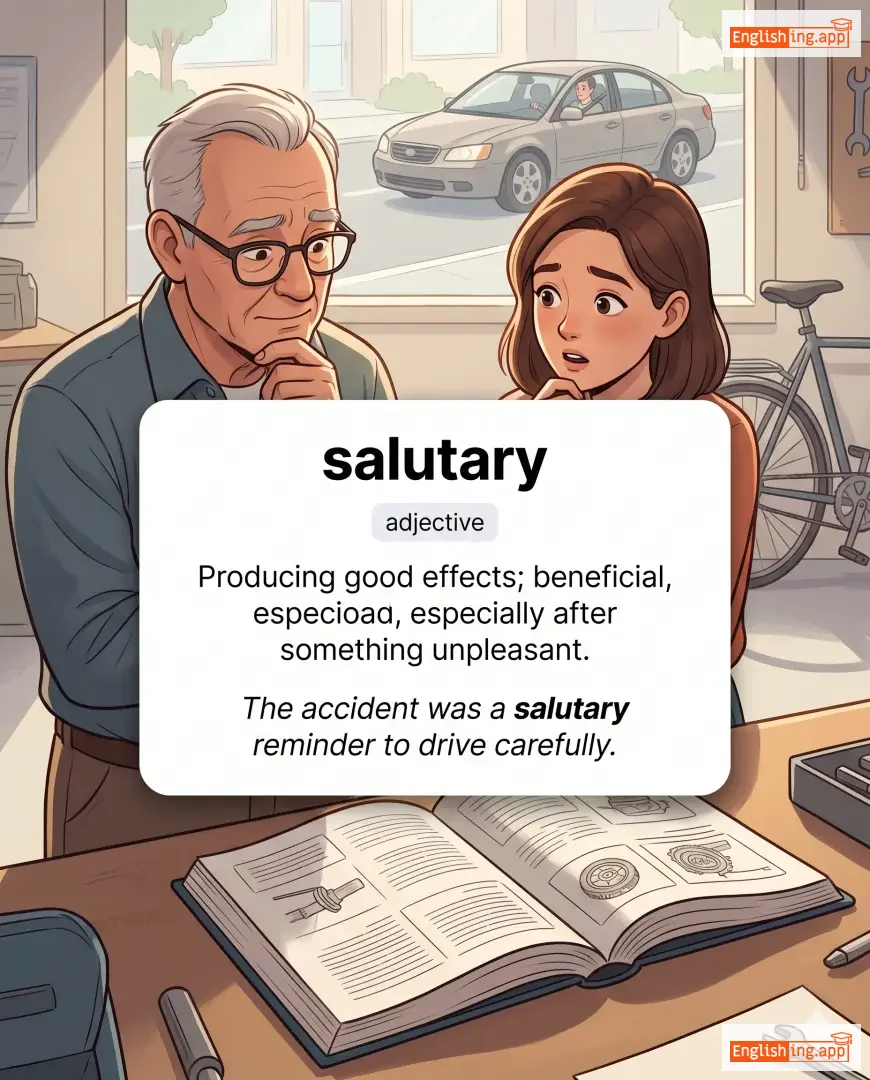
salutary definition card — visual illustration of the meaning
adjective
/ˈsæljʊˌtɛri/
полезный (poleznyj)

Producing good effects; beneficial, especially after something unpleasant.

"The accident was a salutary reminder to drive carefully."

"Авария стала полезным напоминанием о том, чтобы водить осторожно." (Avariya stala poleznym napominaniem o tom, chtoby vodit' ostorozhno.)
noun
/ˌsæljʊˈteɪʃən/
приветствие (privetstvie)

A gesture or utterance of greeting, goodwill, or courtesy.

"He raised his hat as a polite salutation."

"Он поднял свою шляпу как вежливое приветствие." (On podnyal svoju shlyapu kak vezhlivoe privetstvie.)
adjective
/səˈluːtəˌtɔri/
приветственная речь (privetstvennaya rech)

Relating to or expressing a greeting or an address, especially at the beginning of a speech.

"She delivered a salutatory address at the graduation ceremony."

"Она произнесла приветственную речь на церемонии вручения дипломов." (Ona proiznesla privetstvennuyu rech na tseremonii vrucheniya diplomov.)
salute definition card — visual illustration of the meaning
verb
/səˈluːt/
поздравить (pozdravit)

to greet with respect; to honor

"The soldiers saluted their commanding officer."

"Солдаты поздравили своего командующего офицера." (Soldaty pozdravili svoego komanduyushchego offitsera.)
verb
/ˈsælvɪdʒ/
спасти (spasti)

To save something from loss, damage, or destruction.

"They managed to salvage some goods from the fire."
"Им удалось спасти некоторые товары из огня." (Im udalos' spasti nekotorye tovaryi iz ognya.)
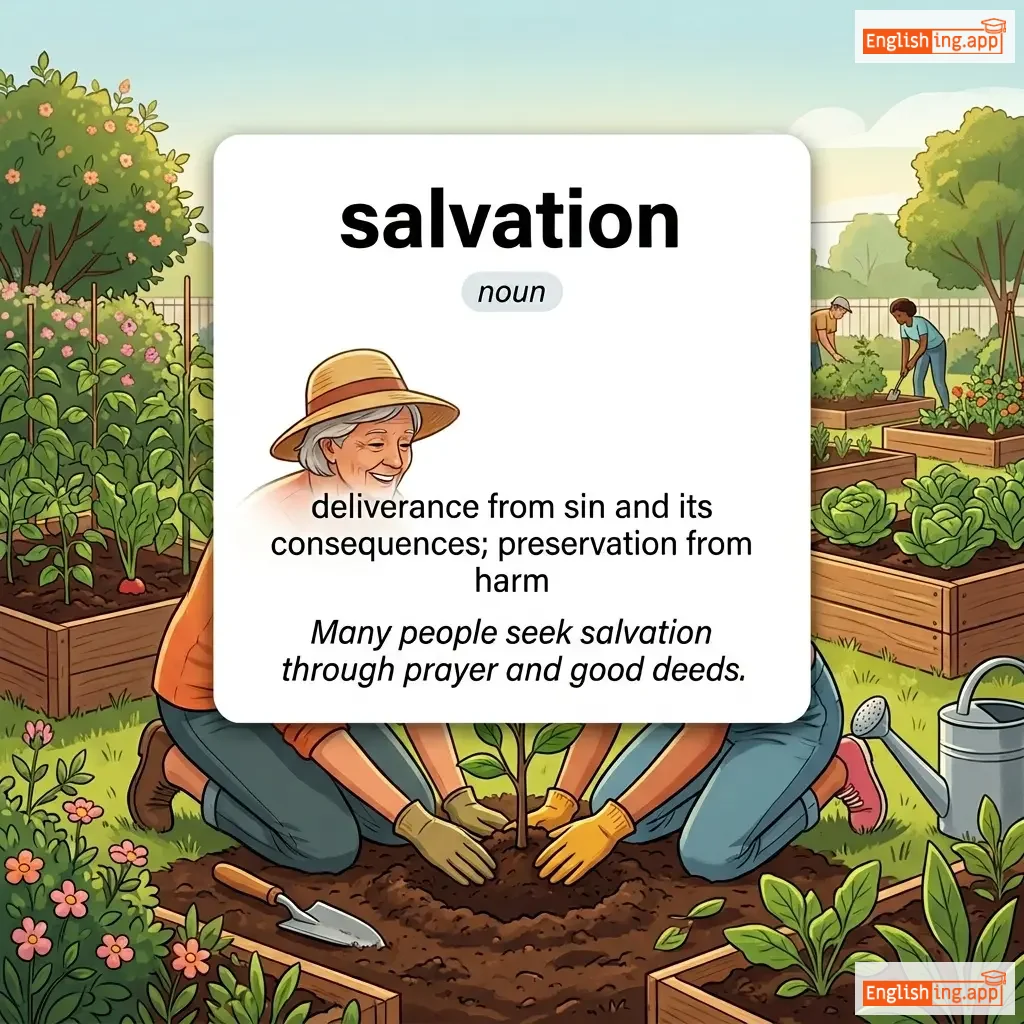
salvation definition card — visual illustration of the meaning
noun
/sælˈveɪ.ʃən/
спасение (spaseniye)

deliverance from sin and its consequences; preservation from harm

"Many people seek salvation through prayer and good deeds."

"Многие люди ищут спасение через молитву и добрые дела." (mnogiye lyudi ishchut spaseniye cherez molitvu i dobre dela.)
noun
/sælv/
мазь (maz)

An ointment used to promote healing of the skin or as protection.

"She applied a salve to the burn on her hand."

"Она нанесла мазь на ожог на своей руке." (Ona nanesla maz' na ozhog na svoey ruke.)
noun
/ˈsælvər/
серебряный поднос (serebryanyy podnos)

A tray, typically made of silver, used for serving food or drinks.

"The butler brought in the tea on a silver salver."

"Дворецкий принес чай на серебряном подносе." (Dvoretskiy prines chay na serebryanom podnose.)
noun
/ˈsælvoʊ/
залп (zalp)

A simultaneous discharge of guns or release of bombs; a sudden outburst of cheers or applause.

"The soldiers fired a salvo to honor the fallen general."

"Солдаты выстрелили залп, чтобы почтить память погибшего генерала." (Soldaty vystreliili zalp, chtoby pochtit' pamyat' pogibshego generala.)
adjective
/seɪm/
одинаковый (odinakovyy)

identical; not different or changed

"We wore the same dress at the party."

"Мы носили одинаковые платья на вечеринке." (My nosili odinakovyye plat'ya na vecherinke.)
Sample definition card — visual illustration of the meaning
noun
/ˈsæm.pəl/
образец (obrazets)

a small part or quantity intended to show what the whole is like

"She gave me a sample of the fabric to see if I liked it."

"Она дала мне образец ткани, чтобы я посмотрел, понравится ли мне это." (Ona dala mne obrazets tkani, chtoby ya posmotre, ponravitsya li mne eto.)
verb
/ˈsæŋktɪfaɪ/
освящать (osvyashchat)

To make holy or sacred; to set apart as holy.

"The priest sanctified the new church building."

"Священник освятил новое здание церкви." (Svyashchennik osvyatil novoye zdaniye tserkvi.)
noun
/ˌsɒ̃ˈfrwɑː/
хладнокровие (khladnokroviye)

Composure or coolness under pressure.

"She impressed everyone with her sangfroid during the interview."

"Она произвела впечатление на всех своим хладнокровием во время интервью." (Ona proyizvela vpechatleniye na vsekh svoim khladnokroviem vo vremya interv'yu.)
adjective
/ˈsæŋɡwɪˌnɛri/
кровавый (krovavy)

Involving or causing much bloodshed; bloodthirsty.

"The battle was one of the most sanguinary conflicts of the war."

"Битва была одним из самых кровавых конфликтов войны." (Bitva byla odnim iz samykh krovavykh konfliktov voiny.)