ভোকাবুলারিসমূহ

ইংরেজি শব্দের বাংলা অর্থ | English to Bangla Word Meaning Dictionary

verb
/rʌʃ/
দৌড়ানো (douṛano)

to move or act with great speed or urgency

"She had to rush to the meeting to make it on time."

"সে সময়মত পৌঁছানোর জন্য মিটিংয়ে রাশ করতে হয়েছিল।" (Se somoymôṭo pouṁchanoṛ jonno miṭinge rāś korte hoyechilo.)
noun
/rʌsk/
শুষ্ক; শুকনো খাবার; (rask)

a hard, dry biscuit or twice-baked bread; a type of crisp, sweet biscuit

"The baby enjoyed eating the soft rusk with milk."

"শিশুটি দুধের সাথে নরম রাস্ক খেতে পছন্দ করেছিল।" (shishuti dudher sathe norom rask khete pochondo korechilo)
adjective
/ˈrʌʃən/
রুশ (rôsh)

relating to Russia, its people, or its language

"She is studying the Russian language at university."

"সে বিশ্ববিদ্যালয়ে রুশ ভাষা পড়ছে।" (Se biśwobidẏālôẏe rūś bhāṣā poṛchē.)
noun
/rʌst/
জং; মরিচা; (jang)

reddish-brown coating formed on iron or steel by oxidation; corrosion

"The old car was covered in rust after years of neglect."

"পুরানো গাড়িটি বছরের পর বছর অবহেলার পর জং দিয়ে ঢেকে গিয়েছিল।" (purano garitii bochorer por bochor oboheler por jong diye dheke giyechilo)
adjective
/ˈrʌstɪk/
গ্রামীণ (gramin)

Relating to the countryside; simple and unsophisticated.

"The cottage had a rustic charm with its wooden beams and stone fireplace."

"কটেজটির কাঠের বিম ও পাথরের আগুনের চুল্লি একে গ্রামীণ সৌন্দর্য দিয়েছিল।" (Kotejer kather beam o pathorer aguner chulli eke gramin soundorjo diyechhilo.)
verb
/ˈrʌstɪkeɪt/
গ্রামে যাওয়া / বিশ্ববিদ্যালয় থেকে সাময়িক বহিষ্কার (grame jaoa / bishwobidyaloy theke samoyik bohiscar)

To go to the countryside or to suspend someone from university.

"He decided to rusticate in the village to escape the busy city life."

"সে শহরের ব্যস্ত জীবন থেকে পালাতে গ্রামে থাকার সিদ্ধান্ত নিল।" (Se shohorer byosto jibon theke palate grame thakar siddhanto nilo.)
verb
/ˈrʌsl/
সরসর শব্দ করা (soroso shobdo kora)

To make a soft, light sound like leaves or paper moving.

"The leaves rustled gently in the evening breeze."

"পাতাগুলো সন্ধ্যার হাওয়ায় আস্তে আস্তে সরসর শব্দ করছিল।" (Patagulo sondhar hawaye aste aste soroso shobdo korchhilo.)
adjective
/ˈrʌs.ti/
মরিচা ধরা; অভ্যাস হারানো; (moricha dhora; obbhash harano)

affected by rust; out of practice; impaired by lack of recent practice

"My piano skills are rusty after not playing for years."

"বছরের পর বছর না বাজানোর পর আমার পিয়ানো দক্ষতা নষ্ট হয়ে গেছে।" (bochhorer por bochhoro na bajanor por amar piano dokkhota noshto hoye geche.)
noun
/ruːθ/
দয়া (doya)

A feeling of pity, compassion, or sorrow.

"He felt no ruth for the people he had betrayed."

"সে যাদের সাথে বিশ্বাসঘাতকতা করেছিল তাদের প্রতি কোনো দয়া অনুভব করেনি।" (Se jader sathe bishshashghatakota korechhilo tader proti kono doya onubhob koreni.)
adjective
/ˈruːθləs/
নির্দয় (nirdoy)

Having or showing no pity or compassion for others.

"The ruthless leader crushed all opposition."

"নির্দয় নেতা সমস্ত বিরোধ দমন করেছিল।" (Nirdoy neta somosto birodh domon korechilo.)
ruthless competition definition card — visual illustration of the meaning
noun
ˈruθləs ˌkɑmpəˈtɪʃən
নির্মম প্রতিযোগিতা (nirmom protijogita)

Fierce and merciless rivalry or contest, without pity or compassion.

"Ruthless competition for power leads to societal issues."

"ক্ষমতার জন্য নির্মম প্রতিযোগিতা সামাজিক সমস্যার সৃষ্টি করে।" (Khomatar jonno nirmom protijogita shamajik shomshar srishti kore.)
noun
/səˈbætɪkəl/
অধ্যয়ন বা ভ্রমণের জন্য ছুটি (oddhoyon ba bhromoner jonno chhuti)

A period of paid leave granted to a teacher or worker for study or travel, traditionally every seventh year.

"She took a sabbatical to research her new book."

"সে তার নতুন বই গবেষণার জন্য একটি সাব্বাটিক্যাল নিয়েছিল।" (Se tar notun boi gojobeshonar jonno ekti sabbatical niyechilo.)
verb
/ˈsæbətɑːʒ/
ধ্বংসাত্মক কার্যকলাপ (dhongshatmak karyokolap)

To deliberately destroy, damage, or obstruct something, especially for political or military advantage.

"The rebels tried to sabotage the railway lines."

"বিদ্রোহীরা রেলপথ ধ্বংস করার চেষ্টা করেছিল।" (Bidrohi ra relpoth dhongsho korar cheshta korechilo.)
noun
/ˌsæbəˈtɜːr/
ধ্বংসকারী (dhongshokari)

A person who engages in sabotage.

"The saboteur was arrested before he could plant the bomb."

"বোমা বসানোর আগে ধ্বংসকারীকে গ্রেপ্তার করা হয়েছিল।" (Boma bosanor age dhongshokarike greptar kora hoyechilo.)
adjective
/ˈsækərɪn/
অতিরিক্ত মিষ্টি (otirikto mishti)

Excessively sweet or sentimental.

"His saccharine smile seemed insincere."

"তার অতিরিক্ত মিষ্টি হাসি অপ্রামাণিক মনে হচ্ছিল।" (Tar otirikto mishti hasi opramanik mone hochhilo.)
adjective
/ˌsæsərˈdoʊtl/
যাজকসংক্রান্ত (jajoksongkranto)

Relating to priests or the priesthood.

"The ritual had a distinctly sacerdotal character."

"আচারটির একটি স্পষ্ট যাজকসংক্রান্ত চরিত্র ছিল।" (achartir ekti sposto jajoksongkranto choritro chilo.)
noun
/sæk/
বস্তা (bosta)

a large bag made of strong material for holding things

"He carried a sack of rice on his shoulder."

"সে কাঁধে এক বস্তা চাল বহন করছিল।" (Se kandhe ek bosta chal bohon korchhilo.)
adjective
/ˈseɪkrɪd/
পবিত্র (pobitro)

connected with God or a religion and considered holy or deserving respect

"The temple is a sacred place for the community."

"মন্দিরটি সম্প্রদায়ের জন্য একটি পবিত্র স্থান।" (Mondirti somprodayer jonno ekti pobitro sthan.)
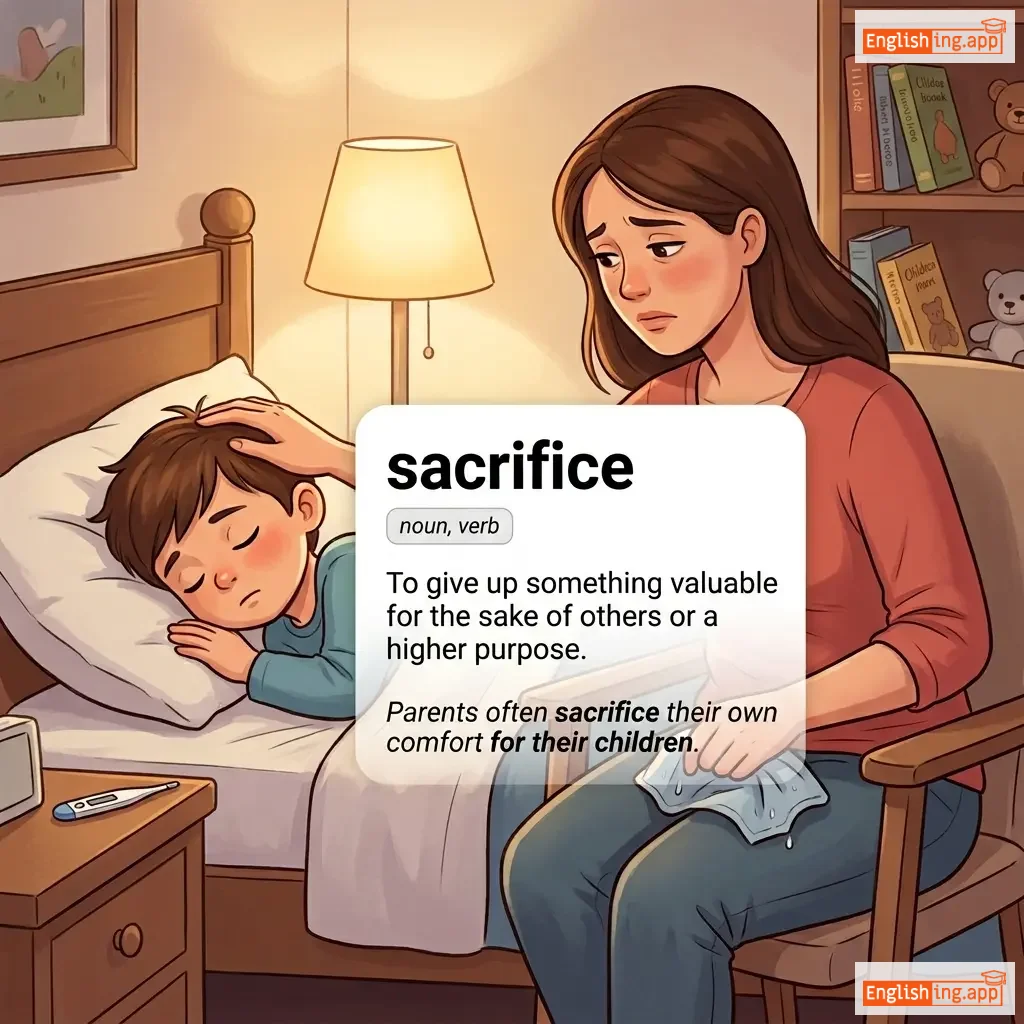
sacrifice definition card — visual illustration of the meaning
noun, verb
/ˈsækrɪfaɪs/
ত্যাগ (tyag)

To give up something valuable for the sake of others or a higher purpose.

"Parents often sacrifice their own comfort for their children."

"অভিভাবকরা প্রায়ই তাদের সন্তানের জন্য নিজের আরাম ত্যাগ করেন।" (obhivabokra prayoi tader shontaner jonno nijer aram tyag koren.)
adjective
/ˌsækrɪˈfɪʃəl/
আহুতি-সংক্রান্ত (ahuti-songkranto)

Relating to or involving sacrifice.

"The lamb was used as a sacrificial offering in the ritual."

"ভেড়াটি আচার অনুষ্ঠানে একটি আহুতিসংক্রান্ত উপহার হিসেবে ব্যবহৃত হয়েছিল।" (bherati achar onusthane ekti ahutisongkranto upohar hisebe byabohrito hoyechilo.)
noun
/ˈsækrɪlɪdʒ/
অপবিত্রকরণ (opobitrokoron)

Violation or misuse of what is regarded as sacred.

"Stealing from the temple was considered an act of sacrilege."

"মন্দির থেকে চুরি করা অপবিত্রকরণের কাজ হিসেবে বিবেচিত হয়েছিল।" (mondir theke churi kora opobitrokoroner kaj hisebe bibechito hoyechilo.)
adjective
/ˌsækrəˈlɪdʒəs/
অপবিত্রতাপূর্ণ (opobitrotapurno)

Showing disrespect or irreverence toward something sacred.

"The painting was criticized as being sacrilegious."

"চিত্রকর্মটিকে অপবিত্রতাপূর্ণ হিসেবে সমালোচনা করা হয়েছিল।" (chitrokormotike opobitrotapurno hisebe somalochona kora hoyechilo.)
noun
/ˈsækrɪsti/
গির্জার কক্ষ (girjar kokkh)

a room in a church where sacred vessels and vestments are kept

"The priest entered the sacristy before the mass began."

"পুরোহিত মিস শুরু হওয়ার আগে স্যাক্রিস্টিতে প্রবেশ করলেন।" (Purohit mis shuru howar age sakristite probesh korlen.)
adjective
/ˈsæk.rəˌsæŋkt/
অলঙ্ঘনীয় (olanghoniyo)

Regarded as too important or valuable to be interfered with; sacred.

"Freedom of speech is considered sacrosanct in democratic societies."

"গণতান্ত্রিক সমাজে বাকস্বাধীনতাকে অলঙ্ঘনীয় হিসেবে বিবেচনা করা হয়।" (Gonotantrok somaje bakswadhinotake olanghoniyo hisebe bichar kora hoy.)
sad definition card — visual illustration of the meaning
adjective
/sæd/
দুঃখিত (dukhito)

feeling or showing sorrow; unhappy

"She felt sad after hearing the bad news."

"খারাপ খবরটি শোনার পর সে দুঃখিত অনুভব করল।" (Kharap khoborti shonar por se dukhito onubhob korlo.)
noun/verb
/ˈsæd.əl/
ঘোড়ার আসন, বোঝা চাপানো (ghorar ason, boja chapano)

A seat fastened on the back of a horse for riding; to burden someone with a responsibility.

"He saddled the horse before going for a ride."

"সে ঘোড়াটিকে চড়ার আগে স্যাডল দিয়েছিল।" (Se ghoratike charar age saddle diyechhilo.)
adjective
/səˈdɪs.tɪk/
নিষ্ঠুর (nisthur)

Deriving pleasure from inflicting pain or suffering on others.

"The villain had a sadistic smile while hurting his enemies."

"খলনায়কের নিষ্ঠুর হাসি ছিল যখন সে শত্রুদের আঘাত করছিল।" (Kholnayoker nisthur hasi chhilo jokhon se shatruder aghat korchhilo.)
adverb
/ˈsædli/
দুঃখের সঙ্গে (dukkher songe)

in a sorrowful or unhappy manner

"She sadly waved goodbye as the train departed."

"সে দুঃখের সঙ্গে বিদায় জানাল যখন ট্রেন চলা শুরু করল।" (Se dukkher songe biday janalo jokhon tren chola shuru korlo.)
noun
/ˈsæd.nəs/
বিষণ্ণতা; দুঃখ; শোক; (bishonnota)

feeling of sorrow, unhappiness, or grief

"Her sadness was evident after hearing the bad news."

"খারাপ খবর শোনার পর তার দুঃখ স্পষ্ট ছিল।" (kharap khobor shonar por tar dukkho sposhto chilo)
adjective
/seɪf/
নিরাপদ (nirāpod)

free from harm or danger

"Make sure your belongings are safe during the trip."

"যাত্রা চলাকালে আপনার জিনিসপত্র সুরক্ষিত কিনা তা নিশ্চিত করুন।" (Jātrā cholākālē āpnār jīnispôtr surôkṣit kinā tā niśchit korun.)
noun/verb
/ˈseɪf.ɡɑːrd/
রক্ষা করা (rokha kora)

To protect from harm or damage; a measure taken to ensure safety.

"Laws exist to safeguard the rights of children."

"শিশুদের অধিকার রক্ষার জন্য আইন বিদ্যমান।" (Shishuder odhikar rokhar jonno ain bidyoman.)
adverb
/ˈseɪfli/
নিরাপদে (nirapode)

in a way that is not dangerous or likely to cause harm

"The children crossed the road safely."

"শিশুরা নিরাপদে রাস্তা পার হয়েছে।" (Shishura nirapode rastay par hoyeche.)
noun
/ˈseɪfti/
নিরাপত্তা (nirāpotṭā)

the condition of being protected from harm or danger

"The safety of passengers is our top priority."

"যাত্রীদের নিরাপত্তা আমাদের শীর্ষ অগ্রাধিকার।" (Jātrīder nirāpotṭā āmāder śīrṣhô agrādhikār.)
noun
/ˈsæf.rən/
জাফরান (jafran)

A spice derived from the flower of Crocus sativus, used for flavoring and coloring food.

"She added saffron to the rice for flavor and color."

"সে ভাতের মধ্যে স্বাদ ও রঙের জন্য জাফরান দিয়েছিল।" (Se bhater moddhe swad o ronger jonno jafran diyechhilo.)
noun
/ˈsɑːɡə/
দীর্ঘ কাহিনী (dirgho kahini)

A long story of heroic achievement, or a long, complex series of events.

"The company's rise and fall became a corporate saga."

"কোম্পানির উত্থান ও পতন একটি কর্পোরেট সাগা হয়ে উঠেছিল।" (Companyr utthan o poton ekti corporate saga hoye uthchhilo.)
adjective
/ˌsæŋktɪˈmoʊniəs/
ভণ্ডভাবে ধার্মিক (bhondo bhabe dharmik)

Making a show of being morally superior to others; hypocritically pious.

"He gave a sanctimonious speech about honesty while he himself was corrupt."

"সে সততার বিষয়ে ভণ্ডামিপূর্ণ বক্তৃতা দিল যখন সে নিজেই দুর্নীতিগ্রস্ত ছিল।" (Se sottar bishoye bhondamipurno boktrita dilo jokhon se nijei durnitigrosto chilo.)
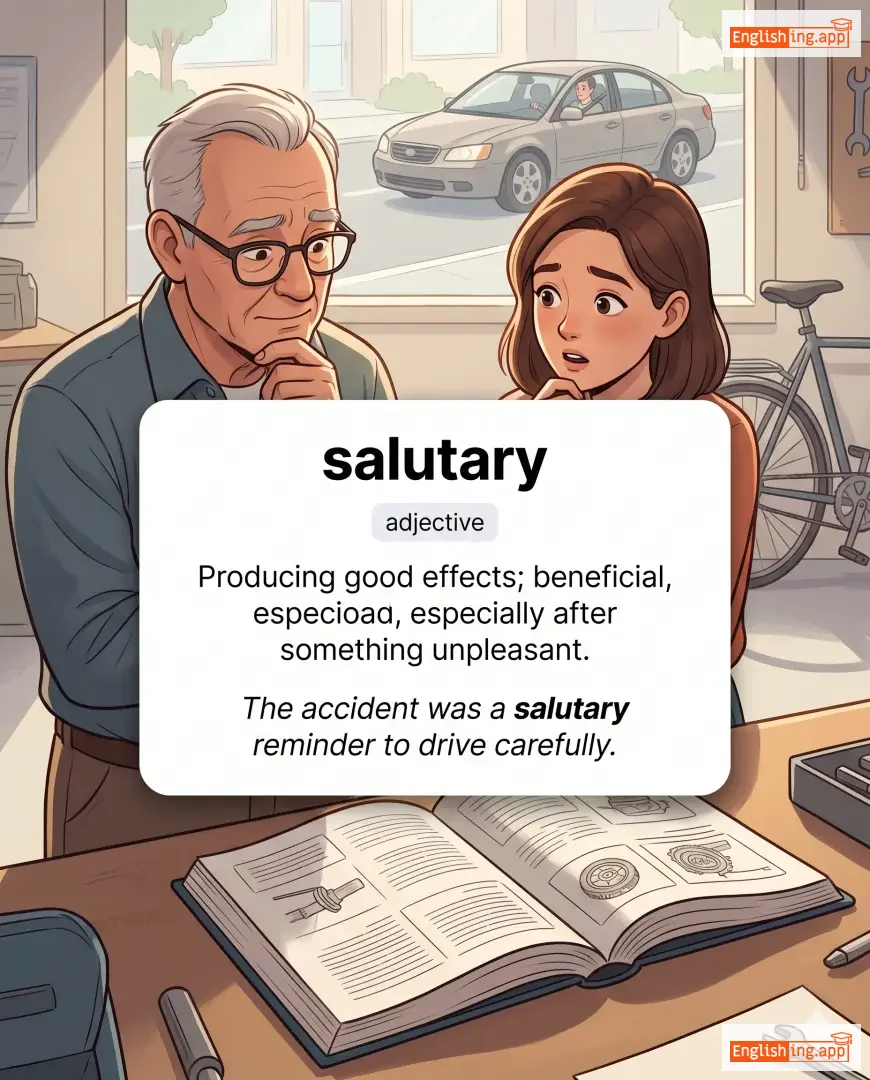
salutary definition card — visual illustration of the meaning
adjective
/ˈsæljʊˌtɛri/
কল্যাণকর (kollyankor)

Producing good effects; beneficial, especially after something unpleasant.

"The accident was a salutary reminder to drive carefully."

"দুর্ঘটনাটি সাবধানে গাড়ি চালানোর একটি কল্যাণকর স্মরণ করিয়ে দিয়েছিল।" (Durghotonati sabdhane gari chalano ekta kollyankor smoron koriye diyechhilo.)
noun
/ˌsæljʊˈteɪʃən/
অভিবাদন (ovibadon)

A gesture or utterance of greeting, goodwill, or courtesy.

"He raised his hat as a polite salutation."

"সে ভদ্র অভিবাদন হিসেবে টুপি তুলেছিল।" (Se bhodro ovibadon hisebe tupi tulechhilo.)
adjective
/səˈluːtəˌtɔri/
অভিবাদনসূচক (ovibadonsuchok)

Relating to or expressing a greeting or an address, especially at the beginning of a speech.

"She delivered a salutatory address at the graduation ceremony."

"সে সমাবর্তন অনুষ্ঠানে একটি অভিবাদনসূচক বক্তৃতা দিয়েছিল।" (Se somaborton onusthane ekta ovibadonsuchok boktrita diyechhilo.)
salute definition card — visual illustration of the meaning
verb
/səˈluːt/
সালাম করা (salam kora)

to greet with respect; to honor

"The soldiers saluted their commanding officer."

"সৈনিকরা তাদের কমান্ডিং অফিসারকে সালাম করেছিল।" (Shoiniikra tader commanding officer ke salam korechilo.)
verb
/ˈsælvɪdʒ/
উদ্ধার করা (uddhar kora)

To save something from loss, damage, or destruction.

"They managed to salvage some goods from the fire."

"তারা আগুন থেকে কিছু মালামাল উদ্ধার করতে সক্ষম হয়েছিল।" (Tara agun theke kichu malamal uddhar korte sokkhom hoyechhilo.)
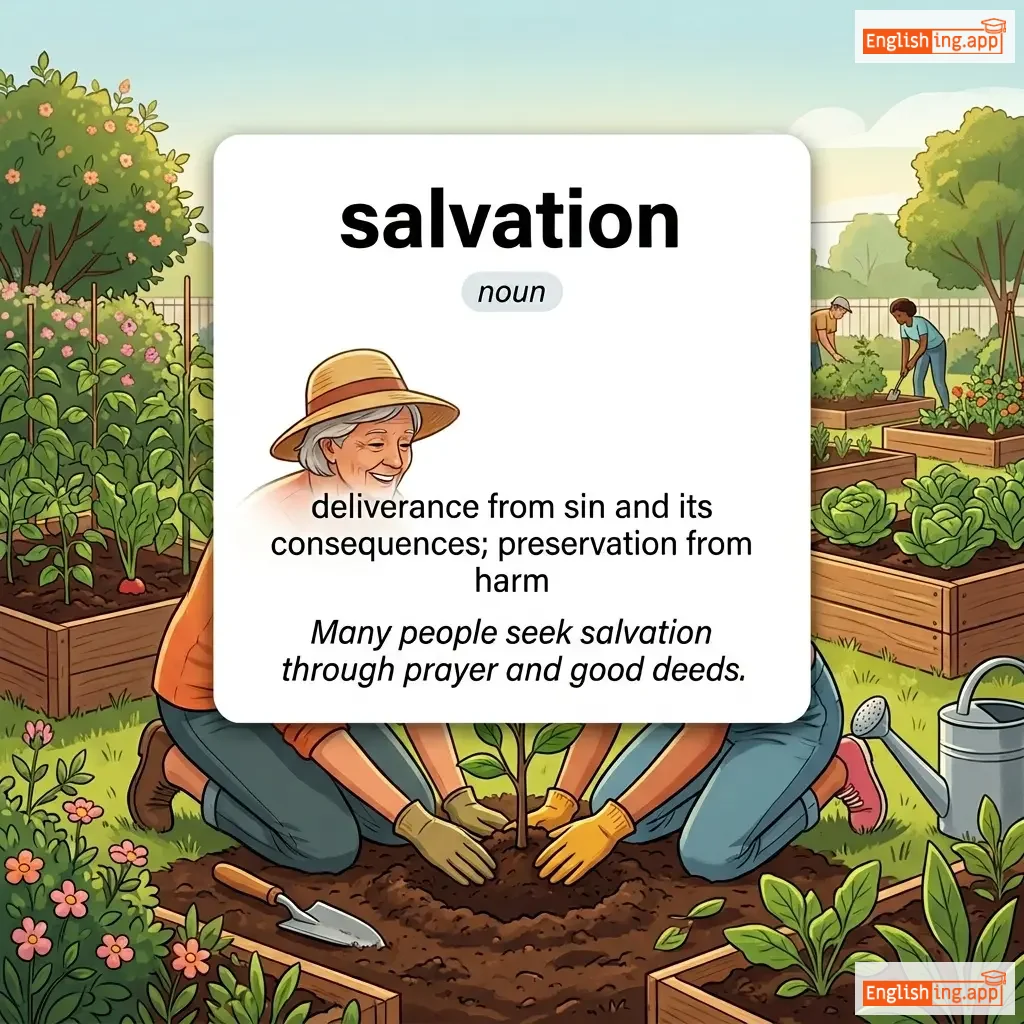
salvation definition card — visual illustration of the meaning
noun
/sælˈveɪ.ʃən/
নৈসর্গ; পাপমোচন; মুক্তি; (mukti)

deliverance from sin and its consequences; preservation from harm

"Many people seek salvation through prayer and good deeds."

"অনেক মানুষ প্রার্থনা এবং ভালো কাজের মাধ্যমে মুক্তি খোঁজে।" (onek manush prarthona ebong bhalo kajer madhome mukti khoje.)
noun
/sælv/
মলম (molom)

An ointment used to promote healing of the skin or as protection.

"She applied a salve to the burn on her hand."

"সে তার হাতে পোড়া স্থানে মলম লাগিয়েছিল।" (Se tar hate pora sthane molom lagiechhilo.)
noun
/ˈsælvər/
খাবার পরিবেশনের থালা (khabar poribesoner thala)

A tray, typically made of silver, used for serving food or drinks.

"The butler brought in the tea on a silver salver."

"বাটলার সিলভার স্যালভারে চা নিয়ে এলো।" (Butler silver salvare cha niye elo.)
noun
/ˈsælvoʊ/
একসাথে গোলাবর্ষণ (eksathe golabarshon)

A simultaneous discharge of guns or release of bombs; a sudden outburst of cheers or applause.

"The soldiers fired a salvo to honor the fallen general."

"সৈন্যরা শহীদ জেনারেলকে সম্মান জানাতে একসাথে গোলাবর্ষণ করল।" (Soinyora shohid generalke shomman janate eksathe golabarshon korlo.)
adjective
/seɪm/
একই (ekoi)

identical; not different or changed

"We wore the same dress at the party."

"আমরা পার্টিতে একই পোশাক পরেছিলাম।" (Amra partite ekoi poshak porechilam.)
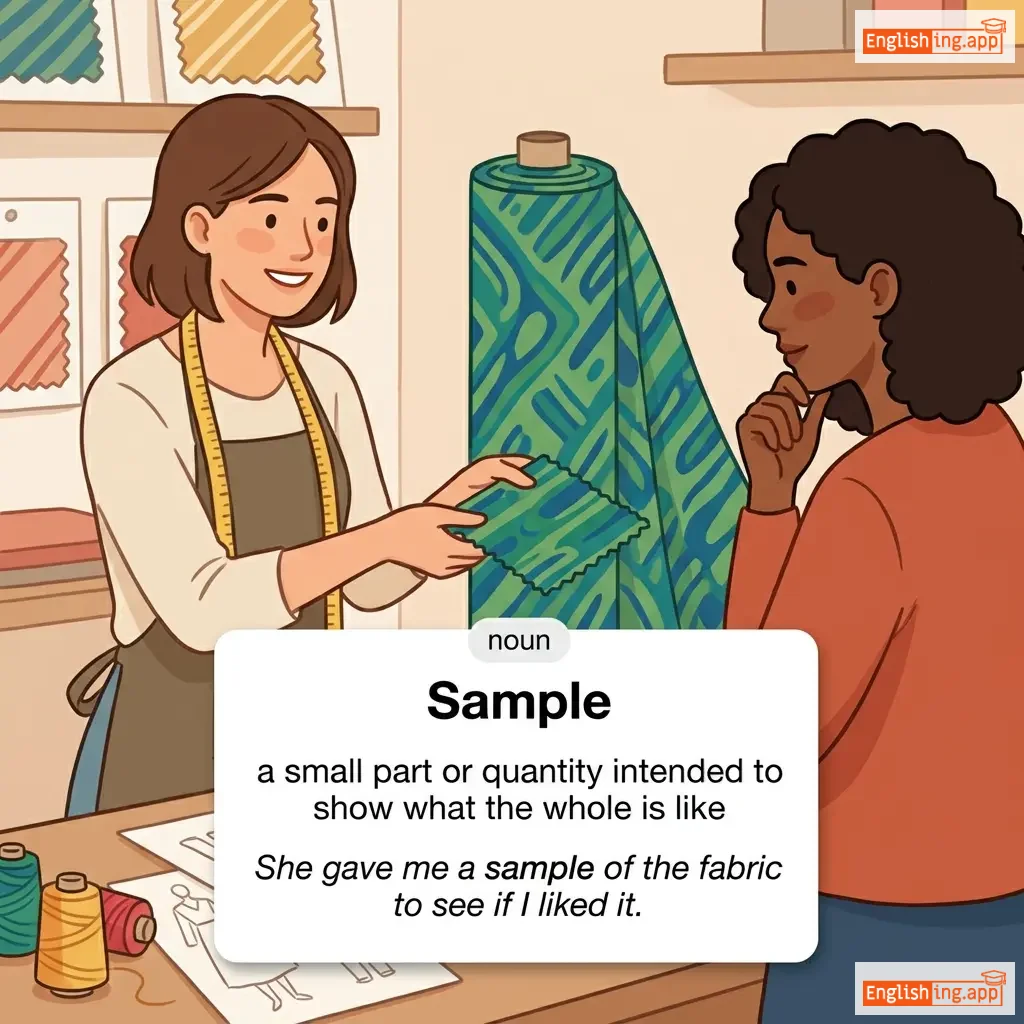
Sample definition card — visual illustration of the meaning
noun
/ˈsæm.pəl/
নমুনা (nomuna)

a small part or quantity intended to show what the whole is like

"She gave me a sample of the fabric to see if I liked it."

"সে আমাকে কাপড়ের একটি স্যাম্পল দিল যাতে আমি এটি পছন্দ করি কিনা দেখব।" (Se amake kaporer ekti sample dil jate ami eti pochhondo kori kina dekhbo.)
verb
/ˈsæŋktɪfaɪ/
পবিত্র করা (pobitro kora)

To make holy or sacred; to set apart as holy.

"The priest sanctified the new church building."

"যাজক নতুন গির্জার ভবনটিকে পবিত্র করলেন।" (Jajak notun girjar vobontike pobitro korlen.)
noun
/ˌsɒ̃ˈfrwɑː/
আত্মসংযম (atmosongjom)

Composure or coolness under pressure.

"She impressed everyone with her sangfroid during the interview."

"সে সাক্ষাৎকারে তার আত্মসংযম দিয়ে সবাইকে মুগ্ধ করেছিল।" (she sakhhatkar e tar atmosongjom diye sobaike mugdho korechilo.)
adjective
/ˈsæŋɡwɪˌnɛri/
রক্তাক্ত (roktoakto)

Involving or causing much bloodshed; bloodthirsty.

"The battle was one of the most sanguinary conflicts of the war."

"যুদ্ধটি যুদ্ধের সবচেয়ে রক্তাক্ত সংঘর্ষগুলির একটি ছিল।" (Judhdhoti juddher shobcheye roktopto songhorshgolir ekta chilo.)