語彙集

英単語辞書 | 単語の意味、定義、例文

verb
/rʌʃ/
急ぐ (isogu)

to move or act with great speed or urgency

"She had to rush to the meeting to make it on time."

"彼女は会議に時間通りに到着するために急がなければならなかった。" (Kanojo wa kaigi ni jikan dōri ni tōchaku suru tame ni isoganakereba naranakatta.)
noun
/rʌsk/
乾燥ビスケット; トーストパン (rasku)

a hard, dry biscuit or twice-baked bread; a type of crisp, sweet biscuit

"The baby enjoyed eating the soft rusk with milk."

"赤ちゃんはミルクと一緒に柔らかいラスクを食べるのが好きでした。" (Akachan wa miruku to issho ni yawarakai rāsuku o taberu no ga suki deshita.)
🇷🇺

russian

adjective
/ˈrʌʃən/

relating to Russia, its people, or its language

"She is studying the Russian language at university."

noun
/rʌst/
(sabi)

reddish-brown coating formed on iron or steel by oxidation; corrosion

"The old car was covered in rust after years of neglect."

"古い車は何年も放置されていた後、サビで覆われていました。" (Furui kuruma wa nannen mo houchi sarete ita ato, sabi de owarete imashita.)
adjective
/ˈrʌstɪk/
田舎風の (inaka fū no)

Relating to the countryside; simple and unsophisticated.

"The cottage had a rustic charm with its wooden beams and stone fireplace."

"その小屋は木の梁と石の暖炉で田舎風の魅力を持っていました。" (Sono koya wa ki no hari to ishi no danro de inaka fū no miryoku o motte imashita.)
verb
/ˈrʌstɪkeɪt/
田舎に行く / 大学から一時的に追放する (Inaka ni iku / Daigaku kara ichiji-teki ni tsuihō suru)

To go to the countryside or to suspend someone from university.

"He decided to rusticate in the village to escape the busy city life."

"彼は忙しい都市生活から逃れるために村に行くことを決めました。" (Kare wa isogashī toshi seikatsu kara nogareru tame ni mura ni iku koto o kimemashita.)
verb
/ˈrʌsl/
ささやく (sasayaku)

To make a soft, light sound like leaves or paper moving.

"The leaves rustled gently in the evening breeze."

"葉っぱが夕方のそよ風でそっとささやいていました。" (Happa ga yuugata no soyokaze de sotto sasayaitemashita.)
adjective
/ˈrʌs.ti/
錆びた; 練習不足; 最近の練習不足による障害 (sabita; renshu busoku; saikin no renshu busoku ni yoru shougai)

affected by rust; out of practice; impaired by lack of recent practice

"My piano skills are rusty after not playing for years."

"何年もピアノを弾いていなかったので、私のピアノのスキルは錆びついています。" (Nannen mo piano wo hiite inakatta node, watashi no piano no sukiru wa sabitsuiteimasu.)
noun
/ruːθ/
同情 (dōjō)

A feeling of pity, compassion, or sorrow.

"He felt no ruth for the people he had betrayed."

"彼は裏切った人々に対して一切の同情を感じなかった。" (Kare wa uragitta hitobito ni taishite issai no dōjō o kanjinakatta.)
adjective
/ˈruːθləs/
無情な (mujōna)

Having or showing no pity or compassion for others.

"The ruthless leader crushed all opposition."

"無情な指導者はすべての反対を押しつぶした。" (Mujōna shidōsha wa subete no hantai o oshitsubushita.)
ruthless competition definition card — visual illustration of the meaning
noun
ˈruθləs ˌkɑmpəˈtɪʃən
容赦ない競争 (yōsha nai kyōsō)

Fierce and merciless rivalry or contest, without pity or compassion.

"Ruthless competition for power leads to societal issues."

"権力のための容赦ない競争は社会問題を引き起こします。" (Kenryoku no tame no yōsha nai kyōsō wa shakai mondai o hikiokoshimasu.)
noun
/səˈbætɪkəl/
学習や旅行のための休暇 (gakushuu ya ryokou no tame no kyuuka)

A period of paid leave granted to a teacher or worker for study or travel, traditionally every seventh year.

"She took a sabbatical to research her new book."

"彼女は新しい本を研究するためにサバティカルを取った。" (Kanojo wa atarashī hon o kenkyū suru tame ni sabatikaru o totta.)
verb
/ˈsæbətɑːʒ/
破壊活動 (hakai katsudou)

To deliberately destroy, damage, or obstruct something, especially for political or military advantage.

"The rebels tried to sabotage the railway lines."

"反乱者たちは鉄道の線路をサボタージュしようとした。" (Hanransha-tachi wa tetsudou no senro o sabotāju shiyou to shita.)
noun
/ˌsæbəˈtɜːr/
破壊工作員 (hakai kōsakuin)

A person who engages in sabotage.

"The saboteur was arrested before he could plant the bomb."

"破壊工作員は爆弾を設置する前に逮捕されました。" (Hakai kōsakuin wa bakudan o secchi suru mae ni taiho saremashita.)
adjective
/ˈsækərɪn/
幸せ (shiawase)

Excessively sweet or sentimental.

"His saccharine smile seemed insincere."

"彼女は賞を受け取ったとき、自分の幸せを隠せなかった。" (Kanojo wa shō o uketotta toki, jibun no shiawase o kakusenakatta.)
adjective
/ˌsæsərˈdoʊtl/
神職に関する (shinshoku ni kansuru)

Relating to priests or the priesthood.

"The ritual had a distinctly sacerdotal character."

"その儀式には明確な神職に関する特徴がありました。" (Sono gishiki ni wa meikaku na shinshoku ni kansuru tokuchō ga arimashita.)
noun
/sæk/
(fukuro)

a large bag made of strong material for holding things

"He carried a sack of rice on his shoulder."

"彼は肩に米の袋を持っていました。" (Kare wa kata ni kome no fukuro wo motteimashita.)
adjective
/ˈseɪkrɪd/
神聖な (shinsei na)

connected with God or a religion and considered holy or deserving respect

"The temple is a sacred place for the community."

"その寺院は地域社会にとって神聖な場所です。" (Sono jiin wa chiikishakai ni totte shinsei na basho desu.)
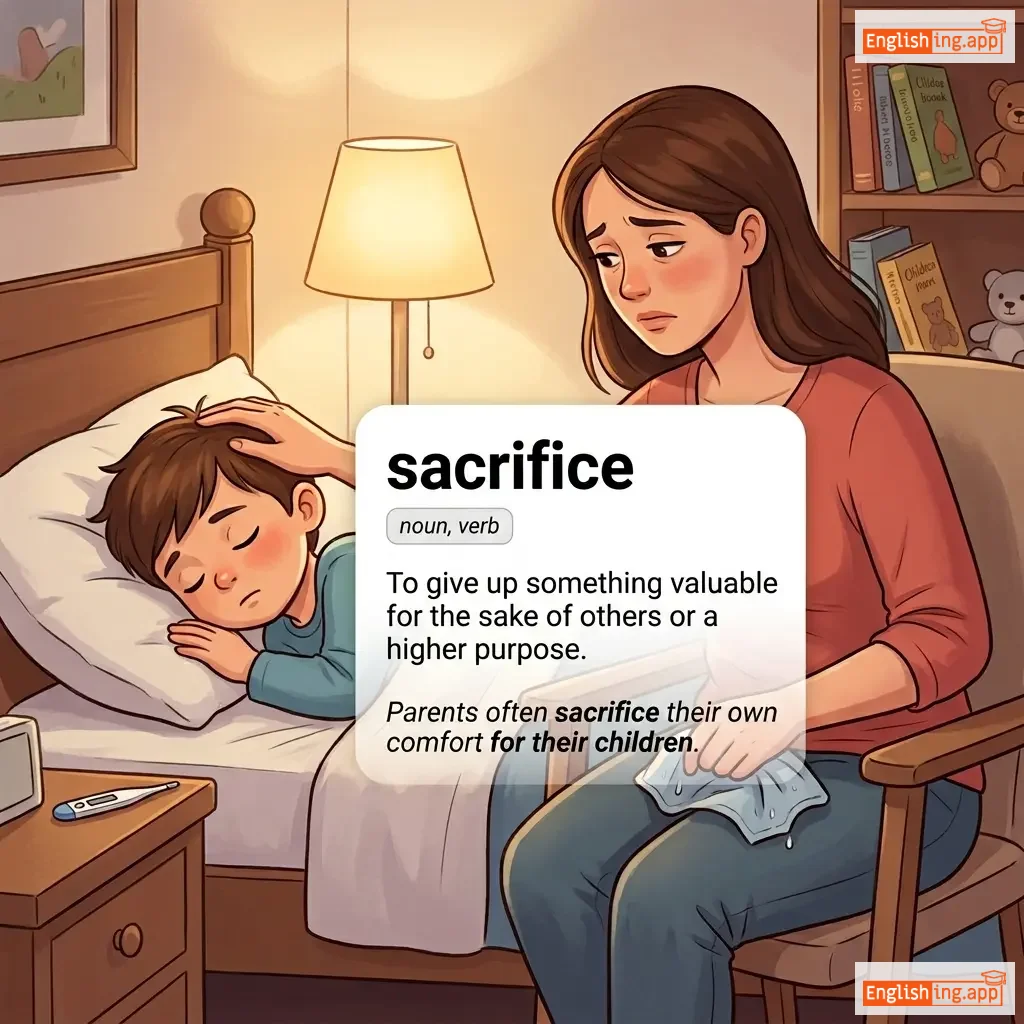
sacrifice definition card — visual illustration of the meaning
🕯️

sacrifice

noun, verb
/ˈsækrɪfaɪs/

To give up something valuable for the sake of others or a higher purpose.

"Parents often sacrifice their own comfort for their children."

adjective
/ˌsækrɪˈfɪʃəl/
犠牲的な (giseiteki na)

Relating to or involving sacrifice.

"The lamb was used as a sacrificial offering in the ritual."

"その羊は儀式で犠牲的な捧げ物として使われました。" (Sono hitsuji wa gishiki de giseiteki na sasagemono toshite tsukawaremashita.)
noun
/ˈsækrɪlɪdʒ/
冒涜 (bōtoku)

Violation or misuse of what is regarded as sacred.

"Stealing from the temple was considered an act of sacrilege."

"寺院から盗むことは冒涜と見なされていました。" (jiin kara nusumu koto wa bōtoku to minasarete imashita.)
adjective
/ˌsækrəˈlɪdʒəs/
冒涜的 (bōtoku teki)

Showing disrespect or irreverence toward something sacred.

"The painting was criticized as being sacrilegious."

"その絵画は冒涜的だと批判されました。" (sono kaiga wa bōtoku teki da to hihan saremashita.)
noun
/ˈsækrɪsti/
サクリスティ (sakurisuti)

a room in a church where sacred vessels and vestments are kept

"The priest entered the sacristy before the mass began."

"司祭はミサが始まる前にサクリスティに入った。" (Shisai wa misa ga hajimaru mae ni sakurisuti ni haitta.)
adjective
/ˈsæk.rəˌsæŋkt/
神聖不可侵 (shinsei fukashin)

Regarded as too important or valuable to be interfered with; sacred.

"Freedom of speech is considered sacrosanct in democratic societies."

"言論の自由は民主主義社会では神聖不可侵と見なされています。" (Genron no jiyuu wa minshushugi shakai dewa shinsei fukashin to minasareteimasu.)
sad definition card — visual illustration of the meaning
adjective
/sæd/
悲しい (kanashii)

feeling or showing sorrow; unhappy

"She felt sad after hearing the bad news."

"悪いニュースを聞いて、彼女は悲しい気持ちになった。" (Warui nyūsu wo kiite, kanojo wa kanashii kimochi ni natta.)
noun/verb
/ˈsæd.əl/
馬の鞍; 誰かに責任を負わせる (uma no kura; dareka ni sekinin wo owaseru)

A seat fastened on the back of a horse for riding; to burden someone with a responsibility.

"He saddled the horse before going for a ride."

"彼は乗馬の前に馬にサドルをつけた。" (Kare wa jōba no mae ni uma ni saddoru wo tsuketa.)
adjective
/səˈdɪs.tɪk/
サディスティック (sadesutikku)

Deriving pleasure from inflicting pain or suffering on others.

"The villain had a sadistic smile while hurting his enemies."

"悪党は敵に痛みを与えている間、サディスティックな笑顔を浮かべていた。" (Akutō wa teki ni itami o ataete iru aida, sadesutikku na egao o ukabete ita.)
adverb
/ˈsædli/
悲しそうに (kanashisou ni)

in a sorrowful or unhappy manner

"She sadly waved goodbye as the train departed."

"彼女は電車が出発するとき、悲しそうに手を振った。" (Kanojo wa densha ga shuppatsu suru toki, kanashisou ni te o futta.)
noun
/ˈsæd.nəs/
悲しみ、哀しみ、痛み (kanashimi, kanashimi, itami)

feeling of sorrow, unhappiness, or grief

"Her sadness was evident after hearing the bad news."

"悪いニュースを聞いた後、彼女の悲しみは明らかでした。" (Warui nyūsu o kiita ato, kanojo no kanashimi wa akiraka deshita.)
adjective
/seɪf/
安全 (anzen)

free from harm or danger

"Make sure your belongings are safe during the trip."

"旅行中にあなたの持ち物が安全であることを確認してください。" (Ryokō-chū ni anata no mochimono ga anzen de aru koto o kakunin shite kudasai.)
noun/verb
/ˈseɪf.ɡɑːrd/
守る (mamoru)

To protect from harm or damage; a measure taken to ensure safety.

"Laws exist to safeguard the rights of children."

"法律は子供たちの権利を守るために存在します。" (Hōritsu wa kodomotachi no kenri o mamoru tame ni sonzai shimasu.)
adverb
/ˈseɪfli/
安全に (anzen ni)

in a way that is not dangerous or likely to cause harm

"The children crossed the road safely."

"子供たちは安全に道路を渡りました。" (Kodomotachi wa anzen ni dōro o watarimashita.)
noun
/ˈseɪfti/

the condition of being protected from harm or danger

"The safety of passengers is our top priority."

noun
/ˈsæf.rən/
サフラン (safuran)

A spice derived from the flower of Crocus sativus, used for flavoring and coloring food.

"She added saffron to the rice for flavor and color."

"彼女は味と色のためにご飯にサフランを加えました。" (Kanojo wa aji to iro no tame ni gohan ni safuran o kuwaemashita.)
noun
/ˈsɑːɡə/
長い物語 (nagai monogatari)

A long story of heroic achievement, or a long, complex series of events.

"The company's rise and fall became a corporate saga."

"会社の興隆と衰退は企業のサガとなった。" (Kaisha no kōryū to suitai wa kigyō no saga to natta.)
adjective
/ˌsæŋktɪˈmoʊniəs/
偽善的な敬虔 (gizen-teki na keiken)

Making a show of being morally superior to others; hypocritically pious.

"He gave a sanctimonious speech about honesty while he himself was corrupt."
"彼は自分が腐敗していたにもかかわらず、正直について偽善的なスピーチをしました。" (Kare wa jibun ga fuhai shite ita nimo kakawarazu, shoujiki ni tsuite gizen-teki na supīchi o shimashita.)
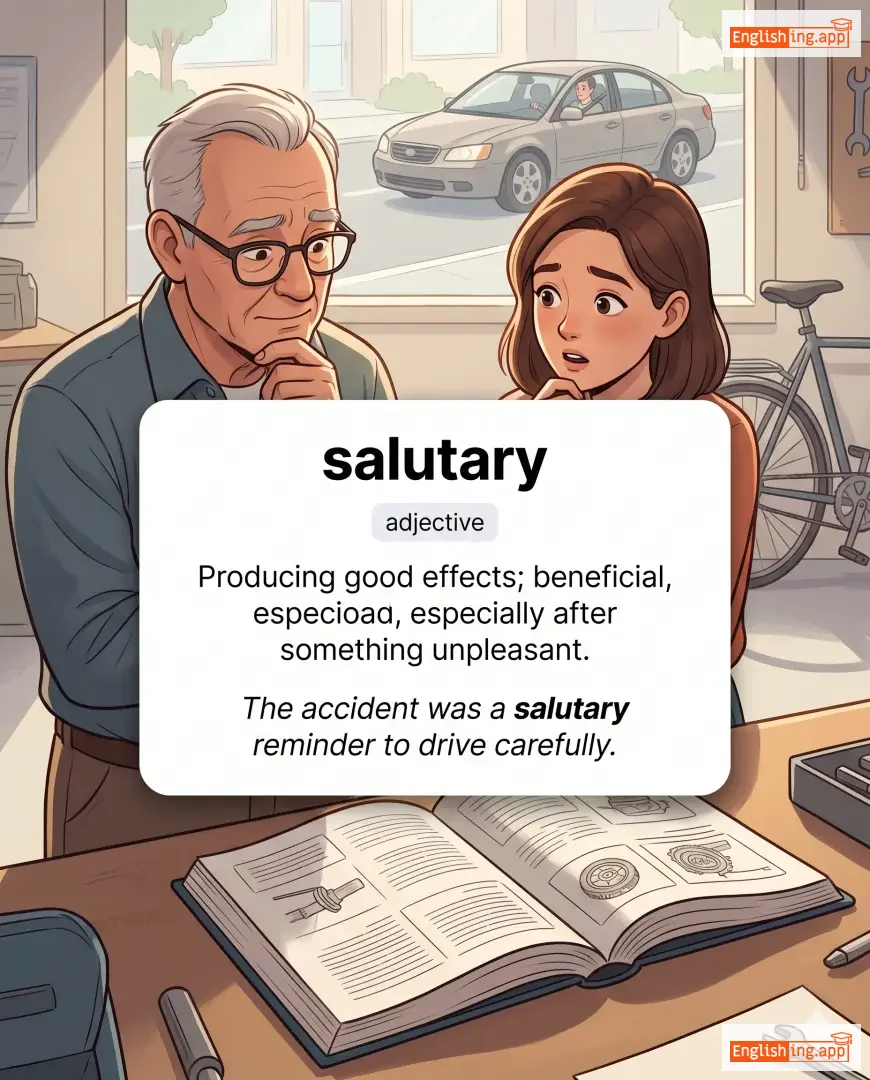
salutary definition card — visual illustration of the meaning
adjective
/ˈsæljʊˌtɛri/
有益な (yūeki na)

Producing good effects; beneficial, especially after something unpleasant.

"The accident was a salutary reminder to drive carefully."

"その事故は、慎重に運転することを思い出させる有益な教訓でした。" (Sono jiko wa, shinchou ni unten suru koto o omoidasa seru yūeki na kyōkun deshita.)
noun
/ˌsæljʊˈteɪʃən/
挨拶 (aisatsu)

A gesture or utterance of greeting, goodwill, or courtesy.

"He raised his hat as a polite salutation."

"彼は礼儀正しい挨拶として帽子を上げた。" (Kare wa reigi tadashī aisatsu toshite bōshi o ageta.)
adjective
/səˈluːtəˌtɔri/
歓迎の挨拶 (kangei no aisatsu)

Relating to or expressing a greeting or an address, especially at the beginning of a speech.

"She delivered a salutatory address at the graduation ceremony."

"彼女は卒業式で歓迎の挨拶を行いました。" (Kanojo wa sotsugyō shiki de kangei no aisatsu o okonaimashita.)
salute definition card — visual illustration of the meaning
verb
/səˈluːt/
敬礼 (keirei)

to greet with respect; to honor

"The soldiers saluted their commanding officer."

"兵士たちは指揮官に敬礼した。" (Heishitachi wa shikikan ni keirei shita.)
verb
/ˈsælvɪdʒ/
救助 (kyūjo)

To save something from loss, damage, or destruction.

"They managed to salvage some goods from the fire."
"彼らは火事からいくつかの物を救出することに成功した。" (Karera wa kaji kara ikutsuka no mono o kyūshutsu suru koto ni seikō shita.)
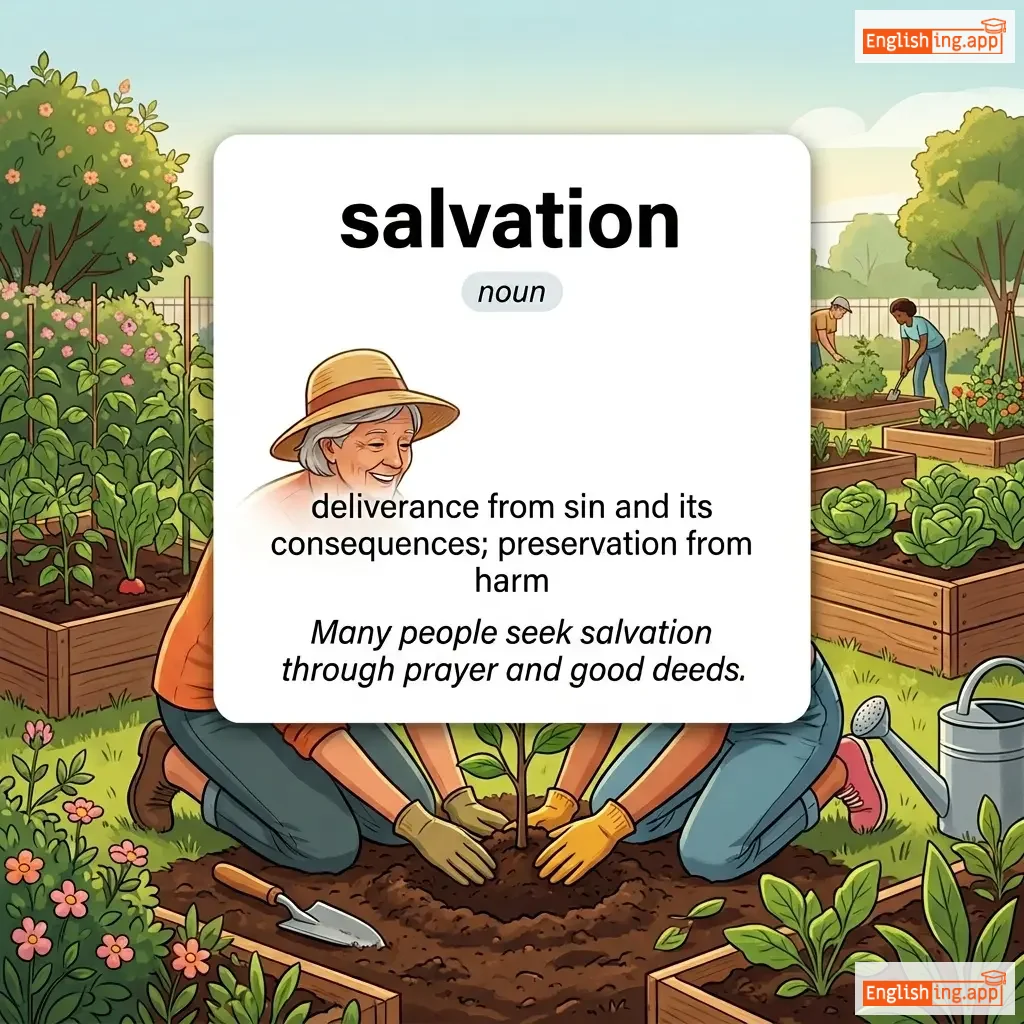
salvation definition card — visual illustration of the meaning
noun
/sælˈveɪ.ʃən/
救済 (kyūsai)

deliverance from sin and its consequences; preservation from harm

"Many people seek salvation through prayer and good deeds."

"多くの人々は祈りと善行を通じて救済を求めます。" (ōku no hitobito wa inori to zen kō o tsūjite kyūsai o motomemasu.)
noun
/sælv/
(kusuri)

An ointment used to promote healing of the skin or as protection.

"She applied a salve to the burn on her hand."

"彼女は手のやけどに薬を塗りました。" (Kanojo wa te no yakedo ni kusuri o nurimashita.)
noun
/ˈsælvər/
銀のトレイ (gin no tore)

A tray, typically made of silver, used for serving food or drinks.

"The butler brought in the tea on a silver salver."

"執事は銀のトレイでお茶を運んできました。" (Shitsuji wa gin no torei de ocha o hakonde kimashita.)
noun
/ˈsælvoʊ/
一斉射撃 (issei shageki)

A simultaneous discharge of guns or release of bombs; a sudden outburst of cheers or applause.

"The soldiers fired a salvo to honor the fallen general."

"兵士たちは倒れた将軍を讃えるために一斉射撃を行った。" (Heishitachi wa taoreta shōgun o tataeru tame ni issei shageki o okonatta.)
adjective
/seɪm/
同じ (onaji)

identical; not different or changed

"We wore the same dress at the party."

"私たちはパーティーで同じドレスを着ていました。" (Watashitachi wa pātii de onaji doresu o kite imashita.)
Sample definition card — visual illustration of the meaning
noun
/ˈsæm.pəl/
サンプル (sanpuru)

a small part or quantity intended to show what the whole is like

"She gave me a sample of the fabric to see if I liked it."

"彼女は私が気に入ったかどうかを確認するために布のサンプルをくれました。" (Kanojo wa watashi ga kiniitta ka dou ka o kakunin suru tame ni nuno no sanpuru o kuremashita.)
verb
/ˈsæŋktɪfaɪ/

To make holy or sacred; to set apart as holy.

"The priest sanctified the new church building."

noun
/ˌsɒ̃ˈfrwɑː/
冷静 (reisei)

Composure or coolness under pressure.

"She impressed everyone with her sangfroid during the interview."

"彼女は面接中に冷静さで皆を感動させた。" (Kanojo wa mensetsu-chū ni reisei-sa de mina o kandō saseta.)
adjective
/ˈsæŋɡwɪˌnɛri/
血なまぐさい (chinamagusai)

Involving or causing much bloodshed; bloodthirsty.

"The battle was one of the most sanguinary conflicts of the war."

"その戦闘は戦争の中で最も血なまぐさい戦いの一つだった。" (Sono sentō wa sensō no naka de mottomo chinamagusai tatakai no hitotsu datta.)