語彙集

英単語辞書 | 単語の意味、定義、例文

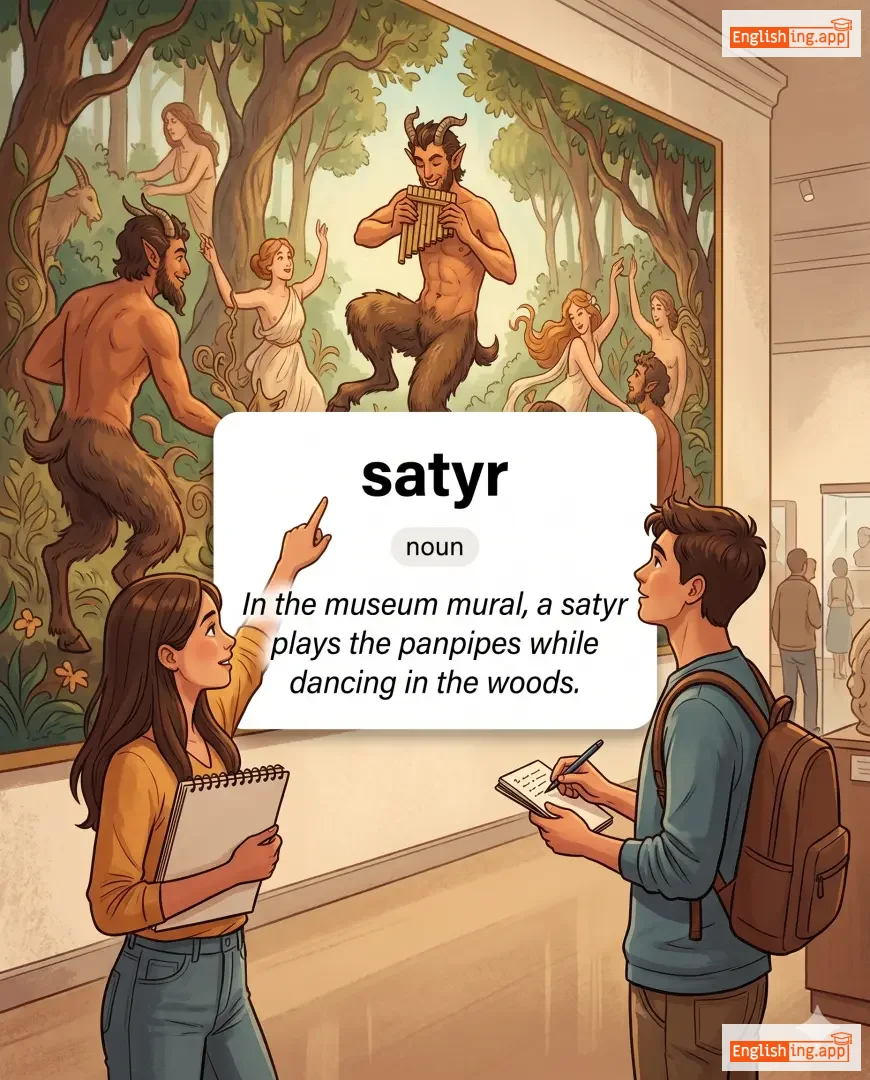
satyr definition card — visual illustration of the meaning
noun
/ˈsætər/
幸せ (shiawase)

a creature from Greek mythology depicted as a lustful being, often half-man and half-goat; by extension, a lecherous man

"In the museum mural, a satyr plays the panpipes while dancing in the woods."
"彼女は賞を受け取ったとき、自分の幸せを隠すことができませんでした。" (Kanojo wa shou wo uketotta toki, jibun no shiawase wo kakusu koto ga dekimasen deshita.)
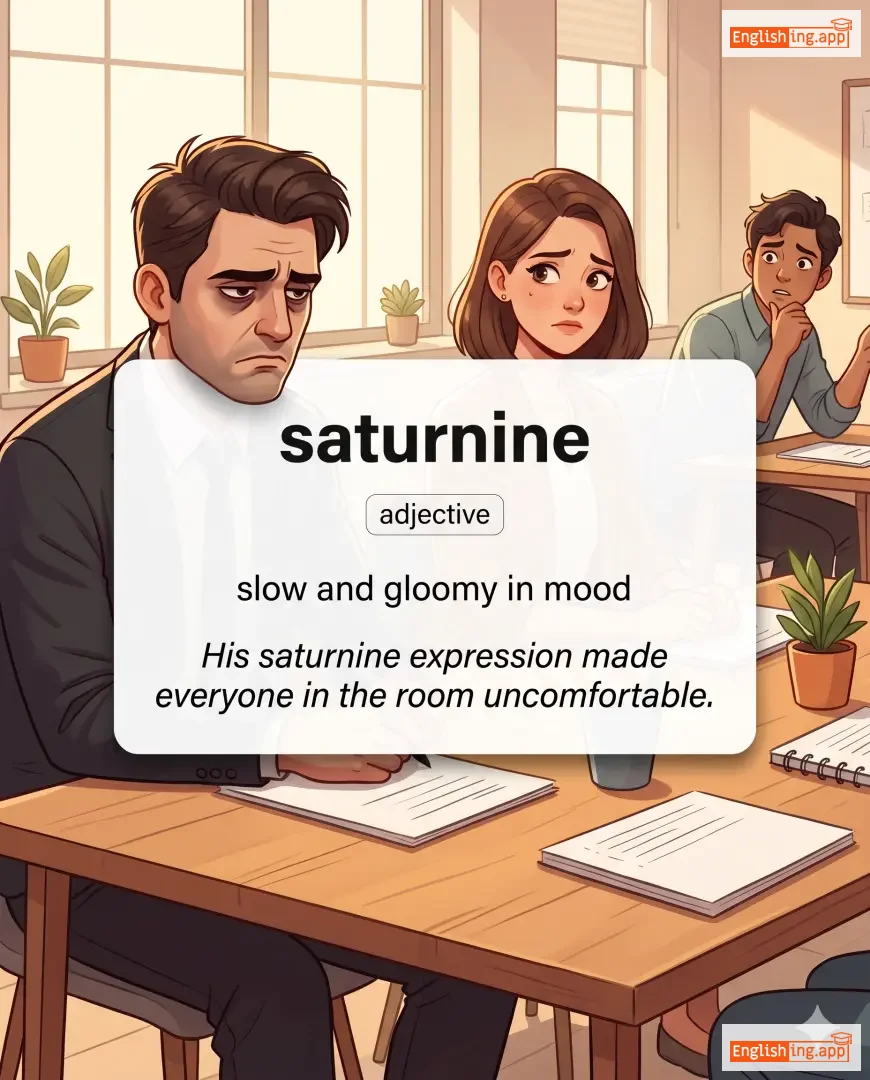
saturnine definition card — visual illustration of the meaning
adjective
/ˈsætərˌnaɪn/
陰気な (inki na)

slow and gloomy in mood

"His saturnine expression made everyone in the room uncomfortable."

"彼の陰気な表情は部屋の中の誰もが不快に感じさせた。" (Kare no in'kina hyōjō wa heya no naka no dare mo ga fukai ni kanjisaseta.)
noun
/ˈsætərdeɪ/
土曜日 (doyoubi)

The day of the week between Friday and Sunday; traditionally the sixth day of the week

"We are going to the beach on Saturday."
"私たちは土曜日にビーチに行きます。" (Watashitachi wa doyoubi ni biichi ni ikimasu.)
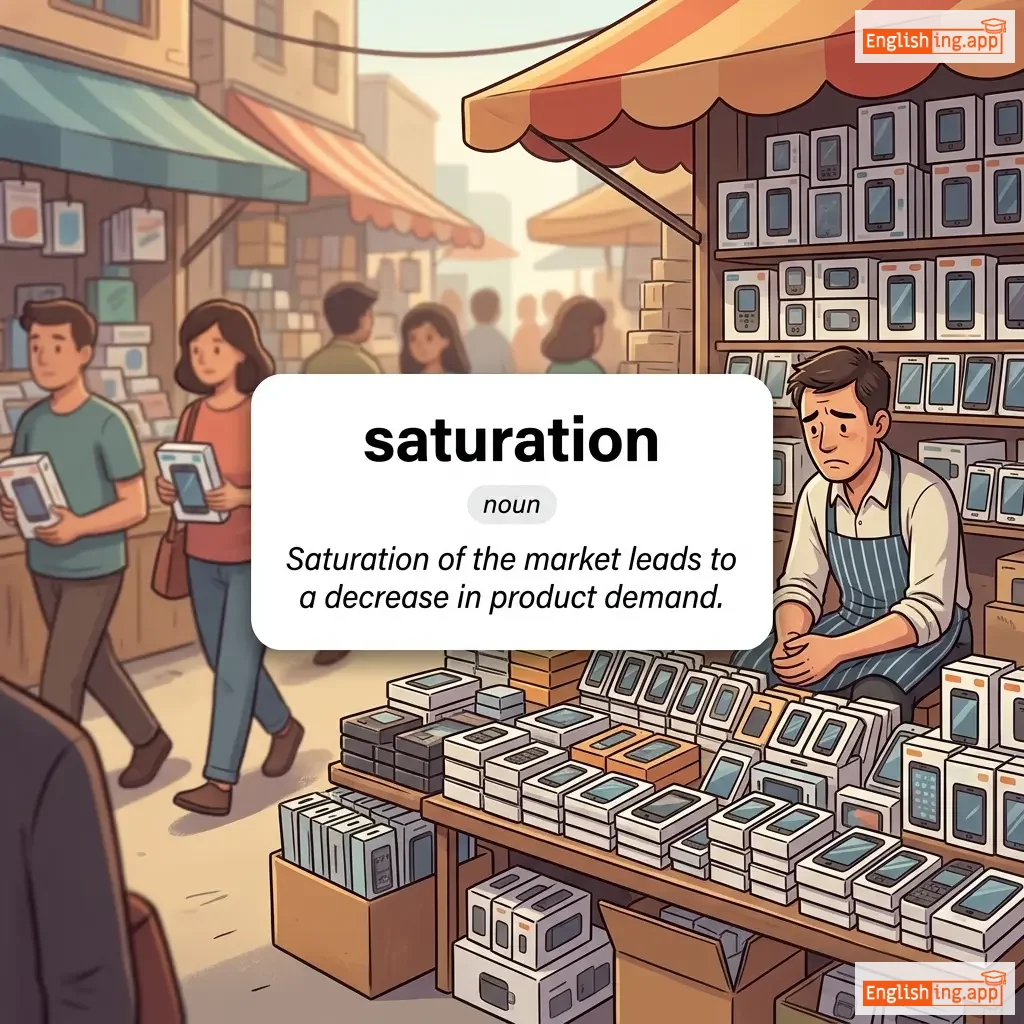
saturation definition card — visual illustration of the meaning
noun
/ˌsætʃəˈreɪʃən/
飽和 (hōwa)

The state or process that occurs when no more of something can be absorbed, combined with, or added.

"Saturation of the market leads to a decrease in product demand."

"市場の飽和は製品の需要の減少を引き起こします。" (Shijō no hōwa wa seihin no juyō no genshō o hikiokoshimasu.)
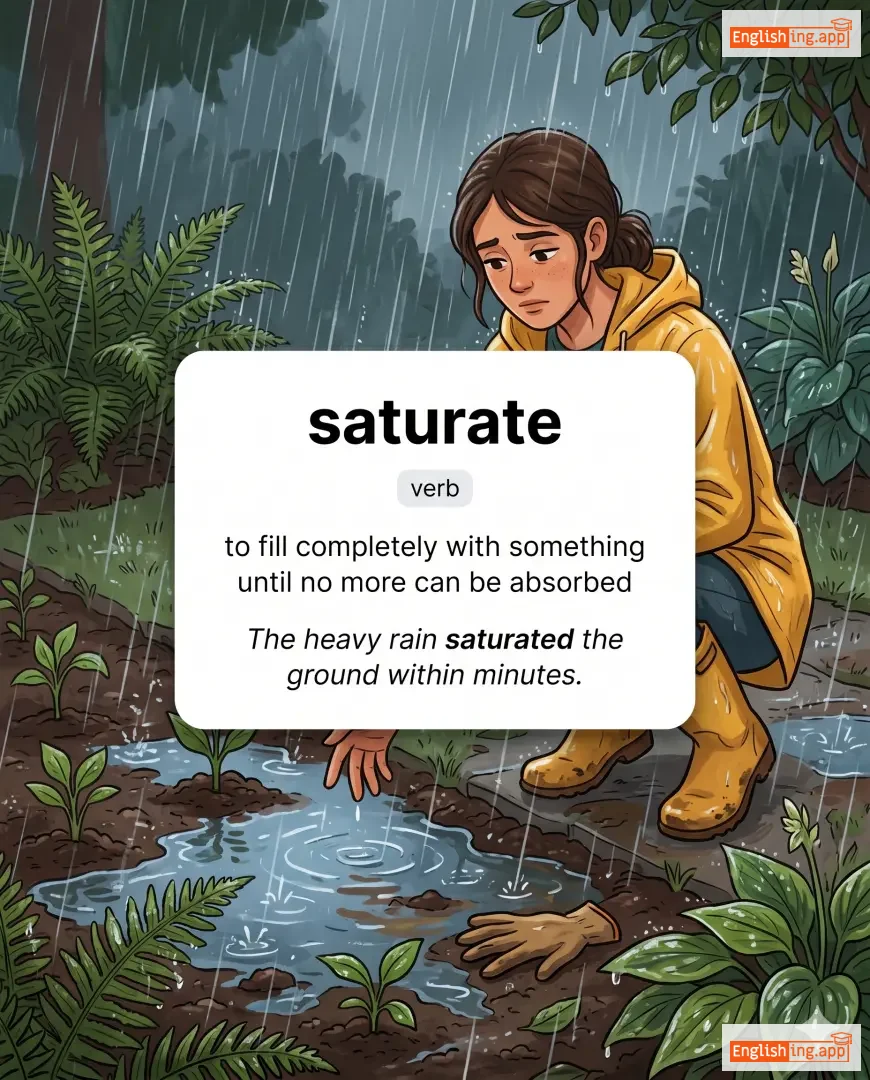
saturate definition card — visual illustration of the meaning
verb
/ˈsætʃəˌreɪt/

to fill completely with something until no more can be absorbed

"The heavy rain saturated the ground within minutes."

noun
/ˈsætræp/
総督 (sōtoku)

a governor of a province in ancient Persia; also used figuratively for a subordinate ruler

"The king appointed a satrap to oversee the distant province."

"王は遠くの州を監督するために総督を任命しました。" (Ō wa tōku no shū o kantoku suru tame ni sōtoku o ninmei shimashita.)
satisfy definition card — visual illustration of the meaning
verb
/ˈsætɪsfaɪ/
満たす (mitasu)

to meet the expectations, needs, or desires of someone

"The manager's explanation satisfied all of our concerns."

"マネージャーの説明は私たちのすべての懸念を満たしました。" (Manejā no setsumei wa watashitachi no subete no shinpai o mitashimashita.)
adjective
/ˈsætɪsfaɪd/
満足 (manzoku)

Pleased or content with what has been achieved or received.

"He felt satisfied after finishing his project."

"彼はプロジェクトを終えた後、満足していると感じた。" (Kare wa purojekuto o oeta ato, manzoku shiteiru to kanjita.)
adjective
/ˈsæt.ɪs.fæk.tər.i/
満足のいく (manzoku no iku)

acceptable; meeting requirements; adequate

"The test results were satisfactory."

"テストの結果は満足のいくものでした。" (tesuto no kekka wa manzoku no iku mono deshita.)
noun
/ˌsætɪsˈfækʃən/
満足 (manzoku)

the feeling of being pleased or content with something

"Her satisfaction with the results was evident."

"彼女の結果への満足感は明らかでした。" (Kanojo no kekka e no manzokukan wa akirakadeshita.)
verb
/ˈsætəˌraɪz/
風刺する (fūshi suru)

to mock or criticize something using satire

"The play satirizes the greed of modern corporations."

"その劇は現代の企業の貪欲さを風刺しています。" (Sono geki wa gendai no kigyō no dōyoku-sa o fūshi shiteimasu.)
adjective
/səˈtɪrɪkəl/
風刺的 (fūshiteki)

containing or using satire to criticize or mock

"The satirical cartoon mocked the government's new policy."

"その風刺的な漫画は政府の新しい政策を嘲笑しました。" (Sono fūshiteki na manga wa seifu no atarashī seisaku o chōshō shimashita.)
adjective
/səˈtɪrɪk/
皮肉な (hinikuna)

Relating to or using satire.

"The novel takes a satiric view of urban life."

"その小説は都市生活を皮肉な視点で描いています。" (Sono shōsetsu wa toshi seikatsu o hinikuna shiten de egaiteimasu.)
noun
/ˈsætaɪər/
風刺 (fūshi)

The use of humor, irony, or exaggeration to criticize people's stupidity or vices.

"The play was a brilliant satire on modern politics."
"その劇は現代政治への素晴らしい風刺でした。" (Sono geki wa gendai seiji e no subarashī fūshi deshita.)
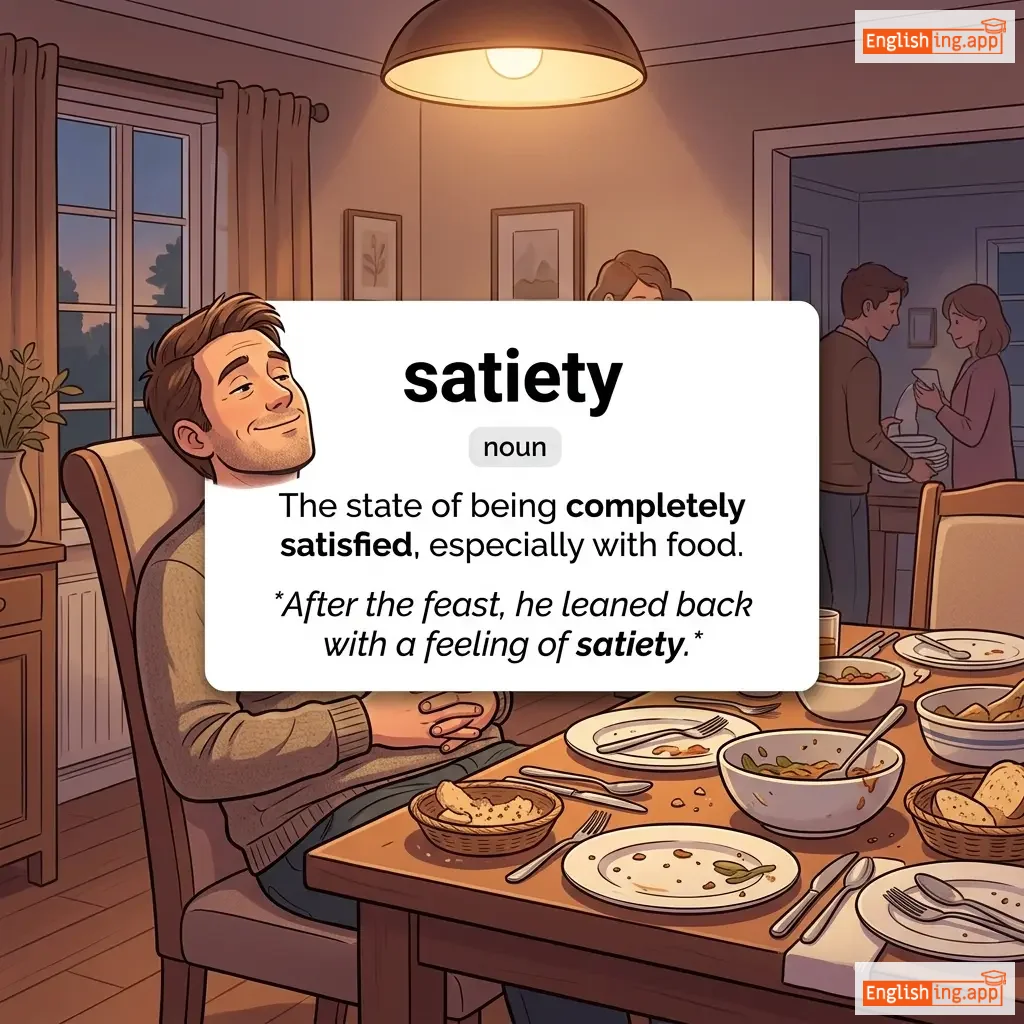
satiety definition card — visual illustration of the meaning
noun
/səˈtaɪ.ə.ti/
満腹感 (manpukukan)

The state of being completely satisfied, especially with food.

"After the feast, he leaned back with a feeling of satiety."
"宴会の後、彼は満腹感を感じながら背もたれに寄りかかった。" (Enkai no ato, kare wa manpukukan wo kanjinagara semotare ni yori kakatta.)
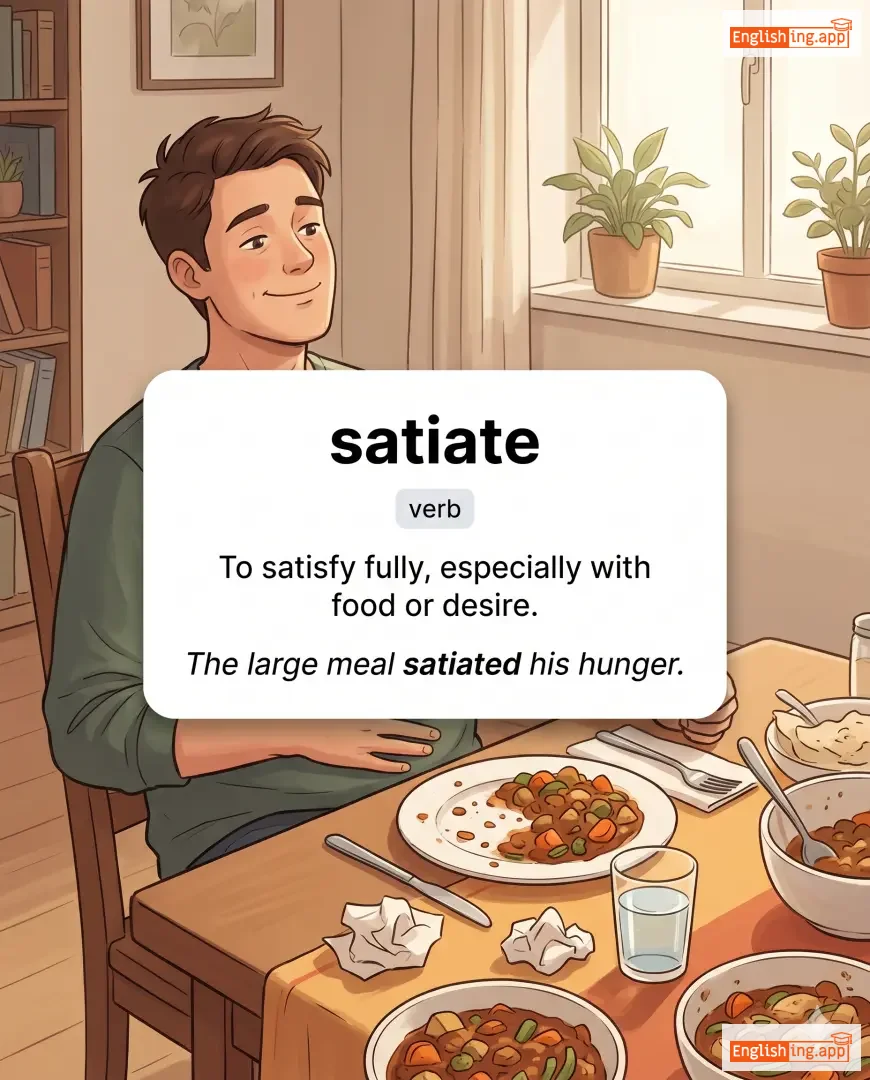
satiate definition card — visual illustration of the meaning
verb
/ˈseɪʃiˌeɪt/
満たす (mitasu)

To satisfy fully, especially with food or desire.

"The large meal satiated his hunger."

"大きな食事が彼の空腹を満たしました。" (Ookina shokuji ga kare no kuufuku o mitashimashita.)
satellite definition card — visual illustration of the meaning
noun
/ˈsætəlaɪt/
衛星 (eisei)

An artificial body placed in orbit around the earth or another planet to collect information or for communication.

"The weather satellite provided real-time images of the storm."

"気象衛星は嵐のリアルタイム画像を提供しました。" (Kishou eisei wa arashi no riaru taimu gazou wo teikyoushimashita.)
verb
/seɪt/
満たす (mitasu)

To satisfy fully or to excess.

"The huge meal sated their hunger after the long journey."

"長い旅の後、巨大な食事が彼らの空腹を満たした。" (Nagai tabi no ato, kyodaina shokuji ga karera no kuufuku o mitashita.)
noun
/ˈseɪ.tən/
サタン (Satan)

the chief evil spirit; the Devil in Christian and Islamic belief

"According to religious texts, Satan tempts people to sin."

"宗教的な文献によると、サタンは人々を罪に導く。" (Shūkyō-teki na bunken ni yoru to, Satan wa hitobito o tsumi ni michibiku.)
sartorial definition card — visual illustration of the meaning
adjective
/sɑːrˈtɔːriəl/
仕立てに関する (shitate ni kansuru)

Relating to tailoring, clothes, or style of dress.

"The actor is known for his sartorial elegance on the red carpet."

"その俳優はレッドカーペットでのサートリアルな優雅さで知られています。" (Sono haiyu wa reddo kāpetto de no sātoriaru na yūgasa de shirareteimasu.)
noun
/ˈsɑːri/
サリー (sari)

a garment consisting of a length of cotton or silk elaborately draped around the body, traditionally worn by women from South Asia

"She looked elegant in her red silk saree at the festival."
"彼女は祭りで赤い絹のサリーを着てとてもエレガントに見えました。" (Kanojo wa matsuri de akai kinu no sari o kite totemo ereganto ni miemashita.)
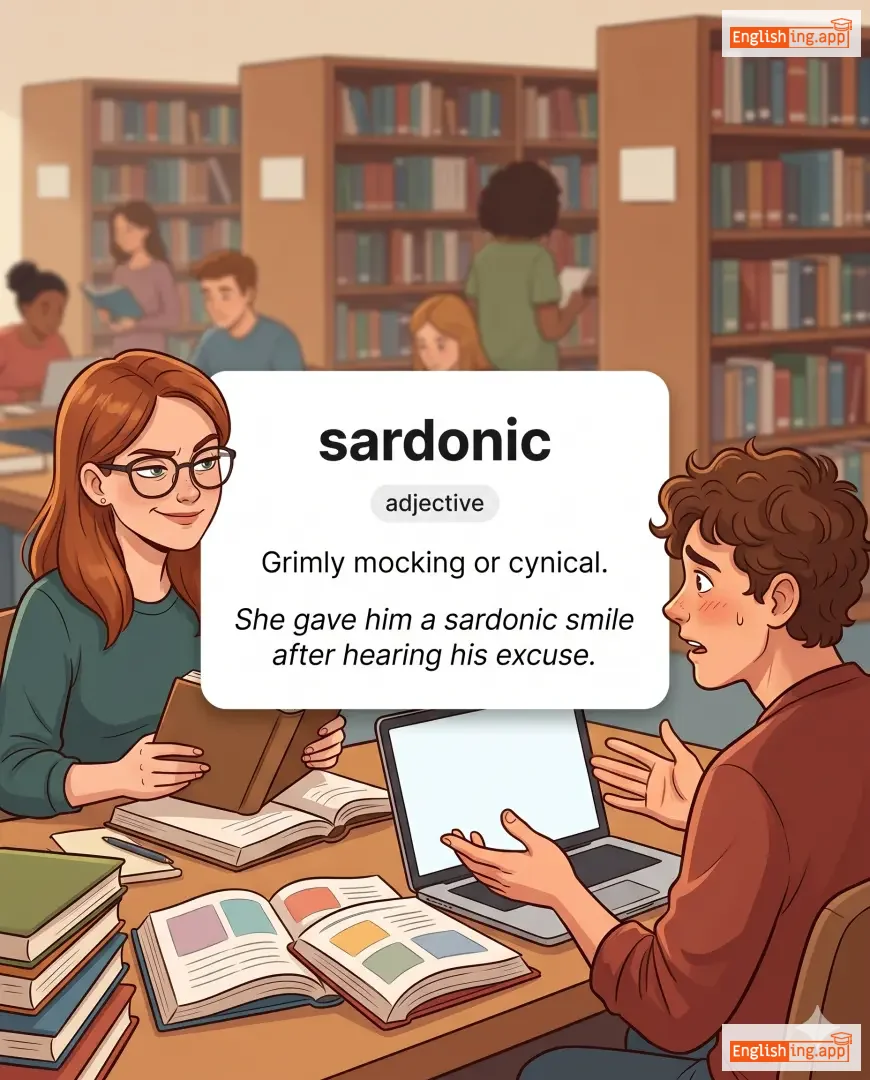
sardonic definition card — visual illustration of the meaning
adjective
/sɑːrˈdɒnɪk/
幸福 (koufuku)

Grimly mocking or cynical.

"She gave him a sardonic smile after hearing his excuse."

"彼女は賞を受け取ったとき、自分の幸福を隠すことができませんでした。" (Kanojo wa shō o uketotta toki, jibun no kōfuku o kakusu koto ga dekimasen deshita.)
noun
/sɑːrˈkɒfəɡəs/
石棺 (sekigan)

A stone coffin, often decorated, used in ancient times.

"The museum displayed a beautifully carved sarcophagus from ancient Egypt."

"博物館には古代エジプトからの美しく彫刻された石棺が展示されていました。" (Hakubutsukan ni wa kodai Ejiputo kara no utsukushiku chōkoku sareta sekigan ga tenji sarete imashita.)
adjective
/sɑːrˈkæstɪk/
皮肉な (hiniku na)

Using irony or mockery to convey contempt or humor.

"She made a sarcastic remark about his cooking."

"彼女は彼の料理について皮肉なコメントをしました。" (Kanojo wa kare no ryōri ni tsuite hiniku na komento o shimashita.)
noun
/ˈsɑːrˌkæzəm/
皮肉 (hiniku)

The use of irony to mock or convey contempt.

"His sarcasm often made people laugh but sometimes offended them."

"彼の皮肉はよく人々を笑わせたが、時々彼らを怒らせた。" (Kare no hiniku wa yoku hitobito o warawaseta ga, tokidoki karera o okorase ta.)
adjective
/ˌsæpəˈneɪʃəs/
石鹸のような (sekken no yōna)

Soapy or having the qualities of soap.

"The plant has saponaceous leaves that produce foam when rubbed in water."

"その植物には、摩擦で泡を作る石鹸のような葉があります。" (Sono shokubutsu ni wa, masatsu de awa o tsukuru sekken no yōna ha ga arimasu.)
adjective
/ˌseɪpiˈɛnʃəl/
知恵に関連する (chie ni kanren suru)

Relating to wisdom or knowledge, often in a religious or philosophical sense.

"The monk shared sapiential teachings with his students."

"僧侶は学生たちに知恵に関連する教えを共有しました。" (Sōryo wa gakusei-tachi ni chie ni kanren suru oshie o kyōyū shimashita.)
adjective
/ˈseɪpiənt/
賢明な (kenmei na)

Wise, or appearing to be wise.

"The professor gave a sapient response to the complex question."

"教授は複雑な質問に賢明な回答をしました。" (Kyoju wa fukuzatsu na shitsumon ni kenmei na kotae o shimashita.)
noun
/ˈseɪpiəns/
知恵 (chie)

Wisdom or intelligence.

"Her sapience in solving problems earned her the respect of her colleagues."

"問題解決における彼女の知恵は、同僚たちの尊敬を集めました。" (Mondai kaiketsu ni okeru kanojo no chie wa, dōryō-tachi no sonkei o atsume mashita.)
adjective
/ˈsæpɪd/
美味しい (oishii)

Having a pleasant taste; flavorful.

"The chef prepared a sapid dish that delighted everyone at the table."

"シェフはテーブルの全員を喜ばせる美味しい料理を準備しました。" (Shefu wa tēburu no zen'in o yorokobaseru oishī ryōri o junbi shimashita.)
noun
/ˈsæf.aɪər/
サファイア (safaia)

a precious stone that is typically blue in color

"The royal crown was adorned with a large sapphire."

"ロイヤルクラウンは大きなサファイアで飾られていました。" (Roiyaru kuraun wa ookina safaia de kazararete imashita.)
verb, noun
/sæp/
樹液 / 弱める (jueki / yowameru)

As a noun: the vital fluid in plants; As a verb: to gradually weaken or drain strength.

"The long journey began to sap his energy."

"長い旅が彼のエネルギーを弱め始めた。" (Nagai tabi ga kare no enerugi- o yowame hajimeta.)
noun
/ˈsækrɪsti/
サクリスティ (sakurisuti)

a room in a church where sacred vessels and vestments are kept

"The priest entered the sacristy before the mass began."

"司祭はミサが始まる前にサクリスティに入った。" (Shisai wa misa ga hajimaru mae ni sakurisuti ni haitta.)
adjective
/ˈruːθləs/
無情な (mujōna)

Having or showing no pity or compassion for others.

"The ruthless leader crushed all opposition."

"無情な指導者はすべての反対を押しつぶした。" (Mujōna shidōsha wa subete no hantai o oshitsubushita.)
ruthless competition definition card — visual illustration of the meaning
noun
ˈruθləs ˌkɑmpəˈtɪʃən
容赦ない競争 (yōsha nai kyōsō)

Fierce and merciless rivalry or contest, without pity or compassion.

"Ruthless competition for power leads to societal issues."

"権力のための容赦ない競争は社会問題を引き起こします。" (Kenryoku no tame no yōsha nai kyōsō wa shakai mondai o hikiokoshimasu.)
noun
/səˈbætɪkəl/
学習や旅行のための休暇 (gakushuu ya ryokou no tame no kyuuka)

A period of paid leave granted to a teacher or worker for study or travel, traditionally every seventh year.

"She took a sabbatical to research her new book."

"彼女は新しい本を研究するためにサバティカルを取った。" (Kanojo wa atarashī hon o kenkyū suru tame ni sabatikaru o totta.)
verb
/ˈsæbətɑːʒ/
破壊活動 (hakai katsudou)

To deliberately destroy, damage, or obstruct something, especially for political or military advantage.

"The rebels tried to sabotage the railway lines."

"反乱者たちは鉄道の線路をサボタージュしようとした。" (Hanransha-tachi wa tetsudou no senro o sabotāju shiyou to shita.)
noun
/ˌsæbəˈtɜːr/
破壊工作員 (hakai kōsakuin)

A person who engages in sabotage.

"The saboteur was arrested before he could plant the bomb."

"破壊工作員は爆弾を設置する前に逮捕されました。" (Hakai kōsakuin wa bakudan o secchi suru mae ni taiho saremashita.)
adjective
/ˈsækərɪn/
幸せ (shiawase)

Excessively sweet or sentimental.

"His saccharine smile seemed insincere."

"彼女は賞を受け取ったとき、自分の幸せを隠せなかった。" (Kanojo wa shō o uketotta toki, jibun no shiawase o kakusenakatta.)
adjective
/ˌsæsərˈdoʊtl/
神職に関する (shinshoku ni kansuru)

Relating to priests or the priesthood.

"The ritual had a distinctly sacerdotal character."

"その儀式には明確な神職に関する特徴がありました。" (Sono gishiki ni wa meikaku na shinshoku ni kansuru tokuchō ga arimashita.)
noun
/sæk/
(fukuro)

a large bag made of strong material for holding things

"He carried a sack of rice on his shoulder."

"彼は肩に米の袋を持っていました。" (Kare wa kata ni kome no fukuro wo motteimashita.)
adjective
/ˈseɪkrɪd/
神聖な (shinsei na)

connected with God or a religion and considered holy or deserving respect

"The temple is a sacred place for the community."

"その寺院は地域社会にとって神聖な場所です。" (Sono jiin wa chiikishakai ni totte shinsei na basho desu.)
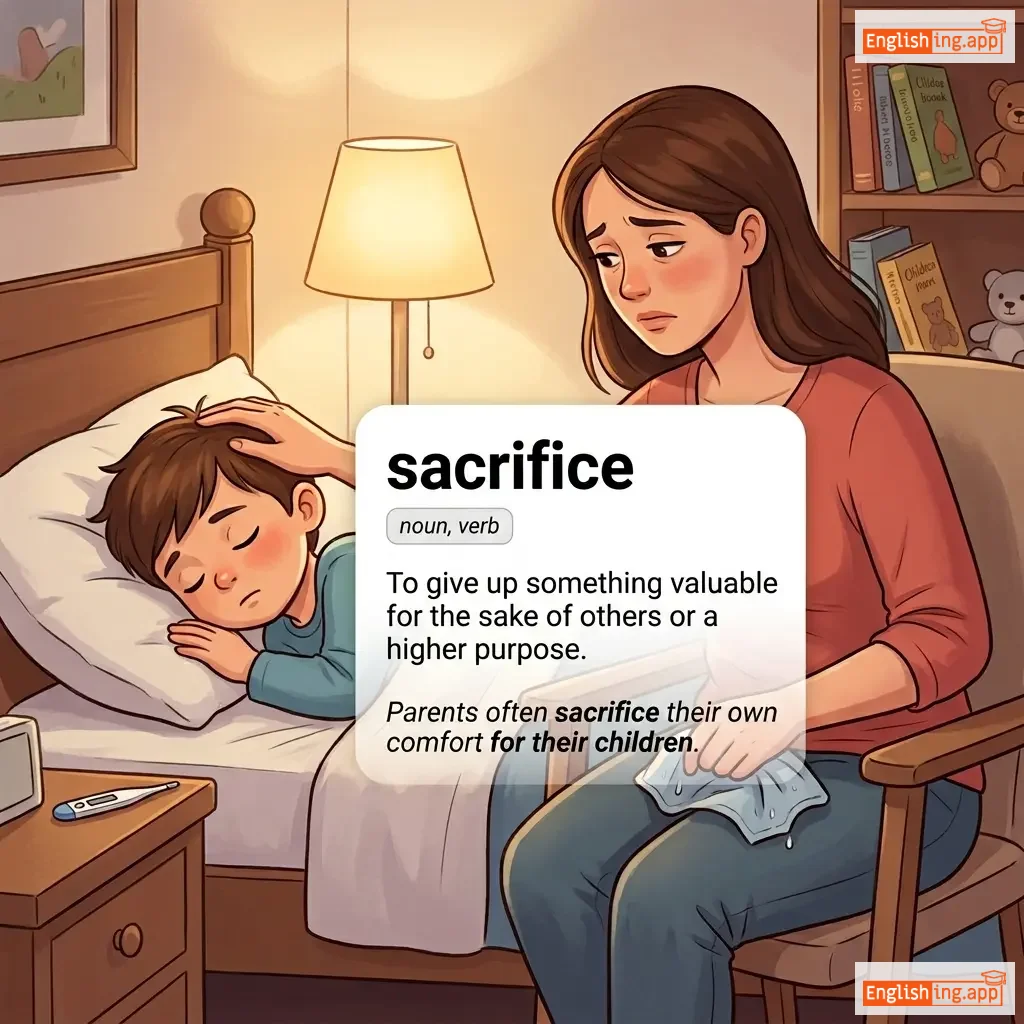
sacrifice definition card — visual illustration of the meaning
🕯️

sacrifice

noun, verb
/ˈsækrɪfaɪs/

To give up something valuable for the sake of others or a higher purpose.

"Parents often sacrifice their own comfort for their children."

adjective
/ˌsækrɪˈfɪʃəl/
犠牲的な (giseiteki na)

Relating to or involving sacrifice.

"The lamb was used as a sacrificial offering in the ritual."

"その羊は儀式で犠牲的な捧げ物として使われました。" (Sono hitsuji wa gishiki de giseiteki na sasagemono toshite tsukawaremashita.)
noun
/ˈsækrɪlɪdʒ/
冒涜 (bōtoku)

Violation or misuse of what is regarded as sacred.

"Stealing from the temple was considered an act of sacrilege."

"寺院から盗むことは冒涜と見なされていました。" (jiin kara nusumu koto wa bōtoku to minasarete imashita.)
adjective
/ˌsækrəˈlɪdʒəs/
冒涜的 (bōtoku teki)

Showing disrespect or irreverence toward something sacred.

"The painting was criticized as being sacrilegious."

"その絵画は冒涜的だと批判されました。" (sono kaiga wa bōtoku teki da to hihan saremashita.)
noun/verb
/ˈseɪf.ɡɑːrd/
守る (mamoru)

To protect from harm or damage; a measure taken to ensure safety.

"Laws exist to safeguard the rights of children."

"法律は子供たちの権利を守るために存在します。" (Hōritsu wa kodomotachi no kenri o mamoru tame ni sonzai shimasu.)
adverb
/ˈseɪfli/
安全に (anzen ni)

in a way that is not dangerous or likely to cause harm

"The children crossed the road safely."

"子供たちは安全に道路を渡りました。" (Kodomotachi wa anzen ni dōro o watarimashita.)
noun
/ˈseɪfti/

the condition of being protected from harm or danger

"The safety of passengers is our top priority."

adjective
/seɪf/
安全 (anzen)

free from harm or danger

"Make sure your belongings are safe during the trip."

"旅行中にあなたの持ち物が安全であることを確認してください。" (Ryokō-chū ni anata no mochimono ga anzen de aru koto o kakunin shite kudasai.)