词汇表

英语词汇词典 | 单词含义、定义和示例

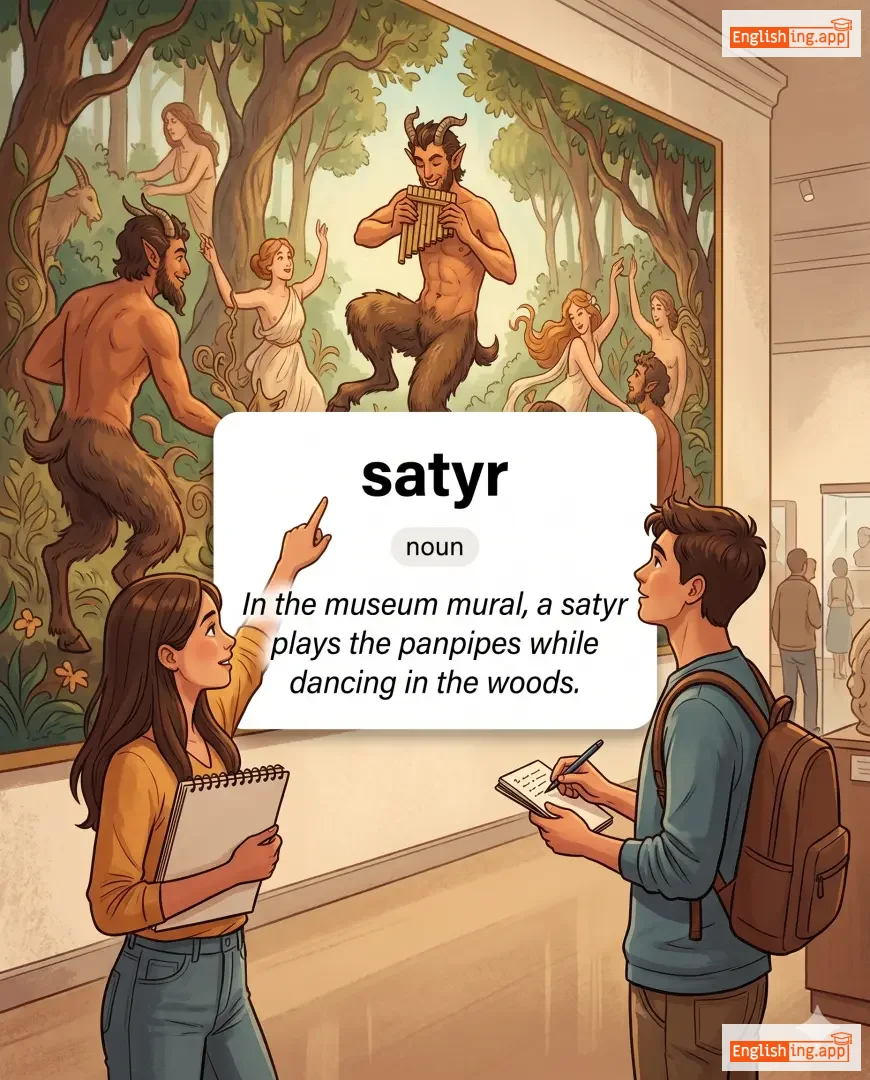
satyr definition card — visual illustration of the meaning
noun
/ˈsætər/
幸福 (xingfu)

a creature from Greek mythology depicted as a lustful being, often half-man and half-goat; by extension, a lecherous man

"In the museum mural, a satyr plays the panpipes while dancing in the woods."

"当她获得奖项时,她无法掩饰自己的幸福。" (Dang ta huode jiangxiang shi, ta wufa yanshi ziji de xingfu.)
saturnine definition card — visual illustration of the meaning
adjective
/ˈsætərˌnaɪn/
忧郁的 (yōuyù de)

slow and gloomy in mood

"His saturnine expression made everyone in the room uncomfortable."

"他的忧郁表情让房间里的人都感到不舒服。" (Tā de yōuyù biǎoqíng ràng fángjiān lǐ de rén dōu gǎndào bù shūfú.)
noun
/ˈsætərdeɪ/
星期六 (xingqi liu)

The day of the week between Friday and Sunday; traditionally the sixth day of the week

"We are going to the beach on Saturday."
"我们星期六去海滩。" (Wo men xingqi liu qu haitan.)
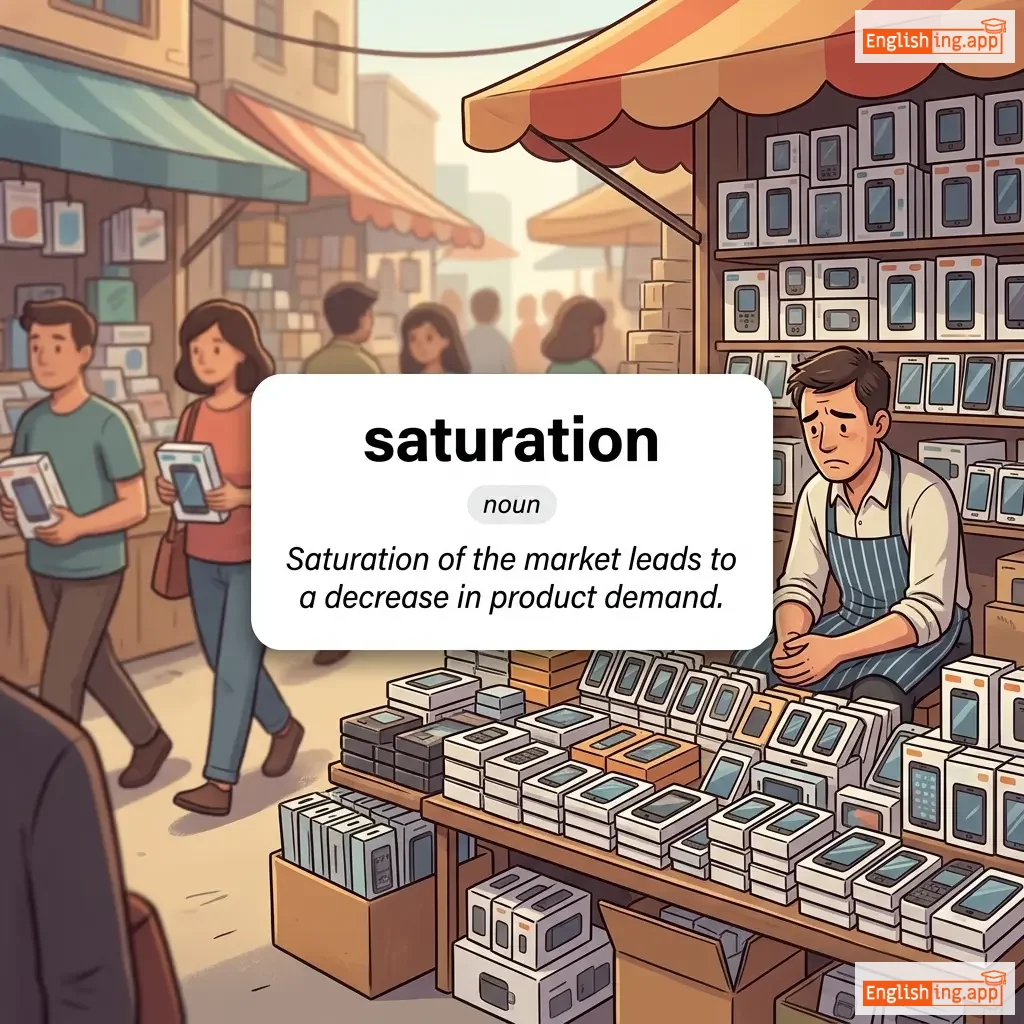
saturation definition card — visual illustration of the meaning
noun
/ˌsætʃəˈreɪʃən/
饱和 (baohua)

The state or process that occurs when no more of something can be absorbed, combined with, or added.

"Saturation of the market leads to a decrease in product demand."

"市场的饱和导致了产品需求的下降。" (Shichang de baohua daozhi le chanpin xuqiu de xiajiang.)
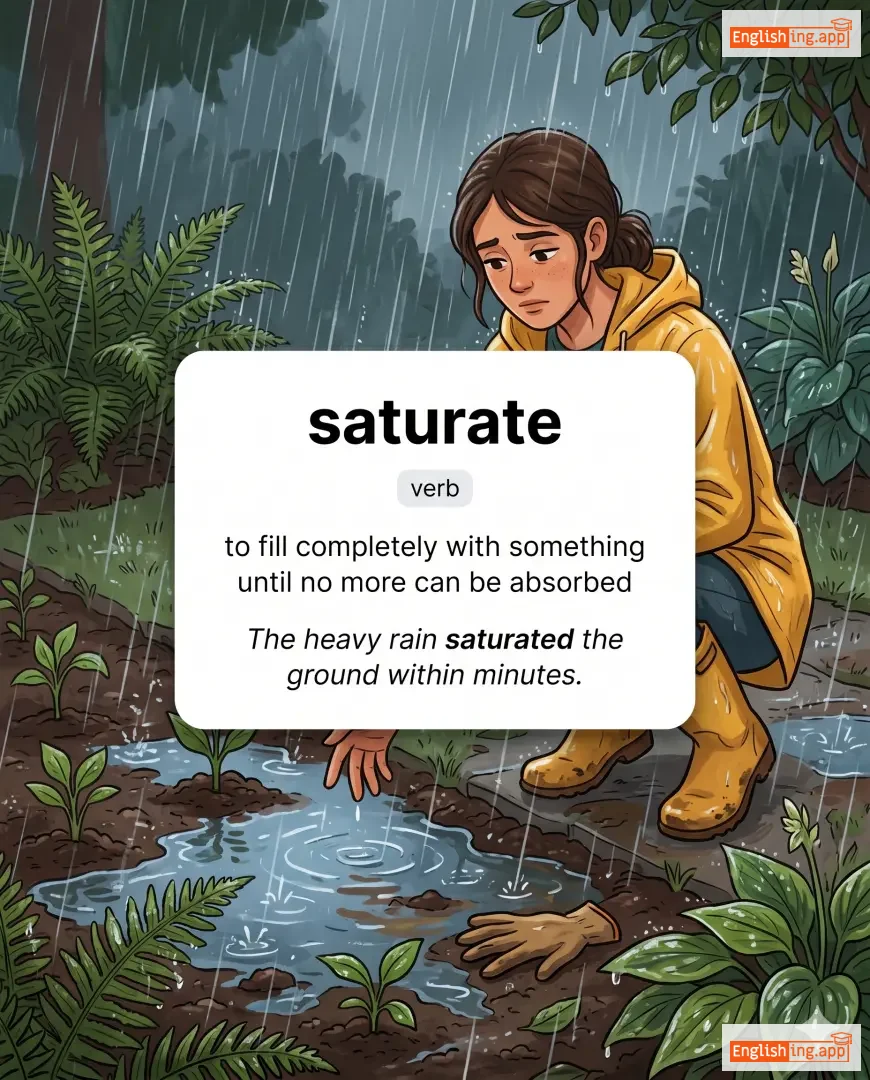
saturate definition card — visual illustration of the meaning
verb
/ˈsætʃəˌreɪt/

to fill completely with something until no more can be absorbed

"The heavy rain saturated the ground within minutes."

noun
/ˈsætræp/
总督 (zǒngdū)

a governor of a province in ancient Persia; also used figuratively for a subordinate ruler

"The king appointed a satrap to oversee the distant province."

"国王任命了一个总督来管理遥远的省份。" (Guówáng rènmìngle yīgè zǒngdū lái guǎnlǐ yáoyuǎn de shěngfèn.)
satisfy definition card — visual illustration of the meaning
verb
/ˈsætɪsfaɪ/
满足 (manzu)

to meet the expectations, needs, or desires of someone

"The manager's explanation satisfied all of our concerns."

"经理的解释满足了我们所有的顾虑。" (Jingli de jieshi manzu le women suoyou de gulü.)
adjective
/ˈsætɪsfaɪd/
满意 (mǎnyì)

Pleased or content with what has been achieved or received.

"He felt satisfied after finishing his project."

"完成项目后,他感到满意。" (Wánchéng xiàngmù hòu, tā gǎndào mǎnyì.)
adjective
/ˈsæt.ɪs.fæk.tər.i/
令人满意的 (lìng rén mǎn yì de)

acceptable; meeting requirements; adequate

"The test results were satisfactory."

"测试结果令人满意。" (cèshì jiéguǒ shì mǎnzú de.)
noun
/ˌsætɪsˈfækʃən/
满足 (manzu)

the feeling of being pleased or content with something

"Her satisfaction with the results was evident."

"她对结果的满足是显而易见的。" (Ta dui jieguo de manzu shi xian'eryijian de.)
verb
/ˈsætəˌraɪz/
讽刺 (fèngcì)

to mock or criticize something using satire

"The play satirizes the greed of modern corporations."

"这部剧讽刺了现代公司的贪婪。" (Zhè bù jù fèngcì le xiàndài gōngsī de tān lán.)
adjective
/səˈtɪrɪkəl/
讽刺的 (fèngcì de)

containing or using satire to criticize or mock

"The satirical cartoon mocked the government's new policy."

"讽刺漫画嘲笑了政府的新政策。" (Fèngcì mànhuà cháoxiàole zhèngfǔ de xīn zhèngcè.)
adjective
/səˈtɪrɪk/
讽刺的 (fèngcì de)

Relating to or using satire.

"The novel takes a satiric view of urban life."

"这部小说从讽刺的角度看待城市生活。" (Zhè bù xiǎoshuō cóng fèngcì de jiǎodù kàndài chéngshì shēnghuó.)
noun
/ˈsætaɪər/
讽刺 (fěngcì)

The use of humor, irony, or exaggeration to criticize people's stupidity or vices.

"The play was a brilliant satire on modern politics."
"这出戏是对现代政治的精彩讽刺。" (Zhè chū xì shì duì xiàndài zhèngzhì de jīngcǎi fěngcì.)
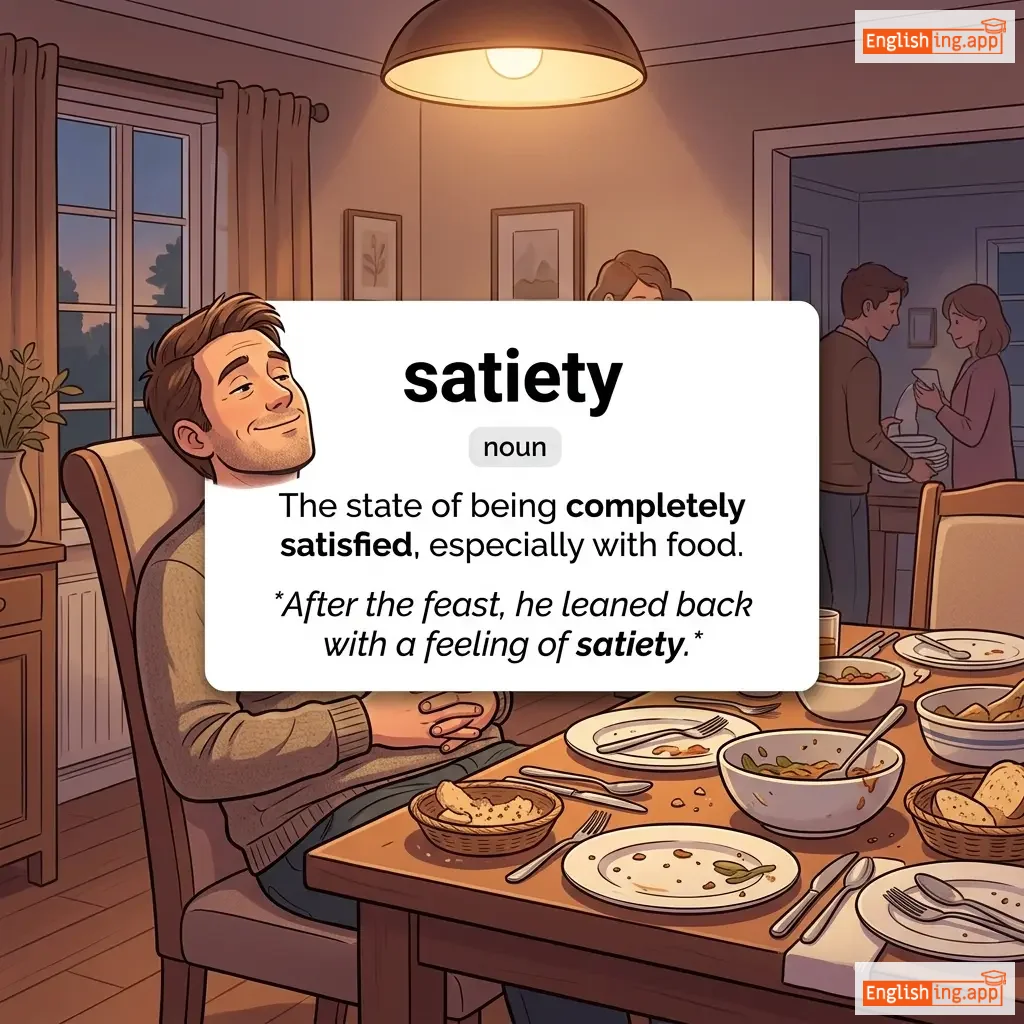
satiety definition card — visual illustration of the meaning
noun
/səˈtaɪ.ə.ti/
饱足感 (bǎozú gǎn)

The state of being completely satisfied, especially with food.

"After the feast, he leaned back with a feeling of satiety."
"宴会后,他带着饱足感靠了回来。" (Yànhuì hòu, tā dàizhe bǎozú gǎn kào le huílái.)
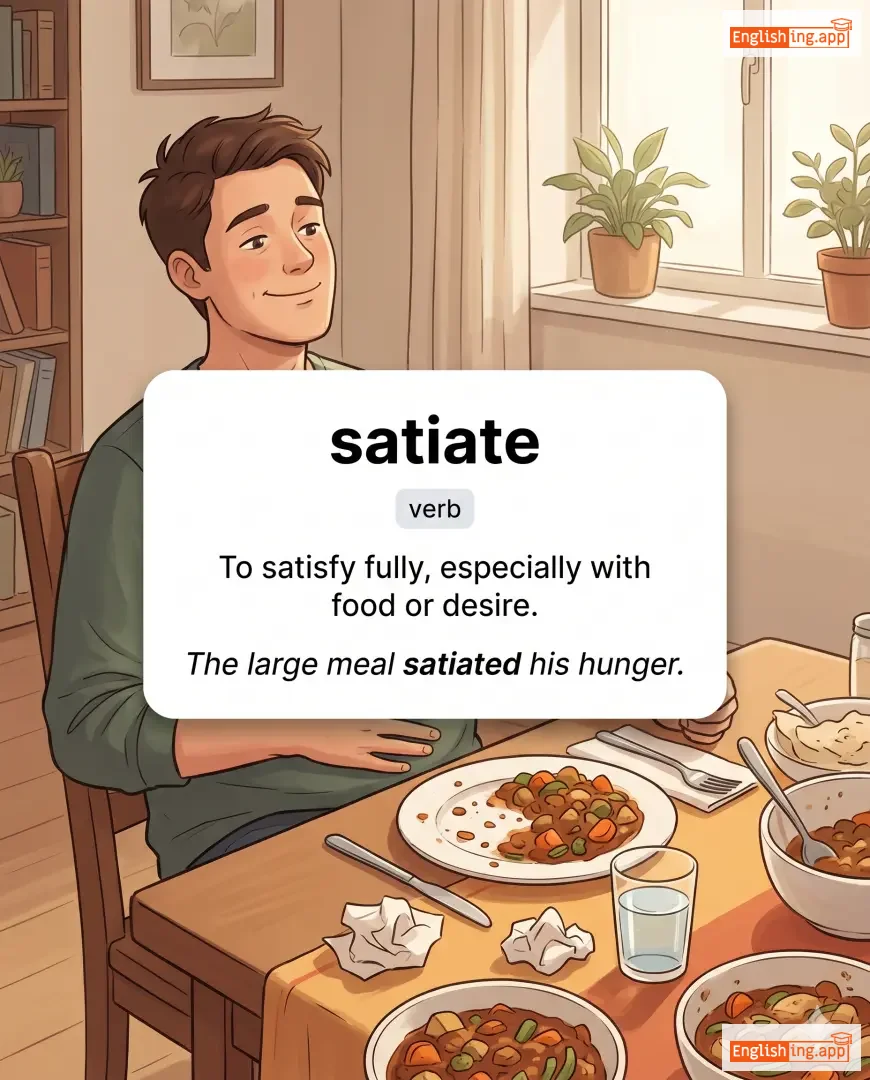
satiate definition card — visual illustration of the meaning
verb
/ˈseɪʃiˌeɪt/
满足 (manzu)

To satisfy fully, especially with food or desire.

"The large meal satiated his hunger."

"丰盛的餐食满足了他的饥饿。" (Fengsheng de canji manzu le tade jihu.)
satellite definition card — visual illustration of the meaning
noun
/ˈsætəlaɪt/
卫星 (weixing)

An artificial body placed in orbit around the earth or another planet to collect information or for communication.

"The weather satellite provided real-time images of the storm."

"气象卫星提供了风暴的实时图像。" (Qixiang weixing tigongle fengbao de shishi tupian.)
🍽️

sate (set)

verb
/seɪt/
满足 (manzu)

To satisfy fully or to excess.

"The huge meal sated their hunger after the long journey."

"长途旅行后,丰盛的餐点满足了他们的饥饿。" (Changtu lvxing hou, fengsheng de candi manzu le tamen de ji'e.)
noun
/ˈseɪ.tən/
撒旦 (Sàdàn)

the chief evil spirit; the Devil in Christian and Islamic belief

"According to religious texts, Satan tempts people to sin."

"根据宗教经典,撒旦诱惑人们犯罪。" (Gēnjù zōngjiào jīngdiǎn, Sàdàn yòuhuò rénmen fànzuì.)
sartorial definition card — visual illustration of the meaning
adjective
/sɑːrˈtɔːriəl/
与裁缝相关 (yu caifeng xiangguan)

Relating to tailoring, clothes, or style of dress.

"The actor is known for his sartorial elegance on the red carpet."

"这位演员因其在红毯上的裁缝优雅而闻名。" (Zhe wei yan yuan yin qi zai hongtan shang de caifeng youya er wenming.)
noun
/ˈsɑːri/
纱丽 (shali)

a garment consisting of a length of cotton or silk elaborately draped around the body, traditionally worn by women from South Asia

"She looked elegant in her red silk saree at the festival."

"她在节日上穿着红色丝绸纱丽看起来非常优雅。" (Ta zai jieri shang chuanzhuo hongse sichou shali kankilai feichang youya.)
sardonic definition card — visual illustration of the meaning
adjective
/sɑːrˈdɒnɪk/
幸福 (xingfu)

Grimly mocking or cynical.

"She gave him a sardonic smile after hearing his excuse."

"她在收到奖项时,无法隐藏自己的幸福。" (Tā zài shōudào jiǎngxiàng shí, wúfǎ yǐncáng zìjǐ de xìngfú.)
noun
/sɑːrˈkɒfəɡəs/
石棺 (shíguān)

A stone coffin, often decorated, used in ancient times.

"The museum displayed a beautifully carved sarcophagus from ancient Egypt."

"博物馆展示了来自古埃及的美丽雕刻的石棺。" (Bówùguǎn zhǎnshì le láizì gǔ āijí de měilì diāokè de shíguān.)
adjective
/sɑːrˈkæstɪk/
讽刺的 (fěngcì de)

Using irony or mockery to convey contempt or humor.

"She made a sarcastic remark about his cooking."

"她对他的烹饪做了一个讽刺的评论。" (Tā duì tā de pēngrèn zuòle yīgè fěngcì de pínglùn.)
noun
/ˈsɑːrˌkæzəm/
讽刺 (fěngcì)

The use of irony to mock or convey contempt.

"His sarcasm often made people laugh but sometimes offended them."

"他的讽刺经常让人发笑,但有时也会冒犯他们。" (Tā de fěngcì jīngcháng ràng rén fāxiào, dàn yǒu shí yě huì màofàn tāmen.)
adjective
/ˌsæpəˈneɪʃəs/
含肥皂性质的 (hán féizào xìngzhì de)

Soapy or having the qualities of soap.

"The plant has saponaceous leaves that produce foam when rubbed in water."

"这种植物有含肥皂性质的叶子,擦在水中时会产生泡沫。" (Zhè zhǒng zhíwù yǒu hán féizào xìngzhì de yèzi, cā zài shuǐ zhōng shí huì chǎnshēng pàomò.)
adjective
/ˌseɪpiˈɛnʃəl/
智慧相关的 (zhìhuì xiāngguān de)

Relating to wisdom or knowledge, often in a religious or philosophical sense.

"The monk shared sapiential teachings with his students."

"和尚与学生们分享了与智慧相关的教义。" (Héshàng yǔ xuéshēngmen fēnxiǎngle yǔ zhìhuì xiāngguān de jiàoyì.)
adjective
/ˈseɪpiənt/
明智的 (míng zhì de)

Wise, or appearing to be wise.

"The professor gave a sapient response to the complex question."

"教授对复杂的问题做出了明智的回答。" (Jiàoshòu duì fùzá de wèntí zuòchūle míngzhì de huídá.)
noun
/ˈseɪpiəns/
智慧 (zhìhuì)

Wisdom or intelligence.

"Her sapience in solving problems earned her the respect of her colleagues."

"她在解决问题上的智慧赢得了同事们的尊重。" (Tā zài jiějué wèntí shàng de zhìhuì yíngdéle tóngshìmen de zūnzhòng.)
adjective
/ˈsæpɪd/
美味的 (měi wèi de)

Having a pleasant taste; flavorful.

"The chef prepared a sapid dish that delighted everyone at the table."

"厨师准备了一道美味的菜肴,令桌上的每个人都非常喜欢。" (Chúshī zhǔnbèile yī dào měiwèi de càiyáo, lìng zhuō shàng de měi gèrén dōu fēicháng xǐhuān.)
noun
/ˈsæf.aɪər/
蓝宝石 (lan baoshi)

a precious stone that is typically blue in color

"The royal crown was adorned with a large sapphire."

"皇家王冠上镶嵌着一颗大蓝宝石。" (Huangjia wangguan shang xiangqian zhe yi ke da lanbaoshi.)
verb, noun
/sæp/
树液 / 削弱 (shuye / xueruo)

As a noun: the vital fluid in plants; As a verb: to gradually weaken or drain strength.

"The long journey began to sap his energy."

"长途旅行开始削弱他的能量。" (Changtu lüxing kaishi xueruo tade nengliang.)
noun
/ˈsækrɪsti/
圣器室 (shengqi shi)

a room in a church where sacred vessels and vestments are kept

"The priest entered the sacristy before the mass began."

"神父在弥撒开始前进入了圣器室。" (Shénfù zài mísa kāishǐ qián jìnrùle shèngqì shì.)
adjective
/ˈruːθləs/
无情的 (wúqíng de)

Having or showing no pity or compassion for others.

"The ruthless leader crushed all opposition."

"无情的领导者粉碎了所有反对。" (Wúqíng de lǐngdǎo zhě fěnsuìle suǒyǒu fǎnduì.)
ruthless competition definition card — visual illustration of the meaning
noun
ˈruθləs ˌkɑmpəˈtɪʃən
无情的竞争 (wúqíng de jìngzhēng)

Fierce and merciless rivalry or contest, without pity or compassion.

"Ruthless competition for power leads to societal issues."

"为了权力的无情竞争导致了社会问题。" (wèile quánlì de wúqíng jìngzhēng dǎozhìle shèhuì wèntí.)
noun
/səˈbætɪkəl/
用于学习或旅行的休假期 (yòng yú xuéxí huò lǚxíng de xiūjià qī)

A period of paid leave granted to a teacher or worker for study or travel, traditionally every seventh year.

"She took a sabbatical to research her new book."

"她为了研究她的新书而休了一个萨巴提卡尔假期。" (Tā wèile yánjiū tā de xīn shū ér xiūle yīgè sàbàtí kǎ ěr jiàqī.)
verb
/ˈsæbətɑːʒ/
破坏活动 (pohuai huodong)

To deliberately destroy, damage, or obstruct something, especially for political or military advantage.

"The rebels tried to sabotage the railway lines."

"反叛者试图破坏铁路线路。" (Fǎnbàn zhě shìtú pòhuài tiělù xiànlù.)
noun
/ˌsæbəˈtɜːr/
破坏者 (pòhuàizhě)

A person who engages in sabotage.

"The saboteur was arrested before he could plant the bomb."

"破坏者在放置炸弹之前被逮捕了。" (Pòhuàizhě zài fàngzhì zhàdàn zhīqián bèi dàibǔ le.)
adjective
/ˈsækərɪn/
幸福 (xìngfú)

Excessively sweet or sentimental.

"His saccharine smile seemed insincere."

"她在获得奖项时无法隐藏她的幸福。" (Tā zài huòdé jiǎngxiàng shí wúfǎ yǐncáng tā de xìngfú.)
adjective
/ˌsæsərˈdoʊtl/
神职的 (shénzhí de)

Relating to priests or the priesthood.

"The ritual had a distinctly sacerdotal character."

"仪式具有明显的神职特征。" (Yíshì jùyǒu míngxiǎn de shénzhí tèzhēng.)
noun
/sæk/
麻袋 (madai)

a large bag made of strong material for holding things

"He carried a sack of rice on his shoulder."

"他肩膀上背着一袋米。" (Ta jian bang shang bei zhe yi dai mi.)
adjective
/ˈseɪkrɪd/
神圣的 (shensheng de)

connected with God or a religion and considered holy or deserving respect

"The temple is a sacred place for the community."

"寺庙是社区的圣地。" (Sìmiào shì shèqū de shèngdì.)
sacrifice definition card — visual illustration of the meaning
🕯️

sacrifice

noun, verb
/ˈsækrɪfaɪs/

To give up something valuable for the sake of others or a higher purpose.

"Parents often sacrifice their own comfort for their children."

adjective
/ˌsækrɪˈfɪʃəl/
祭献的 (jìxiàn de)

Relating to or involving sacrifice.

"The lamb was used as a sacrificial offering in the ritual."

"这只羊在仪式中被用作祭献的礼物。" (Zhè zhī yáng zài yíshì zhōng bèi yòng zuò jìxiàn de lǐwù.)
noun
/ˈsækrɪlɪdʒ/
亵渎 (xièdú)

Violation or misuse of what is regarded as sacred.

"Stealing from the temple was considered an act of sacrilege."

"从寺庙偷窃被视为亵渎行为。" (cóng sìmiào tōuqiè bèi shì wéi xièdú xíngwéi.)
adjective
/ˌsækrəˈlɪdʒəs/
亵渎的 (xièdú de)

Showing disrespect or irreverence toward something sacred.

"The painting was criticized as being sacrilegious."

"这幅画被批评为亵渎的。" (zhè fú huà bèi pīpíng wéi xièdú de.)
noun/verb
/ˈseɪf.ɡɑːrd/
保护 (bǎohù)

To protect from harm or damage; a measure taken to ensure safety.

"Laws exist to safeguard the rights of children."

"法律存在以保护儿童的权利。" (Fǎlǜ cúnzài yǐ bǎohù ér tóng de quánlì.)
adverb
/ˈseɪfli/
安全地 (ānquán de)

in a way that is not dangerous or likely to cause harm

"The children crossed the road safely."

"孩子们安全地过了马路。" (Háizimen ānquán de guòle mǎlù.)
noun
/ˈseɪfti/

the condition of being protected from harm or danger

"The safety of passengers is our top priority."

adjective
/seɪf/
安全 (ānquán)

free from harm or danger

"Make sure your belongings are safe during the trip."

"确保你的物品在旅行期间是安全的。" (Quèbǎo nǐ de wùpǐn zài lǚxíng qījiān shì ānquán de.)