词汇表

英语词汇词典 | 单词含义、定义和示例

verb
/sɪt/
(zuò)

to rest with the body supported by the buttocks, often in a chair or on the ground

"Please sit down and relax for a while."

"请坐下来并放松一下。" (qǐng zuò xiàlái bìng fàngsōng yīxià.)
noun
/ˈsɪstərhʊd/
姐妹情谊 (jiěmèi qíngyì)

The relationship between sisters, or a community of women united by shared experiences or goals.

"The feminist movement created a strong sense of sisterhood among women."

"女权主义运动在女性中创造了强烈的姐妹情谊感。" (Nǚquán zhǔyì yùndòng zài nǚxìng zhōng chuàngzào le qiángliè de jiěmèi qíngyì gǎn.)
noun
/ˈsɪstər/
姐姐 / 妹妹 (jiejie / meimei)

a female sibling; a girl or woman in relation to other children of her parents

"My sister is coming to visit us next week."

"我姐姐下周要来看我们。" (wo jiejie xia zhou yao lai kan women)
noun
/sɪˈrɒkoʊ/
炎热干燥的风 (yánrè gānzào de fēng)

A hot, dry wind blowing from North Africa across the Mediterranean to southern Europe.

"The sirocco made the city unbearably hot and dusty."

"西罗科让这座城市变得极其炎热和尘土飞扬。" (Xī luō kē ràng zhè zuò chéngshì biàn dé jíqí yánrè hé chéntǔ fēiyáng.)
noun
/ˈsaɪrən/
警报器 (jǐngbàqì)

A device that makes a loud prolonged sound as a signal or warning; in mythology, a creature that lures sailors with enchanting songs.

"The police car passed with its siren blaring."

"警车经过时,警报器发出尖锐的声音。" (Jǐngchē jīngguò shí, jǐngbàqì fāchū jiānruì de shēngyīn.)
sip definition card — visual illustration of the meaning
verb
/sɪp/
啜饮 (chuoyin)

To drink something slowly, taking only small amounts at a time.

"She sipped her tea while reading a book."

"她一边读书,一边啜饮着茶。" (Ta yibian du shu, yibian chuoyin zhe cha.)
noun
/ˈsaɪnəs/
鼻窦 (bídòu)

A cavity within a bone or tissue, especially those in the bones of the face connected with the nasal cavities.

"He suffered from a sinus infection that caused headaches."
"他因鼻窦感染而痛苦,导致头痛。" (Tā yīn bídòu gǎnrǎn ér tòngkǔ, dǎozhì tóutòng.)
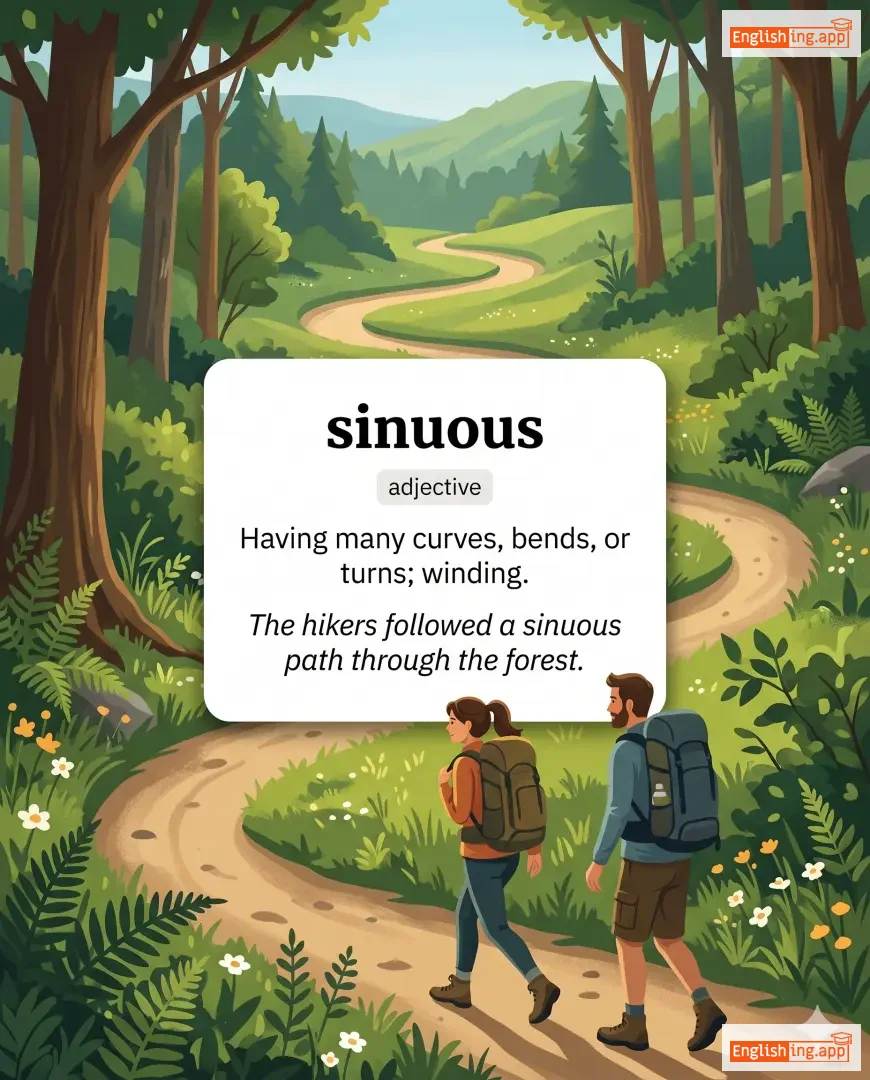
sinuous definition card — visual illustration of the meaning
adjective
/ˈsɪnjuəs/
蜿蜒 (wan yan)

Having many curves, bends, or turns; winding.

"The hikers followed a sinuous path through the forest."

"徒步旅行者沿着蜿蜒的路径穿过森林。" (Tubu luxingzhe yanzhe wanyan de luxian chuanguo senlin.)
noun
/ˌsɪnjuˈɒsɪti/
弯曲性 (wānqū xìng)

The quality or state of being winding, curving, or having many turns.

"The sinuosity of the river made navigation challenging."

"河流的弯曲性使得导航变得具有挑战性。" (Héliú de wānqū xìng shǐdé dǎoháng biàn dé jùyǒu tiǎozhànxìng.)
adjective
/ˈsɪnləs/
无罪; 天真; 纯洁 (wúzuì; tiānzhēn; chúnjié)

free from sin; pure and innocent; without moral fault

"The innocent child appeared sinless in her pure white dress."

"那天真的孩子穿着纯白色的裙子,看起来毫无罪。" (Nà tiānzhēn de háizi chuānzhuó chún báisè de qúnzi, kàn qǐlái háo wú zuì.)
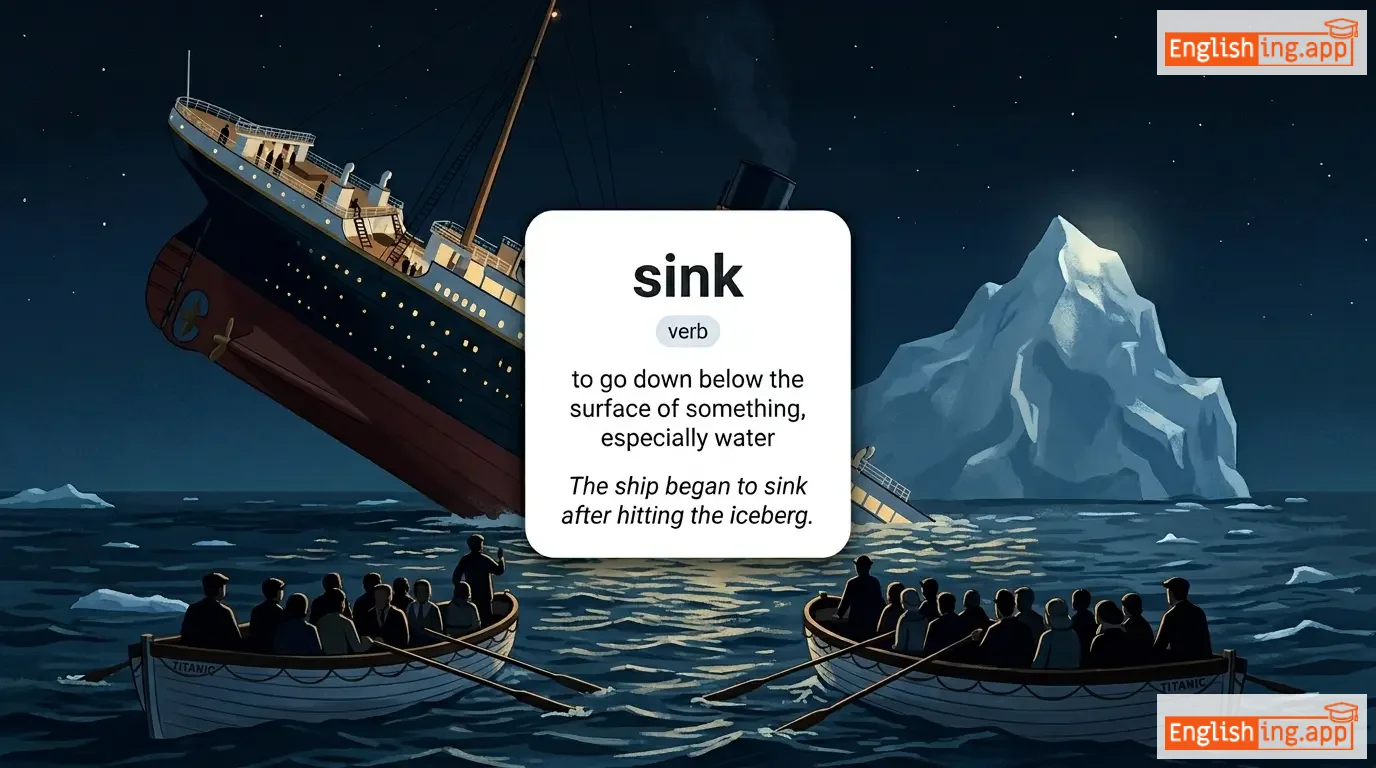
sink definition card — visual illustration of the meaning
verb
/sɪŋk/
下沉 (xiàchén)

to go down below the surface of something, especially water

"The ship began to sink after hitting the iceberg."

"船撞上冰山后开始沉没。" (Chuán zhuàng shàng bīngshān hòu kāishǐ chénmò.)
adjective
/ˈsɪnɪstər/
邪恶的 (xiee de)

Giving the impression that something harmful or evil is happening or will happen.

"The abandoned house had a sinister atmosphere."
"那座废弃的房子有着邪恶的氛围。" (Na zuo feiqi de fangzi youzhe xiee de fenwei.)
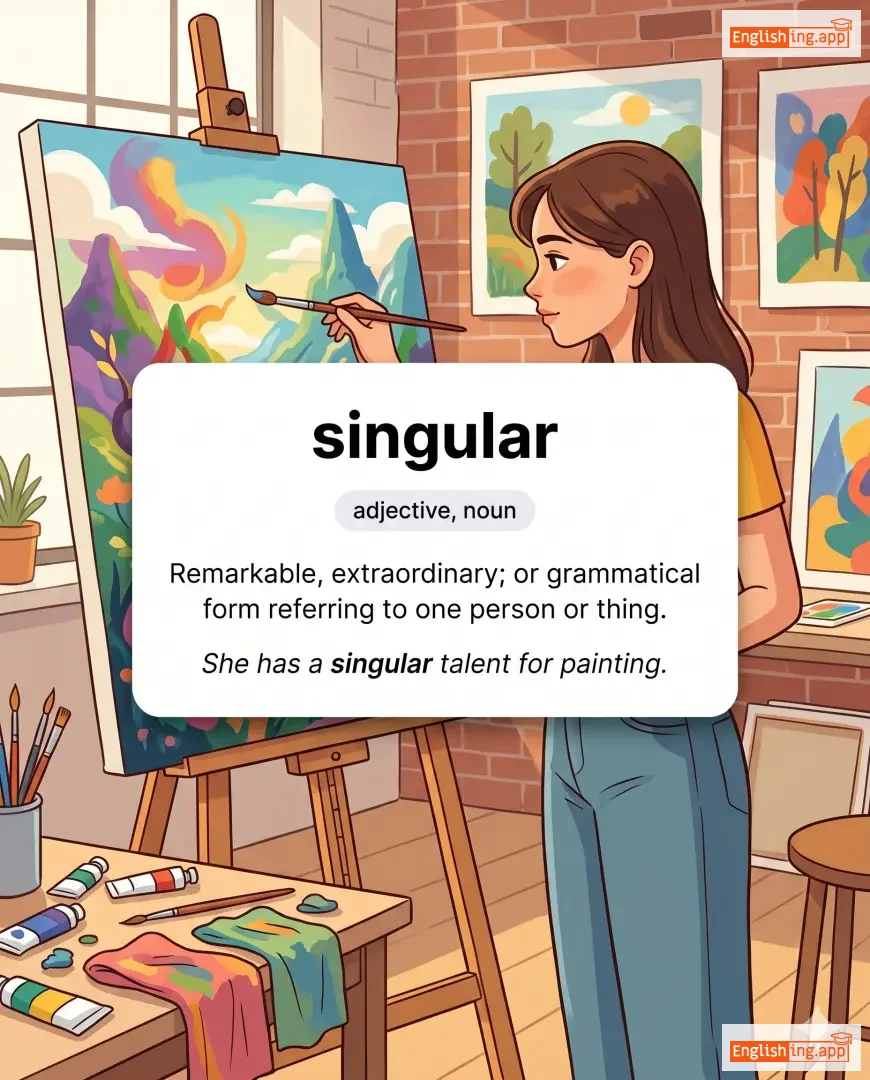
singular definition card — visual illustration of the meaning
adjective, noun
/ˈsɪŋɡjələr/
非凡 / 单数 (feifan / danshu)

Remarkable, extraordinary; or grammatical form referring to one person or thing.

"She has a singular talent for painting."

"她在绘画方面有非凡的才华。" (Ta zai huihua fangmian you feifan de caihua.)
1️⃣

single

adjective
/ˈsɪŋɡəl/

only one; not one of several

"She bought a single ticket for the concert."

Singer definition card — visual illustration of the meaning
noun
/ˈsɪŋər/
歌手 (geshou)

a person who sings, especially professionally

"The singer performed on stage last night."

"歌手昨晚在舞台上表演。" (Geshou zuowan zai wutai shang biaoyan.)
verb
/sɪndʒ/
轻微燃烧 (qingwei ranshao)

To burn something superficially or lightly, especially at the edges.

"The fire singed his eyebrows."

"火焰烧焦了他的眉毛。" (Huo yan shao jiao le ta de mei mao.)
sing definition card — visual illustration of the meaning
verb
/sɪŋ/
(chang)

to make musical sounds with the voice, typically in a tune

"She loves to sing in the choir."

"她喜欢在合唱团唱歌。" (Tā xǐhuān zài héchàngtuán chànggē.)
adjective
/ˈsɪnjuːi/
肌肉发达且强壮 (jirou fada qie qiangzhuang)

Lean and muscular; strong and tough.

"The athlete had a sinewy build that showed his strength."

"运动员有着结实的肌肉,展示了他的力量。" (Yundongyuan youzhe jieshi de jirou, zhanshileshi tade liliang.)
noun
/ˈsɪnjuː/
肌腱 (jī jiàn)

A tendon; figuratively, the source of strength, power, or resilience.

"The sinews in his arms stood out as he lifted the heavy box."
"当他举起沉重的箱子时,他手臂上的肌腱明显凸出。" (Dāng tā jǔ qǐ chénzhòng de xiāngzi shí, tā shǒubì shàng de jījiàn míngxiǎn tūchū.)
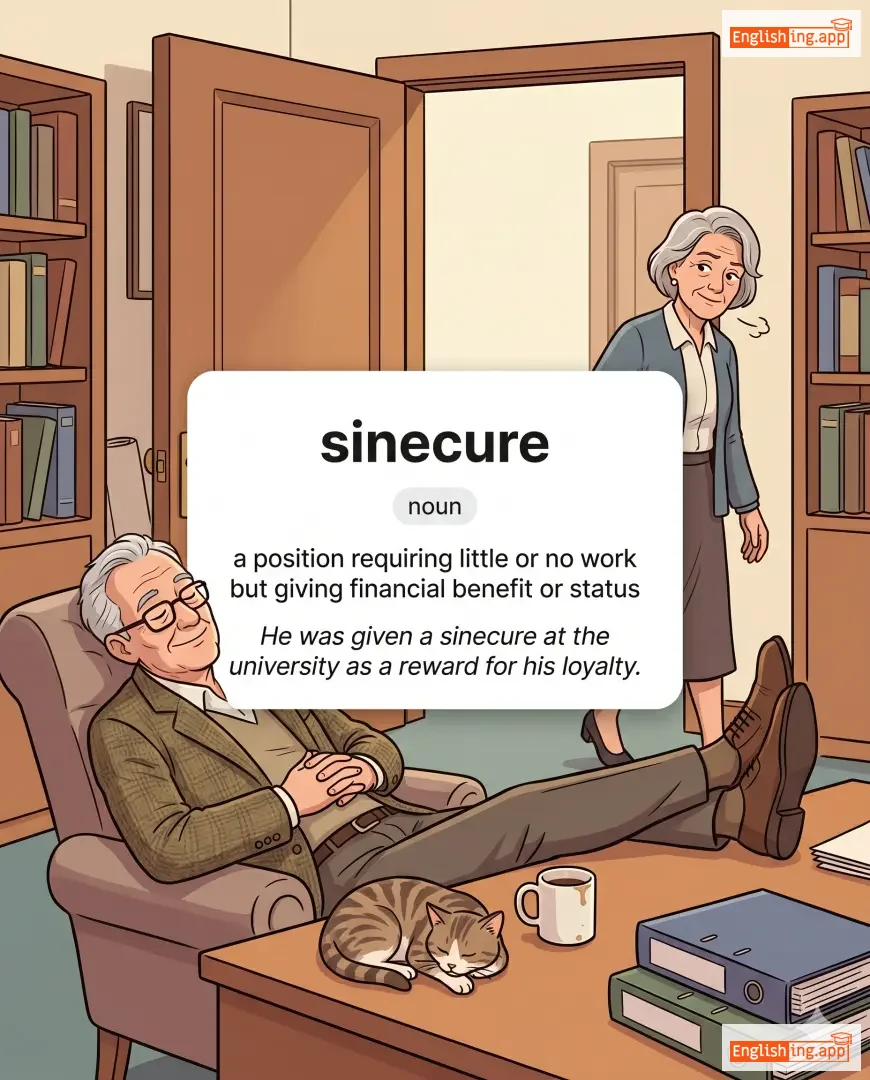
sinecure definition card — visual illustration of the meaning
noun
/ˈsaɪnɪkjʊər/
轻松工作 (qīngsōng gōngzuò)

a position requiring little or no work but giving financial benefit or status

"He was given a sinecure at the university as a reward for his loyalty."

"作为对他忠诚的奖励,他在大学获得了一个轻松的职位。" (Zuòwéi duì tā zhōngchéng de jiǎnglì, tā zài dàxué huòdé le yīgè qīngsōng de zhíwèi.)
noun
/sɪnˈserɪti/
真诚 (zhencheng)

the quality of being free from pretense or deceit; honesty

"His sincerity in apologizing was evident to everyone."

"他在道歉时的真诚对所有人都显而易见。" (Tā zài dàoqiàn shí de zhēnchéng duì suǒyǒu rén dōu xiǎn ér yìjiàn.)
adverb
/sɪnˈsɪrli/
真诚地 (zhencheng de)

with genuine feelings; honestly and truly

"I sincerely hope you recover soon."

"我真诚地希望你早日康复。" (Wo zhencheng de xiwang ni zaori kangfu.)
adjective
/sɪnˈsɪr/
真诚 (zhencheng)

genuine and honest; free from pretense or deceit

"She gave a sincere apology for her mistake."

"她为她的错误真诚地道歉。" (Ta wei ta de cuowu zhencheng de daoqian.)
preposition
/sɪns/
(zi)

from a particular time in the past until now

"I have known her since childhood."
"我从小就认识她。" (Wo cong xiao jiu renshi ta.)
noun, verb
/sɪn/
(zui)

an immoral act considered to be a transgression against divine law; to commit an offense against religious or moral law

"He confessed his sin to the priest."

"他向神父忏悔了他的罪。" (Ta xiang shenfu chanhui le tade zui.)
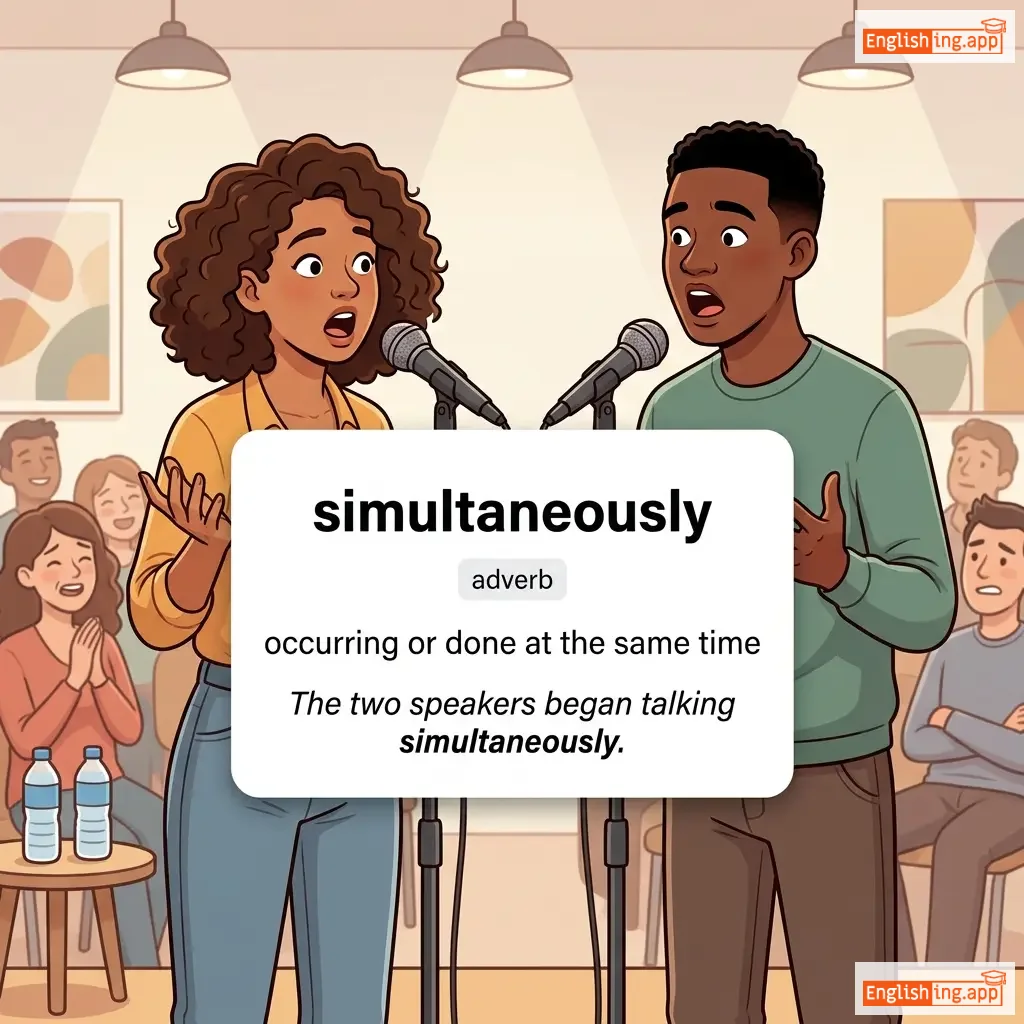
simultaneously definition card — visual illustration of the meaning
adverb
/ˌsaɪ.məlˈteɪ.ni.əs.li/
同时 (tongshi)

occurring or done at the same time

"The two speakers began talking simultaneously."

"两个发言者同时开始讲话。" (Liang ge fayanshu tongshi kaishi jianghua.)
noun
/sɜːr/
先生 (xiansheng)

a respectful or formal form of address used for a man, typically one of higher social status or authority

"Sir, may I assist you with your order?"

"先生,我可以帮您处理订单吗?" (Xiansheng, wǒ kěyǐ bāng nín chǔlǐ dìngdān ma?)
noun
/ˈsætræp/
总督 (zǒngdū)

a governor of a province in ancient Persia; also used figuratively for a subordinate ruler

"The king appointed a satrap to oversee the distant province."

"国王任命了一个总督来管理遥远的省份。" (Guówáng rènmìngle yīgè zǒngdū lái guǎnlǐ yáoyuǎn de shěngfèn.)
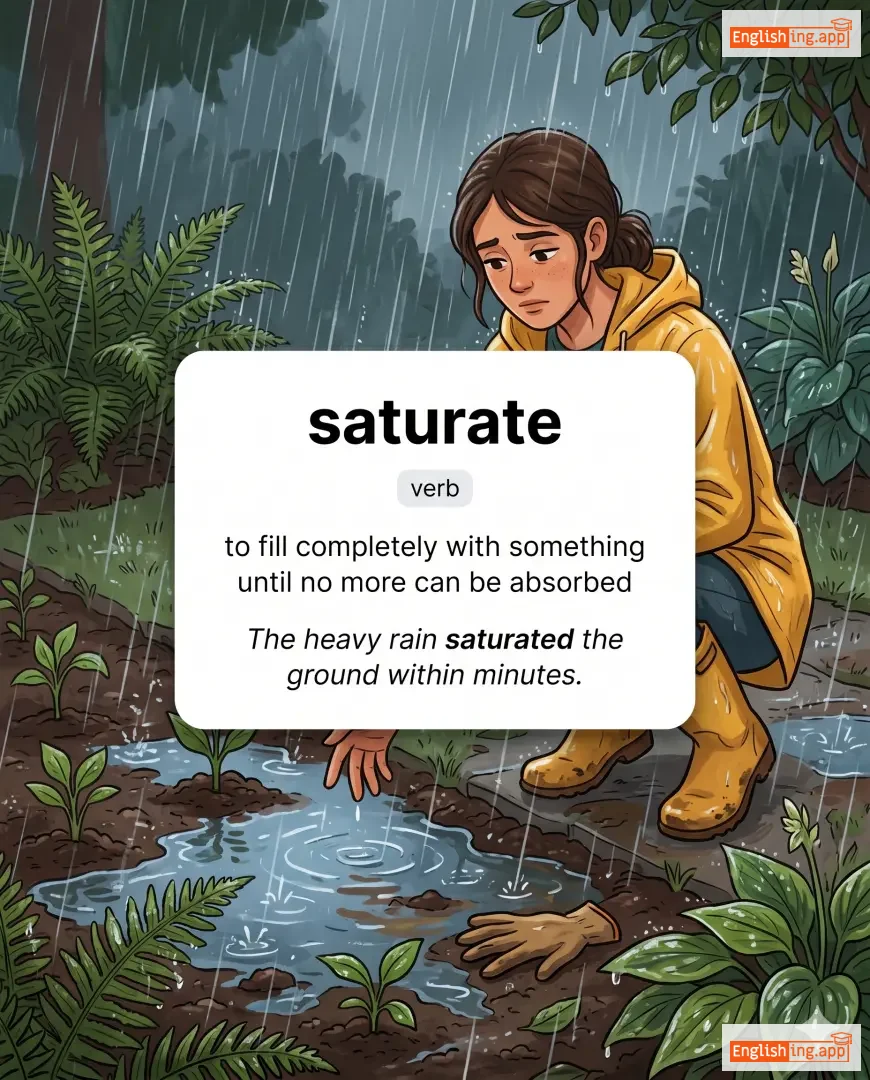
saturate definition card — visual illustration of the meaning
verb
/ˈsætʃəˌreɪt/

to fill completely with something until no more can be absorbed

"The heavy rain saturated the ground within minutes."

saturation definition card — visual illustration of the meaning
noun
/ˌsætʃəˈreɪʃən/
饱和 (baohua)

The state or process that occurs when no more of something can be absorbed, combined with, or added.

"Saturation of the market leads to a decrease in product demand."

"市场的饱和导致了产品需求的下降。" (Shichang de baohua daozhi le chanpin xuqiu de xiajiang.)
noun
/ˈsætərdeɪ/
星期六 (xingqi liu)

The day of the week between Friday and Sunday; traditionally the sixth day of the week

"We are going to the beach on Saturday."
"我们星期六去海滩。" (Wo men xingqi liu qu haitan.)
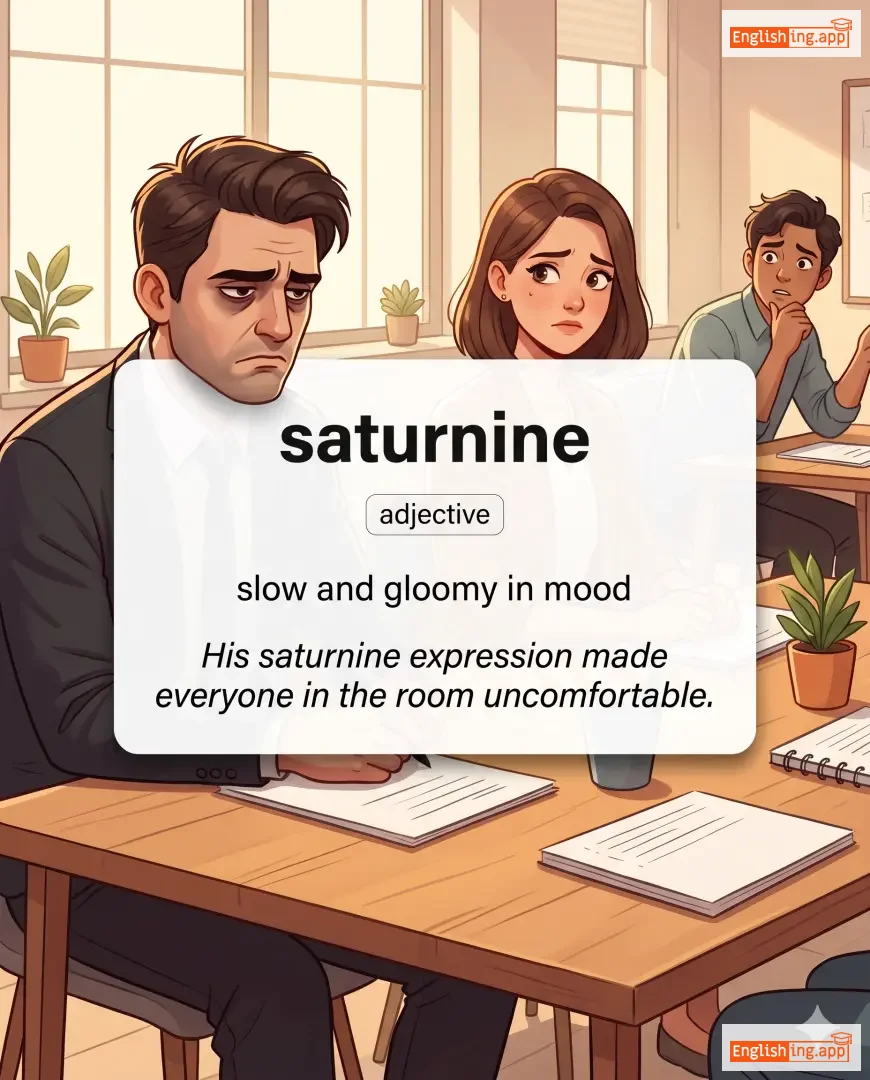
saturnine definition card — visual illustration of the meaning
adjective
/ˈsætərˌnaɪn/
忧郁的 (yōuyù de)

slow and gloomy in mood

"His saturnine expression made everyone in the room uncomfortable."
"他的忧郁表情让房间里的人都感到不舒服。" (Tā de yōuyù biǎoqíng ràng fángjiān lǐ de rén dōu gǎndào bù shūfú.)
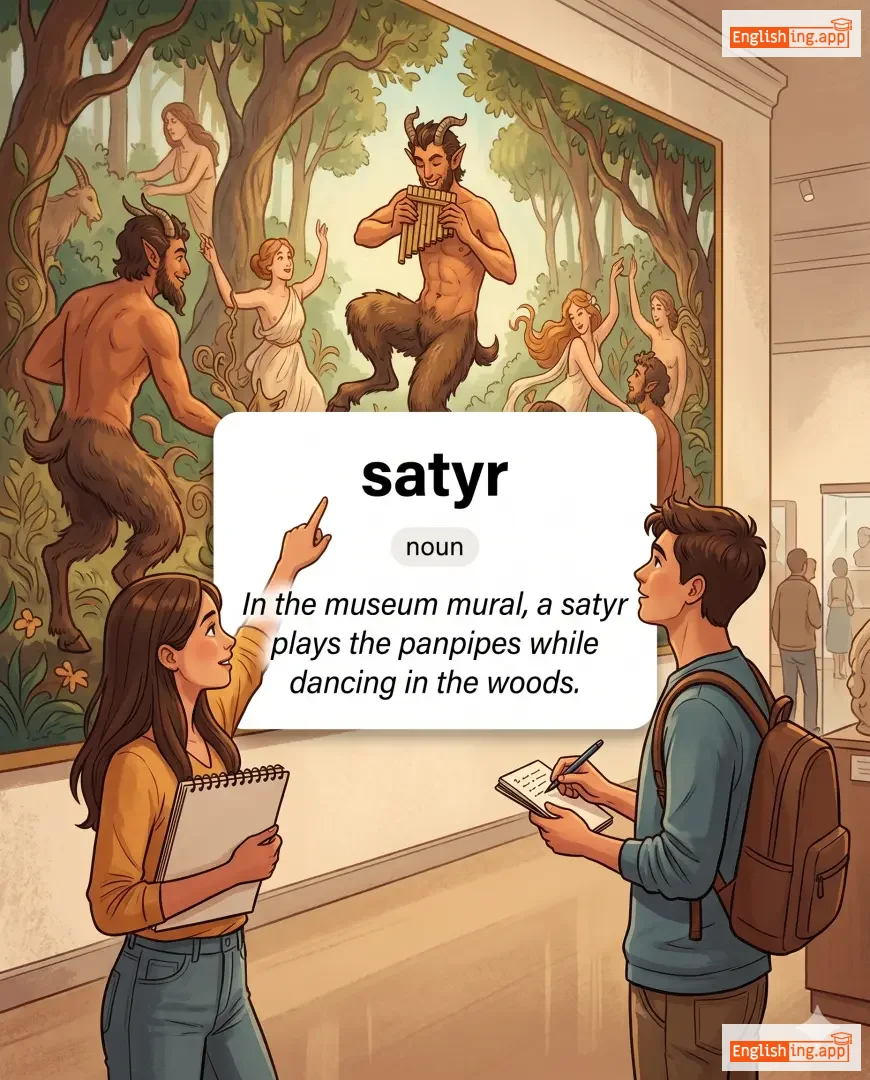
satyr definition card — visual illustration of the meaning
noun
/ˈsætər/
幸福 (xingfu)

a creature from Greek mythology depicted as a lustful being, often half-man and half-goat; by extension, a lecherous man

"In the museum mural, a satyr plays the panpipes while dancing in the woods."
"当她获得奖项时,她无法掩饰自己的幸福。" (Dang ta huode jiangxiang shi, ta wufa yanshi ziji de xingfu.)
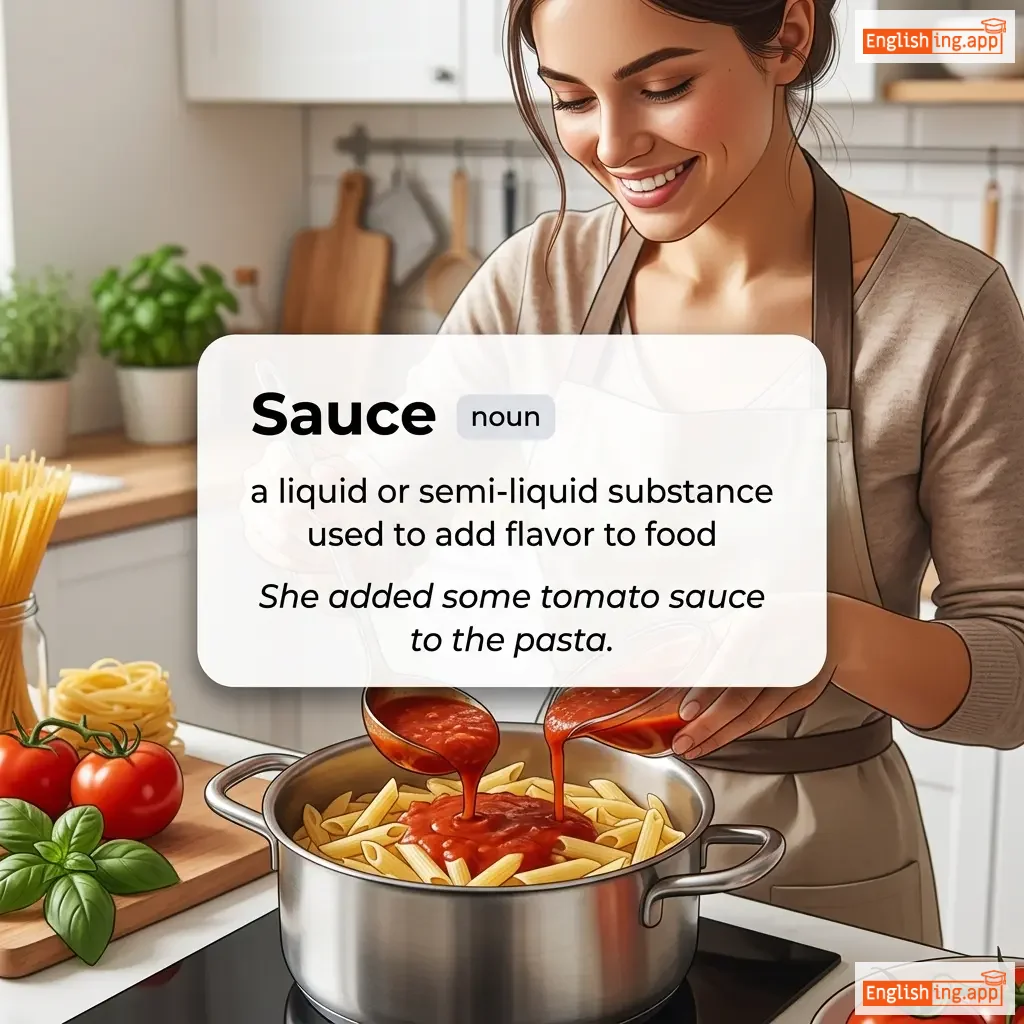
Sauce definition card — visual illustration of the meaning
noun
/sɔːs/
酱汁 (jiangzhi)

a liquid or semi-liquid substance used to add flavor to food

"She added some tomato sauce to the pasta."

"她在意大利面中加了一些番茄酱。" (Ta zai yidali mian zhong jia le yixie fanqie jiang.)
adjective
/ˈsɔːsi/
大胆的 (dàdǎn de)

Boldly rude, cheeky, or playfully disrespectful.

"The child gave a saucy reply to his teacher."

"那个孩子给老师一个大胆的回答。" (Nàgè háizi gěi lǎoshī yīgè dàdǎn de huídá.)
verb
/ˈsɔːntər/

to walk in a slow, relaxed manner without hurry or effort

"We sauntered along the riverside, stopping now and then to watch the boats."

noun
/ˈsaɪ.ə.lɪz.əm/
表面知识的假装 (biaomian zhishi de jiazhuang)

pretentious show of superficial knowledge

"His speech was full of sciolism, impressing no one."

"他的演讲充满了赛奥利主义,没有打动任何人。" (Tā de yǎnjiǎng chōngmǎnle sài'àolì zhǔyì, méiyǒu dǎdòng rènhé rén.)
adjective
/ˈsævɪdʒ/
野蛮; 残忍 (yěmán; cánrěn)

fierce, violent, or uncontrolled; cruel or brutal

"The storm brought savage winds that tore branches from the trees."

"暴风雨带来了野性的风,将树枝从树上刮下来。" (Bàofēngyǔ dàilái le yěmáng de fēng, jiāng shùzhī cóng shù shàng guā xiàlái.)
noun
/səˈvænə/
草原(散布着树木) (cǎoyuán (sàn bù zhe shùmù))

a grassy plain with scattered trees, typical of tropical and subtropical regions

"Giraffes browsed on acacia trees across the wide savanna."

"长颈鹿在广阔的萨凡纳上吃着金合欢树的叶子。" (Chángjǐnglù zài guǎngkuò de sàfánnà shàng chī zhe jīn héhuān shù de yèzi.)
noun
/səˈvɑːnt/

a learned person, especially a distinguished scientist or scholar; sometimes used in the phrase ‘savant syndrome’ for someone with exceptional abilities alongside developmental differences

"The conference keynote was delivered by a linguistic savant who studies endangered languages."

adjective
/ˈsæv.i/
聪明, 精明 (cōngmíng, jīngmíng)

Having practical knowledge and the ability to make good judgments.

"She is a tech-savvy entrepreneur."

"她是一位技术精通的企业家。" (Tā shì yī wèi jìshù jīngtōng de qǐyèjiā.)
say definition card — visual illustration of the meaning
🗣️

say (sāi)

verb
/seɪ/
(shuo)

to speak words or express thoughts aloud

"She asked him to say hello to her parents."

"她让他对她的父母说你好。" (Tā ràng tā duì tā de fùmǔ shuō nǐ hǎo.)
noun
/ˈsæksəfoʊn/
萨克斯风 (sàkèsī fēng)

a wind musical instrument with a curved metal body and a single reed mouthpiece

"The jazz musician played a beautiful solo on his saxophone."

"爵士乐手在他的萨克斯风上演奏了一首美妙的独奏。" (juéshì yuèshǒu zài tā de sàkèsī fēng shàng yǎnzòu le yī shǒu měimiào de dúzòu.)
noun
/ˈsɔːjər/
锯木工 (jù mù gōng)

a person who saws wood, especially as an occupation

"The skilled sawyer cut the logs into planks."

"熟练的锯木工将原木锯成木板。" (Shúliàn de jù mù gōng jiāng yuán mù jù chéng mù bǎn)
noun
/ˈsɔː.dʌst/
锯末 (jùmò)

The tiny particles of wood produced by sawing or sanding.

"The floor was covered with sawdust from the carpentry work."

"地板上覆盖着来自木工工作的锯末。" (Dìbǎn shàng fùgàizhe láizì mùgōng gōngzuò de jùmò.)
noun
/ˈsɔː.dər/
奉承; 奉承的话 (fèngchéng; fèngchéng de huà)

flattering or wheedling talk; soft soap

"His sawder couldn't convince anyone of his sincerity."

"他的奉承无法说服任何人相信他的真诚。" (Tā de fèngchéng wúfǎ shuōfú rènhé rén xiāngxìn tā de zhēnchéng.)
saw definition card — visual illustration of the meaning
noun
/sɔː/
锯子 (jùzi)

a tool with a sharp blade used for cutting wood or other materials

"He used a saw to cut the wooden plank."

"他用锯子切割木板。" (Tā yòng jùzi qiēgē mùbǎn.)
noun
/ˌsæv.wɑːr ˈfeər/
社交技巧 (shèjiāo jìqiǎo)

The ability to act or speak appropriately in social situations; polished social skills.

"She handled the delicate situation with remarkable savoir-faire."

"她以卓越的社交技巧处理了这一棘手的情况。" (Tā yǐ zhuóyuè de shèjiāo jìqiǎo chǔlǐle zhè yī jíshǒu de qíngkuàng.)
saving definition card — visual illustration of the meaning
noun
/ˈseɪvɪŋ/
储蓄 (chǔxù)

the process of saving money or resources for future use

"Her saving habits helped her afford the new car."

"她的储蓄习惯帮助她买到了新车。" (Ta de chuxu xiguan bangzhu ta maidaole xinn che.)
savings definition card — visual illustration of the meaning
noun
ˈseɪ.vɪŋz
储蓄 (chǔxù)

Money that is kept for future use or investment.

"Many people invest their savings in real estate."

"很多人将他们的储蓄投资于房地产。" (Hěn duō rén jiāng tāmen de chǔxù tóuzī yú fángdìchǎn.)