Vocabulaires

Découvrez, apprenez et maîtrisez le vocabulaire anglais

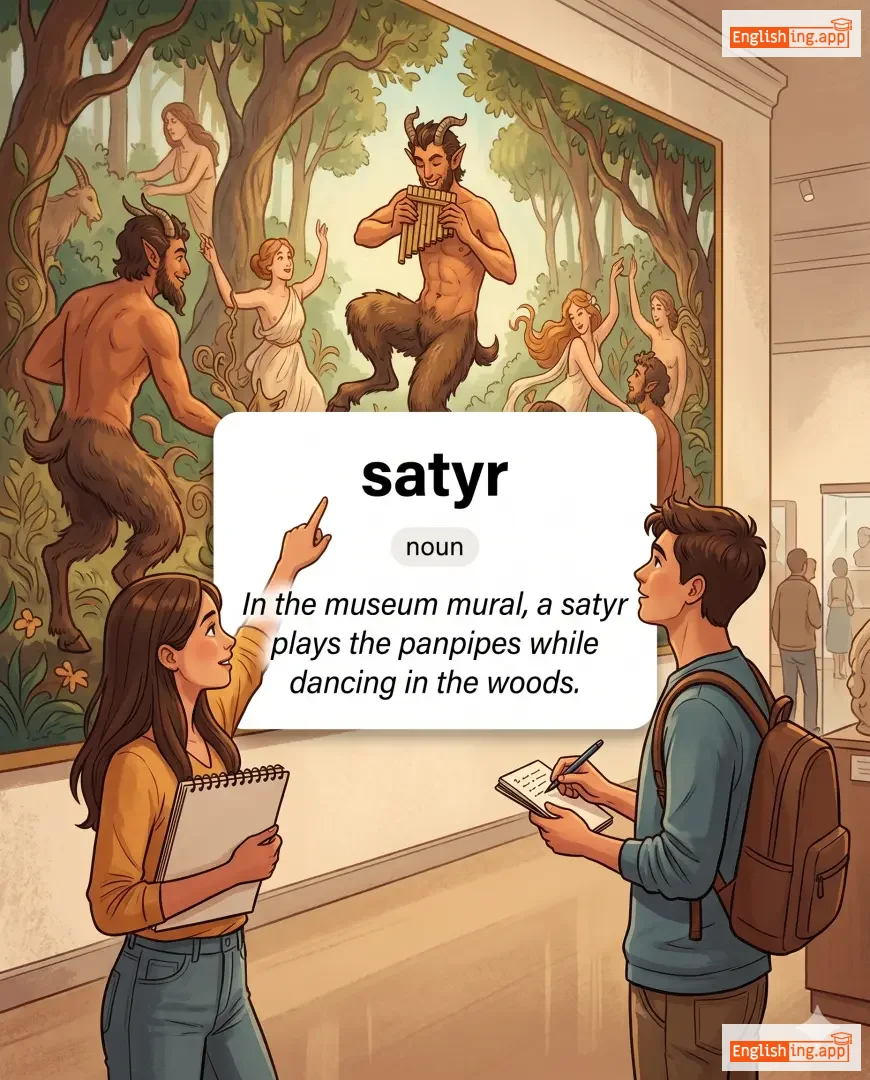
satyr definition card — visual illustration of the meaning
noun
/ˈsætər/
bonheur (bonheur)

a creature from Greek mythology depicted as a lustful being, often half-man and half-goat; by extension, a lecherous man

"In the museum mural, a satyr plays the panpipes while dancing in the woods."

"Elle n'a pas pu cacher son bonheur lorsqu'elle a reçu le prix." (Elle n'a pas pu cacher son bonheur lorsqu'elle a recu le prix.)
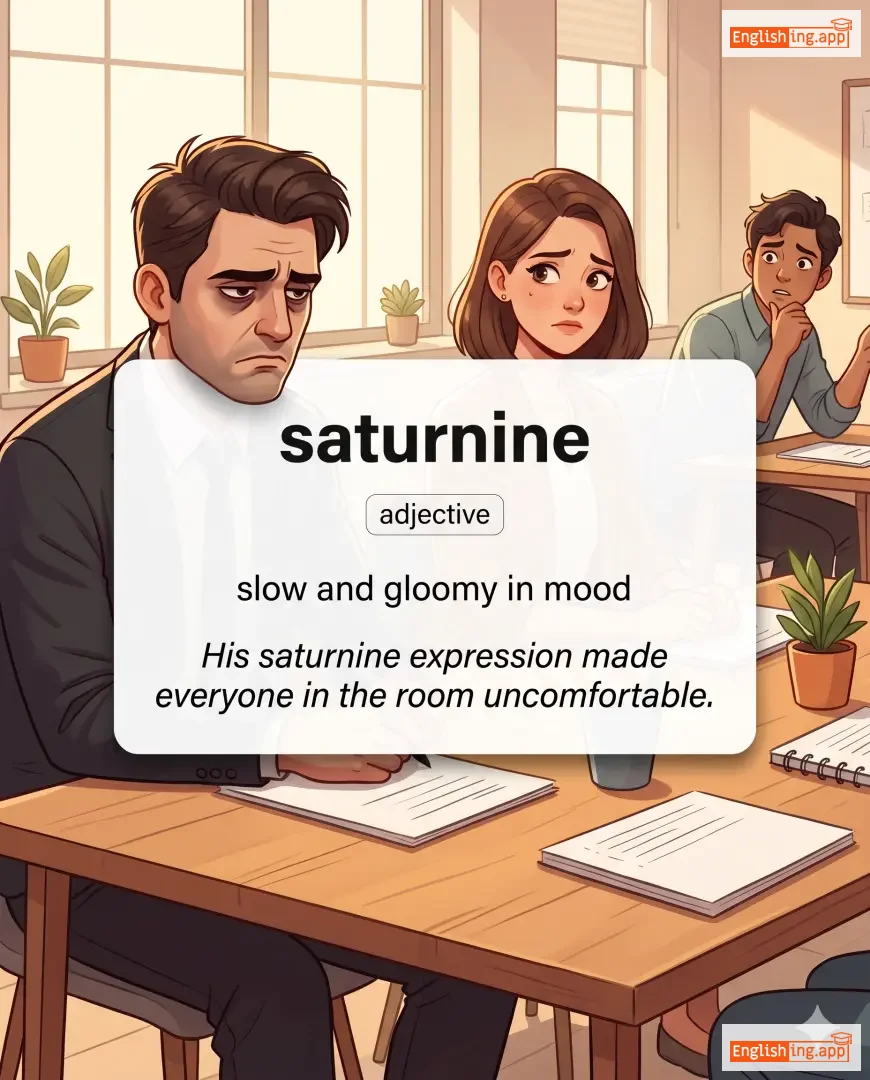
saturnine definition card — visual illustration of the meaning
adjective
/ˈsætərˌnaɪn/
saturnien (saturnien)

slow and gloomy in mood

"His saturnine expression made everyone in the room uncomfortable."

"Son expression saturnienne rendait tout le monde dans la pièce mal à l'aise." (Son expression saturnienne rendait tout le monde dans la piece mal a l'aise.)
noun
/ˈsætərdeɪ/
samedi (samedi)

The day of the week between Friday and Sunday; traditionally the sixth day of the week

"We are going to the beach on Saturday."

"Nous allons à la plage samedi." (Nous allons a la plage samedi.)
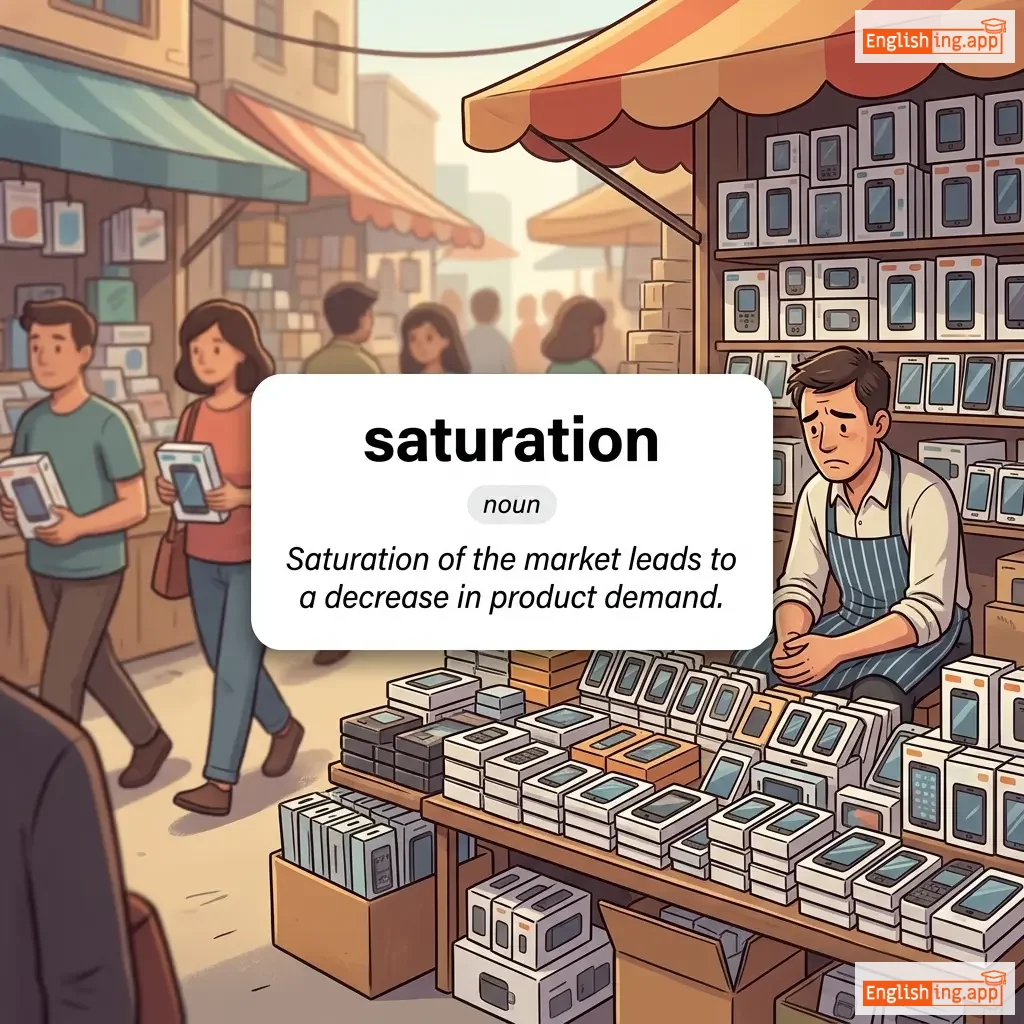
saturation definition card — visual illustration of the meaning
noun
/ˌsætʃəˈreɪʃən/
saturation (saturation)

The state or process that occurs when no more of something can be absorbed, combined with, or added.

"Saturation of the market leads to a decrease in product demand."

"La saturation du marché entraîne une diminution de la demande de produits." (La saturation du marche entraine une diminution de la demande de produits.)
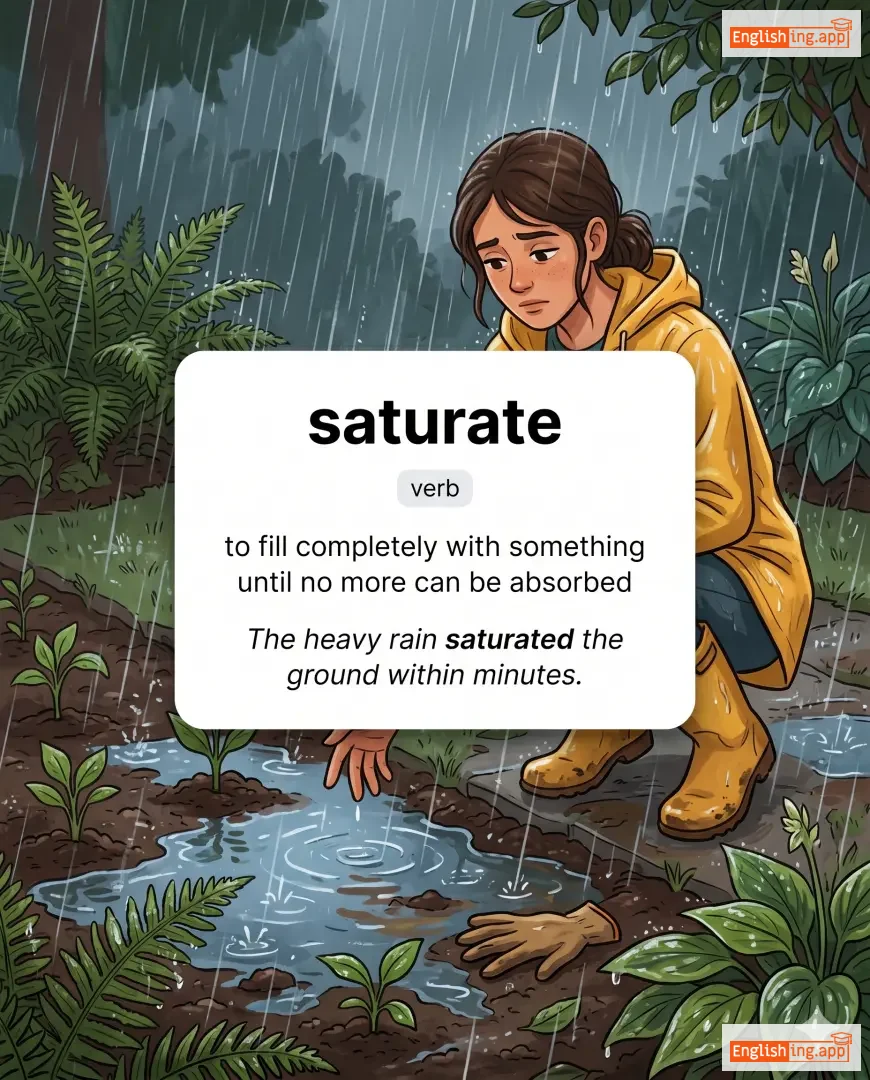
saturate definition card — visual illustration of the meaning
verb
/ˈsætʃəˌreɪt/
saturer (saturer)

to fill completely with something until no more can be absorbed

"The heavy rain saturated the ground within minutes."

"La forte pluie a saturé le sol en quelques minutes." (La forte pluie a saturé le sol en quelques minutes.)
noun
/ˈsætræp/
satrape (satrape)

a governor of a province in ancient Persia; also used figuratively for a subordinate ruler

"The king appointed a satrap to oversee the distant province."

"Le roi nomma un satrape pour superviser la province éloignée." (Le roi nomma un satrape pour superviser la province éloignée.)
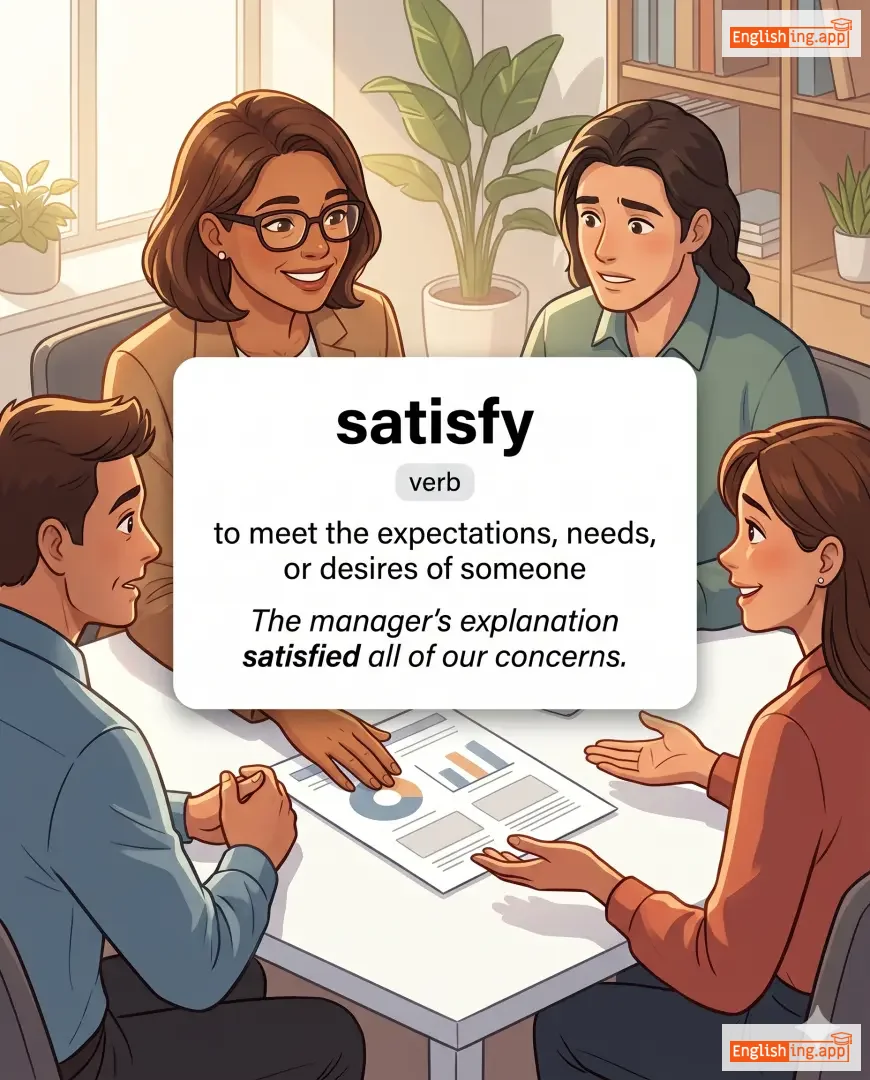
satisfy definition card — visual illustration of the meaning
verb
/ˈsætɪsfaɪ/
satisfaire (satisfair)

to meet the expectations, needs, or desires of someone

"The manager's explanation satisfied all of our concerns."

"L'explication du manager a satisfait toutes nos préoccupations." (L'explication du manager a satisfait toutes nos préoccupations.)
adjective
/ˈsætɪsfaɪd/
satisfait (satisfait)

Pleased or content with what has been achieved or received.

"He felt satisfied after finishing his project."

"Il se sentait satisfait après avoir terminé son projet." (Il se sentait satisfait après avoir terminé son projet.)
adjective
/ˈsæt.ɪs.fæk.tər.i/
satisfaisant (satisfaisant)

acceptable; meeting requirements; adequate

"The test results were satisfactory."

"Les résultats du test étaient satisfaisants." (les résultats du test étaient satisfaisants.)
noun
/ˌsætɪsˈfækʃən/
satisfaction (satisfaction)

the feeling of being pleased or content with something

"Her satisfaction with the results was evident."

"Sa satisfaction des résultats était évidente." (Sa satisfaction des resultats etait evidente.)
verb
/ˈsætəˌraɪz/
satiriser (satirizer)

to mock or criticize something using satire

"The play satirizes the greed of modern corporations."

"La pièce satirise la cupidité des entreprises modernes." (La pièce satirise la cupidité des entreprises modernes.)
adjective
/səˈtɪrɪkəl/
satirique (satirique)

containing or using satire to criticize or mock

"The satirical cartoon mocked the government's new policy."

"Le dessin satirique se moquait de la nouvelle politique du gouvernement." (Le dessin satirique se moquait de la nouvelle politique du gouvernement.)
adjective
/səˈtɪrɪk/
satirique (satirique)

Relating to or using satire.

"The novel takes a satiric view of urban life."

"Le roman adopte un point de vue satirique sur la vie urbaine." (Le roman adopte un point de vue satirique sur la vie urbaine.)
noun
/ˈsætaɪər/
satire (satir)

The use of humor, irony, or exaggeration to criticize people's stupidity or vices.

"The play was a brilliant satire on modern politics."

"La pièce était une brillante satire de la politique moderne." (La pièce était une brillante satire de la politique moderne.)
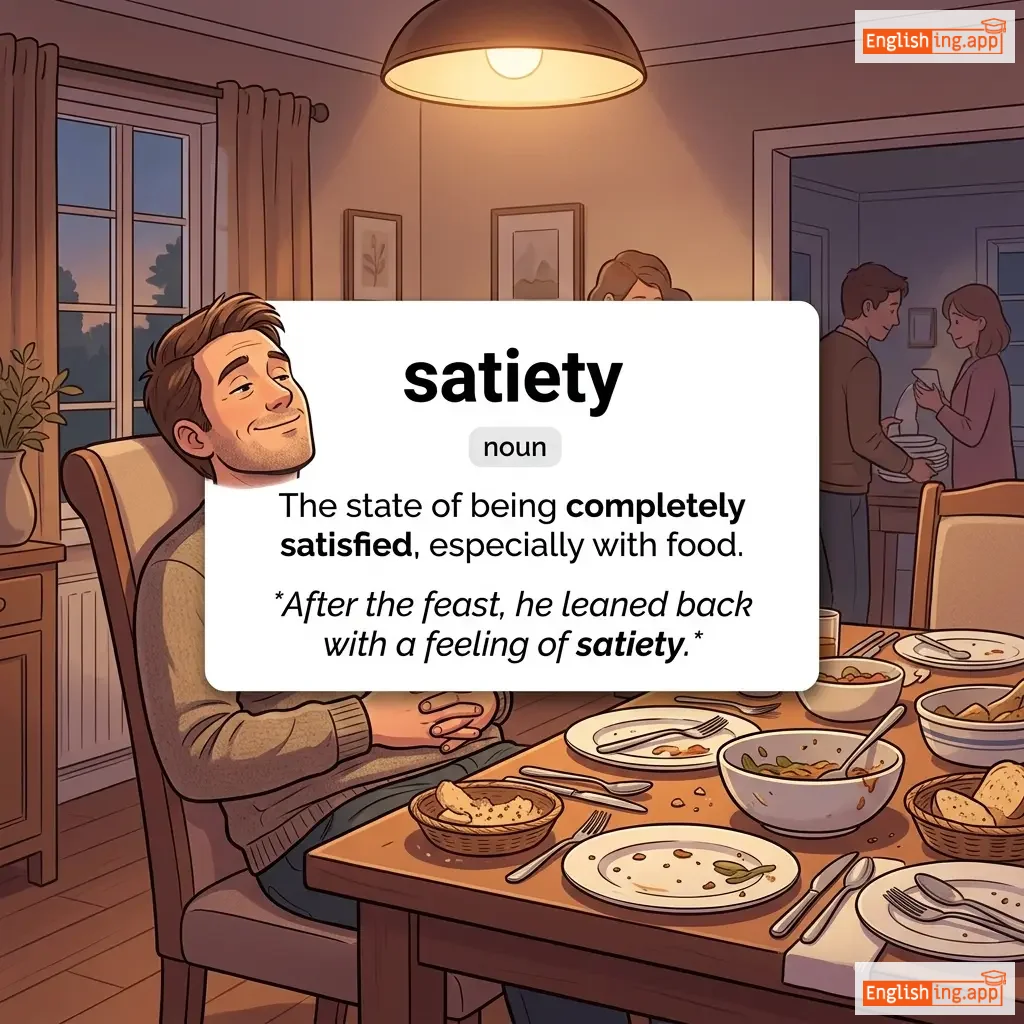
satiety definition card — visual illustration of the meaning
noun
/səˈtaɪ.ə.ti/
satiété (satiete)

The state of being completely satisfied, especially with food.

"After the feast, he leaned back with a feeling of satiety."

"Après le festin, il s'est allongé avec un sentiment de satiété." (Apres le festin, il s'est allonge avec un sentiment de satiete.)
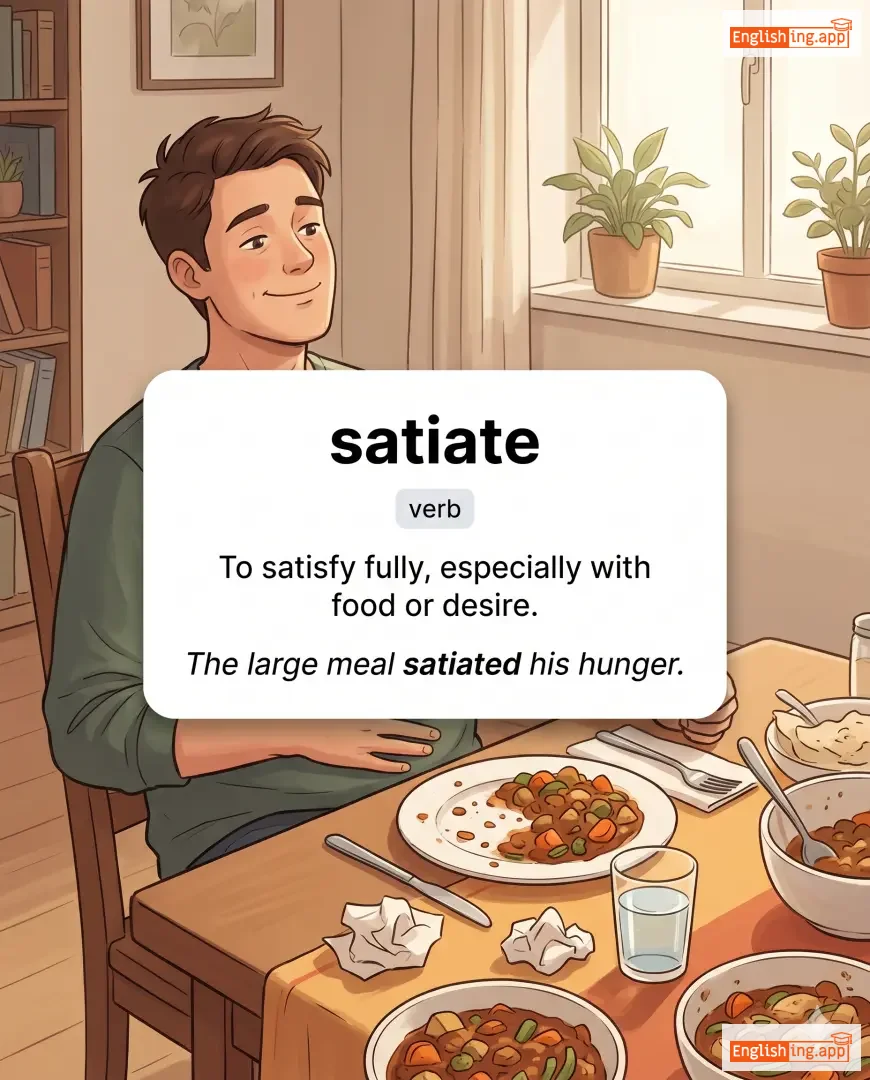
satiate definition card — visual illustration of the meaning
verb
/ˈseɪʃiˌeɪt/
satisfaire (satisfier)

To satisfy fully, especially with food or desire.

"The large meal satiated his hunger."

"Le grand repas a satisfait sa faim." (Le grand repas a satisfait sa faim.)
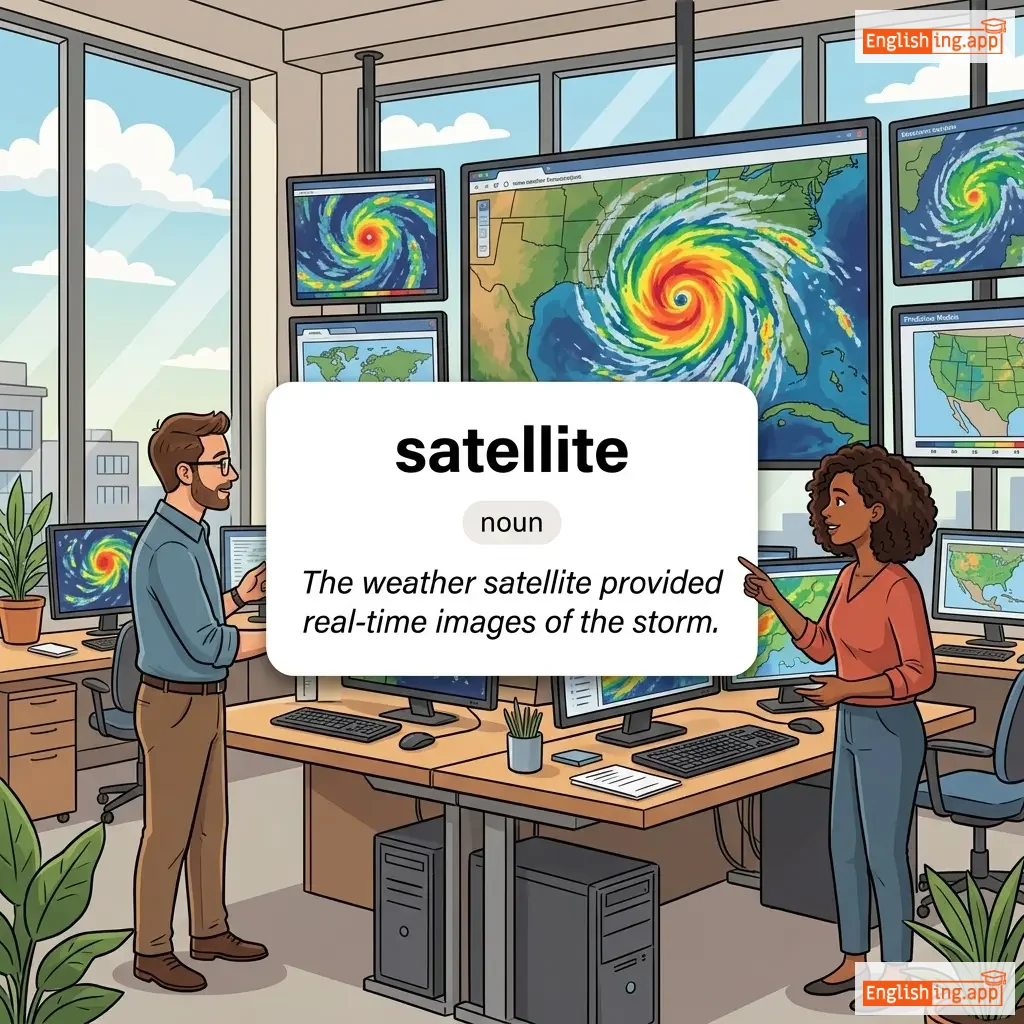
satellite definition card — visual illustration of the meaning
noun
/ˈsætəlaɪt/
satellite (satellite)

An artificial body placed in orbit around the earth or another planet to collect information or for communication.

"The weather satellite provided real-time images of the storm."

"Le satellite météorologique a fourni des images en temps réel de la tempête." (Le satellite meteorologique a fourni des images en temps reel de la tempete.)
🍽️

sate (set)

verb
/seɪt/
satisfaire (satisfayr)

To satisfy fully or to excess.

"The huge meal sated their hunger after the long journey."

"Le gros repas a satisfait leur faim après le long voyage." (Le gros repas a satisfait leur faim après le long voyage.)
noun
/ˈseɪ.tən/
Satan (Satan)

the chief evil spirit; the Devil in Christian and Islamic belief

"According to religious texts, Satan tempts people to sin."

"Selon les textes religieux, Satan tente les gens de pécher." (Selon les textes religieux, Satan tente les gens de pecher.)
sartorial definition card — visual illustration of the meaning
adjective
/sɑːrˈtɔːriəl/
relatif à la couture (relatif a la couture)

Relating to tailoring, clothes, or style of dress.

"The actor is known for his sartorial elegance on the red carpet."

"L'acteur est connu pour son élégance sartoriale sur le tapis rouge." (L'acteur est connu pour son élégance sartoriale sur le tapis rouge.)
noun
/ˈsɑːri/
sari (sari)

a garment consisting of a length of cotton or silk elaborately draped around the body, traditionally worn by women from South Asia

"She looked elegant in her red silk saree at the festival."

"Elle avait l'air élégante dans son sari en soie rouge lors du festival." (Elle avait l'air élégante dans son sari en soie rouge lors du festival.)
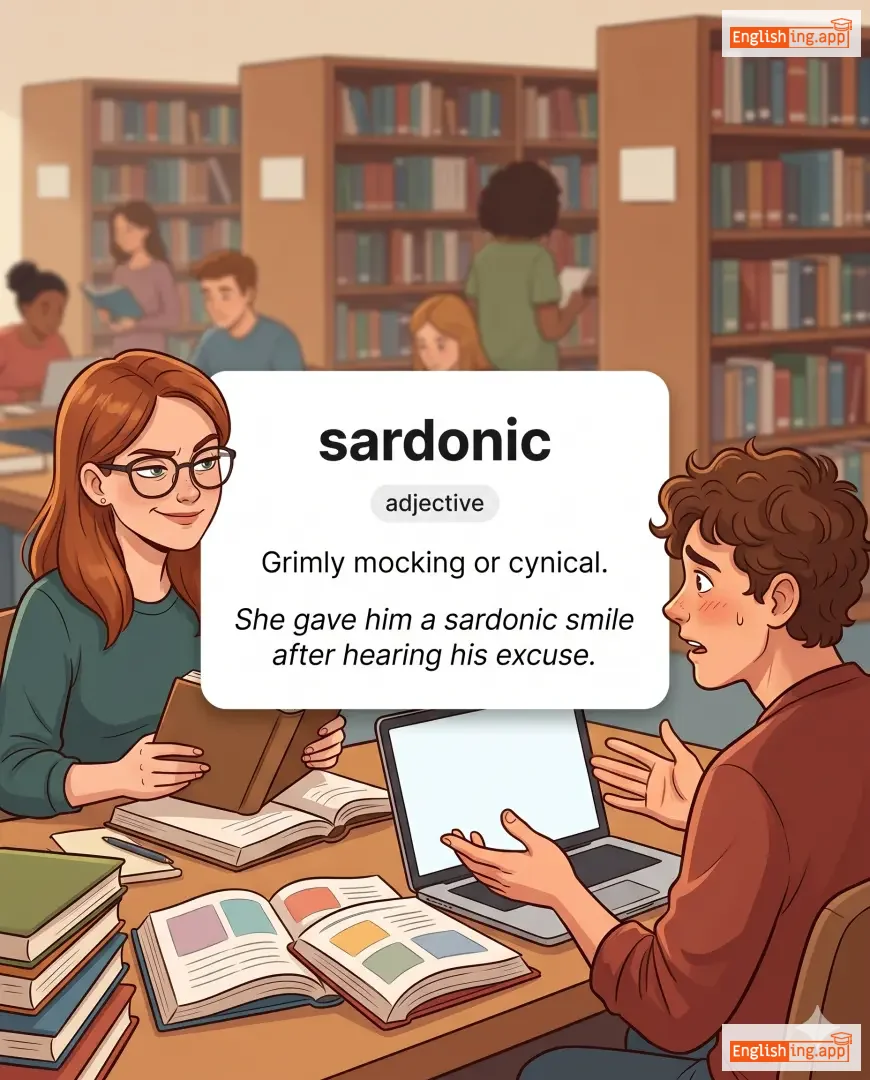
sardonic definition card — visual illustration of the meaning
adjective
/sɑːrˈdɒnɪk/
bonheur (bonheur)

Grimly mocking or cynical.

"She gave him a sardonic smile after hearing his excuse."

"Elle ne pouvait pas cacher son bonheur lorsqu'elle a reçu le prix." (Elle ne pouvait pas cacher son bonheur lorsqu'elle a reçu le prix.)
noun
/sɑːrˈkɒfəɡəs/
cercueil en pierre (cercueil en pierre)

A stone coffin, often decorated, used in ancient times.

"The museum displayed a beautifully carved sarcophagus from ancient Egypt."

"Le musée a exposé un cercueil en pierre magnifiquement sculpté de l'Égypte ancienne." (Le musée a exposé un cercueil en pierre magnifiquement sculpté de l'Égypte ancienne.)
adjective
/sɑːrˈkæstɪk/
sarcastique (sarcastique)

Using irony or mockery to convey contempt or humor.

"She made a sarcastic remark about his cooking."

"Elle a fait une remarque sarcastique sur sa cuisine." (Elle a fait une remarque sarcastique sur sa cuisine.)
noun
/ˈsɑːrˌkæzəm/
sarcasme (sarcasme)

The use of irony to mock or convey contempt.

"His sarcasm often made people laugh but sometimes offended them."

"Son sarcasme faisait souvent rire les gens, mais parfois les offusquait." (Son sarcasme faisait souvent rire les gens, mais parfois les offusquait.)
adjective
/ˌsæpəˈneɪʃəs/
savonneux (savonneux)

Soapy or having the qualities of soap.

"The plant has saponaceous leaves that produce foam when rubbed in water."

"La plante a des feuilles savonneuses qui produisent de la mousse lorsqu'elles sont frottées dans l'eau." (La plante a des feuilles savonneuses qui produisent de la mousse lorsqu'elles sont frottees dans l'eau.)
adjective
/ˌseɪpiˈɛnʃəl/
relatif à la sagesse (relatif a la sagesse)

Relating to wisdom or knowledge, often in a religious or philosophical sense.

"The monk shared sapiential teachings with his students."

"Le moine a partagé des enseignements relatifs à la sagesse avec ses étudiants." (Le moine a partagé des enseignements relatifs à la sagesse avec ses étudiants.)
adjective
/ˈseɪpiənt/
sage (sage)

Wise, or appearing to be wise.

"The professor gave a sapient response to the complex question."

"Le professeur a donné une réponse sage à la question complexe." (Le professeur a donné une réponse sage à la question complexe.)
noun
/ˈseɪpiəns/
sagesse (sagesse)

Wisdom or intelligence.

"Her sapience in solving problems earned her the respect of her colleagues."

"Sa sagesse dans la résolution de problèmes lui a valu le respect de ses collègues." (Sa sagesse dans la resolution de problemes lui a valu le respect de ses collegues.)
adjective
/ˈsæpɪd/
savoureux (savoureux)

Having a pleasant taste; flavorful.

"The chef prepared a sapid dish that delighted everyone at the table."

"Le chef a préparé un plat savoureux qui a enchanté tout le monde à table." (Le chef a préparé un plat savoureux qui a enchanté tout le monde à table.)
noun
/ˈsæf.aɪər/
saphir (saphir)

a precious stone that is typically blue in color

"The royal crown was adorned with a large sapphire."

"La couronne royale était ornée d'un grand saphir." (La couronne royale était ornée d'un grand saphir.)
verb, noun
/sæp/
sève / épuiser (seve / epuiser)

As a noun: the vital fluid in plants; As a verb: to gradually weaken or drain strength.

"The long journey began to sap his energy."

"Le long voyage a commencé à épuiser son énergie." (Le long voyage a commence a epuiser son energie.)
noun
/ˈsækrɪsti/
sacristie (sacristie)

a room in a church where sacred vessels and vestments are kept

"The priest entered the sacristy before the mass began."

"Le prêtre est entré dans la sacristie avant que la messe ne commence." (Le pretre est entre dans la sacristie avant que la messe ne commence.)
adjective
/ˈruːθləs/
impitoyable (impitoyable)

Having or showing no pity or compassion for others.

"The ruthless leader crushed all opposition."

"Le leader impitoyable a écrasé toute opposition." (Le leader impitoyable a écrasé toute opposition.)
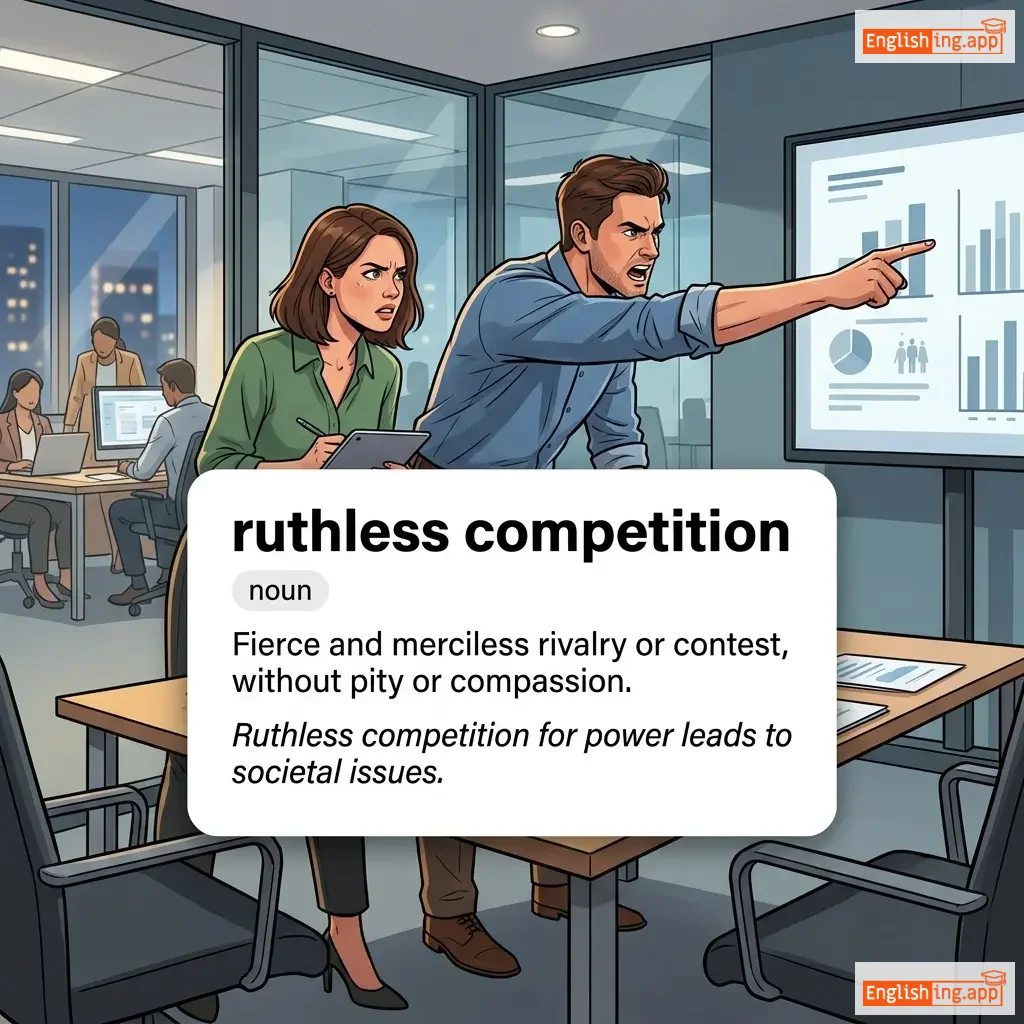
ruthless competition definition card — visual illustration of the meaning
noun
ˈruθləs ˌkɑmpəˈtɪʃən
compétition impitoyable (competition impitoyable)

Fierce and merciless rivalry or contest, without pity or compassion.

"Ruthless competition for power leads to societal issues."

"La compétition impitoyable pour le pouvoir mène à des problèmes sociaux." (La compétition impitoyable pour le pouvoir mène à des problèmes sociaux.)
noun
/səˈbætɪkəl/
période de congé pour études ou voyages (periode de conge pour etudes ou voyages)

A period of paid leave granted to a teacher or worker for study or travel, traditionally every seventh year.

"She took a sabbatical to research her new book."

"Elle a pris un congé sabbatique pour rechercher son nouveau livre." (Elle a pris un conge sabbatique pour rechercher son nouveau livre.)
verb
/ˈsæbətɑːʒ/
activité destructrice (activite destructrice)

To deliberately destroy, damage, or obstruct something, especially for political or military advantage.

"The rebels tried to sabotage the railway lines."

"Les rebelles ont essayé de saboter les voies ferrées." (Les rebelles ont essaye de saboter les voies ferrees.)
noun
/ˌsæbəˈtɜːr/
saboteur (saboteur)

A person who engages in sabotage.

"The saboteur was arrested before he could plant the bomb."

"Le saboteur a été arrêté avant qu'il ne puisse planter la bombe." (Le saboteur a été arrêté avant qu'il ne puisse planter la bombe.)
adjective
/ˈsækərɪn/
bonheur (bonheur)

Excessively sweet or sentimental.

"His saccharine smile seemed insincere."

"Elle ne pouvait pas cacher son bonheur lorsqu'elle a reçu le prix." (Elle ne pouvait pas cacher son bonheur lorsqu'elle a reçu le prix.)
adjective
/ˌsæsərˈdoʊtl/
sacerdotal (sacerdotal)

Relating to priests or the priesthood.

"The ritual had a distinctly sacerdotal character."

"Le rituel avait un caractère distinctement sacerdotal." (Le rituel avait un caractère distinctement sacerdotal.)
noun
/sæk/
sac (sak)

a large bag made of strong material for holding things

"He carried a sack of rice on his shoulder."

"Il portait un sac de riz sur son épaule." (Il portait un sac de riz sur son epaule.)
adjective
/ˈseɪkrɪd/
sacré (sacre)

connected with God or a religion and considered holy or deserving respect

"The temple is a sacred place for the community."

"Le temple est un lieu sacré pour la communauté." (Le temple est un lieu sacré pour la communauté.)
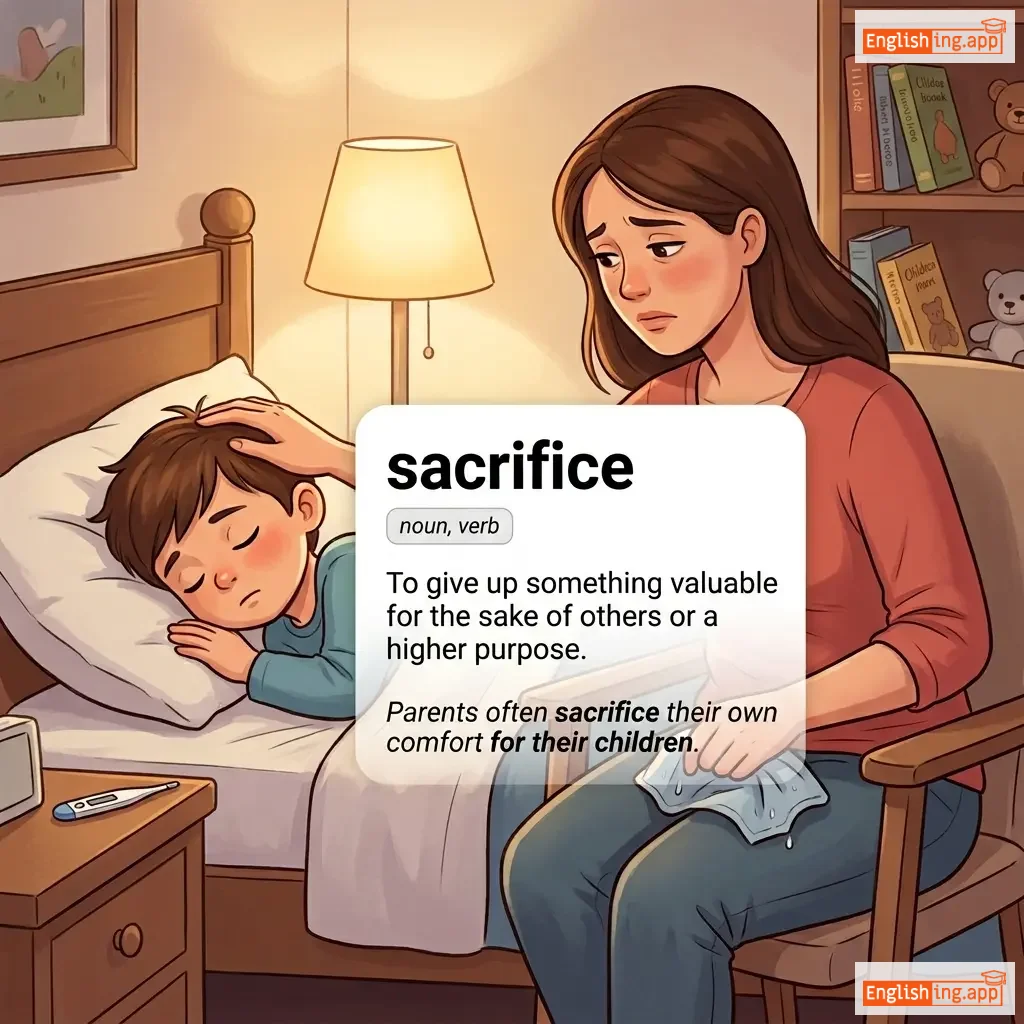
sacrifice definition card — visual illustration of the meaning
noun, verb
/ˈsækrɪfaɪs/
sacrifice (sacrifice)

To give up something valuable for the sake of others or a higher purpose.

"Parents often sacrifice their own comfort for their children."

"Les parents sacrifient souvent leur confort pour leurs enfants." (les parents sacrifient souvent leur confort pour leurs enfants)
adjective
/ˌsækrɪˈfɪʃəl/
sacrificiel (sacrificiel)

Relating to or involving sacrifice.

"The lamb was used as a sacrificial offering in the ritual."

"L'agneau a été utilisé comme offrande sacrificielle dans le rituel." (L'agneau a été utilisé comme offrande sacrificielle dans le rituel.)
noun
/ˈsækrɪlɪdʒ/
sacrilège (sacrilège)

Violation or misuse of what is regarded as sacred.

"Stealing from the temple was considered an act of sacrilege."

"Voler dans le temple était considéré comme un acte de sacrilège." (voler dans le temple etait considere comme un acte de sacrilège.)
adjective
/ˌsækrəˈlɪdʒəs/
sacrilège (sacrilège)

Showing disrespect or irreverence toward something sacred.

"The painting was criticized as being sacrilegious."

"Le tableau a été critiqué comme étant sacrilège." (Le tableau a été critiqué comme étant sacrilège.)
noun/verb
/ˈseɪf.ɡɑːrd/
protéger (protéger)

To protect from harm or damage; a measure taken to ensure safety.

"Laws exist to safeguard the rights of children."

"Les lois existent pour protéger les droits des enfants." (Les lois existent pour protéger les droits des enfants.)
adverb
/ˈseɪfli/
en toute sécurité (en toute securite)

in a way that is not dangerous or likely to cause harm

"The children crossed the road safely."

"Les enfants ont traversé la rue en toute sécurité." (Les enfants ont traverse la rue en toute securite.)
noun
/ˈseɪfti/
sécurité (securite)

the condition of being protected from harm or danger

"The safety of passengers is our top priority."

"La sécurité des passagers est notre priorité absolue." (La securite des passagers est notre priorite absolue.)
adjective
/seɪf/
sécurisé (securize)

free from harm or danger

"Make sure your belongings are safe during the trip."

"Assurez-vous que vos affaires sont en sécurité pendant le voyage." (Assurez-vous que vos affaires sont en sécurité pendant le voyage.)