語彙集

英単語辞書 | 単語の意味、定義、例文

noun
/ˌsɛlfsəˈfɪʃənsi/
自給自足 (jikyū jisoku)

the ability to supply one's own needs without external assistance; independence

"The farm achieved complete self-sufficiency in food production."

"その農場は食品生産において完全な自給自足を達成しました。" (Sono nōjō wa shokuhin seisan ni oite kanzen'na jikyū jisoku o tassei shimashita.)
adjective
/ˌsɛlf ˈraɪtʃəs/
自己満足 (jiko manzoku)

Having or showing an attitude of moral superiority; believing one’s own beliefs are the only right ones.

"His self-righteous comments made everyone uncomfortable."
"彼の自己満足的なコメントは、みんなを不快にさせました。" (Kare no jiko manzokuteki na komento wa, minna o fukai ni saseshimashita.)
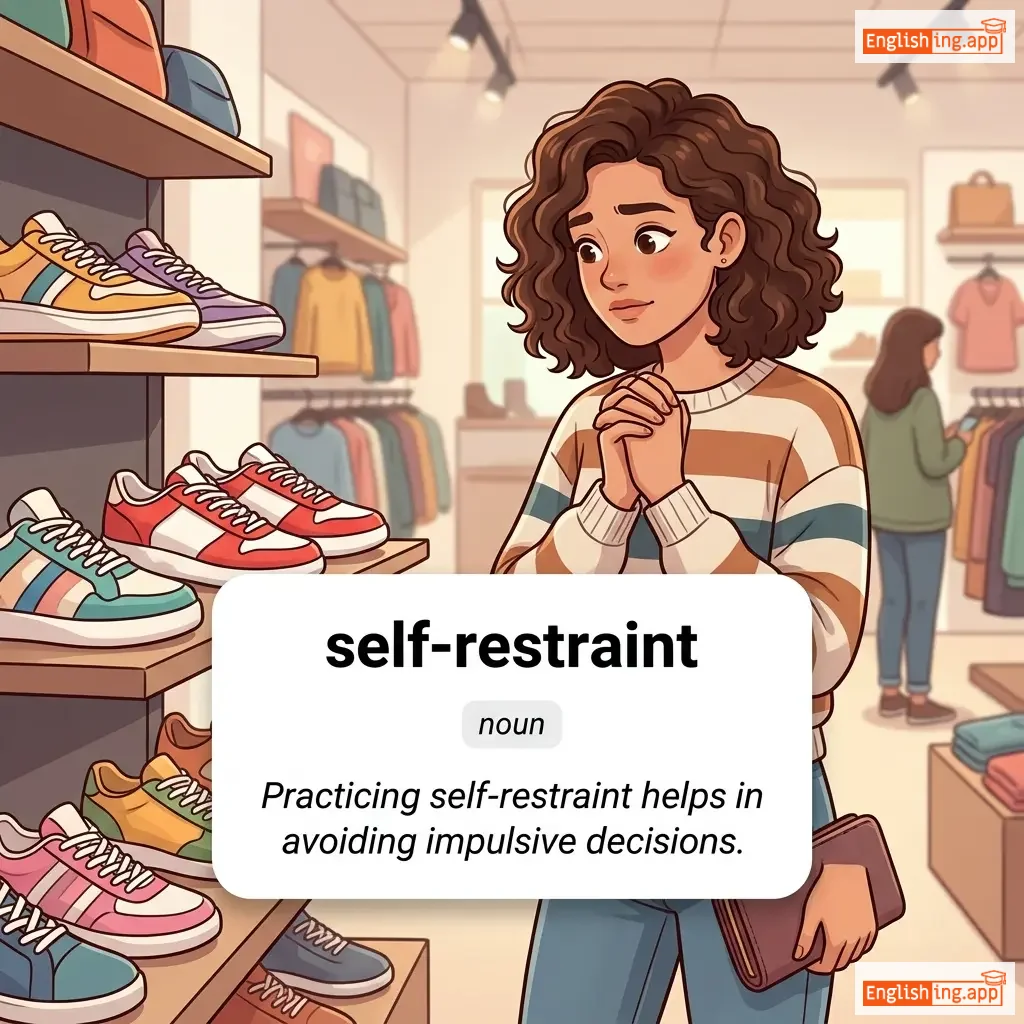
self-restraint definition card — visual illustration of the meaning
noun
ˌsɛlf.rɪˈstreɪnt
自己抑制 (jiko yokusei)

The practice of restraining oneself from indulging in something, typically an impulse or desire.

"Practicing self-restraint helps in avoiding impulsive decisions."

"自己抑制を実践することで、衝動的な決定を避けるのに役立ちます。" (Jiko yokusei o jissen suru koto de, shōdō-teki na kettei o sakeru no ni yakudachimasu.)
noun
/ˌsɛlf rɪˈspɛkt/
自尊 (jison)

A feeling of pride and confidence in oneself; self-worth.

"She refused to compromise her self-respect by accepting unfair treatment."

"彼女は不公平な扱いを受け入れることで自尊心を損なうことを拒否した。" (Kanojo wa fukōhei na atsukai o ukeireru koto de jisonshin o sokonau koto o kyohi shita.)
self-reliance definition card — visual illustration of the meaning
noun
sɛlf rɪˈlaɪ.əns
自立 (jiritsu)

Reliance on one's own powers and resources rather than those of others; independence.

"Self-reliance helps build confidence."

"自立は自信を高めるのに役立ちます。" (Jiritsu wa jishin o takameru no ni yakudachimasu.)
self-possession definition card — visual illustration of the meaning
noun
ˈsɛlf pəˈzɪʃən
自己抑制 (jikoyokusei)

The quality of being calm and confident and in control of one's emotions; composure.

"His self-possession during the crisis was remarkable."

"彼の危機的な状況での自己抑制は素晴らしかった。" (Kare no kikiteki na joukyou de no jikoyokusei wa subarashikatta.)
noun
/ˌsɛlf ɪnˈdʌldʒəns/
自己 indulgence (jiko indulgence)

The act of allowing oneself to enjoy pleasures or desires excessively.

"His weekend of self-indulgence included eating sweets and watching movies nonstop."

"彼の自己満足の週末は、甘いものを食べて映画を見続けることが含まれていました。" (Kare no jiko manzoku no shūmatsu wa, amaimono o tabete eiga o mitsuzukeru koto ga fukumarete imashita.)
noun
/ˌsɛlf ɪˈstiːm/
自尊心 (jisonshin)

confidence in one's own worth or abilities; self-respect

"Building self-esteem takes time and consistent effort."

"自尊心を築くには時間と一貫した努力が必要です。" (Jisonshin wo kizuku ni wa jikan to ikkan shita doryoku ga hitsuyou desu.)
adjective
/ˌsɛlf ɪˈfeɪsɪŋ/
控えめな (hikaeme na)

not drawing attention to oneself; modest

"Despite his success, he remained self-effacing and humble."

"成功にもかかわらず、彼は控えめで謙虚なままでした。" (Seikou ni mo kakawarazu, kare wa hikaeme de kenkyona mamadeshita.)
self-discipline definition card — visual illustration of the meaning
noun
/ˈsɛlf ˈdɪsɪplɪn/
自己規律 (jiko kiritsu)

The ability to control one's feelings and overcome one's weaknesses; the ability to pursue what one thinks is right despite temptations to abandon it.

"Self-discipline is essential for achieving long-term goals."

"自己規律は長期的な目標を達成するために必要です。" (Jiko kiritsu wa chōkitekina mokuhyō o tassei suru tame ni hitsuyō desu.)
self-control definition card — visual illustration of the meaning
noun
ˌsɛlf.kənˈtrəʊl
自己制御 (jiko seigyo)

The ability to control one's emotions, behavior, and desires in order to obtain some reward, or avoid some punishment, typically in the longer term.

"Self-control is important for maintaining a balanced life."
"自己制御はバランスの取れた生活を維持するために重要です。" (Jiko seigyo wa baransu no toreta seikatsu wo iji suru tame ni juuyou desu.)
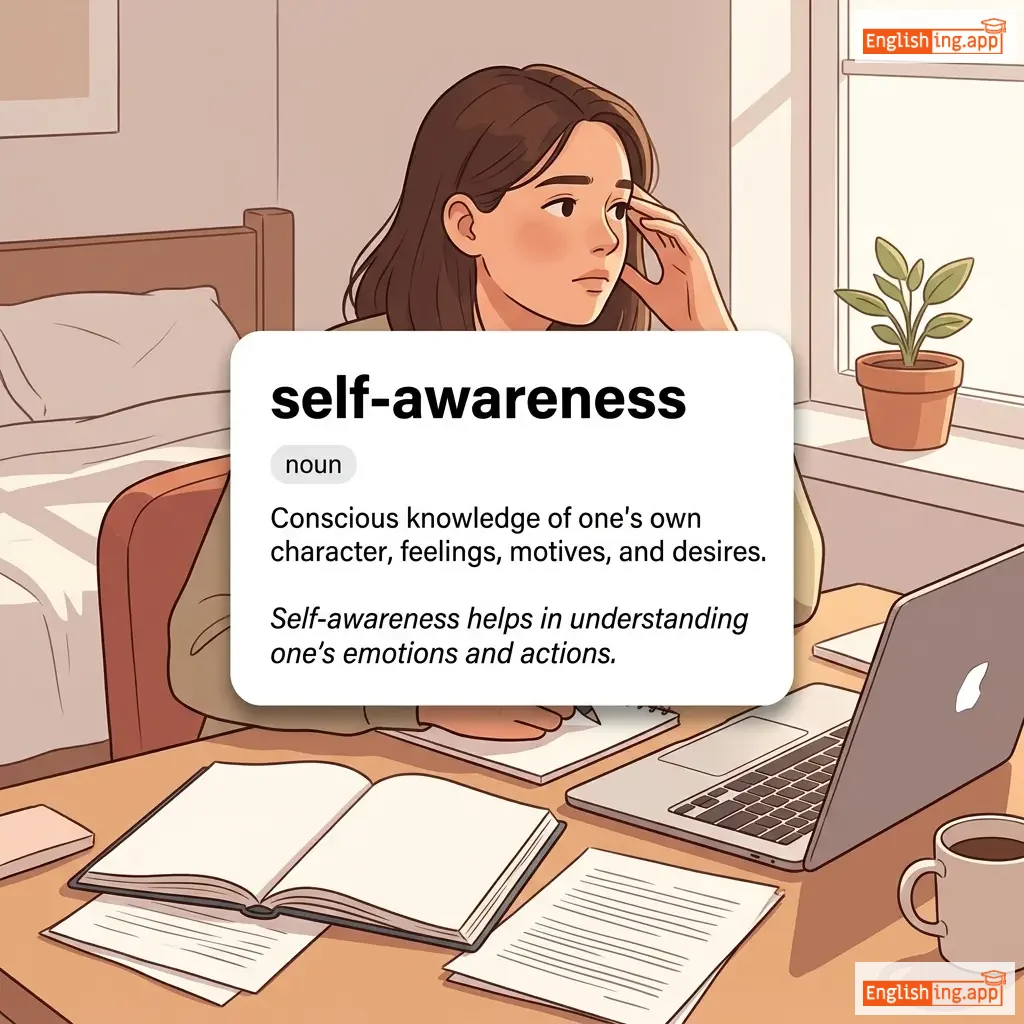
self-awareness definition card — visual illustration of the meaning
noun
/ˌsɛlf əˈwɛə.nəs/
自己認識 (jikoshiki)

Conscious knowledge of one's own character, feelings, motives, and desires.

"Self-awareness helps in understanding one's emotions and actions."

"自己認識は、自己の感情や行動を理解するのに役立ちます。" (Jiko ninshiki wa, jiko no kanjō ya kōdō o rikai suru no ni yakudachimasu.)
self-affirmation definition card — visual illustration of the meaning
noun
/ˌsɛlf əˌfɜːˈmeɪʃən/
自己肯定 (jiko kentei)

The practice of affirming one's own worthiness and value as an individual.

"Daily self-affirmation can boost your confidence."

"日々の自己肯定は自信を高めることができます。" (Hibi no jiko koutei wa jishin o takameru koto ga dekimasu.)
adjective
/ˌsɛlf əbˈzɔːrbd/
自己中心的 (jiko chūshin-teki)

Excessively preoccupied with oneself and one’s own thoughts, feelings, or interests.

"He was too self-absorbed to notice his friend's distress."

"彼は友達の苦しみに気づかないほど自己中心的だった。" (Kare wa tomodachi no kurushimi ni kizukanai hodo jiko chūshin-teki datta.)
noun
/ˌself əˈbeɪs.mənt/
自己卑下 (jiko hige)

The act of belittling or humiliating oneself.

"His constant self-abasement made others uncomfortable."

"彼の絶え間ない自己卑下は他の人々を不快にさせた。" (Kare no tae manai jiko hige wa hoka no hitobito wo fukai ni saseta.)
🧑‍💼

self (セルフ)

noun
/sɛlf/
自己 (jiko)

a person's essential being that distinguishes them from others, especially considered as the object of introspection or reflexive action

"She has a strong sense of self."

"彼女は強い自己認識を持っています。" (Kanojo wa tsuyoi jiko ninshiki o motteimasu.)
adjective
/sɪˈlek.tɪv/
選択的 (sentakuteki)

Characterized by careful choice; choosing only the best or most suitable.

"She is very selective about the clothes she buys."
"彼女は購入する服に非常に選択的です。" (Kanojo wa kōnyū suru fuku ni hijō ni sentakuteki desu.)
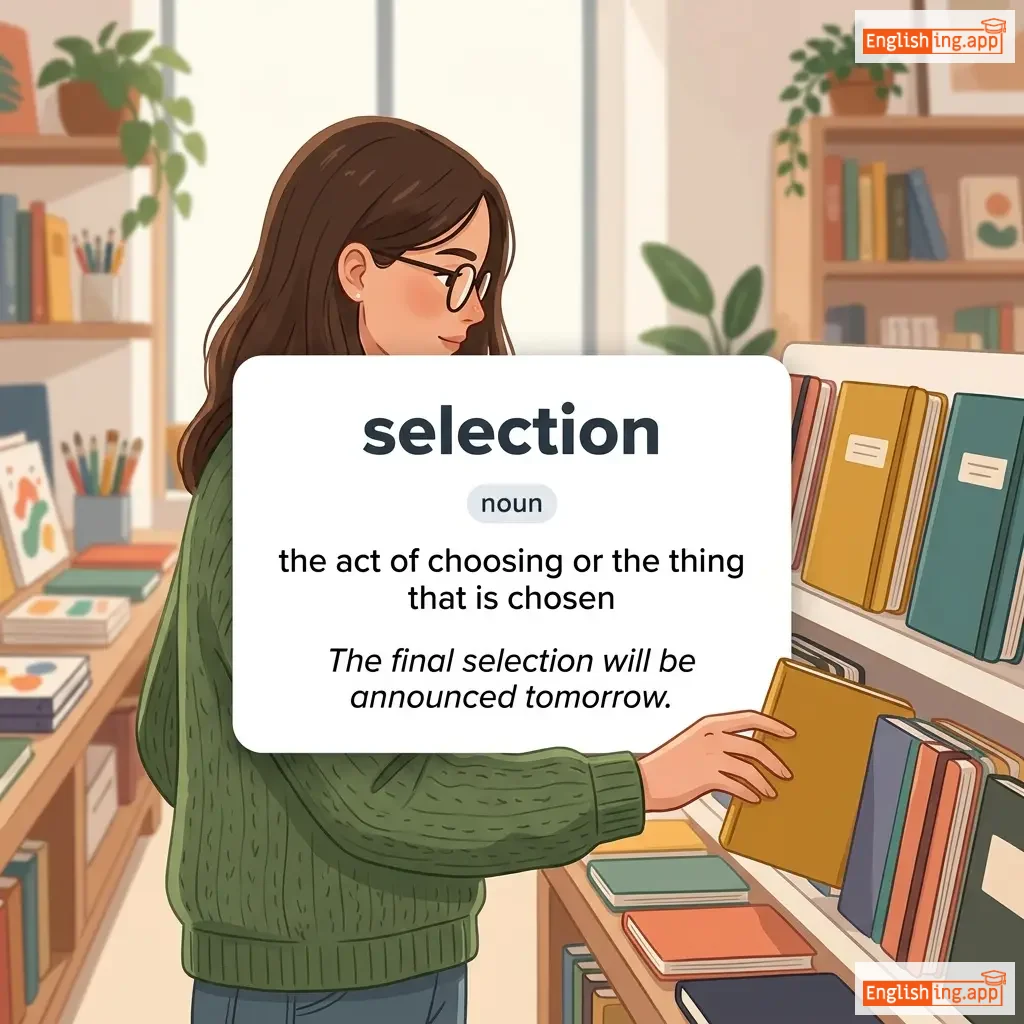
selection definition card — visual illustration of the meaning
noun
/sɪˈlɛkʃən/
選択 (sentaku)

the act of choosing or the thing that is chosen

"The final selection will be announced tomorrow."

"最終選択は明日発表されます。" (Saishū sentaku wa ashita happyō saremasu.)
adjective
/sɪˈlek.tɪd/
選ばれた (erabareta)

carefully chosen from a group for a particular purpose

"He was one of the selected candidates for the scholarship."
"彼は奨学金のために選ばれた候補者の一人でした。" (Kare wa shōgakukin no tame ni erabareta kōhosha no hitori deshita.)
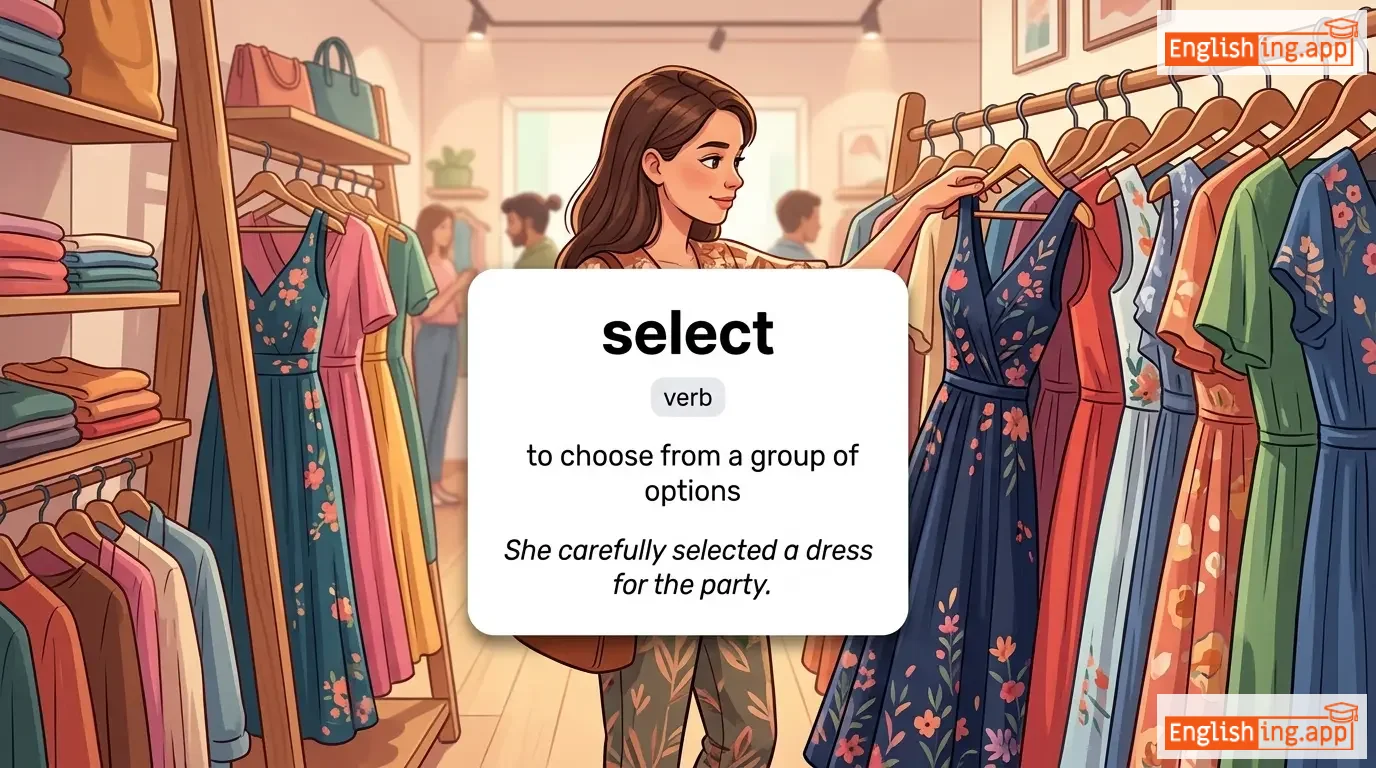
select definition card — visual illustration of the meaning
verb
/sɪˈlɛkt/
選択する (sentaku suru)

to choose from a group of options

"She carefully selected a dress for the party."

"彼女はパーティーのために慎重にドレスを選びました。" (Kanojo wa pātī no tame ni shinchō ni doresu o erabimashita.)
adverb
/ˈsel.dəm/
めったに (mettani)

not often; rarely

"She seldom visits her hometown nowadays."

"彼女は今、故郷をほとんど訪れません。" (Kanojo wa ima, kokyou o hotondo otozuremasen.)
verb
/siːz/
奪う (ubau)

To take hold of suddenly and forcibly.

"The police managed to seize the stolen goods."

"警察は盗まれた商品を押収することに成功した。" (Keisatsu wa nusumareta shouhin o oushuu suru koto ni seikou shita.)
noun
/sɪv/
ふるい (furui)

a utensil consisting of a wire or plastic mesh held in a frame, used for straining solids from liquids

"She used a sieve to separate the flour from lumps."

"彼女はふるいを使って小麦粉をダマから分けました。" (Kanojo wa furui o tsukatte komugiko o dama kara wakemashita.)
noun
/ˈsaɪz.mə.ɡræf/
地震計 (jishinkei)

An instrument that measures and records details of earthquakes, such as force and duration.

"The seismograph detected a strong tremor in the area."
"地震計はその地域で強い揺れを検出しました。" (Jishinkei wa sono chiiki de tsuyoi yure o kenshutsu shimashita.)
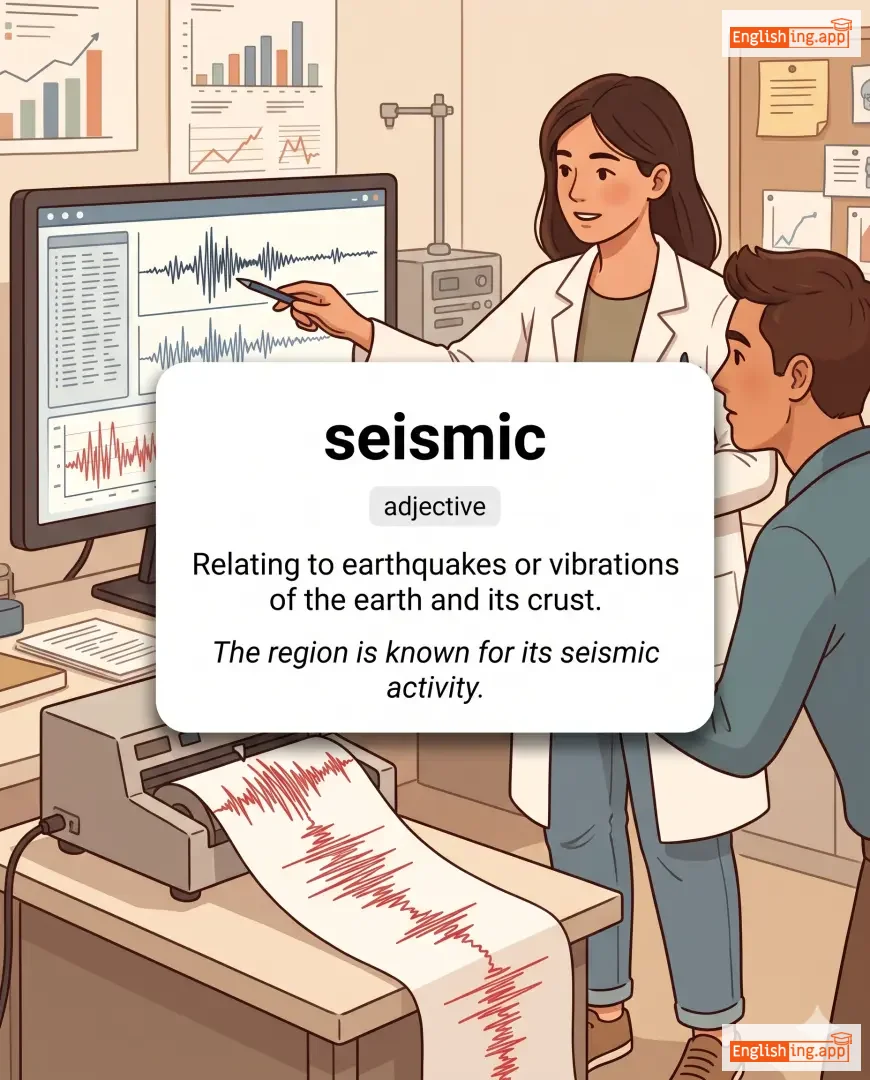
seismic definition card — visual illustration of the meaning
adjective
/ˈsaɪz.mɪk/
地震の (jishin no)

Relating to earthquakes or vibrations of the earth and its crust.

"The region is known for its seismic activity."

"その地域は地震活動で知られています。" (Sono chiiki wa jishin katsudō de shirareteimasu.)
noun
/seɪn/
大きな網 (ōkina ami)

A large fishing net that hangs vertically in the water.

"The fishermen cast their seine into the river."

"漁師たちは大きな網を川に投げ入れました。" (Ryōshitachi wa ōkina ami o kawa ni nageiremashita.)
noun
/ˈseɪnjər/
封建領主 (hōken ryōshu)

A feudal lord; a man of authority in medieval Europe.

"The seignior demanded taxes from the peasants."

"封建領主は農民から税金を要求した。" (Hōken ryōshu wa nōmin kara zeikin o yōkyū shita.)
noun
/ˈsɛɡmənt/
セグメント (segumento)

A part or section of something that is divided.

"Each segment of the market has different needs."

"市場の各セグメントには異なるニーズがあります。" (Shijō no kaku segumento ni wa kotonaru nīzu ga arimasu.)
verb
/siːð/
怒りで煮えたぎる (ikari de nietagiru)

To be filled with intense but unexpressed anger or agitation.

"She was seething with anger after the unfair decision."

"彼女は不公平な決定の後、怒りで煮えたぎっていました。" (Kanojo wa fukōhei na kettei no ato, ikari de nietagitte imashita.)
noun
/sɪr/
予言者 (yogensha)

A person who is supposed to be able to see what will happen in the future; a prophet.

"The seer predicted a great change in the kingdom."

"予言者は王国の大きな変化を予測しました。" (Yogensha wa ōkoku no ōkina henka o yosoku shimashita.)
verb
/siːp/
しみ出す (shimidasu)

to flow or leak slowly through small openings or pores

"Water began to seep through the cracks in the wall."

"水が壁のひび割れからしみ出し始めました。" (Mizu ga kabe no hibiwake kara shimidashi hajimemashita.)
adjective
/ˈsiːmli/
適切 (tekisetsu)

proper or appropriate in behavior or appearance

"It was not seemly to argue loudly during the ceremony."

"式典中に大声で議論するのは適切ではありませんでした。" (Shikiten-chuu ni oogoe de giron suru no wa tekisetsu de wa arimasen deshita.)
adverb
/ˈsiː.mɪŋ.li/
一見, 見た目では静か (ikken, mitamede wa shizuka)

appearing to be true, but not necessarily so

"He was seemingly calm despite the chaos around him."

"周りの混乱にもかかわらず、彼は一見静かだった。" (Mawari no konran ni mo kakawarazu, kare wa ikken shizuka datta.)
verb
/siːm/
見える (mieru)

to give the impression of being something or having a particular quality

"He seems tired after the long journey."

"長い旅の後、彼は疲れているように見える。" (Nagai tabi no ato, kare wa tsukarete iru you ni mieru.)
noun
/ˈsiːkər/
探求者 (tankyūsha)

a person who is looking for something, especially knowledge or truth

"The seeker traveled far to find the answers to his questions."

"探求者は自分の質問に対する答えを見つけるために遠くまで旅しました。" (Tankyūsha wa jibun no shitsumon ni taisuru kotae o mitsukeru tame ni tōku made tabimashita.)
verb
/siːk/
求める (motsumeru)

to try to find or obtain something; to attempt or desire to achieve

"He decided to seek advice from his mentor."

"彼はメンターからアドバイスを求めることに決めました。" (Kare wa mentā kara adobaisu o motomeru koto ni kimemashita.)
adjective
/ˈsiːdi/
汚い / 古びた (kitanai / furubita)

dirty, shabby, or in bad condition; also feeling slightly unwell

"He stayed in a seedy motel near the bus station."
"彼はバス停の近くの安いモーテルに泊まった。" (Kare wa basutei no chikaku no yasui mōteru ni tomatta.)
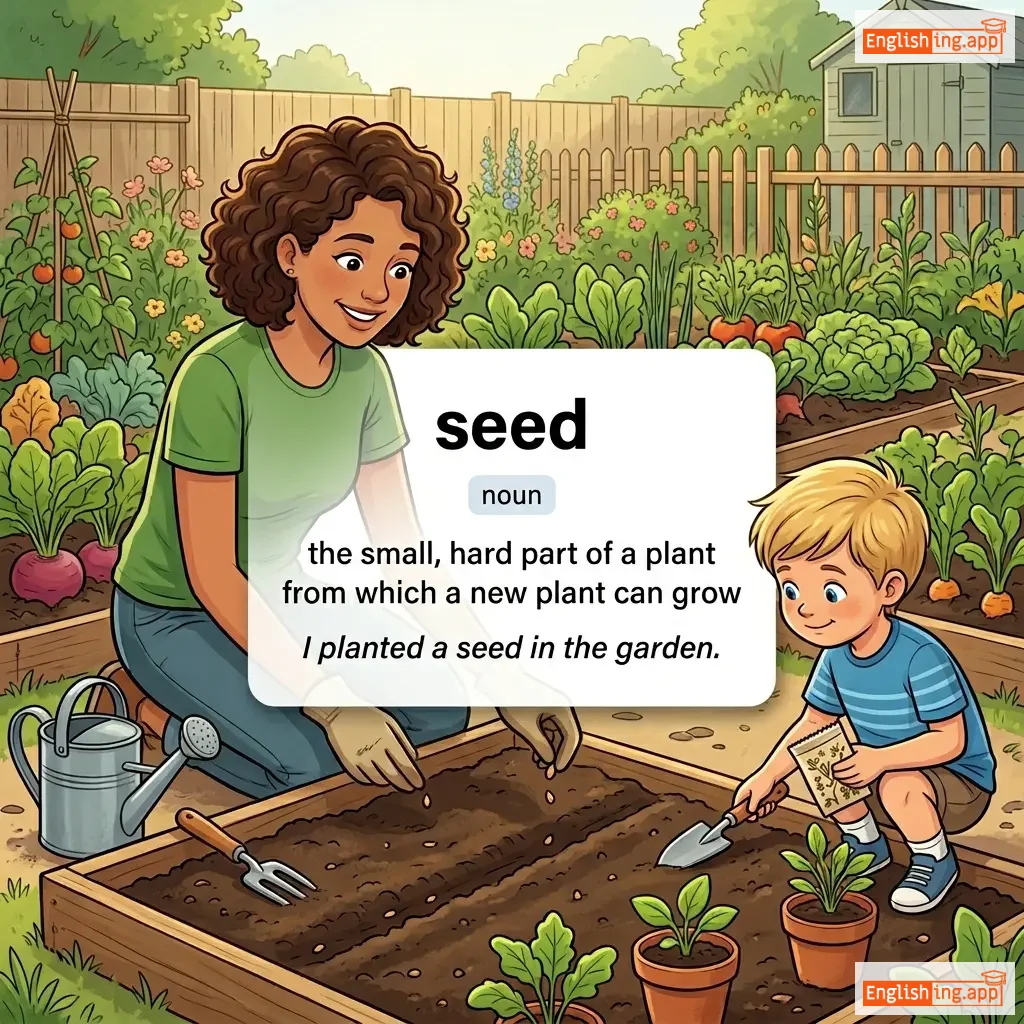
seed definition card — visual illustration of the meaning
noun
/siːd/
(tane)

the small, hard part of a plant from which a new plant can grow

"I planted a seed in the garden."

"私は庭に種を植えました。" (Watashi wa niwa ni tane o uemashita.)
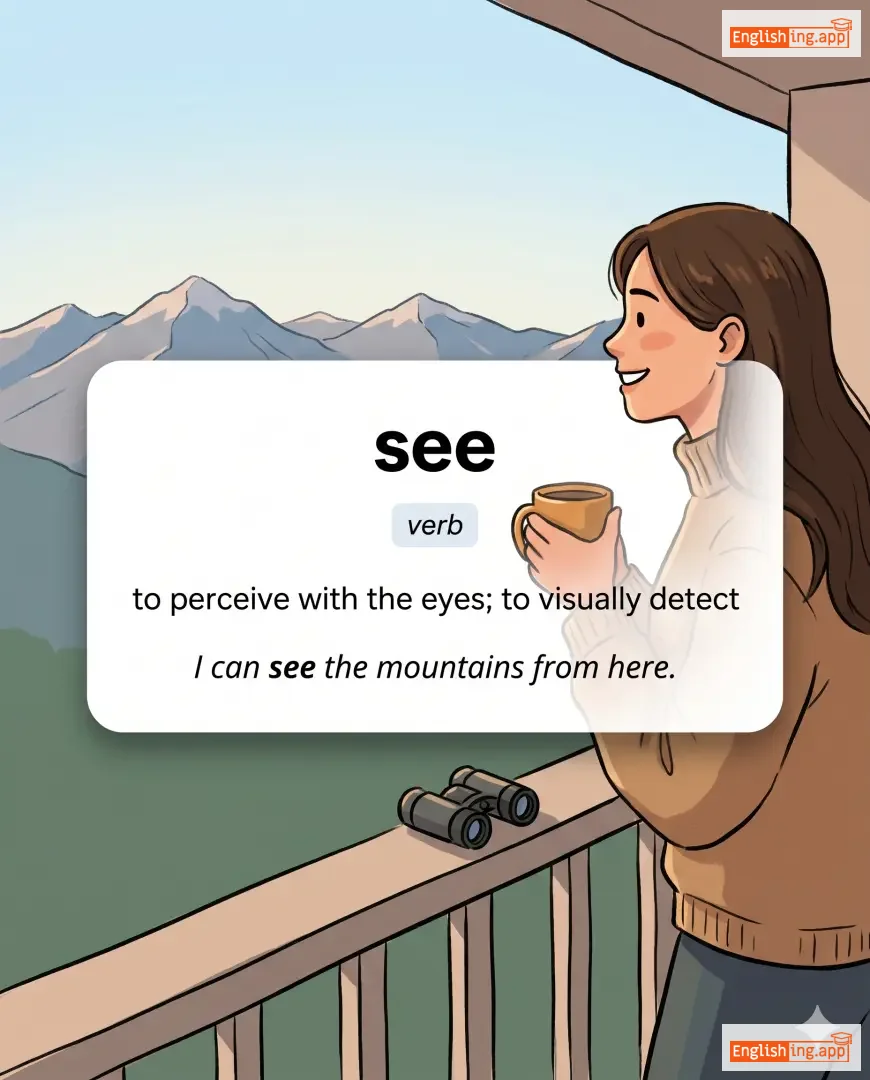
see definition card — visual illustration of the meaning
verb
/siː/
見る (miru)

to perceive with the eyes; to visually detect

"I can see the mountains from here."

"ここから山を見ることができます。" (Koko kara yama o miru koto ga dekimasu.)
Sedulous definition card — visual illustration of the meaning
adjective
/ˈsɛdʒʊləs/
勤勉な (kinmen na)

showing great care, attention, and diligence in work or tasks

"She was admired for her sedulous efforts in completing the project on time."

"彼女はプロジェクトを時間通りに完了させるための勤勉な努力で賞賛されました。" (Kanojo wa purojekuto o jikan dōri ni kanryou saseru tame no kinmen na doryoku de shousan saremashita.)
noun
/sɪˈdʌk.ʃən/
誘惑; 誘惑 (yuwaku; yuwaku)

the action of seducing someone; temptation to do something wrong

"He fell victim to the seduction of easy money."

"彼は簡単な金儲けの誘惑に負けた。" (Kare wa kantan na kane mouke no yuwaku ni maketa.)
verb
/sɪˈdjuːs/

to attract someone into doing something, especially something they might not normally do

"The advertisement was designed to seduce customers into buying luxury products."

adjective
/sɪˈdɪʃəs/
扇動的 (sendō-teki)

Encouraging rebellion against authority.

"The activist spread seditious pamphlets among the crowd."

"活動家は群衆の中で扇動的なパンフレットを配布しました。" (Katsudōka wa gunshū no naka de sendō-teki na panfuretto o haifu shimashita.)
adjective
/ˈskrɪptʃərəl/
聖書に関連する (seisho ni kanren suru)

Relating to or contained in the scriptures or holy writings.

"The priest gave a scriptural reference during the sermon."

"牧師は説教中に聖書の参照をしました。" (Bokusha wa sekkyou-chuu ni seisho no sanshou o shimashita.)
noun
/skraɪb/
書記 (shoki)

a person who writes documents, especially in ancient times; a professional copyist

"In ancient Egypt, scribes recorded important events."

"古代エジプトでは、スクライブは重要な出来事を記録しました。" (Kodai Ejiputo dewa, sukuraibu wa jūyōna dekigoto o kiroku shimashita.)
noun
/ˈskrɪmɪdʒ/
練習試合 (renshū shiai)

A practice game or informal match, often in sports, especially football.

"The team had a scrimmage before the official season started."

"チームは公式シーズンが始まる前に練習試合を行いました。" (Chīmu wa kōshiki shīzun ga hajimaru mae ni renshū shiai o okonaimashita.)
noun
/skrɪpt/
脚本 (kyakuhon)

The written text of a play, film, or broadcast; handwriting style.

"The actor memorized his lines from the script."

"俳優は脚本からセリフを覚えました。" (Haiyu wa kyakuhon kara serifu wo oboemashita.)
verb
/ˈskrɪbəl/
落書きする (rakugaki suru)

to write or draw carelessly or quickly

"The child scribbled all over the wall."
"子供は壁に落書きをした。" (Kodomo wa kabe ni rakugaki o shita.)
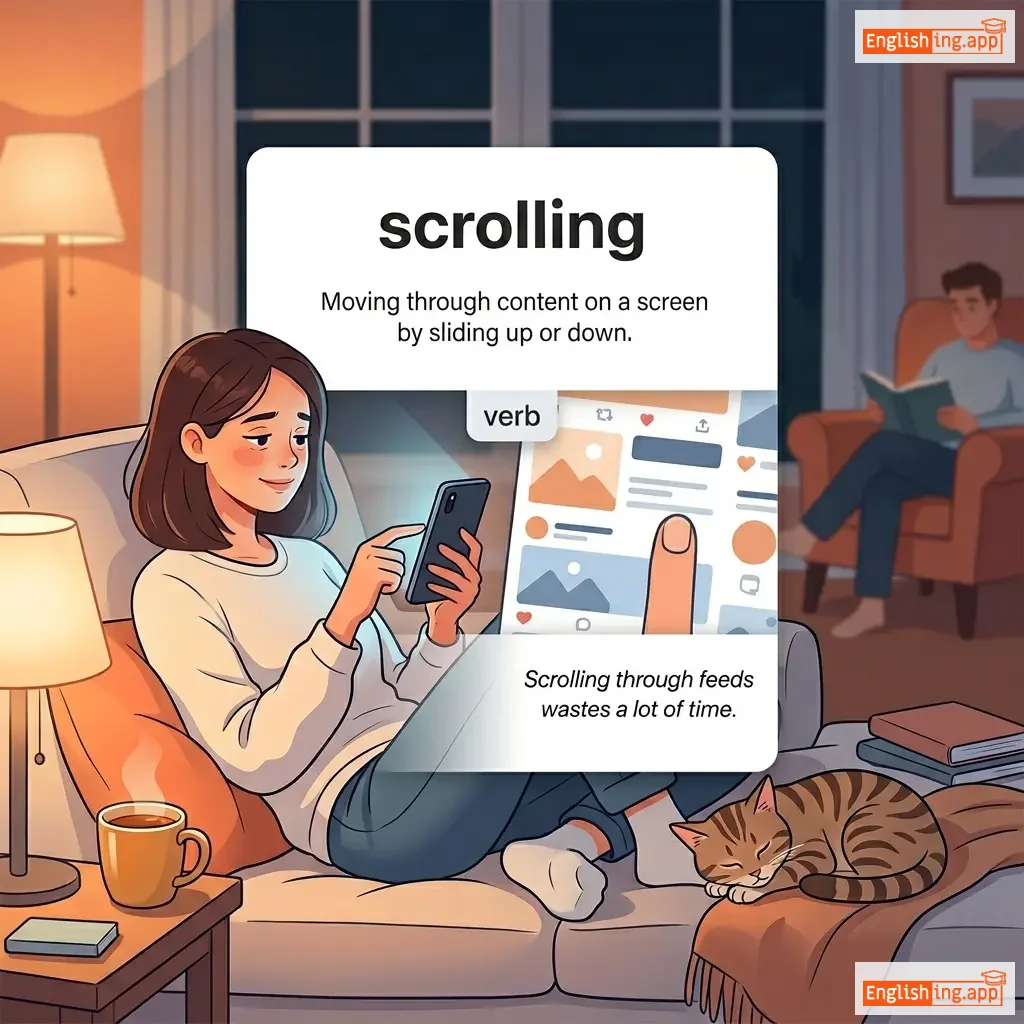
scrolling definition card — visual illustration of the meaning
verb
/ˈskroʊlɪŋ/
スクロール (sukurooru)

Moving through content on a screen by sliding up or down.

"Scrolling through feeds wastes a lot of time."
"フィードをスクロールすることで時間が無駄になる。" (Fiido o sukurooru suru koto de jikan ga muda ni naru.)
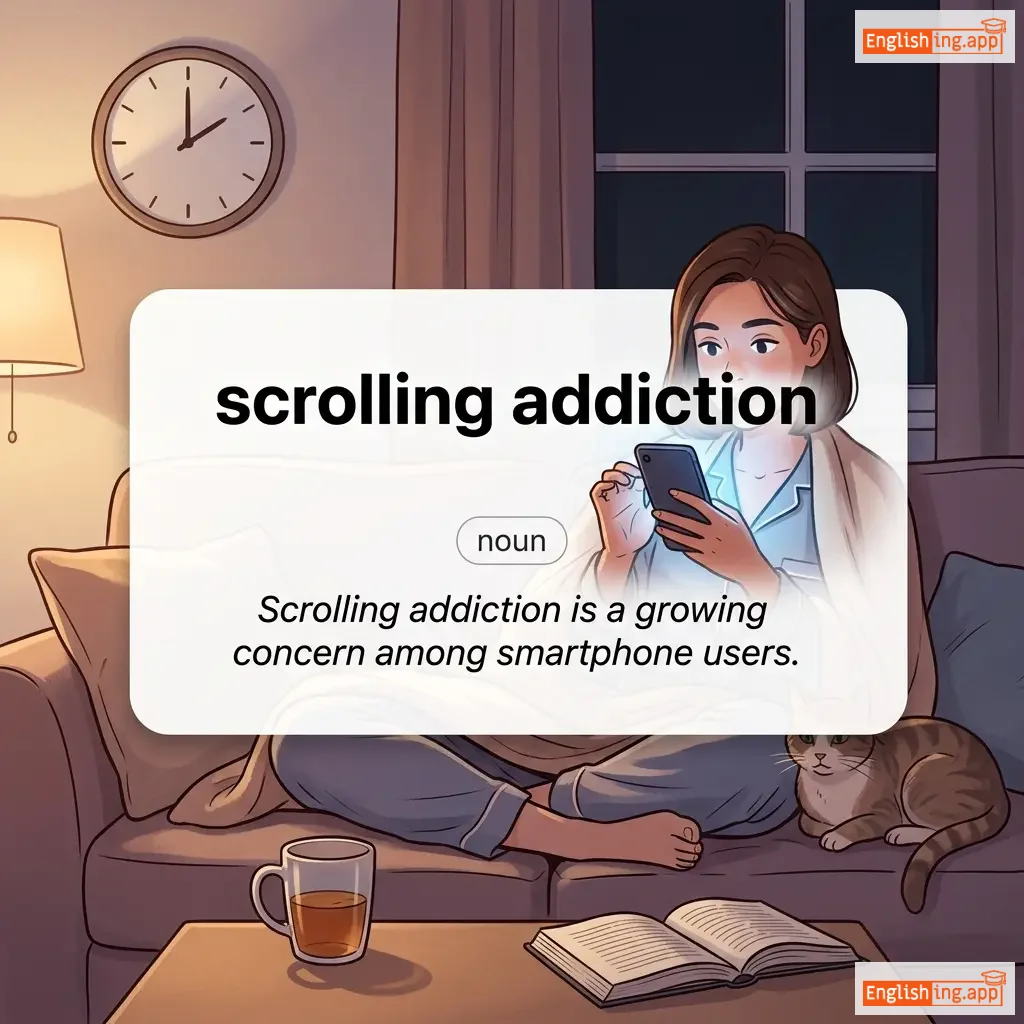
scrolling addiction definition card — visual illustration of the meaning
noun
স্ক্রোলিং অ্যাডিকশন
スクロール依存症 (sukurōru izonshō)

A compulsive need to continuously scroll through content on digital devices, particularly smartphones and social media platforms.

"Scrolling addiction is a growing concern among smartphone users."

"スクロール依存症はスマートフォンユーザーの間で増加している懸念事項です。" (Sukurōru izonshō wa sumātofon yūzā no aida de zōka shite iru kenentekina shikō desu.)