語彙集

英単語辞書 | 単語の意味、定義、例文

adjective, verb
/sɪˈdeɪt/
鎮静する (chinsei suru)

calm, quiet, and composed; or to administer a drug to make someone calm or sleep

"The nurse sedated the patient before the operation."
"看護師は手術の前に患者を鎮静しました。" (Kangoshi wa shujutsu no mae ni kanja o chinsei shimashita.)
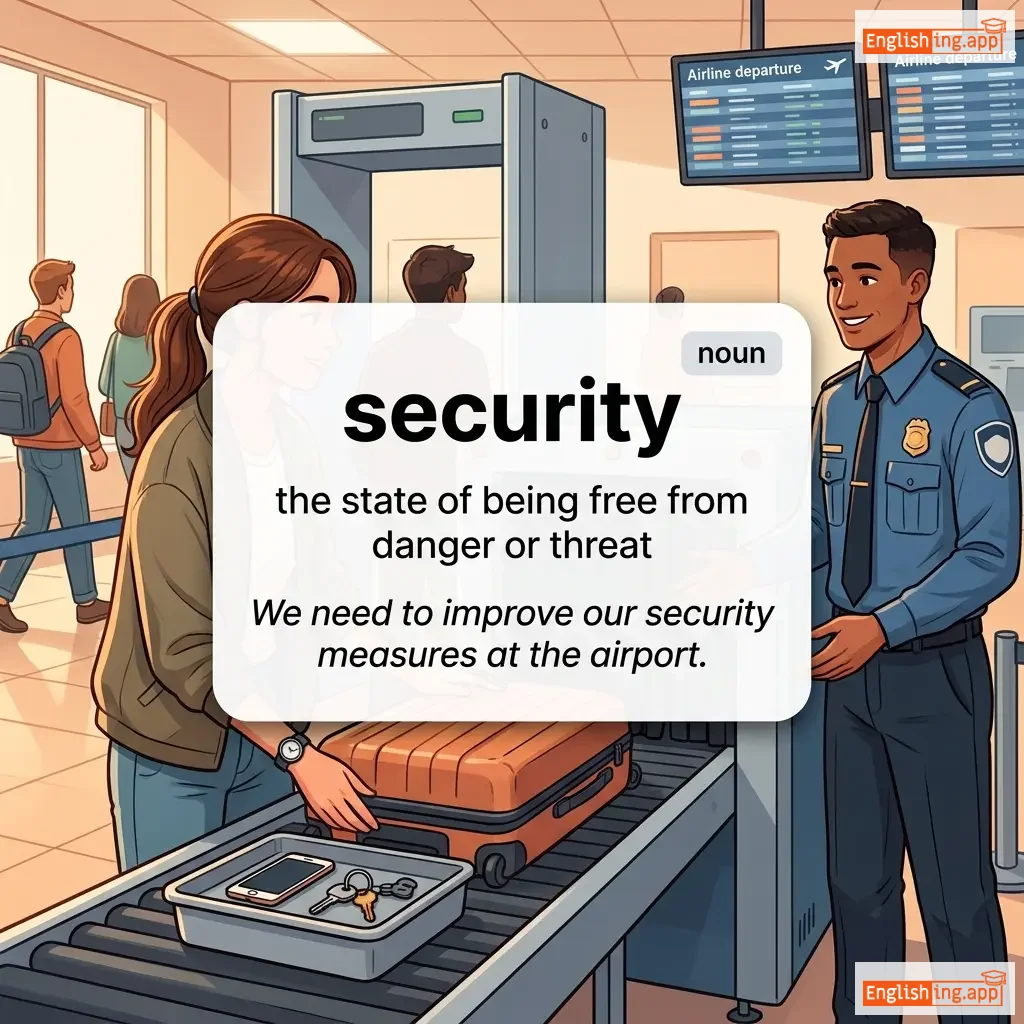
security definition card — visual illustration of the meaning
noun
/sɪˈkjʊərɪti/
セキュリティ (sekyuriti)

the state of being free from danger or threat

"We need to improve our security measures at the airport."
"空港でのセキュリティ対策を改善する必要があります。" (Koukou de no sekyuriti taisaku wo kaizen suru hitsuyou ga arimasu.)
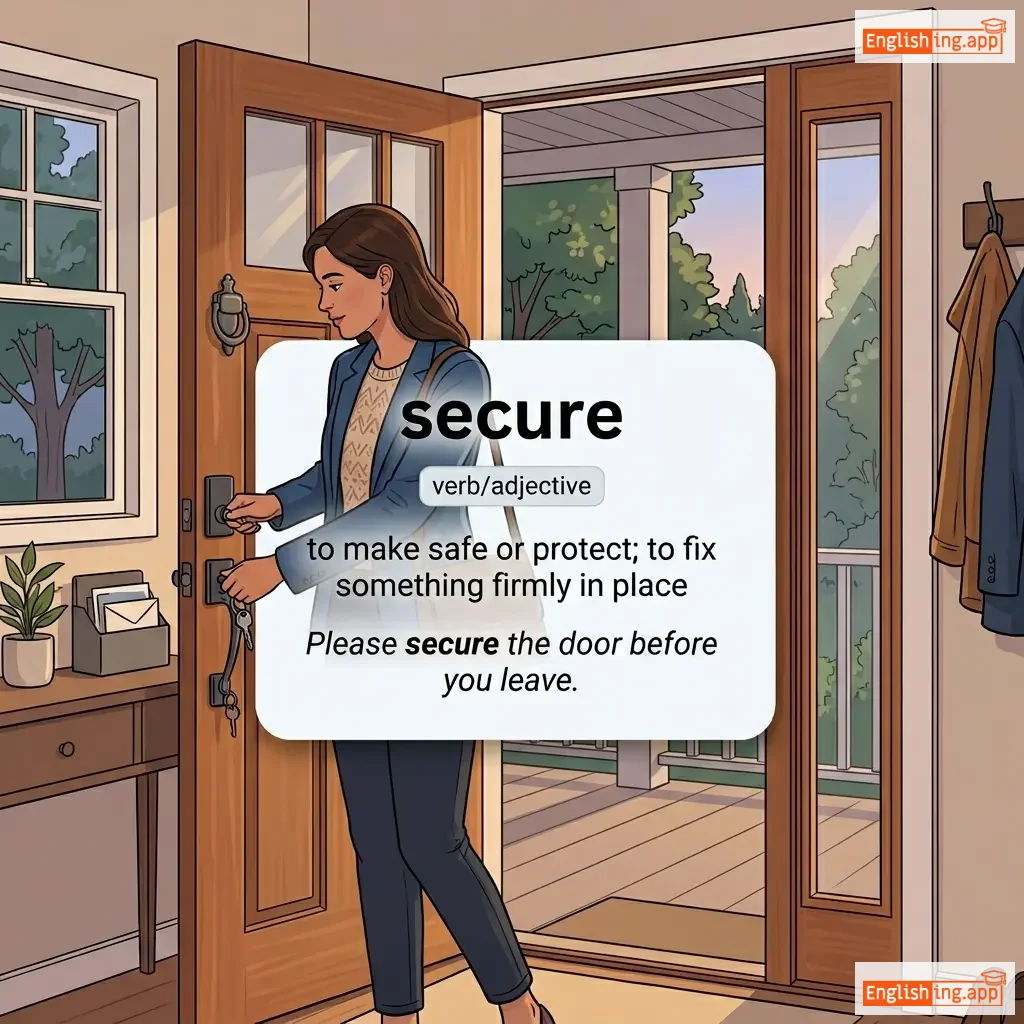
secure definition card — visual illustration of the meaning
verb/adjective
/sɪˈkjʊər/
安全にする (anzen ni suru)

to make safe or protect; to fix something firmly in place

"Please secure the door before you leave."

"ドアを確実に閉めてください。" (Doa o kakujitsu ni shimete kudasai.)
adjective
/ˈsɛkjʊlər/
世俗的 (sezokuteki)

not connected with religious or spiritual matters

"The country adopted a secular constitution separating religion from state affairs."

"その国は、宗教と国家の問題を分離した世俗的な憲法を採用しました。" (Sono kuni wa, shūkyō to kokka no mondai o bunri shita sezokuteki na kenpō o saiyō shimashita.)
sector-specific definition card — visual illustration of the meaning
adjective
ˈsek.tər spəˈsɪf.ɪk
業界特定 (gyoukai tokutei)

Relating to or designed for a particular sector or industry.

"Sector-specific policies attract targeted investments."

"業界特定の政策はターゲット投資を引き付けます。" (Gyoukai tokutei no seisaku wa taagetto toushi wo hikitsukemasu.)
noun
/ˈsɛktər/
セクター (sekutā)

a distinct part or area of an economy, society, or industry

"The technology sector is growing rapidly."

"テクノロジーセクターは急速に成長しています。" (Tekunorojī sekutā wa kyūsoku ni seichō shiteimasu.)
noun
/ˈsɛkʃən/
セクション (sekushon)

a distinct part or subdivision of something larger

"This section of the report needs further review."

"この報告書のセクションは、さらに検討する必要があります。" (Kono hōkokusho no sekushon wa, sarani kentō suru hitsuyō ga arimasu.)
adjective
/sɛkˈtɛəriən/
宗派的 (shūhatsu-teki)

relating to or characterized by the differences between sects, often leading to conflict

"The region has been troubled by sectarian violence for decades."

"この地域は数十年にわたり宗派的な暴力に悩まされてきました。" (Kono chiiki wa sūjūnen ni watari shūhatsu-teki na bōryoku ni nayamasa rete kimashita.)
noun
/sɛkt/
宗派 (shūha)

a subgroup of a larger religious or political group, often with differing beliefs

"The group split into different sects due to doctrinal differences."

"グループは教義の違いにより、異なる宗派に分かれました。" (Gurūpu wa kyōgi no chigai ni yori, kotonaru shūha ni wakaremashita.)
adverb
/ˈsiː.krət.li/
こっそり (kossori)

in a way that is hidden or not known by others

"She secretly planned a surprise party for her friend."

"彼女は友達のためにこっそりサプライズパーティーを計画した。" (Kanojo wa tomodachi no tame ni kossori sapuraizu paatii o keikaku shita.)
noun
/sɪˈkriː.ʃən/
分泌 (bumpitsu)

a process by which substances are produced and discharged from a cell or gland

"Insulin secretion is crucial for blood sugar regulation."
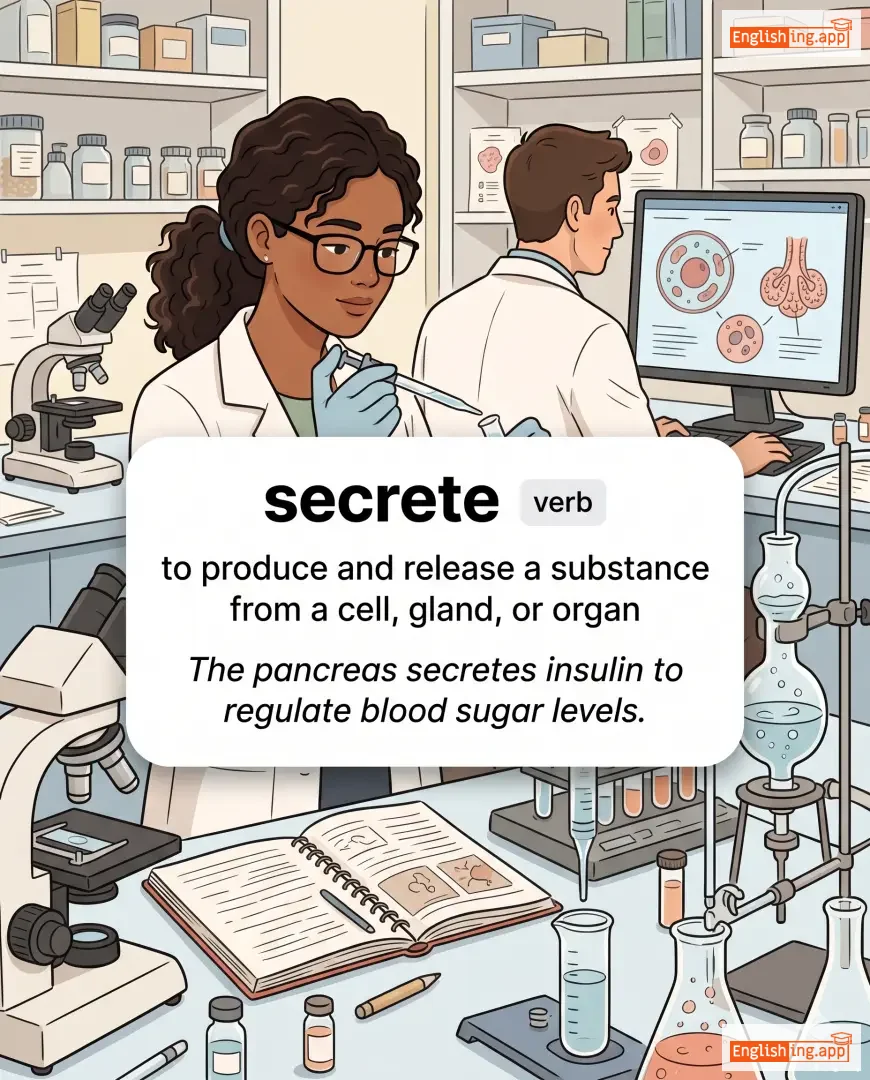
"インスリン分泌は血糖値の調整に不可欠です。" (insurin bumpitsu wa kettouchi no chousei ni fukaketsu desu)
secrete definition card — visual illustration of the meaning
verb
/sɪˈkriːt/
分泌する (bimpisu suru)

to produce and release a substance from a cell, gland, or organ

"The pancreas secretes insulin to regulate blood sugar levels."

"膵臓は血糖値を調整するためにインスリンを分泌します。" (Suizō wa kettōchi o chōsei suru tame ni insurīn o bimpisu shimasu.)
noun
/ˈsɛkrəteri/

a person employed to handle correspondence and manage routine tasks for an individual or organization

"The secretary scheduled the meeting for tomorrow."

secret definition card — visual illustration of the meaning
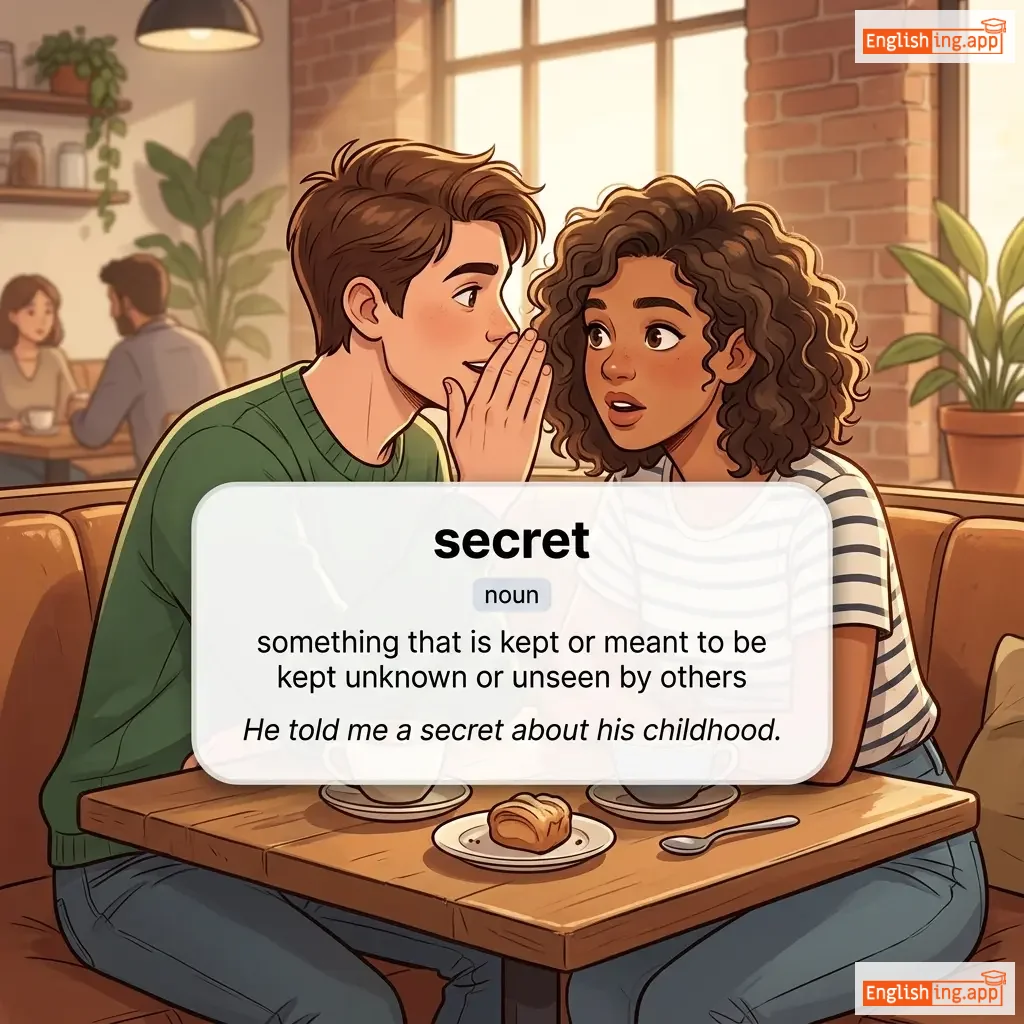
noun
/ˈsiːkrət/

something that is kept or meant to be kept unknown or unseen by others

"He told me a secret about his childhood."

noun
/ˈsiːkrəsi/
秘密 (himitsu)

The action of keeping something secret or the state of being kept secret.

"The negotiations were conducted in complete secrecy."

"交渉は完全な秘密の中で行われた。" (Kōshō wa kanzen na himitsu no naka de okonawareta.)
adverb
/ˈsekəndli/
次に (tsugi ni)

Used to introduce the second point in a list of arguments or ideas.

"Firstly, we need funding; secondly, we need a strong team."

"まず、資金が必要です;次に、強力なチームが必要です。" (Mazu, shikin ga hitsuyō desu; tsugi ni, kyōryoku na chīmu ga hitsuyō desu.)
adjective
/ˈsekənderi/
二次的 (nitsuki no)

Less important than something else; derived from or dependent on something primary.

"Safety is our primary concern, while speed is only secondary."

"安全は私たちの最優先事項であり、速度は二次的なものです。" (Anzen wa watashitachi no sai yuusen jiko de ari, sokudo wa niji-teki na mono desu.)
adjective
/ˌsekənd ˈreɪt/
二流 (niryu)

Of mediocre or inferior quality.

"The movie was entertaining but clearly second-rate compared to the original."

"その映画は面白かったが、オリジナルに比べて明らかに二流だった。" (Sono eiga wa omoshirokatta ga, orijinaru ni kurabete akirakani niryu datta.)
⏱️

second

noun
/ˈsekənd/

a unit of time equal to one sixtieth of a minute; also the position after first

"He finished the race in second place."

noun
/sɪˈkluːʒən/
隠遁 (inton)

The state of being private, away from other people.

"She spent the weekend in complete seclusion in her cabin."

"彼女はキャビンで完全に隠遁した週末を過ごしました。" (Kanojo wa kyabin de kanzen ni inton shita shūmatsu o sugoshimashita.)
adjective
/sɪˈkluːdɪd/
人里離れた (hitori banareta)

Placed apart from other people or things; private and quiet.

"They spent their vacation in a secluded beach house."

"彼らは人里離れたビーチハウスで休暇を過ごしました。" (Karera wa hitori banareta bīchi hausu de kyūka o sugoshimashita.)
verb
/sɪˈkluːd/
隔離する (kakuri suru)

To keep someone away from other people; to isolate.

"The monk chose to seclude himself in the mountains."

"修道士は山で自分を孤立させることを選びました。" (Shūdōshi wa yama de jibun o koritsu saseru koto o erabimashita.)
verb
/sɪˈsiːd/
脱退する (dattai suru)

To formally withdraw from a political or organizational union.

"Several states threatened to secede from the union."

"いくつかの州は連邦から脱退すると脅迫した。" (Ikutsuka no shū wa renpō kara dattai suru to kyōhaku shita.)
noun
/sɪˈsɛʃən/
分離 (bunri)

The action of formally withdrawing from membership of a federation or body.

"The secession of the southern states led to the Civil War."

"南部諸州の分離は南北戦争を引き起こした。" (Nanbu shoshuu no bunri wa nanboku sensou wo hikiokoshita.)
noun
/ˈskɜː.vi/
壊血病 (Kaiketsubyō)

A disease caused by a deficiency of vitamin C, leading to weakness, gum disease, and bleeding.

"Sailors often suffered from scurvy during long sea voyages without fresh fruits."

"水夫たちは、新鮮な果物がない長い海の航海中によく壊血病にかかっていました。" (Suifu-tachi wa, shinsen na kudamono ga nai nagai umi no kōkai-chū ni yoku kaiketsubyō ni kakatte imashita.)
verb
/ˈskʌt.əl/
幸せ (shiawase)

To run hurriedly with short, quick steps; or to deliberately sink a ship.

"The children scuttled back to their seats when the teacher entered."

"彼女は賞を受け取ったとき、幸せを隠せませんでした。" (Kanojo wa shō o uketotta toki, shiawase o kakusemasen deshita.)
noun
/saɪð/
(kama)

A tool with a long curved blade used for cutting grass or grain.

"The farmer sharpened his scythe before harvesting the wheat."

"農民は小麦を収穫する前に彼の鎌を研いだ。" (Nōmin wa komugi o shūkaku suru mae ni kare no kama o toida.)
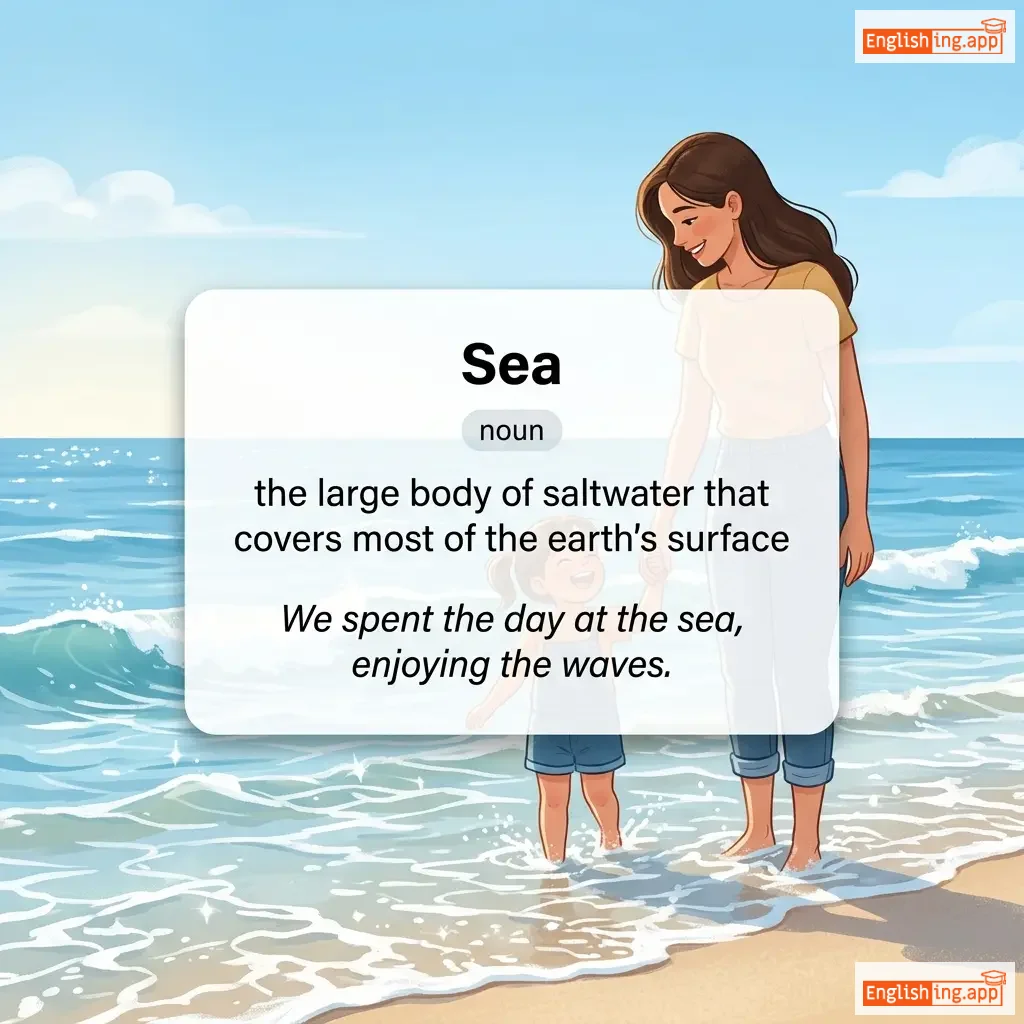
Sea definition card — visual illustration of the meaning
noun
/siː/
(umi)

the large body of saltwater that covers most of the earth's surface

"We spent the day at the sea, enjoying the waves."

"私たちは海で一日を過ごし、波を楽しみました。" (Watashitachi wa umi de ichinichi o sugoshi, nami o tanoshimimashita.)
noun
/ˈsiː.hɔːrs/
タツノオトシゴ (tatsuno otoshigo)

a small marine fish with segmented bony armor, an upright posture, and a curled prehensile tail

"The seahorse gracefully floated among the coral reefs."

"タツノオトシゴはサンゴ礁の中を優雅に浮かんでいました。" (Tatsuno otoshigo wa sangoryo no naka wo yuga ni ukandeimashita.)
verb
/siːl/
封印する、閉じる (fūin suru, toji ru)

to close or secure something tightly or officially confirm something

"He sealed the envelope before sending the letter."
"彼は手紙を送る前に封筒をシールしました。" (Kare wa tegami o okuru mae ni fūtō o shīru shimashita.)
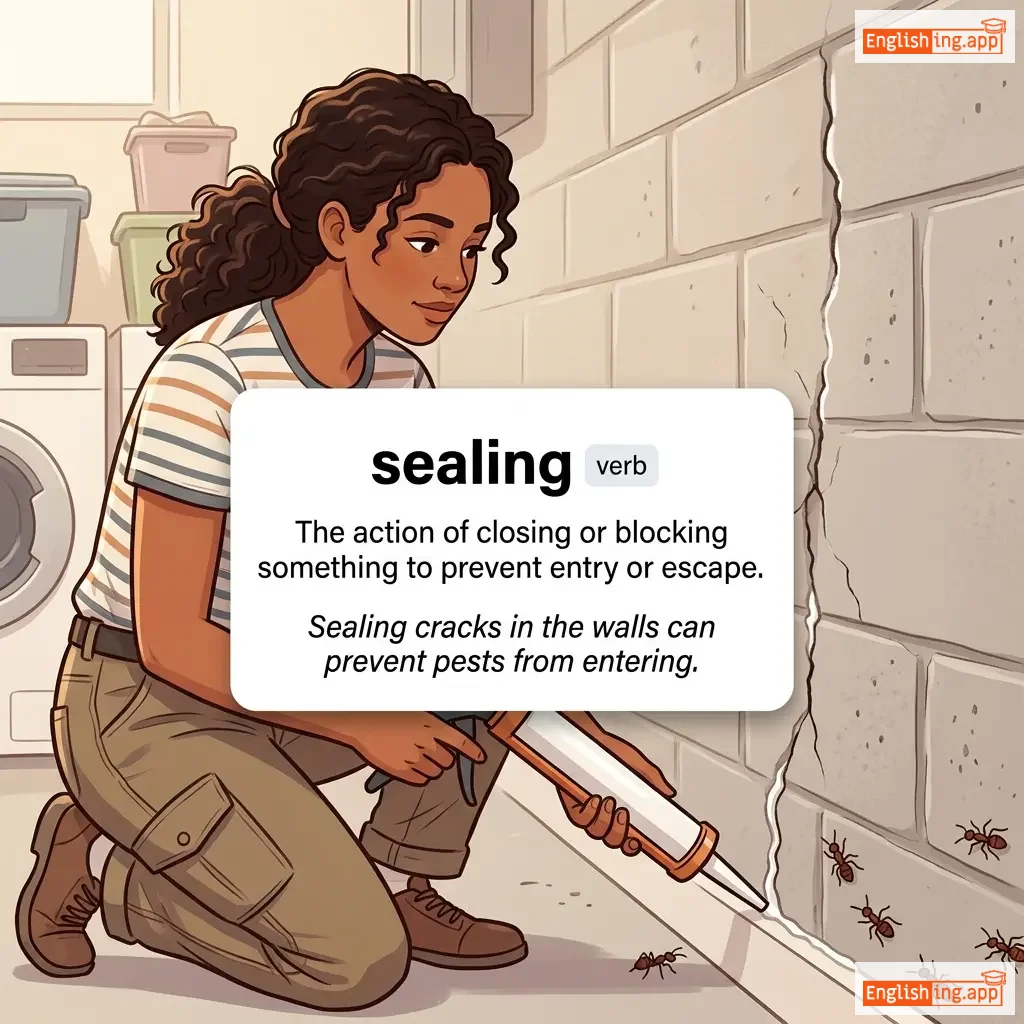
sealing definition card — visual illustration of the meaning
verb
ˈsiːlɪŋ
密閉する、封鎖する (mippei suru, fūsa suru)

The action of closing or blocking something to prevent entry or escape.

"Sealing cracks in the walls can prevent pests from entering."

"壁の亀裂を密閉することで害虫の侵入を防げます。" (Kabe no kiretsu o mippei suru koto de gaichū no shin'nyū o fusegemasu.)
noun
/ˈsiː.mən/
船員 (sen'in)

a person who works on a ship; sailor

"The experienced seaman navigated the ship through the storm."

"経験豊富な船員は嵐の中で船を操縦しました。" (Keiken hōfu na sen'in wa arashi no naka de fune o sōjū shimashita.)
seamless definition card — visual illustration of the meaning
adjective
/ˈsiːmləs/
シームレス (shi-mu-re-su)

Smooth and continuous, with no apparent gaps or spaces between one part and the next.

"The seamless integration of the two systems improved efficiency and reduced errors."

"二つのシステムのシームレスな統合は効率を向上させ、エラーを減らしました。" (Futatsu no shisutemu no shīmuresu na tōgō wa kōritsu o kōjō sase, erā o herashimashita.)
adjective
/ˈsiːmi/
低劣な、陰湿な (teiretsu na, inshitsu na)

Morally degraded, unpleasant, or sordid.

"The novel reveals the seamy side of city life."

"その小説は都市生活の裏面を明らかにします。" (Sono shōsetsu wa toshi seikatsu no uramen o akiraka ni shimasu.)
noun
/ˈseɪɑːns/
霊的なセッション (reiteki na sesshon)

A meeting where people attempt to communicate with the spirits of the dead.

"They held a seance to contact their late grandmother."
"彼らは亡くなった祖母と連絡を取るために霊的なセッションを開いた。" (Karera wa nakunatta sobo to renraku o toru tame ni reiteki na sesshon o hiraita.)
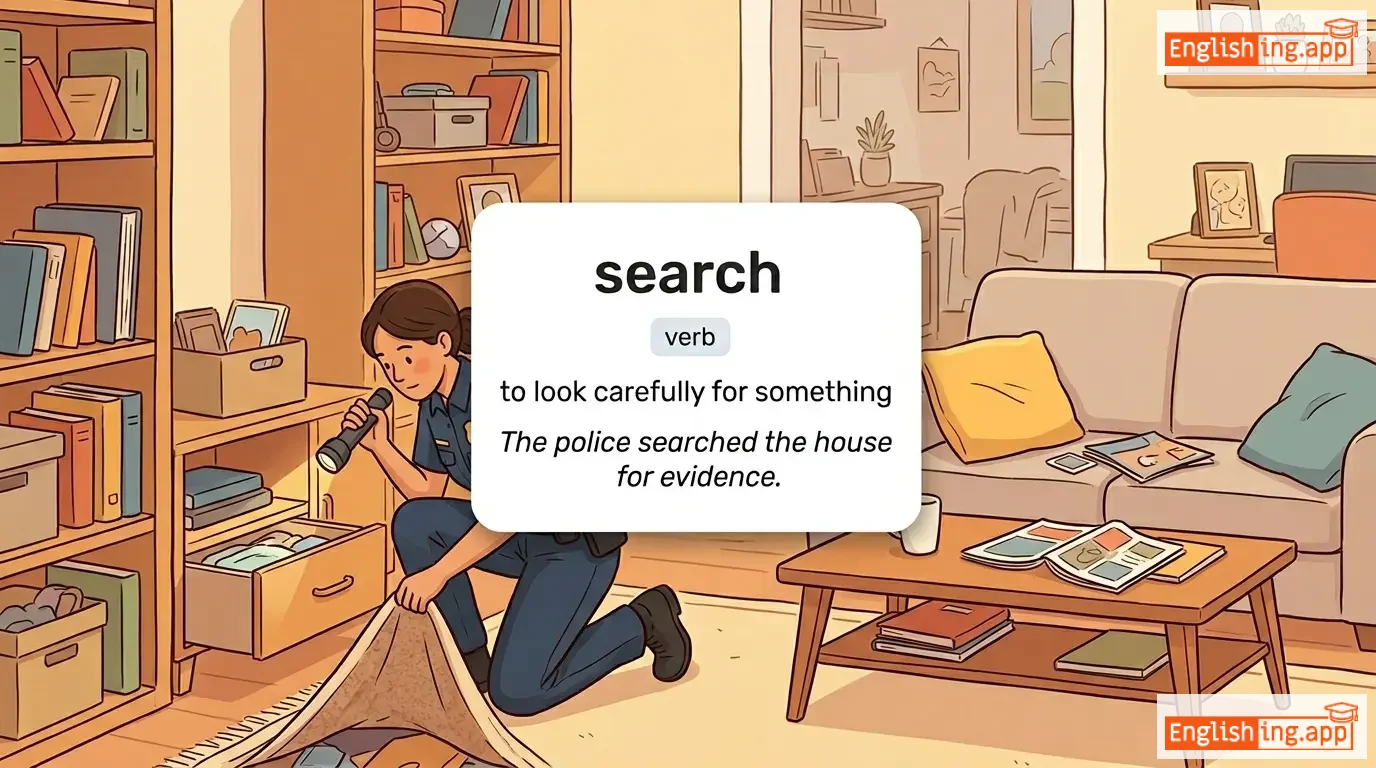
search definition card — visual illustration of the meaning
verb
/sɜːrtʃ/
検索 (kensaku)

to look carefully for something

"The police searched the house for evidence."

"警察は証拠を探すために家を捜索しました。" (Keisatsu wa shouko wo sagasu tame ni ie wo sousaku shimashita.)
verb
/sɪr/
焼く (yaku)

To burn or scorch the surface of something with intense heat.

"The chef seared the steak to lock in the flavor."

"シェフは味を閉じ込めるためにステーキを焼きました。" (Shefu wa aji o tojikomeru tame ni suteeki o yakimashita.)
noun
/ˈsiːkənt/
割線 (kassen)

A straight line that intersects a curve at two or more points.

"In geometry, a secant cuts the circle at two distinct points."

"幾何学では、割線は円を二つの異なる点で交差します。" (Kikagaku de wa, kassen wa en o futatsu no kotonaru ten de kōsashimasu.)
adjective
/sɪˈbeɪʃəs/
皮脂に関連する (hishitsu ni kanren suru)

Relating to or secreting sebum, an oily substance from the skin.

"Acne is often caused by overactive sebaceous glands."
"ニキビは、過剰に活発な皮脂腺によって引き起こされることがよくあります。" (Nikibi wa, kajou ni kappatsu na hishisen ni yotte hikiokosareru koto ga yoku arimasu.)
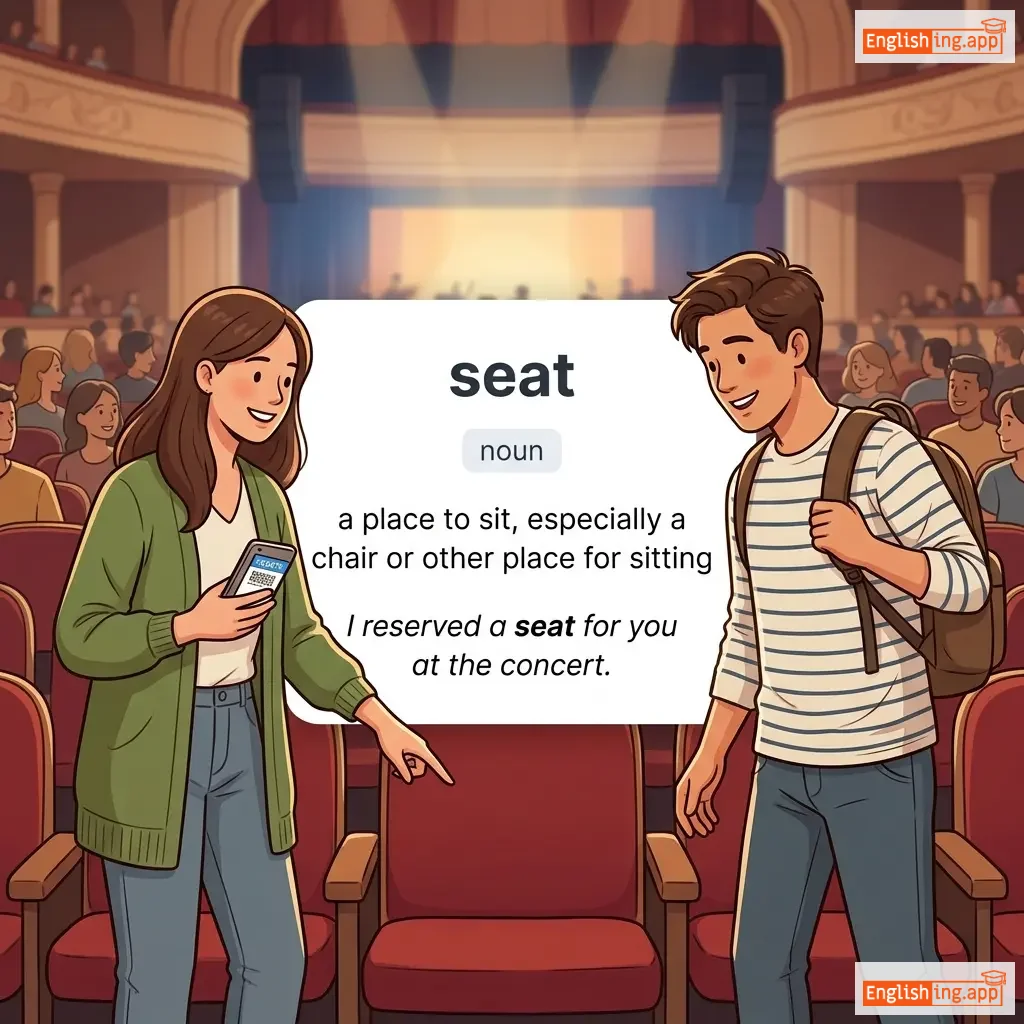
seat definition card — visual illustration of the meaning
noun
/siːt/
(seki)

a place to sit, especially a chair or other place for sitting

"I reserved a seat for you at the concert."

"コンサートであなたのために席を予約しました。" (Konsāto de anata no tame ni seki o yoyaku shimashita.)
adjective/verb
/ˈsiːzənd/
経験豊富な / 味付けされた (keiken hōfu na / aji-tsuke sareta)

Experienced in a particular activity; also, flavored with spices.

"She is a seasoned teacher with over 20 years of experience."
"彼女は20年以上の経験を持つベテランの教師です。" (Kanojo wa 20-nen ijō no keiken o motsu beteran no kyōshi desu.)
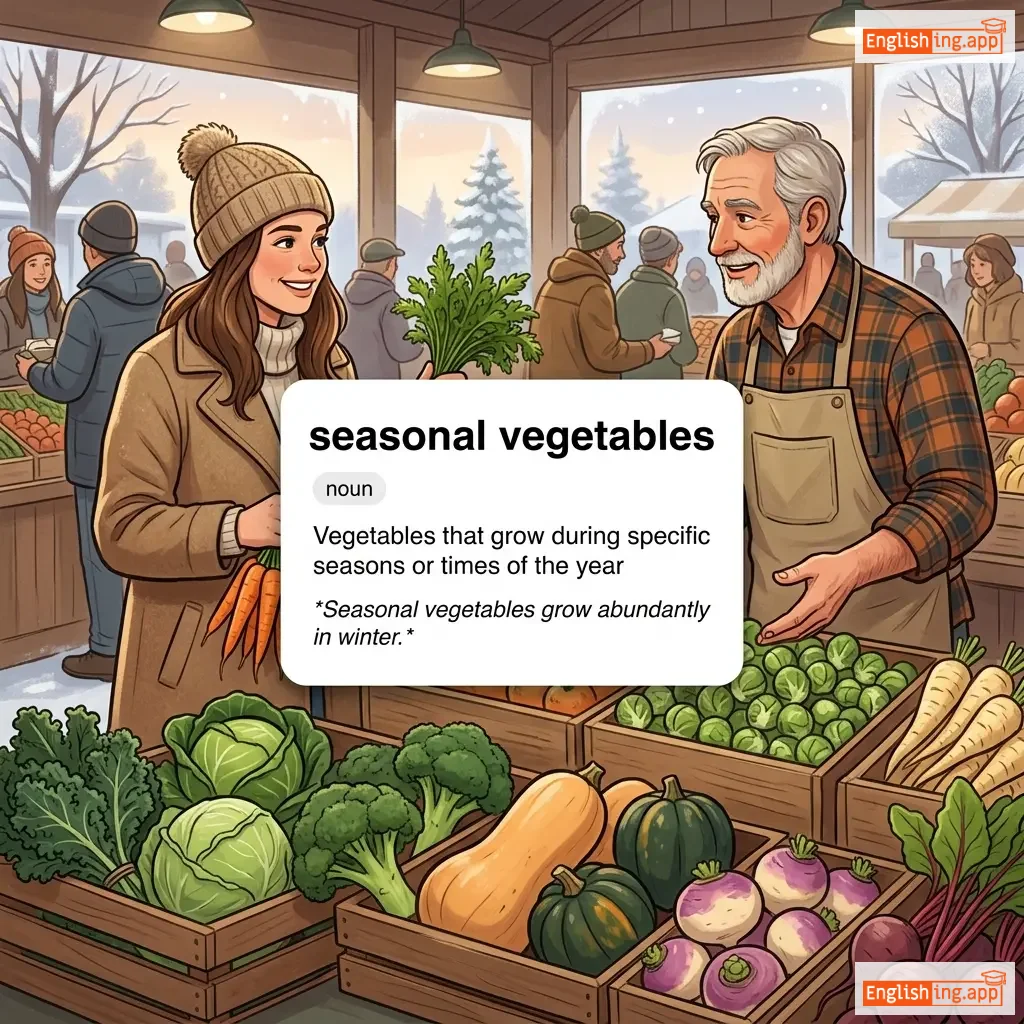
seasonal vegetables definition card — visual illustration of the meaning
noun
ˈsiːzənəl ˈvedʒtəbəlz
季節の野菜 (kisetsu no yasai)

Vegetables that grow during specific seasons or times of the year

"Seasonal vegetables grow abundantly in winter."

"季節の野菜は冬に豊富に育ちます。" (kisetsu no yasai wa fuyu ni houfu ni sodachimasu)
adjective
/ˈsiːzənəbl/
季節に適した (kisetsu ni tekishita)

Appropriate to the time of year or season.

"We had seasonable weather for autumn."

"私たちは秋のために季節に合った天気を楽しみました。" (Watashitachi wa aki no tame ni kisetsu ni atta tenki o tanoshimimashita.)
adjective
/ˈsiːzənl/
季節的 (kisetsuteki)

Relating to or dependent on a particular season.

"Seasonal fruits are available in the market."

"季節の果物は市場で購入できます。" (Kisetsu no kudamono wa ichiba de kōnyū dekimasu.)
adverb
/ˈsɜːrtʃɪŋli/
探求的に (tankyū-teki ni)

In a way that seems to look for hidden meanings or truth.

"She looked at him searchingly, hoping for an honest answer."
"彼女は正直な答えを望んで、探し求めるように彼を見つめた。" (Kanojo wa shōjiki na kotae o nozonde, sagashimotomoru yō ni kare o mitsumeta.)
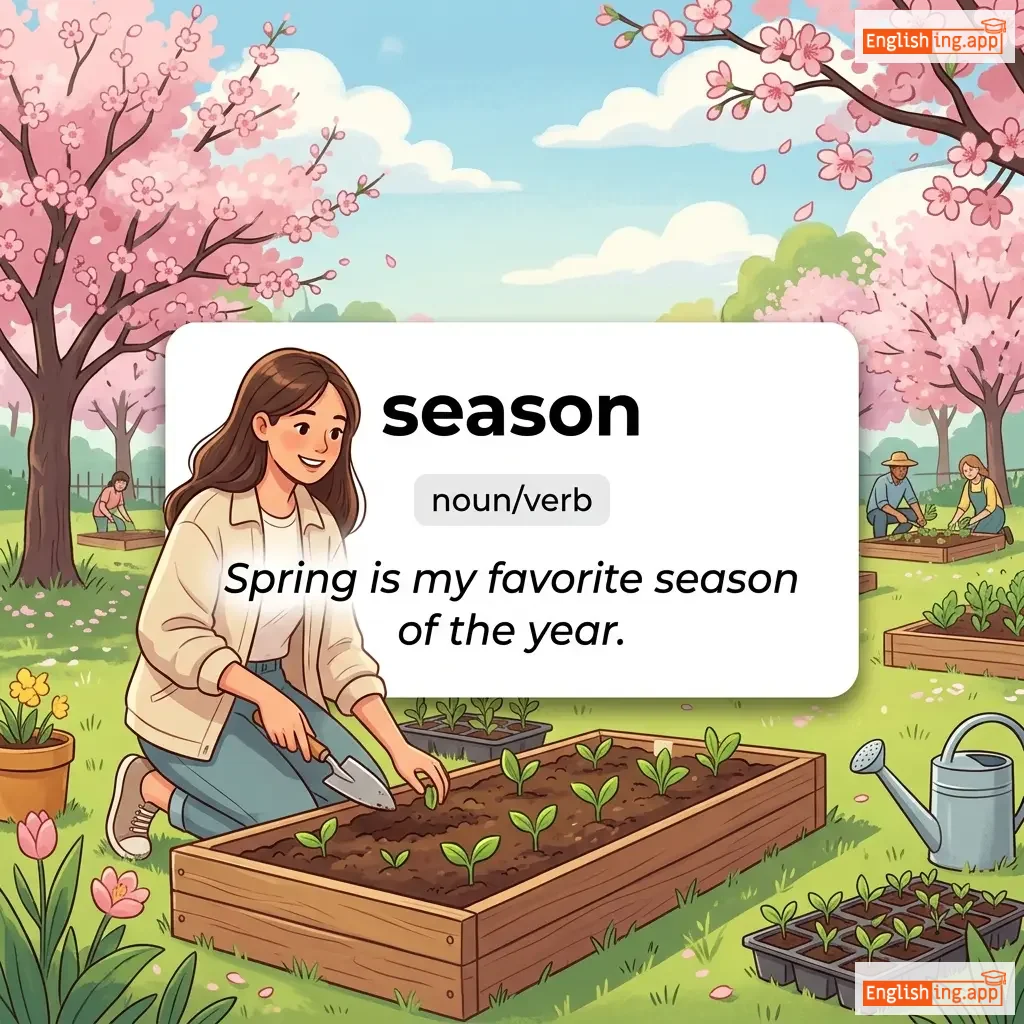
season definition card — visual illustration of the meaning
noun/verb
/ˈsiːzən/
季節 / 味付け (kisetsu / aji tsuke)

One of the four periods of the year characterized by specific weather conditions; also, to add flavor to food.

"Spring is my favorite season of the year."

"春は私のお気に入りのシーズンです。" (Haru wa watashi no okiniiri no shīzun desu.)
noun
/ˈsiːskeɪp/
海の景色 (umi no keshiki)

A view or painting of the sea.

"The artist painted a beautiful seascape at sunset."

"アーティストは夕日で美しい海の景色を描きました。" (Atisuto wa yūhi de utsukushī umi no keshiki o egakimashita.)
verb
/rɪˈvɜːrbəreɪt/
反響する (hankyō suru)

To echo repeatedly or have continuing effects.

"The sound of the explosion reverberated through the valley."

"爆発音は谷を通り過ぎて反響しました。" (Baku hatsu on wa tani o tōrisugite hankyō shimashita.)
verb
/rɪˈvɪər/
尊敬する (sonkei suru)

To deeply respect or admire someone or something.

"The students revered their teacher for his wisdom."

"生徒たちはその知恵に対して教師を崇敬しました。" (Seito-tachi wa sono chie ni taishite kyōshi o sūkei shimashita.)
noun
/ˈrɛvərəns/
尊敬 (sonkei)

deep respect for someone or something

"The students showed reverence to their teacher."

"学生たちは先生に尊敬を示した。" (Gakusei-tachi wa sensei ni sonkei o shimeshita.)