語彙集

英単語辞書 | 単語の意味、定義、例文

noun, verb
/rɪˈvɛndʒ/
復讐 (fukushū)

The action of inflicting harm on someone as punishment for a wrong suffered.

"She sought revenge for the betrayal of her trust."

"彼女は信頼を裏切られたことで復讐を求めた。" (Kanojo wa shinrai o uragirareta koto de fukushū o motometa.)
noun
/ˈrɛvəlri/
祭り (matsuri)

Lively and noisy festivities, especially involving drinking and dancing.

"The sound of revelry could be heard throughout the night."

"一晩中、祭りの音が聞こえていました。" (Hitobanju, matsuri no oto ga kikoete imashita.)
noun
/ˌrɛvəˈleɪʃən/
啓示 (keiji)

A surprising and previously unknown fact, especially one made known in a dramatic way.

"The book was full of shocking revelations about the politician."

"その本はその政治家に関する衝撃的な啓示で満ちていました。" (Sono hon wa sono seijika ni kansuru shōgeki-tekina keiji de michiteimashita.)
revel definition card — visual illustration of the meaning
verb
/ˈrevəl/
楽しむ (tanoshimu)

to enjoy oneself in a lively and noisy way; to take great pleasure in

"They revel in their success."

"彼らは成功を楽しんでいます。" (Karera wa seikou o tanoshindeimasu.)
reveal definition card — visual illustration of the meaning
verb
/rɪˈviːl/
明かす (akasu)

to make something known that was previously hidden or secret

"The magician refused to reveal his secrets."

"魔法使いは彼の秘密を明かすことを拒否した。" (Mahōtsukai wa kare no himitsu wo akasu koto wo kyohi shita.)
verb
/ˌriːˈvæmp/
改装 (kaizō)

To give a new and improved form, structure, or appearance to something.

"The company decided to revamp its website for a modern look."

"その企業は、モダンな外観のためにウェブサイトをリヴァンプすることを決定しました。" (Sono kigyō wa, modan na gaikan no tame ni u~ebusaito o rivanpu suru koto o kettei shimashita.)
reunite definition card — visual illustration of the meaning
verb
/ˌriːjuːˈnaɪt/
再会する (saikai suru)

To bring people or things back together after being apart.

"The event helped reunite old friends after many years."
"イベントは長年の後、古い友達を再会させる手助けをしました。" (Ibento wa naganen no ato, furui tomodachi o saikai saseru tedasuke o shimashita.)
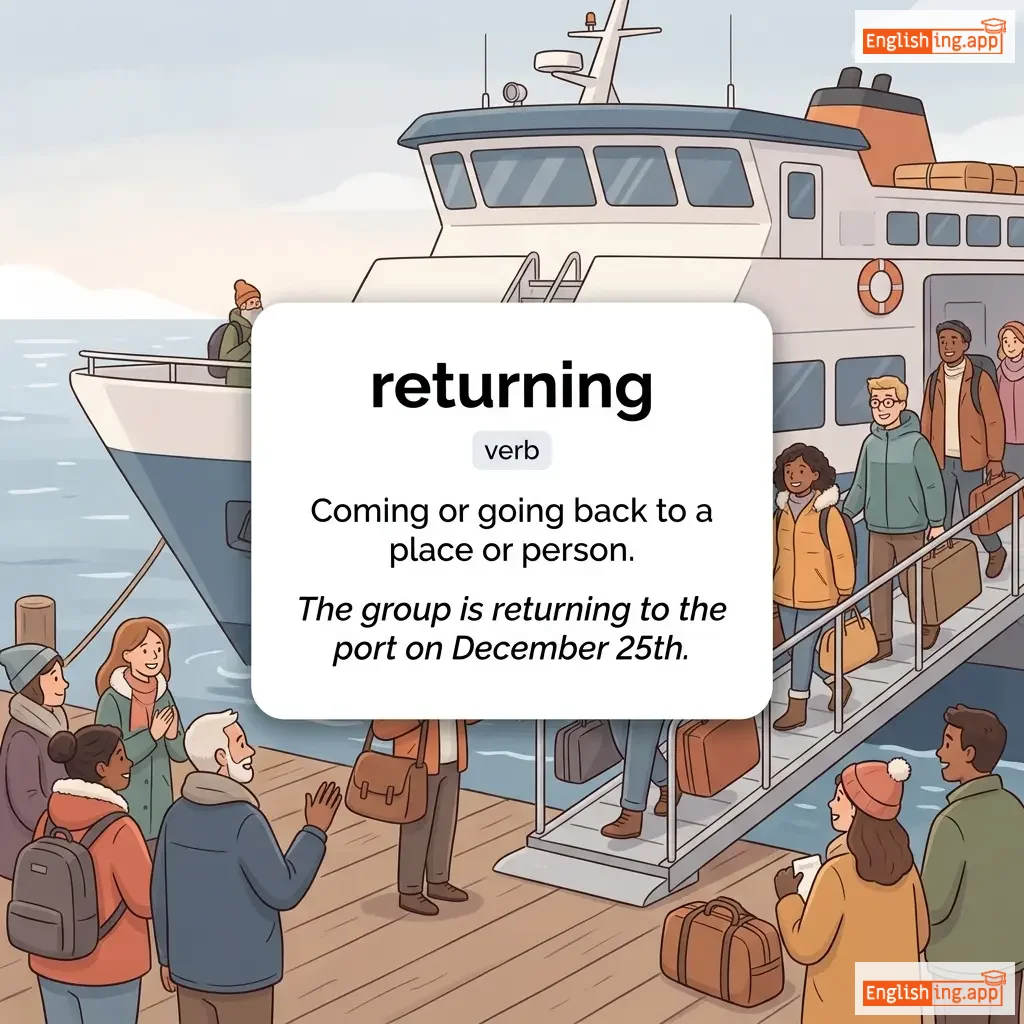
returning definition card — visual illustration of the meaning
verb
/rɪˈtɜrnɪŋ/
戻る (modoru)

Coming or going back to a place or person.

"The group is returning to the port on December 25th."

"グループは12月25日に港に戻ります。" (Gurūpu wa 12-gatsu 25-nichi ni minato ni modorimasu.)
adjective
/rɪˈtɜː.nə.bəl/
返品可能 (henpin kanou)

able to be returned or given back

"The bottle is returnable for a deposit refund."
"ボトルはデポジット返金のために返品可能です。" (Botoru wa depojitto henkin no tame ni henpin kanou desu.)
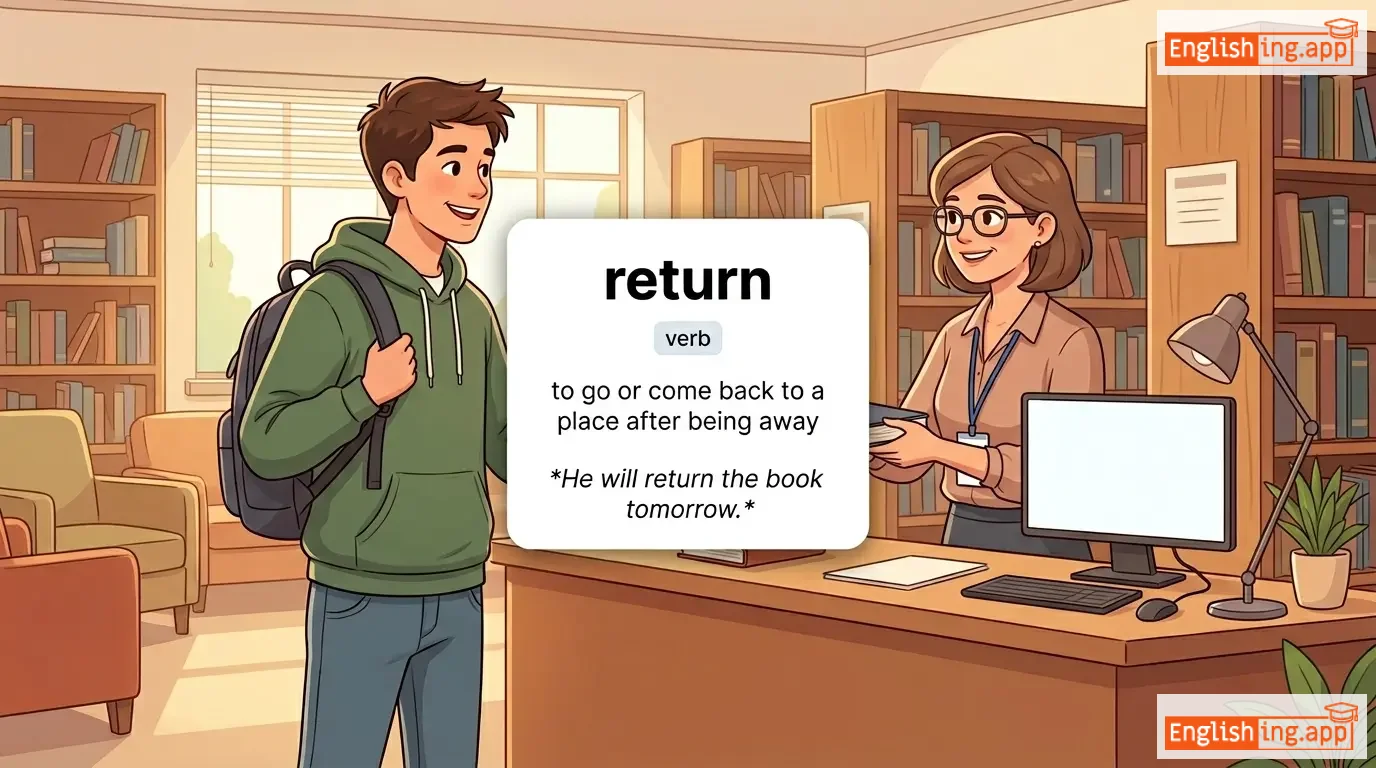
return definition card — visual illustration of the meaning
verb
/rɪˈtɜːn/
返す (kaesu)

to go or come back to a place after being away

"He will return the book tomorrow."

"彼は明日その本を返すでしょう。" (Kare wa ashita sono hon o kaesu deshou.)
adjective
/ˌrɛtrəˈspɛktɪv/
回顧的 (kaikotekina)

Looking back on or dealing with past events or situations.

"The museum held a retrospective exhibition of the artist's work."

"博物館はアーティストの作品の回顧展を開催しました。" (Hakubutsukan wa ātisuto no sakuhin no kaikoten o kaisai shimashita.)
noun
/ˈrɛtrəsˌpɛkt/
回顧 (kaiko)

the act of looking back on or reviewing past events

"In retrospect, the decision seemed unwise."

"回顧すると、その決定は賢明ではなかったように思えた。" (Kaiko suru to, sono kettei wa kenmei dewa nakatta yō ni omoeta.)
noun
/ˌrɛtroʊˈɡrɛʃən/
後退 (koutai)

a return to a worse or less developed state

"The country experienced economic retrogression after the crisis."

"国は危機後、経済的な後退を経験しました。" (Kuni wa kiki go, keizaiteki na koutai o keiken shimashita.)
adjective
/ˈrɛtroʊˌɡreɪd/
後退的 (kōtaiteki)

moving backward or returning to a worse condition

"The policy was seen as a retrograde step for human rights."
"その政策は人権に対する後退的な一歩と見なされた。" (Sono seisaku wa jinken ni taisuru kōtaiteki na ippo to minasareta.)
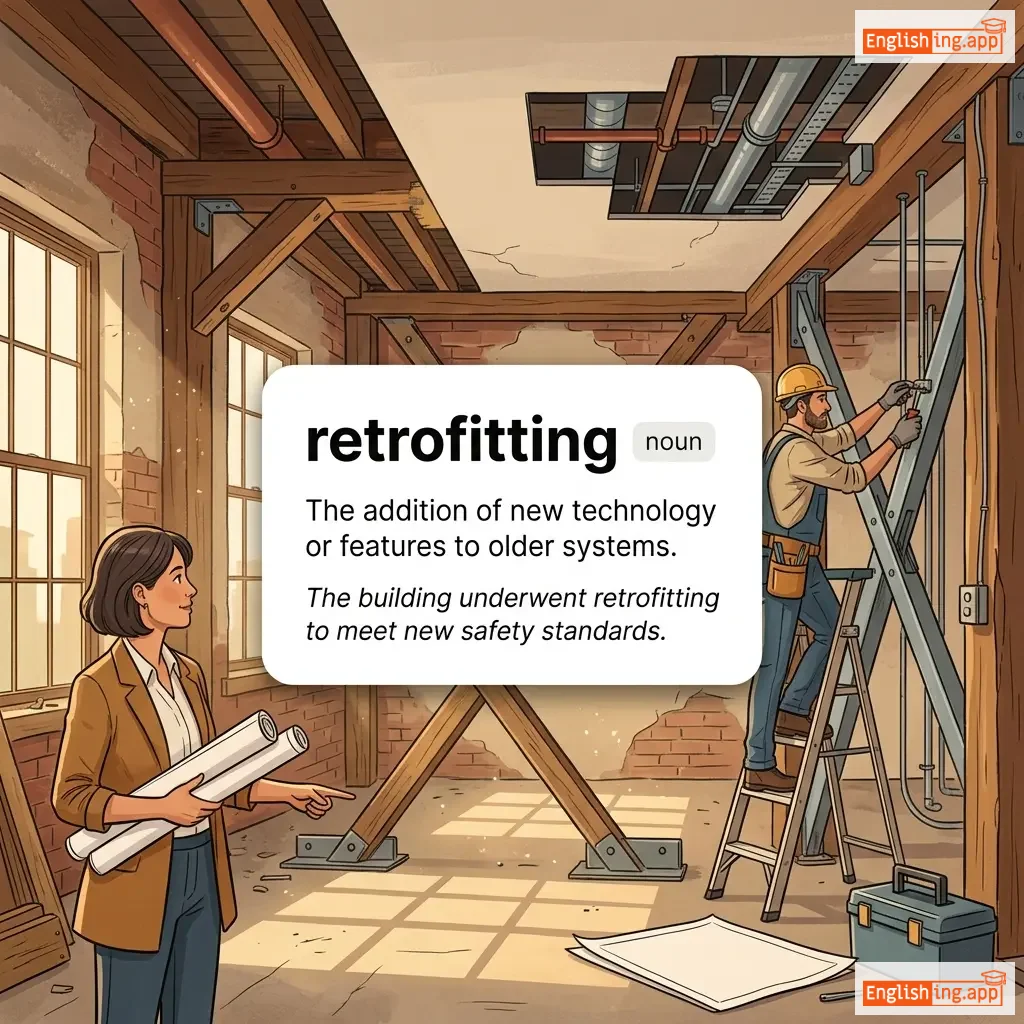
retrofitting definition card — visual illustration of the meaning
noun
/ˈrɛ.trəʊ.fɪt.ɪŋ/
古いシステムに新しい技術や機能を追加すること (furui shisutemu ni atarashī gijutsu ya kinō o tsuika suru koto)

The addition of new technology or features to older systems.

"The building underwent retrofitting to meet new safety standards."

"その建物は、新しい安全基準に適応するためにレトロフィッティングされました。" (Sono tatemono wa, atarashī anzen kijun ni tekiō suru tame ni retorofittingu saremashita.)
adjective
/ˌrɛtroʊˈæktɪv/
遡及的 (sokyū-teki)

applying to a period before it was enacted or established

"The new law was made retroactive to cover past cases."

"新しい法律は過去のケースをカバーするために遡及的に作られました。" (Atarashī hōritsu wa kako no kēsu o kabā suru tame ni sokyū-teki ni tsukuraremashita.)
verb
/rɪˈtriːv/
取り戻す (torimodosu)

to get something back that was lost or taken; to recover

"She managed to retrieve her lost phone from the taxi."

"彼女はタクシーから失われた電話を取り戻すことができました。" (Kanojo wa takushi kara ushinawareta denwa wo torimodosu koto ga dekimashita.)
retrieval definition card — visual illustration of the meaning
noun
rɪˈtriː.vəl
回収 (kaishuu)

The process of getting or bringing something back; recovery of stored information.

"AI-based search engines ensure fast retrieval of data."

"AIベースの検索エンジンはデータの迅速な回収を保証します。" (AI bēsu no kensaku enjin wa dēta no jinsoku na kaishū o hoshō shimasu.)
noun
/ˌrɛtrɪˈbjuːʃən/
報復, 罰 (hōfuku, batsu)

punishment inflicted as vengeance for a wrong or crime

"The villagers demanded retribution for the crime committed."

"村人たちは犯された犯罪に対して報復を要求しました。" (Murabito-tachi wa okasareta hanzai ni taishite hōfuku o yōkyū shimashita.)
verb
/rɪˈtrɛntʃ/
コスト削減、従業員の解雇 (kosuto sakugen, jūgyōin no kaiko)

to reduce costs, spending, or staff to save resources

"The company had to retrench employees due to financial difficulties."

"会社は財政的な困難のため、従業員をリトレンチしなければならなかった。" (Kaisha wa zaiseiteki na konnan no tame, jūgyōin o ritolenchi shinakereba naranakatta.)
verb
/rɪˈtriːt/
撤退する (tettai suru)

to move back or withdraw from a position or situation

"The soldiers had to retreat after losing the battle."

"兵士たちは戦いに負けた後、撤退しなければならなかった。" (Heishitachi wa tatakai ni maketa ato, tettai shinakereba naranakatta.)
noun
/rɪˈtrækʃən/
撤回, 言明撤回 (tetsukai, genmei tetsukai)

the act of taking back a statement, promise, or belief

"The newspaper issued a retraction of the false report."

"新聞は虚偽の報告の撤回を発表しました。" (Shinbun wa kyogi no hōkoku no tetsukai o happyō shimashita.)
noun
/ˌrɛspɪˈreɪʃən/

The process of breathing or the exchange of gases in living organisms.

"Respiration is essential for all living beings."
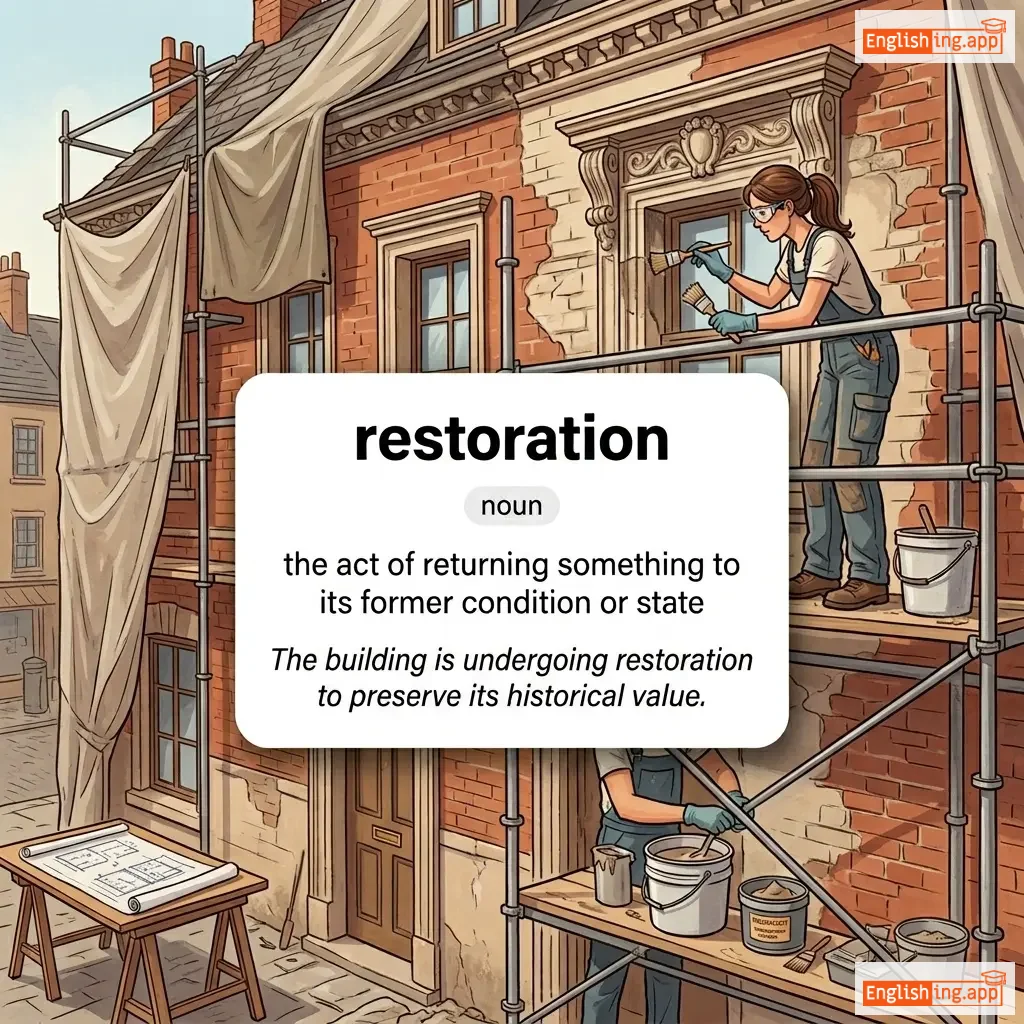
restoration definition card — visual illustration of the meaning
noun
/ˌrɛstəˈreɪʃən/
修復 (shūfuku)

the act of returning something to its former condition or state

"The building is undergoing restoration to preserve its historical value."

"その建物は歴史的価値を保護するために修復されています。" (Sono tatemono wa rekishiteki kachi o hogo suru tame ni shūfuku sareteimasu.)
noun
/ˈrest.ləs.nəs/
不安 (fuan)

the inability to rest or relax as a result of anxiety or boredom

"His restlessness during the long meeting was obvious to everyone."

"長い会議中、彼の不安は全員に明らかだった。" (Nagai kaigi-chū, kare no fuan wa zen'in ni akiraka datta.)
adjective
/ˈrɛstləs/
幸福 (kōfuku)

unable to relax or remain still; constantly in motion

"He felt restless during the long meeting."

"彼女は賞を受け取ったとき、喜びを隠せなかった。" (Kanojo wa shō o uketotta toki, yorokobi o kakusenakatta.)
adjective
/ˈrɛstɪv/
落ち着かない (ochitsukanai)

unable to stay still or silent; restless and impatient

"The crowd grew restive as they waited for the concert to begin."

"コンサートが始まるのを待っている間、観客は落ち着かなくなった。" (Konsaato ga hajimaru no o matte iru aida, kankyaku wa ochitsukanaku natta.)
noun
/ˌrɛstɪˈtjuːʃən/
賠償 (baishou)

The act of restoring something to its rightful owner or compensating for loss

"The court ordered restitution to the victims of the fraud."
"裁判所は詐欺の被害者に賠償を命じました。" (Saibansho wa sagi no higaisha ni baishou o meijimashita.)
resting place definition card — visual illustration of the meaning
noun
ˈrɛstɪŋ pleɪs
安息地 (ansokuchi)

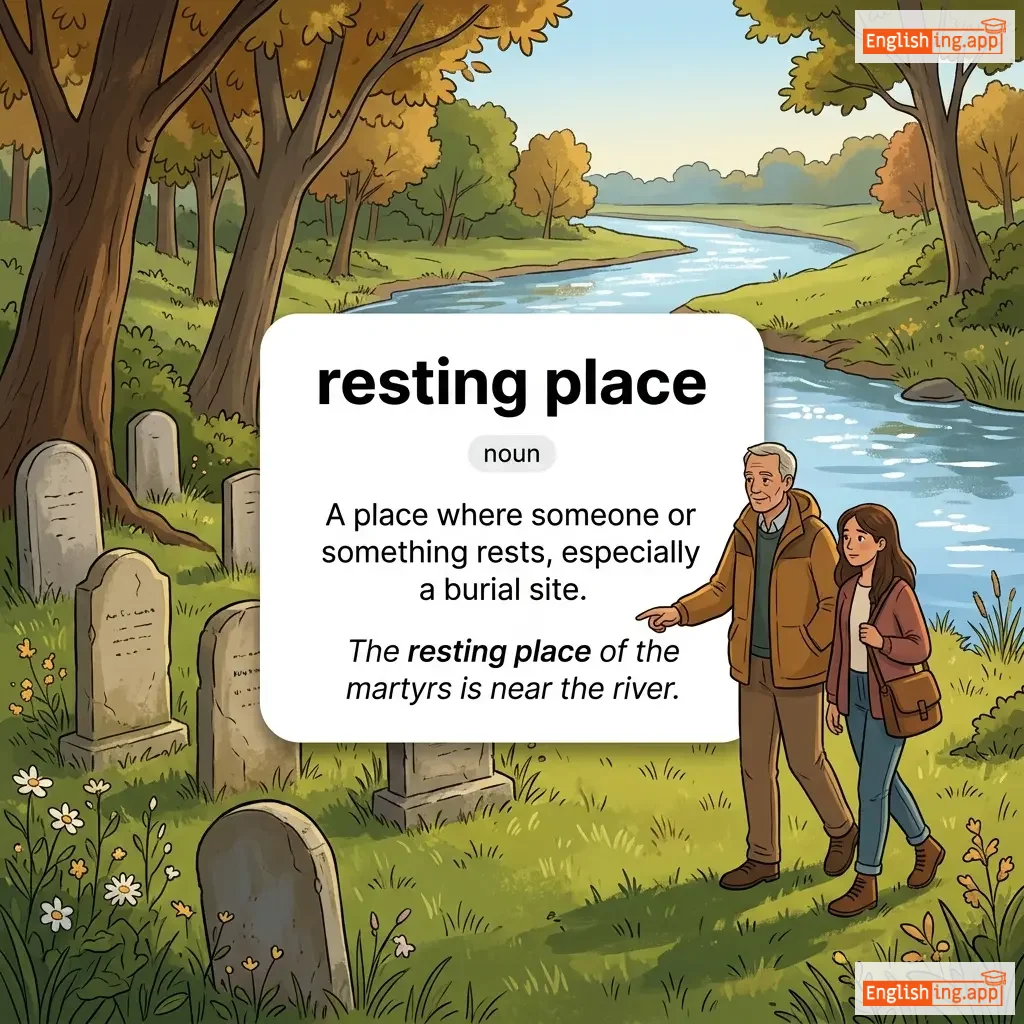
A place where someone or something rests, especially a burial site.

"The resting place of the martyrs is near the river."
"殉教者の安息地は川の近くにあります。" (Junkyōsha no ansokuchi wa kawa no chikaku ni arimasu.)
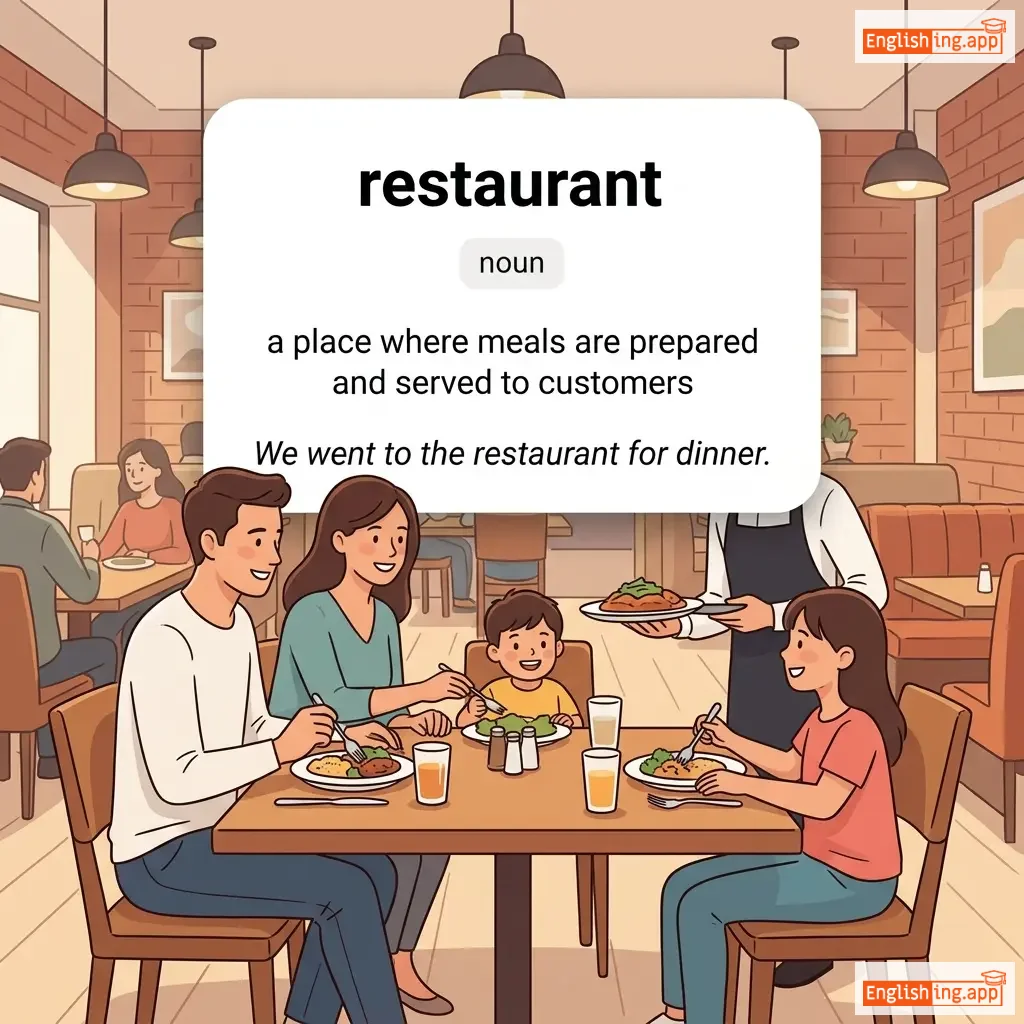
restaurant definition card — visual illustration of the meaning
noun
/ˈrɛst(ə)rɒnt/
レストラン (resutoran)

a place where meals are prepared and served to customers

"We went to the restaurant for dinner."

"私たちは夕食のためにレストランに行きました。" (Watashitachi wa yūshoku no tame ni resutoran ni ikimashita.)
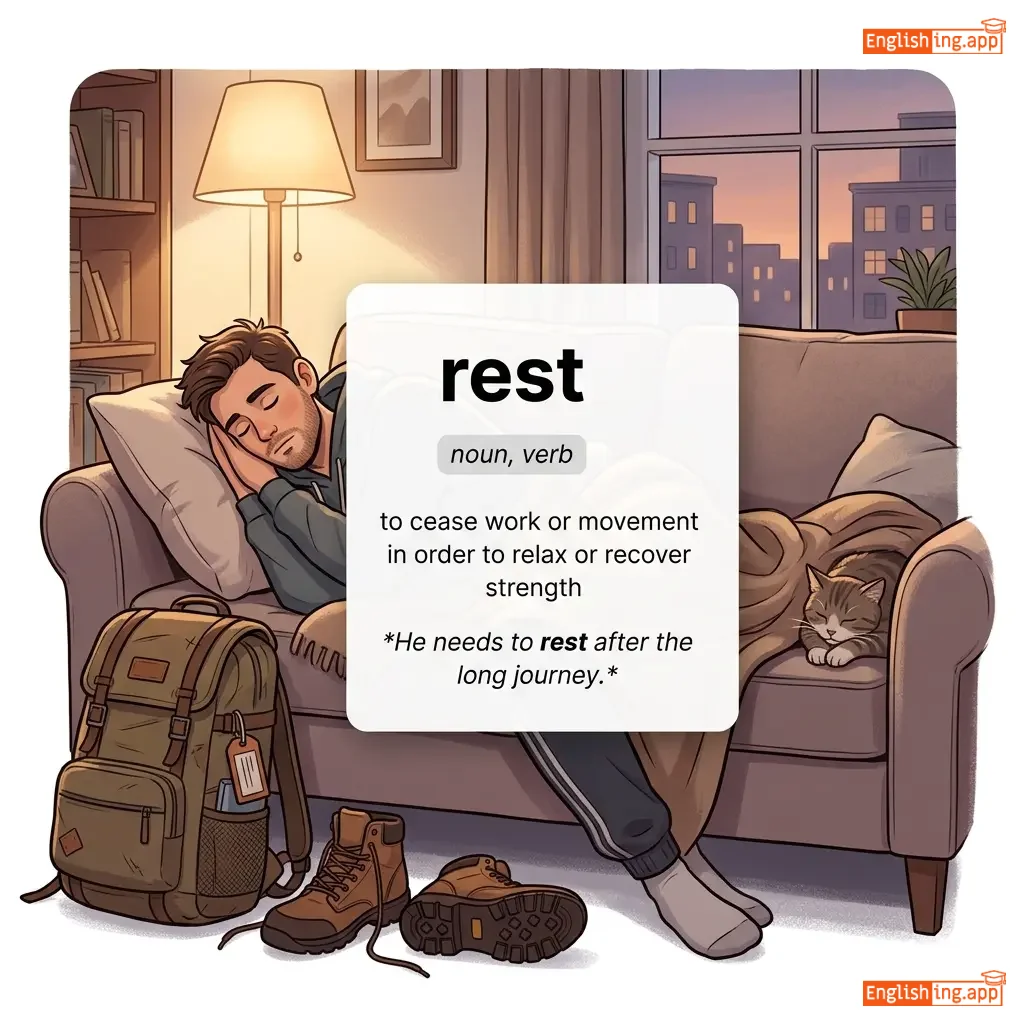
rest definition card — visual illustration of the meaning
🛌

rest

noun, verb
/rɛst/

to cease work or movement in order to relax or recover strength

"He needs to rest after the long journey."

noun
/rɪˈspɒnsɪvnəs/
反応性 (hannousei)

The quality of reacting quickly and positively

"The manager appreciated her responsiveness to customer feedback."

"マネージャーは彼女の顧客からのフィードバックに対する反応性を評価しました。" (Manējā wa kanojo no kokyaku kara no fīdobakku ni taisuru hannō-sei o hyōka shimashita.)
adjective
/rɪˈspɒnsɪv/
レスポンシブ (responshibu)

Reacting quickly and positively to something

"The website is fully responsive on all devices."

"ウェブサイトはすべてのデバイスで完全にレスポンシブです。" (Webusaito wa subete no debaizu de kanzen ni responshibu desu.)
adjective
/rɪˈspɒnsɪbl/
責任がある (sekinin ga aru)

having an obligation to do something or being the cause of something

"She is responsible for managing the project."
"彼女はプロジェクトを管理する責任があります。" (Kanojo wa purojekuto o kanri suru sekinin ga arimasu.)
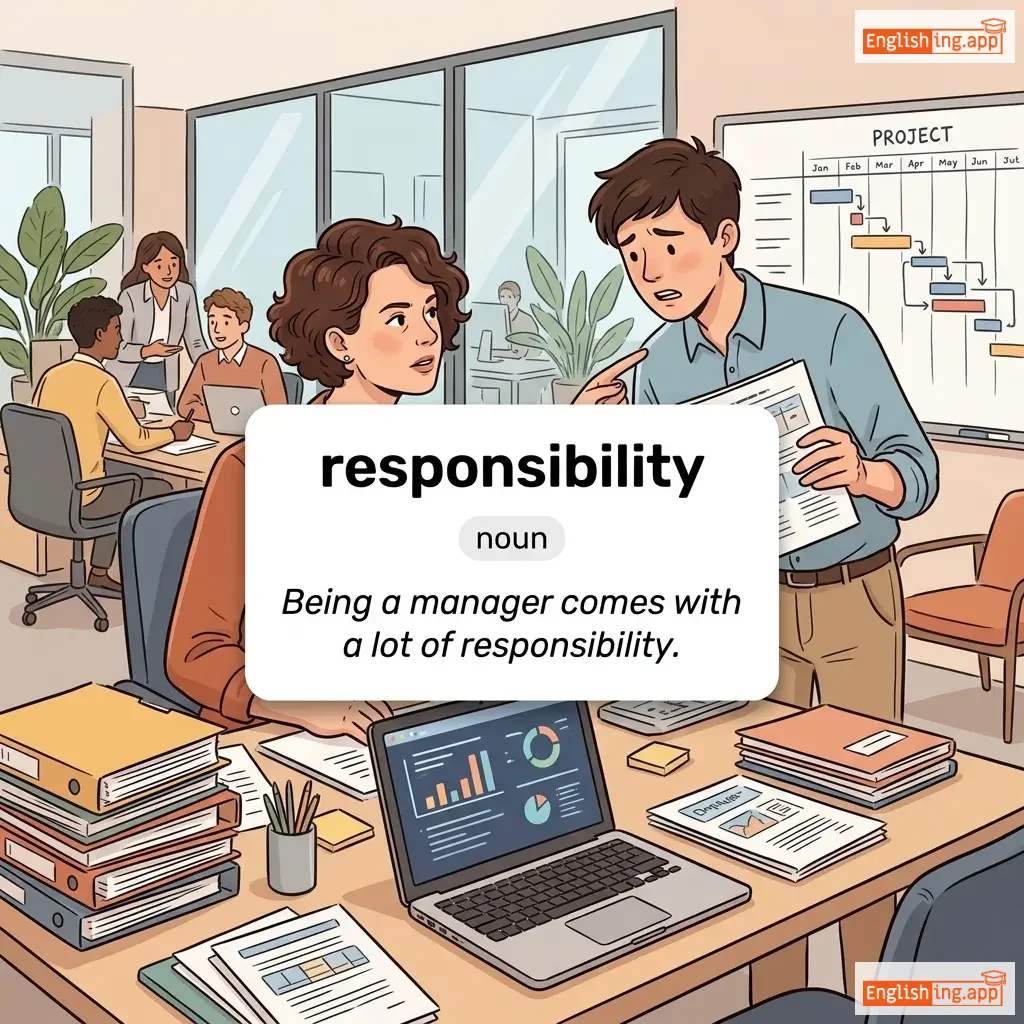
responsibility definition card — visual illustration of the meaning
noun
/rɪˌspɒnsɪˈbɪləti/
責任 (sekinin)

the state or fact of having a duty to deal with something or having control over someone

"Being a manager comes with a lot of responsibility."

"マネージャーであることは多くの責任を伴います。" (Manējā de aru koto wa ōku no sekinin o tomonai masu.)
noun
/rɪˈspɒns/
反応 (hannou)

a reaction to something that has been said or done

"Her response to the question was both thoughtful and clear."

"その質問に対する彼女の返答は、考え深く、かつ明確でした。" (Sono shitsumon ni taisuru kanojo no hentou wa, kangaebukaku, katsu meikaku deshita.)
noun
/rɪˈspɒndənt/
回答者 (kaitōsha)

A person who replies to something, especially in a survey or legal case

"The survey had over 1,000 respondents."
"調査には1000人以上の回答者がいました。" (Chōsa ni wa 1000-nin ijō no kaitōsha ga imashita.)
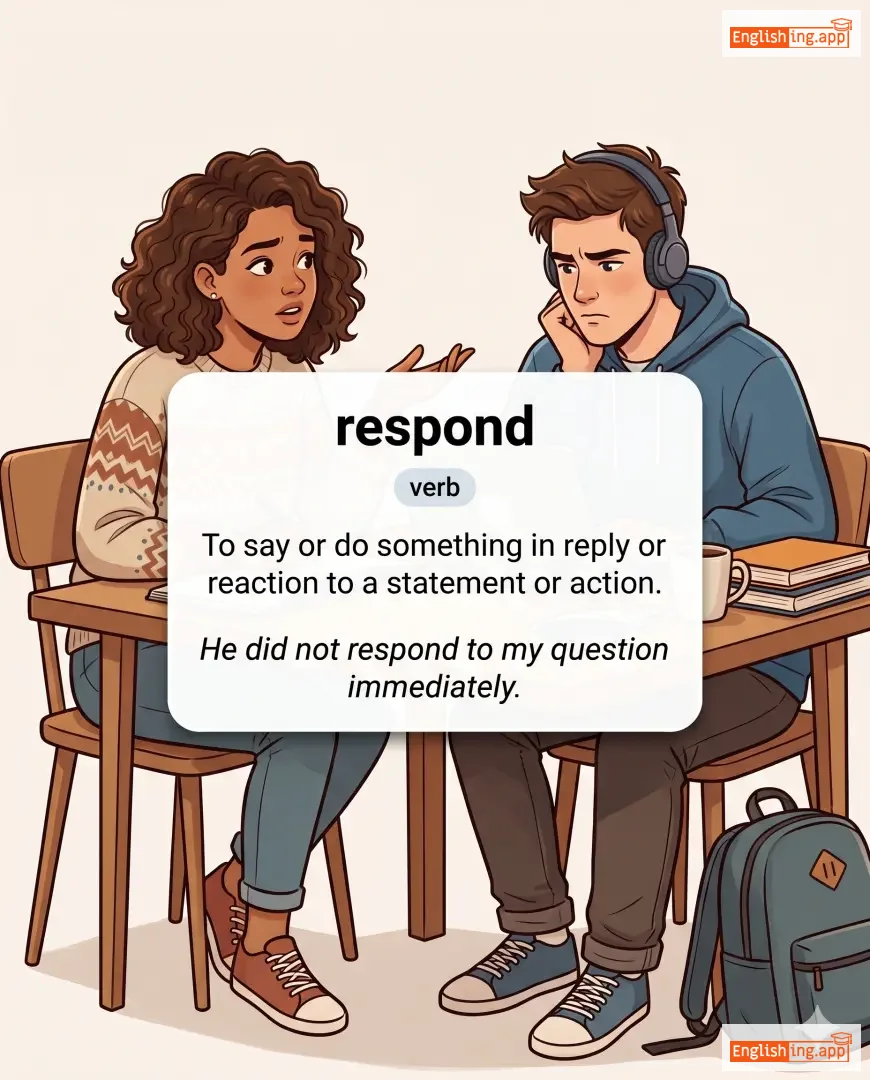
respond definition card — visual illustration of the meaning
verb
/rɪˈspɒnd/
応答する (ōtō suru)

To say or do something in reply or reaction to a statement or action.

"He did not respond to my question immediately."

"彼は私の質問にすぐに返答しませんでした。" (Kare wa watashi no shitsumon ni sugu ni hentō shimasen deshita.)
adjective
/rɪˈsplɛndənt/
輝かしい (kagayakashii)

Shining brilliantly; dazzling in appearance or effect

"The bride looked resplendent in her wedding gown."

"花嫁はウェディングドレスで輝いて見えました。" (Hanayome wa wedingudoresu de kagayaitemimashita.)
noun
/ˈrɛspɪt/
休息 (kyūsoku)

A short period of rest or relief from something difficult or unpleasant.

"The weekend provided a welcome respite from work."

"週末は仕事からの歓迎される休息を提供しました。" (Shūmatsu wa shigoto kara no kōkō sareru kyūsoku o teikyō shimashita.)
verb
/rɪˈspaɪər/
呼吸する (kokyū suru)

To breathe in and out; to inhale and exhale.

"Plants also respire to release energy."
"植物もエネルギーを放出するために呼吸します。" (Shokubutsu mo enerugī o hōshutsu suru tame ni kokyū shimasu.)
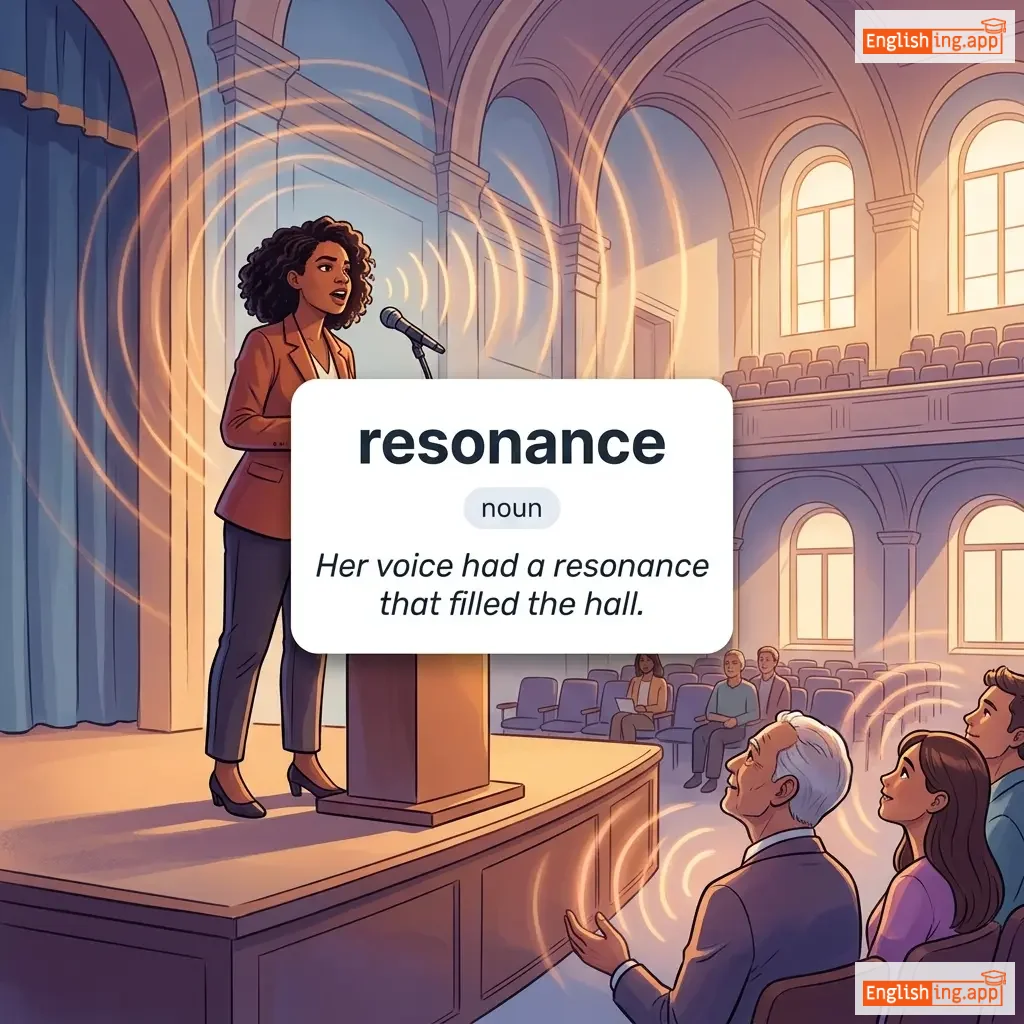
resonance definition card — visual illustration of the meaning
noun
/ˈrɛzənəns/
共鳴 (kyoumei)

The quality of a sound being deep, full, and reverberating; the ability to evoke a strong response.

"Her voice had a resonance that filled the hall."

"彼女の声にはホールを満たす共鳴があった。" (Kanojo no koe ni wa hōru o mitasu kyōmei ga atta.)
verb
/rɪˈzaʊnd/
反響する (hankyō suru)

To fill a place with sound; to be celebrated or talked about widely.

"The hall resounded with applause."

"ホールは拍手で反響しました。" (Hōru wa hakushu de hankyō shimashita.)
noun, verb
/rɪˈzɔːrt/
リゾート / 最後の手段 (rizōto / saigo no shudan)

A place for rest or recreation; to turn to something for help or solution.

"They stayed at a beach resort during their vacation."

"彼らは休暇中にビーチリゾートに滞在しました。" (Karera wa kyūka-chū ni bīchi rizōto ni taizai shimashita.)
verb
/ˈrɛzəneɪt/
共鳴する (kyoumei suru)

To produce or be filled with a deep, full, and reverberating sound; to evoke a feeling or memory.

"Her words resonated with the audience."

"彼女の言葉は聴衆に響いた。" (Kanojo no kotoba wa chōshū ni hibiki ta.)
adjective
/ˈrɛzənənt/
響く (hibiku)

Deep, clear, and continuing to sound or echo.

"The resonant voice of the speaker filled the hall."
"スピーカーの響く声がホールに響き渡った。" (Supīka- no hibiku koe ga hōru ni hibikiwatta.)
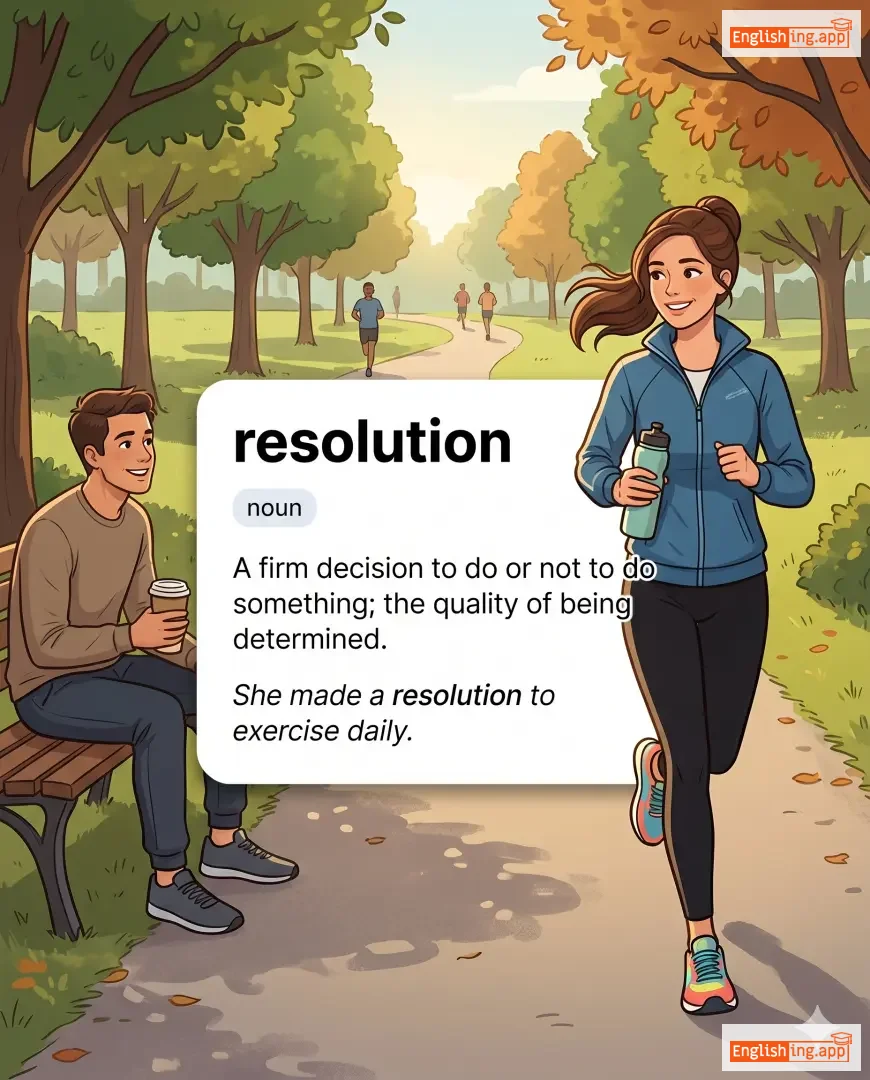
resolution definition card — visual illustration of the meaning
noun
/ˌrɛzəˈluːʃən/
決意 (ketsui)

A firm decision to do or not to do something; the quality of being determined.

"She made a resolution to exercise daily."

"彼女は毎日運動する決意をした。" (Kanojo wa mainichi undō suru ketsui o shita.)
adjective
/rɪˈzɪstləs/
抗えない (aragenai)

Impossible to resist; having an overpowering effect.

"She felt a resistless urge to laugh at the joke."

"彼女はジョークで笑いたいという抗えない衝動を感じた。" (Kanojo wa jōku de waraitai to iu aragenai shōdō o kanjita.)
adjective
/ˈrɛzəluːt/
決然 (ketsuran)

Admirably purposeful, determined, and unwavering.

"He remained resolute despite the many challenges."

"彼は多くの困難にも関わらず決然としていた。" (Kare wa ōku no kon'nan ni mo kakawarazu ketsuran to shite ita.)
noun
/rɪˈsɔːrs/
資源 (shigen)

A supply of materials, money, or assets that can be used when needed.

"Water is a vital natural resource."

"水は重要な自然資源です。" (Mizu wa jūyō na shizen shigen desu.)